No Country for Old Men: John G. Avildsen’s SAVE THE TIGER

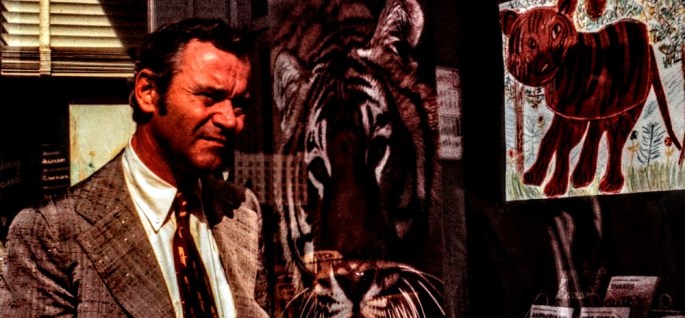
John G. Avildsen has always been a champion of the underdog and his film SAVE THE TIGER is no exception; it is a beautiful tragedy of a man who has pushed himself mentally and physically past the point of no return and he’s fighting with all his might to claw back for a second chance. But does he deserve it; should he deserve it? He’s cheated, cooked the books, in arson negotiations – all to survive.

Jack Lemmon, in his Oscar winning performance, has never been better. He truly is heartbreaking as Harry Stoner. He navigates the waters of his hollow and inflated garment business, setting up buyers with kinky hookers, meeting with a mobster to burn his building down, and suffering from PTSD from his tour in Italy during WWII. Harry does all this, so he can survive one more year, because he is sure his business will recover – but what gain and what loss? Harry is positioning himself to enter into a never ending cycle of hustle where there isn’t a clear goal set before him – or at least one that is tangible.

Lemmon is not Jack Lemmon in this film. While his affability is certainly played on, Harry Stoner is a broken man with absolutely nothing left. His time in the sun is limited, and he knows it. Lemmon is on fire in this film, he chews up the dialogue, he briskly breezes by the camera; he is always on the move. He is looking down the barrel of his own extinction; there’s no stopping his character’s trajectory.

Steven Shagan pens a deeply layered and fertile script. It’s a construction of who Harry is as a man, while simultaneously deconstructing what it is to be a man. The dialogue written, particularly for Harry, is so stoic and to the point, he almost belongs in a hard noir genre picture, or at the very least a Michael Mann neo noir. The film is dark, perverse, and heartbreaking – yet rays of hope shine through the bleak world Avildsen creates.

There’s a kinship between SAVE THE TIGER and Avildsen’s seminal picture, JOE. While he had marked his career as the king of the underdogs, what’s more striking is a subsection of being the champion of the ones going extinct, the forgotten man. Harry Stoner’s world has rapidly evolved to him being phased out. The world doesn’t care about him, his patriotic sacrifices, or his struggles; yet all he ever wanted was a second chance.

THE ROBERT ALTMAN FILES: THIEVES LIKE US (1974)

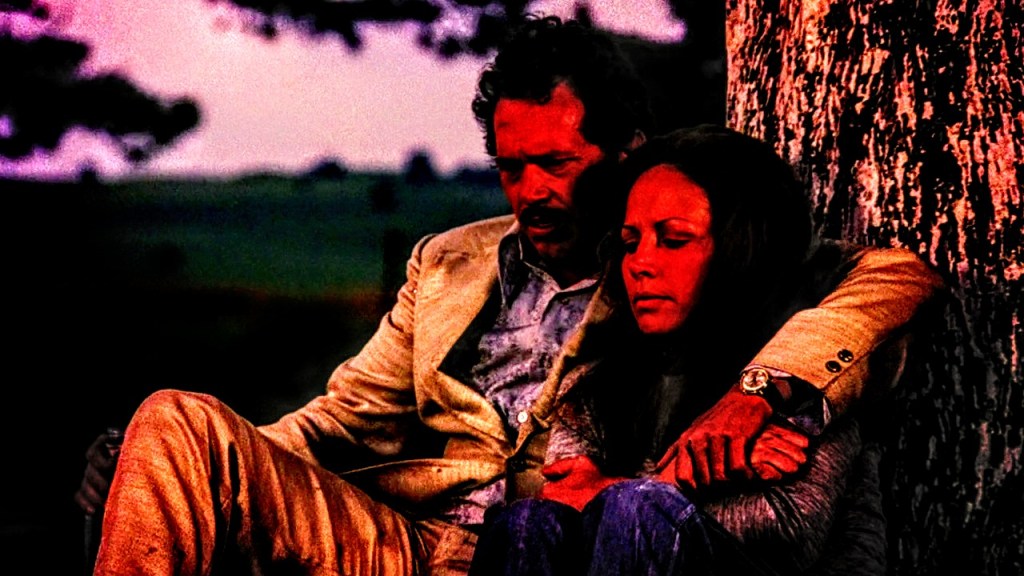
If Nicholas Ray’s 1948’s masterful film noir They Live By Night was the true cinematic template for the “doomed lovers on the run” subgenre of films that eventually led to Arthur Penn’s revolutionary Bonnie and Clyde in 1967, then Robert Altman’s Thieves Likes Us brings it all back full circle. By adopting the Bonnie and Clyde standard of the time that was the employment of period detail, authentic locations, and, when necessary, graphic violence, Altman’s film utilizes the same 1937 Edward Anderson novel that was the source material for Ray’s film and gives the audience what the Norman Rockwell-inspired, George Gross-rendered one-sheet poster promises. But the film ends on a note of brusque cynicism which slyly deprives the audience of a traditional resolution and, in true Altman fashion, upends the genre’s conventions.

Thieves Like Us, also the title of the Anderson novel, begins much like Ray’s film and, in fact, doesn’t much divert from its plot during its entire running time. After bathing in a beautifully lazy, unbroken shot across a Mississippi work farm, courtesy of French cinematographer, Jean Boffety, we see prisoners Bowie (Keith Carradine) and Chicamaw (John Schuck, delivering his final performance in an Altman film) steal away to an adjacent field to meet T-Dub (a terrific Bert Remsen) who has rooked an unwitting hick taxi driver in aiding in the escape of the two. From there, the trio hides out with alcoholic garage owner, Dee Mobley (Tom Skerritt), and his daughter, Keechie (Shelley Duvall in her first above-the-title role) before moving on the the home of Maddie (Louise Fletcher), the wife of T-Dub’s incarcerated brother. While on the run and convalescing after a car accident turns into a deadly confrontation with police, Bowie falls in love with Keechie and she reciprocates in such a fashion that their union can’t be met with anything but doomed and tragic consequences.

From a ten thousand-foot view, there isn’t anything detectable to distinguish Altman and Ray’s different treatments of the material from each other. Sure, Altman’s film is more committed to the Depression-era period of the novel and neither film keeps Anderson’s nihilistic ending but, on first blush, Thieves Like Us is just a seemingly more relaxed and softer roll through the same territory as They Live By Night. But there comes a time in Altman’s film that the focus on the women characters becomes sharper and causes the film to shift away from a film about boys at play and towards a film about, to paraphrase my wife, how women will do whatever necessary to achieve a sense of normalcy, regardless of what that might look like. First, we see this in Keechie. Bored but resigned to her fate, Bowie gives Keechie someone other than her drunken father to look after and mother. Bowie’s murder rap, as explained by him, doesn’t seem all that just so Keechie goes with him out of a blend of genuine affection, boredom, and hope for a better life than her present one which Altman paints as desperately terminal.

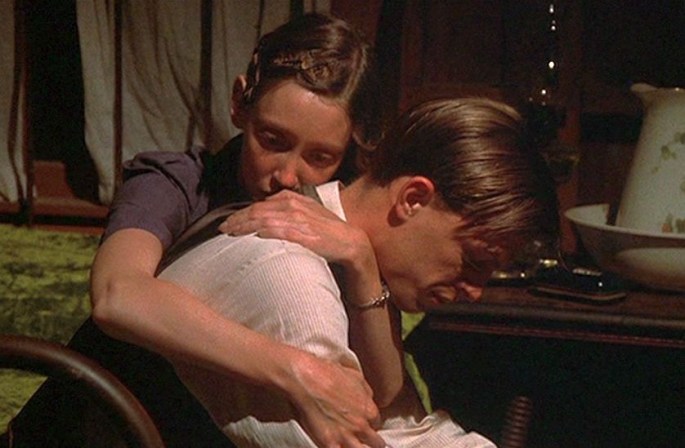
It should be noted that Shelley Duvall is so real and so natural as Keechie that you can feel true romantic tension build between her and Keith Carradine during their silent moments together early in the film. They talk like actual people and respond in kind. When Bowie remarks that she’s cut a great deal of her hair off, she smiles, looks to the ground, and says “I dunno” in a manner that is so genuine and sweet, it recalls deep, buried memories of the awkwardness and shyness of first love. This is in diametric opposition to the way the characters are played by Farley Granger and Cathy O’Donnell in Ray’s film, faultlessly walking a fine line between love-sick, smitten pups and hard-edged, damaged souls. In specific contrast to Granger, Carradine’s Bowie is a sweet-faced greenhorn, only slightly more streetwise than his ill-fated cowboy character in McCabe & Mrs. Miller. Duvall’s Keechie is at once more naive and tougher than O’Donnell and her anguish at the end of the film is told in spades as Altman trains his slow motion camera not on the gory details of the police ambush that kills Bowie, but on her face as she watches it unfold, held back in a quasi-embrace by Maddie, the true driving force of the second half of the film.

In They Live By Night, Maddie’s character (played with gusto by Helen Craig) is spitting fire from the get-go, making her prime turncoat material. But Fletcher’s interpretation of the role is closer in spirit to Julie Christie’s Constance Miller; a woman who can see far more clearly than any of the men around her and will cut her losses as quick as breathing when she must. At no time in the film would any of the men suspect that Maddie would double-cross them for her own gain. And, honestly, neither would the audience. If one were to go into Thieves Like Us completely cold, Fletcher would seem like a harried but big-hearted good sport. She’s far more focused on the details of running a home and distracting her children from the awful details of her houseguests by ensuring her son knows to use his roll as a pusher at dinner time. But with her life in virtual ruin as it contains both a husband in prison and rugrats she can scarcely control, Fletcher exudes the quietest of strengths in a role that is by turns tough, honest, and canny. Slowly emerging in the second third of the film, Fletcher’s presence permeates the final act and, by the time the credits roll, more than a little of her character will have imprinted itself on Duvall’s Keechie’s. Keep a stiff upper lip and believe the stories you have to tell yourself to keep moving forward.

One has to wonder how much of this specific focus came at the hand of Joan Tewkesbury who, along with Altman and Calder Willingham, adapted Anderson’s novel for the screen. Instead of keeping Ray’s ending where Keechie reads the tragic love note that was written by Bowie just before he is killed in an ambush, and likewise jettisoning Anderson’s ending where the both of them are killed in the same event, Thieves Like Us presses a more tragic point about the very human cost and the actual wreckage that occurs to those in the orbit of criminals. It explicitly deals with the unfortunate shame and social baggage that (mostly) women have to tote around with them due to the careless and thoughtless actions of the men in their life. Not coincidentally, this theme would likewise emerge in Nashville, Altman’s next feature which was also penned by Tewkesbury.

Additionally, the connection between Thieves Like Us and Nashville is also clear due to their strong usage of pop iconography and corporate branding across the American landscape. Thieves Like Us shows the radio tying the country together in a way that previous mediums could not and by synching the diagetic music and dialogue from the radio dramas with the action on screen, Altman suggests an emerging correlation between real life and shared entertainment while also displaying a savvy focus on cultural mass marketing that is beginning to take root. Where prison gates are used as literal ad space for Coca-Cola, the almost outsized presence of that product in Thieves Like Us predates the Goo-Goo Clusters that will eventually underwrite the Grand Ole Opry in Nashville where the country crooners on the radio will no longer be selling Rinso Detergent, but Hal Phillip Walker’s goofy, untenable brand of populism.

Thieves Like Us was part of a cycle that came in the wake of Bonnie and Clyde, itself as much a film about the then contemporary change in America as it was a biopic of Depression-era criminals. But where Bonnie and Clyde pops, Thieves Like Us simmers letting the individual ingredients stew and causing the material to cook into something else entirely. It never feels like Altman’s players are wearing stuff from the wardrobe department as is the case in Martin Scorsese’s underrated but undeniably budget-hampered Boxcar Bertha nor are things quite as clean as in the other Corman-produced films cut from the same cloth, such as Bloody Mama and, later, The Lady in Red. By letting us slowly wade into the world of Thieves Like Us, Altman rewards us by reminding us that the quiet details of real-life feel much more piercing than the grand sweep of Hollywood dramaturgy.

Nicholas Ray’s They Live By Night is a true beauty with a well-deserved, unimpeachable reputation as a film that is as hard-edged a piece of business that you can find. It’s a film that talks tough, moves fast, and kisses tragic. Robert Altman’s Thieves Like Us isn’t nearly as well known but it operates in the same, languid style as his adaptation of The Long Goodbye. It’s a film that speaks softly, takes its time, and ultimately reveals itself to be positively ruthless.

The Secrets We Keep

What if you were sure, beyond a reasonable doubt, that your neighbour or someone living close to you in the area was in fact a dangerous war criminal who committed unspeakable atrocities towards you in the past and, like you, has escaped the fog of war to start a new life? Noomi Rapace’s Maja faces this dilemma in The Secrets We Keep, a deeply emotional, unbearably suspenseful dramatic thriller that showcases the actress at the most raw and vulnerable I’ve ever seen her, and if you’re familiar with her work at all you’ll know that’s saying a lot. Maja is a Romani girl from a small town whose entire family was abused, violently assaulted and terrorized by a marauding band of German SS officers on their way to escape from Bucharest sometime near the end of the war. She alone made it out, and went on to start a new life in postwar United States, where she meets a husband (Chris Messina) and has a child. But wounds of the past don’t heal too easily, especially when she notices Swiss newcomer to the town Thomas (Joel Kinnaman), who she instantly recognizes and believes to be one of the officers who brutalized her fifteen years ago. She kidnaps him, keeps him in her basement and pulls her skeptic husband into a deadly, highly emotional interrogation game as she tries to get Thomas to admit who he is, which he simply won’t do. Does she have the right man? Is Thomas really this person or has her trauma clouded judgment and altered her personal reality into projecting onto someone innocent? Things get complicated when Thomas’s wife (Amy Seimetz) comes looking for him and the whole situation threatens to blow up in everyone’s face. This is a thriller for sure and there are some moments of tension so extreme that I forgot to breathe, but at its core this is a story about how the psychological scars of war never really heal, and through Rapace’s staggeringly good, heartbreakingly intense performance that theme comes across achingly clear. They live in one of those idyllic, Shangri-La 1950’s postwar neighbourhoods you’d see in something like Malick’s Tree Of Life, made of picket fences, pastel houses, tranquil evenings, children playing on the streets and air drying laundry billowing in the breeze like angel wings keeping sentinel watch on the inhabitants. But not even angels, allegorical or otherwise, can eradicate the devils present during a war, or even cause those affected by it to forget what happened to them and the trauma always, always follows them home in one way or another. Its a terrific guessing game, a visceral captivity thriller and and an affecting interpersonal drama but for me it works most effectively as a harrowing character study of one girl, the memories that won’t die and her struggle to live some semblance of a normal life after enduring unimaginable horror. Great film with an absolutely beautiful, diamond knockout performance from Noomi.

-Nate Hill

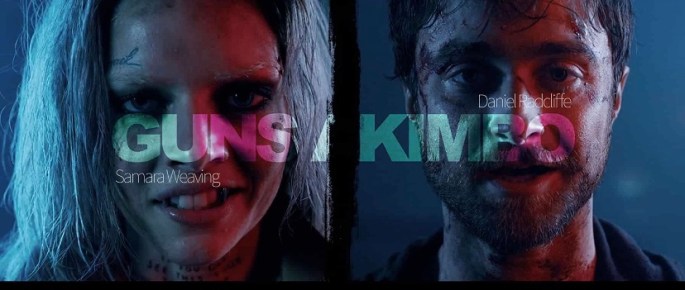
Guns Akimbo

Guns Akimbo could be written off as cheap cartoonish thrills or simply whack-job hyperactive splatter without a touch of artistry like some of its type, but the fact remains that it’s actually a really good film from all standpoints and I had a ton of fun with it. Daniel Radcliffe has been doing his best to shed the deeply rooted Harry Potter mythos and pick some genuinely edgy, offbeat scripts (Horns, Swiss Army Man) and this one slam dunks squarely into that niche. In the not too distant, slightly dystopian future a terrorist cell of lunatics operates a gladiatorial games match called Skizm, in which various freaks, degenerates and maladjusted humans fight each other to the death all over an unnamed city (actually a super arbitrary combo of Auckland and Munich) as advanced drone technology catches it all and a vast, unruly community of online users observe over the interwebs. Radcliffe is Miles, a meek, beta computer programmer whose only joy in life is to troll user-boards relentlessly until he makes the wrong comment to the wrong account and finds himself targeted by the CEO of Skizm himself, a deranged, tattooed fiend called Riktor (Ned Dennehy). He’s kidnapped and wakes up with two giant guns *literally* nailed into his hands and turned loose into the death match that is Skizm for his troubles, where frying pan turns to fire but quick as he finds himself hunted by the game’s ruthless reigning champion, a rambunctious goth waif named Nix (Samara Weaving). Being an inexperienced softie he finds himself in quite the predicament until… well I won’t spoil the story but it goes to some fun places. Much of it is Miles furiously cavorting about the city with Nix in hot pursuit as vehicles are annihilated, bystanders are blown to pieces and several thousand rounds of ammo are emptied into everything animate and inanimate set to a thunderous, skeleton reverberating electronic score by Enis Rothoff. The action is frenetic, meticulously choreographed and strikingly brutal especially whenever Weaving, who is wicked here, shows up to pulverize a horde of enemies like some kind of nightmarish hell-shryke who escaped from Hot Topic. Radcliffe spends much of the film in a confused, exasperated daze and sort of just.. bungles his way into escaping each new hurdle, it’s a fun shtick. Dennehy is an actor to watch out for as the villain Riktor. He’s an Irish dude who made a distinct charismatic impression as one of the second tier baddies in Panos Cosmatos’s Mandy, but he’s positively in another orbit here, a rambling, incoherent, cheerfully psychotic animalistic nut job who is just too much fun to watch. This film falls in the category of super duper torqued up stuff like Crank, Smokin Aces and Shoot Em Up that are a ton of fun for the right audience yet many will find to be just too obnoxious and cacophonous for their tastes, which is fine. I enjoyed this a lot, it’s got style for days, momentum like nobody’s business, ruthlessly pitch black humour and even finds a moment for an albeit heavy handed (literally) yet pretty effective nugget of social commentary on toxic internet gaming culture and the poisonous, desensitizing, voyeuristic prism violence is viewed through online. Fun times.

-Nate Hill

Smokey Pastels and Decaying Wealth: Bob Rafelson’s BLOOD & WINE

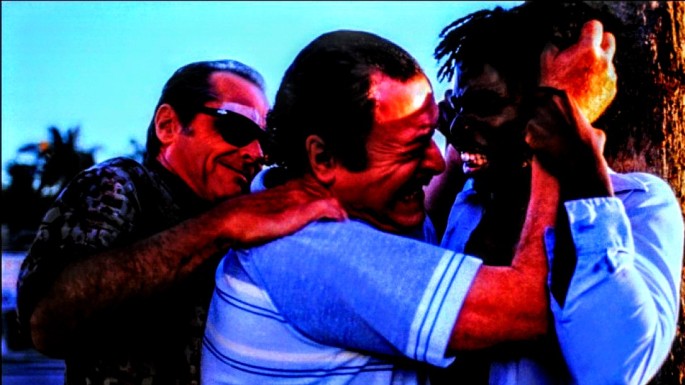
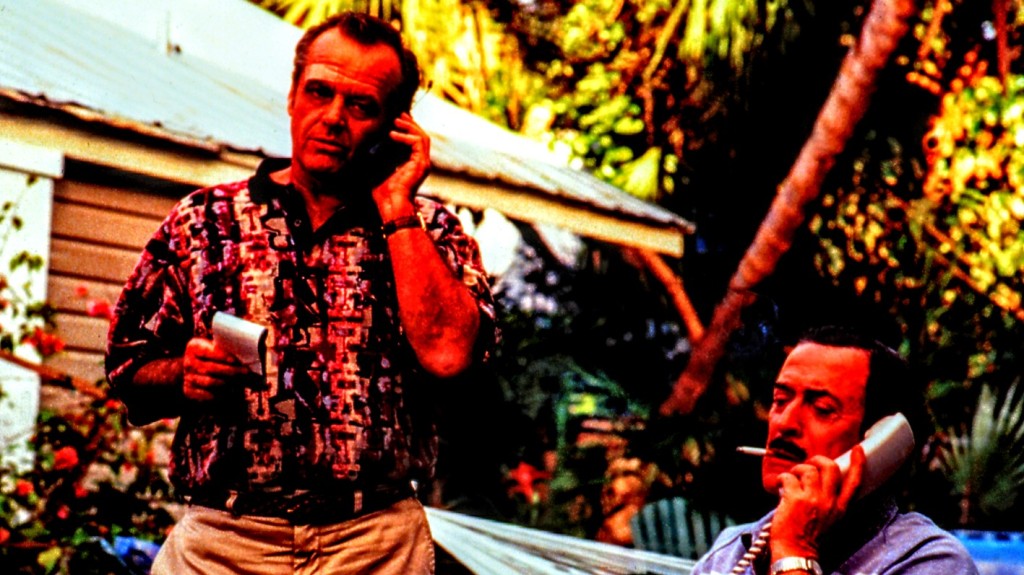
Bob Rafelson’s BLOOD & WINE operates as the capstone at the end of a neo-noir resurgence in the 90s. Cut from the same whiskey and blood soaked cloth as James Foley’s AFTER DARK, MY SWEET and CITY OF INDUSTRY the hard lined revenge vehicle for Harvey Keitel; BLOOD & WINE is about lust, greed, and revenge set in the smokey backrooms and emptiness of decaying wealth.

Rafelson assembles a marvelous cast that is able to navigate in and out of the faux royalty and seedy underbelly of Miami. Jack Nicholson, in his fifth and more than likely final collaboration with Rafelson, plays Alex who is a high end wine salesman with maxed out credit cards and a marriage that is imploding. Nicholson brings gravitas and menace and he transitions it in a very low key way, he’s a stalled out businessman and worn out salesman who is looking for a way out.

Stephen Dorff and Judy Davis are his packaged deal, makeshift family. Dorff as his stepson, and Davis his codeine induced wife who is self medicating her way through the last rung of their marriage. Jennifer Lopez, in one of her earliest performance, plays the love interest to both Nicholson and Dorff, which creates a rather rich and perverse subplot.

  • BLOOD & WINE
  • 1996
  • dir. Bob Rafelson
  • feat. Jack Nicholson, Michael Caine, Judy Davis, Jennifer Lopez, Mike Starr, and Stephen Dorff
  • ed. Digital Release

Michael Caine gives one of his most underappreciated performances as Victor, a tuberculosis ridden master thief who pairs with Nicholson to rob his most affluent wine client. Caine is remarkable in this picture, playing a man with little left to lose, who springs to life with terrifying intermittent bursts of rage who refuses to die without pulling others down to Hell with him.

Rafelson, whose career never quite rebounded from his landmark 70s pictures, constructs a very moody and treacherous film that lives in a world of double and triple crossing, a film plentiful of smoke absorbed pastels and cut throat men navigating a world that has left them behind. The film can be frustrating for some, because the axe never falls from the shadow, it stays in its place the entire film, even through the final frame. Which is the trick of the film, the axe doesn’t fall, it stays tightly in its place, and allows the story to continue even after it is over.

Joshua Michael Stern’s Neverwas

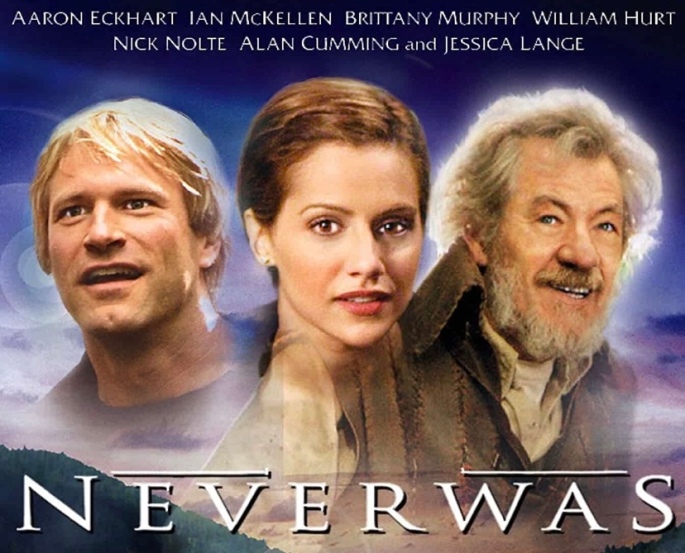
It always amazes me when a first time writer/director scores an all out, diamond encrusted A-list cast that would make the top dog filmmakers in Hollywood jealous, but it often results in a scantly marketed film that no one really ends up seeing but just happens to have a huge star studded ensemble in a quiet, curious independent piece that few are aware of. Such is the case in Joshua Michael Stern’s NeverWas, a beautiful modern fairytale that slipped under the radar back in the mid 2000’s but is ripe for rediscovery. Aaron Eckhart plays a rookie psychiatrist who expresses interest in working at a troubled mental health facility in rural BC, Canada, an institution where his mentally ill father (Nick Nolte) lived at years before. He was once a great children’s author who wrote about a magical kingdom called NeverWas and built a considerable legacy around his books, before becoming sadly unstable and being committed. Eckhart’s character wishes to find out wheat happened years before and treat some of these people now attending the facility, while the somewhat skeptical director (a sly William Hurt) doesn’t have high hopes for the program overall. Things get interesting when delusional patient Gabriel (Ian McKellen) starts mentioning NeverWas in his group sessions and believes it to be real, and Eckhart to be somehow connected to the legacy. What is he on about, why does he express a desire to break out and return to a place he calls his ‘kingdom’, and what’s his connection to the long gone father? McKellen is wonderful in the role, fiercely passionate and charismatic while showing heartbreaking undertones of some past trauma he can’t articulate yet needs to work through with this fantastical delusions. Nolte gives a mini powerhouse performance in just flashbacks alone and is incredibly affecting, while the late great Brittany Murphy is cast refreshingly against type as a local naturalist who expresses interest in this unusual situation. The cast is so blinged out that even the smallest roles have been given to someone super recognizable and so we get to see people like Jessica Lange, Alan Cumming, Michael Moriarty, Bill Bellamy and Vera Farmiga show up and not necessarily have much to do character wise other than simply bless the production with their attendance. The lush Canadian setting provides a gorgeous atmosphere for this strange, quaint and very personal story to unfold, anchored by McKellen in a superb, emotionally rich portrayal that he sticks with and lands with a final beat to the arc that cuts right to the essential. The film also managed to score Philip Glass for its original score (Candyman, Tales From The Loop, The Hours) a man whose unmistakable compositions always provide an auditory heart and propellant momentum, his work adding a lot to the overall experience here. The very definition of a hidden gem and well worth seeking out for the unbelievable cast and unique, touching story.

-Nate Hill

Amat Escalante’s The Untamed

So Shudder just added a Mexican horror film called The Untamed about an alien that literally has sex with people and you know what it’s actually pretty good. When I say that I don’t mean metaphorically, allegorically or any other vague or illusory way to present the concept, I just quite bluntly mean that a slimy tentacled alien emerges from a crashed meteor and has slimy alien intercourse with any female body that gets close to it. Now as stark and upfront as the premise is presented, it is also subtly used as metaphor for what’s going on in the lives of several troubled individuals in small town Mexico, the extraterrestrial itself viewed as an arbiter for sexual dysfunction, closet homosexuality in a conservative setting, clandestine adultery and other interpersonal shenanigans of the like. Nor does the film present its subject matter as anything close to schlock or exploitative in nature and at times doesn’t even feel like an abject horror film, but rather a tense, eerie, melodramatic tragedy that just happens to have an extended cameo by a sex monster from outer space. The effects on the creature itself are tangible, tactile and terrific, the performances from the human actors all most excellent and elicit sympathy, show complexity and emotional range while being sufficiently creepy when under the sultry influence of the alien’s potent, seductive and very weird pheromone like spell, almost like a cosmic drug trance that is translated excellently into the screen by these artists, none of whom I’ve seen in anything else before. Word of warning with this one though: it’s not a prudish North American studio film and as such doesn’t beat around the bush with explicit sexuality, which is totally normal and fine if it weren’t for the fact that said sexuality includes a multi-tentacled being from space and you see *everything* when this thing is copulating with women, which may be too much for some. It’s not done in a violent, perverse or shameful way and the scenes have a sort of almost bizarre tranquility to them, but it is a *very* disquieting form of intercourse to absorb and experience onscreen and some may be uncomfortable. Very unique and challenging film overall.

-Nate Hill

From Apathy to Vengeance: Sam Peckinpah’s BRING ME THE HEAD OF ALFREDO GARCIA

Sam Peckinpah would have been ninety-six years old recently. For a guy whose legacy is nearly pushing 100, Peckinpah surely left his mark on cinema. He capitalized on telling the story of the forgotten man, or more specifically the man that time left behind. He often focused on the escapism to Mexico; the freedom of it. No laws, but more importantly it did not require the confinement and limitations of the society that lay just above of the border. More importantly, Peckinpah’s cinematic hallmark was nihilism wrapped in angst. 

With BRING ME THE HEAD OF ALFREDO GARCIA, it starts off so mean, so angry. A Mexican gangster has one of his thugs break the arm of his pregnant daughter so she’ll tell him who the father is. When she screams in agony that it is Alfredo Garcia, what ensues is a strange odyssey that is propelled forward with a brilliant Warren Oates as a drunk piano man who lives in Mexico and his street walking girlfriend (magnificently played by Isela Vega) who are seeking Alfredo Garcia for a $10,000 reward. Along their antiheroes journey, they encounter bikers, two gay hitmen, and a host of other surreal obstacles – all so Oates can “start over”. 

The overall character arc of Warren Oates’ Bennie is the traditional ronin narrative coupled with placing an ordinary man in an extraordinary situation.  Of course Bennie is a rube, and Alfredo Garcia’s head is worth $1,000,000 and not just $10,000 – hence his revolving encounter with two presumably gay hitmen played by Robert Webber and Gig Young. The subtext of their relationship just accentuates the oddity that is the film.

Then along comes Kris Kristofferson, at the height of his musical star power, as a would-be rapist, who has his partner hold Oates at gunpoint, so he can take Vega off into the tall grass to rape her, all the while playing the part with a bashful vulnerability. The same sort of somber vulnerability that started the scene; Oates and Vega having a picnic, realizing that their plan to find Garcia’s head and run off with $10,000 is a noble, but ultimately futile plan. They both know the reality of their dead-end lives and share a beautiful moment together that is as bittersweet as tender where they silently acknowledge the reality of everything, together. Of course, Oates saves the day, shoots down Kristofferson and his partner, and he and Vega get back on the road to nowhere, seeking the head of Alfredo Garcia. 

  • BRING ME THE HEAD OF ALFREDO GARCIA
  • 1974
  • dir. Sam Peckinpah
  • feat. Warren Oates, Isela Vega, Robert Webber, Gig Young, Emilio Fernandez, and Kris Kristofferson.
  • ed. Arrow Video

The picture absolutely takes a tonal shift after Oates finds Alfredo’s grave, digs him up, and takes his head. As soon as that happens, the journey takes an absolute nose dive. Oates, who started out as this apathetic and fashionably tacky sap, then becomes a steamroller that is fueled by anger and sorrow. He has nothing left to lose, and lets go of any fear that weighed him down prior, he carries Alfredo Garcia’s head in a burlap sack filled with dry ice, and kills anything that stands in his way. 

What started as what Bennie thought was a fast money job, evolves into a kinship between Bennie and Alfredo’s head. From the start Bennie knew that Alfredo had a relationship with his girlfriend. Whether he was a paying customer or not is a moot point, because Vega feels an absolutely fondness for Alfredo Garcia, which causes Bennie’s jealousy to erode to feeling a deep connection to Alfredo Garcia. Before the carnage of the third act begins, all that Bennie has left is Al’s head, and he is damn sure going to find out why all these people died just for Al’s head. 

BRING ME THE HEAD OF ALFREDO GARCIA showcases the best of 70s film. It was headlined by an unconventional leading man, conveyed society’s angst of 70s America, while also embracing the previous generations passing into society’s memory. The film is hard and mean, much like life, it isn’t fair and sometimes a shit hand gets dealt, but at the same time is beautiful and Peckinpah is here to say, ain’t life grand? 

ZAPPA (2020) – D. ALEX WINTER

Full disclosure right up front, I’m a Frank Zappa fanatic. While I had four of Zappa’s albums in high school, it wasn’t until around 2003 that, due to a burgeoning interest in the music of Captain Beefheart, I dove into his catalogue in earnest. And, man, did I dive HARD. By hitting every new and used music store within a forty mile radius, I managed to collect every Frank Zappa album that had been released up until that time. And while it is to be expected that a fully smitten person is going to try and digest every single piece of work from an artist with whom they fall in love, the extraordinary thing about Zappa is that, in his lifetime, he released some 62 albums and, as of this writing, another 50-plus have been released by the Zappa Family Trust, the family business now run by his youngest son, Ahmet.

So that’s a lot of music and I own it all. And that’s what Frank Zappa wanted. As Zappa himself states a couple of times in Alex Winter’s long-gestating and beautiful documentary, Zappa, all he was interested in was composing his own music, recording it, and selling it to anyone who shared his passion for listening to it. It’s truly a noble goal, but when you realize that Frank Zappa’s first album came out in 1966 and the last one released during his lifetime arrived in 1993, something in the math doesn’t seem right and one can only conclude that Zappa lived a life completely out of balance. Nobody who is consistently releasing 2.3 albums every year for 27 straight years has anything resembling a normal existence.

It’s probably most surprising that Zappa almost goes out of its way to show how unbalanced Frank’s life was. Forever cutting away to images and footage of Frank hunched over some kind of table as he is painstakingly writing his compositions as if he were a Benedictine monk copying a Bible by hand, the film presents Zappa as a sentient music machine who had little feeling for anything beyond his work and interests. While he certainly loved his family, it almost feels like Zappa’s style of love was unique and could only be expressed in his own way. But there aren’t many people in Zappa’s universe who sat down for interviews that didn’t articulate the same line on Frank: he was just a laser-focused perfectionist to whom it was difficult to feel a kinship.

The film never really goes into what made Frank an emotionally distant person but there are hints sprinkled about here and there. Growing up in a family in which the parents are joyless stiffs (as Zappa’s folks mostly were) can’t help but have an effect on a person and while Zappa’s zany, anti-authoritarian persona was aimed directly at his parents’ generation, he kept his own generation at arm’s length, too. Tall, gangly, hairy, and brooding to the point where he was concocting ways to set fire to Antelope Valley High, save and except fellow rhythm and blues fanatic Don Vliet (who would later take musical form as Captain Beefheart), Zappa probably wasn’t much of a hit with his peers, male or female. Frank Zappa, quite simply, never counted on being loved and never really knew what to do with it when he was which, naturally, leaves one’s wife and children and workmates at something of a disadvantage.

But while it doesn’t shy away from the ugly truths about him, Zappa isn’t on a mission to bury him, either. Frank Zappa lived an incredible life on his terms and Winter wants to tell that story. Here is a uniquely American tale of an iconoclast who went from chronically sick child to self-taught musical genius to outrageous rock artist to Washington D.C. crank to, finally, one of the ultimate symbols of freedom and deified hero to the people of newly liberated countries of the then-crumbling Soviet bloc. That’s a lot to pack into a film meant for general audiences so Winter had the unenviable task of keeping the narrative moving forward without getting distracted on every single detail of Zappa’s career, of which there are a lot.

This approach created some very interesting reactions in me as a viewer versus me as a Zappa super fan. For me, he had no band better than the Roxy/One Size Fits All incarnation of the Mothers of Invention but the film glides over that period in what ends up being a brief moment in a quicksilver collage of his rotating bands from 1973-1979. For Winter, the lion’s share of the time is spent on the original lineup of the Mothers, highlighting as much their bizarre, performance art stage antics as he does their music. Ultimately, regardless of my personal preference of any specific era of Zappa’s impressively varied body of work, the foundation of his career and public persona was created, gestated, and borne out of the 1966-1969 lineup and it’s just as crucial to the beginning of the narrative as much as his triumphant partnership with the Ensemble Modern in the twilight of his life is to the end.

This also spills over into other aspects of the film. Frank Zappa was one of the finest, most mind-bending guitarists in all of rock history but you’d really never know it from the film. Aside from one shot of Zappa absolutely shredding which reveals, in full color, the man’s scorching dexterity on the fretboard, there are no moments of him noodling, soloing, or a montage of stage moments overlaid with audio snatches from any one of the multiple albums he released that are filled with nothing but guitar solos. But, again, this isn’t the story Winter wants to tell and the film is the better for it. As Gail Zappa insists early on in the film “I married a composer.” And regardless of what each individual Zappa fan loves about him, most all of them agree that the term “composer” is the one thing that should be elevated above all else. And this is why Winter makes it to where you’re more likely to see Zappa with a conductor’s baton in his hand than a guitar. Even when Zappa’s “stunt guitarist”, Steve Vai, shows up to talk about Frank, there’s never any real discussion about guitar technique or soloing off of Frank; it’s all about musical complexity and the Herculean effort of manually transcribing “The Black Page”, a beyond-difficult Zappa composition written for drums and percussion.

Much is made, too, of Zappa’s battles with the Parents Music Resource Center (otherwise known as the PMRC), a group of Washington wives who wanted to regulate what they considered “porn rock.” This occupied a great deal of Zappa’s time in the late eighties and helped cement his legacy as a champion for freedom at a time when it was uncertain if our country was ever going to climb out of the hole of the Reagan Era. This chapter also helps lend understanding to the weird international wrinkle that occurred when Zappa was disallowed by Bush 41’s State Department to serve as cultural attaché to the newly liberated Czech Republic (then Czechoslovakia) which had been personally requested by then-President Václav Havel.

The film does do some slight dramatizing and, at times, completely omits somewhat crucial information when it really doesn’t need to. Coming away from the film, you’d have thought Zappa served all six months of the jail sentence he got as a result of that raid on his studio when, in fact, he was only in the clink for ten days. There’s no reason to mislead the viewer by omission when the very real pain and injustice of ten days in jail on a bullshit charge wouldn’t feel minimized if it were followed up with the very real story of how Zappa was held in jail just long enough for his entire life’s work up to that point, including the studio, to be seized by the authorities and sold off. Missing also is the fact that Zappa was living in that studio because he moved in after divorcing his first wife, Kay Sherman, who is never mentioned in the film at all.

But, again, Zappa’s life was so full of left turns, details, and grand adventures with both Gail and his band that you’d need three full length features to tell it all. But Winter has a limited canvas on which to work and delivers the most comprehensive and complete story of an incredibly difficult and complex figure one could possibly hope for. And it’s not a story bereft of heart regardless of Zappa’s tough cynicism. The respect and understanding that is in the clear-voiced appreciation of Zappa though Steve Vai and Alice Cooper (who got his start on Zappa’s imprint label) feels absolutely right but there may not be a more touching figure than that of Ruth Underwood who strikes the right balance between hard-nosed realist and fawning admiration. Detecting (and connecting to) the deep soul of Frank through the complexity and beauty of his music, Underwood supplies the film with two of its most moving passages, one in which, at 74 years-old, she absolutely nails “The Black Page” on a baby grand piano, and second where she (and, curiously, only she) breaks down in tears when discussing the end of Zappa’s life.

When the end does come, the film turns impressionistic and, instead of lining up all of the interviewees to give bittersweet postmortems about Frank and his work and what it meant, Winter relates everything to the work to be done versus the time in which one has to do it. As the clock ticks out, and despite his one last heart-bursting success as an incredibly sick Zappa conducts the Ensemble Modern in a perfect performance of “G-Spot Tornado,” a song so complicated it was composed for the Synclavier, a computerized keyboard sampler with which Zappa utilized in his later years, out of fear humans couldn’t play it, we’re left with ideas of the voluminous projects that remained unfinished.

Like filmmaker Rainer Werner Fassbinder, Frank Zappa was a notoriously prickly and paradoxical figure whose dictatorial approach to his art made him a complicated individual who was destined to work himself into an early grave. For both, their art and their lives generally crossed lines as there was hardly any time and space to separate the two. In the case of Frank Zappa, his oft quoted line from Joe’s Garage “Music is the best,” was probably the simplest thesis of his entire life energy as everything seemed to flow towards it and away from it. And Alex Winter’s Zappa does as good a job as any to make audiences understand that, in the end, maybe it’s something as simple as that that fuels a contradictory, complex artist to endlessly create. And maybe it’s not so easy on everyone in their immediate orbit but we’d be foolish as a society to not celebrate their lives and their work, created just as much for us as for themselves.
Actor Interviews

Stephen Lang

  • Manhunter (1986)
  • VFW (2002)
  • Avatar (2009)
  • Tombstone (1993)
  • Public Enemies (2009)
  • Gettysburg (1993)
  • Beyond Glory (2015)

Raymond J. Barry

  • Interview with the Assassin (2002)
  • Year of the Dragon (1985)
  • Born on the Fourth of July (1989)
  • Walk Hard: The Dewey Cox Story (2007)
  • Training Day (2001)

Steve Railsback

  • The Stuntman (1980)
  • Ed Gein (2000)
  • Lifeforce (1985)
  • Helter Skelter (1976)
  • In the Line of Fire (1993)
  • The Devil’s Rejects (2005)
  • The X-Files (1994)
  • Barb Wire (1996)

Josh Pais

  • Touchy Feely (2013)
  • Joker (2019)
  • Ray Donovan (2013-2019)
  • Teenage Mutant Ninja Turtles (1990)
  • Mrs. Fletcher (2019)
  • Adventureland (2009)
  • Motherless Brooklyn (2019)

Holt McCallany

  • Mindhunter (2017-2019)
  • Justice League (2017)
  • Fight Club (1999)
  • The Losers (2009)
  • Lights Out (2011)
  • Blackhat (2015)
  • Shot Caller (2017)
  • Gangster Squad (2013)
  • Alien 3 (1992)
  • Rough Riders (1997)

Louis Herthum

  • Westworld (2016-2019)
  • Longmire (2012-2016)
  • True Detective (2014)
  • True Blood (2014)
  • Murder She Wrote (1989-1996)

Paul Calderon

  • Pulp Fiction (1995)
  • Cop Land (1997)
  • King of New York (1990)
  • Bosch ( 2017-2019)
  • Four Rooms (1995)
  • Boardwalk Empire (2014)
  • Welcome to New York (2014)
  • Bad Lieutenant (1992)
  • Clockers (1995)
  • Out of Sight (1998)
  • 21 Grams (2003)