ADRIENNE SHELLY’S WAITRESS — A REVIEW BY NICK CLEMENT

1

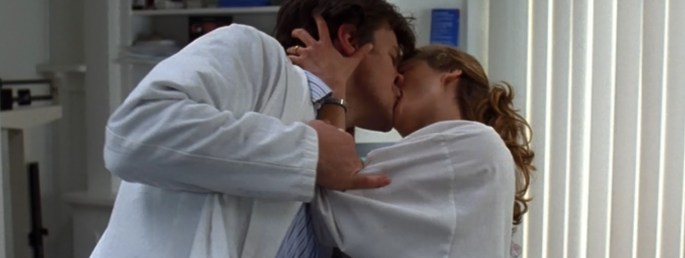
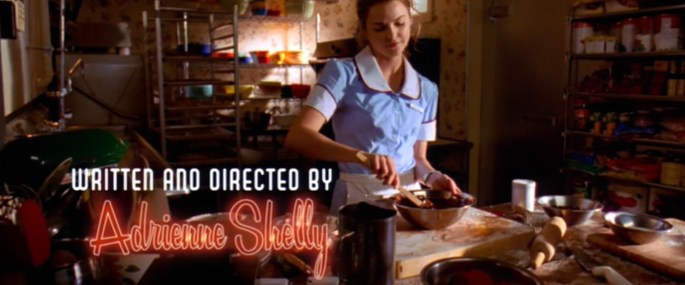
Waitress is a delectable rom-com, one of my favorite modern romantic fantasies from recent years, with a truly effervescent performance from Keri Russell, who, thanks to Adrienne Shelly’s warm and wonderful script, was given a role that didn’t skimp on edge and sass while still remaining 100% sympathetic. Shelly, who also directed with snappy visual pep and a great understanding of pacing, was tragically murdered in her apartment not long after the film was completed in 2006, thus never getting a chance to see the amazing success that her film would become (she also left behind an infant daughter and husband). The story centers on an adorable pie maker (Russell) who is stuck in a dead-end marriage to a total loser (Jeremy Sisto, reprehensibly excellent) and who spends anytime away from her kitchen at a local diner working as a waitress. Cheryl Hines and Shelly played her best friends, both of whom have their own relationship issues, while the likes of Andy Griffith, Lew Temple, Eddie Jemison as popping up in colorful supporting performances.
7

But the crux of the film lies in Russell’s love affair with a married doctor played by a super-charming Nathan Fillion, and how the two lonely souls find a deep connection, that despite being illicit is clearly something born out of true passion and love. At 105 minutes, there’s no fat on this film’s bones, with each scene forwarding the plot and all of the actors in total harmony with the tasty material. And then there’s the cut-ins of Russell making her pies; don’t attempt to watch this film on an empty stomach or with a depleted kitchen because your sweet tooth will be calling out for mercy. After debuting at the 2007 Sundance Film Festival, Fox Searchlight purchased the rights for distribution, and the film became a major summer sleeper success, grossing $22 million in theaters before finding a very long shelf life on cable and physical media. A newly launched Broadway musical based on the film has been greeted with much acclaim. It’s a travesty that Shelly’s life was cut so short. Her story is a further reminder to live life to the fullest.

2

Bram Stoker’s Shadowbuilder: A Review by Nate Hill

image

Bram Stoker’s Shadowbuilder is a completely awesome little horror flick that has gathered copious amounts of dust since it’s mid 90’s release. Forgotten and forsaken, it should have spawned an epic frachise in the vein of stuff like Wishmaster, but oh well, we’ve still got the original beloved entry. Now, just exactly how much of what we see in the film is based on actual Bram Stoker work is up for debate and a little beyond the scant research that I have done, but it’s a tidy little concept that’s executed with B-movie earnestness and a love for the spooky corner of cinema. The plot concerns a priest named Father Vassey, played by genre titan Michael Rooker. Vassey is probing the rural Midwestern belt of the US looking for an ancient demon that’s something like a shapeshifter who deeds on both darkness and human souls, which resembles a cloud of dust reflected through hundreds of chrystal prisms, from what i remember. He’s not your garden variety preacher, sporting two laser sighted semi automatic handguns which come handy in tight shadowy corners, and the jaded will to kick some supernatural ass, not so much in the name of the Lord (he doesn’t believe in god anymore) but more for a dark and personal crusade against the Shadowbuilder. The demon hovers around a young boy, hungering for a soul within that has the potential to both become a saint and also open a doorway to hell in one stroke. Vassey is a determind and resourceful badass, relying on nearby townsfolk for help and support, and Rooker sells the schlocky tone with remarkable gravity that is his trademark. He almost always plays extreme characters in tense narratives and keeps up the energy like clockwork. There’s a hilarious turn from a dread lock adorned Tony Todd (Candyman)  as Evert Covey, a backwoods eccentric with a penchent for rastafarian speech and a part to play in the drama once we realize he isn’t there solely for comic relief. This one is hard to find and almost no one has seen it, but I’m hoping my review will change that, because it’s it’s a little treasure and a fantasy horror classic for me.  

Walter Hill’s Streets Of Fire: A Review by Nate Hill

image

Walter Hill’s Streets Of Fire is just too good to be true, and yet it exists. It’s like the type of dream concept for a movie that you and your coolest friend think up after a bunch of beers and wish you had the time, money and resources to make yourself. It’s just cool right down to the bone, a beautiful little opus of 1950’s style gang trouble set to a so-good-it-hurts rock n’ roll soundtrack devised by the legendary Ry Cooper, Hill’s go to music maestro. It’s so 80’s it’s bursting at the seams with the stylistic notes of that decade, and both Hill and the actors stitch up those seams with all the soda jerk, greaser yowls and musical mania of the 50’s. Anyone reading up to this point who isn’t salivating right now and logging onto amazon to order a copy, well there’s just no hope for you. I only say that because for sooommeee reason upon release this one was a financial and critical dud, floundering at the box office and erasing any hope for the sequels which Hill had planned to do. I guess some people just aren’t cool enough to get it (can you tell I’m bitter? Lol). Anywho, there’s nothing quite like it and it deserves a dig up, Blu Ray transfer and many a revisit. In a nocturnal, neon flared part of a nameless town that looks a little like New York, the streets are humming with excitement as everyone prepares for the nightly musical extravaganza. Darling songstress Ellen Aim (young Diane Lane♡♡) is about to belt out an epic rock ballad in a warehouse dance hall for droves of screaming fans. There’s one fan who has plans to do more than just watch, though. Evil biker gang leader Raven Shaddock (Willem Dafoe, looking like Satan crossed with Richard Ramirez) kidnaps her as the last notes of her song drift away, his gang terrorizes the streets and disappears off into the night with poor Ellen as their prisoner. The locals need a hero to go up against Raven and rescue Ellen, and so estranged badass Tom Cody (Michael Paré) is called back to town after leaving years before. He’s a strong and silent hotshot who takes no shit from no one, and is soon on the rampage to Raven’s part of town. He’s got two buddies as well: two fisted, beer guzzling brawler chick McCoy (Amy Madigan), and sniveling event planner Billy Fish (Rick Moranis). That’s as much plot as you get and it’s all you need, a delightful dime store yarn with shades of The Outsiders and a soundtrack that will have your jaw drop two floors down. The two songs which Ellen sings are heart thumping legends. ‘Nowhere Fast’ gives us a huge glam-rock welcome into the story, and ‘Tonight Is What It Means To Be Young’ ushers us out with a monumental bang before the credits roll, and damn if Hill doesn’t know how to stage the two songs with rousing and much welcomed auditory excess that’ll have you humming for days. Paré is great as the brooding hero, and you won’t find too many solid roles like this in his career. He’s a guy who somewhat strayed off the path into questionable waters (he’s in like every Uwe Boll movie) but he pops up now and again I’m some cool stuff, like his scene stealing cameo in The Lincoln Lawyer. Dafoe clocks in right on time for his shift at the creepshow factory, giving Raven a glowering, makeup frosted grimace that’s purely vampiric and altogether unnerving. Him and Paré are great in their street side sledgehammer smackdown in the last act. Bottom line, this is one for the books and it still saddens me how unfavorably it was received… like what were they thinking? A gem in Hill’s career, and a solid pulse punding rock opera fable. Oh, and watch for both an obnoxious turn from Bill Paxton and a bizarre cameo from a homeless looking Ed Begley Jr.

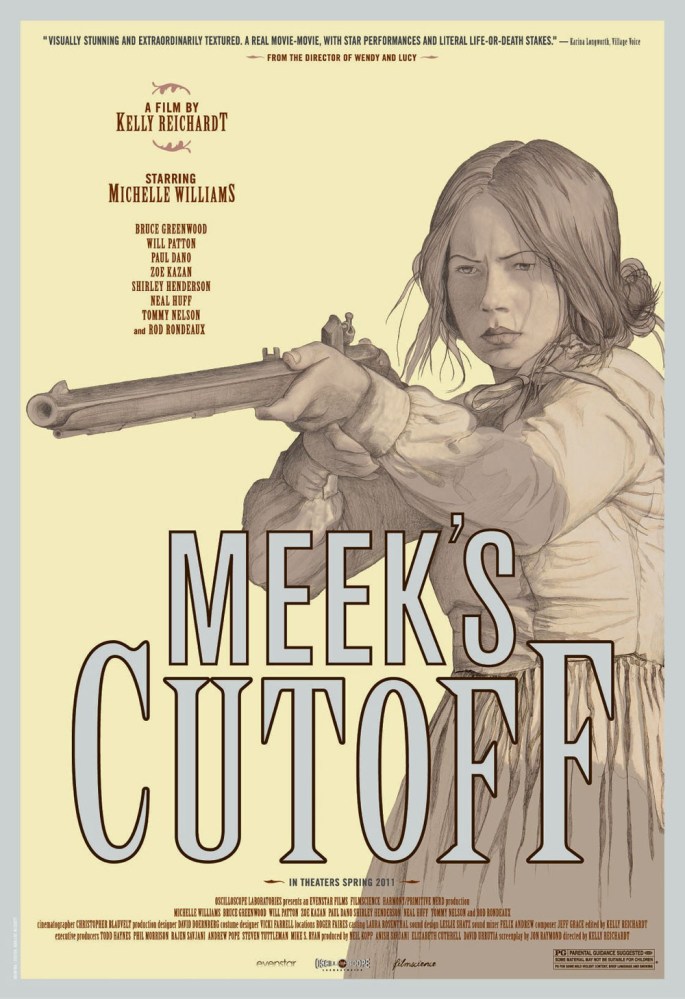
KELLY REICHARDT’S MEEK’S CUTOFF — A REVIEW BY NICK CLEMENT

meeks_cutoff_xlg

Meek’s Cutoff is a minimalist, austere western that appears to have been an absolute chore for the production team to film. Seriously. There’s absolutely no trace of present day life in this rocky, dusty, slow-burn item from super-smart filmmaker Kelly Reichardt (Old Joy, Wendy and Lucy, Night Moves), which is likely to appeal mainly to those of us who still have something resembling an attention span. Set in the 1840’s and loosely based on real events, the script by Jonathan Raymond concerns six pioneer settlers who end up getting lost with their befuddled guide, and as a result, risk death via starvation and/or dehydration. Sounds like a happy and light little film, yes? This is a harsh, brutal piece of cinema, all of it necessary and desperate and foreboding and ugly-beautiful. The fact that the guide, a perfectly hard-headed Bruce Greenwood, totally out to lunch and without any sense of direction, is as much of a mess as he is, lends the film a strange sense of black comedy. And the way that Reichardt continually reinforces the fact that all of the women in the party are intentionally being kept out of the plans and decision making, only hearing the particulars from a distance and at low audio levels, amps up the stress on the part of the viewer.

Michelle Williams is reliably excellent as the conscience of the film, the only member of the group willing and able to go up against Greenwood when absolutely necessary, and the entire piece has a sly feminist underpinning that separates it from modern entries in this extremely durable genre. There are a few more twists to the story that I won’t spoil, but I’ll add that the supporting cast, including Will Patton, Shirley Henderson, Paul Dano, Zoe Kazan, and Rod Rondeaux is totally ace across the board. Christopher Blauvelt’s smart and compact 1.33:1 cinematography subverts the traditional expectations of this milieu, instead opting for intimate compositions with an almost exclusive use of natural light, while Reichardt served as her own precise and judicious editor. Released in 2010 to great critical acclaim after premiering at the Venice Film Festival, Meek’s Cutoff is a formally challenging movie that proudly announces itself as one of a kind and is yet another unique, under the radar gem worth catching up with.

BEN WHEATLEY’S HIGH-RISE — A REVIEW BY NICK CLEMENT

1

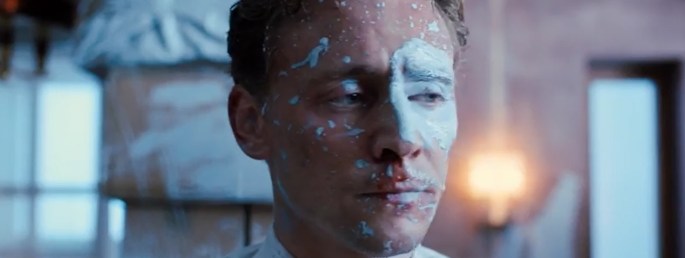
I’ve now come to expect something special from writer/director Ben Wheatley with each new film. In a short period of time, he’s unleashed Down Terrace, Kill List, Sightseers, and A Field In England, all movies that I feel are terrific pieces of cinema, and have totally confirmed him as one of the premiere filmmakers within his age group. His latest, the gloriously surreal and exceedingly stylish futurist satire High-Rise, takes him into Grand Guginol territory with flashes of sexual intrigue while overall presenting a wildly maniacal vibe to the proceedings. Based on J.G. Ballard’s famous and much-loved novel (which I’ve not read), my guess is that this film will be a very, very different viewing experience for those familiar with the source material than from those with no preconceived expectations. Being that I never, ever compare movies to books (one of the single most pointless endeavors that anyone could possibly waste their time with), I can only report about what I’ve seen with my two eyes in terms of the movie. I loved every, single depraved, erotic, disgusting moment of it. This will be a repellent film for some. For others, it’ll be exactly the kind of decadent showmanship that you’re looking for. This is an intense film, in every sense of the phrase, forcing the viewer into a constant stream of excess, never relenting for a moment.

2

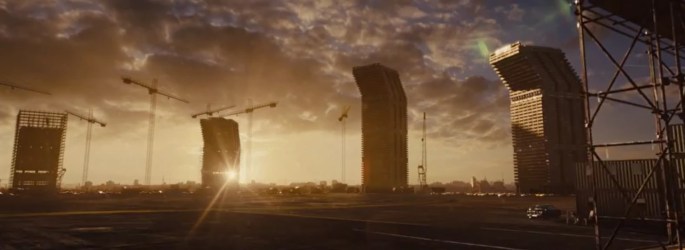
Tom Hiddleston finally has a juicy role to call his own, sexy Sienna Miller is back in smoking-hot mode (with some peek-a-boo nudity for extra frustration), and the entire movie has been crafted with a sophisticated visual style that blends ingenious sound work with feverish cinematography by Laurie Rose. Jeremy Irons is the brilliant yet foolhardy architect who has constructed a mega apartment building that in essence works as its own self-contained environment. There’s a gym, a grocery store, a school, restaurants, and all the creature comforts you might expect in high-society living, with each level to the high-rise comprising a different sect of society; the higher up in the high-rise, the more wealthy the inhabitants. All hell breaks loose when a series of power failures hit the complex, resulting in a total breakdown of acceptable behavior. Feeling like a thematic cousin to Snowpiercer, Wheatley stuffs his film with a locked and loaded aesthetic, and as usual, the results are wholly cinematic and form pushing; coming on the heels of the hallucinatory A Field in England, his latest walk on the wild side seems like a logical next step, further cementing Wheatley’s anarchist social worldview. The up-for-anything supporting cast includes Sienna Guillory, Luke Evans, Elizabeth Moss, Keeley Hawes, Augustus Prew, Peter Ferdinando, and a totally debauched James Purefoy. I’ve seen the film twice in three days and I can already tell that this one will be binged – HARD – once it hits Blu-ray.

3


GoldenEye: A Review by Nate Hill

image

GoldenEye is the very finest hour that Pierce Brosnan had as James Bond, both as a film and in terms of what he gets to do as the character. It’s my third favourite Bond film of all time and stands as one of the most exciting ventures the series has seen to this day. It definitely falls into a campy style, but one that’s removed from that of the original Bond films from way back when, one that’s all its own and decidedly 90’s. It’s also got one of the strongest and classiest villains of the series, a man who is in fact an ex agent himself which was a neat switch up. Brosnan is so photogenic it’s ridiculous,  whether dolled up in the tux or careening through a valley in a fighter jet. He just looks so damn good as Bond, and I sometimes wish he’d gotten a fifth crack at the character. Here we join up with 007 on a mission gone wrong, where he is ambushed and his partner Agent Alec Trevelyan a.k.a. 006 (Sean Bean) is killed, or so he thinks. 006 is in fact alive and well, with a few gnarly facial scars and a new nasty attitude. He puts Bond through a wringer with a diabolical scheme to hijack a Russian nuclear space weapon and do all kinds of lovely things with it. Bond teams up with the survivor of a decimated Russian research centre, a beautiful scientist named Natalya  (Isabella Scorupco) who inevitably ends up in his bed. It’s slick, it’s stylish, it’s sexy and everything a Bond flick needs to be. 006 has a dangerous asset in Xenia Onatopp (Famke Janssen), a lethal assassin whose weapon of choice are her thighs which she employs with the crushing power of two Amazonian pythons. Janssen plays the role with ferocious relish and the kind of enthusiasm that hadn’t been seen in a Bond villainess since Barbara Carrera in Never Say Never Again. Bean plays it ice cold, letting restraint and calculated malice steal the scenes as opposed to flagrant mustache twirling. I always thought he would have made a cracking good 007 as he has so much residual danger to his vibe from playing many heartless bastards in his career, but perhaps in another life. One of my favourite characters to ever hang out in a Bond flick shows up here, a cranky but lovable russian general named Valentin Zukofsky, played by the awesome Robbie Coltrane, an actor who really, really needs to be in more stuff. His few short scenes are the stuff that makes a piece timeless, and I wish we’d gotten to see more Valentin and more Hagrid elsewhere in the franchise. There’s the usual suspects like Judi Dench as M and Desmond Llewellyn as a crusty Q, and a host of other actors including Joe Don Baker, Tchecky Karyo, Minnie Driver and the irritating Alan Cumming who singlehandedly ruins scenes with his hammy preening. The film thunders along with furious energy and nicely paced action sequences, including a chaotic tank chase through the streets of Moscow and a stunner of a climax set atop a giant satellite dish. As Bond films go, you can never go wrong with this one.

PETER WEIR’S THE TRUMAN SHOW — A REVIEW BY NICK CLEMENT

1

The Truman Show is easily one of the most disturbing and prophetic films of my lifetime. Directed with extreme care by Peter Weir (Witness, Picnic at Hanging Rock) and written by Andrew Niccol (Gattaca, Lord of War, Simone) who always seems one step ahead of everyone else, this is a genuinely sad film about stolen identity, the loss of innocence, the understanding of evil, and how one man decides to finally think and act for himself after years of bowing to the expected norm. Jim Carrey was absolutely brilliant (and probably never better) than he was here, subverting the silly-man image he had cultivated for a few years before dropping this dramatic bombshell during the summer of 1998. The fact that The Truman Show came out in the popcorn movie season, and grossed $130 million domestic after rapturous critical response, is still one of the coolest cinematic notions I can think of. Just think about it for a moment – a movie built on ideas becoming a huge success in the mostly brain dead, CGI summer movie landscape. It seems almost too good to be true. And I’m not so sure that this movie does that sort of business if it gets released this summer, or next summer. Both of the moment and completely ahead of its time, The Truman Show sought to expose the fraudulent nature of reality television in the darkest way possible, while skewering the notion of 15 minutes of fame, and seeking to examine the fallacies of every day life. Ed Harris was hypnotic in an Oscar nominated performance as the magician behind the scenes, calling all the shots in poor Truman’s life, and the way that he truly feels that he’s his father in the final act, and most especially in those heartbreaking and liberating final scenes, still creeps me out to this day.

2

Peter Biziou’s tricky and stylish cinematography took on a uniquely voyeuristic aesthetic, and Weir’s decisions to set the story in a bright and sunny and antiseptic seaside town as opposed to Niccol’s originally scripted rainy and nighttime and noir-ish NYC, was a stroke of visual and thematic genius. Take some of the most frightening emotional material ever conjured up and place it inside this friendly, sterile environment that would seem inviting to anyone. Dennis Gassner’s exquisite and duplicitous production design is worthy of intense study, as it’s always working to suppress the behind-the-scenes shenanigans while giving off a radiant, scarily friendly vibe. The concluding moments of this film with Truman heading up that perfectly surreal set of steps still makes the hairs on the back of my neck stand up, and the decision on the part of the filmmakers to smash cut to black in the exact fashion that they did will always remain one of the best storytelling decisions that I can think of. The absolutely insane supporting cast was an embarrassment of riches, including the stunningly beautiful Natascha McElhone, cocky-funny Paul Giamatti, the brilliant Laura Linney, everyone’s best buddy Noah Emmerich, Harry Shearer, and Philip Baker Hall. The ensemble was in total synch in this film, allowing Carrey and Harris to totally dominate, while still providing the film with warmth and edge where needed. Producer Scott Rudin first approached Brian De Palma (and then many others) to direct before hiring Weir, who has had one of the more bizarre careers I can think of. The absolute final shot of this work of art stings with such ironic humor that it hurts to laugh. This is one of the great existential films of the 1990’s, and a film that has only gained in its masterfulness as the years have progressed.

3

Taken: A Review by Nate Hill

image

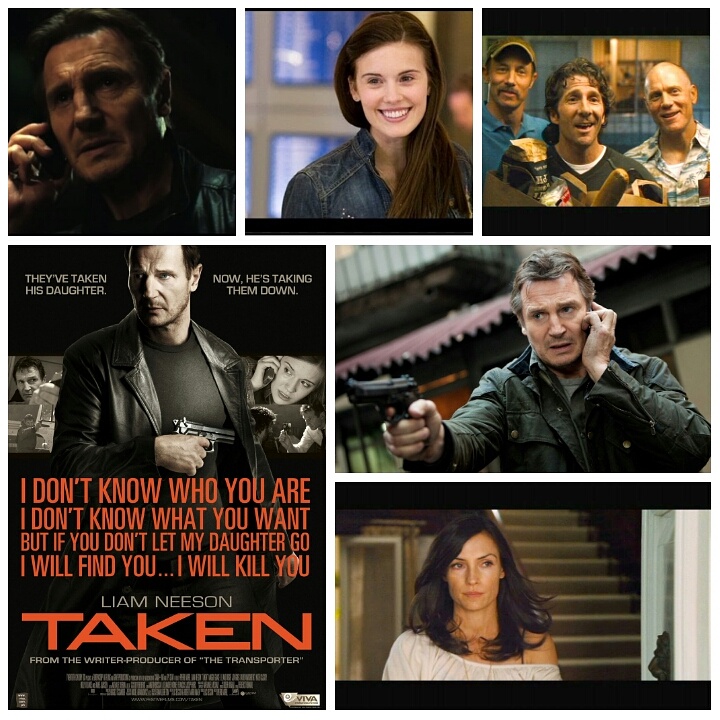
The Taken series has been done to death, memed out to glory and mined for market value a million times over since the first film came out way back in 2008, which has somewhat dimmed the charm of that original vehicle, at least for some of us. Like, how many times can Liam Neeson or his relatives be Taken before even they as characters realize that it couldn’t be happening and that they’re in a movie? Eventually the material unwittingly spoofs it’s origin in its need to repeat itself time and again. That’s not to say the first isn’t enjoyable on it’s own, in fact it’s quite the streamlined little dose of adrenaline that essentially coasts on some great pacing, neat choreography and the endlessly watchable Liam Neeson, whose career took a shot of nitrous to the heart after gamely stepping into the well worn shoes of the grizzled action hero. This was him nimbly ducking through the genre boundaries that his career was in up til that point, and the action thing fit him like a glove. The film is at its best when it follows Bryan Mills (Neeson) in action, which thankfully is most of the time. Mills is an ex CIA spook with some tactics that will seriously put a hurtin’ on you if you cross him in any way. A gaggle of moronic Bosnian human traffickers come under the receiving end of these tactics when they kidnap his vacationing daughter (Maggie Grace, looking suspiciously like she’s a decade older than her character is supposed to be) from Paris and auctioning her off to rich raghead perverts. This propels him into like an hour of non stop energetic ass kicking that is so fun to watch, as he shoots, stabs, sprains and splatters his way through hordes of eastern European cannon fodder, with not a second to spare for even the utterance of a any cheesy one liners. He’s assisted via Bluetooth by his three ex agency barbecue buddies (Jon Gries, Leland Orser and David Warshofsky) and has a few encounters with his jaded ex wife (Famke Janssen). And that’s about it, but Neeson sells the bare minimum as far as the genre goes with his effortless cool and stony, formidable stature that springs into startlingly spry motion every time he has to dispatch a new troupe of Slavic wise guys. If only they didn’t have to desecrate this little piece of lightning in a bottle with two sequels that dampen the momentum with cheap attempts at thrills, I may still feel strongly about this one as I did when it first came out. Hopefully they quit while they’re ahead, shirk the slimy dollar signs and let their first outing age in peace.

YORGOS LANTHIMOS’ THE LOBSTER — A REVIEW BY NICK CLEMENT

1

From the startling opening moments and continuing all throughout its entirely beguiling and metaphorical narrative, The Lobster presents us with another bizarre cinematic world from Greek director Yorgos Lanthimos (the Oscar nominated shock-fest Dogtooth and the funereal drama Alps), an emotional sadist who is constantly picking at his filmic subjects like itchy scabs, always trying to expose the raw and volatile relationship between humans and their fragile sensibilities. Co-written by Lanthimos and Efthymis Filippou, this is true, absurdist, pitch-black comedy, with plot threads that will make you feel purposefully uncomfortable, which you then feel bad about laughing over. The only thing I’m not super keen on in Lanthimos’ decidedly bleak yet strangely hopeful worldview is his strange obsession with weird animal violence; not sure where all of that comes from, but it’s a recurring theme for him that’s very noticeable. Colin Farrell isn’t the first actor you think of when dry comedy is the order of the day, but he fits perfectly within this rigidly stylish film that continually subverts its own sense of pictorial precision with a story that’s alternately confounding and exhilarating. Lanthimos is a true original and I can safely say that his films feel like the creations of only himself, so it comes as no surprise that this bizarre film won the Grand Jury prize at the Cannes Film Festival, and that so many big movie stars would jump at the chance to work with this brazen and unpredictable filmmaker.

2

The Lobster supposes a near-future where, by law, people must have a life companion. If you’re single, you’re sent to this ominous and ostentatious hotel that rests near the ocean, and you’re given 45 days to find a mate. And if you’re unsuccessful in your romantic quest, no worries, you’ll be turned into the animal of your choice, and released into the nearby woods, where you can look for love as a different species. If all of this sounds lunatic, well, it is, but it most certainly has a point of view in terms of relationships and societal expectations and honesty within the construct of partnership, and it basically serves as a corrective to the mindless crap that the Hollywood studios churn out on a weekly basis. Lanthimos recruited a starry cast for his first English language movie, including the magnificent Rachel Weisz, a priceless John C. Reilly, the brittle Olivia Colman, the uniquely photogenic Lea Seydoux, and a mysterious Ben Whishaw. Each shot by cinematographer Thimios Bakatakis feels formally perfect and in total synch with the sharp editing by Yorgos Mavropsaridis, the keep-you-on-edge musical jolts add a repeated sense of menace, and the way Lanthimos builds his entire creation to its haunting finale will keep you buzzing after the last frame has been exposed. I’ll certainly need to see this offbeat item again to unlock all of its secrets, but like the best of films, it’s begging me for an immediate revisit.

3


The Silver Stallion: A Review by Nate Hill

image

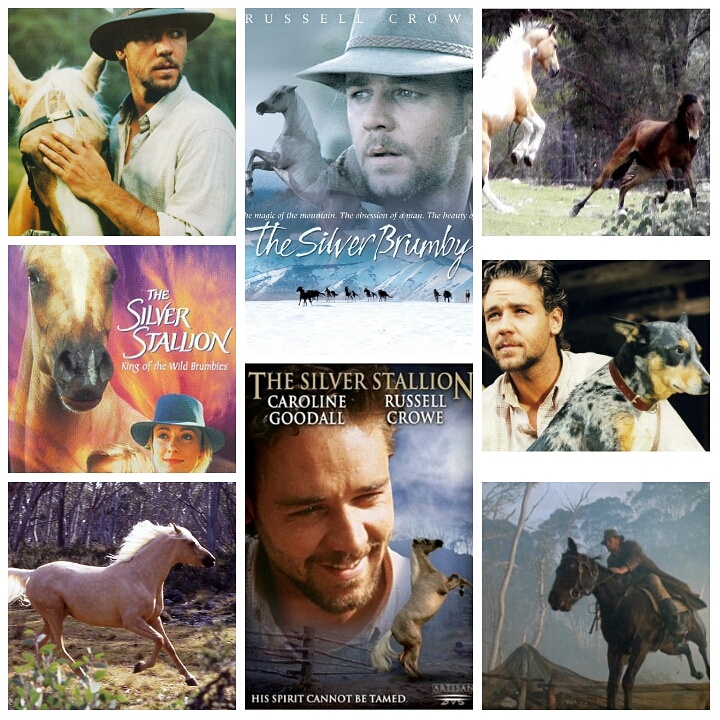
Before Russell Crowe blew up big time in North America, he did a few peculiar little flicks in his homeland of Australia. A couple rowdy gang stories popped up, and then he appeared in a little seen film called The Silver Stallion, or The Silver Brumby, which means horse in down-under-talk. Horse flicks are a dime a dozen and can go either way, usually pinning their focus on a target audience of adolescent viewers. This one is more of a visual tone poem than any sort of grand planned narrative, letting the horses do most of the emoting and character work, with the humans showing up now and again to provide their side of the story. An Australian mother (Caroline Goodall) tells her daughter (Amiel Daemien) tales of the prince of the brumbies, a member of a feral tribe of horses who has been separated from his heard and must find a way back. A relentless outback Man (Crowe) is dead set on both capturing and taming the silver Brumby, a quest which leads him to the very precipice of desperation. The horse traverses mountains, plains and many acres of beautiful northern Australian countryside to reunite with his clan. The scenes with just horses are amazing when one considers just how tough it must have been to coherently get them all together and have them interact according to the shots which the filmmakers needed to get. Quite the achievment indeed. The cinematography is pure misty magic, with both animal and nature alike providing some truly unforgettable images onscreen. Crowe is excellent, with a wild glint in his eye, quite committed to the character. There’s an overarching and altogether mythic tone to this film that always left me in awe when I saw it as a youngster. One gets the sense of true lore unfolding in front of us, the camera and script creating a piece of celluloid that’s purely entrenched in Australian storytelling, bringing it alive in the most visually impressive way possible. Very much worth your time, if you can track down a copy.