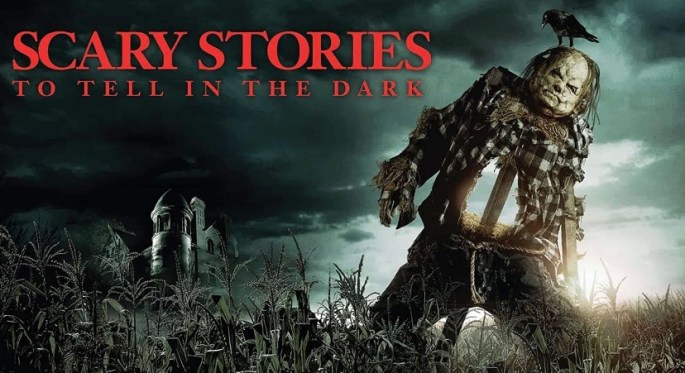
André Øvredal’s Scary Stories To Tell In The Dark

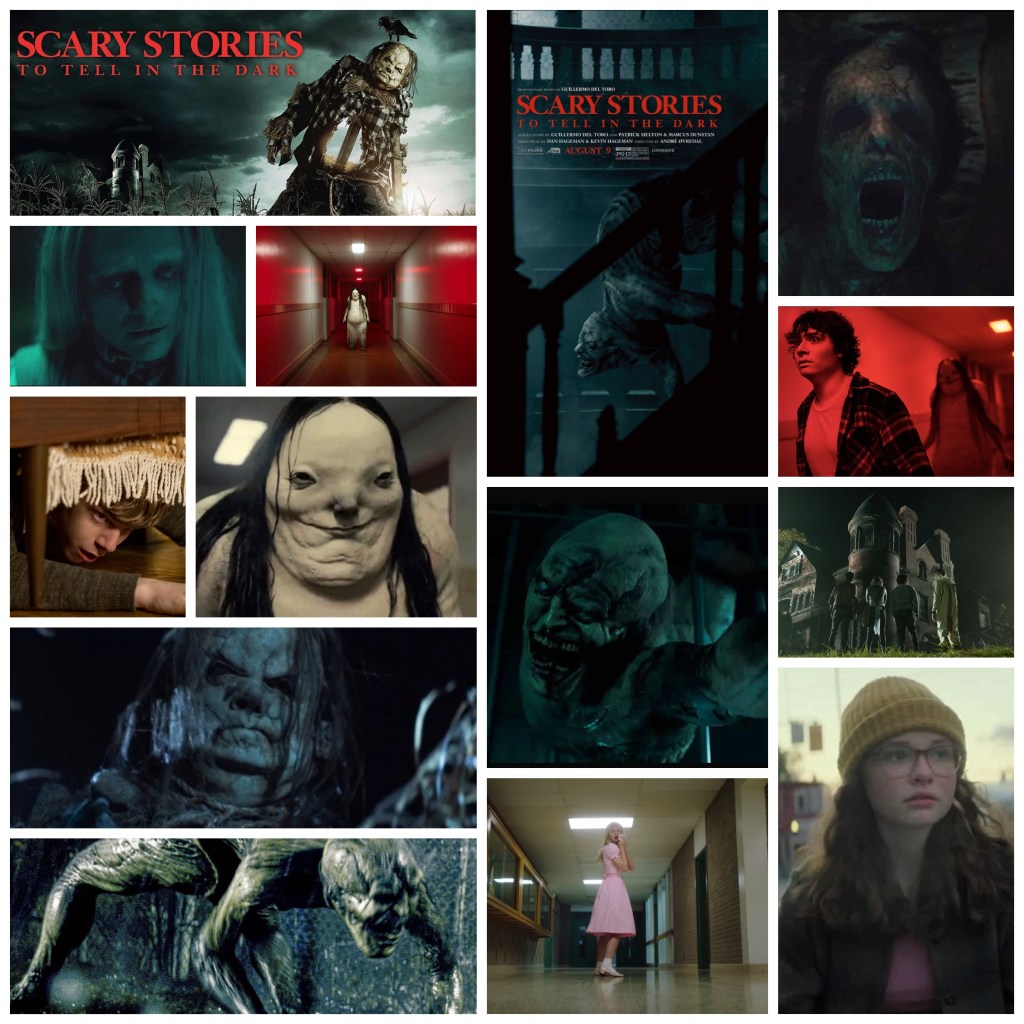
Scary Stories To Tell In The Dark would have been more effective if they’d kept the film adaptation as scary, and as dark as the famed book series and I understand that some cohesion in plot and script continuity was needed to give us a feature film, but I kind of wish they’d gone the artsy, surreal route and just adapted each story in an independent black & white ether from one another instead of trying to make them ‘make sense’ logically and have this… YA, Stranger Things teen angst template laid overtop, which really just sucks the spooky air out of the room. That’s not to say this is a bad film, there are some nicely terrifying set pieces, unnervingly tactile practical effects and thrillingly suspenseful sequences.. it’s just the framework that didn’t quite do it for me. The original book series was blissfully simple: just a bunch of random horror fables, independent of one another. The film makes up this cockamamie jargon about some Necronomicon-Lite book that has power over each monster from each respective tale, a book which a cliche ridden group of local kids must destroy as its contents come after them after the reading of each chapter. It’s complete with the small town vibe, bully, love triangle thing and all the rest, which I’m not sure was the right way to go, but like I said, I understand the decision to do so. Having said that, the special effects team has done wonderful work with the monsters and made them about as visually true to the books as possible without quite retaining the stark, ghostly potency of the illustrations we know so well. The contorting Jangly Man is an unholy terror and quite effective, especially as he storms a nearly deserted police station and scares the piss out of its disbelieving Sheriff (Gil Bellows). Harold the Scarecrow is eerie enough but doesn’t get a whole lot to do, while the shambling corpse looking for its Big Toe is pretty darn fucked up and uncomfortable. Most effective is the unnerving Pale Girl, who terrorizes a teen in the abandoned hallways of an asylum from all sides in a sequence that’s the closest the film comes to downright terrifying and, for a time, successfully lives up to the legacy of the books. Producer Guillermo Del Toro’s aura is felt here in the wonderful monster design and director André Øvredal (who helmed the brilliant and far scarier Autopsy Of Jane Doe) keeps the stylistics and suspense going nicely, if not always consistently. Sometimes the switch from the Black & White of the books to a colour palette here can feel a bit demystifying and less otherworldly, I wish they had just gone the Sin City route and done a complete monochrome wash with the odd splash of colour here and there, would have been much more evocative. It’s a decent enough horror film with some truly great monsters, creepy moments and immersive atmosphere… I just could have done without the teen drama subplots, expository connective tissue and this ever present need to *explain* everything and give every horror concept a ‘backstory’ instead of just trusting the source material to be enough on its own and just filming *that* without a bunch of silly narrative bells and whistles that feel familiar and stale.

-Nate Hill
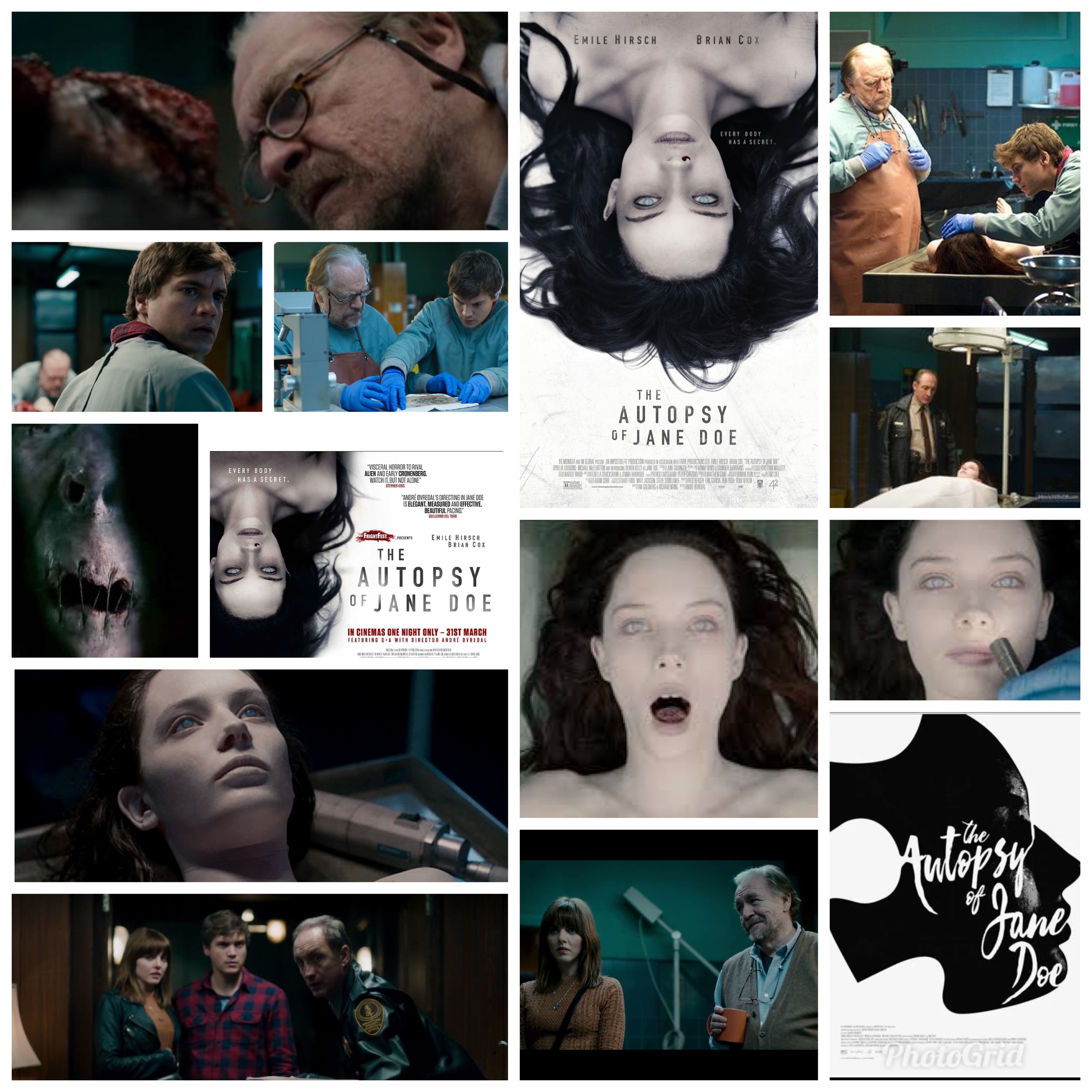
André Øvredal’s The Autopsy Of Jane Doe

It’s always a good barometer to use Stephen King’s praise when it comes to horror films, and he had nothing but great things to say about André Øvredal’s The Autopsy Of Jane Doe, a gruesome and very scary little chamber piece with quite the unnerving story to tell. Set in a spooky underground morgue, a father son duo of coroners (Brian Cox and Emile Hirsch) get one last corpse sent their way by the county sheriff (Roose Bolton from Game Of Thrones) just as they’re about to shut down for the night. Labelled a Jane Doe due to lack of any identification, she’s one in a series of bodies found at a boarded up house, but cause of death is eerily unclear. These two toil away looking for clues as the night wears on and her corpse gets steadily weirder with every layer of skin, bone and tendon peeled back, but something isn’t right with her and soon our heroes hear creepy sounds, see bizarre things in the hallways and realize that the last place they want to be is stuck down there with her, especially while a raging storm prevents them from leaving. It’s a terrific setup for a nightmarish horror story, and all the elements make it work quite well. Cox and Hirsch are two great actors who sell both the father son drama and the burgeoning fear as each moment gets scarier than the last. Jane Doe isn’t a dummy or CGI but played by real actress Olwen Catherine Kelly mostly the whole time, adding an uncomfortable depth and realism to their predicament as we search her body for signs of movement or remaining sentience and squirm in our seats. The photography here is crisp and concise, the scenes lit to effect and the score drives them neatly too. There’s plenty of gore and look-away moments involving the autopsy (unless that’s your thing, ya sick fuck) but the real fear lies in story and suspense as we gradually learn who Jane Doe was and what is now happening around her, while poor Brian and Emile are stalked by all kinds of freaky shit and their apparently haunted radio starts to spaz out on them. I can see why King liked this so much as it greatly reminded me of his work, it’s smart and not too predictable with perverse attention to detail in the body horror and a slick, immersive premise. Highly recommended.

-Nate Hill

“What happened to you?”A review of The Autopsy of Jane Doe by Josh Hains

The R rating description for the Autopsy of Jane Doe reads “bloody horror violence, unsettling grisly images, graphic nudity, and language”, a misleading description that may give future viewers the impression they’re in for a hearty gore fest. I thought I might be in for a suspenseful slasher, something akin to a cross between Don’t Breathe (another great horror entry from 2016) and The Ring, but with a greater focus on gory splatter. I wasn’t disappointed per se, but the graphic qualities of this movie don’t unfold the way you might expect them to, which admittedly caught me off guard yet pleasantly surprised me.

Without giving anything away (as this is a spoiler free review), I can tell you that this particular horror movie actually shows barely any on-screen violence. In fact, the bulk of the “bloody horror violence” actually comes in the form of the autopsy itself, which doesn’t shy away from giving viewers prolonged sequences of dissection, which plays directly into the “unsettling grisly images” of the rating description. Think of any CSI: Crime Scene Investigation autopsy scene, but make it run for an hour and twenty six minutes. The graphic nudity doesn’t come from an impromptu sex sequence, but from Jane Doe’s seemingly lifeless corpse laying nude on the cold steel table. It’s nothing exploitive or fetishized, just protocol when examining a dead person for cause of death. And as far as the language portion of the description is concerned, you might find more profanity in one scene in Planes, Trains, and Automobiles than in the entirety of this film, not that it’s a bad thing.

The movie introduces us to a gruesome multiple murder scene where a nameless nude young woman is found buried in the sands of the house’s basement floor and whisked off to the mortuary run by Tommy (Brian Cox) and Austin Tilden (Emile Hirsch), a father-son coroner duo, given until the early morning hours to find Jane Doe’s cause of death for the sheriff. Austin has plans with his girlfriend for the night, but once Jane Doe shows up, he feels compelled to stick around and assist Tommy, despite his girlfriend’s immediate unhappiness with being ditched yet again. Jane Doe’s is an extremely odd case for the duo, her entire outer body in perfect condition but her insides boasting a series of horrifying injuries including broken ankles and wrists. With how she died becoming a more frightening answer with every new internal injury discovered, the autopsy draws on, and as an unseen storm outside increases in its catastrophic potential (as heard via a radio that provides comfort music) several unexplainable supernatural occurrences begin to manifest, eventually trapping the duo in the mortuary and threatening to terrorize them all through the cliche dark and stormy night.

Early exchanges of dialogue between father and son, both personal and professional, as well as the blatant chemistry between the two actors, illustrate a believable history and relationship between the characters. You could change Hirsch’s last name to Cox and never doubt for a second that he is indeed Cox’s son, and it’s that believability that elevates the material from standard issue to fare to something special and unique. Both actors bring their A-game, and are not just convincing as family but also as coroners, the technical jargon adding another layer of authenticity and believability to the film. Your eyes and ears might be drawn to Cox more than Hirsch, as Cox has so often been a magnetic scene stealer everything from Manhunter to Braveheart to Red, but don’t underestimate Hirsch’s nuanced work here; this is his finest hour since Into The Wild.

For his first foray into American cinema, director André Øvredal (Trollhunters) does a splendid job of crafting a movie that contains characters we believe in and come to care for, all the while gradually among up the suspense as the movie unfolds. It’s always a delight when a movie sets up an intriguing premise while simultaneously providing characters worth watching, and not just the usual dumb victims.

The first hour of The Autopsy of Jane Doe is both interesting and totally suspenseful, but sadly the movie becomes a less interesting (yet still suspenseful) endeavour as more information about the titular Jane Doe is revealed. You’ll stick around to find out the fates of the characters, but after a third act exposition dumping of information about Jane Doe that lacks the subtlety of the scenes that precede it, the plot stops dead in its tracks: there is no plot left to tell. Once that information comes to light, the focus of the movie shifts to the survival of the characters against the overwhelmingly horrifying odds and lacks the surprise and intrigue of earlier scenes. I still found myself deeply involved, but not necessarily surprised or shocked by the revelations. This misstep by no means makes Jane Doe a bad movie, just underwhelming. 

Regardless of how I might feel about the third act reveals, I have to admit I still really enjoyed watching the movie right up until the final frames snapped to black. I especially enjoyed the relationship between Tommy and Austin, and even appreciated the brief but effective appearances of the girlfriend Emma (Ophelia Lovibond) who thankfully didn’t feel like a cliche and more like a real breathing human. I also appreciated the technical jargon and the extensive look at the practice of being a coroner and conducting an autopsy. It’s grisly stuff, sure to make even some of the most hardcore gore hounds’ stomachs churn, but in the context of the movie and its unique premise, makes complete sense and doesn’t feel like shoehorned gratuitous gore. The Autopsy of Jane Doe isn’t a perfect horror movie, a tall order these days, but it’s still a great and unique entry into a genre in need of a little spicing up. Somehow, despite the underwhelming feeling I got from the third act, I found the ending oddly satisfactory albeit predictable and not at all surprising. It works, like a knife through butter. If you’re in the mood for a good horror movie, open up your heart to The Autopsy of Jane Doe. You just might thank me after the sun shines in.