Angelina Jolie Pitt’s BY THE SEA – A Review by Frank Mengarelli

A cinematic love story is rarely grounded in reality.  We see a projection of it, someone else’s idea of what love is.  The escapism of boy meets girl, boy loses girl, and then the boy triumphantly wins girl back – is a mundane and trite formula.  Angelina Jolie Pitt’s BY THE SEA is a love story that wages war with itself and takes place within the reality of life.

image

The film spans a few weeks at a villa in France.  Roland (Pitt) and Vanessa (Jolie) are married, waging a toxic and a fearless psychological war with one another.  Roland drinks all day, desperately seeking inspiration for his next novel while Vanessa bunkers herself within their room and lies comatose in bed on a self medicated mixture of pills and wine.

image

At this point in their marriage, all is lost, yet they continuously fight for and against one another.  Their passion still burns bright, but their hope flickers as each minute of the film passes.

Jolie has become an inspiring vision behind the camera, fluidly crafting her film; using the vulnerability and innocence of 1970’s France as a canvas to showcase such a painfully beautiful film.

image

BY THE SEA is a clear cut example of a critical and box office failure that eludes the self indulgence of critics and the current cinematic populous with its pulverizing and honest view of love.

Philip Noyce’s The Bone Collector: A Review by Nate Hill

image

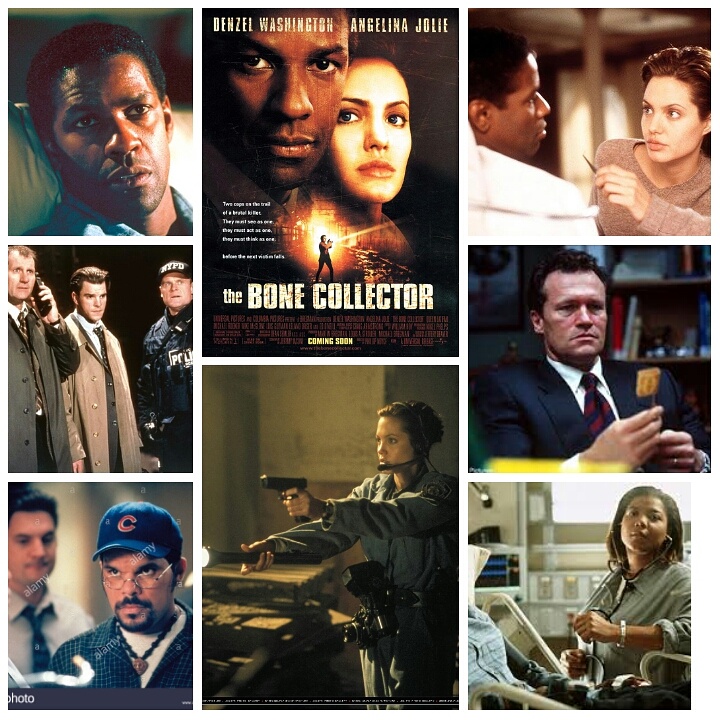
Philip Noyce’s The Bone Collector augments it’s atmosphere in the obvious hopes of evoking memories of David Fincher’s Sev7n (It’s even got an actor who also appeared in that film) which for the most part it nicely does. Story wise, however, it’s got entirely it’s own thing going on and follows the ever popular path of the serial killer whodunit. In this almost audience interactive sub-genre, we are routinely presented with a host of different characters, some following archetype and others not so much. The identity of the killer could literally be anyone we see onscreen at any time, even down to a tiny character who maybe shows up in one small scene. Then it’s up to the viewer to race the protagonist towards a correct conclusion, a game which I’ve never been all that good at lol. This time it’s Denzel Washington and Angelina Jolie who step up to the batters’s plate, hunting a very nasty individual who kidnaps people in locked taxi cabs and leaves them to die in various sadistic ways. Washington plays renowned criminal profiler and ex cop Lincoln Rhyme, left paralyzed from the neck down and bereft of any will to live following an accident. When his old cop buddy (Ed O Neil) shows up and pleads him to take a gander at the case files of the new killer, he reluctantly dusts off the old instincts and goes on the hunt. Problem is, he’s a turnip from the neck down and needs an avatar with whom he has a rapport with and can carry out the leg work, so to speak. He takes a shine to young patrol woman Amelia Donaghy (Jolie) who is showing early signs of the same forensic brilliance after she responds to the scene of one of the murders. She becomes an extension of him, and together they work to smoke out the killer and put a stop to his crimes, also bringing some kind of peace to Rhyme’s restless mind in the same stroke. They are hassled by the world’s most belligerent and obnoxious Police Captain (Michael Rooker in full on asshole mode) and helped by Rhyme’s kindly nurse assistant (a very good Queen Latifah). There’s also work from Bobby Cannavle, Leland Orser, Luis Guzman, Mike Mcglone and David Warshofsky too. Noyce is a solid and very slick director (he did wonderful work in the Jack Ryan franchise, as well as the very underrated The Saint), gamely shunting his aesthetic into the serial killer vs. Detective corner. It’s a decidedly grisly affair, despite the glossy sheen and big names, and almost veers into outright horror in places, but is always kept in line by the excellent chemistry and friendship between Jolie and Washington, who are both great on their own and as a team. Good stuff.

Girl, Interrupted: A Review by Nate Hill

image

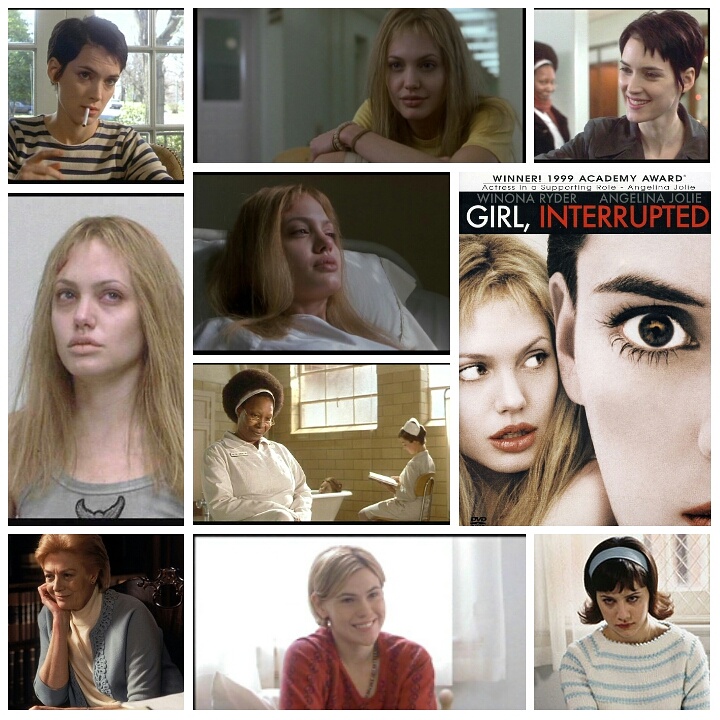
James Mangold is a director who takes nothing but top shelf scripts and spins them into gold, and Girl Interrupted is a shining example of this. It’s based on a book by Susannah Kayson in which she outlines an 18 month stay at a mental ward sometime during the 60’s. Mangold adapts her book for the screen, gathers an excellent cast of talented gals and a couple guys, and makes a film that holds up today like it was still it’s release week in 1999. Winona Ryder plays Susanna, a reckless girl who is labeled wayward and unstable by her parents, committed to a facility by her stern psychiatrist (Red Forman himself, Kurtwood Smith). She’s a little rough around the edges, but one senses the innate sensibility to her that perhaps has been buried under turbulent behaviour not by anything within her, but by the constricting nature of the time period she has been born into. In any case, she finds herself thrown into an environment she didn’t expect, with many other girls, some of which she clashes with, some of which she ends up befriending, and one that.. well, defies classification, really. The girl in question is Lisa, played by a fantastically fired up Angelina Jolie who nearly combusts upon herself in her furious performance. Lisa has been dubbed nearly unable to treat, yet simply has the kind of soul that doesn’t fit into a box, let alone lend itself to scholarly dissection. Ice cool one moment, a raging typhoon the next, and holding a dense riot shield over any trace of her true emotions every second, she’s an enigmatic, elemental wild card. It’s the best work I’ve ever seen from Jolie, getting her a well earned oscar nod. She teaches Susanna some lessons that only people on that side of the glass can comprehend, confounding the facility’s head doctor (Vanessa Redgrave) and puzzling a kind orderly (Whoopi Goldberg), two rational people who simply can’t understand the kind resolution and companionship that often comes out of irrational, unconventional interaction that almost always is seen as ‘unstable’. Ryder is pitch perfect and carries her share of the load, but despite being the protagonist, it’s Jolie’s show all the way. She’s unbelievably good and will break the heart of both first time viewers and veterans who put the dvd in every so often for a tearful revisit. The late Brittany Murphy is great as Daisy, another complicated girl, and Clea Duvall scores points as Georgina, the shy and reserved one. There’s also work from Jared Leto Elizabeth Moss, Angela Bettis, Bruce Altman, Mary Kay Place, Kadee Strickland, Misha Collins and Jeffrey Tambor. Tender, patient and non judgmental are qualities which are essential in films of this subject matter, as well as empathy from both viewer and filmmaker, to take a look at these girls and even though we may not understand what is going on with them or their beaviour, to simply bear witness, and be there for them. Mangold knows this and acts accordingly, leading to a beautiful film of the highest order. Viewers are sure to do the same, completing the artistic ring full circle.

SKY CAPTAIN AND THE WORLD OF TOMORROW – A REVIEW BY J.D. LAFRANCE

Sky Captain and the World of Tomorrow empire state building

Sky Captain and the World of Tomorrow (2004) was a film bound to polarize audiences and critics alike. Loving homage or blatant rip-off? It really depends on whether you love or hate this movie. Personally, I was transported away to this cinematic dreamland for the entire running time. Kerry Conran’s labor of love is an unabashed tribute to the old pulp serials of the 1920s and 1930s (Doc Savage, Flash Gordon, etc.). It succeeds where previous pulp serial homages of the 1990s failed (The Shadow, The Phantom, Dick Tracy). Like those films, Sky Captain successfully captures the look and feel of these vintage serials but, most importantly, it also stays true to their spirit — something that these other films failed to do (The Rocketeer as the lone exception). The road to its creation is a fascinating one, from a black and white independent film to big budget movie released by a major studio.

A striking image opens the film: a gigantic zeppelin docks with the Empire State Building while the night sky is filled with lightly falling snow. The world’s top scientists have gone missing and ambitious newspaper reporter Polly Perkins (Gwyneth Paltrow in Lois Lane mode) is covering the story for The Chronicle. She meets secretly with the last scientist who hints at a top-secret project. She soon has an idea of just how important this project is as huge, flying robots swarm over the city’s skies. They begin attacking the city, turning cars over like tinker toys.

Before you can activate your Commander Cody decoder ring, Joe “Sky Captain” Sullivan (Jude Law) and his squad of fighter planes arrive to save the day. It becomes obvious that Joe and Polly have a history together. There is a sexual tension between them as they form an uneasy alliance: she shares information with him in exchange for an exclusive scoop on the source of the robots and the mysterious Dr. Totenkopf (Laurence Olivier). They are aided in their adventure by Joe’s trusty sidekick, Dex (Giovanni Ribisi), a whiz technician capable of inventing a deadly ray gun, and Captain Franky Cook (Angelina Jolie), Joe’s ex-girlfriend and commander of a squadron of flying fortresses.

Kerry Conran grew up on films and comic books of the ‘30s and 1940s and commented in an interview, “The stuff that was most visually striking were the covers of the ‘30s and ‘40s. The graphic images just in the covers, I thought, told stories on such a grand scale…The artwork of that era, they just dreamed up things on that level.” He and his brother, Kevin, were encouraged by their parents to develop their creative side at a young age. According to Kevin, their mom “didn’t buy us coloring books and have us color them in, she’d bring us blank pads of paper with pencils and you’d make your own picture and color it in, that sort of stuff, which didn’t seem like a big deal, but it sort of is. We always had a lot of support in that respect.” The Conran brothers were also influenced by the designs of Norman Bel Geddes who did work for the 1933 Chicago World’s Fair and designed exhibits for the 1939 New York World’s Fair. Geddes also designed an Air Ship that was to fly from Chicago to London. Another key influence was Hugh Ferriss, one of the designers for the 1939 World’s Fair and who designed bridges and huge housing complexes.

Conran went to CalArts, a feeder program for Disney animators and became interested in 2-D computer animation. While there, he realized that it was possible to apply some of the techniques associated with animation to live-action. He remembers trying to “use the computer that was just emerging as a technology that was viable for filmmaking, and use a technique that was used traditionally forever – you know, the blue screen – but taken to a real extreme conclusion.” Conran had been out of film school for two years and was trying to figure out how to make a film. He figured that Hollywood would never take a chance on him — an inexperienced, first-time filmmaker. So, he decided to go the independent route and make the movie himself.

In 1994, Conran set up a blue screen in his living room and began assembling the tools he would need to create his movie. He was not interested in working his way through the system and instead wanted to follow the route of independent filmmakers like Steven Soderbergh. Initially, the Conrans had nothing more than “just a vague idea of this guy who flew a plane. We would talk about all the obvious things like Indiana Jones and all the stuff we liked.” Conran spent four years making a black and white teaser trailer in the style of an old-fashion newsreel on his Macintosh personal computer. Once he was finished, Conran showed it to producer Marsha Oglesby, who was a friend of his brother’s wife and she recommended that he let producer Jon Avnet see it. Conran met Avnet and showed him the trailer. Conran told him that he wanted to make it into a film. They spent two or three days just talking about the tone of the film because, according to Avnet, he wanted to “make sure we were on the same page, because he was going to write it. It wasn’t written at that point.”

Avnet and Conran spent two years working on the screenplay and developing a working relationship. Then, the producer took the script and the trailer and began approaching actors. In order to protect Conran’s vision, Avnet decided to shoot the movie independently with a lot of his own money. “I couldn’t protect him from the studios. I prayed we could shoot the movie and then show it to the studios. And we’re lucky, they all wanted it.” The producer realized that “the very thing that made this film potentially so exciting for me, and I think for an audience, which was the personal nature of it and the singularity of the vision, would never succeed and never survive the development process within a studio.”

When it came to casting actors in the movie, Avnet used his connections and reputation and started “looking for people who fit the look, looking for people who had the right theatrical pedigree, if possible, looking for people who weren’t over-exposed.” In 2002, he showed Jude Law the teaser trailer and the actor was very impressed by what he saw. He remembers, “All I got at that early stage was that he’d used pretty advanced and unused technology to create a very retrospective look.” Avnet gave him the script to read and some preliminary artwork to look at. Law: “What was clear was also that at the center was a really great cinematic relationship, which you could put into any genre and it would work. You know, the kind of bickering [relationship]. I always like to call it African Queen (1951) meets Buck Rogers.”

Avnet wanted to work with Law because he knew that the actor had “worked both period, who worked both having theatrical experience, who worked on blue screen, who hadn’t hit yet as a major action star.” The actor had just come off doing Cold Mountain (2003) and was intrigued at going from filming on real locations to working on a movie done completely on a soundstage. Law recalls, “At the time, there was no money attached, and he [Conran] was a first time director. It took us a year and a half to put it together and even then, we didn’t have a studio deal.” The actor believed so much in Conran’s movie that he also became one of the producers and used his clout to get Gwyneth Paltrow involved. Once her name came up, Law did not remember “any other name coming up. It just seems that she was perfect. She was as enthusiastic about the script and about the visual references that were sort of put to her, and jumped on board.” Paltrow said in an interview, “I thought that this is the time to do a movie like this where it’s kind of breaking into new territory and it’s not your basic formulaic action-adventure movie.”

Giovanni Ribisi met with Avnet and, initially, was not sure that he wanted to do the movie but after seeing the teaser trailer, he signed on without hesitation. Angelina Jolie had literally come from the set of Tomb Raider: The Cradle of Life (2003) and agreed to work on the movie for three days. Despite her small role, she had conducted hours of interviews with fighter pilots in order to absorb their jargon and get a feel for the role.

Avnet went to Aurelio De Laurentiis and convinced her to finance the film without a distribution deal. Nine months before filming, Avnet had Conran meet the actors and begin rehearsals in an attempt to get the shy filmmaker out of his shell. Avnet recalls, “By the end of three days of rehearsals, I remember where he said something, describing the ice cave where the dynamite is, and I could see the actors looking really, really intently on him. I realized that he got them.”

Ten months before Conran made the movie with his actors, he shot it entirely with stand-ins and then created the whole movie in animatics so that the actors had an idea of what the film would look like and where to move on the soundstage. To prepare for the movie, Conran had his cast watch old movies, like To Have and Have Not (1944) with Lauren Bacall for Paltrow’s performance and The Thin Man (1934) for the relationship between Nick and Nora that was to be echoed in the one between Joe and Polly.

Working on a soundstage surrounded entirely by blue screens required a new way of looking at the acting process. Ribisi remembers, “The analogy that you say to yourself is it’s like doing theater or avant-garde theater. There’s just a stage and the actors and all of that. But no, it is different, and it’s something that actors are going to have to be getting used to and [they need to] develop some degree of technique for that.” Law echoed these sentiments: “It almost felt like make-believe playing, rather than limiting because I couldn’t see something specific.” Avnet constantly pushed for room in this meticulously designed movie for the kind of freedom the actors needed, like being able to move around on the soundstage.

Conran and Avnet were able to cut costs considerably by shooting the entire film in 26 days (not the usual three to four months that this kind of film normally takes) and working entirely on blue screen soundstages. After filming ended, they put together a 24-minute presentation and took it to every studio in June of 2002. There was a lot of interest and Avnet went with the studio that gave Conran the most creative control. They needed studio backing to finish the film’s ambitious visuals. At one point, the producer remembers that Conran was “working 18 to 20 hours a day for a long period of time. It’s 2,000 some odd CGI shots done in one year, and we literally had to write code to figure out how to do this stuff!”

Sky Captain
is an absolutely gorgeous looking movie filled with eye-popping visuals and drenched in atmosphere. Everything is bathed in a warm sepia filter and captured in a soft focus lens clearly meant to evoke the glamour of classic Hollywood cinema. Sky Captain is a marvel of set design and visual effects. The movie’s elaborate backgrounds were created through a series of photographic plates and 3D animation. By creating an entire world through CGI, Conran raised the bar on these kinds of films. Now, filmmakers are only limited by their imagination… and their budgets.

The problem with most films of these kinds is that the actors are often overwhelmed by the striking visuals. Fortunately, Conran has assembled a strong cast. Jude Law does an excellent job as the wisecracking, square-jawed matinée hero while Gwyneth Paltrow is his ideal foil, criticizing him at every opportunity but you know that it is done out of love. Law remembers that he “tried doing it like an American using 1930’s speak, but it felt like we were sending it up and what we wanted to do was to play it for real, so people didn’t think that we were making a modern version of a 1930’s movie.” Everyone is clearly enjoying breathing life into these archetypal characters. High caliber actors like Law, Paltrow and Angelina Jolie take these intentionally cliché characters and make them interesting to watch.

Sky Captain
has all the markings of a debut by a first-time filmmaker. There is a go-for-broke, let’s-cram-everything-in-this-one attitude that a first-timer has a tendency to adopt because they do not know if there are going to get another chance. Conran has said that his intention was to create something “almost innocent and fun, the things that inspired me in wanting to make movies, the qualities of why I wanted to go to the movies. You lose yourself and escape into a world that didn’t exist anywhere else but in the movies.” Sadly, Sky Captain failed at the box office thus insuring the unlikely prospects of a sequel. It is too bad because the movie presents a richly textured and detailed world with fun and exciting characters.
B Movie Glory with Nate: Cyborg 2: Glass Shadow

image

The fact that Cyborg 2: Glass Shadow has almost nothing to do with the first Cyborg is probably a good thing. I’ve seen both, and the first one is an ugly, grimy early starring vehicle for Jean Claude Van Damme that plays like an episode of American Gladiators on PCP. This sequel, however, is a scrappy little sci fi delight. It takes plays in a futuristic B-Movie realm where maniacal corporations wage war on each other for the control of lucrative artificial intelligence, cyborgs who can be programmed to be slaves, soldiers or whatever you want. Angelina Jolie is Casella ‘Cash’ Reese, a gorgeous warrior Cyborg held under the watchful eye of the Pinwheel corporation, ruled by a hammy Allen Garfield. Her trainer, a mercenary named Colton Hicks (Elias Koteas) starts to fall in love with her. In this particular B movie universe, it’s implied that there are fragments of what may resemble a soul that begin to grow inside the cyborgs, and gradually Cash falls for him as well. They plan their escape, and embark into a delightfully cheap looking metropolis of the future, seeking an oasis far away that’s basically a non extradition zone for robots. Pinwheel sends some dangerous bounty hunters after them. There’s fighting. And running. And shooting. And Cyborg sex including a 17 year old Angelina going fully topless, which makes me wonder how the filmmakers ducked the authorities on that one. Not that I’m complaining. Aside from baring her chesticles, she makes a pretty solid action heroine at that age, and even before making a name for herself she carries the film pretty well. Koteas is pretty much capable of anything as far as acting goes, breezing through this one in his sleep whilst still keeping one eye open to give Hicks a vulnerability and desperation that the film hardly deserves. Character actor Billy Drago gives a scene stealing performance of sheer unbridled lunacy as Danny Bench, a terrifyingly unhinged contract killer who pursues the pair and has an absolute smackdown of a fight sequence with Koteas. That old salty dog Jack Palance even shows up for an amusing, warmhearted supporting role as a mysterious hacker who helps the duo out and in turn gets his own retribution. Get one thing straight right now: this a B movie. If you go into one of these with your critic’s brain shoveling coal into the fires of cynicism, you’re gonna have a bad time. These films are overtly cheap, chock full of deliberate plot holes and speckled with acting that could wilt flowers. But I love them anyway. I grew up watching an endless stream of direct to video horror, sci fi and thriller flicks that maybe ten people on planet earth besides me have seen. I love them, they are amazing and they exist in a realm far, far outside film ‘criticism’. It’s best to gear your brain into fun mode before hitting play, then just relax and enjoy. If you’re the type of person that can do that, you’ll love this kind of stuff. If not, steer well clear. Cyborg 2 is the perfect example of a B movie done right, and I’ll be the first to admit that there’s plenty that are made with the kind of lifeless ineptitude that doesn’t even deserve a place in the genre. This one’s cheaply made, doesn’t have much of a budget to its name, yet admirably creates it’s own little world with what it has, spinning a story of action, romance, robots and Angelina Jolie. Honestly, who can say no to those things? You, that’s who.

PTS PRESENTS: 15 QUESTIONS WITH COSTUME DESIGNER ELLEN MIROJNICK

ELLEN

Award winning costume designer Ellen Mirojnick has been a part of some of the biggest, most exciting films and TV programs over the last 30 years. With work stretching various genres and styles, she’s collaborated with some of the industry’s true heavyweights, including Steven Soderbergh, Ridley Scott, Adrian Lyne, Paul Verhoeven, John Woo, Richard Attenborough, Renny Harlin, Mark Rydell, Angelina Jolie, and the late Tony Scott, to name only a bunch. An Emmy and Costume Designer Guild Award winner for her spectacular work on the HBO film Behind the Candelabra, Ellen continually applies her love and passion for the arts to each project she takes on, with results that are always eye-catching and wholly appropriate to the material. Podcasting Them Softly is proud to present an interview with Ellen, as she discusses her inspirations, some of the key films on her resume, her dynamic work on The Knick, and what she has in store for the future. We hope you enjoy!

knick mixer

  1. How did you get your start with costume design and what are some memories from your first job?

FQ

I was designing junior sportswear in NY. My husband was working on a film in New Orleans called French Quarter. The film didn’t have a costume designer. I was visiting, they offered me the job, and I was hooked! I did everything from designing the costumes through full wardrobe on set, including sewing. And I can’t sew! So I had holes in my fingers and had to continually wipe blood off the clothes!

  1. Who were some of your inspirations when you were starting out, and growing up, what were some of your favorite films, or the films that spoke to you the most?

Auntie_Mame_Poster

Well of course Edith Head. But my favorite film was Auntie Mame, so I couldn’t get enough of Orry-Kelly’s work. I’ve always loved movies! As a kid and while growing up, I went all the time to the cinema. The only films I didn’t see were scary ones. I loved all of Audrey Hepburn’s films, Auntie Mame as I said, and Some Like It Hot was a favorite. I really responded to film noir, the French New Wave, and I just really loved sitting in the movie theater dreaming in the dark.

  1. What was your first “big break” in the industry?

fatal_attraction_xlg

I had a few big breaks. I was given a film to design and was immediately a Costume Designer. I would say my career as we know it began with Fatal Attraction.

  1. You have worked with some absolutely legendary filmmakers – Ridley Scott, Adrian Lyne (multiple times), Oliver Stone (multiple times), John Woo, Kathryn Bigelow, Steven Soderbergh (multiple times), Paul Verhoeven, and Tony Scott, just to name a few. Has there been one filmmaker, on this list or not, who you feel you’ve been especially “in tune” with?

NEW YORK, NY - DECEMBER 05: American film director Steven Soderbergh attends

I was in tune with all of the above when we worked together, all were momentous experiences! But the legendary filmmaker who I love working with and would say I’ve been “in tune with” the most is Steven Soderbergh. I call him The Grand Master.

  1. Which currently working filmmakers would you love to collaborate with?

nolan

I would love to collaborate with Steve McQueen, or somebody brand new, who is passionate about telling stories. Christopher Nolan, I love how he is fascinated by alternate or parallel universes. Marty Scorsese would be the ultimate New York State of Mind, and I’d still love to work again with everyone I’ve previously collaborated with.

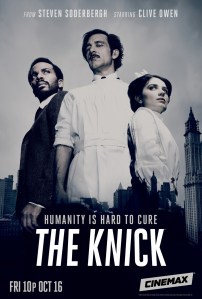
  1. After working with Soderbergh on the fantastic Behind the Candelabra which won you an Emmy, he brought you on to his revolutionary new TV show The Knick. What’s it been like working on that show?

knick_ver20_xlg

There aren’t enough words to describe working with Steven. I feel blessed to be a member of this amazing team. We were all tremendously excited to do something as adventurous as The Knick. 10 hours of storytelling, the complexity of the characters, a true time in history with the early 1900’s, and yet strangely, it still feels very much like today. It was absolutely ELECTRIC putting the pieces together. We built a hospital and a city through a lens we hadn’t seen before. It doesn’t get much better, needless to say, when watching great actors exploring the unknown! Steven has an idea and we get to explore it. He is very trusting with his crew, and he allows us great freedom interpreting the material. He doesn’t micro manage! The goal, as it’s been said by others, is that the actors come onto the set and you know everything works when he picks up the camera and begins to shoot, it’s time for action! The show has been a magnificent challenge, and my joy comes from meeting the various challenges every day, and working with my team, especially with Production Designer extraordinaire Howard Cummings.

  1. The Knick feels like cinema turned into TV. How has this show differed from other TV programs you’ve worked on?2The Knick doesn’t compare with anything. When you are involved with a project that breaks the rules, the rebel in me, as with all the members of the team, rises far and beyond anyone’s wildest dreams! I have only done the occasional TV pilot, all of which have sold and went on to become successful series. And one other TV film, Cinderella, which was lots of fun. But the Knick is great storytelling, chapter by chapter, with great actors loving their characters and their challenges. We shoot it like you shoot a film and I don’t know anyone else that can shoot 560 pages in 73 days! Steven can and does!
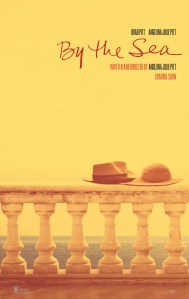
  1. This fall sees the release of Angelina Jolie’s By the Sea, which looks emotionally draining and very much a throwback to 70’s filmmaking. What was it like working with her and Brad Pitt on this seemingly quite personal looking film?

by_the_sea_xlg

Working with Angelina and Brad was great! I didn’t know what to expect but they were great collaborators. It’s a difficult film that was very demanding and an intense assignment, but rewarding none the less.

  1. John Woo’s Face/Off is one of the greatest American action pictures ever made, and the stylish costumes, especially the suits, were a big component of that film’s overall sense of visual flair. What can you remember about working on that bullet fest?

CAGE

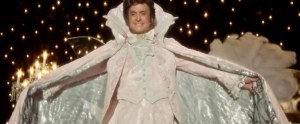
I was thrilled to work with John Woo. I was a great fan of all his Hong Kong films. I loved that I always liked his bad guy! Face/Off was originally going to take place in the near future. I came along and suggested that at the core of the film lived the same man, both sides of him, good and bad, just like the work John does best. They changed the film’s time frame to present day and the characters just spoke to me. John had an idea that when Nic Cage   walked across the tarmac, his coat would fly open as in Lawrence of Arabia. We were able to achieve it with the aid of wind machines! Everyone thought it was a spectacular leather coat and it went on to inspire many future iconic film characters. It wasn’t leather, but rather, it was a polyester priest robe!

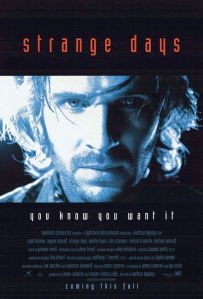
  1. Strange Days is one of the most ambitious science fiction films ever made, and everything about the look and feel of that film is tremendous, especially the distinct wardrobe worn by every scuzzy character. What can you remember about working with Kathryn Bigelow on this masterpiece of cinema?

strange_days_ver2

Working with Kathryn was quite fulfilling. The film took place at the turn of the decade, the year 2000. It was 1994 if I remember correctly when we were shooting, and 2000 wasn’t that far into the future. I helped to create a world that was a hyper mix, with various ethnicities, different time periods, rock ‘n roll, etc. It was divine ecology with nothing being wasted; the rich were rich, the poor were desperate. I remember wanting it to be decadent and sexy. I think it was ahead of its time for sure…

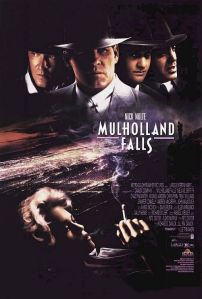
  1. One of the most underrated films on your resume is Lee Tamahori’s Mulholland Falls, aka, “The Hat Movie.” That film has an extraordinary sense of style, and the costume work was nothing short of brilliant. What was it like doing a full blown period noir and getting a chance to work with that incredible male ensemble, all of whom looked beyond snazzy in their outfits?

mulholland_falls

I’m so happy you feel that way about this film as I loved working on it! I love designing for men, it’s pretty clear. I had trouble being thought of as one to design period films, so when I was asked to do this film I felt like I had finally gotten a chance. It was my first period film since Chaplin, and I went into it full on. Nick Nolte, Chazz Palminteri, Michael Madsen, the late Chris Penn, John Malkovich, Melanie Griffith, Jennifer Connelly, and all the supporting players, including Rob Lowe – what a fabulous cast to work with! I loved working on the colors of the suits, and we found original fabrics for all the guys, and all the hats were handmade for the picture. I had a great time, but the story no one knows is that the real life detectives all wore white suits and cruised the strip in a white convertible! The producers thought the studio would be expecting “Men in White”, but after meeting with Frank Mancuso, the head of the studio at that time, he told us we had made the right choice.

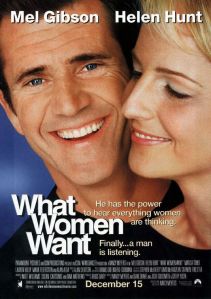
  1. Nancy Meyers is a filmmaker who has a very specific style of storytelling and set decoration. What was it like working with her on What Women Want, which is one of the more thoughtful entries on her resume of entertaining comedies?

what_women_want

Nancy and I have very similar tastes in most areas, which made for a really good collaboration. It’s always a pleasurable working experience when your taste aligns with that of the filmmaker.

  1. Is there a genre you’d like to work in that you previously haven’t?

DOUGLAS

I’d love to do a musical or a fantasy, maybe a nitty-gritty thriller or something definitely not pretty. Actually, anything with a great story and an inspired storyteller – that’s what I’m looking for in new projects.

  1. Who are some of the other current costume designers who inspire you to continuously do great work?

knick_ver11

There are so many great designers working today and I don’t want to leave anyone out!

  1. If you’re able to divulge any information, what projects do you have coming out in the near future, and what are you currently working on?

father

I’m currently in Cambodia, about to shoot Angelina Jolie’s next directorial project. It’s adapted from the book by Loung Ung called “First They Killed My Father: A Daughter Remembers.”

Mirojnick Banner

(This interview was conducted via email in November 2015, and was edited by Nick Clement.)

OLIVER STONE’S ALEXANDER — A REVIEW BY NICK CLEMENT

1

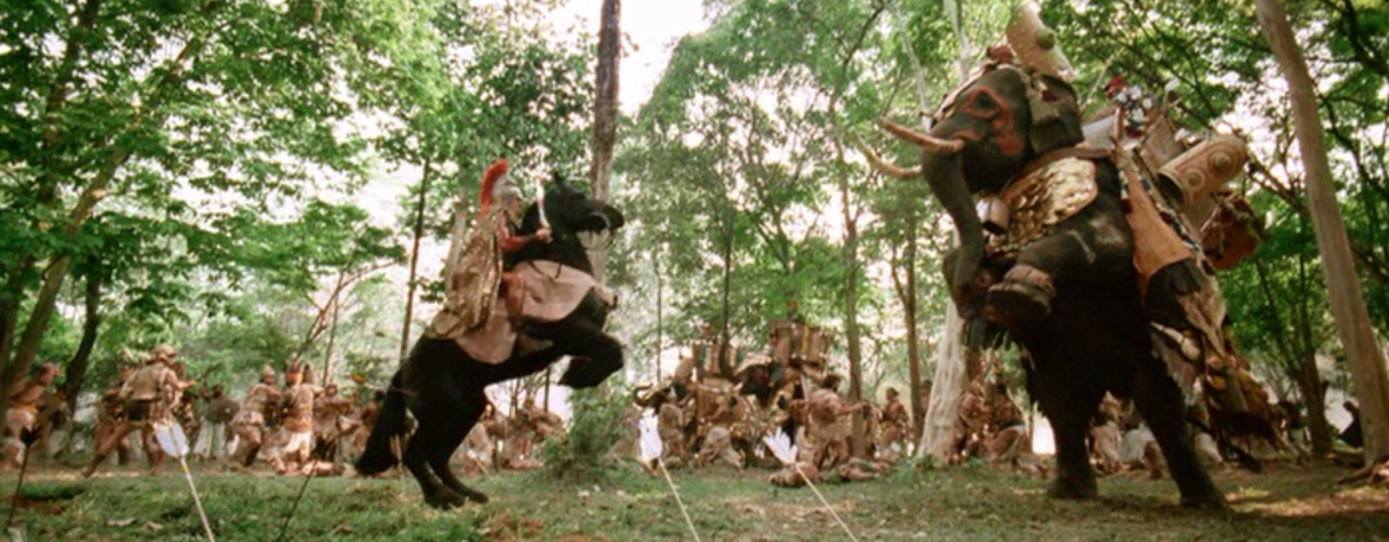
Bursting with over-sized ambition, ferocious amounts of energy, and fever-pitch emotion that’s never afraid to go over the top, Oliver Stone’s gargantuan period epic Alexander is one of the best modern evocations of ancient history that’s ever been crafted, and easily the most underrated film of Stone’s legendary career. I’ll never understand the unnecessary hate that was piled upon this remarkable achievement upon first release; I think it’s because Stone dared to challenge familiar genre ingredients that people were hesitant to the film’s many strengths, from the non-linear narrative to the positively overwhelming battle sequences that put every other depiction of cinematic “Sword and Sandal” combat to shame. In fact, I’ll go so far as to say that the “war-elephant” fight in the jungle, to say nothing of the massive Battle of Gaugamela set-piece, is the single greatest battle scene of its type ever captured on film – relentless, beyond bloody, and truly terrifying — it’s positively hellish to observe, with Stone totally flipping out, even going so far as to show what would happen if an elephant stepped on your face. Rodrigo Prieto’s muscular, hugely expansive, and utterly breathtaking widescreen cinematography is always a sensuous treat, the fired-up screenplay is filled with boisterous speechifying and juicy political intrigue, the immense and soaring musical score by Vangelis reaches for the stars, and the performances range from small to large from a ridiculously stacked cast.

Colin Farrell gave it everything and more and left nothing to spare in a performance that clearly grabbed him from the inside; just look at his eyes in some of the scenes in this film and tell me he’s not insanely aligned with his character. And then you have Angelina Jolie at the absolute pinnacle of her silver-screen hotness – a true serpent/vixen of a role for the ultimate cinematic cobra. Jared Leto, Christopher Plummer, Rosario Dawson, Anthony Hopkins, Val Kilmer and a plethora of “faces” all robustly spiced up the ensemble, while the extravagant and eye-filling production design by Jan Roelfs contributed to the verisimilitude of the entire film. Yes, it’s campy in spots, but likely intentionally so, as the various subtexts and themes are explored in an upfront fashion. But for the most part, this is a deadly serious tapestry of people, places, events, and moments, all patched together in that fabulously unhinged Stone fashion, where the storytelling and filmmaking demonstrates a live-wire spark. The dense script was highly interested in the various characters and their unique motivations, and there’s a sense of gusto to just about every facet of this film that never ceases to impress. This is bravura filmmaking, made by a master director who clearly possessed a true passion for the material, which makes the entire production feel all the more compelling. I saw this film twice theatrically, I own every permutation of the picture that’s been released on DVD/Blu-ray thus far, and I feel that Stone’s recent and most definitive cut is the absolute best that’s been offered. This is a project that Stone seemingly cannot let go of, a film that has driven one of our most challenging and distinctive filmmakers potentially insane.

2