JACK DETH IS BACK . . . AND HE’S NEVER BEEN HERE BEFORE: An Interview with Tim Thomerson by Kent Hill

Cherry-2000-31

I was mid-way through my interview with C. Courtney Joyner when Tim Thomerson’s name came up. Joyner of course, had directed Tim in Trancers 3, and cooler still, he had just had him round for breakfast earlier that day. You might call it an imposition, but I mentioned that if there was even a remote possibility that he could put me in touch with Tim, I would be forever grateful. Courtney told me he was seeing Tim again on the weekend and would put forward my proposition. Soon after, I received a message with a phone number.

Now, I’m usually in the habit of arranging an appropriate time and day to call, but Courtney had left it open. I remember for the first time, in a long time, being nervous to make the call. After all this was Tim Thomerson who was going to be picking up the phone; a guy, a legend that I had watched for years. So I summoned my moxy and dialled the number. The familiar international ring-cycle began and then . . . “Thomerson,” the voice on the other end of the line said.

I’m going to come off as an idiot here, but I.D.G.A.R.A. “Damn,” I remember thinking. “He sounds exactly like he does in the movies.” Stupid, I’m well aware. But the moment was profound, and I was instantly transported to that time when I sat in the theatre watching Metalstorm, and that glorious afternoon I first sat down to watch Future Cop (aka Trancers). Here was Jack Deth now, on the end of the line and talking to me like we had been buddies since forever.

I did kinda wish we could have jumped into our chat right there. Tim was at once disarming, candid and as cool as i had expected him to be. He was off to his retreat in the desert to do “old man shit” as he put it, and, while I realize he is an aged gentleman now, that voice, the larger than life character that he is still packed all of the vitality, swagger and youthful exuberance that very much belies his years.

I didn’t have to wait long before we would talk again, and when we did, the conversation picked up right where it left off. I would take a significant amount of time to go through the length and breadth of his career, so I restricted myself to personal favourites among his credits. We talked about his beginnings, his great friendships, his bumping into Mel Gibson at the doctor’s office, him working with his idols, Australian Cinema and his meeting with the legend that was Sam Peckinpah.

For those of you who regularly check out my stuff here on the site (God bless you), I fear I might be starting to sound like a cracked record. A number of times in the past I have found myself gushing about the opportunities I have enjoyed whilst writing for PTS, and how humbled and indeed awe-struck I have been as a result of these encounters with the folks who make the movies. Sadly I’m now going to do it again. Tim Thomerson is a hero of mine and it was at once spellbinding and an indescribable treasure to have had the chance to shoot the breeze with an actor I have long held in high regard . . .

. . . and an equal pleasure it is, to now share it with you.

Enjoy.

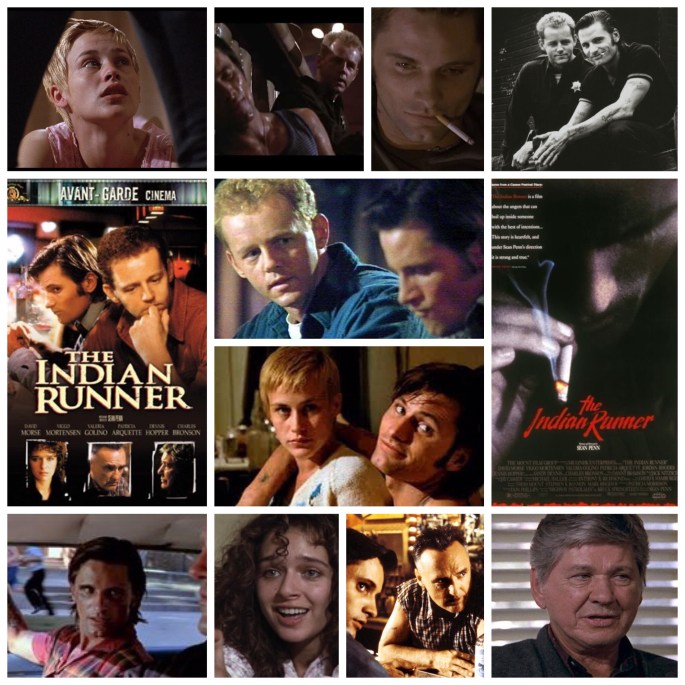
Sean Penn’s The Indian Runner

I’ve often argued with myself whether Sean Penn is a better actor or director, but the truth is he’s just as captivating a storyteller whether on camera or behind it, and The Indian Runner is a bold testament to the latter, a somber, tragic family drama that leaves the viewer reeling with it’s hard luck characters and sorrowful resolutions. Set in the heartlands sometime after the Viet Nam war, Penn’s focus is on two brothers who have been at odds with each other years. David Morse’s Joe is a farmer turned cop, an even tempered, recent family man with a loving wife (Valeria Golino, what ever happened to her?) and his shit firmly together. Viggo Mortensen’s Frank is a volatile, hotheaded veteran, the little brother with a big chip on his shoulder, a fiery temper and wires crossed somewhere deep inside. From the get-go there’s tension, and when Frank brings home a naive girl (Patricia Arquette) to start some semblance of a family, trouble really brews. There’s hints from director Penn of his own internal turmoil, two wolves that roil against one another represented by the brothers onscreen, and the inevitable violence begotten from the hostile one. It’s so strange seeing Mortensen in a role like this, miles removed from not only the stalwart Aragorn we’re used to, but from anything else he has ever done in his choosy, sparse career. This is the role of a lifetime for any actor and it’s the one he should be remembered for, a maladjusted outsider who rages against civility and can’t be controlled, to his own demise and detriment. Morse is always a slow burner, and takes it laconically here, but there’s a sadness that burns at the corners of his eyes which the actor exudes achingly well. Arquette captures the stars her character has in her eyes for Frank, and tragically lets them fall in disillusionment when she realizes he’s not the man she thought she knew, a splendid arc for the actress to breathe life into. The brother’s patriarch is played by a low key, heartbreaking Charles Bronson, probably the last role in which he actually gets to *act*, and not just play a tough guy. He’s full of complexity and depth in his brief appearance here, and knocks it out of the park. Dennis Hopper has an extended cameo as an antagonistic bartender, and Benicio Del Toro is apparently somewhere in it as well as he’s in the credits, but I honestly couldn’t spot him anywhere. The film subtly tackles everything from implied PTSD to biblical references to near mythic aspirations built around a legend that explains the title, but more than anything it’s about something as simple as can be: How circumstances shape human beings, how trauma affects us and the ways we interact with each other, what it means to exist and make choices. Penn’s fascination with these themes is obvious, skilled and nears profundity in dedication to story and character. A brilliant piece in need of far more exposure than its ever gotten.

-Nate Hill

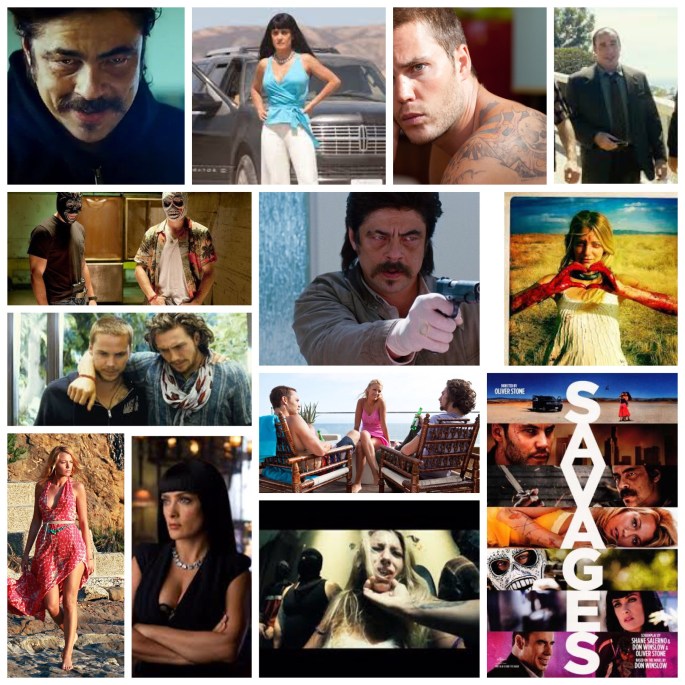
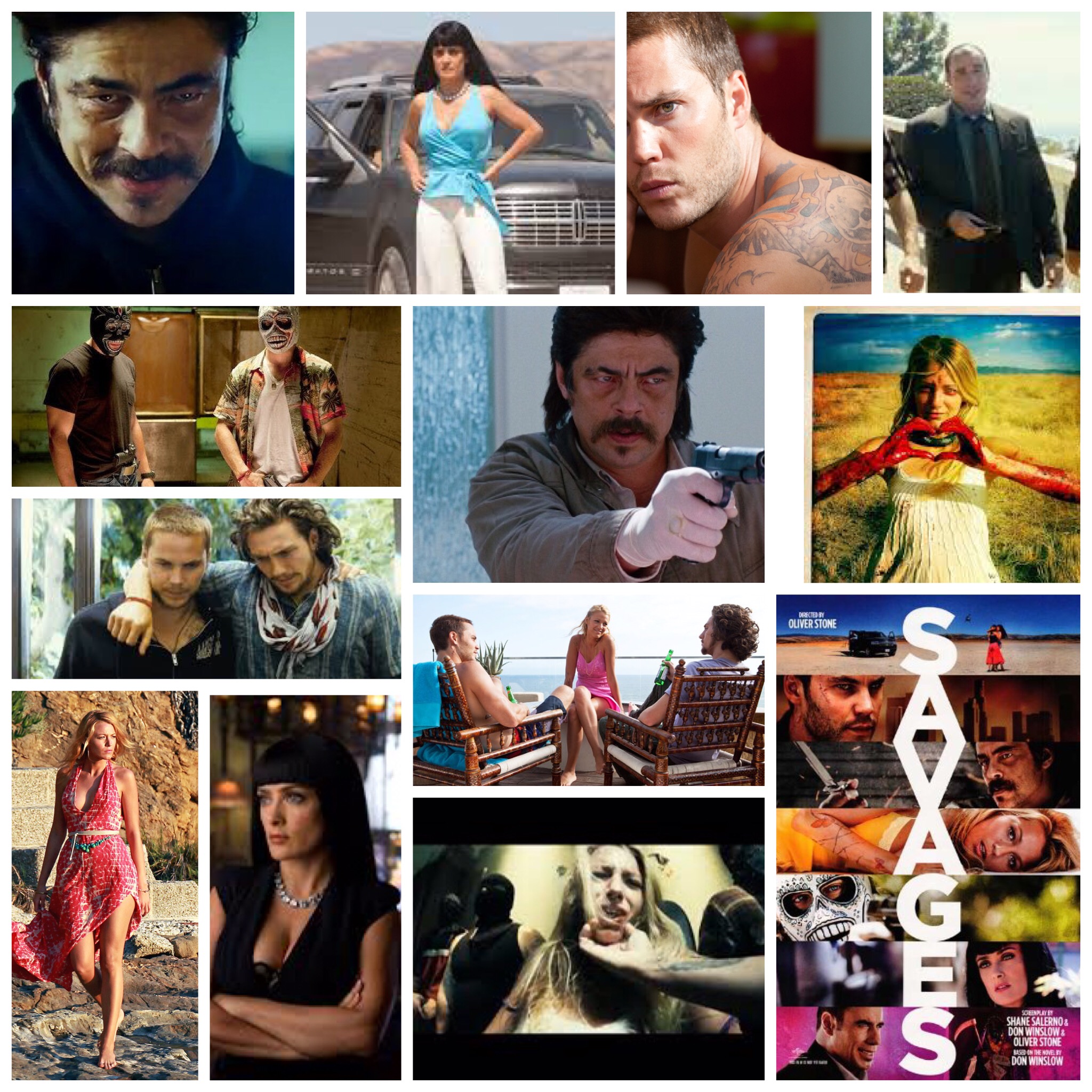
Sun, Sand & Savages: Oliver Stone’s underrated return to form 


Oliver Stone’s Savages is the best film the man has made since the early 90’s, and reminds us of what colourful, bloody, hectic, Mardi Gras shock & awe blistering good times the man is capable of bringing us. His political/war films are all well and good, but for me the lifeblood of this filmmaker lies in his sun-soaked pulp n’ noir toolbox, the ability to spin grisly, darkly romanticized genre campfire yarns that exist eons away from the geopolitics of our plane. Savages is so whimsical it could float right out of our grasp on a cloud, if it weren’t so heavy and heinous at the very same time, and it’s in that careful balance of heart, horror and humour that the film comes out on top, despite a relative cop-out of an ending that can be forgiven when the package as a whole is considered. Based on a novel by Don Winslow, this is an odyssey of cartels, violence, love most pure, drugs, guns, California dreaming and a cast having more fun than they have so far in their collective careers, and I do mean that. The film opens with grainy, harrowing camcorder footage of sinister cartels beheading innocents to set an example, and that’s just the start of it. Pan over to Cali paradise where angelic Ophelia (Blake Lively in a beautiful, vulnerable performance) lives with the two loves of her life, gentle hippie Ben (Aaron Tyler Johnson) and hardened Afghan vet Chon (Taylor Kitsch), two brotherly marijuana barons who provide the west coast with the finest bud the region has to offer. They live in harmony, both in love with Ophelia, existing as a functional little romantic trifecta tucked away on the sun-dappled coastline, until darkness finds them in the form of the power hungry Baja Cartel, who want a piece of their impossibly lucrative action. Although spearheaded by a fiery Salma Hayek, it’s Benicio Del Toro’s Lado who strikes fear into hearts, a ruthless, casually sadistic enforcer who’s not above the lowest brands of violence and degradation. Del Toro plays him with a knowing sneer and a grease-dripping mullet, a positive scourge of everything pure and good in his path. Ben and Chon are thrown into a world of hurt when he kidnaps Ophelia, held as a ransom so the boys play ball with Hayek’s plans for aggressive expansion, promoting all out guerrilla war-games between both factions. John Travolta does his wired up thing as a cheerfully crooked DEA underboss who is their conduit to all things intel related, and Emile Hirsch their surveillance expert. This is a film of both bright light and terrible darkness, and it’s easy to get swept up in the hypnotically wistful current before the film turns evil loose and gut punches it’s audience. The visual tone is crisp and endlessly colourful, and Dan Mindel’s cinematography doesn’t shy away from the overt nature of the brutality, especially when Hayek’s right hand accountant (Damien Bechir) is gruesomely tortured by Lado, and during a daring highway ambush that showcases both Chon’s merciless tactical resolve and Ben’s fragility, both driven to staggering extremes by their love for Ophelia. Stone has always had a flair for eye boggling excess, dastardly deeds done under a baking hot sun and garish, over the top characters that would be right at home in a cartoon if they weren’t so tangibly present, especially in Del Toro’s and Travolta’s cases, it’s a beauty of a thing to see them both chow down on the scenery here and riff off of each other in a quick scene where they share frames. Many folks were underwhelmed by the work of the three young leads, but they couldn’t have been better, really, especially Lively, who’s wounded soul brandishes a sword and shield of sunny disposition even when faced with utter hopelessness, a lilting poetry to her hazy narration that threads the tale together in fable form. Commerce is chaos here too, as we see how the south of the border drug trade encroaches on many individuals who don’t yet understand the evil emanating from that region, and are rudely awakened. There’s so much going on in this film, it’s so vibrantly alive in every facet, a showcase example of the bruising, beautiful power that movies have over us. 

-Nate Hill

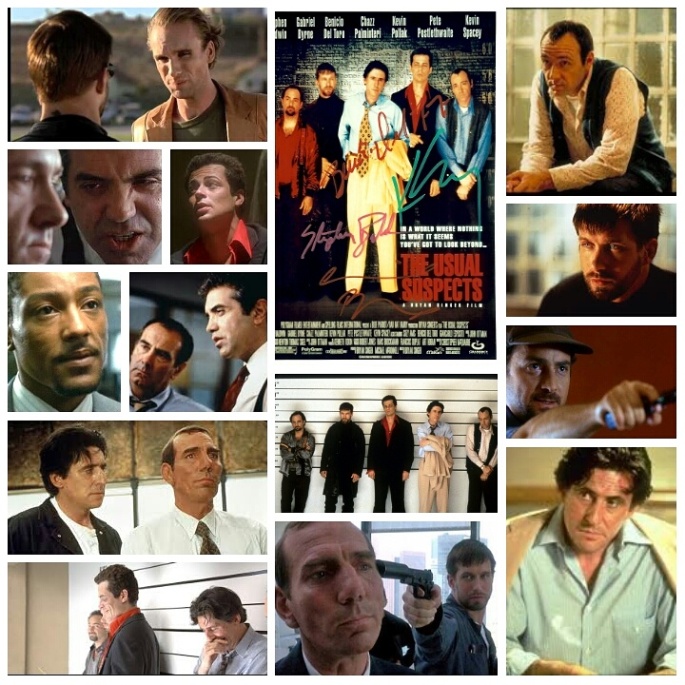
The Usual Suspects: A Review by Nate Hill 

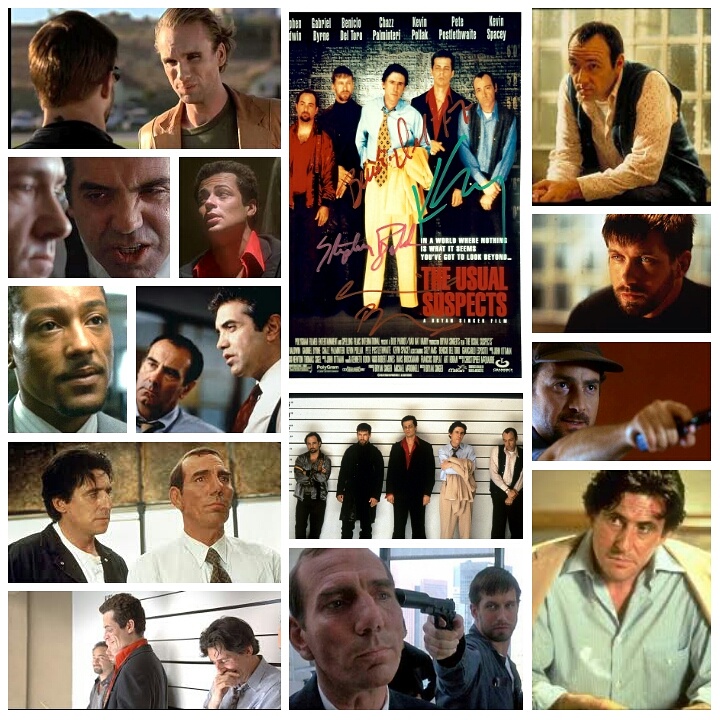
No matter how many times I watch The Usual Suspects, and believe me it’s been many, I still get the same diabolical thrill, the same rapturous excitement and the same rush of storytelling and dramatic payoff as I did the very first time I saw it. Every performance from the vast and diverse cast is a devilish creation packed with red herrings, juicy dialogue and bushels of menace, every scene piles on the mysticism of the criminal underworld beat by beat, until the characters begin to pick it apart and the whole thing unravels like a great serpent coiling forth bit by bit, scale by scale, swerving toward the shocking, disarming third act that has since become as legendary as it’s elusive and terrifying antagonist. In the crime/mystery corner of cinema, there’s no arguing that this delicious piece of hard boiled intrigue reigns supreme, and it’s easy to see why. In a seemingly random police lineup, five career criminals are harassed by an unseen hand, pushed into carrying out dangerous heists and violent manouvers by a shadowy campfire tale among the world of organized crime, a Boogeyman called Keyser Soze, if he even exists at all. Slick and sleazy ex cop Dean Keaton (Gabriel Byrne) heads up this dysfunctional crew of vagabonds which includes hothead McManus (Stephen Baldwin in a role originally intended for Michael Biehn, which kills me to this day), weirdo Fenster (Benicio Del Toro, using an indecipherable mishmash of an accent that would be the first of many), spitfire Hockney (Kevin Pollak) and Verbal Kint (Kevin Spacey) the runt of the litter. The lot of them are intimidated into performing risky enterprises by lawyer Kobayashi (Pete Postlethwaite) until the climate of their actions reaches a boiling point and answers emerge from the darkness. This is all told in retrospect by Spacey, to a rabid customs agent (Chazz Palminteri) who has designs on ensnaring Soze. Spacey scored Oscar gold for his heavy work here, spinning a tale whose layers interweave and pull the wool over our eyes time and time again before offering any glimpses of truth. Byrne is a fiercely guarded storm as Keaton, a man with secrets so deep even he doesn’t know who he is anymore, letting the anger set and smoulder in those glacial eyes of his. The supporting cast adds to the class and confusion terrifically, with fine work pouring in from Dan Hedeya, Suzy Amis, Giancarlo Esposito and a wicked cameo from Peter Greene, who provides a moment of inspired improv. The score of the film rarely relies on dips and swells until all is said and done, keeping a tight lid on the orchestra and feeding us nervous little riffs of anxious portent that keeps tension on a tightrope and anticipation on call. A mystery this tantalizing is irrisistable the first time around, but the trick is to make your story rewatchable, and I’ve seen this thing over a dozen times. Every viewing provides some new angle to the story I didn’t see before, or I notice a subtle interaction in the very naturalistic and funny dialogue which escaped me in the past. My favourite thing to do is watch films with someone who hasn’t seen them before, observe their reactions and opinions on every little story beat and cinematic flourish, it’s almost more fun for me than the actual film itself. The Usual Suspects is a showcase piece for that activity, because you get to see this very complex revelation unfold through new eyes as you watch them experience the revelations. Whether your first viewing or your fiftieth, it never loses its power, and the spell it casts just doesn’t dim. Masterpiece.

CHE – A REVIEW BY J.D. LAFRANCE

hero_EB20090114REVIEWS901149990AR

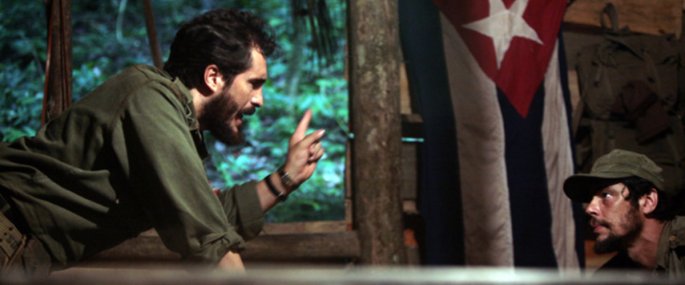
Che (2008) began as a personal project for actor Benicio del Toro around the time he was making Traffic (2000) with Steven Soderbergh. Originally, he planned on making the film about iconic revolutionary Ernesto “Che” Guevara with Terrence Malick and its focus was to be on the disastrous Bolivian campaign in 1967. Malick eventually dropped out to go off and make The New World (2005). Soderbergh helped out Del Toro by agreeing to direct and in the process expanded the film’s scope by depicting Che’s role in the Cuban Revolution as a way of explaining his motivations for going to Bolivia.

Amazingly, Soderbergh raised the $58 million budget entirely outside of North America, which allowed him much more creative freedom. The result was a four-and-half-hour epic that refused to champion or demonize Che and instead opted to objectively depict his rise in Cuba and his fall in Bolivia. This approach ultimately doomed Che’s chances in North America where, despite breaking the film up into two, more digestible parts, it received limited distribution. Predictably, it divided critics and was criminally ignored by all of the major award ceremonies – rather fitting for a film about someone who refused to rest on his laurels, always hungry to get back to the jungle and get back to work.

I think that the key to understanding Del Toro and Soderbergh’s take on Che comes from an interview with director where he said, “Clearly this is a guy whose priority is going into the jungle and starting a revolution. That is the most important thing in his life … If you take away all the words and just look at what he did, the guy kept going back into the jungle.” Del Toro and Soderbergh were faced with the daunting task of making a film about an iconic historic figure, someone whose image has graced countless t-shirts and posters. Che is an extremely polarizing figure and so it makes sense that they would step back and take a more objective look at the man. Then, it would be up to the audience to decide how they felt about him.

Those looking for a crowd-pleasing underdog story a la Erin Brockovich (2000) will be disappointed by Che. The famous Argentinean is not as easy to like as the scrappy Brockovich. As depicted in Che, he’s a much more complex individual. He cares about the cause and those that fight with him but does not feel the need to show a lot of emotion. When he’s in the jungle it is all about the task at hand and living in the moment. Che never loses sight of what his objective is and his conviction never wavers, not even in the face of death. He’s like a Method actor that stays in character on and off-camera during a shoot.

Part One juxtaposes Che’s efforts to remove Batista from power in Cuba in 1958 with him addressing the United Nations in 1964 and in doing so we see Che in his element, putting into practice guerrilla warfare tactics, and we see Che the superstar espousing his beliefs to the media in New York City and the international community at large. At first, the Bolivia campaign as depicted in Part Two starts off well enough with Che sneaking into the country and meeting with his fellow revolutionaries. We see them get supplies and train in preparation for the task at hand. However, the country’s Communist party refuses to support an armed struggle, especially one led by a foreigner. The support of the peasants, so crucial in Cuba, is lacking in Bolivia, making food hard to come by. A feeling of dread creeps in as government troops gradually close in on Che, cutting off any avenue of escape.

Soderbergh maintains an objective stance by refusing to show any close-ups of Che. We always see him from a certain distance and often grouped with others. During the battle at El Uvero on May 28, 1957, Soderbergh conveys the noisy, chaotic nature of combat as men are seemingly wounded at random but there is never any confusion visually about what is going on. Twice during the battle, he takes us out of it by having a voiceover by Che where he espouses his philosophy of guerrilla warfare. With a widescreen aspect ratio, Soderbergh opens things up in Part One and this is particularly evident during the battle scenes. In Part Two, this all changes, as the smooth camerawork is replaced with hand-held cameras and a more standard aspect ratio which creates a claustrophobic feel and look. The long takes and deliberately slow pace may frustrate some expecting a more traditional biopic but I found it a welcome change from the cookie cutter mentality of most Hollywood depictions of history.

During the Cuban campaign it is evident that Che is very much a man of the people, whether it is making contact with and befriending peasants that he comes across in the jungle or treating a wounded comrade. However, Che eschews character development in favor of showing the nuts and bolts of a revolution. As Che says at one point, “A real revolutionary goes where he’s needed. It may not be directly in combat. Sometimes it’s about doing other tasks … finding food, dressing wounds, carrying comrades for miles … and then, taking care of them until they can take care of themselves.” The film takes this philosophy to heart by showing the day-to-day activities of Che and his fellow revolutionaries. We see him dressing wounds, the wounded being carried through the jungle and strategizing with his men and Fidel Castro (Demian Bichir).

Benicio del Toro effortlessly becomes Che and tones down his tendency to sometimes resort to Brando-esque acting tics (see The Way of the Gun) and plays the iconic revolutionary as a man confident of his own convictions. He conveys Che’s sharp intellect with his eyes and also does an excellent job with the physical aspects like his recurring asthma that constantly plagued him. Del Toro provides us insight into the man’s character through attitude, behavior and the way he acts towards others.

24a125_34547ac222f04702b5e68cb83dd8629cChe is ultimately a study in contrasts. What worked in Cuba did not work in Bolivia. Soderbergh’s film illustrates the differences. In Cuba, the revolutionaries were able to get the trust and support of the peasants while in Bolivia they feared the rebels. It must also be said that Castro played a key role in the success of the Cuban revolution and his absence in Bolivia, the galvanizing effect he had, is sorely missed. With Che, Soderbergh has created an unusual biopic that does its best to not try and manipulate you into feeling one way or another about the revolutionary. Instead, it shows two very different examples of the man’s philosophies put into practice and how they played out – one a success and the other a failure. Che was a polarizing historical figure long before this film came along and will continue to be long afterwards.

Tony Scott’s The Fan: A Review By Nate Hill


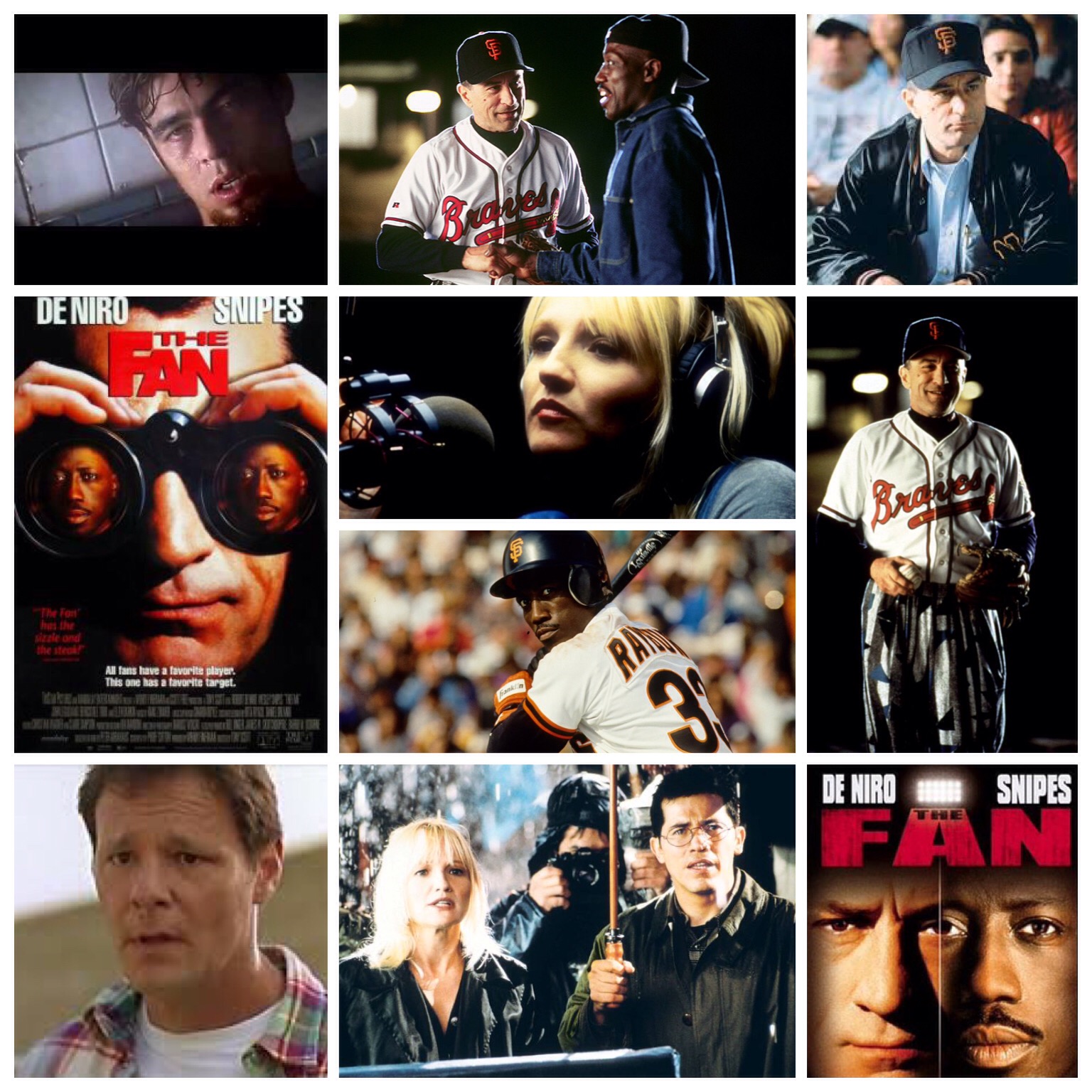
Tony Scott’s the fan is a wild ride with an off the hook turn from Robert De Niro. It’s ranked and regarded as a pretty low notch on Scott’s belt, but it’s hard to compete with his best work. It’s still a sleazy blast and pure Scott, his characters always let, lurid and delightfully pulpy. Sure it falls apart near the end, but until then it’s nasty, delicious fun. De Niro plays Gil, a die hard baseball fan and devout follower of Bobby Rayburn (Wesley Snipes), star player for his favourite team. Gil wants Bobby to succeed so badly that he becomes violent, unstable and pretty bonkers. At first it’s obnoxious and amusing, but soon he gets dodgy and dangerous and eventually just out of control. It’s great fun seeing De Niro go bug nuts bit by bit, and he’s always had a wild menace that he like to take down from the shelf and dust off for the occasional performance. Benicio Del Toro does one of his puzzling, indecipherable vocal riffs as a rival player, adding to the weird factor. Ellen Barkin is a sexy sass bomb as Jewal Stern, a mouthy talk show host who sniffs out the controversy in high style. John Leguizamo is always sterling, and classes his scenes up like a pro. Watch for speckled cameos from M.C. Gainey, Brad William Henke, Don S. Davis, Tuesday Knight, Wayne Duvall, Richard Rhiele, John Carrol Lynch, Michael P. Byrne and Chris Mulkey as well, all excellent. Not Scott’s best for sure, but a nicely mean spirited little romp through the psycho stalker fields. Fun stuff. 

DENIS VILLENEUVE’S SICARIO – A Review by Frank Mengarelli

“You should move to a small town, somewhere the rule of law still exists. You will not survive here. You are not a wolf, and this is a land of wolves now.”

SICARIO 1

SICARIO is a blunt unveiling of the dark side of America’s foreign policy.  Set on the Mexican border, the film follows a shadow team made up of different agencies shaking down drug cartels, all the while the team plays kingmaker by rearranging power.  The plot and political commentary is dense.  Not once does the film come across as heavy handed, nor does it preach bias.  In turn, it makes the film that much more powerful and brutally honest.

The brilliant cinematic team of filmmaker Denis Villeneuve and cinematographer Roger Deakins (who are reteaming for the untitled BLADE RUNNER sequel) are a force to be reckoned with.  Villeneuve keeps a taut and thrilling pace, while Deakins composes remarkable visuals frame by frame.  Taylor Sheridan’s icy script, Johann Johannsson’s score, and Joe Walker’s editing complement the film in a perfect way, keeping the tight narrative intact while balancing such heavy subject matter.

Sicario 2

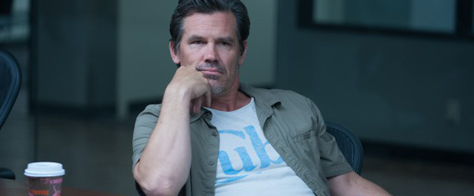
The cast is led by the idealistic Emily Blunt, supported by the realist CIA man Josh Brolin, and the lethal assassin Benicio Del Toro who all give career high performances and play off of one another in a way that meshes the film together wonderfully.  Blunt is amazing.  She’s more than a badass woman with a gun; she’s the heart of the film.  She’s out for blood after members of her team get killed on a cartel raid in the opening scene, and she’s lured in by the affable Brolin, promising to cure her bloodlust if she comes along on his secret mission.  Most importantly, the reality of what the team is doing slowly starts to grind at her, and she quickly begins to realize that what they are doing is not the “right” thing to do.

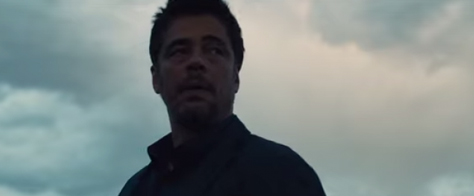
Benicio Del Toro is the standout in an already masterful film.  His stoicism is this mysterious fuse that is slowly burning.  The entire film, we know nothing about him, until the third act where we learn everything in one short and impactful scene.  The scene is so jaw dropping, that even upon rewatching the film; you can’t believe it is actually happening.

Sicario 3

There are few Hollywood films that are as bold as SICARIO.  The thematic elements are heavy, as is the brutal violence, but what the film is saying is what makes it so powerful.  Sometimes America needs to bring down the iron fist to be the overall good guy.  Regardless of morality or holding ourselves to a higher standard, the world needs a shadow team like the one in SICARIO to help restore and counter the evil powers that be in this world.

SIN CITY – A REVIEW BY J.D. LAFRANCE

sin-city

Until recently, most adaptations of independent comic books were far more successful (and by successful I mean faithful to their source material) than long-running mainstream ones from the two largest comic book companies, Marvel and DC. One only has to look at examples, such as Ghost World (2001), American Splendor (2003) and Hellboy (2004) against the failures of Catwoman (2004), Elektra (2004) and Constantine (2005). So, why are the first three films more satisfying triumphs and the last three empty exercises in style? The answer is simple. In the case of the first three movies, the filmmakers wisely allowed the comic book creators direct involvement in the filmmaking process, whether it was working on the screenplay (as with Ghost World and Hellboy) or actually appearing in the movie (American Splendor).

In the past, the comic book creator was, at best, a peripheral presence in the filmmaking process, or not even included at all. With bigger, longer running series, like Spider-Man or Superman, it is much harder to include the creator because there is not just one but many who have worked on the comic book over the years. Where does the filmmaker even start in these cases? To be fair, with Iron Man (2008) began a great run of adaptations of Marvel Comics being successfully translated to the big screen but before it the examples were few and far between.

It only makes sense that if one is going to adapt a comic book into a film that it be faithful in look and tone to its source material. Otherwise, why adapt it in the first place? Of course, there is always the danger of being too faithful to the look of the comic and not being faithful to its content (characterization, story, dialogue, etc.) like Warren Beatty’s take on Dick Tracy (1990) — all style and no substance. It goes without saying that the next logical step would be to include its creator, if possible, in the process so as to achieve the authenticity and integrity of the source material. Filmmaker Robert Rodriguez took this notion to the next level with Sin City (2005) by having its creator Frank Miller co-direct the movie with him. In fact, Rodriguez is so respectful of Miller’s work that he not only has the artist’s name listed first in the directorial credit but also displays his name prominently above the film’s title.

Sin City
began as a series of graphic novels created by Miller. They are loving homages to the gritty pulp novels Dashiell Hammett, Raymond Chandler and Mickey Spillane and classic film noirs from the 1940s and 1950s. Miller’s world — the dangerous, crime-infested Basin City — is populated by tough, down-on-their-luck losers who risk it all to save impossibly voluptuous women from corrupt cops and venal men in positions of power through extremely violently means in the hopes of ultimately redeeming themselves. The movie ambitiously consists of three Sin City stories: That Yellow Bastard, The Hard Goodbye, and The Big Fat Kill with the short story, “The Customer is Always Right” acting as a prologue.

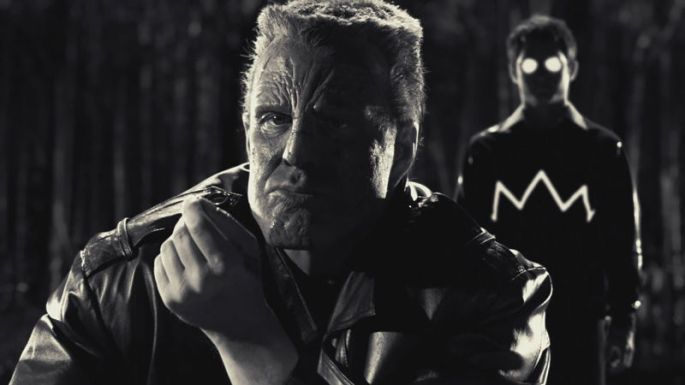
In the first story, Hartigan (Bruce Willis), a burnt-out cop with a bum-ticker and on the eve of retirement, is betrayed by his partner (Michael Madsen) after maiming a vicious serial killer (Nick Stahl) of young girls who also happens to be the son of the very power Senator Roark (Powers Boothe). The next tale features a monstrous lug named Marv (Mickey Rourke) who wakes up in bed with a dead prostitute named Goldie (Jaime King) and decides to get revenge on those responsible for killing the only thing that mattered in his miserable life. The final segment focuses on Dwight’s (Clive Owen) attempt to keep the peace in Old City when the prostitutes who run the area unknowingly kill a high profile (and also a sleaze bag) cop named Jack Rafferty (Benicio del Toro) and in the process risk destroying the precarious truce between the cops and the hookers that currently exists.

The three main protagonists are all well cast. Bruce Willis is just the right age to play Hartigan. With the age lines and the graying stubble on his face, he looks the part of a grizzled, world-weary cop with nothing left to lose. Willis has played this role often but never to such an extreme as in this film. Quite simply, Mickey Rourke was born to play Marv. With his own now legendary real life troubles and self-destructive behavior well documented, the veteran actor slips effortlessly into his role as the not-too-bright but with a big heart hero. British thespian Clive Owen is a pleasant surprise as Dwight and is more than capable of convincingly delivering the comic’s tough guy dialogue. As he proved with the underrated I’ll Sleep When I’m Dead (2003), Owen is able to project an intense, fearsome presence.

The larger-than-life villains are also perfectly cast. Nick Stahl exudes deranged sleaze as Roark, Jr. and cranks it up an even scarier notch or two once he undergoes his “transformation” as the Yellow Bastard of his story. Perhaps one of the biggest revelations is the casting of Elijah Wood as the mute cannibal Kevin. Nothing he has done previously will prepare you for the absolutely unsettling creepiness of his character. Finally, Benicio del Toro delivers just the right amount reptilian charm as Jackie-Boy. Not even death stops him from tormenting Dwight and it is obvious that Del Toro is having a blast with this grotesque character.

Miller’s pulp-noir dialogue may seem archaic and silly but it is actually simultaneously paying homage and poking fun at the terse, purple prose of classic noirs and crime novels of the ‘40s and ‘50s. Rourke, Willis and Owen fair the best with this stylized dialogue as they manage to sell it with absolute conviction. It helps that both Rourke and Willis have voices perfectly suited for this kind of material: weathered and worn like they have smoked millions of cigarettes and downed gallons of alcohol over the years.

Of the women in the cast, Jessica Alba is the only real miscast actress. Not only does she not look like her character, Nancy Callahan (who was much more curvy, full-bodied and naked most of the time in the comic) but she does not go all the way with the role and her line readings feel forced and unnatural. Fortunately, Rosario Dawson more than makes up for Alba as Gail, an S&M-clad, heavily-armed prostitute who helps Dwight dispose of Rafferty’s body. She looks the part and inhabits her role with the kind of conviction that Alba lacks.

Finally, somebody has realized that the panels of a comic book are perfect storyboards for a movie adaptation. With Miller’s guidance, Robert Rodriguez has uncannily recreated, in some cases, panel-for-panel, Sin City onto film. He has not only preserved the stylized black and white world with the occasional splash of color from Miller’s comic, but also the gritty, dime-novel love stories that beat at its heart. Fans of the comic will be happy to know that virtually all of the film’s dialogue (including the hard-boiled voiceovers) has been lifted verbatim from the stories and the sometimes gruesome ultraviolence has survived the MPAA intact.

If you think about it, Rodriguez’s career has led him up to this point. With the stylized, over-the-top action of Desperado (1995), the pulp-horror pastiche of From Dusk Till Dawn (1996) and the mock-epic Once Upon a Time in Mexico (2003), he has been making comic book-esque movies throughout his career. It was only a matter of time before he adapted an existing one. Cutting his teeth on these action movies has allowed him to perfectly capture the kinetic action of Miller’s comic. Seeing hapless thugs fly through the air at the hands of El Mariachi’s deadly weapons in Desperado foreshadows the cops being propelled through the air when Marv makes his escape in Sin City.

What Sky Captain and the World of Tomorrow (2004) did for the pulp serials of the 1930s and ‘40s, Sin City does for film noir. There is no question that Sin City resides at the opposite end of the spectrum from Sky Captain. While both feature retro-obsessed CGI-generated worlds, the former looks grungy and lived-in and the latter is pristine and perfect-looking. Sin City is absolutely drenched in the genre’s iconography: hired killers, femme fatales that populate dirty, dangerous city streets on rainy nights. It is the pulp-noir offspring of James Ellroy and Sam Fuller with a splash EC Comics gore. Ultimately, Sin City is a silly and cool ride and one has to admire a studio for having the balls to release a major motion picture done predominantly in black and white with the kind of eccentric characters, crazed violence and specifically-stylized world that screams instant-cult film.

Things We Lost In The Fire: A Review by Nate Hill


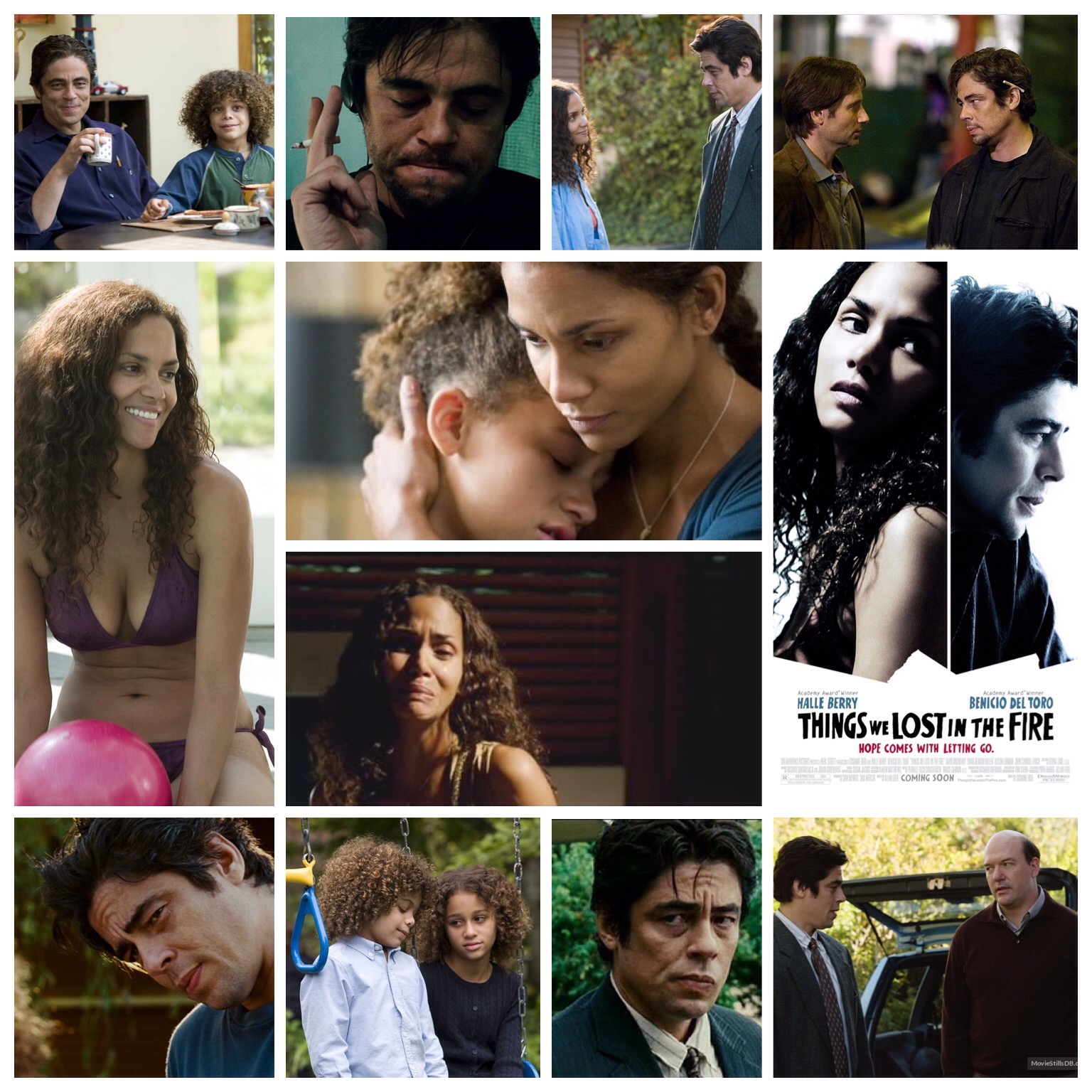
Things We Lost In The Fire takes an unblinking look at addiction, recovery, redemption, grief and the ways in which various people cope with all of the above. It shirks the dramatic stereotypes and instead shoots for realism, or at the very least, an unpredictable narrative within a genre that often follows rigid blueprints. It also contains two exceptional performances from Halle Berry and Benicio Del Toro. Berry plays Audrey Burke, mourning the loss of her husband Brian (David Duchovny could write a textbook on understated acting that cuts deep) to a really unfortunate accident. The last minute arrival of his longtime best friend Jerry Sunborne (Benicio Del Toro) adds a new element to the family’s grieving process. Jerry is an ex lawyer who is now addicted to heroin. Brian stood by him for many years, never judging or intervening but simply being there to spend time with, and look out for his friend. Duchovny appears in multiple flashbacks with both Berry, Del Toro and his two remarkable children (Micah Berry and Alexis Llewellyn) that instil a lingering presence that not so much casts a shadow over everything, but brightens and flavours it with memories. Audrey is unspeakably lonely and devastated, and despite the fact that she despised Jerry and what he represented for years, invites him to live in their garage, in flat out pure desperate instinct, and probably in an attempt to be closer to Brian after he’s gone, by bringing what was close to him closer to her. Jerry is great with the kids, supportive and wants to change, even accepting employment assistance from their kindly neighbour (excellent John Carroll Lynch). The demons do their best to pull him back though, as is their purpose, and a rift forms as we begin to see that Audrey has not fully accepted Brian’s death and is in the throes of miserable confusion. Director Susanne Bier uses many intimate close ups of eyes, hair, smiles and frowns to bring us into the mindset of her characters, a tactic which works wonders here and keeps minds and hearts of her audience glued to the proceedings. Berry is dynamite, pure and simple. The finest acting moment I’ve ever seen from her comes deep from the gut and late in the third act, an agonizing moment in which she has a splintering realization that her husband is gone for good, that final, resolute place that sinks in and grabs hold which we’ve all heard about from family members or news stories in which loss of loved ones has played a part. I don’t know if Berry has experienced this for herself in her own personal life, but she sure damn well embodies it here with every ragged sob, and it cast her in an entirely new light for me. Del Toro is Brando-esque, a shambling, unshaven pit of insecurity and inner turmoil, giving Jerry the mutilated soul he deserves without ever dipping in self pity, given the phoenix treatment and rising from the ashes of his longtime affliction simply by being exposed to Audrey and the kids. One would think that the relationship between Audrey and Jerry might end up going into romantic territory, but Bier and company is more interested in the road less travelled, showing us a story which unravels in a way that’s much more akin to believability. Between her directorial skills, Berry and Del Toro’s virtuoso work, this is not one to miss.

DENIS VILLENEUVE’S SICARIO — A REVIEW BY NICK CLEMENT

2Conceived with an incredible sense of grim fatalism and a cynical worldview that feels both refreshingly honest and tack-sharp, Denis Villeneuve’s utterly masterful Mexican drug cartel thriller Sicario is a feast for the senses while never skimping on introspective character beats and pulse-pounding action. Written with obvious research and keen intelligence by Taylor Sheridan, the film rarely feels “American,” in the sense that it offers up a damning portrait of a literal hell on earth (in this case Juarez, Mexico) and plunges the viewer head-first into disturbingly violent areas of society without ever pulling any punches; it’s a kindred spirit to something like Sean Ellis’ gripping Metro Manila and the absurdly underrated Miss Bala from director Gerardo Naranjo, two recent foreign thrillers that make mincemeat of the stateside competition. In Sicario, Villeneuve continues his red-hot-streak after Incendies, Enemy, and Prisoners (still need to see Polytechnique), and in tandem with the incomparable cinematographer Roger Deakins, has crafted an immersive topical thriller that stings with believability, inevitability, and a guiding sense of logical, clear-cut storytelling. It’s also the most tension-packed film I’ve seen in a theater since No Country for Old Men; at no point could I ever guess what was coming next and the level of atmospheric dread on display due to the insane sound design and haunting visuals kept me literally on edge for two hours.

1

I had heard it mentioned recently on the internets that the film was a cross between Zero Dark Thirty and Traffic, and that’s not too far off – it’s as accomplished as both of those fantastic pieces of work, and while indebted to them in some ways, Sicario is its own, visceral animal from the very first frame. Emily Blunt, as usual, is tough as nails as an Arizona FBI/SWAT member drafted by some hush-hush superiors to tag along on a covert mission in Mexico to eliminate a major drug dealer. Josh Brolin and Benicio Del Toro are her mysterious handlers, who aren’t interested in providing too much background on their employers or their ultimate end-games; both actors are incredible, with Del Toro dropping an Oscar worthy performance that cuts hard both emotionally and physically. The numerous action scenes sizzle with bloody ferocity, never going over the top or reveling in the carnage, but being upfront about the damage that bullets will do to the human body. This is a dark, disturbing, totally nihilistic movie that’s not interested in being your friend or making you smile. It’s about something real and current and important and Villeneuve is too smart a filmmaker to start preaching or moralizing. It is what it is – and in this world – nobody is going home happy. And then there’s the film’s final shot, which implies so much without having to speak a word. I can’t wait to see this film again and again and again and again.