Silent House (2011)

Elizabeth Olsen has been making a huge impact on film these days and already was a decade ago I was pleased to learn with 2011’s Silent House, a superior, intelligent and unconventional horror film that showcases some of the best ‘scream Queen’ acting from her that I’ve seen in the genre overall. This is a simple story that sees her play a teenage girl who is helping her father (Adam Trese) and uncle (Eric Sheffer Stevens) pack up a house that they are about to move out of. Everything seems routine save for a little bickering until suddenly she finds herself trapped in a threatening netherworld version of the house, full of half seen ghosts, whispering voices and apparently no contact with the outside world. Is she dead? Hallucinating? The switch from the opening scenes into frightening territory is so swift and so abrupt that at first I had no idea what was going on and felt disoriented, but then realized that’s exactly how this poor girl must feel and noted how effectively and promptly the film drew me into its world and the point of view of its protagonist. She wanders about with little notion of what to do beyond hide, scream and run until she finds old Polaroids and other long forgotten totems of memory and we see the truth slowly come to light. It’s a sad, tragic revelation that so many girls who went through what she did as a kid must later unearth in their own repressed memories and Olsen’s performance is note perfect on every level. There are some deeply terrifying scenes here including a sequence where she uses the brief flash of the Polaroid camera to gain some visibility in the dark and quickly wishes she didn’t as we catch momentary glimpses of the horrors surrounding her. The camera work, staging and spatial dynamics are all excellently done by husband and wife directing team Chris Kentis and Laura Lau, who are remaking a Uruguayan horror film here of the same name that I have yet to see but based on the sterling quality level I experienced here, it must be something else indeed. This is dark, tragic, genuinely creepy horror on all levels, a story told in almost dreamlike fashion with a lead performance from Olsen so potent with raw fear and deep anxiety I’d almost be hesitant to discover what her actor’s process is. Really great stuff.

-Nate Hill

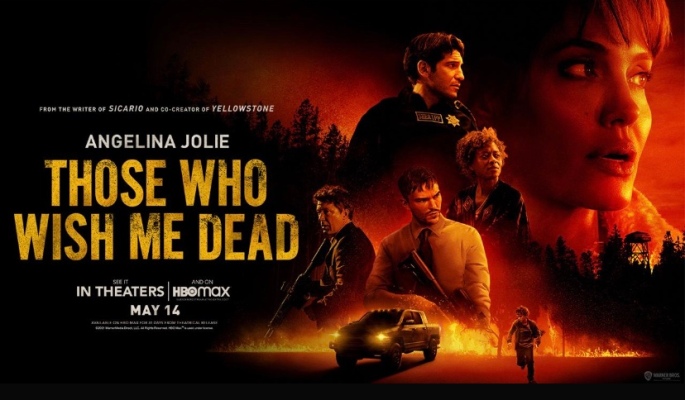
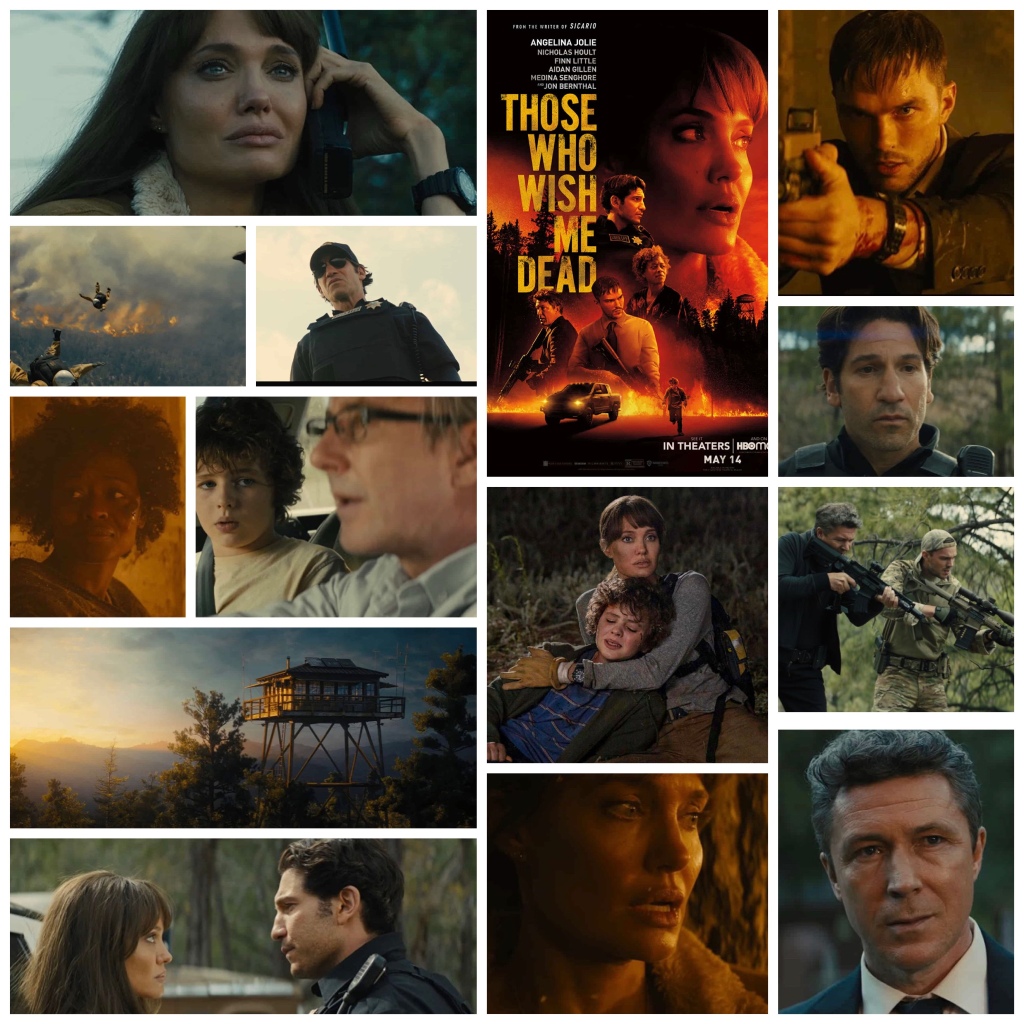
Taylor Sheridan’s Those Who Wish Me Dead

I miss the days in the 90’s or so when big budget, star studded thrillers dominated the summer and they’d often have slightly outrageous yet totally exciting high concepts that melded different elements into one palette. Taylor Sheridan’s Those Who Wish Me Dead is a terrific example of this and a banger of a film, the exact type of summer popcorn escapism I miss having around a lot. Angelina Jolie plays an ex wildfire fighter/smoke jumper with PTSD after a mission gone horribly wrong, now relegated to fire-watch atop a lonely tower and occasionally getting arrested by the local sheriff (Jon Bernthal) for doing insane daredevil stunts just to keep the pain at bay. One day a kid runs into her region of Montana forest trying to escape two psychotic contract killers (Aiden Gillen and Nicholas Hoult) who have chased him and his dad (Jake Weber) in there from the city, for dark reasons that are, wisely, only hinted at. It’s up to a haunted Jolie to protect this kid at all costs with the help of Bernthal’s badass lawman, his equally badass and very pregnant wife (Medina Senghore) and some of her former smoke jumping crew, but will it be enough to stop these incredibly heinous assassins? I’m not even kidding either, these two are literal cold blooded monsters who aren’t above blowing up houses with families in them, killing pregnant women and kids and even deliberately starting a wildfire that torches half a valley just to smoke out their prey. “I hate this place” growls an unreasonably sinister Gillen (if you thought he was slimy in Game Of Thrones, well…), to which another character replies “it hates you back” in trademark pulpy yet elemental Taylor Sheridan writing fashion. Jolie is stunning here and I wish she’d headline more films these days, she captures the flint-spark resilience and crushing vulnerability of her character beautifully in a top shelf performance. The sweeping Montana cinematography is gorgeous and threatening in equal parts, the violence and action vicious and unrelenting, as is the very effective suspense. I see that this has gotten lukewarm reactions almost all across the board and I’m really not sure what film most people were watching; this is the kind of blockbuster stuff I live for and miss greatly these days. It’s bombastic, grandly drawn, hearty genre meal material that’s exciting, tightly written, unforgivingly brutal and solidly directed. One of the best so far this year, I’m my books.

-Nate Hill

THE ROBERT ALTMAN FILES: VINCENT & THEO (1990)

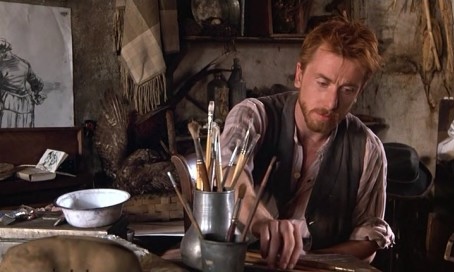
Robert Altman’s Vincent & Theo begins amid an industrial clang of a score by Gabriel Yared over a vibrant smear of colored oil paints which suddenly shifts to a Christie’s auction in which Vincent Van Gough’s 1888 still life, “Vase with Fifteen Sunflowers,” is going up for sale, climbing higher and higher in value as ridiculous amounts of money are outbid by even more ridiculous amounts. As the auction’s image gives way to a disheveled Vincent (Tim Roth coming in like a force of nature), crumpled up on a bed like a graying wet newspaper and awaiting a chewing out by his more responsible and nattily dressed brother, Theo (Paul Rhys perfectly camped out on the edge of an emotional outburst), the audience is given a sense of how much people are paying for pain and debasement when they’re investing in a Van Gough. For the disparity between a pauper’s life of misery and anguish and the revered saint of post-impressionistic art whose works can now fetch the price of a small island state is a vast one, indeed.

But Vincent & Theo isn’t about the raving mad Vincent Van Gough, although it has plenty of that. As Altman’s film is a two-hander and there is as much Theo as there is Vincent, it is a full examination of co-dependency and masculine love, almost becoming the California Split of painter biopics. But it’s also making a comment on the very tenuous and special relationship between the crazy, hedonistic, and unchained artist and the very real, very tangible world of dollars and cents that have to be considered which generally takes a cooler and more centered head to navigate. How in the wild world do these two things exist in a relationship?

I don’t know but it sounds an awful lot like the relationship between a producer and a director which is why Robert Altman seems so keen on this project. It’s a meditation about the heavy conflict between creation for sanity and curation for profit which dogged Altman almost throughout his entire career. While his work mostly settled on American culture and dotted the entire map like a beautiful quilt, Altman’s Vincent & Theo is decidedly outside the confines of the United States and, in terms of laying all of his out in chronological order, predates everything else in his canon, setting itself out to be an origin story of the independent artist guided by a mad spirit that cannot be defined.

Smartly written by Julian Mitchell, the story of Vincent & Theo is bracketed between Vincent’s desire to become a painter and his suicide, with his brother Theo, an art exhibitor and dealer, always playing the shadow side of the narrative coin. If 3 Women is Altman’s most Lynchian film, Vincent & Theo is almost Cronenbergian in its vision of intertwined beings who can hardly thrive without each other’s influence on the other. And while this dichotomous relationship certainly didn’t originate with Vincent and Theo Van Gough, Altman directs it like it did. By utilizing bold and rich colors to express mood and setting, time and place, Vincent & Theo is front-loaded with a crisp and stately style that feels very controlled while still registering as Altmanesque, preceding the brilliantly shaggy Masterpiece Theater approach taken with Gosford Park a decade later.

Vincent & Theo, helped in no small way by Jean Lepine’s ravishing cinematography, does a marvelous job recreating some of Van Gough’s landscapes, subjects, and locations such as the hangout that was immortalized in “The Night Cafe” or the many number of rustic and vast fields touched golden by the bright and boisterous sunlight. Initially made for British television and composed of four 50 minute episodes that function like the seasons, the construction of the narrative, always creating a give and take between the two characters and showing yin and yang contrasts, is nothing short of breathtaking. In one scene, Vincent and his prostitute model/companion, Sien (Jip Wijngaarden), finalize their living arrangements with each other and in the next, Theo and Marie (Anne Canovas) discuss the same, followed by a monologue in which Theo reminisces about a painting he saw in which he wanted to enter and never leave. Cut to the following scene where Sien’s young daughter literally steps into the staging area of a panorama to micturate; both fulfilling Theo’s wish to enter a painting and also subverting it by pissing all over it. The staid domesticity of the syphilitic Theo and Marie is contrasted with the rawer, gritty poverty-laden life of Vincent and Sien with both men ultimately achieving the same result as both are eventually left alone and slathered in oils as if they were forever destined to the same fate. This goes on until the film begins to examine the relationship between Vincent and Paul Gaugin (Wladimir Yordanoff) who acts as a spiritual relation in the absence of Theo, married and in Paris, his own health slowly deteriorating. The relationship between Gaugin is volatile and competitive instead of nurturing and supportive, which causes a rapidity in Vincent’s mental decline which parallels Theo’s physical one. The madness that inhabited Vincent manifests itself in Theo in the films closing moments as, spiraling toward a death that would occur only the following year of his brother’s, voids his gallery of all commercial artwork and covers it, almost pathologically, with nothing Vincent’s work.

After spending a decade in the wilderness crafting mostly small, intimate adaptations of stage plays, with both Tanner ‘88 and Vincent & Theo, the latter of which had been edited down by an hour and released in theaters in November of 1990 to very positive notices, Robert Altman entered the new decade with two of his most ambitious and successful projects since the late 70’s under his belt. But during that period in which Altman had kept a lower profile and focused on the more intimate tasks at hand, Hollywood was beginning to reckon with smaller, independent studios encroaching on their territory and allowing inroads for newer, fresher talent. When all of this came to a head in 1989 with Steven Soderbergh’s modest sex, lies, and videotape which became THE story at the Cannes Film Festival by winning the Palme d’Or and emerging a small financial bonanza as it earned $24 million domestically against a $1.2 million production budget, the future of cinema was given a breath of fresh air. As it looked to be 1968 all over again, Hollywood again tapped the vein of the new blood who were all too eager to get their foot in the door and this push gave us the aforementioned Soderbergh, Whit Stillman, Quentin Tarantino, and Altman acolyte Paul Thomas Anderson.

“Do you always have to go so far on principle, Theo? Or does it come to you naturally?” is the first line of scripted dialogue in Vincent & Theo. It goes mostly unanswered by Vincent. But as the Hollywood tides turned and Altman’s mid-career artistic peaks were occurring at just the right time for someone to give the old master (who, by that point, had become a patron saint to the new class of filmmakers) a chance to get back into the majors, Altman would definitely give it an answer in his next endeavor.

(C) Copyright 2021, Patrick Crain

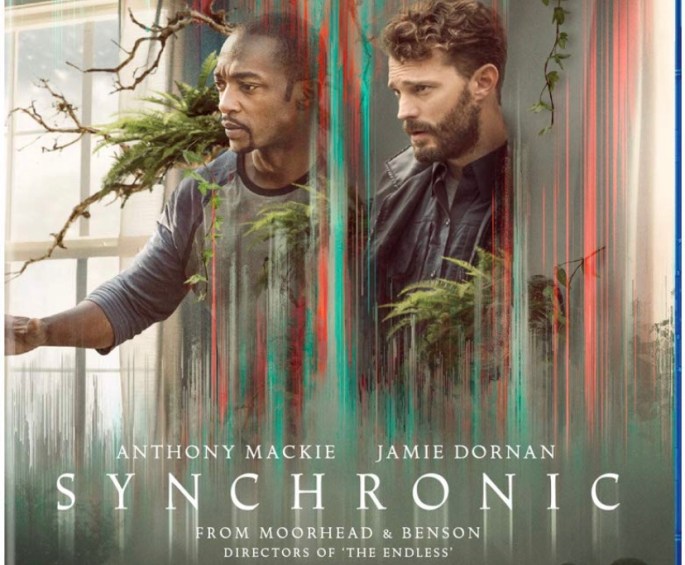
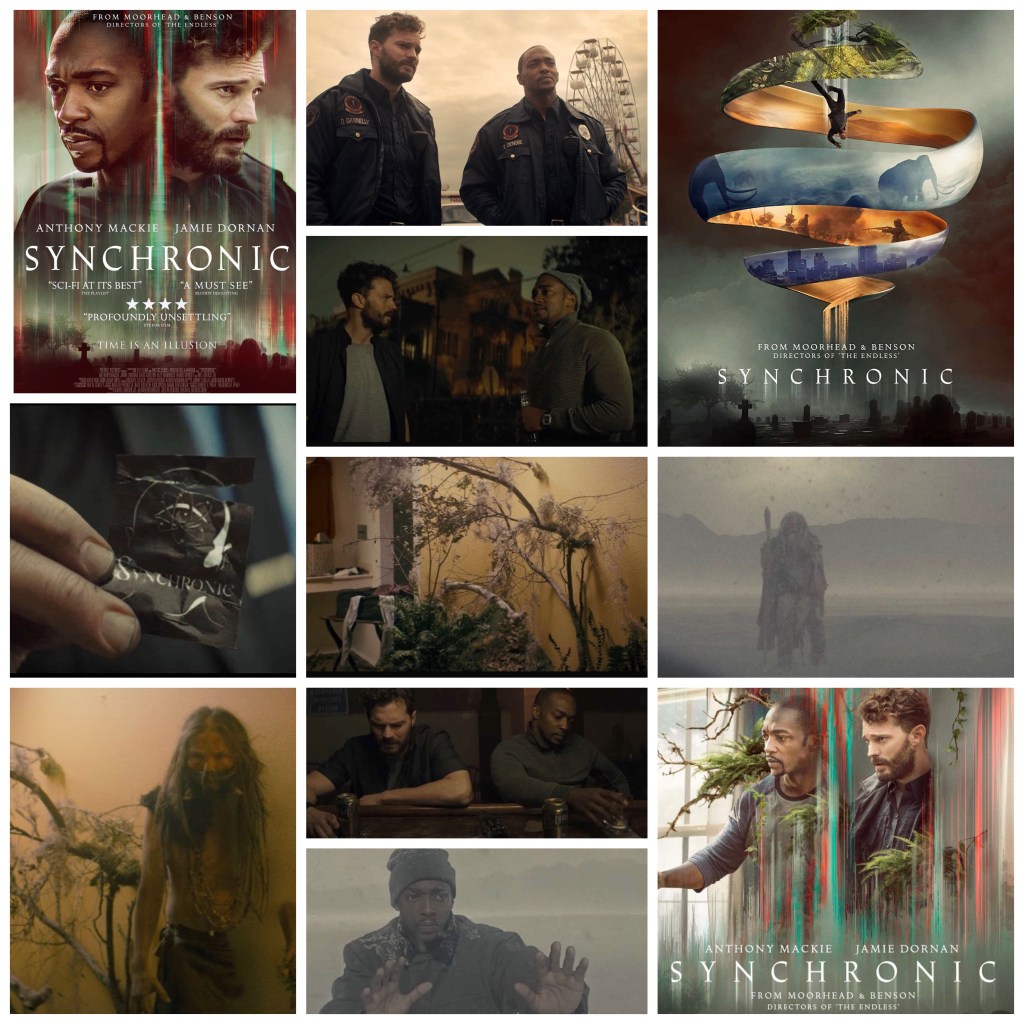
Benson & Moorhead’s Synchronic

Justin Benson and Aaron Moorehead have consistently been putting out wild, innovative and boundlessly creative ideas into cinema including Lovecraftian romance, esoteric doomsday cults, otherworldly time loops and more. What’s so great about their work is that along with these very grand, high concept SciFi ideas they always have the right application of atmosphere and tone as well as extremely believable, well written characters to back it up and with their newest film Synchronic they just may have outdone themselves. Anthony Mackie and Jamie Dornan play two New Orleans EMT’s who are also steadfast besties, their bromance banter a huge asset to this story. They seem to be getting a lot of disturbing calls lately, of people injured or hurt very badly after taking a mysterious experimental street drug called Synchronic, which is available in Vape form at various stores. It’s basically a synthetic DMT compound that acts on the pineal gland to provide unnervingly vivid hallucinations, but what really happens is that for the duration of the high, you quite literally go backwards in time to a random period of history, could be five years ago, could be five thousand years ago. This powerful but dangerous ability is the lynchpin of a story that involves these two characters as Dornan struggles with family issues, Mackie wrestles with a terminal illness diagnosis and the drug itself comes into play in ways you might not expect. Both actors are terrific especially when onscreen together, with Mackie being the standout and taking full blooded advantage of the deep, ponderous and soulful writing. What really makes the film sing is the synergistic flow of atmosphere, music and special effects for the trips back in time and there are several breathtaking set pieces including a Spanish conquistador in a damp bayou, a hellish picture of the New Orleans harbour on fire sometime around the civil war and an absolutely stunning trip back to the ice age. These sequences feel fully realized, immersive and tactile and where other films would take a high tech gadgetry approach to time travel, this one uses the onset of the drug’s effect in an eerie, elemental biochemistry fashion to transport us into the film’s realm. Moorehead and Benson floored me with their 2015 film Spring (couldn’t recommend it enough) and then their follow up The Endless left me a bit underwhelmed but for me this is them roaring back into cinematic innovation on all levels with a wondrously moody, unbelievably creative SciFi that’s sure to become a classic. Brilliant film.

-Nate Hill

THE RUSS MEYER FILES: MONDO TOPLESS (1966)

If you track a filmmaker’s career, you’re likely to see things like Mondo Topless occur. No, I don’t mean that every auteur is going to crank out a quick-buck skin flick when they hit rough waters but, instead, there is a pattern of running back to material that’s bankable once experimentation bites them in the ass. Also gnawing at the filmmaker is the knowledge that only so many flops in a row can get you a one way ticket to director’s jail so the return to the familiar seems doubly enticing.

So it’s understandable that, after the box office failure of Faster, Pussycat! Kill! Kill!, Russ took a step back, bought some color stock, went into his own archives, and stitched together Mondo Topless, a fleet, cacophonous, and full-bast of adrenaline which is as much fun as it is utterly inconsequential. And though its particular structure (which is more or less the same as the one utilized in Europe in the Raw) would get aped in Pandora Peaks, Meyer’s sad and unfortunate final film from 2002, Mondo Topless is minor Meyer; more or less serves as something you’d throw on at a party while waiting for all the guests to arrive. Even in his own filmography, it doesn’t do much more than stand as a mark in time to separate his silky, black and white gothic films from his garishly colored soap operas. But, by god, it’s good fun and one hell of a time capsule.

One part San Francisco travelogue, one part documentary, one part shameless flesh parade, Mondo Topless is Meyer having some fun with the then-nascent glut of “mondo” documentaries that were successful simply by giving middle-class Americans the promise of seeing footage that felt exotic and taboo. The central idea of Mondo Topless is that the topless dance craze is completely devouring the globe and Meyer, through the barking, breathless narration delivered by John Furlong (narrator of Faster, Pussycat! Kill! Kill! and appeared as Calif in Mudhoney) aims to get to the bottom of it; tracing its origins in San Francisco and then as it spreads to all points beyond.

As was the norm for any of his location photography, Meyer’s multi-Dutch angled views of San Francisco are beautiful and capture what looks to be the last days of a generation right on the cusp of the Summer of Love. And, once again, it’s an absolute joy to see all the trappings of the time, most especially in the colors, the fashions, the automobiles, the signage, and the numerous reel-to-reel recorders and transistor radios, generally used as foreground texture in shots that look almost as if they were shot with a split-diopter.

As stated before, all of this is a setup to be a look at topless dancing. But Mondo Topless isn’t at all an actual expose on the topless dancing craze sweeping the planet in 1966. In fact, it’s not even close. For just a cursory glance at the movie reveals something that has most definitely been Frankensteined together from other works, finished and unfinished, that were lying around Meyer’s editing room. Some of Mondo Topless is newly shot material. Pat Barrington (here working under the name Pat Barranger), Darlene Grey, Mrs. X, Sin Leneee, and most definitely Babette Bardot (“50/50 where it counts!”) are contemporary. But some of this (ie, the moments where we see a performer but only hear Furlong’s narration) feels suspiciously like the cheesecake footage that was shot for Erotica from 1961 or Heavenly Bodies from 1963. Likewise, all of the staged strip routines that are purported proof of the topless craze having jumped the Atlantic and spreading across the globe in 1966 are, in fact, reused from 1963’s Europe in the Raw. This double dip is just as well since nobody saw Europe in the Raw the first time around and the burlesque acts by Veronique Gabriel and Abundavita simply should not be missed. And Lorna Maitland’s bit, a crass but understandable way to get her corpus in the actual film and her name on the one-sheet, is just reused footage from production shoots for Lorna.

But none of this really matters as Meyer’s rapid fire editing and wall-to-wall women go a long way in making the 60 minutes that make up the running time of Mondo Topless go down a lot smoother than the 60 minutes that make up one of his nudie cuties. And, once again, Meyer accidentally stumbles onto some feminine truths while also giving the audience what they came for. While it’s almost a meta-concern that the women are being objectified given that objectification is the name of the game when one is a topless dancer, sex and body-positive messages drift over the soundtrack alongside some verbal deconstruction of the mechanics of the craft as the candid audio interviews with the performers are laid over images of them dancing alongside oil rigs in the California desert, climbing electrical poles, or writhing around in the mud, among other sundry things.

For Russ Meyer, Mondo Topless was his wouldn’t be the last time Meyer would go back to the tit (pun 15/10 intended) that supplied the mother’s milk as Supervixens would later prove to be a retreat of sorts after two back-to-back, less pneumatic projects would be met with crickets. And like Supervixens would prove to be, Mondo Topless isn’t quite a return to the type of film he used to make, here specifically the pre-Lorna, narrative-free nudie cuties that made him famous. Instead, Mondo Topless employs even more frenetic editing, louder music, more extreme camera angles, and more suggestive undulations to point outrageously toward the future.

(C) Copyright 2021, Patrick Crain

Justin Dix’s Blood Vessel

What’s something you can find on a nazi warship that’s worse than nazis themselves? Well a group of allied castaways find out exactly what when they drift into the path of a deserted one in Blood Vessel (amazing title) a super fun, super old school, kinda low budget but enthusiastic B horror flick that I really enjoyed. As a stranded life raft from a torpedoed sub approaches a giant derelict boat, the survivors are seemingly saved until they board the craft, find it curiously deserted and discover what is lurking deep below deck, waiting to hunt them. It seems the nazis were transporting several caskets from Romania containing immortal creatures known as Strigoi, which are basically vampires with a lot more snazzy magic powers backed up by a lot more specific backstory lore. The minute these things wake up it’s game on as they discover these new people in their vicinity and begin to viciously take them out. The allied group is a surprisingly varied bunch including a cowardly Brit, an enthusiast Aussie, an American battle surgeon and an Eastern European badass who has survived all kinds of gnarly stuff and has the scars to prove it. They are all very well acted, written and have distinct, unique anthropological personas and angles which isn’t something you find in every horror flick about a bunch of folks who are essentially cannon fodder for vampires. The creatures themselves are very cool, designed with practical prosthetic effects, all exaggerated ears, accentuated fangs and acted with snarling vivacity by those under all that awesome makeup. What’s more is they aren’t just an animalistic horde either, they’re an ancient, evil aristocratic family complete with a young daughter Strigoi who is just as deadly as mom and dad, it’s a cool family dynamic. There’s gory showdowns, subtle sociopolitical banter amongst the human characters, well drawn arcs and loads of spooky, smoky, eerie abandoned boat atmosphere full of beautifully saturated Argento-esque lighting and gorgeous frames filled with gothic eye candy. A solid horror, streaming now on Shudder.

-Nate Hill

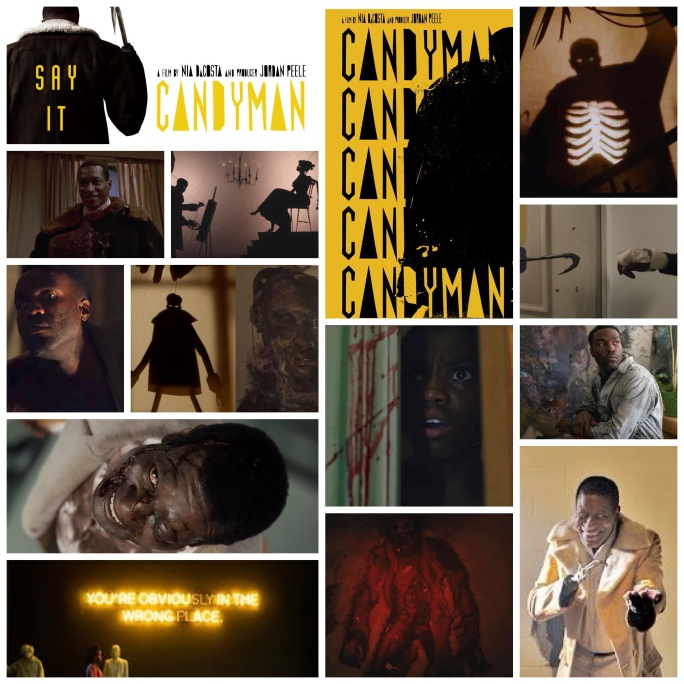
Nia DeCosta’s Candyman

Urban legends have a way of living on decades after the actual events that inspired them, like ghosts of the past doomed to linger as long as the collective human consciousness remembers what happened, and spreads it by word of mouth. The original 1992 Candyman film is a minted horror classic that has only gotten better with age and still holds up in every respect to this day, a terrifying supernatural parable that covers classism, racism, the power of myth and the passing on of stories in a ritualistic fashion. So how does Nia DeCosta’s Candyman, a ‘spiritual’ sequel and decades later follow up compare to its inspiration? Well naturally it’s not quite as good, but it was never going to be, and it was also never going to be the exact same thing because the world has changed and along with it so has the grim Chicago project housing neighbourhood of Cabrini Green, once a derelict death trap and now a hilariously partially gentrified (we see a rundown laundromat sitting snug right next to an artisanal ‘roastery’) overrun with art world types, the horrors that befell it over twenty years ago now almost forgotten. Not quite though, as we see struggling artist Anthony (Yahya Abdul-Mateen II) catch wind of the Candyman events, now little more than a campfire story, and decide to investigate further in order to gain inspiration during an artistic dry spell where his successful girlfriend (Teyonah Parris) is supporting him financially. Naturally the more he learns the more his life unravels and pretty soon people are saying those magic words five times into mirrors and being viciously murdered by Candyman, albeit a different incarnation than Tony Todd’s iconic and darkly tragic Daniel Robitaille. He’s called Sherman Fields this time (played excellently by Michael Hargrove) and I gotta hand it to the guy, he’s pretty damn scary, in less baroque, theatrical fashion than Todd and instead a more animalistic, unstable way. The idea here is that Robitaille pioneered the dark necromancy that keeps the Candyman legend alive but there are also others, each with an appropriately unfortunate backstory, who fill the position. It’s a neat expansion into the mythos even if Todd himself gets sadly little to do here. The callbacks to the first are integrated well enough into this version of today so that it feels psychically linked to it without having outright sequel syndrome, which I suppose is what they mean by ‘spiritual sequel.’ Nia Decosta is a filmmaker to watch out for, she meticulously blocks actors and stages the killing scenes in ingeniously innovative ways using space, movement and reflection for some truly trippy and original sequences invoking settings like mirrored elevators, high rise apartments, high school washrooms and cavernous holes in dilapidated drywall. There’s also some beautiful shadow puppetry that fills in for flashbacks instead of ripping actual footage right from the 1992 version, which adds an elemental flourish and a terrific musical score by Robert Aiki Aubrey Love that echoes Phillip Glass’s achingly gorgeous original composition without aping it. There’s even some startlingly gruesome body horror thrown in that breaks new prosthetic ground and is… quite something to look at, or look away from depending on your tolerance. It ain’t the 1992 version and let’s face it, nothing will be. But it’s hell of a good horror film and a damn fine shoutout to a classic that’s in its own time capsule now, it illustrates how myth, legend and superstition live on no matter who forgets, dark forces like that have a way of finding their way home to the hallowed grounds where they were birthed, and this incarnation of Candyman is every bit as chilling and atmospheric as the first, albeit in different, fresh ways.

-Nate Hill

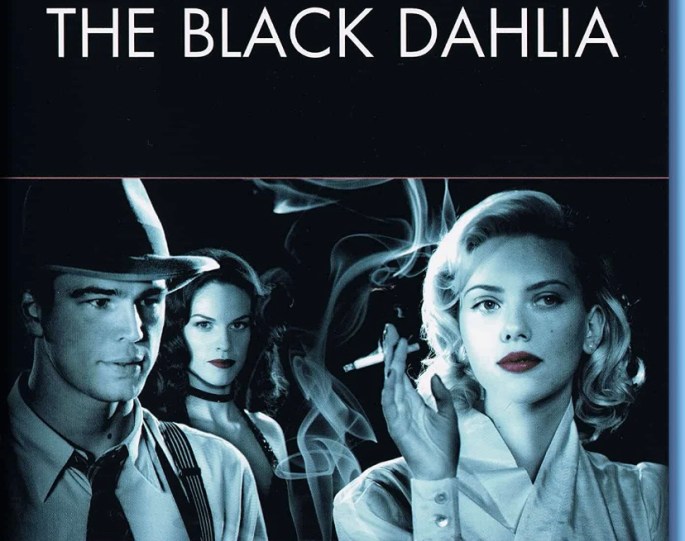
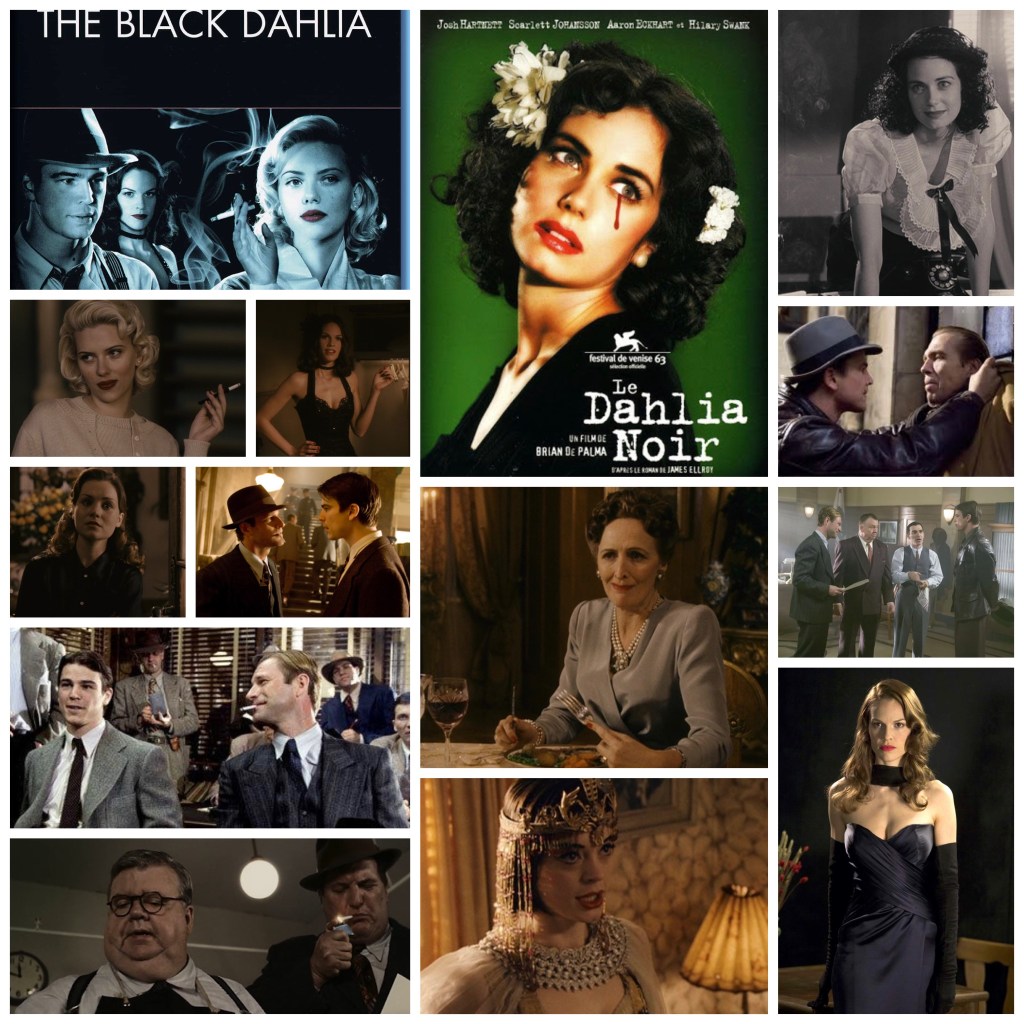
Brian DePalma’s The Black Dahlia

I’m not sure exactly happened with The Black Dahlia but it’s like the recipe was there, it was on time and legible and whoever was in charge of whipping up the ingredients into something coherent, be it editor or producer or Brian DePalma himself, was simply having an off day. In telling the story of two hard-boiled LAPD detectives (Aaron Eckhart and Josh Hartnett, both giving good performances that deserve a much better film) who are assigned to the infamous murder of Elizabeth Short (here played by Mia Kirshner in flashbacks), the filmmakers seem more intent on sidetracking into a useless love triangle between the two cops and a former prostitute (Scarlett Johannsson) as well as numerous political, high society and other cluttered subplot threads that don’t feel like they need to be there. Hartnett gets tangled up with a weird femme fatale (Hilary Swank trying on an accent that fails spectacularly) from a super rich and super shady aristocratic family and it’s here where the film, based on a fiction novel, tries its best to tell the made-up story of what really happened to this girl, kind of like that Johnny Depp Jack The Ripper film only nowhere near as gripping, atmospheric or well told of a story. There’s so much going on I just threw my hands up in frustration at one point and resigned myself to bailing on the story and simply spending most of the two hours playing I-Spy with all the familiar faces in the supporting cast, and it’s here I can say something truly positive about the film. I miss the days when big budget Hollywood flicks had epic, sprawling supporting casts full of awesome people on roll call, even if they’re only around for a swift cameo or couple cool quick scenes. Here we get appearances from many including Kevin Dunn, Mike Starr, Rose McGowan, Troy Evans, Richard Brake, Rachel Miner, Patrick Fischler, Gregg Henry, Ian McNeice, singer K.D. Lang, DePalma himself and more. The great British actress Fiona Shaw (Aunt Petunia in Harry Potter) almost saves the entire film with a deranged extended cameo as Swank’s deeply unstable mother, her performance is so intensely off the wall and bizarrely compelling she seems like she walked in from a David Lynch film, she’s basically the liveliest spark the film has to offer. There is one particular death scene that is also quite memorable and almost more gruesome than the Dahlia murder itself, you’ll know when you see it. I just couldn’t get wrapped up in this thing though, the story is all over the place, feels disingenuous at the core of its script and is just a giant mess, no other way to put it. Great cast though, at least there’s that.

-Nate Hill

DARK STAR (D. John Carpenter, 1974)

It’s curious how little Dark Star is discussed in the canon of John Carpenter. It’s also puzzling given its rather large contribution to the sci-fi boom of the late 70’s that resulted in Star Wars in 1977 and Alien two years after that. Both franchises continue to dominate the market almost 40 years later and Carpenter has never been hotter as he’s successfully parlayed his iconic status into successful second careers in music and comic books.

In recalling the time between the heady and serious 2001: A Space Odyssey (1968) and the more fantastical and forgiving world of Star Wars, it’s hard to think of any other title that perfectly bridged the two. Even in 1970, George Lucas would sear the sci-fi genre by releasing a dark, grim vision of the future with THX 1138, cementing his preferred sensibilities in the more sobering and academic and less in the pulpy adventures of Buck Rogers, something he admiringly mocks in the opening moments of the film. As the promise of the 60’s deteriorated and a public wanting more escapist fare, Lucas regressively stumbled backwards, awash in the nostalgia bug he picked up when escaping the realities of 1973 with American Graffiti. What he landed in, though, was Star Wars, a far sunnier vision of sci-fi that was bronzed with the American Western and Japanese Samurai films that informed Lucas’s creative mind.

So 1977 got space via the grand adventure films of Akira Kurosawa and 1974 got, according to Carpenter, “Waiting For Godot in Space.” Not only is that an apt description of the movie, it also is a dead-on example for the type of mindset that the defeatist and exhausted American movie-going public was in in 1974.

At the time of Dark Star’s creation and eventual theatrical release, Stanley Kubrick was still at the top of his game. Though his most recent film, 1971’s A Clockwork Orange (yet another sterile, grim look at the future), had been met with an alarming amount of controversy and wasn’t exactly embraced by all (Roger Ebert wasn’t all that hot on it), Kubrick’s reputation was still riding high from 2001: A Space Odyssey, a game changing mind-blower that still rendered him exciting and mysterious. And even though the worst of the Cold War’s nuclear fears were behind them, America still held Kubrick’s Dr. Strangelove in high regard but, at only 10 years old, as a slightly older, yet still contemporary film.

Co-written by Carpenter and fellow UCLA alum Dan O’Bannon, Dark Star utilized the vision and satirical sensibilities of Kubrick’s freshest and exciting works as the foundation for a yarn about the crushing boredom and claustrophobia that is shared among the crew of a star cruiser, charged with destroying unstable planets. And, honestly, it’s totally fair to treat Dark Star as a true collaboration between Carpenter and O’Bannon as the latter’s contributions turn Carpenter’s budgetary shortcuts into imaginative miracles. Co-writer O’Bannon, later co-writer of the screenplay for Alien and computer animator for Star Wars, leads a crew including Bill Taylor (The Thing, Blade Runner), Jim Danforth (Flesh Gordon, Twilight Zone: The Movie), Bill Cobb (Star Wars, Alien), Gregory Jein (Close Encounters of the Third Kind, Star Trek: The Motion Picture), and John Walsh (2010). Perhaps only 1970’s Equinox, another backyard project that was stewarded to a theatrical release by Jack Harris, would prove to be as potent a mix for future sci-fi professionals, matching Danforth and future Star Wars alum, Dennis Muren.

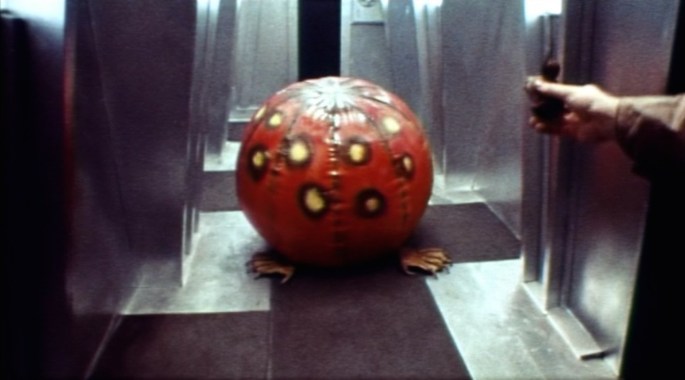
And like Equinox before it and the surprisingly enduring Flesh Gordon, released the same year as Dark Star, the low-budget effects are more than worth the price of admission. Though it lacks the absolutely amazing stop-motion animation of those two films, Dark Star mixes models and animation with ingeniously crafted production design; muffin tins, beach balls, 8-track tapes, ice cube trays, styrofoam packing are all utilized to surprisingly brilliant effect.

But while the innards are dressed by O’Bannon’s gadgets and his clever gags, the visual flow and sound design are all Carpenter’s which makes his presence as equally towering as that of O’Bannon’s. The classical visual compositions and the gently fluid camera crawls all recall certain specific moments that would appear later in Halloween (1978) and The Thing (1982). And Carpenter’s score is, if not one of his best, one of his more underrated; a menacing, droning wave of bad, electronic vibes that seems to elevate the film when its on the soundtrack.

Dark Star is also an excuse for Carpenter to indulge his inner Howard Hawks for the first time as he serves up a story that, however comic, is populated by Men in Extreme Situations. The interaction between the characters is interestingly humorous in the same fashion that the blunt dullness found in the uncomfortable silences of Jim Jarmusch’s Stranger Than Paradise (1984) is what makes that whole endeavor so hilarious.

As a story, there’s not too much to Dark Star. It’s a barely cohesive string of set pieces that build the framework of something that looks like a movie. And like both Equinox and Flesh Gordon, there’s not too much in the filler that sticks these moments together. But Dark Star is like raw, uncut magic. From Carpenter’s direction to the impressive number of special effect pros that sprang from it, Dark Star is like watching a wonderfully entertaining visual resume. Funny, liberating, and fueled on sheer energetic talent, little wonder that the galaxy far, far away that was created from Dark Star’s potent elements was such a phenomenon in 1977.

(C) Copyright 2021, Patrick Crain

Netflix’s Brand New Cherry Flavour

It’s always neat when a major streaming service takes a devilish gamble on something completely deranged and ‘out there’ for their original shows, and Netflix’s Brand New Cherry Flavour is about as WTF as you can accessibly produce without going into full fledged David Lynch surreal arthouse realms. It’s based on a book by a dude called Todd Grimson who I’m not familiar with but the creator/show-runner is Nick Antosca who is responsible for my favourite horror tv show of all time Channel Zero (which can be seen on Shudder) so it’s safe to say his creative output here is also a unique, otherworldly game changer. This tells the story of Lisa Nova (Rosa Salazar, the Battle Angel in Alita), a film student who has brought her horror short to LA in hopes of signing a feature deal, which starts by garnering the interest of fast talking, knowledgeable, well connected producing guru Lou Burke (Eric Lange). Unfortunately, as is often the case with Hollywood bigwigs, Lou is a sociopathic, sleazy piece of shit who not only comes onto her and gets petty when she rejects his advances but then steals her short film for his own purposes and even assaults her. What to do? Well, you could sell your soul to a weird cat worshipping witch deity in exchange for revenge most foul. I wouldn’t recommend it but in this case Lisa is a bit naive and doesn’t heed the obvious warning bells when she’s approached by mysterious Boro (Catherine Keener), who promises her retribution in return for a vaguely Faustian bargain. Well after neglecting to read the fine print Lisa finds her life and that of everyone around her turn into a full on hellish supernatural nightmare complete with flesh eating zombies, inter dimensional hallucinations, angry phantasms, peyote induced mania, pissed off Latino mob hitmen, hiccups, extreme violence at every turn and a strange affliction where every so often she’ll dry heave and vomit up a newborn kitten, and I mean that in the lost literal, explicit way possible, she straight up chundies little tiny demonic white cats covered in barf and it’s nasty af. But that’s what you get when you tangle with a mischievous witch I suppose. Catherine Keener hasn’t had a role this great in years and she’s a diabolical wonder as Boro, the least trustworthy being you’ve ever met, full of quips, quotes and scathing verbal roasts with the bizarre black magic to back her talk up, it’s truly a wondrous villain performance that she has a lot of fun with. This isn’t necessarily the most… succinct or airtight vision and it’s sometimes feels like paint just hurled at a canvas there are so many elements at play, especially in the back half of the season. But oh, what elements they are. This is dark, fucked up, no-chill storytelling with some of the blackest humour imaginable, laughs that catch in your throat on the way up like a barfed kitten and some of the most acidic, punchy, sizzling writing I’ve ever heard, full of impossibly colourful language and brimming with delicious, often very niche Hollywood references. It’s messy but it’s a beautiful goddamn mess and has so much jaw dropping, unbelievable content that I was transported along for the ride that resembles something like Mulholland Dr tossed together with Cronenberg, Raimi’s Evil Dead films with a dash of Entourage and something even intangible thrown in for good bloody measure. Be careful with this one if you’re content sensitive because it’s… punishingly perverse, overbearingly intense and unforgivingly willing got plumb the dark, demented depths of the collective storytelling psyche and puke up whatever it finds onto the screen. Like a kitten, or a self removed eyeball, cannibalistic zombies, metre long tapeworms pulled slowly out of human eye sockets, those are all but a taste. Buckle up.

-Nate Hill