THE RUSS MEYER FILES: FASTER, PUSSYCAT! KILL! KILL! (1965)

In the opening seconds of Faster, Pussycat! Kill! Kill!, Russ Meyer marries sex and violence by employing a stern narration that explicitly welds the two together over the visual of the ever multiplying, squiggly optical soundtrack that quickly fills the frame like a hostile takeover. The narration warns the audience that you’ll never know where that mix of pleasure and pain will turn up but that, among other locations, it COULD happen in a go-go club.

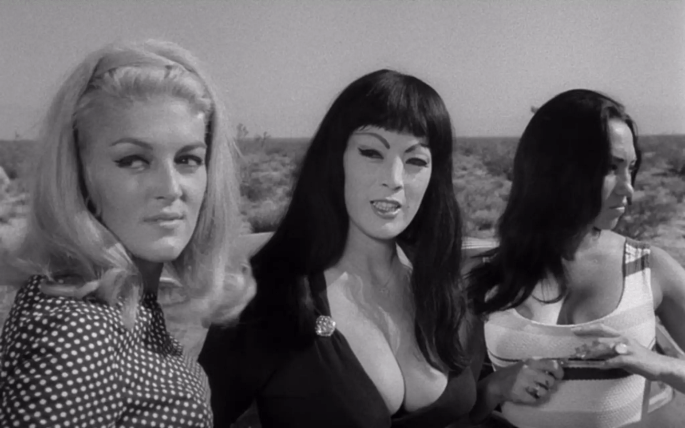
And that’s absolutely goddamn right because the go-go club in question is the place of vocation for Varla (Tura Santana), Rosie (Haji), and Billie (Lori Williams), a group of pneumatic, ass-kicking thrill seekers who roam the edges of the California desert and look for kicks in a manner so cavalier that they might as well be going antiquing. If this sounds a little familiar it’s because it is as Faster, Pussycat! Kill! Kill! is basically Motorpsycho! but with females in hot rods instead of dudes on bikes. But the question isn’t whether this is a copy job or not. Hell, even Howard Hawks, John Ford, and Alfred Hitchcock explicitly remade their own pictures. The question is whether or not the formula is bettered by the update. And, like the celluloid equivalent of Ms. Pac Man, Faster, Pussycat! Kill! Kill! is a marked improvement on an already enjoyable foundation.

There’s a bit more to Faster, Pussycat! Kill! Kill! than there was to Motorpsycho! as Varla and company not only find lethal kicks in the California wasteland in the guise of Tommy (Ray Barlow) and Linda (Sue Bernard), two all-American kids who run afoul of the group. They also find a crippled degenerate (Stuart Lancaster) who lives on a piece of dusty property, lording over a hunk of money he received after a railroad accident. His heart twisted with misanthropy and misogyny, he is assisted by his hulking, simpleminded son known as The Vegetable (Dennis Busch) and Kirk (Paul Trinka), his more sophisticated, well-read, and saner progeny. All of these combustible elements explode in the final reel as the film tacks close to Meyer’s precedence of directing ultra violent climaxes, delivering on the promise in the opening narration and then some.

Though Faster, Pussycat! Kill! Kill! was a financial failure and ended Meyer’s gothic period (and, sadly, was also the last film he shot in black and white), saying time has been kind to it would be a grand understatement. While the financial success of Motorpsycho! was the impetus for making Faster, Pussycat! Kill! Kill!, who the hell even talks about Motorpsycho! these days except for Meyer fanatics? Conversely, the image of the trio of Varla, Rosie, and Billie emblazons the front of many a t-shirt and poster and their cinematic legacy seeps into the DNA characters running all the way up to and beyond Quentin Tarantino’s Death Proof from 2007.

Wasp-waisted, Porsche-driving Tura Santana reigns supreme as the black souled Varla, an amoral animal who doesn’t much deliver her dialogue as she does whip it. She’s equal parts turn on and terror as a high-octane, hedonistic creature that swings every which way as long as it’s pushing the envelope of getting her rocks off. “Whatever you want,” she purrs to the man she’s seducing out of his fortune, “I’m your cup to fill.” Wielding dictatorial control of the group, Varla turns on everyone who displeases her whether they are friend or foe. When Billie breaks free of the caravan and decides to go for a swim all by her lonesome, she gets beaten for the infraction by Rosie at Varla’s command, the latter leering at the two of them as they wrestle in a wet and sandy tangle. She assets dominance in a dangerous and impromptu game of chicken with her two friends across the salt flats and when she is later in danger of losing a timed race against a mid-level square, she simply runs him off the track, beats him to death, and kidnaps his bubble-headed girlfriend. Varla is simply not to be fucked with. As she snarls “I never try anything. I just do it. I don’t beat clocks, just people,” she sounds more like the Jedi school teacher I’d rather have than that dull-ass Yoda.

By contrast, Rosie is tough as leather but still has something of a tender heart when it comes to her feelings for Varla evidenced by the sad jealousy that masks her face as Varla rolls in the hay with a mark showing a knowingly bitter and heart-sinking ring of truth to it. And Faster, Pussycat! Kill! Kill! was, in fact, the first of Meyer’s films to introduce lesbian relationships into his ever-expanding encyclopedia of sexual progress that was as sociological as it was personal. And even though he didn’t craft the most positive role model on the planet, the bisexual Varla has since become a symbol of tough, feminine independence and her plain-spoken, unvarnished honesty is admirable even if it would be a total HR nightmare in any other world.

But even though she’s soft for Varla, Rosie is anything but everywhere else. As played by the amazing Haji, Rosie’s ersatz, overblown “shutta up your mouth” accent is 15/10 hilarious and she gets one of the greatest lines of the film when she speaks incredulously at the mention of a soft drink by ensuring Linda understands that Rosie and the gals “don’t like nothin’ a-soft.” The rest of the cast, most especially Lori Williams and Meyer stalwart Stuart Lancaster, deliver their performances with gusto, spitting each bit of astonishing dialogue with glee and slowly elevating everything until its fever pitch climax which earns its feminist praise by giving even its weakest character the most satisfying deliverance.

Russ directs, edits, co-produces, and gets story credit for Faster, Pussycat! Kill! Kill!, but the absolutely incredible screenplay was written by Jack Moran, one-time child actor who popped up as the prospector/narrator in Meyer’s Wild Gals of the Naked West and would go on to appear in Common Law Cabin along with penning the deliciously quotable Good Morning and Goodbye and Finders Keepers…Lovers Weepers, ranking Moran only second to Roger Ebert as Meyer’s greatest third-party scribbler. And in keeping uniform with Meyer’s usual compositions, Walter Schenk’s amazing camerawork is kept at tits and ass level but always on the uptilt to exude the strength of the characters while putting a big bright spotlight on their physical attributes (especially in the case of Varla and Rosie). In a lot of ways, this is still a roughie but, quite unusually, the women are the ones to inflict almost all of the violence. And, like Motorpsycho!, this is the rare Meyer film that contains no nudity.

Capped off with the awesome title tune by the Bostweeds, Faster, Pussycat! Kill Kill! was a breakthrough for Meyer even if if didn’t seem like it at the time. This was mostly evident as he entered his soap opera phase with lead women who were still randy, ribald, and ready for action but a little more demur than the nihilistic Varla and who are trapped in worlds and circumstances she’d simply karate her way out of. Varla was the first of the Meyer heroines of whom it was asked if she were woman or animal and perhaps the public just wasn’t ready for it at the time. But Meyer would work his courage up to grace the screen with another in just three years time and, at that time, they’d be ready. Boy, would they EVER…

(C) Copyright 2021, Patrick Crain
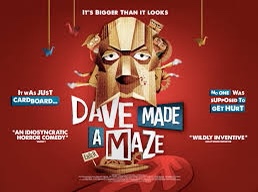
Dave Made A Maze

Dave Made A Maze, and then someone made a movie about him making a maze, and now it’s on Shudder. Is it any god? Well… kinda. It’s certainly incredibly creative, artistically impressive and visually something else, I’ll give it that. It’s literally about a girl (Meera Rohit Kumbhani) who gets home one day to find that her boyfriend Dave (Nick Thune) has built a massive cardboard labyrinth in the middle of their living room, and subsequently gotten lost within it. How has he gotten lost, you may ask? Well I wasn’t exaggerating when I said the thing is massive; on the outside it looks like a ten by ten square foot art project that a cat could comfortably cavort about it, but the minute you go inside it becomes an endless maze of hallways, vicious booby traps and confusing tunnels. “It’s bigger than it looks from out there” he yells from inside, and warns her not to come in. Soon she invites a bunch of people over to see this thing including a few of his friends, a pesky documentary crew and a random homeless dude who she thinks is a maze expert (“I said I know *cardboard*” he informs her, clearing up the misunderstanding). Pretty soon all of them follow Dave into this thing and find themselves just as lost as he is, and eventually they start to get killed by the frequent booby traps. So what is this maze, how was Dave able to make it this way and what is the film trying to say? Well, that’s where it lost me a bit, because as visually creative and unbelievably gorgeous looking as this maze is, the tone of the film has this sort of… faux Wes Anderson-y, wannabe Michel Gondry-esque attitude that just started to irk me pretty quick, like a deliberate, forced ‘quaint n’ quirky’ vibe that the actors just aren’t able to sustain for more than a few minutes. What’s more, it attempts this sad millennial set of themes where Dave built this thing because he never was able to finish a project properly, he’s always working jobs he hates and he’s ‘still getting money from his parents at age 30’ when he’s got a perfectly cool little apartment and seems to have found the time to have built a giant magical maze. It’s just a whiny angle and not a good look for the film overall. Those frustrations aside I did really, really enjoy the artistic vision of the maze, it’s blessedly CGI-free and is a wonder of infinite cardboard panels, trippy swivelling walls and origami creatures that come to life and a big mean Minotaur that chases them around. The tone of the acting and attempted subtext may have exasperated me, but they should be very proud of the artistic achievements they’ve crafted onscreen, one could almost watch this with the sound off and be just as transported.

-Nate Hill

Canadian greatness: Phillip Borsos’ The Grey Fox

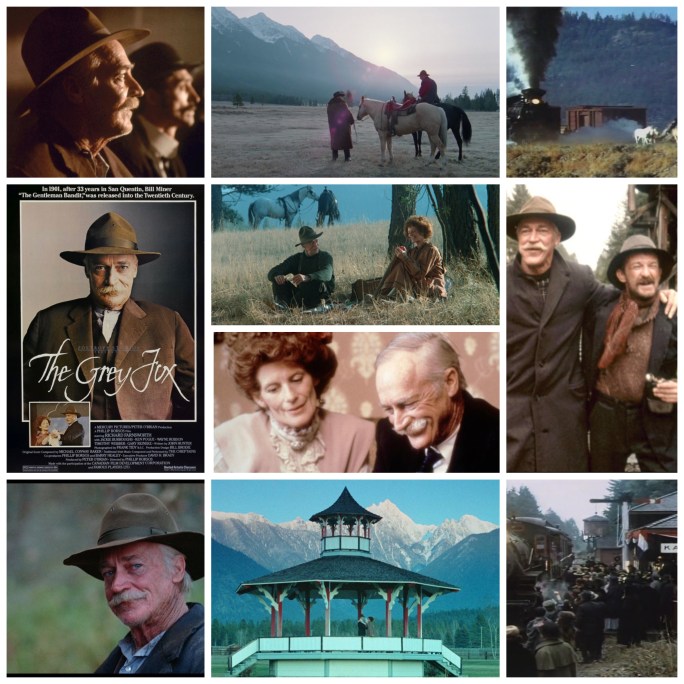
Famed Canadian outlaw Bill Miner might have been the most soft spoken, polite, counterintuitive criminal in the annals of history and the late great Richard Farnsworth plays him as such with his trademark clear eyed, honest voiced, pure hearted charisma in Phillip Borsos’s The Grey Fox, a film of stunning quality, wonder and grandeur both great and small. Miner spent the early part of his life as a career criminal with a penchant for politeness and after a three decade stint in San Quentin, he meandered north to Kamloops, BC to reconnect with his estranged sister and start a new life. His old ways find him once again though and soon he carves out a new legacy as a notorious train robber and once again his life takes a turn for the adventurous. He falls back into this groove simply out of habit I suppose, and because he feels he isn’t meant for much else. He meets and romances early feminist artist Kate Flynn (Jackie Burroughs), mentors his dim witted partner in crime Shorty (Wayne Robson), does the odd shady rustling work for local magistrate and crime kingpin Jack Budd (Ken Pogue) and is pursued by an eerily placid Pinkerton detective (Gary Reineke). Farnsworth makes this character sing, he was a stuntman turned actor who was just born with a natural gift and lit up the screen with impeccable emotional truth and vivid vitality anywhere he appeared, and this (along with his beautiful work in David Lynch’s The Straight Story) may be the finest work of his career. He makes Bill a quiet, sweet, compassionate and honest man, the absolute antithesis of what we’ve been told a lifelong criminal must be like, he’s always the most comforting presence in the room, is a natural leader and trailblazer and his scenes of tenderness and love with Burroughs are blessedly open-hearted and kind. The film was shot in and around some keystone British Columbia locations that don’t often get to play themselves in cinema (American studios can’t just shoot in their own locations, they’ve always got to rip off ours with no due credit) including Kamloops itself, Cheakamus Canyon, Fort Steele, Lillooet, Cranbrook, Pemberton and of course Vancouver. This adds a rugged, authentic realism and elemental grace to Bill’s story as Farnsworth and his cast-mates wander about in the wild Pacific Northwest realm, captured wonderfully in its early days by cinematographer and set designers alike. The score intertwines with traditional Celtic melodies for a unique musical/visual experience as well, especially in a hypnotic opening sequence where a steam train makes its way around the bend of a mountain pass as the credits lope alongside it. From that gorgeous opening crawl until the final melancholic few moments where another train goes by, this time in the other direction and for a different reason, this is a mesmerizing experience, anchored by Farnsworth’s angelic, note-perfect character work and everything else mentioned above. Available for rental on iTunes for 99c.

-Nate Hill

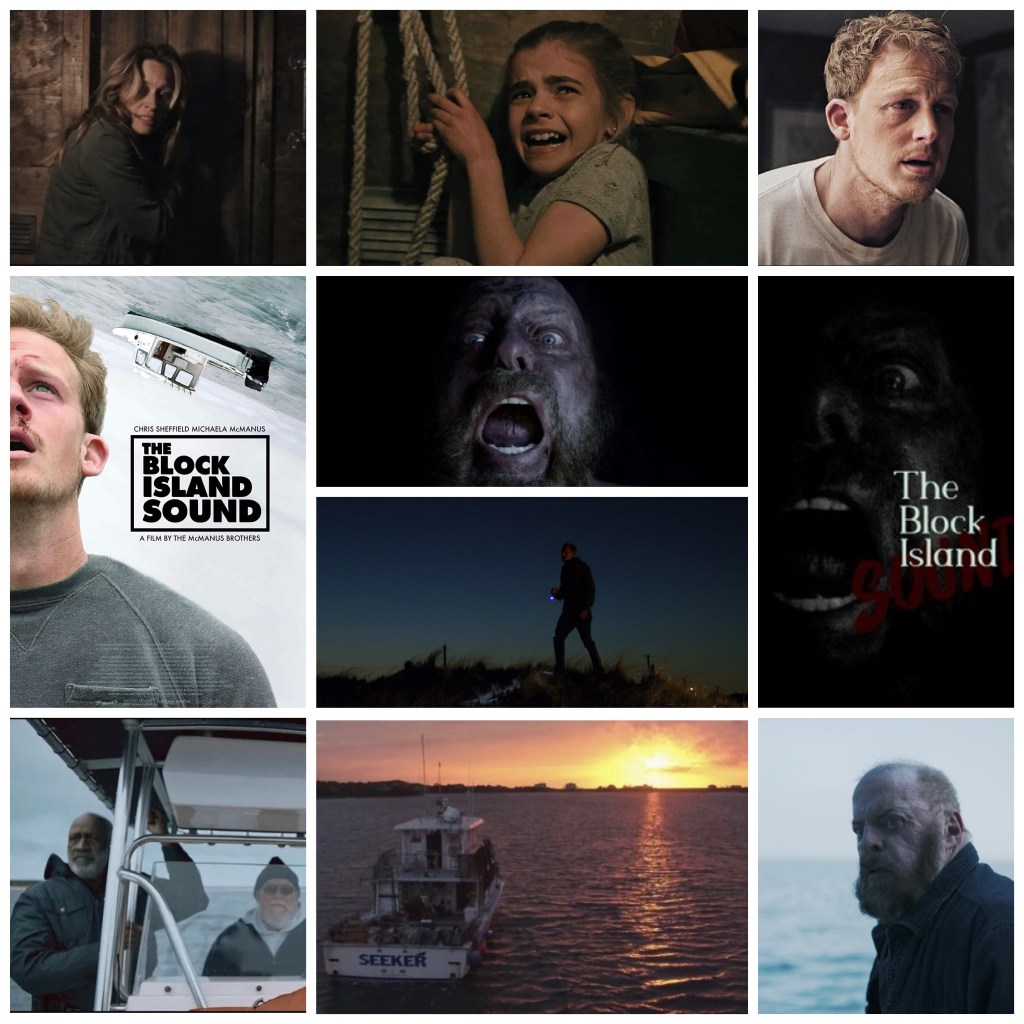
The MacManus Brothers’ The Block Island Sound

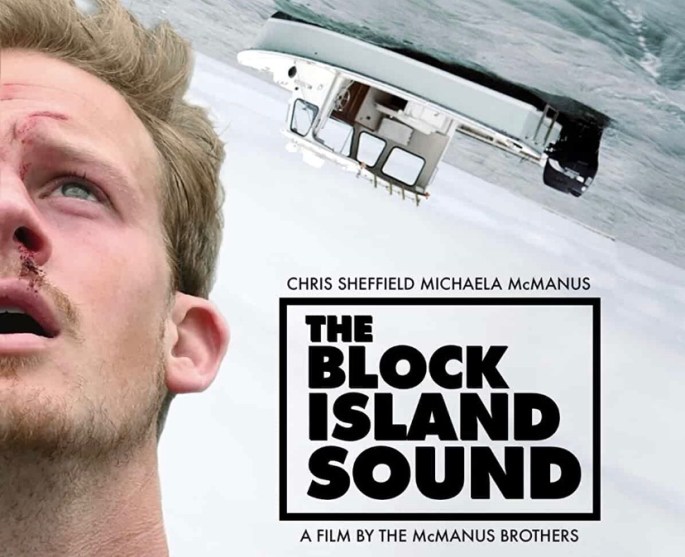
Aliens are up there and they’re messing with us… or are they down below, in the waters of the ocean? The MacManus Brothers’ The Block Island Sound is a fascinating, atmospheric and frequently terrifying glimpse of life in a small fishing town on the Rhode Island coast as inhabitants grapple with a mysterious, threatening, possibly extraterrestrial or cryptozoological force that slowly encroaches on them in increasingly horrifying ways. One fisherman (Chris Sheffield) has already seen his father (Neville Archambault) fall victim to these things and now finds himself coming down with strange symptoms: sleepwalking, blackouts, bizarre hallucinations, dark thoughts and the most severe case of tinnitus I’ve ever seen. He struggles to protect his family from whatever is out there and what it’s doing to him as he can no longer trust his own actions or impulses, especially around his young niece (Matilda Lawler, excellent) whose safety he fears for. This is a slow burn, ambiguous SciFi horror story that takes its time; you never see what’s out there beyond esoteric hints and chilling sounds behind the perpetually overcast coastal skies and the flint grey waters of the sea below. It’s always the threat of what’s out there that is scarier than the thing itself seen in full, and the filmmakers know this, taking full advantage of the ‘less is more’ mantra. Acting is all superior quality, there are a few sequences that drag and could have been tightened up a bit but overall this is a slick, nasty, spine chilling otherworldly horror that hits the spot. It even achieves a moment of pure greatness right at the very end when a character provides thought provoking narration that will make you completely rethink the nature of alien abductions themselves. Good stuff.

-Nate Hill

Don Bluth’s The Secret Of Nimh

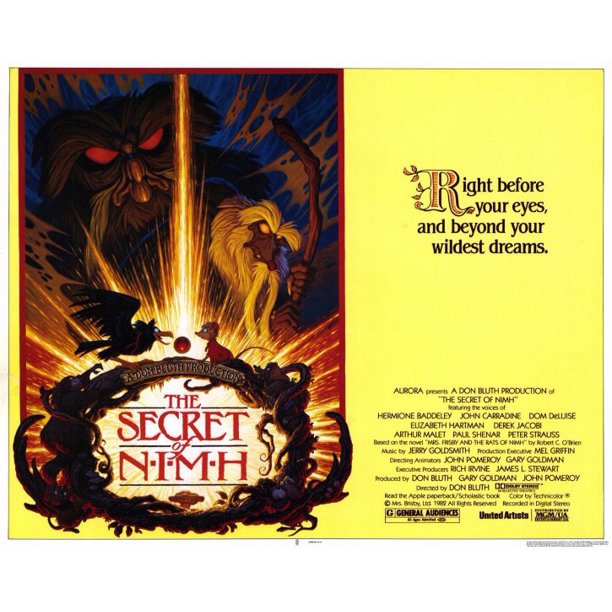
I remember reading the book Mrs. Frisby & The Rats Of Nimh as a child and being utterly transported by Robert C. O’Brien’s prose and storytelling. I think it’s the duty of any filmmaker adapting a literary work to do three things; 1) keep the spirit, themes and intention of the sacred source material on hand and implement it accordingly, 2) present a great deal of their own artistic and personal flourishes wherever they can and 3) utterly transport their audience to the world they are both adapting and further exploring. In the case of Don Bluth’s The Secret Of Nimh he has outdone himself by keeping the dark, often threatening beats of the book intact while offering up a dazzling galaxy of unbelievably gorgeous still-frame animation tableaus for equally stunning animated animals in motion to inhabit and tell this unique story. Mrs. Frisby (Elizabeth Hartman) is a widowed field mouse living in a vast and dangerous farmyard realm with her wee mousie children, one of whom is very ill. Every year when the farmer comes to plow the fields, all the woodland creatures are violently displaced in an apocalyptic ritual they refer to as ‘moving day.’ Because of her youngest child’s illness, moving day would be especially torturous for them this year and so she sets out on a mythical quest to find a better life for her family, a quest that puts her in contact with many other animals in the realm including friendly crow Jeremiah (Dom DeLuise), a spooky old great horned owl (John Carradine), the vicious and predatory farmer’s cat and a troupe of scheming rats, some trustworthy and others treacherous. This is a dark, prophetic, devilishly imaginative story that isn’t just children’s nursery rhymes but gets intense, introspective and downright menacing, I can see how this would scare the ever-loving soul out of young kids. Bluth’s animation is the real star here and every breathtaking backdrop is gorgeously hand painted, detailed and atmospheric tapestry of swirling colour, borderline abstract shapes and boldly audacious expressionism. The animals are vividly drawn with a touch of the surreal and the images and sound on display are dreamlike wonders of artistic creation. The world feels frightening, full of wonder, lived-in and soaked in ambience whether it’s overgrown forest thickets, arcing wheatgrass meadows, cluttered farmyard dwellings and even a brief trip to a nocturnal cityscape in a hellish flashback that holds the key to the story’s central mystery. This film is an unbelievable artistic achievement and benchmark in the medium of animation.

-Nate Hill

Willy’s Wonderland

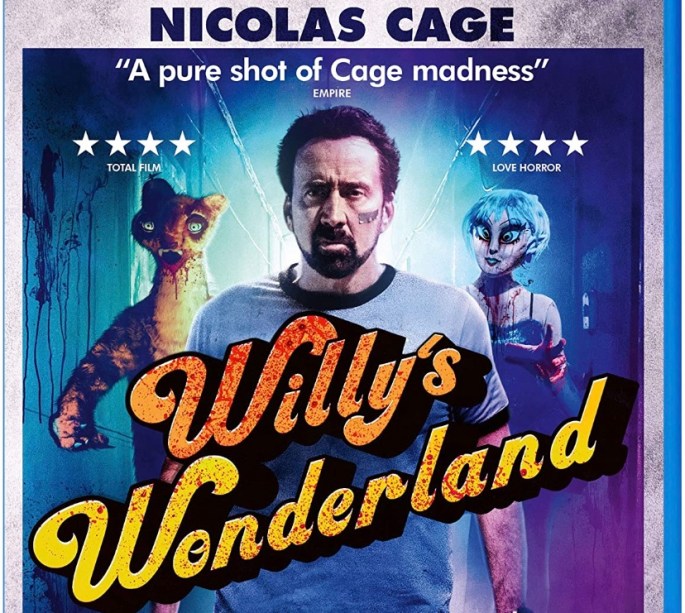
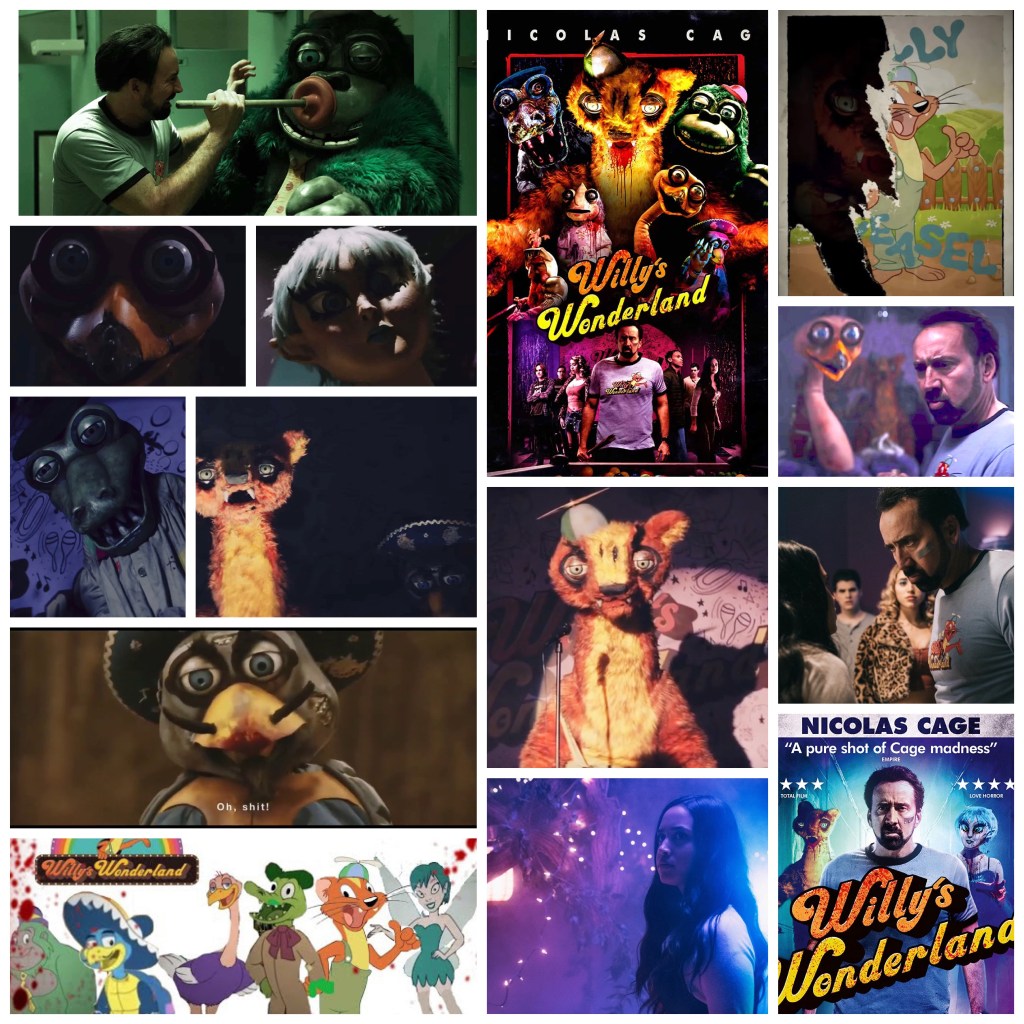
I never thought I’d live to see Nicolas Cage violently tune up a giant plush gorilla with a toilet plunger and curb stomp it’s head onto a urinal, but here we are. Willy’s Wonderland is an absolute bonkers blast, the kind of delirious, fucked up, funny as hell, gory as shit horror comedy I haven’t seen the likes of since the original Evil Dead. Now, I’m not sure what the rights or relationship situation is to the video game Five Nights At Freddy’s because this is clearly very much inspired by it, but that aside this finds it’s own demented groove, devilish mythology and wicked funny dark humour. Cage plays a mysterious, mute drifter who takes a night job cleaning a creepy, rundown Chuck E. Cheese restaurant to pay off a mechanic debt but it’s clear that the inbred yokels of this backwater enclave have a more sinister agenda, starting with the no nonsense sheriff (Beth Grant, Speed, Donnie Darko). Sure enough, the seemingly dormant animatronic toys are possessed by evil spirits and come to life at night with plans on killing Cage. What to do? He springs into silent but deadly action and beats the ever-loving fucking piss out of these loud mouthed Fisher Price rejects in what can only be described as an experience of pure unfiltered pandemonium. Meanwhile outside the restaurant a group of local kids prepares to pour gasoline and burn the place down in attempts to end the evil forever. This is Cage’s show and he’s a tornado of charisma even with no dialogue, guzzling down soda pop and dancing around pinball machines when he isn’t ruthlessly and violently decimating the animatronics, who all have interesting and creative designs from an ostrich to a medieval Knight to a Mexican mariachi turtle (lol) to Willy himself, a giant leering weasel with an elongated neck. The unnerving theme song and all of the musical numbers belted out by this demonic cabal of zoological burnouts are all written by experimental multi-musical artist Emoi and they all pop for a soundtrack that sets the cheeky tone perfectly. The story, although completely ludicrous, somehow feels engrossing and believable in a manic, bizarro world kind of way and every actor knows what kind of script they’ve been handed and does a terrific job with the humour. It is what it is man, if you came to see anything other than Nic Cage tangle with animatronics you’re gonna disappoint yourself but I’ll tell you this much: this could have been cheap lazy trash built around a gimmick they expected to sell itself. It isn’t. The gimmick is just the diving board, and the film itself is a genuinely well written, acted and executed piece that’s impressive and fun beyond being ‘just that crazy Nic Cage flick.’ It’s even legit scary in a few places, which is did NOT expect. So buckle up.

-Nate Hill

Edson Oda’s Nine Days

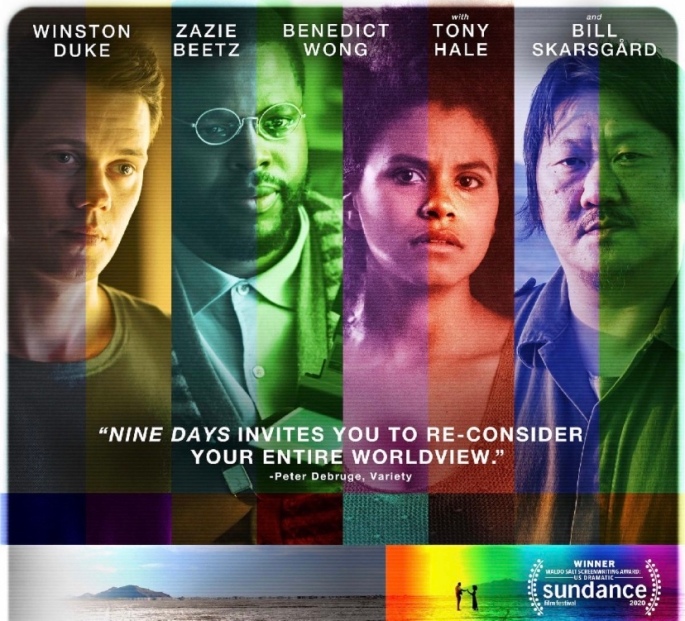
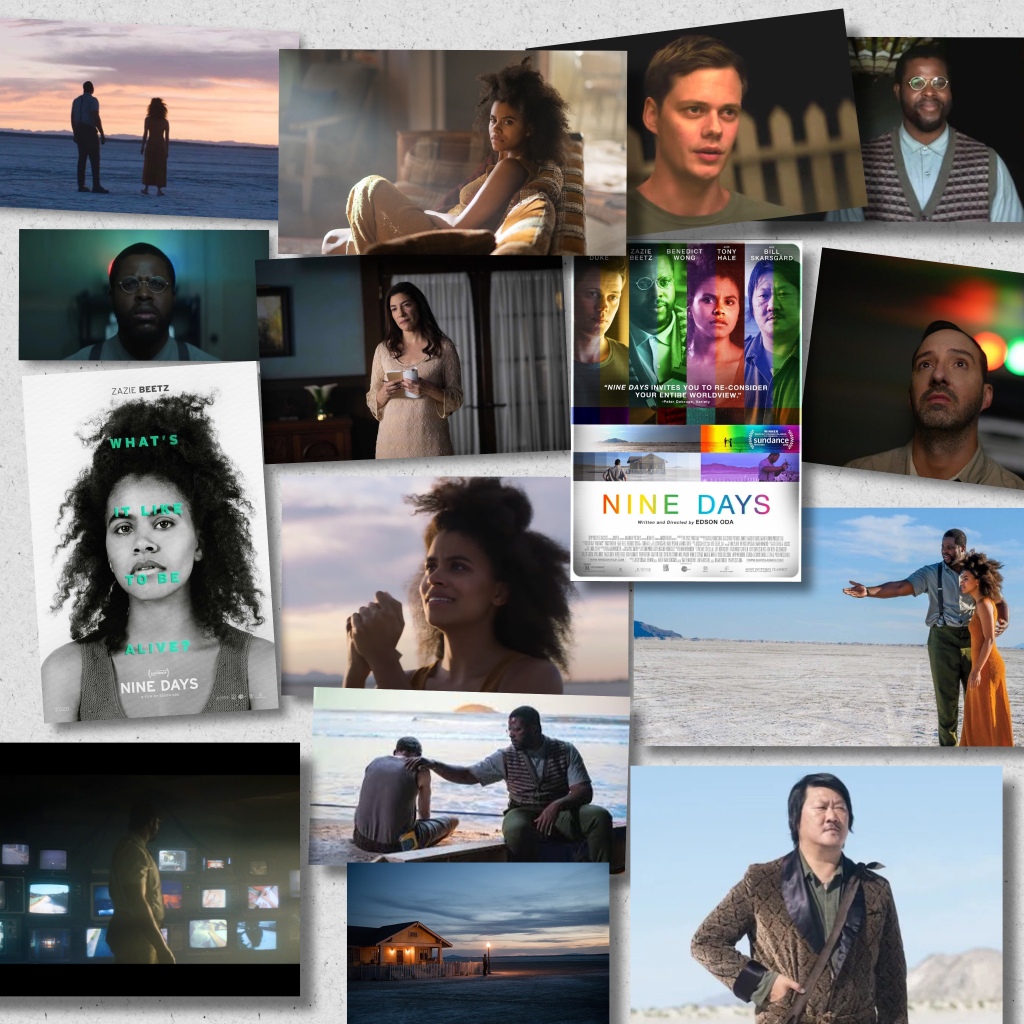
I’m just a kid from Canada who blathers on about movies on Facebook, I have no formal literary training or real clout in the journalism foray, and as such every once in a moon there comes a film that’s so good, so powerful, profound and so potentially life changing (what is cinema for, if not that?) that I feel it’s a bit above my pay grade to review it, but in the case of Edson Oda’s Nine Days I feel like I need to or you might miss this unbelievable, perspective shattering indie that seems to have come from nowhere but is here to rock our collective worlds and the lands beyond. The film presents to us a stoic, lone man called Will (Winston Duke, Us). Will lives in a rustic bungalow on a desolation of endless salt flats, and he sits in his house observing a wall of tube TV’s all displaying various human lives unfold in hazy POV. He takes periodic notes, records some of these moments onto VHS tapes and catalogues them in droves of filing cabinets. He’s visited by a colleague and advisor called Kyo (Benedict Wong, Annihilation, The Martian), and the two seem to be the only ones out there. It soon becomes clear that the people on the TV’s are humans living their lives in this world, and that Will and Kyo are in some other plane of existence, their task being to observe those who are alive and when an opening appears, to interview/audition potential new souls for a chance to be born in our world. When, through a heartbreaking tragedy, an opening does show up Will invites several souls into his house for the interview process including a quiet, observant introvert (Bill Skarsgard, It), a gregarious good timer (Tony Hale) and a startlingly observant, intuitive soul called Emma (Zazie Beetz, Deadpool 2, Joker). Now, usually a premise like this in films would be played for satire or just… not taken completely seriously but somehow this very wild concept couldn’t feel more down to earth in the hands of this creative team and, in hushed reverence, I believed every beat of it was happening for real. As Will interviews souls it becomes apparent that he is wounded from his time on earth in a way that is so deep and so painful that even these half formed human souls who aren’t even full beings yet, can somehow intuitively sense it. This goes especially for Emma, who is like an unbelievably precocious child that just picks up on intangible things as a sort of gift. As the selection process unfolds and more souls are eliminated it becomes clear that Will has to fix something broken deep within his own psyche, and this is where the film becomes downright transcendent and also where I just don’t feel qualified to properly convey the messages or themes, which are deep, dense and essential. It’s a film about not taking your time alive as a human being for granted, because there are so many unborn souls who may never get a chance. Not only are the themes compelling and thought provoking, they are multilayered, meditatively introspective and just ambiguous enough to feel like a real and flawed system of beings interacting in a world beyond our own. Wong’s wonderful character comments on the mysterious nature of both our existence and theirs and the aching existential wonder that any sort of being finds themselves in, the forces governing them always just out of reach. Duke and Beetz are unreasonably good here and if the Oscars ever took the time to recognize independent films they would both be front and centre, as would first time writer director Edson Oda (I simply CANNOT comprehending the fact that this is a feature debut, it’s TOO assured) and composer Antonio Pinto who weaves an original score too beautiful for words, full of melancholic, celestial string passages and hypnotic, dreamlike beats in between. One reviewer I saw on IMDb said about this film, and I quote, “After 60 years of watching movies, I’ve finally found the best one.” Well it’s obviously all subjective and personally I could never pick a singular, definitive “best movie ever,” the notion itself is redundant. However, I would consider Nine Days to be just about as close to perfection as one can get in the medium of film, that rare piece that just soars on every level and has the power to change lives. It’s getting a limited theatrical run at the moment and if you notice it playing in your city please go, it’s that one in a million film that lingers in your thoughts and dreams for a long time after, that elusive piece of art that doesn’t just exist onscreen for two hours before fading, but rather lives on in the hearts and minds of those who see it and takes on a soul of its own. Masterpiece and the best film of the year so far.

-Nate Hill

THE TOBE HOOPER FILES: THE TEXAS CHAIN SAW MASSACRE (1974)

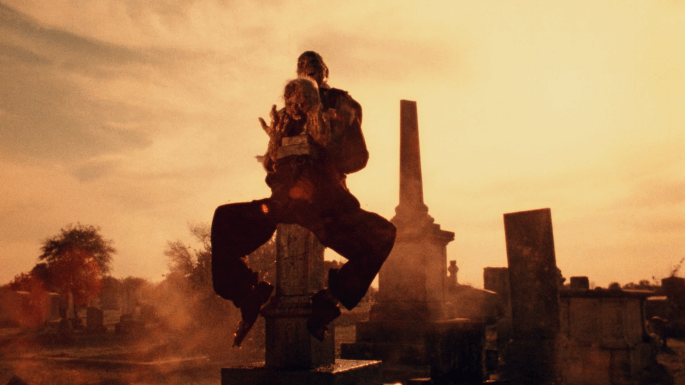
If Eggshells was Tobe Hooper’s way of showing Texas as a hospitable place where the entrenched past and the progressive future could find an uneasy truce in the name of peace, love, and harmony, then The Texas Chain Saw Massacre, his sophomore effort from 1974, aims to tear all of it down with shocking abandon. From the iconic opening flash shots of graves being desecrated to the tightly-wound, climactic ending, director Tobe Hooper and co-screenwriter Kim Henkel give the audience absolutely no breaks, immersing viewers in a cinematic world far beyond nature where exactly nothing is sacred.

In terms of plot, there may be no simpler film in the horror genre than The Texas Chain Saw Massacre. Five young people travel to a dilapidated family homestead out in the wilds of rural Texas and fall victim to a neighboring backwoods clan of cannibal ex-slaughterhouse workers.

Gosh, it feels really stupid to reduce the film to just its structural elements because recounting the broad outline of the film is kind of like calling a Jaguar “a car”; you’re not technically lying but you’re vastly underselling the product to a stupid and irresponsible degree. Yeah, The Texas Chain Saw Massacre is exactly as described and is more or less what you think you’ll be getting but it also achieves the absolute impossible by transcending the medium, establishing itself as a true nightmare printed on celluloid. It’s not that The Texas Chain Saw Massacre is a masterpiece of modern horror, it’s also that it’s the greatest horror film ever made and the clear victor in a race that’s not even particularly close. While Jaws did a number on people and shaped their attitudes about going to the beach, in reality there are only so many spots in the U.S. where a practical fear of sharks can really take hold. On the other hand, there are countless miles of country roads and rural highways dotted with the barest signs of civilization and The Texas Chain Saw Massacre roots itself in the mind in a way where each one of those dilapidated or barely functioning dwellings becomes suspect.

The Texas Chain Saw Massacre exists in a landscape where things are once close and a great distance; a place where time slips from day to night and back to morning in a sweaty compression. In Texas, the normal Jeffersonian survey grid that covers about 90% of the rest of the United States gives way to the weird, claptrap geometry of surveys and abstracts but this film exists in a land that feels even beyond that nonsense, landing somewhere totally uncharted. Geographically, it is a barren place where there is nowhere to turn when looking for solace or relief and where the characters are trapped between the two poles of a farmhouse and a gas station. There was a swimming hole that could once be found if you took the trail between two old sheds but it now leads to a dried out canyon of rocks and wild sunflowers. The only people who provide comfort and help are passers-through and absolutely are not native to the region. The only things on the radio are news reports about unspeakable horrors across the globe and twangy country music, all seemingly on a constant loop both day and night. Everything operates behind infinite curtains of unforgiving heat waves.

Conventions straight from gothic literature, specifically the examination of folks who untether themselves from society and live in a vacuum out in the middle of nowhere, are updated and amplified and contrasted with modernity in the guise of the post-Eggshells hippies in a van. We are forced to size up the primitive family with their more civilized counterparts and wonder why we get so much glee when Leatherface (Gunnar Hansen) digs his chainsaw into the gullet of the whiny, needy, and disgusting Franklin (Paul A. Partain), invalid brother to final girl Sally (Marilyn Burns) who, in a Freudian move pulled off no less than two times, quite literally points three of his peers (Terri McMinn, William Vail, and Allen Danzinger) in the general direction of their doom as if he were being subsidized by Leatherface’s clan to do such a thing.

The Texas Chain Saw Massacre is a film made up of memorable moments both great and small. Pam approaching the house as the camera tracks under the swing as it looms larger and larger like a giant that is about to swallow her whole; the corner of room packed with an animated, spindly nest of granddaddy long legs; the beautiful and darkly comic moment where the Old Man (Jim Siedow) confronts the Hitchhiker (Ed Neal) in the middle of the road, beautifully and macabrely backlit by the headlights of a pickup truck. One of the film’s greatest centerpieces, namely the introduction of Leatherface, is shocking and displays one of Hooper’s most favorite cinematic ideas (and one to which he would return time and time again) which is the unholy center of a world infested and rotten. As the set up is one big layered journey into hell and his initial appearance comes as a cold shock to the audience, Hooper parks it on the outer edge and plays the audience out to an unbearable level of discomfort, finally forcing the audience to simmer in the same paralyzed shock of Pam who sits dumbfounded among the detritus of bones both of animal and human origin after she literally stumbles onto same. Once orientated, Hooper springs the trap from the hell within the hell as Leatherface bursts out from behind the metal door, snatching Pam back into the house as she is trying to escape, her legs akimbo and lungs tearing themselves in half from her screams of terror that turn into screams of excruciating pain upon being unceremoniously hung on a meathook.

Employing a subjective camera that floats along the overgrown brush and looks out from the inside of roadside edifices as if something bigger and unseen is slowly deconstructing the known universe and all the logic and space that holds it together, Hooper and cinematographer Daniel Pearl set the audience on edge by hinting at something omnipresent that’s always observing even if the audience never actually sees it or knows what it is. Additionally, Hooper forces the audience to puzzle out just what exactly going on with the slaughterhouse family. Where every other Chainsaw film wears its cannibalism like a badge of honor bordered in bright neon, Hooper’s original keeps everything opaque with pieces of evidence floating about in a hazy, nightmarish rush that are never explicitly discussed but gel once one’s bearings are brought back center.

On a technical level, there is just nothing like The Texas Chain Saw Massacre. While every other Chainsaw film has tried to recreate the ghoulish interior of the family house, none have even come anywhere close to achieving the kind of natural sense of a completely functional yet terrifying place as Robert Burns created and dressed it in 1974. In every other Chainsaw film, the house feels like a trapdoor-festooned dark ride developed by professional funhouse workers, completely inorganic and phony. The cinematography is nightmarish which seems pretty upside down given than half of the film takes place in the daytime but the palpable heat and humidity almost mixes with the 16mm color-reversal blowup to create something chemically upsetting to look at yet entirely alluring all at once. Hooper and Wayne Bell’s musique concrète score is jangling and knows how to create a forever disquieting sonic atmosphere and the sound design finds the most upsetting of tones and puts its foot on the gas. While the special effects are all great, John Dugan is under some aging makeup courtesy of W.E. Barnes that’s some of the best stuff I’ve seen this side of Dick Smith and can’t help but impress given the film’s budget.

The Texas Chain Saw Massacre is a perfect film. It holds not one wasted shot, not one bum performance, and not one extraneous minute. Not one seam shows in its disorienting, maddening, uncomfortable, oppressive, and apocalyptic vision. There will never be another film like it nor will it ever find an equal. Tobe Hooper never came anywhere as close to hitting the heights as he does here but it really doesn’t matter as he could have directed nothing but industrial videos on 3/4” videotape for Honeywell for the rest of his life and gotten into director’s heaven and any and all halls of fame for just gestating The Texas Chain Saw Massacre. And that’s that.

(C) Copyright 2021, Patrick Crain
RL Stine’s Fear Street

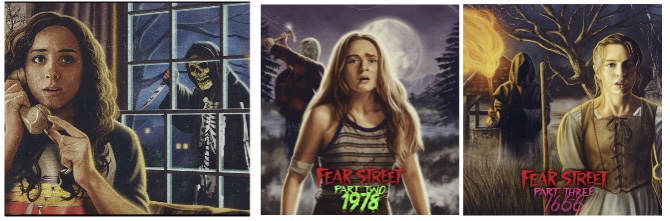
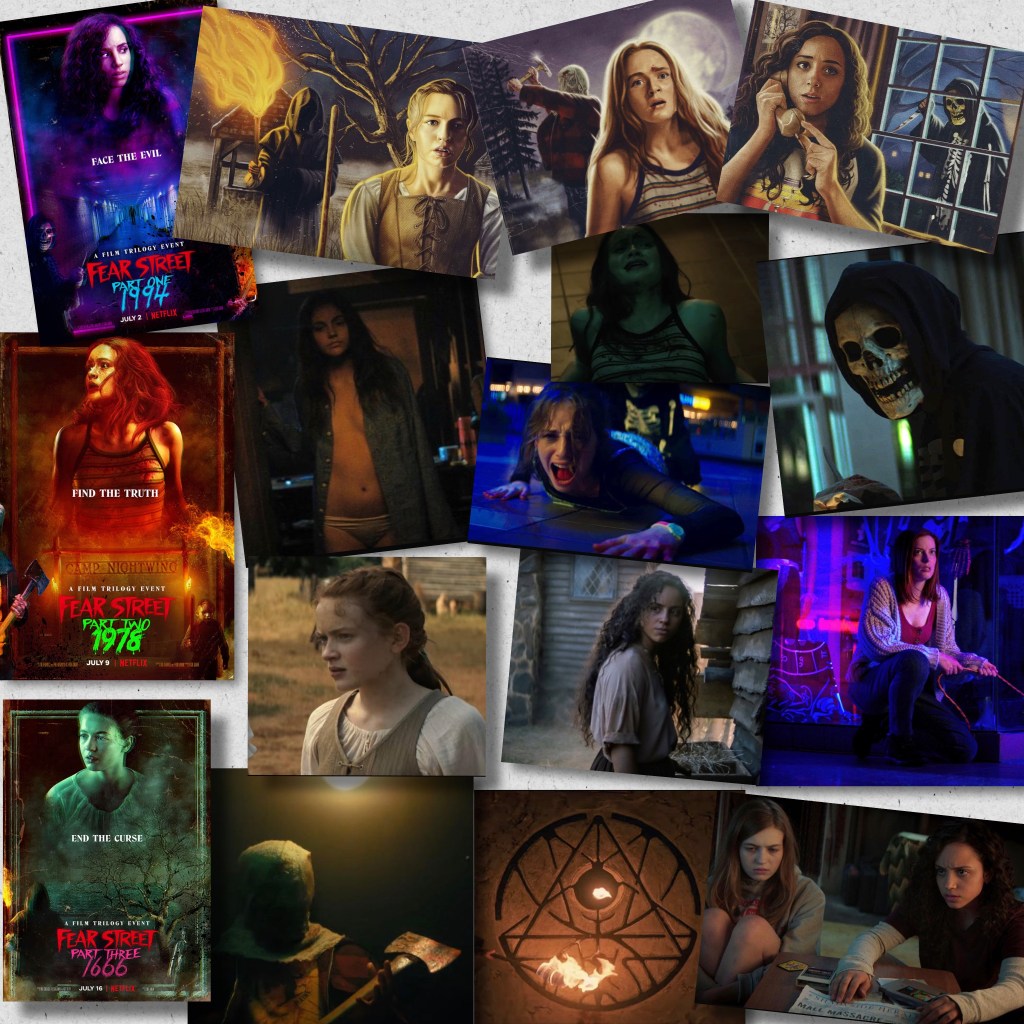
Netflix has tried a somewhat innovative and unique experiment with their film adaptations of R.L. Stine’s Fear Street books, filming an entire interconnected trilogy and then releasing them week by week like a running serial of feature length films. The effect is genius both in terms of marketing and the stories themselves and the only thing that would have made it better is if we got to see them week by week on the big screen, like a triple dip multiplex experience. The films are wonderful, three different slasher flicks set respectively in 1994, 1978 and 1666 with a neat double-back to the 90’s again as the last film wraps up the multigenerational, complicated tale of an evil curse placed on the hard-luck town of Shadyside, OH. As a group of teens in 94 scramble to figure out what’s causing some townspeople to go on murderous rampages, the second film takes us back to summer camp 78’ as the generation before them experiences the same killers who seem to be controlled by some kind of powerful force, and the third goes even farther back to the pilgrim settlers that first came to the region as we finally get to the root of what’s causing these century long killings spurred on by what seems like an evil witch, until we learn the real reason which is far more scary and sad. 94 presents to us a stunning opening sequence set inside an appropriately retro shopping centre complete with neon decorations and a masked killer inspired by Ghostface, while 78 offers a nice riff on stuff like Friday The 13th and Sleepaway Camp and 66 goes for a devilish spin on Salem-esque cultish witchiness. Despite all these stylistic influences and homages and an appropriately nostalgic soundtrack lineup full of crowd pleasing anthems of their day, this trilogy strives to be its own thing and not sink too deep into the waters of retro fan service without having an original voice of its own. The characters here are all terrifically developed and wonderfully acted by a massive cast full of familiar faces and relative newcomers alike and the whole thing is as fun as a gong show Halloween house party, as insanely gory (some of the kills are downright shocking) as we like our slashers to get, as down to earth as our favourite social commentary horrors and as deeply tragic and heartbreaking as horror should often be. Great stuff all round.

Nate Hill

THE ROBERT ALTMAN FILES: TANNER ‘88 (1988)

Even with questionable projects like Quintet and A Perfect Couple finding their ways into theaters in 1979 only to find his fortunes crater in 1980 with the underperforming Popeye and the mostly never-released HealtH, it would still appear that, on paper at least, Robert Altman’s sojourn away from the multiplexes from 1988 to 1992 was the absolute bottom of his long and illustrious career. For during this period he worked exclusively on projects envisioned for the small screen. Some of these were good as was the case with his adaptation of Herman Wouk’s The Caine Mutiny Court Martial,and some of these were the direct opposite of good as was the case with Basements, his adaptation of twin Harold Pinter pieces, “The Dumb Waiter” and “The Room.” But even on wobbly legs that could only be glimpsed in the living rooms across America, from this stretch of time also sprung Tanner ‘88, Altman’s absolute crowning achievement of the 1980’s and one of the greatest and most significant works of his entire career. If Altman’s Nashville is the greatest film about America, Tanner ‘88 is the greatest work about American politics.

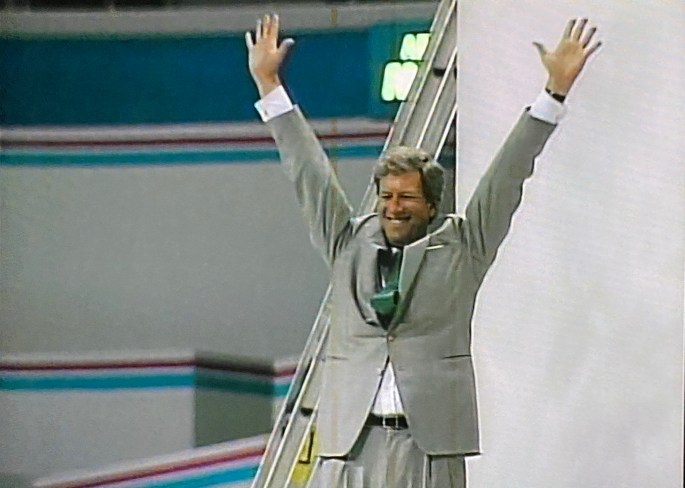
Written by Doonesbury creator Garry Trudeau and directed by Altman (and advised by future Clinton advisor, Sydney Blumenthal), Tanner ‘88 was a wildly creative and incalculably influential eleven-episode miniseries that spans the course of six hours and was broadcast on HBO between February 15th and August 22nd in 1988. Fluctuating between the real-time cable news drama of the very real Democratic presidential primary of that year and the bustling, fictional world of Jack Tanner (Michael Murphy), liberal idealist and one-time Michigan congressman now thrust into the maelstrom of a presidential campaign, Tanner ‘88 dissected American politics with skilled precision, blurring the lines between fiction and non-fiction as Tanner and his dysfunctional campaign intermixed with real pols and press all the way up to the Michael Dukakis/Lloyd Bentsen-coronated convention in Atlanta.

By running a clear-intentioned but befuddled antique of a candidate in Jack Tanner, Altman was able to get in there to document American politics on the cusp of a new age of information; 24 hour cable news working overtime to numb the minds of many voters, causing them to tune out due to over-saturation. In doing so, Altman sends up the technical bugs that plague on-the-fly productions that occur in politics and live television such as roving optical titles that sometimes shuffled between multiple names before landing on the correct person who’s doing a shoot interview and miscommunications galore despite sitting atop a bank of telephones. Tanner ‘88’s shot-on-video foundation (lensed by longtime Altman camera operator, Jean Lepine) has all the artistic greyscale of a Gregory Dark porn from the same period but it doesn’t damage Tanner ‘88 in the slightest. Instead, it appropriately gives the piece an immediacy, underlying its theme of authenticity and emboldening its independent spirit while still retaining Altman’s busy and impeccable onscreen choreography.

As my old man was the executive director of the Oklahoma Democratic Party in 1976 and worked for many governors and twice as many gubernatorial campaigns so a whole lot of Tanner ‘88 registers with me as authentic, most especially Pamala Reed’s TJ Cavanaugh, erstwhile campaign manager of the Tanner operation. I have known so many folks just like her; hardened political professionals who have to constantly see one election cycle in the future to stay employed. Likewise, famous are stories like the New Hampshire couple in the opening episode; people who politicians chase for photo ops as the kind of salt of the earth individuals with whom one wants to be photographed around the kitchen table but, in reality, are political starfuckers who collect autographs and Polaroids of the various candidates who drift through their kitchen.

In terms of 1988, Jack Tanner predicts Bill Clinton by about four years. Hell, if not for Clinton’s more folksy backstory and a lasting marriage, there’s not much that separates Jack from the 42nd President. In some ways, Tanner is to Clinton what Monty Python’s Brian is to Jesus Christ. Only a single presidential cycle separates them but that cycle makes the world of difference. For Tanner is a candidate for the wrong era. Clinton would have been much more politically cynical about cutting a commercial that was surreptitiously shot from under a glass coffee table or taking advantage of a private pain for political advantage. What Tanner ‘88 gets to the heart of is how decent and flawed people with true convictions and a desire to act on behalf of the public good can be completely shut out by the decision-making process where it counts because of a media environment that feels like a foreign land where one can’t quite see all the cannibals and the want to crack through the facade of “making great television” is an absolute fool’s errand.

What Altman couldn’t have known is the funhouse mirror Tanner ‘88 creates in both his career and in American politics. Already disillusioned with eight straight years of Reagan which, to folks like Altman, was a more refined and dangerous and disingenuous Richard Nixon for the worn-out Boomer generation, he looks at a landscape rendered unrecognizable by the the ever blurring line that separates celebrity and politics and how the poisonous tabloid luridness seeped into our national bones. By pinpointing this moment in time in 1988 with the inevitable election of then-Vice President George H. W. Bush (which was like building an extra room onto the previous eight years), Altman both recalls the political seeds in 1975’s Nashville but also sets up his penultimate effort, Tanner on Tanner, where America finds herself staring down the next four years of another Bush administration in the absolute death throes of a media landscape that took root in 1988.

The best way to absorb Tanner ‘88 is via the Criterion Collection’s 2004 DVD release (also featured on their streaming channel) the production of which coincided with the production of Altman’s Tanner on Tanner. In the Criterion set, each episode is bumpered with then-new introductions by the characters in the Tanner universe as they ruminated on the campaign’s failure and the sorry state of American politics that had gone rapidly downhill since the congressman’s ill-fated run during those halcyon days of the wheezing and waning Reagan administration. Now, almost 20 years after Tanner on Tanner, what seems recognizable in the world of campaigning is mostly bittersweet and nostalgic as more primitive forms of campaigning and decorum have been smashed to bits by social media and candidates fully immersed in demagoguery.

Also, framing Tanner ‘88 in the hindsight of 2004 creates a nifty, if tragic, historical window as we were then looking to avoid sliding into a second term of the ruinous George W. Bush administration. But in ‘04, as was the case in ‘88, we failed in our dodge and had to sit through four miserable years before Americans saw their hopes rise and lives flourish for eight more. In 2021, almost twenty years after the retrospection of 2004, Joe Biden, a supporting name on the crowded 1988 trail but never seen in Tanner ‘88, is now the very real President of the United States that are truly no longer all that united seeing that a good 15% of the population thinks his presidency is, in fact, a creation of the media.

Tanner ‘88 was highly influential on Steven Soderbergh’s K Street, a similar premium-channel series from 2004 in which a fictionally constructed world of political advisors collided with our very real political system. That show achieved about a week’s worth of heavy ink for the scripted part of the show, notably strategist James Carville’s feeding a line to Gov. Howard Dean, bleeding itself into an actual primary debate among the Democratic candidates which landed in Dean’s favor. I recalled this moment while watching a scene in Tanner ‘88 in which the then-recently dispatched Bruce Babbitt advises Tanner as they walk along the shores of the Potomac. Babbitt, a popular but boring governor of Arizona who was one of the first to drop out of the race in 1988, seems to understand the uphill battle ahead for bland but effective policy-makers like himself. His breakdown of the message to politicians? “I’m going to talk to you straight about our future and how Americans can get together and start solving problems instead of living in this kind of silver screen age of unreality.”

I think about that quote a lot these days.

(C) Copyright 2021, Patrick Crain