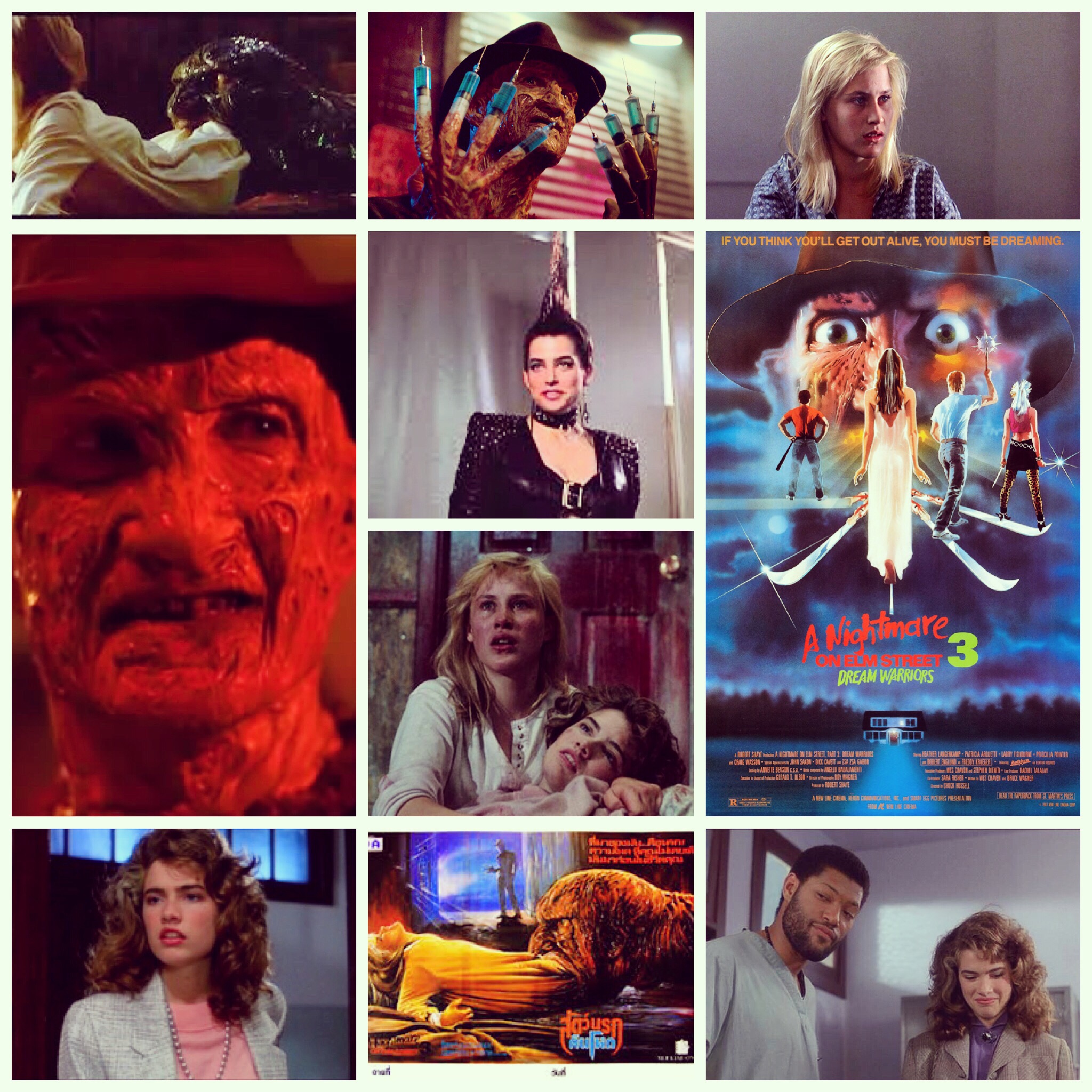
Although billed as pure horror, A Nightmare On Elm Street 3: Dream Warriors strays into fantasy as well and is a pure blast of fantastically diabolical special effects when it’s working in either genre. Around the middle of the franchise marks the place where Freddy Krueger began to turn into more of a cartoonish wise-guy from his original mainly silent phantom, but he’s still pretty foreboding here, as Robert Englund puts energetic work into both his funny and frightening sides. The cool thing about this flick is it’s ‘Goonies’ style aesthetic; several youngsters, committed to a mental facility for their insomniac ‘delusions’, do dream battle with Freddy, and it’s one of the few instances in a slasher film where victims get to fight back in some capacity, and as a unit. Patricia Arquette is wonderful as Kristen, leader of the pack and a fiercely vulnerable spirit, while a young Laurence Fishburne plays the kindly head nurse. It’s also a treat to see Heather Langenkamp return as brave Nancy Thompson, still out for Freddy’s head. The effects are dazzling, from Freddy’s remodelled syringe needle glove in one scene, to a giant pac-man version of his head attempting to eat a live person whole in another, it’s just imagination run wild in dreamland. The kills are still sufficiently gory too, if punctuated by his now classic growling one liners (“Bitch!”). It’s safe to say this is the best in the franchise barring the first film, it’s quite a bit of fun. Oh, and for a good hearty laugh, nothing beats the Dick Cavett/Zsa Zsa Gabor cameo featuring a priceless interruption from Freddy.
-Nate Hill
Tag: creepy
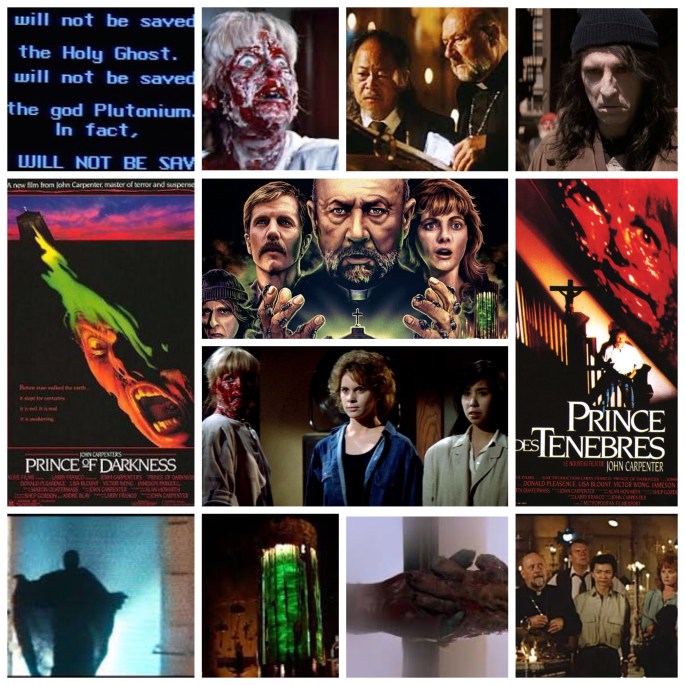
John Carpenter’s Prince Of Darkness
Trust John Carpenter to constantly subvert expectations, aim for innovation and simply just please the crowds throughout his career. Prince Of Darkness is, at first glance, a creaky ol’ fright fest, and it is that, but there’s also a cheeky little irreverent streak to it as well, a borderline atheist flourish that you wouldn’t normally find in a flick about summoning up the devil. Carpenter lays the atmosphere on thick, especially with a reliably spooky electronic score and a pace that burns slow and steady. Deep in the crypt of a church there lies a large glass vial containing swirling green matter, a pseudo scientific/spiritual cocktail that contains the “anti god”, a denizen composed of backward atoms that wants to break out and raise a little hell. Grim faced priest Donald Pleasence will prevent this at any cost, and hires a team of underpaid undergrads led by a crusty professor (Victor Wong) to research it, camping out in the church for kicks. You can imagine how this goes, and there’s a refreshingly old school ‘Body Snatchers’ vibe as various characters fall victim to the creeping dark forces. There’s also mind-stimulating, sci-fi ideas at work too though, including an intriguing time travel prospect and a deft little jab at religion via the story’s trickier elements. Carpenter, although hailed as a master of horror, is no simpleton when it comes to ideas, and he flexes his cerebral muscles nicely here. Ambient, gooey, smart, provocative, a terrific little fright fest that leaves you wanting more.
-Nate Hill
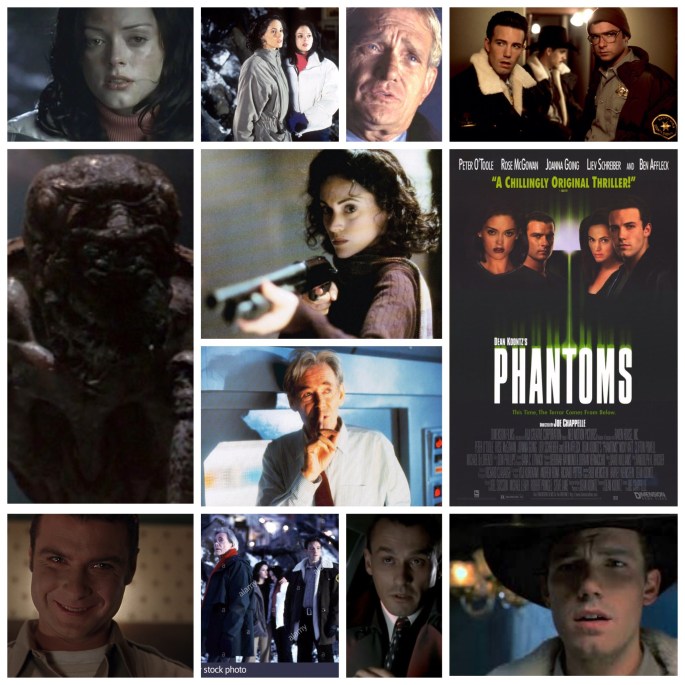
Dean Koontz’s Phantoms

Dean Koontz’s Phantoms is one of those that I was really stoked on for years and would recommend at the drop of a hat… until I got around to reading the book. Koontz’s novel is brilliantly paced nocturnal nightmare fuel, detailed, imaginative and specific in it’s thrills and chills. This film is a brisk, truncated version of that story, not only that but it takes severe liberties and deviates quite a bit from the tale, resulting in a film that bears little resemblance to the book. It’s good on it’s own, for sure, atmospheric and freaky on terms that don’t include the big picture, but when seated alongside the novel it pales like the large number of paralyzed corpses that pop up all over an eerie abandoned village somewhere in the Midwest. Two sisters (Joanna Going and Rose McGowan) drive into town expecting to visit kindly relatives, and find only death and desertion instead. They wander about, plagued by visions and radios that play spooky old timey music of their own accord, spine tingling in this context. The only townsfolk they find are starched cadavers, killed by some unseen force that watches, waits and refuses to be defined. It’s in this first act that the film is scariest, achieving impressive levels of dread through isolation and uncertainty. As soon as Sheriff Ben Affleck and his shitkicking deputies shows up, the effect dims a bit and degenerates into schlocky survivalist gimmicks, still entertaining yet not as effective as the opening. Things get downright silly when the FBI delegates a crusty old professor of cryptozoology or some such farfetched endeavour (a peppy Peter O’ Toole) to come on over to town, analyze the mystical menace and.. well that’s about it from him. Clandestine hazmat teams are dispatched, Body Snatchers/The Thing homages ooze all over the place and the film putts along in standard horror gear, never getting near to as good as it was in the first twenty minutes or so, let alone the quality of the book. Liev Schreiber is memorable as one of Affleck’s boys who goes a little nutty, Bo Hopkins and Robert Knepper score points in cameos as cheeky G-Men, and there’s work from Clifton Powell Nicky Katt. For what it is it ain’t bad, just expect to be a little deflated if you watch this first and then go check out the book, because there’s no kind comparison to make.
-Nate Hill
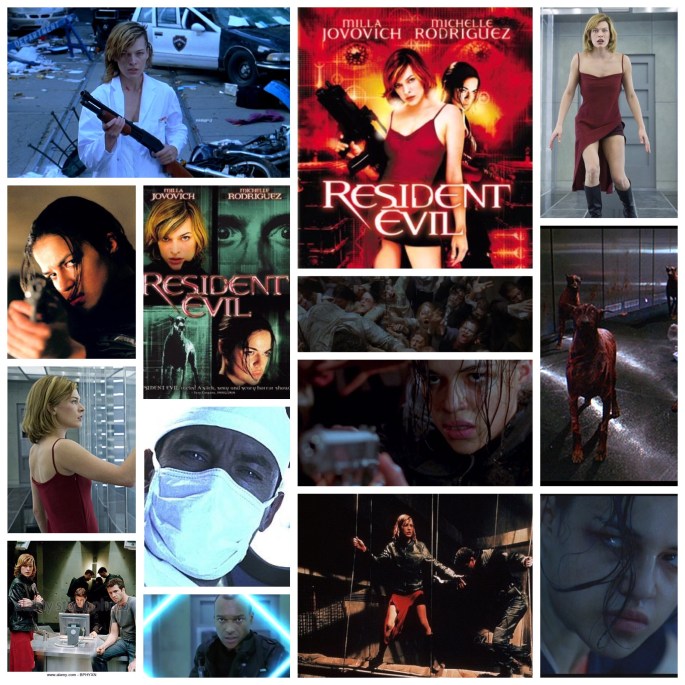
Paul W.S. Anderson’s Resident Evil

Paul W.S. Anderson’s Resident Evil is probably the second best video game adaptation out there (I’ll remain vague so you all lose sleep arguing about what the best is) and a damn fine horror/shocker flick. I’d stay away from most of the sequels unless you’re really invested in Milla Jovovich’s ass kicking Alice character (guilty here), but it can be said that this lean, mean initial entry is a genuinely terrific film full of grisly traps, gnarly zombie dogs and a butch Michelle Rodriguez that’ll make you weak at the knees. The world’s most irresponsible biotech corporation Umbrella is perpetually up to no good, and their underground research lab ‘The Hive’ has been overrun with monstrosities of their own creation which will eventually spill out into the streets of fictitious Raccoon city, and the entire world beyond in some of the bombastic later sequels. Minimalistic claustrophobia is what makes this one work so good, as a hardened team of mercenaries led by Rodriguez and Colin Salmon descend into this manufactured hell for a bit of shoot em up fun. Jovovich is Alice, security expert turned survivalist who they find down there and recruit as a tag along and just happens to be wearing an impractical yet eye catching red dress for the duration. It’s a deliriously fun female bromance between her and Rodriguez, with just the right dose of sexual chemistry, while the rest of the team, including Eric Mabius and James Purefoy as Alice’s shady ex husband, fare pretty well. Anderson regular Jason Isaacs also has an inexplicably brief cameo as Umbrella’s head honcho mad scientist, a character who would later be recast by Ian ‘Ser Jorah Mormont’ Glen in the following films, even though the guy is clearly credited as Dr. Isaacs, begging one’s curiosity as to just what drove Jason away from the role. The thing that makes this one work so much better than any of it’s sequels is the sweaty single location format: we’re with these characters inside the Hive for the entire film as opposed to watching them slice their way through some helicopter filled globetrotting apocalyptic gong show, a classic case of too much thrown into the pot ruining the recipe. Keep it simple, a few scattershot mercs navigating a haunted funhouse full of lethal canine mutants, slobbering undead and bone slicing laser beam grids, all watched like a hawk by a ruthless AI security system designed to look and sound like the red queen from Alice In Wonderland. Pretty cool, eh? I thought so, and still do every time I give it a rewatch during Halloween season.
-Nate Hill
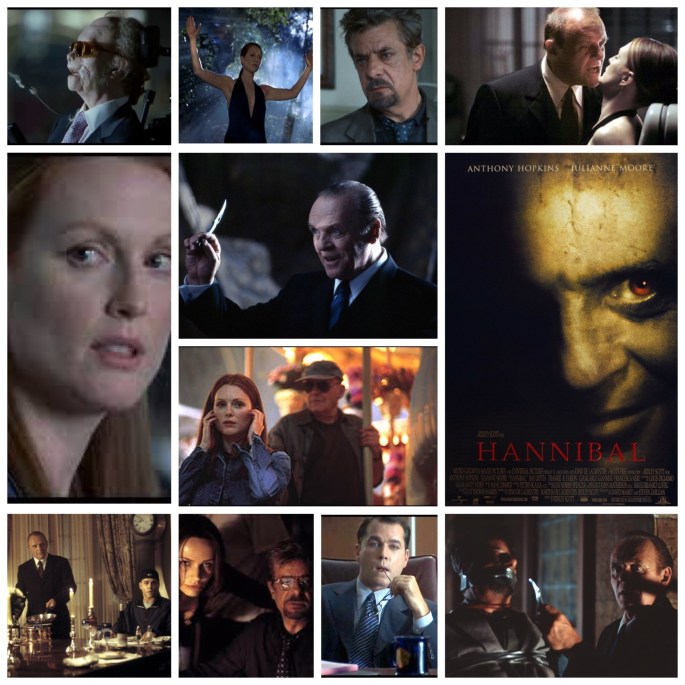
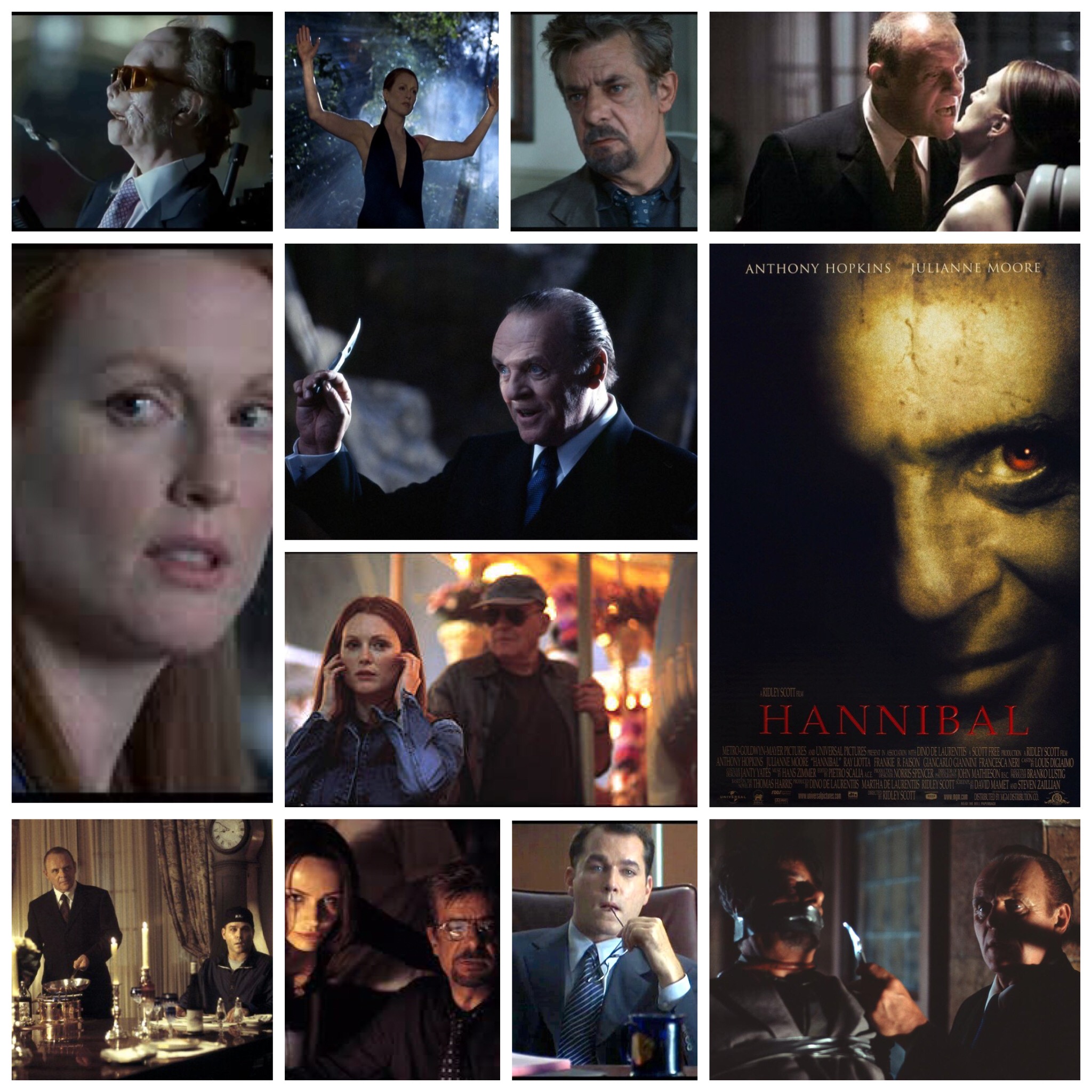
Ridley Scott’s Hannibal

Many of us get so wrapped up in the legacy of Silence Of The Lambs that we sometimes forget just how great Ridley Scott’s Hannibal is. Lambs is a wicked clinical shocker, full of psychopathic deviance and razor suspense, but Hannibal is just as good, instead coming from a place of lush, baroque opulence and velvet gilded carnage that overflows with style. They’re two very different films populated by the same characters, chief being Anthony Hopkins’ disturbed cannibalistic serial killing psychiatrist. Lecter has settled down in Italy when we find him, where one foolish police detective (Giancarlo Giannini, terrific) thinks he can lure the good doctor into a trap. Big mistake, although his efforts do gain the attention of FBI Agent Clarice Starling once again, this time played with grit and grace by Julianne Moore. Lecter is fascinated, perhaps even attracted to Starling, and it’s a treat watching them play a complex game of European cat and mouse whilst other various characters dart in and out of the tale. Ray Liotta blunders into their path as Starling’s ill fated bureau handler, a loudmouth who… doesn’t quite… keep his head screwed on tight (yes I went there). Gary Oldman shows up too, although you’d never know it was him as he’s uncredited and slathered up under a metric tonne of Chernobyl waste prosthetic makeup, playing perverted millionaire Mason Verger, who has a bone to pick with Lecter and I mean that quite literally. Hopkins had aged some since Lambs and doesn’t have quite the same unsettling virile charisma he did there, but he’s lost none of the malevolence or cunning, showing once again what a manipulative monster Hannibal can be. This film is all style, and even the frequent graphic violence, although abhorrent, is done with all the flourish and hues of a renaissance painting. The horror is somehow numb as well, or relaxed would be a better term. Lambs was all in your face with jump scares and spine shuddering yuckyness, while here the horror is rich, deep and vibrant, terrifying yet oddly aesthetic. Goes without saying that this is the closest Lecter film, in terms of style, to NBC’s masterful tv version we’ve been blessed with today, and much inspiration was no doubt culled from this gem. Beautiful, harrowing stuff.
-Nate Hill
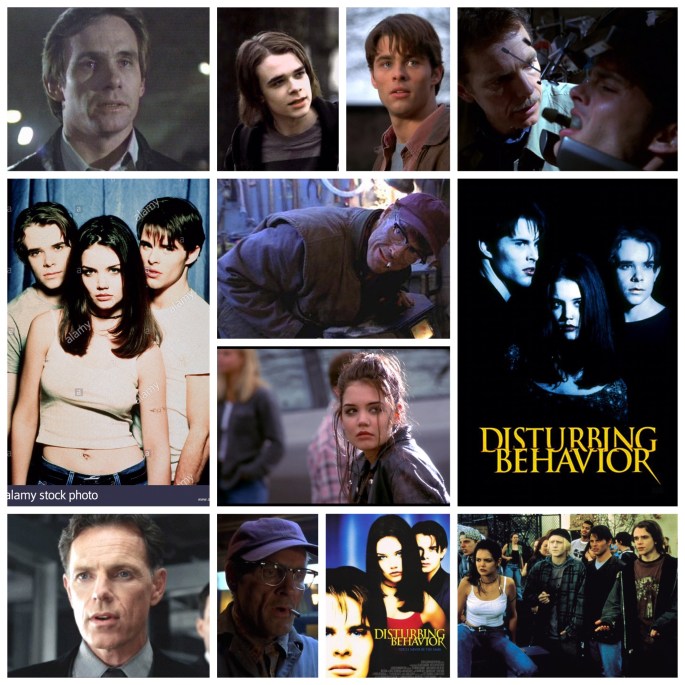
Disturbing Behaviour

Everyone knows that high school teenagers are the most lawless, degenerate, ill adjusted scoundrels out there, but what to do about it? Radically unethical, mandatory brain modification of course, or at least that’s what mad scientist school principal Bruce Greenwood has in mind in Disturbing Behaviour, a Scream/Faculty esque 90’s shocker that didn’t get half the attention it deserved upon release. Shame because it’s a sleek, well oiled little horror outing. James Marsden and Katie Holmes are the new kids in town, siblings thrust into the savage Serengeti of high school and forced to jump through that fiery hoop of social interaction. Nick Stahl channels his inner awkwardness as the brooding outcast who befriends them, and the trio soon notice some weird activity from their peers. Behavioural patterns are erratic, robotic and vicious, their classmates seemingly not themselves anymore. A creepy local cop (always nice to see Steve Railsback) seems to know what’s up but eerily keeps it hush hush, and calmly maniacal Greenwood definitely has a few skeletons in a few closets. It’s up to them to figure out what’s going on, escape the cerebral rescanning net before they end up dead or worse. Assisting them is a scene stealing, nearly unrecognizable William Sadler as the school’s eccentric, hard-nosed janitor. Working from a script by word wizard Scott Rosenberg and beautifully spooky cinematography from John Bartley that captures the unsettling North Vancouver and Bowen Island coastlines, this flick has a lot going for it and should have gotten way more kudos.
-Nate Hill
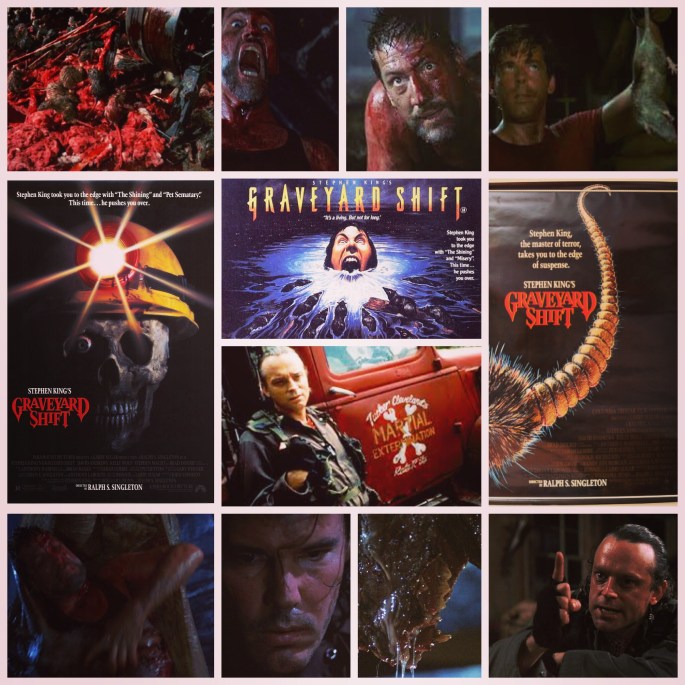
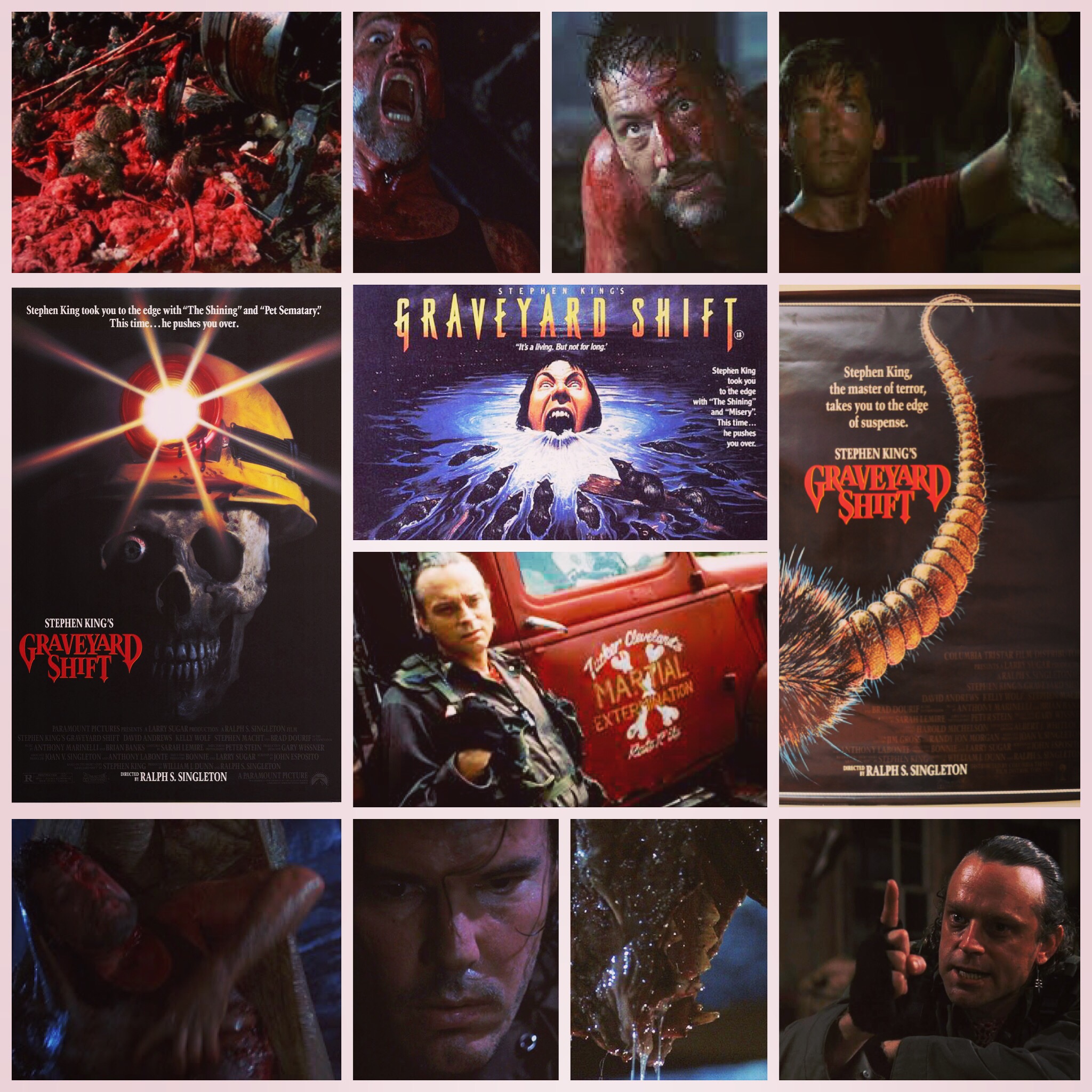
Stephen King’s Graveyard Shift

Stephen King’s Graveyard Shift is curiously one of my favourite adaptations of his work. I say curiously because it’s not a very tasteful film, let alone even a good one. It’s simple schlock and awe, goo and slime for 90 minutes straight, every human character either an unsettling nutcase or cardboard stock archetype. There’s just something so Midnite Movie-esque about it though, a sense of fun to its gigantic, hollowed out mess of a textile mill in which some kind of vile denizen stalks a night crew that pretty much deserves everything they get. People wander about, squabble and are picked off in ways that get steadily more gruesome until the final reveal of the monster in some overblown puss-palooza of a finale. What more do you need in your bottom feeder helping of horror? Steven Macht is the sleazebag who runs the mill at his tyrannical whim, while David Andrews is the closest thing you’ll find to a stoic protagonist. Andrew ‘Wishmaster’ Divoff shows up as a stock character, but it’s Brad Dourif who chews scenery and ends up the only memorable person as the world’s most simultaneously intense and incompetent exterminator, a bug eyed little weirdo who freaks people out with extended monologues about Viet Nam when he should be perusing corridors to find whatever’s lurking there. The monster itself, if I remember correctly, is one big pile of grossly misshappen, poopy prosthetic puppetry, as is often the case in early 90’s King fare. Would you want it any other way? Simple, efficient and impressively gory is what you’ll find on this shift.
-Nate Hill
John McTiernan’s Nomads

John McTiernan’s Nomads is one of the best, and most unconventional horror flicks that you’ve never seen. Nestled so far back into the 80’s that it stands as the mile marker for Pierce Brosnan’s first onscreen leading role, it’s a beautifully tense, atmospherically crafted fright flick that’s been lost to the hazy aeons of time. Unique in it’s ambiguity, this is a film bereft of bells, whistles, gore effects or even obviously spooky apparitions, relying solely on mood to impart illusory menace that’s never shoved in your face of spoon fed. Brosnan plays a French (hon hon) archeologist who begins to suspect he’s being followed by a group of unruly urban punks which, upon further introspection, could possibly be the malevolent spirits of a now extinct tribe he discovered years ago. It’s a vague, very weird concept, but it just somehow works, the presence of these grimy streetwalkers inciting palpable fear at the thought that they’re not what they seem at all. Opposites are at work here; by showing nothing, the filmmakers tell us and make us feel everything that is unseen, daring us to imagine what these mysterious beings might actually be, unsettling us further by having them appear in such benign (relatively speaking) form. It’ll frustrate many, but those tuned into the film’s eerie frequency will get the same chill down their spine that Brosnan perpetually walks around with, harassed no end by these meanies. The actors for these things are all especially chosen as well, each coached beautifully by McTiernan to act just normal enough to blend into the derelict fringes of an urban environment, while giving their demeanour an unnerving esoteric aspect, until they seem like a cross between mute versions of the Near Dark gypsy vampire clan and spectral coyotes. Brilliant concoction of subtle horror, clammy tension and gorgeously layered atmosphere.
-Nate Hill
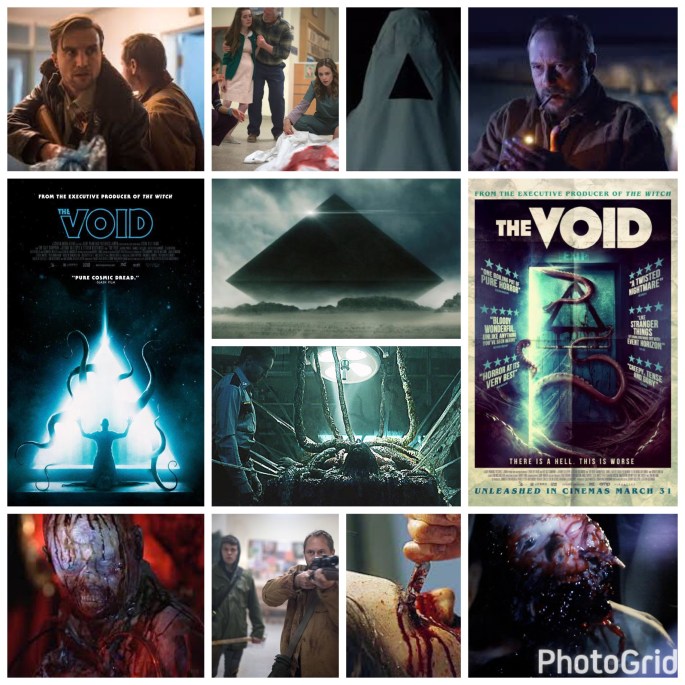
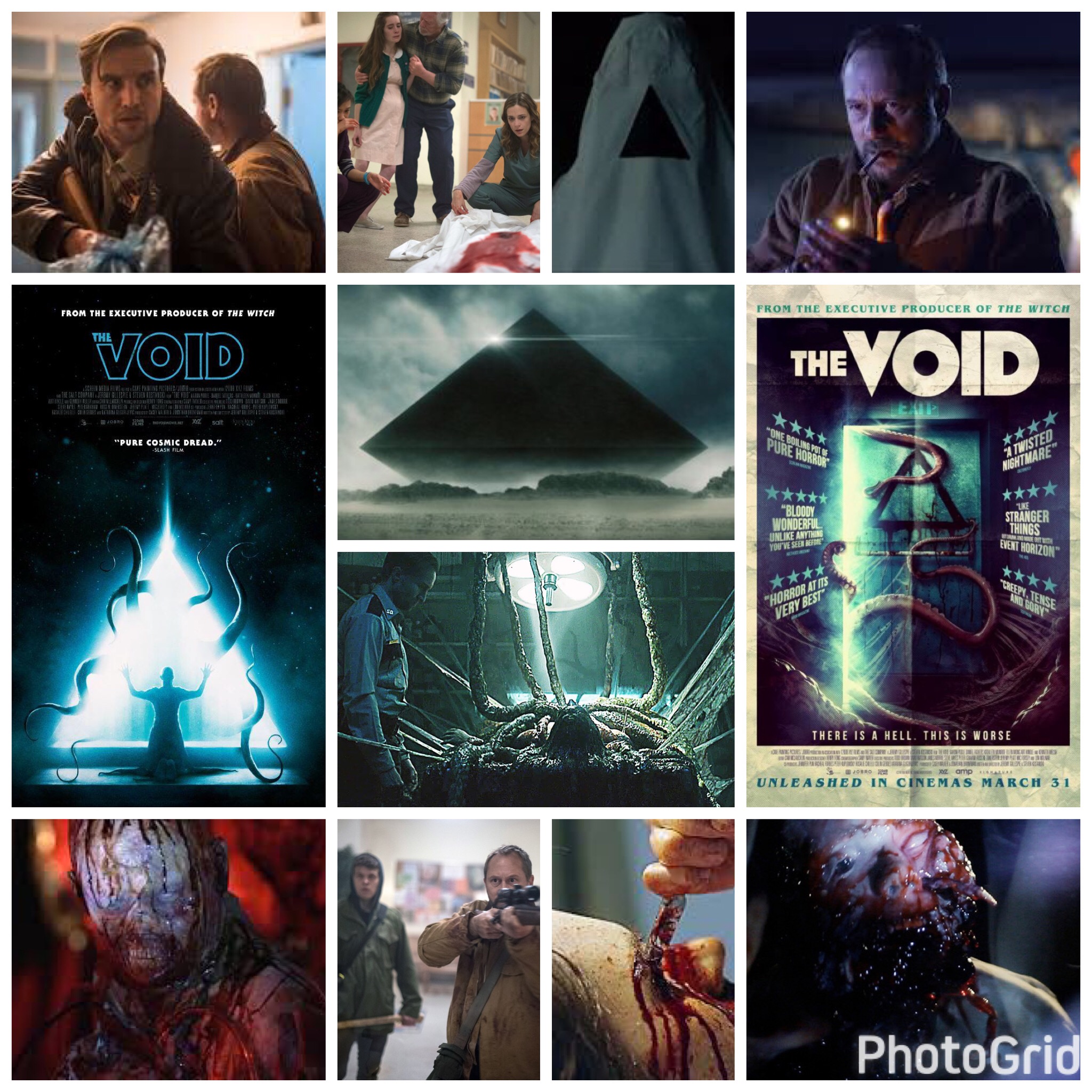
The Void

The best horror film of the year so far has arrived in the form of The Void, a genuinely spooky, deliriously gruesome 80’s throwback that gets tone, pacing and atmosphere right on the money, hitting that sweet spot that not all homages can fully grasp. It’s this year’s It Follows, I’ll put it that way. Balls out ballistic, atmospherically eerie and gorier than a chainsaw mud wrestling competition for spastics, it starts somewhat reigned in and then amps up to feverish nightmare fuel once it gets going, and boy does it ever get going. When emulating classics from distant eras, it’s important that these films find their own specific flavour and unique groove, as well as cleverly wearing influences on their sleeve. There’s an obvious adoration for John Carpenter’s The Thing running through it like an undercurrent, but the filmmakers find their own otherworldly pulse, and the fabulously icky body horror is subservient to an overarching plot involving forces from another dimension beyond ours, which a few lunatics are foolishly trying to contact. That happens later on though, once that special ripcord within the horror genre is pulled, the one that separates an uneasy opening act, a calm before the storm and the craziness to follow as soon as that first inciting attack occurs. The premise? Solid and simple: a small town cop (Aaron Poole) brings a blood soaked drifter to a nearly shut down county hospital run by a weary skeleton crew. No sooner has he arrived, bad shit starts happening. Some of the night staff go madly insane and start lobbing their own body parts off, while white cloaked cult weirdos gather outside to prevent anyone from leaving the building. A gruff, shotgun toting badass (Daniel Feathers) breaks in and pretty much violently threatens anything that moves. Corpses come alive and transform into glistening, pulsating piles of aborted pizza pocket waste, and to use the time honoured slogan, ‘all hell’ quite literally breaks loose. The head doctor (veteran character actor Kenneth Welsh, aka Windom Earle, is devilishly scary) clearly knows more than he lets on, and the new bodies pile up on the rotting older ones as dark forces gather for some kind of… birth. The actual how’s and whys of the story are left appropriately vague, as is tradition in hectic 80’s creature features with a supernatural twist. The term ‘void’ is never mentioned by anyone, rather hinted at by glimpses of a dreamy, austere parallel dimension that calls to mind everything from Altered States to Beyond The Black Rainbow to The Cell. A buddy of mine referred to the film as “Carpenter Fanboy Porn”, and while that’s definitely one angle you can look at it from, there’s more than just that, if you widen your gaze. It’s clearly a love letter to the man and his work, but it has its own thing going on as well, and feels at once as fresh as the titles it looks up to must have when they came out, and as lovingly nostalgic as a throwback piece should. The filmmakers have deliberately left it open for a sequel as well. Bring on the franchise, I say, the genre can really use stuff like this to fill the Void.
-Nate Hill
Ernest Dickinson’s Bones

Who would have thought that a horror flick starring Snoop Dogg would actually be a winner? Bones isn’t a milestone in the genre or anything, but it sure is better than the self promoting vanity piece that I expected going in. Usually when rappers or musicians headline their own films they turn out to be spectacular failures (50 Cent’s Get Rich or Die Trying and Dee Snider’s Strangeland come to mind), but this one comes off as a legitimate, entertaining horror effort. Snoop plays Jimmy Bones, a lucrative 70’s street hustler who is betrayed and slaughtered by his partners in crime, his own sweetheart Pearl (Pam Grier is never not cool) and one sleazebag of a cop (Michael T. Weiss, excellent). Decades later he returns, undead, in the form of a smooth talking supernatural street demon, out to exact bloody ghetto revenge on his old acquaintances and clean up his former inner city neighbourhood, which is actually just Vancouver in disguise, I mean what city in any movie ever isn’t just Vancouver? Loosely threaded with the story of a few kids who plan to turn his old gothic mansion into a silly hip hop nightclub, things rev into full gore gear when he shows up back in town to stir shit around and collect heads, and I mean that literally. Snoop is wicked fun, wisely dropping any rap gags or meta smirk, showing up in full jive talking boogeyman mode, meaning business and bringing along the dark, angry charisma to back it up. Director Ernest Dickinson helmed a few Tales From The Crypt outings and therefore knows his way around this very specific and distilled niche of horror. Shades of the 80’s are prescient with incredibly gooey, gag inducing effects that would make Freddy Krueger jealous, and one gets an almost Crow vibe from the story structure, via the paranormal revenge motif and baroque, Poe-esque fire and brimstone aesthetic. It’s silly for sure, but far far more grounded and committed than you’d expect this type of thing to be on paper. More of a head on its shoulders than Tales From The Hood anyway, and yes that’s a real thing. I must make additional mention of the prosthetic effects though; not since certain Elm Street outings, early Cronenberg or stuff like The Sentinel have I seen the level of deformed, hellish grossology onscreen than is present in some scenes here, they should be really proud of what they’ve done.
-Nate Hill