River’s Edge

The events depicted in River’s Edge are strange, disturbing, morbid, compelling, darkly humorous and may at first seem farcical or something removed from reality. However, the film is set in any one of the thousands of small, poorer towns this continent has to offer, and the youth portrayed here are probably not that far from truths existing out there, especially when you consider the unsettling fact that this is based on a true story, and not even that loosely either. One day a maladjusted high school teen named Samson (Daniel Roebuck) strangles his girlfriend for no particular reason than she was ‘talking shit.’ He leaves her body on the banks of the river and proceeds to brag to classmates back in town of the deed, seemingly in no hurry to keep it a secret. When he brings his friends back to show them the body, reactions range from stoned amusement to vague unrest, but none of the appropriate horror or shock. Deranged speed freak Layne (Crispin Glover) simply pokes the corpse with a stick and decides that all of them should inexplicably keep it a secret and protect Samson. Only Keanu Reeves’s Matt seems to show a flicker of conscience, providing dissent in the ranks while dealing with a psychotic younger brother (Near Dark’s Joshua Miller). To make matters more complicated and a lot weirder, local oddball drug dealer Feck (Dennis Hopper, right off of Blue Velvet and still half crazy) gets involved too, a piece of work who carries around a sex doll he calls Ellie and apparently once killed a girl himself. Ione Skye and Roxana Zal are great as others in their group who make a half hearted attempt to be the voice of reason but can’t quite bring themselves to defy Layne’s logic. “He had his reasons,” Glover snarls in a performance so over the top and cartoonish that it almost defies description. He’s a terminally weird dude who has a habit of elongating his vowels and twitching like a marmot in heat until he almost becomes something inhuman and reaches a plane of acting all he is own. Roebuck’s Samson is a fat, unpleasant and scary individual whose aloof nature spirals into a very dark place that mirrors events for their whole group, his arc is not a pretty thing to see. Hopper goes certifiably nuts here, a Nam vet and ex biker who has clearly lost his mind but the actor lets the perfect amount of emotional truth into his performance right where it counts, it’s another great work in his canon. This is a difficult and distressing film, but it finds the pitch black humour in its premise too. All of the teens we see here are hooked on booze and drugs right out of the gate, including the twelve year old kid. “Where do my children go at night?” laments Reeves’s mother. The answer might come from looking in the mirror, or that’s too harsh a prognosis, then simply around them at the quality of life in such a forgotten place. Samson may indeed be a budding psychopath, but at the time his reasons for killing his girl seemed as if there was no better, or rather more interesting thing to do, and in fact after he did it his first order of business was to stroll into the local convenience for a beer as if he just got off work. Idle hands are indeed the devil’s work, spurred on by circumstance and setting. These kids might not have turned out so bad in another life, but the one they were dealt has made quick work of them, and it’s most discomforting and somehow mesmerizing to see it play out. Great film.

-Nate Hill
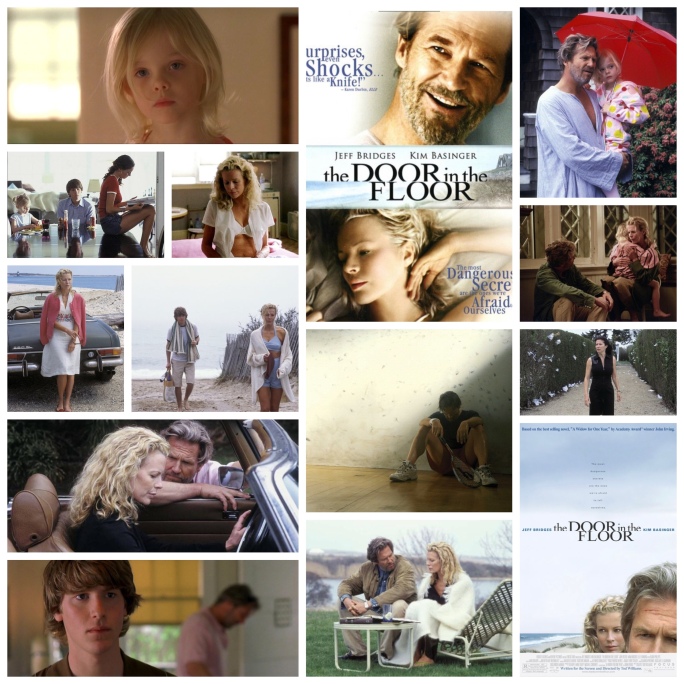
Tod Williams’s The Door In The Floor

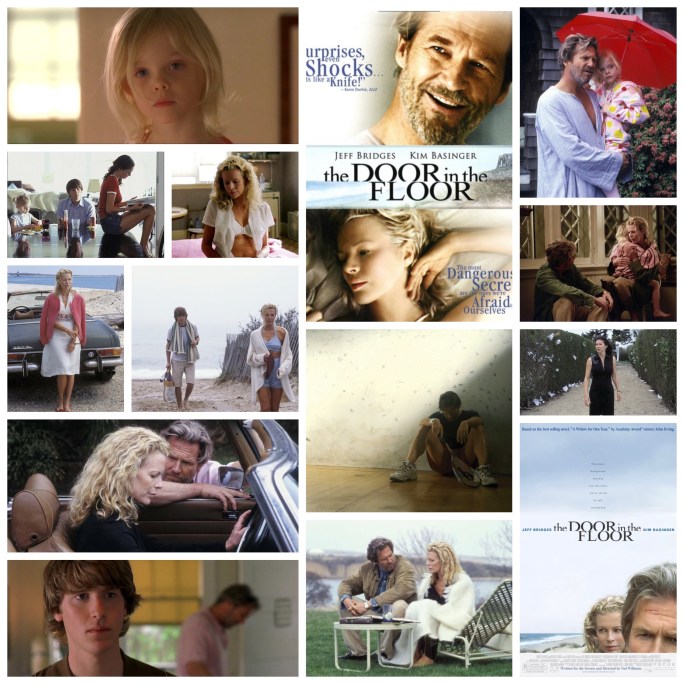
We don’t get enough widely released films that show how blunt, frank and confusing life can be. Every day is another hilarious tragedy wrapped in unpredictable instances of comedy, enigmatic human behaviour that can’t possibly stick to script and complexities that defy explanation. Tod Williams’s The Door In The Floor is a criminally underrated masterpiece that sort of defies description in the sense that it’s about nothing other than the lives of several people over the course of one New England summer, and what that entails. Is there sadness? You could say that. Is there comedy? Briefly, yes. It’s tough cinema, a film that deals in truths, but they are hard truths, half truths and hidden truths, ambassadors of the film’s slogan on the poster: ‘The most dangerous secrets are the ones we’re afraid to tell ourselves.’ Jeff Bridges and Kim Basinger give the best work of their careers as Ted and Marion Cole, a couple haunted by the worst kind of tragedy, both unable to move on in their own way. Ted is a passive aggressive, alcoholic manipulator, Marion is an emotionally shut off shell. These are two people who in another film would absolutely have not been sympathetic characters. Not here. Ted hires sixteen year old college kid Eddie (Jon Foster) as his assistant for the summer, mainly because he lost his driver’s license. Truthfully, he does this on purpose for reasons I won’t impart here, but soon the boy and Marion are having a torrid affair with sex scenes the film doesn’t gloss over, glance away or back down from. The eerie thing is watching how the passage of time has traumatized two people not only to the point where they have become their worst selves, but also are completely unable to recover or continue on with their lives properly anymore. What’s worse, they have a four year old daughter (Elle Fanning, brilliant in an early role) who is swept up in this storm of malcontent, bitterness and broken lives. It’s not easy to watch but it never gets overly sentimental or cheats you by drip feeding emotional work that it itself hasn’t worked for or earned, there’s a naturalistic way these events play out that had me full well believing this was real, and investing everything I had into these characters. Bridges is fucking devastating here in what has to be his finest and most overlooked performance. Ted is a children’s writer (“I’m an entertainer of children, and I like to draw”) who injects pain into his work, a petty egotist whose light for life is slowly dimming. Basinger too brings us her best, she’s uncomfortably opaque yet somehow sweet and soulful, Marion is a seemingly unforgivable character that we come to feel for despite her actions, like a fallen angel. Foster is a find, it’s interesting because his brother Ben, now something of a star, was originally casted but purposefully relinquished the role to his brother as he thought him better suited. Intuitive move because he nails the roiling hormones and confused pining of adolescence to a T while still somehow appearing astute beyond his years. The supporting cast is fleshed out by great work from Mimi Rogers, Bijou Phillips, Louis Arcella and an adorable cameo from Donna Murphy, but really it’s the Bridges and Basinger show. The New England setting is a beautiful misty coastline dotted with vast country estates and windy bluffs, a picturesque yet oddly mournful locale for this tale to play out, inhabited by Marcelo Zarvos’s score that captures the grief and suffering without obviously highlighting it. David Lynch once noted in his autobiography that when approaching a character in writing, directing or performance, it’s important to remember that a person is not all one thing, there’s a multitude of emotions, feelings and impulses at play simultaneously and this results in confusing, contradictory, often self degrading and destructive behaviour that we aren’t meant to understand, but is there for us to see all the same. Williams and his actors keep that squarely in mind here and work to create human beings that feel like people in the real world, imperfections and all. I would tell you to bring a box of tissues but this isn’t the type of drama that elicits tears in an obvious way, but rather slowly, steadily and without a predictable blueprint, but bring that box anyway. Can’t recommend this highly enough.

-Nate Hill

Snow Falling On Cedars

Snow Falling On Cedars is an interesting one, but I can’t say I mean that in much of a good way. I’ve rarely seen a film that focuses so intently on atmosphere, incident and specific isolated scenes and kind of leaves it’s own overarching story in the dust, or rather snow. That’s okay if you’re making a mood piece or deliberately impressionist film that doesn’t need the lucidity of a clear narrative, but that this is not. Its one gorgeous looking film though, shot by Robert Richardson who really earns the Oscar nom, full of looming boreal scapes, whirling blizzards and rustic homesteads. Set in the Pacific Northwest during a particularly tumultuous pair of timelines in the 40’s and 50’s, it sees the plight of a small coastal fishing village when a mariner is found dead, entangled in nets near his own boat. The local Sheriff (Richard Jenkins) discovers this, prompting a trial in which an accused fellow fisherman (Rick Yune) is prosecuted by an annoying shark (James Rebhorn) and defended by a German American (Max Von Sydow). Now, the accused is also part of the Japanese community residing nearby, and it being sometime after WWII, it’s not a very great period of history to be Japanese in the States, casting a dark glow over the trial before it’s even begun. Ethan Hawke plays the reporter with whom the accused’s wife (Yûki Kudô) has a lasting and deep romantic involvement with. Sound complicated? It is, but really shouldn’t be. The film chooses to tell the story in a meandering, out of time nature and as such it’s almost impossible to tell what’s going on at any given time. What’s more, the relation between Hawke and Kudô, although deeply touching and wonderfully acted by both, has little to do with the trial and murder mystery and as a result much of the story feels like a slog through snowbanks with no reward on the other side. Other actors make appearances, like Sam Shepherd as Hawke’s publisher father, James Cromwell as the trial’s overseeing judge, Celia Weston and her deplorable Scandinavian accent, Daniel Von Bargen, Anne Suzuki, Akira Takayama and others but they’re sort of swallowed up by the scattered hollowness of a story that should mean more, and should cut deeper based on the effort put into this production. And what a good looking film, I’ll give it that. Robert Richardson’s cinematography is breathtaking, somehow vast yet contained at the same time as we see life in the northwest unfold, attention to period detail immaculately kept up. The score by James Newton Howard is a swell of orchestral emotion and a strong point too. This film would have been so much more affecting if it spent more quality time on the central relationship between Hawke and Kudô, the latter of which gives the best performance. The matter of Japanese people being carted off to internment camps is handled realistically and gives us some of the film’s strongest scenes, these actors also steal the show with their obvious heartbreak and theft of dignity. But who really cares about the murder trial when there’s so much else going on in the big picture that’s more fascinating? So much time is spent in that dark courtroom discussing details of an event I had no stock in with the film as a whole, and if your narrative has that effect on even just one person, well.. that’s a problem. Perhaps the novel is different but I’m not really sure what they were going for here in the film, from both an editing and story focus standpoint. I left with an admiration for the technique used, the photography and atmosphere achieved is something to be proud of, as is the romantic angle. Everything else left me as cold as that falling snow.

-Nate Hill

Keith Gordon’s Waking The Dead

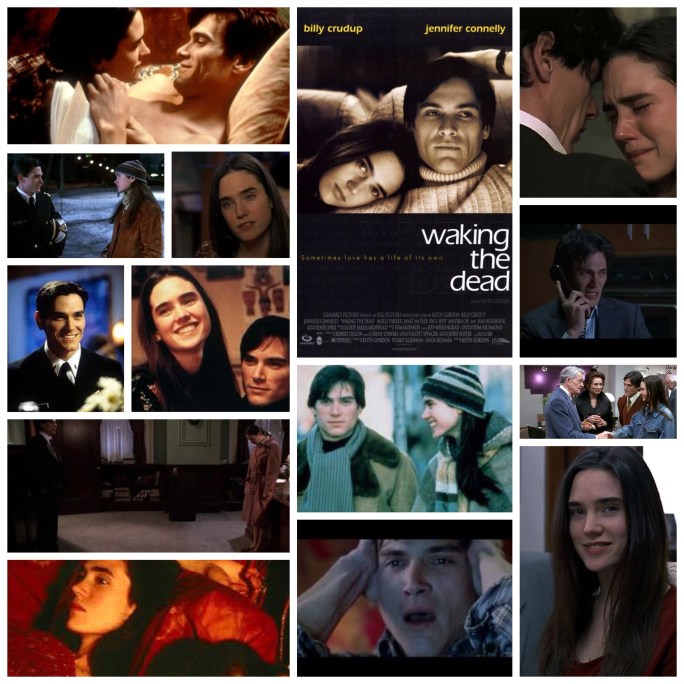
Year after year I keep coming back to Keith Gordon’s Waking The Dead, a spellbinding, haunting political romance with supernatural undertones and a dreamlike atmosphere that sustains attentions for the duration of a love story unlike any other. The film is virtually unheard of and fairly hard to find, I feel like it was intended as a much bigger release and meant to gain notoriety for years to come, but one of the studios involved either shut down or went bankrupt and as a result the film has been snowed over and left in obscurity. While somewhat a shame, I kind of like it’s hidden gem status, a buried treasure of a story waiting to be discovered and recommended to new viewers. Billy Crudup and Jennifer Connelly have never been better as Fielding Pierce and Sarah Williams, two star crossed lovers who couldn’t be cut from more different cloth. He’s an upstanding potential congressman who leans towards conservatism, she’s a fiery activist who champions the downtrodden and wants nothing to do with the system that’s grooming him for power. The film opens with a stab to the heart as he observes news footage of her death in South America, and right away it’s made clear that this will be a fractured, bittersweet romance told out of space and time. There’s always that one girl you can’t let go or shake the memory of, and as he goes about his political campaign sometime in the 80’s, he’s haunted by her memory to the point where he believes he sees her everywhere, like a ghost refusing to rest. Is he projecting his unresolved heartbreak into waking dreams of her? Did she somehow survive after all and has now resurfaced? The film approaches this dilemma in a solemn, slightly ambiguous way, never giving the viewer what they want but somehow feeling satisfactory in the resolution, albeit devastating to the emotions once we become invested. Speaking of that, we get to know them through interspersed flashbacks to the late 60’s as they meet, fall in love and experience their radically different views as obstacles in the relationship. The film posits that no matter how different or from opposite sides of the tracks two people are, if the love is there then it’s simply there, and sometimes not even death can have anything to say about it. Crudup and Connelly are knockouts here in two of the most overlooked performances of the century, playing these two as intelligent, fiercely independent beings who know that finding each other has changed the both of them forever in ways they’ve still yet to experience. They circle each other like two stars and are surrounded by a galaxy of perfectly pitched supporting talent including Janet McTeer as his worried sister, Stanley Anderson as his compassionate father, Paul Hipp as his wayward brother who hopes to gain a green card for his Korean girlfriend (Sandra Oh), Hal Holbrook, John Carroll Lynch, Molly Parker and uh… Ed Harris too, who Skypes in a bafflingly brief cameo. The film opens with Joni Mitchell’s A Case Of You, closes with Peter Gabriel’s Mercy Streets and is filled to the brim with an elemental original score by TomAndAndy that is at once spooky, unconventional and ethereal. This is one of the ultimate love stories, a tragedy gilded by ghostly implications, anchored by the two brilliant lead performances that inhabit a slightly monochrome, gorgeously black and white-esque visual realm and tell a story for the ages of love found, lost and remembered again. One of the all time ‘best films you’ve never seen’ films and I really hope it gets more traction and love as the years continue.

-Nate Hill

Bille August’s Smilla’s Sense Of Snow

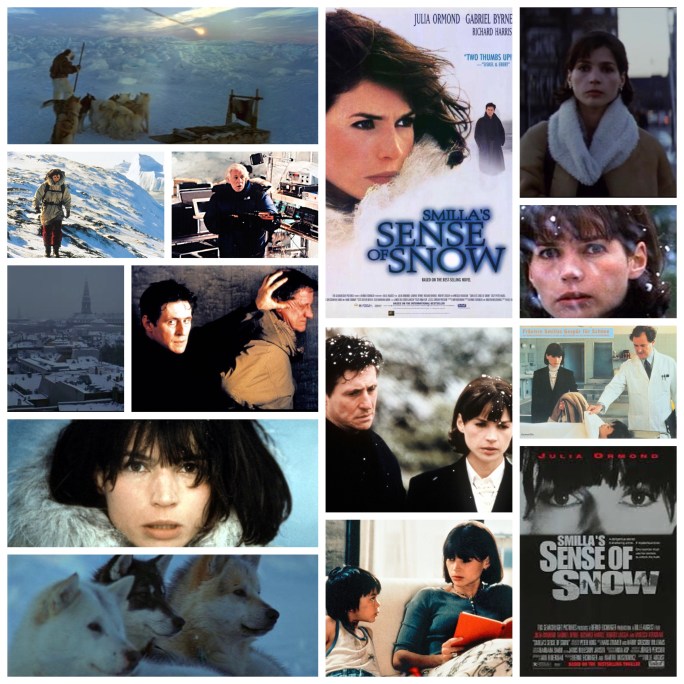
Smilla’s Sense Of Snow begins with a specific inciting event: a young Inuit boy plummets off the roof of a multi storey building in Copenhagen, to his death. The only person who seems to care is Smilla (Julia Ormond), a girl who lives in the complex, is half Inuit herself and did her best to take care of the poor kid when his mother drowned in alcoholism. From there the film spirals into curious, unexpected thriller elements that seem to have left many viewers baffled (reviews over time haven’t been so kind), but it’s the uniqueness of this story that appeals to me, the way we find ourself wondering how such a simple and straightforward incident can lead to the kind of sequences you’d find in a Bond film. That’s the mark of an absorbing thriller, no matter how ‘out there’ people complain it is. Smilla deliberately cloaks herself in a facade of coldness not dissimilar from the snowy northern landscape around her and comes across as initially unpleasant, but when we see how far she’s willing to go and what she will risk to uncover the truth around the boy’s death, we realize there’s a heart in there and Ormond creates a mesmerizing protagonist. There is indeed a clandestine web of secrets, coverups and conspiracies revolving around the whole thing, and it’s great fun watching her follow the breadcrumb trail to where it all leads. She’s a withdrawn, introverted person, and these qualities don’t lend themselves to hands on detective work, but therein lies the gold mine of character development for her as she discovers perhaps one of the most bizarre string of events I’ve seen in a thriller. The supporting cast is full of gems, starting with Gabriel Byrne as her neighbour and love interest, just darkly charismatic enough to suggest that he may not be who he says he is. The late great Robert Loggia makes a stern but soulful appearance as her powerful father, who pulls some strings to help her out. Soon she’s led to a shadowy scientist (Richard ‘OG Dumbledore’ Harris) with ties to it all, and other appearances from Jurgen Vogel, David Hayman, Bob ‘Clever Girl’ Peck, Vanessa Redgrave, Ona Fletcher, Tom Wilkinson, a quick cameo from one of the Doctor Who actors and an excellent Jim Broadbent in full exposition mode. The eventual premise here is set up in an arresting prologue concerning a lone Inuit hunter observing a meteor fall to earth and cause an almighty mess on the tundra, serving to inform us right off the bat that although this film initially sets off on the trajectory of a straightforward murder mystery, there will be elements of the fantastical. Said elements proved to be either too far out there or too removed from the grounded opening for people to grasp hold of, but not me. I love the journey this one takes, I love the heroine we get to take it with, I’m awed by the stunning arctic photography every time and the story always draws me in. Great film.

-Nate Hill

Lasse Hallstrom’s Something To Talk About

Julia Roberts has many notorious pop culture hits under her belt, all of which become memorable for a reason: they’re flashy, relatable, well made crowd pleasers like Erin Brockovich or Pretty Woman. But that irresistible charm (if you’re a fan of hers) was also put to great use in some quieter, more challenging and less accessible pieces like Lasse Hallstrom’s Something To Talk About, an interpersonal dramedy that explores the relationship between her and her husband (Dennis Quaid) in the aftermath of him cheating on her. She comes from a big family, has headstrong parents (Robert Duvall and Gena Rowlands) who have an influential role in her life and a fiery, fiercely protective older sister (Kyra Sedgwick is fantastic) who literally kicks Quaid in the nuts when she finds out. Now, this is a 90’s film and doesn’t have the same perspective on life we now know today, so her frustration, anger and outrage at her husband’s infidelity isn’t taken as seriously as it could be right off the bat. Duvall is more worried how it may be bad for business than any emotional toll it will take on his daughter, while she simply wants to be heard and allowed to be pissed off at the guy. Her husband reacts with a sheepish wounded animal tactic that wears off when he realizes his wife is smarter than that, and Quaid handles the arc carefully and humbly. It’s basically about the snowball effect an affair can have in a close quarters family situation, and while I enjoyed some of the laughs provided by Roberts deliberately exposing other sneaky cheaters in their tight knit community, I connected most when the film focused on her as a woman wronged, and a woman who’s not afraid to stand up for herself, even if it means stirring shit up royally. She’s a movie star with a mile wide smile and people know her as such, but I think that the high profile roles sometimes have us forgetting what an absolute diamond of an actress she is as well, and small, character driven pieces like this serve well to remind. She rocks it here, and is supported by all around her including Muse Watson, Brett Cullen and Haley Aull as their intuitive daughter. A treasure.

-Nate Hill

Michael Apted’s Class Action

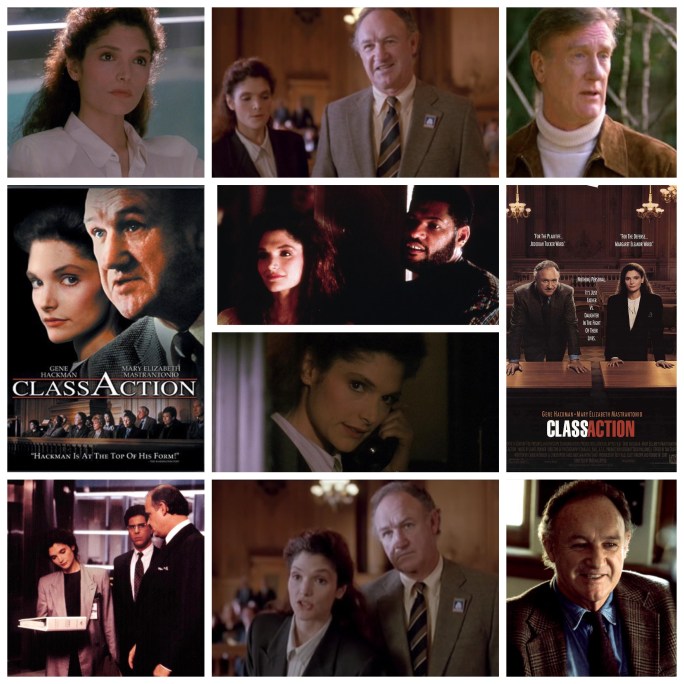
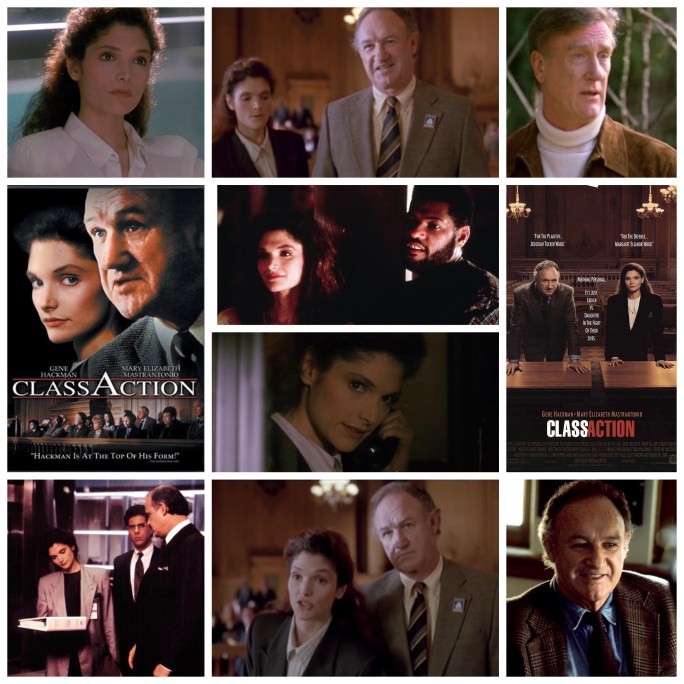
A father/daughter courtroom drama starring Gene Hackman sounds like a recipe for something glossy, showboating and melodramatic, but Michael Apted’s Class Action gives us a mature, emotionally potent and very character driven film that one wouldn’t expect from the slightly sensationalistic trailers. Hackman is a San Francisco attorney who takes on the prosecution of an auto manufacturing giant with a line of suspicious exploding cars. Opposite him as defence for the corporation? His own daughter (Mary Elizabeth Mastrantonio), with whom he has a rocky history with. He’s a philandering hard ass who was never pleased with her and she blames him for the dissent in her family from his womanizing ways years before. The case itself serves as framework for for the very real, raw interpersonal drama that unfolds between them, and their relationship feels grounded and truthful. The key scene is them together in the kitchen cooking; idle small talk leads to harshly flung accusations, emotions are laid bare and by the time the argument reaches a screaming fever pitch, both are quaking with rage, self reflection and sad regret. It’s a powerful scene of performance from both actors, and you’ll scarce breathe for the duration. Hackman is fire and brimstone as per usual, but there’s also a wounded aspect I’ve never seen in him before, something brought out by Mastrantonio who is spectacular in her calmly devastating turn. The late Donald Moffat is great as her steely firm boss, a man governed by fierce logic who has no qualms in casually covering up key evidence. Fred Dalton Thompson is nicely slimy as the reprehensible auto CEO whose soulless disregard for human life is unsettling, Jan Rubes steals his scenes as a loopy ex engineer with ties to the auto giant and Laurence Fishburne (during his ‘Larry’ days) quietly plays Hackman’s firm partner and family friend. I wouldn’t have probably ever known about this film if I hadn’t have come across it in a thrift store, and I’m glad I did. Forgotten these days it seems, it’s now one of my favourite courtroom pieces out there, for letting the characters tell this story, for making it personal and for flowing through the beats organically. The stately San Francisco architecture and melodic score by James Horner give it a personality as well, but Hackman and Mastrantonio rule the roost and probably give their career bests. Highly recommended.

-Nate Hill

The Man In The Moon

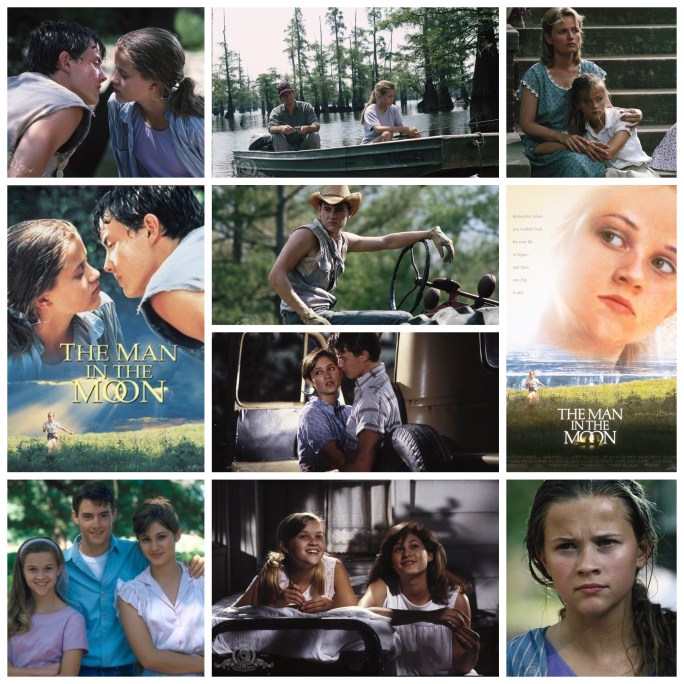
The Man In The Moon is a hauntingly opaque title for a film; it could be a literal sci fi, decidedly cartoonish or something more vague. In this case it’s a sad, enlightening and unusually mature coming of age story starring Reese Witherspoon as a girl teetering on the cusp of childlike whimsy and the tough life lessons that follow, introduced to romance, tragedy and the complexities of life as one gets older. The poster and description sounds something along the lines of My Girl, which is an astute enough film about the nasty curveballs that life throws us, but this one deliberately dodges any cliches we may see coming and mines life for the odd, unpredictable turns it takes that you don’t often find woven into narratives. Witherspoon has never been better than she was in her first few key roles as a young actress, this being a lynchpin. She plays Dani, a fourteen year old girl growing up in the south with her loving parents (Sam Waterson and Tess Harper) and beautiful older sister (Emily Warfield). She’s a forthright tomboy who loves playing in hidden glens and watering holes out in the backwater, and finds a kindred spirit in Court (Jason London), a teenage boy new to the region living with his mom and brothers. Sparks fly between the two and burgeoning emotions rose up in Dani with the fires of adolescence, until confusion and tragedy force her to reconcile them in ways that are difficult for a girl her age. The plot takes you by surprise and doesn’t him along idyllically like similar films, rather finding the bends in the road of life and emphasizing that things don’t go our way more often than they do. Witherspoon is magic in the role, balancing anger, first time heartbreak and grief incredibly carefully. She never over or underplays emotion either, and that goes for the rest of the cast too, who all coexist realistically, make the rural setting feel lived in and sculpt the relationships between one another in genuine, warm fashion. A gem that’s been sort of lost in the tides of time, but holds up wonderfully.

-Nate Hill

Elizabeth Chomko’s What They Had

Alzheimer’s disease is a tricky subject in film; it can often sink into distracting melodrama or be used as a plot device instead of an actual ailment to the character, as they conveniently collect themselves when the narrative requires it and then get all confused again when needed. First time director Elizabeth Chomko handles it wonderfully in her debut What They Had, letting the sad realities of this affliction play out realistically for one Chicago family whose matriarch approaches stage 6. Blythe Danner playfully, sadly and intuitively embodies this woman, fleetingly letting us see glimpses of the woman that once was, now lost to inexorable mental fog as she approaches the end. Her husband of four odd decades (Robert Forster) refuses to put her into a home, out of both stubbornness and just plain love. Their two children (Hilary Swank and Michael Shannon) return home to deliberate the situation, and a superbly acted, quietly honest family drama ensues. Chomko also wrote the script and her dialogue has the stinging bite and dynamic depth of someone who is drawing from somewhere personal, and indeed I read that this film is based on her own experience. She shows surefire talent in writing as well as behind the camera and I wish her all the best in a career that will hopefully be something really special. Shannon is perfect as the scrappy, diamond-in-the-rough bar owner who uses gruff bluster to mask his heartbreak. Swank is emotionally resonant as the more distant and reserved of the two siblings, trying to deal with both her mom and daughter (Taissa Farmiga, excellent). Forster has seldom been better as the obstinate family man who just won’t let his girl go, he handles the guy with a stern resolve that begins to crack as he realizes that one day she will forget him entirely. Danner has the most difficult role, but nails it. There’s a befuddled remoteness to people with this disease, a near constant confusion that I’ve seen in real life but that doesn’t dim the warmth of their personality, at least for a while anyways, and the actress never over or underplays it. This is a terrific debut for Chomko and demo reel worthy material for all the major players, a small scale drama that wins big and elicits well earned empathy from us. Highly recommended.

-Nate Hill

Gore Verbinski’s The Weather Man

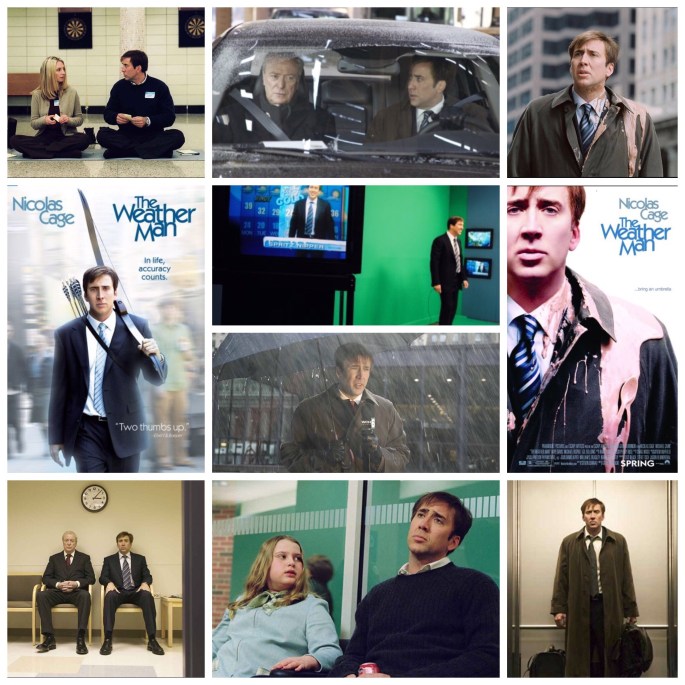
It’s always nice when a film as bizarre, unconventional and downbeat as Gore Verbinski’s The Weather Man gets approved by the big studio system, but the flip side of that is that when it inevitably gets a wide release and considerable marketing, score of reviewers and audiences are going to talk shit about it because it’s ‘different’ and ‘depressing.’ It is definitely those two things, but it’s also a painfully funny, insightful piece with fantastic work from Nicolas Cage, brilliantly placed dark humour, the briefest glimpses of pathos and an offbeat indie pulse. Cage is Chicago TV weatherman Dave Spritz, a guy whose swanky six figure salary and cakewalk career hide a disturbed, dysfunctional family life and a deep, cultivated self loathing that Cage pours out from every anguished glance and hangdog piece of inner monologue. His ex wife (Hope Davis) can’t stand him, his kids (Nicholas Hoult in an early career turn and Gemmenne De Le Pena, a great find) have a laundry list of their own issues and their interaction with him is strained for starters, while his Pulitzer Prize winning author dad (Michael Caine trying an American accent on for size and kind of struggling with it) frequently points out his shortcomings with measured acidity (“You don’t even have a degree in meteorology”). In short, his life has become one big absurdist joke punctuated by awkward altercations, passive aggressive jabs, misdirected anger, frequent instances of fast food being thrown at him by angry passersby and an overall blanket of deadly hilarious, glumly enlightening moodiness that you can’t decide whether to laugh or cry about. So who would want to watch a major movie filled with such rampant, cheekily deliberate unpleasantness? I would, and I for one totally loved this film for what it is. You could say it’s an acquired taste or you have to ‘get it’ or whatever smug, flavour of the month platitude that well travelled cinephiles like myself are peddling this week, but the plain truth of it is that not every Hollywood film can be a traditional ‘Hollywood’ film and there has to be room for off killer, weirdly staged stuff like this or the recipe is just too boring. Roger Ebert understood that, he gave this a glowing review and made particular mention of how slightly inaccessible stuff like this needs to be given a chance more often. In any case it’s an excellent film thanks to Cage’s reliably hilarious work, he almost seems to have been tailored for this role and you can tell he’s having a blast with every tortured mannerism and inappropriate outburst. I love and appreciate every single film that director Verbinski has made in his eclectic, unpredictable dervish of a career, the guy has done everything from Pirates Of The Caribbean to slapstick period piece to Hammer horror throwback to south of the border romance end even an animated film for adults which you don’t see too often. He always approaches us with something different to offer, and with The Weather Man he’s come up a winner again, I love this sad, self aware, pathetic yet touching portrait of a man adrift in his own inadequacy, his frequent attempts to swim serving as our entertainment, however much we pity or feel for the guy and his oddball family. Great film.

-Nate Hill