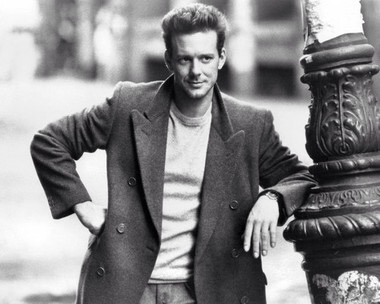
Top Ten Mickey Rourke Performances: A list by Nate Hill


Mickey Rourke has been called the Hollywood outlaw by some, a difficult outsider by others, a master of his craft by anyone with sense, and has never not been a completely surprising thespian who refuses to reside within one box for long. He’s an outspoken, candid guy who has never been afraid of speaking his mind or laying down the verbal hammer. For me, Mickey is an undisputed genius of his craft and has shined like a brilliant nebula of talent, intuition and brilliance in each and every role he has brought to our screens. Here are my personal top ten performances from one of my all time favourite actors: 

10. Billy Chambers in Once Upon A Time In Mexico


Director Robert Rodriguez allowed Mickey to carry around his own personal chihuahua (something that he has walked off of a set in a huff over in the past), and encouraged him to wear his personal shiny purple suit to play Chambers, a gruff cowboy hiding out in Mexico and working for a ruthless cartel boss (Willem Dafoe, a frequent Rourke collaborator). Chambers seems like a sly amalgamation of several early characters he played, world weary from too many skirmishes and events gone wrong, marinating in the Mexican sun and wishing for an exodus from criminal life. Billy has trouble with the sadistic tasks which the cartel orders him to carry out, showing a delineation between a life of crime and an evil path. Regretful, posturing and laconic, the first team up between Rourke and Rodriguez turns out to be a delight. 
9. Captain Stanley White in Year Of The Dragon
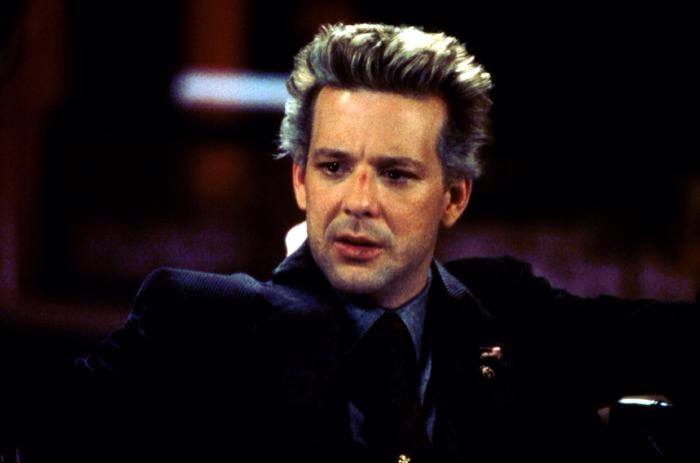
  

Rourke first did a bit part for manic maestro Michael Cimino in the notorious Heaven’s Gate, a precursor to his turn in this blistering cop film as a belligerent, hard nosed and uncompromising cop who will do anything in his power, and even a few things outside it, to bring down a Chinese crime syndicate. White has tunnel vision, a Viet Nam war veteran whose internal battery is set on search and destroy mode regardless of any collateral damage, of which there is a considerable amount. Rourke takes a blow torch to the character until the edges flare and fray, never letting the heat lower for a second, be it an introspective moment that smoulders or one of many thunderous outbursts of self righteous, racist fury. 
8. Randy ‘The Ram’ Robinson


Some see this role as Rourke’s comeback, but similar to Randy ascending the ranks of his former glory only to take a hazardous dive off the ring and back down again, such was the case for Rourke, who is back to smaller films. For a single piercing couple hours, he brought us legendary work in an Oscar nominated turn that burns deep, encased in Darren Aronofsky’s intrepid direction. Randy is a fallen Titan who is looking for another shot in both his professional and personal life, and Rourke gives him the presence to hit home. 
7. The Motorcycle Boy in Rumble Fish
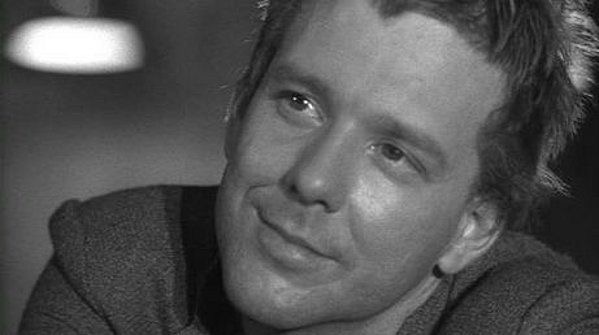
  

Returning from a mysterious motorbike odyssey, speaking in cryptically poetic fashion and filling out the restless bad boy archetype like no other, this is one of Rourke’s most fascinating turns, in a surreal black & white tumble town that evokes the 1950’s beautifully. He’s relaxed yet uneasy, friendly yet vaguely portentous and obtains an intangible state of heightened awareness with his work that you can never quite pin down or explain properly in words. His character’s resolution seem fittingly oblique, matched by his performance that simultaneously cries out and holds back, often mirroring each other eerily. 
6. Jim Olstadt in The Pledge


Sean Penn cast Rourke for an appearance that lasts for less than a minute, and he manages to quietly devastate and then some within that time. He plays a grieving father who is questioned by Jack Nicholson’s obsessed detective about his young daughter, who disappeared several years before. Unshaven, chain smoking and hiding behind a vacant expression, Nicholson’s queries trigger a well of raw anguish which spill out unforced into the certain and seem remarkably genuine. It’s uncomfortable, despairing and you just want to walk right into the screen and give poor Olstadt a hug. His work is that good, a gem of an appearance in probably the best film on this list. 
5. Marv in Sin City
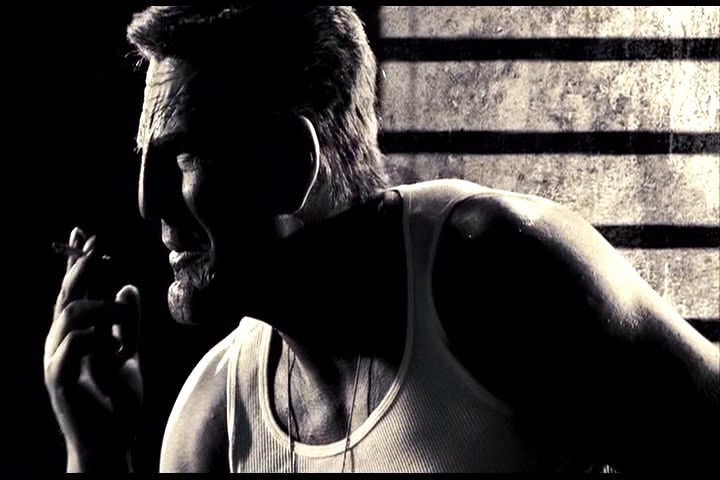
  

When Robert Rodriguez told Frank Miller of his notion to cast Rourke as the hulking bruiser Marv, Miller’s response was “What, that skinny guy from Body Heat?”. Rodriguez had a vision though, which Rourke followed through with in legendary fashion. Marv has to be played by a performer with the right presence (Ron Perlman and Clancy Brown could have taken a decent crack), someone with somber grit and just the right shot of blackest humour. Rourke sets the role on fire, filling every gorgeously composed frame with his Boulder tough, terrifying and surprisingly touching take on the character.
4. Ed Moseby in Domino
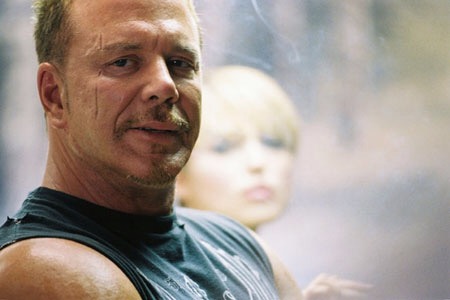
  

The title of most legendary bounty hunter in Los Angeles is a pretty steep hill for any actor to start out on in at the beginning of their performance. Mentor to Domino Harvey, street smart professional, world weary badass and all around character, Ed is one third of the film’s psychedelic soul and Rourke charges full guns ahead with the work, pausing at penultimate crossroads to show us the seething regret and sadness that Ed harbours beneath the violence and tough guy shell. There’s one scene with co star Edgar Ramirez that seems pulled straight from Rourke’s own history, where the camera sits still long enough to allow him to show piercing truth. 
3. Charlie in The Pope Of Greenwich Village
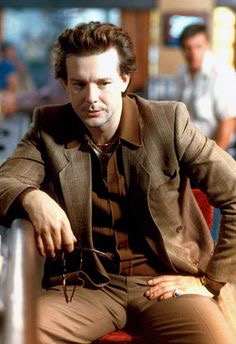
  

Charlie is a small time thug who does his absolute best to not be a screw up. Only problem, he’s saddled with best friend Paulie (Eric Roberts) who happens to be the biggest screw up this planet has ever seen. The pair are comic dynamite, Rourke setting off on exasperated tirades whenever Roberts gets them in hot water, and then using his brand of cunning and survival instinct to bail them out. Rourke shows a fox-like resourcefulness, a hurricane of anxious energy that cools over when evasive action is required. Charlie is Rourke in his youth and loving the game, firing synaptic bursts of energy at Roberts and receiving them back in synergy, showing off what a great onscreen duo they make.
2. The Cook in SPUN


A cowboy hat wearing, meth cooking oddball hardly seems like the type of character to land an emotional punch, and for the most part you’d be right to think that. Rourke is like Jim Carrey in the mask here, inhabiting an overblown and dizzyingly stylistic aesthetic that exists to show us the unhinged lifestyle of meth addicts. He jumps from serious to scary to funny to sad so quick it’s hard to put the puzzle of his character together, until a n emotional wipeout of a monologue that’s delivered late in the last act, bringing his sad arc full circle. Be it a seminar on the political qualities of Pussy, a whopper of a tiff with girlfriend Brittany Murphy or a brief tongue in cheek encounter with Eric Roberts, it’s glitzy grungy playtime all the way, until we get to that one extended speech, which halts the mayhem and sobers the viewer up post-delirium. It’s tearful in a film where you’d last expect it, and Rourke handles the 180 degree turn like the master he is. 
1. Harry Angel in Angel Heart
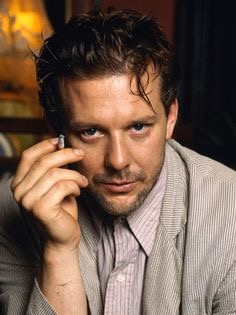
  

In one of the finest and most flat out unnerving southern gothic horror films ever made, Rourke throws himself at the role of a down and out private detective who is hired by a sinister Robert De Niro to find a missing singer who doesn’t even seem to exist at all. Harry starts off in control, assured, well travelled. His nerves begin to shake when a trail of hideously murdered bodies pile up behind him, seemingly connected to his search. Rourke slowly unscrews the lid of Harry’s sanity in a sweaty frenzy of fractured machismo and blossoming terror, his fear riling up the audience with each new grisly discovery. There’s plot revelations, shocking violence, the mother of all graphic sex scenes, steeped melodrama and a near constant state of primeval fear, all infused into his performance with skill and tact. For me, Rourke has never been more ‘Rourke’, in all facets, than he was as Angel. 

Wildflowers: A Review by Nate Hill


Wildflowers is a film that examines the aftermath of 1960’s counterculture and the hippie movement. The free love sentiment produced many children who were raised unconventionally, and in some cases outright abandoned by their flower power parents. Cally (Clea Duvall) is one such girl, a wild tomboy who lives with her sometimes employed father (Thomas Arana), and spends her days cavorting around with adolescents in similar situations. It’s rare that Duvall gets a starring role, and she’s absolutely wonderful here, steering Cally along with longing, resentment and just a bit of touching ‘lost girl’ emotion. She’s an actress who needs to be cast in more stuff to showcase her talent, and not just thrown into lesbian roles because she identifies as such (grrr!). She steals the show and proves what a magnetic presence she is. Cally never knew her mother, and hope arises with the arrival of mysterious Sabine (Daryl Hannah) a woman old enough to be her mother and seemingly connected to her somehow. Sabine is a free spirit with a turbulent mindset, a result of the fragmented lives that people led back in that time period, often leading to wayward souls with no sedimentary existence to slide into after the show finishes and they realize they aren’t as young as they used to be. Cally’s story plays out beautifully, a girl just coming into her own and realizing who she is, via experimentation and intuition. She meets a drug dealer named Jacob, played by Eric Roberts. He’s the friendly drug dealer, a cinematic archetype often sought after by filmmakers. Roberts could play an evil dictator and still come off like Prince Charming, he’s just that likeable, and as such is perfect for the role, a kindly rapscallion with lessons and advice for Cally which don’t quite play out as one might think. In the end, it’s Duvall’s show, one of the only lead roles she has that is even out there to hunt down, such is the rarity of many films in her career. It’s filled with terrific scenery, a whimsical yet real world aura and performances of emotional truth. Worth tracking down for Clea’s fans (I’m proudly a die hard) and a delight for the casual viewer. 

A chat with accomplished stuntman and director Jesse V. Johnson

I’m pleased to announce that I recently had the chance to chat with Jesse V. Johnson, a veteran stuntman who also has some films of his own that he has directed, which are excellent. He has done an unbelievable amount of stunt work, including Total Recall, Mars Attacks, Starship Troopers, The Thin Red Line, Point Blank, Mercury Rising, Charlie’s Angels, Planet Of The Apes, Terminator 3, War Of The Worlds, Beowulf, Avatar, Thor, The Adventures Of Tintin, The Master, Lincoln, The Amazing Spider Man, and so may more. He has directed his own projects including The Butcher, The Package and Charlie Valentine. I’m very pleased to have been able to speak with him in the interview below.

Nate: What were some of your favourite movies and directors growing up who inspired you to get into the world of stunts, and eventually directing your own films?
Jesse: I loved the Spaghetti Westerns of Sergio Leone, particularly the Good the Bad and The Ugly, which I would attempt to replicate on video with school friends, shot for shot, word for word. I loved Ray Harrihausen, and the Hammer Horror movies. When I started to get a handle on filmmakers and the Director as an author, I discovered the French New Wave, and Truffaut, Godard and Melville were huge for me, it was like this world that was opening up through film, and utterly intoxicating.

My uncle was a stunt Coordinator, Vic Armstrong, and was always very encouraging, we shot my films on his land, and he loaned me my first video camera, gave me my first assisting job and basically always offered pragmatic and down to Earth advice, this is very important for a beginner. There is a way to get what you want, but this is what it’s going to take – never no, never you cannot do that, I owe him a huge amount.

When my directing career was derailed by the 2008 hedge fund implosion, it was Vic who hired me back as a stuntman on Thor, I would have lost my short otherwise.

Working with Brannagh on Thor, Spielberg on Lincoln and PT Anderson on the Master for that period actually served to reinvigorate my directing drive, an although i was desperately panicked at the time, in retrospect it was a great privilege a directing master class.
Nate: Before getting into the industry, what other lines of work did you find yourself in? How did they lead into the film business, or was it a conscious choice to pursue movies?
I was a rough and tumble kid, I thought I was going to be a commando, I was a cadet and then took the Marine PRC at Limpstone, thankfully, Vic, my uncle, suggested stunts might be a wiser way to spend my energy. I worked on Total Recall with him in Mexico City, I was 16 and doing stunts with Arnold, I was a bit disappointed when they gave me my per diem envelope, it was only a few hundred for the week, I thought that was the pay-check – later I learned it was your living expenses and that there was a far more significant check coming, that was when my whole out look changed, and the Queen lost this potential commando.

Your goals are confused when you’re young, I look back and think, yup, always wanted to direct, but I found an old diary of mine and realized in fact I was far less focused for quite a few years than I would like to admit, travelling the world working with horses in Spain, exploring Europe as a painter or writer, mountain climbing, gold smuggling, were all occupations I tried my hand at or seriously explored.
Nate: How did you initially get into stunt work- did you pursue it or was it something that kind of just fell into your path, by chance or perhaps as a Segway from another part of your life?
Jesse: I was an Assistant Director for some time, under the vague misunderstanding, that that was a path to becoming a director, I worked with a brilliant AD team, for a few films, or at least they put up with me, Shawshank Redemption, Mr. Hollands Opus and Mortal Kombat, doing big crowd scenes and having a wonderful time, but being the non-DGA PA, on the shows, my pay-check was dismally small, and the hours very long, that along with the fact that an AD is more likely to become a producer than a director, caused me to look elsewhere. I headed back to the wonderful, creative and exciting work of stunts. A world which remains my default position between directing gigs, allowing me the financial ability to turn down poor directing offers and enjoy my life as a father of two demanding daughters, lol.
Nate: How was it for you transitioning from doing stunt work into directing and writing- the physical work of throwing oneself into a very technical scene, to, the very cerebral, intuitive process of overseeing your own vision brought to the screen?
Jesse: I think the best stunt men have an innate ability to direct, then two careers require use of the same cerebral territory, you’re making people feel safe, guiding a scene, respecting the characters, plot contrivances and continuity while building exciting moments for your audience.

Defining directing beyond that is entering the world of the vague and mystical.
Nate: The Butcher- I read somewhere that you were underwhelmed with the result of the process (I think it’s a terrific, slow burning noir, very well done). Roberts, Davi, Ironside, David, Woodbine etc, you assembled an absolute dream cast. How did the process differ from the result, was it a good experience in production, do you still revisit it, and does your opinion of your own films change over time, or remain the same?
Jesse: I directed a film for Don The Dragon Wilson, their director had stepped away at the last moment, and they called me in, we did a little action film for the Sci Fi channel that ended up being enormously successful financially speaking, for the producers.

They came to me and said, we love gangster movies. I had been shopping the Butcher script for a while, in fact it had heat on it, and it went into production very smoothly and quickly.

We had a hell of a time casting it, and had to rush to meet a fantasy deadline, that really in the grand scheme of things should never have forced our hand, instead we found ourselves hiring a lead actor who hadn’t and didn’t ever learn or I suspect even read the script all the way through.

This was a film written as a “tour de force” for an actor, a huge flamboyant character arc and enormous emotional moments – it was pretty much ALL lost, and I did my best with what I had. We had one of those red pencil meetings where you cross out huge sections of dialogue, knowing you’ll never get anywhere near what you need.

Basically settling for sentences that could fit on the back of post-it stickers hidden off-camera.

I was sickened, exhausted and disillusioned by the process, and threw myself in the action sequences trying to at least do something there that was a little special, but without the character development or story – action, shoot-outs in this case, might as well be gonzo pornography, it’s service to the story line is so blurred, it becomes the reason, instead of supporting the reason.

Yeah – I may resurrect that script and make it as it was in written originally –
Nate: Charlie Valentine (My personal favourite of your films, a knockout). Once again you assemble an unbelievable cast: Raymond J. Barry, Tom Berenger, James Russo, Keith David, Steven Bauer etc. How was your experience with this one? It almost has a rat pack like flavour to it, an old world gangster aesthetic that’s very nice to see. In watching these two films I’ve often though of you as a Walter Hill type, with your violent set pieces and broad, thrilling characterizations.
Jesse: I enjoyed making Charlie Valentine, the budget was too low, I think we had an incident where the IATSE – the trade union for film crews, showed up on set to attempt to turn the film union, basically upping everyones wage and incurring fringe payments, when they realized how little we were making the film for they left, and didn’t call again.

We found a shooting location, a furniture warehouse, that serviced the entire script except for the one day in the desert, and shot it for almost nothing, the producer and I had to fly to S.Carolina to screen the film for Beringer, as he didn’t believe it would be worth anything, for the money we were spending, he enjoyed the film, and gave his thumbs up to us using his name in advertising.

It was pretty unique watching the film with just the three of us in a hotel room.

The film was my love letter to Jean Pierre Melville, I really enjoyed making it, and spent more time with the actors than ever before, discussing the scenes, rehearsing, breathing life into the dialogue, it was a wonderful epiphany for me.

Thank you for the compliment about Walter Hill, he is a favorite of mine.
Nate: Do you have any upcoming projects you are excited about and would like to mention?

Jesse: I would love to send people to the Face Book page for my film, The Beautiful Ones, and to see that when it comes out, it is a cool film with some wonderful performances in it – basically my take on Romeo and Juliet, except these two don’t kill each other at the end, they kill their two warring families – although that is really not what it is about, at all. It’s a black and white about a criminal who thinks he’s Steve McQueen, but that doesn’t do it justice either.

Nate: I will be sure to check that out! Thank you so much for your time, Jesse, and best of luck with all your work and projects in the future.

Nick Clement on Bob Fosse’s STAR 80

Bob Fosse’s criminally underrated final film from 1983, Star 80, was clearly a work ahead of its time. The film is a showcase for a brilliant performance by Eric Roberts — his work in this film is some of the sleaziest acting I’ve ever seen in any movie, and the idea that he wasn’t nominated for an Oscar literally boggles the mind. If this film were released this year, he’d be a front runner. Mariel Hemingway was perfectly cast as the ultimate innocent dream girl, so supremely naïve and honest and pure of heart, that she never stood a chance. For the unfamiliar, Star 80 tells the gripping true story of Playboy Playmate Dorothy Stratten (Hemingway), who was “discovered” at age 17 by a pimp/hustler named Paul Snider (Roberts), who breaks her out of her reserved shell, and brings her to the attention of the people at Playboy, who then made her into a brief star in the early 80’s (after posing nude she landed some bit TV and movie parts and caught the romantic eye of director Peter Bogdanovich), before she was cruelly murdered by Snider, after his descent into total and utter madness. This is an incredibly sad film, reminding me in many respects of last year’s equally chilling true life murder story Foxcatcher — both films expertly detail the inescapable reality of death, and how sometimes there are innocent people thrown into the orbit of a sociopath who will change their lives forever. Fosse delves deep into Snider’s mind, crafting the narrative more around him than Stratten, so as a result, you really get an up close and personal view of a man coming apart at the seams, and Roberts was more than up to the task with this emotionally turbulent piece of acting. Simply put, I’ve never seen a better performance from this legendary character actor, who over the years has become a go-to-guy for B-movie sliminess, but in Star 80, he was the center attraction, turning in a fascinating if disgusting portrayal of a man destroyed by his own ego, jealousy, limitations, and overwhelming desire to be loved. For her part, Hemingway conveys a natural ease which soon gives way to shards of paranoia and uncertainty; what Stratten saw in Snider will forever be a mystery, and it’s devastating to think that a woman like her would have ever crossed paths with a degenerate like Snider. And to notice the nods and influences that this film has had on other filmmakers was enlightening; there’s a scene towards the beginning where Roberts is flexing in the mirror, admiring his toned body and genitals, and it comes off exactly like the early sequence in Paul Thomas Anderson’s masterpiece Boogie Nights were Walbergh is checking himself out in his bedroom, making muscles in the mirror, talking himself up about how he’s going to be “a big star.” And the faux interview cut-ins that Fosse peppers the film with may have influenced Richard Linklater on his underrated crime film Bernie, which provided Jack Black with the best material he’s ever been given as an actor. But back to Star 80 — gorgeous and lit like a goddess by Fosse and his brilliant cinematographer Sven Nykvist, Hemingway projects an almost ethereal quality at times, which makes it all the more morbid to see what ultimately becomes of her. With expert editing by Alan Heim that ratchets up the tension and suspense, especially during the almost unbearable final sequence, Star 80 commands the viewer’s attention, never becoming anything less than riveting, and with Nykvist’s crisp, unfussy images and Fosse’s confident directorial hand telling this chilling story, the viewer is left with a lump in their throat by the conclusion. While never being exploitive, Fosse doesn’t shy away from the gruesomeness of Snider’s appalling final act on this planet, and the power that Star 80 demonstrates and culminates with is impossible to deny.

1

Frank’s thoughts on STAR 80

STAR 80 – 1983. Dir. Bob Fosse.  With Eric Roberts, Mariel Hemingway, Carroll Baker, and Cliff Robertson

In STAR 80 Bob Fosse chronicles the true story of the short rise and fall of Playboy Playmate Dorothy Stratten. She was the embodiment of a Playmate: wholesome, naive, and the perfect girl next door. Mariel Hemingway (granddaughter of Ernest) plays Stratten and Eric Roberts, in a star making performance, portrays Dorothy’s boyfriend turned husband Paul Snider who kills Dorothy (I didn’t spoil anything, it’s told to you in the opening). Snider is a self obsessed small time hustler who is always looking for the perfect opportunity to strike it big. Snider accidentally stumbles upon Stratten while she’s working at a Dairy Queen in Vancouver and it’s love at first sight for Snider. Their relationship soon blossoms as Snider spoils Stratten with attention and lavish gifts. Snider then begins taking nude pictures of Dorothy, and sends them to Playboy. Dorothy is soon after summoned to the Mansion but there’s one road block – her Mother (played to perfection by Carroll Baker). Snider pleads with Mrs. Stratten to allow her daughter to travel to the Playboy Mansion and become a Playmate. She refuses, because she can see through Snider’s phoniness. She knows that Snider’s love for her daughter is more opportunity than real love. The film has interviews with characters from the film, chronicling Dorothy and

Snider’s life (as Fosse previously did in LENNY) and the film cross cuts between Dorothy’s story and to current time where we see Snider naked in their bedroom covered in blood. The film itself is edited much like ALL THAT JAZZ with Alan Heim returning as Fosse’s editor. The film is a pleasant mixture with the way it flows between ALL THAT JAZZ and LENNY. The murder scene consists of Snider speaking a monologue of contempt, self loathing, hatred and jealously of Dorothy’s stardom. It’s very Shakespearian the way the film allows Roberts to convey his emotions to the audience, allowing him the inner dialogue with the audience while he stands alone, bloody and naked in the room he murdered Dorothy in. It reminded me much of Richard III or Iago’s sadistic monologue from OTHELLO.

Eric Roberts brings down the house in this film.

STAR 80 is a true story, some events and characters are slightly fictionalized which gave the studio a blanket to help prevent a lawsuit, which didn’t stop Hugh Hefner from suing for deformation of character. Veteran actor Cliff Robertson (Uncle Ben from Raimi’s

Spiderman franchise) plays Hugh Hefner. Robertson doesn’t necessarily look like Hefner, but his mannerisms and delivery tricks you into thinking it really is Hefner. The way Hefner is portrayed is that of a father figure, yet he’s just as much of an opportunist as Snider. Fosse explores, as he did in LENNY and ALL THAT JAZZ, the dark side of show business and humanity. He glamorizes it to a certain extent, but the pitfalls that are shown bring the film to a much darker and deeper emotional feel.

As Dorothy expands her horizons with Playboy and films, Snider begins to be left in the dust. He’s Dorothy’s self proclaimed manager and is sucking money from her to buy cars, houses and other materialistic items. He buys a vanity license plate for their new car entitled: Star 80. Snider is convinced that he and Dorothy is the new power couple and proposes marriage to Dorothy. Hefner is skeptical of Snider and sees him as a low level pimp and hustler and warns Dorothy about him and his intentions. As Dorothy’s star rises, Snider is convinced that he is rising along with her – until he realizes that he’s not ascending with Dorothy and he begins to become jaded and bitter.

Dorothy’s huge break comes from film director Aram Nicholas (who is a fictionalized version of Peter Bogdanovich director of THE LAST PICTURE SHOW and PAPER MOON) who is played by Roger Rees. As Dorothy spends more time in New York with Aram and less time with Paul who’s still in LA, she begins to see things more clearly. She is sucked in by Aram’s thoughtfulness, charm and attention. She begins to drift closer to Aram and further away from Paul. Paul begins to suspect something is amiss, and hires a private investigator and buys a gun. The way Bogdanovich is displayed in the film is much like Hefner and Snider. They are sweet men at first, and then they begin to manipulate Dorothy for their benefit and personal gain. Quick note: Bogdanovich was dating Dorothy at the time of her death, and then proceeded to marry Dorothy’s younger sister (of whom was 29 years younger than Bogdanovich) after Dorothy’s death. This is the main reason that caused the fast decline of Bogdanovich’s career.

Dorothy leaves Paul and moves in with Aram. She files for divorce and Aram begs Dorothy not to see Paul anymore. She agrees, but gets sucked back in and goes to see Paul one last time to propose him half of everything she’s worth so they can finalize their divorce. Dorothy returns to her old home with Paul, and the entire home is covered in pictures of Paul and Dorothy. Paul is at his weakest and most vulnerable point. He begins to beg Dorothy not to leave him, he threatens to kill himself (as I watched this scene, do we all think this when we are at our weakest?) and Dorothy begins to feel sorry for him, she touches him and he pushes her. He becomes spiteful and angry and yells at Dorothy with envious anger. The bedroom in the film that is the scene of Dorothy’s death is that actual bedroom she was murdered in.

It’s interesting how the film is structured; it’s almost as if Snider is the lead character. During my research of the film, I found an interview with Eric Roberts where he stated that Fosse told him that he decided to make Snider the main focus of the film, because if Fosse himself wouldn’t have become famous – he would have become Paul Snider. Damn Fosse – that’s honesty!

The climax of the film is much like ALL THAT JAZZ, but where as climax is a beautiful sadness; STAR 80’s is graphically violent and disturbing. This film should have been nominated across the board. Best Picture, Director, Adapted Screenplay (Bob Fosse for basing his film on Theresa Carpenter’s “Death of a Playmate” article), Best Actor: Eric Roberts, Actress: Mariel Hemmingway, Best Supporting: Cliff Robertson and Carroll Baker, and Alan Heim for Best Achievement in Editing. This was Bob Fosse’s follow up to ALL THAT JAZZ and his final film. ALL THAT JAZZ will always remain as Fosse’s masterpiece and as a filmmaker Fosse never had one misstep, and STAR 80 is my new staple for a filmmaker’s swan song. What makes this film even more interesting is that Fosse and Hefner were friends in real life, and there was a rumored love triangle between Fosse, Hefner and Stratten. As I said earlier Hefner sued for the way he was portrayed in the film. This film banished Fosse and Hefner’s friendship.

What I love about Bob Fosse is that he just doesn’t give a fuck.