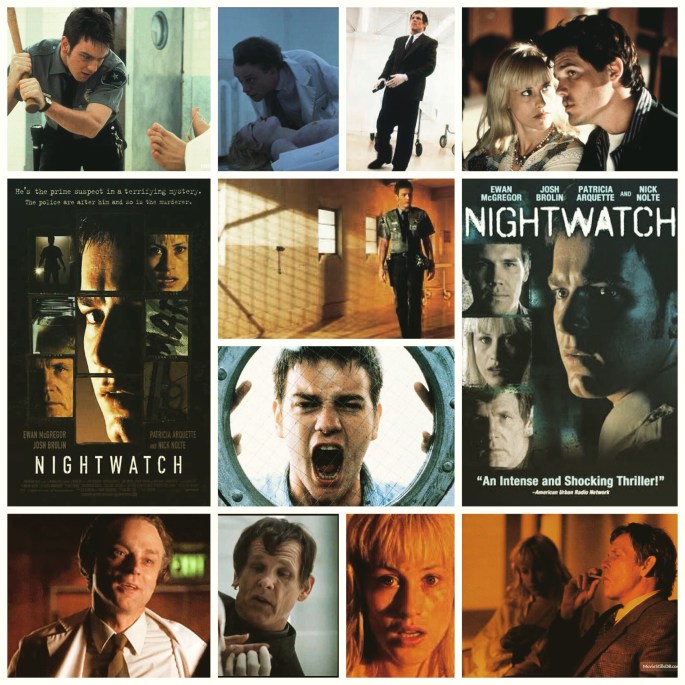
Ole Bornedal’s Nightwatch 


It’s always curious to me when directors remake their own projects. Sometimes it seems redundant and risky, and one wonders what compels them to revisit already trodden territory. In Ole Bornedal’s case it’s a creepy murder mystery called Nightwatch, made once in his native language of Danish, and again as a slicked up Hollywood version featuring some heavy acting talent and a reworked script by none other than Steven Soderbergh. I’ve only seen the newer one, and despite some awkward, clunky moments in the narrative, it can get pretty squirmy and frightening when it wants to, especially any scene involving a young Ewan McGregor stuck alone on a morgue graveyard shift. Creepy concept, and in some scenes it’s really milked to full effect, but there’s also few really silly and unnecessary subplots, particularly one with McGregor’s daredevil buddy Josh Brolin, and his girlfriend (an underused Patrica Arquette. When the film focuses on its main horror storyline it works quite well though. There’s a killer loose in the city, one with a penchant for necrophilia, and no one wants to have the night shift at a mortuary with someone like that running about. Nick Nolte adds class and charisma to his role as a weary, grizzled police detective who’s searching for the killer. Nolte rarely sets foot in the horror/thriller side of things, but his looming presence and concrete scraper sounding voice fit into the atmosphere terrifically. There’s a couple cameos as well, one from John C. Reilly as an ill fated police officer and an amusing Brad Dourif as the morgue’s cranky duty doctor. If Borendal had trimmed the fat in places as far as subplots go, given a bit more edge to the script and overall just tweaked it more it could have been a cracking good thriller, but as is it’s only above average with a few spots that really shine. 

-Nate Hill

Conceptually Speaking: An Interview with Sylvain Despretz by Kent Hill


Sylvain Despretz really is the personification of honnête homme. And he has been a man of the world since an early age. Travel was a part of his life; the other constant being his love of the cinema.

He is an artist of great style and skill and after his schooling he worked as an art director for a top Madison Avenue agency then moved on to illustrating Graphic Novels in California under the mentoring of the internationally famed artist Moebius. From there he would set out upon what would become and astonishing career as a story board artist and conceptual designer.


This slideshow requires JavaScript.

His work you’ll have seen, gracing the screen in a myriad of films in a variety of genres. Movies like Gladiator, Alien Resurrection, Panic Room, The Fountain, (Tim Burton’s) Planet of the Apes and The Fifth Element. These including work on Don’t tell Mom the Babysitter’s Dead and the coming Luc Besson sci-fi extravaganza: Valerian. He has worked with  and on films directed by the true masters of the screen including Ridley Scott, Stanley Kubrick, David Fincher and Jean-Pierre Jeunet.

But, as you will hear, Sylvain has become disenchanted by the current repetitive nature of Hollywood’s cookie-cutter output. He is now driven by the notion that the only way to usher in change, is to be part of a creative revolution that places an emphasis on original voices instead of corporate responsibility.


This slideshow requires JavaScript.

To this end he is now embarking on a journey that will see him stepping away from the drawing board and moving behind the camera; bringing his own visions to life using that mysterious blending of industrial light and storytelling magic.

He is a learned Hollywood veteran who has seen the Dream Factory from the inside, and his stories and wealth of knowledge and experience was and is fascinating to experience.

The designer behind the scenes and the future man in the director’s chair, proud am I ladies and gentlemen to present this interview with the one and only, Sylvain Despretz.

VISIT SYLVAIN’S OFFICIAL SITE:

http://www.metaprogram.net/

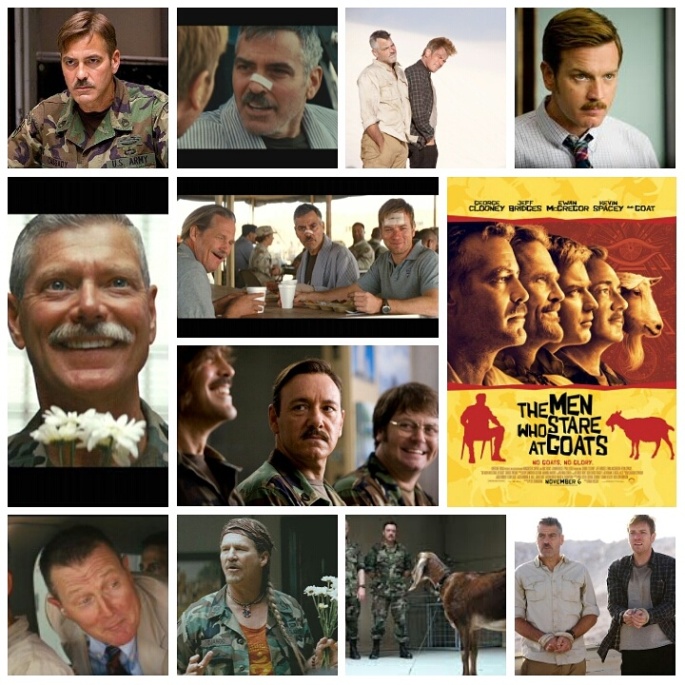
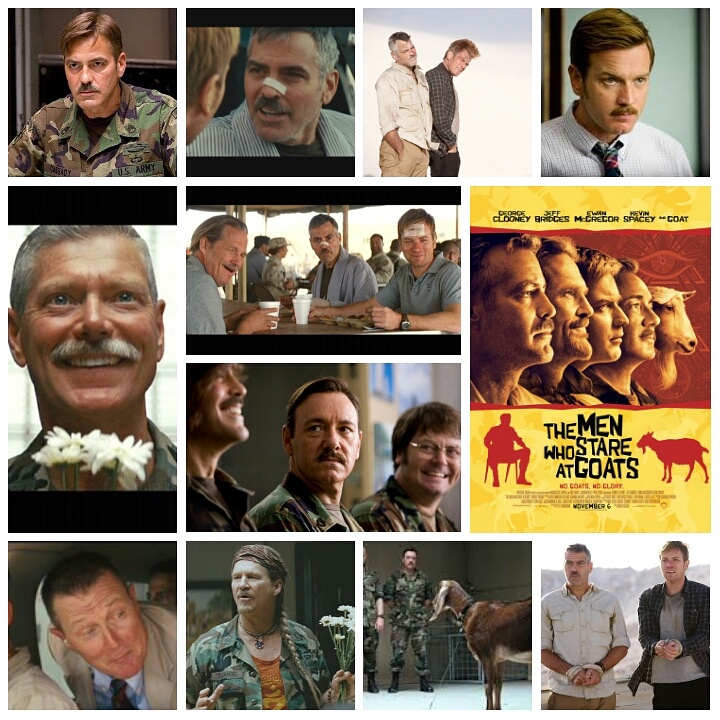
The Men Who Stare At Goats: A Review by Nate Hill 

Stephen Lang Week: Day 2 
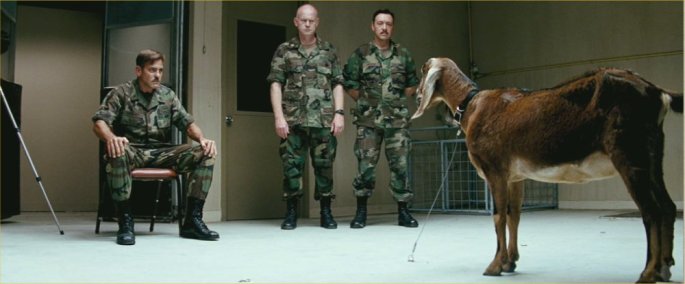
There’s a scene early on in The Men Who Stare at goats where hapless General Dean Hopgood (Stephen Lang) attempts a platform 9 & 3 quarters style sprint towards a solid wall, in attempt to use ‘psychic abilities’ he is being taught at a hush-hush military base. He smashes headlong into it, and in the most deadpan drawl, mutters “damn” in all seriousness. This one moment sort of sums up the absurd vibe that thrums throughout the whole film. It’s kind of like a Coen Brothers thing; you either get it or you don’t. This film isn’t quite as hilarious as it’s sister, Burn After Reading, but damn if it doesn’t try, and come out with some really weird and memorable stuff. It’s colorful hogwash that the cast sells with the enthusiasm of a drunken used car salesman, and speaking of cast, wow there are a lot of heavy hitters playing in the sandbox here. George Clooney, in yet another of his patented lovable goof roles, plays Lyn Cassidy, a former US Army nutjob who claims to have been a part of a clandestine program called the New Earth Army, employing paranormal powers in their missions. Bemused journalist Ewan McGregor is shanghai’d into following him on a mad goose chase to find out if any of his stories are true, but mostly just to babysit him, as he’s kind of a walking disaster. Ineptitude reaches a breaking point when we meet pseudo hippie Bill Django, played by Jeff Bridges who channels every other oddball role he’s done for maximum effect. Bill headed up the program until he got stymied by opposing official Larry Hooper (Kevin Spacey), a tight ass skeptic with no patience for such silliness. In fact, one must have a huge tolerance for such silliness to sit through this, and a sense of humour just south of normal to appreciate what it has to offer. I have both, and greatly enjoyed it, despite being thoroughly bewildered. Watch for Stephen Root, Glenn Moreshower, Rebecca Mader, Nick Offerman and good old Robert Patrick in a cameo as some sort of vague spy dude. A clown show to rival a high school play, no doubt, and I mean that as a compliment. 

THE MEN WHO STARE AT GOATS – A REVIEW BY J.D. LAFRANCE

bt7ul3laqprvmupqkhqw

George Clooney is one of those versatile actors that can easily go back and forth between big budget studio films like Ocean’s Eleven (2001) and smaller, more personal independent films like Good Night, and Good Luck (2005). One gets the feeling that given his preference, he’d much rather make the latter than the former but he’s smart enough to know that doing the occasional studio film gives him the opportunity to make smaller films. One glance at the cast list for The Men Who Stare at Goats (2009) and you would assume that it was a studio film with the likes of Clooney, Jeff Bridges, Ewan McGregor, and Kevin Spacey involved. It’s the offbeat premise, however, that could only come from an indie film.

Inspired by Jon Ronson’s non-fiction bestseller of the same name, The Men Who Stare at Goats follows the misadventures of Bob Wilton (McGregor), an investigative journalist in search of a major story to cover. He stumbles across a secretive wing of the United States military called The New Earth Army, created to develop psychic powers in soldiers. These include reading the enemy’s thoughts, passing through walls, and yes, killing a goat by staring at it. While doing a story about a man (Stephen Root) who stopped the heart of his pet hamster with his mind for a local newspaper in Ann Arbor, Wilton finds out that this man used to be part of a top secret military unit of psychic spies in the 1980s. At least, that’s what he claims.

Understandably skeptic about the man’s abilities, Wilton learns about the former leader of the unit, Lyn Cassady (Clooney), “the most gifted psi-guy” who now runs a dance studio. After a co-worker dies suddenly and his wife leaves him for his editor, Wilton interprets these incidents to be a wake-up call and travels to the Middle East to cover the war. By chance (or is it?), while staying at a hotel in Kuwait, he runs into Cassady. This self-proclaimed Jedi Warrior (?!) tells Wilton about Project Jedi, a hush-hush assignment that cultivated Super Soldiers with super powers. Cassady’s technique for tapping into these powers involves drinking alcohol and listening to the music of classic rock band Boston.

Wilton learns all about this elite unit that combines “the courage and nobility of the Warrior” with “the spirituality of the Monk,” and follows in the footsteps of “the great Imagineers of the past”: Jesus Christ, Lao Tse Tung and Walt Disney. Wilton convinces Cassady to allow him to tag along during his mission in Iraq and the rest of the film plays out as a quirky road movie cum satire of war films.

George Clooney is quite good as the clearly bat-shit crazy Cassady. The actor plays the role seriously but you can see that insane glint in his eyes. It’s impressive how he is able to say some of his character’s ridiculous dialogue with a straight face. Clooney gets maximum laughs by playing it straight and is also not afraid to act silly when the situation calls for it. And it does in one of the film’s funniest set pieces during a flashback where Cassady’s New Age commanding officer (Bridges) loosens up the unit by having them spontaneously dance to “Dancing with Myself” by Billy Idol. It’s pretty funny seeing a bunch of uniformed soldiers, Clooney included, dancing their asses off.

Clooney is surrounded by a very impressive supporting cast. Jeff Bridges plays a peace-loving high ranking soldier, sort of the Dude if he had been drafted instead of dropping out of society. Kevin Spacey is the black sheep of the unit and jealous of Clooney’s powers. Meanwhile, Ewan McGregor is the naive reporter and audience surrogate. They all get their moments to show their stuff but the film really belongs to Clooney and his seriously wacky character.

After making serious political films like Syriana (2005) and Good Night, and Good Luck, it’s nice to see Clooney starring in a political satire that is funny but still has something to say as it shows the absurdity of the war in Iraq. This is evident in a scene where Cassady and Wilton narrowly escape a firefight between two competing security firms. The Men Who Stare at Goats falls under the truth is stranger than fiction category as it presents a story populated by eccentric characters and tall tales, some of which might be true. Regardless, it is an entertaining film with a wonderfully oddball sense of humor in the same vein as other memorable war satires like M*A*S*H (1970), Catch 22 (1970) and Three Kings (1999). Don’t be put off by the setting. Although it takes place in Iraq, The Men Who Stare at Goats is not weighed down by the baggage of this war.

STAR WARS EPISODE I: THE PHANTOM MENACE – A Review by Frank Mengarelli

It’s no secret that many high brow cinephiles have their knives out when it comes to STAR WARS, but in particular the prequels.  To be fair, my film snobbery overflows onto big blockbuster franchises, but STAR WARS, all aspects of it; the films, the novels, the video games, collectibles are so ingrained in my life since childhood that it’s fair to say I will never have as much passion for anything as I do for STAR WARS.

image

THE PHANTOM MENACE is a stark contrast from the original trilogy, and that’s exactly what it is supposed to be.  Yes, there are many missteps, including the casting of some actors, and the dialogue at times is lackluster and unintentionally laughable but there is so much more at stake when you look at the big picture.

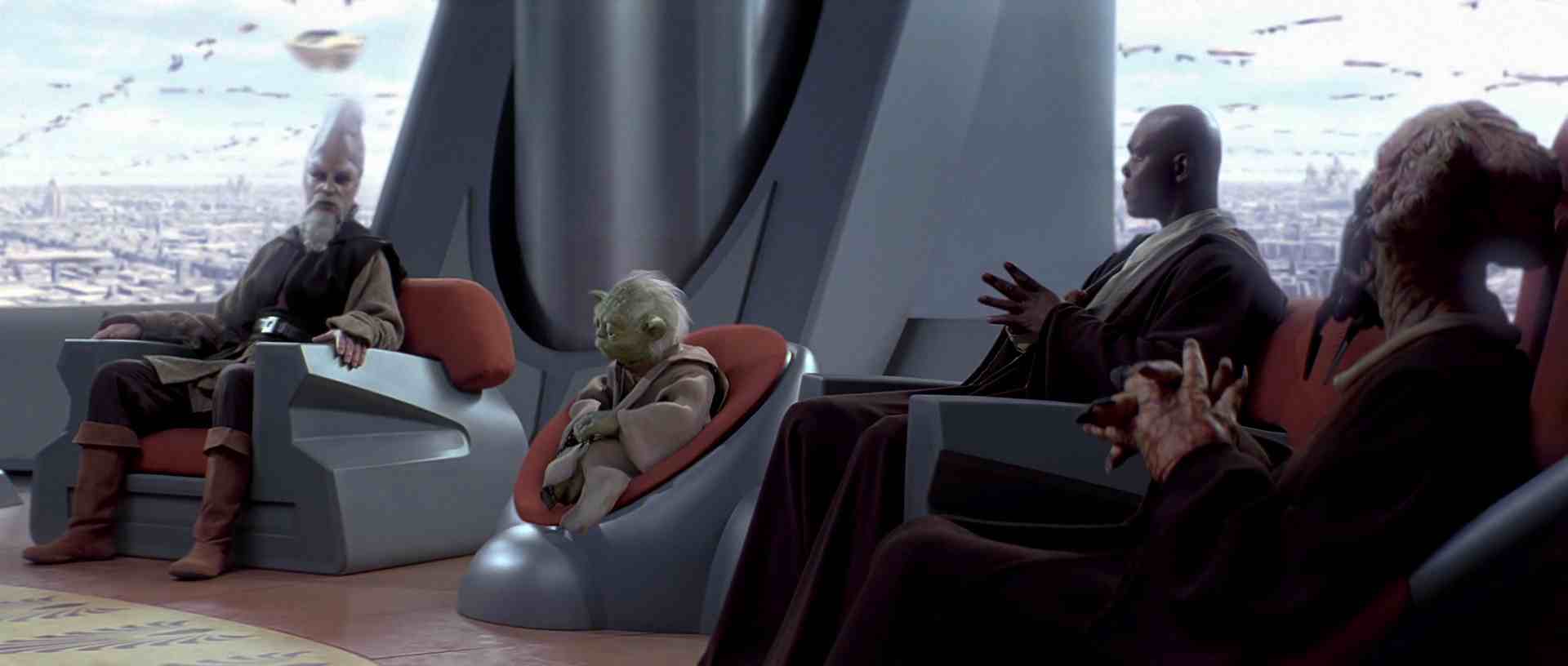
Set decades before A NEW HOPE, Episode I shows us the beginning.  We see a vibrant and fertile galaxy before the desolate dilapidation that the Empire brings to not only the aesthetics but also thematically in the original trilogy.  This is a time of prosperity, a time when the Jedi oversaw peace in the galaxy.

image

But.  This is also the beginning of the galaxy being divided in a full-out war.  Planets pitted against each other by fear and economics.  All the workings of seminal STAR WARS villain, Emperor Palpatine, who in Episode I is nothing more than the affable senator from the peaceful planet of Naboo.  His Sith alter ego, Darth Sidious, does all the dirty work.

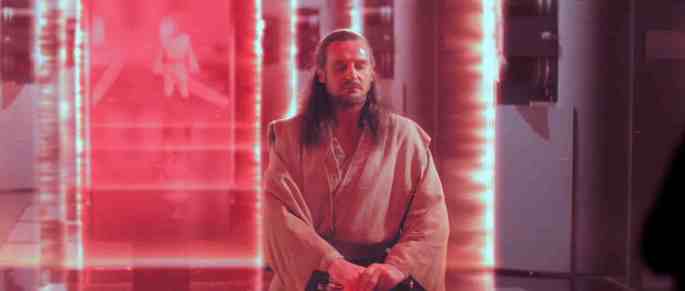
I know.  Jar Jar Binks is the go to hangup.  Yes, Jar Jar is annoying until you get over it and embrace him.  Liam Neeson as the Jedi Master who is the hierarchy of the Skywalker lineage more than makes up for Jar Jar.  As does John Williams’ AMAZING score, particularly DUEL OF THE FATES which loudly surrounds the greatest lightsaber battle in the STAR WARS saga: Qui Gon Ginn AND Obi Wan Kenobi versus fan favorite, Darth Maul.

Yes, THE PHANTOM MENACE is the weakest of the STAR WARS saga, but it is also a solid foundation of what’s to come after.  The chaos that engulfs the galaxy.  The tangible rise of Palpatine’s dark powers.  For all of Lucas’ faults, he does an excellent job guiding the camera through the birth of galactic turmoil.  His casting of Liam Neeson, Ewan McGregor, Samuel L. Jackson, and Terence Stamp are wonderfully perfect additions to the series, and his vibrant aesthetic is a pleasant contrast from the darkness of the original trilogy.

TRAINSPOTTING – A REVIEW BY J.D. LAFRANCE

00-32-14

Trainspotting flew out of the gates in 1996 and took the world by storm, first causing a sensation in the United Kingdom, and then moving on to the United States bolstered by a soundtrack that mixed classic rockers (Lou Reed, Iggy Pop) with contemporary ones (Blur, Primal Scream). Audiences couldn’t get enough of this gritty, often funny, sometimes harrowing tale of Scottish heroin addicts. Based on Irvine Welsh’s edgy cult novel of the same name, Trainspotting was adapted by a trio of filmmakers – director Danny Boyle, screenwriter John Hodge and producer Andrew Macdonald – who had previously collaborated on the nasty suspense thriller Shallow Grave (1994).

They chose just the right passages from the novel and proceeded to capture the spirit of what Welsh was trying to say without judging the characters. This resulted in the film getting into trouble as some critics felt it glorified drug addiction. The film takes an unflinching look at the lives of a group of drug addicts and shows why they do drugs — the highs are so unbelievably amazing. However, Trainspotting also shows the flip side: death, poverty and desperation, which lead to stealing, lying and cheating just to get more drugs. Regardless, the film was a commercial and critical success, spawning all sorts of imitators and influencing countless other U.K. filmmakers to go through the door that it kicked open.

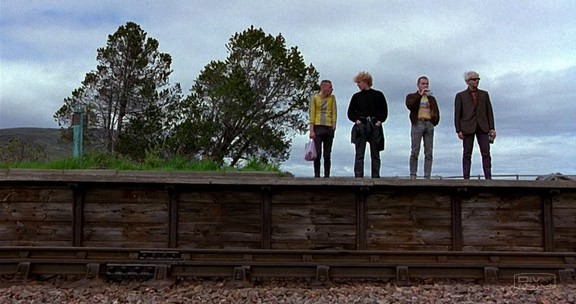
The six-minute prologue does a brilliant job of introducing a group of Scottish drug addicts as seen through the eyes of one of them — Mark “Rent Boy” Renton (Ewan McGregor). His friends include a speed freak motormouth named Daniel “Spud” Murphy (Ewen Bremner), a suave ladies’ man, Simon “Sick Boy” Williamson (Jonny Lee Miller), straight-edged Tommy MacKenzie (Kevin McKidd) and sociopath Francis “Franco” Begbie (Robert Carlyle). Each one of them has their own distinct personality that each actor vividly brings to life. This prologue also sets the tone for the rest of the film as it starts literally on the run with Renton and Spud being chased by the cops to the pounding strains of “Lust for Life” by Iggy Pop (before it became overused thanks to countless commercials using it bizarrely out of context) as Renton’s voiceover narration talks about his “sincere and truthful junk habit.”

The energetic camerawork — fasting moving tracking shots (that recall Mean Streets) as Spud and Renton run from the police and the freeze frames (reminiscent of GoodFellas) with title cards identifying each character is an obvious stylistic homage to Martin Scorsese. Like many of his films, Trainspotting is bursting at the seams with energy and vitality that is very engaging. The prologue does its job by immediately grabbing our attention and drawing us into this world populated by colorful characters. After 30 minutes of showing the incredible highs of shooting heroin where we’re caught up in the euphoria of it with Renton and his friends, director Danny Boyle starts to show the ugly side, starting with the death of fellow junkie Allison’s baby due to neglect.

From there, Renton and Spud get arrested for stealing with the former going into a rehab program while the latter goes to jail but not before Renton takes one more hit and promptly overdoses in a surreal bit where he sinks into the floor and is taken to the hospital by taxi seen mostly from his zonked out point-of-view to the strains of “Perfect Day” by Lou Reed. However, Trainspotting’s heart of darkness is the sequence where Renton goes through the horrors of withdrawal and his reality becomes warped by hallucinations of Allison’s dead baby and his friends. Ewan McGregor really does a fantastic job of conveying Renton in the depths of a painful and terrifying withdrawal.

John Hodge’s screenplay masterfully distills Welsh’s novel to its essence and includes some of its most memorable dialogue. From Renton’s famous “Choose life” monologue (“Choose life … But why would I want to do a thing like that? I chose not to choose life: I chose something else. And the reasons? There are no reasons. Who needs reasons when you’ve got heroin?”) to Sick Boy’s “Unifying Theory of Life” speech (“Well, at one time, you’ve got it, and then you lose it, and it’s gone forever.”), Trainspotting has insanely quotable lines. This helped it develop a loyal cult following over the years that continues to champion the film even to this day. And yet what resonates most is its honesty. The film doesn’t sugarcoat its message and it isn’t preachy about it either. There is an ironic detachment that transforms it into a playful black comedy mixed with gritty drama and surreal sequences.

It doesn’t hurt that this excellent material is brought to life by a fantastic cast of then relative unknowns (especially to North American audiences). Ewan McGregor has the toughest role in the film playing an unrepentant junkie while also acting as the anchor that the audience identifies with and the character that the rest of the cast revolves around. It is a tricky balancing act because Renton does things that make him unlikable and yet we still root for him because of McGregor’s charisma. Fresh from his role as an American computer user in Hackers (1995), Jonny Lee Miller plays Sick Boy, Renton’s best mate but someone who lacks “moral fiber” despite his vast knowledge of Sean Connery. He ends up taking advantage of his friend in a dodgy scheme and Miller does a nice of showing how Sick Boy went from best mate to scheming con man.

Robert Carlyle is also great as the completely unhinged Begbie. The scene where he recounts a colorful story about playing pool (“I’m playing like Paul-Fuckin’-Newman by the way.”) and dealing with his cocky opponent (“You ken me, I’m not the type of cunt that goes looking for fuckin’ bother, like, but at the end of the day I’m the cunt with a pool cue and he can get the fat end in his puss any time he fucking wanted like.”) perfectly captures the essence of his character. Begbie gets his kicks from starting up trouble. As Renton puts it, “Begbie didn’t do drugs either. He just did people. That’s what he got off on; his own sensory addiction.” Carlyle has a frightening intensity and an unpredictability that is unsettling and exciting to watch. Ewen Bremner completes the core group of characters as the not-too bright Spud. He has a good scene early on when, hopped up on speed, he goes to a job interview with the notion of sabotaging it without appearing to. It’s a tricky tightrope that Bremner handles expertly.

Trainspotting also features one of the best contemporary soundtracks with an eclectic mix of British music from the likes of Primal Scream, New Order, Blur and Underworld, and from America, Iggy Pop and Lou Reed. The music veers back and forth from the adrenaline-rush of Iggy Pop’s “Lust for Life” to the faux spy music by Primal Scream to the drugged-out mellow mood music of “Perfect Day” by Lou Reed. Taking a page out of Scorsese’s book, the filmmakers use the music as signposts by conveying the transition of guitar-driven rock in the 1980s to the acid house music scene in the 1990s.

Producer Andrew Macdonald first read Irvine Welsh’s novel Trainspotting on a plane in December 1993 and felt that it could be made into a film. He turned it on to his filmmaking partners, director Danny Boyle and screenwriter John Hodge in February 1994. Boyle was excited by its potential to be the “most energetic film you’ve ever seen – about something that ultimately ends up in purgatory or worse.” He convinced Welsh to let them option the rights to his book by writing a letter stating that Hodge and Macdonald were “the two most important Scotsmen since Kenny Dalglish and Alex Ferguson.” (legendary European football player and manager, respectively, from Scotland) Welsh remembered that most people interested in optioning his book, “wanted to make a po-faced piece of social realism like Christiane F or The Basketball Diaries.” He was impressed that Boyle and his partners wanted everyone to see the film and “not just the arthouse audience.” Welsh agreed to sell the rights to them.

In October 1994, Boyle, Hodge and Macdonald spent a lot of time discussing which chapters of the book would and would not translate onto film. Hodge adapted the novel, finishing a first draft by December, while Macdonald secured financing from Channel 4, a British television station known for funding independent films. According to the screenwriter, his goal was to “produce a screenplay which would seem to have a beginning, a middle and an end, would last 90 minutes and would convey at least some of the spirit and the content of the book.”

Pre-production on Trainspotting began in April 1995. When it came to casting the pivotal role of Mark Renton, Boyle wanted somebody who had the quality “Michael Caine’s got in Alfie and Malcolm McDowell’s got in A Clockwork Orange”: a repulsive character with charm “that makes you feel deeply ambiguous about what he’s doing.” Boyle and Macdonald were impressed with the performance Ewan McGregor had given in their previous film, Shallow Grave, and cast him in advance. Ewen Bremner had actually played Renton in the stage adaptation but agreed to play the role of Spud because he felt “that these characters were part of my heritage.” Boyle had heard about Jonny Lee Miller playing an American in Hackers and was impressed with him when he auditioned by doing a Sean Connery accent. For the role of Begbie, Boyle thought about casting Christopher Eccleston who had been in Shallow Grave but asked Robert Carlyle instead. The actor said, “I’ve met loads of Begbies in my time. Wander round Glasgow on Saturday night and you’ve a good chance of running into Begbie.”

Once cast, Ewan McGregor shaved his head and lost 26 pounds. To research the role, the actor actually considered taking heroin but the more he read and learned about it, the less he wanted to do it. Then, he went to Glasgow and met people from the Carlton Athletic Recovery Group, an organization of recovering heroin addicts. He (and several other cast members) took classes on how to cook up a shot of drugs using glucose powder.

With a budget of $2.5 million, Trainspotting was shot during the summer of 1995 over seven weeks. The cast and crew moved into an abandoned cigarette factory in Glasgow. Due to the rather small budget and limited shooting schedule, most scenes were shot in one take with the effects done practically. For example, when Renton sank into the floor after overdosing on heroin, the crew built a platform above a trap door and lowered actor McGregor down.

When Trainspotting was shown out-of-competition at the 1996 Cannes Film Festival, it received a standing ovation. Once Miramax Films picked it up for North America, Macdonald worked with them to sell the film as a British answer to Pulp Fiction (1994), flooding the market with postcards, posters, books, soundtrack albums, and a revamped music video for Iggy Pop’s’ “Lust for Life” directed by Boyle.

Trainspotting has aged surprisingly well considering it was one of those zeitgeist-defining movies of the ‘90s. It also set the tone and style of later British exports, opening the floodgates for films like the nasty crime drama Twin Town (1997), the hyperactive rave culture comedy Human Traffic (1999) and the films of Guy Ritchie. In an interview for The Guardian, Boyle said, “Has it dated? I can’t tell you that. I am alarmed sometimes by how young the people are who say they’ve seen and loved Trainspotting, so it might have lost an edge it once had. Shallow Grave looks dated, fashion-wise, but Trainspotting has an abiding style.”