B Movie Glory: Thomas Jane’s Dark Country

Dark Country actor Thomas Jane’s first venture behind the camera as director, and although the final product is a bit muddy and perplexing, it also creates an atmosphere of impenetrable mental fog and noxious delirium that’s in itself a success, even if the whole thing amounts to a big question mark. Jane has already proved to be a stalwart action hero, charismatic leading man and talented performer (anyone raising their hand to disagree with me gets a copy of Mark Pellington’s I Melt With You hucked across the classroom right at their head). Working off a script from veteran writer Tab Murphy, Jane concocts what can only be described as a Twilight Zone episode on opiates, with a hint of sketchy Midnite Movie added for flavour. Does it work? Yes and no. The story is nearly indecipherable except to someone glued to the screen inches away, kept abreast of every minute plot shift and disorienting, mumbled bit of dialogue. Jane and Lauren German play a couple driving from somewhere to somewhere, who encounter a freaky, whacked out hitchhiker (Chris Browning) somewhere around the Nevada desert. He’s bloodied up something fierce, babbling on about nothing and from the moment he arrives, their turns turns dour. It’s anyone’s guess what goes on from there… a dead body they must contend with, a suspicious state trooper (nice Ron Perlman cameo) on their tail, flashbacks to a weird encounter at a desolate roadside diner, ever creeping fog that seems to have followed Jane over from Stephen King’s The Mist to wreak more havoc, and so it goes. Plot is of little importance to him as a director though, and instead he seems more intent on clouding up the viewer’s perception of events until it’s more like a shadowy fever dream full of dead ends and few answers. An atmosphere piece with a logic tank that’s run dry, but succeeds in whipping up a neat nightmarish road trip through confusion and paranoia, if not much else.

-Nate Hill

The Punisher (2004)

There’s several movie versions of Marvel’s The Punisher, which these days are pretty much eclipsed by Netflix’s take-no-prisoners, balls out long form adaptation, but the film ones are still out there, if only for variety. By several I mean three, which some might not be aware of. Dolph Lundgren made an effort back in the 90’s which looks cool, but I’ve yet to see. Ray Stevenson most recently took up the mantle for a jagged edged, jarringly violent and dismal toned entry, which is worth a look. My favourite has to be the Thomas Jane one though, by far the most ‘hollywood’, high profile stab at the mythology, slightly silly in places, dementedly weird in others, a well casted, oddly pitched vehicle that is somehow the most fun of the trio of flicks. Jane, at least in the looks department, is the closest you’ll find to the Frank Castle of the comics, a rock-jawed, all American tragic antihero turned mass murderer. The story he finds himself in… well, it’s a little stuffed with itself, subplots dangling from it like entrails and far too many characters running about, but oh well. Jane’s Castle watches his wife (sadly short lived Samantha Mathis) and family massacred in the film’s opening, at the hands of melodramatic mobster Howard Saint, played by John Travolta, who’s determined to steal every scene whether anyone likes it or not. Forced into hiding, Frank eventually becomes the angry Punisher, a vigilante dressed like a jock in a school shooter Halloween costume, now on a path to wipe out Saint and his whole freaky entourage, which includes consigliere Will Patton, sporting some icky extra curricular activities. He also shacks up with sexy Rebecca Romjin and her two apparent roommates Ben Foster and comedian John Pinette, when he needs to dodge Travolta’s onslaught of colourful assassins. Well, he only *literally* shacks up with Romjin, but you get the idea. Speaking of assassins, there’s some really cool supporting villains dispatched by Saint. Castle is unprepared when an eight foot tall, mute Russian goon in Where’s Waldo inspired attire busts down his door looking for blood. My favourite has to be Harry Heck though, a contract killer so similar to Johnny Cash that for years after watching this I legit thought they somehow convinced the man in black himself to do an epic cameo. It’s actually a country singer named Mark Collie, but oh well, the guy composes a twangy guitar accompanied vocal for every target he’s assigned, which he croons out to them before getting violent, and that’s a fuckin wicked comic book villain in anyone’s books, whether or not the character actually appeared in the ones this film is based on (I’m guilty of never reading them). This film is fun because of it’s arch, broad strokes approach, especially with Travolta’s over the top take, Laura Harring as his emotional wife, whose fault it is that the whole massacre in the opening happens to begin with. That opening is ruthless, exploitive and doesn’t hold most of anything off camera, a good setup for revenge (or,sorry, ‘punishment’) in any pulp comic book scenario. Jane holds his own, and even popped up again years later to do a pseudo sequel in short film form called ‘Punisher: Dirty Laundry’, which is so good it almost blows this one out of the water. Here you’ll find a movie that’s not quite as resigned to it’s unpleasantness as the Warzone one (which really gets messed up), but still knows how to pack a mean punch, when it’s not too tied up with itself.

-Nate Hill

Blue Streak

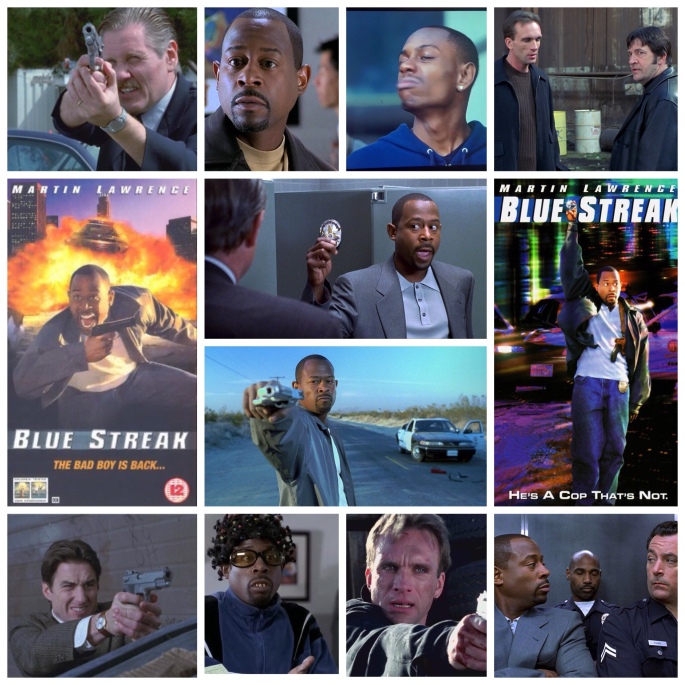
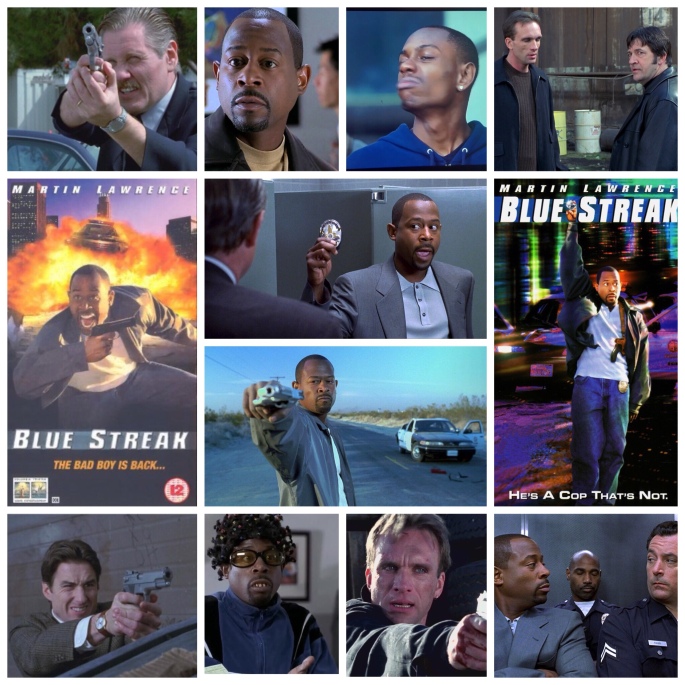
Blue Streak is one of those flicks I’ve probably seen a couple dozen times, whether I’m tuning in intently, comforted by it as zany background noise, viewed on a lazy summer afternoon or a cozy rainy day in. It’s just about as fun as action comedies get, blessed with an adorably implausible story, packed with both notable comedians and a legion of genre talent and speckled with charming action sequences, just the right blend of over the top and entertaining. I don’t give a wet shit what anyone thinks, I love Martin Lawrence to bits, I think he’s one of the best comedic actors of his day, and never fails to put a smile on my face with his exasperated, frenzied persona and motor-mouthed cadence. He’s petty thief Miles Logan here, leading a crew of hapless jewel thieves including Dave Chappelle, John Hawkes and reliably villainous Peter Greene, who double crosses the lot of them in attempts to make off with the loot. Forced to stash a big ass diamond in the air ducts of a building undergoing construction before a stint in the slammer, Miles is released from jail, maniacally frustrated to learn the completed structure is now… an LAPD police station. What ensues is one of the silliest gimmicks in film history: Miles fakes a heap of impressive credentials, successfully impersonates a high ranking officer and infiltrates the ranks of LA’s finest in hopes of snagging that rock from the air vent. Of course, a risky shtick like that is never as simple as planned, especially when both tweaked out, hilarious Chappelle and murderous, scary Greene blow back into town looking for him. The real value lies in his interaction with all these cops though, which borders on Mel Brooks style satire it’s so cheeky and unbelievable. Rookie Luke Wilson and salty vet William Forsythe are tasked with babysitting him as he blunders from scene to scene, and via his inherent street smarts, accidentally starts solving cases and making arrests, when he’s not discreetly turning perps loose out the back door of the station. It’s a full blown laugh riot in areas, numbingly juvenile in others, but never short of a blast to sit through. The cast is peppered with wicked supporting turns from Graham Becker, Octavia Spencer, Nicole Ari Parker as an ice queen defence attorney, Frank Medrano, Steve Rankin, Julio Oscar Mechoso, Olek Krupa and more. To take this film seriously is to unwittingly brand yourself a chump, missing the point completely. It’s an asinine, fired up, ADHD riddled ride through farcical action movie territory, and I love every warped minute of it.

-Nate Hill

Henry Selick’s Monkeybone

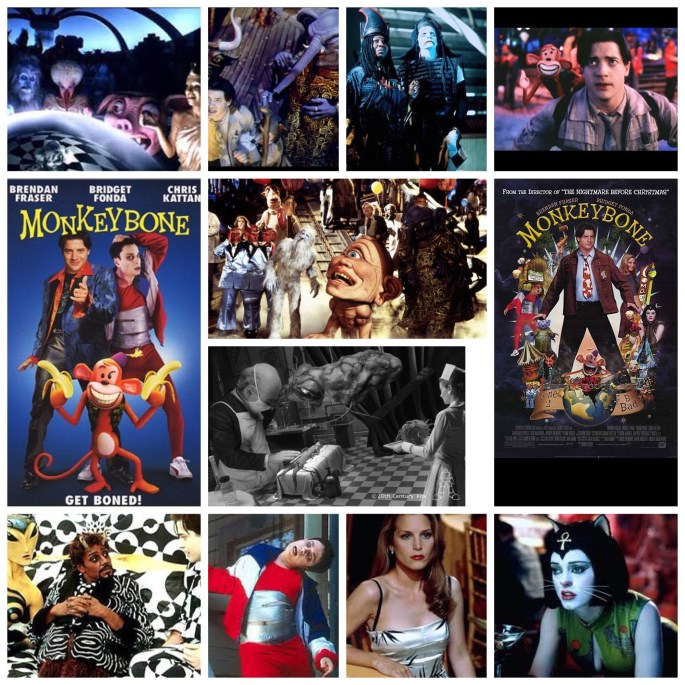
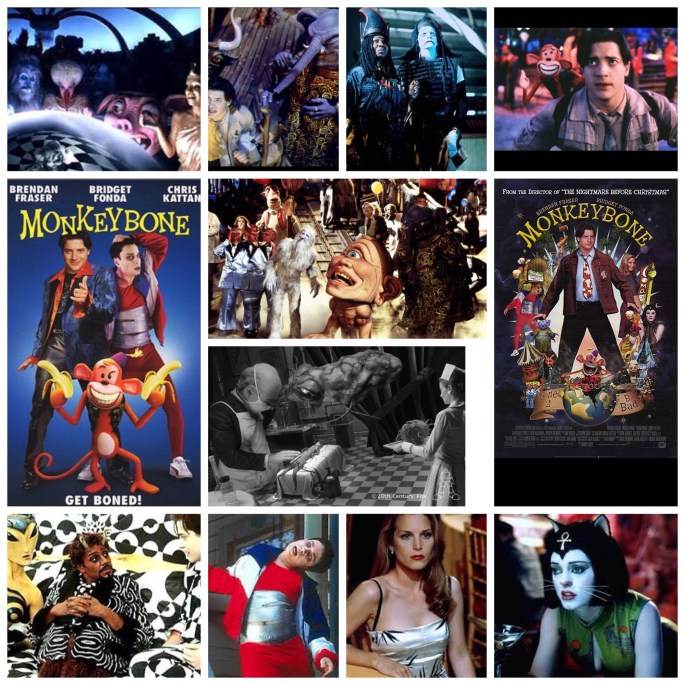
Henry Selick’s wacktastic, surreal Monkeybone is off its head, and while it never quite coalesces into something wholly memorable, the images and impressions on parade are not something easily shaken. To start with, the visual production design is so detailed and thoroughly deranged it deserves it’s own art gallery after the fact. Selick, the other half of the creative team behind Nightmare Before Christmas, create’s here what is maybe one of the most unsettling, eye popping mood boards in any film of the century. It’s just just in keeping us awake with the storytelling that he falters somewhat, not enough to sink the ship, but enough that not a lot of people remember or revere this film these days, which is a shame because it’s quite an achievement in areas. Brendan Fraser, who seems to actively seek out oddball scripts, plays cartoonist Stu Smiley, who goes into a coma, gets sent to a place called Downtown where the veggies go until they either croak or wake up, and is put in jeopardy once someone has the idea to pull the plug on him. His loving girlfriend (Bridget Fonda, who I wish was still in the acting game) waits for him, while his newest creation, a little plush horn-ball named Monkeybone, gets a little too sentient and tries to steal his body, which has a certain organ he wasn’t endowed with on the drawing board. The story is too weird and raunchy for kids, and falls into the Roger Rabbit/Cool World arena of adult oriented fare that still has a childlike sensibility. Downtown is essentially a haunted DisneyLand astral plane, a reject realm where ghosts, ghouls and monsters with disturbing anatomy roam free and feed on nightmares, siphoned from the psyched of those upstairs stuck in comas. Weird enough for you? You don’t know the half of it. The nightmare scenes are shot in stark black and white and have a genuinely subconscious, tuned in vibe to them that actually feels like one does in dreams, not an easy aura to pin down onscreen. Fraser does a wicked job, especially when the monkey hijacks his body upstairs and starts prancing around like a mental patient, it’s an inspired bit of physical comedy from the man who brought us George Of The Jungle. Monkeybone is apparently played by none other than John Turturro, but his voice is so tripped out on helium effects it’s fairly unrecognizable. The film gets downright hilarious when Stu follows the scamp back up in the avatar of a corpse with a broken neck (bravo to Chris Kattan), a dementedly genius sequence. There’s cameos and vaudeville supporting turns galore, including Rose McGowan as a sexy cat/human hybrid, Bob Odenkirk, Thomas Haden Church, Giancarlo Esposito, Lisa Zane, and Whoopi Goldberg as Death, a sly meta rework on her Ghost character. The film is at it’s best when it focuses on Downtown, which really is a vibrant atmosphere to hang around in, always an odd mutant creature to look at or a morbid one liner for chuckles. The stuff back on earth can be fun too but really doesn’t pick up until Kattan comes roaring in and steals the climax with his bobble-head gymnastic fanfare. If only this had been a little more in terms of story and character, it could have matched it’s truly impressive visual scope. As it is, it’s worth it just to see how weird and surreal mainstream movies can get when they want to.

-Nate Hill

Behind Enemy Lines

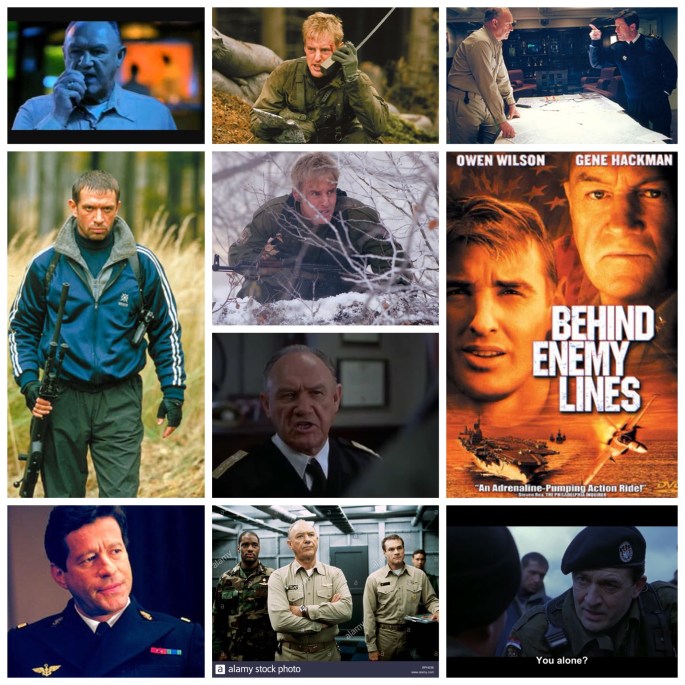
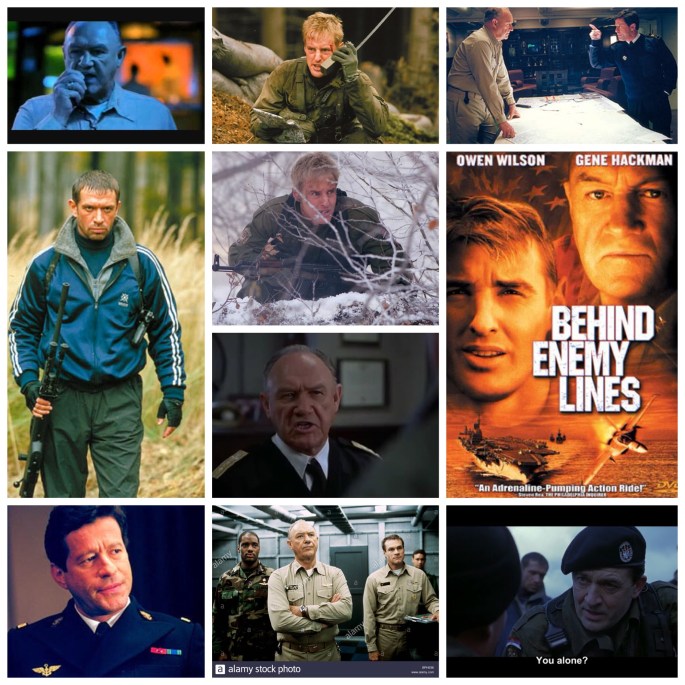
I’ve always enjoyed Behind Enemy Lines, a hyperactive, simple minded, highly kinetic Owen Wilson/Gene Hackman war survival flick. It’s lowbrow, full of plot holes and questionable in terms of representing both the military and the Serbian/Bosnian war, but it’s also explosive, jacked up fun that packs a visual and auditory wallop. Wilson is an Air Force pilot who goes awol after a crash, and runs afoul of some Serbian radicals running a sickening genocide operation somewhere out there, while Hackman is the fiery Admiral tasked with coaching him back to an elusive drop point, and helping him avoid obstacles along the way. In pursuit is a nasty rogue general (Olek Krupa), who wants to snuff him out as he’s witnessed the man’s squadron murder his copilot (Gabriel Macht), and also just because he’s the classic stock villain and has nothing better to do. His top assassin (Vladimir Mashkov, almost identical to Niko Bellik of Grand Theft Auto 4) is an Eastern European Bear Grylls with homemade grenades and the pain tolerance of a tank, also chasing poor Wilson. It’s fairly implausible, but oh so cinematic and one I often put on just to work out the sound system of my tv. Crazy souped up editing, jagged freeze frame effects and whatnot ensue, it’s cool and kind of like Tony Scott Lite in a way. Hackman could yell out any dialogue and be convincing, owning yet another role, especially in a scene where he has a wicked shouting match with an A-hole of a UN General (Joaquim De Almeida firing on all cylinders and then some). David Keith has a great bit as another Admiral assisting in Wilson’s plight too. It’s suspenseful, doesn’t take itself too seriously and shouldn’t be subject to too much scrutiny, lest you rob yourself of a pleasurable genre viewing experience. Plus the sequence where Wilson hides in a freaky, mud filled mass grave has stuck with me for years. Good stuff, man.

-Nate Hill

Fluke

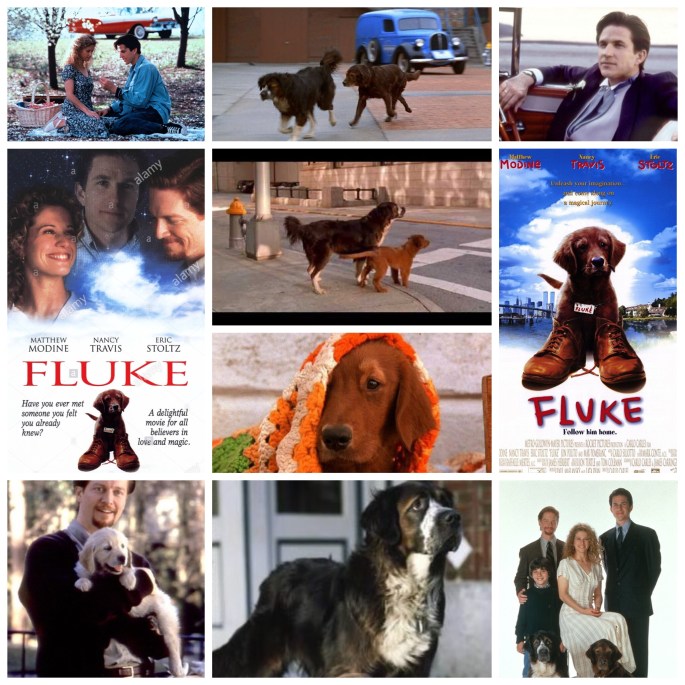
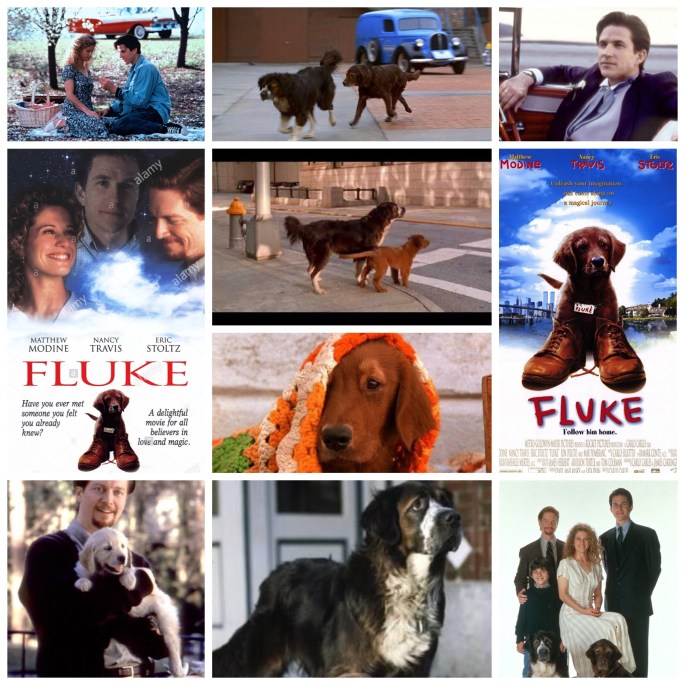
On paper, or at least on poster, Fluke looks like a benign kid’s flick in the tradition of Beethoven or Babe, as a big fluffy Red Labrador gazes down adorably from the blockbuster shelf. Well, I rented this way back when I must have been like ten, and I can tell you it ain’t no children’s movie. There’s a sadness and deep thoughtfulness to the story that will sail over youngster’s heads, leaving them with just the scenes of talking dogs to keep them occupied. Based on a poignant novel by James Herbert, this is one of the oddest and most depressing family films out there, but it’s also unique and brave enough to go where it does, reaching beyond the sappy to try and become something more complex. Matthew Modine plays a successful businessman who is killed in a foolish car accident one night, leaving behind his wife (Nancy Travis) and son (Max Pomeranc). The film gets spiritual as we seen him reincarnated as that very same mutt from the DVD cover, a curious creature called Fluke. Born into frustrating circumstances, he finds himself pulled into one situation after the other, including bonding with an old woman who passes away, living in a junkyard for some time and making friends with a troupe of homeless urban canines, including tough St. Bernard Rumbo (Samuel L. Jackson), mongrel Sylvester (Ron Perlman) and wiseguy pup Boss (the late Jon Polito). Eventually though, he remembers he was once a man, and sets off to find the family he left behind, feeling alienated in his animal form. It’s a terribly sad film, one that’ll gouge your heart right out, if you can take that sort of thing. It’s also daring and complicated when it wants to be. Fluke feels all the more isolated when he does find his family, as his wife has become close with his old business buddy (Eric Stoltz), and he has nothing but his bark to communicate, a crushing interaction to see. This is one of a kind, and in no way should be in the kid’s section of any video store or iTunes manifest, it’s just too out there and thematically challenging, but that’s in a way where it’s strength as a story lies. Should be viewed as an existential, spiritually inclined drama about what it means to really live, in whatever form you’ve been given, and how someone can ruminate on the choices they’ve made through new eyes.

-Nate Hill

B Movie Glory: Necessary Evil

There’s always those B Movies that seemed to be sewn together out of bits of other scripts and produced solely so SyFy or Space has something, anything to fill up their 3am Saturday time slot. It’s like production team grabbed discarded narratives from all kinds of genre flicks, shoved them in a magic bullet, but purée and served up whatever the result is to the distributor. Now, this can often be a terrible idea resulting in boring mish-mash horror flicks that make little sense, or they can oddly kind of work in their own absurd way. Necessary Evil… kind of works, kind of doesn’t, there’s definitely something splattered on the canvas with it’s narrative, what it is though, I’m not even sure the filmmakers had an idea. It’s part Lovecraftian horror, part psychological something, part social satire and all schlock, but these themes bleed into each other until even the most attentive viewer will have not much of a clue what they’re watching. Best I can describe it: a super sinister doctor named Fibrian (Lance Henriksen) runs a shadowy psychiatric ward. There’s all kinds of rumours about illegal testing, dodgy pharmaceuticals, mass mind control and occult ties, none of which is ever made clear or disproved. However, when you have Lance playing your asylum director, you can almost be sure the place is up to something it shouldn’t be, he just has that cavalier maliciousness that he always switches on for these types of parts. A police detective and a reporter are onto him, and do theor best to infiltrate the facility, but his powers have already spread to the city outside, causing people to act strange and… well, a bunch of other weird shit. Danny Trejo has an amusingly hostile extended cameo as some vague operative working for Fibrian, and yada yada. It earns points for sheer WTF-ness though, it’s like every day on set they picked one crew member to add the craziest thing they could think of to the script and just ran with that (which would be a cool free association method of improvisational filmmaking, now that I think about it. They outdo themselves in a hilarious, out of left field cliffhanger ending that gets pretty cosmic and out there, adding a straight up supernatural element that cements the demented vibe they’ve strived for with the whole thing. A true oddball.

-Nate Hill

Walter Hill’s The Long Riders

◦ I’m pretty sure that Walter Hill’s The Long Riders does something that no film had done before or after, least to that extent: pull off the biggest sibling stunt casting session in history. Based on the rowdy, violent exploits of the James Younger gang in the old west, Hill casts real life brothers as the troupe, a choice which could have been south of silly in any old director’s hands, but works like gold here. James and Stacy Keach play Frank and Jesse James, David Robert and Keith Carradine are the Younger clan, while Randy and a very mean, very young Dennis Quaid fill the boots of the Millers. It’s fairly brilliant, well organized and pays off nicely, especially if you’re a fan of any of these guys, which I am and then some. Now, the film. Most westerns about these hotshot outlaws take a quippy, cavalier standpoint and go for sterling silver charm. Not Hill, a notorious trend shirker and trailblazer whose tactics in casting, music, editing and tone have never followed the Hollywood grain. The film is downbeat, somber and mostly a series of vignettes that topple against each other like dominoes. The gang shuffles from robbery to holdup almost reluctantly, like it’s written in the stars and they have no choice but to commit crimes. They clash royally with the ruthless Pinkerton agency, who cause more than a few casualties on their side. The shootouts here are no sanitized 50’s Lone Ranger fluff, they’re brutal, bloody and amped up to extreme violence, which is always to be expected from Hill. The life of an outlaw is not glamorized here either, a choice rarely, if ever made in the western department. These are hard men resigned to their rough lives, not fast talking hot-doggin prince charmings like insufferable Young Guns type crap. There’s scattershot subplot about the brother’s lives, but mostly the focus is rooted in their exploits and run ins with the law. David Carradine’s Cole Younger has a cool knife fight sequence up against half breed injun Sam Starr (Hill favourite James Remar) over the favour of pretty hooker Pamela Reed. The actors are all gritty and grizzled, from James Keach’s long-faced, Moody Jesse James to Dennis Quaid’s volatile psychopath Ed Miller. Hill’s go to music guru Ry Cooder provides another achingly gorgeous score with echoes of his composition on Southern Comfort a few years later, a melancholic tune stripped bare of any action sequence swells or orchestral hoo-hah. Pretty damn underrated as far as big screen westerns go, with a tone and look that seems somehow far more genuine than many others in the genre.

-Nate Hill

B Movie Glory: The Vault

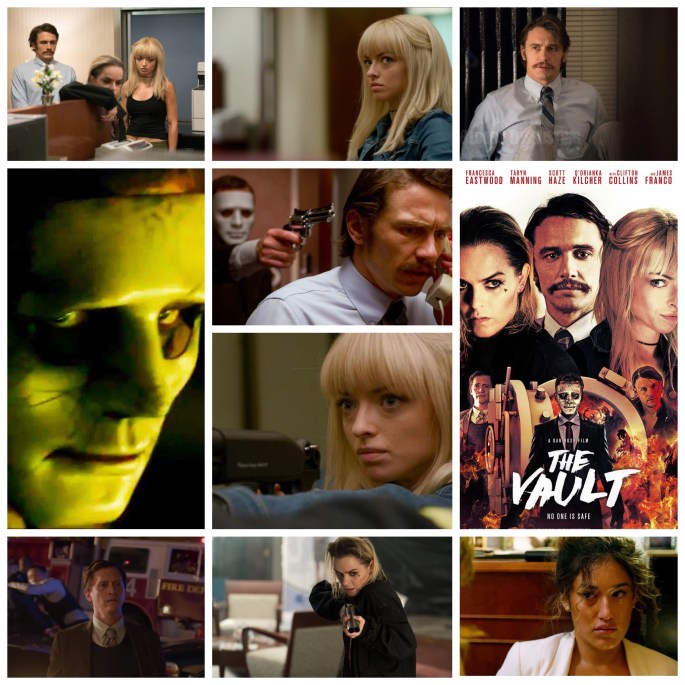
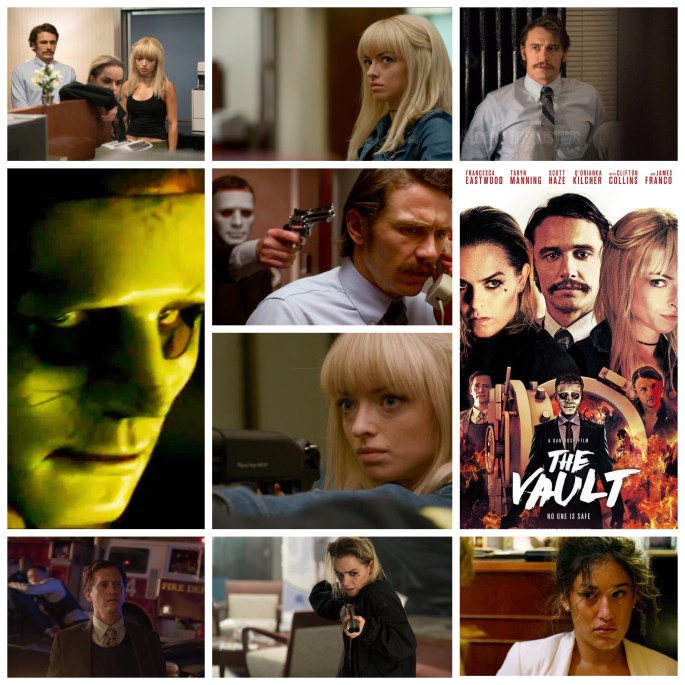
I miss films like The Vault, and it’s refreshing to see there’s still artists out there who care enough to make them. You see, in today’s hyper meta, incredibly self aware age of remakes, redos, reimagining and reboots, everything has to be bigger, better, have cutthroat innovation and just be… more. Neglect often rises in terms of making good old, straight up, no bullshit genre flicks, the kind we fell in love with in the first place, the kind which without, we’d have none of the throwbacks of our era. I suppose you could in fact call this one a throwback because these days the lines of definition are impossibly blurred, but there’s just something so earnest, endearing and straightforward to it’s formula that reads as effortless and totally in it’s groove. Picture this: bank robbers unwittingly siege a branch that turns out to be haunted. It’s obviously more complicated, but come on man.. a haunted bank! The concept alone gets one giddy. During a hectic warehouse fire that conveniently gridlocks a whole city block, a roughneck crew of outlaws take hostages, led by sisters Francesca Eastwood and Taryn Manning, who have bad blood for each other right out of the gate. Outside, a wearily sarcastic Detective (Clifton Collins Jr) tries to keep the peace, clueless of the crime in progress a few doors down. Inside the bank, all hell breaks loose, literally and figuratively, as the perps slowly discover that beneath the building’s modern veneer, deep in the old abandoned vault, something evil has awoken. It’s a neat premise, and both the crime and horror aspects are handled well enough to keep one glued to the screen. Manning is an actress I haven’t seen in a while, but I’ve always enjoyed her scrappy tomboy style, and she’s a hyperactive gong show here. Eastwood has quietly been putting out great work for some time now (check out her brief but affecting cameo in Twin Peaks), she does the tough but sexy turn really nicely. Q’orianka Kilcher has been all across the board since she came onto the scene playing Pocahontas in The New World, showing up in the least expected places, like a cool bank teller role here. James Franco has a solid supporting turn as the bank’s strange assistant manager as well. Much of the film is a hyper kinetic, pulsating thrill ride with stranglehold pacing, eventual pauses coming for the schlocky elements to breathe and the scare tactics to effectively come forth, a great mixture. This one is simplicity itself in terms of genre, with no cheeky pretence or smirking, meta undercurrent, just a good old school horror hybrid, and a damn enjoyable one too.

-Nate Hill

Stephen King’s Dolores Claiborne

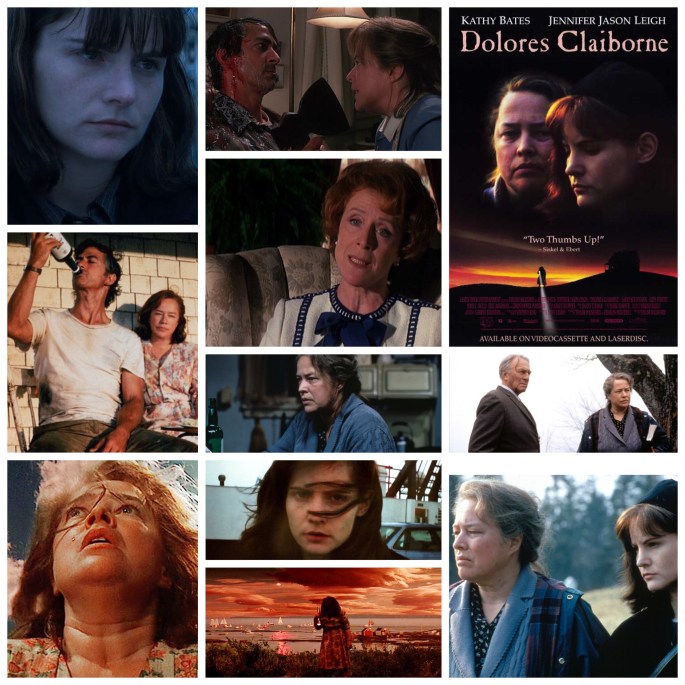
Stephen King’s Dolores Claiborne is one of those ones I held off on watching for years, for whatever reason. It’s an absolute corker though, a well written horror story of the most human kind, finding the darkest corners of the psyche and blowing them up full scale for a morbid effect that’s altogether far more unsettling than any ghosts or supernatural stuff. Ominous grey clouds roll in over picturesque Maine (actually Nova Scotia, the sneaky bastards), as former housewife and in-home nurse Dolores (Kathy Bates in one show stopper) is accused of a heinous crime: murdering her sick and elderly employee, a rich old goat (Judy Parfitt) who’s put her through decades of hard labour. Dolores’s daughter Selena (Jennifer Jason Leigh) returns home from a high profile journalist gig in the big Apple just in time for old wounds to be seared open. As a highly biased Detective (devilish Christopher Plummer) grills her on every aspect of the case, the narrative arcs back to Selena’s childhood years with Dolores and her monster of a father (David Strathairn, well out of his comfort zone and loving it), a tyrannical alcoholic whose ‘accidental’ death casts a heavy shadow on Bates, a pattern to be deciphered deliciously by both Leigh and the viewer. Things are not only not what they seem, but just about as far away from what we’re presented as possible, and when the final curtain lifts, it’s a wicked series of revelations to look back upon. King is undeniably the master of all things horror under the sun, but what he really excels at is how the lines blur between external demonization, the forces that exist out there in the night and the simple fact that humans are capable of despicable acts, whether by design or influence. It’s not a pretty tale, especially during the lurid, violent third act, but what a masterfully told tale it is, with expert director Taylor Hackford pulling at the reins, Danny Elfman undoing his mischievous aesthetic for a score that’s deep and dark, cinematographer Gabriel Beristain probing the inlets and harbours of eastern Canada with a surefire lens that creates atmosphere to spare, and every actor firing on all cylinders, including nice sideline work from Eric Bogosian, Ellen Muth, Bob Gunton, Wayne Robson and John C. Reilly. It’s interesting to observe the contrasts in visual style as well: For the most part, this is a moody, misty locale played dead straight, with no touches of the surreal or ‘out there’. Then in the third act there’s this crazy sequence during an eclipse (which bares uncanny similarities to this year’s gem of King adaptation, Gerald’s Game, I might add) that goes full on horror mode, dials down the realism and reminds us that this is after all a Stephen King story, and at some point things are liable to get weird. This one aims to please and prickle the senses of even the most stoic fan of deranged thrillers, and is a terrific funhouse to get lost in.

-Nate Hill