
K Pax


K-Pax is a beautifully told, warmhearted film that despite being mildly frustrating in it’s persistent ambiguity, is no doubt a better film for never really drawing a line and stepping to one side of it. Kevin Spacey is charming and sad as a mysterious man called Prot. Prot lives in a psychiatric ward and claims to be from a distant planet (named K Pax, naturally) in a faraway galaxy. Jeff Bridges plays the kindly therapist assigned to take care of him and eventually coach him out of his delusions. But are they delusions? Prot boasts uncanny, impossible knowledge of the solar systems and beyond, and won’t budge on a single detail of his story, which is not characteristic of someone suffering mental illness. Is Prot really who he says he is, or simply a man with a past so deeply traumatic that he’s spun this web of science fiction around his pain and nestled into it like a cosmic comfort blanket? This is where the film refuses to delineate or choose, which is either it’s one fallacy or it’s strongest, bravest creative quality, I haven’t decided yet. It’s interesting that they’ve casted Bridges because there’s a noticeable vibe akin to John Carpenter’s Starman here, which he starred in. Spacey and him are pure magic, navigating their scenes of dialogue like a dance of light, showing kindness and compassion in a situation that breeds confusion and fear. The supporting cast is peppered with talent including David Patrick Kelly, Mary McCormack, Aaron Paul, Alfre Woodward and Bill Lucking, but it’s Bridges and Spacey’s show all the way, and they turn the script they’re given into spun gold. Not to mention the crisp, brilliantly lit cinematography courtesy of John Mathieson as well. It’s one thing to come across intelligent science fiction, but when a film has the emotional heft to back up the tech and brains, you get the whole package, and this one delivers. 

-Nate Hill

Wayne Kramer’s Pawn Shop Chronicles 


If Tales From The Crypt were set in the Deep South with more of a pulp crime vibe, you’d get Wayne Kramer’s Pawn Shop Chronicles, a sweaty, sleazy anthology mixup with one legendary ensemble cast and a deliberative effort to disturb the audience at every turn. Segmented into three zany outings, each one connected to a shady pawn shop run by Vincent D’Onofrio and Chi McBride, by a different specific item each time. In the first it’s a shotgun which passes through a few different meth addled hands, as two strung out junkies (Paul Walker and Lukas Haas) foolishly try to rob their cook/dealer (Norman Reedus, but it could have been anyone because you literally never see his face). This is one grease-ball comedy of errors, as these two morons are way too high to actually get anything done, their feverish efforts culminating in a noisy Mexican standoff, an enjoyable bit especially to see Walker playing way against type. The second story is the most perversely extreme, as we see Matt Dillon and his new bride buying a wedding ring from the very same shop. Suddenly he recognizes another ring that belonged to his missing ex wife and gets all determined to track her down. This leads him to the home of clean cut yuppie Elijah Wood, who of course is anything but innocent and one ups his depraved character in Sin City, no easy task if you’ve seen that film. Speaking of one upping, director Kramer seems to be trying to outdo himself and churn out a story more sickening than the infamous ‘Hansel and Gretel’ sequence in his crime masterpiece Running Scared. While not quite as effective as that, this midsection will make many squirm and have you nervously eyeing both the door and the spot on the seat in front of you where a barf bag should be. The third and silliest tale sees Brendan Fraser as a sad-sack Elvis impersonator who can’t hold down a gig. It’s odd because this sequence is sort of pleasant even, Fraser being his usual affable self makes you feel vaguely comforted after the heinous happenings in the previous Matt Dillon bit. I wish I could rave about this flick, but there’s a few inconsistencies; some of the writing is shallow and disengaged, and in other spots it tries to hard to be shocking, while in Running Scared, for example, that just came organically somehow. However, it’s never short on entertainment value and you certainly won’t forget it anytime soon after. Plus there’s even more actors in the impressive lineup including DJ Qualls, Pell James, Kevin Rankin, Sam Jennings, Matt O Leary, Michael Cudlitz, Ashlee Simpson and Thomas Jane as a mysterious cowboy apparition. The very concept of a southern themed, vaguely horror anthology set around a pawn shop is brilliant though, and this almost seems ripe for an episodic streaming pickup, via Netflix or the like. 

-Nate Hill

Immortal: Ad Vitam


Immortal: Ad Vitam is comic book based high fantasy that wasn’t handed a budget big enough to sustain it’s visual dreams, and sadly as a result is the oddest looking thing ever, like a cross between a screensaver and an early 90’s video game cut scene. Set in some distant surreal future where ancient Egyptian gods (who may just be extraterrestrials) rule over a stylized New York City full of mutant humans, it’s a striking yet incomplete vision. When god Horus is sentenced to die, he descends from a giant floating pyramid in the sky and searches for both a male human host to carry his essence and a female one to bear a child, continuing his holy lineage in case he gets caught. Or… something like that, it’s a weird ass movie. German actor Thomas Kretschmann plays Nikopol, a prisoner who escapes cryo-incarceration after a ward malfunction, now on the loose and playing host to Horus, who’s thoughts he can hear in his head. A rogue doctor (Charlotte Rampling) has discovered a girl (Linda Hardy) she deems a genetic anomaly, also catching Horus’s attention. Now, the creator of the comic book, Enki Bilal, is also credited as director and seems to be adapting his own work, but it’s a shame that he didn’t strive for proper funding in order to sell the visual effects, because as it is now I can’t even give the film a decent rep simply based on the kindergarten level CGI that permeates the whole thing and pulls you right out of the story. It’s sad because the story has such promise, it’s really a creative blast with some unique ideas, and the human actors hold their own, especially Kretschmann, but they’re afloat in a pixelated, ill rendered botch-job of a visual palette and it’s quite a drag to have to sit through. Some of the cityscapes look reasonably polished, but as soon as we zoom in and see gods or human/animal splices walking around it’s cringe time. I will say that effects aside they’ve created a terrifically eerie atmosphere though, truly otherworldly, dreamy Blade Runner style aura that helps quite a bit. Perhaps one day they can go back with money, a team and fix all the potholes so one can truly enjoy this potentially great film. Until then, it’s a bit hard to take seriously as a whole. 

-Nate Hill

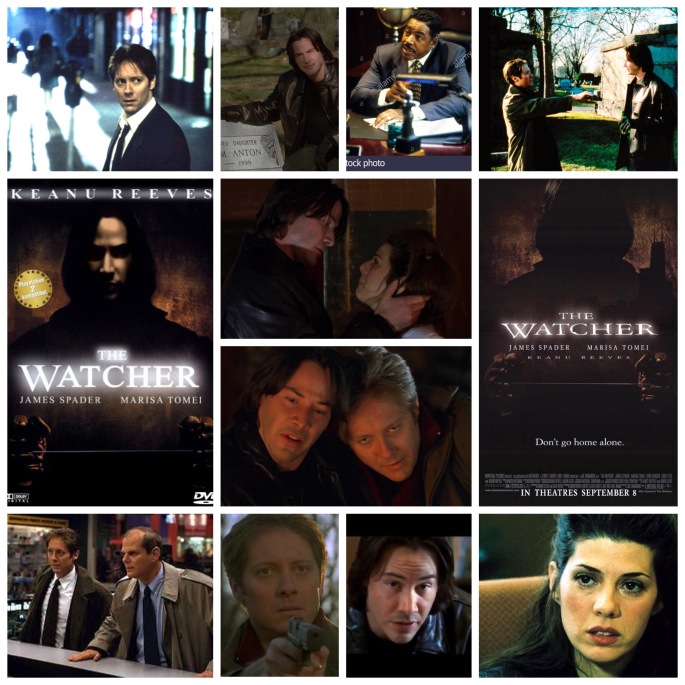
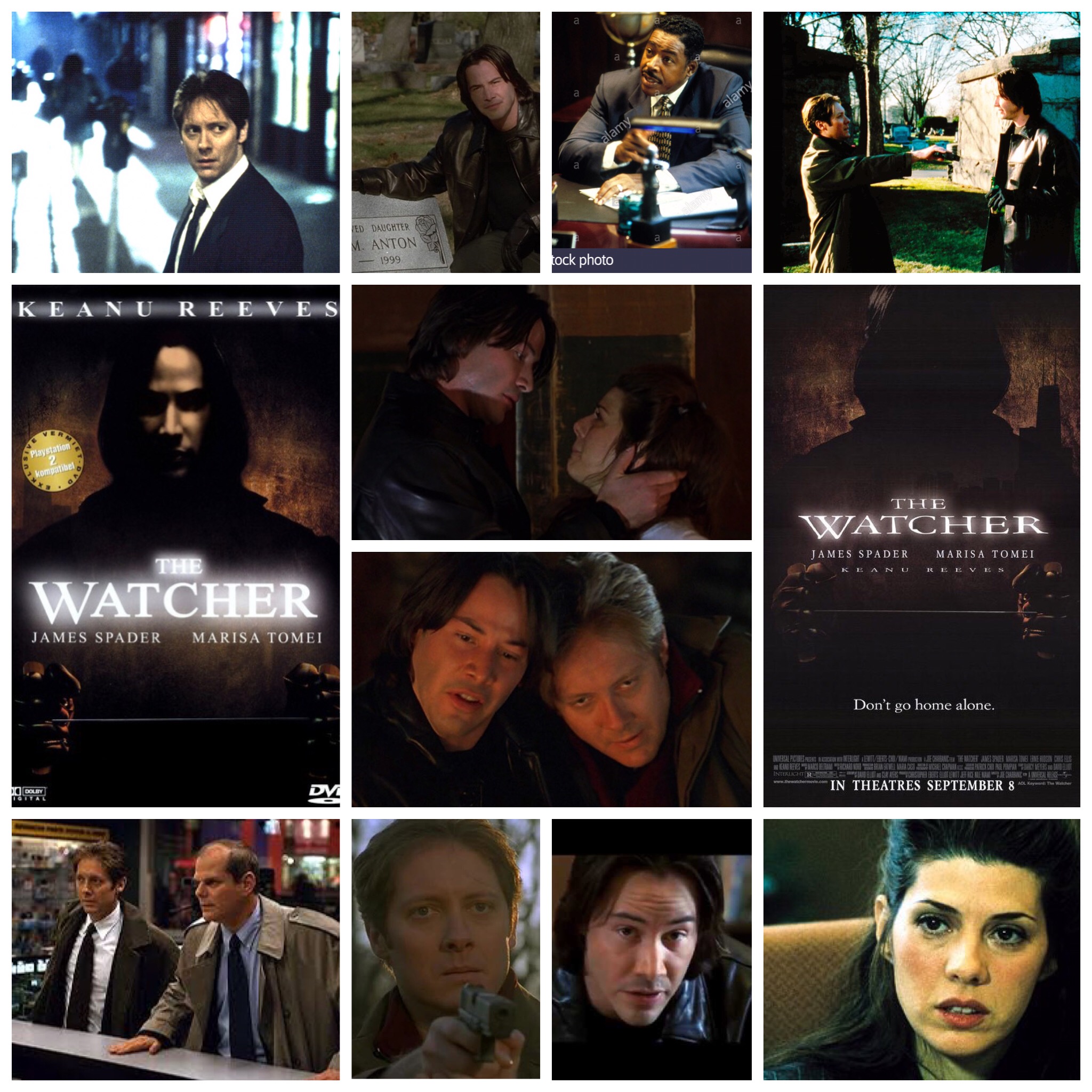
The Watcher


A prevailing thought while viewing The Watcher was that Keanu Reeves is an odd choice to play a lone wolf serial killer, but he actually suits it pretty well. The film itself is muddy and middle of the road, pitting haggard big city cop James Spader against Reeves’s beast who takes extreme pleasure in taunting him at every turn. This gets so bad that poor Spader has a breakdown, loses all hope and moves to a different city half across the country. Reeves just can’t seem to quit the game though, and follows him right over there for more murderous shenanigans. It’s your classic 90’s cop vs. killer tale, and for the most part it’s not bad. The bleak, nocturnal nightscapes help Reeves creep around and nab his victims as well as provide an oppressive urban atmosphere. It’s nice to see casting like this as far as the villain is concerned; so often these killers are played by eccentric, freaky looking character actors or go-to antagonist players, but by casting a golden boy leading man like Keanu they’ve upturned the trend and made the character more striking. Also, a chiselled babe like him is far more likely to believably lure off girls than some wild eyed, Gary Busey type you’d usually find here. Points for that too. The additional players add class, including Chris Ellis, Ernie Hudson and Marisa Tomei. This one won’t go down in history simply because it’s in dime-a-dozen territory. There’s just too too many cop/killer films from back then, and if one of them doesn’t have a key quality to make it stick and endure, it’ll fade into obscurity, like Reeves receding back into the inky night after a fresh kill. It’s not bad in itself though, if mostly just for him and the urban ambience he stalks through. 

-Nate Hill

B Movie Glory: Progeny


What do you get if you cross Rosemary’s Baby with The X Files? 1998’s Progeny, or something like it anyway. Surprisingly thoughtful, restrained and adept for a B movie, it’s got a tightly wound little story about a human woman (Jillian McWhirter) who is impregnated by extraterrestrials that are tinkering around with our biology for who knows why. Her husband (Arnold ‘Imhotep’ Vosloo) is at a loss and doesn’t know where to turn as her condition gets progressively more… icky. Help comes in the form of two kindly doctors (Lindsay Crouse and Wilford ‘Diabeetus’ Brimley) and a UFO-ologist played by an unusually laid back Brad Dourif, but will their collective effort be enough to save her life, remove whatever being is in her womb and escape the attention of the aliens for good? Browsing the shelves this looks like a full on schlock-fest based on the cast and general vibe, but it’s something a bit more tasteful that takes itself just seriously enough to separate it from the mass of junk in this arena. Don’t get me wrong, there’s some slick scares and a few gooey wtf moments, but they’re used with a modicum of discretion and as such feel earned, always taking a backseat to the actors who give the human drama weight. Great little forgotten sci-if/horror. 

-Nate Hill

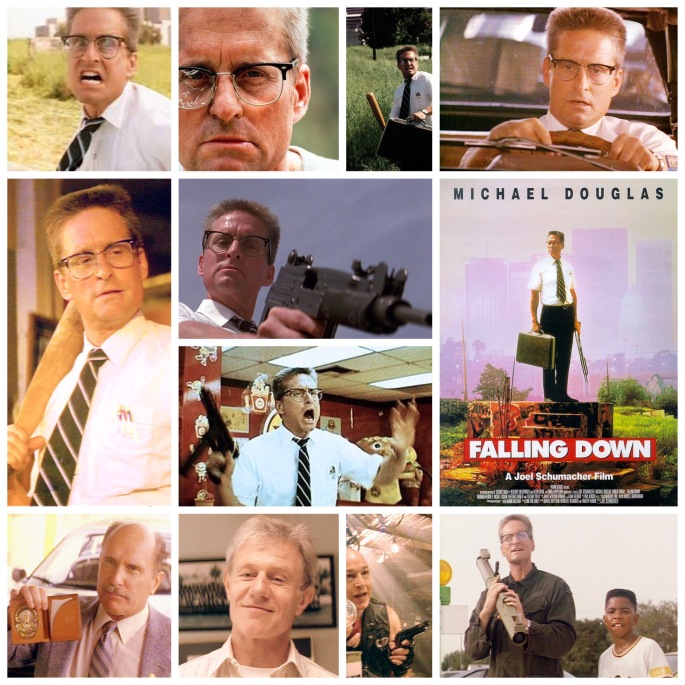
Joel Schumacher’s Falling Down


Everyone’s had the moment where they’re at the absolute end of their rope and feel like taking drastic or violent action against whatever is grinding your gears. Whether it’s a hot day in horrendous rush hour traffic, a particularly irritating lineup at Starbucks or an especially dense customer service worker, you just feel like saying ‘fuck it’, and decimating the place with anything you can lay your hands on. In Joel Schumacher’s Falling Down, Michael Douglas does just that on a sweltering LA summer day. His character, who remains nameless save for the moniker ‘D-Fens’, is a business man on his way home who just… snaps. Throwing a tantrum on the LA overpass, he quickly loses it, arms himself with a high velocity shotgun and proceeds to vet out every mundane annoyance, pet peeve and irksome scenario he can find. Whether it’s brutal catharsis he’s looking for, a cure for the doldrums of daily life or simply raging against that emptiness we all feel deep down, he keeps his reasons to himself, and let’s every other aspect of his character run wild. Holding up a fast food joint because they stopped serving breakfast five minutes too early, massacring homeless punks who foolishly harass him, his crusade sprawls across the valley and beyond, a righteous purge of monotonous, infuriating trivial concerns that soon has the attention of LA’s finest in the form of veteran Detective Robert Duvall and his crass, obnoxious lieutenant (Raymond J. Barry). It’s also revealed that Douglas’s personal life leading up to his break was rocky at best, with a job going downhill and hints of violence towards his wife and daughter. Quite drastic is the meltdown though, but it’s not quite a character study, he’s almost used more to pick away at the decays in society, a tool for exposing tears in the cloth we take for granted every day. His story is kind of like when you load up Grand Theft Auto on your console and completely ignore the missions in favour of a personalized war on anything that moves. His war happens to be against those little nagging inconveniences that seem like no biggie until they add up and you just go postal. It’s darkly funny stuff, but quite harrowing when you look at the big picture and the actual damage he’s doing to the city. Douglas is courageous here, it takes reckless abandon to go for a role like this, and he owns it in crew cut, well dressed fashion, a costume choice that absurdly clashes with the big metal cannon he totes. The film never takes sides either, recognizing both the bizarre consumerist nightmare we wade through everyday and it’s ability to dampen your spirit as well as the sickening extremes he goes to, challenging you to walk a line and look at both sides. Hard hitting stuff. 

-Nate Hill

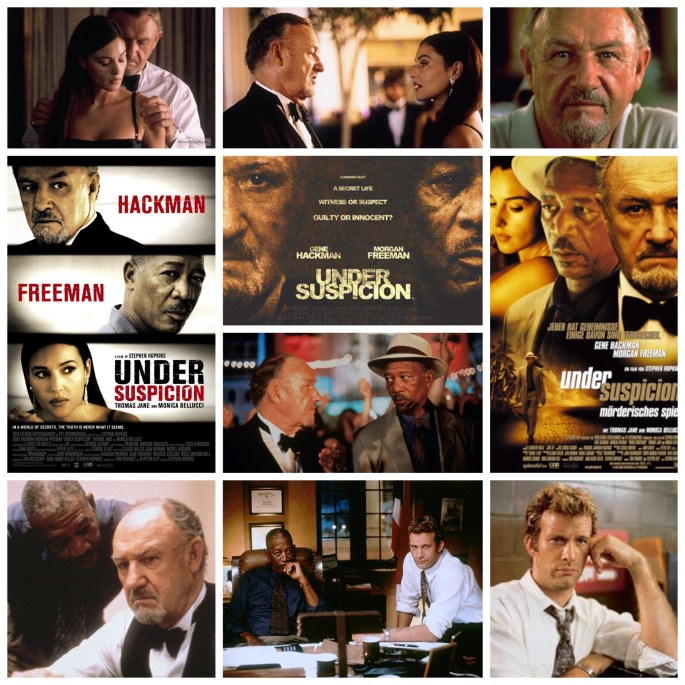
Stephen Hopkin’s Under Suspicion 


If Stephen Hopkin’s Under Suspicion were a meal I was served at a restaurant, I would throw it against the wall, flip the table, walk promptly back to the kitchen and knock the chef out cold. It’s a hollow, pointless piece, like digging into a pie that’s put before you only to find that under that layer of crust there’s no filling, only air. The premise is promising: wealthy businessman Gene Hackman who has political ties is grilled out of the blue by longtime friend and police detective Morgan Freeman and his partner Thomas Jane, regarding the murder of a thirteen year ago old girl in the slums of San Juan. Hackman is a successful, assured alpha socialite, and these type of men always have some type of close guarded secret which comes to light. Freeman is a dogged working man who probes him until it almost seems personal rather than routine. Sounds terrific, right? You would think. The acting is of course fine, as these guys couldn’t miss a beat if they tried, but the way the story is set up just rips the viewer off blind. These two thespians soar spectacularly, but their duel is structured around purposefully unreliable flashbacks, beating around the bush and oodles of red herrings that treat the audience like sixth graders watching a low rent magician at a birthday party. Hackman has a pretty trophy wife (Monica Belluci, underused) and a host of personal demons that he projects onto Freeman’s simple blue collar rhetoric like a defence mechanism. None of these narrative fireworks can save it though, especially when an ending rolls around that is the very definition of a letdown, through and through. In an attempt to explore the forces that drive a man to the edge of admitting guilt whether he is responsible or not, the filmmakers miss the boat on providing a focused treatise that takes itself seriously with these potentially fascinating themes, instead settling on an overcooked, ultimately vacant that could have been so much more.  

-Nate Hill

Matthew Bright’s Freeway


Matthew Bright’s Freeway is the most fucked up, disturbing take on the Little Red Riding Hood tale you’ll find, and the only time Reese Witherspoon totally cut loose, got down n’ dirty to truly give a performance straight from the gutter. You can’t spell gutter without gut, which is the primary place this film operates from, gag reflex and all, and the same goes for her wickedly funny firebrand of a performance. The filmmakers have taken every minuscule plot point from Riding Hood and deliberately thought up the most disgusting and deplorable ways to drag them through the mud, churning forth a film that is so sickeningly perverted that you can’t take your eyes or ears off it once, kind of like a fresh, glistening pile of roadkill on the interstate that induces retching, yet is compelling in a sense, even attractive in its ability to morbidly hold your attention by being something that’s outside the norm. Witherspoon is Vanessa Lutz, a trailer park baby who’s been dealt a rough hand in life on all fronts. Her kindly boyfriend (Bokeem Woodbine) is tied up in dat gang life, her mom (Amanda Plummer) is an unstable slut-bag and her stepdad (Michael T. Weiss) has a case of… wandering hands, shall we say. Vanessa picks up and leaves town to go visit her grandmother, but no sooner does she hit the road, she’s tossed from the frying pan right into the fire when she’s picked up by psychiatric counsellor Bob Wolverton (Kiefer Sutherland). Bob is your classic clean cut, mild mannered yuppie, save for the fact that he also happens to be a dangerous pedophiliac serial killer, and she’s now in his car. Vanessa is a force to be reckoned with though, as Bob soon finds out, and the two of them wage sleazy war all over the state, until one or both are either dead or incarcerated. It’s so much heinous mayhem and depravity that one reaches saturation point and just had to go with the grimy flow, either that or walk out of the theatre, but that’d make you a bitch. Witherspoon and Sutherland are having a howling good time, each sending up their hollywood image in the type of roles that John Waters or Wayne Kramer would think up some lonely night. Bob is the worst type of offender, and one has to laugh when he’s wheeled into court, facially deformed at the hands of Vanessa, and she proceeds to savagely berate him on his looks, dropping insults that you can hear whistling through the air, delivered like gunshots by Witherspoon, then only barely twenty years old, who has never been this good in any film since. Funnier still is Wolverton’s naive wife looking on in aghast horror as only Brooke Shields can do with that soap opera stare. Other talents include Dan Hedaya as a stoic Detective, Conchata Farrell, Tara Subkoff and Brittany Murphy as a creepy cell mate Vanessa meets while in holding. Anyone claiming to be a fan of Witherspoon who hasn’t seen this just needs to take the time and do so, she’s just the most foul mouthed, violent, adorably profane trashbag pixie you could ever imagine, especially when onscreen with Sutherland, who has never been more evil or intimidating. This is one fairy tale you wouldn’t show the kids, but it still stands as my favourite cinematic version of Riding Hood to this day. There’s a sequel out there somewhere too, but I can’t weigh in on it as I haven’t had the time so far to check it out. I doubt it reaches the heights of sordid delight achieved here though. 

-Nate Hill

Jonathan Glazer’s Sexy Beast


Whenever someone asks me to provide the showcase example of the actor’s process done as close to perfection as one can get, I direct them towards one earthquake of a performance: Ben Kingsley in Sexy Beast. It takes a considerable amount of work to fully realize a character, bring them to life, make them seem genuine, lifelike and idiosyncratic so as to win over the viewer and elicit the modernized ‘putting down the iPhone to engage with full attention’ reaction’, but Kingsley’s rabid London hoodlum Don Logan is just that creation, and then some. He’s not even the lead character either, yet royally steals the film, which earned him an oscar nomination. The film itself couldn’t be more brilliant either, cooked up via a stinging, gorgeously verbose script by Louis Mellos and David Scinto, glossy wit from director Jonathan Glazer and actors who go the extra mile to give a fairly arch story some tangible depth. Ray Winstone, reliably superb, is Gal Dove, a boisterous ex criminal who has retired to sunniest Spain with his sexy wife (Amanda Redman) and best friend (Cavan Kendall). Retirement is tricky for someone with Gal’s past though, and soon his past barges through the front door in the form of Kingsley’s Logan, a terrifying bald beast of a man that would give any sensible person cause to immediately run and hide in the nearest cupboard. From the moment he shows up, heralded by bad dreams that plague Gal and a literal boulder that cascades down the hill into his villa pool uninvited (hello metaphor), things go from worse to hellish. Logan isn’t the type of man to take no for an answer, and is a complete and total nightmare to deal with even before Gal tries to shut him down. Logan wants him for a job in London, organized by shark of a mob boss Teddy Bass (Ian McShane, creepy as all hell), but Gal has no interest leaving the sunny shores and just wants the nutter out of his house. Any time Kingsley is on screen you can feel the tension crackle in the air. He’s the unvarnished hyena to Winstone’s aloof, relaxed teddy bear, a force to be reckoned with and feared. His use of profanity lands like a backhander from Dwayne Johnson, his body language is erratic enough to induce seizures and that cobra gaze could melt adamantium. He’s the penultimate antagonist and raises the stakes to the stratosphere, berating every person in sight and maintaining a cold, detached veneer that’s more than slightly disconcerting. Not to mention the fucker talks to himself in the mirror, which alone is cause for worry. While the story takes place in our world, there’s an off kilter, demonically surreal undertone that derails genre conventions. The artfully dirty, near poetic screenplay, stark visions of some sort of evil Chernobyl rabbit thing, lurid editing transitions, whatever it is it’s hard to pin down or describe, but you feel miles from your comfort zone and ever so slightly removed from our solar system while watching this odd, scary, compelling and uniquely peculiar piece of work. 

-Nate Hill

Robert Rodriguez’s Desperado 

Robert Rodriguez’s Desperado is the original south of the border shoot em up bloodbath, bar none. I’m aware it’s a sequel/remake of Robert’s breakout debut El Mariachi, but the now legendary style and brutality he cultivated started to blossom here in the Mexican desert with scowling Antonio Banderas and his guitar case packed with heavy artillery. The aesthetic coalesced into something measurable here, whilst in Mariachi we only saw fits and starts. Here the tone is solidified and paves the way for the magnum opus that is Once Upon A Time In Mexico, my favourite Rodriguez flick. It all starts with the image of Banderas sauntering into a scumbucket cantina, full of sweaty machismo and smouldering angst, laying waste to the place with more phallic firepower than the entire wild Bunch. It’s a time capsule worthy sequence that demonstrates the pure viscerally intoxicating effect that the action film has on a viewer, when done as well as it is here. Narrated by wisecracking sidekick Buscemi (Steve Buscemi, naturally), Banderas positively perforates the place, fuelled by the internal furnace of revenge, shrouded in the acrid scent of gunpowder and awash in tequila delirium. As soon as this sequence blows past, the credits roll up and we’re treated to a Mariachi ballad sung by Antonio himself, belted out with his band to ring in this hell-beast of a movie. Together, those two scenes are some of the very, very best opening sequences you can find out there, timelessly re-watchable. The rest of the film pulls no punches either, as we see El leave a wanton gash of carnage in his wake across Mexico, on a vision quest of violence as he works his way up the ranks of organized crime, starting with slimy dive bar owner Cheech Marin. Quentin Tarantino has a spitfire cameo, rattling off a ridiculous joke before El steps into yet another bar and the shit (as well as the blood) hits the fan. His endgame target is crime boss Bucho, played with terrifying ferocity by Joaquim De Almeida. It’s hard to picture an angrier performance than Banderas’s before Almeida shows up, but this guy is a violent livewire who’s not above capping off his own henchman like ducks in a row, puffing on a giant cigar and casually blowing the smoke in his concubine’s face mid coitus. El has a love interest of his own too, in the form of ravishing, full bodied Carolina (Salma Hayek). Hayek is a babe of the highest order, and their steamy candle lit sex scene is one of the most full on ‘jizz your pants’ rolls in the hay that 90’s cinema has to offer. This is an action film to the bone though, and they’ve scarcely mopped up and caught their breath before he’s forced to dispatch another horde of Bucho’s degenerates in high style. One has to laugh a bit when a guitar case becomes a full on rocket launcher during the earth shattering finale, but such are the stylistic dreams of Rodriguez, a filmmaker who is never anything short of extreme in his work. As if the guns weren’t enough, Danny Trejo shows up as a mute assassin who like to hurl throwing knives at anything that moves, and it’s this Baby Groot version of his Machete character years later that comes the closest to punching El’s ticket. The stunt work is jaw dropping as well, a tactile ballet of broad movements, squib armies that light up the screen, accompanied by gallons of blood that follows the thunder clap of each gunshot wound like crimson lightning. It’s a perfect package for any lover of action, romance, action, darkest of humour, action, oh and action too. When discussing films that have held up in years or decades since release, this one is not only a notable mention, it’s a glowing example and a classic that has just aged gorgeously.

-Nate Hill