Cop Car: A Review by Nate Hill

image

Cop Car is the sort of callous thriller that socks you right in the gut, then kicks you in the nuts before you’ve had a chance to grab a breath. It’s premise is simple: on the quiet plains of rural Colorado, two young lads wander about aimlessly, practicing their cuss words and trying to impress one another with various mischief. All of a sudden they stumble on a seemingly abandoned cop car in a secluded glen. What do they do? They do what any respectable, rational one of us would, of course. They steal the thing and careen about across the terrain, before taking off down the highway. It’s just their luck that the vehicle happens to belong to Sheriff Kretzer (Kevin Bacon) an evil son of a bitch who’s just about as far from the law as one can get. He was out there doing dark deeds in the bush, and arrives back to find his cruiser gone, reacting with an amusing fight or flight tantrum not unlike that of a cornered coyote. Bacon has a canine look to him as well, amplified by the fact that he’s in his late 50’s and is looking all brittle and scary as hell these days. He panics and goes on a mad yet calculated hunt to find the car before his dirty little secrets are flung about the county and his jig is up. Employing MacGyver worthy tricks, chilling cruelty and a bone rattling, hyena esque cackle, he hunts the two youngsters down relentlessly, and they elude him through sheer dumb luck. Speaking of dumb, the kids are remarkably stupid even for ten year olds, and it’s tough for the film to draw forth any sympathy from us by any means other than the fact that they are children, run disastrously amok. They’re forced not only to deal with Bacon, but a sleazeball who they find bloodied up in his trunk, played by the ever entertaining Shea Wigham. He has an exchange of dialogue with the boys that will seperate those with a dark, messed up sense of humour from those without, and I was laughing up a storm. The film reminded me of similarly vehicular themed thrillers like The Hitcher and Duel, and can certainly be put on that same pedestal of quality. Blood, burnt rubber, sweat and tears abound here, and what’s more, the thing makes sense in its turn of events. So many thrillers erupt into bombastic and unbelievable plot turns that serve shock value or simply exist to be a showcase piece for the trailer. This one gallops along a series of events that are stacked up like a nasty Jacob’s Ladder of fate, each step of the way a logical piece of the story, nothing brashly jumping at us or taking us out of the story. Admirable traits, not found too often these days. Watch for Camryn Manheim and an invisible Kyra Sedgwick as well. A lean, mean little flick, guaranteed to raise a pulse and steal a few well earned, guilty grins from you, as well as impress you with it’s competence in execution, and restraint in keeping things fast, to the point and mean to the core.

The Phantom Of The Opera: A Review by Nate Hill

image

I’ve never seen The Phantom Of The Opera on stage, so so I have nothing to really compare Joel Shumacher’s 2004 cinematic vision to, but I know that it was one of the most glorious and formative theatre going experiences for me, so much so that I think I probably went and saw the thing like eight times when it came out. I had never heard a single of Andrew Lloyd Webber’s music before then and had not a clue as to what the story was. My extant of Phantom knowledge at that point was only of a chalky faced, emaciated Lon Chaney Jr. skulking around a silent black and white frame.
   I was cosmically blown away by the magic of it, the story, the songs, the rich production design and especially the two elemental lead performances from Gerard Butler and Emmy Rossum. Again, no idea how the stage actors compare to these two, but Gerard and Emmy’s take on the Phantom and Christine are now scorched into my psyche as the definitive versions. Butler nails the formula perfectly: scary when he needs to be, tender when he wants to be and always a formidable force of dark romanticism and tragic damnation. Rossum is like an angelic comet as Christine Daae, with the best singing voice of the cast and a presence that will bring the viewer to tears and make you instantly fall in love with her.
   Christine works in the prestigious Opera Populaire as a chorus girl, until she is shunted into the limelight when their prima donna of a star singer (a flat out brilliant Minnie Driver) walks off in a huff. Rossum then proceeds to move heaven and earth with her rendition of ‘Think Of Me’, accompanied by some of the most incredible camera work I’ve seen, sweeping through the elegant halls along with her crystal clear voice.
   The mysterious Phantom watches her from dark alcoves and hidden buttresses, entranced by her talent and brimming with love sickness. He has love in him no doubt, but we all know there is hate there too, catalyzed by an unfortunate deformation and a cruel past that has left him in exile. He basically runs the show from the shadows though, with utmost class and heaps of theatrical menace.
   Christine also has eyes for her childhood friend Raoul (Patrick Wilson). Wilson is the only player who seems a bit out of his depth, perhaps because he hadn’t yet found the assurance in stride and charisma he has in his roles these days. Miranda Richardson is excellent as ever in an understated turn as Christine’s aunt and teacher. Jennifer Ellison is her friend and fellow singer Meg. Ciaran Hinds and Simon Callow are inspired as the comic relief duo who purchases the opera house, and watch for Kevin R. McNally as well.
  Every song is a winner, every frame composed of grandiose ambition and every ounce of vocal strength thrown forth by the cast, particularly Rossum and Butler who go a mile and then some, holding their own individual presence as well as pulling off the sorrowful chemistry between the Phantom and Christine. There’s a few key sequences that should go down in the history books on how to stage a scene, including a dazzling masquerade ball, a wintry swordfight in a cemetery, the aforementioned Think Of Me, and my personal favourite: a mournful black and white prologue set decades after the story, kicking the film off with a rousing flourish of motion and music. I’m sure there are scores of people who swear by the stage production and want nothing to do with this, or simply weren’t wowed to the levels I was. That’s fine. For me though, I don’t see any version ever topping this jewel of a film, and the classic two disc dvd sits proudly on my shelf, daring any other rendition, cinematic or otherwise to give it a run for it’s money.

LAND OF THE DEAD – A REVIEW BY J.D. LAFRANCE

land of the dead blu-ray7

The 2000s saw a resurgence in the zombie film with the good (28 Days Later), the bad (Resident Evil) and the funny (Shaun of the Dead), but all of them pale in comparison to George A. Romero’s trilogy of zombie films. The first two have been remade already, most significantly with Dawn of the Dead (2004), and both failed to build on or even recapture what made Romero’s films so great in the first place. They seem to only be in love with the gore and miss (or just didn’t understand) the socio-political message of them. Romero returned with a zombie movie that was years in the making and was well worth the wait.

As with his other zombie films, Land of the Dead (2005) is a stand-alone story but looks like it could exist in the same universe as the others. The zombies have completely taken over and the dwindling human population tries desperately to hold onto what little land they have left. A small, heavily armed group venture regularly into zombie territory to scavenge whatever supplies they can find and then return to an island complex known as Fiddler’s Green. The island has been heavily fortified by the military who rule with complete control with rich businessman Kaufman (Dennis Hopper) as their leader.

Society has degraded even further since Day of the Dead (1985). The wide gulf between the rich and the poor is even more pronounced. In the slums of the city people can get their pictures taken with captive zombies or shoot them with paintball guns. At one point, they even throw a woman (Asia Argento) into a steel cage with two zombies for sport. The rich people aren’t much better as represented by Kaufman who is corrupt and amoral enough to make money off of and sacrifice his own people. It’s as if Romero’s saying that it wouldn’t be so bad if the zombies wiped us out. Look at what we’ve become.

The glimmer of hope is represented by Riley (Simon Baker), the leader of the scavengers and his sidekick and ace sharpshooter Charlie (Robert Joy). Like the protagonists in Romero’s Dead trilogy and Knightriders (1981), Riley is a reluctant leader who is tired of this corrupt world and is quietly planning an escape route to a more natural way of life. However, this is disrupted by another member of his group, Cholo (John Leguizamo), who represents the dissenting voice. He’s only in it for the money and has a secret pact going with Kaufman. However, when Kaufman rips off Cholo, the mercenary goes rogue and takes off with Dead Reckoning, the island’s heavily armored vehicle. So, Kaufman cuts a deal with Riley to find Cholo, kill him and bring back the vehicle.

To make matters worse, the zombies are getting smarter as exemplified by Big Daddy (Eugene Clark) who not only learns how to use a gun but is also able to organize legions of the undead. It’s nice to see a return to the slow moving zombies that we all know and love, but with a definite upgrade in the intelligence department while the humans continue to regress, embroiled in more bickering and in-fighting. After all, the zombies are the ultimate have-nots in this world. They are clearly tired of being shot at and exploited by the living. It’s almost as if Big Daddy is some kind of zombie Che Guevara leading an undead revolution that wants to take down corrupt, rich capitalists. In fact, Land of the Dead can be read as Romero’s critique of the George Bush administration with Kaufman as a Donald Rumsfeld stand-in.

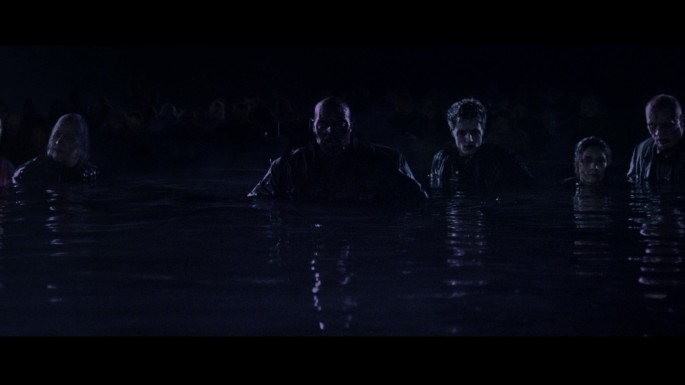
Romero has crafted a very smart horror film, which is something of a rarity these days what with all of these lames remakes littering the landscape. Land of the Dead has all of the requisite gore (and the unrated version has even more) while actually trying to say something. There are plenty of powerful images, like the undead rising out of the water at night (a nice nod to Carnival of Souls, one of the films that inspired Night of the Living Dead) or zombies crashing through the posh apartment complex and feasting on the wealthy. Like with his other zombie films, Land of the Dead is a commentary on the times in which it was made. And for that alone, his movie is a refreshing breath of fresh air.

HBO’s Vendetta: A Review by Nate Hill

image

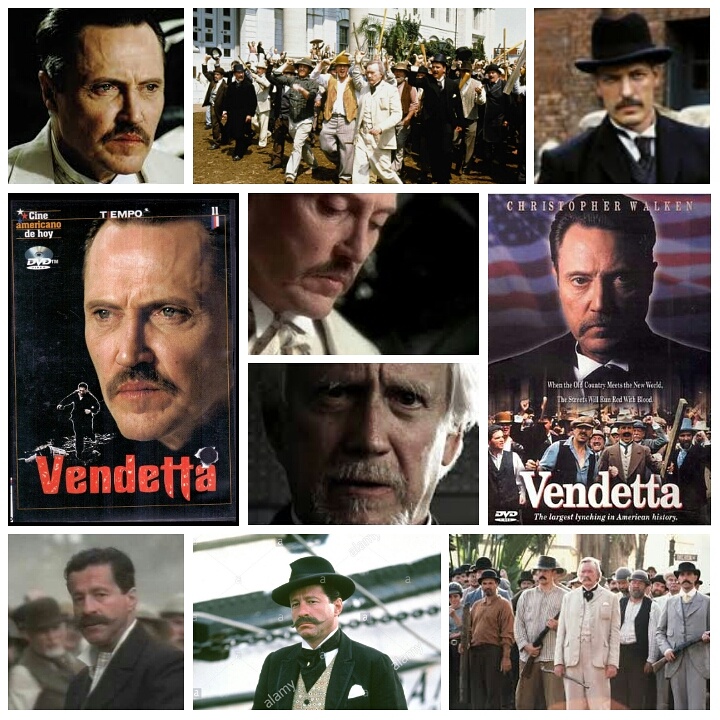
Vendetta is a tough film to watch without feeling sadness and outrage, but such is the stuff that HBO churns out, honest pieces of history that sting you with their refusal to honey coat or gloss over the nasty details (I’m looking at you, History Channel). This one takes place in 1890 New York City, a time of mass Irish and Italian immigration which spurred a ton of unrest among those already settled and raised in that area. Everyone is fighting tooth and nail for a piece of the pie and a chance to feed their families, and the ones with a bunch of pie just greedily want more. The influx of Italians is a cause for insidious worry for James Houston (Christopher Walken), an obscenely wealthy and deeply corrupt piece of shit. He’s joined by equally nasty William Parkinson (Luke Askew), and Mayor Joe Shakespeare (Kenneth Welsh), as the trio cook up an evil scheme to implicate a few young Italian men in the mysterious death of a sympathetic and kindly Irish police chief (Clancy Brown). This sets in motion a tragic outbreak of riots and and angry acts of violence against the Italians. Even their union representitive Joseph Macheca  (Joaquim De Almeida) cannot bring peace or stop what Walken and team have started. You may think why make a film of this, as it heads straight for the bleakest of resolutions, but I think it’s important to shine a light on even the darkest patches of history, in order to understand the levels of deception and human cruelty so that we may see it coming before it’s too late next time around. This was a terrible, terrible event and the film hits you square in the face with it’s blunt truth and unwavering honesty. Kudos to HBO fpr taking it on. Watch for the late Edward Herrmann and Bruce Davison as rival lawyers in the chaos.

Richard Donner’s Timeline: A Review by Nate Hill

image

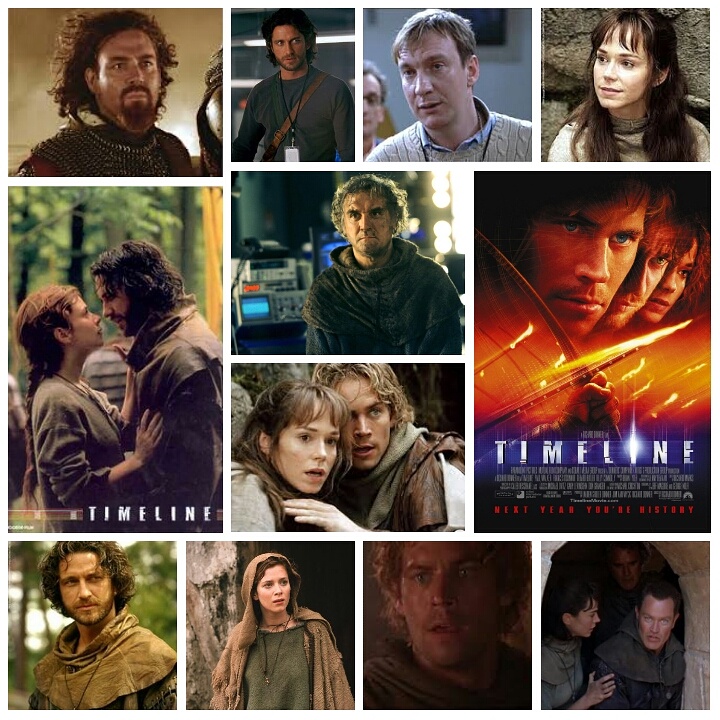
I really enjoyed Richard Donner’s Timeline, despite some bad reviews and an awful reputation. It’s based on a book by the great Michael Crichton, and centers around what is one of the most fascinating and enjoyable premises out there: time travel. There’s nothing like a time travel flick, in any way, shape or form. I’m a sucker for them. This one starts off with an archeological dig somewhere in England, leading to the abrupt discovery of forces that allow a wormhole in time to be used, sending people back to the middle ages. Paul Walker discovers that his researcher father (Billy Connolly) has made the leap back in time, and may be in trouble. Along with his sort of girlfriend (Frances O Connor) and his father’s friend (Gerard Butler) they venture back to find him, and of course everything goes wrong. They land smack in the middle of a skirmish between a poncy English lord (Michael Sheen) and the leader of the French faction (Lambert Wilson), with no identities, nothing to defend themselves with and not a clue what to do. Back home in our time (or, rather, 2003. Time flies, don’t it?), the head of the program responsible for harnessing the wormhole’s power (a slimy David Thewlis) is a greedy prick who can’t really be trusted with the technology, prompting the suspicion of his assistant (Matt Craven). Walker, Butler and company are now faced with a full on castle siege that’s quite the dandy set piece, forced to take up arms and fight for their lives as well as a way home. Walker is amusingly out of place in a medieval setting but it works considering the plot. Butler is terrific, bringing his old world style to a character arc that is lovely to see play out. Connolly, although not in the film that much, lights up the screen with his genial kindness and likability that he brings to every film. Neal McDonough, Anna Friel and Marton Csokas also costar. It’s simply an adventure piece that doesn’t think logistics too much, and in turn doesn’t require you to do so either. Underrated stuff.

B Movie Glory with Nate: Beowulf

  
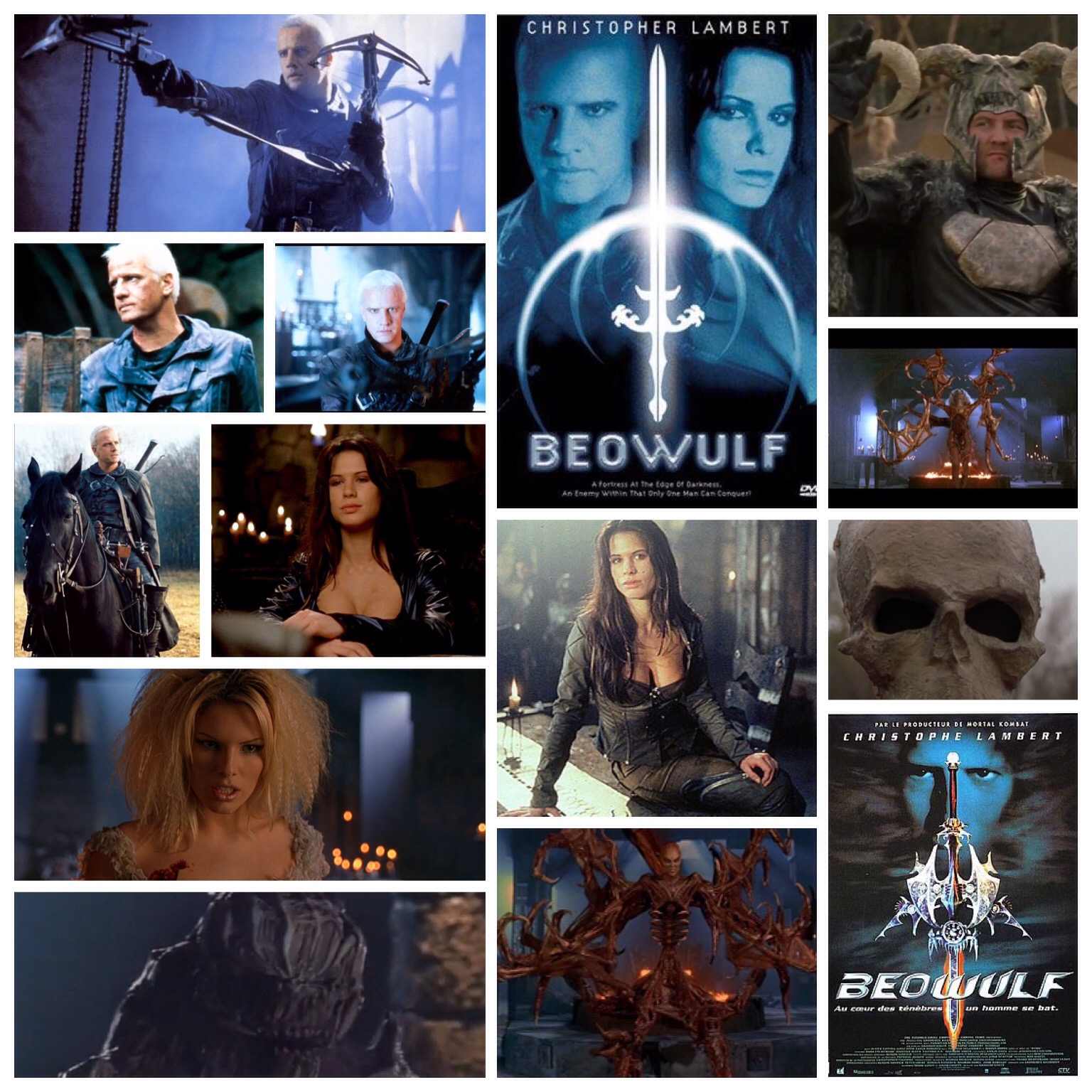
There are three main films concerning the myth of Beowulf. The best, a wickedly good Robert Zemeckis motion capture version starring Ray Winstone, a lower budget one with Gerard Butler that hovers right around the average mark, and a third one starring Christopher ‘Highlander’ Lambert, and let me tell you this one defies any classification. It’s set in a time that seems like a blend between both past and future, a sword and sorcery realm that’s speckled with steam punk technology and very weird production design that looks post modern, yet not. Beowulf, played by the reliably daffy Lambert (an actor of little talent who has grown on me over the years by his craggy reserve alone), is a lone warrior with a bleach blond hair dye job and some neato gadgetry in his weapon arsenal. I know, it sounds like I’m making this up. Haven’t even gotten to the best part yet, which is the upbeat German techno score that ramps up the Euro feel of the whole thing to soaring heights of absurdity. Despite all that silliness, the film somehow works, and not just as a schlocky write off either. It’s resolve lies dutifully in the firmament of its creative aesthetic, and doesn’t skip a single odd duck of a beat the whole way. The monster Grendel which Beowulf must face off against resembles something of a cross between the Predator and Killer Croc, a scaly, spiky behemoth that rips through the little villages in the region like a tornado of teeth and claws. It’s mother is even weirder: appearing to men in the form of actress Layla Roberts, (who looks suspiciously like a porn star) before morphing into a massive elaborate demon thingy that looks like a final boss from Starfox. Lambert is joined in his fight by sexy warrior Kyra (Rhona Mitra), and led on by King Hrothgar (Oliver Cotton). It’s Beowulf like you’ve never seen before, a Krull esque, beyond the Stars sci-fi rendition that you’ll either be in tune with or won’t, either love, hate or just be super confused by. It’s bonkers, and I love it. 

David Fincher’s Zodiac: A Review by Nate Hill

  
David Fincher’s Zodiac is the finest film he has ever brought us, and one of the most gut churning documentations of a serial killer’s crimes ever put on celluloid. Fincher has no interest in fitting his narrative into the Hollywood box or sifting through the details of the real life crimes to remove anything that doesn’t follow established formula. He plumbs the vast case files and sticks rigidly to detail, clinging to ambiguity the whole way through and welcoming the eerie lack of resolution we arrive at with open arms. That kind of diligence to true life events is far more scary than any generic, assembly line plot turns twisted into stale shape by the writer (and studio breathing down their neck, no doubt). No, Fincher sticks to the chilling details religiously, starkly recreating every revelation in the Zodiac killer case with the kind of patience and second nature style of direction that leads to huge atmospheric payoff and a hovering sense of unease that continues to make the film as effective today as the day it was released. A massive troupe of actors are employed to portray the various cops, journalists, victims and pursuers involved with the killer during the 1970’s in San Francisco, the film unfolding in episodic form and giving each performer their due, right down to the juicy cameos and bit parts. Jake Gyllenhaal plays Rob Graysmith, a news reporter who becomes intrigued and eventually obsessed with the cryptic puzzles which the Zodiac taunts the bay area with by sending them in to the paper. Mark Ruffalo is Charlie Toschi, dogged police investigator who is consumed by the hunt. The third leg of the acting tripod is Robert Downey Jr as Paul Avery, another journalist who takes the failure in capturing the killer a little harder than those around him. The film dances eerily along a true crime path populated by many people who veered in and out of the killers path including talk show host Melvin Belli (a sly Brian Cox) , another intrepid cop (Anthony Edwards), his superior officer (Dermot Mulroney) and so many more. For such an expansive and complicated story it’s all rather easy to keep track if, mainly thanks to Fincher’s hypnotic and very concise direction, grabbing you like a noose, tightening and then letting you go just when you feel like you have some answers. While most of the film examines the analytical nature of the investigation, there are a few scenes which focus on the killings themselves and let me tell you they are some of the most hair raising stuff you will ever see. The horror comes from the trapped animal look in the victims eyes as they try rationalize the inevitability, with Fincher forcing you to accept the reality of such acts. One sequence set near a riverbank veers into nightmare mode. Every stab is felt by the viewer, every bit of empathy directed to the victims and every ounce of fear felt alongside them. It can’t quite be classified as horror outright, but there are scenes that dance circles around the best in the genre, and are the most disturbing things to climb from the crevice of Fincher’s work. They’re nestled in a patient bog of studious detective work, blind speculation and frustrating herrings, which make them scarier than hell when they do show up out of nowhere. Adding to the already epic cast are Jimmi Simpson, Chloe Sevigny, Elias Koteas, John Carroll Lynch, Donal Logue, Pell James, Philip Baker Hall, John Terry, Zach Grenier and a brief cameo from Clea Duvall. I think the reason the film works so well and stands way above the grasp of so many other thrillers like it is because of its steadfast resolve to tell you exactly what happened, urge you to wonder what the missing pieces might reveal should they ever come to light, and deeply unsettle you with the fear of the undiscovered, something which never fails to ignite both curiosity and dread in us human beings.

Zach Snyder’s 300: A Review by Nate Hill

image

Tough. Muscular. Operatic. The very definition of epic. I remember sitting in the theatre during Zach Snyder’s 300 and being just floored and knocked flat on my ass by the violence, spectacle and music on display, and that was just the first ten minutes. It’s a historical war film unlike any other, and like it’s sister film Sin City, it jumps right off the boldly crafted pages of Frank Miller’s novel with all the movement and spirit of a motion picture, while still retaining the fluidity and distinction of a comic book. The sheer force of it will trample your senses into glorious oblivion, whisking you away for two thunderous hours of sound, fury and unrepentant battle. Like any sensation of the week, it gained haters who claim it isn’t the winner everyone’s says it is, or that it hasn’t stood the test of time. They’re either trying to go against the grain to be the ‘cool minority’, or they’re just negative nitpicking nellies. No matter. In 300’s case, they are resoundingly off key whenever I hear them bash it, and just dead wrong. It has stood the test of time, a process I measure by the ebb and flow of my desire to watch older films again and again. I often revisit this one, and marvel at it anew each time. The story follows the battle of Thermopolye, in which three hundred well trained, ridiculously combat savvy Spartan men faced off against a Persian army numbering near a million, led by their arrogent weirdo of a king, Xerxes  (a very scary Rodrigo Santoro). They do this to protect their land and their people, a splinter group of sorts that takes up arms when the Spartan senate refuses to act. The battle is a relentless storm of blood, arrows, decapitated limbs, howling barbarians, wanton carnage and mass slaughter. It doesn’t feel half as savage or heavy as my description sounds though, thanks to the poise and purpouse of the narration penned by Miller, and the extravagant, thought out choreography that includes a whole lot of beautifully satisfying slow motion that has become Snyder’s trademark tool. Love it or hate it, I think it flairs up an action terrifically, especially ones as chaotic and hellbent as these. The Spartans are a wonder to see in action, virile death dealers with a full bore love for the heat of combat and a blatant, cavalier attitude in the very face of death. David Wenham is a force of gravity as Dilios, who provides the rousing narration and kicks ass as Butler’s second in command. Butler makes a commanding Leonidas, his presence everything that you’d want to see in a king, from nobility, to necessary belligerence, to an overwhelming love for his kingdom that is present in every step, every spear throw, every furious war cry. A cheeky Michael Fassbender and Vincent Reagan round out the platoon nicely, and they all have wicked cameraderie that makes their bond in battle stronger. Lena Headey is fiercely attractive and devilishly competent as Queen Gorgo, with a love for Leonidas and their son that cuts through the brutality and gives it purpouse. Dominic West goes against type as Theron, a sniveling, traitorous bitch boy of a Senate member who aims to usurp Sparta and send everything to high hell. The cast goes on with memorable turns from Peter Mensah, Robert Maillet and the legendary Stephen Mchattie. Composer Tyler Bates churns out a score that soars, scorches and bellows forth a primal auditory symphony. This was Snyder first flexing his muscles after his visceral remake of Dawn Of The Dead that barely hinted at the wonders in his career to come. Here he presents a staggering visual aesthetic that he would go on to use in his masterful adaptation of Watchmen, the sadly misunderstood, excellent Sucker Punch, and his DC Comics films which are unbelievable. It all started here with flash and flourish, a jaw dropping sword and sandal typhoon of a film that will give your adrenal gland a workout and your sound system a good old thrashing. In a word: Epic.

DRUGSTORE COWBOY – A REVIEW BY J.D. LAFRANCE

tumblr_njtzsqon201tus777o3_1280

Filmed in “beautiful” Portland, Oregon, Drugstore Cowboy (1989) is an unapologetic look at the life of a junkie during the early 1970s. As the film opens we see the protagonist, Bob (Matt Dillon), flat out on a stretcher in a speeding ambulance. He stares at the camera and his voice narrates, “I was once a shameless full-time dope fiend.” It is this confessional voice that sets the tone for the rest of the film as Bob takes us back in time to show how he reached his current state. He was the leader of a gang of drug users who robbed drugstores to maintain a constant high.

The gang follows a family mentality with Bob acting as the street smart “father,” and Diane (Kelly Lynch) as the “mother” who keeps everyone else in line. “I loved her, and man, she loved dope,” Bob remembers. Rick (James Le Gros) is the “son,” a quiet guy who clearly views Bob as a father figure. Nadine (Heather Graham) is Rick’s wife, the “daughter” figure, and a recent addition who is forever trying to prove her worth to the others. Director Gus Van Sant introduces this “family” in a great opening scene where they work together to rob a drugstore in broad daylight. Each one enters the store, apparently by themselves, each casing the place, waiting until Nadine provides the signal – a faked epileptic fit that draws everyone’s attention, leaving Bob free to sneak behind the counter and take the drugs. The plan is flawlessly executed with Diane even having the time to steal a paperback novel from a rack.

As the group flees the scene in a getaway car, Bob shoots up in the back seat and Van Sant uses this action to enter Bob’s head and show us the worldview of a junkie. As the drug takes hold Van Sant has the real world fade into the background and a dreamy, surreal world filled with floating syringes, spoons and houses complete with a hypnotic, monotone rap of a stoned Bob narrating the action: “Upon entering the vein, the drug would start a warm edge that would surge along until the brain consumed it in a gentle explosion that began at the back of the neck and rose rapidly until I felt such pleasure that the whole world sympathized and took on a soft, lofty appeal.” It’s a dreamy logic that seems to suit Bob’s own little world perfectly. In fact, much of the film is seen from Bob’s viewpoint. Van Sant takes the basic ritual of shooting up and focuses in on the primary components: extreme close-ups of the pills, a lit match, and a syringe sucking up the drugs off a spoon. It is almost like we are preparing for a fix right along with Bob.

And yet for such an accurate portrayal of the highs of drug use, oddly enough Van Sant does not show Bob or any of his crew in the throes of withdrawal, especially when, later on, he decides to go straight. While some of the negative aspects of this kind of life are shown, like people dying, the film refuses to show what happens when one tries to stop using drugs, unlike, say Trainspotting (1996), which does it so well and with such frightening intensity. What sets Drugstore Cowboy apart from other films about drug users are nice little touches like Bob’s superstitions: dogs, hats on beds and, strangely enough, looking at the back of mirrors. It is the hats, however, that is the most important hex and one that comes back to haunt him later in the film.

Matt Dillon does an excellent job of portraying someone high on drugs, in particular, the scene where Bob has taken speed. The actor nails all of the fidgety mannerisms, like clenching his job repeatedly. In Dillon’s long, illustrious career, this performance is his most relaxed and naturalistic. He gives Bob a cool, confident swagger that seems so right for the character. Dillon presents Bob as a smart person, always thinking ahead, always one step ahead of the law. He’s smart because as he says, “I just know, from years of experience, the things to look for, the signs…All you gotta do is look for the signs.” It is this ability that keeps him on top of his game. Dillon’s voiceovers are particularly effective in filling in the gaps and giving little tidbits of junkie culture. There is no wall between him and the camera and there are no artificial mannerisms in his performance.

The rest of the “family” is also excellent, in particular Kelly Lynch who is the perfect foil for Dillon. Diane’s role in the crew is evident in the way she deals with the other members. For example, when she steps in and breaks up a heated argument between local speed-freak David (Max Perlich) and Bob, it is like a mother breaking up a fight between two little boys fighting over a toy. James Le Gros is a greatly underappreciated character actor who dabbles in mainstream films like Point Break (1991) and Zodiac (2007), usually in small roles, and meatier parts in independent films like Living in Oblivion (1995) and Scotland, PA (2001). In Drugstore Cowboy, he plays Bob’s inexperienced right-hand man and protégé. At first, Rick seems a little on the dumb side as he speaks simply but there’s more to him. Le Gros spends a lot of time watching Bob and learning as becomes evident later on. Rounding out the crew is Heather Graham as Nadine. Before her performance as Rollergirl in Boogie Nights (1997) launched her career on a mainstream level, she had a memorable turn as Agent Cooper’s doomed love interest in Twin Peaks. She’s good as the hopelessly naive and inept member of the crew and her sole purpose is to be a pain in Bob’s ass but you kind of feel sorry for her at times.

James Remar brings a real sense of humanity to what could have been a stock cop role. He usually plays bad guys (48 Hrs.) or disreputable types (The Warriors) and gets to show off his range with Gentry in Drugstore Cowboy, playing a cop trying to bust Bob and his crew. At first, he comes across as a typical antagonist, always giving Bob a hard time but something happens over the course of the film. As Bob attempts to kick his drug habit, Gentry becomes a more sympathetic figure. He recognizes that Bob is trying to make an honest go of things and supports him in his own way.

What would a film about junkies be without a cameo by the king of them all, William S. Burroughs who plays a defrocked priest. Van Sant uses Burroughs as a sort of prophetic figure who delivers a sage monologue on the future of drugs: “Narcotics have been systematically scapegoated and demonized. The idea that anyone can use drugs and escape a horrible fate is anathema to these idiots. I predict, in the near future, right wingers will use drug hysteria as a pretext to set up an international police apparatus.” The legendary writer apparently wrote all of his own lines and it shows, as these words seem like vintage Burroughs, coming right off the pages of Naked Lunch. His presence also helps give the film an authenticity.

Drugstore Cowboy 1Drugstore Cowboy
is a film filled with strong performances, and stunning cinematography as Van Sant mixes Super 8mm with 35mm, using time lapse photography with elements of surrealism to create a world as seen through the eyes of a junkie. Van Sant does not judge his characters, he merely presents them as they are and leaves it up to the audience to make their own minds. Even though the film deals with depressing subject matter it never dips down the murky level of a film like Sid and Nancy (1986), but rather offers a ray of hope at the end as Bob tries to come clean and kick his habit. It won’t be easy for him, but at least he has a chance to give it a shot.

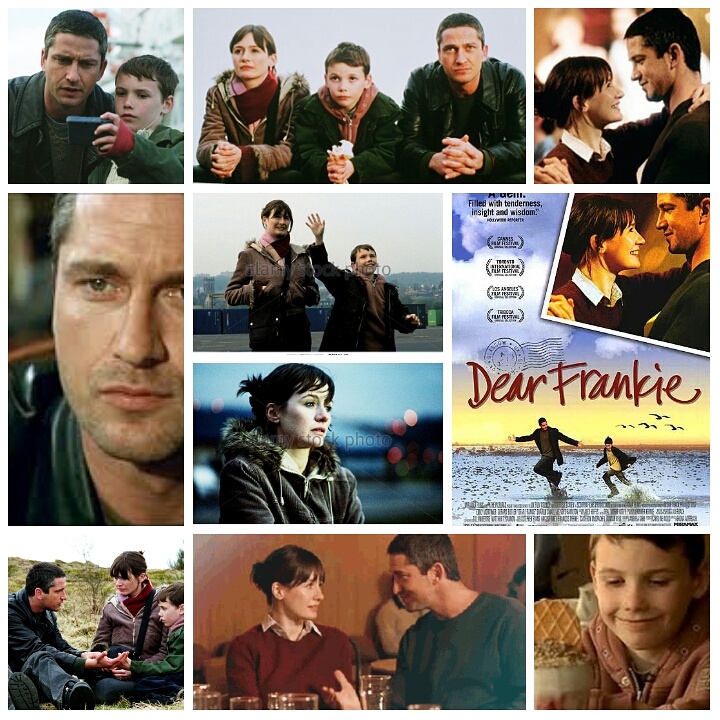
Dear Frankie: A Review by Nate Hill

image

Dear Frankie is a sad yet life affirming little modern fairytale set on the evocative Scottish coastal region, in a small fishing village home to many trawlers and vessels which are always coming or going. This is the place that Lizzie (Emily Mortimer) has chosen to raise her young son Frankie (Jack Mcelhone). The one thing missing is a father, who has been missing ever since he was born. Filled with love and a need for Frankie to know at least who he was, she writes him letters as if she were his dad, telling him tales of life at sea and corresponding with him for some years. As he gets older she wishes he could have met him at some point, and comes up with a slightly strange plan. She meets a Stranger (Gerard Butler) in town, who is a sailor himself, and hires him to pose as Frankie’s father, and spend some time with him. Butler agrees, but it’s clear he hasn’t spent much time around kids in his life, and the meeting is awkward at first. Soon they get on well enough, which pleases Lizzie and is good for Frankie. Still, the issue remains that the Stranger is not Frankie’s real father and Lizzie knows this, torn between the cathartic interaction she sees for her son, and the facts that she knows to be true. Mortimer is sorrowful and harbours clear hurt and loneliness, the reaching out she does to Butler as much for herself as it is for Frankie. Butler starts off charming and be used by the proposition, until he realizes the gravity of the situation he is in and learns so,etching about himself that was dormant in his life until he met Lizzie and Frankie. The human relationships are explored tenderly and with patient reverence that ebbs and flows with the English Channel tides. Beautiful stuff.