THE ROBERT ALTMAN FILES: BUFFALO BILL AND THE INDIANS, OR SITTING BULL’S HISTORY LESSON (1976)

At the conclusion of Nashville, the camera pans upward into the high heavens and the last image we see before staring off into the ether is the American flag. So it is appropriate that, at the beginning of Buffalo Bill and the Indians, or Sitting Bull’s History Lesson, the film that was released the following year, we see the raising of the American flag over the strains of reveille. Following some narration about the brave men and women who built our country and trudged through hardship after hardship, we witness the scene of an Indian attack on some settlers, driving the narrator’s point home in traditional western style. Once the carnage has concluded, the camera pulls back to reveal the attack has been a recreation and the settlers and natives are actors and this has all been done in the attempt to perfect a scenario for a Buffalo Bill’s Wild West Show. So where Nashville infused Altman’s vision of an America being infested with rot via politics and show business, Buffalo Bill and the Indians aims to almost invert that formula from the jump by giving a tall-tale American history lesson filtered completely through the artifice of show business which, ultimately and paradoxically, overflows with truths.

The year is 1886, and William F. “Buffalo Bill” Cody (Paul Newman) is a bigoted, ridiculously coiffed, narcissistic, and pinheaded blowhard who lives in a cloistered bubble of his own legend that is his Wild West Show where he is the figurehead, president, and CEO. But the new season needs a fresh angle as crowds are dwindling, causing chaos and cutbacks in Codyland. With the help of obsequious press agent Major John Burke (Kevin McCarthy) and ruthless producer Nate Salisbury (Joel Grey), Cody scores a coup when he wrangles Sitting Bull (Frank Kanquitts), whose victory over General George Custer at the battle of Little Big Horn made him a ready-made villain to audiences, into joining his show. Cody, a puffed up man of no small amount of self-importance, is frequently annoyed and enraged at Sitting Bull’s insistence on not rewriting history for the sake of entertainment nor allowing Bill to look like the star-spangled hero to which the latter is accustomed of appearing. Sitting Bull’s lethargic refusal to play the game Bill’s way, backed in full by Annie Oakley (Geraldine Chaplin), the show’s major draw, threatens the Wild West Show and, since he’s mostly a media construction, Bill’s existence.

To audiences of the day, this was maybe the most unwelcome bit of bicentennial cheer since Frank Zappa’s “Poofter’s Froth Wyoming Plans Ahead.” To fans of Paul Newman and westerns, this was an affront to the senses and their patriotic sensibilities. To those that loved Altman and were in the tank for him, it was unsubtle and too on-the-nose. And maybe both of those camps’ criticisms mattered a great deal in 1976 when the nation was struggling with itself as it turned 200 years old. The country’s dichotomous mindset couldn’t be summed up any better than the Academy nominating Taxi Driver, All the President’s Men, and Network for Best Picture only to then turn around and award the Oscar to Rocky, regardless of that film’s bottomless merits and endless appeal. It was clear that America was in the midst of a national case of the DT’s and was desperate to feel better.

Buffalo Bill and the Indians, unfortunately, was not made for people who wanted to feel better. It was made for people who thought all the ballyhoo circling the bicentennial was a racket, and a racist one at that. This kind of disdain made Robert Altman a frequent target of conservative critics who would continue to willfully label his flaming of American culture as a misanthropic attitude about America itself. Of course, this was wrong as Altman loved America and, in fact, embodied its best and greatest characteristics. What Altman hated was the rank hypocrisy and the half-truths that built so much of the American narrative, something that doesn’t seem like an unreasonable point of view. And, after all, what was the Wild West Show but a traveling pack of exaggerations that, nonetheless, blazed a trail in the collective mind of America and ensured that its revisionist tales took the place of actual history? If conservative critics are hell-bent on discussing the effect of television and movies on our citizens, why not extend that same argument to those mythological tales with a reach so far back into America’s past that our country’s mind has been hard-wired to recognize only its supposed benevolent greatness?

And perhaps Altman, whose Nashville was a critical hit but didn’t exactly achieve its goal of changing the way movies were made, earned himself no favors in Hollywood by making show business look like a nepotistic, valueless, and grotesque vessel frequently lost in it own sauce of incompetence and yes men. But by looking into the past and examining how so much of America’s historical foundation is built on myths and legends, he also sees the ability to shape the future. Buffalo Bill is a buffoon but his keen understanding of the power of “the show business” to twist history into something perverted, unfair, disgusting, and beneficial only to him is frightening. “Bill Cody can only trust his senses. And when his senses fail him, he might just see things as they really are,” muses Burt Lancaster’s Ned Buntline, one-time scribbler of penny dreadfuls but current deconstructionist of the myths he once helped create.

Naturally, something like Buffalo Bill and the Indians has aged extremely well and, viewing it in 2021, it’s a little jarring. For much of its running time, it feels like a funhouse mirror put up against our contemporary politics. Inspired by Arthur Kopit’s play Indians, screenwriters Altman and Allan Rudolph keep Buffalo Bill and the Indians confined within the boundaries of the camp of the Wild West Show and by keeping the film more or less stagebound, the Wild West Show and all of its backstage pandemonium begins to look like a lot like the White House of Donald Trump. When Bill meets Sitting Bull, it’s a mock celebration that’s meant to feel like an honorable meeting between two great heads of state but is instead a giant fantasy created to assuage the ego of Buffalo Bill who is such a moron, he has no idea what “incarcerated” means and confuses William Halsey (Will Sampson), Sitting Bull’s interpreter, for Sitting Bull himself. Liikewise, truth has no room within the parameters of the Wild West Show. Ned Buntline’s character is such an unwelcome creature in Bill’s land of fantasy that he attempts to have Buntline tossed from the premises the second Bill hears he’s around. Naturally, Bill delegates this duty to someone else and, likewise, Buntline won’t move until Bill disinvites him personally. This leads to one of the film’s most beautifully written and performed scenes in which Lancaster sighs “You haven’t changed, Bill.” “I’m not supposed to change,” Newman retorts. “That’s why people pay to see me.”

As a document in regards to Altman’s feelings toward the bicentennial, it’s fascinating. As a retroactive treatise on what would exactly happen if we lived in a political environment that operated like in the same fashion as backstage at The Muppet Show, it’s pretty brilliant even if Altman sometimes hard presses his acrid point to the point of smugness. “You know,” President Grover Cleveland coos in admiration as Buffalo Bill struts away from a reception, “it’s a man like that that made America what it is today.” Yeah… we get it. Additionally, Altman sometimes stretches himself for easy laughs and the running gag involving Buffalo Bill’s infatuation with opera singers proves to be more irritating and farcical than it is funny but it does at least set up one of the film’s most sublime moments in which the pack of artless cornballs in the Wild West Show are put to shame and moved to tears by the simple performance of by Nina Cavelini ‘Qui Sola Virgin Rosa’.

But, in the grand scheme of things, the film’s flaws seem minor in comparison to its triumphant execution and its fearless determination to take on both the seemingly unassailable lacquer that protects America’s Disneyfied image of itself and the vainglorious stupidity (and potential danger) of Hollywood. By admitting that America itself is a malleable tall tale if delivered by the right kind of polished huckster and that nobody, no matter how noble, is beneath selling out for the right price and practicality, Altman foretold of an America in ruin, susceptible to the charms of empty-headed, megawatt stars where relationships are transactional and nothing is sacred.

“Boy, I’ll tell you,” Harvey Keitel’s slack-jawed and dim-bulb nephew to Buffalo Bill says at some point in the film as he stares off into the distance, “there ain’t no business like the show business.”

Brother, you ain’t kidding.

(C) Copyright 2021, Patrick Crain
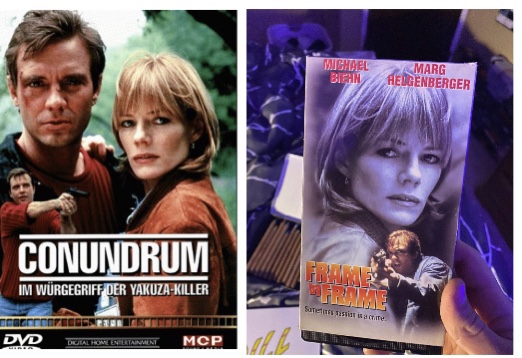
The VHS Files: Conundrum aka Frame By Frame

So here’s a fun idea (I hope)… I have hundreds of unwatched, obscure VHS tapes ive collected over the years and I’ve recently organized them, fired up the VCR and begun to explore the darkest corners of Z-Grade 70’s, 80’s and 90’s analog nirvana, so I’ll do a series of intermittent reviews based on these random, unheard of treasures with a snapshot of the tape itself, just for fun. First up is one called Frame By Frame, which I guess is officially called Conundrum on IMDb. It stars Michael Biehn and Marg Helgenberger as two inner city cops who begin to have a fiery affair amidst the aftermath of gangland killings stirred up by a Chinese crime syndicate. His family is murdered to set an example, this event brings them closer as she comforts him but before you know it other nasty secrets are unleashed and the classic obligatory ‘web of deceit, betrayal, twists and kinky obsession’ of the essential 80’s B movie potboiler is set into motion. Biehn and Helgenberger are perfect for each other, and on top of being two of the absolute sexiest cult icons of their day, they actually turn this run of the mill script into something fun thanks to their vivid characterizations. He’s as wild eyed and frantic as he was in Terminator and even gets one sly ‘big emotion’ scene that takes on new meaning once all the twists unfold, and she does this tough girl tomboy thing with her accent and mannerisms that’s fun too. The story kind of goes wildly all over the place and I didn’t quite follow every hairpin turn or believe in this brand of convolution but hey, it’s an ancient DTV flick and half the fun is watching these two stars rip snort their way through the hard boiled narrative anyways. I’m fairly sure I may be the only person to have ever seen this film because the tape I have is one of those promotional screeners that aren’t for resale (but they always are anyways), there are positively zero user reviews on IMDb or even critics reviews out there elsewhere on the interwebs and one can barely find traces of its existence at all beyond the tape I have. Good times though, especially if you love Biehn and Marg as much as this viewer.

-Nate Hill

Ramaa Mosley’s Tatterdemalion aka Lost Child

It’s always fascinating to me when a film is subtly billed as horror, unfolds thusly with the ever present promise of ambiguity and then takes the road less expected to provide a truly surprising and unexpected experience. Ramaa Mosley’s Tatterdemalion, given the far less inspired title of ‘Lost Child’ for its streaming release, is a powerful story of loss, trauma, reconciliation and finding your path, a deeply heartfelt drama that’s kind of.. not necessarily disguised as a horror, but is very down to earth despite its ‘folk horror’ stylistics and slightly spooky mythological underpinning. It tells of Iraq war veteran Fern (Leven Rambin) who returns to her hometown deep in the heart of the Missouri Ozarks to a broken family and a broken life. She tries to mend a relationship with her volatile brother (Taylor John Smith) and strikes up tentative romance with a kindly social worker who moonlights as the local bartender (Jim Parrack) and begins to get her life on track. One day deep in the heart of the woods she finds a young boy named Cecil (Landon Edwards) wandering lost, with no ID, family or recollection of where he came from. She takes him in and pretty soon odd things start to happen; she finds her energy sapped, she feels sick, she discovers strange iconography fashioned from sticks adorning her property and soon the locals with an ancestral connection to the ancient Ozark legends lost to time warn her of ‘Tatterdemalion’, a soul vanquishing demon personified as a lost child who preys upon unsuspecting folks who take them in. Is Cecil a dangerous entity, or simply one of the countless forgotten, abused and neglected children who are out there trying to find a home? I mean there’s many reviews calling this an ‘anti-horror’ film which in itself already spoils the answer to this question, but I’ll try not to say more other than to iterate how emotionally mature, down to earth and compassionate this narrative is, strikingly brought to life with warmth, depth and empathy by the assured hand of director Mosley, the first of her work I’ve had the pleasure of seeing. Leven Rambin is an actress who also brought the character of Athena Bezzerides to life brilliantly in season 2 of True Detective and she is stunning here, embodying the lost child elements in her own life as she struggles to come to terms with a tragic family history and figure out who Cecil is and care for him at the same time. Shot on location in atmospheric rural Missouri, scored to elemental and orchestral perfection by David Baron and Chris Maxwell, this is a phenomenal sleeper gem that’s streaming on Canadian Prime and I would highly recommend it.

-Nate Hill

THE MICHAEL MANN FILES: THE JERICHO MILE (1979)

Tracing his incremental steps that ultimately led to theatrical features, it makes sense that Michael Mann would create his first feature film for network television. Coming off two paying gigs that made 1978 a pivotal year for the filmmaker (namely his uncredited work on Ulu Grosbard’s Straight Time and his credited creation of the television series VEGA$ by way of the Mann-scripted pilot), he was a natural fit to write The Jericho Mile, a movie-of-the-week for ABC. Hired directly by actor Peter Strauss, Mann’s script impressed Strauss so much that he convinced the network to allow Mann to direct. After bouncing around Hollywood for a while and writing scripts for television (not to mention having the creation of a whole show on his resume), Mann was definitely due. And Strauss, insanely popular throughout the seventies due to his appearance in Rich Man, Poor Man, had the kind of stroke to make it happen.

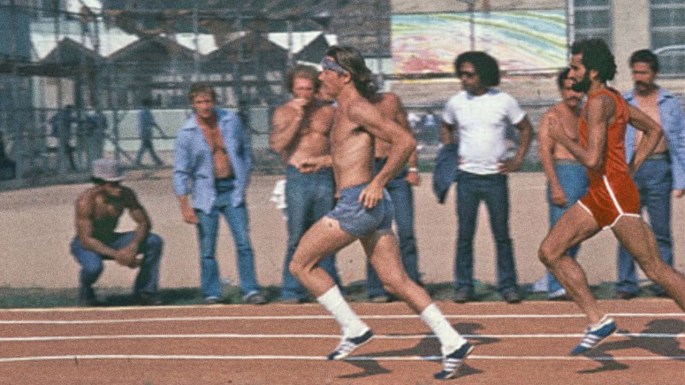
The Jericho Mile was prime material for Mann. A healthy blend of the prison film and the sports drama, the film follows lifer inmate Rain Murphy (Strauss) as he uses long distance running as a means of coping with the confines of prison and his inability to steer the direction of his life. As his prison counselor notices the incredible speed in which Murphy can clear a mile, a succession of events occur in which Murphy is given the opportunity to compete for a spot on the Olympic team while he also navigates the tricky and sometimes lethal political structure within the prison.

It is the latter where The Jericho Mile truly excels, at times feeling entirely authentic as the convicts with speaking roles mesh alongside the professional actors. Additionally, a great deal of value is generated by shooting within the walls of California’s Folsom Prison. The metal works, the kitchen, laundry room, the yard, and the squat, desolate cells go a great distance in selling the film’s credibility and reflecting a world that is cramped and oppressive. This last element is also helped immeasurably by its boxy 1.33:1 aspect ratio, standard for television broadcasts of the day, which now makes the film look especially claustrophobic and tight.

The film should also be commended for what it doesn’t do. While it can’t help but traffic in some of the hoariest tropes of the prison film (which may or may not be its fault since there are only a limited number of things that can occur in prison), it doesn’t stoop to underlining the explicit inhumanity that occurs in confinement. Instead of shocking viewers with lurid details (which was actually pretty much par for the course in the day), the film wisely keeps within the boundaries of taste and shows how prisoners are generally in an impossible double-bind with both the state and the prison population, the structure of the latter being as complicated, unfair, and unforgiving as the bureaucratic red tape and regulations that routinely crush the spirits of the incarcerated. Additionally, the film doesn’t introduce a doomed relationship into Murphy’s life and, instead, keeps his one encounter with the opposite gender to be that of a brief glance between himself and an executive assistant at the U.S. Olympic board, reminding him of his status as someone with zero future with her or with anyone else but himself and what’s in his head.

To this end, The Jericho Mile has a wise, knowing angle on the life of the career criminal and prisoner. Whether or not this is due to Mann’s familiarity with the Edward Bunker material that became the screenplay for Straight Time is uncertain, but it’s likely. The transcendent poeticism meshing with the gritty details feels very much like Bunker’s outward expression of the criminal life as a certain kind of art form but the level of stoic control in Murphy’s character is all Mann. Murphy is Max Dembo if Dembo was remanded back to the state pen and took up long distance running, speaking with a clear, direct cadence with very few consonants, most reminiscent of James Caan’s Frank in Thief. This is why The Jericho Mile also stands as an almost reference point for the vast majority of Mann’s other criminal protagonists that would come later. Certainly both Frank and Neil McCauley’s talk about prison and doing time harkens back to the life we see unfold in The Jericho Mile where the only time we leave the prison walls to get a sense of real freedom is when Murphy is allowed to run around the parameter of them while in training. The reasoning behind the reluctance for later Mann characters to want to go back into a hell on earth is made strikingly clear in this film and, once he’s out, Mann rarely ever takes his cameras, or his characters, back in.

Being a television movie, the film sometimes falls into traps that reveals its limited hand. Where it doesn’t feel as sanded down in terms of the language or the prison violence (though it is on both counts), Mann’s preoccupation with lacing his drama with broad, emotion-driven moments is met with the medium’s small scale causing passages that might play a little more successfully on larger-than-life movie theater screens. This is most evident with the hotted-up performance by Brian Dennehy as Dr. D, the leader of the neo-Nazi faction of the prison, and with Richard Lawson’s performance as the doomed inmate, Stiles. For both, the screen size seems an ill fit to their grander, almost stage-bound turns. Mann often lets his actors descend into a sort of archness (specifically Tom Cruise’s Vincent in Collateral and literally everyone in his theatrical adaptation of Miami Vice) where the characters play to both the dunderheads AND the back row, but those performances need to be accompanied by a bigness and a freedom that a made-for-television movie produced in 1979 is just not going to be able to allow.

Also less successful, though not fatally, is the film’s sports angle. Again, there can really be no suspense as to how any of this is going to work out so the actual moments of Murphy running, training, and racing are less interesting than the passages that explore the reasons for his running. Unfortunately, the hook of the film is in its plotted narrative so the main thrust of the movie is, in fact, that of a rote sports film. Mann’s attempt to turn Murphy into a hopeful symbol both by and for the inmates may anticipate his approach to the material he would later take with Ali but here it feels a little undercooked. Despite Strauss’s emotional reaction to it, the moment where the prisoners line up to give him food for his training feels like a lachrymose, reverse-Cool Hand Luke, hitting the chords it wants to but not hitting them like it should.

For the most part, The Jericho Mile is an absolute triumph and, in fact, made a pretty big splash with audiences and critics at the time. Peter Strauss is utterly fantastic and won an Emmy for his role while Mann and co-writer Patrick Nolan picked up Emmys for their script. But most importantly, it gave Michael Mann his first stab at assembling a feature while also allowing him to work in the milieu that would inform his characters and their collective worldview throughout the rest of his career.

(C) Copyright 2021, Patrick Crain
Álex de la Iglesia’s Perdita Durango

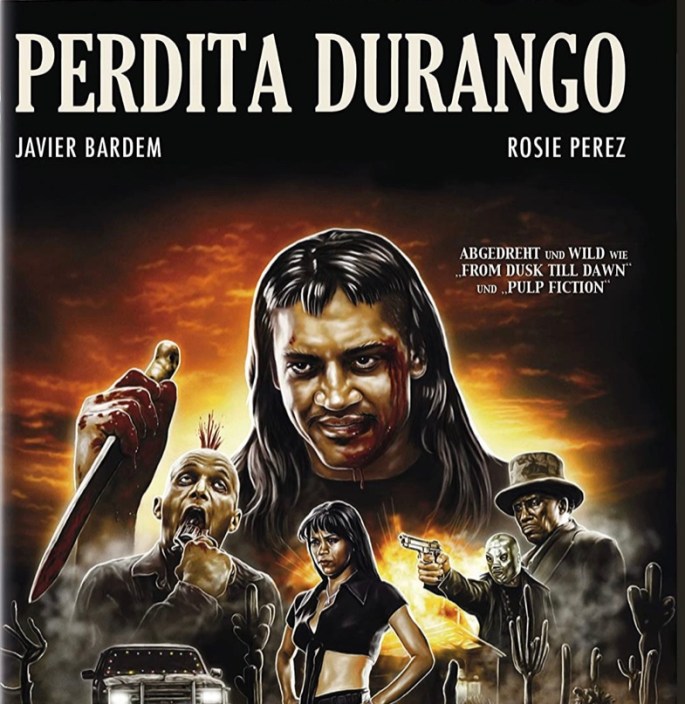
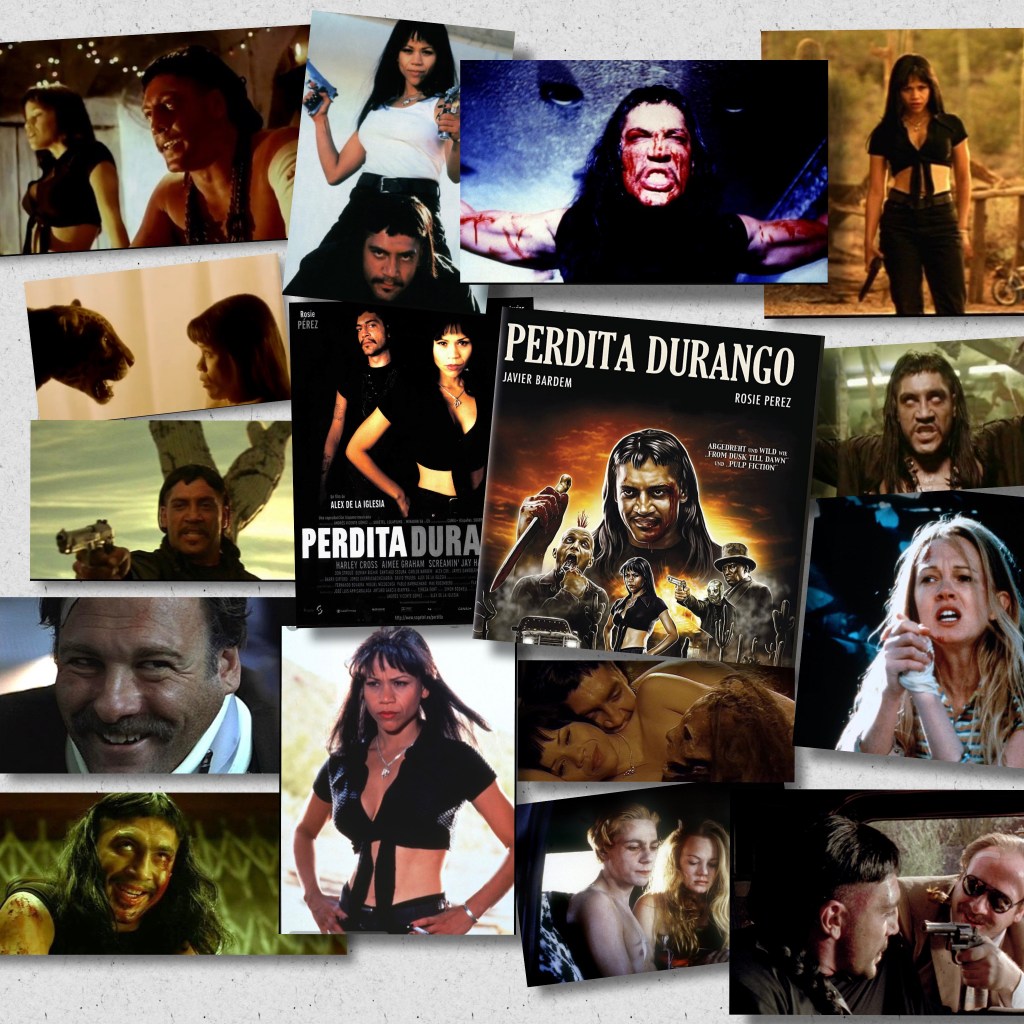
Even if I told you to picture a Mexican version of Natural Born Killers starring Rosie Perez and Javier Bardem with shades of voodoo mysticism, tons of pulpy brutal violence, transgressive taboo vibes and shades of From Dusk Till Dawn it wouldn’t prepare you for the visual audacity and narrative viscera that is Álex de la Iglesia’s Perdita Durango, a scrappy mid 90’s bit of cult nihilism based on a book by Barry Gifford. Gifford, you may recall, also wrote the book that David Lynch based Wild At Heart on so many of the same characters appear here for a kind of fascinating “Lynch/Gifford extended universe” vibe. Rosie Perez is Perdita Durango, a vivacious wayward outlaw girl who hooks up with Bardem’s Romeo, a psychopathic, voodoo practicing criminal who has been hired by evil crime kingpin Marcelo ‘Crazy Eyes’ Santos (Don Stroud) to facilitate the black market delivery of stolen human fetuses for cosmetic industry (I swear I’m not making the shit up). The two of them hook up along the way and get up to all sorts of lurid shenanigans including kidnapping a teenage couple (Harley Cross & Aimee Graham), raping them both and forcing them to tag along on their bloodthirsty swath of carnage and mayhem across Texas and the Mexico border. James Gandolfini shows up as a dogged DEA agent hellbent on stopping them and nailing Santos, and he hilariously gets hit by multiple speeding vehicles only to keep on truckin with a neck brace, then a leg brace and so on. There are also scattershot appearances from musician Screamin Jay Hawkins, filmmaker Alex Cox and a young Demien Bechir as a Vegas crime kingpin who meets a spectacularly gory end at the hands of Bardem. He is unbelievable as Romeo, I didn’t think I’d ever see a film where he has a more ridiculous haircut than his mop in No Country For Old Men but it happened, he looks like a an angry tumblr maven with his hyper cropped bangs here, and he tears into the role with a kind of unhinged ferocity and rambunctiousness I haven’t seen before in his mostly restrained career so far. Perez is like a Latin Harley Quinn as Perdita, all pissed off fury and sudden violent sexual energy in a total tour de force. This film won’t be for everyone: it’s incredibly subversive and deranged, there are explicitly shown instances of human sacrifice, rape, child abuse and domestic violence, not to mention the overall dose of supremely bloody gun violence and just a generaly lurid, deliberately unsavoury tone that stems from Gifford’s often shockingly tasteless yet somehow captivating work. But it’s a lot of fun too, there’s heaps of hilariously subtle dark comedy thrown in, a ballistic firestorm of a soundtrack, a host of deliriously over the top performances from the excellent cast and all manner of bizarre, arbitrary, surreal and eclectic sideshow-freak elements that make this an eccentric trip to hell with two demented individuals who you can’t decide whether to run from in horror or party with as they’re that much fun.

-Nate Hill

Rachel Talalay’s Ghost In The Machine

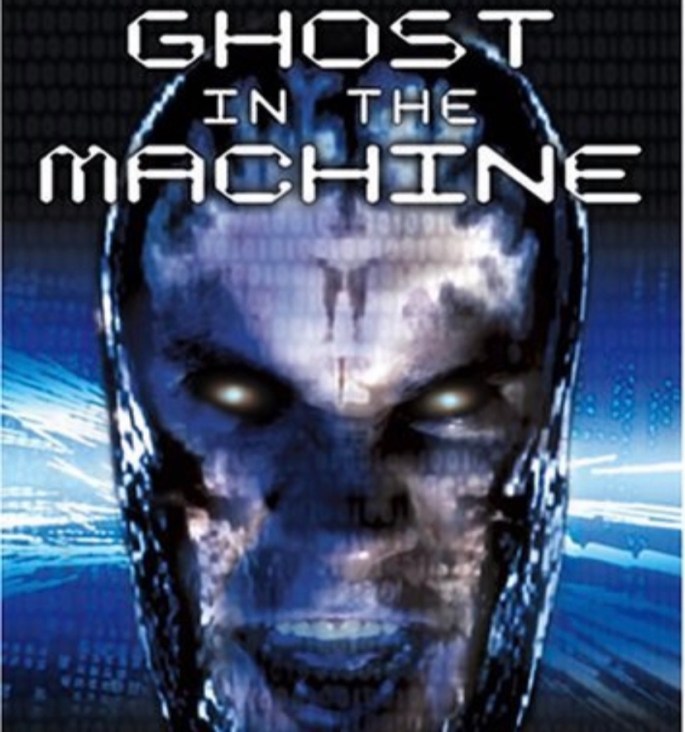
What if like, a serial killer committed suicide, but not before making sure that his soul would be uploaded into a computer server through some pseudo hacker wizardry, leaving his essence free to roam throughout entire systems of data and machine control, manipulating everyday household items into deadly weapons of murder? It sounds ridiculous and it is but it’s also a lot of fun, an old forgotten cyber horror flick called Ghost In The Machine. Now, obvious comparisons might be made to another 90’s cyberpunk SciFi/horror called Virtuosity with Denzel Washington and Russell Crowe but besides having a way lower budget, scrappy feel to it, this film is about a serial killer who was already human and then died and went into cyberspace vs the other way round. The killer here (played by Ted Marcoux) is just a nondescript, nasty piece of work dubbed the “address book killer” for his arbitrary, imagination deficient mode of picking victims. One night he deliberately totals his car off a cliff and kicks the bucket, only to resurface in cyberspace to hunt a young mother (Karen Allen) and her kid using everything from toasters, home entertainment systems, crash test dummy courses and basically anything electronic he can posses using his weird supernatural hacker magic. Their only hope is a super hacker of their own, (played by Chris Mulkey aka Hank from Twin Peaks) a good natured dude who once embezzled a million bucks from the IRS and gave it back to the people. This is fairly lowbrow, schlocker type entertainment with really, really cheesy 90’s virtual reality effects in the vein of something like The Lawnmower Man, but it has a certain viciousness and violent edge that I appreciated. Several murder scenes are pretty jaw dropping including one where the killer turns the entire interior living room of a dude’s house into an irradiated microwave zone and lets him literally fry to death, or an instance of electricity induced spontaneous combustion that is genuinely jarring in its sudden gruesomeness. Rachel Talalay the director also did the criminally underrated cult classic Tank Girl so she has a flair for the bizarre punk sensibilities that come across here. If you like retro SciFi goofiness, grisly slasher aesthetics and just a cheesy, lovably VHS feel, you’ll get a kick here.

-Nate Hill

The Poison Rose

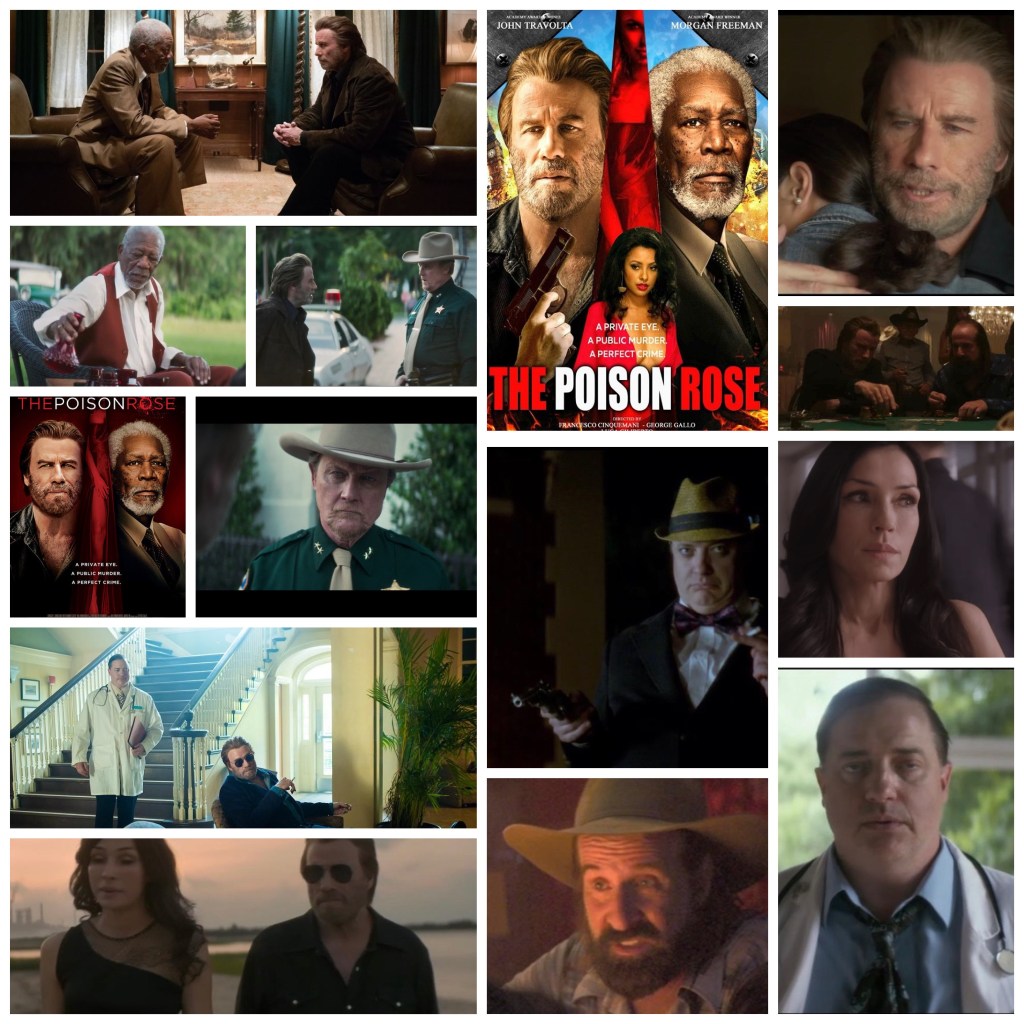
You would think that a film noir headlined by John Travolta and Morgan Freeman would be a surefire winner or at least something moderately stimulating, but The Poison Rose is just a lazy, watered down, lethargic, empty, nonsensical and just plain fucking boring film. The first five minutes show the faintest beam of promise as we see hard-luck ex football pro turned private investigator Carson Phillips (Travolta) running away from vicious loan sharks while carrying his cat in a carrier. It’s a fun bit, followed by a nice opening credits sequence where he hits the road and drives it from Cali to his hometown in Texas to take on the case of a missing woman and for a hot second the film feels like it could actually go somewhere… and then it just viciously, thoroughly and embarrassingly flatlines. Travolta narrates the proceedings as if he’s in his nightgown and favourite La-Z-Boy chair about to nod off and who can blame him with a narrative this thin and scattered. The search for this girl leads him to a few of his old high school pals including a shady businessman (Freeman, barely raising a pulse) who owns half the town, a slightly corrupt sheriff (Robert Patrick) an ageing hipster (Peter Stormare) and an old flame (Famke Janssen) now wedded to Freeman’s sinister magnate. Brendan Fraser shows up to give quite possibly the weirdest performance of his career as a psychiatric “doctor” who looks like he could use a stay in the institution himself, garbling out his lines in a syrupy lisp under a dying combover and really looking like he’d rather be anywhere else. Now, this is one serious lineup of actors, like if this thing were made in the 90’s with a better script, director and when all these wonderful actors had more energy it could have maybe been something good, but they’ve squandered a dream cast on toilet water material, dumpster diving level production value and a story that is so clearly, derivatively, unapologetically DULL that I can’t let this review go by without a serious verbal lashing. There’s just no excuse for this kind of mediocrity in any echelon of film or art, it just rests somewhere between being dimly engaging and outright terrible and they’ve just limply thrown in the towel, and added an wet blanket overtop of it. There’s a scene where Travolta says “everything in moderation, including moderation.” One thing I could use in moderation, or simply not at all, are these uninspired, flaccid dicked, direct to video embarrassments of once great stars/actors. Piss poor excuse for entertainment.

-Nate Hill

Robert Zemeckis’s The Witches

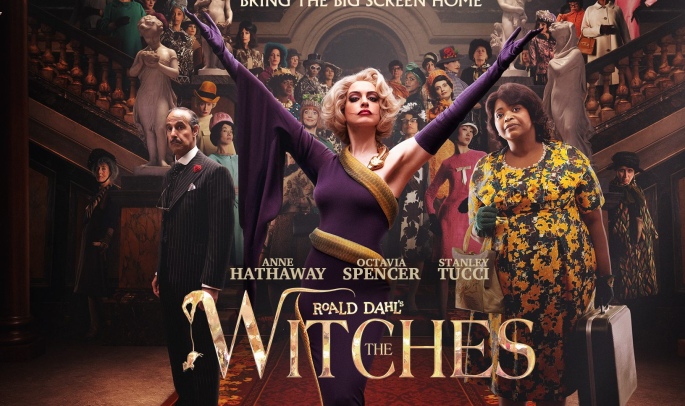
Robert Zemeckis is a perfect director to tackle one of Roald Dahl’s books; he’s got an inspired mastery over cutting edge CGI, a talent for dynamic visual storytelling and a genuine sense of the macabre, this willingness to be honest about the darker aspects of real life and include them in a story geared towards children, which is an attribute that he directly shares with Dahl himself. His crack at The Witches is an admirable, mostly successful, visually stunning and opulently stylish bit of devilish fun and although obvious comparison will be made not only to Dahl’s book (which simply cannot be topped) but also to Nicolas Roeg’s brilliant 1990 take on it. Zemeckis definitely takes the more playful route and while still injecting palpable dread and menace into the proceedings, his version isn’t quite the prosthetic soaked nightmare Roeg offered. The setting here is switched up from the UK to Deep South Alabama where a young boy and his grandmother (Octavia Spencer) encounter a coven of nasty real life witches holding a convention at a swanky bayou hotel. Anyone who has read the book knows that these witches are all about murdering children in frighteningly inventive ways and are led by the preening, aristocratic and supremely evil Grand High Witch, here played by Anne Hathaway in a performance that has to be seen to be believed. In the book the character is mean enough, in the 90’s version Anjelica Huston gave her a kind of.. ‘dark empress socialite’ vibe but Hathaway just grabs the script in her jaws like a dog and runs off with it. Sporting snowy blonde hair, a jittery Norwegian accent and mandible modifications that would make the vampires in Blade 2 shudder, she devours scenery, steals every scene and annunciates every syllable with the force of a snake sinking its fangs into someone. She truly makes this character hers, it’s the most impressive work I’ve ever seen from her as an actress and is by and far the best thing about the film. Even Stanley Tucci, who is usually the life of the party in any film, stands back in restraint as the hotel’s fussy manager and gives Anne a wide berth for her typhoon of a performance to unfold. The special effects are wondrous creations and I can’t figure out why anyone would bitch about the CGI on display here (it’s always inevitable I suppose) because it looks and feels incredibly tactile and terrifying. Zemeckis takes liberties with the witch anatomy that Dahl never dreamed of but they are righteous departures in style that make sense and add to the mythology nicely. Chris Rock narrates the film vivaciously as an older version of the young boy, and I never thought I’d say it but he has an uncannily perfect way with Dahl’s passages that had me wishing for a ‘The Witches audiobook as read by Chris Rock.’ My only one complaint is that it feels too slight in the latter half and I would have appreciated more of a runtime, but what they do give us really is a treat. Solid, comprehensive storytelling from Zemeckis, audaciously beautiful costume design, a gem of a score from Alan Silvestri and one unbelievable banshee howl encore performance from Hathaway who is truly having a blast.

-Nate Hill

Adam Wingard’s Home Sick

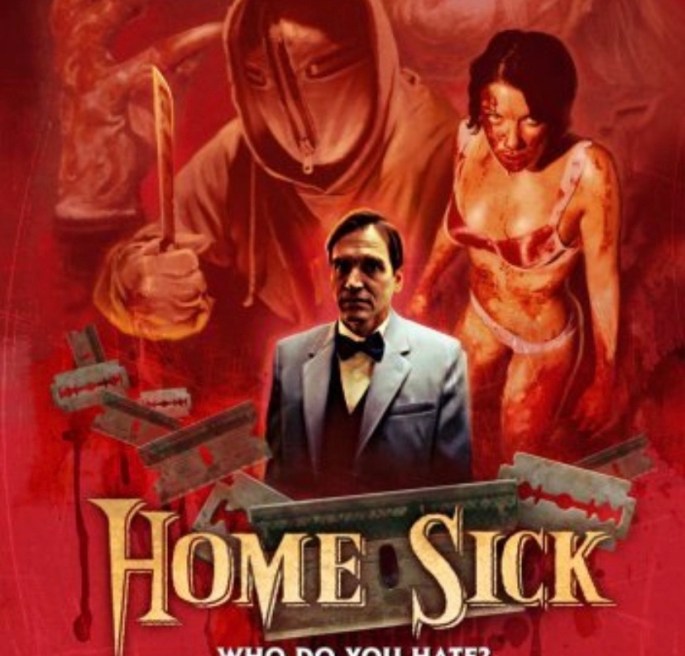
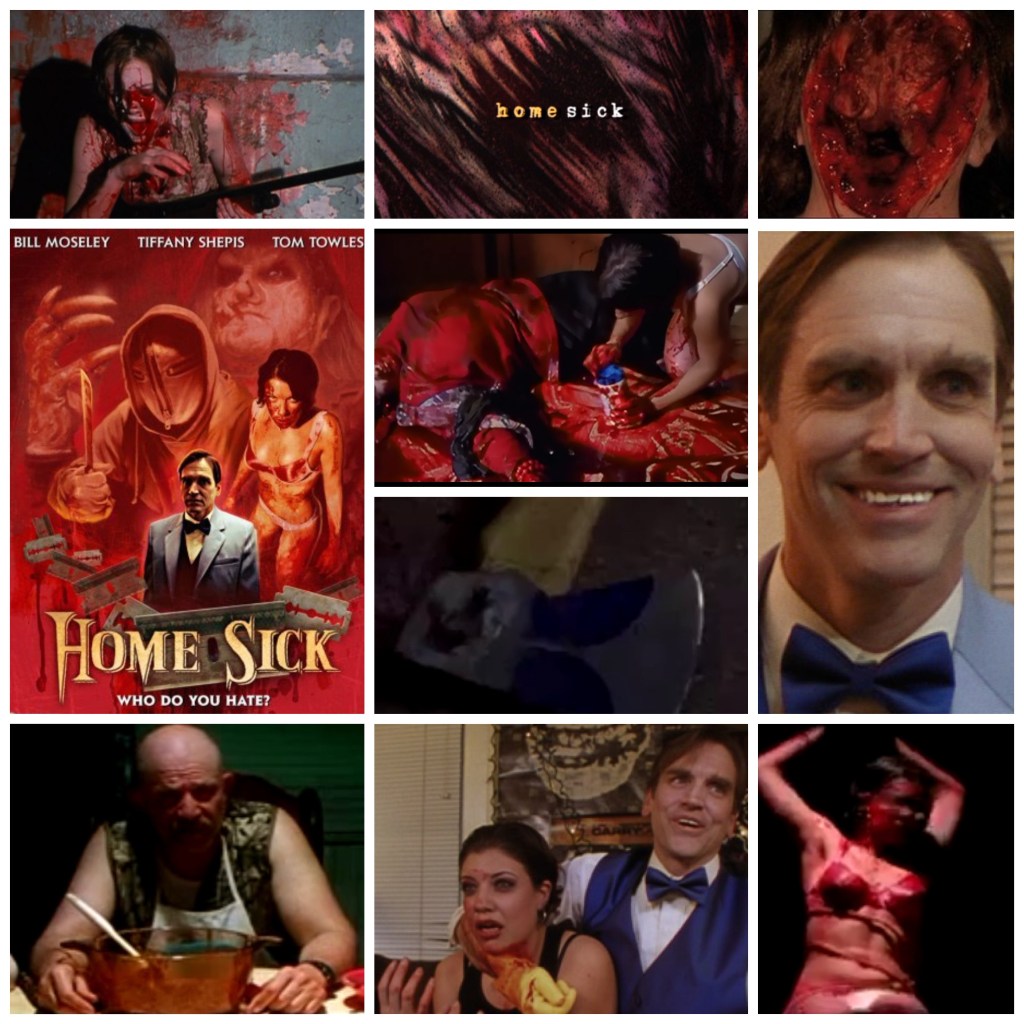
Adam Wingard has become something of a household name lately, blasting on scene with his vicious shocker You’re Next, thrilling audiences with his retro cult specimen The Guest and solidifying his presence as a filmmaker to be reckoned with by scoring the reins to Godzilla Vs. Kong, the dude is a top dog who is here to stay. Many aren’t aware of his debut film though, and fair enough because it’s about as low budget, under the radar and avant-garde as horror can be but it’s so, so worth watching to triangulate the evolution of a fascinating artist from the murkiest pits of lo-fi, Grindhouse schlock to the loftiest echelons of Hollywood high gloss. It’s called Home Sick, he made it on a shoestring budget back in the mid 2000’s and it’s an absolutely diabolical treat, but only if you can stomach some truly jarring moments of gore and have one demented sense of humour with the capacity for.. let’s just say… abstract thought. Low budget, practical effects driven schlockers like these are a dime a dozen, but this one is worth it’s weight in gold simply for going that extra mile to make it memorable and stand out from the cheaply drawn masses. It starts out slow, with an eerie opening credit musical jingle and animated sequence that could suggest all kinds of horrors to come. We meet a group of friends in the Deep South going through the motions of partying and quarreling. Tiffany Shepis does a wonderfully nutty little riff on her scream queen shtick who likes to rail cocaine at her graveyard janitor job and swing a mop around with gale force. Anywho, this weird little troupe is kicking back one night, when into the apartment walks a very ill adjusted stranger named Mr. Suitcase (the legendary Bill Moseley), and sits down on the couch like he owns the place. He’s chipper, charming and affable to a terrifying level, as he opens up his suitcase full of razor blades that he calls “gifts”. He asks them all to pick one person in their life they hate and want to wish dead, slicing a nasty gash on his forearm for each answer. The hilarious lot deadpan member of the group (Forrest Pitts, in a priceless performance of comedic eccentricities) foolishly blurts out that he wishes everyone in the room dead, and then the real fun begins. A giant masked killer begins stalking and killing pretty much every character around in ways so brutal your balls will shrink into your pancreas. Seriously, it’s like they sat down in a boardroom and systematically came up with every squirm inducing way to inflict violence on a human body, and gave their results to the storyboard artist and effects team. It all comes to a chaotic, deranged finale when they take refuge with Uncle Johnnie (the late great Tom Towles, always brilliant) a gun toting chili enthusiast. That’s where the film comes off the rails, but it’s seemingly deliberate and actually quite hilarious, as everyone pretty much goes certifiably bananas and loses the plot all at once like feral kindergarten class in overdrive. There’s some thought and care put into the writing, and as such the characters, however odd or over the top, seem like real people, albeit some strange and undesirable folks. The film oozes unsettling atmosphere right from the get-go, fervent in its aggressively weird sense of style and never taking the conventional route that most horrors end up with. Like I said, if your sense of humour has an affinity for the bizarre, demented and off the wall (think David Lynch meets Tim & Eric meets The Evil Dead meets John Waters), you’re gonna love this little gem. On top of being a laugh riot, it’s just freaky enough to earn it’s horror classification, something which many films in the genre just can’t claim. As to why it’s called HomeSick, though? Couldn’t tell you, and there’s no reference to it the entire time. Perhaps it’s called that for the folks that will be thoroughly repelled and repulsed, those who watch it expecting a run of the mill, cookie cutter slasher and feel uncomfortable with the oddness, getting “home sick” for their safer horror fare. As for me, I’m right at home up the weird end of the alley, and love this type of thing and it’s one hell of a fascinating debut for any director to start out with.

-Nate Hill

THE P.T. ANDERSON FILES: BOOGIE NIGHTS (1997)

It’s a strange thing to consider but for all of the power that sex wields to start wars, topple the powerful, and put people into financial or personal ruin, the porn industry is small time. That’s not to say that the porn business doesn’t make boatloads of cash. In fact, it’s quite the opposite. I mean, if one really wants to believe that the only things subsidizing the porn industry are the spending habits of amoral perverts, that person may want to try and show their math on that assertion if only to sooner realize that there just aren’t that many degenerates wandering the earth. In other words, a whole lot of people you encounter at work, in the streets, and (gasp) at church have at least dipped a toe or, more likely, engaged in a full baptism into one of the four corners in the pool of the sex industry. But yet, for all of the dough the films generate, there are precious few hardcore actors or directors that have been able to transcend the hermetic shell of the adult film world either in name or deed. For every John Holmes, Ron Jeremy, or Sasha Grey, there are a thousand others whose stopover into the world of porn occurs because it’s a place that, if they can’t build a legacy, they can definitely make a buck.

It is because of this that, despite actually working at a General Cinemas theater at the time, I’m unsure as to what went through the public’s mind when they saw the expertly cut and energetic trailers for Paul Thomas Anderson’s Boogie Nights prior to its release in the summer of 1997. Here was a film that was going to be playing in the multiplexes and malls across America that would, in seemingly frank terms, follow the story of an ersatz John Holmes as he navigated the literal ups and downs in the pornographic film industry in the 1970’s and 80’s. Would America be able to reckon with its very real attachment to pornography to feel comfortable enough to go and see it and give it the respect it deserved or would the film flop given the culture’s mind-bogglingly puritanical attitude towards THIS KIND OF SEX™️? If there is anything to challenge the accepted notion that sex sells, it’s to invite people to sit through two-and-a-half hours of it.

But Boogie Nights was a hit and, surprisingly, a quite sizable one. Anchored in the front by a dynamite and keenly sensitive central performance from a then-risky Mark Wahlberg and, in the back, by a jaw-dropping return to form by Burt Reynolds with incredible, fearless performances by Julianne Moore, Heather Graham, John C. Reilly, Don Cheadle, William H. Macy, and Philip Seymour Hoffman (among others) between them, Boogie Nights was received as a rollicking, exhilarating American epic that was an intoxicating mix of Scorsese-like rhythms and editing being navigated by Demme/Ashby-like heart across an Altman-like canvas; the most joyous piece of pop filmmaking since Quentin Tarantino’s Pulp Fiction three years earlier.

Boogie Nights appeared at just the right time in America to make the splash that it did. The years of peace and economic expansion under the Clinton administration turned the 90’s into a freewheeling party which saw the birth of the internet and, also, a certain lax in our social mores as latchkey kids from the 70’s who grew up sneaking peeks at their parents’ poorly hidden porn stashes rolled into their twenties with a more permissive, NBD attitude towards Boogie Nights’s subject matter. All of the moments within the film that focused on the hilariously crude approach to adult filmmaking (and its spot-on recreations of the final product) were met with the appropriately knowing chuckles of an audience that couldn’t do anything but acknowledge that they understood exactly what they were looking at and, in the words of Elliott Gould in The Long Goodbye, it was (at long last) ok with them. And it was the good fortune of everyone cast in the film that the worm of American culture had somewhat turned as Boogie Nights is a virtual “who’s who” of talent that was just beginning to crest a professional summit out of indie-world and the film’s success would propel almost every single one of them to mainstream fame.

One of the things that has continued to work in Boogie Nights’s favor almost a quarter century later is its anticipation of the succeeding generation’s devotion to 100% acceptance and the encouragement of full positivity among its peers. To this end, Anderson doesn’t excuse his characters’ flaws but is ultimately sympathetic to all of them (save and except Diggler’s mother, Joanna Gleason in a ferociously monstrous performance). The characters are small time but, almost presciently, exist in a world of total support and encouragement; one in which, from the point of view of those on the ground in the actual time and place, seemed like more of a legitimate enterprise than, say, selling blowjobs on Hollywood Boulevard for a hot meal and/or somewhere to sleep. So maybe it’s technically incorrect (and borderline irresponsible) for Julianne Moore’s mother-surrogate, Amber Waves, to fawn over Wahlberg’s decidedly not-very-talented (but massively endowed) Dirk Diggler as “so fucking talented,” but is it really worse than how his actual mother treats him in the neatly trimmed “normal” world of Torrance? Sure, Jessie St. Vincent’s (Melora Walters) paintings are uniquely awful but, really, are they any more subpar than some of the tacky prints that adorned the walls of suburbia at the same time? Are those adult award shows any more moronic and stupidly self-congratulatory than the Oscars? Certainly, the ephemeral static attached to the porn industry doesn’t make it look like the most positive environment to some people who live nine-to-five existences but, as the film makes crystal clear, the need-driven support structure within it is mighty alluring for the socially outcast, the marginalized, and the abused.

And Boogie Nights was never going to be a movie that reveled in its orgiastic pleasures for its own sake. Much like Goodfellas, there is a real “set ‘em up and knock ‘em down” formula to the film’s structure. The film’s first half looks like a total blast of wanton abandon; an effervescent celebration of the largesse of the sexual revolution replete with a pulsating soundtrack and the promise of a perpetual California sunset. As an audience member, you WANT to be there, even if you’re just hanging out in a lounge chair poolside while drinking a margarita while everything else swirls around you. But, sweet Christ, brutal is the comedown that occurs in the second half of the film when the organic pleasures of the 70’s are replaced with the synthetic coke high of the 80’s. A nonstop stack of nightmares including a murder-suicide, crippling addiction, accompanying sexual dysfunction, mounting legal challenges, the cold yet practical move from film to video, and violent moments of terrifying, rock-bottom sobriety show that Boogie Nights is just as eager to argue the downslope as convincingly as it does the ascension, though without any kind of sanctimony in regards to its characters’ plights.

But as much as Robert Altman utilized the titular city to examine America as a whole in 1975’s Nashville, Anderson is using the porn industry in the bracketed time frame to explore the fluid boundaries of family much like he did in Hard Eight the year before and he would in Magnolia two years later. And, to be sure, the world of Boogie Nights remains his best Petri dish in which to study this dynamic as the film’s libertine atmosphere mixes with its members’ outcast and discarded statuses which create disarmingly moving and powerful moments throughout the film, most especially those involving any combination of Wahlberg, Reynolds, and/or Moore.

And so it is that Boogie Nights endures not just because it’s a naughtily hilarious and dramatically satisfying film, well-remembered by Gen-Xers who pine for the sun-kissed days of the mid-90’s. It endures due to the fact that it was written and directed by a guy not yet twenty eight who could resist the easy temptation of sniggering at its subject matter in favor of focusing on the longer view that included poignancy, care, and familial love shared among its characters, ensuring that it would continue to pay dividends to its audience well into the future.