Hélène Cattet & Bruno Forzani’s Let The Corpses Tan

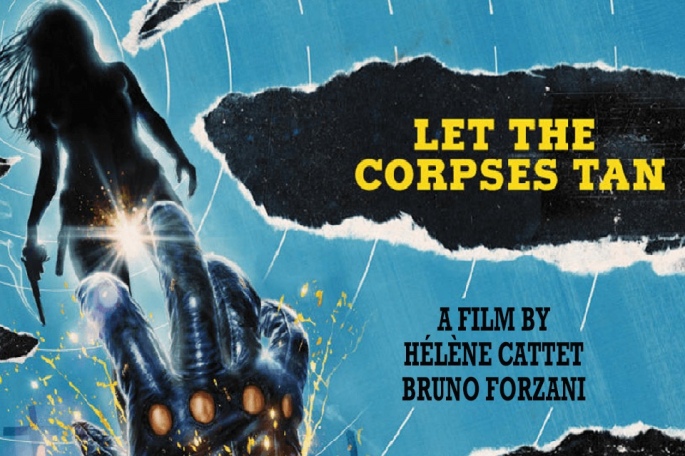
Whenever contemporary filmmakers attempt a homage to cinematic styles, tones and artistic mechanics of bygone eras in cinema it’s very easy to tell whether they know their shit and have captured their intended aesthetic or missed the mark. Every culture and era of the medium has their own unique and distinct flavour woven into every aspect of the artistic process, and any pastiche is just going to be a delicate undertaking. In the case of Hélène Cattet and Bruno Forzani’s Let The Corpses Tan they have done an impeccable job of emulating this kind of… 60’s/70’s Italian pulp/murder/spaghetti/cop/splatter/action vibe that’s so specific to that time and region I can’t even properly describe how… unmistakable the palette is. It’s like Italian genre cinema went to sleep one night and this film is a window into into its REM cycle. On a remote, sun drenched island in the Mediterranean (shot in beautiful Corsica), a gang of murderous thieves spearheaded by a vicious femme fatale (Romanian cult icon Elina Löwensohn) hide out in the crumbling ruins of a Hellenic ghost town, harbouring a stolen trove of gold bullion. As they languidly await some vague deadline, others approach including a gaggle of unfortunate civilians and two intrepid motorbike cops, whose arrival heralds the furious, bloody, beautiful extended gun battle that becomes the film’s centrepiece. That’s all for plot really, but trust me it’s all you need, this film is all style, aesthetics and nightmarish visual poetry and contains some of the most outright striking imagery, editing and production I’ve ever seen in cinema. The weapons are all gorgeously retro and have this… ‘Spaghetti SteamPunk’ mechanical anatomy, the violence has a Giallo singed, pop art bloodiness to it, and the editing is some of the most painstakingly detailed work I’ve ever seen. Closeups on craggy faces, hyper-quick zooms, pans, jump cuts and jarring chops that are so off the wall, intense and unconventional they nearly give the viewer a heart murmur in the best way possible. Amidst the gunplay that although supremely stylish is very down to earth there is also this wonderful flourish of shocking surrealism woven into the story, as we see a mysterious, Venus-esque maiden appearing occasionally surrounded by tantalizing, erotically charged symbolism, gunshots explode into otherworldly blasts of coloured paint and all manner of dreamlike cutaways, hyper-stylized mysticism and enough bright colours and sunshine to get a rave going. Absolutely astonishing film, highly recommended.

-Nate Hill

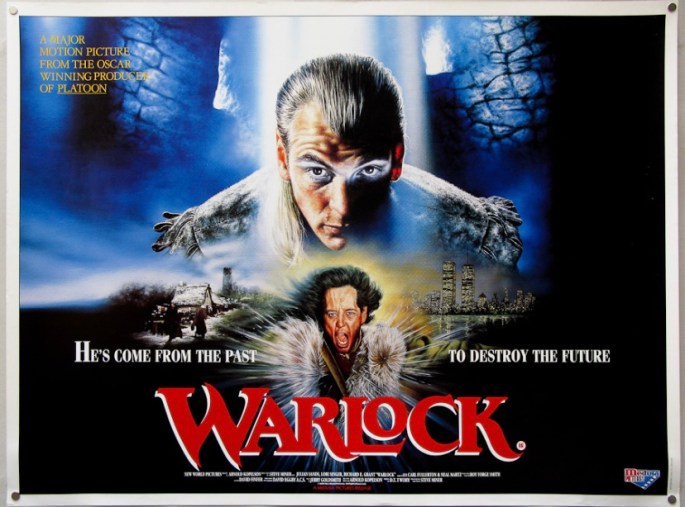
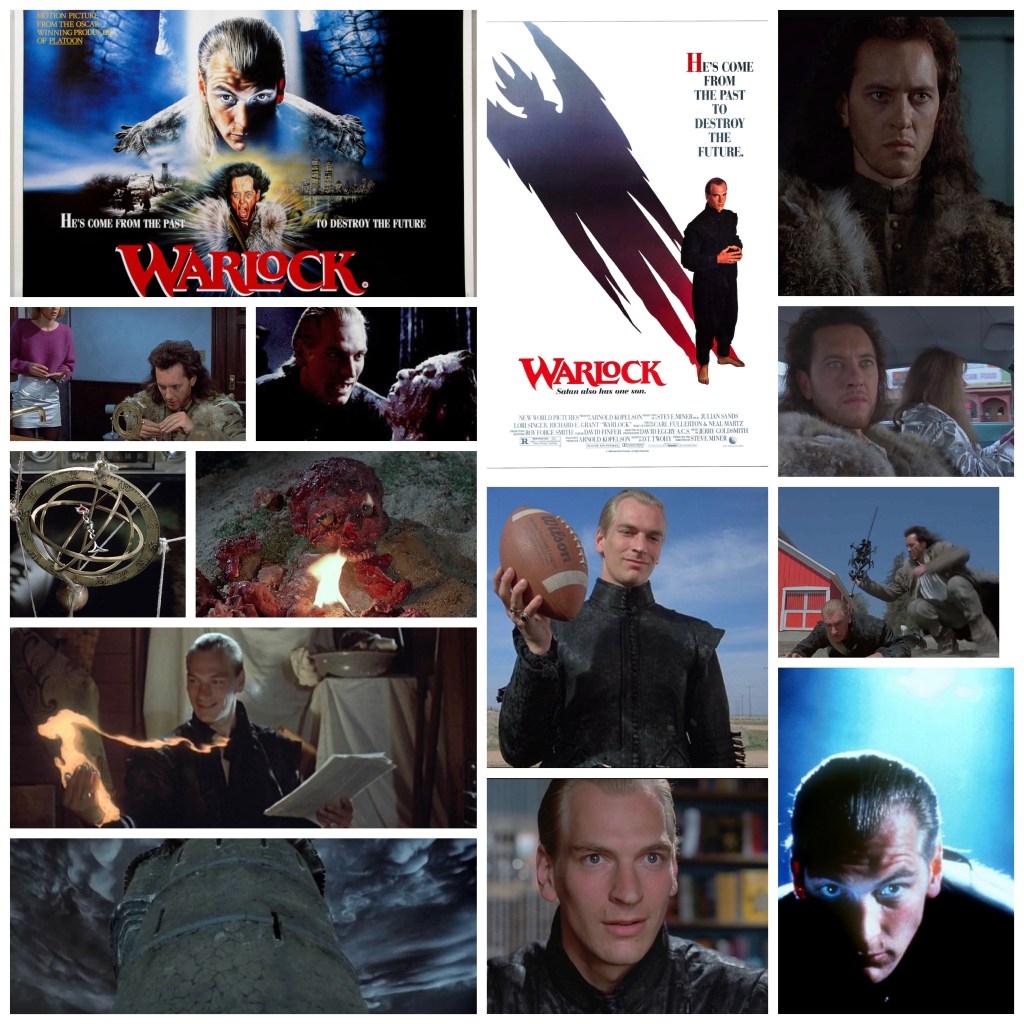
Steve Miner’s Warlock

Steve Miner’s Warlock is billed as a horror film but it looks, feels and works better as a sort of time travel adventure deal. There are elements of horror, and the sequel (which I’ll review next) definitely dabbles in horror more hardcore but this is a rollicking, spirited jaunt from 1600’s New England through space and time to 1990’s L.A. as a hyperactive witch hunter (Richard E. Grant) pursued a dangerous supernatural sorcerer (Julian Sands) before he can collect enough dark magic to unleash the apocalypse or… something. It doesn’t matter what your specifics are when your effects, journey and overall atmosphere are this much fun. Sands is mercurial, devilish and relentless as the Warlock and he carefully walks a tightrope between being an unstoppable, faceless force of evil like some horror boogeymen and having his own unique charisma and panache, like others. Grant is ridiculously fun as the initially boorish, then gradually likeable and by the third act downright adorable witch hunter, sporting a coat right out of The Revenant and a mullet that Chuck Norris would be jealous of. Also he’s called “Giles Redferne,” which might be the coolest name ever in cinema, and he sure lives up to it. He meets a bubbly 90’s valley girl who has no interest joining forces with him until the Warlock puts a nasty aging spell on her and then, well, you can imagine. The effects are naturally of the 90’s variety but they have their own kitschy charm, especially during a hilariously shocking sequence where Sands literally kills a child and uses its blood for a flying potion so he can become a cruise missile and engage Redferne in a raucous highway car/flying Warlock chase. This is a fun one with elements of horror, dark comedy and swashbuckling tinged adventure all at play.

-Nate Hill

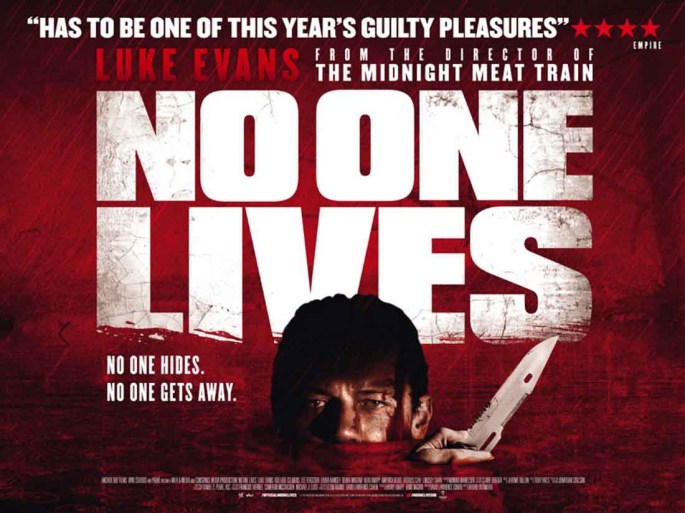
No One Lives

I don’t think I’ve ever seen quite as… efficient a serial killer as Luke Evans in No One Lives, an absolutely mental, ruthlessly gory, completely unhinged shocker with enough torque in its hood to short circuit your TV. It’s one of those stories where a group of very bad people accidentally enter the orbit of someone much, much worse and live to deeply regret being so careless. In this case the bad people are a roving gang of backwater criminals led by Lee Tergesen, but they’re not a biker gang or anything specific they’re just like… a gang, like the Warriors or something which I found hilarious for some reason. Anyway they unwittingly piss off Luke Evans’s seemingly benign ‘Driver’, who turns out to be an impossibly cunning, deviously psychotic and *very* experienced mass murderer and he has now decided that they are all gonna die. Every. Last. One. It’s not so much a game of survival as it is a total massacre of fish in barrel and we see him dispatch them all in some truly unsettling and bloody ways that involve everything from an industrial wood shredder (it’s not a wood ‘chipper’, the only applicable description of this fucking giant thing is ‘shredder’) to a lethal harpoon gun pulley system to a grisly variation on the ‘Leo hiding in a horse carcass’ moment from The Revenant. Amidst the mayhem and splatter the film even finds time for some genuinely twisted victim/aggressor psychology involving a former captive of his played by the lovely and always slightly unnerving Adelaide Clemens, who comes across like a shellshocked Michelle Williams. The two have a perverse, Stockholm Syndrome laced former dynamic that is eerie and very well acted by both. Evans usually shows up in polished, rollicking Hollywood high budget fantasy and whatnot but it’s very refreshing to see him roll up his sleeves and dive headlong into something knowingly lurid and deliriously pulpy, he has a ton of fun as basically the Jason Bourne of serial killers and I could totally see the character returning for a sequel or two. It’s decidedly lo-fi, B horror stuff and very in your face gruesome but Japanese director Ryûhei Kitamura keeps the momentum surging at a breathless pace, the gore and action nearly nonstop and the schlocky, Midnite tone evenly dispersed throughout for a wicked wild ride.

-Nate Hill

Aneesh Chaganty’s Run

Sarah Paulsen can be pretty damn scary when she wants to be and casting directors have taken full advantage of her talents, placing her in some truly unsettling roles where she somehow always manages to find humanity in the monstrosity. Aneesh Chaganty’s Run is a diabolically calibrated shocker that sees the actress in one of her more disturbing turns yet as a new mother who, as we see in an atmospheric prologue, loses her newborn child two hours after it’s born and appears devastated. Fast forward a decade and a half and we see her living in relative tranquility with a disabled daughter (Kiera Allen) and a good teaching job. She loves her kid very much and takes care of her multiple serious medical conditions until the daughter sees some cracks in the seams and realizes that mommie dearest might not be who she says she is and may be downright dangerous. This leads to a series of excruciatingly suspenseful scenes of the kid trying to break free, figure out what’s going on and how she’s being lied to and Paulsen furiously trying to keep her close, and very much in the dark. Director Chaganty also did the sensational 2018 thriller Searching with John Cho and that film was almost entirely restricted to the realm of digital social media screens and phone/tablet interfaces and somehow managed to be as exciting and propulsive as can be. This film obviously has less limitations and takes place out and about in the real world but the same nerve wracking momentum and crackling energy are present the entire time, so it stands to reason that this guy is a filmmaker to keep a close eye on as far as thrillers go. The ending was a bit.. demented for me and although deliciously and darkly serendipitous, felt a tad strange but everything that comes before is top tier thriller material, with Paulsen firing on all certifiably deranged cylinders.

-Nate Hill

Sydney Lumet’s Before The Devil Knows You’re Dead

I’ve seen some ill advised plans in my day and even orchestrated a few of them myself but I’ve never seen quite an ethically fucked, totally stupid, domed to fail miserably scheme as the one dreamed up by two dysfunctional middle aged NYC blue collar brothers in Sydney Lumet’s Before The Devil Knows You’re Dead, a bleak, depressing, pitch dark, anxiety inducing morality play that although admittedly is an excellent film on all fronts, is *NOT* a pleasant viewing experience and I shan’t be revisiting any time soon. Ethan Hawke is the lower middle class, very aloof, perpetual screw-up brother whose marriage is a disaster, relationship with his daughter depressing and he needs cash for alimony quick. Philip Seymour Hoffman is the older, wiser (HA!) and more successful sibling with a sleek corporate career but has his own issues including backdoor corruption, a failing marriage of his own to Marisa Tomei (really? Those two?) and a crippling heroin habit. They’re both financially fucked, so big bro hatches a plan to rob a mall jewelry store on a low-key Saturday when the cash drop is in house. That’s already a bad enough idea, but get this: the store in question is owned by their own parents, who are elderly no less. Now, Hoffman has his own complicated reasons for justifying such a terrible act that stem back into their childhoods, as these kinds of inexplicably dour familial tragedies usually do, while Hawke sort of tags along in befuddled, brainless complicity. Naturally the heist itself goes just about as wrong as it can go and results in (this isn’t a spoiler it’s in the trailer) the gunshot wounding of their mother (Rosemary Harris) thanks to the incompetence of a hapless small time hoodlum (Brian F. O’Byrne) that Hawke hires to do his dirty work in an act of despicable cowardice. Their father (Albert Finney in a towering performance and the finest work of the film) is very clearly still in love with her and starts to unravel, and it becomes clear he always loved her over his own children, a gnawing thorn in the side of their overall dynamic that was just waiting for a traumatic event to rear its head in. The film skips around in time as we see the events leading up to the heist itself, each character’s desperate situation reaching a breaking point that leads to such an extreme decision, spearheaded by Hoffman’s impossibly bitter character, a fellow who is so uncomfortable in his own skin he even makes a seemingly lighthearted sex scene with Tomei come across as uncomfortable. The actors are all terrific with Finney being the standout as the furious, heartbroken and vengeful father who seems like he never wanted to be a father to begin with, just a husband. The supporting cast has some excellent cameos including Leonardo Cimino, Amy Ryan and Michael Shannon as a violent ex-con who muscles in on their lives. This is a great film with terrifically developed character dynamics, a crisp, well oiled storytelling vernacular and a refreshingly earthen portrait of lower middle class shenanigans that few films capture with authenticity, and naturally Lumet’s by now second nature knack for expressing the spirit of NYC, this time in deglamorized boroughs not usually focused on in cinema. It’s a great film, it’s just not a nice one and you’ll feel like shit after, there’s no other way to slice it.

-Nate Hill

Las Tinieblas: The Darkness

The Darkness was a weird one, even by my standards, but I somewhat enjoyed its particular brand of bizarre, despite feeling that the film overall seems a bit… incomplete. It’s a Spanish horror film, but one of those ones that seems to shirk the conventions of sub-genre and aspires to be something completely unique. Somewhere in a perpetually fog enshrouded, seemingly post apocalyptic wilderness, a paranoid fellow (Brontis Jodorowsky, son of legendary filmmaker Alejandro Jodorowsky) lives in a small cabin with his three grandchildren, in constant fear. He claims that if they go outside a mysterious ‘beast’ will come for them, and makes them wear gas masks if they set one foot outside for food or water, for fear of some vague toxicity in the air. Indoors doesn’t seem all that much better though because he’s kind of an unstable whack job who has an extremely unsettling collection of puppets he brings out, plus his rules and phobias just come across as… nuts. Soon the eldest grandchild, who bears the brunt of his antics, gets suspicious and it puts a tense saga of attempted escape and surreal, dreamlike imagery into motion. This is an arthouse film through and through, a style that I love but sometimes they get too loose, unstructured and neglect to tell a story that has any kind of discernible substance to it beyond just.. weird stuff happening. There are some absolutely striking visual terrors on display including aforementioned puppets, who are terrifyingly lifelike and a strange, split second glimpse at some kind of monster who may or may not be there for real, and the atmosphere is a smothering auditory tarpaulin of palpable unease that hangs over everything as does the eternal Silent Hill-esque fog. The film looks and sounds amazing and is very immersive from an atmospheric standpoint, it just needs more: a smidge more tangible exposition, a longer runtime to flesh things out and some more character to development to make it the full package. An almost great film.

-Nate Hill

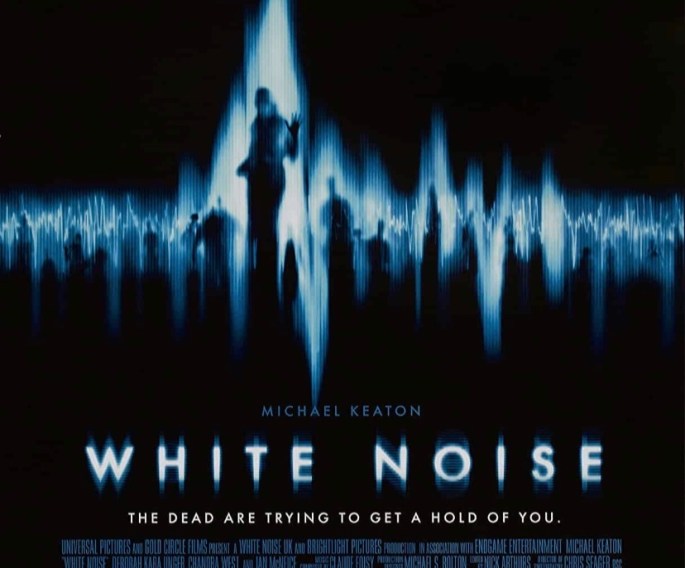
White Noise

I’ll start with the Thomas Edison quite that this film opens with because I just love it:

“Nobody knows whether our personalities pass on to another existence or sphere, but if we can evolve an instrument so delicate to be manipulated by our personality as it survives in the next life such an instrument ought to record something.”

I’m not sure what film critics were watching back in 2005 that caused such a knee jerk reaction of overall negativity, but the White Noise I saw was a chillingly effective, moodily atmospheric and very well done horror with a solid lead performance from Michael Keaton and one hell of a central premise. I mean it’s a bit low key, favouring hovering room tone and slow paced suspense over frenzied thrills or jarring shocks but that tends to be what I gravitate towards in horror anyways, so here we are. Keaton plays a Canadian construction CEO in Vancouver whose recently pregnant wife (Chandra West) doesn’t come home one night. A few days pass and her body is found near her crashed car, vaulted over a seawall gorge. As he begins mourning her, a mysterious gentleman (Ian McNeice) approaches him and claims that she has been contacting him via a phenomenon known as EVP, or electronic voice phenomenon in which the spirits of the dead can speak out across the gulf between worlds using electronic equipment, in this case a VHS recording system and a screen full of the titular white noise. Keaton is skeptical at first but it soon becomes clear that this is very real and with the help of another grieving woman (the great Deborah Kara Unger) he sets out to communicate with his wife and discern whatever message she has for him. Problem is, the VHS system is an open receiver and she isn’t the only spirit out there who can hear or talk, which sets the conflict in motion. I won’t say more but it’s a tense, brooding thriller and the Vancouver setting provides that classic rainy day, chilly PNW feel while much of the action is shot through these muted blue grey filters and accompanied by unnerving, otherworldly cues from the score by Claude Foisy. The scenes of communication over the VHS equipment are the film’s strongest attribute and fill the visual auditory realm of the film with a stark, creepy sensory dreamscape of fuzzy movement, shadows around the corner and wailing souls crying out from the abyss. Like I said, I’m really not sure what the issues were with this film from a critical standpoint other than the fact that they play fast and loose with plot a bit, but even then there’s a clear answer and resolute final act, while overall they focus on atmosphere and tone, which is my jam anyways. Great film.

-Nate Hill

THE ROBERT ALTMAN FILES: THIEVES LIKE US (1974)

If Nicholas Ray’s 1948’s masterful film noir They Live By Night was the true cinematic template for the “doomed lovers on the run” subgenre of films that eventually led to Arthur Penn’s revolutionary Bonnie and Clyde in 1967, then Robert Altman’s Thieves Likes Us brings it all back full circle. By adopting the Bonnie and Clyde standard of the time that was the employment of period detail, authentic locations, and, when necessary, graphic violence, Altman’s film utilizes the same 1937 Edward Anderson novel that was the source material for Ray’s film and gives the audience what the Norman Rockwell-inspired, George Gross-rendered one-sheet poster promises. But the film ends on a note of brusque cynicism which slyly deprives the audience of a traditional resolution and, in true Altman fashion, upends the genre’s conventions.

Thieves Like Us, also the title of the Anderson novel, begins much like Ray’s film and, in fact, doesn’t much divert from its plot during its entire running time. After bathing in a beautifully lazy, unbroken shot across a Mississippi work farm, courtesy of French cinematographer, Jean Boffety, we see prisoners Bowie (Keith Carradine) and Chicamaw (John Schuck, delivering his final performance in an Altman film) steal away to an adjacent field to meet T-Dub (a terrific Bert Remsen) who has rooked an unwitting hick taxi driver in aiding in the escape of the two. From there, the trio hides out with alcoholic garage owner, Dee Mobley (Tom Skerritt), and his daughter, Keechie (Shelley Duvall in her first above-the-title role) before moving on the the home of Maddie (Louise Fletcher), the wife of T-Dub’s incarcerated brother. While on the run and convalescing after a car accident turns into a deadly confrontation with police, Bowie falls in love with Keechie and she reciprocates in such a fashion that their union can’t be met with anything but doomed and tragic consequences.

From a ten thousand-foot view, there isn’t anything detectable to distinguish Altman and Ray’s different treatments of the material from each other. Sure, Altman’s film is more committed to the Depression-era period of the novel and neither film keeps Anderson’s nihilistic ending but, on first blush, Thieves Like Us is just a seemingly more relaxed and softer roll through the same territory as They Live By Night. But there comes a time in Altman’s film that the focus on the women characters becomes sharper and causes the film to shift away from a film about boys at play and towards a film about, to paraphrase my wife, how women will do whatever necessary to achieve a sense of normalcy, regardless of what that might look like. First, we see this in Keechie. Bored but resigned to her fate, Bowie gives Keechie someone other than her drunken father to look after and mother. Bowie’s murder rap, as explained by him, doesn’t seem all that just so Keechie goes with him out of a blend of genuine affection, boredom, and hope for a better life than her present one which Altman paints as desperately terminal.

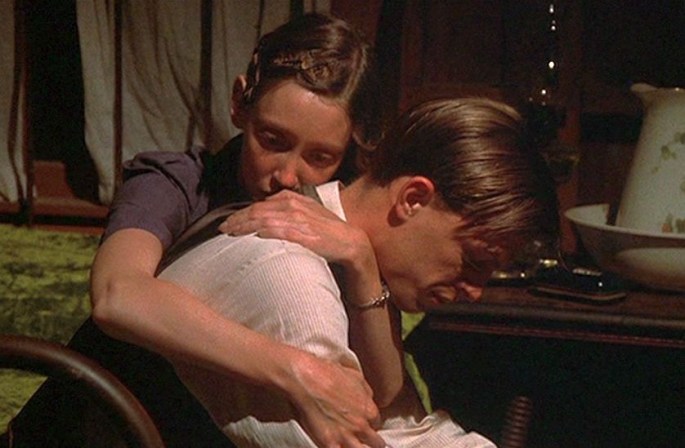
It should be noted that Shelley Duvall is so real and so natural as Keechie that you can feel true romantic tension build between her and Keith Carradine during their silent moments together early in the film. They talk like actual people and respond in kind. When Bowie remarks that she’s cut a great deal of her hair off, she smiles, looks to the ground, and says “I dunno” in a manner that is so genuine and sweet, it recalls deep, buried memories of the awkwardness and shyness of first love. This is in diametric opposition to the way the characters are played by Farley Granger and Cathy O’Donnell in Ray’s film, faultlessly walking a fine line between love-sick, smitten pups and hard-edged, damaged souls. In specific contrast to Granger, Carradine’s Bowie is a sweet-faced greenhorn, only slightly more streetwise than his ill-fated cowboy character in McCabe & Mrs. Miller. Duvall’s Keechie is at once more naive and tougher than O’Donnell and her anguish at the end of the film is told in spades as Altman trains his slow motion camera not on the gory details of the police ambush that kills Bowie, but on her face as she watches it unfold, held back in a quasi-embrace by Maddie, the true driving force of the second half of the film.

In They Live By Night, Maddie’s character (played with gusto by Helen Craig) is spitting fire from the get-go, making her prime turncoat material. But Fletcher’s interpretation of the role is closer in spirit to Julie Christie’s Constance Miller; a woman who can see far more clearly than any of the men around her and will cut her losses as quick as breathing when she must. At no time in the film would any of the men suspect that Maddie would double-cross them for her own gain. And, honestly, neither would the audience. If one were to go into Thieves Like Us completely cold, Fletcher would seem like a harried but big-hearted good sport. She’s far more focused on the details of running a home and distracting her children from the awful details of her houseguests by ensuring her son knows to use his roll as a pusher at dinner time. But with her life in virtual ruin as it contains both a husband in prison and rugrats she can scarcely control, Fletcher exudes the quietest of strengths in a role that is by turns tough, honest, and canny. Slowly emerging in the second third of the film, Fletcher’s presence permeates the final act and, by the time the credits roll, more than a little of her character will have imprinted itself on Duvall’s Keechie’s. Keep a stiff upper lip and believe the stories you have to tell yourself to keep moving forward.

One has to wonder how much of this specific focus came at the hand of Joan Tewkesbury who, along with Altman and Calder Willingham, adapted Anderson’s novel for the screen. Instead of keeping Ray’s ending where Keechie reads the tragic love note that was written by Bowie just before he is killed in an ambush, and likewise jettisoning Anderson’s ending where the both of them are killed in the same event, Thieves Like Us presses a more tragic point about the very human cost and the actual wreckage that occurs to those in the orbit of criminals. It explicitly deals with the unfortunate shame and social baggage that (mostly) women have to tote around with them due to the careless and thoughtless actions of the men in their life. Not coincidentally, this theme would likewise emerge in Nashville, Altman’s next feature which was also penned by Tewkesbury.

Additionally, the connection between Thieves Like Us and Nashville is also clear due to their strong usage of pop iconography and corporate branding across the American landscape. Thieves Like Us shows the radio tying the country together in a way that previous mediums could not and by synching the diagetic music and dialogue from the radio dramas with the action on screen, Altman suggests an emerging correlation between real life and shared entertainment while also displaying a savvy focus on cultural mass marketing that is beginning to take root. Where prison gates are used as literal ad space for Coca-Cola, the almost outsized presence of that product in Thieves Like Us predates the Goo-Goo Clusters that will eventually underwrite the Grand Ole Opry in Nashville where the country crooners on the radio will no longer be selling Rinso Detergent, but Hal Phillip Walker’s goofy, untenable brand of populism.

Thieves Like Us was part of a cycle that came in the wake of Bonnie and Clyde, itself as much a film about the then contemporary change in America as it was a biopic of Depression-era criminals. But where Bonnie and Clyde pops, Thieves Like Us simmers letting the individual ingredients stew and causing the material to cook into something else entirely. It never feels like Altman’s players are wearing stuff from the wardrobe department as is the case in Martin Scorsese’s underrated but undeniably budget-hampered Boxcar Bertha nor are things quite as clean as in the other Corman-produced films cut from the same cloth, such as Bloody Mama and, later, The Lady in Red. By letting us slowly wade into the world of Thieves Like Us, Altman rewards us by reminding us that the quiet details of real-life feel much more piercing than the grand sweep of Hollywood dramaturgy.

Nicholas Ray’s They Live By Night is a true beauty with a well-deserved, unimpeachable reputation as a film that is as hard-edged a piece of business that you can find. It’s a film that talks tough, moves fast, and kisses tragic. Robert Altman’s Thieves Like Us isn’t nearly as well known but it operates in the same, languid style as his adaptation of The Long Goodbye. It’s a film that speaks softly, takes its time, and ultimately reveals itself to be positively ruthless.

The Secrets We Keep

What if you were sure, beyond a reasonable doubt, that your neighbour or someone living close to you in the area was in fact a dangerous war criminal who committed unspeakable atrocities towards you in the past and, like you, has escaped the fog of war to start a new life? Noomi Rapace’s Maja faces this dilemma in The Secrets We Keep, a deeply emotional, unbearably suspenseful dramatic thriller that showcases the actress at the most raw and vulnerable I’ve ever seen her, and if you’re familiar with her work at all you’ll know that’s saying a lot. Maja is a Romani girl from a small town whose entire family was abused, violently assaulted and terrorized by a marauding band of German SS officers on their way to escape from Bucharest sometime near the end of the war. She alone made it out, and went on to start a new life in postwar United States, where she meets a husband (Chris Messina) and has a child. But wounds of the past don’t heal too easily, especially when she notices Swiss newcomer to the town Thomas (Joel Kinnaman), who she instantly recognizes and believes to be one of the officers who brutalized her fifteen years ago. She kidnaps him, keeps him in her basement and pulls her skeptic husband into a deadly, highly emotional interrogation game as she tries to get Thomas to admit who he is, which he simply won’t do. Does she have the right man? Is Thomas really this person or has her trauma clouded judgment and altered her personal reality into projecting onto someone innocent? Things get complicated when Thomas’s wife (Amy Seimetz) comes looking for him and the whole situation threatens to blow up in everyone’s face. This is a thriller for sure and there are some moments of tension so extreme that I forgot to breathe, but at its core this is a story about how the psychological scars of war never really heal, and through Rapace’s staggeringly good, heartbreakingly intense performance that theme comes across achingly clear. They live in one of those idyllic, Shangri-La 1950’s postwar neighbourhoods you’d see in something like Malick’s Tree Of Life, made of picket fences, pastel houses, tranquil evenings, children playing on the streets and air drying laundry billowing in the breeze like angel wings keeping sentinel watch on the inhabitants. But not even angels, allegorical or otherwise, can eradicate the devils present during a war, or even cause those affected by it to forget what happened to them and the trauma always, always follows them home in one way or another. Its a terrific guessing game, a visceral captivity thriller and and an affecting interpersonal drama but for me it works most effectively as a harrowing character study of one girl, the memories that won’t die and her struggle to live some semblance of a normal life after enduring unimaginable horror. Great film with an absolutely beautiful, diamond knockout performance from Noomi.

-Nate Hill

Guns Akimbo

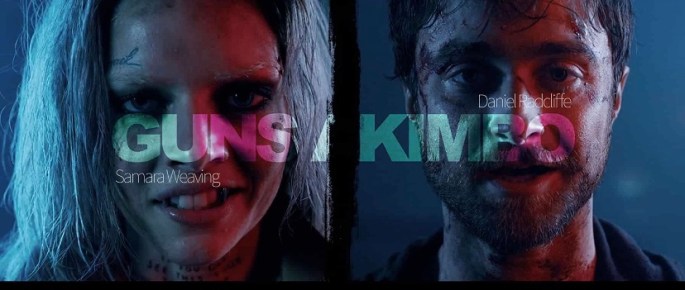
Guns Akimbo could be written off as cheap cartoonish thrills or simply whack-job hyperactive splatter without a touch of artistry like some of its type, but the fact remains that it’s actually a really good film from all standpoints and I had a ton of fun with it. Daniel Radcliffe has been doing his best to shed the deeply rooted Harry Potter mythos and pick some genuinely edgy, offbeat scripts (Horns, Swiss Army Man) and this one slam dunks squarely into that niche. In the not too distant, slightly dystopian future a terrorist cell of lunatics operates a gladiatorial games match called Skizm, in which various freaks, degenerates and maladjusted humans fight each other to the death all over an unnamed city (actually a super arbitrary combo of Auckland and Munich) as advanced drone technology catches it all and a vast, unruly community of online users observe over the interwebs. Radcliffe is Miles, a meek, beta computer programmer whose only joy in life is to troll user-boards relentlessly until he makes the wrong comment to the wrong account and finds himself targeted by the CEO of Skizm himself, a deranged, tattooed fiend called Riktor (Ned Dennehy). He’s kidnapped and wakes up with two giant guns *literally* nailed into his hands and turned loose into the death match that is Skizm for his troubles, where frying pan turns to fire but quick as he finds himself hunted by the game’s ruthless reigning champion, a rambunctious goth waif named Nix (Samara Weaving). Being an inexperienced softie he finds himself in quite the predicament until… well I won’t spoil the story but it goes to some fun places. Much of it is Miles furiously cavorting about the city with Nix in hot pursuit as vehicles are annihilated, bystanders are blown to pieces and several thousand rounds of ammo are emptied into everything animate and inanimate set to a thunderous, skeleton reverberating electronic score by Enis Rothoff. The action is frenetic, meticulously choreographed and strikingly brutal especially whenever Weaving, who is wicked here, shows up to pulverize a horde of enemies like some kind of nightmarish hell-shryke who escaped from Hot Topic. Radcliffe spends much of the film in a confused, exasperated daze and sort of just.. bungles his way into escaping each new hurdle, it’s a fun shtick. Dennehy is an actor to watch out for as the villain Riktor. He’s an Irish dude who made a distinct charismatic impression as one of the second tier baddies in Panos Cosmatos’s Mandy, but he’s positively in another orbit here, a rambling, incoherent, cheerfully psychotic animalistic nut job who is just too much fun to watch. This film falls in the category of super duper torqued up stuff like Crank, Smokin Aces and Shoot Em Up that are a ton of fun for the right audience yet many will find to be just too obnoxious and cacophonous for their tastes, which is fine. I enjoyed this a lot, it’s got style for days, momentum like nobody’s business, ruthlessly pitch black humour and even finds a moment for an albeit heavy handed (literally) yet pretty effective nugget of social commentary on toxic internet gaming culture and the poisonous, desensitizing, voyeuristic prism violence is viewed through online. Fun times.

-Nate Hill