Roman Polanski’s The Ghost Writer

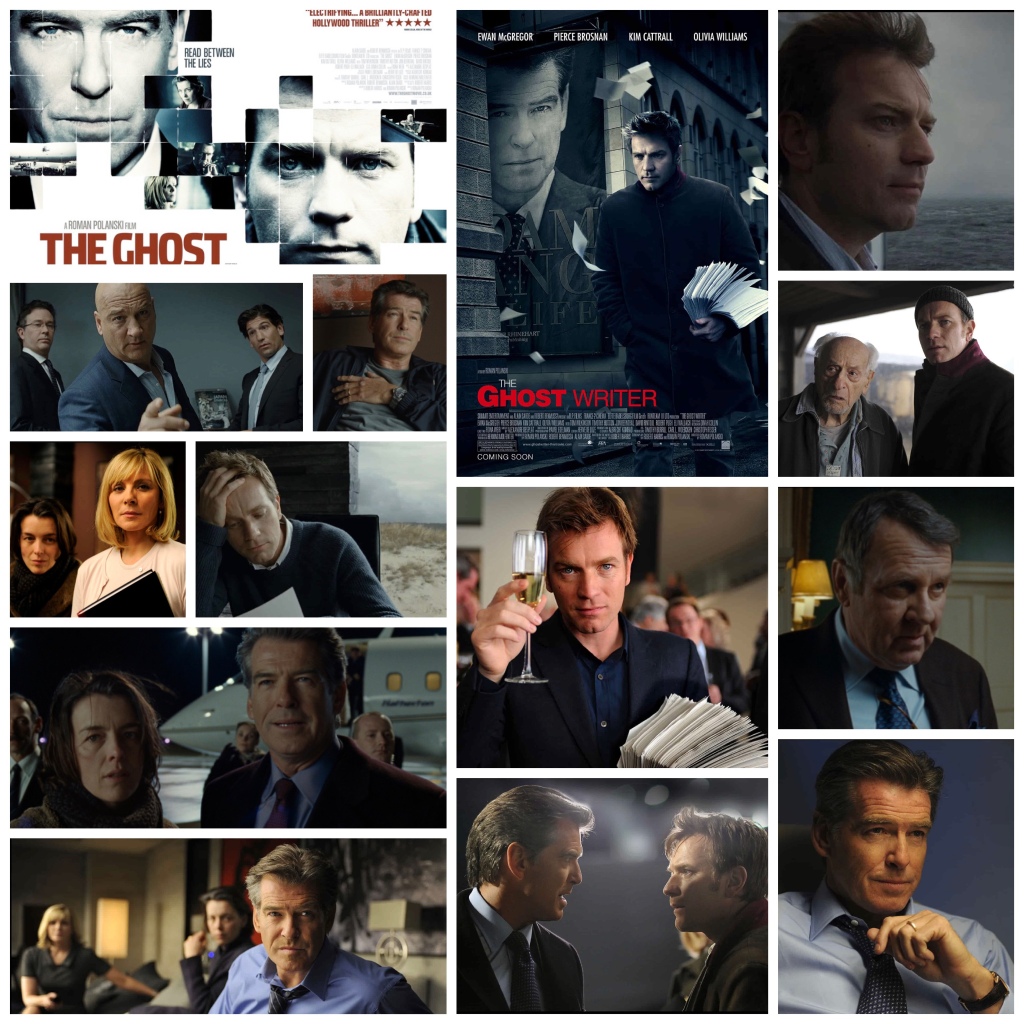
Roman Polanski’s The Ghost Writer is a tantalizing political l thriller with one powerhouse performance from Pierce Brosnan as the UK’s shadiest former politician, a galaxy of terrific supporting talent, some truly inspired bits of brilliantly orchestrated suspense, and Ewan McGregor too. He plays the titular ghost writer, a handpicked scribe first hired to unofficially pen the memoirs of Brosnan’s fiery former Prime Minister, an endeavour that turns into much more of an… involved position than anyone ever planned on. The moment he arrives at the man’s lavish Cape Cod private island residence, a nasty scandal springs forth in the media that forces him into hiding and causes McGregor to suspiciously question his past, both personal and professional. McGregor serves as kind of an audience proxy and gives a solid if unremarkable turn, but Brosnan removes the muffler and fires on all cylinders for a charismatic, cunning barnstormer of a performance, especially in the last act where his life and reputation are thoroughly unravelled. The supporting cast is wonderful, with Olivia Williams being the standout as Brosnan’s long suffering wife who teeters on the brink between loyalty and exasperation. Jon Bernthal is McGregor’s agent, Timothy Hutton and a startlingly bald Jim Belushi are bigwig fixers for Brosnan and there’s nice work from Kim Cattrall, Robert Pugh, a fossilized Eli Wallach and a subtle Tom Wilkinson as a mysterious lynchpin character. The film has a luxurious, over two hour runtime which allows you properly sink into the serpentine narrative full of murky political espionage, dirty secrets, sins of the past, clandestine shifts in power and some truly impressive Hitchcockian twists of fate. Much of the action is set on Brosnan’s beautiful Cape Cod island home, which is actually filmed in Germany and Denmark because, as we know, Polanski can’t go stateside but it looks and feels right just the same and provides a chilly, mist shrouded coastal atmosphere that suits the mysterious nature of this story unfolding. The ending is a kick right in the balls in several different ways and each character reaches the end of their arc with a ruthless, grim yet very appropriate sense of dark, poetic and karmic justice. Excellent film.

-Nate Hill

THE MICHAEL MANN FILES: STRAIGHT TIME (D. ULU GROSBARD – 1978)

By Patrick Crain

In the cinematic world of Michael Mann, there are two figures who loom the largest. The first and most obvious one is Jean-Pierre Melville, French auteur whose cool visual style, obsession with the relationships between cops and criminals, and strict attention to detail and precision all informed the majority of Mann’s work. The second giant figure in Mann’s universe is Edward Bunker, master criminal who was also a gifted writer and turned his own real-life exploits into fodder for crime-obsessed filmmakers such as Mann and, later, Quentin Tarantino. While one-time cop Dennis Farinia and one-time thief John Santucci both lent their expertise to Mann’s world and filled it with the kind of details only professionals can articulate, it’s hard to imagine a character more important to our contemporary and cultural understanding of the professional criminal via broad, poetic, and genius stokes than Edward Bunker, both folk hero and ground zero for the Michael Mann archetype. So great was Bunker’s presence in the world of Michael Mann that, in Heat, Jon Voight’s criminal fixer, Nate, was modeled in both look and voice after Bunker.

And so it is that Straight Time, Ulu Grosbard’s film from 1978 based off of Bunker’s semi-autobiographical novel, No Beast So Fierce, is derived from a screenplay by Alvin Sargent, Jeffery Boam, and Bunker, with uncredited passes by the incomparable Nancy Dowd and, in his first feature film gig away from the confines of television, Michael Mann. Starring Dustin Hoffman as Bunker substitute Max Dembo, the film displays in very stark terms the incredibly limited and stifling choices afforded to an ex-con while also revealing, in the case the viewer wasn’t aware before watching it, why recidivism is a thing that occurs with an unfortunate frequency.

Straight Time is mostly what one would consider now a “hangout movie.” Nothing really much happens in terms of plot outside the trajectory of Max’s transformation from ex-con to fugitive with unsparing, heartbreaking detail (and rewarding invested audiences by making them amateur penologists). We meet the ex-cons in Dembo’s universe in their flophouses, modest starter homes, and even their middle-class suburban digs. But punching time-clocks, the routine of raising a family on the straight and narrow, and hosting backyard barbecues hold no life for these people. They are loners at heart and not much different from Pike and his men in Sam Peckinpah’s The Wild Bunch; rudderless souls to whom civilization is just another prison.

Despite it going through a few more cycles before hitting the screen, much of Michael Mann’s work is still imbedded the screenplay. There materializes a familiar, doomed romanticism between Dembo and Jenny (a dazzling Theresa Russell) which will also show up in numerous Mann works. If the restaurant scene between Hoffman and Russell feels familiar, it’s because it’s a dry run for the James Caan/Tuesday Weld diner scene in Thief. Additionally, Max’s usage of “What’s to it?” sounds like he could have been James Caan’s cellmate as it’s a favored piece of phraseology of the latter. The timed bank heist, the criminal detail, and the Los Angeles locations all lend themselves easily to what would later become Mann’s sandbox.

However, this material isn’t uniquely Michael Mann’s and Grosbard does a brilliant job infusing it with his own visual style. Defused night lighting, hot dog stands populated with the flotsam and jetsam of the evening, and the gross interiors of sketchy dive bars slam up against the scenes set in the blazingly bright Los Angeles daytime where Max hustles in his attempt to go legit, which loads Straight Time with a cinematic tension that straddles film noir and slice of life.

Aside from containing Dustin Hoffman’s career-best turn and a (shoulda been) star-making performance from Russell, Straight Time also benefits from a deep bench of supporting players doing some of their best work. M. Emmet Walsh is absolutely repellant as Max’s sleazy parole officer, Gary Busey and Harry Dean Stanton are 100% authentic as ex-cons desperate for some kind of action, and Kathy Bates gives a beautiful, nuanced performance that amounts to about three minutes of screen time but stops the film short to remind the audience of the sad reality that is the life of an ex-con.

While his metier at the time was churning out scripts for television crime shows like Starsky and Hutch and Police Story, tangling with Edward Bunker’s material was likely a watershed moment for Michael Mann as he found a vessel in Bunker’s prose which could keep him invested in the gritty world of crime while keeping the slick, visual ideas he would pioneer completely intact. And, quite fortuitously, it would serve Mann well the following year as his debut television film as a writer and director, The Jericho Mile, was actually shot in Folsom Prison and Peter Strauss’s main character is nothing if not a dress rehearsal for James Caan’s Frank in Thief. It’s a less polished mesh of the poetic and the procedural than what would come later but it would show the true bones of a filmmaker whose exposure to the real deal would create a filmography that would both redefine the crime film and would set the pole position for the visual and editing style that would dominate pop culture in the 1980’s.

Underworld: Blood Wars

It’s rare to have your favourite entry in a franchise be the fifth sequel, but here we are. Underworld: Blood Wars is most likely the most imaginative effort in the franchise and does a few key things that the others don’t, which I’ll get to in a minute. As expected, the tireless war between vampires rages ever on, as aristocratic vamp elder Thomas (Charles Dance) waffles about on a proper battle plan while mutinous underlings grow restless in his ranks. On the Lycan side of things, new and more organized warlord Marius (Tobias Menzies) rallies the Wolf clans for an attack that poses real threat. Meanwhile Selene (Kate Beckinsale) is perpetually exiled from both races, existing on the fringes where she searches for the daughter she never new she had until Thomas begrudgingly asks for her help in the impending wars. It’s strictly politics and expository setup until the story really kicks off, which is when it becomes one for the books. The action, gore and choreography is wonderful as ever here but what really makes it stand out and what might be my favourite sequence of the whole franchise is Selenes breathtaking journey to the Arctic to request shelter with a mysterious coven of Nordic snow vampires. How cool is that??!! The whole franchise we have this his buttoned down, black leather bureaucrat baroque vampire aesthetic with muted colours and droll performances and suddenly theres this blast of inspiration in the mythology and we are treated to new facets of lore we feel Ike we already know so well. The Nordic clan have an ethereal elvish aura to them with very elemental costumes and an ice castle hideout that has an airy, artsy look to it, there’s just nothing else like them anywhere else in the franchise and I *loved* the creative choices made here. Additionally, Selene goes through quite an intense hurdle here battling Marius and at one point, without spoiling too much, she undergoes a sort of Gandalf The White visual transformation and character arc here complete with a fur adorned outfit, wintery white hair highlights and an epic Deus Ex Machina third act mix drop moment that had me cheering. There’s also genuine pathos in her quest to find her daughter, an emotional resonance that isn’t often found in this film, so often full of sound, fury, blood, bullets and fur. Breathtaking film.

-Nate Hill

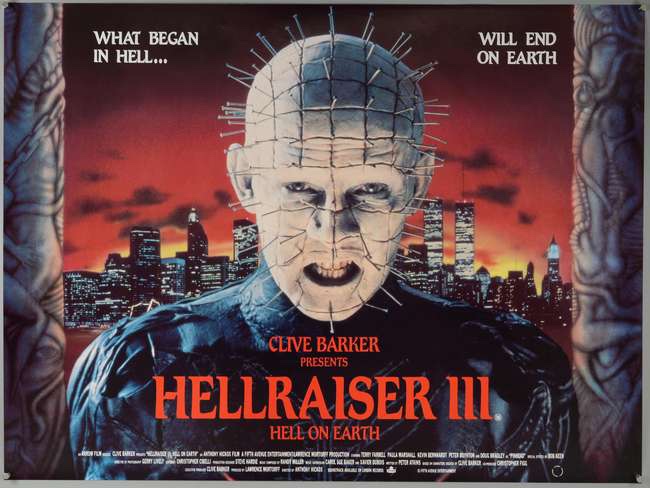
Hellraiser III: Hell On Earth

Often horror franchises will set out on one path, hang out with one set of characters for the first couple entries or so and then go back to the drawing board to shift gears completely, placing their action and mythology elsewhere in a different scenario. It gives fresh perspective, new characters and a chance for an atmospheric transference to a new environment, which I think Hellraiser III: Hell On Earth handles terrifically. The nightmarish Rubik’s cube has somehow made its way to a 90’s big city and is purchased by an obnoxious nightclub owning freak-show (Kevin Bernhardt) who uses its otherworldly aura to boost both his club’s atmosphere and his own bizarre sex life. The cube, embedded in a sculptured pillar, has a mind of its own though and soon Pinhead and his merry little gang escape from their stoney prison and wreak all madness and havoc throughout the city, starting with an impossibly bloody free for all at the club. One intrepid reporter (Terry Farrell) knows a good story when she sees one and begins to get embroiled in the Cenobites plan for citywide mayhem, along with her friend (Paula Marshall). Pinhead is fun in this one because it’s not like the first two where he just gets summoned from the cube and is there all ready to go, here he’s been trapped in that stone pillar for quite sometime and has a lot of pent up rambunctious energy and when he gets loose, he *really* unleashes hell. He’s got some… quite interesting homies in this one too, not the same peeps from the first two. There’s one cenobite with CD’s embedded into its head who chucks them around like ninja stars and amputated people’s limbs. Another one has a fancy camera on its face and uses filmmaker lingo as it kills people and as ridiculous as these two might seem initially, one must remember that the cube and the forces within seem to mirror human experience back at us with their shenanigans so it kind of makes sense in a way, plus I greatly appreciated such audacious creativity. Bradley gets to play both Pinhead here and the colonial era British explorer who he used to be for a nice touch of variation and duality. This one was a blast; stunning gore and visual effects, nostalgic 90’s aura, a wicked fun female protagonist and a playful tone that sets it apart from the first two.

-Nate Hill

THE ROBERT ALTMAN FILES: THE LONG GOODBYE (1973)

Philip Marlowe has been asleep. Whether it’s been a literal and continuous Big Sleep that has lasted since we last saw the man in 1946 is unclear. But there are clues scattered about which suggest that it is. First off, genius screenwriter Leigh Brackett is back with another adaptation of a Raymond Chandler opus just as she was all those years earlier when she was Howard Hawks’s scribbler of choice. But regardless of the initial and obvious familiarity, things are markedly different than the last time we saw Marlowe. For the hope and exuberance of postwar 1946 has given way to the cultural malaise of 1973, a time where the fabric of the country was disintegrating under the twin stresses of Vietnam and Watergate and everything we thought we understood about America was turned upside down and was perpetually under audit.

Robert Altman’s masterful The Long Goodbye was the first in a wave of neo-noir films that flooded the American cinemas in the 1970’s. Along with Roman Polanski’s Chinatown, Arthur Penn’s Night Moves, and Robert Benton’s The Late Show (produced by Altman and both cast and crewed by many of his regulars), these films took the antique formula of the dogged private eye and turned it on its ear by examining the current culture through the newly-minted, cynical lenses of the Boomer Generation or making a contemporary allegory out of an old-fashioned period piece. In all of the cases, there was a strong, moralistic tone regarding right and wrong that would crack as the film unspooled and the hero found that he no longer recognized the world he was in, a theme that cut deeply with the intended audience.

This is strongest and most evident in The Long Goodbye, which, not coincidentally, was the first of the bunch. In it, private eye Philip Marlowe is juxtaposed immediately with a cinematic fantasy. As “Hooray For Hollywood” scratches its way over the soundtrack and we survey the lodgings of one of pop culture’s most indelible and toughest detectives, we immediately sense that something has gone directly to seed. Instead of clean-lined Humphrey Bogart, we get fuzzy, wrinkled, and unshaven Elliott Gould. And instead of having to jump into his car in the middle of the night to solve a hot mystery under the darkness of the Los Angeles night, Marlowe’s cat simply wakes him up because he’s hungry and wants some food.

While the trip to the grocery store for the cat food supplies the film with its most potent allegory about trust, it also serves to crosscut an escape from the Malibu Colony by one Terry Lennox (Jim Bouton), lifelong buddy of Marlowe currently bruised and battle-scarred after a tussle with his wife, Sylvia. As he drives to Marlowe’s pad to request an emergency, middle of the night escort to Tijuana, Terry surveys the physical damage to his person; deep scratch on the face with a swollen and bruised hand. When Sylvia Lennox shows up beaten to death fifteen minutes into the film and Terry confesses to her murder in his own suicide note, Marlowe goes on a personal crusade to clear his friend’s name. In doing so, he mixes with an alcoholic writer (Sterling Hayden), the writer’s icy blonde wife (Nina van Palllandt), an equal opportunity mafioso (Mark Rydell), and a quack doctor (Henry Giibson).

Clad in a cheap black suit that never comes off his corpus and prowling about in his 1948 Lincoln Continental Cabriolet with a bottomless supply of non-filtered Lucky Strikes, Marlowe stumbles through blanched, early 70’s L.A. in a total haze. Still smart enough to sniff out phony amateurs and bumbling hoods, Marlowe never seems to understand the gravity of his current situation or the physical stakes involved. And in direct opposition to Howard Hawks’s The Big Sleep where Philip Marlowe seemed to glide through a studio-built Los Angeles with horny women throwing themselves at him without any effort on the part of Humphrey Bogart, Gould’s Marlowe can’t even negotiate a fruitful conversation with Mrs. Tewksbury, real estate agent to the rich and famous. “It’s ok with me,” a catchphrase he’ll employ throughout the film to signify his acceptance of any given situation without any shred of understanding, seems to fly out of his mouth with more frequency the closer the film gets to its conclusion.

What makes The Long Goodbye unique is that, like the other genre-blasting offerings by Altman, this is a detective film without much of a mystery at its center. Marlowe seems more intent on convincing himself of Lennox’s innocence than he really cares about clearing Lennox’s name and, like so many other Altman heroes, there is more than a touch of self-deception at play with Philip Marlowe. Lost in a landscape where ideals have become malleable, trust is transactional, and macaroni costs more than a quarter, Marlowe desperately builds a case out of the wildest of red herrings so he can continue to float along through life with his core values intact. Jack Nicholson’s J.J. Gittes is gutted by the larger graft that has seared him very personally and Gene Hackman’s Harry Moseby is frustrated at his inability to see three moves ahead of him but Philip Marlowe believes in a kind of idealistic clarity better suited for a time long since vanished, if it even ever really existed at all.

It isn’t until about the the middle of Alan J. Pakula’s Klute, itself ostensibly a whodunit about a call girl killer, that the film’s mystery is lifted and the audience knows the identity of the murderer well before the titular cop figures it out. In The Long Goodbye, the detail of Terry Lennox’s bruised hand being concealed by the driving gloves is something told to the audience but not Marlowe and it is a reveal that occurs before the opening credits end. In essence, Altman wants us to know that Marlowe will spend the rest of the film being played for a sucker and expending a ton of shoe leather just to get his heart broken. In a world that’s gone all wrong, Marlowe is all right. Unfortunately for him, he’s all wrong in a world where, by his own constant admission, it’s all ok with him.

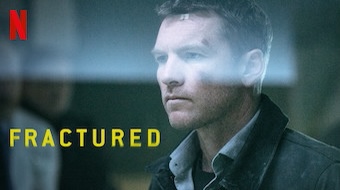
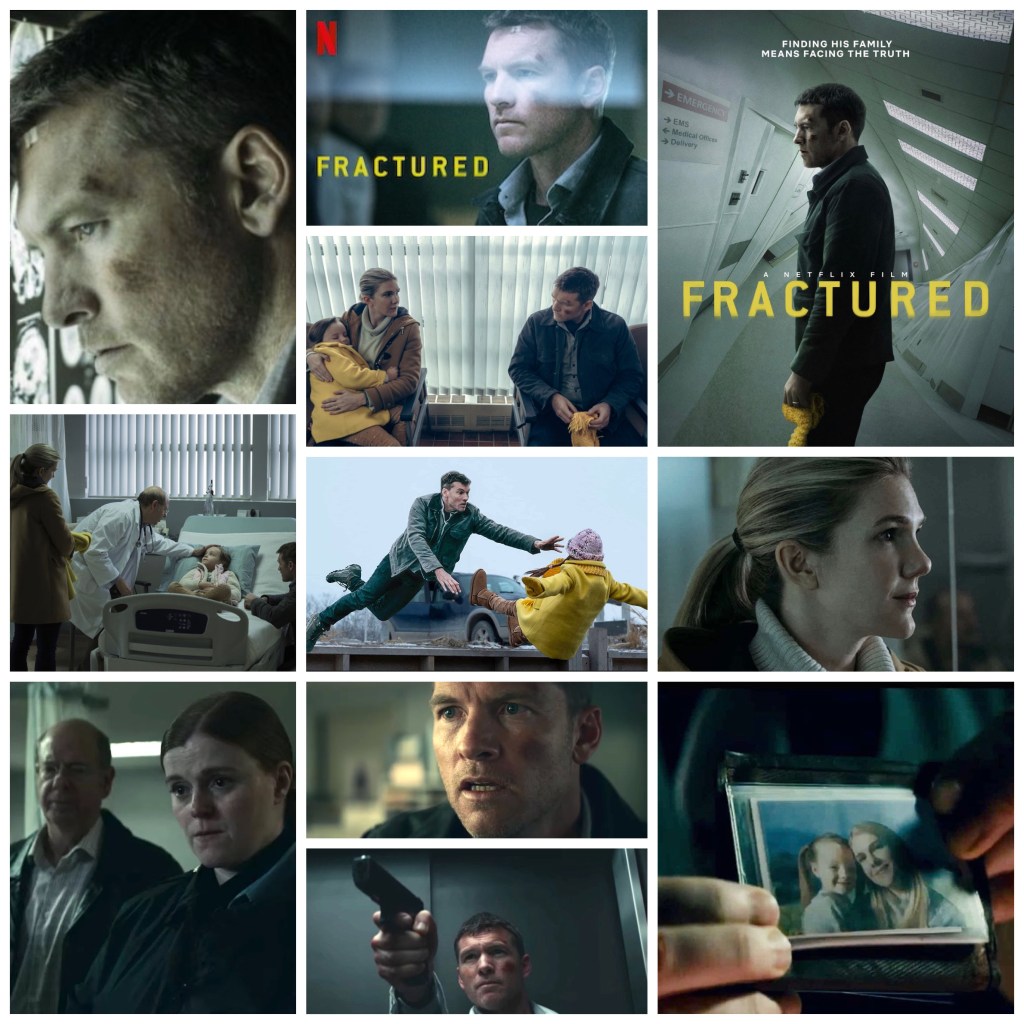
Brad Anderson’s Fractured

Brad Anderson’s Fractured is not a good film, but it somehow manages to look, sound and feel like one. How, you may ask? It’s just one of those slick, dynamic thrillers that is absolutely engaging on a stylistic level, well acted, scary when it needs to be and very atmospheric… however, it has a manipulative, unfair zigzag of a narrative that insults both the audience’s deductive skills and overall intelligence and at times feels like they were making it up as they went along, and decided right in the middle of the third act which fork in the road they were gonna go with in terms of plot resolution. Not a good look from a screenplay standpoint. Anderson is a terrific filmmaker who is responsible for some of my dearest favourites in the horror/thriller genres including Transsiberian, Session 9, Stonehearst Asylum, Vanishing On 7th Street, The Machinist and a few fascinating if flawed efforts like The Call and now this film. Sam Worthington gives a solid performance as a frantic father desperately searching for his missing wife (Lily Rabe, wondrous as ever) and young daughter (Lucy Capri), when they disappear under mysterious circumstances at a county hospital the family goes to following a roadside medical emergency. He checks them in, they are rushed off downstairs to get MRI’s and… he never sees them again. All of the nurses, EMT’s and the charismatic duty doctor (always nice to see Stephen Tobolowsky) keep assuring him that he checked himself in alone and there never was a wife or a daughter in their hospital to begin with, which seems shady as fuck and causes him to launch a one man mission to find out what happened to them. There are some incredibly tense scenes of hospital espionage as he stealthily navigates corridors and stairwells, pursued by cops and security at every turn. The performances are great, the momentum is kept up nicely and it’s all very snazzy… but like I said, this one jerked my chain a few too many times as far as plot turns go and by the end I felt disappointed, exploited as a viewer and downright hostile at the experience overall. Is this guy just a lunatic and imagining he had a wife and kid, or are the hospital staff actually hiding something sinister? Well, the film waffles back and forth in embarrassingly melodramatic and implausible fashion between the two possible outcomes and when it comes time to level with us their way of going about it feels cheap, lurid and unfair to its lead, which is especially unfortunate for poor Worthington who *finally* gives a terrific performance and ends up betrayed by the script that doesn’t properly do the character justice. The fact that this is well made makes its glaring drawbacks all the more frustrating: if it were simply a shittily crafted film I could have just three pointer line tossed it into the trashcan, so to speak. But I enjoyed much of it from a style and tone aspect, so it makes the lack of proper backbone in story just sting way more. Meh.

-Nate Hill

James Wan’s Dead Silence

Ventriloquist dummies are creepy no matter what and immediately give horror material an extra boost, however in the case of James Wan’s Dead Silence it’s the ventriloquist herself that ends up being more terrifying, a ghostly presence called Mary Shaw who was once a woman that was barren and instead of having real kids, just made freaky dolls. She’s got a nasty vendetta against the townsfolk of Raven’s Fair, Ontario, relating to an incident from the collective past that has her return time and time again with her dolls to haunt them. Ryan Qwanten is a bit of a soup cracker as the lead, a thirty-something who once escaped the town and is called back by the mysterious forces at Shaw’s command, while the acting slack is picked up by other reliable faces including Bob Gunton, Amber Valletta and Donnie Wahlberg as one sarcastic detective who has no time for this hocus-pocus horseshit until it comes looking for him. Silver screen star Judith Roberts is incredibly effective as Shaw herself, a physically imposing, spectral presence and one hell of a resourceful, spiteful and dangerous otherworldly antagonist. There’s a few scenes where she stalks her prey that verge on that special nirvana of horror territory that actually has your hair standing on end and has you checking the closets later that night. The film is somewhat advertised as an evil doll flick and really that’s just the overall premise, most of the time it’s Shaw herself doing the hauntings, scares and killings and damn does she ever do a great job. Wan directs with sweeping, gothic stylish flair and has a sense of scope and spatial dynamics, Charlie Clouser composes a thunderingly melodic haunted house symphony of a score and the atmosphere hanging over this thing permeates everything. Also, I don’t think any film has ever had the balls to try and pull of a twist ending this… unflinchingly audacious and knowingly hilarious. It’s a bold, bold move but it somehow just works and adds to the charm, eliciting the prestigious slow clap reaction from me. Great film.

-Nate Hill

Craig Foster’s My Octopus Teacher

I tent to avoid documentaries for the most part; real life is enough of a hurdle for me and I thrive off of fiction as escapism. Once in a while though I’ll dabble, usually something based in the natural world and animal kingdom, something that has to be cathartic, emotionally challenging and life affirming. My Octopus Teacher is all of these things and so much more, not only one of the most stunning, important and compassionate documentaries I’ve ever seen but an overall illuminating treatise on humanity’s somewhat dimmed but so, so essential relationship with the natural world and the creatures dwelling in it, an aspect of our experience that technology, infrastructure and rampant neglect have unfortunately dimmed. Wildlife photographer Craig Foster takes us through a defining chapter of his life as his underwater diving explorations along the lush, breathtaking Cape Town coastal waters gives him an incredible discovery: a curious female octopus living in a beautiful old growth kelp forest who he interacts with, befriends and learns to care deeply for. As we follow them down into her wondrous deep sea realm we see an intricate, wonderfully symbiotic ballet of motion, purpose, symmetry and beauty as the two become fast friends against the otherworldly backdrop of this SciFi-esque marine dreamscape. She provides him with previously unearthed knowledge regarding her species, staggers him with her considerable intelligence and innovative tactical maneuvers and the two bond over the majority of her life as he makes a private pact with himself to visit her every day over the course of a year or so. At one point he admits to the camera that before this experience he had never been particularly sentimental towards animals and that she not only changed that forever, but affected his empathy towards others in life including his own family. Animals are incredibly important, they are so much more than just pets, part of the scenery, food sources or safari wonders, they are companions and peers that share the planet alongside us and have just as much knowledge, empathy, playfulness, dignity and ability to change the world around them for the better as any given human being does. At our *best* we can only hope to be what they are, and this oceanic creature brings out the very best in one curious human who cares for her deeply and does everything he can for her. One of the most important films I’ve seen in a long time.

-Nate Hill

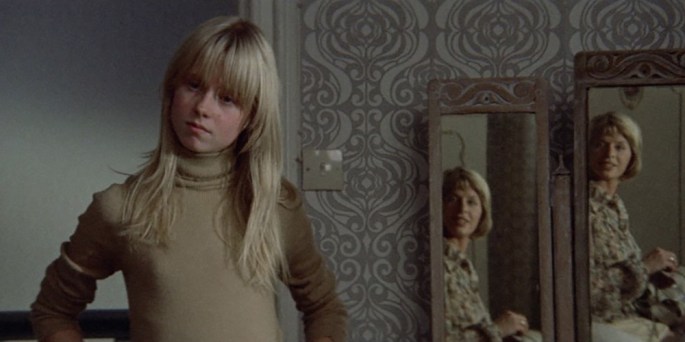
THE ROBERT ALTMAN FILES: IMAGES (1972)

Robert Altman was once quoted as saying that, to him, his entire filmography was one whole movie with each individual film a chapter. If this is true, Images, the lone horror film in his career, is a very pivotal chapter in that string as it reflects backwards on characters already introduced while also projecting forward and allowing the audience to more clearly see how, in Altman’s cinematic world, trace elements of one project can seep into another.

In some ways Images is a re-examination of Frances Austen from That Cold Day in the Park but through the prism of Cathryn, a much more sexual and less socially awkward creature than Frances but one who likewise nurses a mysterious void in her life. In direct opposition to Frances’s hanging out with barely-sentient wax mummies to fill the time, Cathryn spends her days writing children’s novels and waiting around for her boorish jagoff of a husband, Hugh, who has business dinners that last until four in the morning and, like a complete asshole, wears driving gloves as if they’re a perfectly acceptable and fashionable addition to his fall ensemble.

Despite the obvious differences between herself and Frances, Cathryn is similarly and undeniably unwell, which is made quite obvious in the first five minutes of the movie. Mysterious and disturbing phone calls which may or may not be occurring give way to brief, shocking hallucinations which cause Cathryn and Hugh to beat retreat to Green Cove, a semi-isolated, two-story cottage where Cathryn lived with her grandfather during her childhood (shot in picturesque County Wicklow, Ireland). Once there, the hallucinatory nature of the visitations of former lover Rene blend with the shifting, confusing interactions with not only Hugh but also old friend and neighbor, Marcel, and his twelve-year old daughter, Susannah.

On top of employing a lot of methods of twinning, namely the utilization of mirrors and clever match cuts, Altman plays a deft and creative card by swapping all of the cast and characters’ names. Susannah York plays Cathryn, Cathryn Harrison plays Susannah (who, in a moment of perfect, unnerving realization later in the film, says “I think I’m going to be just like you” to York). In terms of the men in Cathryn’s life, Altman stalwart Rene Auberjonois portrays Hugh, Hugh Millais portrays Marcel, and Marcel Bozzuffi portrays Rene. Identity is all but annihilated which keeps the viewer off-balance and the tension ever-shifting.

Up to this point, Images would be Altman’s most intimate film which has perhaps lent to its relative obstructiveness in Altman’s oeuvre. Coming hot on the heels of the megacast and decidedly anti-authoritarian M*A*S*H and Brewster McCloud but before the giant wave of films that would cement Altman’s style (namely The Long Goodbye and California Split), Images is a curious, lonely beast that, despite Susannah York’s Best Actress win at the Cannes Film Festival that year, is only beginning to gets its due almost fifty years after its release. This just a little more than unfortunate as Images uses the manifestation of madness through architecture and space in such a a way that puts it in the exact same company as Robert Wise’s The Haunting, Roman Polanski’s Repulsion, Stanley Kubrick’s The Shining, and Ari Aster’s Hereditary.

And Images is yet another exhibit in what was becoming Altman’s hobby, namely genre bending. In fact, this may be his very most successful. While every other movie seems to function within its respective genre while also obliterating the conventions, nobody doubts that, say, The Long Goodbye is a mystery or that Thieves Like Us is a crime picture. Yet despite the legitimate chills and shocks that come from Images (and there are plenty), it’s only been since until recently that it’s been accepted as a horror film even though it is almost explicitly so. However, this might also be more due to the arbitrary boundaries put on horror films in general which causes discussions surrounding them to devolve into qualifying nonsense where something gets described as “elevated horror.”

Images is also the first film since The Delinquents in which Altman takes full screenplay credit. That being said, all of Susannah York’s narration is hers as it incorporates In Search of Unicorns, an actual children’s book she authored and released in 1973 (and for which she is given full credit at the end). This detail in which Altman utilizes and injects elements of reality onto his cinematic canvas had already felt during the shooting of McCabe & Mrs. Miller where the cast had to choose and mend their own costumes throughout the entire production. But by incorporating York’s actual book as a double for Cathryn’s, Images takes on a multi-dimensioned life of its own which predated the kind of extraordinary hands-on approach to the country music that would be deployed by his cast in Nashville or the in-the-mix of media and politics that would give life to Tanner ‘88.

On a technical level, Images is a stunner. Masterfully dressed by production designer Leon Ericksen, the film has an almost tactile quality and is enormously clever. From Hugh’s complicated folding glasses to the numerous cameras, lenses, stereopticons, and the ocular designs in her headboard, Cathryn lives a life overloaded with optical tchotchke and bric-a-brac where she always feels seen. The subtle details that seem to appear in both Cathryn and Hugh’s home in town and in Green Cove gives off the impression that the film may not take place anywhere outside of Cathryn’s mind. Every detail seems to have a match and every thread seems to be tied.

Pulling off some fluid camerawork alongside more static moments that reveal exquisite, painterly compositions which come alive with York’s beautifully tempered narration of passages from her book, Vilmos Zsigmond’s cinematography is just achingly gorgeous and it gives Images the sheen of a dark fairy tale set in a haunted, mystical land. John Williams garnered an Oscar nomination for his stately and creepy score which is often and effectively punctuated by sharp and discordant sounds by Japanese composer Stomu Yamashta.

In the beginning of Altman’s next film, The Long Gooodbye, driving gloves are introduced in a key moment, offering a visual clue to the film’s mystery to the audience without also revealing it to Philip Marlowe. Five years later, the shared DNA of Cathryn and Frances would most certainly find its way into Shelley Duvall and Sissy Spacek’s characters in 3 Women. And while these seem like trivial details that might even be described as wild reaches, if we were to take Altman at his word in that all of his movies served as one continuous film, it’s hard to argue that these things that floated downstream and lodged themselves explicitly in Altman’s future projects weren’t the consciously laid soft-tissue connections that joined his entire cinema together like a massive, gorgeous tapestry.

The Cloverfield Paradox

So what exactly is The Cloverfield Paradox supposed to be about? A bunch of people on a spaceship that is spazzing out big time? I get what they were going for here, a cool cosmic origin story for the Lovecraftian genre-games of the other two films but this is one slapdash, nonsensical bit of silliness that doesn’t feel warranted or like it has its solid footing in the mythology of this story or simply being an effective SciFi horror at all. In an attempt to provide both backstory, context and texture to both the excellent Cloverfield and its subsequent sequel 10 Cloverfield Lane (which I also was disappointed by, but that’s for another review), this tells the story of an intergalactic mission to quell an incoming war on a distant planet by presenting an energy saving device. A crew from earth does their best but the invention ends up being a mistake, ripping a new orifice in time and space and and causing the forces of physics and reality to do some serious monkeying around. This offers up vague explanations for the monster in Cloverfield, the extraterrestrials in 10 Lane and *some* weird shit that happens in this one too but it’s never enough, never explained clearly and never seems as much fun as it should based on the potential of the overall premise. It’s a shame because they’ve given this thing the royal treatment in terms of casting, which includes Gugu Mbatha-Raw, David Oyelowo, Daniel Brühl, John Ortiz, Chris O’ Dowd, Aksel Hennie, Ziyi Zhang, Simon Pegg, Greg Grunberg, Donal Logue, Elizabeth Debicki and more. None of them really get much to do though and seem a bit lost in the uncharted stars of this underdeveloped narrative that tries to be dread inducing and Lovecraftian and just feels like a cosmic sinkhole of muddled missed opportunity. It’s starts off pretty good and the atmosphere of impending ‘something’ as they prepare to activate the device is palpable and exhilarating and then… it’s just loses steam quicker than I’ve ever seen based on the potential it had. Maybe it has something to do with being rushed into production to be released on the fly after a super-bowl game? That in itself is a great promotional idea and tremendously exciting but then at least make sure your film is as engaging and terrific as your marketing campaign because this thing has more issues than National Geographic. Pass.

-Nate Hill