Quentin Tarantino’s Jackie Brown

Quentin Tarantino’s Jackie Brown runs right around two and a half hours, and if you were to go through the film and separate all the scenes that are directly about the central plot specifics from the ones that are simply characters hanging out, shooting the shit and socializing, you’d probably cut the film in half. There’s a lesson I was taught in film school and it goes something like “every scene in the script must serve/move the plot and anything that doesn’t must go.” Well, I get the creative sentiment there but it’s often much more complicated than that, and often very subjective what one person will distill personally from a scene and use for their appreciation of the story overall versus another person being bored by it. In the case of Jackie Brown, I absolutely loved each and every laidback scene of breezy character development. These people start talking about movies, weed, cars, guns, the city or anything offhand and slowly, gradually they shift into what the story is about, which is the genius of Tarantino’s screenplay, an adaptation of Elmore Leonard’s novel Rum Punch.

As the titular Jackie Brown, Pam Grier gives the performance of her career as a desperate middle aged career woman trying to score a little extra loot for herself, and getting trapped between a rock and a hard place in the process. She smuggles cash in from Mexico for low rent arms dealer Ordell Robbie (Samuel L. Jackson), a fast talking psychopath who enlists his newly released ex con pal Louis (Robert De Niro) into helping him out with the latest gig. Also involved is Ordell’s beach bunny stoner girlfriend Melanie (Bridget Fonda), a low level thug on his payroll (Chris Tucker) and stoic, sad eyed bail bondsman Max Cherry (Robert Forster). All these players shuffle around the LA chessboard, often lazily and in no rush and it’s these scenes that give the film its lifeblood. Jackie and Max find compassion, solace and bittersweet romance together, Tarantino let’s them circle each other in no great hurry and later in the film when they do share a kiss it’s just the most beautiful, well built up moment. Grier comes from a blaxploitation background and it’s apparent in her performance, but we also get the sense that this operates on a real plane, much more so than many other Tarantino films. Forster is always noble, observant and calm in most of his career, there’s a few obscure manic performances from him out there but for the most part he underplays his work. Max has to be his best creation, a steely journeyman dude who’s seen enough and wants something new in his life, something he finds in Jackie as he falls in love with her literally at first sight.

This is a character piece, and in addition to Grier and Forster we get incredibly vivid, funny and idiosyncratic work from all involved. Jackson is hysterical as the most verbose cat of the bunch, he’s also scarier than Jules in Pulp Fiction too. DeNiro plays Louis as a dim-headed fuck-up who seems to be playing dumb to stealth people, then seems to actually be thick again until we’re just not sure right up until the hilarious last few beats of his arc that result in some of the funniest black comedy I’ve ever seen. Fonda let’s a stoned veneer hide a deep resentment and hatred for pretty much everyone around her until she takes it one step too far and pays for it hilariously. Michael Keaton and Michael Bowen show up doing a flawless good cop bad cop routine as a local Detective and an ATF agent on both Jackie’s and Ordell’s trail. Watch for Lisa Gay Hamilton, Tommy ‘Tiny’ Lister and genre veteran Sid Haig as well.

I get conflicted when ranking this amongst other Tarantino films because he’s adapting someone else’s work and therefore it’s not purely his creation, which is always when his most energetic and inspired stuff happens. Jackie Brown is a masterpiece and one of my favourite films, no doubt. But it’s Tarantino doing something else, chilling out in the pool and letting this cast of characters hang out too, in bars, beach apartments, cars, cluttered offices, malls and airports. There’s no great momentum or surge behind this story, it’s all very laconic and easy breezy, which is the strongest quality. But it just as much feels like a Leonard story as it does Tarantino, which works too. His crazy, wild style and pop culture obsessions are given a modest track to race around because of Leonard’s low key, slow burn dialogue aesthetic and the resulting flavour is so good it’s almost perfect. But it’s not just Quentin at the helm. Whatever your thoughts on that and comparisons with this film next to the ones he’s both written and directed, there’s no arguing that this is a beautiful, hilarious, touching, suspenseful, romantic classic of the crime genre.

-Nate Hill
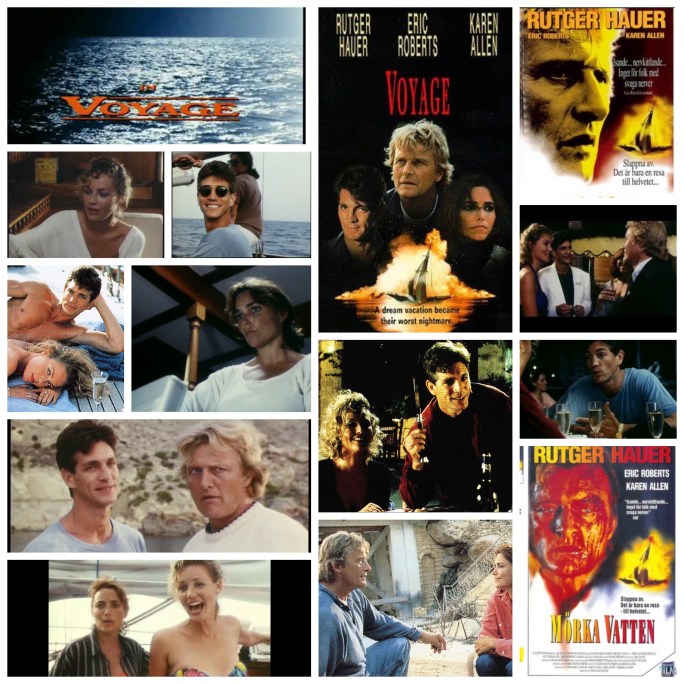
B Movie Glory: John Mackenzie’s Voyage

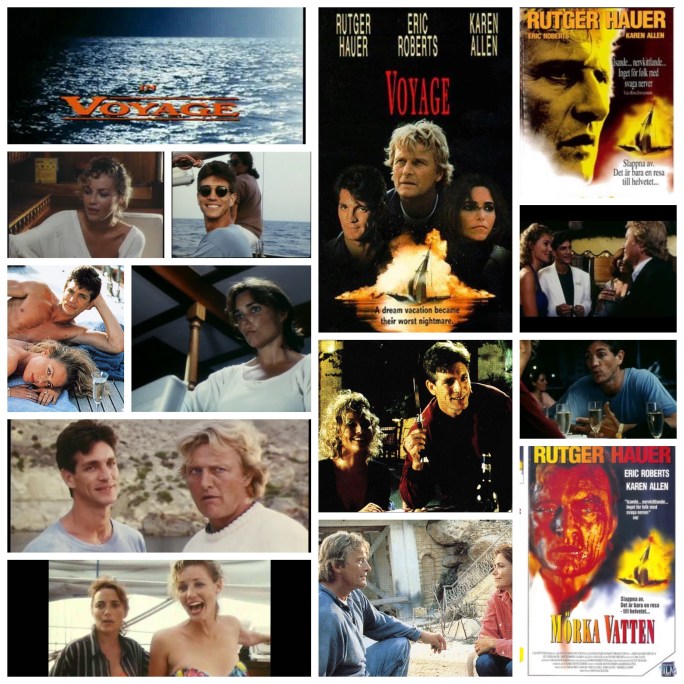
Remember that movie Dead Calm where creepy Billy Zane terrorized Nicole Kidman and hubby Sam Neill on the high seas? Well, picture that with a wayyy cheaper budget and starring Rutger Hauer, Eric Roberts and Karen Allen instead and you’ll have some idea of John Mackenzie’s Voyage, a cheap little B grade thriller that benefits from a cast who deserved a better script and some gorgeous, atmospheric Mediterranean locations. Hauer and Allen are a wealthy couple fighting their way through a crumbling marriage who sail towards a dilapidated Monte Carlo mansion they wish to restore over the summer. Soon they run into a young hotshot (Roberts) and his sexy wife (Connie Nielsen), invite them aboard and continue through the sun and surf as a quartet. It’s always a bad move to trust strangers though, especially if one of them is Eric Roberts and that mile wide, winning yet somehow sinister smile of his. Soon it becomes apparent that these two kids aren’t who they say they are and clearly have intentions beyond hanging out on the boat and having drinks. Mackenzie is an accomplished director, having made notable impacts with The Long Good Friday and The Fourth Protocol, among others. Roberts and Hauer are legendary badasses of cinema but also notorious for appearing in shit films. They hold their own and give awesome turns here though, as do the two ladies, but it’s in script and execution that this thing falters. It should be full of tension and uncomfortable suspense, and unfortunately the tank is only partly full, and it ultimately fails to deliver as an effective thriller. Still, worth it for the four leading actors who are all consistently reliable performers, as well as the beautiful Mediterranean ambience to soak up. Just don’t expect to be excited or kept on edge all that much.

-Nate Hill

Tom Ford’s Nocturnal Animals

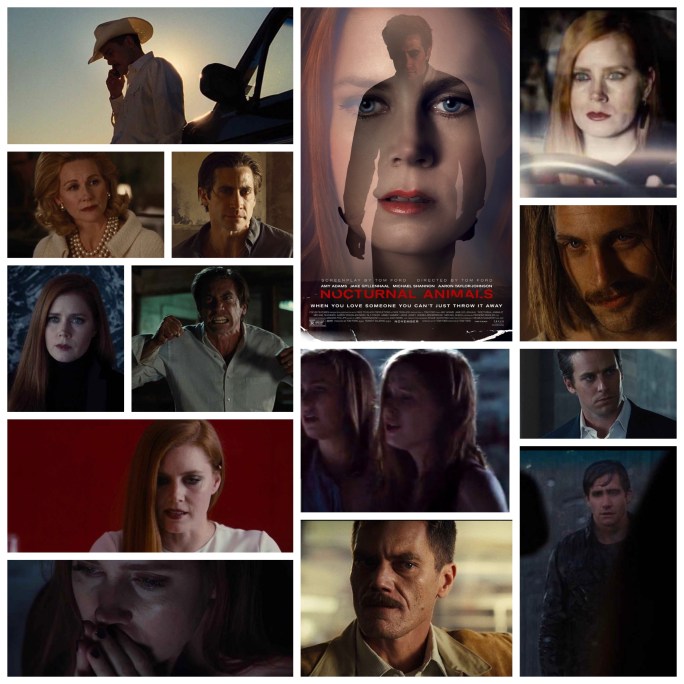
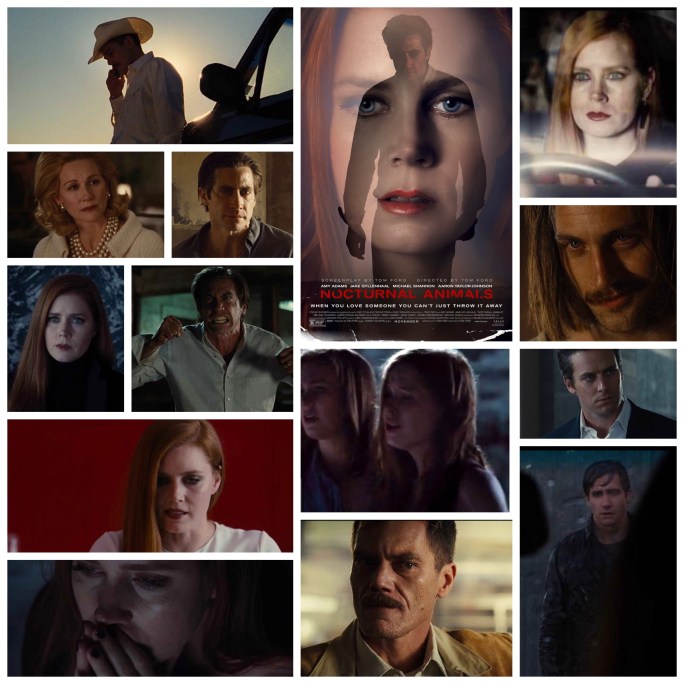
What’s the most malicious and deliriously satiating way you can think of getting revenge on an ex who betrayed you horribly? In Tom Ford’s Nocturnal Animals, novelist Edward Sheffield (Jake Gyllenhaal) gets pretty creative in his attempts to strike back at the girl (Amy Adams) who wronged him decades before. This is a film about darkness, secrets, hate, cruelty, long harboured hurt and how such things erupt into violence, both physical and that of the mind.

Adams is Susan, a wealthy gallery owner married to a hunky yet vacuous playboy (Armie Hammer), terminally unhappy yet cemented in an inability, or perhaps unwillingness to do anything about it. One day she receives a yet to be published book from her ex husband Edward (Gyllenhaal) dedicated to her in an eerily specific way. As she settles in to read it in her drafty, lonesome yuppie mansion while hubby flies around the country cheating on her, Ford treats us to a story within a story as we see the novel unfold. In the book, Gyllenhaal plays a family man driving his wife (Isla Fisher, who uncannily and perhaps deliberately resembles Adams) and daughter (Ellie Bamber) across a creepy, desolate stretch of rural Texas. When night falls, a pack of roving, predatory bumpkins led by Aaron Taylor Johnson howl out of the night like angry ghosts, terrorize the three of them relentlessly, then kidnap Fisher and their daughter without remorse. This leaves Gyllenhaal alone and desperate, his only friend being crusty lawman Bobby Andes (Michael Shannon), a gaunt force of righteous fury who serves as avatar to carry out some actions that the protagonist is perhaps too meek for. Together they trawl the southern night looking for clues and a sense of resolution, but one gets the sense that this is a hollow venture, already plagued by the acrid tendrils of tragedy from right off the bat. So, what do the contents of this novel have to do with what is going on up in the real world? Well… that’s the mystery, isn’t it. Pay close attention to every narrative beat and filter the distilled emotions of each plot point through an abstract lens, and then the author’s gist is painfully understood.

The interesting thing about this film is that we don’t even really have any contact with Gyllenhaal in the real world and present time outside of this story he’s written. Everything he has to say, every corner of anguish is laid bare and bounced off of Adams’s traumatized, depressed housewife with startling clarity and horror. She gives a fantastic performance, as does Jake as the lead character of the novel. Shannon makes brilliant work of a character who is essentially just an archetypal plot device, but the magnetic actor finds brittle humour, deadly resolve and animalistic menace in the role. Other solid work is provided by Andrea Riseborough, Karl Glusman, Robert Aramayo, Michael Sheen, Jena Malone and Laura Linney in a stinging cameo as Adams’s manipulative dragon of a mother. Ford shows incredible skill in not just telling a crisp, immersive and aesthetically pleasing visual story, but making those visuals count for something in terms of metaphor, foreshadowing, hidden clues and gorgeous colour palettes that mirror the stormy mental climates of these broken, flawed human beings. He also displays a mastery over directing performances out of the actors as well as editing and atmosphere that draws you right in from the unconventional opening credits (those fat chicks) to the striking, devastating final few frames that cap off the film with a darkly cathartic kick to the ribs. Add to that a wonderfully old school original score by Abel Korzeniowski and layered, concise cinematography from Seamus McGarvey and you have one hell of a package. A downbeat, mature drama that comes from the deep and complex well of human emotions and a film that uses the medium to reiterate the kind of raw, disarming power that art can have over our souls, both as a theme of its story and as a piece of work itself. Great film.

-Nate Hill

Phillip Noyce’s Blind Fury

What do you get when you mix up Rutger Hauer, a sword disguised as a cane, John Locke from Lost, that huge biker dude from Raising Arizona, a whole armoury of high artillery, several car chases and enough 80’s looney toons action aesthetics to fuel a bus? You get Phillip Noyce’s Blind Fury of course, one of the best and most entertaining action films of the era. Hauer is Nick Parker, a blind Viet Nam vet who was trained in a small village and knows the ways of the sword, better than some people who still have their eyesight in fact. He’s back stateside looking for his old army buddy (Terry O’Quinn), who has been captured by a nasty Reno crime kingpin played by Noble WillingHAM who never passed by an opportunity to ham up a performance royally because look it’s right there in his name. After O’Quinn’s poor wife (a short lived Meg Foster) is murdered by his thugs, Nick takes unofficial custody of their young son (Brandon Call) and sets out for bloody revenge against the Ham and his weirdo cohorts, which include two rambunctious cowboys (Nick Cassavetes and Rick Overton) and one giant ugly son of a bitch called Slag, played by perennial Brick-house henchman Randall ‘Tex’ Cobb. Hauer brings a lighthearted charm to the carnage, a vibe that sneaks into the film as a whole and makes it something more fun and cartoonish despite it being violent as all fuck. It’s funny when you consider that director Noyce (Dead Calm, The Saint, Patriot Games, The Bone Collector) usually accents his thrillers with a somber tone. Here it’s all fun and games, Rutger gets one of his most playful and humorous roles, portraying a blind guy convincingly, doing a great job with the stunts and showing what a dope leading man he was. One particular sequence I love best is an epic highway chase with Overton and Cassavetes who are just two bickering, brawling morons. It’s a jacked up, GTA style slice of explosive escapism as jeeps, vans and cars careen all about the overpass and you can really see the budget blowing up onscreen, it’s a showcase 80’s vehicular smackdown. Great film.

-Nate Hill

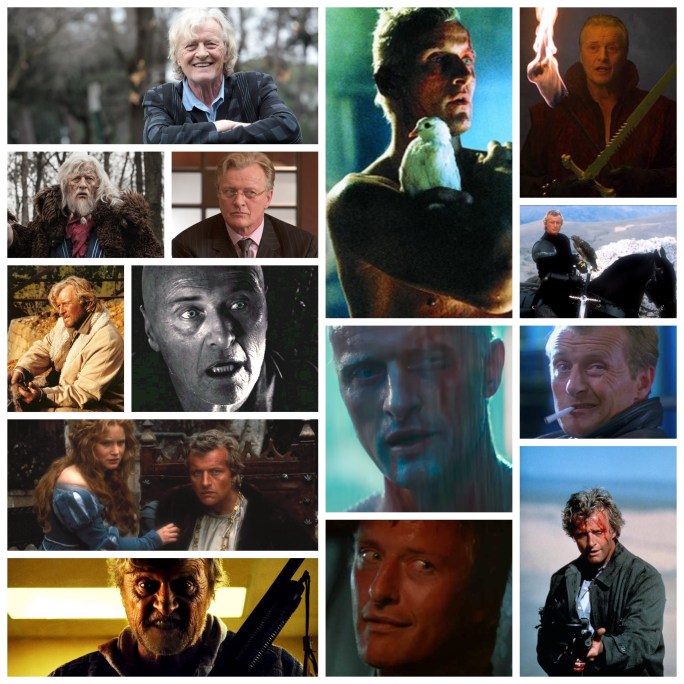
“All those moments will be lost in time, like tears in rain..”. Saying goodbye to Rutger Hauer

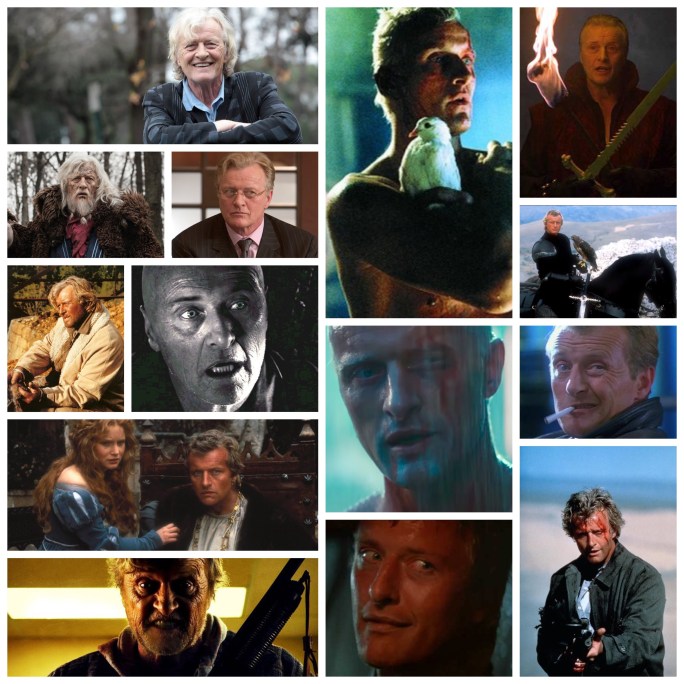
A dark angel android desperately seeking longer life. A spectral hitchhiker hell bent on homicide. Both Dracula and Van Helsing at different points in his career. A rogue cop stalking an alien beast through futuristic London. The CEO of Wayne Enterprises. A psychotic drifter who drives a wedge between a married couple. A blind Nam vet with a deadly samurai sword. A rogue medieval warrior put under a magic spell. A ruthless European terrorist waging war against an entire city. A hobo with a shotgun. Rutger Hauer has passed away, and leaves behind him a legacy of incredible work over a decades long career that has firm and lasting roots in the horror, action and science fiction genres. With a rough hewn, elemental figure, a honey soaked purr of a voice and electric eyes, the guy practically radiated originality, never one to rush a line, hurry a glance or let his gaze move too quickly.

A native of The Netherlands, Hauer got his start in Dutch television during the 70’s, until a lasting friendship with director Paul Verhoeven led to his casting in the director’s Middle Ages romp Flesh + Blood alongside Jennifer Jason Leigh. From there the rest of the world saw this man’s immense talent and he found himself taking part in Richard Donner’s Ladyhawke, Sylvester Stallone’s Nighthawks, Nicolas Roeg’s Eureka, Sam Pekinpah’s The Osterman Weekend, Albert Pyun’s Omega Doom, Phillip Noyce’s Blind Fury, Buffy The Vampire Slayer, George Clooney’s Confessions Of A Dangerous Mind, Christopher Nolan’s Batman Begins, Robert Rodriguez’s Sin City and so many more. He also had a multitude of memorable television appearances including Smallville, Alias, True Blood, The Last Kingdom to name a few.

For me the two roles that stand out from the rest are Roy Batty in Ridley Scott’s Blade Runner and John Ryder in Robert Harmon’s The Hitcher. Within those two performances Rutger packed more magnetism, charisma and character than some can hope to exude their whole careers. It’s no secret that a great portion of his career was spent in some lower budget B movie fare, a fact that some people lament given his great talents. Here’s the thing though: He never phoned it in, gave a bad performance or threw away a line. No matter what the project was, he was always there and always stepped up to command the scene even if it was just a cameo. I remember in one horror flick about killer wasps he played a mercenary who, when warned about the creatures, stated with a straight face “actually, wasps are allergic to me.” The same conviction was put into that ridiculous line as any of his serious roles in iconic stuff, but that was his power. Character actor, leading man, comic relief, heinous villain, the President or a street thug, this guy could do it all and everything in between. As Roy says in Blade Runner: “All those moments will be lost in time, like tears in rain.” He improvised part of that line too, highlighting the organic nature of his talent beautifully. Time to say goodbye. Peace out, Rutger ❤️

-Nate Hill

Duncan Jones’s Source Code

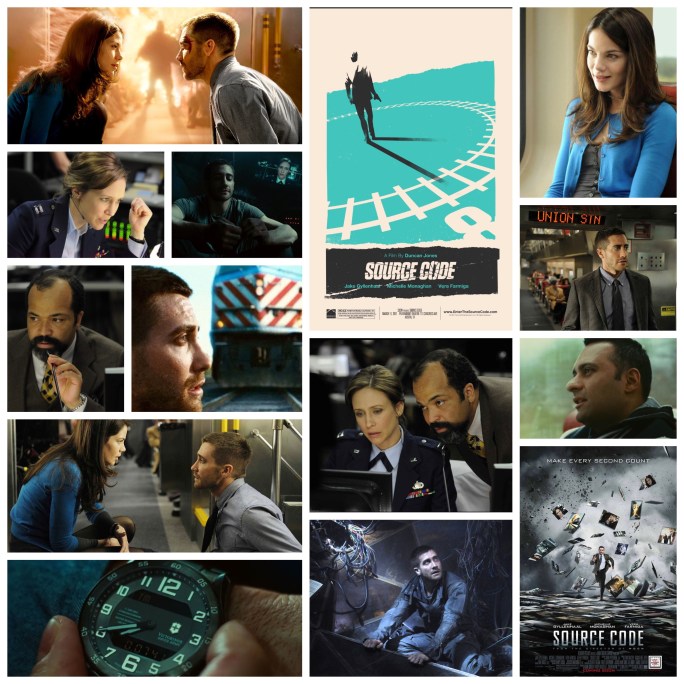
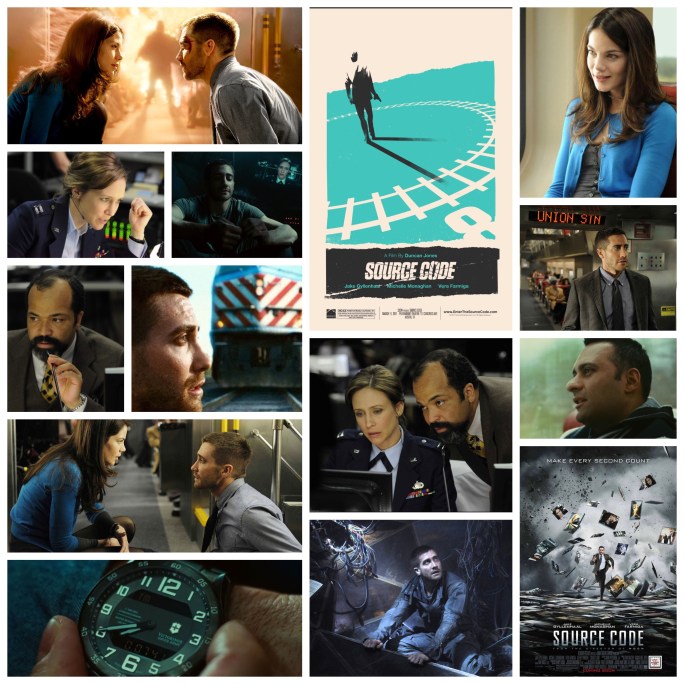
Duncan Jones’s Source Code sits in the same realm of bombastic science fiction as stuff like Gregory Hoblit’s Frequency, Tony Scott’s Deja Vu and others. What I mean by that is that the central premise is just too out there to be believable, but the film possesses a sense of wonder, energy and salesmanship around the story that it somehow grabs you along for the ride and becomes a great film despite itself.

Sort of an archetypal reworking of Groundhog Day, Jake Gyllenhaal plays Colter Stevens, a US military pilot who finds himself out of space and time, waking up on a speeding Chicago train that’s destined for a fiery explosion once it reaches the city limits. The train explodes, everyone on it dies including him and then… he wakes up on it again minutes later, rinse and repeat. This mysterious time loop continues until he can find a way to locate the mad bomber and stop them before catastrophe, with the help of another intrepid passenger (Michelle Monaghan, always superb). Elsewhere and when, a military correspondent (Vera Farmiga) and her oddball scientist boss (Jeffrey Wright in yet another brazenly eccentric but fun performance) oversee his actions from some unseen echelons, literally keeping him in the dark about what’s really happening.

This is the kind of boundlessly imaginative SciFi stuff you’d find Dennis Quaid or Jeff Bridges starring in back in the 80s/90s heyday of the genre, and I love the retro feel. Gyllenhaal makes his performance a nervous, jumpy and engaging creation, inhabiting a trippy world of sliding planes, otherworldly revelations and fast paced problem solving nicely. Watch for comedian Russell Peters in a key role too as well as Michael Arden and Scott Bakula. This film has drawn criticism for several plot holes, but I don’t even think they can be called that, given the extremely ‘out there’ nature of the content. Yes, there are some issues with how things are wrapped up but by the time we get there the fabric of time, space and reality are so thrown to the wind that one can think a way around the troubling implications using imagination. It’s such a far flung concept but the actors all sell it straight-faced for the most part (Wright gets a bit knowingly campy) and the whole thing comes across very well, especially elements of sunny optimism and pathos that are welcome and make the story stick. There’s no denying the originality here either, or the ambition. Director Jones debuted with the excellent Moon, followed it up as strongly as this and then sort of took a plummet with that lame Warcraft thing, but here’s hoping he gets back on top of the SciFi game soon, because he’s got talent and genuine affection for the genre.

-Nate Hill

The Sweetest Thing

I’ve always liked The Sweetest Thing, a deranged sex comedy from the female perspective that has the winningly bonkers personalities of Cameron Diaz, Christina Applegate and Selma Blair to make it something memorable, if not that original. This got royally shit upon by critics and while I’ll concede that it’s slight, airy stuff without much to say overall, there’s no denying it’s hysterical energy, lovable chemistry between the three leads and overall enjoyable lunacy.

Diaz, Applegate and Blair are three early thirties party girls in San Francisco, all looking for that special guy or at least one to have fun with for the night until he comes along. Diaz is the ruthless player of the bunch, and as the film opens we see a montage showing all the guys she’s dumped, one and done-d and left in the dust, until one night at a club she meets her match in Peter (Thomas Jane), a seemingly perfect guy who vanishes later that night, leaving her with a bunch of what-ifs in her head and the desire to track him down. With Applegate’s help she embarks on a mini road trip to find him, while Blair has some raunchy misadventures with her boyfriend (Johnny Messner) and his massive dong. Others show up along the way including Parker Posey, Frank Grillo, Lillian Adams, James Mangold, Johnathon Schaech and Jason Bateman as Jane’s goofball brother.

I think this wasn’t received well because most super crude sex comedies are done from the male perspective, and there’s this reluctance or uncomfortableness when it’s perceived the other way round, which is sort of unfortunate and not at all a fair or honest angle. These three chicks know how to have fun, love to party and are a blast to watch onscreen, especially seeing the insanity apparent in their group dynamic, which if seems excessively zany for a group of girlfriends, trust me.. it’s not. There’s some really raunchy stuff like a semen stained dress getting licked by an elderly dry cleaning owner and a dick piercing getting snagged down a girl’s throat during a blowjob, and don’t get me started on The Penis Song. It’s all in good fun though, and the guys get to have a blast too, as we see Jane and Bateman at a driving range whacking balls at the hapless groundskeeper who wears a confederate flag hat. Not a great film, but definitely a hilarious one and worth it to see Cameron, Christina and Selma clearly having about as much fun as you can in front of a camera.

-Nate Hill

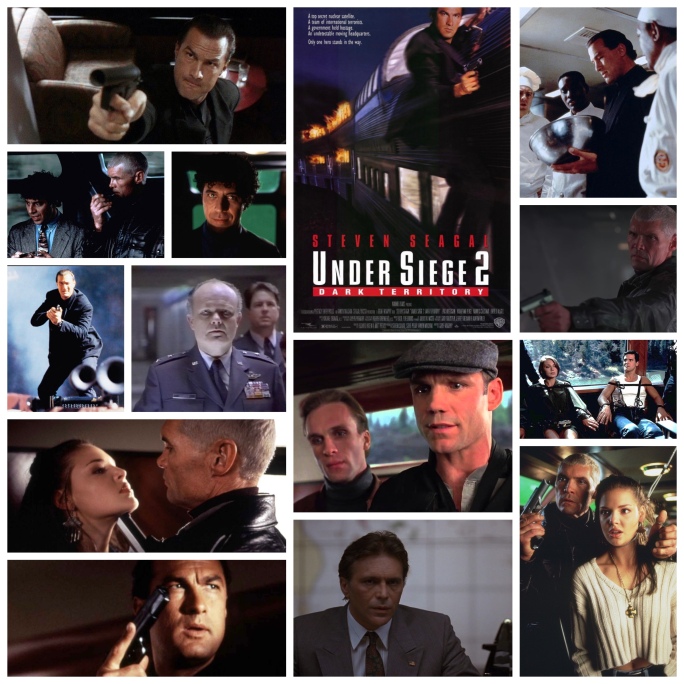
Under Siege 2: Dark Territory

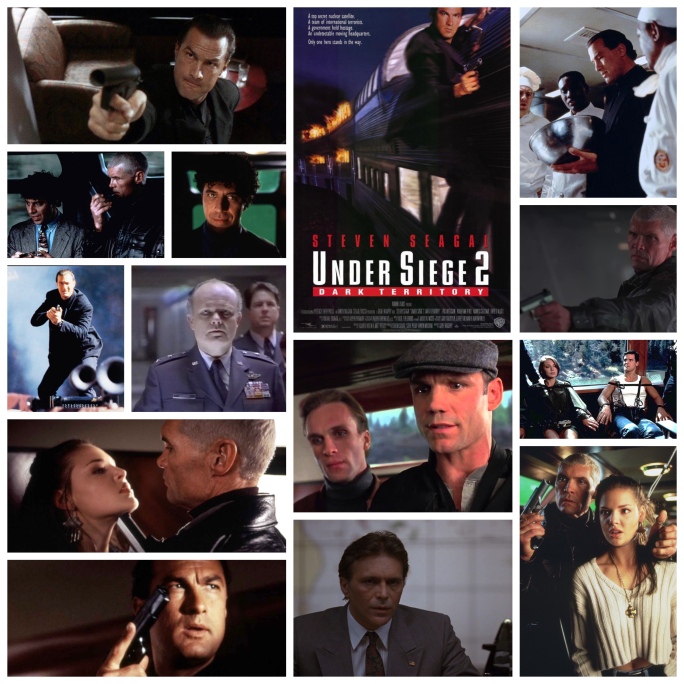
Steven Seagal made one of his best flicks with Under Siege, but does the sequel live up to the first one? Well for me it outdoes it, Under Siege 2: Under Siege Again is an improvement and a slam bang action flick. Jokes aside this one’s called Dark Territory, it’s set on a luxury train instead of an ocean liner but Seagal’s navy seal turned gourmet chef Casey Ryback has lost none of his deadly talent with guns, knives, fists and kitchen utensils.

This time Casey is looking forward to a nice relaxing train vacation with his young niece, played by Katherine Heigl before she went all chick flick on us. Relaxation isn’t in the cards though, because soon a squadron of evil mercenaries hijacks the train for nefarious purposes. They’re led by computer guru Eric Bogosian, a no less wacky but way nerdier baddie than Tommy Lee Jones and Gary Busey the first time round. The guy wants to hack into US satellites (much harder to trace him from a moving target like say… a train!) and hold the government ransom but really he just wants to blow shit up and monologue, and trust me this fucking guy can talk. He starred in Oliver Stone’s Talk Radio where all he did was jabber on and we get the same kind of performance here, just a motor mouthed hedgehog aboard a speeding locomotive. He’s back up by a literal army of mercs led by Twin Peaks’s Everett McGill in full psycho badass mode, taking doses of pepper spray to the eyes without flinching and terrorizing Heigl without restraint. His backup are a colourful gallery including Patrick Kilpatrick, Breaking Bad’s Jonathan Banks, Nils Allen Stewart and the legendary Peter Greene.

Elsewhere, the military’s top dog (Kurtwood ‘Red Forman’ Smith) tries to neutralize the whole thing along with Tom Breaker (once again played by the great Nick Mancuso) who’s some sort of super spy double agent but I was never really clear on him. Morris Chestnut also provides help as a porter who sort of becomes Seagal’s sidekick and Heigl’s love interest. There’s a lot going on here but the interest lies in Seagal beating, kicking, punching, stabbing and shooting his way through this gauntlet of a train. The action is spectacular, as are the stunts and pyrotechnics, and there’s an explosion to rival the one in The Fugitive. You’ve got to take a Seagal flick for what it is, I mean they’re not in the realm of classy action fare of anything, but if you get the right one you’ll have a shit ton of fun. This was the first one I ever saw, watched it with my dad at way too young an age, it remains my favourite of his career and for what it is, it’s a blast.

-Nate Hill

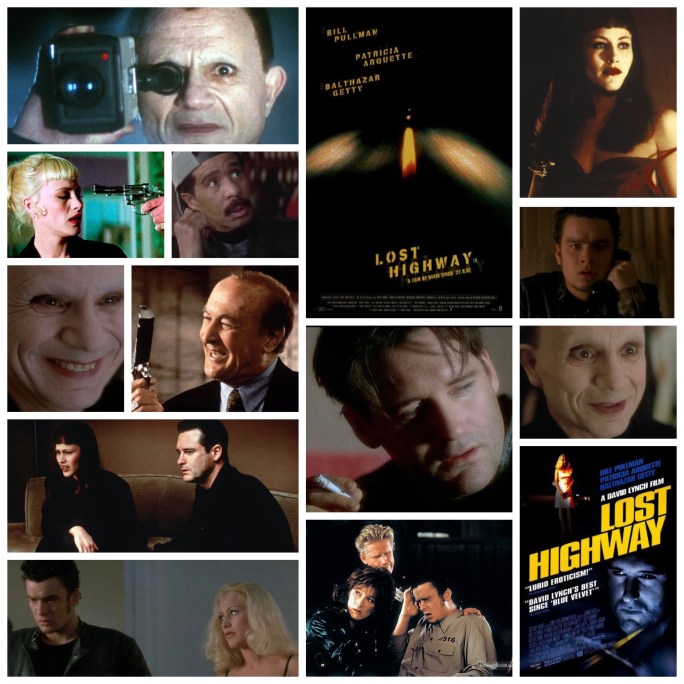
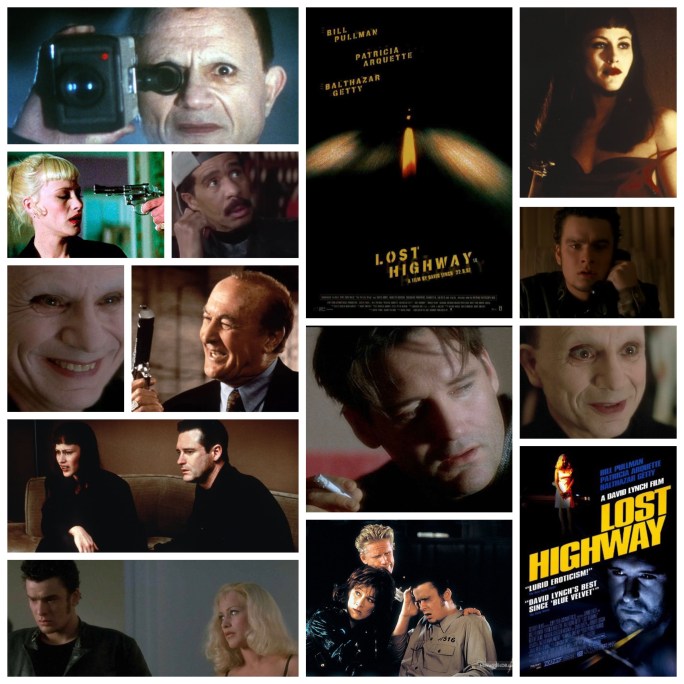
David Lynch’s Lost Highway

High beams pierce a nocturnal interstate as David Bowie’s ‘I’m Deranged’ eerily cuts through a still night and we realize that David Lynch’s Lost Highway isn’t going to be your average road trip, let alone overall viewing experience. This is a fuzzy, feverish portrait of a fractured mind attempting to make sense of extremely distressing circumstances that are both alienating and possibly self inflicted. Lynch is always keen on probing the murky cerebral waters which border on potentially paranormal occurrences, and the often frustrating line, or lack thereof, which is drawn in, around and between these two aspects. Psychological terror, ambiguous scenes that leave you scratching your head once you’ve caught your breath, identity crisis, elliptical narratives that leave us haunted and wanting more are all tools in his bag, ones he’s employed countless times throughout his monolithic career. Usually he implements that in an esoteric, earthy way, but there’s something cold, clinical and unsettlingly voyeuristic about this that somewhat separates it from a lot of other stuff he’s done. The term ‘Lynchian’ in itself has become its own genre, there’s no debating that anymore. It’s usually within this self made realm that he explores, but it’s almost like with this one he went in with a mindset to play around with a sordid, almost De Palma-esque style of genre, and then inject it with his trademark eerie weirdness, in this case to great effect.

Bill Pullman stars as jazz trumpet player Fred, spending his nights belting out unnerving solos in smoky clubs. Pullman is an all American prototype, seen in a lot of generic, regular Joe roles. Observing him venture into sketchy material is jarring and super effective (see his career best work in David’s daughter Jen Lynch’s Surveillance for an even better example of this). He and his gorgeous wife Alice (Patricia Arquette) wake up one ominous morning to discover a packaged video tape on their doorstep, the contents of which show someone breaking into their house and filming them while they sleep. They feel both horrified and violated, and call the police who prove to be just south of useful. From there things get terrifically weird. Fred attends a party where he meets the Mystery Man (Robert Blake) who plays a mean spirited magic trick on him that will have your skin crawling out the door. This was one of Blake’s last two roles before the unfortunate incident that cut his career painfully short, but he’s perfect for Lynch’s stable and eats up the frames he inhabits, a pasty faced ghoul with beady black jewel eyes and a piercing laugh that will stain your dreams. Before he knows it, Fred wakes up and is accused for his own wife’s murder, whisked away to a dank death row cell, plummeting the film into a new segment, Lynch’s way of letting us know this isn’t going to be an easy watch.

Fred wakes up sometime later… And isn’t Fred anymore. He’s a young dude with amnesia who’s been missing for a while, played by the edgy Balthazar Getty. It’s a stark narrative left turn, a stinging reminder that from there on in, we’re in for some nasty antics with no light at the end of the tunnel. Getty is released from prison, since he’s not Pullman who they arrested to begin with. From there he gets entangled in one hot mess involving a volatile gangster porno king (Robert Loggia), his seductive wife (also Patricia Arquette) and the ever present Mystery Man who lurks over both planes of the film’s narrative like a malicious puppeteer. I’m trying to be deliberately vague about the plot (lord knows Lynch did as well), both to not spoil any surprises for you, and partly because after many viewings, I’m still not sure exactly what it means for myself. It’s a great big clusterfuck of extremely disturbing sequences, surreal passages of auditory and visual madness and a frothing undercurrent of atmosphere that constantly pulls on your sleeve to remind you that something is terribly wrong, but never gives you the solace of telling you what that something is. Traumatic viewing to say the least.

Lynch assembles an extraterrestrial supporting cast including Michael Massee, Jack Nance, Natasha Gregson Warner, Marilyn Manson, Henry Rollins, Mink Stole, Jack Kehler, Giovanni Ribisi, Richard Pryor and the one and only Gary Busey (when Gary is one of the calmest, sanest people in your film you know you’ve driven off the cliff). Some highlights for me are anything to do with Blake’s paralyzing spectre of a character who is one of the best Lynch creations ever, Loggia intimidating an obnoxious driver is priceless and the closest the film gets to comedy, and the final twenty minutes where the lines of reality, fantasy and the jagged planes of perception within the characters minds collide, providing us with a creepy non-resolution, part of what makes the entire show so memorable and affecting. A classic that begs countless revisits before it can fully cast all aspects of its spell on you, and one of Lynch’s unsung best.

-Nate Hill

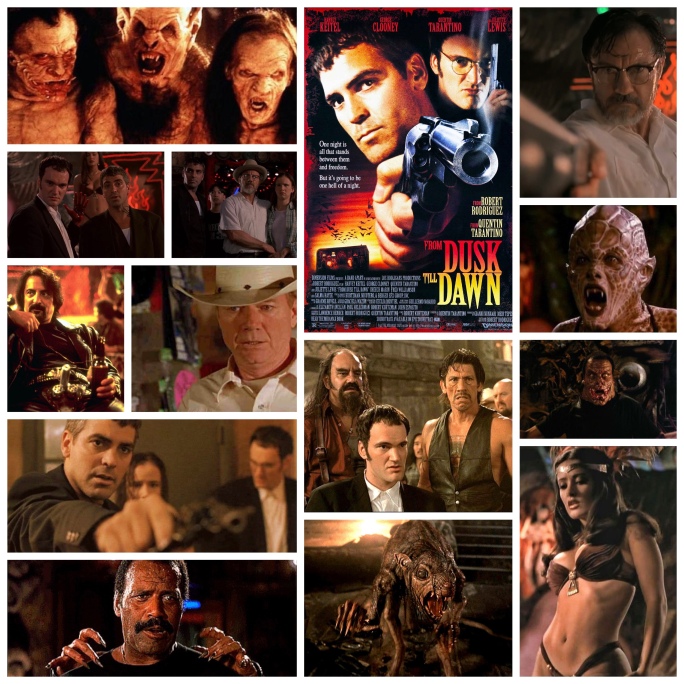
Robert Rodriguez’s and Quentin Tarantino’s From Dusk Till Dawn

Quentin Tarantino and Robert Rodriguez are good buddies and have always sort of played on each other’s side of the fence in terms of creativity, collaborating here and there over the years on cool stuff, but my favourite tandem venture they ever did has to be From Dusk Till Dawn, a crime horror action schlock hybrid that has aged beautifully over the years, doesn’t fuck around in terms of packing a punch in all of the specific genres it works in and is a glowing testament to the powers of practical/prosthetic effects over CGI.

The first half of this thing is a classic Tarantino slow burn: George Clooney and Quentin himself are the Gecko brothers, a pair of murderous bank robbers in swanky suits, on the run from southern law following a bank robbery bloodbath (never actually seen a lá Reservoir Dogs) and causing violent trouble all over the rest of the state. After narrowly escaping Michael Parks’s immortal Texas Ranger Earl McGraw, they kidnap a retired preacher (Harvey Keitel) and his two kids (Juliette Lewis and Ernest Liu) and make a beeline for the Mexican border and the sanctuary of an impossibly rowdy strip joint and trucker bar called… wait for it… The Titty Twister.

Once at the bar Rodriguez takes over the reins and in a split second we segue into horror most gory as our unconventional protagonists realize that this bar is actually a nest of Mexican vampires, and they’re ready to spring the trap. This includes an unbearably sexy dance from Salma Hayek’s vamp queen Santanico Pandemonium, a biker named Sex Machine (Tom Savini) with guns where his guns are, a literal army of hairy undead beasts, a giant rat, a human spinal column used as a saxophone, crossbows, more gallons of blood and various gore than I’ve ever seen amassed for one film and just too much else to mention.

For most folks, the first half of this film is the pay-dirt; Tarantino’s laconic, dangerous approach to the Gecko brothers’s rampage is no doubt one of the coolest things he’s written, particularly the sequence with Michael Parks and any dialogue between Keitel and Clooney, who gives probably the most fun and uninhibited performance of his career. Tarantino chomps at the bit and is downright terrifying as the worst kind of unstable psychopath, it’s the best acting work he’s ever done. I myself prefer the latter half with all the horror though.. the sheer amount of gooey lunacy, latex drenched creativity in design is something you don’t see anymore, unless it’s a deliberate throwback. The bar is populated by what seems like hundreds of varied and equally disgusting bloodsuckers until after a while and dozens of kills you get the sense that every character needs a good shower. Keitel brings a grizzled nobility to the priest, while Lewis tones down her usual bubbly mania for something decidedly more down to earth. Danny Trejo plays a grumpy vamp bartender, blaxploitation icon Fred Williamson shows up as a badass Nam vet and watch for cameos from John Hawkes, Greg Nicorato, Kelly Preston and 70’s icon John Saxon. Cheech Marin also shows up of course, in three obviously different roles because why the fuck not and has a monologue that would burn the ears off of any conservative viewer. Some will say this film is too much, and hey I’m not one to argue with them, but for me if it’s too much of anything, it’s a good thing. The horror is old school schlock-schploitation and the hard boiled crime yarn that comes before is equally stylistic and fun. It’s Quentin and Robert attuned to different wavelengths but somehow on the same frequency, and the result is a bloody, chaotic horror crime western classic.

-Nate Hill