p.p1 {margin: 0.0px 0.0px 0.0px 0.0px; font: 17.0px ‘.SF UI Text’; color: #454545; min-height: 20.3px}<br />
p.p2 {margin: 0.0px 0.0px 0.0px 0.0px; font: 17.0px ‘.SF UI Text’; color: #454545}<br />
span.s1 {font-family: ‘.SFUIText’; font-weight: normal; font-style: normal; font-size: 17.00pt}<br />

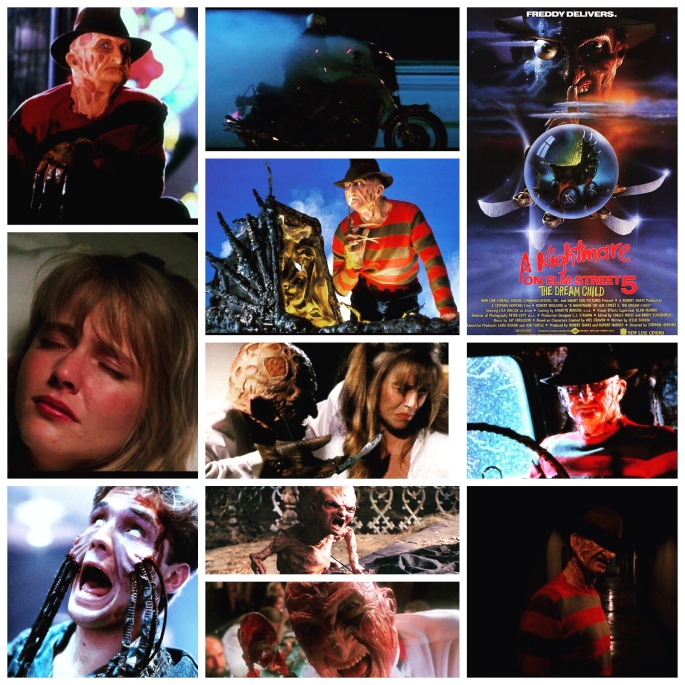
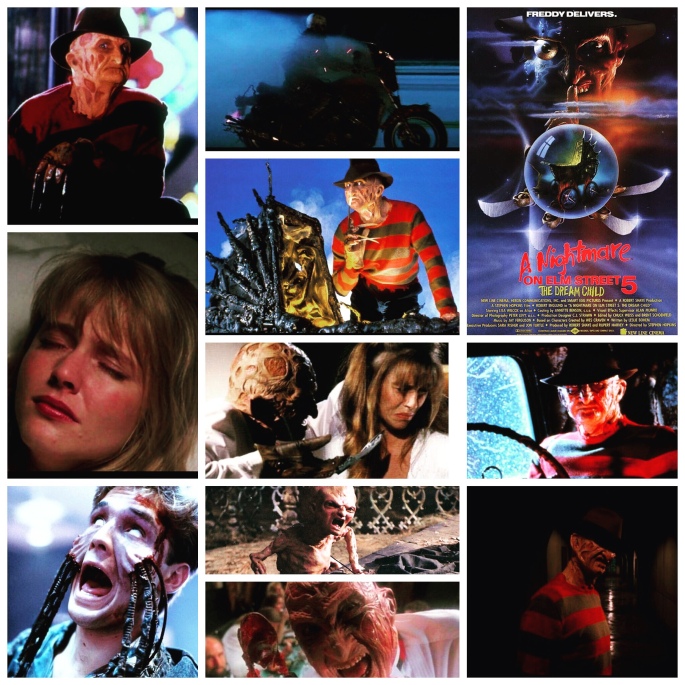
The Nightmare On Elm Street franchise went to some pretty weird and wild places as it went on, like the snowball effect except the snowball is a grotesque sphere of faux burn victim latex. By the fifth entry, titled The Dream Child, New Line studios had basically not only let the floodgates open in terms of Robert England’s Freddy Krueger and the increasingly warped special effects, but left the keys to them in the hands of any filmmaker who came along to make their stamp on the legacy. This one is silly, excessively ooey gooey and super demented. As such, it’s naturally one of my favourite Freddy flicks. Helmed by extreme stylist Stephen Hopkins (Predator 2, The Ghost & The Darkness), it has an especially disturbing opening sequence involving the origins and backstory of Freddy, one that balances schlock with outright atrocity nicely and is imaginative when you consider the tropes of these movies. Lisa Wilcox’s Alice is still alive and kicking, pregnant and finding ever present pizza faced Freddy trying to attack her through the dreams of her unborn child, as well as those of her friends. There’s not much to it except increasingly elaborate set pieces where he finds new ways to kill these teens, including literally force feeding a girl with an eating disorder until she explodes and causing the mother of all motorbike accidents, a well staged scene that’s actually up there with my favourite Freddy kills. The original theme music is back, but there’s also a super creepy new synth composition by Jay Ferguson playing over the opening credits that spices things up and makes this feel like it’s own beast. The later additions in the legacy get a bad rap for being silly and over the top, but hey these are horror flicks about dreams, which by definition are over the top and unbound by genre, and plus I like the one liners. Best quip to be found here? “Bon appetit, bitch!”, growled by Freddy as he proudly wears a ridiculous chefs hat. Savage af. I like this one a lot for its impressive practical effects, genuinely frightening prologue and fresh new score. Good times. Oh, and check out that gorgeous poster art, they really don’t make those like they used to anymore, unless you’re Panos Cosmatos.
Dario Argento’s Phenomena

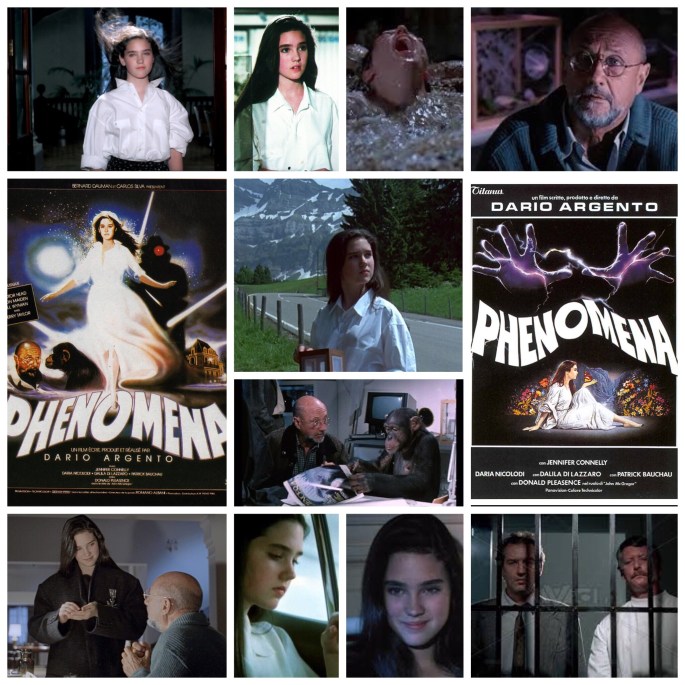
Dario Argento’s Phenomena isn’t one you usually see in a greatest hits list offhand from the oddball Italian horror-meister, but it ranks number two for me in his filmography. Set in the already spooky, airy Swiss Alps, this one sees a very young Jennifer Connelly and her classmates at a boarding school terrorized by an unseen killer who, like in most Argento films, just loves to stab people with super sharp objects in excessive closeup. Connelly has a special power and affinity for insects, which comes in handy when she meets entomologist McGregor (the lovely Donald Pleasance), his pet chimpanzee and they try to snare the killer using their own keen instincts and that of the vast collection of bugs in his care. It’s a unique, eclectic setup for a horror flick, but what’s interesting here is the outright horror and nastiness doesn’t even show up until the hectic, gross out final act. Most of the film is like an atmospheric, eerie fairy tale. Connelly is a darkly radiant beauty and you can practically see the effortless star-power percolating even at the age of fifteen. This film is unique in Argento’s career for several reasons; he takes full enjoyment and advantage of the setting here, the cavernous, looming alps and vast, flower speckled fields of Switzerland provide a more nature themed, organic palette here than his usually urban choice of old European cities and historic edifices, it’s a switch up that works quite well. Mostly though this one is notable for a sense of compassion that isn’t there in any of his other films, brought in by kind eyed Pleasence and his friendship with Connelly. As per usual, some of the acting, pacing and continuity is really off balance here, but that has become an Argento trademark and you kind of have to just roll with it at this point, the guy’s forte has always been atmosphere, music and the feeling behind what’s onscreen, not so much the logic of plot or realism in performance. Speaking of music, this also has to have the coolest soundtrack he’s ever amassed. Not only is there an electrifying, thunderous synth score by Goblin and Claudio Simonetti with a very lyrical, dreamlike vibe, we’re also treated to original rock compositions by the likes of Motörhead and Iron Maiden, making it one of the most collectively memorable soundtracks out there. There’s another cut of this film called ‘Creepers’, but it’s awkwardly edited down by chunks and loses all the magic, so don’t even go near it. The Anchor Bay DVD is the way to go. One of Argento’s best, and a gem amongst horror films.

-Nate Hill

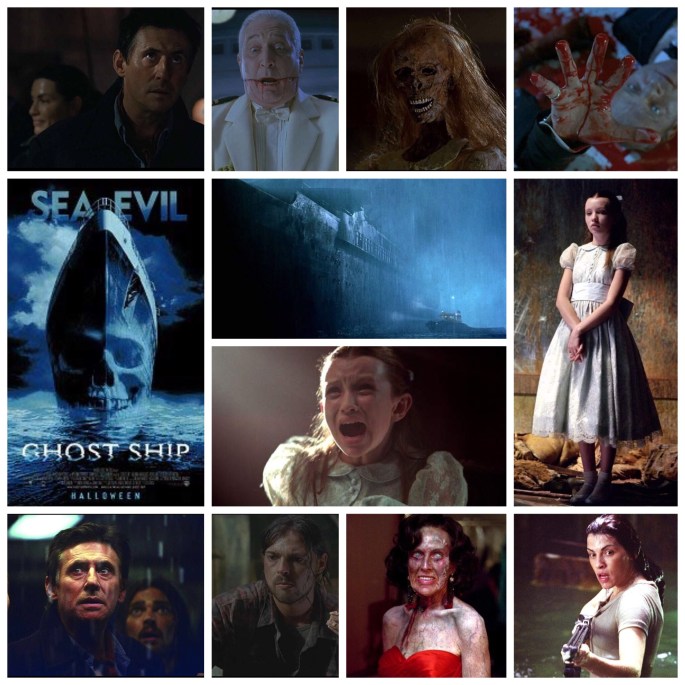
Steve Beck’s Ghost Ship

The only claim to greatness that Ghost Ship can make lies in its first five minutes, a frightening horror set piece that starts the film off with a bang, or should I say a slice. After that it’s a dank, rusty B movie with hilarious musical choices, routine scares and campy acting, but I kind of like the film in spite of all that. After the now famous Emily Browning witnesses a horrific ‘accident’ aboard a giant ocean liner back in the 60’s, we flash forward to a rowdy salvage crew and their attempts to find the lost ship somewhere in the Bering Straight. Captained by salty Gabriel Byrne, crewed by the likes of Julianna Margulies, Desmond Harrington, Ron Eldard, Isaiah Washington and Karl Urban, the thing has a capable cast that does well enough but at the end of the day they’re mired in a creaky, cheerfully silly flick that doesn’t make aspirations to take itself seriously. If you’re ok with that it makes cool background noise at a Halloween party, and even features a plot thread that is fascinating, if somewhat under-explored. That opening scene of collective, instantaneous carnage though, holy fuck man. I saw it on tv when I was younger and both the incident and young Browning’s reaction to it chilled me to the core. Too bad the rest of the film couldn’t keep up, but at least it’s better than 2001’s Lost Voyage starring Lance Henriksen, also I’m kinda just pulling one out of my hat that has no chance of comparison with anything because I enjoy Ghost Ship and want to make it seem better than it is.

-Nate Hill

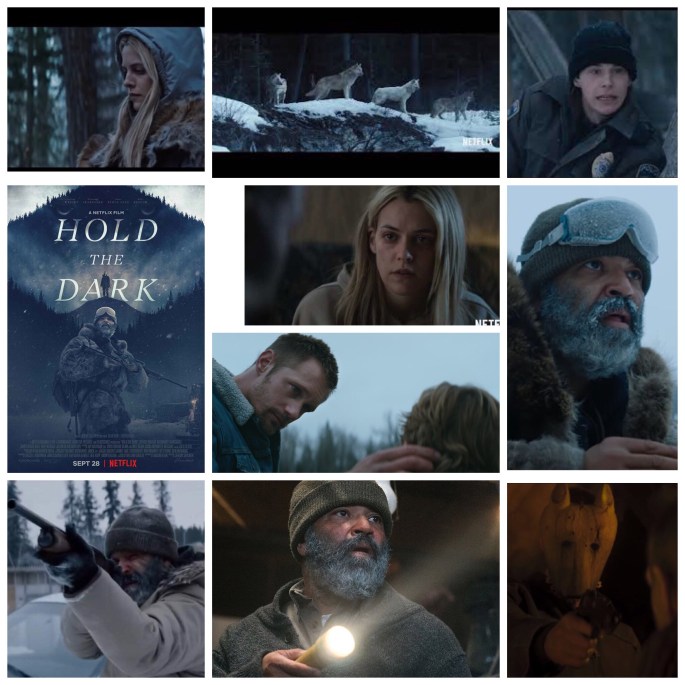
Jeremy Saulnier’s Hold The Dark

It’s easy to see why audiences are having sort of an icy reaction to Jeremy Saulnier’s Hold The Dark, an oblique, austere Alaska set thriller with esoteric undertones. On a platform as diverse yet decidedly commercial as Netflix, it will take some time for the riskier, more artistic and less accessible projects to gain traction, and for the casual viewers to warm up to varied aesthetics that they often lazily dismiss in a lump sum as ‘weird.’ They’ll come around. For us who are tuned in, however, we can appreciate that these risks are being taken and that money is being spent on challenging, anti Hollywood stuff. Although not as tightly wound or succinct as Saulnier’s first two efforts (Blue Ruin and Green Room), Hold The Dark is definitely my favourite as I have an affinity for snowy settings and dark, ambiguous mysteries. Jeffrey Wright is great here as as an outdoorsman and wolf expert hired by the mother (Riley Keogh) of a child supposedly snatched by wolves to find the beasts and kill them. I won’t say much more except that things are so far from what they seem at first that you’ll truly have no inkling of where the plot is going to take you next, which is a sign of great, inspired scriptwriting. There’s an eerie edge to the whole thing, but the film’s secrets aren’t divulged willingly or at all half the time. Alexander Skarsgard is implosive and lupine himself as the boy’s haunted father, on his own freaky quest for a goal shrouded in enigma like fog swells throughout the Alaskan mountains, actually Alberta here. James Badge Dale is great as the intense local sheriff, Julian Black Antelope is a standout talent as a shady local villager involved in the central mystery, and the cast includes fine work from Savonna Spracklin, Peter McRobbie, Macon Blair, Jonathan Whitesell and Tantoo Cardinal. Playing around with genre and tone, Saulnier and cinematographer Magnus Nordendorf Jønck deserve huge props for staging a fucking volcanic firefight scene that has to be up there with the best shootout scenes of all time, it goes on for something like ten minutes, more bullets are fired than in a Rambo movie and there’s some gnarly violence. There are some spooky, intangible ideas at play here and almost none of it is made obvious.. it may leave some in WTF mode, but clearly a stylistic language is being spoken here, with some deep, disturbing things to say about nature, humanity and the dark symbiosis held over them, particularly in lonely, desolate places such as this. This won’t be everyone’s thing, but it’s stayed with me all day since I saw it last night, I’m on board with it.

-Nate Hill

Rob Zombie’s The Lords Of Salem

Rob Zombie’s output has been hallmarked by a series of grungy, profane exploitation throwbacks with in your face violence and a loud, mean grind-house aesthetic. As much as I love *that* sensibility (I’m a hardcore fan of his films), what makes The Lords Of Salem so special is that he tries something different than he’s used to, ditches the comfort blanket of Manson-esque killers and brash, lewd dialogue in favour of mood, atmosphere and the kind of pacing you’d find in early 70’s fright flicks that valued aura over gore. This shows that although pretty much married to his trademark style (the third Firefly Family film is in production as we speak), he knows how to branch out successfully and has made a fantastic piece of slow burn horror with Salem. Set both during the infamous witch trials and in the present day, it focuses on quiet, introverted radio DJ Heidi Hawthorne (Sheri Moon Zombie). Now, if you’ve seen Sheri in the Firefly films you’ll know that the words ‘quiet’ and ‘introverted’ are a far cry from what she’s used to, but she’s brilliant here as a damaged recovering addict haunted by devilish forces. Plagued by sinister neighbours (Patricia Quinn, Dee Wallace and a freaky Judy Geeson), hallucinatory visions of evil and a mysterious music album mailed right to her radio station, it soon becomes clear that the demons of the past have come back to haunt Salem and have chosen her as a dark avatar. Zombie lovingly casts his films with carefully chosen icons of 60’s and 70’s genre cinema, and as such we get the likes of Ken Foree, Richard Lynch, Richard Fancy, Udo Kier, Maria Conchita Alonso, Michael Berryman, Sid Haig and more. Stealing the show is electric blue eyed Meg Foster in a blood freezing turn as Margaret Morgan, leader of the original Salem coven generations before. Foster hails from stuff like John Carpenter’s They Live, The live action Masters Of The Universe and recently Showtime’s Twin Peaks: The Return, but she’s absolutely terrifying and almost unrecognizable here as a freaky old hell hag with a raspy voice and gruesome saggy tits, truly a memorable villain. This is a film that takes its time building up to outright horror, alternating between dimly lit, spooky scenes from the original trials and the mounting tension of present day, including a subplot where an investigative scholar (Bruce Davison) tries to unearth evil and warn Heidi before it’s too late. Jarringly surreal visuals abound here, from neon palettes to a grandiose nightmare sequence involving a demon baby and some seriously strange architecture. It all builds to a searing finale that some may find to over the top or garish, but fits the story and ends the tale on a feverish note of hellish commotion, colour saturation and horrific spectacle that plays like Ken Russell by way of Dario Argento with a dash of David Lynch at his craziest. This is my favourite film in Zombie’s career so far, for its mood, unique visual language and rhythmic pacing, but also for his willingness to blast through the cobwebs of uncharted stylistic territory and bring forth well wrought, fresh artistic style and a damn great horror film too.

-Nate Hill

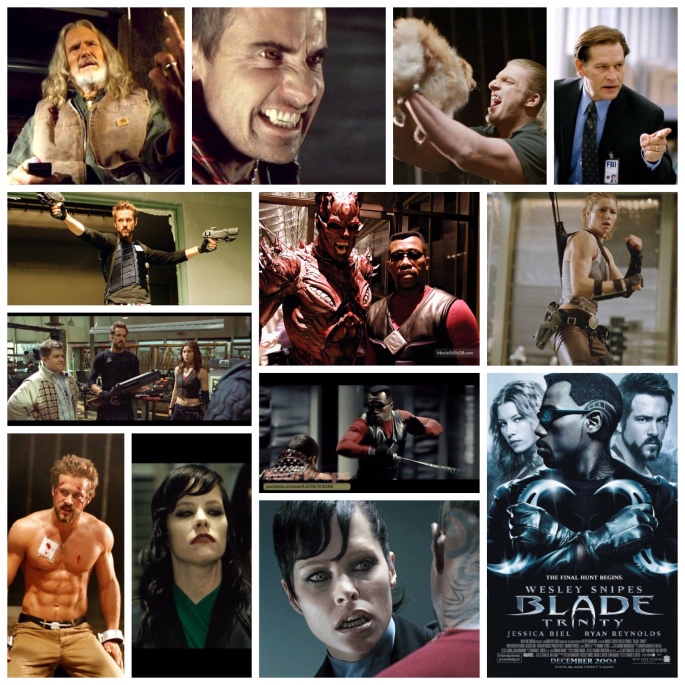
David S. Goyer’s Blade: Trinity

I think that Patton Oswalt’s stories about Wesley Snipes’s hilarious behaviour on the set of Blade: Trinity are more entertaining than the actual resulting film, to be honest. Having said that, I also don’t think it’s as terrible as its reputation. Worst of the trilogy? For sure. Silly as hell? Definitely, but it’s not entirely terrible. Blade has apparently relocated his operation to Vancouver, because regardless of where this is actually supposed to be set, I’ve never seen my city so thinly disguised as I have here, one wonders why they bothered at all. So why is it any good? Well, Ryan Reynolds for one in arguably his first turn as Deadpool. As snarky vampire slayer Hannibal King, Reynolds has stated on record that he was basically just playing Wade Wilson, and he’s a lot of fun, a torrential fountain of creative insults (“You cock juggling thundercunt!”) and sassy attitude. Jessica Biel is less memorable as the daughter of crusty weapons guru Whistler (Kris Kristofferson shows up again briefly). The three of them begrudgingly team up to do battle with the king of all vampires, Dracula himself (Dominic Purcell), but spend most of their time in skirmishes with nasty vampiress Danica Talos (Parker Posey), her minion brother (Callum Keith Rennie) and their hired muscle, played by wrestler Triple-H for fucks sake. Posey actually gives the best performance of the film, her moody brat villainess is an underrated Blade antagonist and she almost steals the movie, with cameos from Eric Bogosian as a talk show host and James Remar as a bumbling, overzealous FBI Agent. This is for sure a WTF entry in comparison to two excellent predecessors. I mean, you have Triple H setting vampire Pomeranians on Blade & Co. and more shattered plate glass windows than the entire Die Hard franchise combined, they’ve thrown a bunch of elements at the wall hoping they’ll stick without any real formula or reason, so a lot of it is misplaced and dumb, but I had fun here and there, particularly when Reynolds and Posey were around to chew scenery. Snipes is pretty much a walking two by four for most of it, but you can tell he’s not having much fun and isn’t firing up the dark charisma he brought to the first two. Rumours about him on set include locking himself in his trailer for hours and hotboxing it, threatening poor David S. Goyer and refusing to communicate with him using anything other than post-it notes and fiercely disliking Reynolds. Whether it’s all true or not who knows, but it’s pretty fuckin’ funny and I hope we get to see a behind the scenes documentary about these shenanigans one day called Blade 4: Snipes Rising.

-Nate Hill

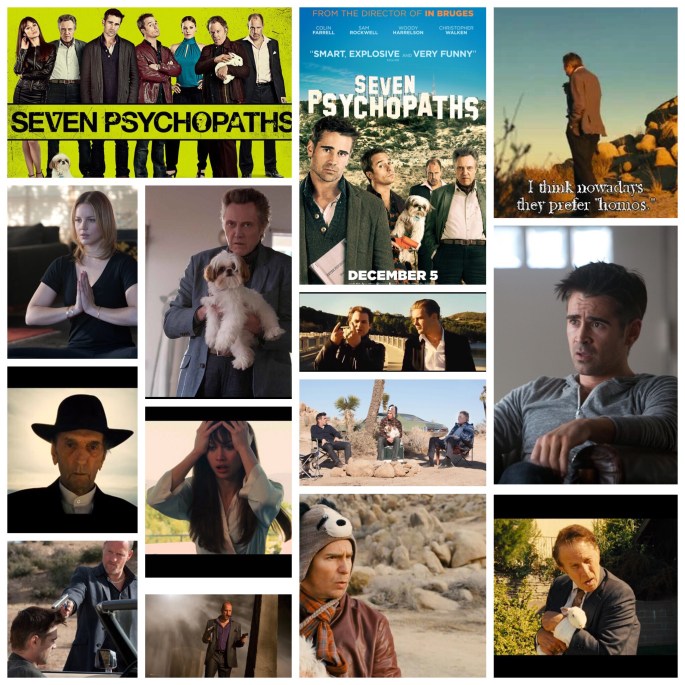
Martin McDonough’s Seven Psychopath

No other film has grown on me quite the way Martin McDonough’s Seven Psychopaths has. Initially disarming in expectations versus result, this isn’t just your average black comedy, there’s wonderfully subversive meta-narrative twists and it has something subtly acidic to say about the development and treatment of genre screenplays in the Hollywood of today, which wasn’t the approach I was expecting prior to seeing it for the first time. That and it’s straight up one of the funniest fucking things I’ve ever seen. Less serious and emotional than McDonough’s masterpiece of a debut In Bruges, the tone here is about as deadpan as it gets, with Sam Rockwell and Christopher Walken as Billy and Hans, two LA oddballs who make a living snatching people’s dogs and collecting the reward money later. Inevitably they grab the wrong guy’s dog who just happens to be unhinged gangster Charlie (Woody Harrelson), sparking a brutally violent wild goose chase all over LA and the surrounding area. It sounds like you know what you’re gonna get, right? Not really, for you see they’re joined by boozy, neurotic screenwriter Marty (Colin Farrell) who is trying to pen a script of his own titled ‘7 Psychopaths’, which not only becomes a running joke, but also provides aside vignettes and even heavily influences the plight of our three heroes in the ‘real world.’ Hans is a quiet, compassionate pacifist and Walken plays him against type, very understated. Farrell’s Marty is a hilarious, anxious wreck who orders six beers at noon and tears his hair out both from writer’s block and the unpredictable behaviour of Rockwell’s Billy, who is a blisteringly funny, antagonistic weirdo that should be on medication but has instead been let off the leash for what is probably the best and definitely the funniest performance the actor has ever given. Harrelson plays it loopy as a guy who’ll blow your head off without twitching an eye but bawls like a toddler when no one can find his silly shit-zu for him. They’re joined by Abbie Cornish and Olga Kurylenko who don’t have much to do (also a meta joke later on) as well as Zeljiko Ivanek, Kevin Corrigan, Linda Bright Clay, Michael Stuhlburg, Michael Pitt, Harry Dean Stanton, all giving lovely work. Tom Waits is as great as you’d expect Tom Waits to be as ex-serial killer Zachariah, who carries his pet bunny rabbit around and tells harrowing tales from years before. The real hero here is McDonough’s brilliant script, and I love how it ducks the limbo bar of Hollywood writing standards and aims for something just left of left field. Farrell says it best himself when he laments “I don’t want it to be all violence and action though, it should be a set up for an out and out revenge flick and the heroes should just drive off into the desert and talk for the rest of the movie…” then he, Rockwell and Walken do just exactly that, for a time anyways until Harrelson catches up with them and the final confrontation gets skewered by McDonough and his refusal to play it straight too. We need more writers like him in Tinseltown, and although I wasn’t so much a fan of his newest Three Billboards one, Bruges and Psychopaths have already been minted as classics for me, two of the best this century.

-Nate Hill

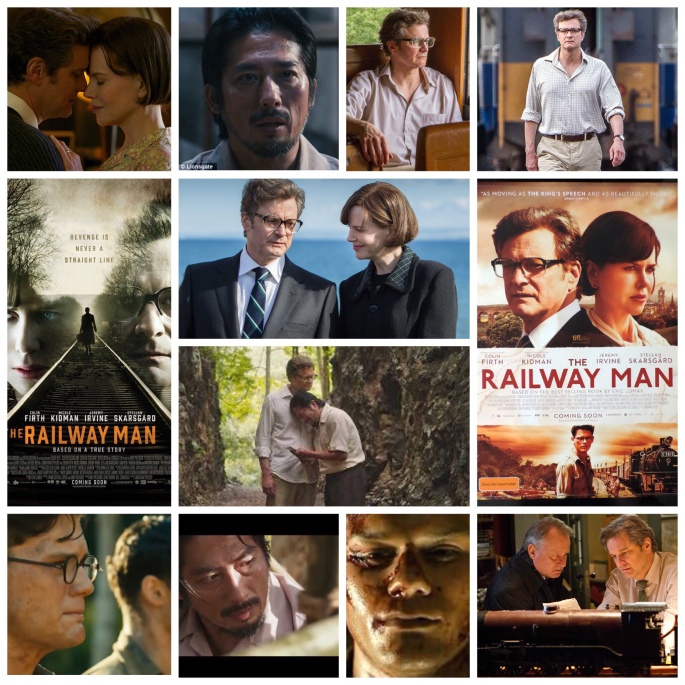
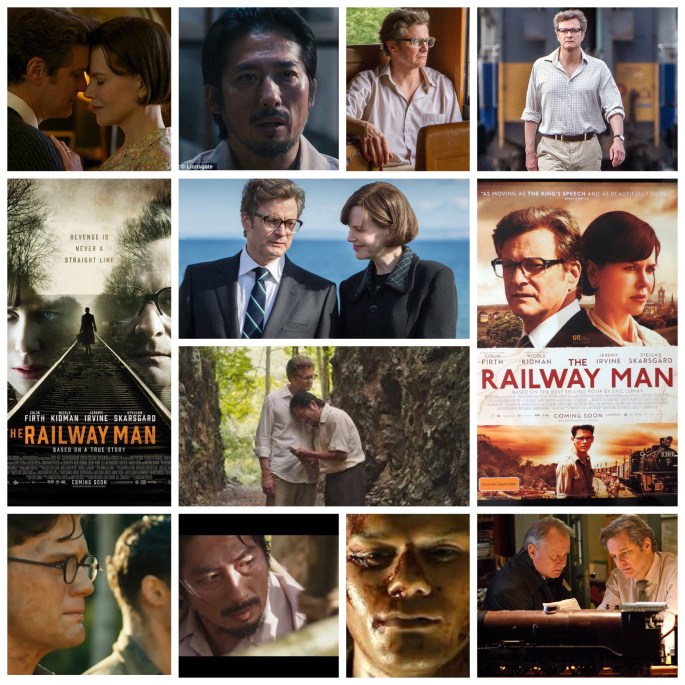
The Railway Man

It takes more effort to convincingly tell a story about reconciliation than it does one about revenge, as I found with The Railway Man, a gripping study of post traumatic stress disorder, the horrors of war and the scars they burn into people, often having lasting effects years later. Colin Firth plays real life WWII veteran Eric, who was captured by the Japanese along with his regiment and held as prisoner of war for some years in a hellish POW camp. His fixation and uncanny knowledge of railway systems all over the world unfortunately is misunderstood by the Japanese, resulting in brutal torture and interrogation which goes on for months, and when the war is over and they are released, turns him into a broken, haunted man. He eventually meets, falls in love with and marries Patti (Nicole Kidman), but the time spent in that camp has left wounds that seemingly will never heal, and he finds it hard to cope. His friend and fellow veteran Finley (Stellan Skarsgard) complicates matters when he discovers that one of the Japanese officials responsible for his treatment is still out there somewhere, and can be located. It’s a fascinating situation, for the man (Hiroyuki Sanada, full of haunting complexity) has changed and bears scars of his own in ways that Eric could not imagine before coming face to face with him. Their meeting and correspondence raised many questions about the nature of war and what it brings out in a person versus how time changes ones feelings, perhaps heals some wounds and shifts perspectives greatly. Director Jonathan Teplitzky tackles the story in a straightforward, traditionalist manner, letting the emotional beats speak for themselves, keeping the camera and editing mellow to allow the actors to organically perform. Firth is a brilliant actor who too often get me stuck in syrupy roles, he shines here especially well when he’s faced with the darkness of memory and we see exactly that reflected in his eyes. Sanada has the toughest role but lands it squarely, never cloying or reaching for emotional straws but rather letting the anguish build to a tipping point and than breaking down naturally in what has to be the film’s best, most honestly realistic scene. Kidman radiates compassion and is around for less of the story but still says a lot with her screen time and does excellent work. Kind of an under seen gem, this floated by off the radar back in 2014 but it’s rich, well told drama with three brave, finely tuned central performances.

-Nate Hill

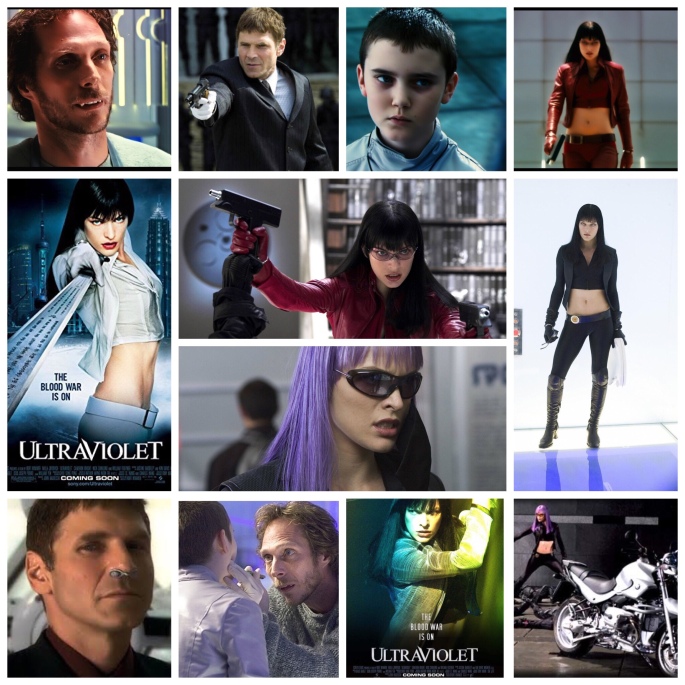
Kurt Wimmer’s Ultraviolet

I feel sorry for everyone and anyone involved with the disaster that is Kurt Wimmer’s Ultraviolet, because it has to be one of the worst films of the century. Wimmer also made Equilibrium, which is excellent, but this seems to be like the stylistic antithesis of that, everything that worked right subtly and in moderation there has been employed at a furiously excessive level here. The entire thing looks like it was shot against a green screen and then rendered sloppily by a roomful of monkeys. Poor Milla Jovovich has been a trooper through some crap in her career but this has to be the ultimate embarrassment, she’s stuck playing some pseudo vampire warrior chick who babbles in monotonous inner monologues about nothing in particular and crashes her way through sword fights and stunt work like she’s fighting her hardest to escape the film and go make another Resident Evil movie, right after she fires her agent. Set in some dystopian future world where viruses reign supreme and blah blah, she’s protecting some kid (Cameron Bright) who lives in a carry on suitcase (literally, it’s like a Harry Potter tent), from a big bad megalomaniac villain (Nick Chinlund does his best, but man is the writing bad) who wants to use his blood or DNA for something blah blah. The great William Fichtner sheepishly mumbles his way through a supporting turn that adds nothing but ineffective exposition because I still have not a clue what happened. Every action set piece has the numb, ineffectual scream of mediocrity, and your eyes glaze over quicker than Milla whips her katana around at nothing. At first I thought this was a failed anime adaptation a lá Aeon Flux or something, but nope, Wimmer has the sole writing credit. I’ll always love the guy for Equilibrium, but man he struck out big time with this giant fucking pile of excremental detritus. The only plus side? Milla is smoking hot as usual.

-Nate Hill

David S. Goyer’s The Unborn

There’s a lot of ideas running around in David S. Goyer’s The Unborn, ideas that a terrific cast do their best with but ultimately this was one big WTF of a letdown, a boring waste of time that deserved better execution than it got. It’s essentially another Exorcist retread, given a twist, with Odette Yustman (whatever happened to her? She was sort of like Megan Fox Lite) playing a girl who is tormented by something called a Dybbuk, some sort of mythological Jewish entity but also just a fancy way of saying demon. It has something to do with her unborn twin who never made it past utero, her institutionalized mother (Carla Cugino, wasted in a heavily cut role) as well as history dating back to Joseph ‘Angel of Death’ Mengele, the infamous Nazi surgeon who had an obsession with twins, a theme that also plays on here. This thing haunts and eventually possesses her, until she finds help from two priests played by Gary Oldman and Idris Elba, in roles beneath their talent. There’s one nicely written scene where she and her boyfriend (Cam Gigandet, who can’t act to save his life) ponder the universe and all its terrors while in bed that would have been better brought to life by different actors. Various scenes show her interaction with her loving father (James Remar), but they’re underdeveloped and feel edited. Mostly it’s just her running from freaky scuttling apparitions, loose plot threads hanging about like wires in an abandoned warehouse and just.. bleh. There’s definitely something there in terms of brainstorming script ideas, but they screwed it up big time by making a haphazard, boring, generically glossy PG-13 dud instead of putting some actual style, personality and genuinely frightening elements in. Big ol’ missed opportunity. It’s a shame, because there’s some neat, spooky special effects thrown at the wall here that deserve a better film, and I’d expect better from Goyer too. Oh well.

-Nate Hill