William Monahan’s Mojave

William Monahan‘s Mojave is garbage dressed up in hopeful noir tropes, a flick that could go either way when you see the promising trailer, but ultimately ends up as the little movie that tried, and failed pretty darn bad. What works, or at least helps it limp through its extremely violent final act, is a performance from Oscar Isaac that’s a lot of fun, if never exposited very well. It’s like The Shining by way of The Dark Half but with less King and more paradoxically muddled pseudo supernatural desert pulp, which admittedly sounds great when I write it like that but really is just repetitive and frustrating. Garrett Hedlund does a moody turn as a morally twisted Hollywood screenwriter who is ready to punch his own ticket. On a spontaneous solo trip out into the desert, he meets a mysterious, sinister weirdo (Isaac) who causes nothing but trouble and chaos from the moment he enters the narrative. Latching onto Hedlund, he follows him back to the city, makes his life hell and they slowly play a circular game of cat and mouse that the filmmakers don’t quite realize is only their own narrative circling the drain from being too exhausted and deliberately oblique. Walton Goggins shows up as a sleazy Hollywood figure and Mark Wahlberg has an amusing cameo as a producer, but it’s mostly Isaac growling out dark, nonsensical platitudes and not making much sense, despite being pretty entertaining in his efforts and putting in good villain work. Parts of this seem to have come from a better movie where… I dunno, where things actually make sense, but the way everything is organized and presented here is one big shitty head scratcher, and misses the dartboard overall. Pass.

-Nate Hill

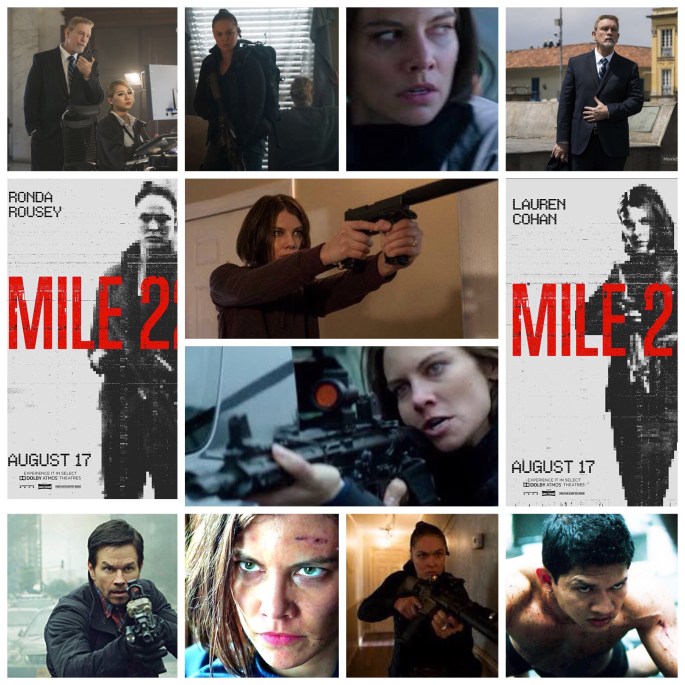
Peter Berg’s Mile 22

Peter Berg’s Mile 22 is one of the weirder ones I’ve seen this year, in a good way I suppose, or rather just a… weird way. It’s a hardcore action flick and a lot pulpier than his past two efforts (the fantastic Deepwater Horizon and the so-so Patriot’s Day), with a cool cast of tough guys and gals involved in some really applause worthy set pieces and sequences of extreme violence. Mark Whalberg heads up a covert Bourne-esque unit called Overwatch, who take the assignments no one else will and are remote handled by a team of caffeinated techies headed up by John Malkovich, quirky as always. Joined by Lauren Cohan, Rhonda Rousey and others, he’s assigned to protect and transport an Indonesian ex-cop and defector (The Raid’s Iko Uwais) across town and fight off hordes of corrupt officials, terrorists and more. The fight scenes and car chases are brilliant, CGI bereft, next level brutality that should be proud, but here’s the thing: Berg goes off the rails in the script and characterization department of his direction. Whalberg’s character is a hyper annoying, verbally abusive loudmouth whose lengthy monologues berating both enemies and his own team (Malkovich even tells him to shut the fuck up over coms at one point) become really tiresome and grating really fast. I’m not sure what they were going for with his character, but it doesn’t quite work and resulted in me just wanting to bitch slap the guy. Also, as cool as the film’s whopper of a twist is, it doesn’t follow through with a proper ending and I couldn’t tell if they just forgot to wrap it up or if they’re trying to set it up for a sequel, which is a ballsy assumption on their part. Nevertheless it’s still a wicked sharp juggernaut of a flick, with the rest of the cast really giving ‘er. Cohan was my favourite, she’s dynamic and adds the most to her role, while Rousey, although great in her brief appearance, doesn’t get a whole lot to do. Uwais is explosive as ever and gets the best action moments, especially a blood soaked, bone shattering close quarters ambush in an infirmary where he lays waste to his enemies using any medical instruments in his path. An interesting flick, but I feel like Berg overthinks his writing sometimes and throws around too much strained quirk and awkward flourish when he should be focusing on the task at hand, which in this case is making a solid action picture. He succeeds about two thirds of the way in that goal.

-Nate Hill

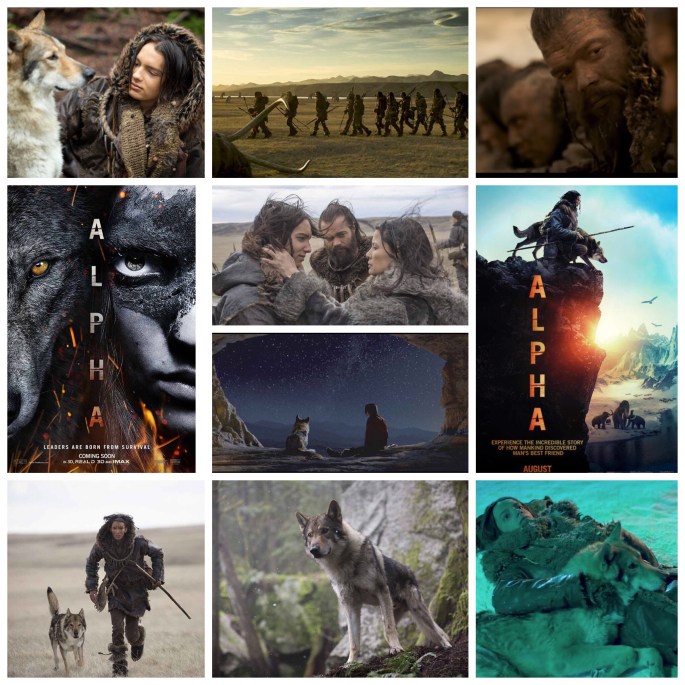
Albert Hughes’s Alpha

You don’t have to be an avid dog lover to appreciate the atmospheric grandeur and rock solid yet comfortingly simple storytelling of Albert Hughes’s Alpha, but being an animal lover certainly gives you more stakes to invest in the story of humanity’s first friendship with canines, now evolved into one of the most beloved relationships in nature. Set in the shadowy primordial past, we see a rugged clan of plain dwellers hunting thundering herds of bison to survive the long winter. Young Keda (Kodi Smit McPhee) is the son of the Chief (Johannes Hauker Jóhannesson, who I’ve never heard of before but simply rocks his performance here) and an inexperienced hunter, plummeting halfway down a cliff following a standoff with several angry bison. Mourned and left for dead by his tribe, he awakens alone, injured and surrounded by danger on all sides. After narrowly escaping a hungry wolf pack and injuring one of them, he feels compassion for the animal and nurses it back to health, forming a bond with her that saves both their lives and carries him on a perilous journey back to his home. It’s so simplistic, and it’s done with earnest, tunnel vision sensibility, but so engaging is the story and so beautiful the visuals that it comes out a complete winner. His father gravely lays down thematic points in a mentor’s form, relating to him that life is rough, and survival is earned, not handed over easily. Hilarious when you look at the capable vitality of people back then and the overweight, disability pay human race of today, but I cheekily digress. It’s survival and friendship done to a T, and my favourite aspect of the film has to be atmosphere. Clearly some CGI was used as well as practical elements, but they’re blended reasonably. The gorgeous, otherworldly locations of Vancouver, Alberta and Iceland bring a sense of scope and vast, uninhabited nature to the surroundings, and the score by Joseph Debeasi and Michael Stearns is some seriously elemental, mood setting work that may be the strongest asset, especially when paired with images of the dazzling Milky Way and endless plains below. As much as they could they used a real pupper for Alpha’s scenes, a gorgeous Czechoslovakian wolfhound named Chuck who acts up a storm and wins hearts. This isn’t going to reinvent the wheel (or invent it at all, considering the time period it’s set in) and it’s certainly nothing incredibly new or unique, but if you want an invigorating, immersive time at the cinema, it works small wonders as a terrific summer movie.

-Nate Hill

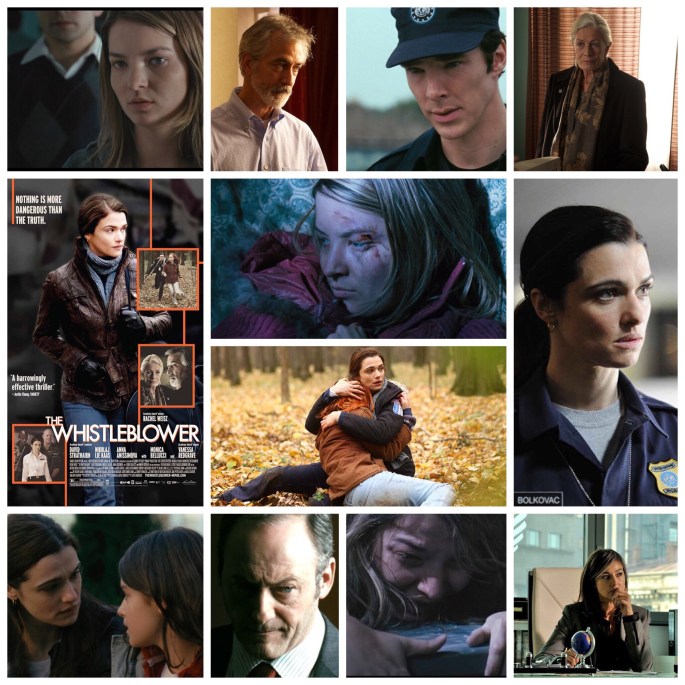
Larysa Kondracki’s The Whistleblower

Larysa Kondracki’s The Whistleblower requires a strong stomach to sit through some of the true life atrocities depicted, but it also begs that one doesn’t look away, or the efforts of one intrepid UN worker (Rachel Weisz) would have gone unheeded, because almost everyone else besides her turned a blind eye when scores of young woman in post war Bosnia were being held captive and brutalized in the illegal sex trade. I can’t think of anyone more adept than Weisz at playing someone this relentlessly compassionate; there’s just something in her warm brown eyes, comforting voice and genuine aura that that camera and dialogue practically melt over. Horror like this almost always follows the fog of war, when the barriers of civilization have taken a hit and the darkness they held at bay roams free for awhile, plus it’s hard to keep track of people after something like that wipes records, destroys towns and fucks up infrastructure. In any case, Weisz’s Kathryn Bolkovac discovers dozens of underground brothels where young girls are held, raped and tortured by mercenaries every day. Her boss at the UN (Liam Cunningham in a chilling portrait of casual indifference) tells her to lay off and they they’re “whores of war, that’s how it works.” Faced with that kind of betrayal from her own people snaps something in Kathryn and she feels deeply compelled to launch her own personal crusade to save the girls, but it proves to be a dangerous task when she realizes that not only do organizations not really care, but some may actively have interests in stopping her. Using contacts in various departments including Monica Bellucci, a kindly Vanessa Redgrave, Benedict Cumberbatch and a fantastic David Strathairn, she gradually gets to the centre of this evil maze, towards truth and freedom for hundreds of innocent girls. The great thing about this film is that it functions as both a superbly exciting political thriller in the vein of Bourne, but really it’s a deeply human, very personal and harrowing study of evil taking root in a region, as the light that Kathryn keeps in her heart wth which to fight it. This is represented in a key relationship between Kathryn and a young Bosnian girl named Raya (Roxana Kondurache, phenomenal) who she takes a special interest in and becomes poster child for these girls. Also, it’s a very carefully researched true story too and that always makes events like this far more affecting onscreen. Just go in with the right mindset and guardrails up because the scenes of sexual abuse and torture are almost unbearable, but necessary to the story arc. A winner in every sense of the word.

-Nate Hill

Martin Scorsese’s The Departed

Martin Scorsese’s The Departed is like being at a frat party where you slowly begin to realize that every other person there is an irredeemable asshole, but they’ve somehow strung you along with charm and charisma thus far. Like a nihilistic den of wolves where everyone involved is out to get each other, its quite simply one of the most hellbent, devil may care, narratively self destructive crime flicks out there. I admire that kind of reckless abandon in a huge budget Hollywood picture with a cast so full of pedigree it’s almost like The A list agencies just packed up all their talent in a clown car, drove it to South Boston and turned them loose on the neighbourhood. By now you know the fable: Two roughnecks, one a mobster (Matt Damon) who has infiltrated the state police, the other a deep cover operative (Leonardo DiCaprio) who is posing as a crime figure. Both are are intrinsically connected to Boston’s most fearsome gangster Frank Costello, played by Jack Nicholson in a performance so balls to the wall one almost feels like his 89’ Joker ditched the makeup and left Gotham for Southie. He’s a calculating maniac who openly mocks the veteran sergeant (Martin Sheen) putting in every effort to take him down, and rules over his vicious soldiers (Ray Winstone is a homicidal bulldog and David O’ Hara gets all the best comic relief) like a medieval despot gone mad. At well over two hours, not a single scene feels rushed, drawn out or remotely dawdled, there’s a breathless tank of violent machismo and wicked deception that never runs out, as the artery slashing editing reminds you every time it cuts to a new scene before the soundtrack choice has made it past the intro. The supporting cast has work from the gorgeous Vera Farmiga as a sneaky cop shrink, Anthony Anderson, James Badge Dale, Kevin Corrigan and more. Mark Whalberg also shows up to do the bad cop routine in a role originally meant for Denis Leary, and as solid as he is I kind of wish old Denis took a crack at it because you can obviously see how perfect he would have been, and is the better actor. As much as Jack Nicholson eats up the spotlight and chews more scenery than the T-Rex from Jurassic Park, my favourite performance of the film comes from Alec Baldwin as the head of the police tactical team. Spouting profanity like a fountain, slamming Budweiser as he swings his 9 iron and kicking the shit out of his employees, he’s a mean spirited, violently comical force of nature and I fucking love the guy. Scorsese has clearly set out to not deliver a heady message or lofty themes here as some do with crime epics; the characters all operate from the gut, use animal instinct and never pause to ponder or pontificate. The only message, if any, is the oft spouted ‘snitches get stitches’ as you can clearly see by the film’s final shot, also the only frame containing anything close to a metaphor. I admire a film like that, and certainly enjoyed the hell out of this one.

-Nate Hill

The Age Of Adaline

The Age Of Adaline shouldn’t work as well as it does or be as great as it is, but there you go. What really holds it together are two spectacular, well thought out performances from Blake Lively and Harrison Ford, who take material that could have come across as hokey and do something really special with it. The lush, garden themed cinematography by David Lanzenburg doesn’t hurt either. Adaline Bowman (Lively) isn’t your average one hundred year old woman. Due to some quasi-cosmic rift in reality, she has been stuck at the age of 29 for going on 80 years, and has amassed both a wealth of worldly knowledge and a charismatic gravitas one might imagine would accompany such an odd life path. When she meets and reluctantly falls for handsome Ellis (Game Of Thrones’s Michael Huisman), it’s a predicament as love has never seemed to really work out, given her condition. When she meets his parents (Ford and Kathy Baker) things get downright weird; decades ago, Ford and Adaline were lovers and the aghast look on his face when he sees her waltz in not only with his son but not a day older than he remembers, is truly something to see. Speaking of aghast, the guy they got to play young Harrison Ford in flashbacks is so uncannily similar to the actor in look and voice that I feel like the director just stole a time machine from the government for the film. It’s kind of like the world’s weirdest love triangle built upon a fantasy concept that’s thrown in from hard left field, and as ridiculous as it all sounds, it’s actually quite the subdued, affecting experience. Her name should be Blake Lovely because she’s just that, always a force of radiance in any role she takes (even as the Boston gutter slut in Ben Affleck’s The Town, an angelic vibe snuck through the smeared eye makeup and hoop earrings), she gives Adaline a dignified independence and occupies every second of frame with the character. This has to be one of Harrison Ford’s finest hours too, ditching the smirky roguish charm and going straight for the heart in a turn that’s both vulnerable and rooted in emotion. Ellen Burstyn does fine work too as Adaline’s daughter, now looking freakishly older than her. The story has none of the silliness you’d expect upon reading a synopsis, and if anything is more down to earth than most romantic films thanks to Lively and Ford, as well as the world’s gravest narration from Hugh Ross. The San Francisco setting is actually a cleverly disguised Vancouver, but plays a quaint role in the setting too. This one is a treat.

-Nate Hill

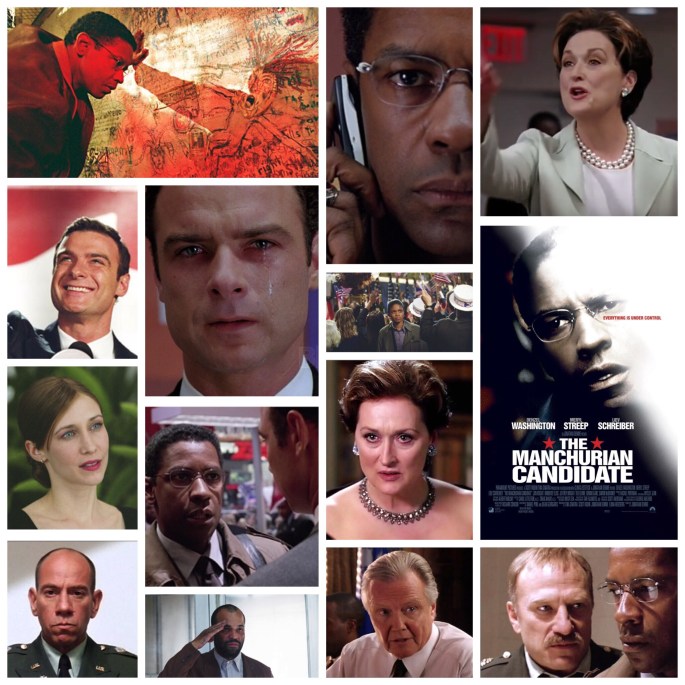
Jonathan Demme’s The Manchurian Candidate

If you ditch the idea that Jonathan Demme’s The Manchurian Candidate is a remake of the 60’s Frank Sinatra flick, you’ll have a much better time watching it without those strings attached (Steven Soderbergh’s Solaris is similarly panned by the misguided hordes). Demme’s version is a new adaptation of the novel by Richard Condon, and in my eyes the far superior thriller. Given a charged military twist, deeply disturbing psychological angles and the powerhouse acting juice of leads Denzel Washington, Liev Schreiber and a staggeringly good Meryl Streep, this is where the buck stops with political thrillers. Demme’s narrative is a thickly laced web of secrets, mind manipulation, lies and corruption that isn’t always apparent or clear, given the unreliable, ruptured psyche of ex gulf war soldier Ben Marco (Washington). He’s shellshocked, but not in the traditional sense, and somehow feels as if something went very, very wrong with his unit following a deadly skirmish in the Middle East. His former fellow soldier and friend Raymond Prentiss Shaw (Schreiber) is up for senate election, fiercely prodded and chaperoned by his mad dog of a mother Eleanor (Streep). Everyone from their unit has either wound up dead or suffering from terrifying nightmares, psychosis and brain trauma they can’t explain. It’s up to Ben to trust his dodgy memories, leading him out of the dark and finding what really happened before a vague impending disaster that is Demme’s fulcrum upon which ample, nerve annihilating suspense is built around. Washington is his usual quietly implosive self and makes unnerving work of getting us to believe he’s in real psychological stress but somehow lucid. Streep is the ultimate mommy from hell, and despite the script getting near maniacal with her arc at times, she always sells it as a rogue extremist who only sees her side of the arena and will do literally anything for her son, no matter what the cost to country, colleagues or even herself. They’re joined by an impressive league of supporting talent including Bruno Ganz, Miguel Ferrer, Ted Levine, the sinister Simon McBurney, Ann Dowd, Charles Napier, José Pablo Castillo, Bill Irwin, Al Franken, Zelijko Ivanek, Roger Corman (!), Obba Babarundé, Jude Ciccolela, Dean Stockwell, Tracey Walter, Sydney Lumet (!!) and more. There’s really terrific work from Jeffrey Wright as another troubled former soldier, Kimberly Elise as a fed tracking Ben’s movements who catches feels for him, Jon Voight as a suspicious rival candidate to Shaw and Vera Farmiga as his daughter. What. A. Cast. This was one of the first R rated films I was ever allowed to see in theatres and as such the chills haven’t quite left my spine every time I go in for a revisit. It almost reaches horror movie levels of fright and nightmarish, half remembered atrocities that taint the senate election like political voodoo and give the proceedings a dark, very uneasy atmosphere. Demme goes for a big scope here with a huge cast, large scale story and high impact set pieces, but at its heart it’s a very tense, inward focused story that shows the sickness in power and just what some people are willing to do to get ahead. Like I said, forget the Sinatra version and watch this as it’s own film, it’s an incredibly special, affecting experience onscreen and you won’t find a freakier political thriller.

-Nate Hill

Antoine Fuqua’s The Equalizer

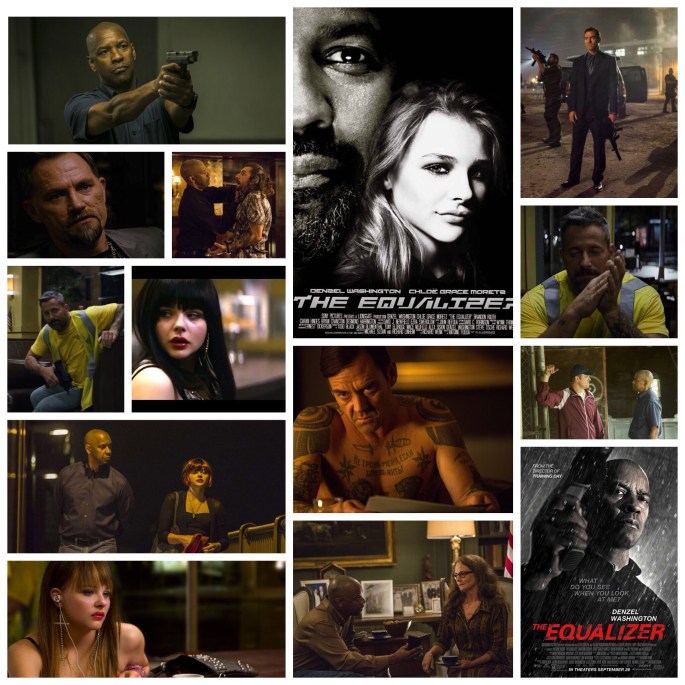
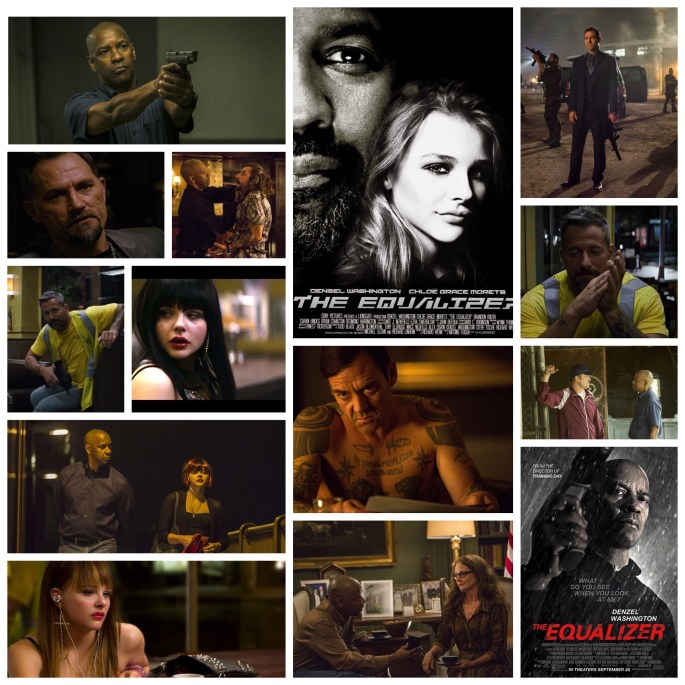
If you compare Antoine Fuqua’s The Equalizer to the original tv series from back in the 80’s, it’s almost comical how little they have to do with each other, besides the vague theme of vigilantism. All good though because the film amps up the creaky old serial into a maniacally pulpy, hard R rated, ultraviolent, near B movie that’s given some real class by Denzel Washington, whose gravity makes all the wanton violence seem somehow rational. Fuqua is an intense filmmaker though and he firmly stamps his stylistic brand of kinetic mayhem onto this film so hard that by the time the bombastic warehouse set finale rolls around, it seems hella over the top. Denzel is Robert McCall, a quiet, cultured fellow who just happens to be a scary, highly skilled ex government spook with a heart of gold. When a troubled young prostitute (Chloe Grace Moretz) gets in deep with the reliably psychotic Russian mob, he sees something in her that makes him step up to the occasion and quite literally lay waste to their entire organization with every means of his disposable. It’s kind of like what he did to get Dakota Fanning out of the crosshairs in Tony Scott’s Man On Fire, except less fire and more Bourne-esque hand to hand combat and tactical ingenuity. He’s basically invincible to the point where even a terrifying Vor lieutenant (Marton Csokas knowingly dialing up the camp dial) can’t even put a stop to his righteous rampage. There’s a bond between him and Moretz that needs to be there to soften the blow of the extremes he goes to, and the two actors have a great chemistry in their scenes. David Harbour steals scenes as a sheepishly corrupt Boston cop who get amusingly exasperated when McCall puts the hurt on him and the whole operation. Bill Pullman and Melissa Leo have painfully brief cameos as government officials from his past, Justified’s Johnny Neumier is nasty as the abusive russkie pimp who is the first of many tough guys to fall under his hand, and Johnny Messner has a short lived cameo as a thug who grossly underestimates him. This is kind of a ridiculous film at its core, the earnest elements hilariously clashing with a hyper violent pulse that at times reaches Hobo With A Shotgun style heights. But Denzel is ever the actor’s actor and sells the flourish with his grim resolve. A fun ass flick for what it is, and I’m curious to check out the sequel this year. Oh, and there’s a cameo from that Insta-idiot Dan Bilzerian too that almost cements a tongue in cheek self aware vibe on the film’s part.

-Nate Hill

Terrence Malick’s The Thin Red Line

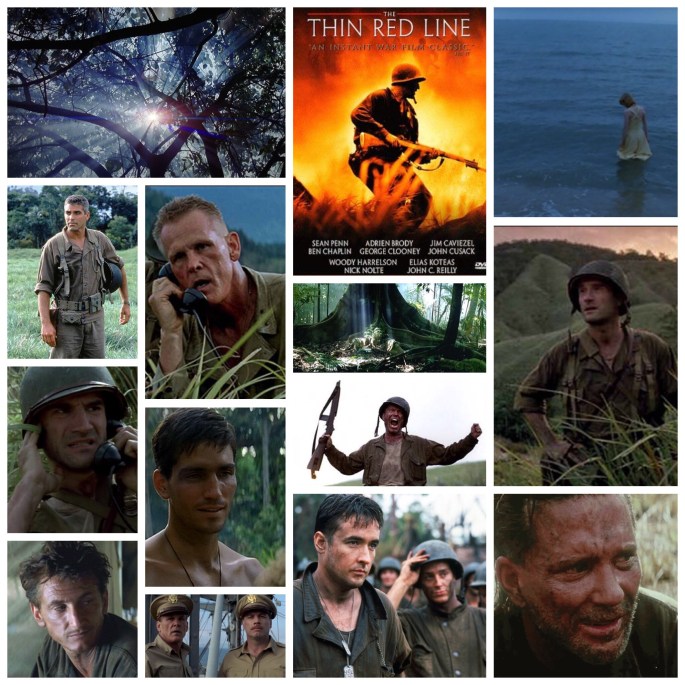
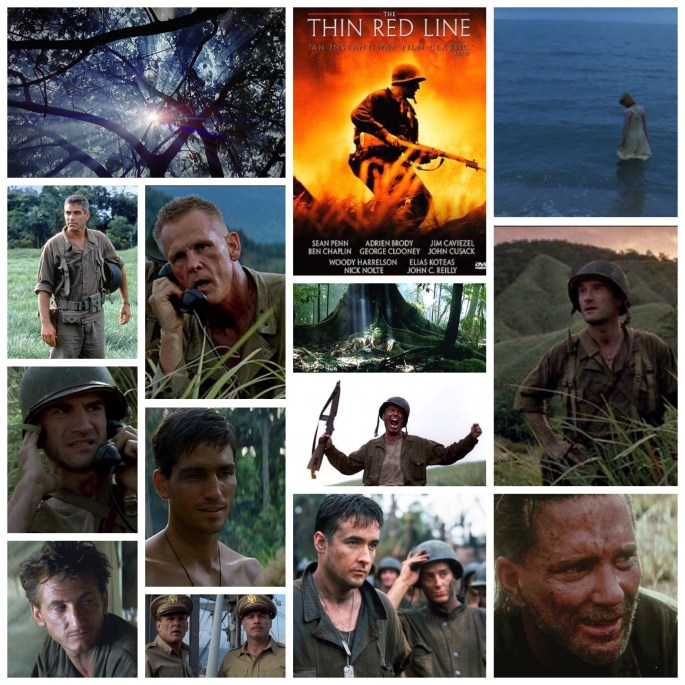
There’s a scene in Quentin Tarantino’s Kill Bill 2 where Michael Madsen’s Budd lays down the sword rhetoric: “If you’re gonna compared a sword made by Hattori Hanzo, you compare it to every other sword ever made, that wasn’t made by Hattori Hanzo.” I’d like to augment that slightly in the case of Terrence Malick’s The Thin Red Line and say, “If you’re gonna compare The Thin Red Line, you compare it to every other war movie ever made that *isn’t* The Thin Red Line.” That’s not to say its better than all the rest or on any kind of quality pedestal, it’s just simply unlike every other war film out there, and that differentiation makes it an incredibly special picture. Why, you ask? Because it takes a ponderous, meditative approach to a very hectic horrific period in history, and takes the time to explore the effects of conflict on both humanity and nature, as well as how all those forces go hand in hand. What other war film does that? Malick uses a poets eye and a lyricist’s approach to show the Guadalcanal siege, a horrific battle in which lives were lost on both sides and the countryside ravaged by the fires of war. To say that this film is an ensemble piece would be an understatement; practically all of Hollywood and their mother have parts in this, from the front and centre players right down to cameos and even a few appearances that never made it into the final cut (which I’m still bitter about). The two central performances come from Jim Caviesel and Sean Penn as Pvt. Welsh and Sgt. Witt. Welsh is a compassionate, thoughtful man who seems primally uncomfortable in a soldiers uniform, and shirks the materialistic horror and industrialist grind of war to seek something more esoteric, a reason for being amongst the horror. Witt is a hard, cold man who sees no spiritual light at the end of the tunnel and does his job with grim resolve, scarcely pausing to contemplate anything but the next plan of action. These two are archetypes, different forces that play in each of us and, variations of which, are how we deal with something as incomparable as a world war. Around them swirl an endless sea of famous faces and other characters doing the best they can in the chaos, or simply getting lost in it. Nick Nolte as a gloomy Colonel displays fire and brimstone externally, but his inner monologue (a constant with Malick) shows us a roiling torment. A captain under his command (Elias Koteas) has an emotional crisis and disobeys orders to send his men to their death when thunderously pressured by Nolte. Koteas vividly shows us the heartbreak and confusion of a man who is ready to break, and gives arguably the best performance of the film. Woody Harrelson accidentally blows a chunk of his ass off with a grenade, John Cusack climbs the military rank with his tactics, John Savage wanders around in a daze as a sadly shell shocked soldier, Ben Chaplin pines for his lost love (Miranda Otto) and the jaw dropping supporting cast includes (deep breath now) Jared Leto, Nick Stahl, Tim Blake Nelson, Thomas Jane, Dash Mihok, Michael Mcgrady, John C. Reilly, Adrien Brody, Mark Boone Jr, Don Harvey, Arie Verveen, Donal Logue, John Travolta and a brief George Clooney. There’s a whole bunch who were inexplicably cut from scenes too including Bill Pullman, Gary Oldman and Mickey Rourke. Rourke’s scene can be found, in pieces, on YouTube and it’s worth a search to see him play a haunted sniper. Hans Zimmer doles out musical genius as usual, with a mournfully angelic score that laments the process of war, particularly in scenes where Caviesel connects with the natives in the region, as well as a soul shattering ambush on the Japanese encampment that is not a sequence that ten year old Nate has been able to forget since I saw it and the hairs on my neck stood up. This is a diversion from most war films; Malick always has a dreamy filter over every story he weaves: exposition is scant, atmosphere matters above all else and the forces of music and visual direction almost always supersede dialogue, excepting inner thoughts from the characters. If you take that very specific yet loose and ethereal aesthetic and plug it into the machinations of a war picture, the result is as disturbing as it is breathtakingly beautiful, because you are seeing these events through a lens not usually brandished in the genre, and the consequences of war seem somehow more urgent and cataclysmic. Malick knows this, and keeps that tempo up for the entire near three hour runtime, giving us nothing short of a classic.

-Nate Hill

Denis Villeneuve’s Arrival

Every few years, if we’re lucky, we get a science fiction movie as good as Denis Villeneuve’s Arrival, a cosmic miracle of a film. Built around the ages old trope of aliens invading earth, and even throwing shout outs to sci fi flicks of yore (Robert Zemeckis’s Contact, Roland Emmerich’s Independence Day to name a few), it ultimately is completely it’s own thing and there has never been anything quite like it ever before in the genre, or in Big Hollywood. Villeneuve, whether working in crime, thriller or mind-fuck territory, has always proudly broke the mold and blasted new crevices into seemingly charted out tonal territory. It’s only fitting that a SciFi outing from him is something remarkable, and he terraforms the genre to incredible thematic plateaus here. Amy Adams is reliably terrific as a linguistics guru brought in by the government to try and communicate with a mysterious race of extraterrestrials, shadowy beings who have illegally parked their mammoth, monolithic ships systematically all over the globe. What do they want? Why are they her? Tensions rise when the military (Forest Whitaker gives the obligatory general role his trademark brand of implosive compassion) and the CIA (Michael Stuhlburg does paranoia to a turn) butt heads over what to do, while a snarky mathematician (Jeremy Renner, excellent) has his own ideas. Adams develops an inspired way of both understanding these beings via their unique brand of written language and imparting to them our English words, or at least a variation. The scenes inside their ship are so haunting and atmospheric we get the sense this is real footage we’re sneaking a peek at, and the government may bust in and raid our TV room any moment. The beings themselves are a visually intriguing bunch, like dreamy space elephant/whale/spiders who evoke a strange, genuinely alien aura. But time is running out, and if Adams can’t make both their language and intentions clear, the big guns of fear and ignorance threaten to come out and play. The film has an important, uplifting message that communication should always supersede violence, a hard truth but a necessary one. My favourite aspect of this film is its elliptical final act, and anyone who has already seen it knows what I’m talking about. Much of the film, although artistic, is straightforward, but Villeneuve really plumbs the fathoms of human consciousness and pulls forth ideas that not only are rarely explored this maturely onscreen, are also very difficult to understand in linear, analytical fashion. It’s this drive to push his audience, to dole out just as much brain and soul candy as eye candy into our cinematic trick or treat bags that’s the reason he’s such an important, landmark filmmaker, and it’s a joy to see such films take centre stage at the multiplex. With key supporting work from the great Tzi Ma and a ghostly original score by the late maestro Johan Johansson that eerily inhabits the film like an alien force all its own, every individual and element involved combine to give this film something special and rare: a genuine sense of wonder.

-Nate Hill