I’ve been singing the praises for Antoine Fuqua’s King Arthur for years, but here’s the thing: you simply have to watch the extended director’s cut, it’s a different film entirely than the theatrical. Expanding both on complex moral quandary and lethal, bloody carnage, it allows ideas, expression and extreme violence to play out in a cut free of time and rating constraints, and as such is one of the best sword/battle flicks I’ve ever seen. The main buzz surrounding this one was how much of a departure it is from the usual Arthur lore we’re used to.. darker, grittier, more tied in with Ancient Rome and bereft of any lighthearted fantasy, it may as well be its own thing untethered of any Arthurian scope, because who can really say how it all went down back then anyways. Here Arthur is a restless, stormy Sarmatian knight played by a hot blooded Clive Owen, a fearless, jaded warrior who is steward to a rowdy troop of loyal swordsman forced by the empire to serve out fifteen years of service in exchange for freedom at the end of it all. Each of his troupe is played by a stellar actor, and each blessed with their own distinct, fully formed personality. Headstrong Bors (The always awesome Ray Winstone), dysfunctional Lancelot (Ioan Gryffud), lethal Tristan (Mads Mikkelsen, probably the coolest of the bunch), stalwart Galahad (Hugh Dancy), mischievous Gawain (Joel Edgerton) and strong, silent Dagonet (Ray Stevenson). They’re a wickedly diverse bunch of warriors, lovers, brothers and each has their own carefully carved out view on freedom, the Romans, life on the battlefield and ancestry, just a few of the themes explored deeply by the consistently surprising script. This film is notorious for its portrayal of Keira Knightley’s Guinevere, a bikini clad warrior whose appearance in the third act eclipses what is actually a really well written character, is unfairly panned based on a few brazen costume choices. Arthur and gang are up against a fearsome Saxon army led by Cerdic (stellar Stellan Skarsgard), a bloodthirsty maniac restlessly looking for his equal on the battlefield, which he finds in Arthur once they duke it out. Merlin is a tree dwelling mystic played by an unrecognizable Stephen Dillane, the round table in a dilapidated version of the glory found in books, and the knights resemble rough n’ tumble mercenaries more than the glowing reputation they’re given in classic lore. Sure, it’s a different take, but I for one really like the gritty, hellish aura surrounding the whole thing, it’s a brutal and risky departure from anything close to Disney and I applaud them for it. Better still is the way morality and philosophy are explored through the character’s actions, until we have a clear picture of Arthur as a realistic, hands on hero who isn’t afraid to get violent to prove points. The set pieces and swordplay are breathtaking, from a tense stand-off set on a deadly frozen lake to the final spectacular battle, each knight getting their chance to nail some superb fight choreography and draw gallons of blood. Hans Zimmer provides one of his most surging, palpitating thunderclap original scores, it’s up there with his best work and rides right next to the knights into battle with symphonic glory that just begs for a surround sound system to play on. I think this got so shit on because critics are usually only privy to the theatrical version right out of the gate, and first impressions cement reputation for years to come. Once again, the director’s cut is really the only way to go. It’s bolder, longer, more violent and sensual, and just tells the best version of the film’s story that it can.
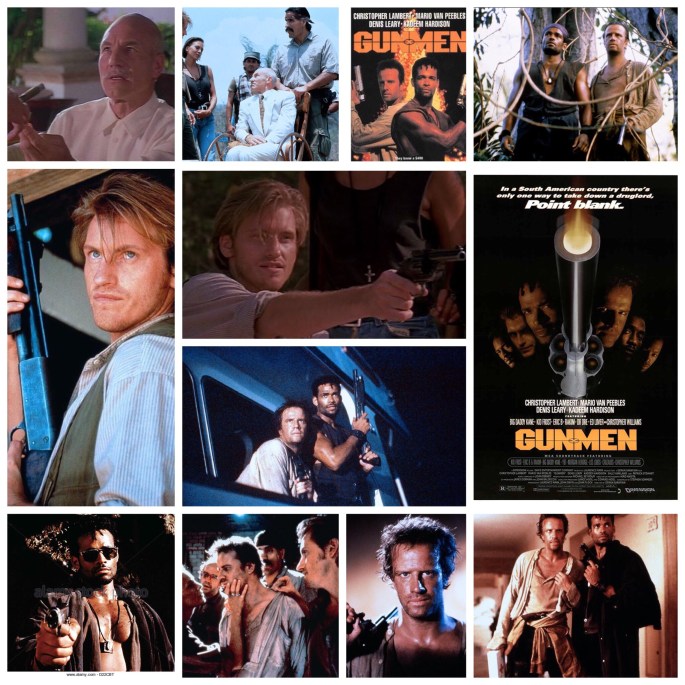
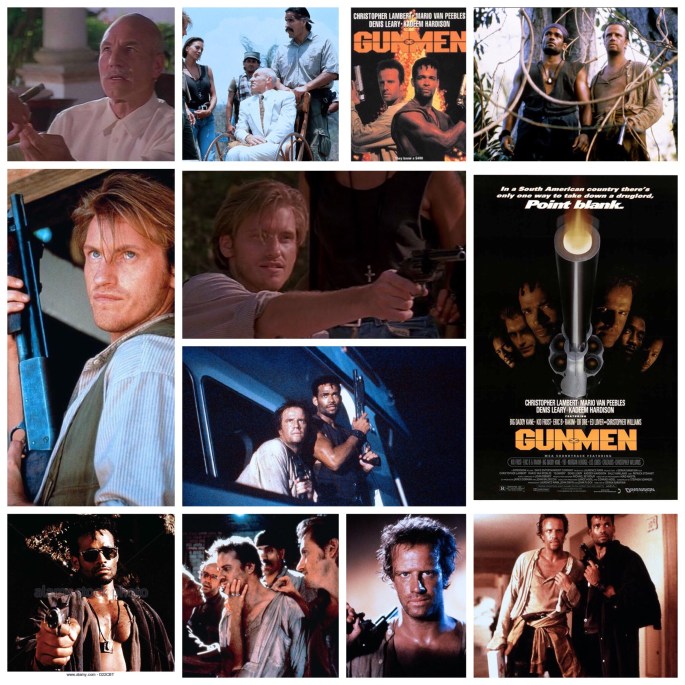
Gunmen is one of those sleazy, inconsequential pieces of shizz you’ll find on TBS Superstation (I’m aware that channel’s shelf life expired over a decade ago) at like 2am, full of guns, tits, dust, sweat, double crossing and whatnot. It’s a fun one because sometimes I’ll bring it up in conversation and say “the one where Patrick Stewart is in a wheelchair” and people will be like “yeah, X Men”, and I’ll say “no the other one” with a straight face and watch how confused they look. Heh. It’s a Mario Van Peebles flick, an actor I could never get that excited about, but it’s also a Christopher Lambert flick too, a guy I’ve always inexplicably loved, like a scrappy lost puppy that just won’t go away. I don’t remember the plot so don’t even ask, I’ll just spark-note it in bullet points: guns. DEA. South America. Violence. Incomprehensible storyline. Shootouts. More guns. One thing that was cool was Denis Leary as a psychotic arms dealer, gunning down a ten year old girl’s parents in cold blood and than calmly reassuring her, “trust me kid, you’re better off without them.” Yeesh. He plays Armour O’Malley, lieutenant to drug baron Patrick Stewart, which leads to predictable bad blood, and so it goes. Peebles and Lambert are a DEA agent and a weirdo smuggler on the run from all the crazy dudes I just mentioned above. It’s trash though, and as I type I’m recalling a scene where Lambert is ploughing a chick in some whorehouse and she begs for more, but he sweatily laments in that horrendous accent of his, “there is no more!!”… Then two seconds later Peebles busts in and kidnaps him at gunpoint. You know your flick has abandoned plot for cheap thrills and gotten so stuck in B movie quicksand that not even AAA can snag you out when that happens. That’s about all I remember, I was way too stoned to soak in all the cheaply rendered exploitive excess when I watched it way back when, I wish you the best of luck though!!
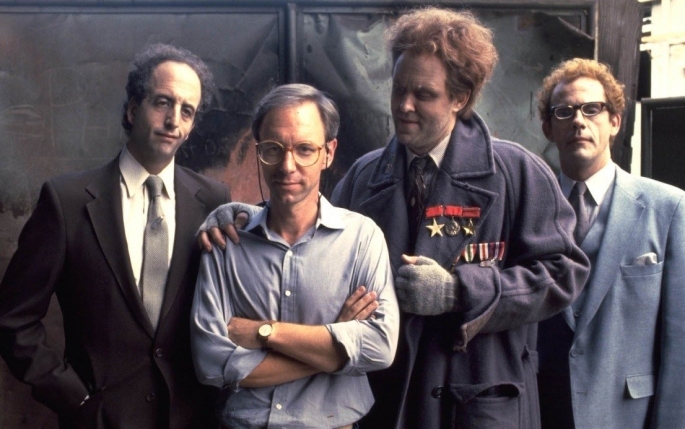
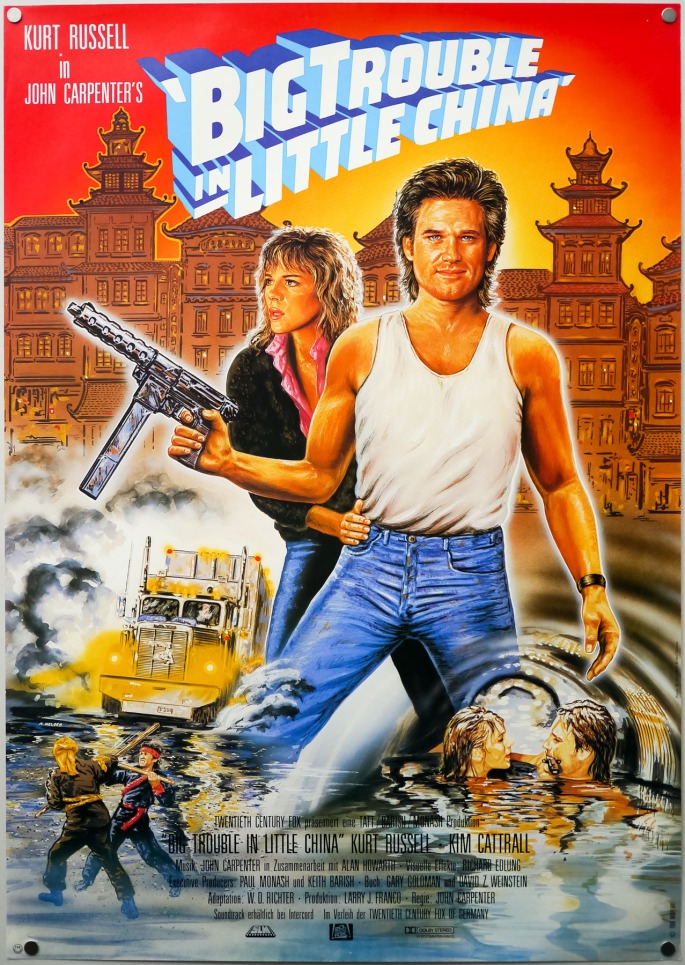
To talk about W.D. (Rick) Richter, is to talk about one of my all-time favorite films, Big Trouble in Little China. It is, to put it simply, one of those films that comes along (not so much anymore) once in a generation. As we know in this age of remakes, reboots and re-imaginations, there is a very good chance that this film, because of its staying power and built-in fan base, will more than likely resurface with Dwayne Johnson playing Jack Burton. Just like Hansel in Zoolander he is, as far as the Studios are concerned, so hot right now!
And you can be your bottom dollar that it will try like hell to recapture the magic of what was – and more than likely – crash ‘n’ burn in its attempt to do so. I might be wrong. Because, BTILC, was and is what is often referred to as a “happy accident”. What began as a seemingly awkward combination of a western with a plot that involved Chinese black magic became, thanks to my guest, a glorious blending of genres that there is really no recipe for.
I rarely get nervous doing interviews, but I was glad to be sitting down for this one. When the person on the other end of the line had a hand in creating a couple of the seminal film of one’s existence . . . it is tough to play it cool, plus for the first time in a long time, I found the need to have my questions written, rather than merely see what the conversation would provoke. Primarily because I knew I was only going to have a limited time, and secondly because during our email exchanges prior to the chat, I found Rick to be extremely matter-of-fact and, wishing not to have the interview published in audio form, he merely wanted to be concise and not ramble on as, he says, has happened in the past.
So I sat and pondered questions. Having read other interviews with him in the past, before he’d stepped away from the business, the focus was on the films he had released at the time and didn’t really get below the surface. Off the record, we spoke about a few of the things that were beneath the polished exterior of the press kits, but that was not all that interested me. There have been many books and articles on his films, as well as many having excellent special features and commentary tracks which mine their depths – so I wasn’t going to waste time there.
In the end I waited till the last minute and scribbled down the first questions that popped into my head. Some of course are elementary, but one or two I’ve had on my mind for a while.
Well, it took a long time, but sometimes, good things do. It was well worth the wait and the frustrating silences in between messages from Rick’s friend who very graciously made the introductions, and I, as a fan first, was humbled, honored and thrilled at the prospect of speaking to yet another film-making idol of mine.
While Rick, early in our email exchanges said, “I prefer to let he films, for better or worse, speak for themselves.” I am and will be forever grateful he took the time to talk a little about his work. In the end I wasn’t nervous or scared at all . . . I felt kind of invincible.
KH: Did you always want to work in movies and if so what were the films which influenced you?
WDR: First I wanted a paper route. Then I wanted to run a circus. Then I thought about pursuing a career as an English teacher. Then I thought, “Why not aspire to become an actual tenured English professor?” But, by the time I got to college, graduate film programs were springing up here and there. Having loved movies since childhood, but never imagining there was a route available into the business, I suddenly saw a way to pursue a career in film in a structured, sensible way.
I went to a lot of movies of all kinds as a kid, but mostly B horror films from the mid-fifties through the mid-sixties. In 1964, I saw DR. STRANGELOVE and in 1965 THE LOVED ONE. They suggested a new direction and deeply influenced me.
KH: How did you break in to the business?
WDR: I wrote screenplays at USC, and one of them secured me an agent. I then worked as a reader for Warners and wrote on the side and continued to do so when Warners and Irvin Kershner let me work as his assistant while he was prepping DIRTY HARRY for Sinatra. That project fell apart, but a spec script I’d written, SLITHER, got to the director Howard Zeiff, and he set it up, odd as it was, and we shot it. Presto! I was a produced screenwriter.
KH: Your early career was full of greats like Dracula,Body Snatchers and your Oscar nod for Brubaker. How much does momentum play a factor in one’s career (films coming out and performing well) as well as recognition for one’s talent?
WDR: Actually, none of those films did perform well, but they were respected, and, as a result, I was respected as a young writer with perceived potential. You must remember that during the seventies and eighties eccentric characters in unusual, small stories were nothing Hollywood ran screaming from. That came later.
KH: You are a part of two of my favourite films of all time withBanzai and BTILC. How do you feel as an artist to be remembered for singular works rather than your entire body of creativity?
WDR: I’ve never given much thought to being “remembered”. After all, sooner or later, this whole planet is going to be forgotten.
KH: If people want the skinny on Banzai, you have already provided an excellent commentary. What I would ask is, did you ever see Kevin Smith’sQ & A whose guests were Wellerand Lithgow, and how did you feel about possible versions of the continuing story of Banzai?
WDR: I thought Kevin did a spectacular job that evening, and it was nice to learn how much the movie shaped him. As long as Mac Rauch is involved, I feel quite confident that a “new” BUCKAROO could be as startling as the original.
KH: BTILC was ahead of its time, in my opinion. What I’ve always wanted to know is, what the “western version” was like prior to your work on the script, and how much of the finished film remains your work?
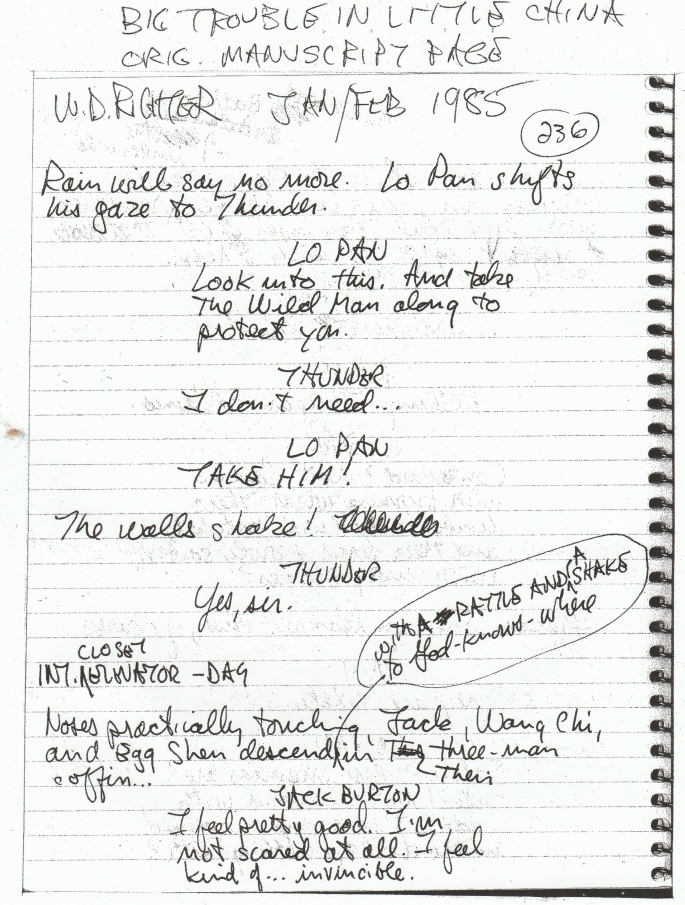
WDR: The “western version” just didn’t work for anybody, sad to say. It all seemed too distant…the Old West and the Asian occult, etc. So I proposed moving it to a modern, familiar setting and swapping the hero’s horse for a big rig. The pitch went over well, and, with a writers’ strike looming, I dug into the challenge of creating a contemporary script in about seven weeks, choosing to do that with a somewhat dim but hopefully lovable hero at the center. The finished film stayed absolutely true to my screenplay, apart from the inevitable ad libs here and there. Jack Burton’s John-Wayne cadences, though, are definitely nothing I wrote or endorsed. John and Kurt settled on that themselves.
You asked me prior to this conversation: “Did you write the line or was it improvised: I feel pretty good. I’m not, uh, I’m not scared at all. I just feel kind of… feel kind of invincible?”
Turns out I did write it. I wrote the whole script furiously in longhand in several spiral notebooks, and a typist transcribed them into script format.
KH: There was a significant gap between Home for the Holidays and Stealth. I have interviewed many writers who talk of these periods. They say, it’s not that I wasn’t writing, it’s just my scripts weren’t getting made. Was that true of your career at the time?
WDR: Definitely. I had movies actually green-lighted then cancelled when directors went over budget in pre-production.
KH: I understand Stealth was a troubled production.
WDR: STEALTH was just a bizarre and massively unpleasant experience. Directors and location scouts shouldn’t rewrite writers, if you want my opinion. Kind of like Presidents shouldn’t tweet.
KH: Did your involvement end after the writing?
WDR: The “writing” never really stopped. I was removed from the picture several times when my revisions failed to please the director. But I was repeatedly brought back by the studio to pull the script back from the brink after the director (who shall remain nameless) had worked it over again in his spare time. It’s the only film I’ve had made that, with great care, I kept my distance from during production and through release.
KH: I also love Needful Things. What was it like to adapt King?
WDR: Crazy. The book is 690-pages of single-spaced prose. My script was 124 pages, and you know how much “air” there is on a script page. I figured that if one were to retype the novel in a crude screenplay format, it might easily hit 1000 pages. So I lost roughly 876 pages while trying to keep King’s story and mood intact. I have no sense of how that worked out because I’ve never reread the book, but I always imagined a looser, grittier, less-arch movie.
KH: Any advice you would give to a struggling screenwriter – not unlike myself?
WDR: Write. Write. Write. But always try to imagine the movie itself playing to paying strangers. Why would they — or you! — want to watch it?
KH: Sir it has been a profound honor to converse with you. I cherish the moment and humbly thank you.
Russell Mulcahy’s Razorback is a dusty old monster flick set in the doldrums of Australia, and features a gigantic murderous wild boar that terrorizes local townsfolk and carries off infants into the night. It’s silly, it drags on in places and has two of *the most* irritating human antagonists, but there’s some really neat practical effects, an atmospheric dream sequence that is like a brilliant little short film within the whole, and some creaky production design that gives it personality. It’s just the human element that suffers a bit in these type of films, and very much so here. I’ve often wondered how cool it would be if they did a creature feature where the humans are almost entirely without dialogue or forced, unnecessary idiosyncratic scenes that don’t succeed in getting us invested, but rather annoyed with them. The writing is never great in stuff like this, so why have much, or even any at all? Just my two cents. The best to be found here is some gorgeous outback cinematography, moody interludes of dust-bucket scenery and a really great original score that kicks up the synths in aforementioned dream sequence. I’ve heard that they spent 250 grand on the animatronic boar beastie, which we only get to see in full in the last part of the third act, which is of course the tradition here, but they could have benefitted from more schlock and tusk action way earlier on to stir the pot and make it more interesting. On the plus side, I also heard that Steven Spielberg gave Mulcahy a phone call after seeing the film and asked how he managed to achieve the FX in the dream sequence, which is praise enough, as it’s a wickedly tactile little nightmare. While not in the sterling tier of monster films or horror flicks for me, it has its charms in places, and it’s yawn moments in others.
The Babysitter is a rip snorting fuckin great old school horror throwback, I’m excited that money is being spent on projects like this, and stoked further that Netflix is purchasing them. With a premise culled from the depths of the 80’s and a revamped modern setting complete with obligatory pop culture references to assure us that although it’s steeped in nostalgia, we are in fact in the here and now, a recipe that cunningly embraces both sides of the fence, each with grass equally green. Plus it’s a fuckin intense, R rated, batshit crazy bloodbath, with smart writing to back up the carnage. Set on a sunny suburban afternoon, young Cole (Judah Lewis) is a bullied lad with loopy parents and obligatory nerdy nostalgic affinities, as well as a special bond with his sexy, sassy babysitter Bee (Samara Weaving), who is looking out for him while the parental unit takes off on a night away. It’s party fun friendship time with the two of them, who couldn’t get along better, until… Surprise!! Bee and her clique of high school friends are actually a murdering satanist cult with blood on their hands and killing on their minds. From there it’s a deliriously gory free for all as Cole discovers this is the night he becomes a man, and has to defend himself tooth and nail from these demented weirdos, and reconcile Bee’s betrayal, a theme I was shocked they had time to explore amidst the bloody chaos. It’s silly in the vein of the Evil Dead, but polished and succinctly written by way of Scream, and peppered with deliberate pop culture Easter eggs a lá Stranger Things, an irresistible flavour overall. Pouty lipped, well endowed Samara is a true find as Bee, earning both Cole’s admiration, adoration and finally fear with her spunky, scary performance. Her little cult is populated by slightly tweaked archetypes including the token black guy (Andrew Bachelor), the slutty cheerleader (Bella Thorne), the creepy Asian chick (Hana Mae Lee) and most entertainingly the douchebag jock (Robbie Amell has fun with the role and then some). Colourful pastel production design provides a palette for gallons of gushing blood to be spilled via stabbings, shootings, impalings, vehicular decimation and one of the best shotgun to the head sequences in years that’s so sudden it even has Bee remarking “holy shit that was graphic”. I love old horror flicks and I can’t get enough of this throwback trend they’ve been doing, when they do their research and put out solid gore-fests and fright flicks, and this one is a fuckin hoot from front to back.
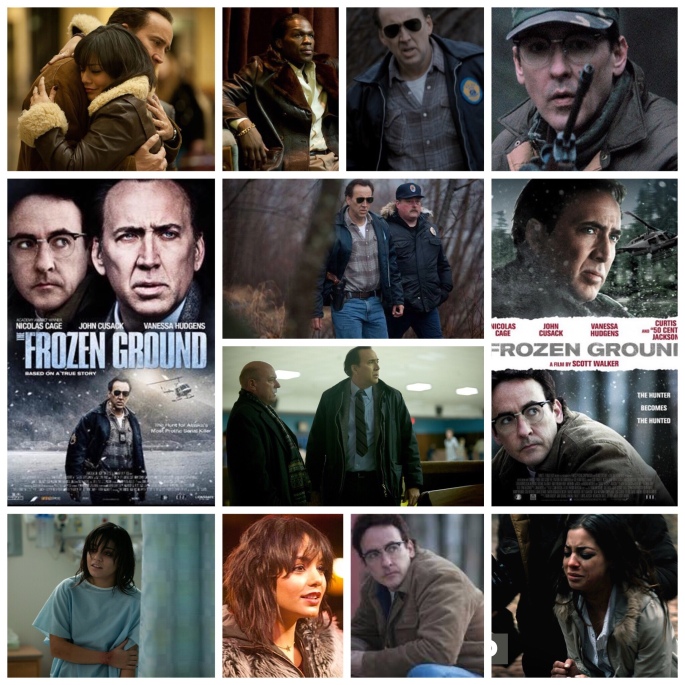
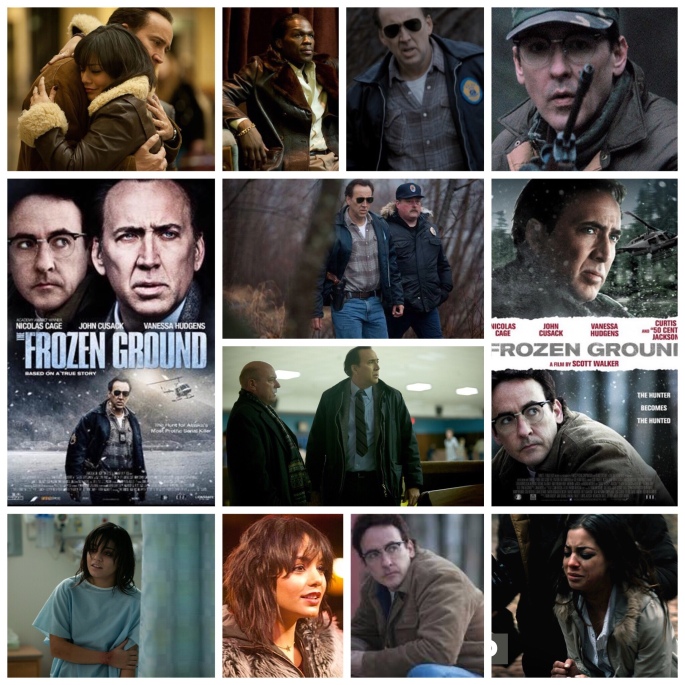
Nicolas Cage has been on a seemingly never-ending rampage of starring roles in some… odd flicks post mid 2000’s, and it can seem like kind of a quagmire to navigate through them without landing yourself a turd (one day I’ll do a comprehensive flow chart so everyone knows which ones to avoid). There are some pretty great films scattered throughout though, and Scott Walkers’s The Frozen Ground is one I’ve always enjoyed and wish it got a little more hype. Cage ditches the crazy and seems down to earth here in a stone cold, somber tale based on the hunt and capture of Alaska serial killer Robert Hansen, here played by John Cusack in his nastiest, most skin crawling role. Cage is Robert Halcombe, a real life state trooper who bonded with a teenage sex worker (Vanessa Hudgens) who once escaped Hansen’s clutches and tries to track the guy down, as well as prove that he’s the monster killing girls out there on the tundra. What ensues is a gritty, episodic police procedural that earns the 1970’s cop thriller vibe it’s going for, showcases stunning and eerie Alaskan photography and tells a powerful, suspenseful and at times repellant story. Cage is earnest and relatable,
Cusack is despicable without getting campy or going over the top, an everyday monster whose laid back facade make the darkness just below even scarier when we’re forced to be privy to his crimes, filmed with raw frankness. Most impressive though is Vanessa Hudgens, who I didn’t pay much attention to until this, but gives a visceral portrait of fear and determination, believable every step of the way. There’s a galaxy of supporting work from Dean Norris, Brad William Henke, Michael McGrady, Kevin Dunn, Jodi Lyn O’Keefe, Matt Gerald, Radha Mitchell and 50 Cent as a pimp with a mullet (lol). It works as a moody thriller, a docudrama and mutual character study of Cage and Hudgen’s roles, as well as being scary in the right places.
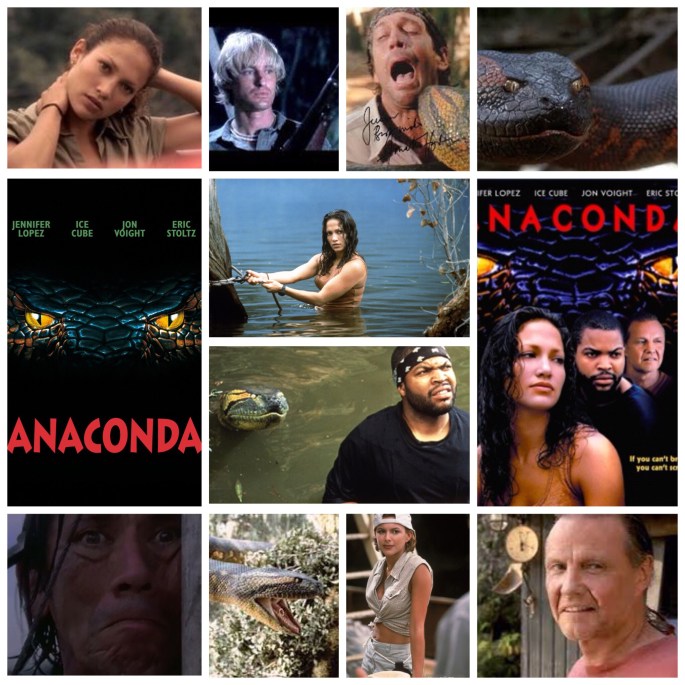
Anaconda is great stuff, no matter what anyone says. Revered as a B Movie cheese-ball, it holds up far better than anyone remembers, and there’s a lot to love about it. Reminiscent of creature feature stuff like James Cameron’s Piranha 2, Lewis Teague’s Alligator and Wes Craven’s Swamp Thing, it carved out its own nasty little adventure/horror story with neat characters, impressive effects for the snake and a knowing sense of fun. It sets the tone with a suspenseful prologue that sees poor poacher Danny Trejo stalked, attacked and killed by an unseen serpent, before the title card marches gloriously across the screen in true horror form. Then it follows a national geographic film crew led by intrepid Jennifer Lopez, whilst Eric Stoltz, Jonathan Hyde, Vincent Castellanous, Ice Cube, Owen Wilson and sexy Kari Wuhrur tag along, pretty much for snake bait and for us to place drunken bets on who’s gonna get nabbed by the beast first. Along the way they meet the most engaging character of the film, a whack job big game hunter played to cockeyed perfection by Jon Voight and his greasy ponytail. Sputtering out ominous warnings in a warped, tailored South American accent, willfully misleading their party into danger and staring creepily at anyone in his scope of vision, he’s hilarious and clearly knew the right recipe of branded camp and genuine menace to put into the work. It’s a glorified B Flick for sure, but one that knows its place, showcases a big old fashioned movie monster and whisks the viewer away for some solid gold escapism. Do avoid the sequel though (Hunt For The Blood Orchid), it’s about as interesting as cardboard.
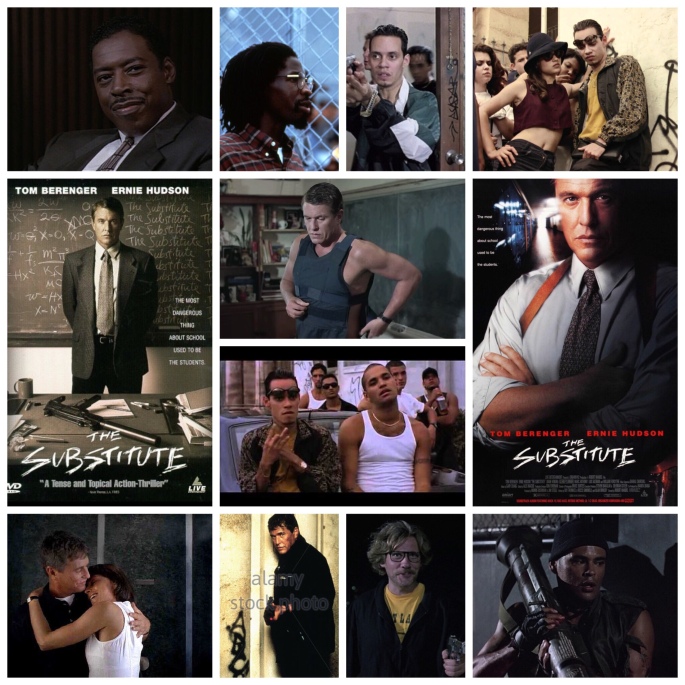
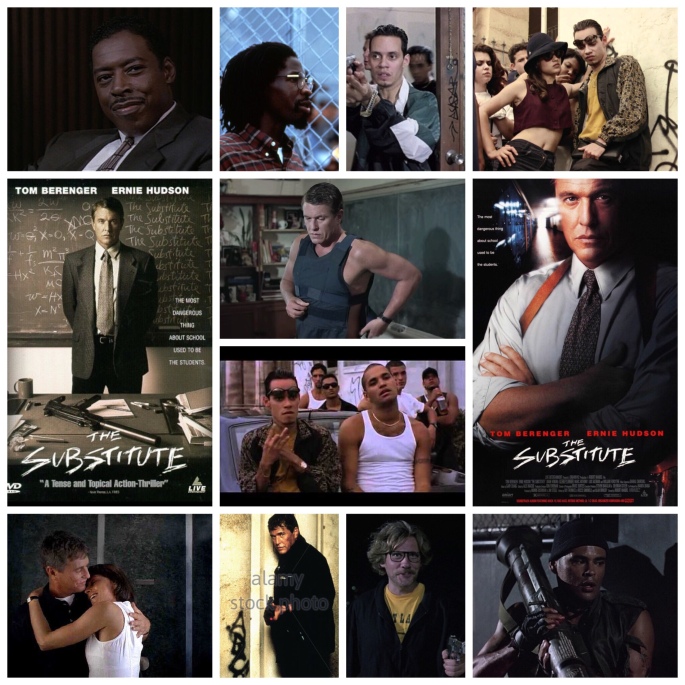
1996‘s The Substitute thought of arming schoolteachers with guns a few decades before the thought crossed Trump’s mind, thank you very much, and in movie-land at least it was somewhat successful. Of course, Tom Berenger is the teacher in question here, and he also happens to be a highly trained mercenary who’s just trying to protect his teacher girlfriend (Heat’s Diane Venora) from a raging band of psychotic cholo gangbangers led by Marc Anthony, of all people. It’s a silly premise given all the cheesy bells and whistles the 90’s had to offer, and could almost be considered a cult classic these days. Berenger’s Shale leads a colourful team of badasses including Raymond ‘Tuco’ Cruz (wearing a manbun before it was cool), Richard Brooks, Luis Guzman and volatile William Forsythe, back from a botched mission in Cuba and ready for the next one in urban high school territory. A few forged papers later, he’s a legitimized teacher who steps in for Venora and discreetly investigates who’s responsible for viciously attacking her and running drugs through the school. Not so discreet is the multitude of high powered shootouts that he finds himself in, eventually backed up by his men. I know this is an action film but so frequent are the bullet ridden dust ups that they kind of drown out some of the attempted social satire in deafening commotion. I enjoyed Ernie Hudson’s high school principal who moonlights as a nasty arch villain running the drug syndicate (of course it’s the principal) and Glenn Plummer’s heroic but short lived teacher who’s on Shale’s side of the moral compass. Marc Anthony has always been an incredible actor (see Man On Fire and Bringing Out The Dead) whose talents behind the camera exceed those in the recording studio, and he makes a wicked little street-shit scumbag here. A little less gunplay and a bit more pithy dialogue and tongue in cheek locking horns would have suited this one. Otherwise, it’s a neat little picture. I can’t speak for the sequels that find Treat Williams stepping in for Berenger, but who knows. Oh wow, I just googled it and there’s *three* more sequels with Williams. Not since Michael Gross in Tremors has an actor hijacked a franchise out of the original star’s hands.
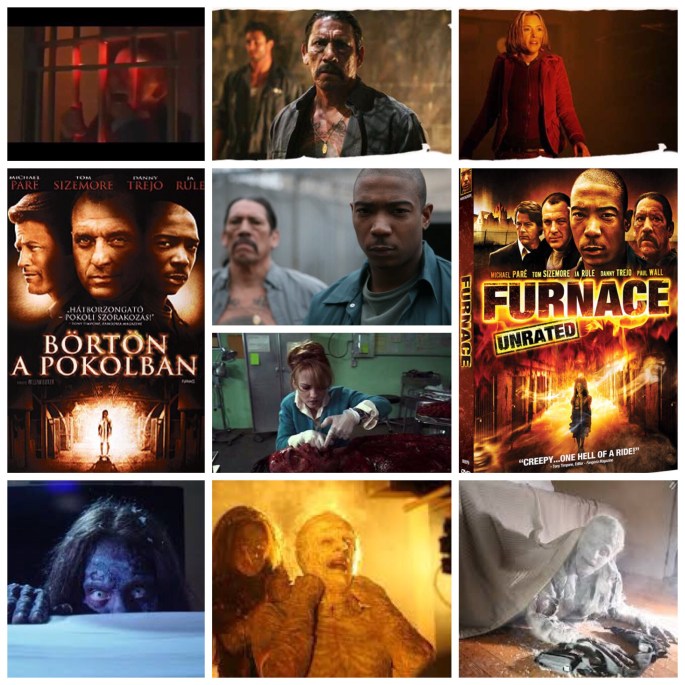
A haunted Furnace that starts murdering convicts in the cluttered boiler rooms of a maximum security prison. Who thinks this shit up. It’s actually not as inept as it looks both on paper though, and does in fact get its act together for a few earned scares. It doesn’t hurt to have actors like Danny Trejo, Tom Sizemore and Michael Paré around either, who boost the quality. There really isn’t much to it other than a furnace eating people though, which leaves not much expository filler to pad the review. Ja Rule plays the head honcho convict who realizes something is up pretty quick, Sizemore is the violent, corrupt captain of the guard, Trejo is a short lived inmate who shouldn’t have gone looking down that ominous corridor, and Paré is a detective brought in to investigate the deaths. There’s a backstory to the supernatural aspect involving a pervy Warden from the building’s past and his unfortunate granddaughter (you get the picture there). The real magic with this flick has to do with the DVD though, and it’s extensive behind the scenes interviews. There’s all kinds of stuff with the actors, and you get a sense of just how crazy Sizemore can be in real life sometimes by his incoherent ramblings, gloriously unedited. The film itself is run of the mill grindhouse type stuff, done with enough flair, gore and gusto. But get that DVD and watch the extras, they’re unreal. Plus the cover art is straight out of the 70’s man, fuckin love it.
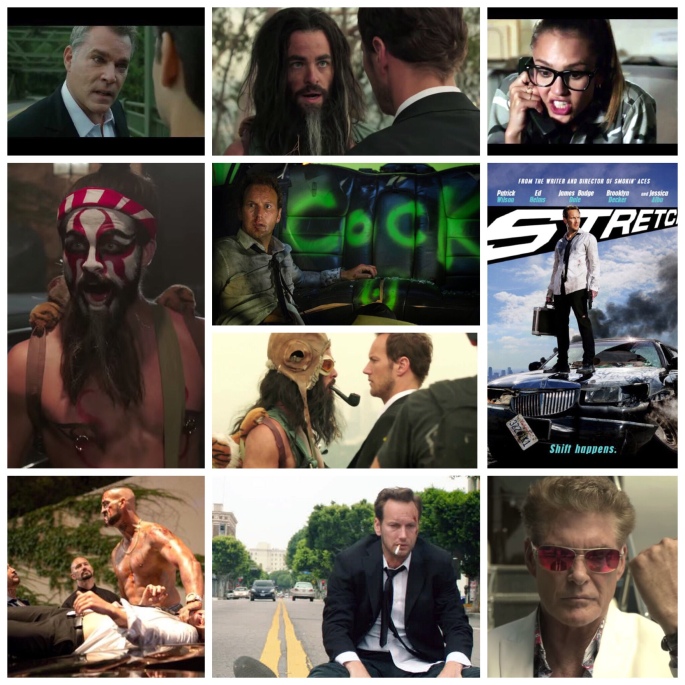
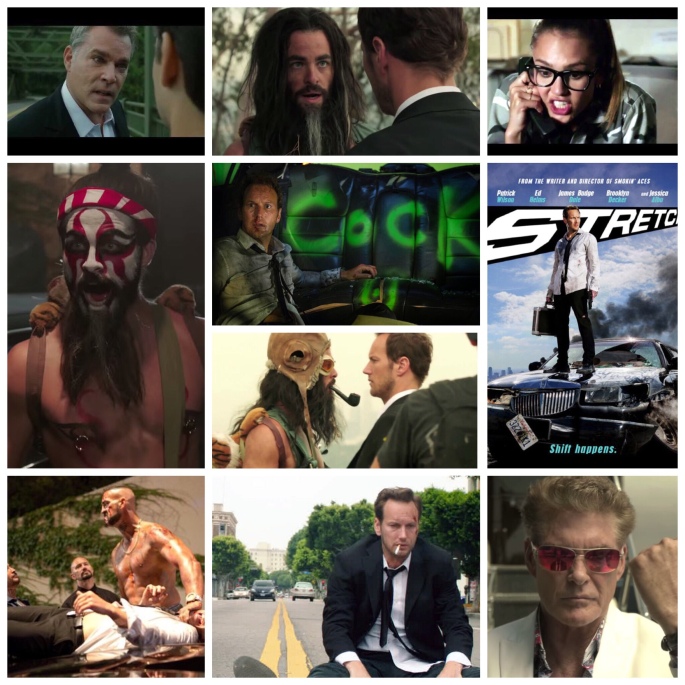
It’s a crying shame that Joe Carnahan’s Stretch got buried with marketing and now no one knows about it, because it’s a pulpy treat that really deserved to be seen on the big screen and given a bit of hooplah pre-release. In the tradition of After Hours, consistently versatile Carnahan whips up a feverish nighttime screwball comedy of errors and bizarro shenanigans that doesn’t quit pummelling the viewer with rapid fire dialogue, hedonistic spectacle and a funhouse of LA weirdos getting up to no good, including a trio of the best celebrity cameos to come around in a long time. Patrick Wilson, who continues to impress, plays a sad sack limo driver who’s life has thrown him nothing but nasty curveballs, but he gets a chance to make bank and retribution in the form of Roger Karos, a deranged billionaire masochist who could unload a monster gratuity on him at the end of the night and clear the guy’s gambling debts. It’s a devil’s proposition and a fool’s errand, and as expected, pretty much everything than can go wrong does go wrong. Karos is played by an incognito and uncredited Chris Pine, and the guy should have gotten as many awards as they could throw at him. It’s a shame he’s in hiding here and no one knows about this performance because it’s a doozy. Pine plays him as a sadistic, scotch guzzling, cocaine hoovering monster who’s certifiably insane, like a smutty LA version of the Joker who’s as likely to shake your hand as set you on fire. Wilson’s Stretch is stuck with this demon, as well as his own, and it’s the night from hell, but nothing but mirth for the audience. Orbiting the two of them are wicked supporting turns from Jessica Alba, James Badge Dale, a maniacal Ed Helms, an unrecognizable Randy Couture as a freaky Slavic limo guru, Brooklyn Decker, and insane turns from Ray Liotta,
David Hasselhoff and Norman Reedus, who play warped versions of themselves. Wilson owns the role like a spitfire, Pine goes absolutely batshit bonkers for his entire screetime, Carnahan writes and directs with sleek, stylistic panache and a flair for realistic dialogue that feels elaborate but never false. I could talk this fucker up all day and type till I get carpel, but I’ll quit here and say just go watch the thing, it’s too good to be as under-seen as it is.











 Podcasting Them Softly