Jim Jarmusch’s Down By Law: A Review by Nate Hill

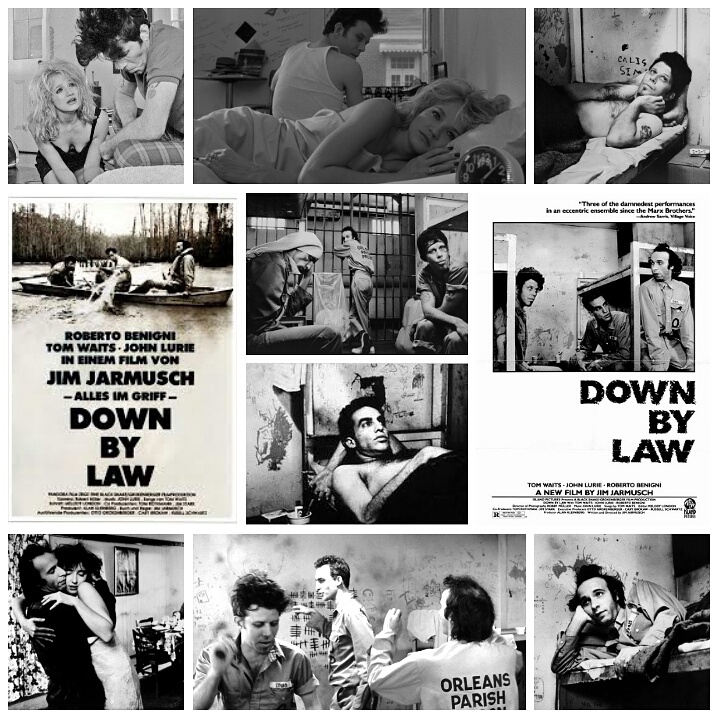
image

You have to be in a very particular type of mood to properly tune into a Jim Jarmusch film. He populates his often black and white and always slightly mournful films with awkward, dazed individuals who more comfortable in the uncertain pauses between dialogue than the actual words themselves. When I feel like a Jarmusch film (other than Dead Man which is an all timer for me) it’s always during times when I feel the daydreamy grey matter coming on, an otherworldly, downbeat relaxation that his  work is rife with. Down By Law is a signature example of this, and most likely the film I connect with most of his, after Dead Man. This one concerns three wayward and very different souls who by fate and unfortunate circumstance end up in jail together. Zach (Tom Waits) is a radio DJ who is hounded by his girlfriend (Ellen Barkin) to be more proactive and less relaxed. Jack (John Lurie) is a laid back pimp, and they both find themselves incarcerated in a Louisiana prison where they meet the eccentric Italian tourist Roberto (Roberto Benigni, hilarious). The trio are a puzzling gaggle of misfits, moments of startling pathos and stinging humour sprouting as their time together goes on. Soon they discover that Roberto may know of a way to escape, and see it as their chance. The characters in any given Jarmusch film never seem the same as usual film archetypes; they’re always quirky and completely their own person, which is no doubt a product of a very intuitive directorial process, and an excellent relationship with the actors. It can be disarming to spend time with such distinct people in film, but when you stop to realize just how weird everyone around you in real life is vs. what is common for movie scripts, it feels geniune. This one is lived in, authentic and funny in that intangible way where you can’t even say why it’s so hilarious. We all a-scream for ice  a-scream!

Lulu On The Bridge: A Review by Nate Hill

image

Lulu On The Bridge is an odd one, and that’s a compliment. It subtly strains at the constrictions of genre until you realize just how unique it has gotten right under your nose. I’ve always thought of it as the Abel Ferrara fiom that he never made. Harvey Keitel delivers a home run of a lead performance as Izzy Maurer, a renowned jazz musician who loses his ability to play after he is shot by a lunatic gunman (Kevin Corrigan) while he is performing his music in a cafe. He sinks into a deep depression following the incident, and then something curious happens. One day he finds a mysterious stone, with a phone number attached to it and some seemingly mysterious qualities which alter the psyche, mood and perception of anyone in its vicinity. The phone number leads him to Celia Burns (the ever excellent and under estimated Mira Sorvino), an aspiring actress who’s fallen just south of the success line, and has a taste for Izzy’s music. The two seem destined to meet and as you might guess, begin a passionate love affair that begins to get a bit obsessive, with strong hints directed towards the stone that seems to govern will and volition. Their romance is hot, heavy and volatile, threatened when a mysterious man named Dr. Can Horn (a classy but dangerous Willem Dafoe) separately kidnaps them in attempt to retrieve the stone. The script deliberately shades over its true intentions until the very last minute, stopping to pick many dialogue and thematic flowers along the way, as well as leave a few red herrings behind. Gina Gershon is great as Izzy’s ex wife, and the monumantal supporting cast also includes Richard Edson, the great Victor Argo, Harold Perrineau, Mandy Patinkin, Vanessa Redgrave and a brief Lou Reed who is pricelessly credited as ‘Not Lou Reed’. If you snag a dvd you can also see deleted scenes work from Stockard Channing, Jared Harris, Josef Sommer and Giancarlo Esposito. The film attempts music, mystery, doomed love, urban mysticism, thriller and drama elements. I’m happy to report that it succeeds at all of them, a gem not unlike the mcguffin stone within the plot, and a haunting little modern fairy tale. Check it out.

The Adventures Of Buckaroo Banzai Across The 8th Dimension: A Review by Nate Hill

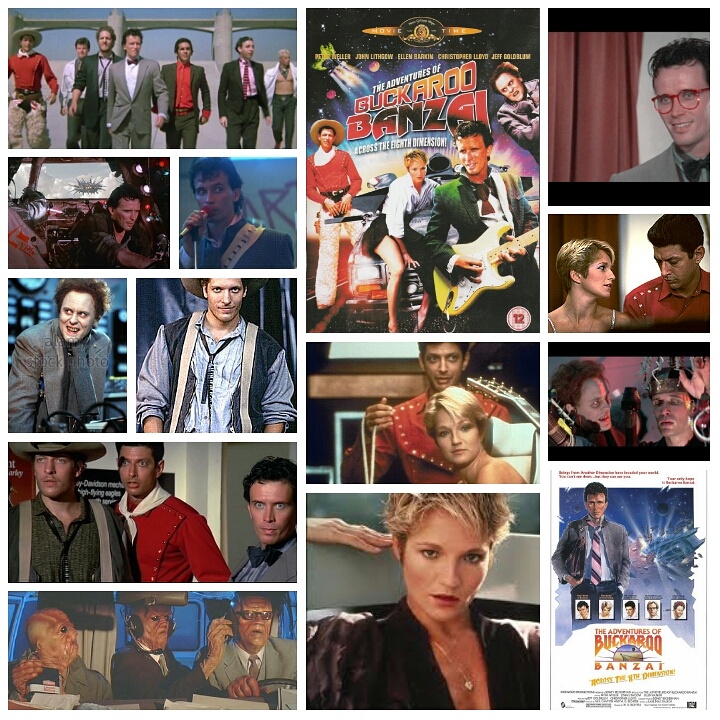
image

The Adventures Of Buckaroo Banzai Across The 8th Dimension. There’s a title, eh? The film lives up to it too, and is simply one of the most unique, bizarre and original sci fi flicks out there. It’s the very definition of cult to its abstract bones, filled to the brim with eccentricities and idiosyncrasies. For me it represents a certain genre niche that’s nestled squarely in goofball mode, splayed out across the borders of science fiction, comedy and farce, without a care in the world and not an iota of self consciousness or any fucks given. Call it Buck Rogers meets The Avengers meets Bonanza doesn’t even scratch the surface. Peter Weller, that eternally cool bastard, plays Buckaroo Banzai, who is somewhat of a renaissance man. He’s a neurosurgeon, a rock star, a scientist and above all a lover of adventure, always sporting Weller’s unmistakable deadpan charm. Buckaroo and his band are also a crime fighting team called The Hong Kong Cavaliers, and include roughneck but lovable cowboy Rawhide (Clancy Brown) and slick New Jersey (Jeff Goldblum). Buck has perfected a device called the oscillation overthruster, which allows him to travel through solid matter and on into the eighth dimension. Only problem is, the red lectroids, an alien race from planet 10, want to steal the device for their own. They are led by an unbelievably funny John Lithgow who gets the spirit of the film and then some. Buck also finds romance with the adorable Penny Priddy (Ellen Barkin), whisking her off into super sonic adventure with him and the Cavaliers. It’s beyond silly, super arbitrary and random, and I love every glorious unfiltered minute of it. This type of wantonly bizarre stuff is my cinematic bread and butter, especially  when it’s done with such pep in its step, as well ass love and commitment to being an oddball venture. The cast is huge and all in that loopy sleep deprived state where everything is funny and strange organic creation comes from the abstract. Watch for Dan Hedaya, Lewis Smith, Pepe Serna, Vincent Schiavelli, Jonathan Banks, John Ashton and Christopher Lloyd too. A wacky gem with a style all its own, constantly tapped into a well of creation, humour and fun.

Into The West: A Review by Nate Hill


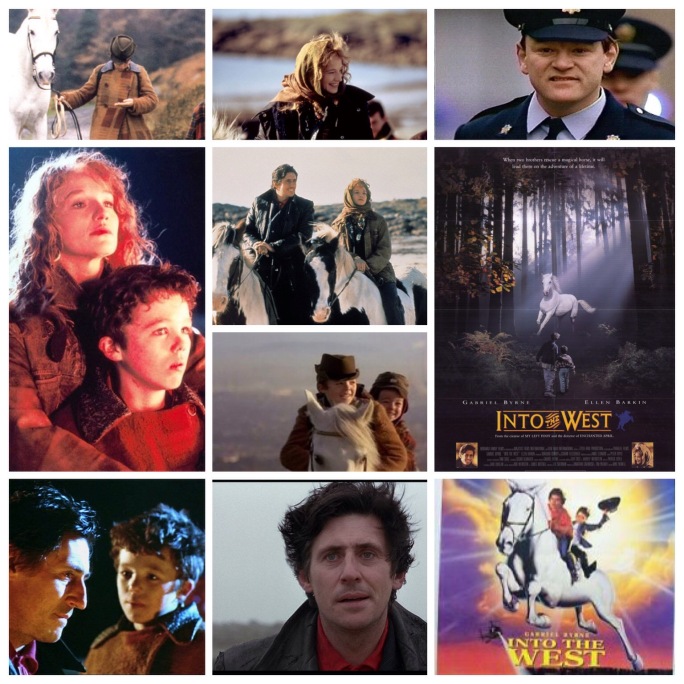
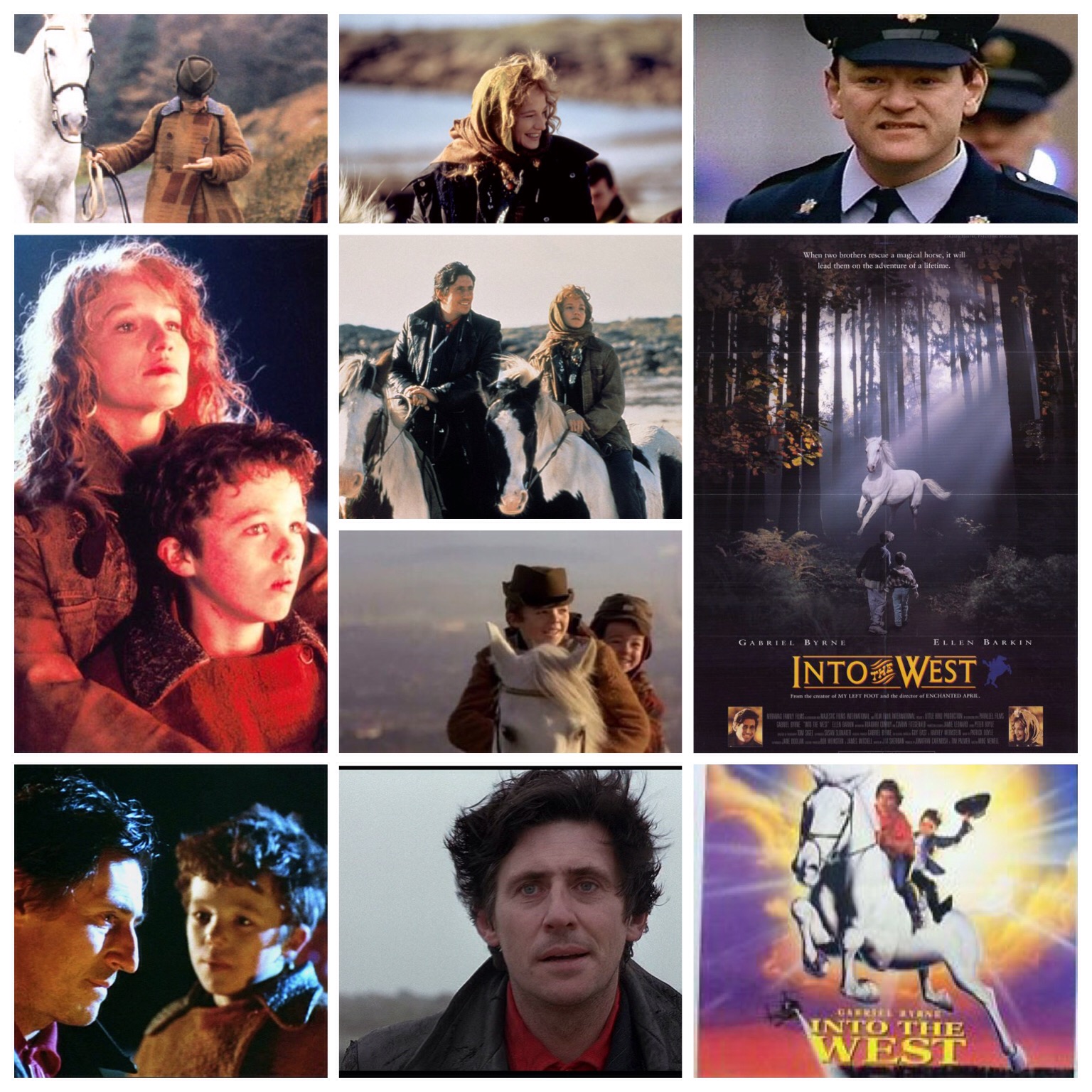
Into The West is a charming Irish folktale with two excellent lead performances from Gabriel Byrne and Ellen Barkin, who have been married in the past and therefore have a natural, easygoing chemistry. The film takes place in rustic Ireland, where two young boys are given a magnificent and mysterious white stallion by their gypsy grandfather (David Kelly). They come from a poor neighbourhood, somewhat left to their own devices by their downbeat alcoholic father (Byrne), who lost his wife and their mother years before. The horse seems to have some type of sixth sense related directly to their family history. The two boys are in that state of wonder where fables and magic still exist, and follow the horse wherever it leads. Byrne desperately pursues his sons to whatever end, helped by a fellow Traveller and old flame (Ellen Barkin, excellent and passing quite well as an Irishwoman). The horse seems to know his past and leads him to places which have sentimental value to him, leading him one step closer to his kids, while teaching him an esoteric lesson along the way. Great stuff, kid orientated but still has an eerie and mature atmosphere. Watch for early appearances from Brendan Gleeson and Liam Cunningham. Beautiful film. 

Crime & Punishment In Suburbia: A Review by Nate Hill

image

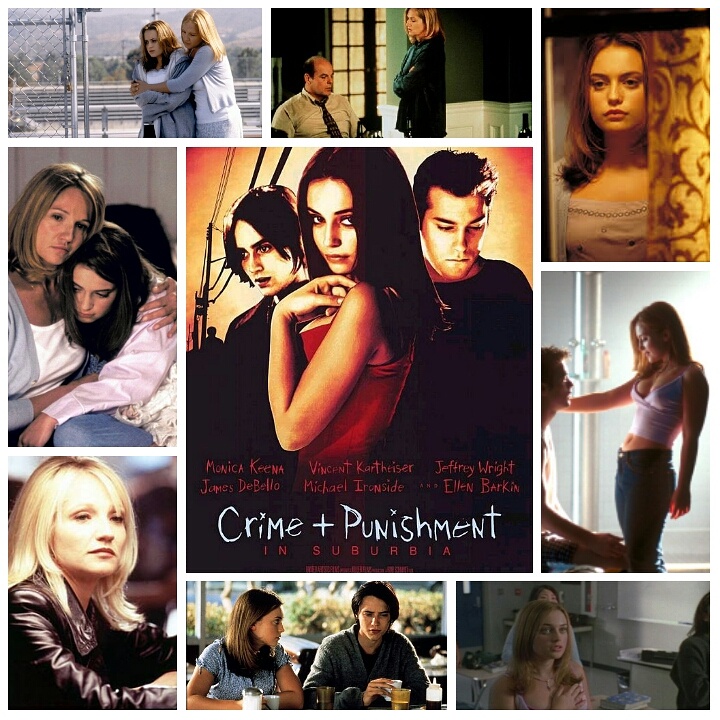
Crime & Punishment In Suburbia follows the theme and story just as loosely as you’d imagine by glancing at both title and poster. It’s It’s own little nasty deviation on the classic tale, set in a decadent white neighborhood, and full of characters who are barely hiding the decaying darkness behind their fake personalities. Having never read Dostoyefsky’s book myself, I can’t in fact tell you how much is different, but I could damn well know that it’s probably very much so. It concerns a hot young teen named Roseanne (Monica Keena, with a dash of Brittany Murphy in those eyes) who is outwardly a normal girl, but has elements in her life which start to taint that image and prompt violent behaviour. Her stepdad Fred (Michael Ironside, dialing up the drunken sleaze to a slow boil) is abusive towards her, and a alcoholic train wreck to boot. Her mother Maggie (Ellen Barkin in screeching cougar mode) is an unstable, clueless mess. Situations like that almost always end badly, which is an understatement here. One night when Fred gets too friendly with Roseanne, she snaps, something comes over her and Maggie and they both brutally murder him in an extended, grisly sequence that would give Oliver Stone bad dreams. From there on in its a dark and trashy morality play involving deception, false incarceration and manipulation on all the everyone’s part. The film seems to revel in the excessive bad behaviour of it’s characters, a decision which can be polarizing for audiences. It’s ugly, sleazy stuff, but it does that very well, with all the actors taking full advantage of the mean spirited script, especially Ironside and Barkin. Just don’t expect any pathos or straight arrow characters, this is a sociopath’s game, through and through.

Who’ll Stop The Rain: A Review By Nate Hill

  
Who’ll Stop The Rain is a sadly forgotten Nam era film that deftly blends genre better than most movies can ever hope to. The level of quality ratio to the amount of people who remember it is criminally unbalanced, but that’s commonplace in cinema. The title comes from the Creedence Clearwater Revival song of the same name, serving as both a metaphor in itself and a theme for the film, an anti war outcry that warbles forth beautifully at least five different times during the movie, becoming the script’s national anthem. Plus,who can say no to CCR on loop. It’s actually one of the best and most fervent anti war films out there, showing you an extended look at just how many ways the Vietnam War followed soldiers home and infected many customs, institutions and individuals. That kind of important sentiment wrapped up in a thriller is the kind of package I strive to find in film, and this is a glowing example. Nick Nolte plays Ray Hicks, an american GI getting ready to head back stateside after a tour. His best buddy John Converse (Michael Moriarty) convinces him to smuggle a brick of hash back with him and deliver it to his wife (Tuesday Weld). Only problem is, that ain’t where it ends. The people John was in contact with turn out to be a dodgy bunch, and before Ray knows it he’s o the run from some very dangerous dudes with his best buddy’s wife in tow, headed straight for a violent confrontation via a slow burn of a plot that sits on a low boil before you realized it’s reached a fever pitch. Nolte and Weld are a corrosive romantic couple, making the downbeat best of their situation, evading two nasty drug runners (Anthony Zerbe and Richard Masur being scary and classy as fuck) and getting a feel for each other along the way. Thriller. Drama. War. Moral dilemma. This one’s got it all, in a very specific concoction that never forces anything and treats you to more than it ever promised, before you have the chance to realize it. All timer stuff. 

Operation Endgame: A Review by Nate Hill

image

Rogue’s Gallery, given the slightly lamer title of Operation: Endgame, is a very odd little amalgamation of extreme violence, comedic banter and wannabe spy intrigue. It concerns a group of government agents holed up in some remote bunker, basically taking each other out one by one after someone among them murders their boss, Emporer (Bob Odenkirk). The cast is made up of two types of actors: sleek, distinct genre bad asses and quirky, less aesthetically streamlined comedians who stand out in this type of material very strangely. Fool (Joe Anderson) is the rookie, being shown the ropes of his first day by Chariot (a hilarious Rob Cordry). That’s where the plot starts, and that is also where it lost me. The rest of the film is just al of them bickering until it gets way beyond words, and then murdering each other in shamelessly gratuitous ways. Ellen Barkin stands out as Empress, a bitchy old tart who has it in for Devil (Jeffrey Tambor) another senior operative. Emilie De Ravin steps wayyyy outside her comfort zone as Hierophant, a psychotic little doll faced southern Belle who gives hulking Juggernaut (Ving Rhames) a run for his money. There’s also work from Odette Yustman, Maggie Q,  Adam Scott, Brandon T. Jackson, and Zach Galifianakis as a weird character that I still can’t figure out, perhaps because he does not much of anything at all except mope around wearing a hazmat suit and looking very hungover. It’s cool to see these actors give each other shit and fight like two raccoons in a burlap sack (the violence in this is really vicious, especially when Ravin is involved), if not much else. Very odd stuff.

Walter Hill’s Southern Comfort: A Review by Nate Hill

image

Walter Hill’s Southern Comfort is the bees knees when it comes to backwoods survival thrillers. It’s frightening, elemental, and relentless in pace, inciting primal fear in the viewer who finds themselves terrified of these events ever happening to them. It’s a very overlooked film, with most of the kudos within this genre going to John Boorman’s Deliverance. This one is way better, at least for me. The immediacy of the protagonist’s situation, the hypnotic atmosphere of both score and cinematography working together for something really special. In rural Louisiana, a platoon of American soldiers prepares to embark into the tangled wilderness of the nearby bayou, attempting a routine training mission. Powers Boothe is awesome as Cpl. Charles Hardin, a well educated man who silently resents the roughnecks and dimwitted dead enders in his regiment. He’s joined by Spencer (a cavalier Keith Carradine), and a whole host of others as well. Now, the Bayou is home to the reclusive and eccentric Cajun people, who apparantly will keep to themselves if you do the same. But try telling that to a troupe of childish, immature GI’s packing heavy artillery that’s beyond both their pay grade and IQ. After one lugnut plays a nasty prank on a group of Cajun fisherman, they take it slightly personally. Before you can say crawfish, they promptly murder the commanding officer (Peter Coyote) and set a series of deadly traps and snares for the soldiers, out to send every last one of them to a swampy grave. It’s a beautiful backwoods nightmare, and Hill tells the story exceptionally, aided by a twangy, brilliant score from his go to composer Ry Cooder. Boothe and Carradine are shoe ins to hold off their pursuers, while the rest of them soon fall prey, in elaborate and gruesome ways. Fred Ward is badass as a fellow soldier who turns homicidal, and has a wicked knife fight with Boothe that ramps up the adrenaline and then some. The late Brion James makes quite the impression as a Cajun who they briefly capture, after which he eerily warns them of the hell that’s coming from his compadres. The locations feel authentic, damp and waterlogged as hell, making you feel every squelchy step these poor bastards take into the Bayou and closer to their end. Near the end of the film we are treated to some authentic live Cajun music (some of my favourite kind) from Dewey Balfa, a gorgeous interlude and showcase of Hill’s desire to make the auditory atmosphere of his films as heightened and immersive as possible. An unheralded classic.

Tony Scott’s The Fan: A Review By Nate Hill


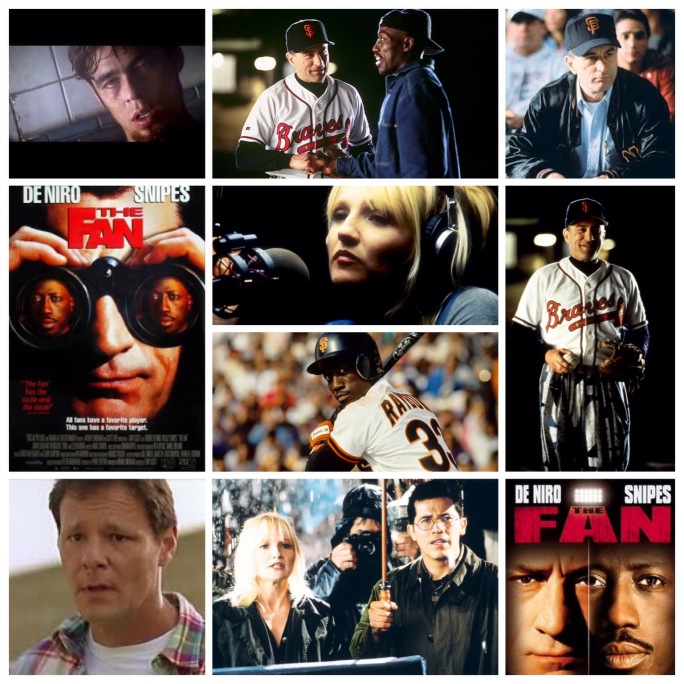
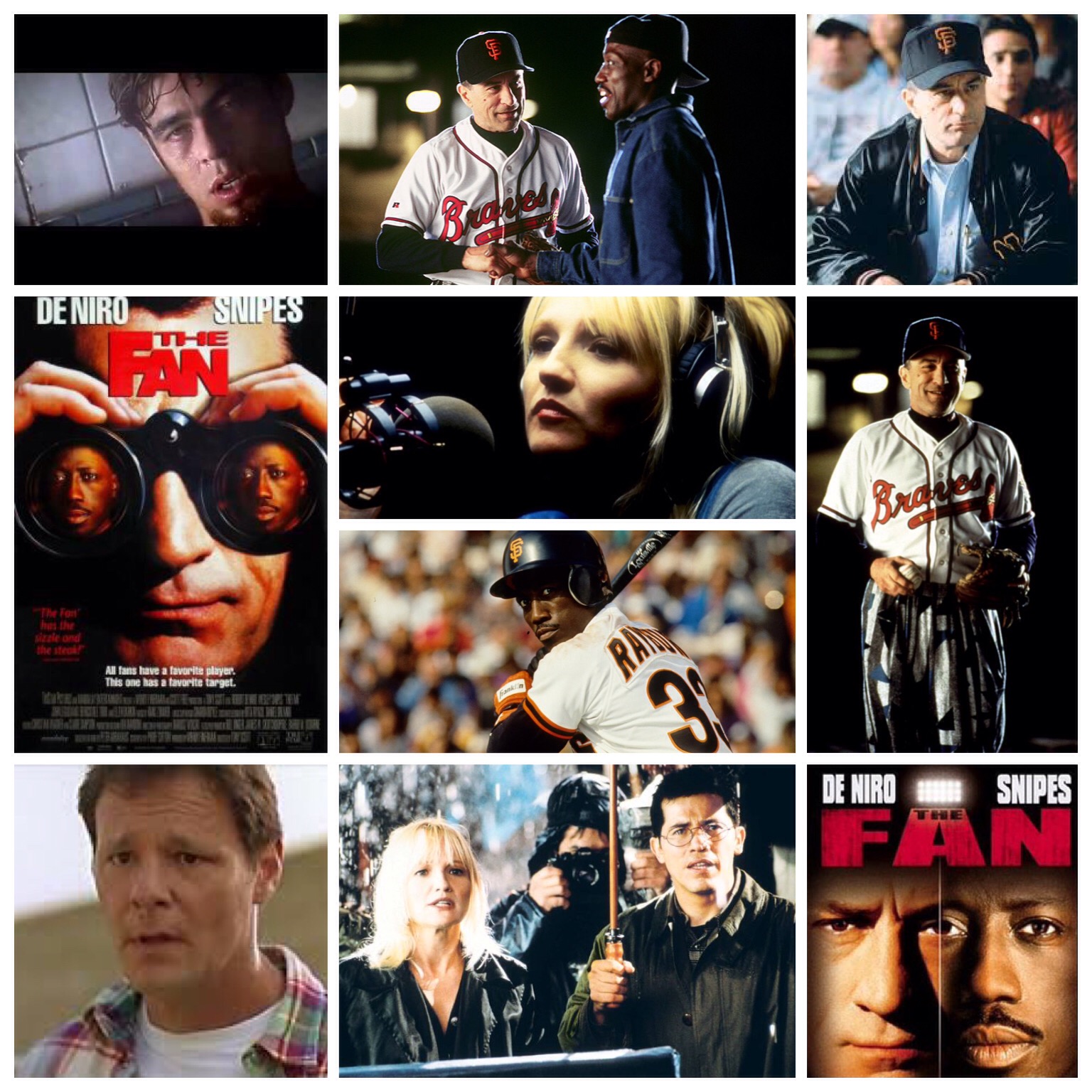
Tony Scott’s the fan is a wild ride with an off the hook turn from Robert De Niro. It’s ranked and regarded as a pretty low notch on Scott’s belt, but it’s hard to compete with his best work. It’s still a sleazy blast and pure Scott, his characters always let, lurid and delightfully pulpy. Sure it falls apart near the end, but until then it’s nasty, delicious fun. De Niro plays Gil, a die hard baseball fan and devout follower of Bobby Rayburn (Wesley Snipes), star player for his favourite team. Gil wants Bobby to succeed so badly that he becomes violent, unstable and pretty bonkers. At first it’s obnoxious and amusing, but soon he gets dodgy and dangerous and eventually just out of control. It’s great fun seeing De Niro go bug nuts bit by bit, and he’s always had a wild menace that he like to take down from the shelf and dust off for the occasional performance. Benicio Del Toro does one of his puzzling, indecipherable vocal riffs as a rival player, adding to the weird factor. Ellen Barkin is a sexy sass bomb as Jewal Stern, a mouthy talk show host who sniffs out the controversy in high style. John Leguizamo is always sterling, and classes his scenes up like a pro. Watch for speckled cameos from M.C. Gainey, Brad William Henke, Don S. Davis, Tuesday Knight, Wayne Duvall, Richard Rhiele, John Carrol Lynch, Michael P. Byrne and Chris Mulkey as well, all excellent. Not Scott’s best for sure, but a nicely mean spirited little romp through the psycho stalker fields. Fun stuff. 

Leon The Professional: A Review by Nate Hill

image

Leon The Professional is purely and simply one of the best films ever made. From Natalie Portman’s stunning debut performance, to Gary Oldman’s absolutely nightmarish baddie, to Jean Reno’s lovable and eccentric protagonist, it’s a classic, a piece of achingly beautiful cinema that I could watch on the daily and never get tired of. The three actors are the bricks which make the film so special, and Luc Besson’s fluid, sensitive direction is the mortar which holds them together. Portman is simply miraculous in her first film role as Matilda, a young girl whose entire family is murdered by psychotic DEA agent Norman Stansfield (Oldman). Highly introverted assassin Leon (Reno), takes pity and allows the orphaned girl into his home and his life. Matilda is a strange girl whose specific idiosyncrasies both clash and amusinly interact with Leon’s. He is an exile of sorts as well, with a tragic past and not a whole lot going on in his life besides the contracts he carries out for kindly, paternal mobster Tony (a phenomenal Danny Aiello). Leon and Matilda makes an interesting team; she is brash, unfiltered and lively, he is reserved, awkward and deafeningly quiet, resulting in unique character building and bonding that Besson handles wonderfully. Now, there’s two versions of this film, because apparantly American people can’t handle slightly taboo undertones, even when they’re handled in a caring and tasteful manner. You definitely want to see the longer, European cut which has some interesting scenes that crackle with sexual tension on Portman’s part. Yes, she’s twelve years old, at a very confusing crossroads of her life, the stark black and white mindset of a child dissolving into the very ambiguous and complex psyche of a woman. She believes she loves Leon, and he handles her advances in a way that requires maturity and intuition that he never had to begin with, but rises to the occasion. Call these scenes what you will, but there’s no denying their esential place in the film’s complete story, and to censor them for the sake of prudeness is a straight up crime. Matilda wants revenge against Stansfield and his team, which means going up against his wrath, and also means Portman sharing some incredible scenes with a voracious Oldman. Oh, Gary. This is his final form, the most terrifying villain in his stable, a flamboyant, deranged lunatic that one can scarce believe ever was allowed to be a cop. There’s a fairy tale esque feel to the film, where the bad guys do what they want in the urban forest, never in uniform and free to roam, kill and terrorize with the full might of the NYPD at their dastardly disposal. Oldman is the Joker on mescaline, and in fact Stansfield pops mysterious pills from a little casket, when he’s not murdering people while listening to Beethoven. He’s loud, scary, stylish and animalistic, so intense one feels like his very presence will melt the tv screen. Portman is so superb it’s hard to believe this was so early on in her career. In my mind she did her best work right out of the gate, in this film. Matilda is wise for her years, which she uses to mask the gulf of vulnerability residing in her, a hallmark trait found in children from abusive households. The family and friendship she finds with Leon strengthens her as as human being, and we start to see the emerging person she will continue to grow up to be. Natalie displays all of this uncannily well, and is the bruised, beating heart at the centre oft the film. Reno sells the eccentricities (Leon loves golden age Hollywood musicals) and sorrowful resolve of Leon so well, taking a character that is all action and very little talk, and speaking volumes with both body language and silence which, take it from me, is tough stuff. Besson, whether directing a quiet, introspective scene or a balletic action sequence, gives everything a stylized, earthy quality that makes the film stand out amongst other action ventures. You could spend a billion dollars on production design, but it all comes down to the human element behind the wheel, and if you don’t have a director, cast and team that has the current running through them to create something special, all those dollars go out the window. This one has all of that, and is a solid gold classic.