The Coen Brother’s Burn After Reading is the duo at their height of trolling the audience, a mood they seem to make some of the most devilishly funny films of their career. This one reminds me of long days full of running around, confusion and missed appointments, days where I get home and reach the end only to realize that for all the frenzy, nothing I did all day was really of any consequence. This film is sort of like that; a whole lot of clandestine nonsense and tomfoolery that adds up to.. well, not much of anything in the end. If that sounds like I’m being negative, I’m not. That’s part of the Coen’s charm and a core aspect of what makes this one so hilarious. It’s also full of complete dimwitted morons, which only adds to the chorus of lunacy. John Malkovich teeters on the borders of mania, scary and funny as ex CIA half wit Osborne Cox, in a performance so utterly Malkovich that he almost seems like some other actor parodying him. He’s got a cold hearted bitch of a wife (Tilda Swinton) who is fooling around with even bigger idiot Harry Pfarrer (George Clooney is a riot) who is also fooling around with anything that has a pulse, being the squirrelly sex addict that he is. Cox has started a memoir (or, ‘mem-wah’, as Malkovich ludicrously intones it), the contents of which are on a disc that end up in the hands of yet even bigger idiots. Linda Litzke (Frances Mcdormand) and Chad Feldheimer (Brad Pitt) run a gym called Hardbodies (only the Coens, folks) and see the disc as ‘secret spy shit’ they could use to make a buck. That’s where the plot hollers off the rails into pure madness, as each and every character makes the dumbest possible decision along the way. J.K. Simmons are gold as two CIA honchos who are more puzzled than the audience, Richard Jenkins trolls perhaps the subtlest of all, and the cast also includes Jeffrey Demunn, Olek Krupa and a meta cameo from Dermot Mulroney. Among the cloak and dagger chaos, the Coen take every chance they get to spoof and lovingly ridiculue society’s cringe inducing stereotypes, until you start to realize they’re levels of exaggeration aren’t all that over the top. Pitt is gold as the air headed gym rat, Clooney pure screwball, and Malkovich is a force of demented nature, his exentuated word pronunciations reaching a boiling point of absurdity here. This is up there with the Coen’s best, and certainly one of their funniest hours.
Tag: films
Hush: A Review By Nate Hill
Well it’s arrived, folks. The first truly effective horror film of the year (that I’ve had a chance to see anyway). I was drowsily browsing Netflix and came upon Hush, sporting a snazzy poster and a premise ripped straight from the vintage horror flicks I grew up with. Compelled to give it a shot, I was rewarded with a slick, atmospheric and sturdily made exercise in suspense. It’s not often I feel true giddy tension while watching a thriller (even though most brashly guarantee it on the dvd cover), but this baby delivers in spades. It’s funny because the storyline is a identical to many movies of the past, and similar to countless more. The secret to success, obviously, is in the execution, and Hush is made with a caring love for a genre deeply ingrained in cinematic culture. Director. Mike Flanagan clearly loves horror films, and seems to want to rise above the primordial crust, calcifying his effort with a steady hand and fresh direction that gives even the most knowing plot turns a dose of torque using simple tools: a killer soundtrack, whiplash inducing editing and…and.. What’s the most important thing in any horror film? I’ve said it before and I’ll keep saying it: atmosphere. The setting finds us in a dusky, desolate area, where a deaf novelist (Katy Siegel) toils in isolation, churning out the trimmings of her next book on a laptop, content in her loneliness yet on the verge of unease stirred by cabin fever, restlessness or so,etching else. It’s not long before the film lands the first punch of many: a masked, crossbow wielding serial killer (John Gallagher spits on his previous good guy image, both terrifying, unrecognizable and superb) begins to stalk her with methodical menace, watching from the inky shadows of her home’s exterior while she cowers in terror. He catches on quick about her deafness and uses it against her, terrorizing her at every turn. Now, the film does use genre tropes to churn out its story, and anyone expecting something truly unique to pop out of the ether. Any be disappointed. But to those who yearn for solid, extremely well made horror entries to wade out of the muck and foretell the return to form of a genre that gets maybe two, three winners every year, can rejoice. This one comes up aces. Siegel is instantly likeable and gorgeous to boot, giving her protagonist a resilience that is actually believable, which can’t be said about every girl being pursued by a killer on screen. Gallagher is icky as the psycho, branded with certain idiosyncratic symbols of society which suggest that he’s a jaded outcast driven to sickening extremes by the hand he’s been dealt, given in to his dark impulses completely. For genre fans: this begs a watch and will likely be a highlight of the year. For casual viewers: fun, fun times and a vibe to get sucked in by. For non horror fans: just watch it anyway.
B Movie Glory with Nate: The Courier
The Courier is a strange little flick that dabbles in the kind of pulpy narrative which the 80’s were famous for. One lone antihero sets out to deliver a package of enigmatic value to a recipient that is always one step ahead of him, proving to be quite elusive. Bad guys and gals hinder him at every turn and violence ensues, leading up to an inevitable confrontation and in this case a neat little twist that admittedly defies any sort of reason, yet is fun for the actors to play out and provides sensationalism, a trait that’s commonplace in such films. Jeffrey Dean Morgan is a haggard presence in any role, a guy you immediately feel rooted to in a scene. He gets the lead role here, playing an underground criminal courier, passing along dangerous goods from one cloak and dagger person to another. His latest task comes from his handler (Mark Margolis): Deliver an odd case to a reclusive criminal mastermind known only as Evil Sivle. Little information is given beyond that, but it soon becomes apparant that his mission is a cursed one, as he finds himself a hot target for all kinds of weirdos. German live wire Til Schweiger plays a dirty federal agent who hassles him with that campy charisma and narrow eyed theatricality that only he can bring to the table. Miguel Ferrer and Lilli Taylor are priceless as Mr. & Mrs. Capo, a pair of married contract killers who discuss their dinner plans whilst hunting their quarry, and have devised some truly vile torture methods involving culinary instruments. Yeah, it’s that kind of movie, where B movie mavericks are let off the chain and allowed to throw zany stuff into their otherwise pedestrian material that often borders on experimental. Morgan is assisted by a young chick (Josie Ho) who saves his ass more than a couple of times. Mickey Rourke shows up late in the game as Maxwell, a mysterious Elvis impersonator and Vegas gangster who plays a crucial role in Courier’s quest. Trust Rourke to take a derivitive, underwritten supporting character and turn the few minutes of screen time he has into utter gold that elevates his scene onto a plane which the film as a whole is sheepishly undeserved of. Morgan is better than the flick too, but he’s great in anything. He ducks the heroic panache of the action protagonist and dives into growling melancholy, his grizzly bear voice and imposing frame put to excellent use. This one got critically shredded upon release. Yeah it ain’t great, but it sure as hell ain’t terrible. Worth it for a cast that makes it work, and for that classic genre feel that can’t be beat.
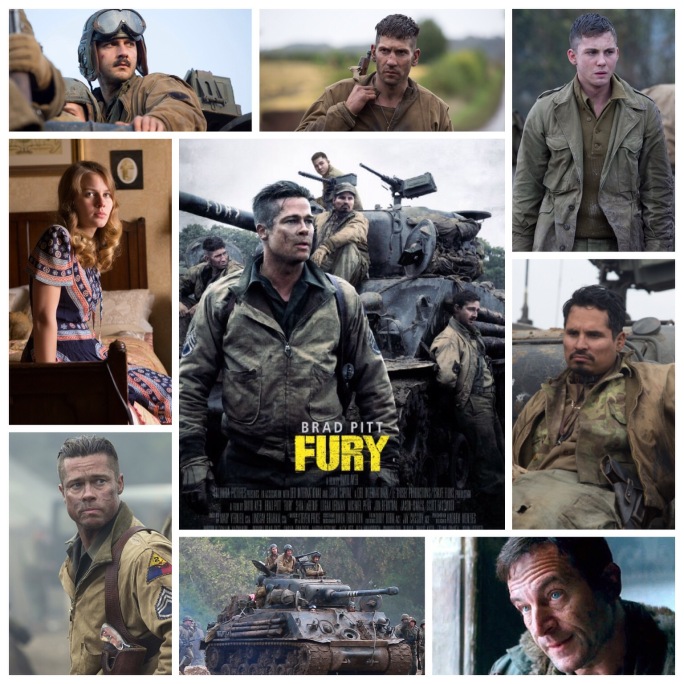
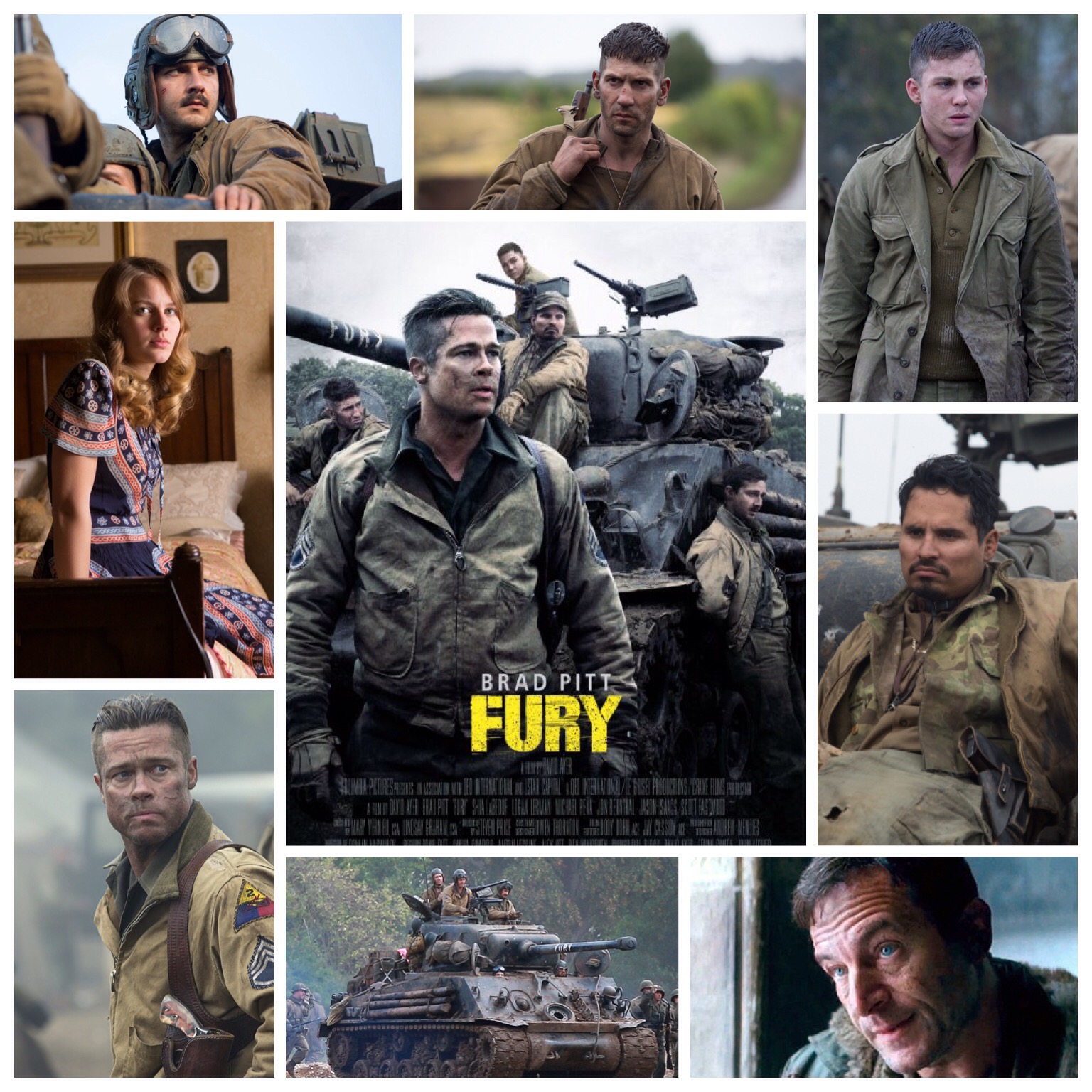
David Ayer’s Fury: A Review by Nate Hill
David Ayer’s Fury is the most fearsome, unrelenting war film of the decade and quite the experience to sit through. One stumbles out of the theatre as shell shocked as the brave soldiers we’ve just witnessed onscreen, needing time to wind down from the horror, after which we realize that among the thunderous bravura and non stop, head shattering combat are moments of tender humanity and ponderous reflection, just enough to contrast the madness. Logan Lerman has the pretty boy look, which is quickly stripped away and replaced by frenzied terror and confusion, playing a young army clerk who hasn’t seen one second of combat, suddenly tasked with joining the ranks of a tank warfare crew. They are each hardened in their own way by what they’ve seen and done. Brad Pitt is Wardaddy, their iron jawed commander in a gritty, unstable and altogether brilliant performance. Jon Bernthal is the obligatory redneck Neanderthal, a big lug whose brutish ways mask a childlike yearning beneath. Shia Leboeuf is the restrained one, a bible reader and thinker whose resentment of the war radiates from his eyes like sad and sick beams of sympathy. Michael Pena, reliably excellent, is the closest to neutral of the group. Ayer airdrops us right into the action without pretext, warning or proclaimed intention. This isn’t a ‘men on a mission’ war flick, this is a single harrowing day in the lives of men at the end of the world as well as their ropes, an intimate study of the horror inflicted on both body and soul, both soldier and civilian, the collective horrific impact of the war refracted through the prism of a small period of time. Such a tactic has huge potential, and here it works wonders in brining us closer to these characters, as well as anyone they meet along their way. Pitt leads this ragtag band with the indifferent sentiment of a hardened, brittle man who has been in one too many a tight spot and seen one too many a comrade fall under his care to waste time with compassion for the enemy. Time and tide have turned killing into a purely instinctual, second nature business for him, and we see this unfold in a kicker of a scene where he forces Lerman to murder an unarmed German private who begs for his life. Such is war, and such is Ayer’s film, free from Hallmark moments and structured escapism. Midway through, the film stops dead in its tracks for a beautiful, tension filled sequence in which the band finds temporary refuge in crumbling abode with two German girls. The culture shock is numbed out by the extremity of the war, and these two groups are forced to coexist, if only for an hour or so. The youngest of the girls (Alicia Von Rittberg) is stunning, a baleful example of the corrupts of innocence, her character arc a testament to the senselessness of war. The combat scenes within the tank clank with clammy, claustrophobic dread and desperation, helped by the fact that for the most part they filmed inside real replicas. Jason Isaacs shows up in yet another war movie role as a grizzled commander who briefly assists them, and (of course) steals his two quick scenes in the process. War films often struggle to find humanity amongst the ugliness by trying a little too hard, and by being a little too obvious. This one is frank, unrelenting and assaults you with a deafening roar of chaos, with a few extremely subtle moments of introspect and emotion. It may just have cracked the formula for finding the comfort in such turmoil: less is more. One of the best war movies I’ve ever seen.
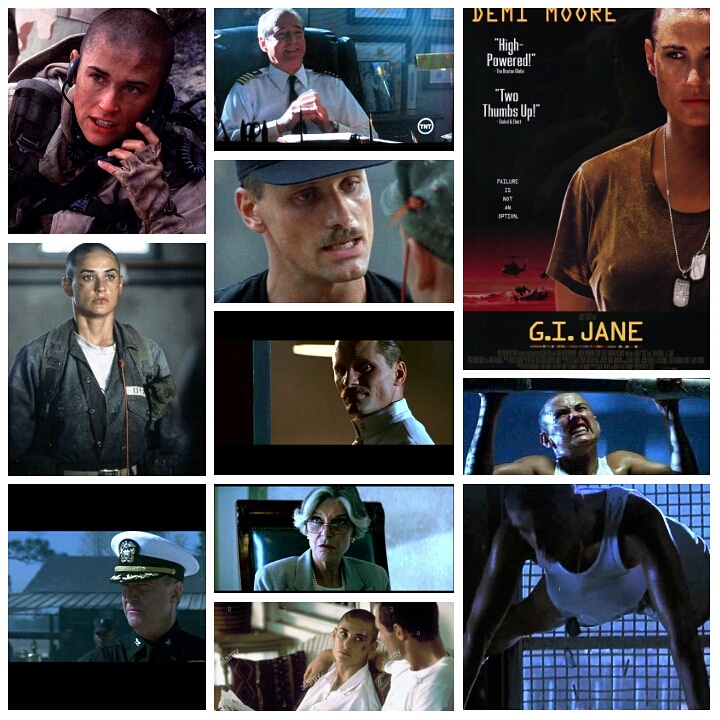
Ridley Scott’s G.I. Jane: A Review by Nate Hill
I’ve always thought that Ridley Scott’s G.I. Jane is the movie Michael Bay made in another reality where he matured a little more. I mean that as a compliment to Sir Ridley and the film. The crisp, aesthetically lighted style has Bay written all over it, but it’s employed alongside a human story of one girl facing some truly daunting odds. Demi Moore plays Jordan O Neill, a determind, plucky individual who has her mind and heart set on going through the infamous Navy SEAL training, making her the first woman to undertake the task. She just wants to do her training like the rest of her peers, but unfortunately her situation comes with a tirade of media attention and notoriety, something which she never signed on for. Corrupt politician Theodore Hayes (the late Daniel Von Bargen smarming it up) wants to ruin her, and he’s at odds with a pushy Senator (Anne Bancroft is as stiff and sour as the glass of kentucky mash she constantly pulls from). Meanwhile, Moore begins her training, thrown in with a bunch of testosterone fuelled dudes, rabid dogs who don’t react well to a girl in their midst. Her instructors do their best, but she meets quite the adversary in Master Chief James Urgayle (Viggo Mortensen) a no nonsense guy with a razor sharp intellect and a personality to fuel it. Mortensen gets to do something really special with the role. Where other drill instructors in film are somewhat caricatures, monstrous, profane loud-mouths with all the depth of a wood plank, Urgayle has a metallic edge that encases real human qualities beneath. Mortensen latches on to that right off the bat, blessing the film with a fully three dimensional person. The cast is great as well, with work from Kevin Gage, David Warshofsky, Jason Beghe, Morris Chestnut, Jim Caviesel and the legendary Scott Wilson who is mint as the cranky base commander. His dialogue is straight out of a Mamet script and Wilson bites down hard, especially in a scene where he verbally owns Bancroft. Moore is combustible, lacing her take no prisoners attitude with the grace and power of her femininity. She’s also in wicked shape too, her physique a reflection of both Jordan’s commitment to her goal and Demi’s steadfast need to tell the best possible story. This one is far better than some critics would have you believe, with a story arc both suited to the character and theme. It’s also just plain powerhouse filmmaking that chimes in on all the right notes. Awesome stuff.
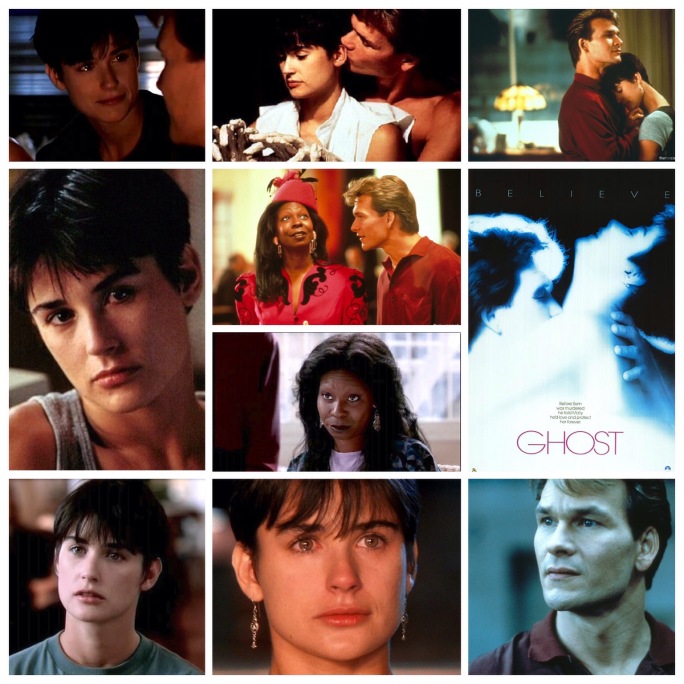
Ghost: A Review by Nate Hill
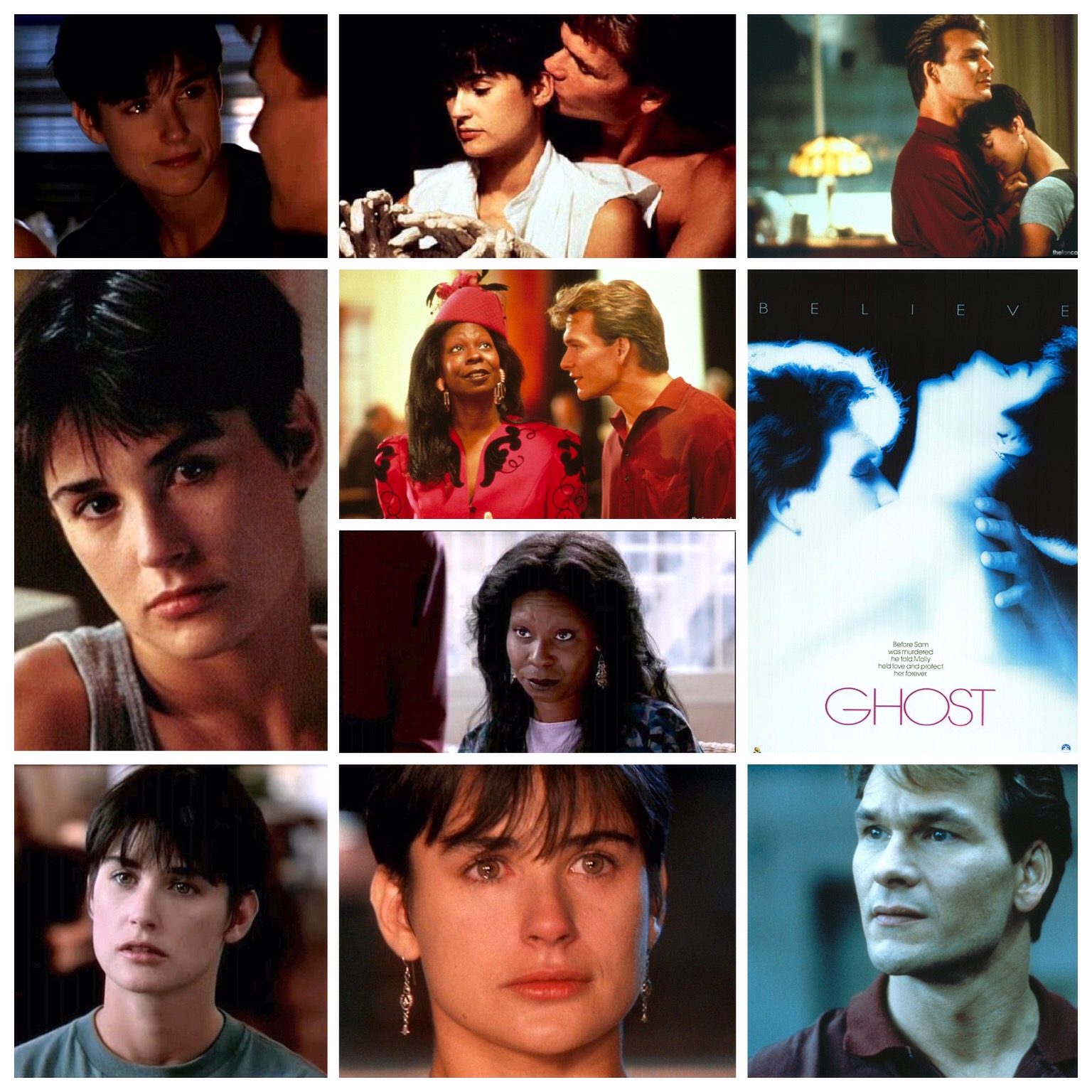
Ahh, Ghost. What an authentic romance classic, a film that puts a big old grin on your face whether you want it to or not, a sloppy, smile that’s just wide enough to catch the tears that fall as a result of the sadness which accompanies the sweet, too essential ingredients in any love story that hopes to affect us in either direction. Balance is key, and Ghost employs both the giddy, heart-skipping joy of romance and the looming possibility of threat and tragedy in equal measures, never getting too dark or to soppy, at least for me. Demi has never been more adorable, in one of her career highlights. Her and Patrick ‘Roadhouse’ Swayze play star-crossed young lovers, in the beginning stages of building their lives together, a time that should be unconditionally happy for both, and is, until one fateful event rips them apart and plunges the narrative into effect. They encounter a thief in an alley one night, and Swayze is killed. Only, his spirit remains behind, for more reasons than he at first realizes. He keeps a protective, loving eye on Moore, and is driven to the notion that his death was no accident, his lingering presence meant for the purpose of both truth, love and retribution. He is aided and assisted by a sassy psychic (Whoopi Goldberg) who acts as his conduit between both realms. There’s supernatural intrigue and conspiracy afoot, but as exciting as that stuff is, it’s the love story between Patrick and Demi that has kept generations rooted to the story. A romance film is nothing without two leads who share both chemistry and a great script, which this one supplies generously. They are a show stopping pair in their scenes together, and if their predicament doesn’t draw forth both smiles and cries from you as a viewer, well, you’re wading through the wrong genre, my friend. The two of them make this one an honest to goodness winner with their performances, supported by narrative elements that only raise the stakes of their relationship. A film which will never not be a classic, and everyone should have in their collection. Ditto.
Cool World: A Review by Nate Hill
Cool World is known, by those few who may be aware of its existence, as the ‘other’ film in which live action characters inhabit the same realm as cartoons. The more famous one of course is Who Framed Roger Rabbit, a glorious gem of a film that gets the acclaim, notoriety and long lasting attention, as it well should. (We won’t speak of a third one involving a certain moose and squirrel that really does earn it’s bad rap). Cool World is somewhat maligned as the black sheep of the two, and in some people’s eyes (Ebert laid a stern smackdown on it) downright hated on. It’s no doubt very different from Roger Rabbit, which is admittedly the better film and the easier one to like and relate to. But this one is brilliant in its own right, at least for me. I love the way it uses a sombre tone with its human creations to throw a unique light on them as soon as the Toons show up. It’s quaint and wonderfully inaccessible, with some scenes existing purely of a need to showcase a stream of consciousness type style that doesn’t so much halt the proceedings, as give them their own surreal flavor. Brad Pitt is Frank Harris, victim of a jarring post war tragedy and thrown headlong into the cartoon world, eventually finding himself a Detective in their realm. Outside in our world, lonely cartoonist Jack Deebs (Gabriel Byrne is a sly choice for the role) falls in love with one of his creations, a blonde bombshell named Holli Would (voiced and later played in the flesh by Kim Basinger). Holli is as devious as she is gorgeous, and works to use Jack’s attraction to her as a conduit to escape into our world. Pretty soon a deafening cacophany of cartoon creatures in all shapes, sizes and colours floods out of their dimension and into ours, creating quite the cosmic mess for Pitt to clean up. It’s fun without being too zany, the overblown fuss of the Toons contrasted by a glum human world, reeling from the war and unexpecting of such an event to unfold. Granted, the meshing of the two dimensions isn’t given the precise, big budget fanfare and cutting edge methods of Roger Rabbit, but the world building and special effects here are still pure enchantment and offer a dazzling level of entertainment. Pitt is stoic with flinty sparks of boyish charm, Byrne hilariously plays it dead straight, and Basinger is dead friggin sexy. She steals the show especially as Holli in human form, having a ball with the bubbly bimbo trying to keep a straight face in the real world. The Toons in general really are a diverse bunch, ranging from animals to inanimate objects to tiny little formless cutesy blobs and everything in between, filling their frames with a chaotic, detailed miasma worthy of Studio Ghibli. Lot of hate floating around for this one. You won’t find any from me, I love the film, and accept it for the adult friendly, experimental oddity it is. Great stuff.
Faster: A Review by Nate Hill
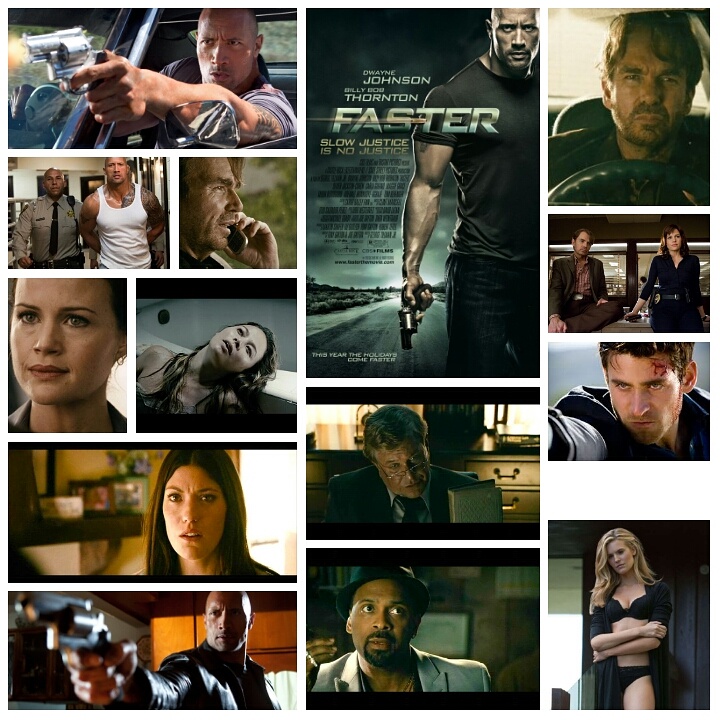
Faster is an action film with an eerie aura and a darkly unnerving bite to it. Don’t get me wrong, it’s action through and through, a genre effort right to its marrow. And yet, there’s something oddly esoteric about it, an obvious extra effort put in by the filmmakers, namely first time action director George Tillman, to give every character an off kilter, bizarre cadence to ensure we won’t forget them. There’s clichés, no doubt, but they’re eclipsed by the strange, full moon weirdness of the rogues running about the film’s story. Dwayne Johnson fires up a furious protagonist in his first action role after a long and ridiculous stint in insufferable family comedies. He plays a quiet, hulking dude known only as Driver, reluctantly released from prison by a watchful Warden (Tom Berenger). Upon exiting the gate, he runs. And runs. And runs. He arrives at a small town junkyard where he tears a tarp of a vintage Chevelle which seems to be left there for him like a care package. From there he launches a bloody crusade of revenge that knows neither mercy nor discretion, and whose reasons we are only slowly allowed to know. He’s a one man wrecking ball, the murders piling up before we really have any idea what this guy is about. He’s been greatly wronged in the past, the culprits of which should all be running scared, as he comes looking for them one by one and with the juggernaut pace of a boulder tumbling down a mountain. Pretty soon there’s two cops on his trail, intrepid Cicero (Carla Gugino) and mopey sleazeball ‘Cop’ (Billy Bob Thornton), a dilapidated piece of work who mainlines heroin and clearly has a murky past. Soon there’s one hell of a hitman (Oliver Jackson Cohen) skulking around looking for Driver, an extreme sports enthusiast who has ‘beaten yoga’ and is avidly looking for the next big thrill. Johnson jumps from one ultra violent encounter to the next with all the corrosive ferocity of the grim reaper, tallying up the corpses until we’re all but sure he’s an inhuman elimination machine. Then.. the film curveballs us and throws a glint of humanity into the mix with some late third act emotion that only goes to show the filmmakers set out with more than a one track mind. Driver has been unspeakably betrayed, and his rampage is undeniably justified, but there’s a complexity to his quest that he didn’t see coming, and neither did those of us who expected pure action without a moral conundrum in sight. I say good on it for grasping something besides the thrills. A terrific cast populates the almost Oliver Stone – esque proceedings, including Maggie Grace, Moon Bloodgood, Mike Epps, Jennifer Carpenter (always superb), Matt Gerald, Xander Berkeley, Buzz Belmondo, Courtney Gains and more. It’s got the depth of a well written graphic novel and a level of thought out characterization that heaps of stale action entries wish they possessed.
B Movie Glory with Nate: Ticker
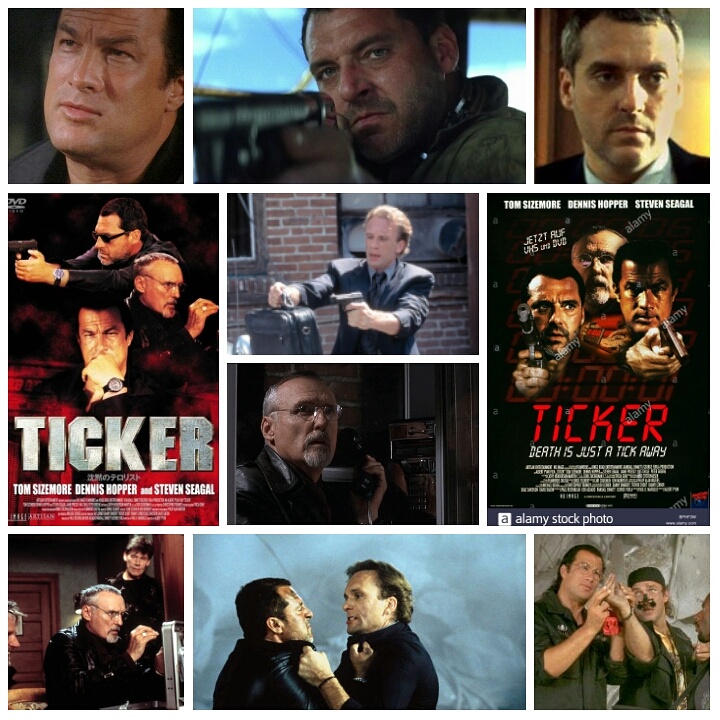
If an eighth grade class raided their parents liquor cabinet, passed around a bottle, got good and loaded and took it upon themselves to make their own version of every 90’s action cliche, it would look something like Ticker, a wonderfully inept mad bomber tale that starts at rock bottom and cheerfully drills farther down, as well as into critics collective patience, it seems. It’s silly clunky and all over the place, but there’s a scrappy likeability to its amalgamated stew of genre tropes, masculine posturing and endless explosions. The bomber in question is Alex Swan (Dennis Hopper), a homicidal Irish extremist intent on making life hard for the San Francisco bomb squad, led by explosives expert Frank Glass (a laughably zen Steven Seagal). Hero cop Ray Nettles (Tom Sizemore) previously lost a partner to bombers and has a big score to settle with Swan. And so it goes. Bombs go off. Cops argue. They chase Hopper, who eludes them until the next set of fireworks destroy a wall glass panels or a bridge. Sizemore is surprisingly sedated, not seizing the opportunity to use his lead role as an excuse to tear through scenery like a bulldozer, as is usually his speciality. Seagal is so silly, his intended gravitas landing with all the profundity of an SNL skit. Hopper is demented, even more so than in Speed, and the rental fee is worth it just to hear his perplexing, absolutely wretched Irish accent. Not since Tommy Lee Jones in Blown Away have I laughed that hard at an actor butchering the dialect to high heaven. There’s appearances from Nas, Jaime Pressley, Kevin Gage and the always awesome Peter Greene as ana a-hole fellow cop that hounds Sizemore any chance he gets. Quite the cast, and in a perfect world the film they wander through would match their talent. I watched this with the same morbid curiosity that the bystanders gawking at the resulting destruction of one of Hopper’s bombs no doubt had: incredulity and the inability to look away for missing a moment of a disaster unfolding in front of you.
Mr. Brooks: A Review by Nate Hill
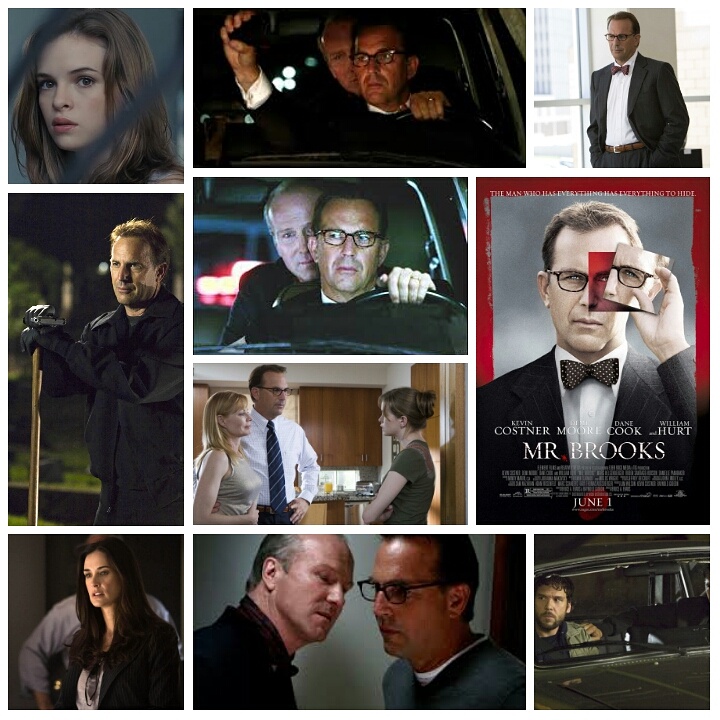
There are a few films Kevin Costner has done in which he has really been allowed and been willing to test the boundaries of what is usually expected from him in a role. 3,000 Miles To Graceland and Eastwood’s A Perfect World are fine examples. Perhaps the finest though is Mr. Brooks, a dark tale that showcases the actor in a terrifying turn and the last type of role you would picture for him on paper. Opposites are paramount in acting and cinema as a whole, and it’s that type of contrarian casting choice that can lead to a performer’s finest hours. In this case it’s certainly one of Kevin’s best outings, and casts him in a frightening new light, or should I say dark. Here he is Earl Brooks, husband, father, businessman and all round stand up guy. Except fpr the fact that he moonlights as a methodical and psychopathic serial killer. He sees it as an affliction, and is almost ashamed of it, whether by a tiny flicker of a soul he may have, or simply by the standards impressed onto society. He’s efficient, cold and hopelessly addicted to the act of murder. His alter ego, or ‘dark passenger’ as the scholars say, is a cynical persona called Marshall, brought to life by a scary William Hurt. “Why do you fight it, Earl?” he drawls in that committed, laconic snarl that only Hurt can do. There’s shades of his character from Cronenberg’s A History Of Violence here, affirming my belief that Hurt is a pure acting prodigy and masterful of both the light and the dark within his craft. Earl has a daughter too (Danielle Panabaker) who he has worrisome thoughts about, and a picture perfect wife (Marg Helgenberger). One can’t keep the turbulent nightlife of the serial killer a secret for one’s entire life though, and pretty soon people start to catch on. A nosy Nelly (Dane Cook) catches a whiff of Earl’s crimes and lives to wish he hadn’t, and a keen Detective (Demi Moore) begins to piece the puzzle together as well. Earl is as clever as he is murderous though, covering his work and tying off loose ends with gut churning gusto. Costner carries the film terrifically, a man who is at once both uncomfortable in his own skin yet fits it like a glove when the camera dutifully bears witness to his killings. He’s like a tiger who really can’t change his stripes but wants to shield them from the judgment of others, and of course his own persecution. The scenes of murder are skin crawling in their frank, fly-on-the-wall nature, no slasher cinematics or gimmicky set ups here, just the icy horror of a predator extinguishing human life to sate the beast, and the nightmarish inevitability of death. Those scenes paint Earl in a horrific light, but the film doesn’t try to convince us he’s a monster using any usual methods, it just presents to us this man, his acts and his life surrounding them, without discernable condoning or condemning. It’s cold, it’s clinical and it’s one of the best serial killer flicks out there.