Sam Shepard’s Silent Tongue

Sam Shepherd’s Silent Tongue is a bizarre one. The writer/director is usually in succinct, assured control of his art but here he kinds of makes a mess in the sandbox, literally since this is set in the deserts of the American Southwest. There are some outright fantastic ideas at play here and scenes of striking beauty and chilling poetic morbidity, but the narrative isn’t fixed together solidly enough and much of it is lost on the viewer in a hail of haphazard scenes and a story that barrels along with scant exposition, a complaint that you will rarely, if ever hear from me, but here we are.

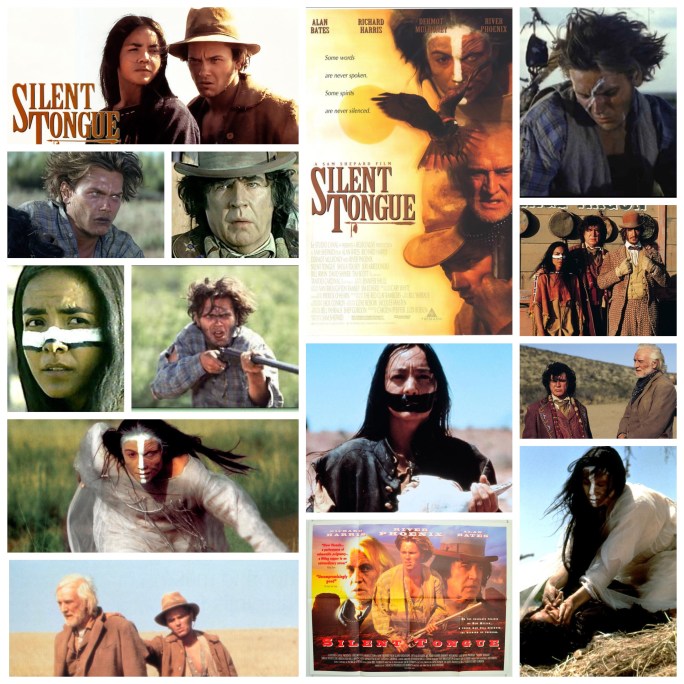
This is River Phoenix’s last film before an untimely passing, and it finds him sitting half crazed out on the frontier, grieving the death of his halfbreed Kiowa wife Awbonnie (Sheila Tousey), who perished during childbirth. He’s an already slow kid who is driven positively mad by this tragedy, and sits there with her corpse on a makeshift alter howling at the moon and brandishing a giant rifle at anyone and anything who comes near them. Because of his refusal to give her proper burial rights, she comes back as a vengeful, spooky ghost to harass and haunt him, something like a desert legend crossed with a spectral Kabuki costume. Elsewhere the boy’s distraught father (Richard Harris) returns to the dusty travelling circus where he bought Awbonnie in hopes of purchasing her twin sister Velada (Jeri Arredondo) to console his son out there on the plains. The circus owner and father of the two (Alan Bates) is less than cooperative when he learns of his first child’s passing and his son (Dermot Mulroney) is downright hostile. Seeing no other option, Harris kidnaps the girl and high tails it for the desert enclave where Phoenix sits and Awbonnie roams around like a lost soul tormenting him.

This isn’t a pretty boy western, a shoot em up or a cowboy picture, it’s a gnarly, fucked up frontier horror story populated by strange people and punctuated by odd, supernatural occurrences and disturbing flashbacks involving the mother of the two Kiowa girls (Tantoo Cardinal), who is called Silent Tongue for a very specific and unsettling reason. Phoenix is convincingly unhinged and plays the horror well, Harris is weary and understated, while Mulroney seems miscast and stumbles over the articulate western dialogue. It’s Bates who takes the cake though as the constantly drunk circus owner who has to face his past out there on the plains, he practically fills up the whole runtime with his ranting and raving, it’s a wonder he could sustain that level of mania for an entire performance. Tousey is intense and elemental as the ghost, adorned in eerie makeup and face paint and spewing out freaky threats in a guttural voice. Shepherd tries his best to anchor everything in symbolism and provide a story that makes sense, but it simply gets lost in a muddle and ends up making little emotional impact, which is kind of unforgivable because this story technically *does* make sense when you work it out in your head and *should* make a landing like that. I’m not usually one for remakes but this one practically begs for it because the story and ideas are so beautiful and full of potential, but the execution turned into kind of an inconsequential shit show. Shame. Great score by Patrick O’Hearn though.

-Nate Hill

Alejandro Amenábar’s Regression

If you’re going to make a horror film about misdirection and surprises, at least make the revelations later on in your narrative count for something and give the initial setup some weight and relevance. Alejandro’s Amanábar’s Regression is a piss poor attempt at what I just vaguely outlined as well as in telling a coherent, believable story that arrives somewhere satisfactory.

Back in the 80’s and 90’s there was spooky mass hysteria revolving around continued reports of satanic ritual abuse and here those who suffered it, those who perpetrated and covered it up and those who investigated it are explored, starting with Ethan Hawke as an intense local detective in a small town who takes special interest in the case of a teenage girl (Emma Watson) who claims to have been tortured and abused as a young girl, by several cultists including her father. Together with a wry psychoanalyst (David Thewlis) he starts a murky investigative procedure into this girl’s past and the collective secrets of the entire town. Many involved indeed do have repressed memories of ritual horrors conducted in secret ceremonies where unspeakable acts happened and the devil was summoned. But did they, and was he? That’s the problem with this story as a whole.

The film tries to arrive somewhere entirely different from where it started out and the result is an embarrassing mess. Exploring ideas of collective mass hysteria and paranoid delusion are one thing but when you spend so much of your narrative building things from a literal horror-centric standpoint and then abruptly turn it on its heels like they do here it’s a giant misstep and ruins the whole thing. There are numerous detailed, graphic and genuinely disturbing scenes of satanic abuse that are fairly effective until the story bares its true colours and all mood and tension they tried to build is sucked out of the room. Hawke is good at displaying unstable nature as a guy who gradually starts to lose control of his sanity and Watson, at least for the first two thirds of the film, is believable in her traumatized desperation and fear, while Thewlis is always reliable no matter what. Their hard work is ultimately swallowed up by a hollow, pointless and stupidly lazy narrative that is so half cooked you can practically hear the MacBook still whirring as the last few lines of the script are hurriedly typed out to rush the film into production. Amanábar has made some good films before (The Others, The Sea Inside) but he lets things get right out of control here and loses sight of whatever it was he started out with at the outset big time. It’s a shame because I’ve waited for a good story about all these freaky claims for years. Somewhere out there is a great script and resulting film based around the satanic worship scandals from back then, but this sure as hell ain’t it. Not even close.

-Nate Hill

Tom Ford’s Nocturnal Animals

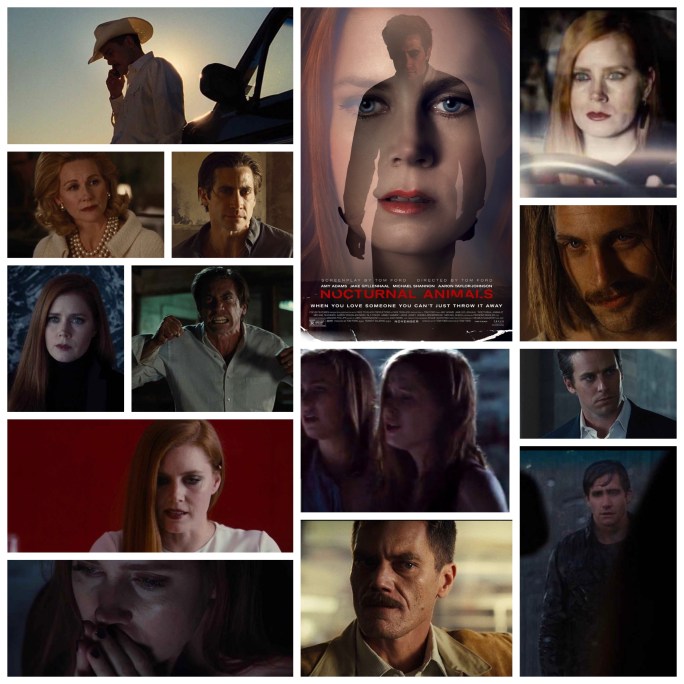
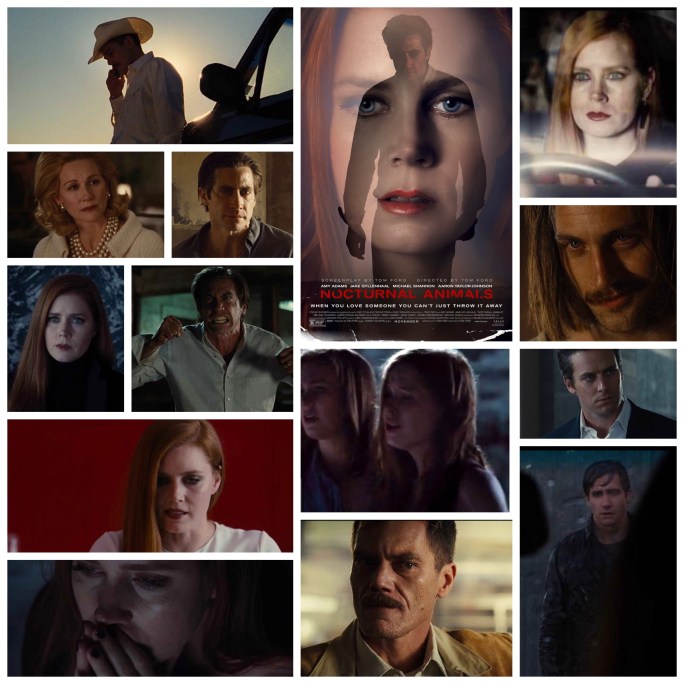
What’s the most malicious and deliriously satiating way you can think of getting revenge on an ex who betrayed you horribly? In Tom Ford’s Nocturnal Animals, novelist Edward Sheffield (Jake Gyllenhaal) gets pretty creative in his attempts to strike back at the girl (Amy Adams) who wronged him decades before. This is a film about darkness, secrets, hate, cruelty, long harboured hurt and how such things erupt into violence, both physical and that of the mind.

Adams is Susan, a wealthy gallery owner married to a hunky yet vacuous playboy (Armie Hammer), terminally unhappy yet cemented in an inability, or perhaps unwillingness to do anything about it. One day she receives a yet to be published book from her ex husband Edward (Gyllenhaal) dedicated to her in an eerily specific way. As she settles in to read it in her drafty, lonesome yuppie mansion while hubby flies around the country cheating on her, Ford treats us to a story within a story as we see the novel unfold. In the book, Gyllenhaal plays a family man driving his wife (Isla Fisher, who uncannily and perhaps deliberately resembles Adams) and daughter (Ellie Bamber) across a creepy, desolate stretch of rural Texas. When night falls, a pack of roving, predatory bumpkins led by Aaron Taylor Johnson howl out of the night like angry ghosts, terrorize the three of them relentlessly, then kidnap Fisher and their daughter without remorse. This leaves Gyllenhaal alone and desperate, his only friend being crusty lawman Bobby Andes (Michael Shannon), a gaunt force of righteous fury who serves as avatar to carry out some actions that the protagonist is perhaps too meek for. Together they trawl the southern night looking for clues and a sense of resolution, but one gets the sense that this is a hollow venture, already plagued by the acrid tendrils of tragedy from right off the bat. So, what do the contents of this novel have to do with what is going on up in the real world? Well… that’s the mystery, isn’t it. Pay close attention to every narrative beat and filter the distilled emotions of each plot point through an abstract lens, and then the author’s gist is painfully understood.

The interesting thing about this film is that we don’t even really have any contact with Gyllenhaal in the real world and present time outside of this story he’s written. Everything he has to say, every corner of anguish is laid bare and bounced off of Adams’s traumatized, depressed housewife with startling clarity and horror. She gives a fantastic performance, as does Jake as the lead character of the novel. Shannon makes brilliant work of a character who is essentially just an archetypal plot device, but the magnetic actor finds brittle humour, deadly resolve and animalistic menace in the role. Other solid work is provided by Andrea Riseborough, Karl Glusman, Robert Aramayo, Michael Sheen, Jena Malone and Laura Linney in a stinging cameo as Adams’s manipulative dragon of a mother. Ford shows incredible skill in not just telling a crisp, immersive and aesthetically pleasing visual story, but making those visuals count for something in terms of metaphor, foreshadowing, hidden clues and gorgeous colour palettes that mirror the stormy mental climates of these broken, flawed human beings. He also displays a mastery over directing performances out of the actors as well as editing and atmosphere that draws you right in from the unconventional opening credits (those fat chicks) to the striking, devastating final few frames that cap off the film with a darkly cathartic kick to the ribs. Add to that a wonderfully old school original score by Abel Korzeniowski and layered, concise cinematography from Seamus McGarvey and you have one hell of a package. A downbeat, mature drama that comes from the deep and complex well of human emotions and a film that uses the medium to reiterate the kind of raw, disarming power that art can have over our souls, both as a theme of its story and as a piece of work itself. Great film.

-Nate Hill

“All those moments will be lost in time, like tears in rain..”. Saying goodbye to Rutger Hauer

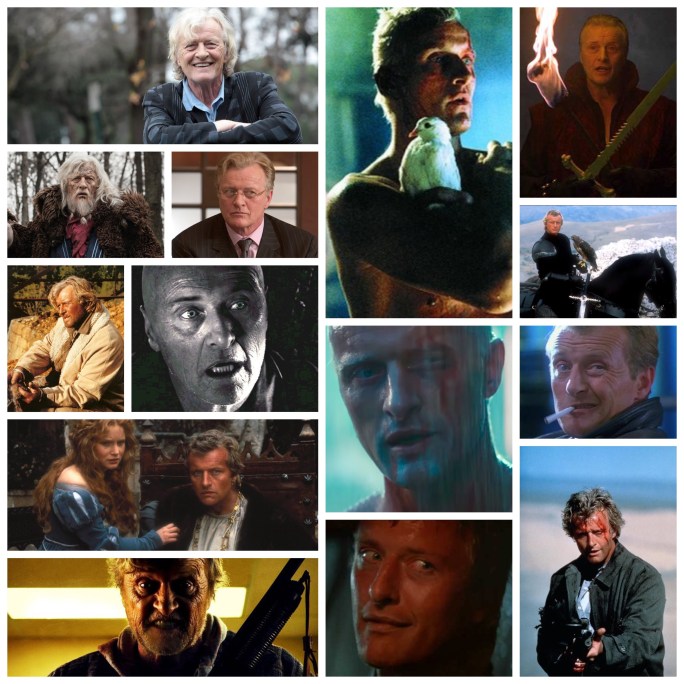
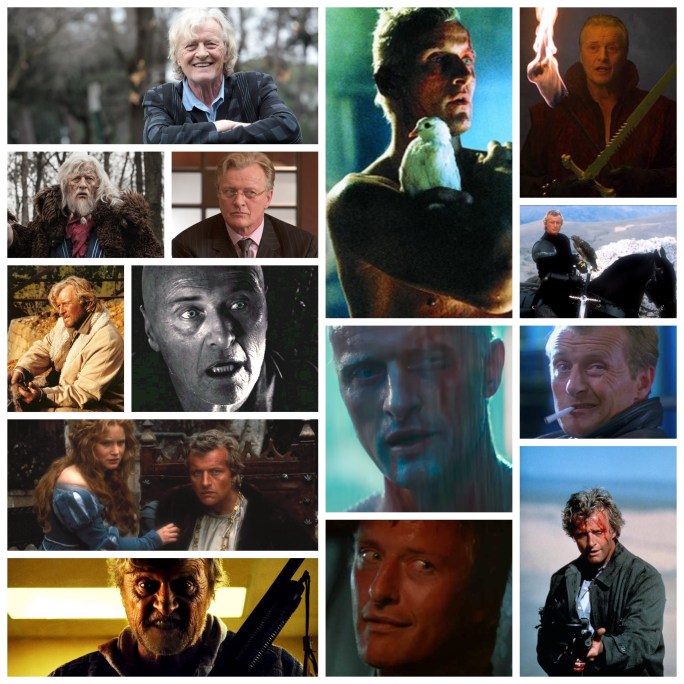
A dark angel android desperately seeking longer life. A spectral hitchhiker hell bent on homicide. Both Dracula and Van Helsing at different points in his career. A rogue cop stalking an alien beast through futuristic London. The CEO of Wayne Enterprises. A psychotic drifter who drives a wedge between a married couple. A blind Nam vet with a deadly samurai sword. A rogue medieval warrior put under a magic spell. A ruthless European terrorist waging war against an entire city. A hobo with a shotgun. Rutger Hauer has passed away, and leaves behind him a legacy of incredible work over a decades long career that has firm and lasting roots in the horror, action and science fiction genres. With a rough hewn, elemental figure, a honey soaked purr of a voice and electric eyes, the guy practically radiated originality, never one to rush a line, hurry a glance or let his gaze move too quickly.

A native of The Netherlands, Hauer got his start in Dutch television during the 70’s, until a lasting friendship with director Paul Verhoeven led to his casting in the director’s Middle Ages romp Flesh + Blood alongside Jennifer Jason Leigh. From there the rest of the world saw this man’s immense talent and he found himself taking part in Richard Donner’s Ladyhawke, Sylvester Stallone’s Nighthawks, Nicolas Roeg’s Eureka, Sam Pekinpah’s The Osterman Weekend, Albert Pyun’s Omega Doom, Phillip Noyce’s Blind Fury, Buffy The Vampire Slayer, George Clooney’s Confessions Of A Dangerous Mind, Christopher Nolan’s Batman Begins, Robert Rodriguez’s Sin City and so many more. He also had a multitude of memorable television appearances including Smallville, Alias, True Blood, The Last Kingdom to name a few.

For me the two roles that stand out from the rest are Roy Batty in Ridley Scott’s Blade Runner and John Ryder in Robert Harmon’s The Hitcher. Within those two performances Rutger packed more magnetism, charisma and character than some can hope to exude their whole careers. It’s no secret that a great portion of his career was spent in some lower budget B movie fare, a fact that some people lament given his great talents. Here’s the thing though: He never phoned it in, gave a bad performance or threw away a line. No matter what the project was, he was always there and always stepped up to command the scene even if it was just a cameo. I remember in one horror flick about killer wasps he played a mercenary who, when warned about the creatures, stated with a straight face “actually, wasps are allergic to me.” The same conviction was put into that ridiculous line as any of his serious roles in iconic stuff, but that was his power. Character actor, leading man, comic relief, heinous villain, the President or a street thug, this guy could do it all and everything in between. As Roy says in Blade Runner: “All those moments will be lost in time, like tears in rain.” He improvised part of that line too, highlighting the organic nature of his talent beautifully. Time to say goodbye. Peace out, Rutger ❤️

-Nate Hill

David Lynch’s Lost Highway

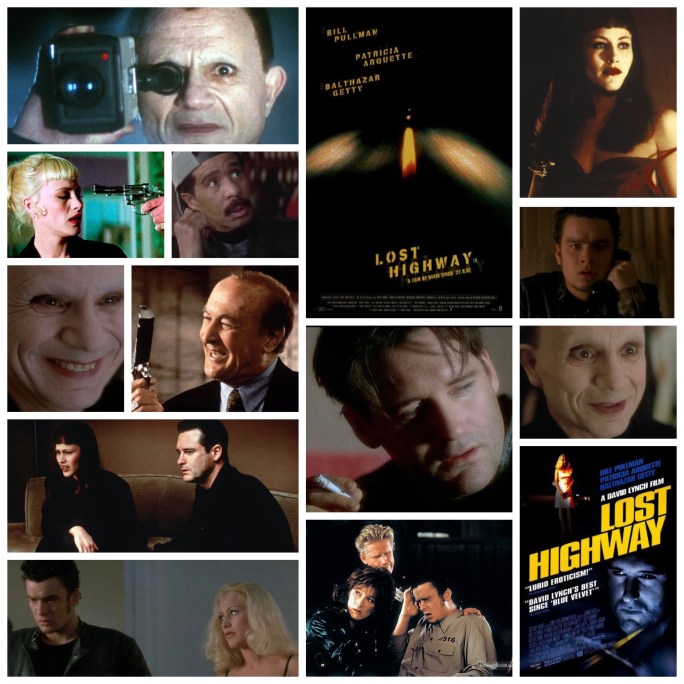
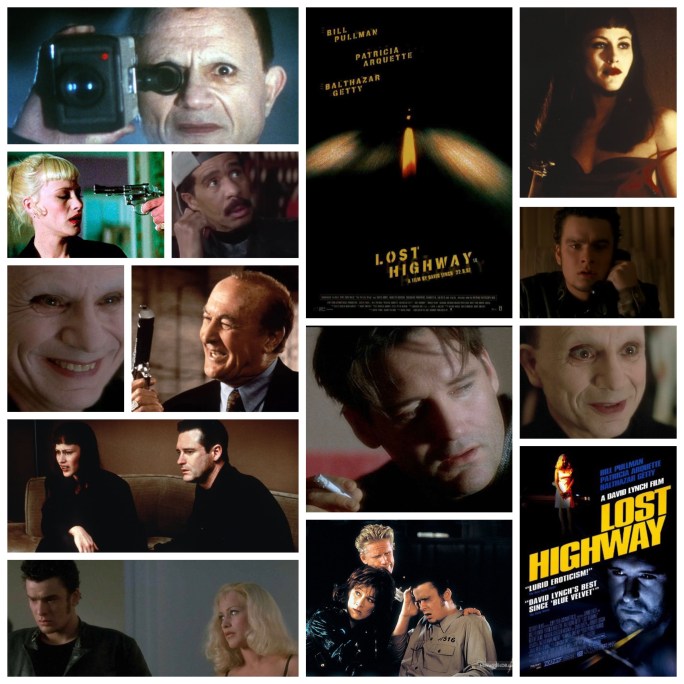
High beams pierce a nocturnal interstate as David Bowie’s ‘I’m Deranged’ eerily cuts through a still night and we realize that David Lynch’s Lost Highway isn’t going to be your average road trip, let alone overall viewing experience. This is a fuzzy, feverish portrait of a fractured mind attempting to make sense of extremely distressing circumstances that are both alienating and possibly self inflicted. Lynch is always keen on probing the murky cerebral waters which border on potentially paranormal occurrences, and the often frustrating line, or lack thereof, which is drawn in, around and between these two aspects. Psychological terror, ambiguous scenes that leave you scratching your head once you’ve caught your breath, identity crisis, elliptical narratives that leave us haunted and wanting more are all tools in his bag, ones he’s employed countless times throughout his monolithic career. Usually he implements that in an esoteric, earthy way, but there’s something cold, clinical and unsettlingly voyeuristic about this that somewhat separates it from a lot of other stuff he’s done. The term ‘Lynchian’ in itself has become its own genre, there’s no debating that anymore. It’s usually within this self made realm that he explores, but it’s almost like with this one he went in with a mindset to play around with a sordid, almost De Palma-esque style of genre, and then inject it with his trademark eerie weirdness, in this case to great effect.

Bill Pullman stars as jazz trumpet player Fred, spending his nights belting out unnerving solos in smoky clubs. Pullman is an all American prototype, seen in a lot of generic, regular Joe roles. Observing him venture into sketchy material is jarring and super effective (see his career best work in David’s daughter Jen Lynch’s Surveillance for an even better example of this). He and his gorgeous wife Alice (Patricia Arquette) wake up one ominous morning to discover a packaged video tape on their doorstep, the contents of which show someone breaking into their house and filming them while they sleep. They feel both horrified and violated, and call the police who prove to be just south of useful. From there things get terrifically weird. Fred attends a party where he meets the Mystery Man (Robert Blake) who plays a mean spirited magic trick on him that will have your skin crawling out the door. This was one of Blake’s last two roles before the unfortunate incident that cut his career painfully short, but he’s perfect for Lynch’s stable and eats up the frames he inhabits, a pasty faced ghoul with beady black jewel eyes and a piercing laugh that will stain your dreams. Before he knows it, Fred wakes up and is accused for his own wife’s murder, whisked away to a dank death row cell, plummeting the film into a new segment, Lynch’s way of letting us know this isn’t going to be an easy watch.

Fred wakes up sometime later… And isn’t Fred anymore. He’s a young dude with amnesia who’s been missing for a while, played by the edgy Balthazar Getty. It’s a stark narrative left turn, a stinging reminder that from there on in, we’re in for some nasty antics with no light at the end of the tunnel. Getty is released from prison, since he’s not Pullman who they arrested to begin with. From there he gets entangled in one hot mess involving a volatile gangster porno king (Robert Loggia), his seductive wife (also Patricia Arquette) and the ever present Mystery Man who lurks over both planes of the film’s narrative like a malicious puppeteer. I’m trying to be deliberately vague about the plot (lord knows Lynch did as well), both to not spoil any surprises for you, and partly because after many viewings, I’m still not sure exactly what it means for myself. It’s a great big clusterfuck of extremely disturbing sequences, surreal passages of auditory and visual madness and a frothing undercurrent of atmosphere that constantly pulls on your sleeve to remind you that something is terribly wrong, but never gives you the solace of telling you what that something is. Traumatic viewing to say the least.

Lynch assembles an extraterrestrial supporting cast including Michael Massee, Jack Nance, Natasha Gregson Warner, Marilyn Manson, Henry Rollins, Mink Stole, Jack Kehler, Giovanni Ribisi, Richard Pryor and the one and only Gary Busey (when Gary is one of the calmest, sanest people in your film you know you’ve driven off the cliff). Some highlights for me are anything to do with Blake’s paralyzing spectre of a character who is one of the best Lynch creations ever, Loggia intimidating an obnoxious driver is priceless and the closest the film gets to comedy, and the final twenty minutes where the lines of reality, fantasy and the jagged planes of perception within the characters minds collide, providing us with a creepy non-resolution, part of what makes the entire show so memorable and affecting. A classic that begs countless revisits before it can fully cast all aspects of its spell on you, and one of Lynch’s unsung best.

-Nate Hill

Robert Rodriguez’s and Quentin Tarantino’s From Dusk Till Dawn

Quentin Tarantino and Robert Rodriguez are good buddies and have always sort of played on each other’s side of the fence in terms of creativity, collaborating here and there over the years on cool stuff, but my favourite tandem venture they ever did has to be From Dusk Till Dawn, a crime horror action schlock hybrid that has aged beautifully over the years, doesn’t fuck around in terms of packing a punch in all of the specific genres it works in and is a glowing testament to the powers of practical/prosthetic effects over CGI.

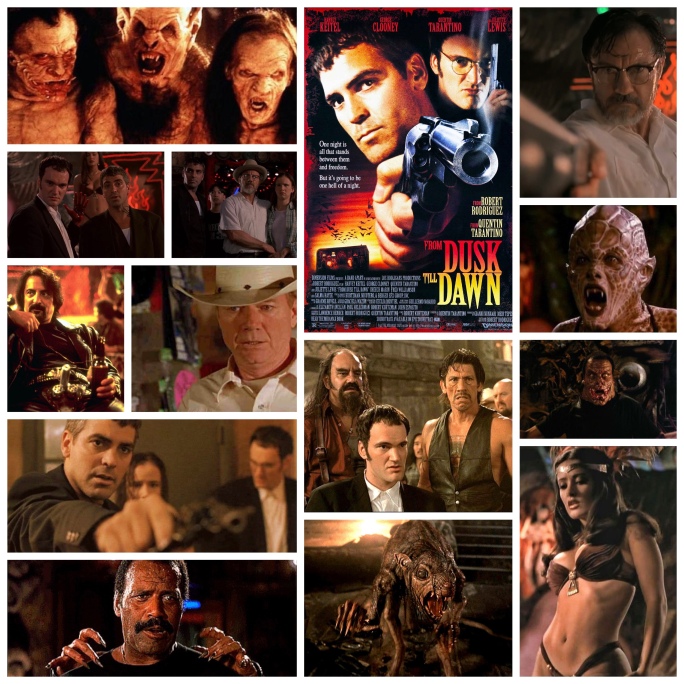
The first half of this thing is a classic Tarantino slow burn: George Clooney and Quentin himself are the Gecko brothers, a pair of murderous bank robbers in swanky suits, on the run from southern law following a bank robbery bloodbath (never actually seen a lá Reservoir Dogs) and causing violent trouble all over the rest of the state. After narrowly escaping Michael Parks’s immortal Texas Ranger Earl McGraw, they kidnap a retired preacher (Harvey Keitel) and his two kids (Juliette Lewis and Ernest Liu) and make a beeline for the Mexican border and the sanctuary of an impossibly rowdy strip joint and trucker bar called… wait for it… The Titty Twister.

Once at the bar Rodriguez takes over the reins and in a split second we segue into horror most gory as our unconventional protagonists realize that this bar is actually a nest of Mexican vampires, and they’re ready to spring the trap. This includes an unbearably sexy dance from Salma Hayek’s vamp queen Santanico Pandemonium, a biker named Sex Machine (Tom Savini) with guns where his guns are, a literal army of hairy undead beasts, a giant rat, a human spinal column used as a saxophone, crossbows, more gallons of blood and various gore than I’ve ever seen amassed for one film and just too much else to mention.

For most folks, the first half of this film is the pay-dirt; Tarantino’s laconic, dangerous approach to the Gecko brothers’s rampage is no doubt one of the coolest things he’s written, particularly the sequence with Michael Parks and any dialogue between Keitel and Clooney, who gives probably the most fun and uninhibited performance of his career. Tarantino chomps at the bit and is downright terrifying as the worst kind of unstable psychopath, it’s the best acting work he’s ever done. I myself prefer the latter half with all the horror though.. the sheer amount of gooey lunacy, latex drenched creativity in design is something you don’t see anymore, unless it’s a deliberate throwback. The bar is populated by what seems like hundreds of varied and equally disgusting bloodsuckers until after a while and dozens of kills you get the sense that every character needs a good shower. Keitel brings a grizzled nobility to the priest, while Lewis tones down her usual bubbly mania for something decidedly more down to earth. Danny Trejo plays a grumpy vamp bartender, blaxploitation icon Fred Williamson shows up as a badass Nam vet and watch for cameos from John Hawkes, Greg Nicorato, Kelly Preston and 70’s icon John Saxon. Cheech Marin also shows up of course, in three obviously different roles because why the fuck not and has a monologue that would burn the ears off of any conservative viewer. Some will say this film is too much, and hey I’m not one to argue with them, but for me if it’s too much of anything, it’s a good thing. The horror is old school schlock-schploitation and the hard boiled crime yarn that comes before is equally stylistic and fun. It’s Quentin and Robert attuned to different wavelengths but somehow on the same frequency, and the result is a bloody, chaotic horror crime western classic.

-Nate Hill

Jim Mickle’s Cold In July

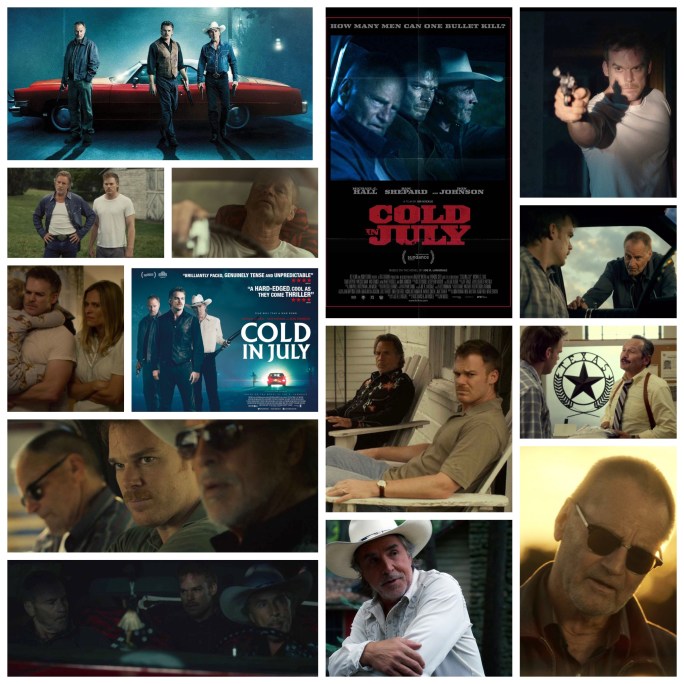
Cold In July is a fairly ambiguous title that’s just this side of sinister but could mean anything. To writer director team Jim Mickle and Nick Damici, it means an unbearably intense mystery about fathers and sons, evil rearing it’s head in small town America, noir, perhaps the first buddy flick with three leads and a beautifully crafted 80’s aesthetic complete with an electronic John Carpenter style score that makes the film.

Michael ‘Dexter’ C. Hall plays a somewhat meek family man who accidentally shoots a prowler in his living room one summer night. Case closed? Not really, as it seems the burglar has a father (Sam Shepherd) who comes looking for answers. This guy is both a veteran and an ex con though, which makes him about the hardest piece of work you could find, but… soon it’s apparent that something isn’t quite right. The county Sheriff (Damici also doubles as a very fine actor) is clearly not being straight with Hall, dodging specific questions and veiling the truth. Eventually there’s an uneasy truce between Hall and Shepherd as they try to smoke out a deep set conspiracy, but things *really* kick into high gear with the arrival of Don Johnson’s Jim Bob Luke, a private detective with attitude to spare who blasts into the narrative in a giant red Cadillac convertible that becomes its own character and signifies a certain liveliness for the second two acts.

One of the coolest things about this one is that it’s billed as a mystery, which it lives up to and then some. From where it starts out as a nightmarish home invasion thriller to the levels of truth uncovered in the final act is quite the journey, an unpredictable journey that gets shockingly dark and perverse yet always retains a sense of humour, is constantly exciting and atmospheric. It always helps when the characters you take a trip like this with are engaging, and the dynamic between the three is something special. Hall is innocent enough until the darkness shows up at his door, Shepherd is the man of few words and lots of action, a cantankerous, difficult man whose moral compass eventually comes brutally into the forefront. Johnson straight up steals the show though, Jim Bob may well be his best character and even though the guy is kind of larger than life and ridiculous, he still fits within the narrative and Don makes him a tangible human being underneath the gloss and bluster. Watch for Wyatt Russell (Kurt’s kid), Happy Anderson, Lenny Flaherty and Vinessa Shaw. The original score by Jeff Grace is so damn good and carries this story nervously scene to scene with nerve shattering tension and those classic electronic synth tones that are coming back in such a big way. This was kind of overlooked on release but stands as tall as any big budget Hollywood crime thriller I’ve seen, and taller than many. Mickle keeps the direction tight and streamlined but allows for moments of character while keeping the story hurtling along with terrific momentum. Great film.

-Nate Hill

Jordan Downey’s The Head Hunter

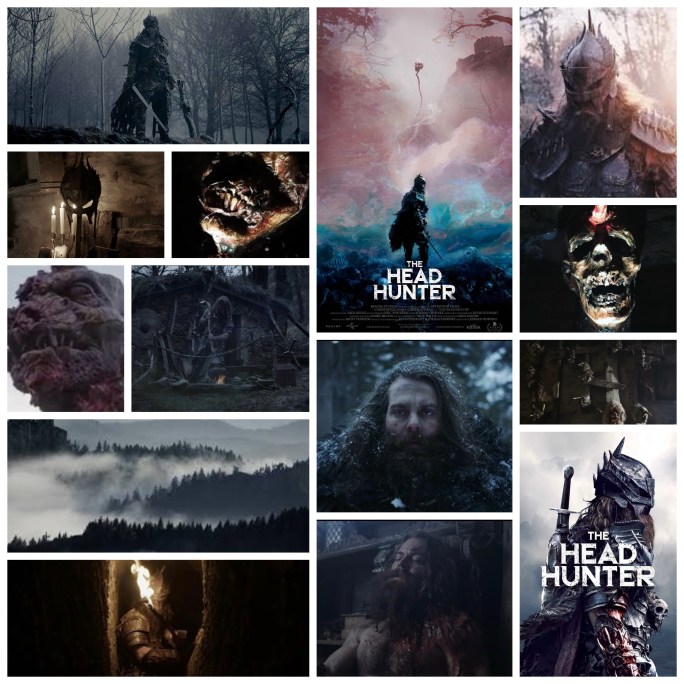
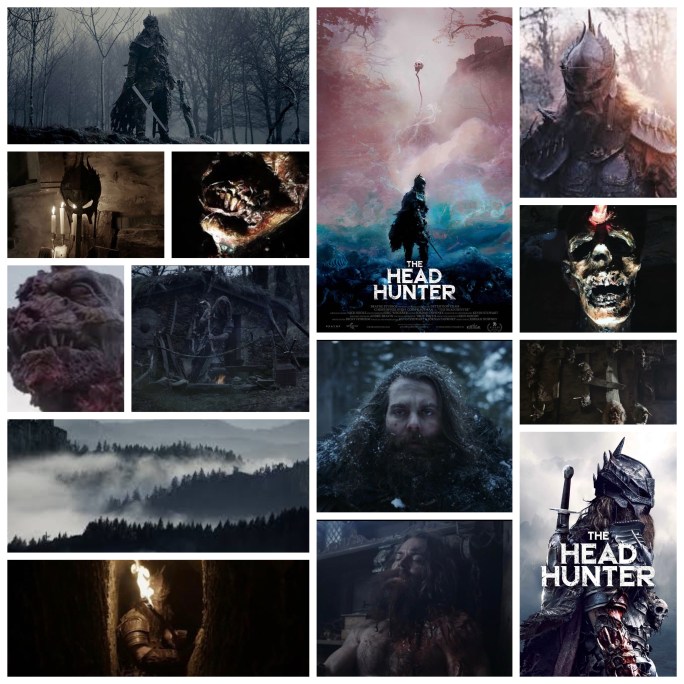
It’s amazing what you can do with a low budget, especially when all you’ve got to blow is thirty grand, but Jordan Downey works small scale magic with The Head Hunter, an inventive, atmospheric Viking era horror story that is one of the most creatively entertaining films I’ve seen so far this year.

In the vein of stuff like Willow and The 13th Warrior, here we see a misty, desolate Nordic landscape (actually Portugal) and the fearsome warrior (Christopher Rygh) who wanders through it in spectral, gaunt armour, always on the hunt for hordes of mythical ghosts, goblins and werewolves, a bounty hunter of sorts who displays the heads of his quarries as trophies on the wall of his forest abode. The only creature he hasn’t yet slain is the one that killed his young daughter (Cora Kaufman) years before, and it’s his brutal purpose in life to hunt this thing down over foggy mountains, through dark caves and have his vengeance. There’s an inspired sense of detail here and much of the first half we simply see his routine in studious fashion, going out to kill these beasts (mostly offscreen, as budget permits), coming home all shredded up (thank god for gooey prosthetic effects) and using a homemade magic potion to regenerative damaged tissue and heal himself. I’ve read reviews saying this is boring or slow or goes nowhere but those critics have their heads in the sand, because these extended sequences are terrific for setting up character, getting a sense for the space and time around him and treating ourselves to the lovingly handcrafted production design, from ancient manuscripts he studies to the varied heads piked up on his living room wall. When the action and horror does come later it all pays off because we’ve sat with this guy for a while, learnt his ways and are ready to see how he handles things when they go haywire. They do, but I won’t spoil the fun because there’s a few delicious twists, tons of creepy horror action and even a few genuinely poignant moments too.

This thing has an estimated budget of thirty grand, and runs for just over an hour, falling short of being an actual feature, but I know from experience just how tough it is to make a low budget work. My friends and I made a sweet horror film once that had a budget of 5 grand and the resulting product was only like eight minutes long, so I feel their pain. It’s especially apparent in horror because you need all these gory effects, costumes and exotic sets and whatnot, so it can be tough. The constraints are obvious here but I think that what Downey has accomplished with what he had is phenomenal. The setting looks beautifully eerie, atmospheric and well lit, the creature effects are earthy, elemental and refreshingly old school, the score by Nick Soole is most excellent in setting mood and the two actors playing the warrior and his daughter knock it out of the park. This was a bit less grimly serious than I pictured going in, more supernatural and fantastical than I anticipated, but once you adjust to the tone it works really well. Think more Army Of Darkness than Pathfinder but less silly and you’ll have some idea, but really this thing is fairly unique and on its own level. Plus, it isn’t a sequel, remake, reimagining or prequel, it’s an original script! How about that! Great stuff all in all, one of my favourites of the year so far.

-Nate Hill

Ari Aster’s Hereditary

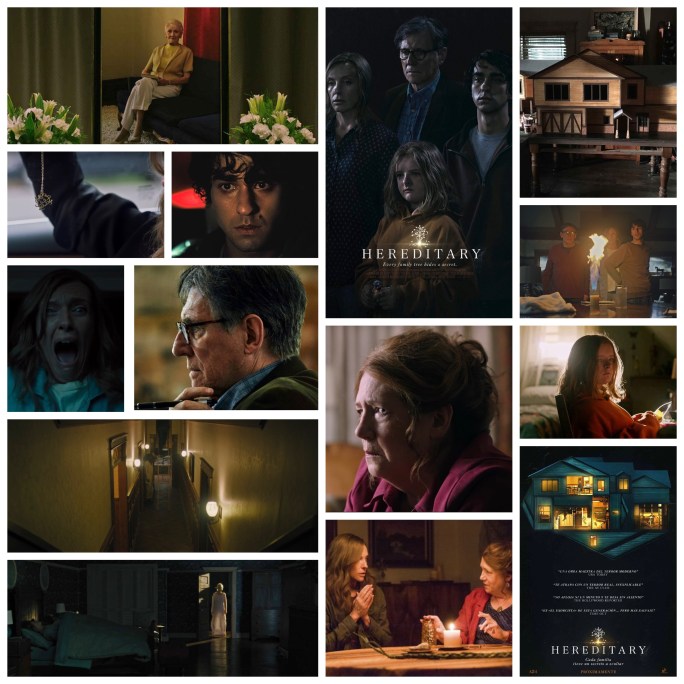
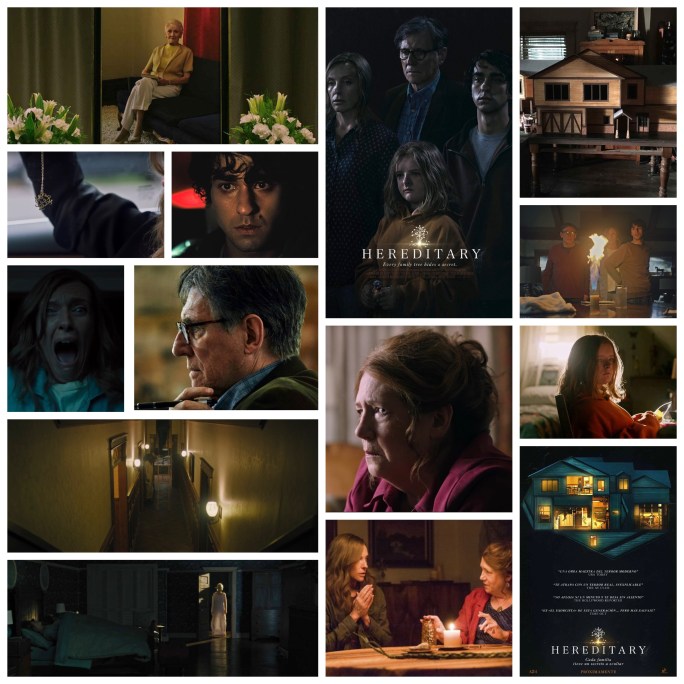
Hereditary more like Herediterrifying. I know I’m late to the party but Ari Aster’s supremely disturbing chiller deserves all the hype and more, it’s a beautifully designed, aggressively scary bag of fun that walks a line between being deeply, psychologically upsetting as well as otherworldly, supernaturally haunting. It’s striking to find a debut this good from a first time director, but the guy handles all elements seemingly effortlessly and the result is an immersive, atmospheric, competently staged, elemental fright flick that will literally have you sleeping with the lights on after.

Toni Colette gives the performance of a lifetime as a wife and mother somewhat grieving the loss of her own mom, who was a secretive, difficult old goat in life. Her husband (Gabriel Byrne) is somewhat detached, her two kids (Milly Shapiro, Alex Wolff) have their own issues. It isn’t until further tragedy strikes this family that we begin to see fissures crack in both their individual psyches and relationships as a group. Grief is a hell of a thing and it can turn a family dynamic ugly and venomous pretty quick, but there’s something else circling this clan, an intangible malevolence that I’ll shut up about right now because it’s a diabolical thrill piecing it together along the way. I will say pay attention to *every* frame though, as there are clues aplenty embedded in the visual scape. Colette displays several remarkably realistic meltdowns and I shudder to think of the personal process that led her to that level of mania because she’s downright unnerving. Byrne doesn’t do too many high profile films anymore but it’s always great to see him, he underplays it here but is no less unsettling as a guy who seems uncomfortable around his own family, one of the several taboos the film plays with. Shapiro doesn’t do much as the daughter but her unearthly presence alone is enough to get us squirming, she is one weird looking kid. Wolff, on the other hand, is quite excellent and has a couple scenes of heightened distress that are pretty staggering. A shout-out to character actress Ann Dowd too who, I’m happy to say, is getting more work than ever before these days and finally has a sizeable outlet for her talent.

One aspect that makes this such a freaky thing to sit through is that none of the family members, and no other characters in the film in fact, are really likeable characters. They’re somber, sullen, withdrawn weirdos who make heinous mistakes and harbour unthinkable secrets and when the horrors start coming for them it kind of feels warranted. There’s this blanket of mental unrest and familial turmoil that hangs over everything and provides the film with a canvas of unrest for the paranormal horror to gradually encroach on like fog on the horizon, and the mixture makes for an almost unbearable ride through hell that was the scariest viewing experience for me since 2014’s It Follows. It’s also darkly beautifully though, Aster mounts some detailed, artistic and pagan inspired production design that’s like eye candy, he lights the sets starkly and specifically and plays around with miniatures in transitions and shot compositions for a visual experience like no other. Don’t even get me started on the score by Colin Stetson that plays like a nightmare brought to life, as does this masterpiece of a horror classic.

-Nate Hill

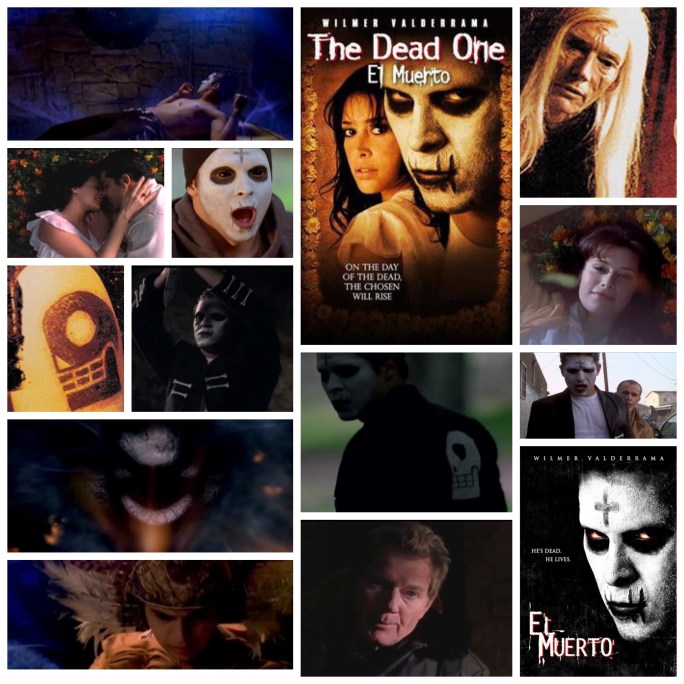
B Movie Glory: El Muerto aka The Dead One

So imagine The Crow but like… based around Aztec/Day of the dead style mythology and starring Fez from That 70’s Show as a young man brought back from the dead as a supernatural zombie. Sounds to random to actually exist, right? Well it’s out there, it’s called The Dead One in some regions and El Muerto in others and… it’s something. I can’t quite say that as a compliment because it’s so goddamn low budget and cheesy, but I will say that a valiant effort is made, there’s a lot of heart behind it, plus some terrific actors having fun too.

Unfortunately Wilmer Valderrama will forever and always be known as Fez no matter what else he does and will never live that character down, but he does his best to be dark, smouldering and edgy here as Diego De La Muerte, who is killed in a car crash one night and resurrected as a badass monster with face paint and superpowers by the Mayan god of death. He’s marked as a boy in an opening flashback by a spooky Old Indian shaman (the great Billy Drago, who passed a few days ago) but what he doesn’t read in the fine print is that the God basically owns his soul and commands his every move once he’s undead. This leads to a fight for freedom and the love of his life (Angie Cepeda) who he left behind.

Soon the God manifests in reality as a creepy old witch type thing (again played by Drago, really outdoing himself with the scenery chewing here, as he was always famous for) and he has to fight the thing as well as evade a suspicious county Sheriff played by the legendary Michael Parks, who is also no longer with us. Other appearances are noted from Tony Plana as a priest, Joel David Moore’s as his best friend and the iconic Maria Conchita Alonso.

Man I really want to recommend this because I’m a lot more generous than most with this type of fare but I can’t because it’s essentially a pretty fucking awful film, not gonna lie. Shoddy special effects, cheesy dialogue, cheap looking cinematography, this one has it all. But hey, if you give it a go you’ll always be able to say that you saw a movie where Fez from That 70’s Show plays an Aztec zombie, so there’s that. Plus the thing is kinda fun in its own lovable horror flick way. It’s based on some cult comic series which I’ve never read but if anyone has, let me know how this holds up against the source material.

-Nate Hill