Ah yes, the 90’s version of Judge Dredd, featuring a hopped up Sylvester Stallone as the titular comic book lawman. There is so much hate floating around for this flick that I feel like radios have picked up some of it right out of the air. There used to be a lot more loathing, but then the 2013 version graced our presence, and it was so good, so true to the source material and such a kick ass flick that the collective bad taste left the fan’s mouths, leaving this version somewhat forgotten and to many people, for good reason. But.. but… bear with me for just a moment, readers, and I’ll tell you why it’s not as bad as it’s utterly poopy reputation. Yes it’s silly, overblown, altogether ridiculous and Stallone takes off his helmet to yell about the law a lot. Basically pretty far from the source material and weird enough to raise eyebrows in many others, and prompt the torch and pitchfork routine from fans of the comic series. But it’s also a huge absurdist sci fi spectacle that will blow up your screen with its massive cast, opulent and decadent special effects and thundering, often incomprehensible plot. It’s in most ways the exact opposite of the 2013 version, all the fat that was trimmed off of that sleek, streamlined vehicle is left to dangle here, resulting in a chaotic mess that looks like a highway pileup between Blade Runner, Aliens and some Roger Corman abomination. But.. is it terribly unwatchable? Not in the least, or at least not to me. Like the highway pileup, it’s so off the rails that we can’t help but gawk in awe, and if we’re not some comic book fan who is already spiritually offended to the core by it, even enjoy that madness and lack of any rhyme or reason in it. Stallone uses his bulk to inhabit the character, and infuses a level of stagnant processed cheese to his dialogue that would be distracting if it weren’t for the electric blue contact lenses he sports the whole time, which look like traffic lights designed by Aqua Man. He’s embroiled in one convoluted mess of a plotline involving a former sibling (a hammy Armand Assante with the same weird eyes). Joan Chen and Diane Lane fill out the chick department, the former being some kind of cohort to Assante, and the latter a fellow judge alongside Dredd. Dredd has two superiors, the noble and righteous “” (Max Von Sydow in the closest thing he’ll ever make to a B-movie), and the treacherous Griffin (a seething, unbridled Jurgen Prochnow). The cast is stacked from top to bottom, including a rowdy turn from James Remar who sets the tone early on as a rebellious warlord who is set straight by Dredd. Rob Schneider has an odd habit of following Stallone around in films where his presence is wholly not needed (see Demolition Man as well), playing a weaselly little criminal who pops up whenever we’re off marveling at some other silly character, plot turn or risible costume choice. Scott Wilson also has an unbilled bit as Pa Angel, a desert dwelling cannibal patriarch, and when one views his scenery chomping cameo, although no doubt awesome, it’s easy to see why he had his name removed from the credits. The whole thing is a delightful disaster that shouldn’t prompt reactions of hate, at least from the more rational minded crowd. Yeah its not the best, or even all that good, but it’s worth a look just for the sake of morbid curiosity, and to see an entire filmmaking, acting and special effects team strive way too hard and throw everything into the mix, forgetting that less is more as they pull the ripcord of excess. Sure I’m generous, but I’d rather be puzzled and amused rather than bitter and cynical when a lot of work still went into this and me as an average joe has no right to bring down artists when my greatest life accomplishments so far are riding a bike with no hands while I have a beer in one and check my phone in the other. Such silliness is what we find in this movie, and I gotta say I was tickled by it.
Tag: James Remar
The Cotton Club: A Review by Nate Hill
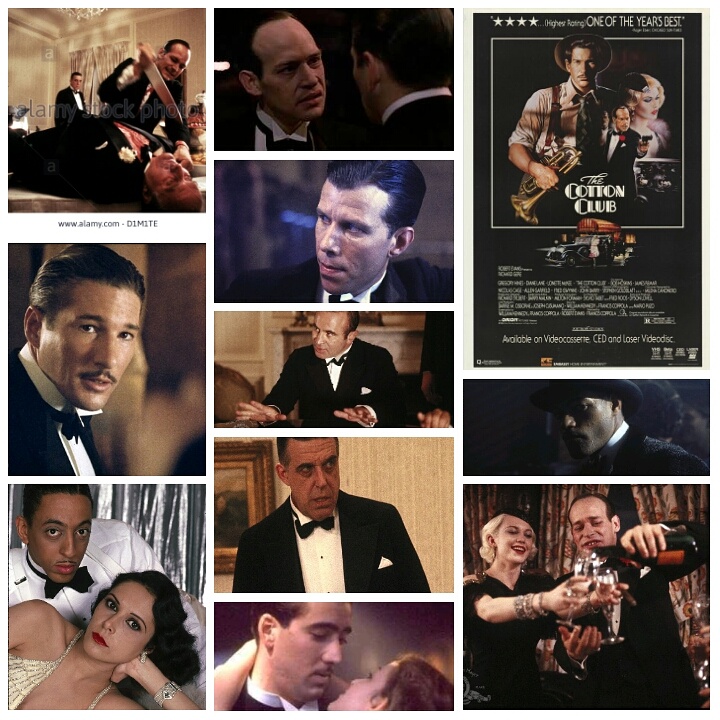
Francis Ford Coppola’s The Cotton Club is every bit as dazzling, chaotic and decadent as one might imagine the roaring twenties would have been. it’s set in and revolves around the titular jazz club, conducting a boisterous, kaleidoscope study of the various dames, dapper gents, hoodlums, harlots and musicians who called it home. Among them are would be gangster Dixie Dwyer (a slick Richard Gere), Sandman Williams (Gregory Hines), a young Bumpy Johnson (Laurence Fishburne) and renowned psychopathic mobster Dutch Schultz (a ferocious James Remar). Coppola wisely ducks a routine plot line in favor of a helter skelter, raucous cascade of delirious partying, violence and steamy romance, a stylistic choice almost reminiscent of Robert Altman. Characters come and go, fight and feud, drink and dance and generally keep up the kind of manic energy and pizazz that only the 20’s could sustain. The cast is positively stacked, so watch for appearances from Nicolas Case, Bob Hoskins, Diane Lane, John P. Ryan, James Russo, Fred Gwynne, Allen Garfield, Ed O Ross, Diane Venora, Woody Strode, Giancarlo Esposito, Bill Cobbs, Sofia Coppola and singer Tom Waits as Irving Stark, the club’s owner. It’s a messily woven tapestry of crime and excess held together by brief encounters, hot blooded conflict and that ever present jazz music which fuels the characters along with the perpetual haze of booze and cigarette smoke. Good times.
B Movie Glory with Nate: Wedlock
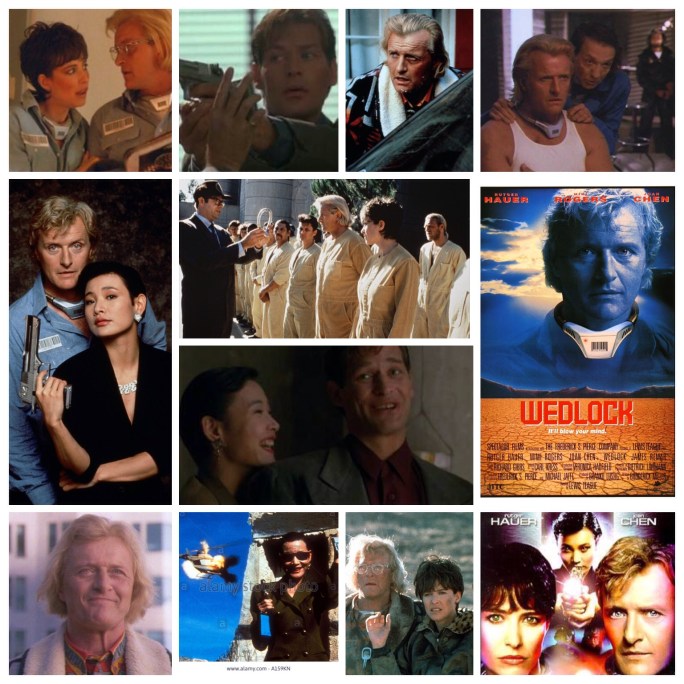
Wedlock is one of those shamelessly trashy B-movie romps that the 80’s proudly churned out in droves for our viewing pleasure. Some are shitty and enjoyable, some are just shitty, and some are solid gems, provided you’ve been schooled a bit in this particular, acquired taste of an arena. I spent a lot of my teenage years being a scholar in this sort of lovable junk, so I have plenty of ancient data in my mental hard drive to dust off for the old blog-ski. Rutger made quite a few ventures into this field (come to think of it most of my favourite actors have. Wonder what that says about my taste lol). He’s got genre written all over his acting style, and loves to play broad characters in stylized fare. Here he plays Frank Warren, an amiable jewel thief who is betrayed in an opening sequence heist by his dodgy partner Sam (James Remar), and rowdy girlfriend Noelle (Josie Packard- I mean Joan Chen). He’s sent to an amusingly ‘futuristic’ penitentiary where they implement prisoners with a unique system: each prisoner is fitted with a collar, each collar has a twin collar, and if the two get several miles apart, both detonate rigged explosives and messily decapitate the pair of unlucky inmates. They are not aware who has their twin collar, making escape a risky notion indeed. It’s exactly the type of high concept buffoonery that trademarks these type of outings, and it’s played for both suspense and laughs very nicely. Frank escapes, dragging along the woman who wears the twin collar (Mimi Rogers), pursued hotly by Sam and Noelle who want to find the diamonds that he hid shortly before his arrest. It’s a prison flick, it’s a chase flick, with its own kooky, offbeat sense of style. Hauer is usually so intense he looks like he’s gonna implode in on himself, but here he gives a very laid back, slight and funny performance, which gives the film it’s refreshingly upbeat feel. Remar and Chen are bouncing balls of energy as the dastardly couple out to ice Frank, riffing off each other and cheerfully chewing scenery. Watch out for an early career appearance from Danny Trejo, as well as work from Glenn Plummer and Stepehn Tobolowsky as a hard ass warden who gets the best line of the film: “You non-conformists are all the same”. That alone encapsulates the irreverent, tongue in cheek tone that’s a nice switch from the usually dank, oppressive atmosphere that second tier action flicks often get saddled with. Oh, and I want the number of Hauer’s wardrobe outfitter; those fluffy, technicolor wool sweaters are a sideshow unto themselves.
Nicholas Winding Refn’s Fear X: A review by Nate Hill
Before Nicholas Winding Refn blew up into the big time with intense, stylish stuff like Bronson, Drive and Valhalla Rising, and after he made his bloody emergence into cinema with Pusher, he made another film that no one seems to remember or even even like all that much. It’s easy to see why Fear X wasn’t that well received or remembered: it’s choppy and confusing, even by Refn’s terms, and doesn’t pull it’s third act into a cohesive resolution, instead favoring a disconcertingly surreal descent into subconscious, abstract imagery, which we all know (the careers of Lynch and others are examples) is an aesthetic not always absorbed by the most open of minds when it comes to the masses. Now that we got that out of the way, here’s my take. I adore the film. It’s a skitchy Midwestern nightmare that starts of gently gnawing at the fringes of your perception with a sense of dread that’s intangible in its possibility, an outcome as vast and unknowable as the desolate prairie setting that calls to mind the fear and degradation of Fargo without an ounce of its good humour, black or otherwise. John Turturro inhabits this setting with a twitchy, anxious aura, suggesting a haunted mindscape beneath those famous curls. And well he should be haunted, considering his wife recently disappeared without a trace. For him, not knowing what happened is worse than any kind of grisly answer, for its a sick hollowness that chokes out any room for him to grieve. He works by day as a mall security guard, busting shoplifters and scanning snowy surveillance screens to distract himself. Then, his co-worker (Stephen Eric Mcintyre) hands him a videotape that may contain answers and be the first breadcrumb in a trail leading to his wife’s killer, and possibly his solace. In a lot of films and shows like these, the protagonist ventures to a small town with sordid secrets simmering just beneath the crust of the cheerful looking pie held by the pretty waitress at the local diner. Some artists find their own groove without riffing on other’s work too much, and some fall flat-footed into derivitive motions. Refn is bold yet subtle in his direction once Turturro arrives in the town, and casts a deceptively innocuous yet insidiously creepy spell over the proceedings. It’s essentially where the film really exits utero and manifests, the danger before that was only glimpsed on the horizon now a very real possibility, like waking up from a bad dream into a worse reality. Turturro is met with cold stares and grim greetings, especially by a deputy who becomes predatory upon seeing part of the clues he has brought with him, vaguely tied to a local resident. From there he is led to a suspicious Sheriff (James Remar), and the sheriff’s wife (Deborah Kara Unger). Remar may have been involved in his wife’s death, and he plays with the curtain of his performance wonderfully, pulling it back ever so slightly in scenes with Unger (some of his best work) and stirring up confusion while menacing Turturro. It’s an unheralded best from him and a rare occasion where he gets to be subtle and eerie, as opposed to his usual brash, cocky characters. Unger is similar to Remar in the sense that she has made a point over the course of her career in picking obscure, challenging and unique roles to play. In playing a couple here they feel kind of star-crossed just by the nature of their careers, fed by their smoldering chemistry. The film proceeds like any thriller would, with only intangible hints at the weirdness to come, until the last half of the third act, where it abandons logic completely and dives headlong into a dreamlike abyss of surreality, without a readily discernable warning or narrative signpost. Is Turturro unstable? Or is it Remar? Or are events just taking a turn fpr the supernatural as a result of the town messing with people’s psyches, a la The Shining? We will never know, and honestly I doubt Refn did, or ever will either. It’s him in the sandbox, free from logic or consequence, and hate it with all your might if you wish, but you can’t deny it’s a psychologically galvanizing experience that toys with your perception and spooks to the core. The film deals with themes of not knowing, and open ended tragedy masked by confusion and spiraling ‘what ifs’. Perhaps Refn implemented all the metaphysical hoo-hah as an extreme metaphor for Turturro’s consciousness, fractured and torn by the absence of resolution to the point of madness. Or maybe Refn just likes making weird shit. That’s the eternal debate with artists like him and Lynch: do they have some plan, a secret marauders map to the strangeness that they present to us on screen which only they are privy too, or are they simply making it up as they go along, hurling paint at the canvas until they are satisfied with the result, regardless of comprehending it? We’ll never know, and that for me is the beauty of it. With Fear X Refn crafts a polarizing thriller that is the very proto – example of ‘love it or hate it’. It’s definitely not for everyone. But love it or hate it, there’s no escaping it’s power.