Back to Graceland: An Interview with Demian Lichtenstein by Kent Hill

If you have seen the restored Lawrence of Arabia then there’s a chance you’ve seen the extras on the second disc? One such extra is an interview with Spielberg, in which he recounts sitting down with David Lean for a screening of the film. As they watched, Lean provided what Spielberg describes as a ‘live’ director’s commentary, pontificating about all aspects of the production while the pair sat through the movie.

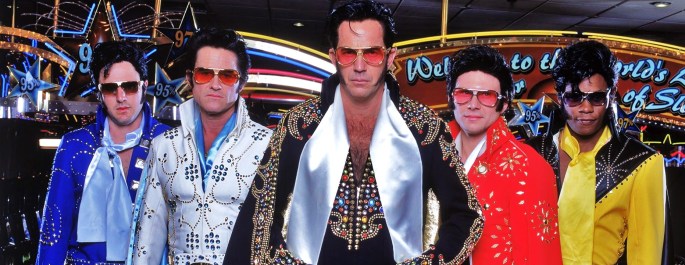
Now Spielberg himself doesn’t do commentaries, but a lot of directors do. Of course I have a list of films that to date, do not boast a commentary track which I wish, so badly, that they did. Near the top of that list are a pair of movies that stick out. One is John Milius’s Farewell to the King and the other is Demian Lichtenstein’s 3000 Miles to Graceland.

But now for something really cool.

At the close of 2016 I had the chance to chat with Demian, and what eventuated was quite extraordinary. I was working my way through my questions when, all of a sudden, Demian started to unload his fantastic tales from the production, and it just kept getting better. As I listened, I imagined Spielberg listening to Lean, receiving first-hand all of those astonishing insights, and here I was in a similar situation getting the good oil on the production of Graceland.

It has become a cult film with the passage of time, but there remains no chance of Demian ever being gifted the ability to go back in and retool his movie. Perhaps in some small way set certain things to right.

I was tired when we spoke, it was 3am here Down Under, but, by the time we were through, I was energized and so sat back and re-watched 3000 Miles to Graceland with fresh eyes. Demian’s stories swirled in my head. When we were talking, just when I thought it was over, he went on. I received scene-specific commentary and even insights into scenes that were written but never shot.

It was a genuine thrill, along with being a great and one of the most surprising interviews I’ve ever done.

3000 Miles to Graceland is out there waiting for you to watch it again or to discover it for the first time. It makes me proud as a fan to think that this interview may serve as the bonus material we never received. A director’s commentary of a splendidly intricate and playfully unique movie with great anecdotes, favorite scenes and even deleted scenes in the form of unrealized story elements.

So, for all you fans and even the first-timers, the journey of 3000 Miles back to Graceland begins here, for your listening pleasure.

51589485

FANDANGO – A REVIEW BY J.D. LAFRANCE

fandango1

Fandango (1985) is a celebration of being young. It’s a coming-of-age film that takes place during that nebulous time between graduating from college and when you are about enter the workforce and finally became an adult, supposedly leaving childish things behind. The film is much more than freewheeling road movie; it is also has its poignant moments as various characters face an uncertain future. Fandango marked the directorial debut of Texas filmmaker Kevin Reynolds and was also the first time he collaborated with actor Kevin Costner, a relationship that would continue over the years on other projects.

We meet the main characters, known collectively as the Groovers, in an Animal House-ish fraternity house in Austin, Texas, 1971. Gardner Barnes (Kevin Costner) and his buddies are graduating. One of their own, Kenneth Waggener (Sam Robards) is supposed to get married but he just found out that he’s been drafted into the army and will eventually be sent to Vietnam. In an attempt to prolong the inevitable, Gardner decides that the Groovers are going to go on one last road trip. Along for the ride is Phil Hicks (Judd Nelson), a square, perpetual stick-in-the-mud whose car they use, Dorman (Chuck Bush), large fellow who studied to become a minister, Lester Griffin (Brian Cesak), who ends up sleeping through the entire journey, and, of course, Waggener.

The opening title card for Fandango defines the film’s title, one of which describes it as “a foolish act” – an apt description for most of the first half of the film. Reynolds captures the Groovers’ ecstatic, joyous journey in a montage of the guys drinking, laughing, driving fast along the highway, and generally goofing off – all to the strains of “Saturday Night’s Alright for Fighting” by Elton John blasting away on the soundtrack. This eventually gives way to the sobering reality of Phil throwing up on the side of the road and an overheated Waggener dunking his head in a cooler of water. Phil is the group’s nagging moral conscience and reminds them that they have to report to boot camp in a few days. Gardner convinces him to extend their road trip a little longer so that they can go dig up Dom, a vintage bottle of champagne that they buried on the border of Texas and Mexico.

Fandango contains plenty of “foolish acts,” like when the boys are out of gas and they tie fence post cable to the bumper of the car. Then, Dorman lassos a passing train to hitch a ride. It doesn’t work, of course, and the front part of the car gets ripped off. This is only the first of several bits of damage that is inflicted on Phil’s car, much to his chagrin. They push the car to a gas station (the attendant is played by none other than Pepe Serna of Scarface and The Adventures of Buckaroo Banzai fame) and find themselves in the town where Giant (1956) was shot. Later that night, they actually camp out at the site where the famous house from the film stood but all that remains is a pathetic, skeletal frame.

While they wait for the car to get fixed, the Groovers hang out at a Sonic drive-in diner, mooching food off of unsuspecting people. This gets them noticed by two teenage girls (one of whom is played by Elizabeth Daily from Valley Girl and Pee-Wee’s Big Adventure fame) whom they charm for some food and a good time, all to the strains of “Spooky” by The Classics IV, which evokes those fun Saturday nights where all you do is goof off with your friends. The girls invite the guys to shoot off fireworks in a graveyard and everyone has loads of fun aiming them at each other. But this harmless lark gives way to a sobering dose of reality as Gardner and Waggener stumble across the grave of a young man who died over in Vietnam. They look back at the fireworks-induced chaos and it now looks a lot like a warzone, a smoky landscape complete with the image of a mini-mushroom cloud. Is this to be an ominous foreshadowing of what these guys are in for if report to boot camp and are sent to Vietnam?

Not surprisingly, Kevin Costner plays Gardner as a cocky ladies man. As he tells Waggener at one point, “I’ve never been serious about a woman in my life,” but through several flashbacks we know this not to be true. One of them reveals Gardner frolicking with an ex-girlfriend (Suzy Amis) to the strains of that wonderful Carole King song, “It’s Too Late.” I can take or leave Costner as an actor (although, I thought he was great in Bull Durham and A Perfect World) but he’s really good in Fandango. He plays Gardner with a mischievous glint in his eye and has the natural charisma to be the leader of the Groovers. His character isn’t just about having fun as he occasionally flashes back to the girl he once loved but that he let get away, as a dream sequence literally visualizes. Among the group, Gardner has the strongest sense of tradition. He is the driving force behind their quest to dig up Dom. He’s a restless spirit and has a hunger for the open road a la Jack Kerouac. Costner nails this free-spirited vibe so well.

Phil is a complainer and a constant wet blanket who is missing the point of the trip. As Gardner says at one point, “There’s nothing wrong with going nowhere. It’s a right of youth.” Phil just hurls insults at Gardner until Waggener has finally had enough and explodes, telling Phil exactly what he thinks of him. I’ve never been a huge Judd Nelson fan but he is excellent as an initially unlikable character, a “weenie” as Gardner calls him. Partway through the film, Gardner proposes that Phil take a sky diving lesson in order to prove that he’s not a weenie. This sequence was the short film that was the basis for Fandango. After Phil survives his lesson he is much more tolerable and loosens up considerably. Sam Robards is also quite good as Waggener and he, Nelson and Costner would all go on to bigger things, having worked steadily ever since this film.

The camaraderie among the Groovers is believable and fun to watch, especially the scene where they gleefully mess with Phil as he learns the basics of skydiving from Truman Sparks (Marvin J. McIntyre), a burn-out instructor-cum-hippie who looks like he’s done a little too much acid in the 1960s and never really recovered. The skydiving sequence in Fandango is shot-for-shot taken from Reynold’s University of Southern California thesis film “Proof” from 1980. He originally did a stint at Baylor Law School but was unhappy with the prospect of becoming a lawyer and wanted to go back to film school. He practiced law in the daytime and went to film school at night. After a year of doing this he realized that he had to make a choice.

Reynolds applied to USC film school, got accepted and quit his job. His goal was to have a screenplay that he could sell and a film he could show. He ended up selling his first script and got an agent because of it. He finished “Proof” and shortly afterward, Steven Spielberg’s people contacted him. He met with the famous filmmaker who liked “Proof” and two days later got a call from his assistant. Reynolds was told that Spielberg was making arrangements for him to do a feature film version of “Proof.” Once Reynolds got the OK he had to write a script around the action sequence in his short film. Costner had originally auditioned for “Proof” but didn’t get the part. He came back when Reynolds was casting for Fandango and within the first lines during the reading; he knew that Costner “was the guy.”

Fandango culminates with a wedding in a small, sleepy border town which sees Gardner and Phil perpetuating a pretty clever scam by managing to enlist the entire town to help out for free. This leads into the ceremony itself which reveals who Waggener’s bride-to-be is – the girl that Gardner has been thinking about it in the film’s flashbacks. The wedding ceremony is scored to Pat Methany and Lyle Mays’ “It’s For You,” creating a wistful mood that has a slight bittersweet tinge to it because of Gardner’s relationship to the bride. Then, the soundtrack swells with emotion when she and Costner dance the fandango, which takes us back to one of the definitions at the film’s opening title card. And who would’ve thought Costner could dance but he cuts an impressive rug that is shot in such a way that you know it’s really him doing it. This entire sequence is beautifully lit with strings of lights decorating the gazebo where Waggener and his bride are married. The final farewell of the Groovers is a melancholic one as Gardner takes off and Phil is left alone with Dorman telling him to “have a nice life.” The final shot is of Gardner watching from the outskirts of town as the lights go out and he raises a bottle for one last toast.

fandango2Reynolds is a native Texan and Fandango is a love letter, of sorts, to the state. At one point, Phil criticizes Texas and Gardner replies almost reverentially, “It’s wild, Philip. Always has been. Always will be.” As if to reinforce this point, Waggener laments calling off his wedding after coming across a plaque recognizing the McLean Massacre, a place where two Indian fighters were ambushed and killed in 1837. The film has all the energy and vitality of a first-time director who’s willing to go for it and has a burning desire to tell a story. However, the film’s joyful celebration of youth is tempered by a melancholic tone that surfaces periodically as the Groovers realize that their carefree college days are over and the sobering reality of army boot camp and Vietnam hangs over their heads like a dark storm cloud. As Reynolds said in a recent interview, Fandango is “the end of era for these four, and some realized it more than others.” He would graduate to bigger, more ambitious studio films like Robin Hood: Prince of Thieves (1991) and Waterworld (1995), but none of his subsequent work has had the personal touch of Fandango. It’s as if Reynolds lost track of where he came from and had his personality, which is apparent in every frame of his debut feature, removed by the impersonal machinations of Hollywood.

Waterworld: A Review by Nate Hill

image

I don’t get the hate for Waterworld, and I can’t wrap my head around the fact that it was was a ginormous flop at the box office. I suppose there has to be one incredibly underrated gem of an adventure film every generation (John Carter comes to mind), and I’m ok with such films becoming cult classics years later, or loved by a small, loyal faction of people, but I still can’t see how such a creative, entertaining piece of cinema was so ignored. The best way I can describe my impression of it is Mad Max set adrift at sea. And what a premise. Kevin Costner and team craft an earthy steam punk dystopia where nearly all of our planet has been covered in oceans, hundreds of years in the future. Costner plays a lone adventurer called the Mariner, a humanoid who has evolved to the point where he sports gills, and can breathe underwater. He’s on a quest to find dry land, and is hindered at every turn by a one eyed tyrannical warlord called Deacon (the one, the only Dennis Hopper), who is on a mad hunt for oil of any kind, laying waste to anything in his way. He runs his empire off of a giant, dilapidated freighter ship, and commands a gnarly army of scoundrels. If they made a post apocalyptic super villain mortal kombat, he would probably face off against Fury Road’s Immortan Joe. Costner is a dysfunctional beast who somewhat befriends a lost woman (Jeanne Tripplehorn) and her plucky daughter (Tina Majorino in what should have been a star making turn), venturing forth into the vast blue on a rickety raft, meeting all sorts of sea bound weirdos on their journey. Kim Coates shows up with a whoville hairdo and an indecipherable accent as a sunbaked pervert who’s probably been afloat for a decade. The film is pure adventure, and loves it’s target audience unconditionally, which begs me to question why the masses savagely bit the hand that graciously feeds them. No matter, it’s a winner regardless of how it was received, and has probably gained a following that they never thought they’d arrive with when they made it. The cast extends further with work from Costner regulars and newcomers alike, including Michael Jeter, Robert Joy, Jack Black, Robert Lasardo, Sean Whalen, Lee Arenberg and R.D. Call. No one who loves a good old adventure can turn this down, and I’m still pissed that my knowledge of its reputation held me back from watching it for so many years. Let that happen no more. Either you’re won over by an inventive, balls out adventure epic like this, or you’re not.

JFK – A REVIEW BY J.D. LAFRANCE

JFK5

The assassination of American President John F. Kennedy is a watershed event in American history and one that has provoked people to question their own beliefs and those of their government. Yet, for such a highly publicized affair there are still many uncertainties that surround the actual incident. Countless works of fiction and non-fiction have been created concerning the subject, but have done little in aiding our understanding of the assassination and the events surrounding it. Oliver Stone’s film, JFK (1991) depicts the events leading up to and after the assassination like a densely constructed puzzle complete with jump cuts and multiple perspectives. Stone’s film presents the assassination as a powerful event constructed by its conspirators to create confusion with its contradictory evidence, to then bury this evidence in the Warren Commission Report, which in turn manifests multiple interpretations of key figures like Lee Harvey Oswald. JFK offers a more structured examination of the conspiracy from one person’s point of view where everything fits together to reveal a larger, more frightening picture implicating the most powerful people in the United States government.

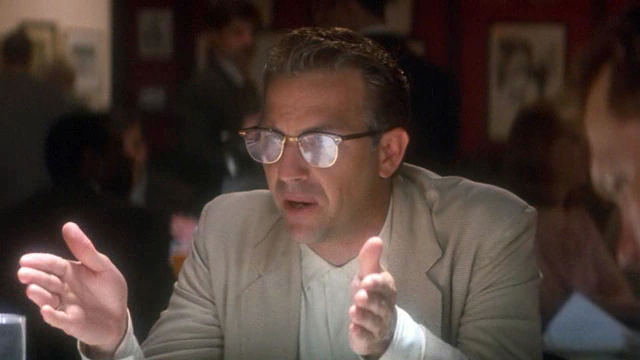
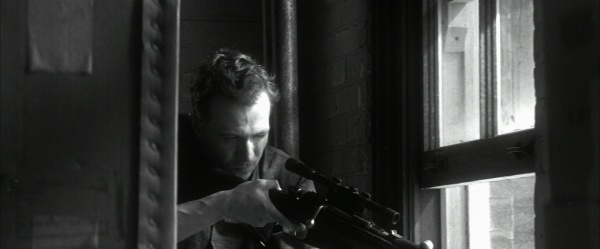
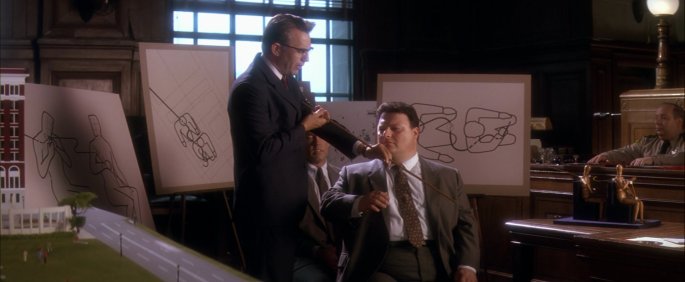
JFK presents the assassination of Kennedy as a powerful event constructed by its conspirators to create confusion with its contradictory evidence and then theorizes that the evidence was buried deep in the Warren Commission Report. Stone’s film filters a structured examination of two conspiracies, one to kill the President and one to cover it up, from one person’s point of view — Jim Garrison (Kevin Costner) — who then assembles all of the evidence at his disposal to reveal a larger, more frightening picture that implicates the most powerful people in the United States government. Stone saw his movie consisting of several separate films: Garrison in New Orleans against Clay Shaw (Tommy Lee Jones), Oswald’s (Gary Oldman) backstory, the recreation of Dealey Plaza, and the deep background in Washington, D.C.

While attending the Latin American Film Festival in Havana, Cuba, Stone met Sheridan Square Press publisher Ellen Ray on an elevator. She had published Jim Garrison’s book On the Trail of the Assassins. Ray had gone to New Orleans and worked with Garrison in 1967. She gave Stone a copy of Garrison’s book and told him to read it. He did and quickly bought the film rights with his own money. The Kennedy assassination had always had a profound effect on his life and eventually met Garrison, grilling him with a variety of questions for three hours. The man stood up to Stone’s questioning and then got up and left. His hubris impressed the director.

Stone was not interested in making a film about Garrison’s life but rather the story behind the conspiracy to kill Kennedy. To this end, he also bought the film rights to Crossfire: The Plot That Killed Kennedy by Jim Marrs. When Stone set out to write the screenplay, he asked Sklar to co-write it with him and distill the Garrison book, the Marrs book and all the research he and others conducted into a script that would resemble what he called “a great detective movie.” Stone told Sklar his vision of the movie: “I see the models as Z (1969) and Rashomon (1950), I see the event in Dealey Plaza taking place in the first reel, and again in the eighth reel, and again later, and each time we’re going to see it differently and with more illumination.”

Sklar worked on the Garrison side of the story while Stone added the Oswald story, the events at Dealey Plaza and the “Mr. X” character. To tell as much of the story as they could, Stone and Sklar used composite characters, a technique that would be criticized in the press, most notably the “Mr. X” character played by Donald Sutherland and who was a mix of several witnesses and retired Air Force colonel L. Fletcher Prouty, an adviser for the film.

600px-JFK_017

Stone ambitiously wanted to recreate the Kennedy assassination in Dealey Plaza and his producers had to pay the Dallas City Council a substantial amount of money to hire police to reroute traffic and close streets for three weeks. He only had ten days to shoot all of the footage. Getting permission to shoot in the Texas School Book Depository was more difficult. They had to pay $50,000 to put someone in the window that Lee Harvey Oswald was supposed to have shot Kennedy from. They were allowed to film in that location only between certain hours with only five people on the floor at one time: the camera crew, an actor, and Stone. Co-producer Clayton Townsend has said that the hardest part was getting the permission to restore the building to the way it looked back in 1963. It took five months of negotiation.

Filming was going smoothly until several attacks on the film and Stone began to surface in the mainstream media including the Chicago Tribune, published while the film was only in its first weeks of shooting. Five days later, the Washington Post ran a scathing article by national security correspondent George Lardner entitled, “On the Set: Dallas in Wonderland” that used the first draft of the JFK screenplay to blast it for “the absurdities and palpable untruths in Garrison’s book and Stone’s rendition of it.” The article pointed out that Garrison lost his case against Clay Shaw and claimed that he inflated his case by trying to use Shaw’s homosexual relationships to prove guilt by association. Other attacks in the media soon followed. However, the Lardner Post piece stung the most because he had stolen a copy of the script. Stone recalls, “He had the first draft, and I went through probably six or seven drafts.”

The film depicts the events leading up to and after the assassination as a densely constructed story complete with jump cuts, multiple perspectives, a variety of film stocks and the blending of actual archival footage with staged scenes dramatized by a stellar cast of actors. This blurring of reality and fiction by mixing real footage with staged footage makes it difficult to discern what really happened and what is merely speculation. Stone does this in order to create what he calls “a countermyth to the myth of the Warren Commission because a lot of the original facts were lost in a very shoddy investigation” and simulate the confusing quagmire of events as they are depicted in The Warren Commission Report. Stone creates different points of views or “layers” through the extensive use of flashbacks within flashbacks. Stone has said that he “wanted to the film on two or three levels — sound and picture would take us back, and we’d go from one flashback to another, and then that flashback would go inside another flashback . . . I wanted multiple layers because reading the Warren Commission Report is like drowning.” This technique conveys the notion of confusion and conflict within evidence.

Kevin Costner acts as the perfect mouthpiece for Stone’s theories. The auteur’s infamously forceful directorial approach to his actors pays off here as he reins in the actor’s usual tics and mannerisms. Stone was no dummy — he knew that by populating his film with many famous faces, he could make the potentially bitter pill that was his film, that much more palatable to the mainstream movie-going public. The rest of the cast is phenomenal. Gary Oldman’s delivers an eerily authentic portrayal of the enigmatic Lee Harvey Oswald. Tommy Lee Jones is note-perfect as the refined, self-confident businessman, Clay Shaw. Even minor roles are filled by such name actors as Vincent D’Onofrio, Kevin Bacon, Jack Lemmon, and Walter Matthau.

The film throws many characters at us and it is easier to keep track of them by identifying them with the famous person that portrays them. Stone was evidently inspired by the casting model of a documentary epic he had admired as a child: “Darryl Zanuck’s The Longest Day (1962) was one of my favorite films as a kid. It was realistic, but it had a lot of stars…the supporting cast provides a map of the American psyche: familiar, comfortable faces that walk you through a winding path in the dark woods.” Future biopics with sprawling casts, like The Insider (1999), and Good Night, and Good Luck (2005), and The Good Shepherd (2006) would use this same approach.

Seeing JFK now, one is reminded that first and foremost, it is a top notch thriller. There are so many fantastic scenes of sheer exposition that would normally come across as dry and boring but are transformed into riveting scenes in the hands of this talented cast. For example, the famous scene between Garrison and X (Sutherland) where the mysterious man lays out all the reasons why Kennedy was killed and how is not only a marvel of writing but also of acting as the veteran actor gets to deliver what is surely one of the best monologues ever committed to film.

capture91

JFK is an important film in the sense that it accurately portrays the assassination of Kennedy as a complex public event surrounded by chaos and confusion. It presents a main protagonist who exposes the conspiracy to be an intricately constructed coup d’état. Stone paints his canvas with broad brushstrokes and powerful images. JFK takes a larger, confrontational stance by boldly implicating the government in the conspiracy and the mainstream media in conspiring to cover it up. Stone is using the persuasive power of film to reach the largest number of people he can in order to wake them up and to reveal how they have been deceived by higher powers. There is no mistaking the importance of the assassination of Kennedy in American culture. Based on the excitement that surrounded Stone’s film, the American public is still greatly interested in the event with more and more people believing in a plot to kill Kennedy.

Mr. Brooks: A Review by Nate Hill

image

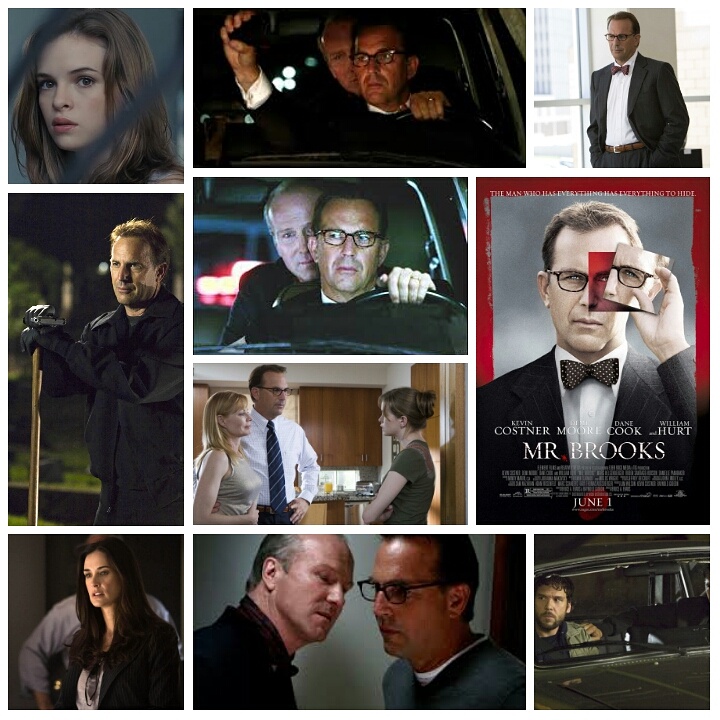
There are a few films Kevin Costner has done in which he has really been allowed and been willing to test the boundaries of what is usually expected from him in a role. 3,000 Miles To Graceland and Eastwood’s A Perfect World are fine examples. Perhaps the finest though is Mr. Brooks, a dark tale that showcases the actor in a terrifying turn and the last type of role you would picture for him on paper. Opposites are paramount in acting and cinema as a whole, and it’s that type of contrarian casting choice that can lead to a performer’s finest hours. In this case it’s certainly one of Kevin’s best outings, and casts him in a frightening new light, or should I say dark. Here he is Earl Brooks, husband, father, businessman and all round stand up guy. Except fpr the fact that he moonlights as a methodical and psychopathic serial killer. He sees it as an affliction, and is almost ashamed of it, whether by a tiny flicker of a soul he may have, or simply by the standards impressed onto society. He’s efficient, cold and hopelessly addicted to the act of murder. His alter ego, or ‘dark passenger’ as the scholars say, is a cynical persona called Marshall, brought to life by a scary William Hurt. “Why do you fight it, Earl?” he drawls in that committed, laconic snarl that only Hurt can do. There’s shades of his character from Cronenberg’s A History Of Violence here, affirming my belief that Hurt is a pure acting prodigy and masterful of both the light and the dark within his craft. Earl has a daughter too (Danielle Panabaker) who he has worrisome thoughts about, and a picture perfect wife (Marg Helgenberger). One can’t keep the turbulent nightlife of the serial killer a secret for one’s entire life though, and pretty soon people start to catch on. A nosy Nelly (Dane Cook) catches a whiff of Earl’s crimes and lives to wish he hadn’t, and a keen Detective (Demi Moore) begins to piece the puzzle together as well. Earl is as clever as he is murderous though, covering his work and tying off loose ends with gut churning gusto. Costner carries the film terrifically, a man who is at once both uncomfortable in his own skin yet fits it like a glove when the camera dutifully bears witness to his killings. He’s like a tiger who really can’t change his stripes but wants to shield them from the judgment of others, and of course his own persecution. The scenes of murder are skin crawling in their frank, fly-on-the-wall nature, no slasher cinematics or gimmicky set ups here, just the icy horror of a predator extinguishing human life to sate the beast, and the nightmarish inevitability of death. Those scenes paint Earl in a horrific light, but the film doesn’t try to convince us he’s a monster using any usual methods, it just presents to us this man, his acts and his life surrounding them, without discernable condoning or condemning. It’s cold, it’s clinical and it’s one of the best serial killer flicks out there.

Batman Vs Superman: Dawn Of Justice – A Review by Nate Hill

image

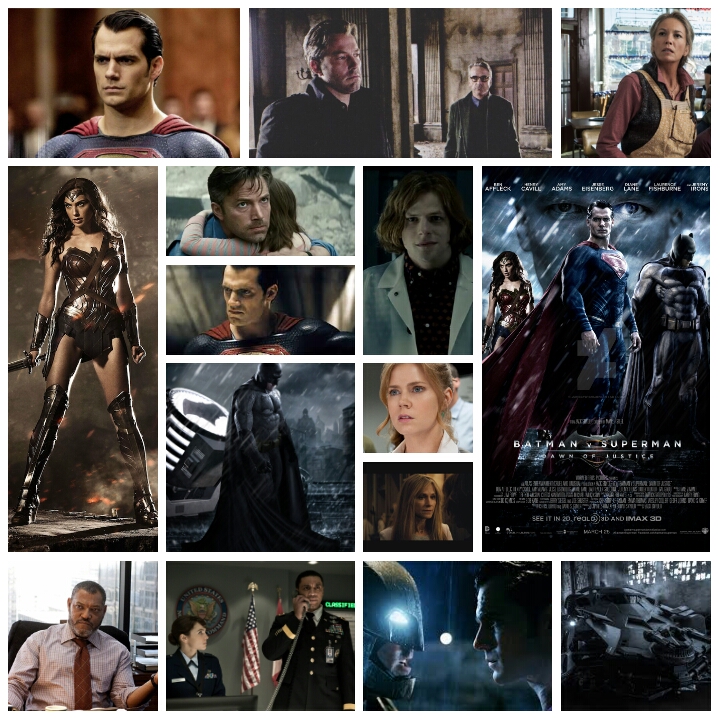
Batman Vs. Superman: Dawn Of Justice. Wow. Where to even start. What a symphony of scorched earth heroics, a two and a half hour maelstrom of thundering action, introspective gloom and very current vibes of apocalyptic dread. I’m not sure if I was watching an entirely different film from some of these bitter bottomed critics who are maiming it with inaccurately nasty reviews. Balls to them. Zach Snyder should be proud of this achievment, for in the face of both ruthless odds and rabid fans who would make any one of us piss down our legs at the thought of ‘getting it right’, he has mounted a titanic epic of a superhero flick, hitting all the right notes and fuelling both casual moviegoers and salivating super fans with a rekindled love for comic book films. A much welcomed grit and violent edge creeps into the proceedings here, a tone which Snyder has a passion for and is incredibly deft with. We begin with a visually arresting opening credit sequence, which Snyder previously perfected to hair raising brilliance in Watchmen, a ten minute opus set to Bob Dylan. Here he inter cuts shots of young Bruce Wayne, both discovering the prophetic swarm of bats and on the fateful night of his parents murder, a sequence done over a thousand times in film, but never quite with the inventive flair used here. We then arrive with adult Bruce (Ben Affleck) in Metropolis right as it’s being ripped to shreds by the Def Jam smackdown match of Superman (Henry Cavill) and Zod (Michael Shannon). There’s eerie shades of 9/11 as Bruce darts through the ashen rubble, attempting to save the employees in one of his towers. One senses the fear and rage in Wayne right off the bat (pun intended). He glowers in seething fury at the man of steel, primally threatened and haunted all over again by loved ones he couldn’t save a second time around. This film addresses the ludicrous amount of destruction that Superman wrought upon Metropolis in several ways. Political nerve endings are fried as Senate and State alike get hostile towards the god in the red cape. No one is more aggressive than Batman, though. This brings me to Affleck as Batman. Without a doubt my favourite cinematic incarnation of the caped crusader, and his debonair counterpart to date. Yes, even more so than Bale. Nolan’s The Dark Knight is still tops for me, but the  portrayal of Batman by Bale didn’t strike as harmonious a chord with me as Affleck. It just didn’t feel like pure Batman, it was real world Batman. Affleck feels much more rooted in the comics, and God damn it all if he isn’t the most savage, violent Bats to come our way, well… ever. I’ve always been bothered by the nagging fact that Batman refuses to kill. Even in in a beatdown he could easily inadvertently cause death, so why bother trying? Here, he doesn’t go out of his way to deliberatly kill, but he sure has no problem brutally breaking bones and stabbing his adversaries without an iota of faux-noble hesitation. That’s the kind of Batman I want to see. Fuming, fired up and full of rage demons that erupt into fantastic action scenes. One sequence involving a room full of thugs is just jaw dropping and probably my favourite sequence of the film, even over the titular smackdown with Superman. There’s an earthy, simplistic take to him as well, with a modest suit that gives nods to Frank Miller and even Batman: The Animated Series. He is by far the elemental force that the character should be, and the part of the film that I connected with most. I hope he gets his standalone film real soon. Henry Cavill has grace and intuition as Superman, and a surprisingly earthly aura as Clark Kent, in a fit about Batman’s vigilante tactics. He’s the outsider here, an orphaned deity truly trying to do his best in a world that often shuns him in fear. He was never my favourite superhero, or even on the list, but Cavill combined with Snyder make him a force to be reckoned with, and a hero I can get behind. The two eventually meet in a remarkably choreographed clash of the titans, a duel that really only lasts a few minutes and isn’t central theme, which raises questions in my head about the first part of that title. Their fight is composed of Batman’s hard hitting, blunt force physicality pitted against Superman’s fluid, elegent invincibility which is satisfyingly put to the test by the appearance of a certain green mineral we all know about. The James Cameron-esque suit Batman wears for the fight is a grinding wonder that looks like it weighs a metric ton and could level buildings alongside the man of steel. The combat feels urgent, from the gut and roars into action perfectly. Of course, that isn’t where the fireworks stop, but I ain’t sayin any more than that. Gal Gadot is truly wonderful as Wonder Woman, I also can’t wait for her solo outing, and wish she’d been in the film more. Her much talked about entrance is the definition of crowd pleasing, and will make you cheer in approval, which I did out loud. She’s  endlessly gorgeous, and has the toughness to go along with it, a great casting decision by anyone’s tally. Jesse Eisenberg wowed me as a young, jittery Lex Luthor, in what is probably the most clinically insane portrayal thus far. Forget bumbling Gene Hackman and hammy Kevin Spacey, this guy seals it for me. There’s a true madness to his Lex, which when given enough money and resources can have cataclysmic results. It’s a villain  to remember, and Eisenberg exudes palpable danger from every pore, his psychopathic sheen of logic barely shrouding the mania beneath. Jeremy Irons is a more restrained, jaded Alfred who is still unconditionally supportive of Wayne, but is reaching the end of his rope which is tethered to pure world weariness. He gets some of the only humerous bits of the film, albeit of dry, brittle variety. Amy Adams is reliably terrific, her eyes pools of perception that mirror the horror and spectacle of the events through the mind of a human, with every ounce of nerve and courage as those around her that have superpowers, or expensive toys. Diane Lane is weathered wisdom and maternal compassion as Martha Kent, nailing her scenes with the small town, kindhearted patience that a film this noisy deserves, tipping the scales to provide occasional serenity in the eye of the hurricane. Kevin Costner makes a brief appearance in one of the films numerous and often confusing dream sequences. He was a highlight in Man Of Steel, and brings the same baleful, gruff adoration here, in a wonderful but brief scene with Clark. Laurence Fishburne is another source of rare humour as the perpetually exasperated Perry, CEO of the Daily Planet. Aggravated and cheeky, he commands every frame he’s in and had me chuckling no end. Holly Hunter has forged a career of playing no nonsense hard asses, here a ballbreaking US Senator here who shares a moment of distilled intensity with Luthor proving that Superhero films can have some of the best written dialogue. Harry Lennix makes great use of said writing too as the steely Secretary Of Defense. Callan Mulvey and Scoot McNairy are memorable in supporting turns. Listen hard for Patrick Wilson and Carla Gugino, and look for a certain ocean dwelling dude in the briefest of moments. Jeffrey Dean Morgan also has a cameo that’s almost too good to be true. Hans Zimmer and Junkie XL, who was so top notch with Mad Max: Fury Road, combine efforts for a score that knocks it out of the park and several miles further. Batman has a soul rousing battle cry of an overture, with subtle shades of Zimmer’s work on the Nolan films, built upon to give us something truly unique and fitting for the character. Lex Luthor is accompanied by a fitful cacophony of strings that sound like the Arkham Asylum charity orchestra having a collectively unnerving seizure. My favourite riff though I think is for Wonder Woman, a deviously disarming jaunt that strays from the grandiose, baroque theme and feels wickedly subversive, getting you just so pumped for her character. Zimmer’s work on Interstellar made it my top score of 2014, because he leapt out of the box of his usual tricks and gave us something we’d never heard from him before. Here he shreds that box with ingenuity and creative output, a varied, explosive piece that assaults your ears splendidly. My one concern with the film was a dream sequence midway through concerning Batman, and anyone who’s seen the film knows what I’m talking about. I’m sure comic book fans have some point of reference or context regarding it, but the casual viewer doesn’t, and a little more explaining would have been nice. I will say though it showcases Batman in an entirely new light which took me off guard nicely. This is what a superhero movie should be, plain and simple. Big, bold, audacious, stirring and full of high flying action, dastardly villains, conflicted heroes clashing like the ocean tides and a sense of pure adventure. Forget what the critics are saying, this one comes up aces in all categories and is a perfectly wonderful start to the stories of a group of characters that I look forward to seeing in many a film to come. Especially Affleck’s Batman.

THE UNTOUCHABLES – A REVIEW BY J.D. LAFRANCE

UntouchablesConnery

Brian De Palma’s The Untouchables (1987) is a film that asks the burning question: is police brutality ever justified? It is when you’re dealing with the likes of Al Capone and Frank Nitti – gangsters that had no problem blowing up children and killing nebbish accountants to get what they wanted. The film doesn’t exactly adhere to historical fact opting instead to go with John Ford’s famous credo of printing the legend and in doing so raising the characters and their exploits to mythic status. De Palma’s adaptation of Eliot Ness’ 1957 memoir of the same name had all the makings of a powerhouse production destined for greatness. It featured a screenplay written by legendary playwright David Mamet (Glengarry Glen Ross), expert cinematographer Stephen H. Burum (Rumble Fish) was behind the camera, master composer Ennio Morricone (The Good, the Bad & the Ugly) was scoring the film, and Robert De Niro and Sean Connery were signed on to play larger-than-life characters. The result was an exciting, action-packed epic that helped revitalize De Palma’s struggling career (after the critical and commercial failure of Wise Guys) and earned Connery his first Academy Award.

It is 1930 and gangster Al Capone (Robert De Niro) controls most of the illegal business in Chicago with a ruthless, iron fist. After a ten-year old girl is killed in a gang-related incident, Federal Treasury Agent Eliot Ness (Kevin Costner) is brought in to clean up the city. His first attempt is an embarrassing failure so he tries a different approach. He decides to form his own task force of three men to help him take down Capone and his empire. He picks a veteran beat cop named Malone (Sean Connery), who knows the city and becomes Ness’ mentor. He also selects Stone (Andy Garcia), a cop fresh out of the academy and ace shot with a pistol. Rounding out the group is Wallace (Charles Martin Smith), a bookish FBI accountant who figures out a way to nail Capone. Together, they form an incorruptible group determined to bring Capone to justice.

De Palma and Mamet make it clear right from the get-go that The Untouchables isn’t going to be some half-assed, sanitized gangster film as they proceed to have Frank Nitti (Billy Drago) blow up a bar with a little girl in it. This shocking sequence, juxtaposed with Capone lying about not using violence to enforce his will, sets an all-bets-are-off tone as we get an idea of just how brutal life is in Chicago and how far Capone is willing to go to make a point. This is then contrasted with Eliot Ness’ blandy-McPlainWrap home life with a loving and dutiful wife (Patricia Clarkson) and cute-as-a-button child. We see just how far removed from Chicago Ness’ home life is and what a rude wake-up call he will get when he starts working in the city.

Kevin Costner is wisely cast as the stiff, idealistic Ness. He’s the least interesting character and plays the role straight, trying not to go the obvious heroic route. His all-American looks and Gary Cooper-esque style are ideally suited for the role of the last honest man in the corrupt town (which Oliver Stone would also utilize in JFK). His Ness is as straight an arrow as they come, which makes the character’s arc over the course of the film an interesting one. He goes from staunch upholder of the law to someone who has adopted Malone’s by-any-means-necessary philosophy.

This allows Connery to rightfully shine as the aging cop torn between riding out his remaining time and retire alive or making a difference with Ness and his crew. Unlike Ness, Malone has grown up on and worked the mean streets of Chicago. He understands that they are at war with Capone and must do whatever it takes to bust him and break up his empire because he will be just as ruthless. Upon the first meeting, Malone imparts a valuable lesson to Ness: “Make sure when you shift is over you go home alive.” It seems obvious but is an important one to know. It is also the reason why Malone initially turns down Ness’ offer to form the Untouchables. Connery shows what a once great actor can do with the right material and this results in a truly inspired performance — arguably the veteran actor’s last great one.

Rounding out his trilogy of memorable cameos in the 1980s (including Brazil and Angel Heart), Robert De Niro put on the pounds again (which he first and most famously did for Raging Bull) and transformed himself into Al Capone. Like Tony Montana in De Palma’s Scarface (1983), Capone is surrounded by luxury and opulence but is still just a cruel thug at heart. In the few scenes that he has, De Niro makes them count and it is a thrill to hear a great actor say Mamet’s tough-guy dialogue (listen to how he says the word, “enthusiasms,” in a scene). The actor clearly relishes the role and treats the dialogue like he’s enjoying a rich meal and each word is a juicy morsel that he savors.

The supporting roles feature some fantastic actors, chief among them Billy Drago who exudes just the right amount of oily menace as Nitti. For example, there is a scene where he cordially threatens Ness and his family. On the surface there is the appearance of civility but we know what his true intentions are and it doesn’t take Ness much time to figure it out but by then Nitti is speeding off in his car. He’s made his point. Drago doesn’t get many lines or a lot of screen time but makes the most of what he’s given, making a fine addition to De Palma’s roster of cinematic sociopaths.

Speaking of Mamet’s dialogue, it crackles and pops with intensity and provides many of the film’s classic scenes, perhaps none more memorable than Malone’s famous speech to Ness where he tells him how to get Capone. “He pulls a knife, you pull a gun. He sends one of yours to the hospital, you send one of his to the morgue. That’s the Chicago way.” Sean Connery delivers this speech with the passion and conviction that rightfully earned him an Oscar. The other scene of classic Mamet dialogue is Capone’s infamous dinner table monologue where he talks about teamwork before braining a hapless flunky with a baseball bat for not being a part of the “team.”

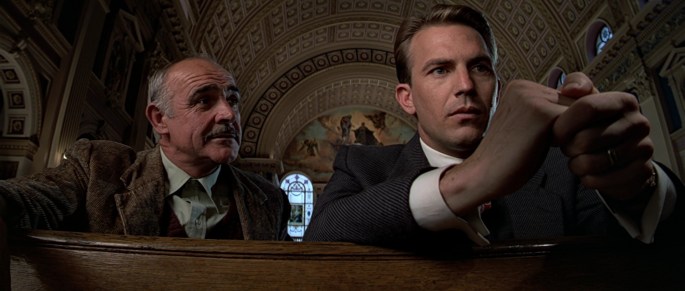
Brian De Palma’s stylish direction is perfect for this epic story: long, uninterrupted takes, slow motion and excellent compositions within the widescreen format. He may well be one of the greatest practioners of this aspect ratio. Just look at a simple set-up in the scene where Malone takes Ness to a church and lays it all out for how they’re going to get Capone. Both men take up most of the foreground occupying either side of the screen. The camera is low looking up at them so that we also see part of the beautifully ornate church ceiling. It is this kind of shot that would be totally destroyed when shown pan and scanned on television. Then there is the much-celebrated train station shoot-out, which was a shameless homage to a famous sequence in the legendary film, Battleship Potemkin (1925). It’s a bravura sequence that is beautifully orchestrated by De Palma as he builds the tension leading up to the shoot-up for what seems like an unbearable eternity. The entire sequence is a brilliant lesson in editing and camerawork.

Although, De Palma does go a little over-the-top (even for him) with the Ness-Nitti show down at the end, which features the director’s obligatory homage to Alfred Hitchcock. There is also a silly bit of business where we see two old cops duking it in a rainy alleyway as Connery and veteran character actor Richard Bradford laughably beat each other up in a scene that I could’ve done without. Also, Malone’s prolonged death scene drags on for what feels like an eternity but these are really minor flaws in an otherwise unimpeachable stone cold classic as De Palma does his best to distract us from these histrionics with giallo lighting in the Connery fight scene and suspenseful point-of-view steadicam work in the death scene.

In 1984, producer Art Linson met with Paramount Studio’s president Ned Tanen about adapting The Untouchables television series into a film. Tanen liked the idea but Linson did not want to do a sequel, a remake or a parody. He wanted “to create a big-scale movie about mythical American heroes.” Linson needed a screenwriter and thought of David Mamet, fresh from just having won a Pulitzer Prize for his Broadway play Glengarry Glen Ross. He met with Mamet and the writer agreed to do the film. The screenwriter was a native of Chicago and something of a gangster history buff. He envisioned a story about “the old gunfighter and the young gunfighter … It occurred to me, what happens if this young innocent, who’s charged with defending the law but only understands that in an abstract way, meets an old disenchanted veteran, the caretaker of the law, soured at the end of his career because of the corruption in the city?”

Mamet asked Paramount to show him two episodes of the original series and he liked them but felt that “there was nothing I could use in the movie.” Mamet wrote an original story after realizing that the real events – Capone being caught for tax evasion – were not that dramatic. Mamet created the character of Malone and gave Ness a family (he did not have one in real life). After eight months, Brian De Palma was approached to direct by Linson after Mamet wrote the third draft of the script. The director liked that the script was more about the characters and did not see it as a gangster film but more like The Magnificent Seven (1960). He felt that the project was “different from anything I’ve done in the past, because it’s a traditional Americana picture, like a John Ford picture.” He, Linson and Mamet worked together on it with De Palma emphasizing the Capone character more. According to De Palma, the film “reflects upon the incredible pressure we place on our police by not equipping them to adequately fight criminals. Why are we surprised that some of them go overboard?”

For the role of Eliot Ness, Linson and De Palma initially considered William Hurt and Harrison Ford, but, according to Linson, they wanted “someone with the right combination of naiveté, earnestness and strength.” They ended up casting Kevin Costner who wanted to do the film because it was so different from the television series and Ness “has to ask for help. It’s the more modern notion that a smart man takes a step back sometimes – that to be a hero you don’t have to be Rambo.” For Jimmy Malone, the filmmakers wanted Sean Connery but assumed that he would not want to play a supporting role and take a pay cut. However, Connery was drawn to the project because of Mamet’s script and the chance to work with Robert De Niro. He ended up signing on for a percentage of the profits. For the role of Al Capone, De Palma wanted De Niro. Paramount initially balked at the actor’s asking price of $1.5 million but relented.

The principal actors rehearsed together for a full week and Connery tried to remain in character even when the cast was relaxing. By the time principal photography began, whole scenes had been blocked and unworkable ideas rejected. A rapport between the actors playing the Untouchables had also been established, which definitely shows in the film. In preparation for the film, De Niro put on 30 pounds between the end of his Broadway run in Cuba and His Teddy Bear and his days of filming scheduled at the end of the 70-day production schedule. He analyzed old Movietone newsreels in order to get Capone’s voice, movements and mannerisms. On an interesting note, the famous scene in the church between Ness and Malone as originally written, took place on a street, but Connery suggested it take place in a church – the only place left in the city where they could speak freely.

Principal photography started in mid-August 1986 and utilized over 25 separate locations in Chicago with the border raid sequence shot on the Old Hardy Bridge spanning the Missouri River because of its period look. The train station shoot-out cost $200,000 to light because extra light was needed to shoot the sequence in slow motion. It took six days to shoot the scene, which cost an additional $100,000. Not surprisingly, staging this sequence like the one in Battleship Potemkin was De Palma’s idea. The budget escalated from $17 million to $24 million thanks to the cost of production designer Patrizia von Brandenstein transforming an entire block of LaSalle Street in Chicago into the 1930s complete with 125 costumed extras and 60 period cars.

The production design for The Untouchables is fantastic, especially the opulence of Capone’s headquarters, with Morricone’s score resembling a 1930s riff on the music from De Palma’s Scarface. This film is one of those rare big-budget, star-studded blockbusters that actually works. All of the right elements came together at just the right time and place and resulted in an incredibly entertaining motion picture. The Untouchables shows what a master filmmaker like De Palma can do with a director-for-hire paycheck movie. He may not be making a personal statement with this film but he still gives it his all in terms of style and virtuoso camerawork. This film certainly set a high standard for period gangster films, casting a long shadow over future endeavors like Michael Mann’s Public Enemies (2009) and the HBO T.V. series Boardwalk Empire.
A PERFECT WORLD – A FILM REVIEW BY J.D. LAFRANCE

apw059In 1993, Clint Eastwood was enjoying a resurgence in popularity. His revisionist western Unforgiven (1992) won three Academy Awards and he received critical and commercial acclaim for his performance in the action-thriller, In the Line of Fire (1993). When he was approached with the screenplay for A Perfect World (1993), he was still making Line of Fire and doing promotion for the Academy Award nominations for Unforgiven. As a result, Eastwood anticipated only directing A Perfect World. However, when Kevin Costner came on board, he felt that Eastwood would be perfect for a smaller role in the film. Eastwood agreed because it wouldn’t require him to spend a lot of time in front of the camera.

A Perfect World is essentially a road movie set in Texas, 1963, three weeks before the John F. Kennedy assassination (an event that subtly hangs over the film with ominous foreshadowing) that recalls a simpler, even more innocent time. Thematically there is much more going on as the film wrestles with father/son relationships, child abuse and religion. The film begins with two convicts making a daring escape from prison only to take refuge in the neighboring suburbs. Terry Pugh (Keith Szarabajka) is the more amoral one as he wants to kill the driver of the vehicle they commandeer to leave the prison. He then later tries to rape a woman whose house he breaks into. The other convict, Butch Hayes (Kevin Costner), steps in before things go too far with Pugh and the woman. Butch even convinces her little boy, Phillip (T.J. Lowther), to give him the handgun that was dropped during the ensuing scuffle.

This is a crucial moment because it establishes early on the instant bond between Butch and Phillip. Despite the circumstances, there is something about Butch that Phillip intrinsically trusts. What this is will become more apparent later on in the film. When a neighbor intervenes unexpectedly, Butch and Pugh kidnap Phillip and take off in a stolen car. Texas Ranger Red Garnett (Clint Eastwood) is called in to track down and bring in the fugitives. However, the Governor (Dennis Letts) assigns him a criminologist by the name of Sally Gerber (Laura Dern). He immediately resents her intellectual approach to the situation as opposed to her being a woman, which would have been the norm at the time. He tells her, “This is not a penal escape situation, this happens to be a manhunt. And no talking around in circles is gonna fix all that.” Eastwood immediately establishes an antagonistic relationship between Red and Sally, which parallels the antagonistic relationship between Butch and Pugh. In no time at all, both conflicts will be resolved – one amicably, the other violently.

Like many of Eastwood’s characters, Red works on instinct and common sense. He resents authority figures and bureaucracy. He likes to be left alone and do things his own way. He sees Sally as an annoyance and a possible obstacle in his path. However, she clears the air pretty quickly, letting him know that she’s no pushover when she tells him, “But the one thing I won’t do is be your straight man so you can play hero to a bunch of morons who think you’re some kind of hillbilly Sherlock Holmes.” These lines deflate Eastwood’s traditional stoic lawman façade and Red even offers a compromise of sorts. He encourages Sally to speak up and even though he might not agree with her theories, he’s willing to listen. A Perfect World proceeds to cut back and forth between Butch and Phillip’s developing friendship and the partnership between Red and Sally with the two storylines dovetailing finally at the film’s conclusion.

One of the hallmarks of Eastwood’s directorial efforts is an emphasis on character and the relationships that are created between them. This film is no different with John Lee Hancock’s superbly written screenplay. He would go on to adapt Midnight in the Garden of Good and Evil for the film of the same name that Eastwood also directed in 1997. Sadly, they haven’t teamed up since but these two efforts are proof that they were a good match for each other. Hancock’s screenplay is filled with clever dialogue, like when Butch tells Phillip his theory about how a car is a time machine. Everything behind them is the past, everything in front is the future and inside the car is the present. “We’re time traveling through Texas,” Butch proudly proclaims. And in a way that’s what the film is doing – taking us back to a time that doesn’t exist anymore, to a time before President Kennedy was killed and when people were more hopeful and optimistic. His assassination (and that of other key figures of the 1960s) changed all that and we watch these events transpiring with the knowledge of how radically history will change in a few short months.

Hancock’s screenplay should also be noted for how well it develops the relationship between Butch and Phillip. Early on, Butch puts his trust in the boy by leaving him and Pugh in the car with the gun while he goes into a store for supplies. Pugh is able to get the drop on Phillip and take the gun away from him only to find out that there are no bullets in it. Butch assumed that this would happen and did not want to see Phillip get hurt. He may be a convict but he is not as heartless as Pugh. In turn, Phillip trusts Butch and stays with him even when he has the option, on a couple of occasions, to escape. Butch makes Phillip feel important and needed. Once they are on the road, having ditched Pugh, Butch refers to the boy as the navigator of the car. Later on, he asks Phillip to scout a car that he is interested in stealing. Butch doesn’t make Phillip feel like a passive observer but encourages him to become involved in their adventures.

Another significant factor in their friendship is Phillip’s lack of a father figure – something that Butch can also relate to and this provides common ground between them. Butch also speaks honestly to the boy. In one scene, when Phillip says that his mother told him his father would return, Butch replies that she lied and that he is never coming back. He doesn’t come out and say it but we sense that Butch knows this from his own personal experience. He also broadens the boy’s horizons by allowing him to experience things that his Jehovah’s Witness practicing mother would never condone, like drinking soda or wearing a Halloween costume and going trick or treating.

The relationship between these two characters works so well not just because of the excellent script but also because of the strong performances from Costner and T.J. Lowther. On the surface, Butch seems like one of Costner’s cocky, cool characters that he is often known for (i.e. Fandango, Silverado or Bull Durham), yet underneath lurks a dark, dangerous streak that surfaces when he sees a child being abused (the sure sign that Butch was probably abused when he was a child as well). Eastwood never lets us forget that Butch is a criminal. Costner is able to balance this element of danger with his trademark charm, like when he helps Pugh differentiate between a fact and a threat in a scene that is slightly threatening because violence is involved but is also funny as well because of the absurd tone. If Costner had any doubts about his character going into this film, Eastwood assured him that movie stars like Humphrey Bogart and James Cagney weren’t afraid to play convicts and “have a bad side,” the director said, “and I had Kevin play a much harder edge than he has played.”

Lowther matches Costner’s performance with his superb take on a shy, young boy who develops a strong bond with his captor. He has such an expressive face, which he uses to great effect during emotional scenes, like the internal conflict that becomes apparent when Phillip is given the chance to escape or stay with Butch. He has been cut off from everything and everyone he knows. He has little choice but to stay with the convict. Lowther doesn’t have too much dialogue but he is able to convey so much with a look and with his expressive eyes. He is more than capable of holding his own with Costner and their scenes together are well-played as we see their friendship develop over time. Eastwood was never interested in playing the sympathy angle with this friendship. He said, “You can’t have him treat the kid as if he’s paternal. I didn’t want it to come off like he’s cuddling the kid.” Above all, the director did not want the boy to “become precious. I wanted an un-Disneyesque kid.”

The script also provides motivation for Red’s personal interest in this case. We learn that the lawman put Butch in juvenile hall when he was young in an attempt to save him from his abusive father but it turned him into a career criminal. Red even paid off a judge so that Butch would stay in longer and so he feels guilty and responsible for what happened to him. Even though he never comes out and says it, one feels that Red wants to be the person to find Butch and try set things right. This backstory also explains the convict’s hatred for any kind of child abuse (Pugh hitting Phillip or a mother physically scolding her two children) and this manifests itself in a particularly strong way towards the end of the film when he and Phillip take refuge in a poor family’s house in what is surely the darkest scene in the film. After witnessing the father repeatedly abusing his little boy, Butch hits and threatens the father, his own rage threatening to boil over. A scene that started off warm and inviting turns into one that is uncomfortable and filled with tension as Phillip sees just how dangerous Butch can be. He ties up the entire family and we see how this affects Phillip as he observes the fear in the eyes of the mother and her child as Butch threatens the father repeatedly.

Phillip stops Butch before anything fatal happens to the family but the question lingers, was he going to kill them or just tie them up so that they couldn’t get away? Regardless, Phillip shoots Butch and runs away, setting the stage for the film’s climactic showdown between Red and Butch. Even here, Eastwood defies our expectations by drawing out the stand-off. The relationship between Butch and the boy continue to play out as he apologizes for shooting him. They have one last emotional conversation and because we have gotten to know these characters, we care about what happens to them. Their final moments are very touching, even moving. Costner and Eastwood finally have a scene together and this is what we’ve been waiting for the entire film. Not much is said between them and this is because we already know their motivations, Eastwood has been building to this moment. Visually, A Perfect World begins and ends the same with a slow motion shot of Butch lying in a field with money floating around him in the wind but by the film’s conclusion we know how and why he got there.

These sequences feel like something out of a dream and coupled with the leisurely pace probably didn’t endear it to mainstream audiences who were expecting another crowd-pleasing popcorn movie like In the Line of Fire. A Perfect World is closer to Unforgiven thematically as both films explore how the sins of the past affect the present with Eastwood playing tortured characters that try to fix old mistakes that had life-altering consequences but end up resolving things violently. In the case of Unforgiven, Eastwood’s character takes an active part in this resolution but with A Perfect World events spiral out of his control. This film is one of his most underrated efforts to date with its almost lyrical approach making it ripe for rediscovery by another generation of filmgoers receptive to an Eastwood film with complex relationships and a tragic conclusion reminiscent of more recent efforts like Mystic River (2003) and Million Dollar Baby (2004).