Shanghai Noon: A Review by Nate Hill 

I forgot how much goddamn fun Shanghai Noon is. It’s pretty much the quintessential east meets west buddy flick (sorry Rush Hour, love you too bbz), and upon rewatching it I realized that it’s every bit as awesome, and more so, than I remember as a kid. You take Jackie Chan, a stoic, robotic Chinese fighting machine with the sense of humour god gave a sock, and pair him with Owen Wilson, a wishy washy surfer dude of a cowboy who can’t take one second out of the day to stop talking or cracking jokes, and you’ve got gold. Of course, they need a film to run about in that’s just as solid as they’re team up, and that’s just what we get. This is a bawdy, unapologetic roll in the hay, a genre bender that tosses the American western, the buddy cop flick and the Kung Fu picture into a big cauldron, fires a few bullets in and gives it a big old stir. It’s ridiculously fun for its entire duration, an achievement which the sequel just couldn’t keep up with. Chan is Chon Wang (say it fast), a Chinese imperial guard on the trail of runaway Princess Pei Pei (Lucy Liu), who has runoff to America.  No sooner does he set foot on Yankee soil, he’s bumped into peace pipe smoking Natives, and clashed with a band of train robbers led by Roy O Bannon (Owen Wilson), a fast talking soldier of fortune who doesn’t seem to have much skill besides yapping his way out of a situation. The two are thrown into a mad dash across then west, Chon looking for the princess, and Roy after the missing gold from the train. It’s what movies were made to be, a pure rush of gunfighting and chop socky, kick ass action sequences, all given the boost of Chan’s insane talents. He’s like a rabid squirrel monkey, and Wilson a drunk sloth, constantly mismatched yet always coming out on top, like the best comic duos always do. They’re faced with taking dpwn a few baddies, including Walton Goggins as the dumbest outlaw this side of the Rockies, and a terrifying Xander Berkeley as a corrupt, homicidal marshal.  The core of it rests on Chan and Wilson to entertain us though, and even in the down time between action, their energy is infectious, especially in a manic drinking game that just can’t be described in writing. Like I said, the sequel, Shanghai Knights, just doesn’t capture he magic quite like this one does, and seems to fall flat. You can’t go wrong with this original outing though, and it just gets better with age. 
Bang: A review By Nate Hill

  
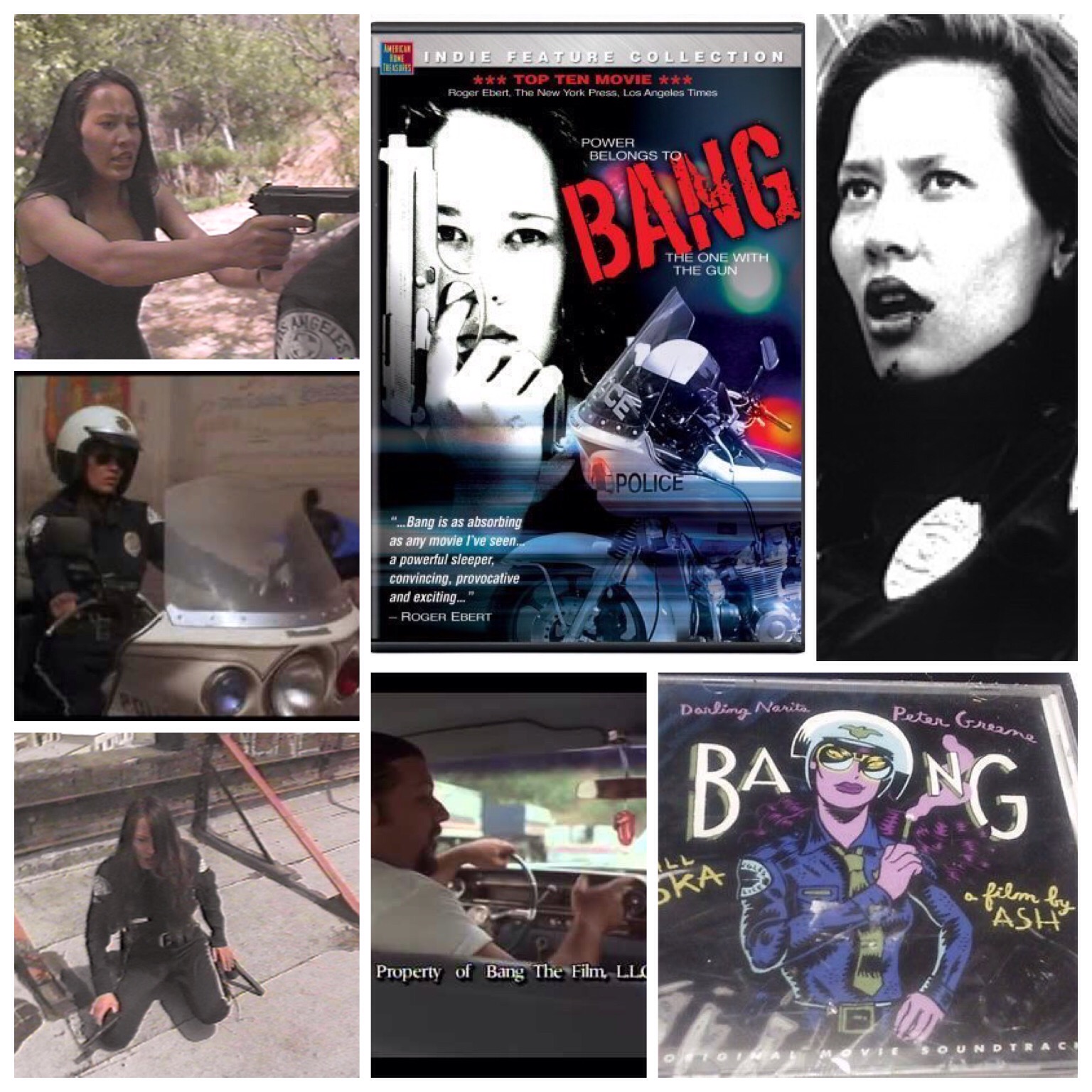
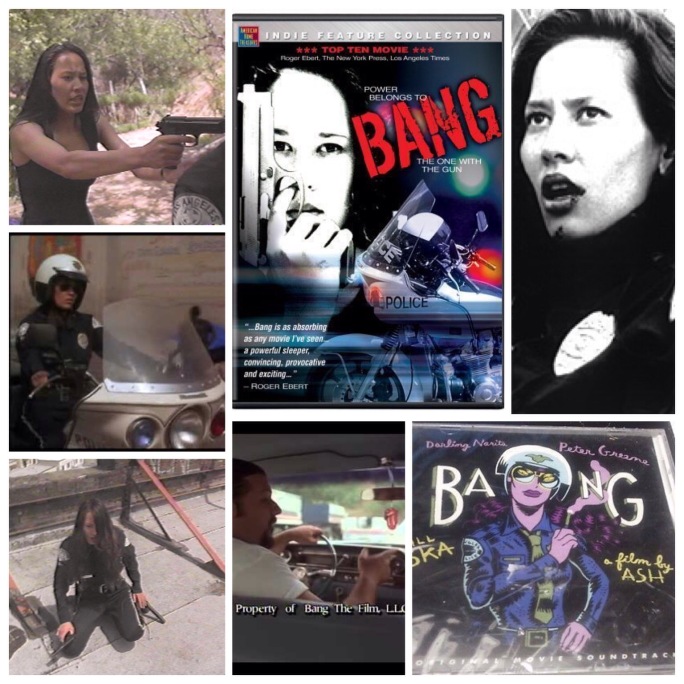
Bang, a film by Ash. It’s a tough one to find, but it’s a scrappy little treasure trove of a flick. It’s a guerrilla film in the sense that the filmmakers had no permits, schedule, a puny budget and a barebones script which is mostly hijacked by wicked improv thanks to the cast. This seat of the pants storytelling technique doesn’t exactly ensure a wide distribution of any efforts in marketing, but they managed to pull of one of the most galvanizing, unpredictable and emotional films of the 1990’s, as far as I’m concerned. On a bright sunny morning in Beverly Hills, a young Asian American actress (Darling Narita in an arresting, pulverizing debut performance) heads to a make it or break audition with a hotshot Hollywood producer (David Alan Graf), who turns out to be an outright scumbag rapist, leaving her distraught and afraid. Her only friend seems to be Adam (Peter Greene), a ra,bun riots and slightly unstable homeless man who valiantly defends her by trashing every garbage can on the block, handling the arrival of a motorcycle cop (Michael Newland) who chases our heroine down, and attempts to persuade her into sucking him off as an exit to vandalism charges. Her fuse reaches its end and all of a sudden she overpowers him, take his gun and clothes and assumes much feared mantle of the LAPD. From there on in its a surreal odyssey of crime, mistaken identity, personal awakening and a riveting exploration of what makes a person powerful, what it takes for a woman to gain respect in a cutthroat city where misogyny runs rampant and unchecked, and ultimately how a downtrodden individual can regain their footing through the most traumatizing of encounters. It’s like baptism by fire, only the fire comes from the end of the police issue handgun she never wanted, and the baptism from the death it’s deals out in the extreme circumstances she finds herself in because of what the uniform, the symbol, represents. Narita is a startling wonder, attacking each scene with renewed intuition and never missing a beat. Greene is a rare revelation; he almost always plays nasty psychos, and here is given a shot at the eccentric loony toons style character that would usually be given to to Jim Carrey or Robin Williams. He shows what a talent he is as everyone’s favourite livable bum, displaying a gift for improv and off the cuff performing. Narita and him have an unforced friendship that blossoms early, ebbing and flowing as both find a modicum of solace within each other’s company that is periodically broken and reunited. Watch for Lucy Liu as a reprehensible young hooker as well. Ebert sung this ones praises when it came out.. No one heard. I imagine because of its extremely indie nature. It’s worth seeking out for the important message it brands upon the viewer, it’s frank and very candid approach, and it’s rabbit hole glance at one woman in trouble, navigating a zone out of her depth in an unchosen guise. One of the best films of the 90’s.

CITY OF INDUSTRY – A Review by Frank Mengarelli

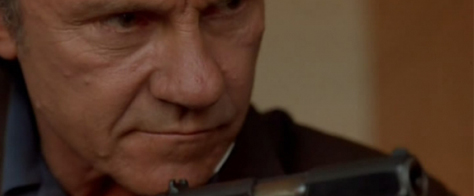
CITY OF INDUSTRY is that seedy noir where men treat their own gunshot wounds with whisky and cigarettes in a rundown bathroom of a motel, talk in short and blunt alpha male code, and live by a code of honor and revenge. The film has a fantastic cast led by Harvey Keitel giving his archetypal tough guy performance. Supporting Keitel is Timothy Hutton, Famke Janssen, Lucy Liu, Michael Jai White, Stephen Dorff, and Elliot Gould.

City of Industry Keitel.jpg

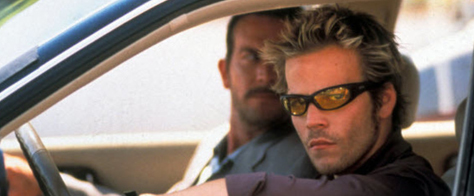
The film’s premise is the Richard Stark esque caper/revenge story of four men robbing a jewelry store, and then one of them (Dorff) kills off two (including Keitel’s younger brother played by Hutton) and then Harvey Keitel spends the rest of the film tracking him down and killing anyone in his way.

City of Industry Hutton.jpg

The film thrives on its minimalist approach. It knows exactly what it is, and it does not try to be anything more. Keitel commands the screen with his scowls and his pistol whipping anyone who stands between him and Dorff. Along the way, Keitel befriends the widow (the always great Janssen) of one of his slain crew members, and of course finds solace and redemption in helping her while tracking Dorff.

City of Industry Dorff.jpg

The film is what it is. For those who enjoy the heavy B movie revenge genre, this film was made for you. Keitel’s stoic performance is solid as ever, Dorff and his blonde highlights is sleazy as ever, and Elliot Gould makes a brief yet groovy turn as a sweaty and smooth crime boss. CITY OF INDUSTRY is one of those gems that stand out among the best of the 1990’s straight to VHS crime films.