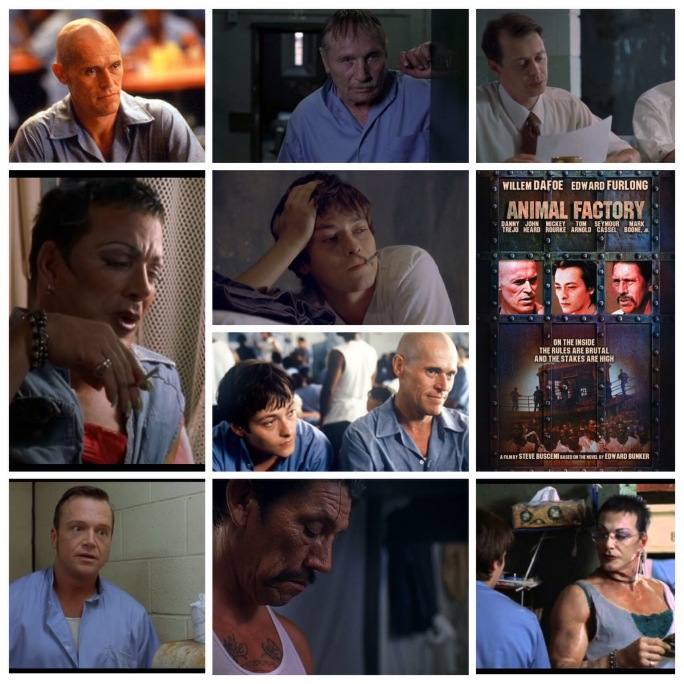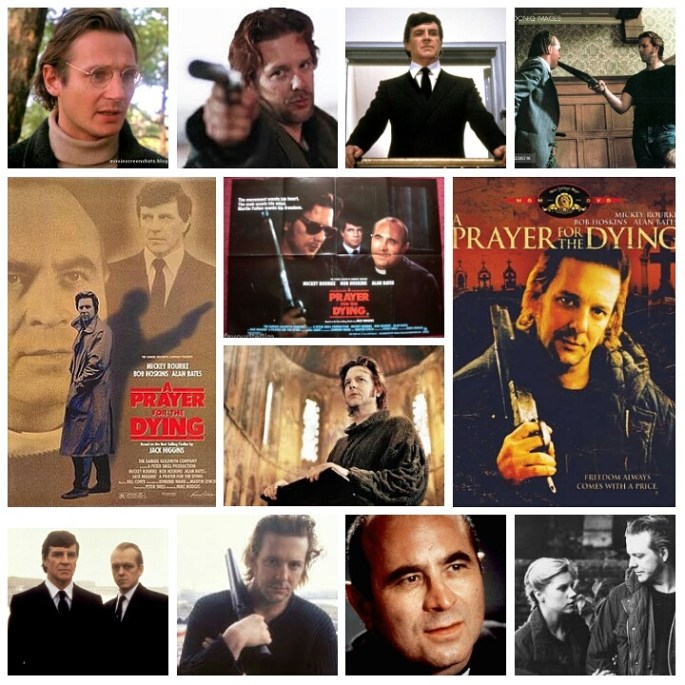
Animal Factory is a prison set film directed by actor Steve Buscemi and based on a novel and subsequent screenplay by Edward Bunker, a real life ex convict, who played Mr. Brown in Reservoir Dogs. If that sounds like an irresistible team up to make this type of thing work, you’re thinking right. And I haven’t even mentioned the epic cast yet. It’s a scrappy little film that almost takes stage play form, as we watch a plethora of raggedy and very diverse inmates navigate the difficult, tragic and often touching life of incarceration. Edward Furlong (before he ballooned out) plays a young man barely out of his teens, locked away for marijuana possession, essentially a victim of the extremely harsh system they got down there in ‘Murica. He’s a sitting duck on the inside, but receives kindness and mentorship from veteran con Earl Copen (Willem Dafoe, excellent). It’s all done in an almost Robert Altman style way; characters jump in and out, events trundle by in centrifugal motion with little regard for one solid narrative, instead choosing to arbitrarily shift focus from prisoner to prisoner, whilst periodically checking back in on Furlong, who is the closest thing to a main protagonist. The cast is wonderful: Danny Trejo shows up (another guy who has done time in real life), Tom Arnold plays a pervert sicko who preys on Furlong, and Mickey Rourke is an absolute standout as Jan The Actress, a transvestite cell mate with a peppy life lesson or two for young Furlong. Watch for Bunker himself, Seymour Cassel, Mark Boone Jr., Chris Bauer, Buscemi as a parole board member and John Heard as Furlong’s father. Bunker no doubt based much of the story on his actual prison experience, and the dedicated authenticity shines through in every aspect of the film. Buscemi is no doubt an actor’s director (being one himself), and he lets every player have their moment to shine, while always contributing to the story as a whole as well. Prison films don’t get much better than this. Not to be missed.
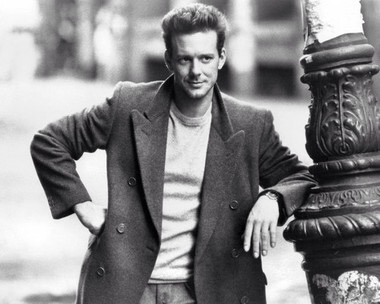
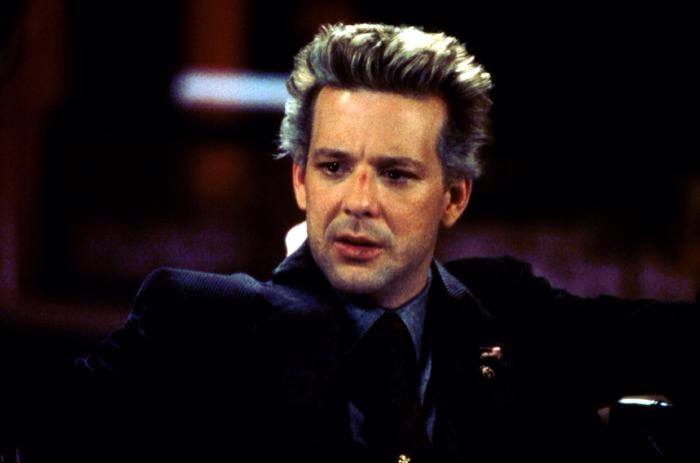
Tag: Mickey Rourke
A Prayer For The Dying: A Review by Nate Hill
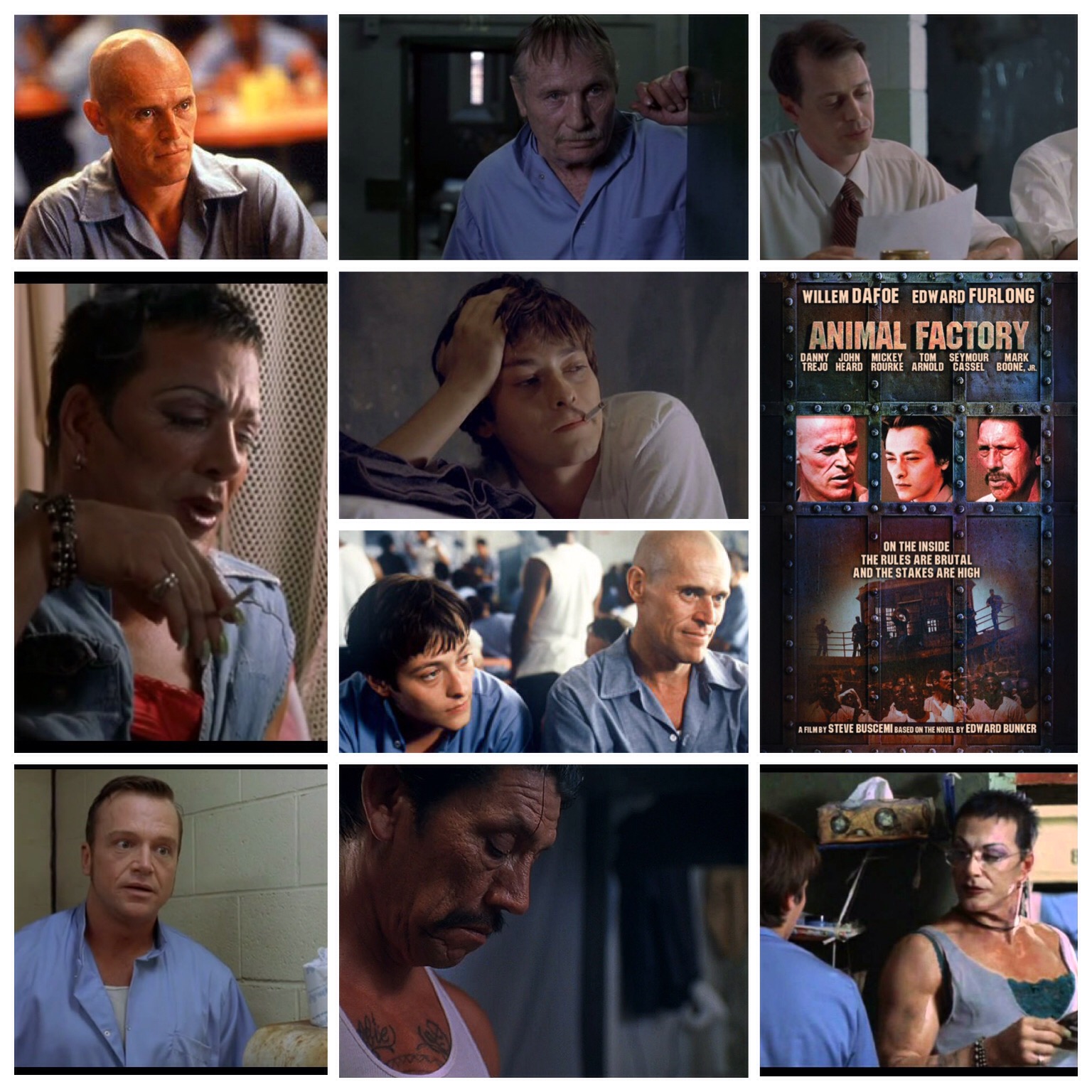
A Prayer For The Dying is a melodramatic romantic action thriller following IRA assassin Martin Fallon (Mickey Rourke), a man with a brutal path in life whose long buried conscience surfaces after an explosives mission goes awry, resulting in the death of schoolchildren aboard a bus. It’s a bold scene to start a film with, and in every instance after it Fallon has a haunted frenzy about him, clearly damaged by what he did and saw. As if that weren’t enough, he now finds himself compelled to murder a priest (Bob Hoskins) who witnessed one of his militant crimes. Fallon spends a lot of time hesitating, and in that hesitation he strikes up a romance with the Hoskins’s blind daughter (Sammi Davis), finding sanctuary and a modicum of redemption with the two of them. A lot of nasty people from his past are looking for him though, including his amoral former partner (Liam Neeson), an evil British crime kingpin (the great Alan Bates) and the kingpin’s murderous brat of a son (Christopher Fulford). Obligatory shootouts, personal and religious angst, sappy sentiment and dodgy accents, particularly from Rourke, ensue. He can blend into a lot of roles and pull off a lot of different characters, but it seems an Irish accent is a stretch, and it shows. As the character of Fallon himself, ethnicity aside, he does a bang up job though. Bates is razor focused in playing anyone, and his villain here is a spidery creepo. Neeson is young and doesn’t get much to do except hassle Rourke, but their confrontations are nicely done by both parties. Director Mike Hodges, whose other work I’ve never really seen, seems to like slow and deliberate action scenes, very old world and sometimes repetitive, but entertaining nonetheless. Not the best IRA thriller out there (most of the events here have little to do with the movement anyway, and focus more on Fallon), but a decent way to spend a couple hours.
Michael Cimino’s Desperate Hours: A Review by Nate Hill
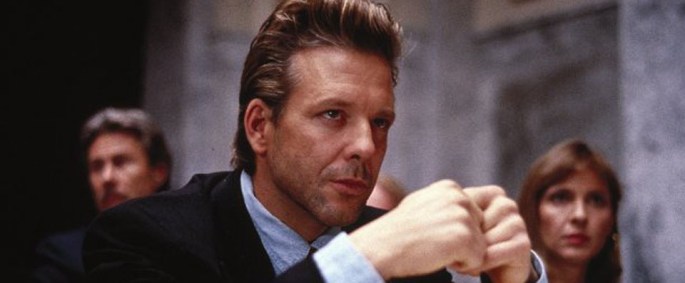
Michael Cimino’s Desperate Hours, despite only really being a servicable home invasion/hostage thriller, still has a lot of fun with it’s two leads, brash sociopath Mickey Rourke and even brasher estranged family man Anthony Hopkins. Based on a creaky old Humphrey Bogart film, Cimino obviously vamps up the violence and eroticism that simmers beneath it quite a bit, and when you have Rourke as your antagonist you know it’s not going to be anywhere near a relaxed affair. He plays Michael Bosworth, a dangerous felon on the run with two other goons, his volatile brother (Elias Koteas) and another creepy lowlife (David Morse). He crashes into the home life of Tim Cornell (Anthony Hopkins) a boorish father visiting his wife (Mimi Rogers) and children. The film mainly takes place inside the house, as the creep factor rises along with the threat of blaring violence which we know will come, made all the more likely by the growing police presence outdoors, and the tensions of everyone involved, threatening to snap at any moment. Rourke walks a tightrope between amiable and unstable, a man sure of himself, who always gets his way, and is capable of bad, bad things if he feels he won’t. Hopkins plays Cornell as a man used to being in control, but his inability to hold his family together is made worse by the gang’s arrival, rubbing salt in an already festering wound. Cimino has a brawny style to his violence, a trademark that’s seemingly born of both De Palma and Peckinpah, rich bloody gun battles and accentuated slow motion death scenes. Most of the film is held back, but the flood gates do eventually open and action hounds will get what they came for. Watch for Lindsay Crouse, Kelly Lynch, Shawnee Smith, James Rebhorn and Dean Norris as well. Not groundbreaking in the least as far as thrillers are concerned, but still an entertaining little piece made memorable by Rourke and Cimino’s ever interesting pairing.
B Movie Glory with Nate: Point Blank
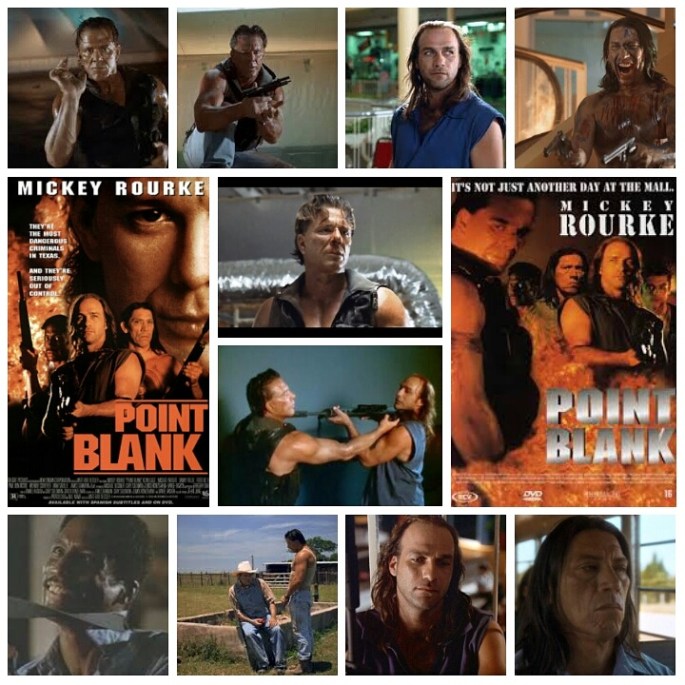
Point Blank takes a big, silly macho whack at the trashy action genre, and gives fans of such lowbrow, cheese saturated stuff a huge sloppy kiss. It’s so ridiculous you have to laugh, but you’re laughing with it because it sheepishly knows what an outlandish hoot it is, which is somewhat reassuring in this territory, because a lot of them play it dead straight and are oblivious to their own vapid density. Not this baby. It wears it’s stupidity loud and proud, and there’s many a moment that will have you howling. Mickey Rourke was in the height of his juicing heyday here, and he looks like Buffalo Bill covered the incredible Hulk in the tanned leather of some poor broad (should have put the lotion in the basket like he told you). He plays Rudy Ray, an ex special ops turned farmhand of few words and lots of action. Rudy’s brother (Wainegro himself, Kevin Gage) is mixed up with a nasty bunch of escaped convicts who have hidden out in a rural strip mall and taken multiple hostages. Rudy is summoned by the local Sheriff (Fredric Forrest), and with the resolute blessing of his crusty father (the immortal James Gammon) proceeds to go redneck John McClane on these whackos and basically tear the place apart. Gage is the leader of the pack, but the most dangerous one by far is a coked up, homicidal Danny Trejo, who terrorizes a poor female captive and basically empties clips at anything that moves. Throw in Michael Wright as a seriously intense war vet with a rocky past (he has a monologue that dips between scary and campy quite a bit) and Paul Ben Victor displaying acting so far over the top it’ll make your eyes and ears bleed, and you’ve got one inane B movie crew ready to fulfill your every schlocky need. It’s funny because there’s an ’emotional’ scene near the end where Rourke and Gage go brother to brother and it’s supposed to be touching. The writing is so godawful, and the music so beyond ludicrous, but the two of them are such good actors that they end up completely selling it without even trying, like they couldn’t turn in bad work if they wanted to. It’s basically Die Hard in the sticks, with Rourke instead of Willis, a mall instead of a skyscraper, and you know… the fact that it’s obviously not a good movie. It’s a hell of a lot of fun though, if you’re in the mood to get silly with it.
Elmore Leonard’s Killshot: A Review by Nate Hill
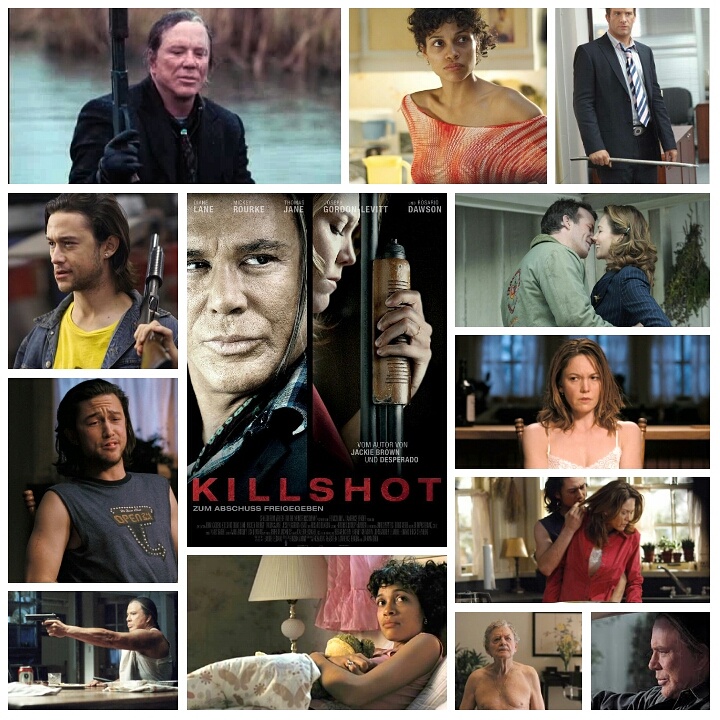
John Madden’s Killshot went through the ninth ring of production hell before it was finally released in 07 or so, after like three years of gathering dust on the shelf. The resulting film didn’t win anyone over who waited all that time with baited breath, because you can see the cuts, chops and gaps in story where it’s been muddled around with, no doubt by the fuckwit studio. I still love it, flaws and all. Based on an Elmore Leonard tale (you can never go wrong with his work, it’s a sombre tale of psychopaths, assassins and one hapless estranged couple (Thomas Jane & Diane Lane) caught in between. When legendary native american hitman Arman ‘The Blackbird’ Degas (Mickey Rourke) botches a job for the Toronto mafia, he’s forced on the run, and hides out with aimless young lunatic
criminal Ritchie Nix (Joseph Gordon Levitt), who somewhat reminds him of a litte brother he lost years before. Rourke pulls off the native angle quite well, and shows vague glimpses of a humanity that was once there and has long since been buried in violence. When Jane and Lane accidentally witness him murder someone, he won’t let it go, pursuing them beyond rationality or reason, even to his own end. Levitt never gets to play the wild card, and he rocks his redneck sociopath brat role with scary aplomb. Rosario Dawson has an odd appearance as Ritchie’s girlfriend, an elvis fan who is seemingly a little bit challenged upstairs. Watch for a cameo from Hal Holbrook as a crusty old mobster too. You’ll just have to imagine the federal agent character played by Johnny Knoxville though, because he never made it into the film and can now only be seen in ages old trailers that were a false start. Despite it’s issues, I find it to be an atmospheric little pulp outing that does have the classic Leonard feel, a hard bitten, cold-hearted turn from Rourke that’s one of his best characters in recent years, and a mean, unforgiving narrative set in picturesque northern Canada. Give it a shot, it deserves way more love than its received so far.
Sin City: A Review by Nate Hill
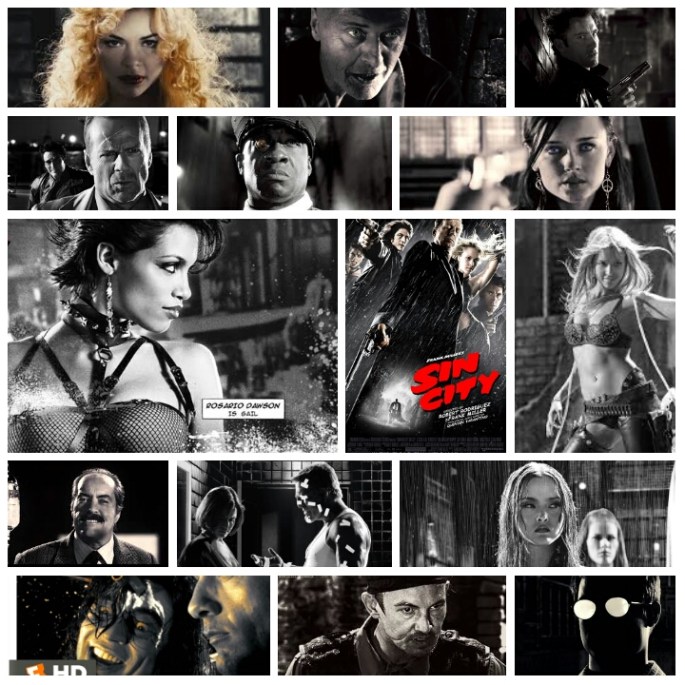
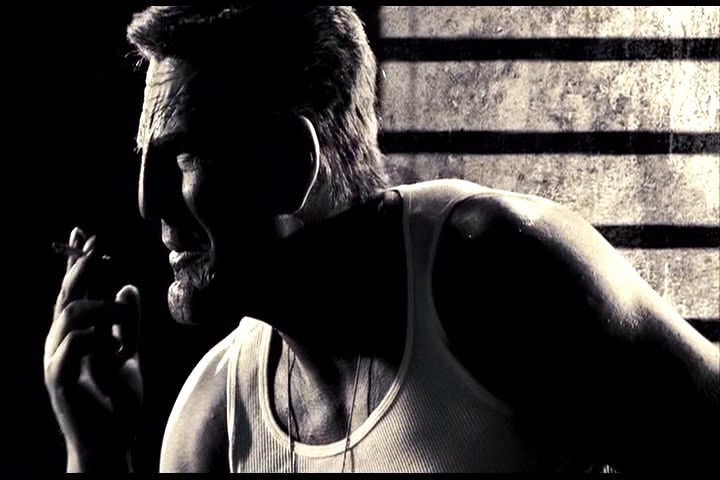
I remember seeing the edgy character posters for Robert Rodriguez’s Sin City hanging on the movie theatre wall when I was younger, having no idea what Sin City was or any knowledge of the books, but thinking they looked incredibly cool and enticing. Then the trailer came out, and it was all I could think, talk or breathe about for months leading up to its release. I was obsessed. When opening weekend arrived I got my dad to take me, and spent two unforgettable hours of cinematic nirvana in a dark auditorium that was packed to the gills with fans old and young alike, each basking in the delectable black, white and colour speckled glow of the piece unfolding in front of us. I had never seen anything like it, and it blew my system into sensory orbit like nothing had before. Around this time I was just discovering a lot of Rodriguez’s and Tarantino’s career, poring over pulp and crime thrillers from all across the decades as my love for cinema expanded, and this was something I just knew would be special as soon as I saw that first provocative teaser poster. The innovation and artistic ambition used by the ever resourceful Rodriguez and his team led to gleaming critical reception, a massive box office hit and one of the most gorgeous pieces of art in the motion picture realm. His decision to simply lift the still frames out of Frank Miller’s graphic novels was something that not every director would be able to go along with, let alone wrap their minds around (director’s are a finicky lot who always have thir own bright ideas, even when the source material is already gold). Rodriguez was so in love with the books that he envisioned them onscreen just the way they were drawn, and that’s pretty much what you get in the film. The pre-credit sequence sets the dark, vibrant, moody and impossibly lurid setting of Basin City, a rotting heap of corruption where almost everyone is either corrupt, sleazy or just outright evil, and even the ones that aren’t deal out some pretty heinous bouts of violence themselves. The prologue involves girl in in a red dress (Marley Shelton) conversing with a mysterious, well dressed man (Josh Hartnett). The scene takes a turn for the dark and tragic, we zoom out as Rodriguez’s self composed gutter lullaby of a score grinds into motion, and the glowering opening credits trundle by, a moment of a pure joy for anyone watching. The film is separated into three central vignettes, each from a different volume of the comics. The first, and strongest, features a sensational Mickey Rourke as Marv, a hulking bruiser built like six linebackers and basically impervious to anything that could kill a human being. After a heavenly night with hooker Goldie (Jaime King), he wakes up to find her lying dead next to him, not a mark on her. This gives his set of talents a purpouse beyond bar fights and roughing up abusive frat boys, and he wages a war of ultraviolence in her name, to his grave if he must. There are some villains in these stories that seem to be dredged up from the very bottom of the last pit of hell, just the worst of humanity’s many deplorable qualities. Marv eventually runs into evil arch bishop Cardinal Roark (a devious Rutger Hauer) and insane cannibal ninja sicko Kevin (Elijah Wood will haunt your nightmares)., on his bloody quest. Rourke’s genius even shines out through 12 pounds of prosthetic makeup slapped all over his mug, and he captures the wayward warrior soul in Marv, a restless anger and old school, Charles Bronson esque charm by way of Frankenstein’s monster. His work is a great way to kick off the first third of the film, and the gravelly narration hits you right in the film noir nostalgia. The second segment is a lot more lively, with far more people running around, sans the melancholy of Rourke’s bit, and instead emblazoned with a war cry of a story starring Clive Owen as Dwight, a hotshot tough guy who gets on the wrong side of seriously scummy dirty cop Jackie Boy (a growling Benicio Del Toro having a ball) who likes to beat up on waitress Shelley (Brittany Murphy). Dwight pursues him to Old Town, a district run by lethal militant prostitutes lead by no nonsense Gail (Rosario Dawson can use that whip and chain on me anytime). Then everything goes haywire (I won’t say why), and Michael Clarke Duncan gets involved as a weirdly articulate, golden eye sporting otherworldly mercenary named Manute. This middle section is the one that feels most like a comic book, where as the other too have more of a noir flavor, like their old Hollywood roots. The third and most depraved chapter (which is no light statement in this town), sees aging Detective John Hartigan (Bruce Willis) lay his life down in order to protect young Nancy Callahan from a terrifying pedophile child killer (Nick Stahl) who is the spawn of despicable US Senator Roark (Powers Boothe sets up a cameo of the pure evil he would go on to exude with his much larger role in the sequel). Jessica Alba plays the adult version of Nancy, now an exotic dancer and once again in danger from Stahl, who now has some… interesting changes to bis appearance, courtesy of genital mutilation from Hartigan years before. It’s one demented set of stories that would be almost too much to take in the real world, but this is Sin City, a realm that exists in the darkest dreams of Raymond Chandler and his ilk, a seething netherworld of stunningly beautiful women, ghastly corruption and terror, and good deeds that go unheralded in the night, bloody retribution perpetrated by antiheros and tragic scapegoats who know damn well what a pit of hell their town is, and that nobility is but a drop in the bucket of injustice they wade through on their way to violent exodus. The cast list goes on for miles longer than I’ve mentioned so far, but look out for Alexis Bledel, Carla Gugino, Michael Madsen, Jude Ciccollela, Nicky Katt, Nick Offerman, Tommy Flanagan and Devon Aoki as Miho, a deadly little hooker assassin who can turn you into a pez dispenser with her razor sharp katana. The level of violence on display throughout the film is so far over the top that after a while it seems almost Looney Toons in nature. Throats are slashed, heads are removed, testicles are ripped off, skulls are crushed and all manner of maiming and murder inflicted. What made it acceptable with the ever gay MPAA though is the fact that mic of it exists in the black and white mode of visual storytelling, and only a few instances of actual red blood seen. That goes for more than just the violence though in terms of color. Amid the sea of stark black and white there are beautiful hidden gems of colour that you have to train your eye to find. A pair of green eyes, a crimson convertible cadillac, the sickly yellow pallor of Stahl’s mutated skin. That’s but a taste of the patchwork quilt of visual artistry you are treated to here, and has constantly been emulated in either work since, but never quite effectively as here. That’s the idea of it though, a heavily stylized piece of hard boiled neo noir that exists simply to plumb the very depths of darkest genre territory, do justice to Miller’s books with a laundry list of wicked actors, a bonus scene directed by Quentin Tarantino and a story that’s pure noir to its bloodstained bones.
Tony Scott’s Man On Fire: A Review by Nate Hill
Tony Scott’s Man On Fire is one of those films I can watch time and time again and never tire of, a magnificently melancholy tale of South of the border justice, criminal intrigue and a tequila shot of pulpy, blood soaked style that gets me every time. It’s loosely based on a 1987 film of the same name starring Scott Glenn, Jonathan Pryce, Danny Aiello and Joe Pecshi (there’s a random lineup, no?), but Scott intrepidly branches off into his own territory, and thank god for his vision. This was the first film in which he really explored his sketchy smokehouse of an aesthetic that he would later take to angelic heights with Domino. Colors blur and saturate, editing rockets by with the force of a bullet in a storm, subtitles appear arbitrarily and seemingly of their own volition. It’s a jarring tool set that he employs, and many abhor it. I’m as in love with it as he was though, and whether to throw us right into the protagonist’s psyche or simply because he felt the need to paint his pictures this way, the rest of the films in his remaining career carried the DNA, in varying doses. Fire is the key word for this film, in many of it’s forms. There’s a smoldering ember in Denzel Washington’s John Creasy that is fed by the winds of corruption as the film progresses, erupting into a blazing inferno of violence and fury. Creasy is a broken man, haunted by the questionable, never fully revealed actions of his military past. “Do you think God will ever forgive us for what we’ve done” he grimly asks his old war buddy Rayburn (a scene stealing Christopher Walken). “No” Rayburn ushers back curtly. It’s at this heavy nadir we join Creasy, lost in a sea of alcohol and guilt, an unmooored ship with a shattered hull looking for both anchorage and repair. Rayburn hooks him up with a bodyguard gig in Mexico City, keeping the young daughter of a rich businessman (Marc Anthony, terrific) safe from the very real threat of kidnapping. Dakota Fanning is compassionate, precocious and endearing as young Pita, who spies the wounded animal in Creasy right off the bat and tries to make friends. Creasy draws back in reluctance, but eventually warms up. I love the pace of this film to bits. It spends nearly half of its hefty running time simply getting to know these two characters, forging a bond between them before the inciting incident even looms on the horizon. And when the kidnapping occurs, as it must, the stakes are high as can be and our investment level in the situation is paramount. Setting up character is so key, and Scott nails it with scene after scene of quiet and careful interaction. Then he yanks the lid off the pot, as Pita is snatched in broad daylight, Creasy is injured and the kidnappers vanish into thin air. Pita’s mother (a soulful Radha Mitchell) works with the dodgy Mexican authorities and her husband’s lawyer Jordan (a sleazy Mickey Rourke). Creasy has other plans. Once healed, he embarks on a mission of fury and vengeance, knocking down doors, removing body parts, inflicting gratuitous bodily harm and using every technique in his training (believe me, there are some interesting ones) to track down those responsible and get Pita back. Washington does all this with a calm and cool exterior, letting the heat emanate from every calculated syllable and intense glare. The descent into Mexico City’s poverty stricken criminal underworld is a grisly affair, and all sorts of ugliness is exposed, shredded through the caffeinated prism of Scott’s lens. Two cops do what they can to help Creasy, idealistic Guerrero (Rachel Ticotin) and battle hardened Manzano (the always awesome Giancarlo Gianninni). It’s Creasy’s show though, and he blasts through it like a righteous hurricane of blood and bullets. Scott’s films have a knack for ending in over the top, Mexican standoff style shootouts, but the man subverts that here, going for something far more sorrowful and atmospheric, ending an intense tale on notes of sadness and resolute calm, gilded by the aching tones of songstress Lisa Gerrard and composer Harry Gregson Williams. Walken provides both comfort and catharsis, the only beacon of hope for Creasy other than Pita. Unlike John, Rayburn has moved on from the horrors of their past, but one still sees the trauma in his soul when he looks John in the eye and gets hit with what is reflected back. Tough stuff to get right, but hey, it’s Walken we’re looking at here, and he’s brilliant. Rourke has little more than an extended cameo, but his flavor is always appreciated, and he’s great too. I had no idea Anthony had the chops he exhibits here, but I loved his arc as well as his performance and he holds his own in a blistering scene with Washington. Washington is an elemental beast, shadowing what’s left of his humanity under a cloak of booze and brooding contemplation, until he’s coaxed out by the life saver Pita. Then he’s a lion, riding guns out into a ferocious swan song of a sunset that may just hold rays of redemption for him. This is Scott at his best, his unique brand of storytelling at its height, his creative juices a canister of lighter fluid set aflame with genius and innovation. A masterpiece.
Michael Cimino’s DESPERATE HOURS – A Review by Frank Mengarelli

Remakes are rarely a good idea, particularly if you’re a semi defrocked filmmaker and your headliners are Mikey Rourke who’s self-infliction was becoming more rampant in the late 80’s and early 90’s and a pre-SILENCE OF THE LAMBS Anthony Hopkins who’s star was on the fade. Back all of that up by remaking a seminal Bogart film and releasing it to critical annihilation and an uninterested box office and we are left with a film that doesn’t find its audience until decades later.
Michael Cimino’s DESPERATE HOURS is a remarkable film. It’s angry and brooding, wonderfully shot by Doug Milsome, and features two fierce performances from Rourke and Hopkins. Mickey Rourke gives one of the finest performances of his career as Michael Bosworth whose freakishly high IQ wrapped along with his sociopathic tendencies makes for a fantastic villain and a very showy performance from Rourke.
Rourke is an escaped murderer on the lamb, he holds up in Hopkins’ house, where his family gets held captive by Rourke and his two lackeys. Hopkins slowly pits Rourke’s paranoia and anxiety against him and his crew, slowly manipulating and faking them out at every turn. Seeing Rourke and Hopkins go head to head in a fight between alpha males is worth the price of admission alone.
We all know about the rise and fall of Michael Cimino, and while the tide has completely turned on HEAVEN’S GATE, Cimino’s back catalog is more than deserving of being revisited. DESPERATE HOURS isn’t a perfect film, but for anyone who loves dark and brooding films, this film is perfect for you.
Picture Claire: A Review By Nate Hill
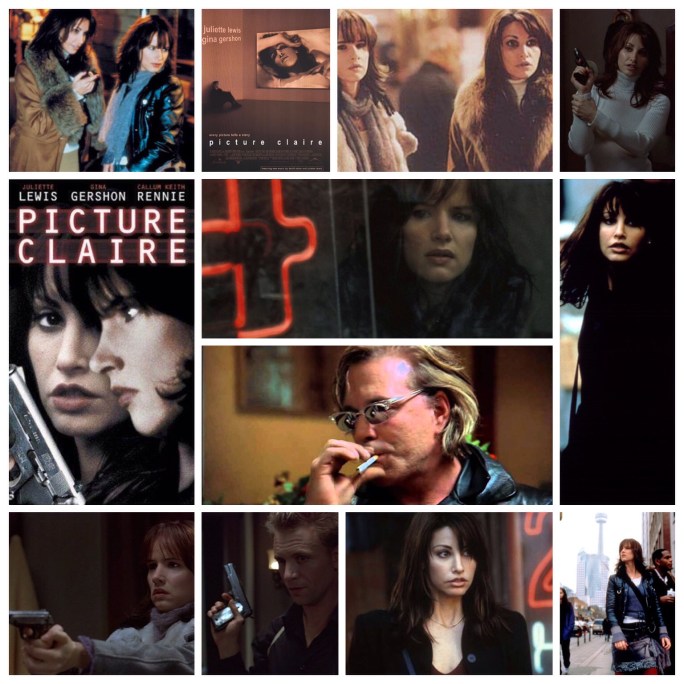
It figures that a decent Canadian film, which lets face it, is a rare commodity, would me mishandled, neglected and not properly promoted, resulting in its exile into the inter zone of obscurity. Picture Claire is an original, stylish little crime thriller with two solid female leads and a story to tell, a story that has regretfully made its way to far too few audiences. Juliette Lewis plays Claire Beaucage, a confused and awkward French Canadian girl who finds herself in way over her head with dangerous, sexy jewel thief Lily Warden (Gina Gershon, in yet another physically demanding role that adds to my wish that she got a crack at playing Catwoman). Lily is on the run from Laramie (Callum Keith Rennie, the king of charisma) a mobster who wants something she stole, which through circumstance is now in the unwitting hands of Claire. The chase then starts, through the unmistakable streets of Toronto and from one violent encounter to the next. The film is a thriller, and a chase flick at heart, but in that heart it’s got an almost old world, European flavour. Claire has quaint, almost Amelie esque inner monologues which give us insight into her character. She doesn’t speak English, and everyone around her does, which somewhat alienates her. These interludes give us something to latch onto with this strange girl who is more in the dark about what’s going on than even we are, watching from behind our screens. Watch for a profane cameo from Mickey Rourke as Gershon’s lowlife partner in crime, a scene stealer as always. Thoroughly overlooked, and a true delight.
Top Ten Mickey Rourke Performances: A list by Nate Hill
Mickey Rourke has been called the Hollywood outlaw by some, a difficult outsider by others, a master of his craft by anyone with sense, and has never not been a completely surprising thespian who refuses to reside within one box for long. He’s an outspoken, candid guy who has never been afraid of speaking his mind or laying down the verbal hammer. For me, Mickey is an undisputed genius of his craft and has shined like a brilliant nebula of talent, intuition and brilliance in each and every role he has brought to our screens. Here are my personal top ten performances from one of my all time favourite actors:
10. Billy Chambers in Once Upon A Time In Mexico
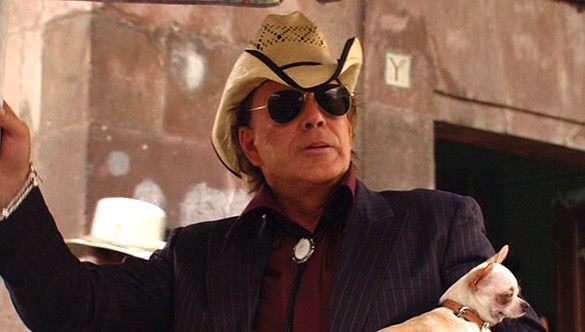
Director Robert Rodriguez allowed Mickey to carry around his own personal chihuahua (something that he has walked off of a set in a huff over in the past), and encouraged him to wear his personal shiny purple suit to play Chambers, a gruff cowboy hiding out in Mexico and working for a ruthless cartel boss (Willem Dafoe, a frequent Rourke collaborator). Chambers seems like a sly amalgamation of several early characters he played, world weary from too many skirmishes and events gone wrong, marinating in the Mexican sun and wishing for an exodus from criminal life. Billy has trouble with the sadistic tasks which the cartel orders him to carry out, showing a delineation between a life of crime and an evil path. Regretful, posturing and laconic, the first team up between Rourke and Rodriguez turns out to be a delight.
9. Captain Stanley White in Year Of The Dragon
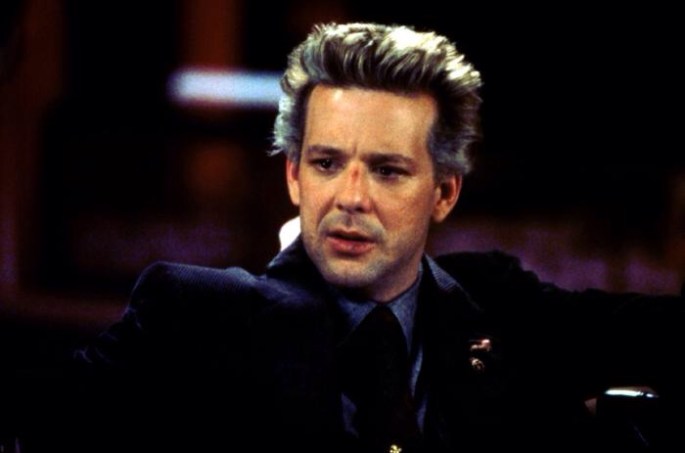
Rourke first did a bit part for manic maestro Michael Cimino in the notorious Heaven’s Gate, a precursor to his turn in this blistering cop film as a belligerent, hard nosed and uncompromising cop who will do anything in his power, and even a few things outside it, to bring down a Chinese crime syndicate. White has tunnel vision, a Viet Nam war veteran whose internal battery is set on search and destroy mode regardless of any collateral damage, of which there is a considerable amount. Rourke takes a blow torch to the character until the edges flare and fray, never letting the heat lower for a second, be it an introspective moment that smoulders or one of many thunderous outbursts of self righteous, racist fury.
8. Randy ‘The Ram’ Robinson
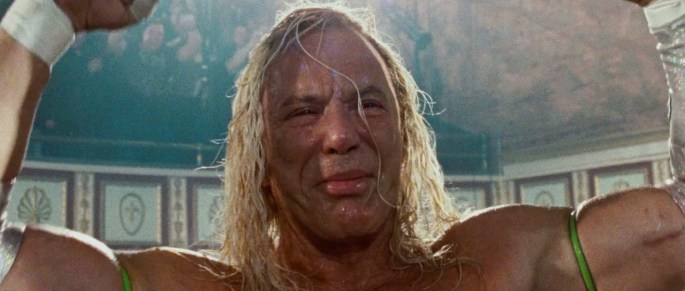
Some see this role as Rourke’s comeback, but similar to Randy ascending the ranks of his former glory only to take a hazardous dive off the ring and back down again, such was the case for Rourke, who is back to smaller films. For a single piercing couple hours, he brought us legendary work in an Oscar nominated turn that burns deep, encased in Darren Aronofsky’s intrepid direction. Randy is a fallen Titan who is looking for another shot in both his professional and personal life, and Rourke gives him the presence to hit home.
7. The Motorcycle Boy in Rumble Fish
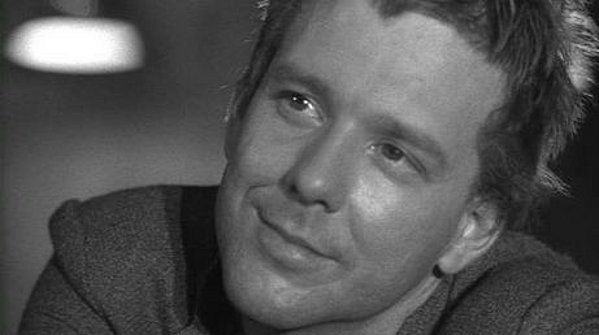
Returning from a mysterious motorbike odyssey, speaking in cryptically poetic fashion and filling out the restless bad boy archetype like no other, this is one of Rourke’s most fascinating turns, in a surreal black & white tumble town that evokes the 1950’s beautifully. He’s relaxed yet uneasy, friendly yet vaguely portentous and obtains an intangible state of heightened awareness with his work that you can never quite pin down or explain properly in words. His character’s resolution seem fittingly oblique, matched by his performance that simultaneously cries out and holds back, often mirroring each other eerily.
6. Jim Olstadt in The Pledge
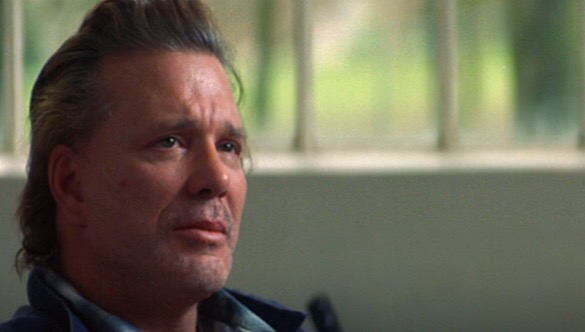
Sean Penn cast Rourke for an appearance that lasts for less than a minute, and he manages to quietly devastate and then some within that time. He plays a grieving father who is questioned by Jack Nicholson’s obsessed detective about his young daughter, who disappeared several years before. Unshaven, chain smoking and hiding behind a vacant expression, Nicholson’s queries trigger a well of raw anguish which spill out unforced into the certain and seem remarkably genuine. It’s uncomfortable, despairing and you just want to walk right into the screen and give poor Olstadt a hug. His work is that good, a gem of an appearance in probably the best film on this list.
5. Marv in Sin City
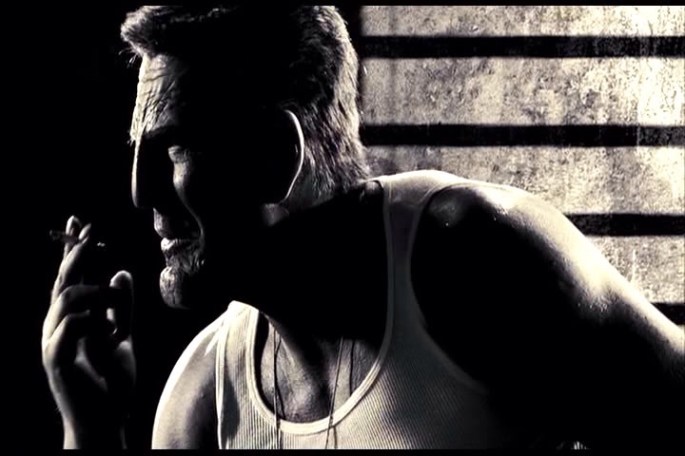
When Robert Rodriguez told Frank Miller of his notion to cast Rourke as the hulking bruiser Marv, Miller’s response was “What, that skinny guy from Body Heat?”. Rodriguez had a vision though, which Rourke followed through with in legendary fashion. Marv has to be played by a performer with the right presence (Ron Perlman and Clancy Brown could have taken a decent crack), someone with somber grit and just the right shot of blackest humour. Rourke sets the role on fire, filling every gorgeously composed frame with his Boulder tough, terrifying and surprisingly touching take on the character.
4. Ed Moseby in Domino
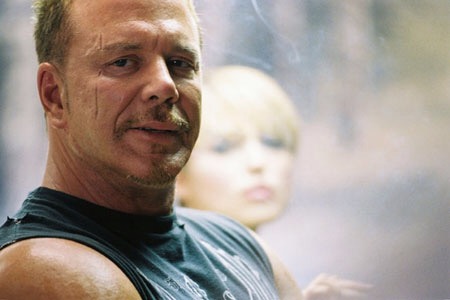
The title of most legendary bounty hunter in Los Angeles is a pretty steep hill for any actor to start out on in at the beginning of their performance. Mentor to Domino Harvey, street smart professional, world weary badass and all around character, Ed is one third of the film’s psychedelic soul and Rourke charges full guns ahead with the work, pausing at penultimate crossroads to show us the seething regret and sadness that Ed harbours beneath the violence and tough guy shell. There’s one scene with co star Edgar Ramirez that seems pulled straight from Rourke’s own history, where the camera sits still long enough to allow him to show piercing truth.
3. Charlie in The Pope Of Greenwich Village
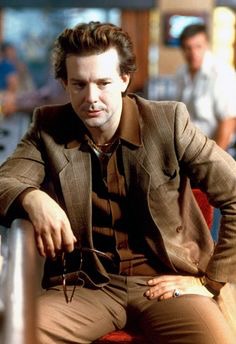
Charlie is a small time thug who does his absolute best to not be a screw up. Only problem, he’s saddled with best friend Paulie (Eric Roberts) who happens to be the biggest screw up this planet has ever seen. The pair are comic dynamite, Rourke setting off on exasperated tirades whenever Roberts gets them in hot water, and then using his brand of cunning and survival instinct to bail them out. Rourke shows a fox-like resourcefulness, a hurricane of anxious energy that cools over when evasive action is required. Charlie is Rourke in his youth and loving the game, firing synaptic bursts of energy at Roberts and receiving them back in synergy, showing off what a great onscreen duo they make.
2. The Cook in SPUN
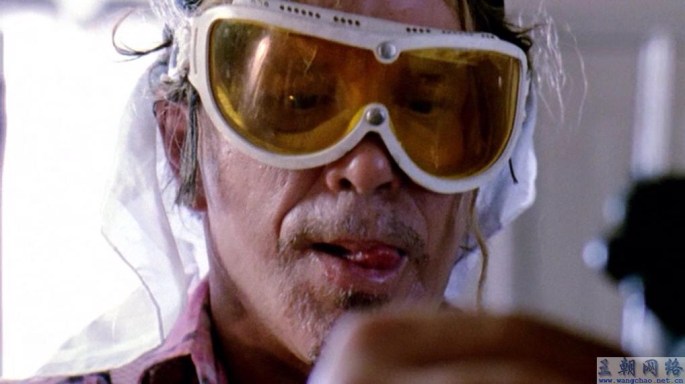
A cowboy hat wearing, meth cooking oddball hardly seems like the type of character to land an emotional punch, and for the most part you’d be right to think that. Rourke is like Jim Carrey in the mask here, inhabiting an overblown and dizzyingly stylistic aesthetic that exists to show us the unhinged lifestyle of meth addicts. He jumps from serious to scary to funny to sad so quick it’s hard to put the puzzle of his character together, until a n emotional wipeout of a monologue that’s delivered late in the last act, bringing his sad arc full circle. Be it a seminar on the political qualities of Pussy, a whopper of a tiff with girlfriend Brittany Murphy or a brief tongue in cheek encounter with Eric Roberts, it’s glitzy grungy playtime all the way, until we get to that one extended speech, which halts the mayhem and sobers the viewer up post-delirium. It’s tearful in a film where you’d last expect it, and Rourke handles the 180 degree turn like the master he is.
1. Harry Angel in Angel Heart
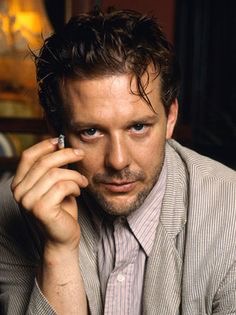
In one of the finest and most flat out unnerving southern gothic horror films ever made, Rourke throws himself at the role of a down and out private detective who is hired by a sinister Robert De Niro to find a missing singer who doesn’t even seem to exist at all. Harry starts off in control, assured, well travelled. His nerves begin to shake when a trail of hideously murdered bodies pile up behind him, seemingly connected to his search. Rourke slowly unscrews the lid of Harry’s sanity in a sweaty frenzy of fractured machismo and blossoming terror, his fear riling up the audience with each new grisly discovery. There’s plot revelations, shocking violence, the mother of all graphic sex scenes, steeped melodrama and a near constant state of primeval fear, all infused into his performance with skill and tact. For me, Rourke has never been more ‘Rourke’, in all facets, than he was as Angel.