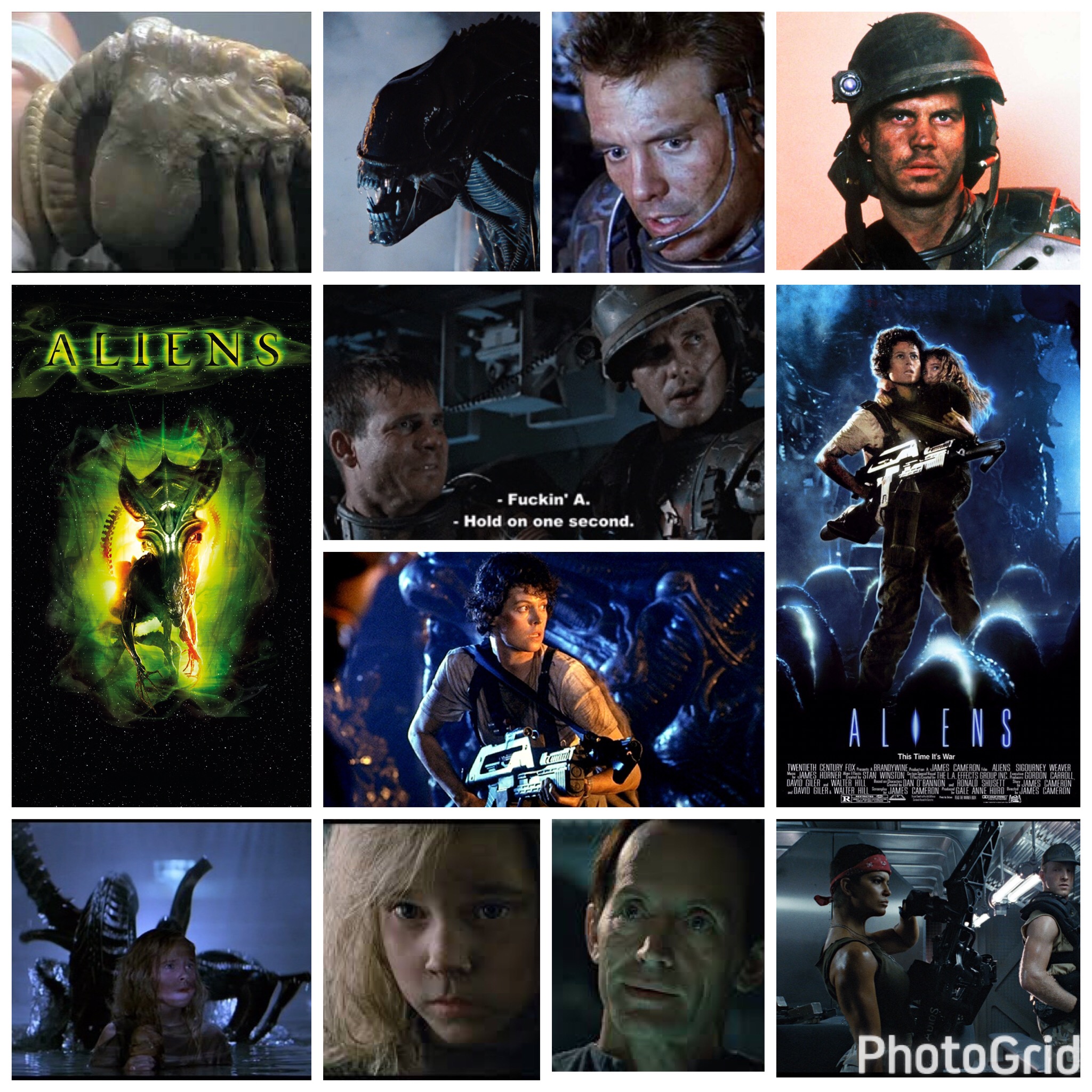
Each of the four Alien films has their own distinct and noticeable personalities. Ridley Scott’s original creeping horror show is a tense, streamlined, gracefully vicious film that slinks along at its own pace, not unlike the resident feline Jonesy who wondered about on the spaceship Nostromo back then. If Alien has the qualities of a cat, James Cameron’s Aliens has those of a rambunctious puppy dog, a rip snortin, go get em action backyard barbecue knockout that runs up and gives the audience a big wet slimy kiss. All animal metaphors aside (I’m running out of oh-so-clever ways to open my reviews, ok? Been at this shit for two years now), Cameron’s film is an undisputed classic, still jaw dropping to this day, even after what feels like hundreds of viewings, nostalgic yet fresh in different ways every time, and simply one of the best films ever made. It’s the gold standard for creature feature sci fi too, and while many argue whether or not it in fact outdid Scott’s original white knuckler, I can’t bring myself to be petty and pick favourites out of the quadrilogy, I love them all for a whole bunch of reasons. Aliens picks up quite a while after the catastrophic events of the first, with Ripley floating around in that cryo-pod for way too long, until she happens to cruise past earth, crossing the vision of the Weyland/Yutani corporation once again. Because they always make astute, well thought out choices, they decide to send a research team, accompanied by a very reluctant Ripley and a group of hoo-rah, bull in a China shop colonial marines to far off industrial exomoon LV-426, where they have lost communication with the settlers. After a brief, clammy build up, all hell breaks loose, and we get to see the full impressive extent of Cameron’s skill as a visual storyteller, as well as the oh-so-gooey, inspire practical effects work that brings those gorgeous Xenomorph beauties to snarling life. The cast is the epitome of badass, as we are constantly reminded of by Bill Paxton’s Hudson, the film’s resident squirrel who gets hilariously skittish when things get dicey (“game over, man!” Will never not out a big, Paxton sized grin on my face), but who heroically holds his own once he gets his sillies out. The other side of that coin is Corporal Dwayne Hicks (Michael Biehn, never slicker), cool as ice, shaken by nothing, including an atmosphere entry landing that would make Alfonso Cuaron pee himself, but doesn’t come close to disturbing Hick’s afternoon nap. Every Alien team must have an artificial human, some of which are trustworthy, and some not. Lance Henriksen’s Bishop is as solid as they come, never losing his head (despite being reduced to a puddle of spilt dairy product) and sticking by Ripley’s side until the bitter, hectic end. Ripley herself is a little older, a little wiser and a lot tougher, her intensity calcified into grit after losing her daughter, and given somewhat of a surrogate in the form of Newt (Carrie Henn) an orphaned child who has survived months living like a rodent in the air ducts. “They mostly come at night… mostly” she eerily warns Ripley. Oh boy, do they ever. LV-426 is positively teeming with them, and they show up to provide speaker shattering, pixel scattering action like only Cameron can do. The facehugger in the room sequence is still one of the most terrifying sequences in any film, and serves to make you hate Weyland weasel Burke (Paul Reiser) with that deep loathing reserved for the scummiest traitors in film. The final thirty minutes of the film are a showcase of action cinema, and it’s amazing to think they pulled off the Queen fight without any cgi back then, a slam-bang marvel of a climax that fires on a thousand cylinders, and to this day has never been topped. That goes for the film too. It’s *the* action sci-fi film, and as close to perfection as you can get.
-Nate Hill
Tag: movie review
Man Down

I’ll say this right off the bat: do not watch Man Down if you’re already in a mood, because it will emotionally lay you the fuck out. I learned that the hard way the other night. Billed as a war film, marketed as such and discreetly snuck onto iTunes without so much as a hint of theatrical release, its easy to see why they’ve tried to bury this one, it’s the bleakest film I’ve seen so far this year, and possibly the previous one. If there’s any doubt still surrounding Shia Labeouf’s acting talent (there shouldn’t be at this point), his work here should solidify greatness. All publicity antics and oddball muckery aside, he’s proven time and again that he’s one hell of a performer, and this is the best work he’s ever done, by a long shot. As Afghan war vet Gabriel Drummer, he’s put through an emotional wringer, sent back to an America ravaged by some vague pandemic, on a hopeless mission to locate his wife (Kate Mara) and young son (Charlie Shotwell). Joined by his best friend and fellow soldier Devin (Jai Courtney), Gabriel’s mission seems hazy and desperate, his family always just out of reach, tormented by the psychological wounds of combat but determined not to give up. This is interspersed with an extended dialogue scene between him and General Peyton (Gary Oldman, restrained, patient and careful), in which he heartbreakingly opens up about the horrors he has seen. This is where Labeouf shines, his tears uncannily genuine, his work visibly shaking up Oldman and tearing at the edges of the screen in it’s implosive intensity. Trust me, this is not the film you are expecting, not even close. By the time the third act rolls around and you see what’s really going on, you’re emotionally sucker punched when least expecting it, and the film’s quiet, devastating anti-war message is hit home with the force of a sledgehammer. I can’t say too much more without ruining it, but it’s one of the most thoughtful, understanding war films I’ve seen, one that gets the reality of what it’s like to have seen such atrocities, and come out of it a different person. Strong, stinging stuff that takes a while to shake off.
-Nate Hill
Sam Peckinpah’s The Osterman Weekend

-Nate Hill-
Sam Peckinpah’s The Osterman Weekend is so strangely plotted, so illogical and hard to understand, that not even John Hurt providing a play by play from an ever present tv monitor can seem to make sense of it. It’s not that it’s a bad film, parts are very well done and there’s that nostalgic Cold War vibe that 80’s espionage thrillers always have, it’s just that somewhere along the way, whether in the editing room, the shot list or scheduling, someone quite literally lost the plot. It’s enjoyable, well acted and supplies some of that classic Peckinpah grit he’s known for, but it’s just one massive loose thread that no one bothered to pull taut, which is a shame when you look at the talent involved. The film opens with the murder of a beautiful woman, the wife of a CIA spook (Hurt). Now, this inciting incident is what spurs on the rest of the plot, but the how and the why seem to be missing, and the matter of his wife doesn’t come into play again until all is almost said and done, and seems to have not a lot to do with the entire rest of the film. The bulk of it focuses on controversial talk show host John Tanner (Rutger Hauer), a man who lives to rub people the wrong way and put men of power on the spot with provocative, candid questions, all from the safety of his brightly lit studio. He’s forced to get his hands dirty though when Hurt contacts him, informing him that his three friends he’s planned to spend the weekend with (Craig T. Nelson, Dennis Hopper and a sleazy Chris Sarandon) are in fact soviet spies in hiding. Forced to bug his weekend home and play host to Hurt as he watches them all via hidden cameras, tensions arise as they try to smoke the three out and figure out… something. But what? It’s anyone’s guess what three potential traitors have to do with a murdered agent’s wife, and I’m sure the novel by Robert Ludlum on which this is based covers that a little more pointedly, but this film is just all over the place. It drags where it should glide, and skips hurriedly over scenes with potential to be great. Nevertheless, they achieved some level of class at least, with a crackling on-air conclusion that cathartically weeds out some corruption and provides almost a glimmer of an answer to what’s going on. There’s a fight scene between Nelson and Hauer that’s excellently choreographed, the performances are committed and engaging, and I’m always a sucker for cloak and dagger theatrics. But the thing just can’t seem to cohesively pull itself together and present a story that makes sense. It’s not even that it doesn’t make sense in a Tinker, Tailor, Soldier Spy sense, because I’m sure that if I sat down and watched that film like five times in a row, id get it, it has a plot buried under all of it. This one though, it’s like there’s pieces missing, and the ones that are left are either out of order, or from a different puzzle entirely. Close, but no cigar.
Predator 2

-Nate Hill-
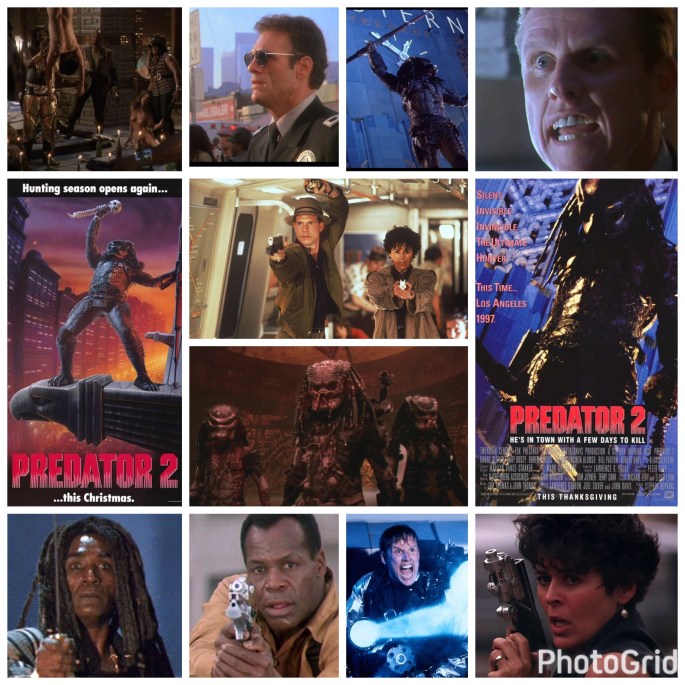
Predator 2 is a gem of a film, and don’t let anyone ever try and convince you otherwise. It’s just so different and so much crazier than the first that I think people had a knee jerk ‘wtf’ reaction and panned it. It’s tough to top the sheer bombastic overdrive of the first one, which is considered a classic, but if anything the sequel switched the nitrous dial past maximum and blasts off into the stratosphere of excessive R rated chaos, an impressive feat. It also switches settings, from the sweaty jungles of South America to the equally sweaty and opulent grime of the urban jungle, namely Los Angeles of the future, bursting at the seams with so many over the top criminals and hectic, delirious violence that by the time the Predators show up they not only fit in, but seem relatively sane compared to everyone else. Seriously, every human character in this film is a coked up tornado of cartoonish energy and brashness it’s hard to keep up unless you’ve hoovered up a few rails yourself prior to sitting down and popping in the blu ray (the blu ray of this is wicked by the way, gorgeous transfer). So get this: Danny Glover, before he got too old for this shit, basically serves as a renegade SuperCop in this hellhole of a metropolis, waging all out war on loads of feral gang members and degenerates, constantly leaned on by the obligatory pain in the ass of a police commissioner (Robert Davi, god bless his republican ass) and backed up by a team of state of the art badasses, including Aliens’s Bill Paxton, who gets all the best lines and delivers them with the gusto the material deserves. He’s also backed by Ruben Blades and tough girl Maria Conchita Alonso, whose appearance and scenes with Paxton call to mind him and Jannette Goldstein side by side in Aliens, or is that just the fanboy in me having an aneurysm? Together they achieve 80’s action movie squad goals by messily wiping out as much of the criminal faction in the city as they can, including weird Rastafarian crime lord King Willie (Calvin Lockhart, spooky as all hell), until something else comes along. Something they can’t see, hear, or easily empty clips at whilst cheerfully spewing profanity. The predators have branched out, and this time there’s more than one, giving their inherent tactical nature a whole new twist. So who better to take on these extraterrestrial game wardens? Glover of course, who positively froths at the mouth. You know you’re overacting when Gary Busey has to keep up with you, and he does his loony best as some hush hush Fed who has been keeping tabs on the Preds for sometime, and has big notions of taking them down. It’s all in good fun, with jaw dropping, spectacularly brutal set pieces, violence that would not go over well these days (the 80’s didn’t give a fuck, man) and a seriously chaotic vibe humming through the whole breathless ordeal. I’d even be so bold as to say that this is the better of the two Predator films, upon getting all misty eyed and craving a rewatch after writing this. Go ahead, shame, me. It’s just too great of a flick to be as under appreciated as it is. Oh, and watch for a sly cameo from another otherworldly baddie late in the third act.
“If you ride like lightning, you’re gonna crash like thunder.” – A review of The Place Beyond The Pines by Josh Hains
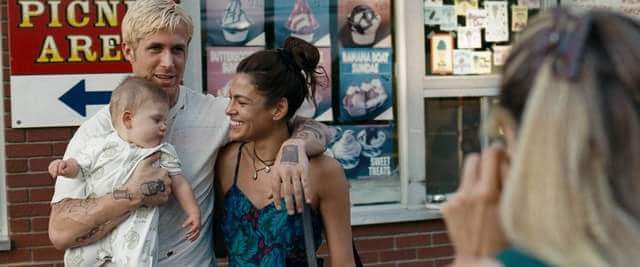
As the opening title, “A film by Derek Cianfrance”, dissipates, a breath is drawn followed by the clinking of an angel knife as Ryan Gosling’s Luke Glanton menacingly opens and closes it, his abs glowing in the dimly lit room, his body battered with tattoos as the sounds of people, rides and games emit from outside his small trailer. He’s told it’s showtime by an outside authority, jamming the knife overhand into a wall before picking up his shirt and red jacket and slipping out the door, putting them both on as he traverses the crowd until he reaches a large tent boasting The Globe Of Death. He walks with the swagger of James Dean as he enters the tent to cheers and cries of excitement from fans alike as he and two fellow riders known only as The Heart Throbs gear up on their motorcycles and glide into the deadly spherical cage. Engines roar and fans scream as Handsome Luke and The Heart Throbs dizzyingly ride their motorcycles loop de loop until the screen fades to Luke signing autographs. And to think, that was all done in one take.
The Place Beyond The Pines is a beautifully brooding, tragic, heartbreakingly powerful, and ambitious genre film about fathers and sons, legacy, and consequences. Luke Glanton (Gosling), a daredevil carnival motorcycle rider finds out former fling Romina (Eva Mendes), a local waitress and fan of Luke’s skills, recently had their son, Jason after their last fling. Much to her surprise, he quits his job in the hopes that he can concoct a relationship with the infant and her too, even though she has a new, responsible man in her life by the name of Kofi (Mahershala Ali, in an understated role).
Luke is irresponsible, impulsive, tattooed all to hell and prone to outbursts of violence. Things only get complicated once he meets Robin Van Der Zee (Ben Mendelsohn), a grubby mechanic who hires him after witnessing his outstanding skills on the motorcycle. He suggests that Luke rob banks, Robin himself having robbed banks years earlier, and Luke, in need of quick cash to support his son, opts to do just that. As time marches on the risks get higher and the cash comes thicker during riveting, manic heists and intense and stunningly realistic getaways; until Robin suddenly balks, leaving Luke to sloppily rob a bank and subsequently get chased across town on his motorcycle. The breathtaking chase leads Luke to a violent confrontation with Avery Cross (Bradley Cooper), a young police officer and son of a well respected judge.
After his confrontation with Luke, Avery begins to question his actions during the encounter as fellow officers headed by Pete Deluca (the always intimidating Ray Liotta, in full-on bad cop mode) engage in thuggish, corrupt behaviour which begins to take its toll on Avery and his family life as the father to a newborn son and husband to a fearful wife.
Skip ahead 15 years and Avery is running for public office, as his and Luke’s respective sons Jason (Dane DeHaan) and A.J. (Emory Cohen) begin a tumultuous and troubling friendship. I have to stop there, as any more details about the film will surely spoil what is undoubtedly a surprising film.
Luke’s story takes up the first 45-60 minutes, and is the best of the three stories in this triptych film; a deep, emotional roller-coaster that follows Luke as he struggles to provide for his newborn son. The heists are crisp, increasingly sloppy and volatile, brimming with an underlying intensity and fiery rawness. When he robs, he angrily squeals and shrieks his commands, grabbing the closest person to him as leverage until he has the money. When he rides, it’s as if you’re right there with him; the roar of the engine thundering through the air as he speeds down twisting roads into Robin’s cube truck.
Ryan Gosling as the violent, troubled Luke Glanton is mesmerizing, delivering his best performance since 2010’s Blue Valentine (which marked his first collaboration with this film’s director Derek Cianfrance), and surely one for the Oscar nomination list. He doesn’t say much which draws comparison to his eerie role as The Driver in 2011’s Drive, his eyes and facial expressions exuding Luke’s restrained and ominous personality in the same brooding manner as he did in Drive. He also has a vehicular skill, this time motorcycles and not cars, but that’s about where the comparisons stop. Where Driver felt like a caricature, or a fantastical vigilante ripped from a ludicrous dream, Luke feels, and very much so is, a genuine, authentic and honest portrayal of a man struggling to leave a strong imprint in his son’s life while dealing with his own inner, violent demons. He holds honest intentions, but is far too explosive and violent for the life he quietly yearns for.
Eva Mendes is at her quiet best here as Romina, giving an heartfelt and touching portrayal of a mother trying to do what’s right for her son, which may or may not always be the best of decisions. Ben Mendelsohn (of Animal Kingdom, The Dark Knight Rises and Killing Them Softly fame) yet again find a rhythm for playing the greasy, twitchy mechanic and Luke’s only friend Robin. His ability to slip into these scuzzy roles is fantastic, as he once again delivers a magnetic performance.
The second story that follows Avery post-Luke encounter runs for about the same length as the first section, as does the last section. The film seamlessly weaves between the sections, pausing only for a moment with a black screen as if to let us breathe before it catapults us into Avery’s battle for survival in the world of policing. The story presents itself much like a cop film from the ‘70’s, something the likes of William Friedkin or Francis Ford Coppola would have sunk their teeth deep into. Bradley Cooper is fantastic in this act, quickly taking the reins of the film as the torch gets passed along, proving once again that most audiences have underestimated his acting prowess in the past despite the complexity of his most recent roles. Ray Liotta as Pete Deluca, a corrupt veteran officer, is at his menacing best, and Rose Byrne (Jennifer, Avery’s wife), Harris Yulin (as Avery’s judge father Al) and Bruce Greenwood as slippery lawyer Bill Killcullen all deliver with quiet, small roles with actions that echo a lifetime.
I won’t go too deep into the final act, but I will say that Dane DeHaan is one to watch, one-upping his co-star Emory Cohen as Luke’s estranged son Jason, matching pound for pound the intensity delivered by the more seasoned actors in the film. Emory is convincing as the drug-addled interpretation of MTV styled behaviour infused into Avery’s son A.J.
The latter two stories following Avery post-confrontation, and later their respective sons, are thoroughly engaging, edgy and potent, but are intentionally not as electrifying as Luke’s daredevil lifestyle portion of the film. Luke’s story is one electric scene after another, each as haunting and memorable as the last until his story ends, when the film slows down to give us a deep insight into the lives of police officers and their family, and the ramifications of the violence and corrupt actions committed in the first story; each scene for the 140 minute running time never failing to captivate your eyes and mind. Despite how well acted the last two chapters of the film are, one can’t help but feel underwhelmed by them both after the volatile, quick paced first act.
This is a powerhouse, haunting, Shakespeare-esque cinematic experience of a lifetime. Derek Cianfrance, the director behind Blue Valentine and the largely unseen Brother Tied gives us his best film here, an honest tale of fathers and sons, violence and its impacts, actions and their consequences. He gets the absolute most of of his actors, no matter how big or small the role, with relative ease it seems. As stated in several dozen interviews, many of the scenes are genuine, featuring real actions from his actors during rehearsals, or spontaneous behaviours from them as filing was occurring, which helps push the realistic, honest and authentic nature of this film to greater heights. The violence is quick and bloody, but never stylized or gimmicky, instead remaining true to the speed and ferocity of real violence one would see in a Sunday night instalment of World’s Wildest Police Chases, which Derek himself said inspired the realism of this film. Mike Patton’s thrilling score greatly enhances each scene, never becoming overbearing or underused.
While Blue Valentine was a small scaled romantic tragedy, The Place Beyond The Pines is on a much larger playing field as it spans its 15 plus years, giving us a sweeping genre epic that stands an equal among similar father-son consequential films such as The Godfather. Derek Cianfrance once again shows us he’s a masterclass in filmmaking, delivering what will surely be the year’s best dramatic film. This is filmmaking from the pelvis by Cianfrance that grabs you by the throat and never lets go until the final, heartbreaking frames contrasted with Bon Iver’s ‘The Wolves’; this, is one hell of a film, and among the best of its year of release. As this epic tale of fathers, sons, and consequences rides off into the morning sunrise, its grip will loosen just enough to leave you breathless in its powerful wake.
Edge Of Tomorrow

-Nate Hill
Tom Cruise, dare I say, has been making really decent stuff these days, some of which is downright brilliant. Oblivion had its moments, carried on wings of an M83 score that was better than the film itself (hello Tron Legacy syndrome), Jack Reacher was solid badassery all round, but Edge Of Tomorrow is just pure class and could almost be considered an instant classic. I waited a long time to finally see it, because in most cases a pg-13 sci fi blockbuster starring Tom would be cause for me to cruise right on by in the Netflix/on demand lineup and pick something else. The reviews were uncommonly good though, and so I inevitably went for it. I’m sorry I waited, because it’s flat out spectacular. What makes it so? Well, it is everything I described above. A sci fi, blow ’em up blockbuster starring Tom Cruise, packed to the gills with action, aliens and stuffed with more Independence Day fireworks than you can shake a stick at. The catch? It has the plot, script and character development to match. This is one seriously thought out story, with heroes who don’t start off that way, conflict among the ranks of characters and genuine, honest to god arcs. You can hurl all the cash you want at a film and blow up as much shit as you can, but if you don’t have those core elements of story in place, and well so, you’ll end up with a hollow piece of vapid space garbage (like that Independence Day sequel). No, this one earns its stripes, opening up during a chaotic intergalactic war between humans and a formidable alien race, who are winning fast and stamping out any hope for our race. Cruise plays a weaselly military PR puppet who talks shit but has never seen a moment of actual combat, until he’s thrown directly into it by chance, with neither skills nor experience to keep him afloat. Stuck in a Groundhog Day esque time loop (I won’t spoil the how and why, but it’s a wicked smart premise that logically plays out), our coward gradually gains what it takes, day by day, to become a hero and save the planet. It takes a lot of dying and starting over though, each day beginning in the same fashion, the possibilities ripe for him to finally get that perfect round and win the day. Emily Blunt, that adorable badass, plays the most adorable badass thus far in her career, a resilient and vulnerable valkyrie who’s rage at the marauding fiends burns through terrifically, providing moments of grit, warmth and humour as needed. Bill Paxton plays a gung-ho military honcho with the same gee whiz charm that made Pvt. Hudson (Aliens, for you plebs) so memorable, and Brendan Gleeson does a third act encore as another General who takes a fair bit of convincing to get onboard with their plan. It’s so much fun you never want it to end, the high concept used for all it’s worth, supported by truly inspired creature design, detailed steam punk style weaponry and old school Hollywood fanfare rationed out in deliciously measured portions, resulting in that perfect recipe, an effects driven crowd pleaser with the brains to back it up. Who knew they could still make that? It’s a thing of beauty.
Indie Gems: Traveller

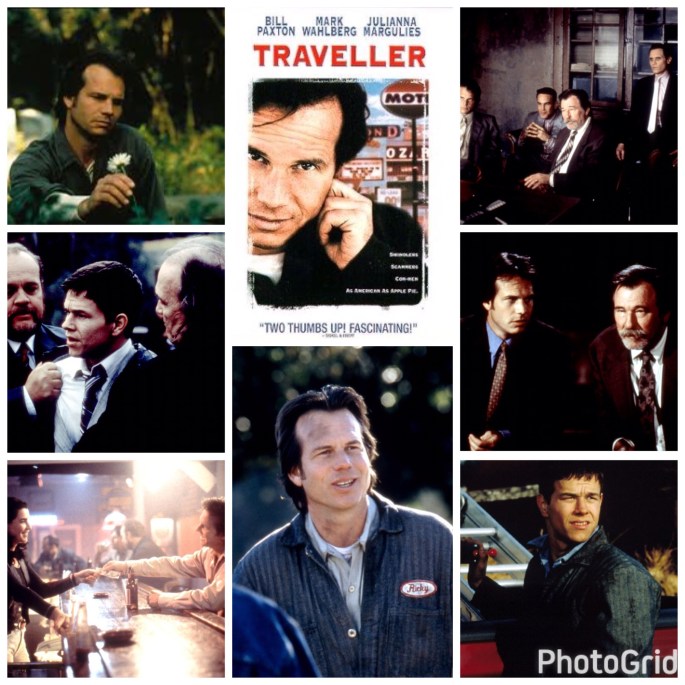
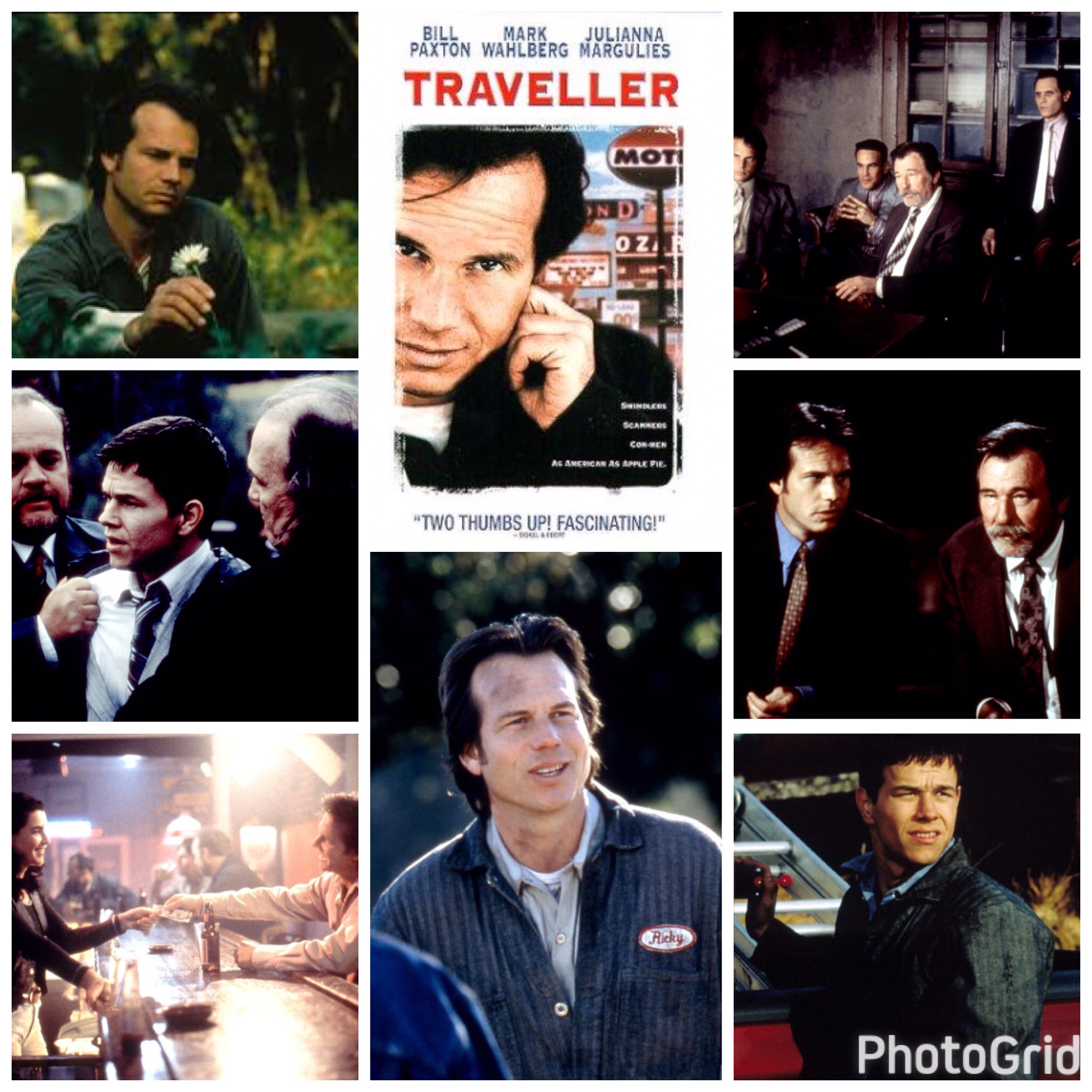
Films about con men can go a lot of ways. They can be intelligent with a worthwhile and earned payoff (2004’s Criminal), they can be hollow, nonsensical, all flourish and no gravity (2003’s Confidence) or deviate any which way from these examples. Traveller takes the quaint indie route, meaning I’m probably the sole person on the planet who has even heard of it, despite Marky Mark Whalberg appearing on one of the starring roles. It’s a shame because this is a bona fide gem, a low key little charmer with a roguish lead performance from Bill Paxton, a plot that gets cleverer the more you ruminate on it afterwards, and an easygoing style to it. Marky Mark plays Pat, a young man descended from Irish ‘travellers’, who are essentially gypsy hustlers and live as such in a sleepy North Carolina community. Pat wants to reconnect with his roots, but his kinfolk are a tribal bunch who don’t really fancy outsiders, however distantly related they may be. Cousin Bokky (Paxton) is the only one to take him under his wing, showing the ropes of a very specific, time honoured idiosyncratic lifestyle. Pat is young, cocky and sticks out like a sore thumb in Bokky’s world, who himself is weathered and moves about with ease and experience, slowed down by the dynamic which his young prodigy presents, and also looking for a way out of this life, and even romance with gorgeous Julianna Margulies. As light as these proceedings are, the film doesn’t fail to show the give dangers that being a con man puts them face to face with. It’s all fun and games until… well until it isn’t, and we get to see some of that ugliness rear it’s head, for without it there would be no stakes. Joining them is grizzled and now deceased character actor James Gammon, playing a salty veteran grifter who crosses their paths more than a few times, causing as much trouble in the process. I’ve not a clue how close to real life fact and tradition this film gets, but I imagine fairly on the nose, as it just has that notion that it knows what it’s doing, it’s researched, capable, and does it all with ease and enjoyment.
-Nate Hill
John Hillcoat’s Lawless

John Hillcoat’s Lawless is the very definition of badass. Bathed in blood and moonshine, gilded by Nick Cave’s rustic, textured musical score and brought alive by vivid and varied performances from an eclectic, grizzled cast, it’s one of the most enjoyable gangster pictures to come along in recent years. It follows the rough and tumble Bondurant brothers, fabled bootleggers who defy prohibition and run their product all over the aptly named ‘wettest county in the world’, until the greedy and very corrupt arm of the law snakes its way into the territory. The eldest and toughest is Forrest, a grumbly, shambling Tom Hardy who’s something of a gentle giant, until the straight razor comes out and he’s not. Jason Clarke is Howard the booze hound, who has sour mash coursing through his veins and a temper to prove it, and Shia Leboeuf, somewhat miscast, does his best as the youngest of the three. The three of them run an idyllic little manufacturing and distribution ring spiralling out of their county into the nearby area, until trouble comes looking for them, in the form of a monster played by Guy Pearce. Now when I say monster, I mean it.. when the villain in your film is scarier than Gary ‘Scary’ Oldman’s roguish supporting work, you know you have one hell of an antagonist. Pearce, sporting a sour look and parted hair that Moses could lead his people through, is Charlie Rakes, some kind of government dispatched deputy whose sole purpose is to make out heroic trio’s lives exceedingly difficult. Cheerfully sadistic and ruthlessly corrupt, Rakes is a bona fide moustache twirling psychopath and Pearce milks the role for all it’s worth, as per usual in his case. Oldman does appear briefly but memorably as lively gangster Floyd Banner, a shark of a businessman with a fondness for tommy gun tantrums resulting in vehicular mayhem. The film walks a line between two distinct tones, which can be seen in the characteristics of the pair of older brothers: Hardy is laid back, laconic and ambles along at his own pace, which any film set in the south just has to have a bit of, whilst Clarke is volatile, fired up and hot blooded, also needed in crime fare. So you have a relaxed, violent, wistful piece with a mean streak that sneaks up on you more than a few times. Any Ozark tale wouldn’t be complete without a romantic flair, as Hardy is swept off his feet by mysterious, plucky Jessica Chastain and Lebeouf has an eye for a beautiful Amish girl played by Mia Wasikowska. The film looks visually magnificent, shot in broad, sturdy rural strokes by Benoit Delhomme, and strict, impressive attention to detail is paid throughout. While maybe not as gritty or mythic as it wants to be, or at least as far as Hillcoat’s previous work has been (The Proposition remains the stomach churning gold standard), it’s a full blown, R rated crime picture, something more than welcome in an age when the genre has had its blood somewhat watered down. Highly recommended.
Morgan: A Review by Nate Hill

Morgan is one of the slickest genre flicks I’ve seen in recent years, finely tuned like a barbed wire tightrope, full of nasty surprises, throat ripping action and that ever present ethical turmoil that hangs about in any films that deal with artificial humanoid beings. It’s only weakness is exactly that stylistic strength: it’s so tight and streamlined that one occasionally feels like the scales tip in the favour of style over substance, but it’s a minor quibble when you take a step back and look at just how entertaining and fired up this piece is. The filmmakers are minimally concerned with the moral grey areas that cloning wades into, and subsequent philosophical pondering, but more than anything they just want to pull the ripcord and blast full throttle into an adrenaline soaked, R-rated sci-if tale with vague aspects of a character study. The title refers to Morgan (The Witch’s Anya Taylor-Joy in a performance both terrifying and heartbreaking), a genetically engineered humanoid girl held at a secluded facility alongside researchers, one of which she has just had a violent incident with. The corporate honcho (Brian Cox in a sly, all too brief honcho) dispatches a cold, clinical asset in the form of Kate Mara, sent to assess the situation and implement any measures necessary. She is an outsider, a callous bicep who flexes at the whims of the company. The researchers and handlers, however, are not. They have grown up around Morgan, invested time and, somewhat unwisely, emotion into her and will stop at nothing to ensure her survival. Paternal Toby Jones, opinionated Jennifer Jason Leigh and compassionate Rose Leslie prove to be a formidable armada against Mara’s evaluation, and tensions arise. Morgan has her own cloudy agenda though, and whether by flawed design, ghost in the shell syndrome or pure survival instinct, proves to be the greatest danger of all. She experiences people at their best, worst and most enigmatic, and her startling behaviour is a reflection of all of it, and a sobering example of humanity’s pitiful inability to perfect the creation of artificial life, at least in this film’s universe anyway. From Mara’s threatening presence, to an intense evaluation from a particularly nasty psychiatrist (Paul Giamatti overacting so hard he almost sucks the set dec up into his orbit), it’s no wonder Morgan snaps. Now when she snaps, the film more or less whips all its chips on the table, flips said table and hulk slams it two floors down. All subtlety and thought provocation kind of get left in the dust as everything careens towards an especially visceral climax, and that’s okay, as long as it doesn’t leave you feeling underwhelmed. I kind of had the intuition it was going to take the rambunctious root overall, and took comfort in the fact that it at least somewhat focused on the delicate aspects earlier on. It’s a well oiled machine, impeccably casted, given just enough pathos to keep our sentimental sides invested, and more than enough visceral hullabaloo to get our pulses dancing, all set to a score both thundering and graceful. Great stuff.
Brighton Rock: A Review by Nate Hill
Brighton Rock is a character study focusing on one of the most delinquent, misanthropic, sociopathic, maladjusted pieces of work you’ve ever seen. The fiend I speak of is a wannabe British gangster named Pinkie, played by Sam Riley, an actor who doesn’t usually get this dark with his work, but makes quite the impression when he does. Pinkie lives in the seaside town of Brighton, and aspires to rule the crime faction there with a razor brandishing, snarling, self destructive death wish. Despite the quaint and quite pleasant coastal setting, this is a cold as ice story about a guy who brings nothing but despair and violence to everyone including himself. Showing up on the scene to oust local bigwig Phil Corkery (John Hurt), Pinkie declares personal war on everyone around him in a spectacular downward spiral of burnt bridges and furious confrontations. There’s also what has to be one of the most dysfunctional ‘love’ stories to be found anywhere, between him and a clueless waitress played by a very young Andrea Riseborough. She’s deluded by the bad boy effect, blind to the fact that Pinkie cares for her about as much as roadkill. She’s a plaything to him, a curiosity to be toyed with and eventually discarded, or worse. She loves him, or at least naively believes she does, making it quite sad and unfortunate to see their bitter courtship circle the sinkhole. Helen Mirren plays her restauranteur boss who feels the bad vibes coming off Pinkie in waves, and warms poor Andrea. Needless to say, these warnings go unheeded. Watch for Sean Harris, Phil Davis and Andy Serkis in appropriately scummy roles as well. This is Riley’s show, and he owns it with the force tyrannical pissant who is positively bursting with self loathing and homicidal hatred. A dour tale hiding beneath a picturesque shell, strangling us in malaise before we know what’s hit us.