O.C. AND STIGGS – A REVIEW BY J.D. LAFRANCE

ocandstiggs1

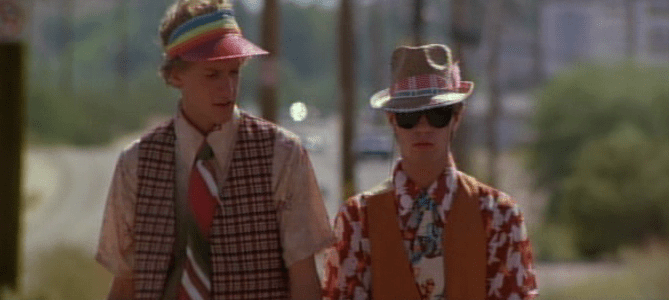
After Popeye (1980), Robert Altman had effectively alienated himself from most of the Hollywood studios and took to adapting stage plays for the big screen through independent financing. In the early 1980s, National Lampoon magazine published stories about two troublemaking teenagers named Oliver Cromwell ‘O.C.’ Ogilvie and Mark Stiggs written by Tod Carroll and Ted Mann. When Altman made O.C. and Stiggs in 1984 (it wasn’t released until 1987), teen comedies were all the rage but he hated them and so, instead, he made it into a biting satire of these kinds of films. Not surprisingly, nobody liked it and the movie quickly disappeared. Even among Altman fans it has few supporters and was eventually quietly released on DVD.

O.C. (Daniel Jenkins) and Stiggs (Neill Barry) are suburban teens and avid practical jokers who live in Phoenix, Arizona. The main target of their gags is the Schwab family, a decadent, materialistic clan headed by Randall Schwab (Paul Dooley) who sells insurance. The mother (Jane Curtin) is an alcoholic, their son (Jon Cryer) is a gullible idiot while their daughter is about to get married.

In some respects, O.C. and Stiggs are like teenage versions of Hawkeye and Trapper John from M*A*S*H (1970). Both feature clever hipsters but the latter were also brilliant surgeons whereas the former are only good at one thing – staging elaborate practical jokes. In M*A*S*H, the two surgeons were fighting against authority and the absurdity of war while O.C. and Stiggs are fighting against materialism and mediocrity as represented by the Schwabs with their bad fashion sense and gaudy décor – the epitome of the “ugly American.”

The problem with O.C. and Stiggs is the central characters. They aren’t particularly interesting. Their obsession with pulling endless practical jokes on the Schwabs seems mean-spirited at times. Another problem lies in what O.C. and Stiggs are rebelling against, which isn’t as clearly defined as the war in M*A*S*H. The teen pranksters are rebelling against the mind-numbing banality of suburbia and the “Greed is good” era of Reaganomics. There is an attempt to provide some kind of motivation for why these kids do what they do. Stiggs’ dad is cheating on his wife while O.C.’s dad (grandfather?) is unemployed and possibly senile. No wonder they spend all their time together devising elaborate schemes. It is a form of escape from their mundane surroundings.

This movie sees Altman in an extremely playful mood with the same kind of fast and loose structure as California Split (1974), which also features two freewheeling pals careening from one crazy encounter to another. A crazed, babbling Dennis Hopper even pops up as a burnt out Vietnam vet. It’s as if his photographer character from Apocalypse Now (1979) had somehow made it out of Kurtz’s compound and came back to the United States.

There are some nice moments, like when O.C. dances with a beautiful girl (Cynthia Nixon) at the Schwab wedding that is a nod to classic Hollywood cinema by way of Fred Astaire and Ginger Rogers. But it is not enough to keep this uneven film together.

Altman flips the ‘80s teen comedy on its head. He even refuses to populate the film’s soundtrack with trendy New Wave music, instead opting for the catchy African music of King Sunny Ade. No wonder people hated this movie when it came out. Clearly Altman did not grasp the original source material (or didn’t even bother to read it) and just did his own thing. The results are, at times, amusing and at some point you either surrender yourself to the goofiness of the whole enterprise or resist this maddeningly frustrating effort.
The Truman Show: A Review by Nate Hill 

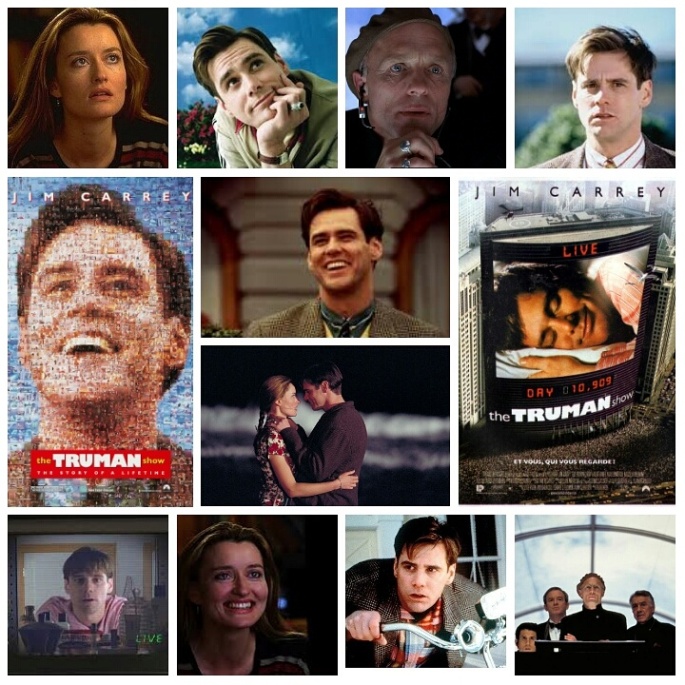
Everyone at some point in their lives has been bothered by the notion that their surroundings are all an elaborate prank, that somehow every single human being but them is in on some giant impossible joke, watching their every move for strange and unthinkable purposes. What if my life isn’t real? What if all my friends and family members aren’t who they say they are, and I’m just part of some ungodly social experiment? What if my life as I’ve known it just isn’t.. real? For Truman Burbank (Jim Carrey) these concerns are very pressing, as he discovers throughout one of the most thoughtful, touching, creative and insightful films ever made. Director Peter Weir works with a script by Andrew Niccol to bring us this now timeless tale of a man existing in a patented pastel world that was never his own and always destined for him. Truman is the unwitting star of his own television show, inducted into its gargantuan studio set since the day of his birth, and conditioned to believe all his life that the people, places and events around him are in fact his real life. Cruel? Perhaps, but the film never takes sides, instead favoring wonder over analytical dissection, a wise move. Even the conductor of this whole absurd symphony, a prolific filmmaker played by Ed Harris, gets his moment of sympathy which can be read as preening ego or the desire to connect with his leading actor beyond the pixelated jumbo-tron he sits behind, depending on how you view the situation. Truman has a lovely wife (Laura Linney), a salt of the earth best friend (Noah Emmerich) and the perfect little white picket fence life. But none of it is real, or at least organic in the sense that every person deserves out of the womb. Truman is a rat in a very elaborate maze, but like anyone who’s had the wool pulled over their eyes, eventually he begins to see lights of authenticity piercing the seams. Gradually he begins to sniff out the ruse, like a child losing their innocence, and questions the eerily idyllic life he has been given. The people, or rather, actors in his life react in different ways. Some panic, others stick to the script, and Harris sorrowfully watches his controversial creation awaken beyond his control. Carrey is a starry eyed revelation as Truman, in one of the most overlooked performances of the century. His arc is the stuff of dreams, spanning the lengths of naivete trapped in a bubble that bursts into affecting, starry eyed realization and wonder. Every moment is owned by him, every beat is resoundingly hit in flawless fashion. When a mysterious and beautiful defector (the luminous Natasha Mcelhone) enters his life to play the part of whistle-blower, it’s the first geniune and non-puppeteered interaction he’s had with a human being. Sparks fly high enough to reach the heavens, and it’s the catalyst for a journey to find the self, the reason for his predicament, a world beyond the Lego brick suburbia he has known and the next step in his impossibly unique life. There’s a piece of Truman embedded in every viewer beholding, and I believe that’s why the film has held up for so long, and been beloved by so many. Every human being has insecurities as large as the fake sound stage that raised him from a pup. Every one of us has at one point felt the alienation he must have gone through upon realizing the truth. In a story so larger than life, we find the answers, or at least a modicum of such, to what it means being a person in this world. Carrey’s Truman is an achingly relatable avatar of this and a direct conduit into the essential. Couldn’t have picked a better actor to bring all of this to life. Couldn’t have made a better film about it. A classic. Good morning, and in case I don’t see you: good afternoon, good evening and goodnight. 

Indie Gems with Nate: Darkness On The Edge Of Town 

Every once in a blue moon I take a look in the independent section of netflix, scan the message boards on imdb or do a little bit of research I order to find something I have no idea about, to blind watch something obscure and little heard of. Often I get saddled with head scratching bilge water, but sometimes there’s that perfect film out there, just waiting to be taken in and appreciated by more people.  Darkness On The Edge Of Town (is that not a wicked title?) seemed like what I was in the mood for, so I gave it a shot. Blew me away. Like an intoxicating mix of Straw Dogs, Thirteen, Mystic River and others, all set in atmospheric Ireland, and absolutely brilliant. It opens with one of the most beautiful wordless prologues, in which we witness a murder being carried out, and are privy to the perpetrator right off the bat. The victim is young woman Sophie (Maura Foley), leaving her estranged sister Cleo (Emma Eliza Regan) and her best friend Robin (Emma Willis) to put the pieces together, while both navigating broken foster homes, dangerous Travellers and a suspicious police detective. Cleo & Emma are problematic, near feral waifs who grew up as best friends, but with not much other companionship from anyone else. Even Sophie was an absentee sibling with her own problems, as revealed in flashbacks that fill in gray areas. The two have spent a shared childhood and adolescence running wild, and as such see fit to take on their own investigation into the crime, leading to places of darkness, confusion and revelations which will threaten to tear them apart. The film carefully examines the relationship between the two leads, as well as each one’s connection to Sophie and how it affects their choices and outlooks. There’s an ethereal magic to it all, a fairy tale timbre to the soundtrack and photography, hinting towards a shred of innocence still left in these two, despite how bitter life has made them both. Music plays a big part too, especially in the muted opening, a stark, striking way to usher us into the story and an evocative blend of otherworldly suggestion and blunt frankness. The three girls are superb in their roles, and I look forward to seeing more work from them in the future. My only gripe is with story structure, as some of the finer plot turns could have been more precisely pronounced. However, it’s evident these people are fledgling filmmakers still getting a feel for their technique, so all is forgiven.  The misty locale of Northern Ireland takes on it’s own portentous sentience here, as you can guess by the title, which nearly brings the horror genre to mind. The only horror to be found here is in sickness of the mind, and the actions it can lead to amongst people, even those who love each other. Darkness is key here, with but a few rays of light and beauty amidst a thicket of trauma and violence. Check this one out while it’s on netflix, because I doubt it can be found anywhere else at this stage. A gem. 

Yes Man: A Review by Nate Hill 

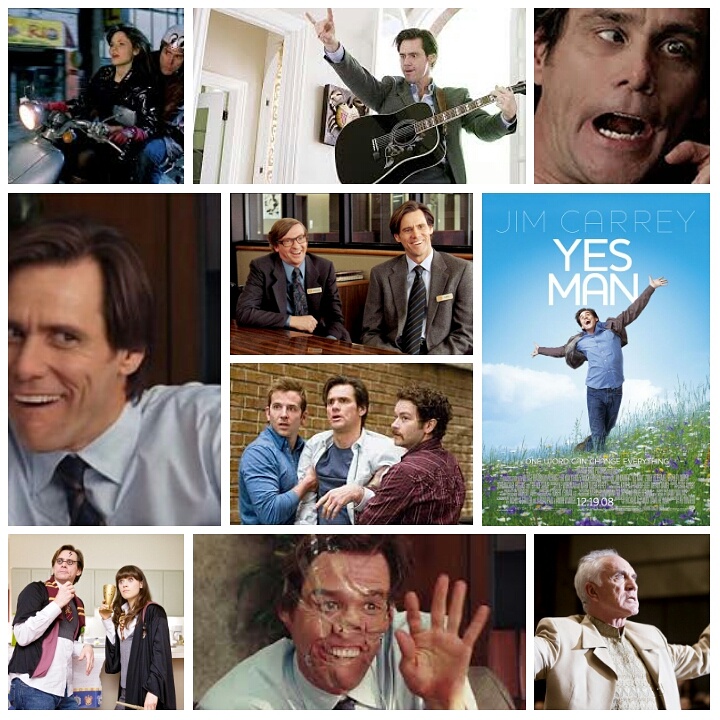
Yes Man is a loaf of fluffy, inconsequential Wonderbread amidst a career of denser comedic pumpernickel  for Jim Carrey. Most of what he does has weight to go along with the laughs, and if it doesn’t it still has a raunchy bite that always hits below the belt. This is one of the few times he treaded lighter, a tone which can also be found in Fun With Dick & Jane, but that’s just not a good movie. Yes Man has merit in fits and starts, and it’s harmless fun for most of the ride. Carrey plays the consummate negative Nancy here, a guy who spends the better part of his time turning down offers, cancelling plans, avoiding people and saying no to everything. This all changes when he goes to a dodgy seminar preached by batty self help guru Terence Stamp. Inspired by his slightly odd teachings, he challenges himself to say yes to everything, and I mean everything, for one whole year. This gets him into all sorts of trouble, and steers him to the obligatory 180 shift in his character arc, and his own enlightenment. Guzzling red bulls after an all night club bender, guitar lessons, sexual favors from his experienced elderly neighbor (Fionnula Flanagan), driving a homeless dude (Brent Briscoe) to the middle of nowhere and giving him like two hundred bucks, life is just more fun when you say yes to everything, as Carrey quickly finds out. He also meets cutie pie Zooey Deschanel, whose initial amusement towards his lifestyle quickly turns to exasperation when his affirmative nature gets just a biiit too crazy for her. It’s all in good fun, and while most of it isn’t memorable or super noteworthy, there is one particular scene that makes the entire film worthwhile: Carrey has an awkward kiwi of a boss (Rhys Darby) who is constantly inviting him to cosplay parties. The moment he accepts is a symphony of quirky mannerisms, scotch taped facial grimaces and absurdity that is pure Carrey and could be used to sum up his career in half a minute. Watch for work from Danny Masterson, Spencer Garrett and Bradley Cooper. Like I said, it ain’t gonna rock your world like many of the iconic, beloved Carrey films, but it’s an amusing diversion with some scenes that do bring it home. 

Ben Stiller’s The Cable Guy: A Review by Nate Hill 

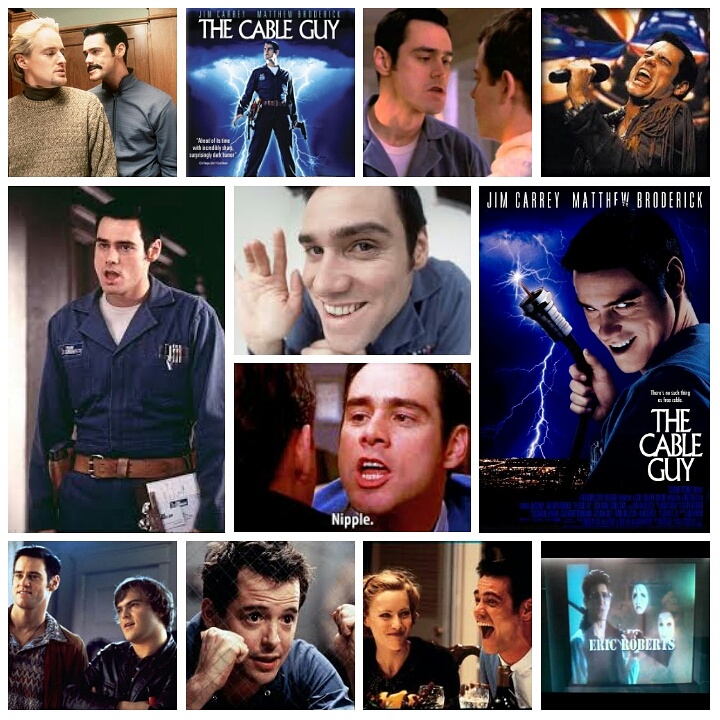
What do you get when you combine acid tongued social satire, unnerving physical comedy, borderline horror/stalker elements, endless pop culture references and an abrasive yet pitiful protagonist from your worst nightmare? Ben Stiller’s The Cable Guy, that’s what you get. And yes, before the hands go up, I do consider Jim Carrey’s lonely, disturbed TV repairman Chip to be the protagonist of the film, mainly because he’s eternally more interesting than Matthew Broderick’s bland, lifeless performance as the poor average joe who becomes victim to his ‘friendly’ courtship. Chip is one part neglected child, two parts borderline psychotic with a dash of manic obsessiveness and a pinch of terrifying delusional behaviour. Doesn’t quite sound like a comedy, does it? It almost isn’t. Stiller’s vision is so pitch black that it takes a few well timed sympathetic beats from Carrey, infused with his googly charm, to make it work. It’s mostly a walk on the scary side though. Broderick has the misfortune of having Chip show up to look at the television, and the guy takes an immediate, unsettling shine to him, going to great and terrible lengths to solidify an unrequited bromance that is a complete one sided fabrication. Stalking, interfering, framing him for god knows what, roughing up a smarmy gent (Owen Wilson is hilarious) who horns in on his girl (Leslie Mann) are but a few of the life shattering misdeeds that Chip carries out, all under the pretense of the buddy system. He’s essentially Frankenstein’s monster that has grown up from a child left to his own devices, fuelled by a lonliness which has long since pickled into something sad and destructive, both to himself and others around him. Carrey plays him like a champ, never cheaping out or holding back, always willing to go there and show us the extreme degrees on the temperature of the human personality. Damn, I make it sound so dark, don’t I?  It is, but at the end of the day we’re talking about a comedy starring Jim Carrey and directed by Ben Stiller, so there’s still the inherent comedic vibe that both of them bring, just drenched in tar this time around. Call it character study, stalker drama, a lifetime movie gone horribly awry or anything in between, whatever it is, it’s some stroke of demented genius and holds up well today. Watch for Jack Black, Ben Stiller, Janeane Garofalo, Andy Dick, Joel Murray, David Cross, Kathy Griffin, Charles Napier, Bob Odenkirk, Kyle Gass  and a pisser of a cameo from Eric Roberts as himself in a facepalming television melodrama. 

Ace Ventura: Pet Detective: A Review by Nate Hill 

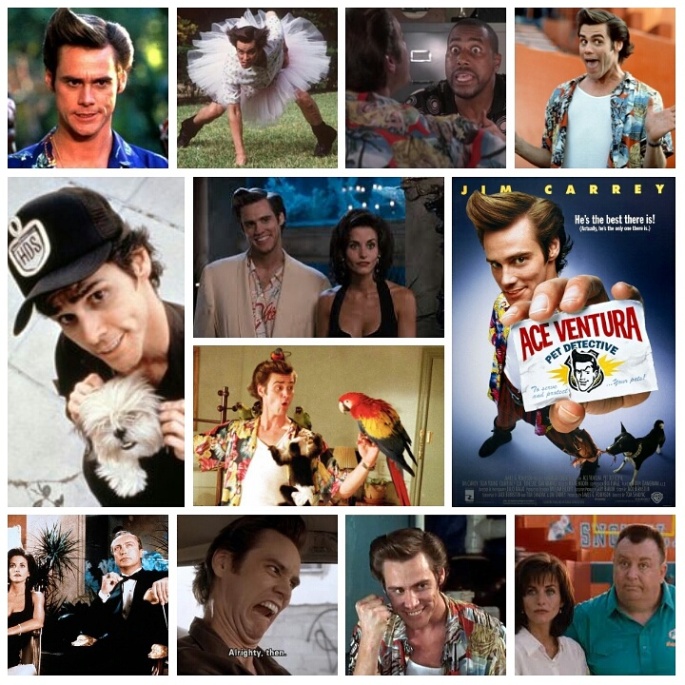
Ace Ventura: Pet Detective shouldn’t really be as funny as it is. It’s random, head scratching and just deeply juvenile, and happens to be one of the funniest films ever made. Why? Jim Carrey. The man is spun gold on camera, and he sells every outlandish minute of this gonzo Looney Toons goofball of a flick. It really wouldn’t work without him. I mean, could you imagine, say, Dustin Hoffman, or John Travolta trying to pull of this kind of malarkey? Ok, I did just laugh really hard picturing that, so it would be funny, but only in an embarrassing way. No, it had to be Carrey, and he’s an engine of unbridled comic mania the entire way through. One acting technique involves basing your performance off of the mannerisms of an animal, and I’ve heard that he chose a cockatoo as the blueprint for Ace. The head bobs, squirrelly movements and that epic, instantly recognizable ocean crest of a hairdo. Makes sense, and I couldn’t unsee it after hearing that. Ace is probably the most eccentric, beloved character Carrey has ever fashioned, and for good reason. He’s like a cannon loaded with jokes, quips, pop culture references, personal space invading antics, a complete lack of inhibitions, a treasure trove of rubber faced muckery and a deep love for any and all creatures of the animal kingdom. Those are pretty much all of the qualities one should look for in a human being. I say that now, but I feel like after spending ten minutes with the guy I’d look for the nearest exit. Ace is on the case, when he’s not goofing off, which is always. Somehow he finds time to search for the missing mascot of the Miami Dolphins, an actual dolphin named Snowflake. The story dimly unfolds in the background of all his tomfoolery, and includes Dan Marino, a suspicious billionaire (Udo Kier, whose exasperation at Carrey’s behaviour looks very un-faked), and an ice queen of a Police Chief played by Sean Young, with an arc that  goes to some pretty disturbing places for this kind of light fare. He also finds time to have hot jungle love with Courtney Cox,  and speak to people through his asshole like a deranged Muppet, among many other things that will have you questioning why you’re watching it, only to realize it’s like your twentieth viewing and you have no plans to ever stop. It’s Carrey’s show, and he takes it into orbit, never letting the mania subside for a nanosecond. He’s borderline certifiable, which comes in handy when he has to infiltrate a mental facility, because the guy halfway to belonging there anyway. There’s just so many cherished little moments, mannerisms and scenes that don’t ever get old, for those of us that love this character. Carrey shaped the landscape of comedy a lot during this portion of his career, and the mile markers that he released stand tall and undiminished to this day, bringing hilarity to all. The sequel is genius too, and one of those rare follow ups that is just as solid as the first. 

SEMI-PRO – A REVIEW BY J.D. LAFRANCE

Will-Ferrell-in-Semi-Pro-will-ferrell-11769585-853-480

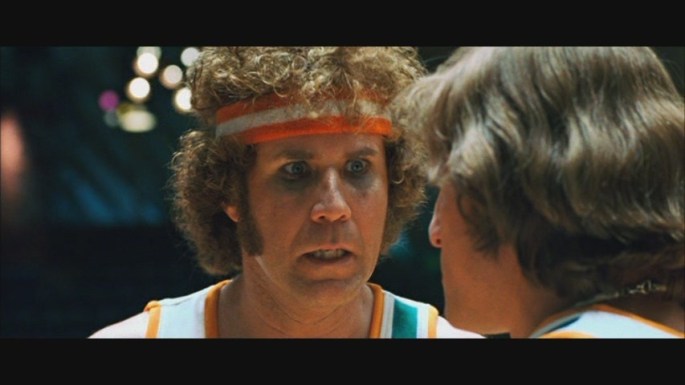
Semi-Pro (2008) proved that Will Ferrell is no longer bulletproof at the box office. The film was not well-received by the critics (nothing new for Ferrell) but failed to connect with his fans like Anchorman: The Legend of Ron Burgundy (2004) and Talladega Nights: The Ballad or Ricky Bobby (2006) did. On paper, Semi-Pro must’ve seemed like a sure-fire hit: mix the dumb guy humor from Anchorman with the underdog sports team of misfits from Slap Shot (1977) and sprinkle all sorts of popular culture references from the 1970s. So what went wrong?

Jackie Moon (Ferrell) is the ever-confident, terminally clueless owner, head coach, and star player (if you can call him that) of the Flint Tropics, an ABA basketball team that might be dissolved when the league merges with the NBA. Only the four best teams will make the cut, which is not good news for Jackie’s team. They are awful, averaging an attendance record of 91 people a game. The lone exception on the team is Clarence “Downtown” Malone (Andre Benjamin) who actually has a shot at making it to the NBA. The Tropics are so bad that one of the local commentators reads the Classifieds section of the newspaper during one game.

In order to improve the team’s chances, Jackie trades their washing machine for Ed Monix (Woody Harrelson), a physical player not above punching out his opponents. The Tropics certainly have their work cut out for them. Not only do they have to start winning on a regular basis but they also have to average 2,000 people every home game. So, Jackie thinks up all kinds of hair-brained schemes to fill seats, including jumping the team’s cheerleaders on roller-skates and wrestling a grizzly bear.

For the first half of Semi-Pro, the comedic beats, or rhythm, is just not there. At the very least, it is inconsistent. Many jokes fall flat and are just not funny. The two color commentators Lou Redwood (Will Arnett) and Dick Pepperfield (Andrew Daly) steal every scene that they are in with their raunchy repartee (much like Jason Bateman and Gary Cole did in Dodgeball: A True Underdog Story). Then, a funny thing happens in the second half. The film actually gets better. There are a few serious moments, mostly dealing with Monix and his ex-girlfriend (Maura Tierney), and once the Tropics get their act together, the film picks up momentum.

Will Ferrell plays the same type of character we’ve seen in countless films – the clueless confident guy with a touch of arrogance. To be fair, he’s got it down to a science now, but it is getting a tad predictable. One gets the feeling that Ferrell is trying to recapture the magic of Anchorman, complete with the 1970s setting. Unfortunately, Semi-Pro is nowhere near as funny despite an excellent premise. Aside from Will Arnett as his usual snarky self, Woody Harrelson is quite good as a washed-up former NBA player looking for redemption and hoping to rekindle his relationship with an ex-flame.

Semi-Pro isn’t a total train-wreck by any stretch and it does have its genuine moments of hilarity but doesn’t quite deliver as well and as often as it should. If you can make it through the first half of the film, where the filmmakers struggle to find the right mix of humor and drama, you’ll be rewarded for a much more satisfying second half that pays off your patience for sticking it out.

Me, Myself & Irene: A Review by Nate Hill 

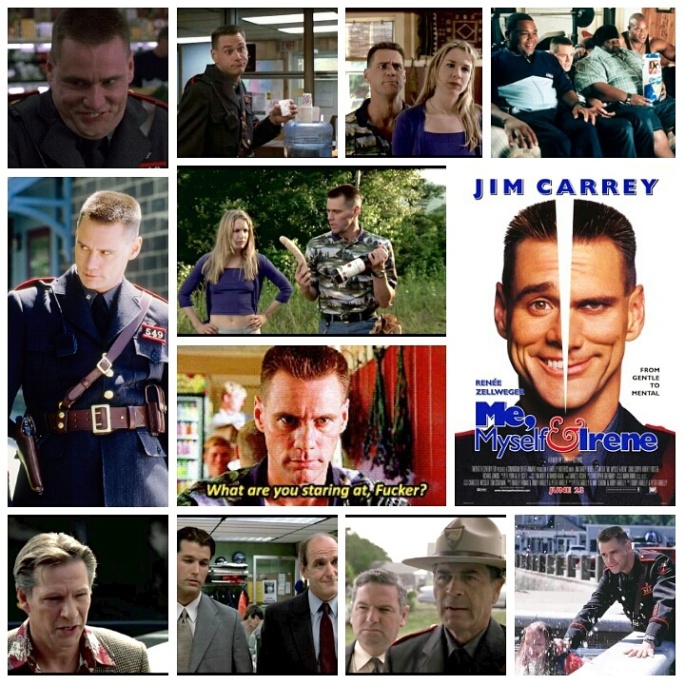
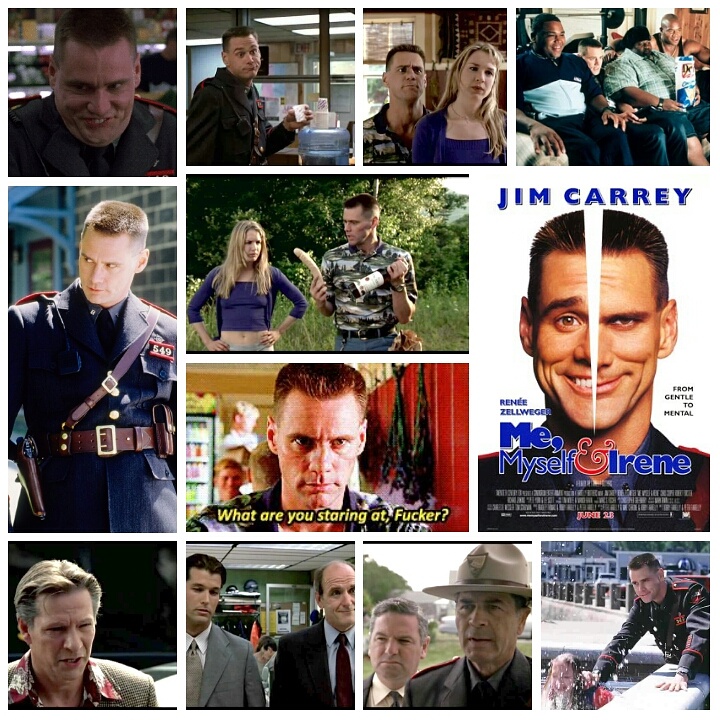
Probably the most ridiculous outing the Farrelly brothers have ever taken us on, Me Myself & Irene cares not a whiff who it offends, how many eyes are rolled or how badly the scales of humour are tipped, or rather yanked, in the direction of extremely bad taste. With the exception of Stuck On You where they played it safe, every dirty little flick in their career is a testament to the utmost raunch in film, the very definition of lowbrow humour and never not flat out totally hilarious. Obesity, dates gone wrong, Amish people, conjoined twins, bowling, physical disability, they’ve tackled every scatalogical venture you could dream up. This time it’s mental illness, in a completely unapologetic depiction that will leave most people red faced, either from fuming or laughing their asses off. Jim Carrey plays Charlie, a meek little pussy who spends one day with his newlywed bride, before she’s whisked away by a black midget played by Tony Cox, who gets all the black midget roles, that little bastard. Charlie has a knack for never standing up for himself, and letting anyone walk all over him. He’s a Rhode Island State Trooper with no balls to back up his badge, and is pretty much the laughingstock of the town. All this bottles up and reaches a boiling point, resulting in a classic Carrey meltdown of rubbery expressions and spastic gutteral incantations. Emerging from the mess is Hank, Charlie’s abrasive, dysfunctional and borderline psychotic alter ego, a result of what the film imagines multiple personality disorder just must be like. Hank causes all hell, and the first time he shows up is the funniest bit in the film, an extended montage of hair raising antics that oddly seems to sum up the Farrely’s career. Charlie/Hank then get caught up in some intrigue involving beautiful Renee Zellweger, back when she was still Renee Zelweger. The scattershot story is just a playground for Carrey though, and this is some of the edgiest R rated mayhem he’s ever caused, guaranteed to arch the backs of some of the more, shall we say… *sensitive* folks we have to deal with running around these days. Charlie has three loudmouth black sons that were dumped in his lap, and they’ve now grown into profane geniuses who love their pops to bits, and it’s here the film finds its only bit of heart amidst the crass vulgarity. The baddies are the classic slimy Farrely cretins, a dirty cop played by Chris Cooper, and an unsavory golf club owner (Daniel Greene). Robert Forster makes a welcome appearance as Charlie’s Trooper boss, and keep a look out for Anthony Anderson, Cam ‘Sea Bass’ Neely, Richard Tyson, Lenny Clarke, and the always hilarious Richard Jenkins. Like I said, this is likely the lowest rung of the ladder in everyone’s career, but it’s a splendidly offensive, colorfully trashy piece of gross out bliss, and definitely the dirtiest of the Carrely team ups. Where else can you see Jim stare a five your old kid down and growl “What are you staring at, fucker?”

CARLOS – A REVIEW BY J.D. LAFRANCE

Carlos

Notorious international terrorist Ilich Ramirez Sanchez a.k.a. Carlos the Jackal came to prominence in the 1970s and 1980s with several politically-motivated bombings, kidnappings and hijackings in Europe and the Middle East. He eventually became a popular culture icon with thinly-disguised depictions in films like Nighthawks (1981) and gracing the cover of Black Grape’s debut album. His image was used as a cultural touchstone rather than an accurate depiction. Incredibly, it wasn’t until Olivier Assayas’ ambitious, five-and-a-half hour miniseries Carlos (2010) that the man and his times were finally done justice. Assayas wisely doesn’t pass judgment on Carlos but rather depicts how he influenced the political climate and how it, in turn, influenced him. Far from a stuffy history lesson, Carlos is an epic political thriller with a charismatic performance by Edgar Ramirez as the infamous terrorist.

Carlos is presented in three, feature-length episodes that track his rise to power and notoriety; the man at the peak of his powers and his greatest triumph; and his inevitable decline and capture. Early on, Assayas establishes his take on Carlos (Ramirez), presenting him as a vain man who, at one point, is seen admiring his own naked body in a mirror to the strains of “Dreams Never End” by New Order. We also see him espouse his personal philosophy, that true glory is “doing one’s duty in silence. Behind every bullet we fire, there will be an idea because we act in harmony in our conscience.” And initially, he seems to adhere to this but once he becomes a superstar among international terrorists, he embraces and cultivates his inflated reputation.

In the first episode, Assayas shows Carlos’ clumsy attempts to impress Wadie Haddad (Ahmad Kaabour), co-founder of the Popular Front for the Liberation of Palestine (PFLP), with a bungled assassination and a failed bombing. This segment builds towards an intense showdown between French domestic intelligence agents and Carlos at one of his girlfriends’ apartment in Paris where we see just how dangerous he is when cornered. The second episode starts off literally with a bang as Carlos and his group arrives at the OPEC headquarters in Vienna and take oil ministers from all over the world hostage in 1975. This was his highest profile operation done at the height of his powers.

By the end of the second episode, Carlos has been kicked out of the PFLP and he starts up his own terrorist organization, effectively becoming a mercenary. The third episode tracks his inevitable decline as he wages a war of terror on France in the early to mid-‘80s after they arrest his wife and a close associate. It’s costly battle for both sides but more so for Carlos who can no longer rely on his reputation to get jobs or find safe haven in countries that used to be sympathetic towards him. He becomes more vulnerable to attacks because he has more to lose, chief among them a family.

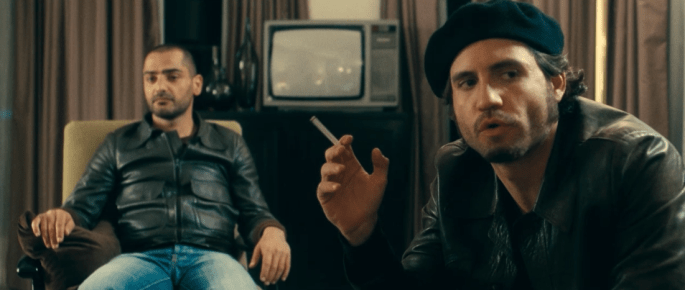
Edgar Ramirez’s magnetic presence really comes across early on as he exudes the cocky confidence of the man and conveys his complete commitment to the cause he espouses so brazenly. The actor has Carlos’ terrorist swagger down cold, showing us the smooth ladies’ man with his perfectly coifed looks and stylish attire. Known prior to Carlos mostly for his strong supporting turn in Tony Scott’s Domino (2005), he finally gets to be front and center, playing the role of a lifetime: a larger than life historical figure in a sprawling epic. Assayas and Ramirez’s fascinating take on Carlos is that he viewed himself as a kind of rock star, a charismatic personality who clearly saw himself as someone of importance, destined to do great things. This is evident in the way Carlos idolized and emulated Che Guevara during the OPEC raid, sporting the iconic revolutionary’s trademark beret and scruffy facial hair look as if making a statement. Also, the rock star analogy is further explored in the use of post-punk music along with the third episode, which could be seen as Carlos’ “fat Elvis” period of decline. Ramirez commands every scene he’s in, especially the OPEC raid where he prowls around rooms and hallways, expertly orchestrating this attack in order to get what he wants.

In an intriguing break from tradition, Assayas eschews a traditional orchestral score for source music, predominately post-punk rock. The opening track is “Loveless Love” by the Feelies, which sets the tone of the film. As the song builds so does the tension of the scene it plays over – that of Carlos attempting to assassinate a pro-Israeli businessman in England. Assayas also uses a few tracks by Wire, one by A Certain Ratio and a memorable action sequence scored to “Sonic Reducer” by the Dead Boys. The attention to period detail and architecture is also excellent as Assayas takes us on a perverse travelogue through Europe and the Middle East with Carlos as our guide.

With its color-coded sequences and its objective direction that is slick and confident, Carlos resembles Traffic (2000) and Syriana (2005). These films are all ambitious and expansive in scope as they expertly blend personal politics with bigger political movements. Carlos is a towering achievement, a fascinating study of a man who was a reflection of the times in which he lived in and is embodied by Ramirez’s powerful performance spanning several decades. Assayas’ film is very relevant to our times as it examines the complex machinations of international terrorism with the agendas of terrorist groups clashing with that of the governments of countries all over the world. Carlos sees the struggle of the oppressed against imperialist regimes as a war that he helps fight. With the end of the Cold War, he is marginalized and considered a relic from a bygone era. Assayas has crafted an incredible film that is smartly written, well-acted and masterfully directed.

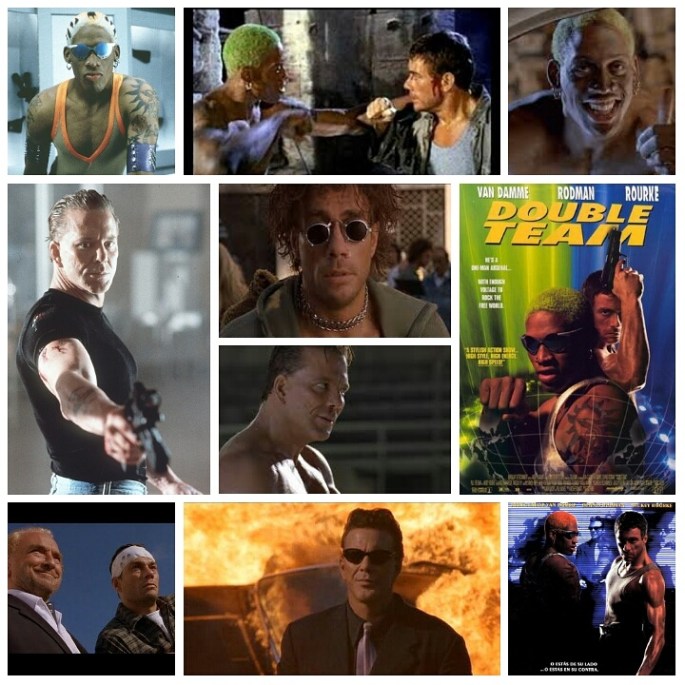
B Movie Glory with Nate: Double Team 

Double Team has to be seen to be believed. Hell, even the poster does. It exists in that delirious wasteland of the late 90’s action genre, a place where anything can, and does go. As the genre evolved, the scientists deep within Hollywood’s labs were trying out endless mind boggling action star team ups, even using a few celebrities that had never had a film to their name. In this particular twilight zone we get Jean Claude Van Damme and Dennis Rodman sharing a spotlight. There’s a pairing for ya. Van Damme plays a counter terrorist expert who miserably fails in preventing an attack from dangerous villain Stavros (Mickey Rourke), and is sent to The Colony, where disgraced agents are branded with all the snazzy technology the 90’s had to offer, after which being sent back into duty. He needs inside helps to track down Stavros, and finds it in beyond eccentric arms dealer Yaz (Rodman), a whacko who mirrors the man’s overblown real life persona. Together they make a run at Rourke, fireworks ensue, blah blah. It’s a crappy flick made noticeable by the strange presence of Rodman, and marginally watchable by Rourke, who actually gives Stavros the tiniest glint of surprising gravity, despite how downright silly the whole enterprise is. Loaded with cheese, dated special effects and clichés, it ain’t no picnic, but worth a glance during an inebriated late night channel switching blitz.