Cool World is known, by those few who may be aware of its existence, as the ‘other’ film in which live action characters inhabit the same realm as cartoons. The more famous one of course is Who Framed Roger Rabbit, a glorious gem of a film that gets the acclaim, notoriety and long lasting attention, as it well should. (We won’t speak of a third one involving a certain moose and squirrel that really does earn it’s bad rap). Cool World is somewhat maligned as the black sheep of the two, and in some people’s eyes (Ebert laid a stern smackdown on it) downright hated on. It’s no doubt very different from Roger Rabbit, which is admittedly the better film and the easier one to like and relate to. But this one is brilliant in its own right, at least for me. I love the way it uses a sombre tone with its human creations to throw a unique light on them as soon as the Toons show up. It’s quaint and wonderfully inaccessible, with some scenes existing purely of a need to showcase a stream of consciousness type style that doesn’t so much halt the proceedings, as give them their own surreal flavor. Brad Pitt is Frank Harris, victim of a jarring post war tragedy and thrown headlong into the cartoon world, eventually finding himself a Detective in their realm. Outside in our world, lonely cartoonist Jack Deebs (Gabriel Byrne is a sly choice for the role) falls in love with one of his creations, a blonde bombshell named Holli Would (voiced and later played in the flesh by Kim Basinger). Holli is as devious as she is gorgeous, and works to use Jack’s attraction to her as a conduit to escape into our world. Pretty soon a deafening cacophany of cartoon creatures in all shapes, sizes and colours floods out of their dimension and into ours, creating quite the cosmic mess for Pitt to clean up. It’s fun without being too zany, the overblown fuss of the Toons contrasted by a glum human world, reeling from the war and unexpecting of such an event to unfold. Granted, the meshing of the two dimensions isn’t given the precise, big budget fanfare and cutting edge methods of Roger Rabbit, but the world building and special effects here are still pure enchantment and offer a dazzling level of entertainment. Pitt is stoic with flinty sparks of boyish charm, Byrne hilariously plays it dead straight, and Basinger is dead friggin sexy. She steals the show especially as Holli in human form, having a ball with the bubbly bimbo trying to keep a straight face in the real world. The Toons in general really are a diverse bunch, ranging from animals to inanimate objects to tiny little formless cutesy blobs and everything in between, filling their frames with a chaotic, detailed miasma worthy of Studio Ghibli. Lot of hate floating around for this one. You won’t find any from me, I love the film, and accept it for the adult friendly, experimental oddity it is. Great stuff.
Tag: movie reviews
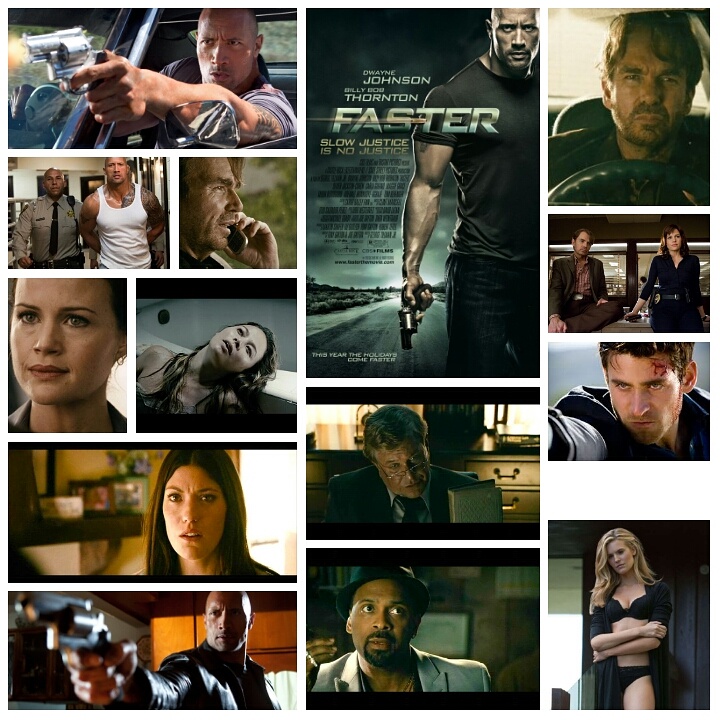
Faster: A Review by Nate Hill
Faster is an action film with an eerie aura and a darkly unnerving bite to it. Don’t get me wrong, it’s action through and through, a genre effort right to its marrow. And yet, there’s something oddly esoteric about it, an obvious extra effort put in by the filmmakers, namely first time action director George Tillman, to give every character an off kilter, bizarre cadence to ensure we won’t forget them. There’s clichés, no doubt, but they’re eclipsed by the strange, full moon weirdness of the rogues running about the film’s story. Dwayne Johnson fires up a furious protagonist in his first action role after a long and ridiculous stint in insufferable family comedies. He plays a quiet, hulking dude known only as Driver, reluctantly released from prison by a watchful Warden (Tom Berenger). Upon exiting the gate, he runs. And runs. And runs. He arrives at a small town junkyard where he tears a tarp of a vintage Chevelle which seems to be left there for him like a care package. From there he launches a bloody crusade of revenge that knows neither mercy nor discretion, and whose reasons we are only slowly allowed to know. He’s a one man wrecking ball, the murders piling up before we really have any idea what this guy is about. He’s been greatly wronged in the past, the culprits of which should all be running scared, as he comes looking for them one by one and with the juggernaut pace of a boulder tumbling down a mountain. Pretty soon there’s two cops on his trail, intrepid Cicero (Carla Gugino) and mopey sleazeball ‘Cop’ (Billy Bob Thornton), a dilapidated piece of work who mainlines heroin and clearly has a murky past. Soon there’s one hell of a hitman (Oliver Jackson Cohen) skulking around looking for Driver, an extreme sports enthusiast who has ‘beaten yoga’ and is avidly looking for the next big thrill. Johnson jumps from one ultra violent encounter to the next with all the corrosive ferocity of the grim reaper, tallying up the corpses until we’re all but sure he’s an inhuman elimination machine. Then.. the film curveballs us and throws a glint of humanity into the mix with some late third act emotion that only goes to show the filmmakers set out with more than a one track mind. Driver has been unspeakably betrayed, and his rampage is undeniably justified, but there’s a complexity to his quest that he didn’t see coming, and neither did those of us who expected pure action without a moral conundrum in sight. I say good on it for grasping something besides the thrills. A terrific cast populates the almost Oliver Stone – esque proceedings, including Maggie Grace, Moon Bloodgood, Mike Epps, Jennifer Carpenter (always superb), Matt Gerald, Xander Berkeley, Buzz Belmondo, Courtney Gains and more. It’s got the depth of a well written graphic novel and a level of thought out characterization that heaps of stale action entries wish they possessed.
B Movie Glory with Nate: Ticker
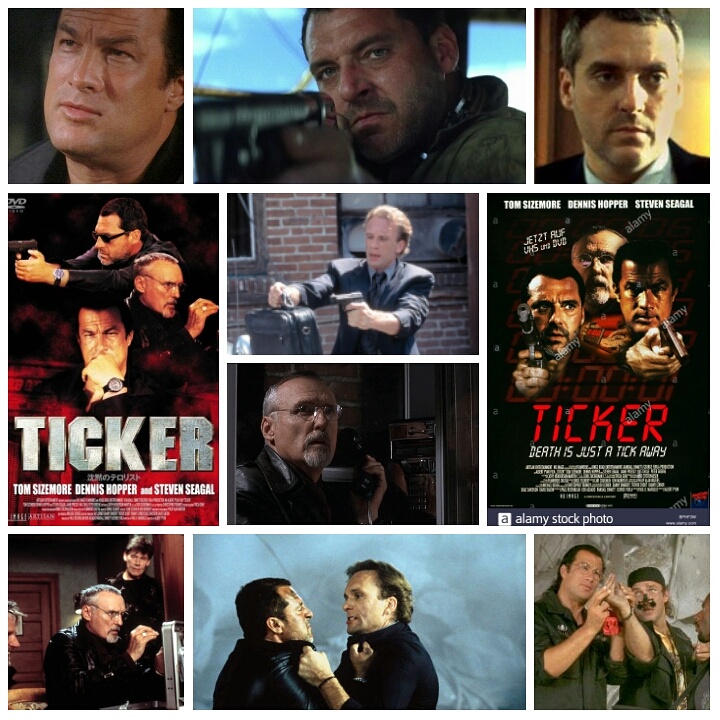
If an eighth grade class raided their parents liquor cabinet, passed around a bottle, got good and loaded and took it upon themselves to make their own version of every 90’s action cliche, it would look something like Ticker, a wonderfully inept mad bomber tale that starts at rock bottom and cheerfully drills farther down, as well as into critics collective patience, it seems. It’s silly clunky and all over the place, but there’s a scrappy likeability to its amalgamated stew of genre tropes, masculine posturing and endless explosions. The bomber in question is Alex Swan (Dennis Hopper), a homicidal Irish extremist intent on making life hard for the San Francisco bomb squad, led by explosives expert Frank Glass (a laughably zen Steven Seagal). Hero cop Ray Nettles (Tom Sizemore) previously lost a partner to bombers and has a big score to settle with Swan. And so it goes. Bombs go off. Cops argue. They chase Hopper, who eludes them until the next set of fireworks destroy a wall glass panels or a bridge. Sizemore is surprisingly sedated, not seizing the opportunity to use his lead role as an excuse to tear through scenery like a bulldozer, as is usually his speciality. Seagal is so silly, his intended gravitas landing with all the profundity of an SNL skit. Hopper is demented, even more so than in Speed, and the rental fee is worth it just to hear his perplexing, absolutely wretched Irish accent. Not since Tommy Lee Jones in Blown Away have I laughed that hard at an actor butchering the dialect to high heaven. There’s appearances from Nas, Jaime Pressley, Kevin Gage and the always awesome Peter Greene as ana a-hole fellow cop that hounds Sizemore any chance he gets. Quite the cast, and in a perfect world the film they wander through would match their talent. I watched this with the same morbid curiosity that the bystanders gawking at the resulting destruction of one of Hopper’s bombs no doubt had: incredulity and the inability to look away for missing a moment of a disaster unfolding in front of you.
Mr. Brooks: A Review by Nate Hill
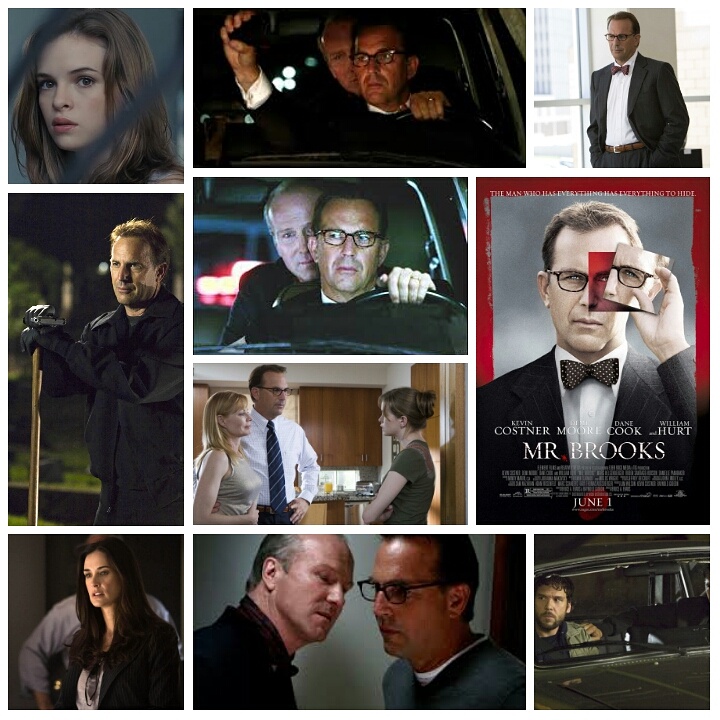
There are a few films Kevin Costner has done in which he has really been allowed and been willing to test the boundaries of what is usually expected from him in a role. 3,000 Miles To Graceland and Eastwood’s A Perfect World are fine examples. Perhaps the finest though is Mr. Brooks, a dark tale that showcases the actor in a terrifying turn and the last type of role you would picture for him on paper. Opposites are paramount in acting and cinema as a whole, and it’s that type of contrarian casting choice that can lead to a performer’s finest hours. In this case it’s certainly one of Kevin’s best outings, and casts him in a frightening new light, or should I say dark. Here he is Earl Brooks, husband, father, businessman and all round stand up guy. Except fpr the fact that he moonlights as a methodical and psychopathic serial killer. He sees it as an affliction, and is almost ashamed of it, whether by a tiny flicker of a soul he may have, or simply by the standards impressed onto society. He’s efficient, cold and hopelessly addicted to the act of murder. His alter ego, or ‘dark passenger’ as the scholars say, is a cynical persona called Marshall, brought to life by a scary William Hurt. “Why do you fight it, Earl?” he drawls in that committed, laconic snarl that only Hurt can do. There’s shades of his character from Cronenberg’s A History Of Violence here, affirming my belief that Hurt is a pure acting prodigy and masterful of both the light and the dark within his craft. Earl has a daughter too (Danielle Panabaker) who he has worrisome thoughts about, and a picture perfect wife (Marg Helgenberger). One can’t keep the turbulent nightlife of the serial killer a secret for one’s entire life though, and pretty soon people start to catch on. A nosy Nelly (Dane Cook) catches a whiff of Earl’s crimes and lives to wish he hadn’t, and a keen Detective (Demi Moore) begins to piece the puzzle together as well. Earl is as clever as he is murderous though, covering his work and tying off loose ends with gut churning gusto. Costner carries the film terrifically, a man who is at once both uncomfortable in his own skin yet fits it like a glove when the camera dutifully bears witness to his killings. He’s like a tiger who really can’t change his stripes but wants to shield them from the judgment of others, and of course his own persecution. The scenes of murder are skin crawling in their frank, fly-on-the-wall nature, no slasher cinematics or gimmicky set ups here, just the icy horror of a predator extinguishing human life to sate the beast, and the nightmarish inevitability of death. Those scenes paint Earl in a horrific light, but the film doesn’t try to convince us he’s a monster using any usual methods, it just presents to us this man, his acts and his life surrounding them, without discernable condoning or condemning. It’s cold, it’s clinical and it’s one of the best serial killer flicks out there.
Forsaken: A Review by Nate Hill
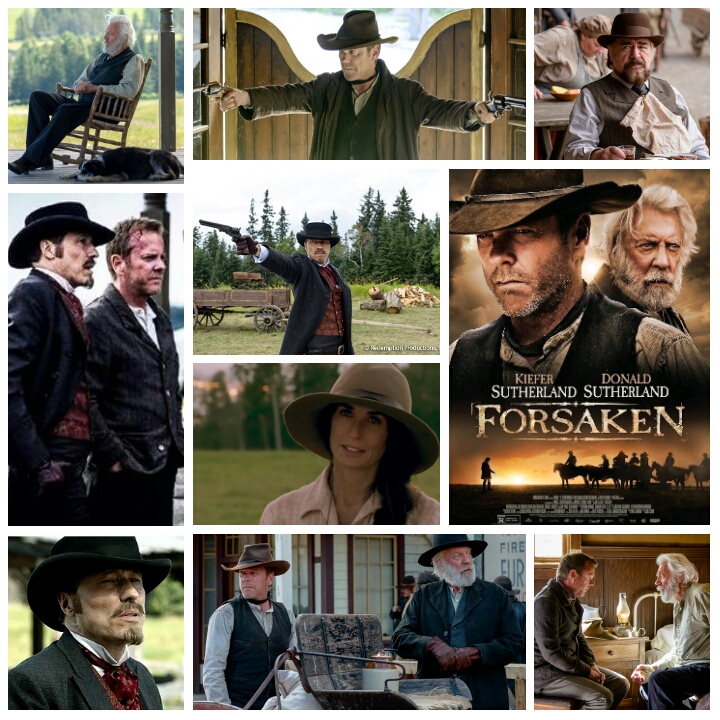
It’s refreshing that in an age populated by revisionist westerns and snazzy new takes on the ancient genre, some filmmakers just want to play it straight and deliver a good old oater without any newfangled bells and whistles. Jon Cassar’s Forsaken does just that, arriving a few years late (turbulent post production issues) but in modest, simple form, here to tell the age old tale of one man who stands up to some evil frontier bankers with stoic heroism. Kiefer Sutherland is John Henry Clayton, a man who has been away from his quiet hometown for nearly a decade. Following a traumatic stint in the war, circumstance led him into the life of the gunfighter. His unannounced return home stirs up old wounds in his preacher father (Donald Sutherland) who cringes in the very presence of his violent aura. John has thrown down the guns and sworn never to pick them up again, but we all know that just ain’t true, and when he meets a certain group of unsavory dudes in town, he becomes a time bomb of righteous anger that’s liable to go off any time. He spends some time mourning his mother and reconnecting with a lost love (Demi Moore), until the inevitable conflict brews. Corrupt banker James McCurdy (Brian Cox) is buying up farms and forcing families who don’t want to sell off their land, using despicable methods carried out by his two goons, vicious Frank Tillman (Aaron Poole) and mercurial ‘Gentleman’ Dave Turner (Michael Wincott). Tensions arise and everyone finds themselves headed for an unavoidable and blistering conclusion. Kiefer always has a jagged rage simmering just below the surface, which is what made him so perfect as Jack Bauer, another time bomb. He’s downright implosive here, delivering the best work I’ve ever seen him give. He’s got a touching scene with his father in which he goes to places I didn’t know he was capable of in his work. Donald is quiet, resentful and compassionate, wrestling internally to keep his serenity in the face of injustice. Cox always puts on a good show as the villain, and he’s exactly what he needs to be here: beaurocratic menace with just a dash of swagger. It’s Wincott who steals the show though, with the best work in the film. He inhabits Dave (and his incredibly dapper costume) with a relaxed, lupine calm, punctuated by sudden bursts of danger and always presided over by the midnight black, raspy croon of a voice that makes him so special. He jaunts along the line between villain and sympathetic antihero so well, the only character in the film to shirk the archetypes, and I was please try reminded of Jason Robard’s Cheyenne from Once Upon A Time In The West. His best work in a while as well, but then he’s always perfect. The film is refreshingly violent in its gunplay, with an earned brutality that never feels gratuituous, and always satisfying. The production took place in wildest alberta, a trip worth the taking for the breathtaking scenery we get to feast on, especially in an opening credit sequence that is very reminiscent of Eastwood films of yesteryear. It’s a landmark in the sense that although both Kiefer and Donald have been in the same film before (Joel Schumacher’s underrated A Time To Kill) they never have shared the same frame until now. Trust me, it was worth the wait. They are both excellent, along with their peers in a simple, honest to goodness Western film that should please fervent fans of the genre and moviegoers alike.
B Movie Glory with Nate: Blood Shot
Folks, this is one for the books. Ever wish there was a film made about a badass, gun slinging vampire who is secretly contracted by the President of the United States (Highlander himself, Christopher Lambert) to carry out dangerous missions and thwart evil Islamic terrorists? Well your very specific and demented wish just came true. Imagine for a moment that John Carpenter, Joe Dante and Michael Bay got hammered one night and wrote the most ridiculous script for a horror action comedy this century has seen. The resulting treatise would be Blood Shot, an absolute hoot of a flick that combines elements that wouldn’t be caught dead (or undead) together in any other setting but that of the gloriously unrestricted world of the B movie. The President uses a craggy operative named Sam (ever brilliant Lance Henriksen) to brief the Vampire in question (Michael Bailey Smith) on his missions. He is to hunt down violent Islamic rebels, led by a dude called Bob. Bob is Arabic. Bob is played by Brad Dourif, who is white as a sheet, but here shows up caked in brown makeup and hollering away in the most idiotic accent I’ve ever heard. His casting alone is just hysterical, and should drive the social activists up the wall screaming, while the rest of us howl in with laughter. His character is called Bob because of everyone’s inability to pronounce his real arabic name which is a mile long and completely nonsensical. His crew are terrorists straight from a Mel Brooks film, complete with a midget amongst them. There’s also a lone hero cop (Brennan Eliott channels the hotshot, reckless law enforcers of 80’s movies) hunting both the terrorists and the Vampire, getting in everyone’s way and capping anything that moves. The fact that Highlander plays the President in a film about a Vampire who hunts down terrorists named Bob should be more than enough for any self respecting film fan to drop whatever they’re doing and go bask in this baby’s glow. Despite being a direct to video flick, it contains not a trace of the trademark ineptitude and shoddiness that you’re always likely to find when exploring the genre. Campiness and lunacy, oh yes. But never mediocrity or laziness. But that’s what your friendly neighborhood Nate is here for, to wade through the unwatchable sludge and mine out the priceless gems for you all to see. This one’s funny, imaginitive, off the wall and a pint of B positive fun.
Passion Of Mind: A Review by Nate Hill
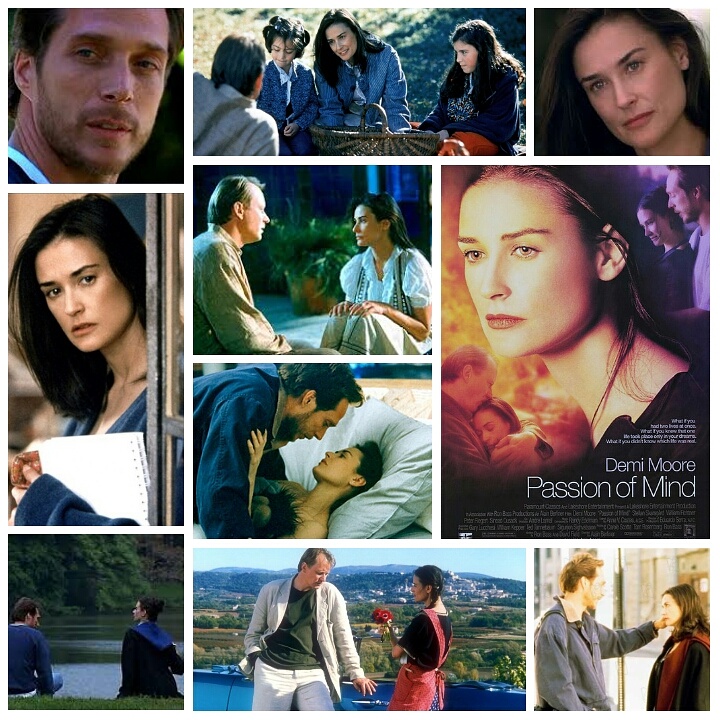
Passion Of Mind is a little seen fantasy romance tale that stars Demi Moore as a woman named Marie, essentially living double lives in a way. She lives and works in New York, and is as ordinary as any other woman in the world, but when she goes to sleep she wakes up to another life in the French countryside, with another job and children who aren’t in New York. She lives a day in the French life, goes to sleep, wakes up back in the New York life and lives for another day before going to sleep and back again. And so it goes. Is one life a dream? Or both? Is she imagining things, or stuck in some rift? To complicate things, as always happens in film, there are two men, one for each life. Aaron (William Fichtner) is a kind, caring businessman in the New York life who she begins a relationship with. In France she meets compassionate, romantic William (Stellen Skarsgard) who she also begins to fall for. Quite the predicament, no? If the premise sounds familiar to you, here’s why: there was a short lived NBC drama called Awake which ran for one season, starred Jason Isaacs and had the exact same setup. Now while the show obviously borrowed it’s central plotline from this film, it’s no big deal because it’s such a great idea it deserves more than just one shot. The film is quiet, pleasent and sweet, never really taking steps to explain it’s concept but simply letting it’s characters live within it in perplexed, whimsical harmony. Moore has an inherent sweetness to her and she’s wonderful here. One might think a protagonist who is put through a scenario would be confused, stressed out and damaged. Moore plays it her own way, as she always had. Her character is enchanted by her situation, if a little wary. Skarsgard and Fichtner are left field choices for romantic leads, as both are kind of considered character actors with stark, specific looks. Both play it straight here and their casting helps the film loads. Marie has two separate therapists, each from one of the lives (an element which the NBC show used as well), played by Joss Ackland and Peter Riegart. It’s not to serious, not too fluffy, just the right kind of low key romance with an imaginitive streak and a high concept that fits neatly into the story.
Things We Lost In The Fire: A Review by Nate Hill
Things We Lost In The Fire takes an unblinking look at addiction, recovery, redemption, grief and the ways in which various people cope with all of the above. It shirks the dramatic stereotypes and instead shoots for realism, or at the very least, an unpredictable narrative within a genre that often follows rigid blueprints. It also contains two exceptional performances from Halle Berry and Benicio Del Toro. Berry plays Audrey Burke, mourning the loss of her husband Brian (David Duchovny could write a textbook on understated acting that cuts deep) to a really unfortunate accident. The last minute arrival of his longtime best friend Jerry Sunborne (Benicio Del Toro) adds a new element to the family’s grieving process. Jerry is an ex lawyer who is now addicted to heroin. Brian stood by him for many years, never judging or intervening but simply being there to spend time with, and look out for his friend. Duchovny appears in multiple flashbacks with both Berry, Del Toro and his two remarkable children (Micah Berry and Alexis Llewellyn) that instil a lingering presence that not so much casts a shadow over everything, but brightens and flavours it with memories. Audrey is unspeakably lonely and devastated, and despite the fact that she despised Jerry and what he represented for years, invites him to live in their garage, in flat out pure desperate instinct, and probably in an attempt to be closer to Brian after he’s gone, by bringing what was close to him closer to her. Jerry is great with the kids, supportive and wants to change, even accepting employment assistance from their kindly neighbour (excellent John Carroll Lynch). The demons do their best to pull him back though, as is their purpose, and a rift forms as we begin to see that Audrey has not fully accepted Brian’s death and is in the throes of miserable confusion. Director Susanne Bier uses many intimate close ups of eyes, hair, smiles and frowns to bring us into the mindset of her characters, a tactic which works wonders here and keeps minds and hearts of her audience glued to the proceedings. Berry is dynamite, pure and simple. The finest acting moment I’ve ever seen from her comes deep from the gut and late in the third act, an agonizing moment in which she has a splintering realization that her husband is gone for good, that final, resolute place that sinks in and grabs hold which we’ve all heard about from family members or news stories in which loss of loved ones has played a part. I don’t know if Berry has experienced this for herself in her own personal life, but she sure damn well embodies it here with every ragged sob, and it cast her in an entirely new light for me. Del Toro is Brando-esque, a shambling, unshaven pit of insecurity and inner turmoil, giving Jerry the mutilated soul he deserves without ever dipping in self pity, given the phoenix treatment and rising from the ashes of his longtime affliction simply by being exposed to Audrey and the kids. One would think that the relationship between Audrey and Jerry might end up going into romantic territory, but Bier and company is more interested in the road less travelled, showing us a story which unravels in a way that’s much more akin to believability. Between her directorial skills, Berry and Del Toro’s virtuoso work, this is not one to miss.
Frankie & Alice: A Review by Nate Hill
There needs to be more films about mental illness that treat the subject with the vital care and compassion that Frankie & Alice does. It should be re-titled ‘The Halle Berry and Stelllen Skarsgard Show’, because for just over 90 minutes the two of them give some of the bravest, challenging work of their career in telling this story. Granted, it takes a few liberties with what we know about multiple personality disorder and what still to this day lurks in the shadows of the vast human consciousness, but it’s in service to character and story and is never exploitative. This film was made in 2010 and mired in distribute hell for nearly four years before dropping off of a most unceremonious assembly line into weak marketing. No one I’ve asked has even heard about it, which is a shame because it’s Berry at her most shattering, sexy and charismatic, and it’s somewhat based on a true story as well. She plays Frankie here, a wayward exotic dancer prone to destructive episodes in which Alice, an alternative personality, takes over and wreaks havoc in her personal life. Alice is a racist, southern white girl and Frankie is a black stripper in 1970’s New York. You can imagine the predicament. She ends up in a psychiatric halfway house under the care of Dr. Oz (Stellen Skarsgard) a man who is not remotely familiar with the term ‘giving up’. He sees the issues with Frankie clear as day, where his shirt tucking colleagues (Matt Frewer and Brian Markinson) are skeptical and impatient with his process. Oz is trying to unlock the secrets of Franki’s mind through the knowledge of each alter personality, all of whom are related to a tragic incident in her past that we get brief, fractured glimpses of through the broken prism of her mind. Director Geoffrey Sax keeps the melodrama to an agreeable minimum and let’s his two leads feel their way through the work both through each other and the material. Berry and Skarsgard have never been better, setting one another alight with the kind of chemistry many lead pairs can only dream of. Berry writhes with fury, confusion and loneliness, her coherence a flower that begins to bloom when Oz shows her kindness and the desire to really help her, something which. O one has ever done for her before in life. Skarsgard is an interesting guy because he’s equally great at inhabiting cold, sociopathic villains (King Arthur, Ronin) and he’s also compassion manifest when he wants to be (Passion Of Mind, Powder Keg). The performance he gives here radiates with warmth and assurance, a lighthouse in the fog of Frankie’s illness. Newcomer Vanessa Morgan is also excellent as the 16 year old version of Frankie, caught in a hailstorm of racism and sadness that no doubt are the seeds for her future condition. I’d love to know more about the real story of Frankie, and see how it contrasts with the film. Even if the differences are great and the liberties taken are considerable, we are in the end left with a superbly made film that takes mental illness head on and is one step further in erasing the stigma. A film that’s woefully unseen, so,etching I hope this review will change.
Frankie & Alive: A Review by Nate Hill
There needs to be more films about mental illness that treat the subject with the vital care and compassion that Frankie & Alice does. It should be re-titled ‘The Halle Berry and Stelllen Skarsgard Show’, because for just over 90 minutes the two of them give some of the bravest, challenging work of their career in telling this story. Granted, it takes a few liberties with what we know about multiple personality disorder and what still to this day lurks in the shadows of the vast human consciousness, but it’s in service to character and story and is never exploitative. This film was made in 2010 and mired in distribute hell for nearly four years before dropping off of a most unceremonious assembly line into weak marketing. No one I’ve asked has even heard about it, which is a shame because it’s Berry at her most shattering, sexy and charismatic, and it’s somewhat based on a true story as well. She plays Frankie here, a wayward exotic dancer prone to destructive episodes in which Alice, an alternative personality, takes over and wreaks havoc in her personal life. Alice is a racist, southern white girl and Frankie is a black stripper in 1970’s New York. You can imagine the predicament. She ends up in a psychiatric halfway house under the care of Dr. Oz (Stellen Skarsgard) a man who is not remotely familiar with the term ‘giving up’. He sees the issues with Frankie clear as day, where his shirt tucking colleagues (Matt Frewer and Brian Markinson) are skeptical and impatient with his process. Oz is trying to unlock the secrets of Franki’s mind through the knowledge of each alter personality, all of whom are related to a tragic incident in her past that we get brief, fractured glimpses of through the broken prism of her mind. Director Geoffrey Sax keeps the melodrama to an agreeable minimum and let’s his two leads feel their way through the work both through each other and the material. Berry and Skarsgard have never been better, setting one another alight with the kind of chemistry many lead pairs can only dream of. Berry writhes with fury, confusion and loneliness, her coherence a flower that begins to bloom when Oz shows her kindness and the desire to really help her, something which. O one has ever done for her before in life. Skarsgard is an interesting guy because he’s equally great at inhabiting cold, sociopathic villains (King Arthur, Ronin) and he’s also compassion manifest when he wants to be (Passion Of Mind, Powder Keg). The performance he gives here radiates with warmth and assurance, a lighthouse in the fog of Frankie’s illness. Newcomer Vanessa Morgan is also excellent as the 16 year old version of Frankie, caught in a hailstorm of racism and sadness that no doubt are the seeds for her future condition. I’d love to know more about the real story of Frankie, and see how it contrasts with the film. Even if the differences are great and the liberties taken are considerable, we are in the end left with a superbly made film that takes mental illness head on and is one step further in erasing the stigma. A film that’s woefully unseen, so,etching I hope this review will change.