A Broken Life stars Tom Sizemore as a hopelessly depressed dude who has the notion of killing himself, after he spends a whole day going around to visit the various people in his life, tie off loose ends, make amends and right some wrongs. It’s a concept that could get silly, theatrical and self indulgent, but it’s handled swimmingly enough here, mostly thanks to Sizemore’s honest work that doesn’t really mug for emotional payoff or squeeze pathos where there’s nothing to mine. This is probably because he’s usually the hoped up maniac who is putting other people in the morgue, and like I always say, casting actors against type brings out the best intuitive nature. He’s also the lead, which means he gets to bring more than just a supporting dose of his power here, assisting the film greatly. He’s joined by his assistant (Corey Sevier), who records the whole thing on a video camera, adding to the already indie flavor. His adventures include a visit to his old boss (Saul Rubinek) who mistreated him years earlier. Sizemore and Rubinek have faced off before in Tony Scott’s True Romance, in kinetic fashion. Here they’re just as electric, but reign it in a bit as the material requires, crafting one of the film’s most effective scenes. Other ventures include a reunion with his estranged ex wife (Cynthia Dale), and frequent run ins with a sagely homeless man (Ving Rhames) who spouts a lot of benevolent wisdom that seems to be profound and nonsensical all at once. These type of films either work or they don’t, plain and simple. They’re either giant mopey ego balloons or terrific little eleventh hour character studies that come from a place of honesty. This one has a few off key notes of the former, but fpr the most part glides smoothly along the tracks of the latter category, thanks to Sizemore’s committed performance.
Tag: Movies
Adrian Lyne’s Jacob’s Ladder: A Review by Nate Hill
Few supernatural horror films tap into the abstract realm of the unconscious quite as effectively as Adrian Lyne’s Jacob’s Ladder. There’s a select group out there who have done it as well (Tarsem Singh with The Cell, Hellraiser and Silent Hill come to mind), but there’s just such an abundance of generic, or ‘vanilla’ horror out there. It’s not that that kind of stuff isn’t great, I just like to see something strive for a little more, stylistically speaking, go for something truly elemental and out of the box in its attempts to elicit fright. This one engraves nightmares of an inexplicable variety into your perception, images and sounds made all the more disturbing by the fact that we never really know what is going on with our protagonist, a Viet Nam vet named Jacob (Tim Robbins), a decent dude with a sketchy past who spends his days as a postal worker in NYC. Jacob is plagued by waking nightmares, visions of demons, confusing allusions to his past and a son (a pre Home Alone Macauley Culkin) who may have died, or never existed at all, all combined with a general sense of dread that almost seems to crawl out of the screen and choke the viewer. Jacob is dating a co worker (RIP Elizabeth Pena), who isn’t equipped to deal with whatever is going on with him, and his only friend seems to be his doting chiropractor Louis, played by an excellent Danny Aiello in a performance that is a ray of kindness and light in an otherwise ice cold atmospheric palette. Jacob begins to suspect that he and his platoon may have been victims of illegal weapons gas testing, and are now suffering the psychological fallout, or perhaps that his plight goes much deeper than that. It’s a disorienting state of mind for him, and in turn puts the viewer in a similar daze of eeriness and uncertainty, with not a concrete clue or answer in sight until the film reaches its devastating final moments. Ving Rhames, Pruitt Taylor Vince, Eriq La Salle and Matt Craven are just as haunted as his fellow Nam buddies, Jason Alexander has an energetic bit as a lawyer, and watch for Kyle Gass, Orson Bean and Lewis Black in early smaller roles. This film has put a hazy emotional and visual filter over my perception for years, and each time I give it another visit I get goosebumps from the horrors within, especially on a crisp recent blu Ray. There’s one sequence in particular which I won’t spoil with details, except to say it should be front and centre on the demo reel for the entire horror genre in cinema, a harrowing journey into a hellishly creative interzone of undefinable fear that still serves as the blueprint for some of my bad dreams to this day. A fright flick classic.
B Movie Glory with Nate: The River Murders
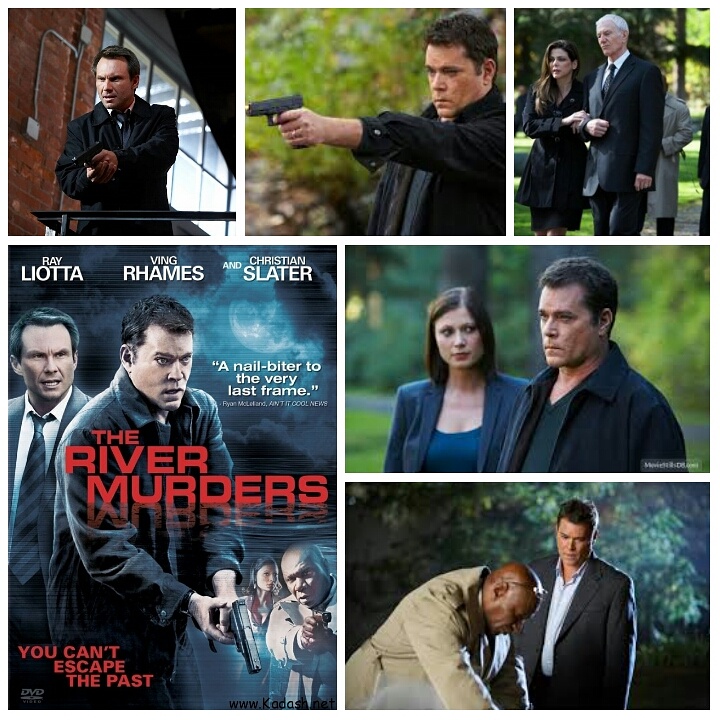
The River Murders is a fairly entertaining thriller vehicle for Ray Liotta that tries hard to be in the same grisly territory as stuff like Sev7n, and winds up looking pretty silly in its efforts. It takes place on a rural community in the Midwest, where a serial killer is leaving bodies for authorities to find. Detective Jack Verdon (Liotta) does some digging and finds that that himself and the killer may have met before in the past, making it personal. This causes unrest for both the department and Verdon’s mental state, prompting the arrival of an overzealous Federal agent (Christian Slater, annoying as hell here), and the concern of his captain (Ving Rhames). It’s fun watching Liotta spin out of control, and the film climaxes with reasonable intensity, but showcases nothing unique or noteworthy. Raymond J. Barry has a nice bit as Liotta’s father too.
The Tournament: A Review by Nate Hill
The Tournament is just about as awesome as action movies can get, and just about as bloody too. I love films involving assassins, contests, games, violence and such. The Running Man was clearly a huge influence on this one, right down to the inclusion of a larger than life game show host, here played by Liam Cunningham. Liam plays a shadowy nut job named Powers, and every four years he arranges an elaborate and incredibly destructive Olympic games for contract killers and psychos alike. Every time he hosts it in a new city, using hidden cameras and explaining away the damage with disasters and attacks. If this sounds so very 80’s, it is. We’re in throwback city here, with a touch of modern tone not unlike Joe Carnahan’s Smokin Aces. The reigning champion is Joshua Harlow (Ving Rhames), a brutal warrior who has been coaxed back into the game with revenge on his mind. Each assassin is fitted with a tracking device so they can track each other, an idea which goes haywire when a civilian accidentally gets stuck with one and ends up in the cross hairs. The civilian in question is a drunken priest (lol) played by Robert Carlyle, who has no idea what’s going on and suddenly has a dwindling life expectancy. He catches a break when a lethal but sympathetic female competitor (beauty queen Kelly Hu is an angel of physicality) takes pity and decides to help him out. They’ve got quite an armada to cut through though, including a rowdy cockney whacko (Craig Conway) a parkour master (Sebastian Foucan), an ex Spetsnaz freak (Scott Adkins) with a habit of blowing shit up left right and center, and lastly a Texan pretty boy lunatic played cheerfully by Ian Somerhalder. He’s so evil they just had to include a bit where he shoots a stray dog in the face without batting a perfect eyelash (animal lovers, you’ve been forewarned). All this mayhem is taken in by Powers and his sickening audience of wealthy kingpins, who sit in a great big boardroom and bet on the outcome of the carnage. Cunningham is a blast of devilish charm as Powers, an amoral villain of dark showmanship and sociopathic class. Between exploding heads, grenades ripping through the streets of London, frenetic hand to hand combat, colorful personalities, over the top depictions of bad human behavior and a general sense of hedonistic, slash and burn glee, this is one for the books.
L.A. Confidential: A Review by Nate Hill
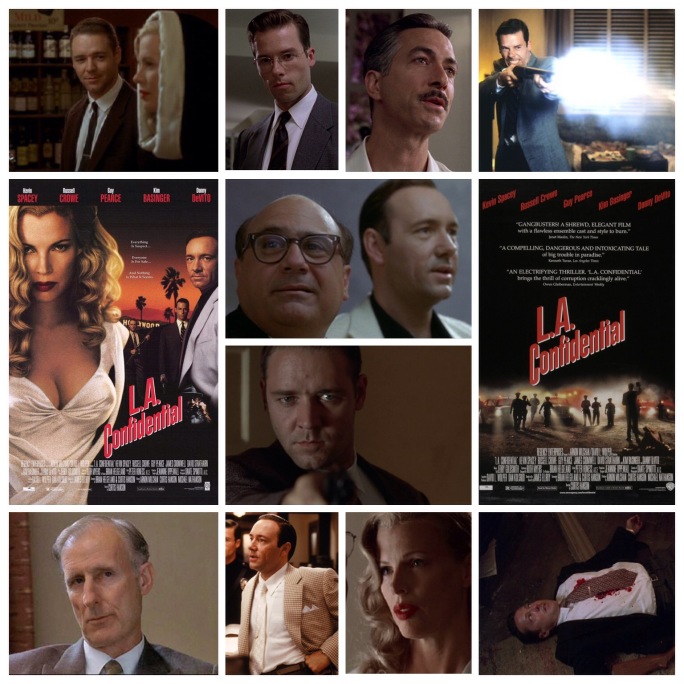
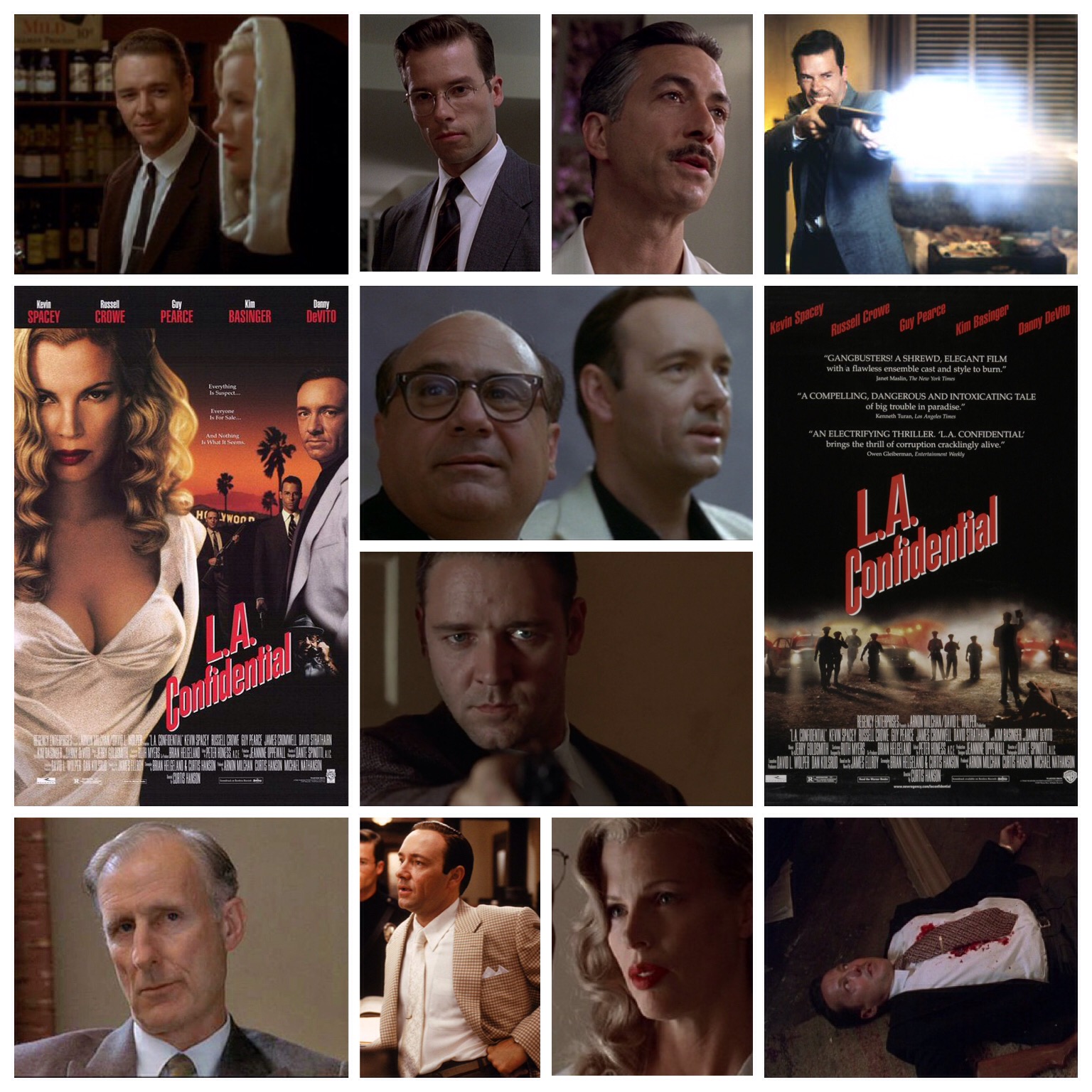
The finest Los Angeles film noir to ever come out of Hollywood, Curtis Hanson’s L.A. Confidential is a serpentine wonder, a two and a half hour parade of hard boiled detectives, sultry dames and shady dealings, all wrapped up in a multiple murder story that kicks everyone’s arc into gear, taking you places you didn’t think you’d see some of these people go. ‘Triple homicide at the nite owl’, barks the headline of a gossip rag run by a sleazy Danny Devito, and indeed the crime scene has everyone buzzing, from the shirt tuckers in the highest ranks of the LAPD, to the burly brass knuckle wearers on the brutish task force. Something is amiss with the case, and Sgt. Edmund Exley (Guy Pearce) is a dogged straight arrow with a nose for corruption. He isn’t quite the formidable force needed to barge down certain doors or break certain bones though, and that’s where Det. Bud White (Russell Crowe) comes into play. The two are initially at each other’s throats following a cleanse of many of the department’s corrupt officers, spurred by Exley himself. It soon becomes clear that they have no choice but to work together, in order to smoke out the evil source of the crime, which may be closer to home than anyone thought. Crowe and Pearce were not the stars they are now back then, but came up from the farm league in sensational style, barging onto the Hollywood scene in shotgun toting, shit kicking style. Kim Basinger won an Oscar for her poised, complex turn as a call girl who works for a pimp named Pierce Patchett (a glib David Strathairn), an eccentric who pays surgeons to deck his girls out to look like movie starlets. My favourite performance in the film comes from a diabolical James Cromwell as Captain Dudley, a dangerous rogue who you don’t want to cross for fear of his unpredictability. Kevin Spacey is all style and self loathing as Jack Vincennes, a media mogul of a cop who advises on TV shows and hogs the press limelight like a boorish politician. The supporting cast is all across the board, including work from Simon Baker, Graham Beckel, Tomas Arana, Ron Rifkin, Brenda Bakke, Jack Conley and an amusing cameo from Paul Guilfoyle as Mickey Cohen. Adapting a novel by the great undisputed king of LA noir, James Ellroy, Hanson weaves a deadly web of sensation, intrigue and steamy goings on that never follows a readily discernable pattern of narrative, and constantly has tricks up it’s sleeves. Remember Rollo Tomassi.
B Movie Glory with Nate: Sin
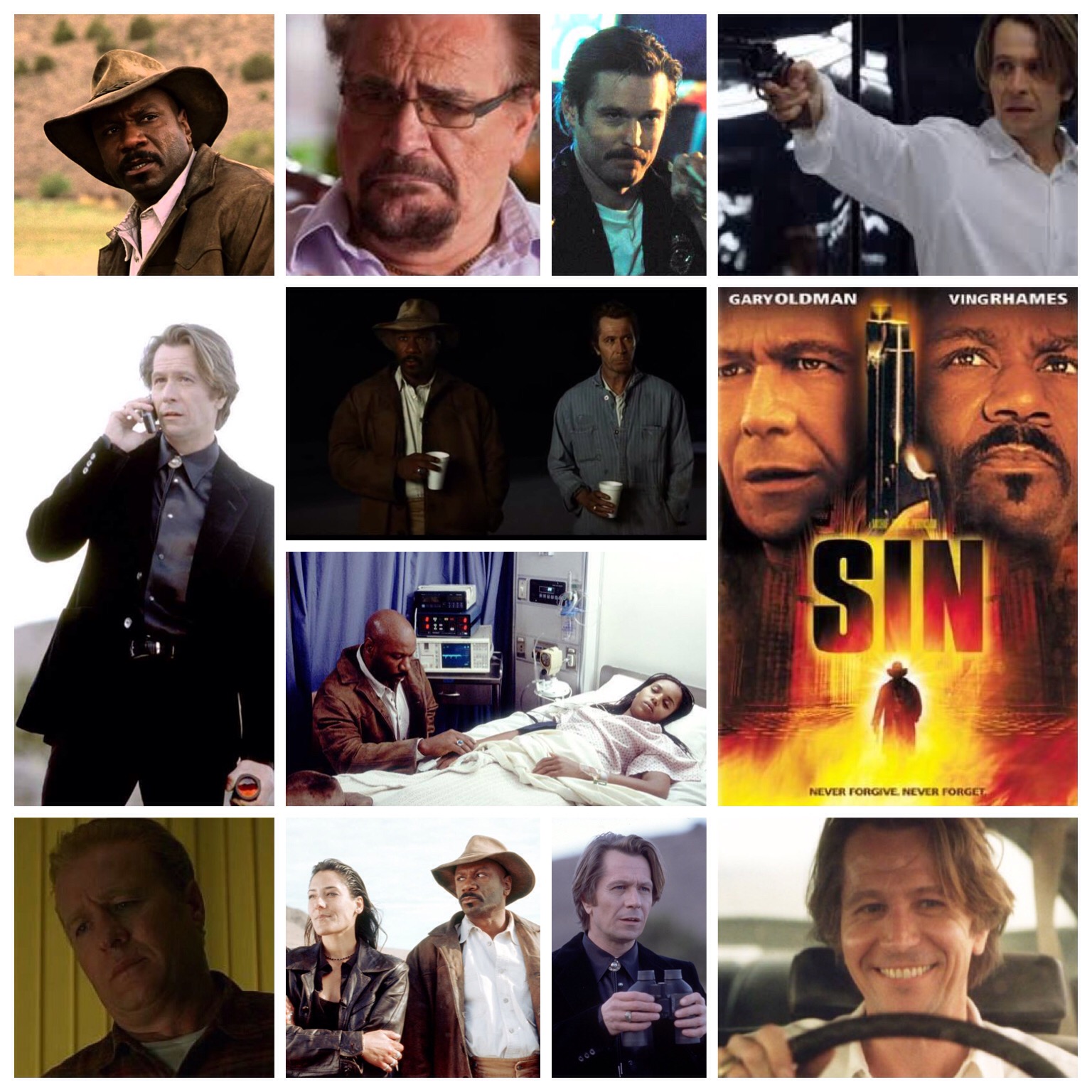
Sin is known as the B movie that Gary Oldman did, and he himself has bad mouthed it on occasion. Back then though, this was the only kind of movie like that he had to explain away. These days he has quite a few more of this type in his filmography, so he can’t really talk. It really isn’t the best movie, and functions as well as its limited budget and mediocre script will allow, but I must say there are a few moments, ones with stars Oldman and Rhames, that are just killer, and one in fact that borders on greatness. Rhames plays Eddie Burns, an ex cop or military man who lives estranged in the country, until the organized gang rape of his sister (Kerry Washington) coaxes him back into Reno Nevada. This heinous crime (a scene which borders on exploitation, to be honest) is orchestrated by Charlie Strom (Oldman), a nasty pornographer and drug kingpin who has a decades old bone to pick with Eddie. The film has some lonely atmospherics to it, the eventual confrontation between the two playing out in a poetic, if contrived fashion. For all the two bit moments in the script (and there are a lot), there’s one showstopper of a scene between Rhames and Oldman, that is reminiscent of Michael Mann’s Heat, and is quietly but surely affecting in its sadness. Brian Cox blusters through as Eddie’s former police boss, Bill Sage hangs out for a bit as a detective, and the one, the only Gregg Henry appears as a sleazy informant who feeds Rhames Intel. He also gets the best line of the film, exclaiming “I haven’t even had my morning fattie” after being rudely awakened Rhames. Watch for Alicia Coppola, Daniel Dae Kim and Arie Verveen as well. There’s some genuine ambition in the script, delving into the complex moral conundrum that exists between protagonist and antagonist, and how the two archetypes aren’t always so clear cut. Conscience and lack thereof is explored as well, with surprising results. I won’t lie and say it isn’t just a trashy b movie, but I won’t pretend there wasn’t some moments and aspects which I greatly enjoyed. It’s somewhere right in the middle.
Joe Carnahan’s Narc: A Review by Nate Hill
Joe Carnahan’s Narc is a proper old school ass kicking crime picture, and a blistering one that pulls no punches in the grit department either. Carnahan is clearly in love with the rugged action/genre pieces from the 60’s and 70’s that he grew up with, and every film he has made so far in his career has been reflective of that, starting with this excellent debut. He comes charging out of the gate as fast as his lead character breathlessly pursues a perp through a run down suburban neighborhood, a sequence of pure visceral brilliance that sets the tone and let’s us know he means business. Jason Patric plays Nick, an under cover narcotics officer with a decorated past and the scars to show for it, working the dankest streets of motor city Detroit. When a recently slain fellow officer’s case is reopened, he is picked to investigate, joined by the deceased cop’s former partner, Lt. Henry Oak (Ray Liotta). In this case, nothing is what it seems, agendas are hidden well, and violence constantly simmers just below the surface of every interaction and exchange of dialogue. This is especially the case with Liotta, who gives a staggering career best performance as a cop on the edge of sanity, justifying his heinous actions on the body of his slain friend. No one knows how to lose their cool like Ray, but here he is downright terrifying, a wild eyed monster and the epitome of the guy not to trust, lest you be driven down the same destructive path. Nick uncovers more secrets than he ever wished to know, and it all comes full circle in an angry, pulse rocketing confrontation that serves as one of the best blow ups in the genre, and goes to show you don’t need a huge epic gunfight to cap off your story with style and intensity. Carnahan wisely keeps the fireworks man to man, and intimate in nature, proving once again what intuition he has in the director’s chair. Chi Mcbride is always reliable, here playing the gruff police captain, and Busta Rhymes proves yet again that he’s one of the few rappers who can actually act, giving a pretty damn committed performance as a thug. Liotta owns this one in pure beast mode, but the team effort is what makes it so special, and a crime classic. Carnahan and Co. have done something timeless for crime films, and raised the bar on the intensity level one can attain when everything is in place, and firing on all cylinders. A powerhouse of a film, and a mini masterpiece.
Waterworld: A Review by Nate Hill
I don’t get the hate for Waterworld, and I can’t wrap my head around the fact that it was was a ginormous flop at the box office. I suppose there has to be one incredibly underrated gem of an adventure film every generation (John Carter comes to mind), and I’m ok with such films becoming cult classics years later, or loved by a small, loyal faction of people, but I still can’t see how such a creative, entertaining piece of cinema was so ignored. The best way I can describe my impression of it is Mad Max set adrift at sea. And what a premise. Kevin Costner and team craft an earthy steam punk dystopia where nearly all of our planet has been covered in oceans, hundreds of years in the future. Costner plays a lone adventurer called the Mariner, a humanoid who has evolved to the point where he sports gills, and can breathe underwater. He’s on a quest to find dry land, and is hindered at every turn by a one eyed tyrannical warlord called Deacon (the one, the only Dennis Hopper), who is on a mad hunt for oil of any kind, laying waste to anything in his way. He runs his empire off of a giant, dilapidated freighter ship, and commands a gnarly army of scoundrels. If they made a post apocalyptic super villain mortal kombat, he would probably face off against Fury Road’s Immortan Joe. Costner is a dysfunctional beast who somewhat befriends a lost woman (Jeanne Tripplehorn) and her plucky daughter (Tina Majorino in what should have been a star making turn), venturing forth into the vast blue on a rickety raft, meeting all sorts of sea bound weirdos on their journey. Kim Coates shows up with a whoville hairdo and an indecipherable accent as a sunbaked pervert who’s probably been afloat for a decade. The film is pure adventure, and loves it’s target audience unconditionally, which begs me to question why the masses savagely bit the hand that graciously feeds them. No matter, it’s a winner regardless of how it was received, and has probably gained a following that they never thought they’d arrive with when they made it. The cast extends further with work from Costner regulars and newcomers alike, including Michael Jeter, Robert Joy, Jack Black, Robert Lasardo, Sean Whalen, Lee Arenberg and R.D. Call. No one who loves a good old adventure can turn this down, and I’m still pissed that my knowledge of its reputation held me back from watching it for so many years. Let that happen no more. Either you’re won over by an inventive, balls out adventure epic like this, or you’re not.
Andrew Dominik’s Killing Them Softly: A Review by Nate Hill
What can I really say about Andrew Dominik’s Killing Them Softly. Well, my bosses named our site after it, and judging by our ongoing excellent taste in film (hehe), the namesake of our moniker should be a masterpiece. It is a masterpiece, a slow burning, truly clever crime yarn that slightly deconstructs the genre, sets it’s story at a pivitol time in American history, and has some of the most hard hitting, intimate scenes of violence I’ve seen on film. Dominik takes his sweet damn time getting to know these characters before any bloodshed occurs, and when it does, it’s a visceral affront to the senses, pulveruzing us with a very un-cinematic, realistic and entirely ugly vision of violence. Ray Liotta plays Markie, an illegal gambling official who once robbed one of his own games, subsequently boasting about it like a chump. When another of his outfits is knocked off by two scrappy losers (Ben Mendelsohn and Scoot Mcnairy) logic dictates that it must be him playing games again, and his superiors send a merry troupe of thugs to find him. The matter is overseen by Jackie Cogan (Brad Pitt) a slick, sophisticated killer who prefers to ‘kill them softly’, in other words, from a distance and with little pleading or fuss. He is employed by “” (an awesome Richard Jenkins), a businessman sort who isn’t above haggling for the price of a killer’s contract down to the very last dime. You see, the film is set during the 2008 financial crisis, and Dominik takes every opportunity he can to fill his frames with debris, dereliction and strife. Even in a world of criminals the blow to the economy is felt, and they too must adjust accordingly. Cogan brings in outsider Mickey (James Gandolfini), an aging wash up who spends more time swearing , boozing and whoring up a storm than he does getting any work done. Gandolfini ingeniously sends up his capable Tony Soprano character with this bizarro world rendition on the Italian hoodlum, a fat, lazy layabout with bitter shades of the threatening figure he must once of been. Before all this happens, though, we are treated to extended interludes spent with Mendelsohn and Mcnairy, and they both knock it out of the park with their shambling, sweaty, reprehensible presence. Mendelsohn is endlessly watchable, muttering his slovenly dialogue through a curtain of heroin and sleaze. Watch for a tiny, super random cameo from Sam Shepherd as a thug who hassles Liotta. There’s a beatdown sequence, and you’ll know when it comes, that pushes the limits to extremes. Every punch is felt like a meteor landing, leaving the victim and the viewer aghast. Dominik never throws gimmicks into his work here. Every scene is insistently unique, and the real hero is pacing. The film moves in fits, starts and eruptions with long flatlines in between, until our instinctual knowledge of a narrative truly is lost to the story, with no idea what will happen next. Genius.
Derek Cianfrance’s The Place Beyond The Pines: A Review by Nate Hill
Derek Cianfrance’s The Place Beyond The Pines is so ambitious in reaching for its themes, it almost seems godlike in its depictions of paternal archetypes. Even gods fall though, and this is a film that grandly shows us the flaws in two very different fathers, how those qualities and the actions they generate can cause damaging rifts for their offspring and those around them years later. Cianfrance seems intent on tackling difficult subject matters with each new film he makes, spiraling systematically into the heart of human behaviour, and mine for the answers to questions which mean so much to him. Mental illness and love were areas he explored prior to this, and now he takes on fatherhood, fateful missteps included. The film is separated into two distinct and very different episodes. We begin somewhere in the 1980’s with Luke Crash (Ryan Gosling) an adrenaline junkie motocross daredevil who is all about little talk, lots of impulse and low rationality. He’s drawn along by a petty criminal (Ben Mendelsohn, superb) on a series of increasingly risky bank robberies, with notions of providing for his wife (Eva Mendes) and infant child. He takes it too far though, and tragedy strikes with the arrival of Avery (Bradley Cooper), a gung ho young police officer who suddenly finds himself in the hot seat after being branded a hero cop. The film then makes a jarring leap in both time and tone to present day. Avery is now a political candidate with powerful friends and some nasty secrets that gave him his position. He has a son (Emory Cohen) who’s on a rocky road of difficult behaviour, estranged and distant from him. Fate steps in and places Luke’s own son (Dane DeHaan) in the mix for a very volatile and prophetic outcome that brings the big picture into full circle. My favourite part of the film is the first segment, particularly the interaction between Mendelsohn and Gosling, and their dynamic. It’s so organic and unforced, everything happening with the cadence and pace that I recognize in my own life. That’s realism. It’s moody, ponderous and has an atmosphere thicker than most films dream of. It’s somewhat strangled by the abrupt change halfway through, but it’s simply one door in the narrative leading into a new room, and is neccesary once I thought about it more. What the film has to day about fathers and sons isn’t your garden variety family drama message. There’s a near Shakespearian darkness to it, the cloak of inevitability laid down by a few lightning quick moments in one’s life that arch out through the years and affect ones children in ways that were never contemplated in that one split second it took to act. Rough stuff, but endlessly fascinating. Ray Liotta does his patented corrupt dick head cop thing nicely, Rose Byrne quietly plays Cooper’s wife, and look out for Bruce Greenwood and Harris Yulin as well. After the titanic undertaking he has striven for here, I can’t wait to see what Cianfrance has in store for us next. Powerful stuff.