Michael Mann’s Luck was a painfully short lived HBO original series with reach-for-the-stars potential, a mind blowing cast and a terse, eccentric script from David Milch, all fuelling a brilliant ensemble storyline set in a pristine Los Angeles horse racing track. I’ll get the elephant out of the room right away: the series was cancelled due to a few of the horses dying on set, for whatever reasons. Had it been allowed to continue though, I imagine it would have gone on to become one of the network’s, and Mann’s, most hallowed and heralded works. Dustin Hoffman is the centrepiece of the cast as Chester ‘Ace’ Bernstein, a sharp witted Jewish mobster who’s recent stretch in the joint has somewhat dulled his edge. Nevertheless, he slyly takes a stab at playing his hand with horse ownership, joined by his charismatic driver Gus (Dennis Farina, reliably wonderful). There’s all kinds of other hoopla going on, and it’s cool to see the story focus on both the upper crust elite doing their shady deals as well as everyday joes tossing their money into these worshipped games. Kevin Dunn is terrific as a disabled firebrand of a gambler, joined by his two scrappy pals (Ritchie Koster and Jason Gedrick) as they try out their own brand of luck. Jill Hennessy is a determined horse trainer who clashes with a belligerent owner (Yul Vasquez), and there’s two ominous crime kingpins played by Michael Gambon and Ted Levine who hover in the shadows as well. Further still is a heartbreaking turn from Richard ‘Bing Bong’ Kind as a stressed out jockey manager, Nick Nolte as a crusty, broken-down horse trainer, Joan Allen, Alan Rosenberg, Spencer Garrett, Don Harvey, Ian Hart, W. Earl Brown, Shaun Toub, Bruce Davison, Frank Collison, Mercedes Rhuel, Tony Curran and a cameo from Jurgen Pröchnow as the stern owner of the whole track. How’s that for a cast. I must say that the dense, peculiar dialogue from Milch takes some time getting used to, but once you tune in to it’s jive, it’s pure poetry being rattled off by every character, and a gorgeously structured, meticulously layered script at that. The actors are all on a plane of pure excellence as well, many of them turning in career best efforts and bringing their roles vividly to life. The cinematography from various artists is pure spun gold too, every sparkling irrigation sprinkler, glistening horse coat, careful closeup and crop of dirt kicked up by hooves captured succinctly and smoothly. This seriously is as near to a perfect season of television as one can get, and it kills me that it got cut down before it had a chance to really get going, because just think of the places it could have gone. At least we still have this first glorious season to admire, and I recommend every minute of it.
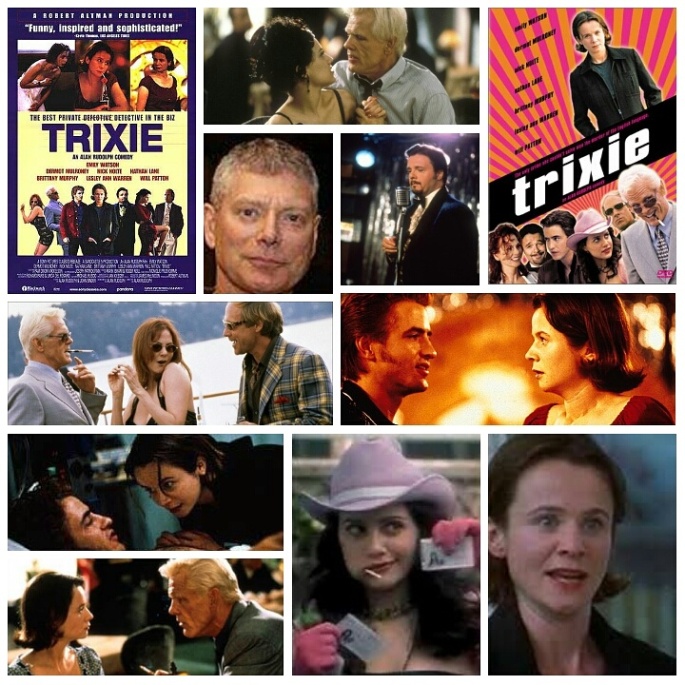
What the hell did just watch. Oh boy, what can I say about this one without tearing it a new one. Alan Rudolph’s Trixie is a dud, a paperweight, a misguided, clumsy disaster of the highest order. It has the tonal equilibrium of heart attack on a flow chart, and a troupe of actors who mercilessly embarrass themselves into the ground with work that goes beyond tireless pantomime. It’s sad, because I’ve seen this type of thing work nicely before, with the right amounts of quaint and quirky qualities, but here the mixture tanks in a god awfully messy cannonball of a landing. It tries to be a detective story, but fails to realize that you need some semblance of a story to care about, and I just…. didn’t care. It’s a slog to get through, a struggle to stay focused on, and basically a big awkward failure on every level. Also puzzling is the fact that cast, all of which are excellent actors who I love in almost everything they do, all made me want to hit them here, and when you’ve got a cast this good, that’s no easy feat. Emily Watson will make you want to tear your hair out as titular Trixie, a casino security guard with aspirations of taking on a big detective case, an irritating Chicago accent and apparantly mild brain damage that causes her to mispronounce every expression, figure of speech and slang term in a fashion that is neither cute nor funny. She’s wooed by Dex (Dermot Mulroney) a goon who works for sleazy land developer Red Rafferty (Will Patton). Soon, through a set of circumstances both inane and cartoonish, they find themselves deep in some sort of backhanded scheme involving murder most foul, tied to a corrupt state senator played by Nick Nolte, who is the peacock of the bunch, sucking all the energy out of the room with dialogue that is literally lifted straight from political speeches from the past. I’m not even kidding, he blusters out platitudes that vaguely have a place in whatever seen is going on, but barely. There’s also a hot young waitress (a bouncy Brittany Murphy), a flamboyant lounge singer (Nathan Lane is excruciating), a washed up pop star (Lesley Ann Down) and a bizarre cameo from Stephen Lang who attempts an accent that made me supremely uncomfortable. It’s weird, cumbersome and altogether pointless as everything it tries: comedy, thriller, romance, whodunit.. all fall miserably flat. Bummer. I’m gonna go make a list of all the things I could have been doing with the two hours I spent on this wreck.
Who’ll Stop The Rain is a sadly forgotten Nam era film that deftly blends genre better than most movies can ever hope to. The level of quality ratio to the amount of people who remember it is criminally unbalanced, but that’s commonplace in cinema. The title comes from the Creedence Clearwater Revival song of the same name, serving as both a metaphor in itself and a theme for the film, an anti war outcry that warbles forth beautifully at least five different times during the movie, becoming the script’s national anthem. Plus,who can say no to CCR on loop. It’s actually one of the best and most fervent anti war films out there, showing you an extended look at just how many ways the Vietnam War followed soldiers home and infected many customs, institutions and individuals. That kind of important sentiment wrapped up in a thriller is the kind of package I strive to find in film, and this is a glowing example. Nick Nolte plays Ray Hicks, an american GI getting ready to head back stateside after a tour. His best buddy John Converse (Michael Moriarty) convinces him to smuggle a brick of hash back with him and deliver it to his wife (Tuesday Weld). Only problem is, that ain’t where it ends. The people John was in contact with turn out to be a dodgy bunch, and before Ray knows it he’s o the run from some very dangerous dudes with his best buddy’s wife in tow, headed straight for a violent confrontation via a slow burn of a plot that sits on a low boil before you realized it’s reached a fever pitch. Nolte and Weld are a corrosive romantic couple, making the downbeat best of their situation, evading two nasty drug runners (Anthony Zerbe and Richard Masur being scary and classy as fuck) and getting a feel for each other along the way. Thriller. Drama. War. Moral dilemma. This one’s got it all, in a very specific concoction that never forces anything and treats you to more than it ever promised, before you have the chance to realize it. All timer stuff.
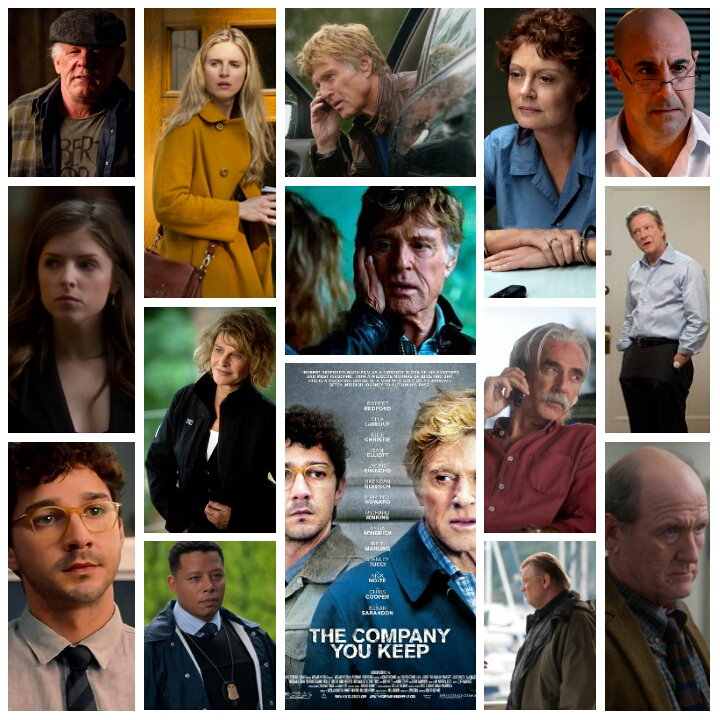
Robert Redford’s The Company You Keep is a powerful, smart, grounded drama revolving around the seriousness of one’s actions, the consequences they may make even decades down the road, and the lengths that some people will go to put things right. Redford has shown only improvement throughout his career, and has been really awesome as of late (All Is Lost was a favourite for me) and he directs here with as much confidence and empathy as he puts into his performance. He plays Nick Sloan, a former underground activist who was involved in a tragic accident as a result of his protesting, and branded a domestic terrorist. He went into hiding for nearly 30 years, until an intrepid journalist (Shia Lebeouf) uncovers traces of his tracks, and he’s forced to go on the run, leaving his young daughter with his brother (Chris Cooper). Lebeouf suspects his agenda is to do more than just hide, and indefinitely stay on the run. A federal agent (Terrence Howard) makes it his tunnel vision mission to find him. Sloan’s agenda only gradually becomes clear to us, as he navigates a tricky, treacherous web of former acquaintances, trying to locate his former lover and fellow activist (Julie Christie, phenomenal in a comeback of sorts). Old wounds are slashed open, the law closes in, and Nick wrestles with the notion that despite the good he tried to do in his idealistic youth, he is indirectly responsible for bloodshed. It’s enthralling to watch Redford play this man in his twilight years trying to put things right, waist deep in decades of acting experience, supported by an amazing script and a supporting cast that you couldn’t dream up . There’s memorable appearances from Stanley Tucci, Richard Jenkins, Brit Marling, Stephen Root, Susan Sarandon, Anna Kendrick, Brendan Gleeson, Sam Elliott, Susan Hogan and Nick Nolte, all in top form. For a thriller that takes itself seriously, takes its time building character and suspense, and sets itself in a realistic, believable tale that completely engrosses you, look no furthe
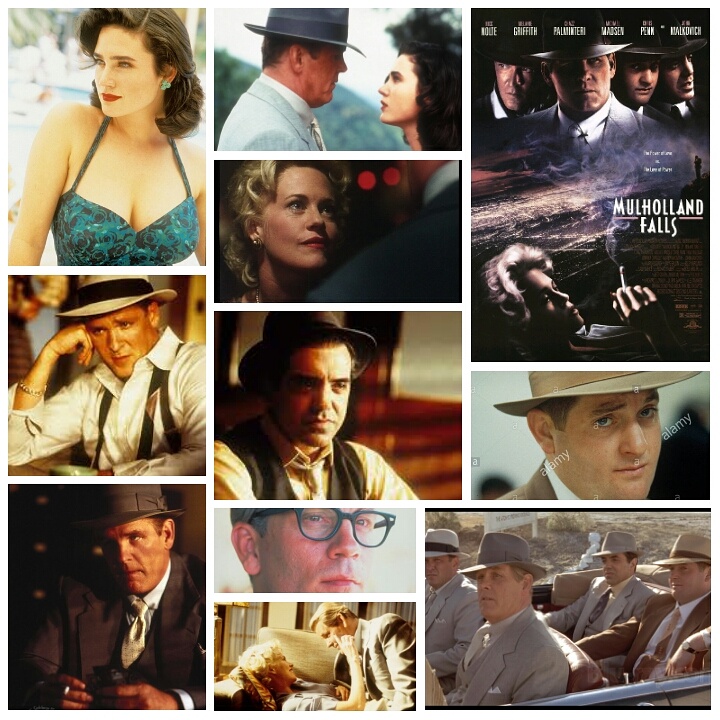
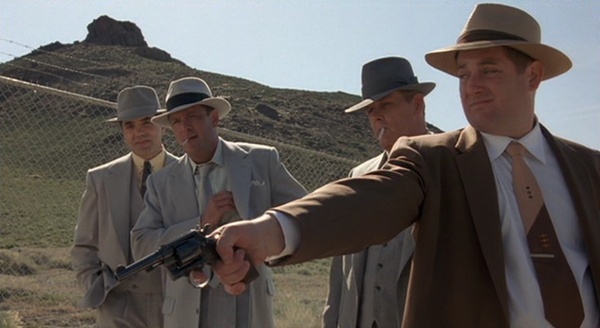
Lee Tamahori’s Mulholland Falls gets a bad rap in some circles for being boring and uneventful despite its charismatic cast and opulent setting that’s ripe for peppy action sequences. I think they are confusing boring with the concept of a paced and very slow burn, yet one with all the texture and richness of an action film, one that admirably decides to take the route of the old school noir, with loving care put into story and character, two elements which the action and violence live simply to serve, and not to take the driver’s seat against. Or it’s simply not some people’s cup of tea, which is totally okay too. Personally though, I love a good L.A. cop yarn that has a story to go with the toughness. This one bears striking similarity to 2013’s Gangster Squad, which also had Nick Nolte playing a 1940’s Los Angeles cop in charge of a squad that operates outside of the law. That film is pure cheese, all razzle dazzle and no plot. Mulholland Falls falls somewhere between Gangster Squad and L.A. Confidential; not quite up to delving into the serpentine intrigue of the latter, yet infinitely more interested in telling a worthwhile story than the former. And tell it does, in high flying style that only a crime film set in that time period can do. Nick Nolte plays Hoover, a whiskey voiced, take no prisoners LAPD badass who heads up an elite anti corruption task force that operates far outside the red tape and pretty much do what they want to stomp out corruption. His squad consists of Michael Madsen, Chris Penn and a scene stealing Chazz Palminteri as the oddball of the bunch, with serious impulse control issues. A straight up dream cast of tough guys, and although I’ll admit that Penn and Madsen are a tad underused, their presence alone boosts the film’s credentials into an epic pantheon. The film revs up with a kicker of an opening sequence in which the squad severely roughs up a troublesome mobster (an uncredited William L. Petersen). “This isn’t America, it’s Los Angeles” Nolte growls to him, stating the tone of perverse lawlessness which permeated the city back then. Soon he’s drawn into a tawdry scandal involving the murder of a young prostitute (Jennifer Connelly) who he previously had encounters with. The search leads him far and wide, crossing paths a sleazy photographer (Andrew Mcarthy), a dying air force tycoon (John Malkovich manages to ham it up even at his most laid back) and his stern lieutenant (Treat Williams). Nolte also has a poor jilted wife played nicely by Melanie Griffith in limited but effective screen time. The plot is hard boiled to the bone, with Nolte in one his most gruff mid career roles and loving every stressed out, rage fuelled second of it. The conclusion is his show, with a whacked out Palminteri in tow for a spectacular sequence set aboard a doomed military aircraft. The cast gets deeper, believe it or not, with Daniel Baldwin, Ed Lauter, Kyle Chandler, Titus Welliver, Louise Fletcher, Rob Lowe and Bruce Dern contributing gamely. This one’s got style on it’s side and then some, replicating a sense of time and place with the torque ramped up to near Sin City levels. Admittedly not perfect, but a pure and simple blast of a flick, in my opinion.
They say timing is everything and this certainly applies to the release and reception of movies. Case in point: Mulholland Falls (1996). Released a year before the very similar L.A. Confidential (1997), it was also a retro-neo-noir set in 1950s Los Angeles and featured a murder mystery leading to a vast conspiracy. However, Falls was promptly blasted by the critics and quickly disappeared from theaters while Confidential became the toast of critics and received awards from all over the world. So, what went wrong? Falls featured an impressive cast of solid character actors (it had more name actors than Confidential) and a critically acclaimed director with Once Were Warriors’ Lee Tamahori as opposed to Confidential’s Curtis Hanson who had only done adequate B-movies like The Hand That Rocks the Cradle (1992) and The River Wild (1994). Now that a few years have passed, Mulholland Falls has aged surprisingly well.
Set in 1953, the first image is one of a mushroom cloud from an atomic bomb explosion. It is one of the enduring images from that era and one that hangs like a shadow over the characters and events in the film. Max Hoover (Nick Nolte) leads a group of four cops known as The Hat Squad who do things their own way, like bullying out-of-town gangsters and dropping them off one of the deserted stretches of Mulholland Drive (aka “Mulholland Falls”) as a deterrent for setting up shop in L.A. One day, Max and his crew – Coolidge (Chazz Palminteri), Eddie (Michael Madsen) and Relyea (Chris Penn) – go out to a construction site to investigate the murder of a beautiful woman (Jennifer Connelly) who has been literally pressed into the ground. There is a shock of recognition on Max’s world-weary face. His connection to the dead girl and his subsequent investigation into her murder leads to a dangerous conspiracy involving the United States government and a mysterious General Timms (John Malkovich), head of the Atomic Energy Commission.
After the success of Once Were Warriors, Tamahori was offered many projects before finally choosing Mulholland Falls. Michael Mann was originally attached to the film but left at some point. One of the first things that is so striking about this film is the gorgeous attention to detail with vintage cars, suits and music from the period. This is enhanced by the gorgeous cinematography of the legendary Haskell Wexler who evokes classic film noir in every frame of Mulholland Falls. Tamahori assembled an impressive crew including the likes of production designer Richard Sylbert, who worked on Chinatown (1974) and The Manchurian Candidate (1962), and Wexler, who won an Academy Award for Who’s Afraid of Virginia Woolf? (1966) and worked One Flew Over the Cuckoo’s Nest (1975) and In the Heat of the Night (1967) amongst others.
Tamahori says that people within the industry were surprised that he hired veterans like Sylbert and Wexler and realized that Hollywood was being run by young executives: “It’s a kind of youth-oriented thing, and—blast, blam, blam, blam, make the action for the under-25-year-old crowd. Do this, do that, you’ve got to be on top, you have to be fast. They see age as being old and boring.” Mulholland Falls consciously eschews this approach for a slower paced, more thoughtful vibe that harkens back to films made before music videos and their kinetic editing changed the way films were made in Hollywood.
With his gravelly voice and weathered good looks, Nick Nolte is well cast as the conflicted tough guy, Max Hoover. If there is one significant problem with the film it is the lack of screen time given to the excellent members his crew. They are given little time to develop their characters with only Chazz Palminteri edging out the others. Palminteri plays Nolte’s best friend and second-in-command. He’s the most sensitive of the bunch (although, that’s not saying much) because he’s seeing a female psychiatrist and this makes him the voice of reason, often curbing Max’s more self-destructive impulses. Tamahori met Burt Reynolds and Tom Arnold for the role of Coolidge but felt that Reynolds was a little old for the role.
Little time is devoted to developing the chemistry between them. The filmmakers should have used The Untouchables (1987) as inspiration – although, the crucial difference is that in Brian De Palma’s film we see how Eliot Ness and his crew come together while in Mulholland Falls, Max and his group have been together for some time. Pete Dexter’s screenplay doesn’t do a good enough job making us believe that they are a tight-knit crew. That being said, the chemistry between Nolte and Palminteri begins to kick in towards the end of the film but it is too little, too late.
The casting of actresses Jennifer Connelly and Melanie Griffith is right on the money as they both have the voluptuous body type common to that era, especially Connelly who has curves in all the right places and that were also used to great effect in The Rocketeer (1991). Sadly, Connelly and Griffith aren’t given too much screen time but this does give Connelly’s character something of an ethereal, mysterious quality that is quite haunting and works well in the film.
John Malkovich essays yet another one of his cultured bad guy roles as General Timms. The first meeting between him and Nolte is good as we watch two different acting styles bounce off each other. Timms tries to dazzle Hoover with philosophical double speak while the cop plays dumb but subtly applies pressure on the scientist. What is so interesting about this scene is what is not being said. Watching this film again, I was struck by the eclectic cast featuring the likes of Treat Williams, Andrew McCarthy, Bruce Dern, Daniel Baldwin, William Petersen, and Rob Lowe.
There is somber tone that hangs over Mulholland Falls and the ending is refreshingly downbeat (unlike the very classic Hollywood ending of L.A. Confidential) evoking Chinatown of which it was most often compared to. Like any good noir protagonist, Max’s shattered life stays shattered. The murder has been solved but at a terrible cost to his own life. While Falls is a flawed film and certainly not as strong as Confidential, it is not an awful effort by any means and actually has a lot of merits. It is definitely worth another look if you haven’t seen it since it debuted or if you’ve never seen it before.
Among the many genres prolific filmmaker Sidney Lumet has dabbled in, the one in which he excels and demonstrates the most affinity for is the crime thriller. In particular, he is fascinated with police corruption and how the law and order system works (or, in some cases, doesn’t work) in New York City. In the 1970s, he told the story of an undercover cop who deals with corruption among his fellow officers with Serpico (1973). In the 1980s, he depicted the plight of a police detective that informs on his cohorts after being busted himself in the magnum opus Prince of the City (1981). In the 1990s, Lumet tackled police corruption yet again but this time via the angle of racism with Q & A (1990). Based on the novel of the same name by New York judge Edwin Torres, Lumet’s adaptation received mixed reviews from critics and was largely ignored by audiences of the day. It has become something of a forgotten, underappreciated film in Lumet’s filmography and one that deserves to be rediscovered.
During the opening credits we see the rain-slicked streets of New York City through the back seat of a cop car. This sequence sets a nice, gritty tone and takes us on a mini-tour of the city where most of the film’s action takes place. However, Ruben Blades’ jarring song that plays on the soundtrack almost ruins it. I’m not quite sure what Lumet was thinking but it simply does not work here.
Lieutenant Mike Brennan (Nick Nolte) is a dirty cop as evident from his introduction where he ambushes an unarmed Latino drug dealer, blows the guy’s brains out and then bullies two nearby witnesses into saying that the man had a gun in his hand. Assistant District Attorney Al Reilly (Timothy Hutton) is assigned to the case. His boss tells him that the incident is a cut and dry one. He is told that Brennan is a good cop – a little rough in his methods but all of his cases have been tried successfully with no appeals. Reilly is instructed to collect the facts with the help of a stenographer and present them to a grand jury. His boss instructs him that “the Q & A defines what really happened. If it’s not the Q & A, it didn’t happen.”
Reilly is eager to please and is impressed with Brennan’s imposing presence and reputation. The young A.D.A. questions Roberto “Bobby Tex” Texador (Armand Assante), a drug dealer and racketeer, who, along with his wife Nancy (Jenny Lumet), witnessed the aftermath of the murder. He refutes the theory that the gun was found on the murder victim. Reilly begins to suspect that something might not be right with the case. He is also faced with a personal conflict as he used to be involved with Nancy and still has feelings for her. Reilly soon realizes that’s he’s taken on more than he can possibly handle. Sidney Lumet pits Brennan, Bobby Tex and Reilly against one another, each with their own agenda and the film gradually heads towards an inevitable confrontation between the three men.
Nick Nolte is a lot of fun to watch as a larger than life cop. He sports slicked back hair and a thick mustache that threatens to overtake his mouth. There’s a memorable scene early on where his character recounts a story to some other cops about how a mobster gave him a hard time when he tried to fingerprint him that is hilarious and disgusting. The scene has an authenticity of a veteran that delights in telling old war stories to inflate his own ego. Nolte’s Brennan is a chatty guy that loves to tell stories of past glories as he tries to buddy-up with Reilly until the A.D.A. lets him know that he’ll go after the veteran cop if he finds out he’s dirty. Nolte’s whole demeanor changes in a heartbeat and it is quite exciting to see him go from jovial to threatening in the span of a few seconds. Brennan is as corrupt as they get and enjoys the influence he exerts and the power he wields. He uses fear and intimidation to get what he wants. Nolte put on 40 pounds for the role because he felt that the character required it: “just the sheer mass of brutality. I felt that would be the right kind of thing. He had to be on the edge of his own dissipation.”
Armand Assante is a force of nature as Bobby Tex, portraying the crook with an aggressive swagger and an intensity that is impressively conveyed in his eyes. During Reilly’s initial questioning, Bobby oozes casual confidence and Assante does a great job of conveying it. He also imparts a keen intelligence. Bobby isn’t just some two-bit street punk. He doesn’t even blow his cool when Luis Guzman’s cop gets all in his face. Bobby matches his intensity and it is great to see two skilled character actors go at it. Assante ups his intensity when he warns Reilly to stay away from his wife. He gives the A.D.A. a seriously threatening look that would have most people shaking in their shoes. It’s Bobby’s first appearance in the film and Assante makes quite an impression.
Up against two lead actors playing colorful characters, Timothy Hutton wisely underplays Al Reilly. His character may be young and new to the job but he knows the law as demonstrated when questioning a mobster by the name of Pesch (Dominic Chianese) and his lawyer (Fyvush Finkel) in rather confident fashion. At first, it appears that the slick mob lawyer is going intimidate Reilly but the young man expertly turns the tables with his intelligence. Hutton is good as the straight arrow A.D.A. that decides to take on a highly respected cop and in the process uncovers an intricate web of corruption. The actor avoids stereotyping by showing layers to his character through the revelation of his feelings for Nancy which affects his approach to the case. Reilly starts off as an idealistic person but over the course of the film, as he’s exposed to corruption, he gains experience and becomes savvier when it comes to how things work. Early on in Q & A, there is a revealing conversation he has with Leo Bloomenfeld (Lee Richardson), a veteran attorney that has clearly been working in the system for far too many years. He’s jaded and tells the eager Reilly how things really are, giving him a taste of the corruption he will witness first hand later on. To prepare for the role, Hutton went on squad-car runs with police officers in Manhattan in order to get an idea of the challenges they face on the streets. He said of the experience, “in many cases the hands of the officer on the street are tied.”
Lumet shows how close these cops are by the short-hand between them and the familiarity they have with each other. In the scene where Reilly questions Brennan about the homicide in a room full of cops, the director really captures the camaraderie among these men. The dialogue sounds authentic and is delivered by the actors in a way that is so natural you believe that they are these characters. Consummate character actor Luis Guzman has a memorable role as a homicide detective that first suspects the Brennan case is rotten. He has a memorable moment where he jokingly defends Brennan’s casual racism: “He ain’t no racist. He hates everybody. He’s an equal opportunity hater.” Even though this is said in jest, in actuality it’s not far off the mark.
However, in his review for The New York Times, Vincent Canby wrote, “great little scenes overshadow bigger, more important ones. Characters come and go at speed. Watching the movie is an entertaining ride, but when it’s over it’s difficult to remember where, exactly, one has been.” USA Today gave the film two-and-a-half stars out of four and wrote, “Overkill ultimately wears Q & A down, despite two bravura performances and some Hutton understatement that’s adequate to the task. So, too, does unrelenting sordidness, a deadly love angle and a score (Ruben Blades) almost as awful as Cy Coleman’s sabotage of Lumet’s Family Business.”
One of the major themes Q & A wrestles with is racism. There is the casual kind between black, white and Latino cops and there’s the more damaging kind that resulted in the end of Reilly and Nancy’s relationship years ago. Racism informs a lot of the characters’ decisions and often motivates their actions. The film addresses racism in an honest way that you rarely see outside of a Spike Lee film. As he did with Prince of the City and later with Night Falls on Manhattan (1997), Lumet sheds light on how cops and crooks can be intricately linked and just how deep corruption runs in a sprawling metropolis like New York City. These films show how law and order works in fascinating detail and that feels authentic, much like the television show Law & Order does year in and year out.





 Podcasting Them Softly