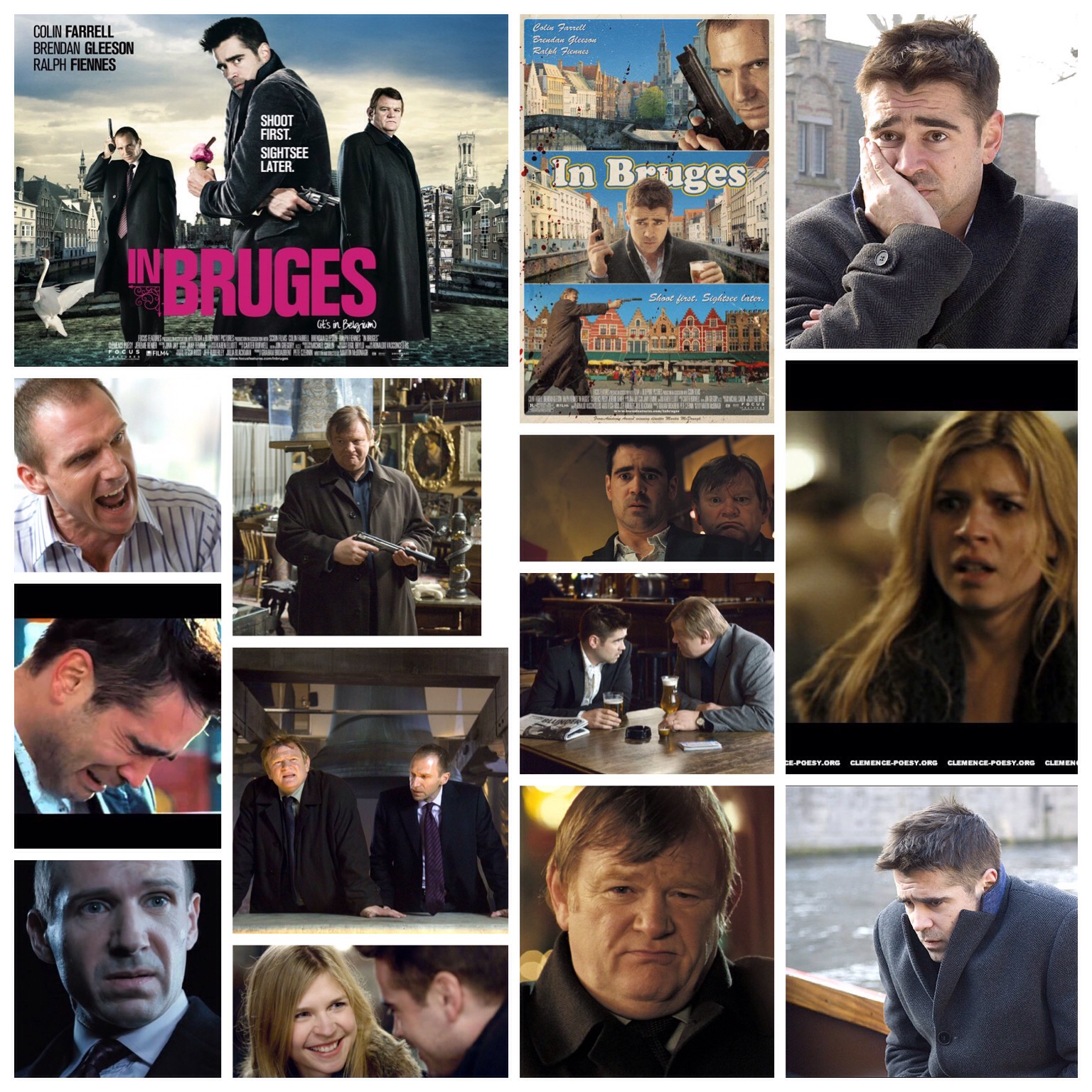
I can’t really say in enough words how much I love In Bruges. In fact there aren’t words in my language which can express how deeply in tune to it I feel every time I put the DVD in for a watch, which is at least every four months or so. The dual forces of comedy and tragedy have combined here using Martin McDonough’s genius scriptwriting as an avatar to create something raucously funny and profoundly moving. The comedy is of the spiciest and very darkest nature (my favourite), and the tragedy tugs at both the heart strings and the tear ducts, scarecly giving you time to wipe away the tears of laughter from the scene that came before. The best in UK crime fare, some of the most balanced, peculiar writing and fully rounded characters who are as flawed as human beings get. Colin Farrell delves deep and gives the performance of his career as Ray, a would be hitman who has fucked up bad, and now heads for Bruges (it’s in Belgium) with his mentor Ken (Brendan Gleeson, pure brilliance and humble class). Ken loves eccentric little Bruges, with its historical architecture and quaint townsfolk. Ray is bored to tears and pouts like a toddler. They meander around the town getting into all sorts of mischief including a dwarf (who has fascinating ideas about the ultimate race war), museums, cocaine, the Belgium film industry and more. Ray sets his sights on the gorgeous Chloe (), and Ken does his paternal best to keep him out of trouble while wrestling with his own gnawing guilt. The film gets a shot of pissy adrenaline when their boss Harry comes looking for them, in the form of a knock it out of the park funny Ralph Fiennes. Fiennes rarely cuts loose and bounces off the walls like he does here, and his Harry is a delightful creature to watch in action. Angry, petty, volatile, clever and out for blood, just a joy to behold. As playful as the script is, there’s a purgatorial sadness to Ray’s situation, a fateful sense that he’s been dumped in Bruges not just to fool around, get drunk and utter witty barbs in that brogue (which he does do a lot) but to deeply ruminate on his choices and ponder where his actions will lead him moving forward from his terrible deed. Maturity permeates each exchange between him and Ken, a fledgling and an old timer shooting the breeze about heavy topics which neither of them pretend to understand, but both are neck deep in. I always cry at certain scenes, always laugh my ass off at others, and never cease to be affected right to my emotional center and the marrow of my funny bone each time I watch this. Look for a brief cameo from Ciaran Hinds in the opening few minutes. Every second of this piece is filled with lush, thought provoking dialogue, awesomely un-politically correct dialogue that doesn’t censor a single impulse from its characters, and a yearning to explore the decisions which cause people to be labeled ‘good’ or ‘bad’, something that’s inherently complex yet feels lightly treaded on here. Masterpiece.
Tag: Ralph Fiennes
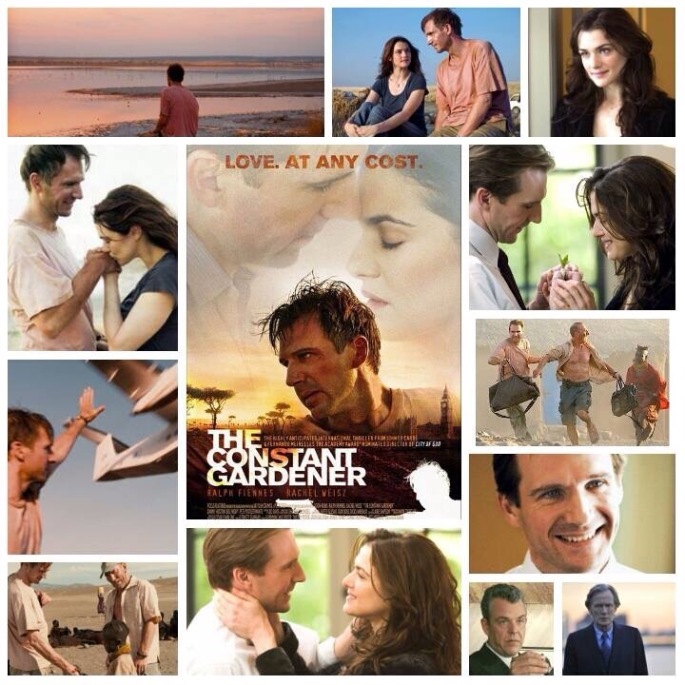
The Constant Gardener: A Review By Nate Hill
Usually, I’m not super hot on adaptations of John Le Carré novels. His style tends to veer towards dense, impenetrable narratives that confuse and confound me, and are further frustrating because they have such wonderful casts and production value (I’m lookin at you, Tinker Tailor Soldier Spy). The Constant Gardener, however, is a breathtaking story that I’ve enjoyed very much since I saw it in theatres at probably too young an age. It fashions a story that although is complex and refuses to be straightforward about what it’s trying to say, contains essential beats and stunning performances from its actors. It’s also set apart from other Le Carré yarns for having the most humanistic, compasionate core to its story, centering it’s focus on the atrocities that humans can commit upon each other in mass, faceless fashion and showing us the sparse, golden good deeds that a few kind people can put forth to counter such madness. An organic, emotional theme is nice compared to the clinical, detached style we usually see from this writer. The film is lucky in the sense that it has deeply gifted leads: Ralph Fiennes and Rachel Weisz, two actors who always resonate with a relatable human kinship in their work, and are both superb here. Fiennes plays Justin Quayle, a British ambassador in a god forsaken African region whose luminous wife Tessa (Weisz) is found dead in a remote area under suspicious circumstances. She was investigating several high profile pharmaceutical companies, under scrutiny for their sociopathic, amoral drug testing trials on the poverty stricken Africans. Intrigue strikes in after this, as shellshocked Justin pieces together what lead to her death, and how he can cripple those responsible using espionage and a level of keenness that’s well above both his pay grade and mental constitution. Flashbacks abound as we see Justin and Tessa’s early years unfold, adding all the more to the lumps in our throats as we know the ultimate outcome which the film frankly showed us in the opening frames. Welcome supporting turns come from other UK geniuses like Bill Nighy as an icy CEO, Richard McCabe as Fiennes’s courageous brother in law, Danny Huston as a shady friend of Tessa’s and Pete Postlethwaite as a mysterious doctor who figures later in the plot. Cinematographer César Charlone makes sweeping work of bringing the chaotic nature of Africa to life, it’s people, landcsape and aura beautifully rendered in shots that evoke the best of Monét and similar artists. Such beauty brought forth from a story filled with unpleasantness is interesting, almost a refusal to present the depressing story in any other fashion than to show us the virtue in tragedy, the cost of lost lives and unchecked corruption present for all to see and wince at, yet somewhat quelled by the undeniable forces of light also in play. Rachel and Ralph’s work is an example of this; They are compassion incarnate, pools of hurt, determination and love for one another in the face of evil, unfair odds. They should both be very proud of their work here. Direct Fernando Meirelles has helmed Blindness and the classic City Of God, and as such is no stranger to infusing pain and sorrow with esoteric, positive qualities. He takes full advantage of the African setting, where suffering is commonplace and along with his entire troupe, throws all the lush, alluring kindness straight into the face of horror in an audacious stylistic set of choices which make The Constant Gardener one of the most achingly well constructed romantic annd political thrillers of the decade.
SPECTRE – A Review by Frank Mengarelli

SPECTRE is the James Bond film that a lot of us have been waiting for: the Daniel Craig film that is his own. I have very much enjoyed the Craig series, but the films have been muddled in each of their own respects. CASINO ROYAL was the unnecessary franchise reboot, QUANTOM OF SOLACE was the adrenaline fueled action film, and SKYFALL was the epic blanket film that absolutely everyone could love. SPECTRE did a brilliant job of building off all the archetypal elements of the previous three Craig films, and made this film as seminal as YOU ONLY LIVE TWICE or ON HER MAJESTY’S SECRET SERVICE.
It doesn’t come as a surprise that this will be a divisive film, especially coming off of SKYFALL. This is a film that a lot of the more recent Daniel Craig Bond fans won’t fully understand. But for those of us who have been waiting for this film, this film excels with everything. The gun barrel sequence opens the film, the cheeky humor, Dave Bautista as the classicly eccentric henchmen, the macho alpha respect Bond has with M, the flirty tension with Miss Moneypenny, Q and his gadget room, a fantastic opening credit sequence, an excellent title sequence, and above all: a be-all-end-all Bond villain.

The ambiguous timeline of the Bond films as a whole is an interesting beast. The plot points and ending of SKYFALL certainly meshes with the Connery films. Why Bond respects M, why Bond has a flirty affinity for Miss Moneypenny, and now in SPECTRE, we’re given the wonderful homage to the main villain’s secret volcanic base, the inevitable scar over his eye, and why the villain hates Bond so very much.
Director Sam Mendes and screenwriter John Logan walked a fine line with with SPECTRE. They delicately and retroactively connected the previous three Bond films into the heart of SPECTRE, yet they kept true to Bond form by making a contemporary film about global chaos and digital espionage. SPECTRE has made the previous Bond films better, by connecting them in the way the Connery Bond films (including Lazenby’s singular film) were all connected by one thing: a shadow conspiracy.

There is no doubt, regardless of all the tabloid games that have been played recently, that Daniel Craig will return for at least one more film. I wouldn’t be surprised if Sam Mendes returned for the next film as well. Sam Mendes, John Logan and Daniel Craig knew exactly what they were doing and have struck gold with SPECTRE.
Full disclosure: I have owned every Bond film, sans NEVER SAY NEVER AGAIN, from VHS to Blu Ray, and I will quadruple dip on the 4K Blu Rays next year.