THE MICHAEL MANN FILES: THE LAST OF THE MOHICANS (1992)

I’ve never read anything by American novelist James Fenimore Cooper, author of the book from which The Last of the Mohicans was adapted. But if Mark Twain is to be believed a decent critic of letters, I’m not missing much. Or, to be precise and on the contrary, I’m missing a lot because, as a friend once opined, “I wish he were James Feniless Cooper.” So it seems that the consensus is that if Cooper was anything, it wasn’t economical. And neither, really, is filmmaker Michael Mann (though it’s not necessarily a bad thing with him). A man who toils in ostensible action films, Mann’s work slowly percolates before hitting a full roil as he allows minute details to create the fuller flavor when the action finally hits.

So it’s sort of a surprise that Mann’s adaptation of The Last of the Mohicans is such a tight and nimble affair that yet still feels robust and epic. But in all transparency, Mann’s film isn’t a finely combed reworking of the original source material, but is a copy of a copy; less adapted from the novel itself but from the 1936 adaptation by John L. Balderston, Daniel Moore, Paul Perez, and Philip Dunne which was the basis of the George Seitz-directed version of The Last of the Mohicans starring Randolph Scott.

Set in 1757 during the third year of the French and Indian war, The Last of the Mohicans spins the yarn of Cora (Madeline Stowe) and Alice (Jodhi May) Munro, daughters of British Colonel Edmund Munro (Maurice Roëves) who are attacked by their Mohawk-née-Huron guide, Magua (Russell Means) on a march to a military fort and are subsequently intercepted and led to safety by a frontier family unit made up of the white born/native raised Nathanial ‘Hawkeye’ Bumppo (Daniel Day-Lewis); his Mohican father, Chingachgook (Russell Means); and brother, Uncas (Eric Schweig). Throw in some frontier romance that looks like the cover of a million and one bodice-rippers that would litter the rack of a Safeway in years long extinguished, a gloriously unsubtle and full-blooded score by Randy Edelman and Trevor Jones, and Dante Spinotti’s cinematography making damn sure that every shot looks like a gorgeously textured painting, and you’ve got yourself one hell of a rousing adventure film that cleverly folds pulp into purpose.

If all of this sounds a little rustic for the glossy kind of urban plotting favored by Michael Mann, it’s not. For The Last of the Mohicans plays very well to Mann’s strengths and shows what makes him such a special filmmaker. Here the examination of a crime scene is replaced with the almost preternatural knowledge of just who and what slaughtered a defenseless frontier cabin. Nobody cases a score but Magua plots diligently and carefully to satiate his obsession with slaughtering the entire Munro family. Nobody has a history of existential baggage causing their personal lives to be high-tension quagmires of personal failure but there is an inevitable march to the same kind of doom and loneliness that befell Thief’s Frank and Miami Vice’s Sonny Crockett and caused the endings to their tales to contain bitter, Pyrrhic victories.

Aside from expanding the widescreen visual language that had eluded Mann the previous seven years during his sojourn in television, The Last of the Mohicans is perhaps the most foundational embodiment of the Mann hero. Nathanial Bumppo is a man without a heritage, a white man raised in a native family in a land that is wild and tangled beyond its small British foothold. Not only does this expand to Magua, likewise disconnected from his roots after being taken a slave by the Mohawk people, this also expands to Mann’s reflection of the America as contemporarily dressed westerns in which the protagonists reside in the absolute middle between law and lawlessness, even when they themselves are cops and/or criminals. Mann’s heroes are just the progeny of the cast of Sam Peckinpah’s The Wild Bunch; fiercely independent and untamed criminals with a modicum of personal honor battling against authority figures right on the dividing line of the two. This is why Nathanial’s declaration of “I do not call myself subject to much at all” sounds suspiciously like Frank’s “I am Joe the Boss of my own body.”

As is his wont to do, Mann’s insistence on giving Magua a third dimension and not rendering him a cartoon villain without proper motivation makes the character a little less than the symbolic Francis Dollarhyde from Manhunter who served as a literal reflection of the protagonist. Here, the antagonist is placed into much more devastating territory, painted as someone understandably twisted by a hate in regards to a tragedy with which the audience can empathize. After all, didn’t we cheer Clint Eastwood’s titular character in The Outlaw Josey Wales back in 1976 for doing pretty much the same thing? And let the record state that I don’t exactly not root for Magua to kill Colonel Monroe and eat his heart, I’m just a little bearish on him killing the kids.

Mann puts his actors through the absolute ringer as they traverse uphill and down dale in some pretty rough terrain, earning themselves every layer of dishevelment that occurs to their wardrobes along the way. And while the whole cast is amazing, special mention has to be given to Daniel Day-Lewis for giving straight men the meaning of what it is to look like a whole snack. Despite its technical prowess, flawless pacing, and containing some of the most beautiful cinematography this side of Barry Lyndon or The Duellists the secret sauce of The Last of the Mohicans is likely its casting. Every now and again, I see a tweet make the rounds that states “My sexual orientation is the cast of 1999’s The Mummy,” replete with four stills of its principles. Well, I’ll see your Mummy and raise you a Last of the Mohicans because I know of no other film that oozes base sexuality and affects its viewers quite like this one without doing much of anything at all (though, quite honestly, neither does The Mummy). For about 55 minutes into the film, Mann stages one of the most erotically charged moments of his career that is astonishing in its ability to raise the temperature to a ridiculous degree without showing a single thing outside a passionate kiss. And it serves as a reminder that, though not generally thought of as a composer of romantic moments, Michael Mann certainly knows how to create almost painfully gorgeous sequences of physical sensuality. When Madeline Stowe coos “The whole world is on fire,” one is tempted to mutter “Yeah it is. Go ahead and let it burn.”

Put another way, a family dinner with my much more conservative parents and sister turned into a literal thirst trap as my mom, a woman who thinks long hair looks positively awful on men, couldn’t help but bemoan the fact that Daniel Day-Lewis cut his hair after production on The Last of the Mohicans wrapped and my sister, generally demur in such moments, offered up “Now… see… I liked his brother in that.”

A little something for everyone, America.

(C) Copyright 2021, Patrick Crain
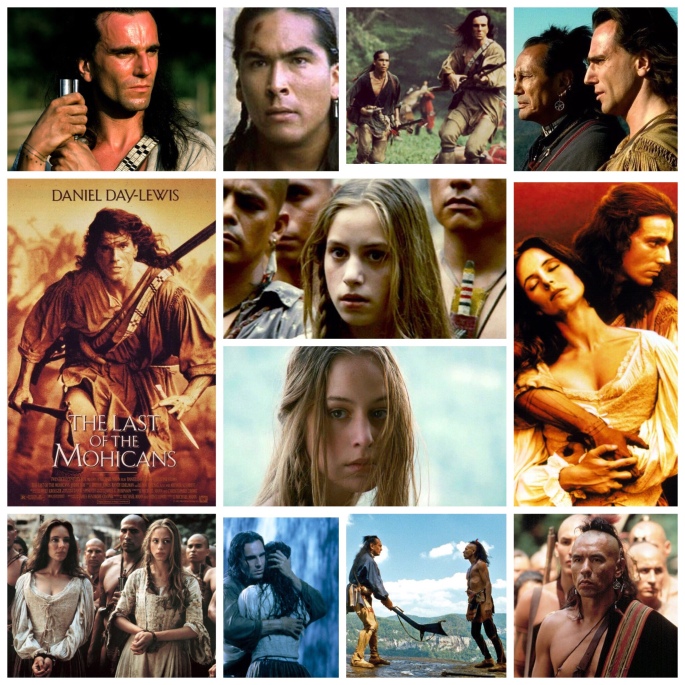
Michael Mann’s The Last Of The Mohicans

Before Terrence Malick lyrically explored the relationship between settlers, natives and nature in The New World, Michael Mann crafted the emotionally gripping, beautifully feral The Last Of The Mohicans. Take Mann out of his comfort groove of big city crime epics and whatever new avenue he explores is going to be incredibly fascinating (his much forgotten, sadly panned The Keep is further evidence). Trading in looming urban skyscrapers for equally imposing trees of the frontier, high powered weaponry for one badass long-shot rifle and the onslaught of rapid fire combat for incendiary cannon fire, the colonial times suit him splendidly and he rocks this period piece for all its worth. Daniel Day Lewis is a force of nature as Nathaniel Hawkeye, the white man raised by his adoptive father (Russell Means) and brother (Eric Schweig) in the wild. Madeleine Stowe is a dark haired candle of radiance and fiercely spirited as the lovely Cora Munro, brought from the prim, lacy traditions of Olde England out to the wild, uncompromising new land, with her impressionable young sister (Jodi May is low key brilliant). Wes Studi gives the bitter hearted warrior Magua a steady grace and brutal resolve. The film is lovingly made, sweeping from thundering battles to cascading waterfalls to meticulously constructed war forts to uneasy treaties to verbose politics to romance that stirs the heart and unlocks the tear ducts. But it’s all about those last twenty minutes, man. Holyyy fuck does this movie have an ending. When the final, white knuckle climax happens atop the scenic yet unforgiving Promentory Ridge, hearts, bones and dreams are broken as all the characters collide in a tragic, inevitable confrontation that leaves fire in your heart and tears in your eyes. James Newton Howard and Trevor Jones provide a legendary, soul stirring musical score that swells for the final act and carries it to transcendent heights. Mann directs with a compassionate, objective eye, never designating anyone as the good or bad guy, but simply showing us human beings fighting for survival, love and revenge in a land only just finding its cultural identity. A real classic and one of the best of the 90’s. Oh, and avoid the director’s cut at all costs. That’s not usually advice I’d give for any film but Mann somehow thought it necessary cut an incredibly important final scene of dialogue between Lewis, Means and Stowe that gives thematic weight to the story and caps off the characters arcs gorgeously. Rookie move, Michael, that’s a key scene and bookends the film beautifully.

-Nate Hill

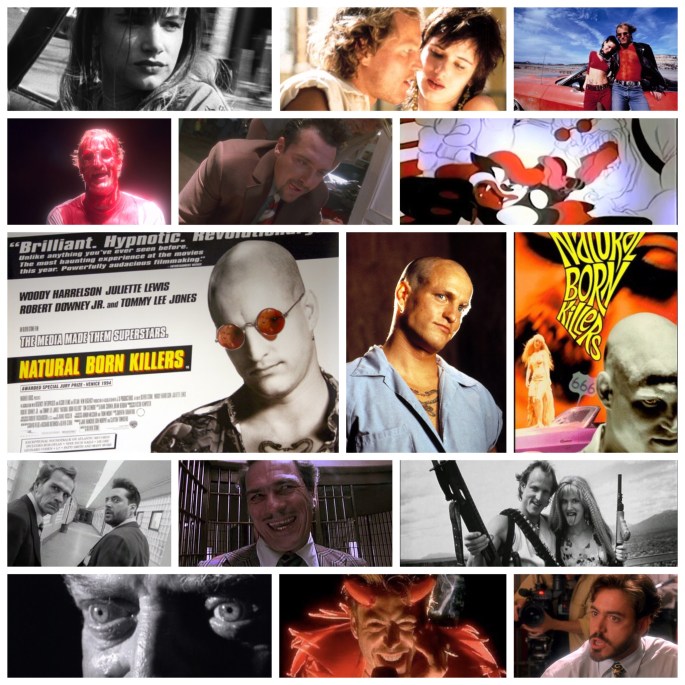
Oliver Stone’s Natural Born Killers


I will sing the praises for Oliver Stone’s Natural Born Killers til the day I either die, am too dementia ridden to compile a coherent review or too arthritic to type anymore (you folks will get some peace and quiet on your social media once any or all of the above happens). This film is less a film than it is a writhing elemental force, a cinematic being brought to life by tools seldom used in Hollywood, namely the sheer audacity of Stone’s frenetic filmmaking style. The MPAA kept an R rating just out of his reach for a while before finally conceding, harping to him that though he cut violent bits here and there to make it semantically tamer, it was the general aura of chaotic madness that irked them so. Stone considers this a compliment, and well he should, for its not everyday that an artist so fluidly taps into the artery of violence and the many catalysts of it in such a primal, intangible way that brilliantly splices what compels us with what appalls is, and the scarily thin line that wavers between them. This film is many things: a psychedelic road flick, a blistering indictment of sensationalist American media and the decaying degeneracy it breeds, a hallucinatory mood piece, a severely expressionistic action film, a thriller, a chiller and the list goes on, but more important than all of those is the love story that ties it all together. Juliette Lewis and Woody Harrelson are sticks of poisoned dynamite as Mickey and Mallory Knox, two twisted up kids on the run from everyone and everything, products of the darkest bowers of bizarro world Americana, deeply scarred by their pasts, fully committed to the wanton murder spree they’ve engaged in and unapologetic about the wave of carnage they’ve left in their wake. Demonized at every turn by the powers that be and everyone else in between, it’s easy to see why a system feeds two sick souls like this with infamy and notoriety instead of helping them. Anything for that big ol’ dollar sign, or simply whatever fills the void. We see the sickness creep after them, ever present in creatures like Tommy Lee Jones’s fire and brimstone prison warden, Robert Downey Jr.’s manic, sickening enabler of a talk show host and Tom Sizemore’s psychotic, gung-ho detective Jack Scagnetti. There’s a saying out there that goes “animals are beasts, but men are monsters, a sentiment that Stone has taken and run right off the cliff with, blasting us in the face with humanity’s very worst for a solid two hours, until he’s damn sure we catch his drift. The film is a stylistic tornado, every kind of colour, lens, filter, soundscape, visual trick and style of editing used until we realize we’re watching something truly unlike anything before, and likely after as well. Mallory’s backstory is staged in a stinging sitcom format as she’s terrorized by her abusive father (Rodney Dangerfield, cast grotesquely against type). Mickey breaks out of prison in black and white Lone Ranger style. A drug store Mexican standoff is painted with swaths of neon vomit green. Shadowy title cards and striking lighting are used in a sequence where the pair visit the lonely desert hut of a prophetic Indian (Russell Means). Visions dance on walls like spectral tv screens, faces leer and loom out of shadows for no apparent reason other than to add to the beautiful commotion, characters skitter through frames looking for a moment like demons. There is no other film like this, no other experience rather, an animalistic treatise on primal human urges, societal constraints that bind them, loosely and laughably out of place when you consider the dark urges within everyone. Amidst all this chaos though, like two corrupted beacons, are Mickey and Mallory. This is their story, and despite being a chief cause of the chaos I just mentioned (the universe has a sense of irony), it’s a love story, they being the centrepiece and everyone else rushing past like dark passengers in a swirling sideshow to their main-tent event. They’re brutal serial killers, no question, but they’re tender and caring with each other, and we see hints at a collective sweet disposition hiding below all those years of built up scar tissue. It’s a gorgeous film, full of scream-at-the-heavens ugliness, imagery that burns a patchwork quilt of impressions straight into your soul, an angry satirical edge that cuts like a knife and so much overflowing style you could watch the thing a thousand times and still pick up on things you never saw before. From the first cacophonous diner slaughterhouse set piece, to the second half of the film that descends into a regular Dante’s Inferno of a prison riot, this film is truly something else, in my top ten of all time and a uniquely affecting experience that has shaped the way I’ve watched films ever since. Plus that soundtrack man.. the story is set to every kind of music out there including Trent Reznor, Lou Reed, Patsy Kline, Peter Gabriel, Dre, Mozart, Marilyn Manson and so many more, with a pair of perfectly nailed opening and closing numbers warbled by Leonard Cohen. Everyone and anyone has quick bits and cameos to support the titanic work of the main cast too, including Denis Leary, Ashley Judd, Arliss Howard, O Lan Jones, Pruitt Taylor Vince, Jared Harris, Mark Harmon, Balthazar Getty, Marshall Bell, Louis Lombardi, Steven Wright, Rachel Ticotin, James Gammon and more. What more can be said about this film? It’s a natural born classic.

-Nate Hill