Adam Wingard’s Home Sick

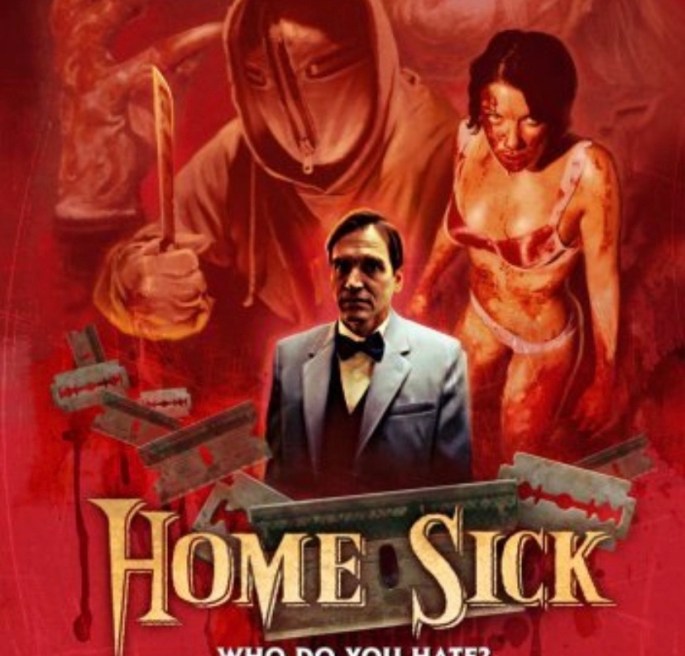
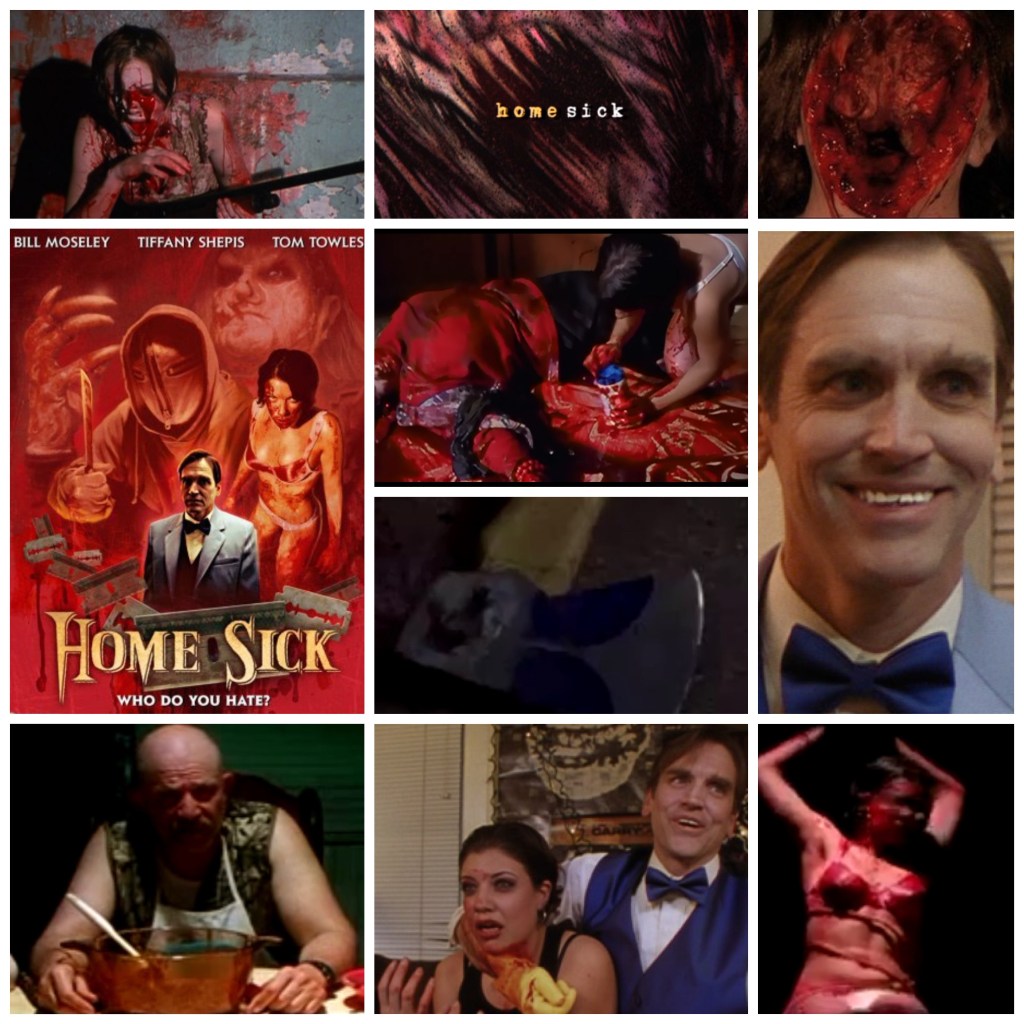
Adam Wingard has become something of a household name lately, blasting on scene with his vicious shocker You’re Next, thrilling audiences with his retro cult specimen The Guest and solidifying his presence as a filmmaker to be reckoned with by scoring the reins to Godzilla Vs. Kong, the dude is a top dog who is here to stay. Many aren’t aware of his debut film though, and fair enough because it’s about as low budget, under the radar and avant-garde as horror can be but it’s so, so worth watching to triangulate the evolution of a fascinating artist from the murkiest pits of lo-fi, Grindhouse schlock to the loftiest echelons of Hollywood high gloss. It’s called Home Sick, he made it on a shoestring budget back in the mid 2000’s and it’s an absolutely diabolical treat, but only if you can stomach some truly jarring moments of gore and have one demented sense of humour with the capacity for.. let’s just say… abstract thought. Low budget, practical effects driven schlockers like these are a dime a dozen, but this one is worth it’s weight in gold simply for going that extra mile to make it memorable and stand out from the cheaply drawn masses. It starts out slow, with an eerie opening credit musical jingle and animated sequence that could suggest all kinds of horrors to come. We meet a group of friends in the Deep South going through the motions of partying and quarreling. Tiffany Shepis does a wonderfully nutty little riff on her scream queen shtick who likes to rail cocaine at her graveyard janitor job and swing a mop around with gale force. Anywho, this weird little troupe is kicking back one night, when into the apartment walks a very ill adjusted stranger named Mr. Suitcase (the legendary Bill Moseley), and sits down on the couch like he owns the place. He’s chipper, charming and affable to a terrifying level, as he opens up his suitcase full of razor blades that he calls “gifts”. He asks them all to pick one person in their life they hate and want to wish dead, slicing a nasty gash on his forearm for each answer. The hilarious lot deadpan member of the group (Forrest Pitts, in a priceless performance of comedic eccentricities) foolishly blurts out that he wishes everyone in the room dead, and then the real fun begins. A giant masked killer begins stalking and killing pretty much every character around in ways so brutal your balls will shrink into your pancreas. Seriously, it’s like they sat down in a boardroom and systematically came up with every squirm inducing way to inflict violence on a human body, and gave their results to the storyboard artist and effects team. It all comes to a chaotic, deranged finale when they take refuge with Uncle Johnnie (the late great Tom Towles, always brilliant) a gun toting chili enthusiast. That’s where the film comes off the rails, but it’s seemingly deliberate and actually quite hilarious, as everyone pretty much goes certifiably bananas and loses the plot all at once like feral kindergarten class in overdrive. There’s some thought and care put into the writing, and as such the characters, however odd or over the top, seem like real people, albeit some strange and undesirable folks. The film oozes unsettling atmosphere right from the get-go, fervent in its aggressively weird sense of style and never taking the conventional route that most horrors end up with. Like I said, if your sense of humour has an affinity for the bizarre, demented and off the wall (think David Lynch meets Tim & Eric meets The Evil Dead meets John Waters), you’re gonna love this little gem. On top of being a laugh riot, it’s just freaky enough to earn it’s horror classification, something which many films in the genre just can’t claim. As to why it’s called HomeSick, though? Couldn’t tell you, and there’s no reference to it the entire time. Perhaps it’s called that for the folks that will be thoroughly repelled and repulsed, those who watch it expecting a run of the mill, cookie cutter slasher and feel uncomfortable with the oddness, getting “home sick” for their safer horror fare. As for me, I’m right at home up the weird end of the alley, and love this type of thing and it’s one hell of a fascinating debut for any director to start out with.

-Nate Hill
No One Lives

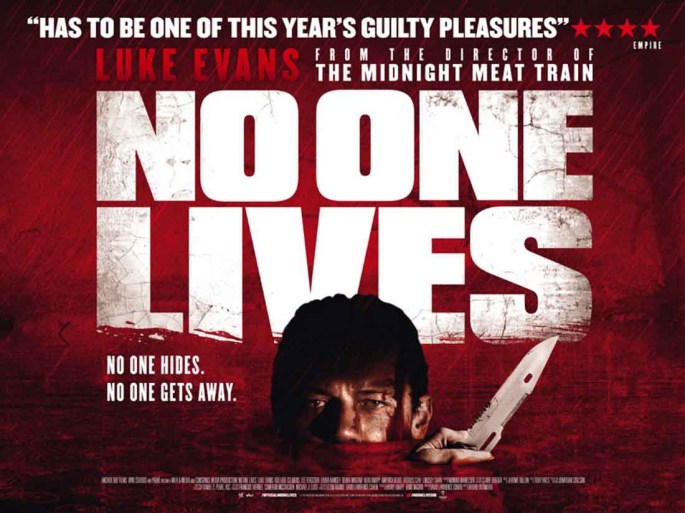
I don’t think I’ve ever seen quite as… efficient a serial killer as Luke Evans in No One Lives, an absolutely mental, ruthlessly gory, completely unhinged shocker with enough torque in its hood to short circuit your TV. It’s one of those stories where a group of very bad people accidentally enter the orbit of someone much, much worse and live to deeply regret being so careless. In this case the bad people are a roving gang of backwater criminals led by Lee Tergesen, but they’re not a biker gang or anything specific they’re just like… a gang, like the Warriors or something which I found hilarious for some reason. Anyway they unwittingly piss off Luke Evans’s seemingly benign ‘Driver’, who turns out to be an impossibly cunning, deviously psychotic and *very* experienced mass murderer and he has now decided that they are all gonna die. Every. Last. One. It’s not so much a game of survival as it is a total massacre of fish in barrel and we see him dispatch them all in some truly unsettling and bloody ways that involve everything from an industrial wood shredder (it’s not a wood ‘chipper’, the only applicable description of this fucking giant thing is ‘shredder’) to a lethal harpoon gun pulley system to a grisly variation on the ‘Leo hiding in a horse carcass’ moment from The Revenant. Amidst the mayhem and splatter the film even finds time for some genuinely twisted victim/aggressor psychology involving a former captive of his played by the lovely and always slightly unnerving Adelaide Clemens, who comes across like a shellshocked Michelle Williams. The two have a perverse, Stockholm Syndrome laced former dynamic that is eerie and very well acted by both. Evans usually shows up in polished, rollicking Hollywood high budget fantasy and whatnot but it’s very refreshing to see him roll up his sleeves and dive headlong into something knowingly lurid and deliriously pulpy, he has a ton of fun as basically the Jason Bourne of serial killers and I could totally see the character returning for a sequel or two. It’s decidedly lo-fi, B horror stuff and very in your face gruesome but Japanese director Ryûhei Kitamura keeps the momentum surging at a breathless pace, the gore and action nearly nonstop and the schlocky, Midnite tone evenly dispersed throughout for a wicked wild ride.

-Nate Hill

Aneesh Chaganty’s Run

Sarah Paulsen can be pretty damn scary when she wants to be and casting directors have taken full advantage of her talents, placing her in some truly unsettling roles where she somehow always manages to find humanity in the monstrosity. Aneesh Chaganty’s Run is a diabolically calibrated shocker that sees the actress in one of her more disturbing turns yet as a new mother who, as we see in an atmospheric prologue, loses her newborn child two hours after it’s born and appears devastated. Fast forward a decade and a half and we see her living in relative tranquility with a disabled daughter (Kiera Allen) and a good teaching job. She loves her kid very much and takes care of her multiple serious medical conditions until the daughter sees some cracks in the seams and realizes that mommie dearest might not be who she says she is and may be downright dangerous. This leads to a series of excruciatingly suspenseful scenes of the kid trying to break free, figure out what’s going on and how she’s being lied to and Paulsen furiously trying to keep her close, and very much in the dark. Director Chaganty also did the sensational 2018 thriller Searching with John Cho and that film was almost entirely restricted to the realm of digital social media screens and phone/tablet interfaces and somehow managed to be as exciting and propulsive as can be. This film obviously has less limitations and takes place out and about in the real world but the same nerve wracking momentum and crackling energy are present the entire time, so it stands to reason that this guy is a filmmaker to keep a close eye on as far as thrillers go. The ending was a bit.. demented for me and although deliciously and darkly serendipitous, felt a tad strange but everything that comes before is top tier thriller material, with Paulsen firing on all certifiably deranged cylinders.

-Nate Hill

Las Tinieblas: The Darkness

The Darkness was a weird one, even by my standards, but I somewhat enjoyed its particular brand of bizarre, despite feeling that the film overall seems a bit… incomplete. It’s a Spanish horror film, but one of those ones that seems to shirk the conventions of sub-genre and aspires to be something completely unique. Somewhere in a perpetually fog enshrouded, seemingly post apocalyptic wilderness, a paranoid fellow (Brontis Jodorowsky, son of legendary filmmaker Alejandro Jodorowsky) lives in a small cabin with his three grandchildren, in constant fear. He claims that if they go outside a mysterious ‘beast’ will come for them, and makes them wear gas masks if they set one foot outside for food or water, for fear of some vague toxicity in the air. Indoors doesn’t seem all that much better though because he’s kind of an unstable whack job who has an extremely unsettling collection of puppets he brings out, plus his rules and phobias just come across as… nuts. Soon the eldest grandchild, who bears the brunt of his antics, gets suspicious and it puts a tense saga of attempted escape and surreal, dreamlike imagery into motion. This is an arthouse film through and through, a style that I love but sometimes they get too loose, unstructured and neglect to tell a story that has any kind of discernible substance to it beyond just.. weird stuff happening. There are some absolutely striking visual terrors on display including aforementioned puppets, who are terrifyingly lifelike and a strange, split second glimpse at some kind of monster who may or may not be there for real, and the atmosphere is a smothering auditory tarpaulin of palpable unease that hangs over everything as does the eternal Silent Hill-esque fog. The film looks and sounds amazing and is very immersive from an atmospheric standpoint, it just needs more: a smidge more tangible exposition, a longer runtime to flesh things out and some more character to development to make it the full package. An almost great film.

-Nate Hill

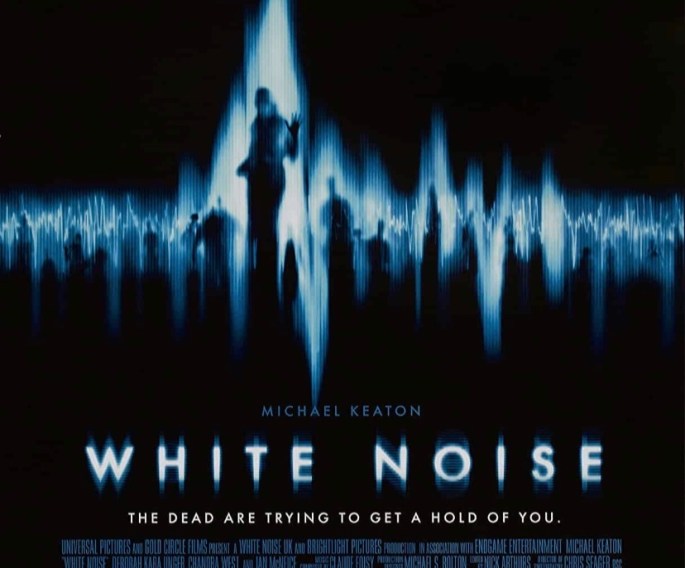
White Noise

I’ll start with the Thomas Edison quite that this film opens with because I just love it:

“Nobody knows whether our personalities pass on to another existence or sphere, but if we can evolve an instrument so delicate to be manipulated by our personality as it survives in the next life such an instrument ought to record something.”

I’m not sure what film critics were watching back in 2005 that caused such a knee jerk reaction of overall negativity, but the White Noise I saw was a chillingly effective, moodily atmospheric and very well done horror with a solid lead performance from Michael Keaton and one hell of a central premise. I mean it’s a bit low key, favouring hovering room tone and slow paced suspense over frenzied thrills or jarring shocks but that tends to be what I gravitate towards in horror anyways, so here we are. Keaton plays a Canadian construction CEO in Vancouver whose recently pregnant wife (Chandra West) doesn’t come home one night. A few days pass and her body is found near her crashed car, vaulted over a seawall gorge. As he begins mourning her, a mysterious gentleman (Ian McNeice) approaches him and claims that she has been contacting him via a phenomenon known as EVP, or electronic voice phenomenon in which the spirits of the dead can speak out across the gulf between worlds using electronic equipment, in this case a VHS recording system and a screen full of the titular white noise. Keaton is skeptical at first but it soon becomes clear that this is very real and with the help of another grieving woman (the great Deborah Kara Unger) he sets out to communicate with his wife and discern whatever message she has for him. Problem is, the VHS system is an open receiver and she isn’t the only spirit out there who can hear or talk, which sets the conflict in motion. I won’t say more but it’s a tense, brooding thriller and the Vancouver setting provides that classic rainy day, chilly PNW feel while much of the action is shot through these muted blue grey filters and accompanied by unnerving, otherworldly cues from the score by Claude Foisy. The scenes of communication over the VHS equipment are the film’s strongest attribute and fill the visual auditory realm of the film with a stark, creepy sensory dreamscape of fuzzy movement, shadows around the corner and wailing souls crying out from the abyss. Like I said, I’m really not sure what the issues were with this film from a critical standpoint other than the fact that they play fast and loose with plot a bit, but even then there’s a clear answer and resolute final act, while overall they focus on atmosphere and tone, which is my jam anyways. Great film.

-Nate Hill

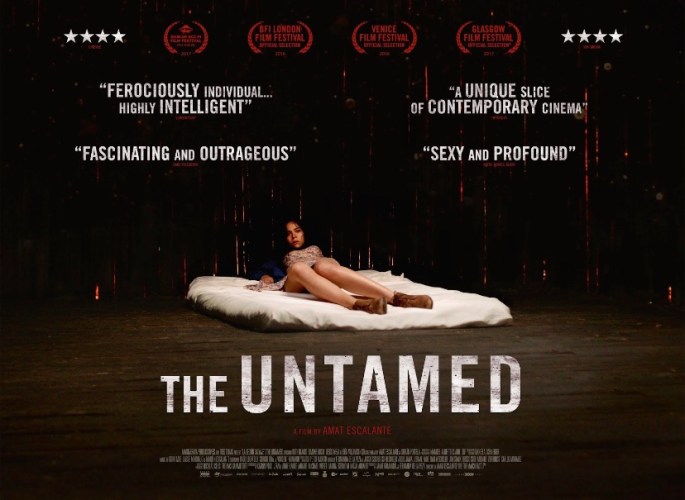
Amat Escalante’s The Untamed

So Shudder just added a Mexican horror film called The Untamed about an alien that literally has sex with people and you know what it’s actually pretty good. When I say that I don’t mean metaphorically, allegorically or any other vague or illusory way to present the concept, I just quite bluntly mean that a slimy tentacled alien emerges from a crashed meteor and has slimy alien intercourse with any female body that gets close to it. Now as stark and upfront as the premise is presented, it is also subtly used as metaphor for what’s going on in the lives of several troubled individuals in small town Mexico, the extraterrestrial itself viewed as an arbiter for sexual dysfunction, closet homosexuality in a conservative setting, clandestine adultery and other interpersonal shenanigans of the like. Nor does the film present its subject matter as anything close to schlock or exploitative in nature and at times doesn’t even feel like an abject horror film, but rather a tense, eerie, melodramatic tragedy that just happens to have an extended cameo by a sex monster from outer space. The effects on the creature itself are tangible, tactile and terrific, the performances from the human actors all most excellent and elicit sympathy, show complexity and emotional range while being sufficiently creepy when under the sultry influence of the alien’s potent, seductive and very weird pheromone like spell, almost like a cosmic drug trance that is translated excellently into the screen by these artists, none of whom I’ve seen in anything else before. Word of warning with this one though: it’s not a prudish North American studio film and as such doesn’t beat around the bush with explicit sexuality, which is totally normal and fine if it weren’t for the fact that said sexuality includes a multi-tentacled being from space and you see *everything* when this thing is copulating with women, which may be too much for some. It’s not done in a violent, perverse or shameful way and the scenes have a sort of almost bizarre tranquility to them, but it is a *very* disquieting form of intercourse to absorb and experience onscreen and some may be uncomfortable. Very unique and challenging film overall.

-Nate Hill

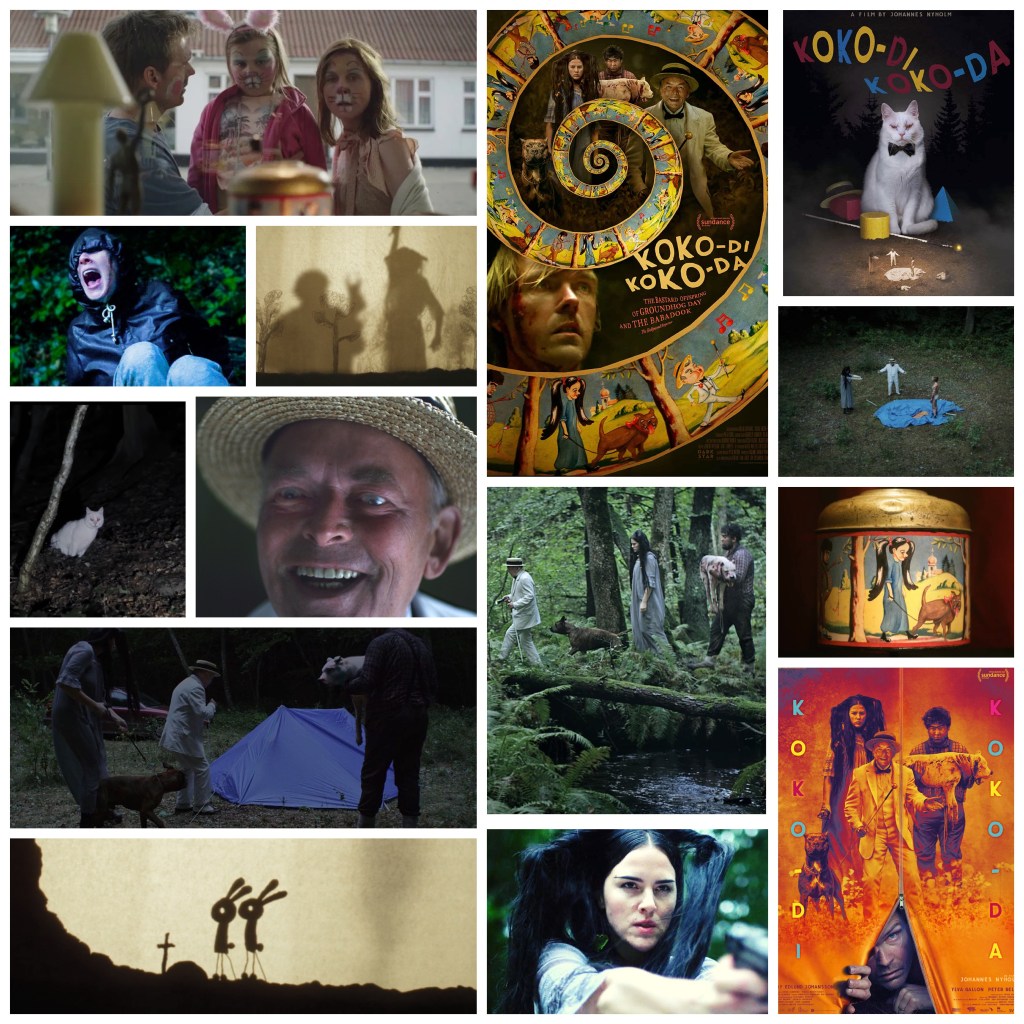
Johannes Nyholm’s Koko-Di Koko-Da

Shudder is a great streaming service if you’re looking to get lost off the beaten path within the horror genre and come across some truly weird shit that you otherwise might not have the chance to see. Long lost keystones of 80’s schlock, obscure off kilter creature features and more recently some bizarre foreign arthouse experiments like Johannes Nyholm’s Koko-Di Koko-Da, a terrifyingly surreal plunge into grief, madness, waking nightmares and past trauma that manifests in some dark, fairy tale esque ways. When a vacationing Swedish couple loses their young daughter in an accident that’s.. odd to say the least, her death sets deep rooted trauma in both of them. Sometime after they decide to go on a camping trip to rekindle their marriage and attempt to heal from the loss.. and let’s just say it doesn’t go too well. No sooner have they pitched a tent and are trying to get some sleep, three mysterious and *very* strange individuals emerge out of the forest from nowhere, proceed to torment, harass and eventually murder them. There’s a scary little white suited ringmaster dude, a big giant oaf carrying a dead dog and an unnerving mute girl with hair that would make Lady Gaga cringe. This trio of freaks continues to find and terrorize them in one of those scintillating time loops where they find themselves on the road, in the tent, under attack and murdered again and again and again. Who are they? Why do they keep accosting them? Why do they look like rejects from a Rob Zombie film or a travelling gypsy circus? Well, there’s a reason for that that’s actually a lot simpler and more straightforward than how the material is presented, through this sort of nightmarish prism of music, sound, surreal forest visuals and disorienting stylistic flourishes. The film isn’t going to work for everyone, simply for how bleak, unrelenting and alien the atmosphere is, and how the resolution of this couple’s grief and trauma comes in a fashion that’s anything but easy to process and absorb, much like their issues in question. There’s a specific object in the film, a sort of totemic MacGuffin that holds the key to everything, the identity of these three nocturnal scoundrels, related directly to their daughter and the eerie, ethereal nursery rhyme that hovers in the film’s auditory psycho sphere as a constant reminder and gives the film its inane but inherently menacing gibberish title. A challenging, deeply unsettling yet greatly rewarding piece of tricky arthouse neo-surrealism.

-Nate Hill

McG’s The Babysitter: Killer Queen

The first Babysitter on Netflix is one of my favourite 80’s nostalgia bath horror flicks out there, so naturally I was curious about the recent sequel, Babysitter: Killer Queen. The first film is a blast of retro pop culture referential bliss, cheerfully gruesome cartoon gore, vividly farcical archetypal characterizations, a beautifully bold colour palette and some punishingly funny dark humour. So how much of that does this sequel bring to the table? Well thankfully a lot, and ends being like… 70% as dope as the first with a ton of rambunctious energy and clever new ideas.. however, it implodes a bit in the third act with some inexplicably off kilter character/plot curveballs that just feel weird, which I’ll get to in a moment. It’s been a year or so since the events of the first films and young Cole (Judah Lewis) is still processing almost being murdered and sacrificed to Satan by his evil babysitter Bee (Samara Weaving) and her mad dog gang of psycho high schoolers. Life goes on and no one seems to believe him until it all happens again, his would be best friend Em (Emily Alyn Lind) turns out to be another devil worshipping bitch who goes nuts on him right as Bee’s followers all rise from the dead for one night’s last chance to finish what they started and dispatch Cole for good. He’s joined by the ‘new girl’ in his class, a spitfire problem kid named Phoebe (Jenna Ortega) and soon enough genuine sparks fly between them. The action is shifted from the pastel suburbia aesthetic and placed on a riverboat and the surrounding Arizona desert/lake atmosphere for a nice change. The gore is fast and furious, the dialogue whip smart and reliably hilarious and the soundtrack packed with joyous 80’s deep cuts of everything from Alannah Myles’ Black Velvet to Tangerine Dream’s Love On A Real Train. It’s a ton of fun, except… well the problem here is Samara Weaving, or a lack of her anyways. Her character is pretty much absent for most of the film, while her exuberant cronies do much of the chasing, terrorizing and wise cracking. When she does eventually show up in the eleventh hour, she seems distracted, listless, even a little pale and not up to the task, like she was somehow forced into this by a contractual obligation and kept her presence as scant as possible. Nowhere to be found is the spunky, sexy, full of charisma and deadly sex appeal we remember her having from the first film. Additionally, they’ve chosen a completely out of left field twist on her character that makes absolutely zero sense when you look at the first film and feels just, so shoehorned in for whatever behind the scenes reasons, most likely spearhead by Weaving’s own ideas about the whole thing. It’s shocking and a bit frustrating and kind of derails the entire franchise, if I’m being honest. Still though, the first two thirds of the film are cracking stuff and on the level of pedigree as the first film, I’m just not sold on the ending, and whoever’s plan it was to go that route with this Bee character.

-Nate Hill

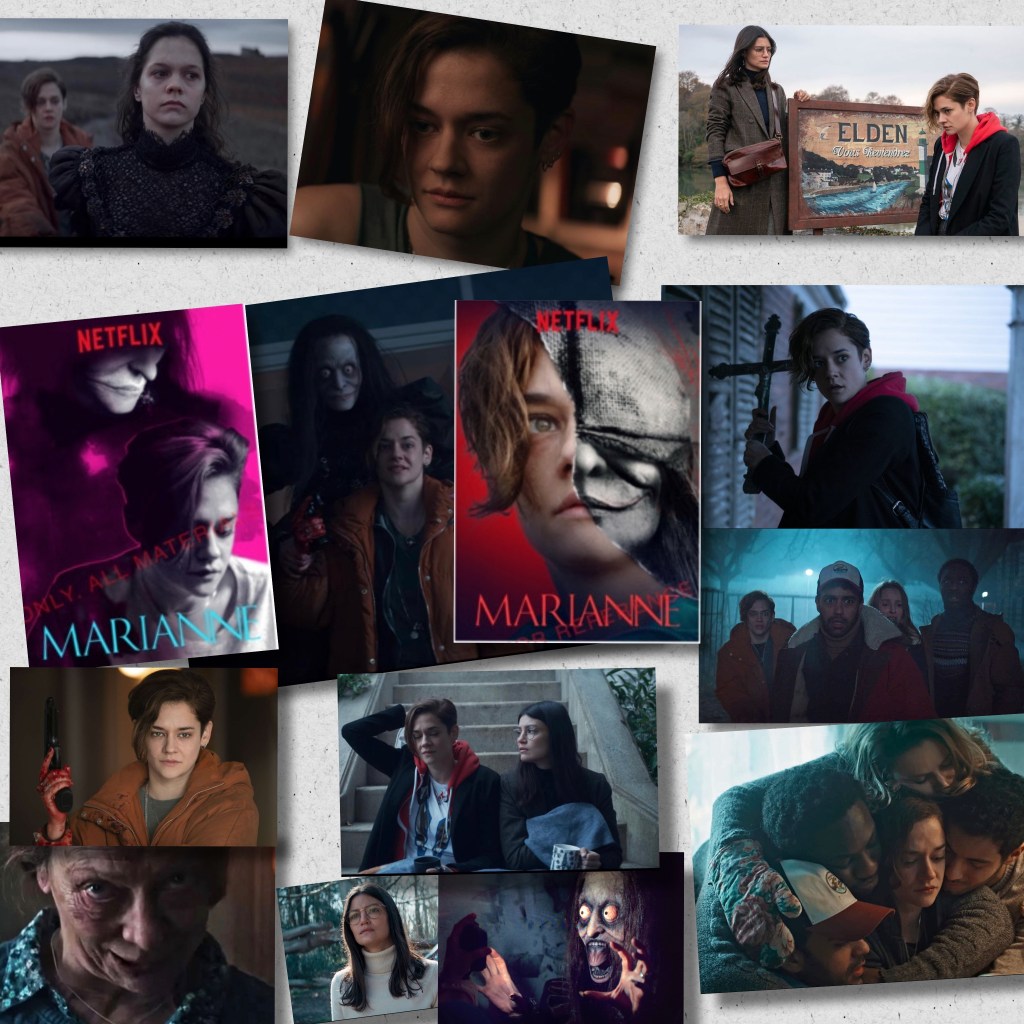
Netflix’s Marianne

It’s always great to find horror content that is *actually* scary, like ‘scare a desensitized adult with decades of genre nerding out’ scary. France’s Netflix original series Marianne is most definitely scary as fuck, one of the qualities that makes it stand out amidst the multitudinous ranks of horror material streaming out there. What it also has is strong, emotionally rich storytelling, a unique and sometimes disorienting but organic way of presenting its story, characters with depth, compassion and complexity and a kind of meta storyline that feels like a tale within a tale at times, like King’s In The Mouth Of Madness or the like. Emma (Victoire DuBois) is a famous horror novelist whose work has taken her from the sleepy seaside town of Elden to big city Paris for book tours, autograph seminars and overall big-shot writer lifestyle. Her many books tell the ongoing story of nasty pagan witch Marianne, a monstrous force of evil who, it turns out, isn’t just a creation out of Emma’s imagination but is a very real entity from her childhood and that of all her friends back home she’s become so estranged from. This leads her on a journey back to Elden to reconnect with her friends, discover just how real (and how fucking terrifying) Marianne is, what she’s been up to and what can be done to end her reign of unholy terror over the town and everyone in her life. The story starts off jaggedly and it can be tricky to get a sense of (gotta keep up with those snappy subtitles) at first but once she’s settled back into Elden the magic really happens. Emma is a confident, assured and independent woman who has the rug of her cavalier personality yanked from under her when it becomes clear what a force to be reckoned with Marianne is, and Dubois’s performance is one of emotional resilience, startling vulnerability and aching sex appeal. Marianne herself takes several different forms, each more hair raising than the last and is really a fascinating character once the mythology fully unfolds. I won’t beat around the bush: this is one fucking scary ass show, and I *dare* you not to be totally freaked out by the makeup effects (those bulging eyes), shocked by the relentless, very efficient jump scares and just immersed in the overall atmosphere. There’s also a deep emotional core emanating from out of all the horror, as we see Emma’s varying relationships to her many childhood friends, how each bond is tested by time and the evil surrounding them. The town of Elden (actually the port of Doëlen) feels real and mysterious, complete with its own spooky lighthouse, as every small coastal town in a horror film should. The story is one full of mystery, pathos, hurt, horror, super high stakes (Marianne is one ruthless being with absolutely no regard for compassion or mercy) and just… everything about it *works.* Could not recommend this highly enough.

-Nate Hill

Hellraiser III: Hell On Earth

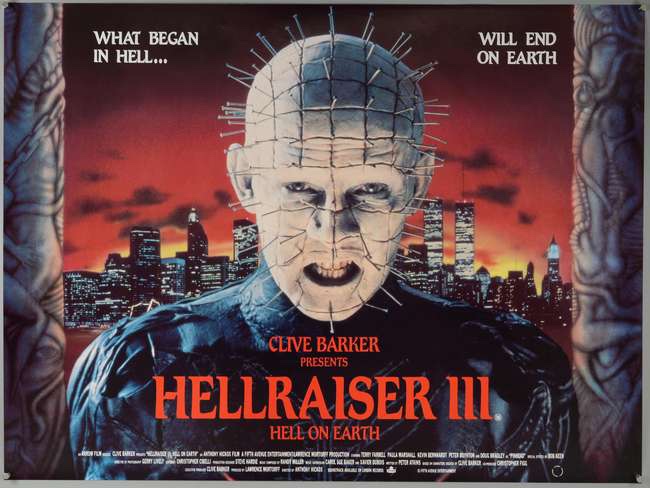
Often horror franchises will set out on one path, hang out with one set of characters for the first couple entries or so and then go back to the drawing board to shift gears completely, placing their action and mythology elsewhere in a different scenario. It gives fresh perspective, new characters and a chance for an atmospheric transference to a new environment, which I think Hellraiser III: Hell On Earth handles terrifically. The nightmarish Rubik’s cube has somehow made its way to a 90’s big city and is purchased by an obnoxious nightclub owning freak-show (Kevin Bernhardt) who uses its otherworldly aura to boost both his club’s atmosphere and his own bizarre sex life. The cube, embedded in a sculptured pillar, has a mind of its own though and soon Pinhead and his merry little gang escape from their stoney prison and wreak all madness and havoc throughout the city, starting with an impossibly bloody free for all at the club. One intrepid reporter (Terry Farrell) knows a good story when she sees one and begins to get embroiled in the Cenobites plan for citywide mayhem, along with her friend (Paula Marshall). Pinhead is fun in this one because it’s not like the first two where he just gets summoned from the cube and is there all ready to go, here he’s been trapped in that stone pillar for quite sometime and has a lot of pent up rambunctious energy and when he gets loose, he *really* unleashes hell. He’s got some… quite interesting homies in this one too, not the same peeps from the first two. There’s one cenobite with CD’s embedded into its head who chucks them around like ninja stars and amputated people’s limbs. Another one has a fancy camera on its face and uses filmmaker lingo as it kills people and as ridiculous as these two might seem initially, one must remember that the cube and the forces within seem to mirror human experience back at us with their shenanigans so it kind of makes sense in a way, plus I greatly appreciated such audacious creativity. Bradley gets to play both Pinhead here and the colonial era British explorer who he used to be for a nice touch of variation and duality. This one was a blast; stunning gore and visual effects, nostalgic 90’s aura, a wicked fun female protagonist and a playful tone that sets it apart from the first two.

-Nate Hill