The Last Outlaw: A review by Nate Hill


The Last Outlaw is a revenge themed western written by Eric Red, and if you’re at all familiar with his other works (he also penned The Hitcher and Near Dark), you’ll have some idea of how bloody and intense it is. It’s a smile story populated by hard bitten, gruff sons of bitches, and the violence comes fast and hard from all directions as soon as a few backs are stabbed, and several ravenous tempers ignited. Often in westerns the violence is clipped and minimal, the damage which a six gun does to flesh oddly shirked in favour of theatricality. This one has no use for that, and messily displays exactly what such a weapon does to people, repeatedly and with no discretion. It’s rough, gritty, Walter Hill style stuff, with not a trace of levity, smash or buckle, and every character kicking up dirt and anger the whole time. The film opens with a daring bank robbery, executed by former civil war Colonel Graff (Mickey Rourke), and his brutal gang. Their victory turns sour when mutiny looms among them in the form of Graff’s second in command, Eustos (Dermot Mulroney). He can’t abide by Graff’s sadistic methods, and bitterly betrays him. The rest is a bullet ridden cat and mouse game in the dusty deserts and shanty towns of the southwest, as the bodies pile up and the blood spatters in the dirt time and time again. Rourke is an implosive, grade A dickhead as Graff, a man less concerned with the fruits of his labor and more driven by the desire to exact violent retribution. One wonders if that’s what he’s in the game for anyway, to bide his time until something goes amiss, and the revel in the carnage. The supporting cast is just epic, with work from Steve Buscemi, Ted Levine, Paul Ben Victor, Richard Fancy, John C. McGinley and Keith David. It’s essentially one big stylish bloodbath, a pulpy ride through the gutter of arrogant machismo. Terrific fun, if that’s your thing. 

Bullet: A Review by Nate Hill 

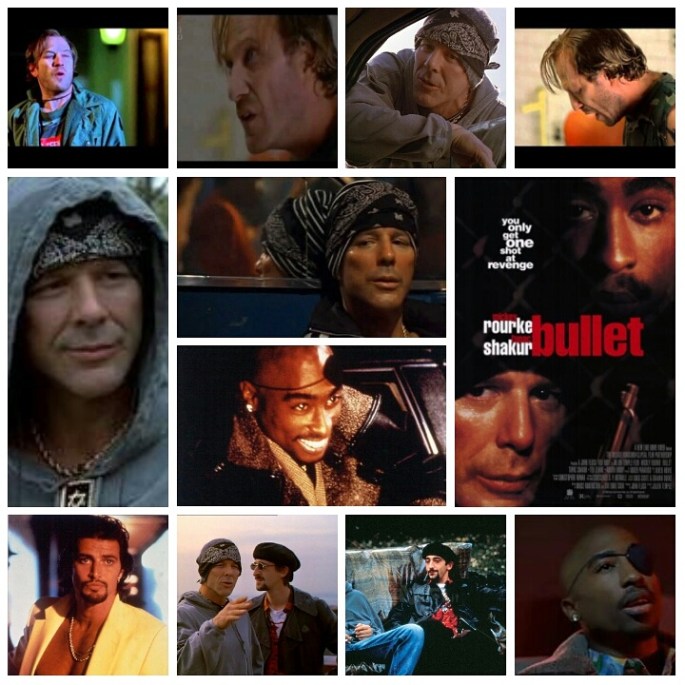
Bullet is a violent cautionary tale about what it means to live a life of crime in New York City’s brutal Hell’s Kitchen, to live (and die) with all the baggage and tragedy that comes along with it. Mickey Rourke is excellent as Butch Stein, a pathetic yet somehow endearing Jewish American hoodlum locked in a personal war with local drug dealer and gangster Tank (Tupac Shakur). Butch still lives with his family, and spends his nights slumming about with slick wannabe wiseguy Lester (John Enos III) and his gangly brother Ruby (Adrien Brody). One gets the feeling that all of them are essentially still little kids who never learned to grow up or use their words, but the sandbox they’re squabbling in now is a dangerous area of town, and their toys are heavy artillery. Butch has another brother, a reclusive weirdo played phenomenally by Ted Levine. He’s distant and strange, but there’s breaks of clarity that shine through, and in those moments he’s pretty much the voice of reason amongst all the tomfoolery that adds to the mortality rate in their district. Levine is unique and shelters the gold in his work until right at the end, letting off an emotional stinger of a cap to his performance that is yet another testament to his skill. Rourke broods through his work with sombre self loathing and a grim resolve, dead set in his ways, perhaps unable to live his life differently, and feeling helpless at the road he’s taken, a dark one that has strayed far from what might have been. Tupac’s role is somewhat underwritten, which isn’t quite fair to the guy, because he has more acting talent than pretty much any other rapper I’ve seen in film. Reduced to a mostly a jive talk sterotype gangsta antagonist, I would have liked to see them allow him to level with Rourke in a way that made their locking horns seem a little bit more than just a petty turf war. Director Julien Temple comes from a music video background, and transitions nicely into the world of the urban crime drama, shooting the seedy NYC locales with glittery precision that suggests festering rot below. It’s an anti-crime film, and I’m always curious to see if such a sentiment is undone by the glorification of such a lifestyle, intentional or otherwise (it’s easy to get caught up in sensation and cinematics, losing sight of what you set out to say in the first place). This one stays true to its word, showing us characters who have irreparably lost their way, and assuring bullet by bullet, death by death, that this isn’t any kind of life for anyone. Searing stuff. 

Wonderland: A Review by Nate Hill 

  
I’ve always thought of this as the Oliver Stone Movie that the man never made. It has the sordid, excessive sleaziness of U Turn, and the studious inquisition into true crime and intriguing Americana that he showed us in JFK. Both films explore the violence and ugliness that peppers American history in different ways, the brash and the academic which often exist in opposite poles colliding in Wonderland, a wholeheartedly nasty account of a stomach churning multiple murder involving one of the most infamous porn stars who ever lived, John Holmes (Val Kilmer). I don’t know what the real Holmes was like (besides tell rumours of his anaconda cock), but the version we see here is a sniveling, unrepentant scumbag who is very hard to empathize with unless you flip the nihilism switch on in your brain and lose yourself in it. The film follows his association with a group of fellow undesirables, interested only in furthering their own drug habits by any means necessary, legal or otherwise. John is late in bis career and on the cusp of being a washout, his underage girlfriend (Kate Bosworth) pretty much the only friend he has in the world. He spends his days getting involved in all kinds of smutty business, along with a crew of fellow junkies led by loose cannon Josh Lucas, grim biker Dylan McDermott and timid Tim Blake Nelson. When they collectively catch wind of the wealth of one of John’s acquaintances, a dangerous club owning mobster (Eric Bogosian in full psycho mode), the dollar signs swirl in their already dilated pupils. After an ill advised robbery, Bogosian reacts with all the wrath of the Israeli mafia, fuelled by his personal vendetta, brutally slaughtering each and every one of John’s gang, letting him live as a branded snitch. The film is based on notoriously grisly crime scene photos which can be seen online, laying speculation on Holmes’s part in the killings, and spinning a sinfully chaotic, noisy web of pulpy hijinks surrounding the case. The film is told from two different perspectives, a fractured narrative laid down by Kilmer and McDermott in respective and very different summaries of the event. Ted Levine and Franky G. play the two detectives who take it all in and work the case, and the excellent M.C. Gainey plays a veteran ex cop who they bring simply because he’s the only familiar face which skittish Holmes will open up to. This is an ugly, nasty film and I won’t pretend it doesn’t get very gratuitous both in dialogue and action. It goes the extra mile of obscenity and then some in its efforts to make us squirm, but every time I pondered the necessity of such sustained atrocities, I reminded myself that in real life there’s even more of such stuff, and the film is just trying to hit the themes of decay home hard, albeit with a sledgehammer, not a whiffle ball bat in this case. Kilmer is fidgety brilliance as Holmes, a severely damaged dude who hangs onto the last strand of our sympathy by the wounded dog whine in his voice alone. The only time I felt anything for the dude is when he visits his estranged ex wife (a flat out fantastic Lisa Kudrow, cast against type and nailing it) and we see flickers of a dignity in him that’s long since been consumed by darkness. One of his best roles for sure. Watch for further work from Michael Pitt, Louis Lombardi, Janeane Garofalo, Scoot Mcnairy, Christina Applegate, Faizon Love, Chris Ellis, Paris Hilton and Natasha Gregson Warner too. This one is like Boogie Nights, Rashomon and Natural Born Killers tossed in together on spin dry. It’s a wicked concoction, but you’ll need to bring a strong stomach and the foreknowledge that you’re going to be spending two hours with some of the most deplorable human beings this planet has to offer. The silver lining is you get to see it all play out in killer style, smoky and evocative 1970’s cinematography and dedicated thespians branding each scene with their own lunacy. Tough to swallow, but great stuff.

Barry Sonnenfield’s Wild Wild West: A Review by Nate Hill

image

I don’t get the hate for Barry Sonnenfield’s Wild Wild West. I just don’t.  It’s like I saw a completely different film than the entire rest of the continent. To my knowledge, there’s me and a couple other friends I know who love and cherish it, and the rest of the world has seemingly cast it out into the cold, inexplicably bashing it no end. Wtf. It’s a rollicking good time, full of a brilliant blend of situational and slapstick humour, lively characters from a great group of performers, incredible production design, and a dash of swash and buckle. It may not have much in common with the 1960’s era tv show its based on, but kudos to it for breaking new ground. Will Smith plays Marshall Jim West, a cocky (there’s literally a small window of freeze frame where you can see his ebony schlock in full glory. And don’t even ask me how I know that), ballsy (ok sorry I’ll stop) secret service cowboy badass who is working a case against some nasty villains who want to use president Ulysses S. Grant for diabolical ends. He’s led to old foe General ‘Bloodbath’ McGrath (Ted Levine in a show stopping, wickedly devious southern psycho role) a confederate lowlife who will hopefully lead him to whoever is kidnapping the nation’s best and brightest scientists for some Bond villain-ish scheme. West is joined by kooky inventor Artemis Gordon (a classy Kevin Kline) and the two embark on a shoot em up quest to thwart the evil plan of Dr. Arliss Loveless (Kenneth Branagh), a dastardly mega villain with plans for America that don’t involve presidents or laws or anything sane. The film is endlessly inventive, wildly funny and parades forth a reel of set pieces, each more amazing than the last until we realize we’re actually watching a fifty foot tall steam punk mechanical spider stomp all over the Utah desert (there’s a priceless story involving that and the film’s odd duck of a producer Jon Peters, which you can watch Kevin Smith regale an audience with over on YouTube). West and Gordon are joined by sultry Rita (Salma Hayek) a Femme Fatale with a hidden agenda who tags along under the guise of damsel in distress. It’s just plain fun and I still don’t get how anyone could dislike it. Witty barbs, raunchy double entendres and sarcastic banter permeate the wonderful script. Nifty gadgets, detailed costumes and clanking machinery speckle the epic production  design. An atmosphere of playful fun oversees all of it from beginning to end. Smith and Kline make a dysfunctional buddy duo for the ages, squabbling right up until the last frame. Branagh hams it up so far over the top as the bad guy that he nearly implodes on himself. Levine is deliciously creepy and crusty. Watch for other gem performances from Bai Ling, M. Emmett Walsh, Debra Christofferson, Sofia Eng, Rodney A. Grant and Musetta Vander. If you’ve seen it and already love it, good for you let’s go have a beer. If you’ve seen it and hate it, you’re a silly bum (to put it mildly). If you haven’t seen it, do so, form your own opinion and fall into one of the above two categories. It’s a classic for me.

Harlan County War: A Review by Nate Hill

image

Harlan County War is a rare little TV movie that takes a partly fictional look at the union wars in rural Kentucky during the 1970’s, when a plucky band of coal miners and their wives took to the picket line in attempt to establish better working and living conditions. The story and title of the film have roots in the union wars of the 1930’s, which set the stage for this tale. Holly Hunter plays Ruby Kincaid, wife of Silas (Ted Levine) a miner who suffers through the harsh labor everyday. The townspeople are tired of the injuries, the deaths and the deadly black lung infections, and are given reluctant hope when compassionate union official Warren Jakopovich (Stellen Skarsgard) arrives to their county, promising change. Many locals are skeptical due to past corruption and disloyalty, but soon the company gets nasty and they realize that Jakopovich may be their only chance. Hunter is as fired up as she always is, her accent thicker than the moonshine everyone swills. I tracked this film down for Levine (Skarsgard too), and this is one of the best roles he’s ever gotten. He’s usually in character parts like the violent thug, stern general, gruff cowboy or yes, the skin stealing serial killer. Here he’s just a plain rural family man, a good hearted fellow who wants the best for his kin and county. Levine works wonders playing it straight here and I wish he’d get thrown more meaty and down to earth roles like this. Skarsgard can jump between being the most terrifying psychopath to the most comforting, sympathetic characters, and plays Jakopovich with compassion and dogged determination. The character building scenes between the three actors is brilliant. I feel like there’s a longer edit out there somewhere, because it jumps a bit and forgets to address one plot turn entirely, but alas it’s a tough one to affordably track down and this is the only version I could get. It’s made for TV and that shows at the seams sometimes, but it’s still solid drama about something important, and crafted very well.

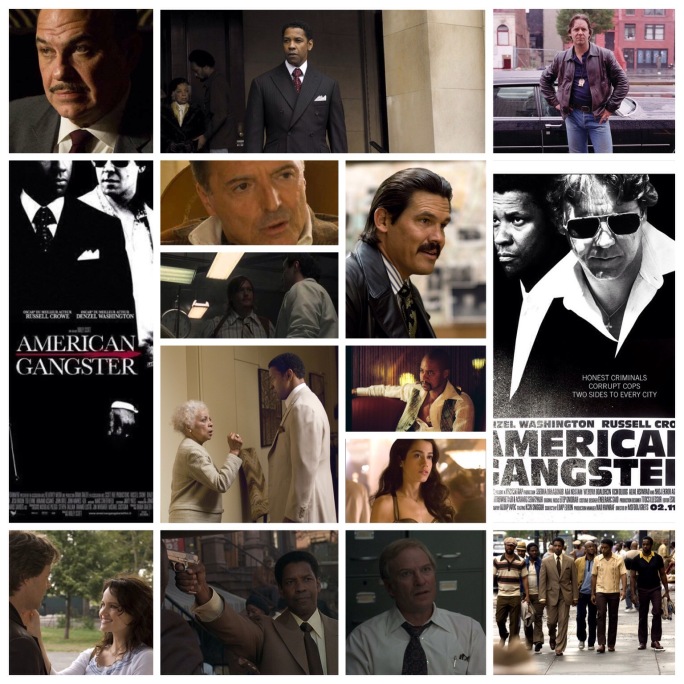
Ridley Scott’s American Gangster: A Review by Nate Hill


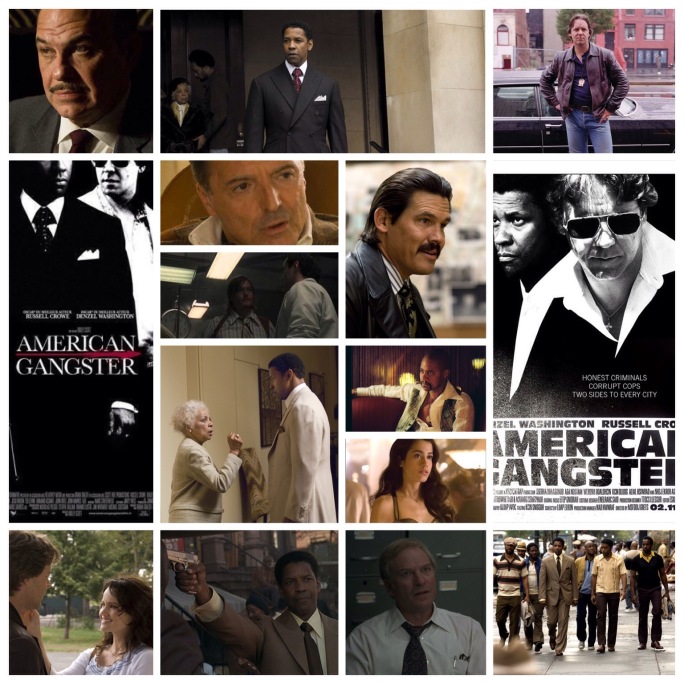
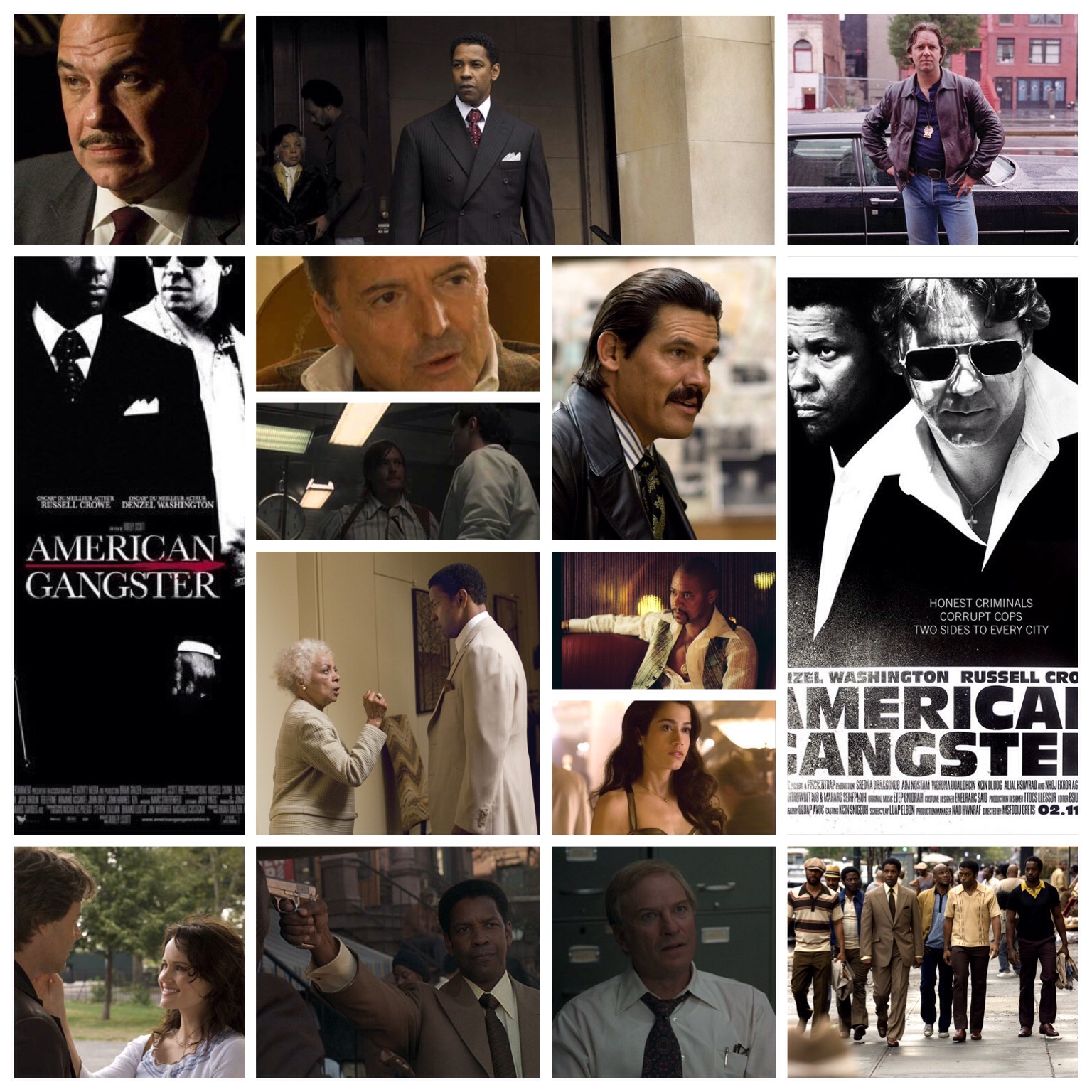
Ridley Scott’s vast, intricate crime epic American Gangster is one of the director’s finest achievement in film to this day. It’s sprawling in nature, expansive in scope but never chaotic or muddled. It always maintains a laser focus on its characters and story, thumping along at a rhythmic pace which swells and falls to the time of one of the most iconic stories in true crime. It’s Scott’s Heat, a titanic tale of cop vs. criminal in which neither are the villain or hero, but simply men adhering to rigid, ruthless principles moulded by the environments they have grown up in. Both men have an intense set of morals completely different from the other, yet equally as captivating. Russell Crowe is a troubled bruiser as Detective Richie Roberts, a cop so determined to convince himself of his own upstanding nature that he won’t take any illicit payoff in any amount or context. In contrast, every other aspect of his life is a shambling mess. Denzel Washington is quiet fury as Frank Lucas, an enterprising gangster and drug smuggler who rides the tidal wave of capitalism like there’s no tomorrow, flooding the streets of Harlem with pure heroin directly from the southeast Asian source, and rising swiftly to the peak of underworld infamy. The two are on an inevitable collision course, two juggernauts with different empires backing them who will stop at nothing. Lucas believes himself to be untouchable, shirking the flashy, preening nature of his peers and remaining out of the limelight, until cunning Roberts catches onto him. The rough and tumble world of New York in the 60’s and 70’s is lovingly brought to life by Scott, his cast and crew who go to impressive lengths in order to bring us that grit, realism and specific anthropological aura of another time, another setting. Speaking of cast, this has to be one of the most rip roaring collection of actors ever assembled, even to rival that of Heat itself. In Richie’s corner there is senior Detective Lou Toback (a sly Ted Levine, perpetuating the vague Michael Mann vibe even further), a scummy colleague (Yul Vasquez), and an off the books team of gangbusters including John Ortiz, John Hawkes and a mumbling RZA. He also clashes with his bitter ex wife (Carla Gugino) in an ugly custody battle for their young son. Over on Frank’s side of the hill are his huge extended family including Common, TI, Chiwetel Ejfor and Ruby Dee in one of the film’s finest performances as his strong willed, passionate mother, one of the only people who could talk sense into him and keep the animal inside at bay. Lymari Nadal is great as his bombshell Puerto Rican wife as well. His rivals include superfly-esque Nicky Barnes (Cuba Gooding Jr.) and a brief, hostile turn from Idris Elba. He also deals with the Italian mafia, personified by a hammy Armand Assante, an earnest Jon Polito and a slimy Ritchie Coster. One of the best performances of the film comes from Josh Brolin as positively evil corrupt narcotics detective Trupo, threatening everything that moves with his grease slick hair, porno moustache and silky, dangerous tone. As if that army of talent wasn’t enough, there’s also work from Kevin Corrigan, Joe Morton, Clarence Williams III in a powerful turn as an ageing Bumpy Johnson, and a blink and you’ll miss it cameo from Norman Reedus as well. What. A. Cast. The whole thing rests on Crowe and Washington, though, and both are like Olympian titans of crime and conflict, sweeping up everyone around them in a whirlwind of explosive violence, shifting alliances and the booming arrival of capitalism giving the American people in every walk of life a defibrillator jolt of economic change, laying the foundation for the world we live in today, one brick, one bullet, one business deal at a time. Scott achieves legendary heights with this one, a crime film for the ages that one can always revisit to see not how one hero cop took down a villainous drug lord, but how the forces which inexorably bind humans to various fates in accordance with their decisions swept up two extraordinary yet mortal men into historic infamy. In a word: Epic.