Adam Egypt Mortimer’s Daniel Isn’t Real

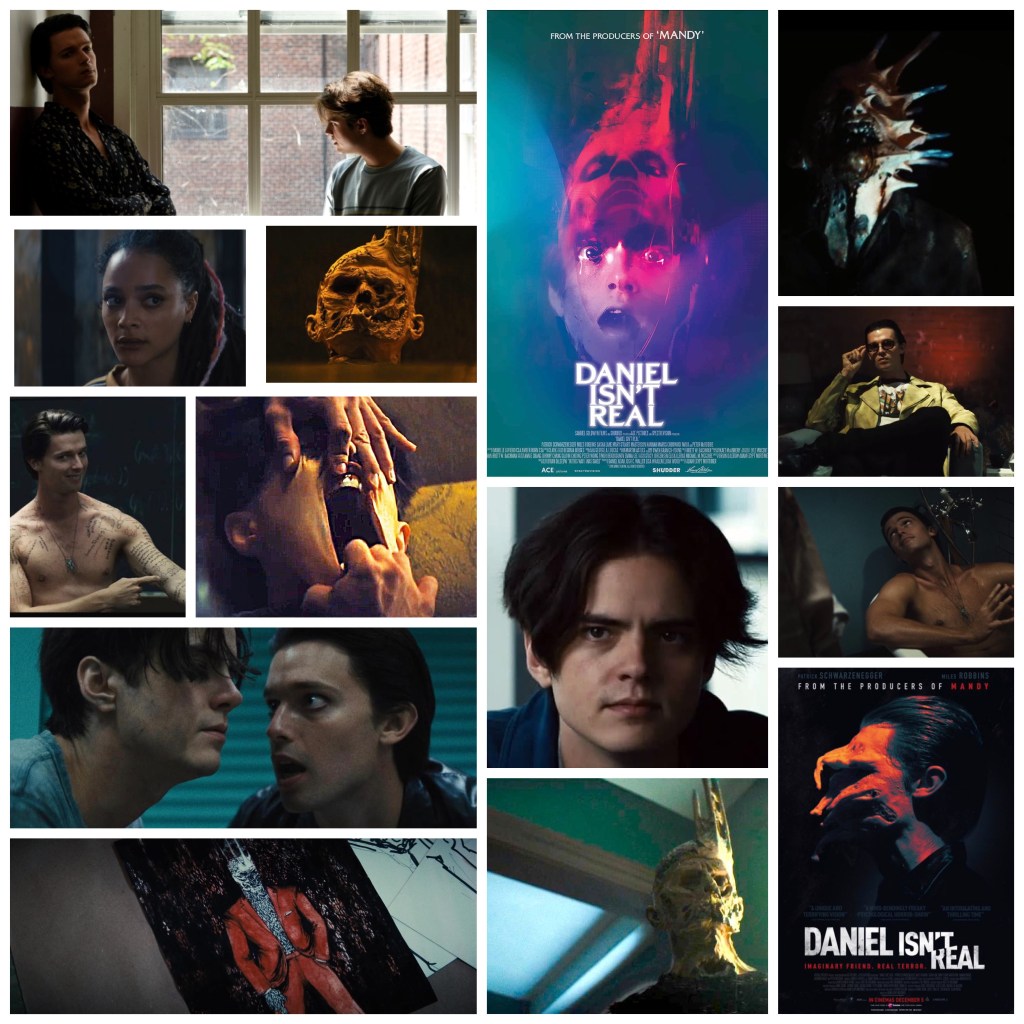
I wasn’t quite sure what to expect from Daniel Isn’t Real and based on the synopsis it seemed like your classic case of ‘dark elements of one’s psyche’ manifesting themselves into physical form’, in this case an imaginary friend. But there was something.. *off* about the poster artwork, an esoteric colour scheme and title font that intuitively said “no, there’s more than that here.” Yeah, a whole lot more. This is one of the most visually unafraid, thematically complex and stylistically bizarre horror films I’ve ever seen and my hat is several miles off to its audacity, vision and immersive realm crafting. Director Adam Egypt Mortimer says he was inspired by Adrian Lyne’s classic horror film Jacob’s Ladder, which makes sense in casting Tim Robbins’ own son Miles as quiet, disturbed college student Luke. He witnessed an unthinkably violent event when he was just a boy and has been dealing with his severely mentally ill mother (Mary Stuart Masterson) his entire life and in coping with that trauma he has employed the companionship and assistance of a mysterious imaginary friend named Daniel (Patrick Schwarzenegger). Daniel is cucumber cool, adept in socially murky situations and always knows just what to do. He’s a stalwart ally and handy to have around, yet of course is only a facet of Luke’s own fragile mind… or is he? That’s where the film gets really fun and not so easy to pin down. Daniel is only a friend when things go his way, and when the hereditary tentacles of illness plaguing his mother come for Luke as well, things get downright scary. Daniel becomes reckless, selfish, sociopathic and wholly destructive, especially when Luke meets a feisty art major (Sasha Lane) he has genuine feelings for. I don’t want to reveal to much because this is so much more than just what you read in synopses as far as premise goes. This is deep, philosophical filmmaking full of dark psychological unrest, chilling ambiguity and disturbing metaphysical implications that still have me pondering the overall experience over a week later. There are some truly soul disturbing visuals once things get hallucinatory and otherworldly for the characters, made real by terrifying practical effects that look like something straight out of a literal nightmare. There are elements that reminded me of SyFy’s brilliant anthology series Channel Zero in terms of unconventional, cerebral storytelling that takes what could have been a run of the mill horror concept and elevates it to stratospheric heights using form, sound, menacing visual abstractions and unfiltered artistic expression to plant us into a world we won’t soon forget. I could not recommend this film enough to people who enjoy challenging, unabashedly dark meta-psychological horror and lots of it.

-Nate Hill
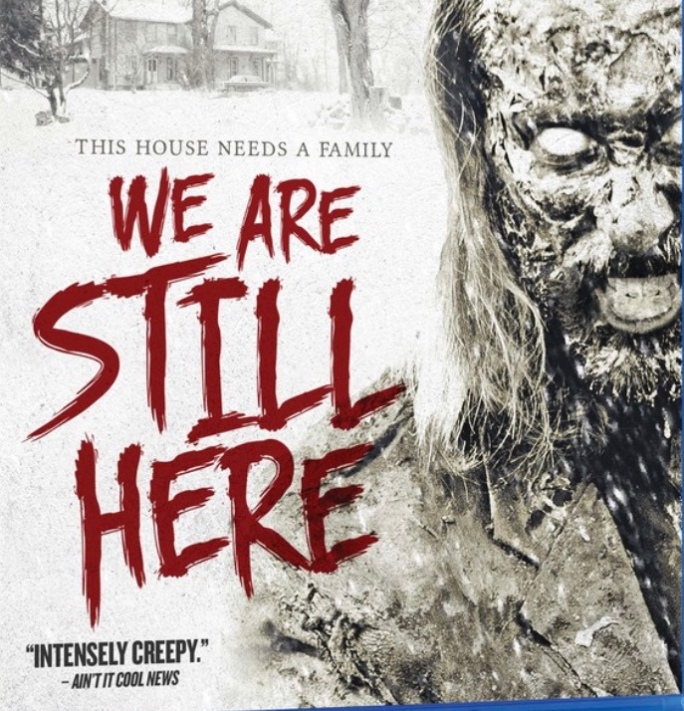
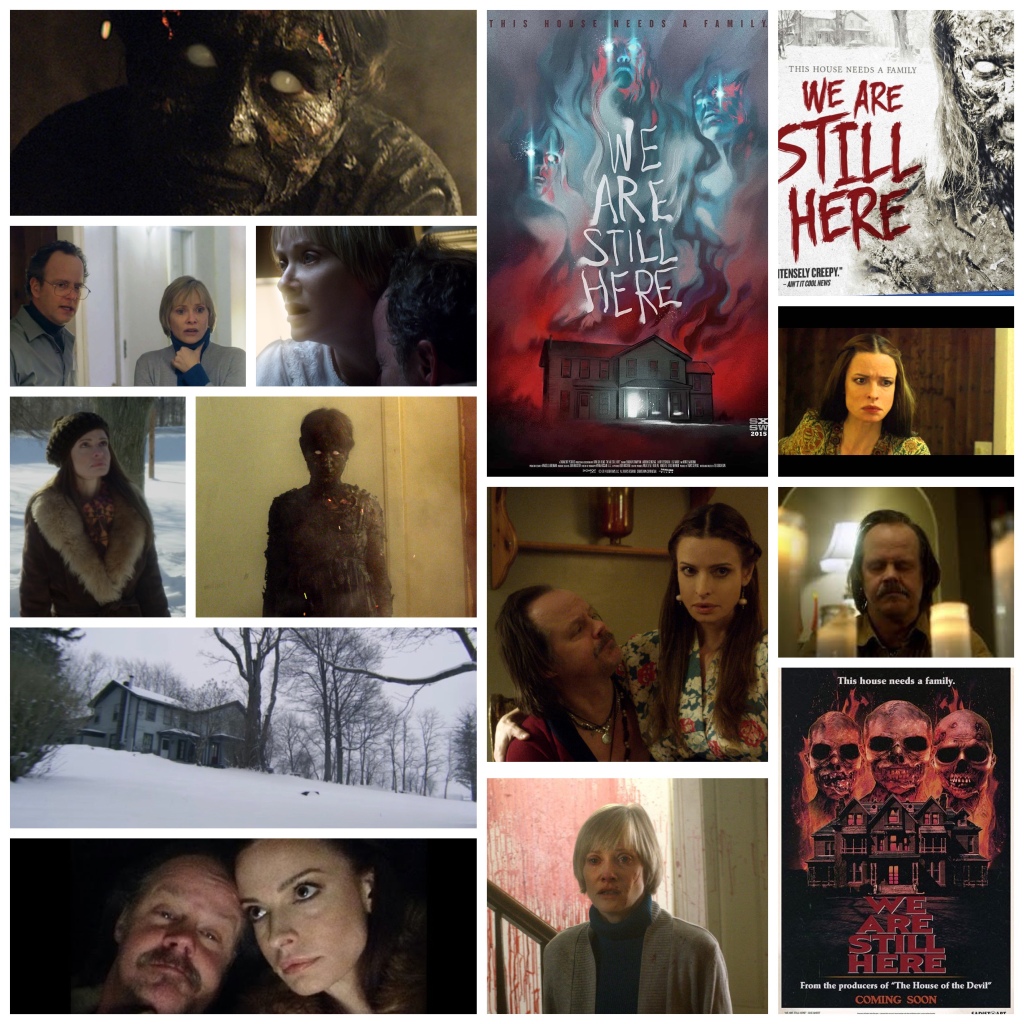
Ted Geoghegan’s We Are Still Here

Ted Geoghegan’s We Are Still Here is a blissfully simple yet tremendously rewarding exercise in dark comedy/horror that hits the mark incredibly well by castling well known faces that are already totems in the genre, employing sidesplitting situational comedy that hovers on the edge of droll and a script that anchors it all with a well written confidence, not to mention a cool retro visual palette that brings to mind minimal yet affecting stuff like Rosemary’s Baby, The Evil Dead and others from back in the day. A middle aged couple (Andrew Sensenig and Barbara Crampton) have moved into a rural house and are still grieving the loss of their son but this house, naturally, is spectacularly haunted and they find themselves and their friends plagued by a vicious dark force emanating from the basement. The life of the party is Larry Fessenden and the gorgeous Lisa Marie as their avant-garde hippie friends who arrive for a seance and get way more than they bargained for. Fessenden has a way of delivering dialogue that just had me holding my sides even when he wasn’t trying to be funny, while Marie is an ethereally beautiful presence who has mostly shown up in various Tim Burton films over the years and not much else, but it’s lovely to see her branch out. The special effects are gruesomely tactile, the scares genuinely unsettling and the story, albeit scant and simple, works very well in servicing some intensely gory mayhem in the third act after a blessedly slow burn getting there. This may be an uncomplicated, super traditional exercise in genre horror that doesn’t necessarily bring anything we haven’t seen before to the table but what it does set out to do, it does exceedingly well and I had a great time with it.

-Nate Hill

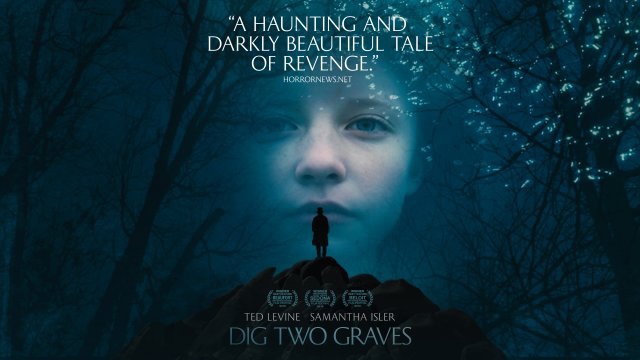
Hunter Adams’ Dig Two Graves

Indie horror can go a lot of ways, but it’s always life affirming when you find a real hidden gem, and Hunter Adams’ Dig Two Graves is just that, a morally complex, atmospherically beautiful, unpredictable modern fable with horror hues woven in and, most important in any production, believable human characters that you can actually empathize with and take a journey alongside. Young girl Jake (Samantha Isler) loses her brother one day in a cliff jump gone wrong, or he appears to be missing anyways. She lives in a small Illinois county with her parents and loving grandfather (Ted Levine) who is also the sheriff. She finds herself stalked by three mysterious men who have a vaguely occult aura, and they tell her they have the power to bring her brother back, but at a heinously dark price. This is only the surface level premise of the film and I don’t want to spoil much because it’s truly a beautifully unpredictable narrative. Ted Levine has spent most of his career in memorable but sidelined supporting roles, he gets a lead here and is wonderful as the conflicted, caring grandfather who has sin, guilt and violence in his past but will do anything to protect the granddaughter he fiercely loves. This is a small film with a huge emotional impact as we see the karmic cost of revenge, sins of the past refusing to be forgotten and, as we’re reminded by Levine’s character, that no person is just one thing, there aren’t heroes or villains but simply choices human beings make both negative and positive, left the rest of their lives to reconcile them. Fantastic folk horror family drama revenge saga with gothic undertones, beautiful cinematography and a story worth investing one’s time and emotion into.

-Nate Hill

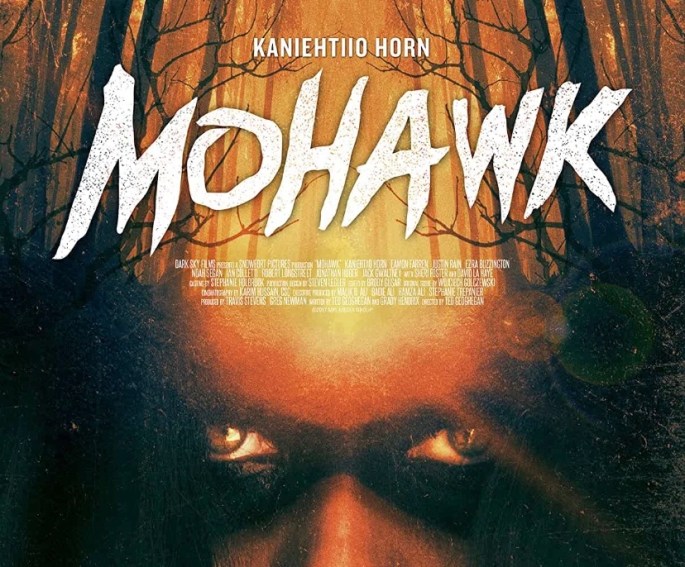
Ted Geoghegan’s Mohawk

Some films just place you right into the action without a moments setup, exposition or prologue, they just ruthlessly air drop you right into a furious bedlam of urgency and incident with nary a moment of narrative foreplay or warmup and I love them for it. Ted Geoghegan’s Mohawk is a breathless, unconventional and altogether brilliant horror/western hybrid (my favourite genre amalgamation) that tells the tale of young Mohawk woman Okwaho (Kaniehtiio Horn) fighting alongside her two lovers against a vicious regiment of American soldiers hellbent on her destruction as her Mohawk elders try to retain the tribes neutrality amidst a nasty personal vendetta on both sides. Peace and neutrality unfortunately just weren’t in the cards for the early days of America and the hatred, rage, violence and conflict of it all are reflected in this lean, mean, taught, streamlined and spectacularly thrilling piece of esoteric escapist exploitation that I have fallen in love with and immediately ordered the DVD. Horn is actually part Mohawk herself and owns the role with intimidating physicality and stoic yet emotional resolve, I’ve seen her work in Letterkenny and noticed her in Brandon Cronenberg’s Possessor earlier this year, she’s one to watch out for. Okwaho’s two lovers are a fierce fellow Mohawk named Two Rivers (Justin Rain) and young British officer Joshua (Eamon Farron, who we remember as the evil Richard Horne in Twin Peaks: The Return). She does her best to protect them and the entire time she’s forced to run, fight and survive she is also with child, which makes for one intense character arc. The American soldiers are a mottled, complex bunch led by a cold, hard bastard of a captain played by the otherworldly looking Ezzra Buzzington in a performance of terrifying sadism, unabashedly verbose fury and curiously contradictory rationality that makes him a believable character with dimensions as opposed to a villain composed simply of leering caricature. This is in contrast to his second in command who is a gruff, racist asshole with headgear that Ichabod Crane would be proud of, played by Robert Longstreet who was so good as the groundskeeper in Haunting Of Hill House. I’ll be honest, not everyone is going to love this film: it’s severely low budget which is noticeable, it does this tightrope walk between brutal splatter horror sensibilities and eerie, surreal mysticism that might not work for every viewer and it may just be too much of a nerve wracking gauntlet for some to get through and keep up with the pace, violence and mile-a-minute sociopolitical flourishes peppered into the colourful, detailed dialogue. The things I’ve mentioned are all part of what made me appreciate this film though; the stirring opening credits scooped me up and threw me right into the action, the emotional core of Okwaho and her two lovers kept me caring for them even when action took over for character development a bit, the dastardly nature of the soldiers and preening theatricality of Buzzington’s villain was engaging, the audaciously unapologetic violence and surging momentum literally had me putting down my phone and hovering on the edge of my seat in rapturous tension. Not to mention the gorgeous, propulsive, dark-synth laden score by Wojciech Golczewski that keeps mood, atmosphere, menace and emotion thrillingly alive and pulls the slack shockingly tight for the duration of the film until it’s unbelievably fearsome climax. If you love sweeping, emotional stuff like Last Of The Mohicans but you also appreciate mean, fucked up, grisly horror tinged westerns like Bone Tomahawk you’ll dig this absolutely terrific film.

-Nate Hill

The Ruins

I’ve seen a lot of Mexican vacations go wrong in the horror/thriller arena but never as specifically and drastically so as it does in The Ruins, a stressful, gruesome, brightly lit body horror vehicle written by someone who probably had a traumatic experience with poison ivy as a kid. Your typical American kids are lounging at a resort, dealing with petty relationship issues and getting drunk when a German backpacker tells them of an archeological expedition at a nearby Mayan pyramid, so they decide to take a day trip and check it out. Well this pyramid just happens to be covered in an exotic, sentient and very pissed off species of carnivorous vine and once touched, you’re fucked. The local villagers have apparently already had run-ins with it and surround the ruin with guns, blocking off any escape or further contamination. This leaves these kids atop the pyramid to slowly be hunted, starved, preyed upon and driven insane by this horticultural nightmare, which is fun enough as a B grade exercise in grossology. The kids are all played by reliable actors like Joe Anderson, Jonathan Tucker, Shawn Ashmore and Jena Malone and they handle the desperation, fear and anguish fairly well. The vine thing itself is kinda neat, it looks like weed leaves and does this cool thing where it’s flowers can mimic people’s voices and other sounds to confuse and terrify it’s prey. There are some extremely unsettling moments of bone shattering gore and uncomfortable body horror that is effective and shocking, but most of the film is set on top of the pyramid in broad daylight so it’s not terribly evocative in terms of atmosphere. It’s fun enough, but nothing great.

-Nate Hill

Francis Ford Coppola’s The Conversation

Francis Ford Coppola’s The Conversation revolves around a brief but very important exchange of dialogue between two strangers in a crowded park, recorded by unseen surveillance experts. But the real conversation, at least from what I felt, was one that the introverted main character has with himself, one of guilt, conflict and paranoia. The introverted protagonist is Harry Caul, played by Gene Hackman in one of the film’s surprises, for we are used to this actor in abrasively alpha, outspoken, charismatic leads. Caul is a pensive, restless, reclusive fellow who dutifully does his job, and does it very well too but we always get the sense that he’d rather be somewhere else and is somehow broken inside. The first thread of his unravelling is pulled when surveillance on the aforementioned conversation in the park picks up a brief swath of dialogue implying murder, or at least the attempt thereof. Caul is now at loggerheads with himself between delivering the audio footage to a shady operative (Harrison Ford playing against type as quite sinister) working for someone known as The Director (I won’t spoil this cameo because it’s too juicy) or keeping it to himself and potentially saving two innocent lives. I wouldn’t necessarily call this film a thriller, at least not in the traditional sense. There are moments of intrigue, shocking violence and certainly a good deal of suspense, but the most effective aspects are the shrouded nature of Caul as a character and how he interacts with those around him including mouthy coworker Stan (John Cazale), even mouthier business rival Bernie (Allen Garfield) and others. He’s a very religious man which obviously clashes with the frequently clandestine and often dangerous nature of his work, providing fascinating conflict. The key moment of the film is an eerie dream sequence complete with a fleet of fog machines and very tricky camera angles in which Harry follows the female target of his surveillance mission, trying to tell her details of his personal life, warn her of impending danger and just simply level with her. This is an important scene because it’s the only time he actually verbally communicates with someone he’s hired to bug, and perhaps this is the core of what has broken him: human interaction relegated largely to wire taps, cameras, vans parked around the corner and informal, all seeing secrecy. That can’t be good for a soul, and it clearly haunts his, alongside the collateral damage of what that job can cause, in terms of violent repercussions. Anyways it’s a fantastic film with a truly captivating Hackman performance, a terrific supporting cast, sensationally immersive retro-tech sound design, a kick in the nuts twist ending and the kind of narrative that has you thinking for days.

-Nate Hill

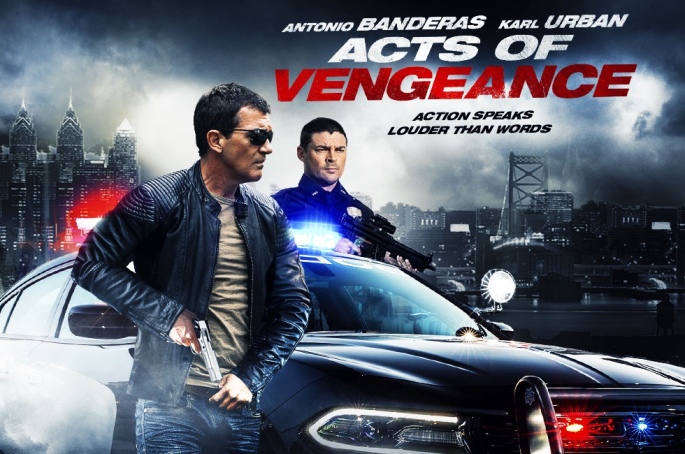
B Movie Glory: Acts Of Vengeance

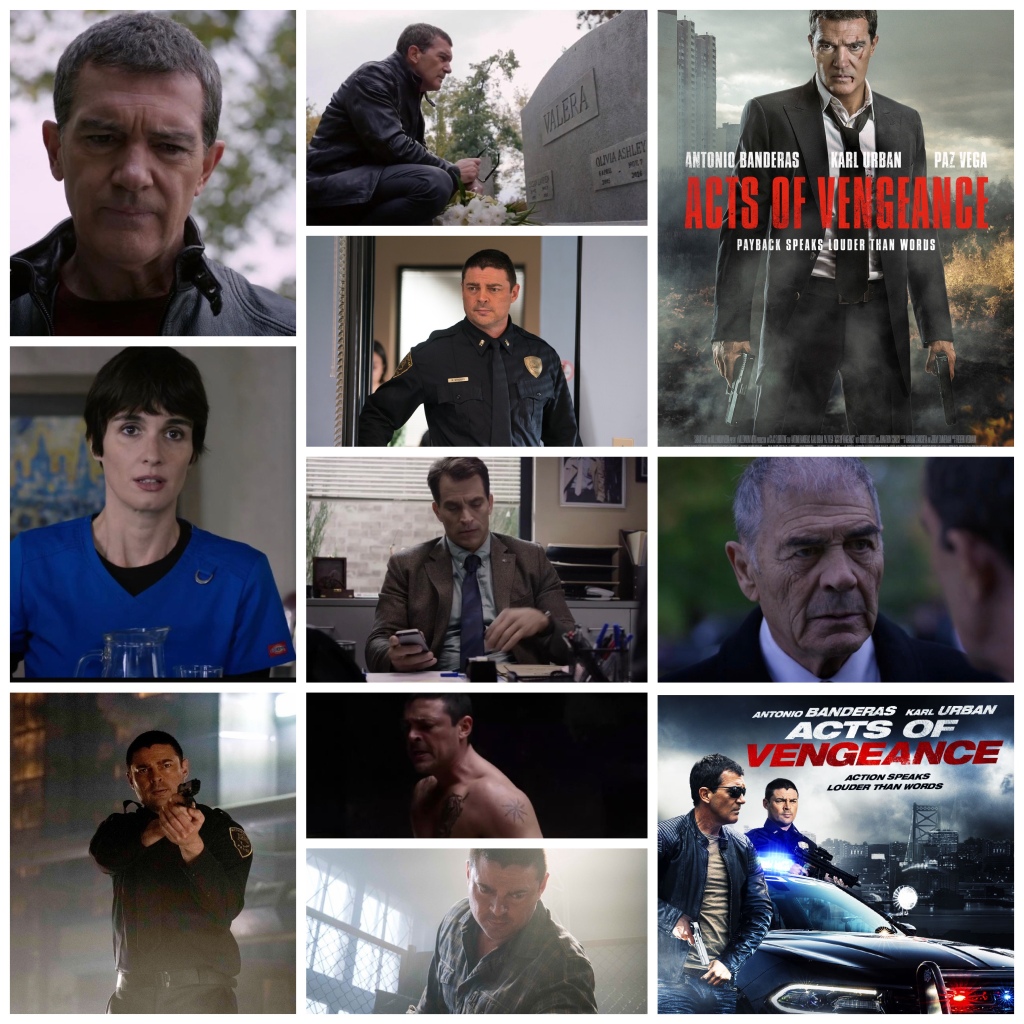
So Bruce Willis got his official Death Wish remake (which I still haven’t seen) and now it appears that Antonio Banderas has scored one too, albeit unofficially. Acts Of Vengeance is pretty much just another assembly like cheapie action thriller with a few big names attached, some decently choreographed fight sequences and a few recognizable character faces in underwritten throwaway supporting turns, a collective undertaking that seems to permeate the direct to VOD realm these days.

Antonio Banderas brings his Latin stoicism as a self absorbed defence attorney whose wife and young daughter are murdered one night on the way home from a song recital that he missed because he’s too busy with work (when will that plot point not be a thing anymore). He first descends into a guilt ridden booze cruise and then learns some martial arts with a Mr. Miyagi proxy and proceeds to hunt down his family’s killer, with the half assed help of a Detective (Jonathan Schaech) who literally spends his scenes texting on his phone rather than doing police work. Karl Urban shows up in an utterly thankless role that anyone could have played as another cop who is sympathetic to his crusade for revenge and helps him out here and there, but the role is way beneath his talents and I found myself just wondering why someone as cool as him would spend his time on such a baseline cop role. The late great Robert Forster has a pretty badass cameo as Antonio’s pissed off father in law, showing up for one single funeral scene to give him a stinging verbal beatdown and disappearing for the rest of the film. Paz Vega also shows up as a friendly nurse who takes him in when he receives one of many ass kickings at the hands of thugs, she’s a nice sort of ‘Penelope Cruz Lite’ presence. It’s a really derivative, fairly dull film to be honest, there’s absolutely nothing new here, it’s all been done much better elsewhere, Banderas is a listless protagonist, the character motivations (particularly that of the ludicrously written, out-of-nowhere villain) are pretty questionable and it’s just overall… bland. I did however notice that the end credits are dedicated to the director’s family, who I’m guessing he lost at some point? This would appear to be a personal project for him and I don’t want to detract from that but I have to be honest about the film on its own terms.

-Nate Hill

Mathieu Kassovitz’s Gothika

I’m not sure why the general reception to Mathieu Kassovitz’s Gothika was bad bordering on hostile and I have nothing to say to people who hate this film other than I love it and really don’t see what the huge issues with it are. This is an atmospheric, expressionistic horror film made by a European director who favours image, sound, stylistic viscera, trippy nightmare logic and frightening tonal discordance over plot mechanisms, which is just fine by me. Halle Berry plays an expert psychiatrist at a scary Arkham Asylum looking facility where a disturbed patient (Penelope Cruz) whispers of unseen terrors that haunt her. One day Berry wakes up as a patient in her own ward, told by her colleague (Robert Downey Jr) that she’s guilty of killing her husband (Charles S. Dutton). She has no memory of the night in question except meeting a mysterious, ghostlike girl (Kathleen Mackey) on the road right before the alleged crime. Others including the local sheriff (John Carroll Lynch) and the facility’s director (Bernard Hill, always fantastic) try to get to the bottom of this supernaturally drenched murder mystery while Berry struggles to keep her sanity as she’s plagued by terrifying visions, waking nightmares and the ominous presence of the ghost girl. Look, not everything in this film’s plot makes the most sense, but it’s clear enough to serve as narrative framework for one of the most darkly evocative, visually eerie and audibly menacing auras in a horror film. It’s essentially a haunted house flick with a very real (and very horrific) murder/rape conspiracy playing alongside, as Berry wanders the stylized grounds of the asylum pursued by noises, grotesque deformations, tactile hallucinations and that persistent ghost girl who demonstrates the most effective and chilling use of the “jerky, otherworldly backwards ghost walk” I’ve probably ever seen. Berry and Downey Jr are terrific while Cruz does some very scary, against type work as the extremely disturbed trauma victim who holds secrets to the mystery she guards cryptically. I love this film, I love its weird, borderline surreal vibes, I love how lurid and gruesome the murder mystery is, how the production and sound design stimulate every sense and the film draws me into its world spectacularly every time.

-Nate Hill

Curtis Hanson’s The River Wild

Curtis Hanson’s The River Wild is one of those cheerfully formulaic, undemanding 90’s adventure flicks that you can crush consecutively like a case of lite beer, they’re always easy breezy good fun if done properly. This one sees a classic suburban family head for a river rafting expiration led by ex-guide mom (Meryl Streep), reluctantly joined by workaholic dad (David Strathairn) and enthusiastically headed up by their kid (Joseph Mazzello from Jurassic Park). The vacation is going pretty well until they run into a trio of career criminals led by evil Kevin Bacon on the run after a heist, who plan to use the narrow canyons of the river to escape, but they’re without the proverbial paddle of rafting experience and need Streep’s expertise, so they promptly kidnap the whole family and things get pretty gnarly. So the film overall is pretty average for a thriller, exciting enough but nothing to truly cream your knickers over. Streep is sterling great as always and her performance feels almost too good for this film, probably because her talents are obviously a bit above the material. Bacon is impressively evil as the conniving, psychopathic asshole who makes their lives hell, he’s always been able to slip in and out of good guy/bad guy roles with such ease. Strathairn is usually terrific but somehow comes across a bit bland here, John C. Reilly is effective and low key hilarious as Bacon’s hopeless dumb-fuck cohort and there’s appearances from Bill Lucking, Liz Hoffman, Diane Delano, Glenn Moreshower and Benjamin Bratt too. Gorgeous Montana scenery accompanied by a notable Jerry Goldsmith score add to the fun. It’s a good thriller, not a great one.

-Nate Hill

Joel Schumacher’s The Number 23

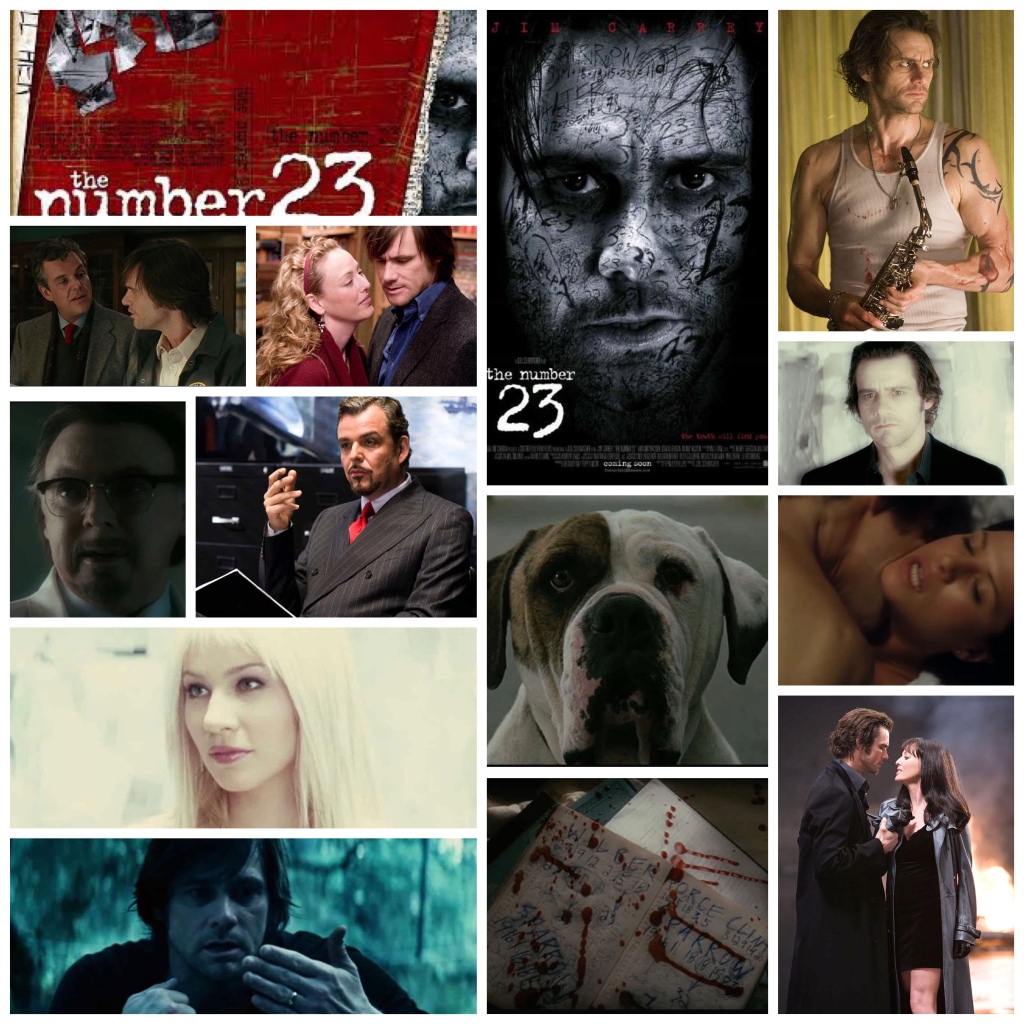
Joel Schumacher’s The Number 23 is one of the silliest films I’ve seen in a long time, so much so that I couldn’t even really get mad at it, I just sat there in disbelief looking at this adorable kindergarten level film noir huff and puff and try to be edgy and dangerous. Maybe it’s the fact that Jim Carrey is in a serious role, or the script is just so hilariously scattered and overcooked or that Carrey plays a freaking dog catcher (do those even exist anymore?) but for whatever reason I just couldn’t take this thing remotely seriously. So the plot, best as I could jigsaw it together from the hack job of a script: Jim is a mild mannered animal wrangler who finds an ancient Nordic mask that when worn, turns the wearer into- gotcha, didn’t I? Okay for real this time: he *is* an animal wrangler but instead he finds a little self published memoir written by a disturbed big city cop named Fingerling (also Jim with spray on tribal tattoos). In this book the detective is plagued by the number 23, which seems to show up everywhere including, you guessed it, in the real world where it haunts animal wrangler Jim as well. His wife (Virginia Madsen) and kid (Logan Lerman) do their best to both play along and look on in concern as he lets a numeric equation take over his life. There’s a grab bag of subplots including a mysterious psychiatrist (an uncredited Bud Cort), Danny Huston as a colleague who does his best to help, a death row inmate (Mark Pellegrino), a secretive dead girl (Rhona Mitra) and, uh.. a mysterious dog that leads people to gravestones of importance. It all seems hastily thrown together, none of it works or makes any kind of sense let alone lands with any emotional impact or narrative synergy and the ending left me chuckling in bemusement, my lack of conviction in this film equaled only by that it has in itself, which apparently is none. The wannabe noir cutaways to the book about Fingerling are laughably try-hard (Carrey literally wistfully plays a saxophone and stares out an apartment bay-window) and wincingly faux kinky, the psychological character aspects involving the twist ending are so far flung I threw my arms up in surrender and honestly it all felt like several better films tossed into a magic bullet and puréed into an indistinguishable pulp. The only scene with any kind of real power is in a graveyard with this fog, who fascinated me; a priest (Ed Lauter, RIP) informs frenzied animal wrangler Jim that this is a spirit dog who watched over the souls of the dead by standing at their graves. This scene *actually* has conviction, atmosphere and emotional substance, and it gave me chills… but it’s untethered from the film as a whole and has no bearing on the context or overall plot! It’s just… a scene! out of the ether! The same goes for the film as a whole.. what does the dog have to do with the dead girl have to do with the shrink have to do with Jim’s knockoff tribal tattoos have to do with the number 23? Not much of anything, and what little does fit together or add up… just feels stupid.

-Nate Hill