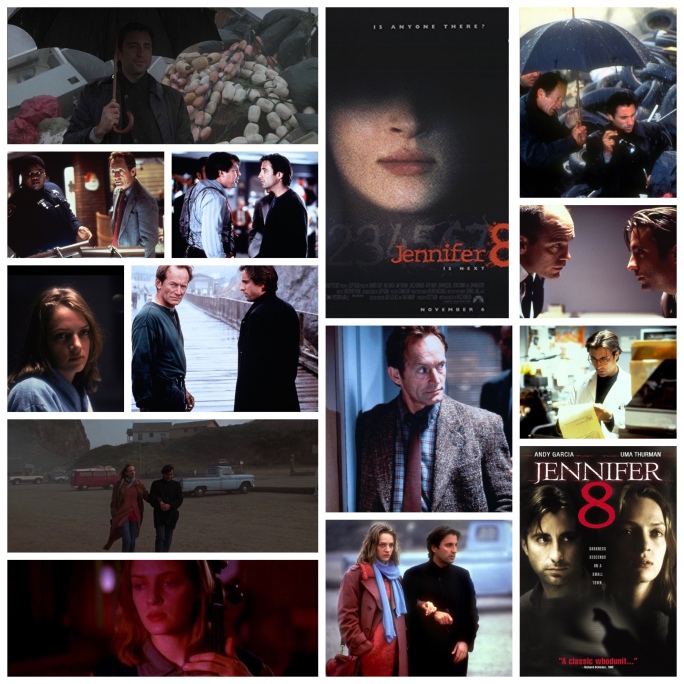
Bruce Robinson’s Jennifer 8

‘Darkness descends on a small town’, the tagline of Bruce Robinson’s Jennifer 8 warns us. No kidding, this is one rained out, bleakly lit, forbiddingly gloomy thriller. Although not without noticeable editing and pacing issues, I love it for the thick, nightmarish atmosphere it produces, the drab northwestern small town feel and a well rounded cast of leering character actors who all may be suspect in the harrowing central murder mystery. Andy Garcia is big city cop John Berlin, called in by his veteran detective buddy Freddy (Lance Henriksen, almost incapable of not stealing every scene) to investigate possible serial killer after a woman’s severed hand is found at the local dump. Talk about your rainy movie scenes, the part in the scrapyard seems like they set up sixty rain towers in a circle and ran them full blast for a deafening monsoon that almost drowns out the dialogue. From there on in it’s a murky whodunit populated by cops, reporters, coroners and and other skeleton crew occupants of this understaffed town, many of whom have skeletons of their own in the closet or just may be the killer. Clues lead to a young blind girl (Uma Thurman, radiant in one of her very first roles) who attracts the killer like moth to a flame, as well as Garcia who acts as guardian angel and love interest to her. I guessed who the murderer is way before the final twist, but that’s not to say it’s a dead giveaway or lazily written, I just have a knack for recognizing actors anywhere right down to the bit players and saw traits in a brief physical reveal, but the mystery is still decently shrouded and pretty much plays fair against scrutiny. Garcia, Henriksen and Thurman are supported by a thoroughbred roster including Paul Bates, Kathy Baker, Kevin Conway, Graham Beckel, Nicholas Love, Bob Gunton, Jonas Quastel and Twin Peak’s Lenny Von Dohlen as the local newspaper scribe. Oh yeah, and John Malkovich weirdly shows up out of the blue as some eccentric, obsessive Fed who has it in for Garcia and puts him through a hilariously faux intense interrogation monologue. Director Robinson (the famed Withnail & I) apparently only wrote and directed this one in hopes of whipping up a mainstream commercial hit to raise dough for more brooding artsy stuff, but the joke was on him because from what I hear, this royally tanked and even went direct to video across the pond. Well it ain’t a perfect film but I love it anyways, there’s too much eerie rural atmosphere and too many stalwart actors to write it off, it fits squarely in amongst my top serial killer mysteries.

-Nate Hill
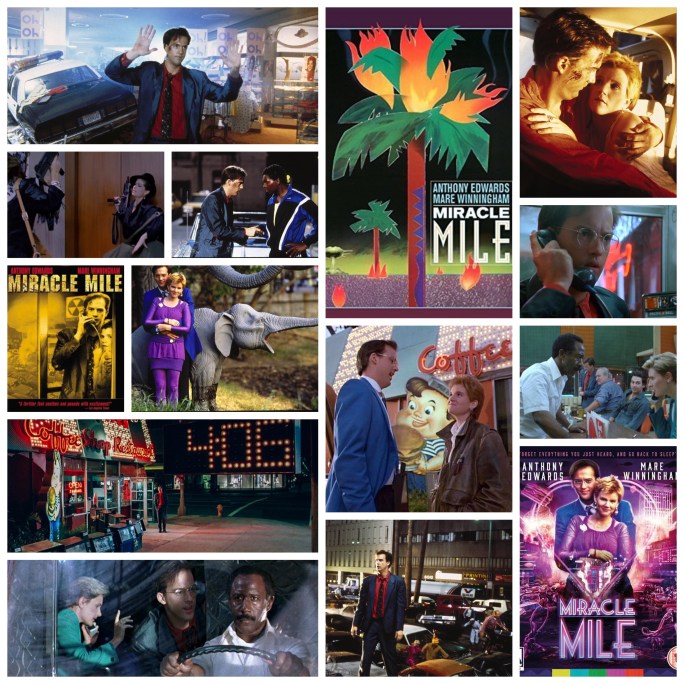
Steve De Jarnett’s Miracle Mike

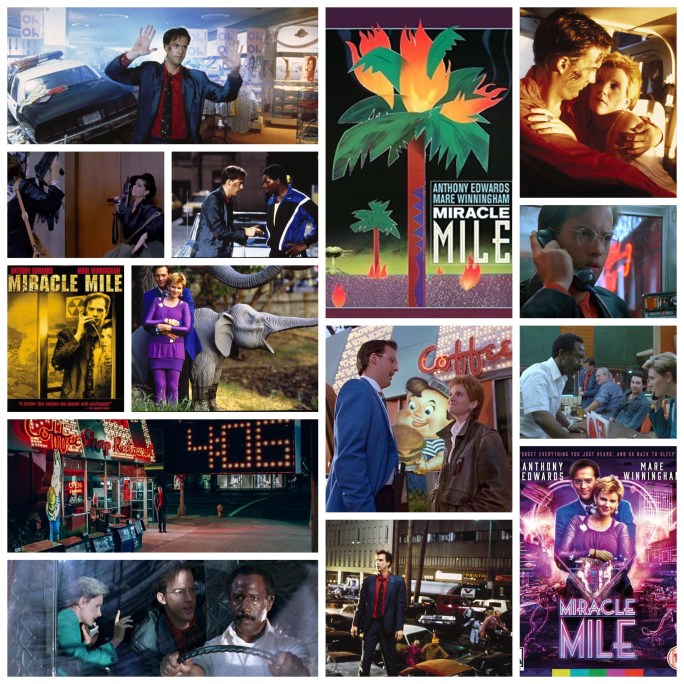
Ever had one of those clammy nightmares where you’re dead sure that some catastrophic disaster is imminent, but are next to powerless to do anything about it, run or escape what’s coming? Steve Dejarnett’s Miracle Mile captures that feeling uncannily well, and is now one of my favourite films for that as well as many other reasons. It’s not that that sensation is pleasant or at all enjoyable to relive outside of a dream, but it’s so hard to tangibly recreate on film that what Miracle Mike achieves is a rare commodity among mood-scapes. The film is disarmingly benign as it opens: a young man (Anthony Edwards) and woman (Mare Winningham) meet and fall in love outside a neon adorned diner in dreamy, pastel hued Los Angeles. They make plans for later that night, and a whimsical note takes hold. We’re treated to some of the most inspired foreshadowing I’ve ever seen involving a pigeon, a lit cigarette and an open power line. As night descends on the Miracle Mile neighbourhood of LA, Edwards finds himself back at the diner when the pay phone outside rings. He answers it, and a frantic voice warns him that nuclear attack is coming to the city in just over an hour. What would you do? Who would you tell? He races right back into the diner and, panicked, informs the rogues gallery of oddballs you’d find at such an establishment after midnight. Naturally they all freak out too, and as soon as that cat is out of the bag, it’s a feverish, mad dash to exit the city before the threat arrives, if indeed it is a credible danger. That’s part of the beauty here; whether or not this is a hoax is not clearly revealed until the absolute last minute of the film, but would you risk not taking it seriously? These characters react in a variety of ways, but Edwards just wants to find that special girl he met earlier when things felt so sunny and full of possibility, to find her and escape together. It’s one of those ‘real time, one night in the crazy city’ films that unfolds over a short period of time but couldn’t be more full of instances, encounters and the kind of strange occurrences only the witching hour has to offer. The romantic angle, usually played to the hilt of melodrama in these kinds of films, is somehow so frank and truthful that we buy it, we care about these two kids and it makes the thought of apocalypse all the more dreadful. For all it’s focus on death and potential destruction, this is a beautiful film that is so full of life and character, a sly cross section of LA’s invisible working class under the nocturnal skies and a bubble gum, eye popping display of colour, design and eccentricity. The cityscape is populated by an ever present cast of brilliantly used character actors including O Lan Jones, Robert Doqui, Kurt Fuller, Mykelti Williamson, Edward Bunker, John Agar, Lou Hancock, Denise Crosby, Kelly Jo Minter, Allen Rosenberg, Earl Boen, Brian Thompson, Peter Berg and a quick but badass cameo from Aliens’s Janette Goldstein, once again waving around a big gun in exuberant fashion. A film needs a good score, and whenever Tangerine Dream is hired to compose, unfiltered magic happens. Their music here is a driving force to the action, an atmospheric lullaby that exudes both beauty and danger in its synth laden, melodic pulse. This is such a unique film, such a deft melting pot of genres that the recipe can’t really be defined as anything but a flavour all it’s own, an experience that makes you feel primal fear while wowing you with cinematography, editing and one shots that practically pull you right into the action. Points also awarded for bravery in pulling off that ending without compromise. The very definition of a forgotten gem, and a film that should be on every shelf.

-Nate Hill

John Frankenheimer’s Reindeer Games

I’ve always enjoyed John Frankenheimer’s Reindeer Games, despite its chilly critical reputation. It’s a sleazy, nihilistic piece of ultra violent, stylized Christmas noir populated by mean, nasty characters who navigate deliciously convoluted plot turns, double crosses and backwoods criminal enterprise. Ben Affleck plays a hapless ex con having the worst Christmas of his life when his attempts to pose as a murdered cellmate (James Frain) and meet up with the guy’s sexy pen pal (Charlize Theron is next level hot in this) don’t quite go as smoothly as envisioned. He unwittingly gets caught up in a botched casino robbery orchestrated by her volatile career criminal brother (Gary Sinise) and his crew of murderous miscreants. This sets in motion an impossibly elaborate parade of shifting loyalties, multiple seductions on Theron’s part, inventive ways to murder people, Santas with guns, shootouts, chases and car explosions. Much of it is admittedly ridiculous and overblown but it’s never not fun, plus the Grinchy, misanthropic attitude and maladjusted vibe is somehow so infectious. Sinise’s merry little gang are brought to life by recognizable character faces like Donal Logue, Clarence Williams III and Danny Trejo, all charismatic and evil to the bone like a bunch of warped Christmas elves. The late great Dennis Farina plays an obstinate casino owner who makes the heist difficult for everyone, and Isaac Hayes has a bizarre cameo as an inmate who thinks there’s monsters in the prison food and causes an almighty ruckus. Affleck is a mopey guttersnipe here, a ‘wrong place wrong time’ sap who learns to cultivate a badass edge and deal with the kind of psychos he’s up against. Sinise is reliably violent and dangerous, but Theron really steals the show as a crafty, manipulative femme fatale whose true nature is cleverly hidden under a smokescreen of faux intentions. This isn’t an especially classy thriller, doesn’t set any new standards or anything, but what it does do is provide a nut punch of lowbrow thrills, lurid melodrama and bloody action to meet your masochistic Yuletide needs. Great stuff.

-Nate Hill

Daniel Alfredson’s Blackway

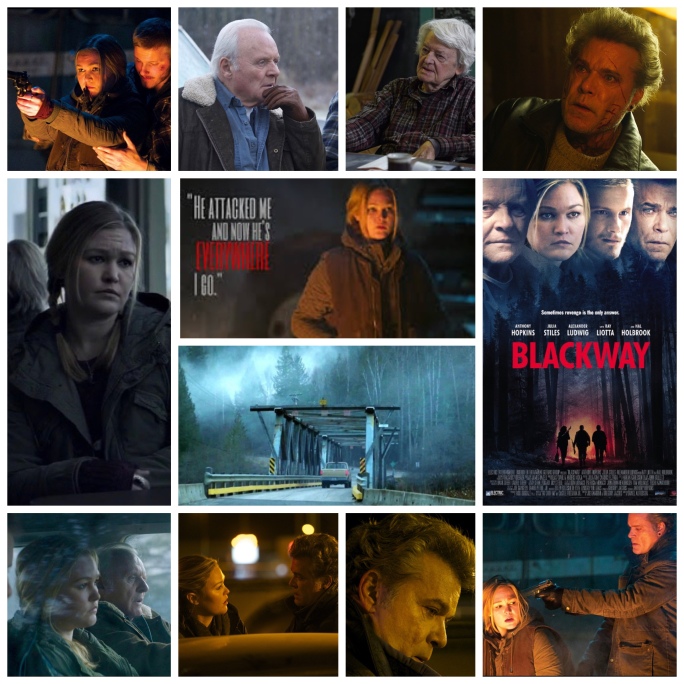
Daniel Alfredson’s Blackway (aka Go With Me) is a bizarre disaster that would have made for a cool flick if… well if it didn’t turn out so darn shitty. I suppose you could blame editing, there’s elements that work, some decent performances and genuinely terrific photography but I’m not sure what they were going for in terms of tone and story because it’s an unholy mess. Anthony Hopkins is always a welcome presence, but he has a silly habit of sleepwalking through roles that he’s clearly only taken on to grab a buck (that twitter video of him spazzing out to music in his living room had more charisma than he musters up here), and although he never fully phones it in, there’s a somewhat listless lack of clarity in a lot of his later career work, this included. He plays an ex logger here with tragedy in his past, living the quiet life in the Pacific Northwest, until trouble brews in his small lumber town. Julia Stiles plays a new waitress in town who catches the eye of titular Blackway (Ray Liotta) an ex cop turned powerful crime lord with a hefty anger problem, violent tendencies and an overall scary reputation. He stalks, harasses and won’t leave the poor girl alone, and since he owns the pitiful excuse of a local police force there’s not much she can do but run and seek help elsewhere, supplied by Hopkins and a few of his pals including Alexander Ludwig and Hal Holbrook. If I was a powerful producer with the clout to green-light projects and you pitched me a noir-esque stalker thriller with Hopkins, Liotta and Stiles set in the Northwest I’d chuck my wallet at you and give my blessings. I’d later learn a hard lesson though, because as well as this looks on paper, or rather the alluring one sheet and exciting trailer, it really tanks and blows just about all of its potential. Stiles is always fantastic, she’s one of my favourites and can do no wrong in my book, she shines here. Liotta is a master actor and does a truly terrifying villain turn but he’s sort of in the wrong film. He has a big city gangster vibe that’s decidedly urban and bereft of the rustic trappings you need to pull off a mythic mountain man kingpin, and as such he feels out of place despite his great talents and considerable efforts. There’s a few decent set pieces like a face off at Blackway’s backroads whorehouse, but this thing is paced so oddly it’s hard to keep up or care. Alfredson is an accomplished filmmaker who gave us the original Lisbeth Salander trilogy, but I think he tried too hard to make this into something of an art film or really mean something when in reality there’s nothing more than a painfully average thriller. Worth it for the actors and the drop dead gorgeous scenery (I will forever be a sucker for films shot and set in this region), but other than that it’s a big swing and a bigger miss.

-Nate Hill

Tony Scott’s Domino

Domino is Tony Scott’s fire roasted, charbroiled, turbo charged masterpiece. I’ve seen it over fifty times and every time I seem to enjoy it more. It’s pure unfiltered Scott, free from the nagging pressures of the studio, financed by his own company, a loving treatise of pure style and breakneck kamikaze energy that doesn’t let you breathe for a second. It’s loosely based on the life of Hollywood baby turned rough and tumble bounty hunter Domino Harvey (Keira Knightley), daughter of actor Laurence Harvey. She leaves the 90210 world of rich snobs and gilded mansions to pursue a grittier path, in the form of restless underground law enforcement. Now, the film sheepishly admits it’s not entirely based on a true story before the credits even start, so as long as you know that much of it is fantasy going in, you won’t feel cheated. Knightley is a pissed off, sparking roman candle in the role of her career, shedding the dainty image and going full furious grunge, giving Domino an alternative edge and damaged pathos that fuels much of the film’s kinetic energy. Mickey Rourke plays her grizzled boss Ed Moseby, a veteran bounty hunter with a trail of violence behind him, who’s weary and tough in equal parts. Rourke fires on all cylinders, giving some of his simultaneously hilarious, heartbreaking, badass and best work. Edgar Ramiraz plays scrappy Choco, third musketeer and eventual lover to Domino with fiery Latin charisma. Christopher Walken, weird mode fully activated, waltzes in as a reality TV producer with the attention span of a ferret on chrystal meth, Mena Suvari as his squirrelly assistant, Lucy Liu as a prim, OCD afflicted federal agent who verbally spars with Knightley in flash forwards, Delroy Lindo is excellent as their bail bondsman handler Claremont Williams, and there’s scuzzy work from Dale Dickey, Lew Temple, Macy Gray, Monique, Dabney Coleman, Jacqueline Bisset, Jerry Springer and more. Just to sample some of the esoteric weirdness that goes hand in hand with the hard boiled crime elements, Tom Waits has a beautifully perplexing cameo as a spiritual wanderer who has a mysterious meeting with Domino and her friends in the Mojave desert, imparting some prophetic truth to them that only Scott and the sand dunes are in on. This is the kind of film that grabs you by the collar and hurls you down an asphalt horizon of hallucinatory camera work, brings you an intricate, lurid story of true crime gone wrong, and a balls to the wall depiction of life at its fastest, wildest and most out of control, as only the maestro of such things, Scott, can bring you. Domino, at least in this film, lives a crazy life that culminates in a hellish Mexican standoff and subsequent shootout atop a Space Needle-esque Vegas casino, a fitting way for a Scott film to come full circle and certainly not the first time he’s ended one in that situation. He uses cinematic magic to create visual poetry here, his sucker punch editing, nebulous display of scorched out colours, thunderous symphony of sound design and hectic, buzzing aesthetic isn’t for everyone but it’s something truly unforgettable and a style wholly his own, I truly miss the guy and believe he was one of maybe the ten best filmmakers to ever work in Hollywood. This is by far his best film, definitely his most personal and also the most arresting vision he’s ever sculpted, it will leave you haunted, pummelled, fired up and deliciously puzzled. Domino ironically says in voiceover near the end, “I’ll never tell you what it all meant”. Scott tells you, in his own special way, and if you’re tuned in to his otherworldly frequency you’ll treasure this masterwork as much as I do, and will continue to for years to come.

-Nate Hill

The Fugitive

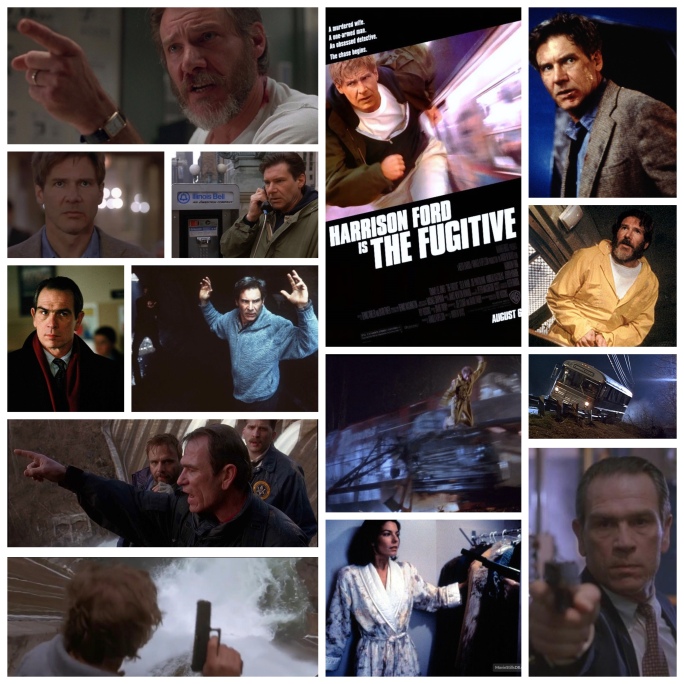
What motifs, when implemented well, make for an effective thriller? The wrongly accused man whom no one believes, the dogged pursuer who engages in ruthless indifference, the chaotic statewide manhunt, the methodical quest to clear one’s name, the righteous anger when the time for confrontation arrives. The Fugitive employs all of these and more almost effortlessly, and is as close to a perfect thriller as I can think of. It’s not just that the film is so exciting every step of the way, not just that the stunts are pulled off flawlessly or that every cog in the story’s mechanism turns believably, its simply that Harrison Ford plays Dr. Richard Kimble as so relatable, so likeable and engaging that all the stuff I mentioned before, whether or not executed well, actually matters. The lynchpin scene that hooks us in occurs early on when a dipshit Chicago police detective (Ron Dean, who would go on to get shot in the face by Harvey Dent later in his career) bluntly interrogates Kimble after his wife is found murdered. Ford plays it it straight up, his raw reaction at being accused of something so unthinkable sears the screen, and as he pounds the table and pleads with them to “find this man”, we are immediately and unconditionally on his side, a lot to pull off in one scene but Ford is up to it and this may be his best performance ever. After that it’s a careening adrenaline rush of a chase film as the prison bus Kimble is on is hit by a speeding train, one of the finest pieces of blow-shit-up staging I’ve ever seen, propelling the man on a relentless ditch effort to find the mysterious one armed man who actually killed his wife (a far too short lived Sela Ward) and exact retribution. Tommy Lee Jones is a walking stick of C4 as US Marshal Sam Gerard, it isn’t so much his job to track down Kimble as it is his compulsion, the man is a calculating force of nature. Although put in Kimble’s path as the obstacle, the script treats him and his team with respect and intelligence, they’re not just mindless drones to keep plot and action sailing but fully formed human beings who start to unravel the mystery right alongside the good doctor. The film hurtles along from stunt to crash to chase to brutal fistfight and these sequences have since become iconic, especially that fiery sonic boom of a crash and the legendary standoff between Ford and Jones set in a storm drain leading off of a raging river dam hundreds of feet below. Everything just works in this film; Ford supplies charisma, subtle humour and inspires empathy all while kicking serious ass and evading capture in ways that would make Jason Bourne jealous, Jones chews scenery in the best way possible and is every bit the worthy adversary and eventual sympathizer, while Jeroen Krabbe, L. Scott Caldwell, Daniel Roebuck, Joe Pantoliano, Andreas Katsulas, Tom Wood, Richard Rhiele, Nick Searcy and Jane Lynch all provide excellent work. Julianne Moore shows up in what appears at first to be a cameo as a suspicious nurse, but she was originally written in for a larger role as a new love interest for Kimble. The film cut her scenes and abandoned this subplot, a very wise move as it would have cheapened his arc and gone the cliche route. Simply put, this is a classic and a textbook example of the magic possible in the action/adventure/thriller genres. Brilliant.

-Nate Hill

Deadfall

Deadfall is a dangerously sexy, offbeat snowbound thriller with a gorgeous cast, wintry photography and a hard boiled noir edge that feels almost mythical at times. Despite an ending that doesn’t come close to wrapping up its multifaceted, emotionally dense story (someone shit the bed in the editing room), I still love it, it’s wonderfully atmospheric, using character and story to transport you into the narrative, while violence and action comes second but with no less of an impact. Eric Bana gives one scary knockout performance as Addison, a charismatic sociopath on the run with his sultry, damaged goods sister (Olivia Wilde) following a casino robbery that ended in bloodshed and a statewide manhunt. After their car gets spectacularly destroyed, they’re forced through the wilderness to a small county and try to evade encroaching law enforcement. At the same time, a troubled ex-prizefighter (Charlie Hunnam) is en route to the same county to spend the holidays with his estranged parents (Sissy Spacek and Kris Kristofferson), and the paths of these ill fated characters inevitably collide in a blood soaked blizzard of cat and mouse games. Kate Mara is also fantastic as the daughter of an asshole local sheriff (Treat Williams) who thinks that women have no business carrying a badge. There’s a lot of plot threads and elements at play, most of which the film handles with adept fluidity, except for the very end where it seems like a scene or two is missing, I could have used a bit more resoluteness in Hunnam’s arc. The film overall is too good to nitpick, especially Eric Bana’s work, the dialogue written for him has a poetic, ponderous cadence. He really sinks into the role, casting a freaky, incestuous eye towards his sister and calmly, deliberately terrorizing anyone who gets in his way, including a mysterious First Nations man (Tom Jackson) who serves to represent the esoteric nature of the landscape clashing with the materialistic, hard edged criminal element trespassing on it, or at least that’s how I saw it. A near excellent film with more going on under the surface than the mounting blanket of snow suggests (I can’t resist the winter metaphors), plenty of thrills and conflict as well as a fine cast all doing great work.

-Nate Hill

Jim Kouf’s Gang Related

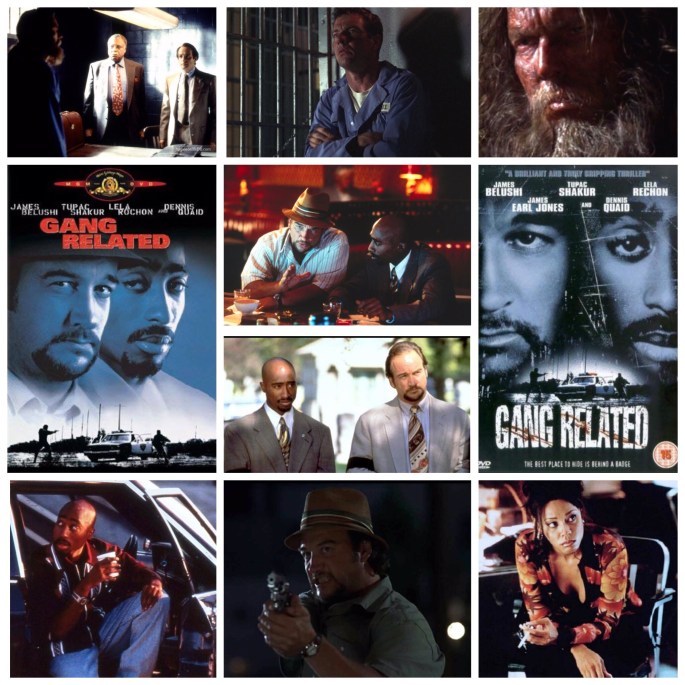
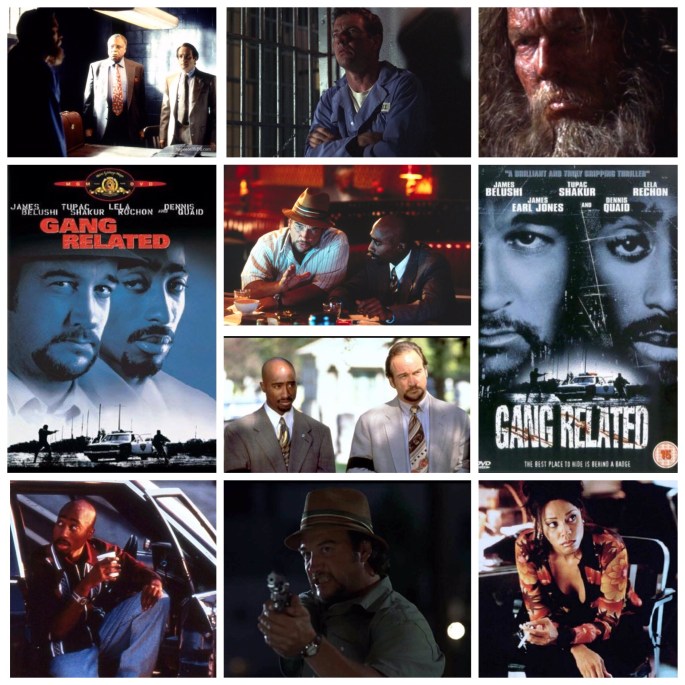
Jim Belushi and Tupac Shakur are an odd pairing on paper to star in a cop flick together, but they’re extremely effective in Jim Kouf’s Gang Related, a twisty neo-noir with a great cast and a few tricks up its sleeve. They play two inner city detectives who are corrupt, but the script doesn’t treat them with the same jaded judgment and moustache twirling villainy that some dirty cops get in Hollywood, there’s a surprising empathy towards them especially in Tupac’s performance. After they accidentally murder an undercover DEA agent, they try to frame a nearby homeless man (Dennis Quaid), coach a few witnesses and make it seem like they were never involved. Things get spectacularly messy when they discover that Quaid’s disheveled hobo isn’t just a nobody and there are people in high places, not to mention both the DEA and gang factions coming after their morally duplicitous asses. It’s kind of like a reap what you sow tale, these two guys aren’t especially nasty characters, but they did commit a really shady act and now the proverbial karmic dildo has come back to royally fuck them. Belushi is the tougher, more unflappable veteran who is more willing to compromise his soul with the cover up, while Tupac is the younger, more impressionable cop and fears the road he’s being led down, and well he should. They both put in fantastic performances, while Quaid does well against type and the three of them are supported by Tiny Lister, David Paymer, Lela Rochon, Wendy Crewson, Gary Cole and James Earl Jones. A solid urban crime thriller, fairly overlooked as well.

-Nate Hill

Brian Helgeland’s The Order

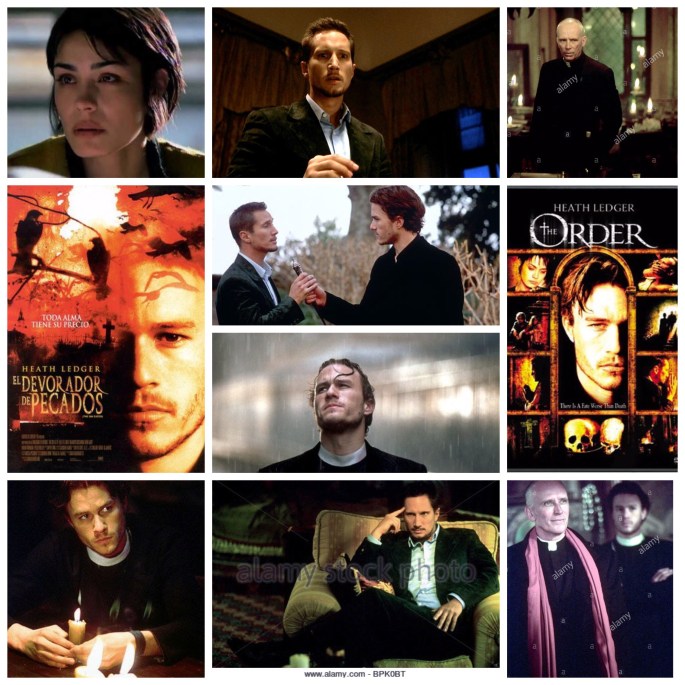
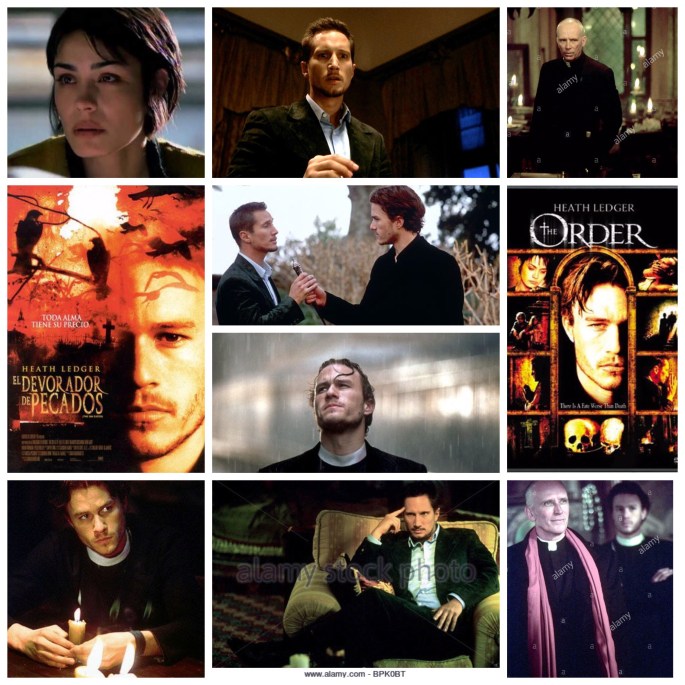
Brian Helgeland’s The Order is a strange, mercurial supernatural thriller that sees a restless Heath Ledger play a young priest investigating corruption in the highest echelons of the Catholic Church, but I’ll say right off the bat that it’s not the kind of controversy you’re thinking of. Ledger is probing the death of his sect’s leader, and when you consider the sort of obscure splinter group of the church he hails from, there’s clearly something going on under the surface, starting with Peter Weller as a dodgy cardinal whose mannerisms don’t exactly suggest benignity. Ledger discovers vague connections to what they call a ‘Sin Eater’, a rogue spiritualist who offers unsanctioned salvation outside the church’s jurisdiction, and teams up with his walking comic relief priest buddy (Mark Addy) and a woman he once performed an exorcism on (Shannon Sossamyn) to go on a merry renegade priest hunt. This film has a low rating on every site you’ll find and reviews have never been kind, but I really enjoyed it. There’s a grim, atmospheric blanket of fascinating visual effects and esoteric, near occult level mysticism at play that kept me engaged, I also really like the Sin Eater concept and German actor Benno Fürmann is darkly charismatic as the guy, playing him as just south of a real human being. Ledger postures a bit but ultimately nails it in a more subdued role, while Weller, although only briefly seen, exudes otherworldly menace with his trademark candidly flippant tone. The film is billed as a horror which isn’t quite the case, and that could have been the problem with reception. It’s more a moody mystery drama with subtle supernatural undertones, and works really well as such.

-Nate Hill

Roger Donaldson’s No Way Out

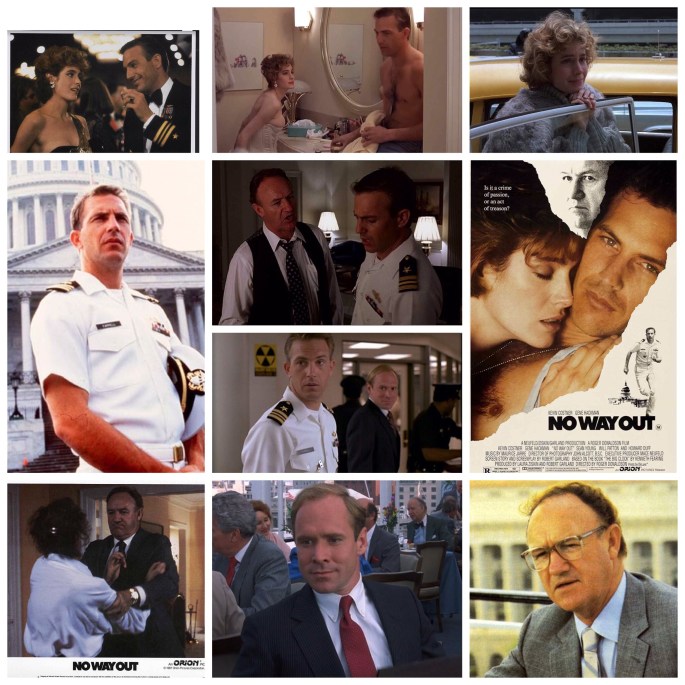
Roger Donaldson’s No Way Out is a prime example of how to stage an effective thriller, every step of the way and even when things get twisty in a time before every other film had a thunderclap twist midway through. Kevin Costner plays a navy officer operating out of the Pentagon and reporting to the secretary of defence, played by a shady Gene Hackman. He has a stormy affair with mysterious Sean Young, not knowing she is also Hackman’s side chick, and when she turns up dead a whole nightmare of a situation escalates for everyone involved. It’s great fun to see events spiral out of control until everyone is a frantic wreck and we’re just as lost for clues as they are. Then, the pieces slowly fall together and we are blessed with gradual revelation, a few delicious ‘aha!’ moments and one mother of a midway plot twist that lands in the narrative like a screeching cruise missile. Costner is subdued but keen, Hackman is his usual fired up charismatic hotshot, and the film benefits greatly from their crackling collaborate star-power. A knockout supporting turn comes our way from Will Patton, who is unnervingly twitchy as another operative doing his maniacal best to perpetuate a cover up. Maurice Jarre whips up a great score to accent the intrigue, while Donaldson’s direction is surefire skill. A premier 80’s political thriller, one of several launching pads for Costner’s career, and a bitchin’ great time at the movies.

-Nate Hill