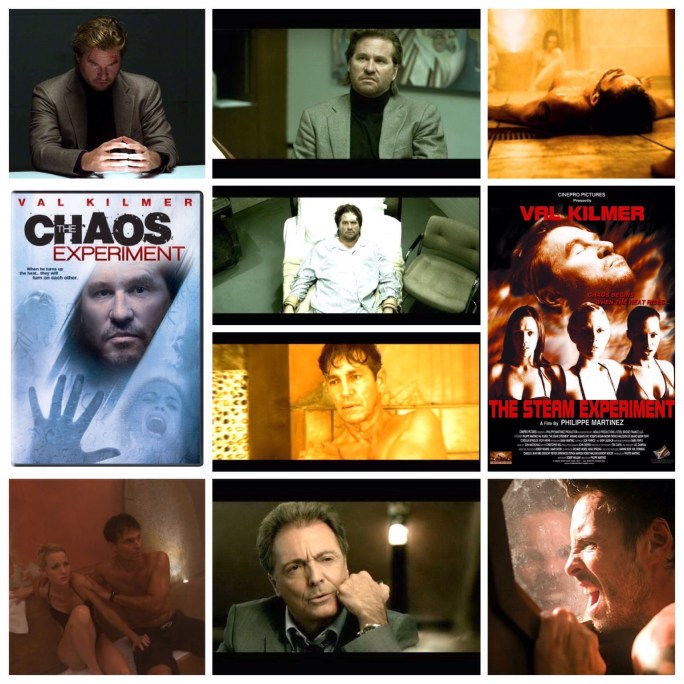
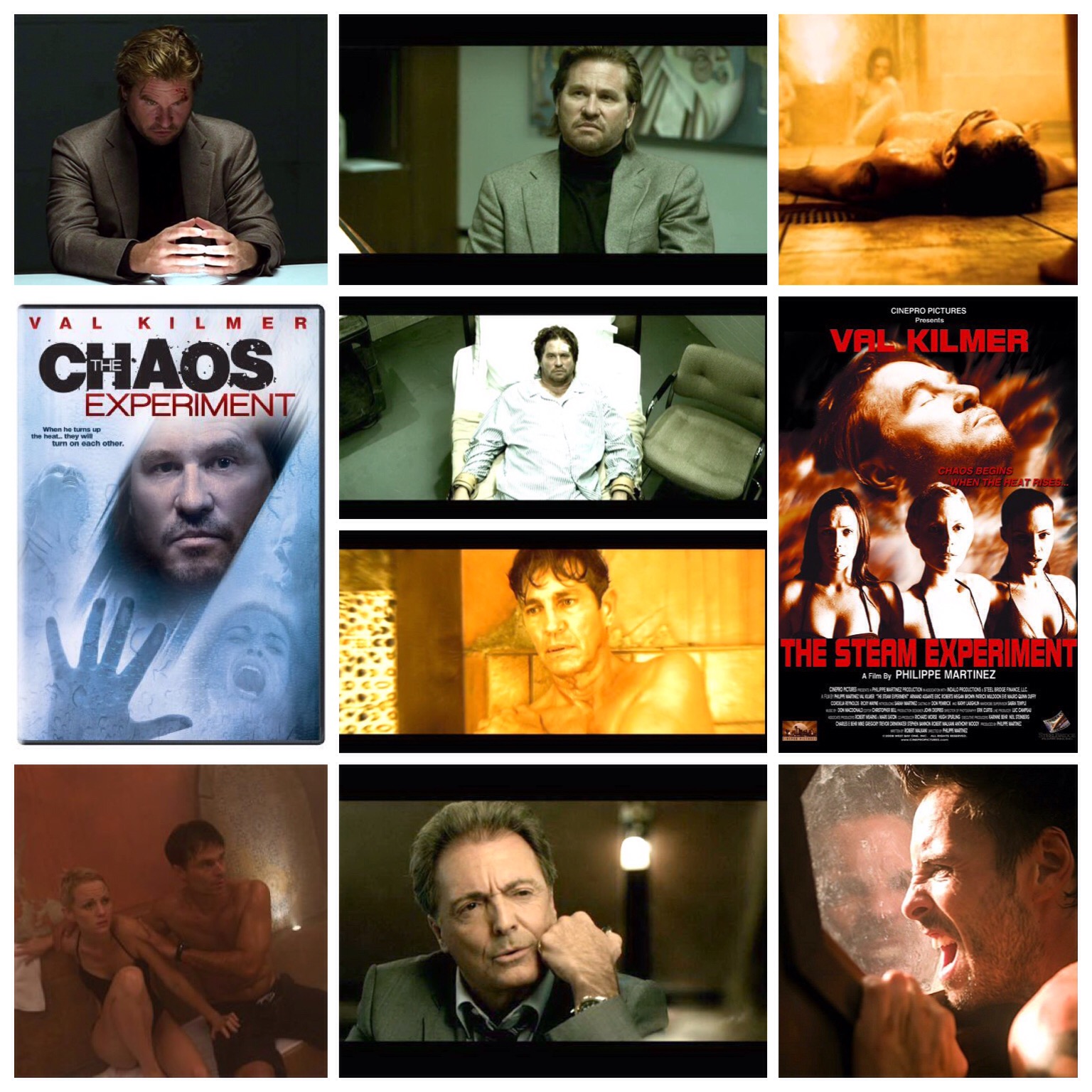
B Movie Glory with Nate: The Steam Experiment 


What’s the best way to raise awareness about climate change and the melting of the polar ice caps? In The Steam Experiment, it’s to lock a bunch of people in a swanky new spa and steam room and crank up the heat until they start to panic and suffocate, of course. Well at least according to half mad scientist Val Kilmer, it is. Tired of his global warming research being rejected and scoffed at, he comes to some fairly… extreme conclusions as to what should be done, and actually goes through with his plans, the absolute madman. Setting his experiment under the pretence of a high end spa getaway for a few lucky contest winners to test out his brand new prototype ‘ultra spa’, he shuts them all in and threatens to turn that heat dial up wayyy past safety standards and boil the poor suckers alive inside, if the local paper doesn’t publish his material for all to see. Radical? Yes. Ridiculous? Definitely. It makes for one shit show of a film though, and awful one, no doubt, but pretty legendary just for being able to boast a plot line in which Val Kilmer kills people with a steam room. One of the unwitting participants in this sick charade is Eric Roberts, who seems equally terrified of being trapped in this type of mucky film as he is of being stuck in the room itself. An irritating police detective played by Armand Assante hunts Kilmer down and tries to talk him out of carrying his steamy threats through to their sweaty end, but old Val is stubborn as a mule, and keeps that heat coming on, as fast and hard as the cliches, stale cookie dialogue and eyebrow raising plot turns. He approaches the role cloaked in near catatonic depression, reaching a point where he’s not even sure what he’s doing anymore, giving the film a feeling of trailing off into an aimless, clamouring conclusion where no one knows what’s up, and Assante won’t stop laughably grilling him for answers and mugging the camera, that enthusiastic Italian mess of a man. A pressure cooker of mediocrity, a disaster that ends melting down just as hard and fast as those ice caps that cause poor Val such sociopathic anxiety. Did I use enough puns in my review?

Tombstone: A Review by Nate Hill 

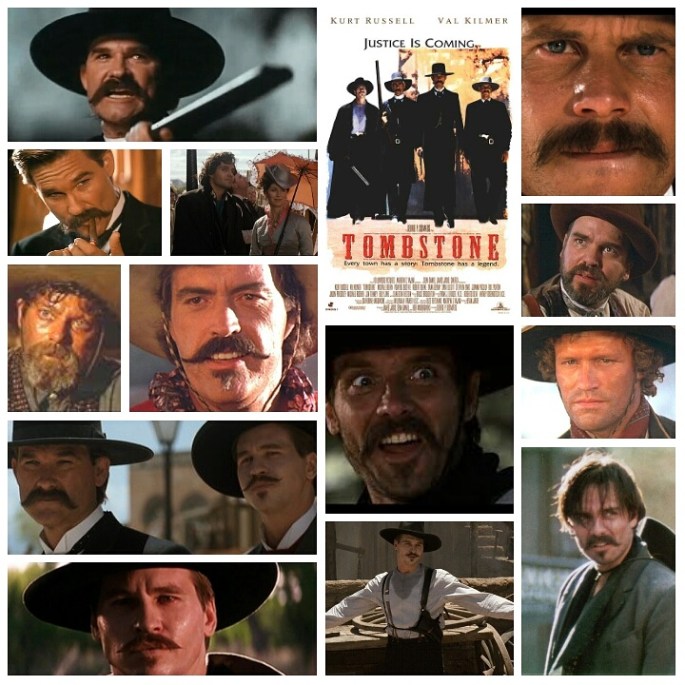
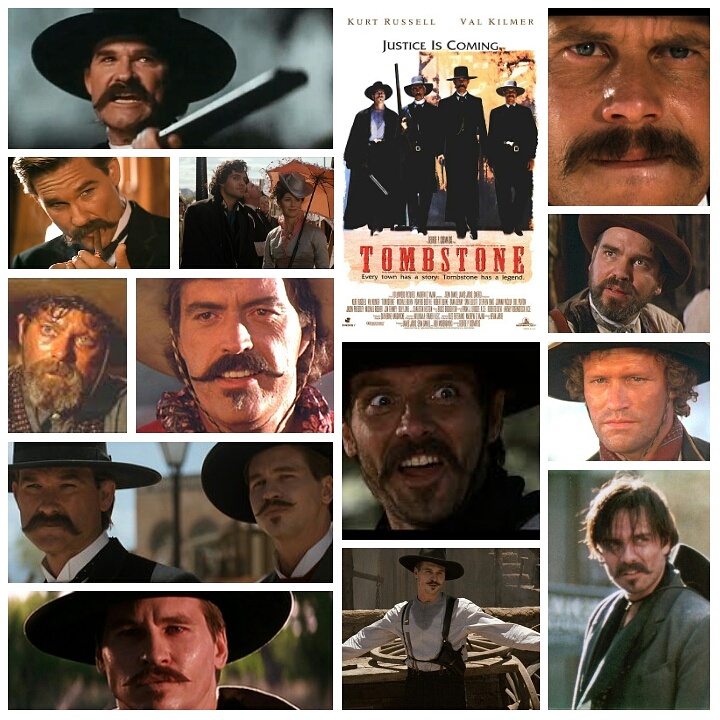
There are two main film versions based on the life of infamous outlaw Wyatt Earp: a serious, sombre one with Kevin Costner (and a whole lot of others), and a rolkicking circus sideshow starring Kurt Russell, bedazzled with a jaw dropping supporting cast that doesn’t quit. Both films are great, but if you held a six shooter to my head and demanded a preference, I’d have to give Tombstone the edge. It’s just too much fun, one wild screamer from start to finish, filled with swashbuckling deeds, evil outlaws and bawdy gunfights galore. It should have been called It’s A Mad Mad Mad Mad World In The Wild West. Kurt Russell is in mustache mode again here, but looks younger and leaner than last year’s western double feature his mutton chops starred in. Along with his brothers Virgil (Sam Elliott) and Norman (Bill Paxton) he arrives in Tombstone with a life of law enforcement in his dust and designs on retirement and relaxation. He gets pretty much the opposite though, when every lowlife bandit and villain in the area comes crawling out of the woodwork to give him trouble. Michael Biehn is the worst of them as crazy eyed Johnny Ringo, a deadly smart and ruthless killer, and Powers Boothe hams it up terrifically as drunken scoundrel Curly Bill Brocius. They are the two main causes of grief for the Earps, backed up by all sorts of goons including Michael Rooker, Billy Bob Thornton and a petulant Stephen Lang as Ike Clanton. Russell is joined by an off the wall Val Kilmer as Doc Holliday, the wheezy southern prince with a silver tongue that’s constantly fuelled by booze. He gives the best work of the film, and it’s fascinating to compare it to its counterpart, Dennis Quaid’s turn in the other version. Theres also great work from Billy Zane, Dana Delaney, Thomas Haden Church, Paula Malcomson, Tomas Arana, Johanna Pacula, Paul Ben Victor, Robert John Burke, John Corbett, Terry O Quinn, Robert Mitcham and even Charlton Heston good lawd what a cast. The standoffs, both verbal and physical, are a thing of beauty and the reason we go to the movies. Of all the westerns out there, this has just got to be the most fun. It’s constantly alive, there’s always something going on, a cheeky glint in its eye and a vitality in every corner of every frame, like a kid that won’t sit still. Russell is a champ as Earp, a no nonsense killer, plain and simple, but a man of both style and charisma, two weapons that are equally as important as his side arms. Kilmer gets all the best lines and goes to town with his portrayal, creating electric tension whenever he faces off with Biehn, who is equally mesmerizing in a more intense way. The three of them kill it, and along with the howling mess hall of a supporting cast, make this simply the liveliest western I’ve ever seen in the genre. 

Ron Howard’s The Missing: A Review by Nate Hill 

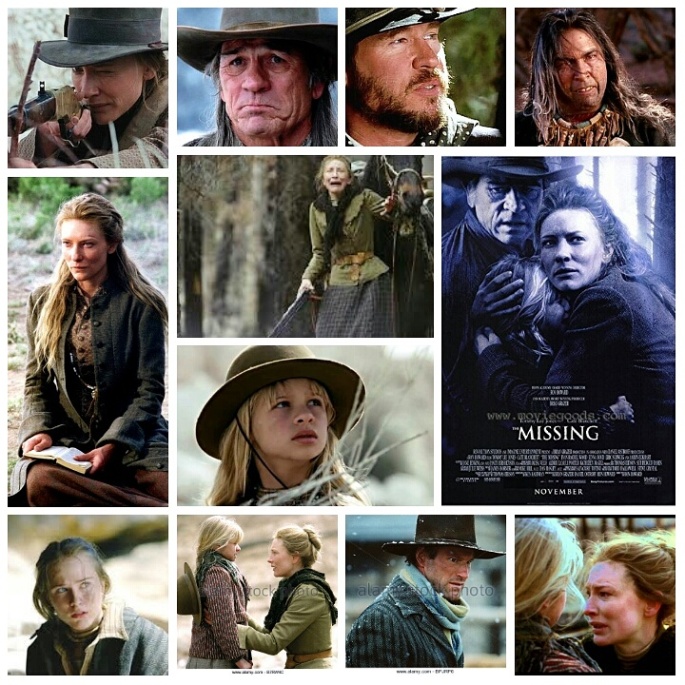
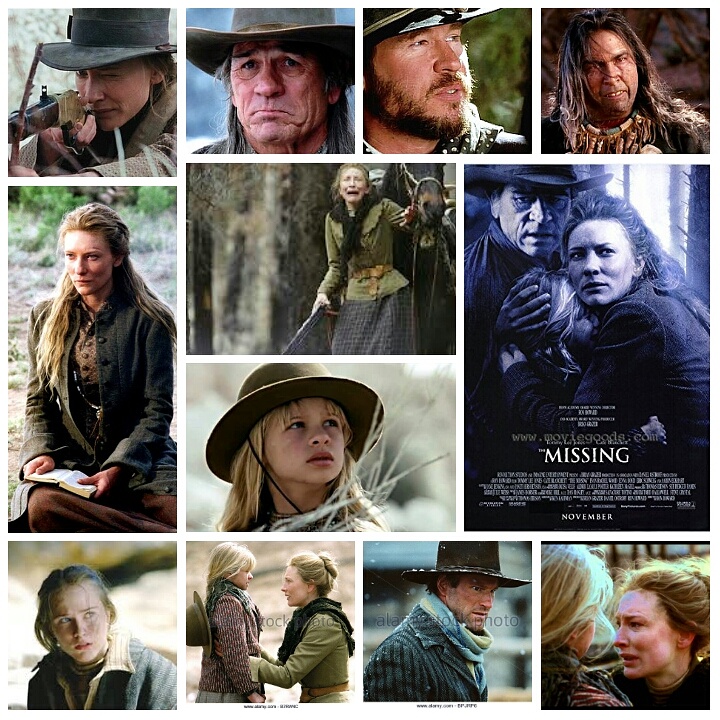
Ron Howard usually plays it both straight and safe, never taking too many risks, never siding too much with abstraction or grey areas, and over the years this has made me somewhat of a non fan. Not a hater, simply seldom blown away or challenged by his work. With The Missing, however, he strayed from the path and brought us a dark, threatening picture of life on the frontier in all its brutal, treacherous glory. With the success of last year’s brilliant Bone Tomahawk, I couldn’t help but be reminded of this beauty, as there are elements of horror and evil dancing on a thread with origin points in both films. Different altogether, but from the same elemental stew and highly reminiscent of each other. Cate Blanchett is hard bitten single mother Magdalena, trying her best to raise two daughters (Evan Rachel Wood and the excellent Jenna Boyd) with only the help of her sturdy farmhand (Aaron Eckhart). One misty night, someone or something snatches Wood right out of her bed and disappears into the wilderness with her. Magdalena is raw and determined, launching a desperate search across woods and plains to find her kin. Joining her is her half breed injun father Samuel, played by an eerily convincing Tommy Lee Jones. Samuel left her years before and only re-emerges in her life for fear of being punished for forsaking his family in the beyond. Gradually he turns around and a bond is formed through the crisis, an arc which Jones nails like the pro he is. It turns out they are tracking a group of despicable human traffickers who take girls and sell them across the border into sex slavery. They are led by a mysterious witchdoctor (Eric Schweig) whose tactics border on voodoo prowess. It’s scary stuff, never outright horror, but sure aims for that with its hazy nocturnal atmosphere in which any denizen of the night could be poised behind the next thicket or cluster of trees, ready to pounce. Blanchett is tough as nails, a terrific female protagonist blessed with a mother’s love and a winchester to back it up. Jones is gruff and badass, believable as a native american and treated as a well rounded character seeking redemption in his twilight years. There’s also fine work from Steve Reevis, Clint Howard, Elizabeth Moss and a cool cameo from Val Kilmer as a sergeant who helps them out. My favourite Ron Howard film by far. Just a mean, dark genre piece that aims to thrill and chill in equal measures and comes up aces. 

Batman Forever: A Review by Nate Hill 

It’s true, Batman Forever is a silly, overblown, cartoonish riot of buffoonry.  But so what? It’s also awesome in it’s own way, and inhabits a certain corner of the Batman culture, the side of things that is rooted in camp and unhinged wonderment. Now, there’s an important and discernable difference between taking things far and taking things too far. That difference is delineated on one side by a willingness to be goofy, colorful and not take this superhero stuff too seriously. The other side of that of course is a disregard for limits, throwing every ridiculous line, costume and awkward scene into it you can imagine. I’m referring to Joel Schumacher’s followup to this, Batman & Robin. Everything that is weird, wonderful and extravagant about Forever just revved up to much in Robin, resulting in a piss poor typhoon of mania and over acting. Not to say that Forever doesn’t have over acting. Ohhhh boy is there over acting. Between Tommy Lee Jones and Jim Carrey, the thing is liable to give you epilipsy. But it somehow works despite its madness, a lucky stroke that Robin couldn’t have cared less about adhering to. Val Kilmer is the sedating antidote to Jones and Carrey, a remakably laid back Bats and a pretty solid casting choice, both as Brooding Bruce and Buttkicking Bats. Eternally broken up about the death of his patents, Bruce fights off Harvey Two Face Dent (Jones) in a garish, disarming Gotham City that resembles Mardi Gras in Dr. Seuss land. Jones’s Two Face is so far over the top, so rabid that it’s a wonder he didn’t give himself a bloody heart attack in the first take. Anyone who’s interested can read up on his performance, and how he pushed himself right to the heights of bombast in order to try and out-Carrey the Jim. Carrey, playing the Riddler, is a ball of twisted nerves himself, set loose on the wacky sets and basically given free reign to.. well.. go fucking nuts. It’s one of his most physical performances too, prancing around like a loon in green spandex that leaves nothing to the imagination. Aaron Eckhart’s Two Face may have had the edge for grit, but Jones has the rollicking clown version, and runs away to kookoo land with mannerisms that even call to mind The Joker in some scenes. The only thing I’ve seen him more hopped up in is Natural Born Killers, but shit man its hard to top his work in that. The story is all over the place, involving a nonsensical subplot with a mind control device, multiple elaborate set pieces, endless scenery chewing and the eventual arrival of Robin, played by Chris O’Donnell who is like the cinematic Buzz Killington. Michael Gough and Pat Hingle dutifully tag along as Alfred and Commissioner Gordon, both looking tired at this point. Debi Mazar and Drew Barrymore have amusing dual cameos as Two Face’s twin vixens, and Nicole Kidman does the slinky love interest shtick for Bruce as a sexy psychologist. Watch for an uncredited Ed Begley Jr. Too. There’s no denying the silliness, but one has to admit that the achievment in costume, production design and artistry are clear off the charts with this one, and visually it should be a legend in the franchise. Say what you will about it, I love the thing. 

Wonderland: A Review by Nate Hill 

  
I’ve always thought of this as the Oliver Stone Movie that the man never made. It has the sordid, excessive sleaziness of U Turn, and the studious inquisition into true crime and intriguing Americana that he showed us in JFK. Both films explore the violence and ugliness that peppers American history in different ways, the brash and the academic which often exist in opposite poles colliding in Wonderland, a wholeheartedly nasty account of a stomach churning multiple murder involving one of the most infamous porn stars who ever lived, John Holmes (Val Kilmer). I don’t know what the real Holmes was like (besides tell rumours of his anaconda cock), but the version we see here is a sniveling, unrepentant scumbag who is very hard to empathize with unless you flip the nihilism switch on in your brain and lose yourself in it. The film follows his association with a group of fellow undesirables, interested only in furthering their own drug habits by any means necessary, legal or otherwise. John is late in bis career and on the cusp of being a washout, his underage girlfriend (Kate Bosworth) pretty much the only friend he has in the world. He spends his days getting involved in all kinds of smutty business, along with a crew of fellow junkies led by loose cannon Josh Lucas, grim biker Dylan McDermott and timid Tim Blake Nelson. When they collectively catch wind of the wealth of one of John’s acquaintances, a dangerous club owning mobster (Eric Bogosian in full psycho mode), the dollar signs swirl in their already dilated pupils. After an ill advised robbery, Bogosian reacts with all the wrath of the Israeli mafia, fuelled by his personal vendetta, brutally slaughtering each and every one of John’s gang, letting him live as a branded snitch. The film is based on notoriously grisly crime scene photos which can be seen online, laying speculation on Holmes’s part in the killings, and spinning a sinfully chaotic, noisy web of pulpy hijinks surrounding the case. The film is told from two different perspectives, a fractured narrative laid down by Kilmer and McDermott in respective and very different summaries of the event. Ted Levine and Franky G. play the two detectives who take it all in and work the case, and the excellent M.C. Gainey plays a veteran ex cop who they bring simply because he’s the only familiar face which skittish Holmes will open up to. This is an ugly, nasty film and I won’t pretend it doesn’t get very gratuitous both in dialogue and action. It goes the extra mile of obscenity and then some in its efforts to make us squirm, but every time I pondered the necessity of such sustained atrocities, I reminded myself that in real life there’s even more of such stuff, and the film is just trying to hit the themes of decay home hard, albeit with a sledgehammer, not a whiffle ball bat in this case. Kilmer is fidgety brilliance as Holmes, a severely damaged dude who hangs onto the last strand of our sympathy by the wounded dog whine in his voice alone. The only time I felt anything for the dude is when he visits his estranged ex wife (a flat out fantastic Lisa Kudrow, cast against type and nailing it) and we see flickers of a dignity in him that’s long since been consumed by darkness. One of his best roles for sure. Watch for further work from Michael Pitt, Louis Lombardi, Janeane Garofalo, Scoot Mcnairy, Christina Applegate, Faizon Love, Chris Ellis, Paris Hilton and Natasha Gregson Warner too. This one is like Boogie Nights, Rashomon and Natural Born Killers tossed in together on spin dry. It’s a wicked concoction, but you’ll need to bring a strong stomach and the foreknowledge that you’re going to be spending two hours with some of the most deplorable human beings this planet has to offer. The silver lining is you get to see it all play out in killer style, smoky and evocative 1970’s cinematography and dedicated thespians branding each scene with their own lunacy. Tough to swallow, but great stuff.

REAL GENIUS – A REVIEW BY J.D. LAFRANCE

Real Genius 1

In the 1980s, Martha Coolidge’s films were a welcome antidote to the dominance of John Hughes’ output. On the surface, her films appear to be quite similar, but whereas Hughes’ films ultimately play it safe and are conservative in nature (i.e. the status quo is preserved), Coolidge’s films champion the outsider in society – for example, Nicolas Cage’s punk rocker hooks up with Deborah Foreman’s Valley girl despite societal pressure in Valley Girl (1983). Real Genius (1985) appears to be just another mindless college comedy like Revenge of the Nerds (1984), but whereas that film had its outsiders ultimately become part of accepted mainstream society, the nerds in Real Genius rebel against it and are proud to be different.

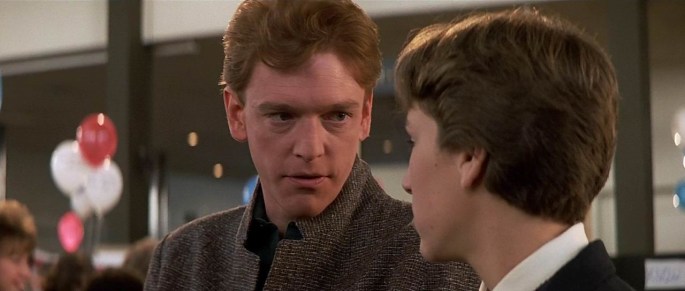
Mitch Taylor (Gabe Jarret) is a brilliant high school student recruited by Professor Jerry Hathaway (William Atherton) to become a student at Pacific Tech and join a special team working on an experimental laser. Hathaway tells Mitch and his parents in person at a science fair. The exchange between them is priceless. His parents obviously have no idea just how smart their son is and only want him to get the best education. At one point, Mitch’s mother asks Hathaway, “I saw your show the other night on radioactive isotopes and I’ve got a question for you. Is that your real hair?” He cheerfully replies, “Is Mitch by any chance adopted?” They are oblivious to the implied insult and Hathaway pulls Mitch aside and tells him, “We’re different than most people. Better.” Hathaway’s elitist attitude is established early on, setting him up as an arrogant snob that must be taught a lesson in humility by our heroes.

Hathaway rooms Mitch with Chris Knight (Val Kilmer), the top brain on campus – at least he used to be until Mitch showed up. We first meet Chris as he’s being taken on a guided tour of a top science laboratory. He has a t-shirt on that reads, “I love toxic waste,” and a set of alien antennae on his head that demonstrate he is the antithesis of Hathaway. He may be super smart but he’s not a stuffed shirt. At one point, his tour guide asks him, “You’re Chris Knight, aren’t you?” Without missing a beat, he replies, “I hope so, I’m wearing his underwear.” Val Kilmer’s deadpan delivery is right on the money and he demonstrates an uncanny knack for comic timing. The film could have so easily set up a rivalry between Chris and Mitch but instead they become friends and team up against a common foe: Kent (Robert Prescott), an arrogant senior student who is also working on the laser.

Chris is super smart, but something of a loose cannon, always cracking jokes and never taking anything too seriously, much to Mitch’s consternation because he doesn’t know how to loosen up and have fun. Mitch also has trouble adjusting to campus life and this isn’t helped by Kent who enjoys tormenting Mitch when the senior student isn’t busy sucking up to Hathaway. Coolidge replaces the class warfare in Valley Girl with in-fighting amongst academics in Real Genius. The setting may be different, but the tactics are no less mean-spirited as Kent delights in publicly humiliating Mitch. Meanwhile, Hathaway puts pressure on Chris to produce a working laser before the school year ends. Failure to do so will result in Hathaway making sure that Chris doesn’t graduate or work in his field of expertise. Unbeknownst to the ace student, his professor is getting pressured by a flunky and his superior from the CIA who want to use the laser for their own covert actions (assassinations from outer space?).

Every so often, Mitch catches a glimpse of a mysterious long-haired man who goes into his closet at random times during the day. His name is Lazlo (Jon Gries) and he lives deep in the bowels of the school. He used to be the smartest student on campus back in the 1970s but cracked under the pressure and now spends all of his time generating entries for the Frito Lay sweepstakes (enter as often as you like) so as to get as many of the prizes as possible. Jon Gries plays Lazlo as a shy genius, smarter than Chris and Mitch combined. He’s a gentle soul and a far cry from the arrogant blowhard he would go on to play in Napoleon Dynamite (2004).

Over the course of the film, Mitch finds himself attracted to Jordan (Michelle Meyrink), a hyperactive student who never seems to sleep. She sports an adorable Louise Brooks-style bob haircut and a nervous energy that is oddly attractive. I had a huge crush on her when I first saw this film back in the day, quite possibly one of my earliest cinematic crushes. She was the ultimate nerd sex symbol in the ‘80s with her undeniable beauty and brains. Sadly, after a few films she grew disenchanted with the movie making business and retired to Canada to become a Zen Buddhist.

Remember when Val Kilmer was funny? Between this film and Top Secret! (1984), he displayed some impressive comedic chops. Kilmer excels at delivering smartass quips and jokes but is also capable of delivering an inspirational speech that convinces Mitch to stick it out at school and get revenge on Kent. There are two scenes where he dispenses with the jokes and has a relatively serious conversation with Mitch about life. They are refreshingly heartfelt and elevate Real Genius above the usual ‘80s teen comedy.

Gabe Jarret is perfectly cast as the helplessly square Mitch with his dorky haircut and his J.C. Penney’s wardrobe. We aren’t meant to laugh at him and Coolidge shows that he’s a good kid thrust into a new and strange environment. He’s smart, but lacks the emotional maturity, which he will acquire over the course of the film. Jarret does a nice job of conveying his character’s arc. He doesn’t totally transform into Chris but instead absorbs some of his traits while remaining true to himself.

Real Genius 2In the ‘80s, William Atherton seemed to be the go-to guy for playing douchebag authority figures, with memorable turns as the unscrupulous journalist in Die Hard (1988), the “dickless” EPA guy in Ghostbusters (1984), and, of course, his turn in Real Genius. Atherton’s job, and man, does he do it oh so well, is to provide a source of conflict for our protagonists. He portrays Hathaway as the ultimate arrogant prick and we can’t wait to see him get his well-deserved comeuppance at the hands of Chris and Mitch.

Real Genius
does plug in the usual tropes of ‘80s teen comedies with the now dated soundtrack of New Wave songs, most of them forgotten except for “Everybody Wants to the Rule the World” by Tears for Fears, which plays over the blissfully carefree ending of the film. There are the wacky comedic set pieces involving pranks. There’s also the T&A factor when Chris takes Mitch to an indoor pool party populated by sexy beauticians. Not to mention, the dorm that Chris and his classmates live in which vaguely resembles the chaotic frat house in Animal House (1978), only inhabited by really smart people.

However, it is how the film presents these generic elements that sets it apart from the typical ‘80s teen comedy. For example, the pranks are quite inventive, like when Chris and Mitch manage to place Kent’s car in his dorm room. There are several and they all lead up to the mack daddy of them all, which occurs at the climax of the film. While there is the requisite T&A factor in Real Genius, the PG rating assures that we don’t see much, just some girls in bikinis. Instead, we get the understated romance that develops between Mitch and Jordan, which is rather sweet in its own unassuming way. The dorm is certainly not the debauched chaos of Delta House, but it clearly is a place of fun, led by Chris and his various antics.

Producer Brian Grazer loved the humor and the sensibility that Martha Coolidge brought to Valley Girl and asked her to direct Real Genius. She thought that the screenplay was funny, but it had “a lot of penis and scatological jokes” that reminded her of other teen comedies she had turned down in the past. However, Grazer brought in Lowell Ganz and Babaloo Mandel to give the script a polish and had Coolidge re-read it. She liked it and Grazer’s boundless enthusiasm convinced her to commit to the project. Still not completely satisfied with the script, Grazer brought in comedy writer P.J. Torokvei to help Coolidge create the story, come up with the ending and fully develop the characters. For example, it was Torokvei who came up with the character of Jordan and was responsible for many of Chris Knight’s memorably smartass remarks.

Coolidge insisted on researching laser technology and policies of the CIA. The producers even brought in top-level consultants from the military and weapons development experts. To make Real Genius distinctive from other teen science fiction films at the time, the director went to great lengths to make sure the science was authentic and the science fiction aspect was plausible. At the time, scientists were actually working on the powerful laser Chris and his fellow students were developing for Hathaway, but the filmmakers could only work with a smaller wattage for reasons of safety and cost. The production used real lasers with very little visual effects enhancement, of which was used only sparingly at the film’s climax.

In addition, she interviewed dozens of Cal Tech students and based most of the stories in the film and the visual depiction of their school on Cal Tech, in particular Dabney Hall. Coolidge also met with all kinds of scientists and students, including the legendary Cal Tech mathematician grad that was rumored to have lived in the steam tunnels. To say that the director was a stickler for authenticity was an understatement. The graffiti in the dorm was copied from the actual dorm graffiti by scenic painters and then embellished further by Cal Tech students brought in by the production.

Not surprisingly, Coolidge and producers saw many young actors for the role of Chris Knight. It became obvious that Val Kilmer was the best actor to embody the role, but John Cusack was also considered at one point. However, once principal photography began, Coolidge found Kilmer not so easy to work with because he was “intellectually challenging and erratic.” He avoided working by asking a lot of questions and was sometimes late to the set and acted moody. That being said, over the 75-day shoot, they gained a lot of trust and worked well together.

The filmmakers also spent a lot of time trying to cast an actor for the role of Mitch Taylor. At one point, they seriously considered hiring a true young genius that had graduated college in his early teens. They discovered Gabe Jarret late in pre-production and he had the “right combination of seriousness, gawkiness, intelligence and emotion that we needed,” Coolidge remembers.

For the house that explodes with popcorn at the film’s exciting climax, the special F/X people designed all kinds of hydraulic systems to move the popcorn. The next challenge was generating all the stuff. They couldn’t buy all the popcorn needed for the scene in the short amount of time they had so the film crew popped 40 tons themselves on the lot over six weeks. All the popcorn was stored in 38 40-foot tractor-trailer trucks.
Real Genius 3Real Genius
argues that nerds can have fun too, but there needs to be a balance. You can love solving problems but it can’t be all science and no philosophy as Chris tells Mitch. People like Kent and Hathaway have no sense of humor and are self-obsessed egotists. They are ambitious to a fault, not caring who they step on the way, while Chris and Mitch are aware of the consequences of their actions. There is sweetness to this film that is endearing and rather strange considering that Neal Israel and Pat Proft wrote the screenplay (authors of such paeans to sweetness, like Police Academy and Bachelor Party), but Coolidge is firmly in charge and wisely doesn’t let Real Genius get too sappy. She also doesn’t let the funny stuff devolve into mindless frat humor, instead maintaining a proper mix that doesn’t insult our intelligence. The end result is a film that the characters in the film might enjoy, if they weren’t already in it. Achieving just the right alchemy may explain why the film continues to enjoy a modest cult following and is one of the few teen comedies from the ‘80s that stands the test of time.
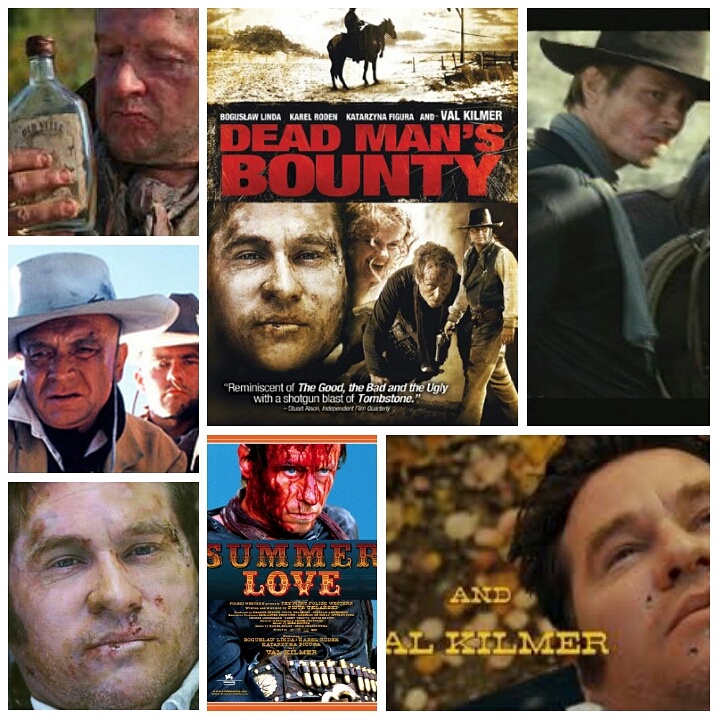
Summer Love, aka Dead Man’s Bounty: A Review by Nate Hill

image

Ever wish there was a movie where Val Kilmer plays a dead corpse? Like…the whole movie? Well you’re in luck, because in Summer Love he does just that. It’s funny because there aren’t even any flashbacks, any death scene or any instances where he’s alive. He’s just a dead body for the whole. friggin. movie. Now you might think what an lazy, pay cheque collecting half ass move, but let me assure you that shit isn’t easy. I’ve played a corpse in films for maybe minutes at a time after I’ve bee killed, and that was bad enough. Thinking about having to lie still and do that for an entire film gives me hives. So kudos to Val who sticks through it like a champ, spending every frame all rigor mortis-ed up and dead as disco. The film was released in North America unde the dvd title ‘Dead Man’s Bounty’ a decidedly more genre title than Summer Love, which is all part of an effort to label it as a violent action western. It’s It’s a western, alright and it’s plenty violent. But action? No sir. It’s slower than the service I get at McDonald’s and very, very European. Most of the actors besides Kilmer are Polish, kind of like Eastwood waltzing around with a bunch of Italians in a spaghetti western. I guess the term for this one would be perogy western. The lead actor is actually Czech, the ever awesome Karel Roden, playing a perpetually wounded and apparantly mute gunslinger who arrives in a dinghole of a town with Kilmer’s body, looking to collect his bounty. The town is a sour, miserable, derelict place, populated by bad tempered, booze gulping men, and one much abused whore (Katarzyna Figura). The sheriff (Boguslaw Linda) is a stumbling, incapable drunkard whose first thought is to rob anyone who passes through his town. Roden silently navigates this cesspool outpost, keeping Kilmer near and his guns at the ready. Not much actually happens in the film, mostly everyone just sits around drinking and mumbling incoherently to themselves in tones that no doubt sound poetic to their heavily inebriated minds. The whore gets slapped around a whole lot which will no doubt put some viewers off, if they aren’t already asleep. The ‘Summer Love’ title comes from the chorus of a song which is played in an opening sequence that proves to be one of the few sparks of life in this fairly dead affair. Kilmer’s trademark peppiness is nowhere to be found because… well… he’s a dead guy, and the rest of the cast are basically drunk western zombies who have all lost their scripts. Morbidly fascinating, never enjoyable, startlingly bad.

B Movie Glory with Nate: Hardwired

image

The first IMDB review to pop up when you look up Hardwired has the log line “wtf?”, which just about sums up the movie. It’s straight up cow dung, a stunningly bad attempt to emulate everything from Blade Runner to Minority Report, failing in all imaginable ways. It does, however, possess a few deranged qualities which are worth a look purely for your own mirth and amusement. Let’s start with Val Kilmer’s hairdo. He sports a getup that looks as if someone threw the head of a mop into a wheat thresher, put it on his head and tried to style it like an emo anime character. It’s baffling, shocking and the hairpiece gives a better performance than the former Bruce Wayne sitting beneath it. Now,here’s the curious thing: on the dvd cover, Kilmer has a garden variety haircut, with no trace of the horror to come once you hit play. This makes not a bit of sense to me;  if I were the filmmaker and it was my movie and I’d chosen that epic Goku hairdo for Kilmer, let alone get him to agree to it, I’d advertise it loud and proud, and put his image like nine different times all over the cover art. It’s ironic that a film about excessive commercialism is guilty of false advertising, but there you have it. Anywho, Kilmer and the hair play Virgil Killiger, a whacky PR manager of a mega corporation  whose main revenue comes from serial advertising, in a half assed future where society has reached the oft imagined 1984 dystopia. He’s tasked with harassing Luke Gibson (Cuba Gooding Jr.), a man who owes a heavy debt to the company due to their products saving his life following an accident. Only problem is, it doesn’t end there. The corporation gets greedy and tries to insinuate itself into every aspect of people’s lives. Gooding bands together with a group of cyberpunk hackers led by Michael Ironside, and together attempt to bring down the company once and for all. It’s al big dumb dumb of a flick that doesn’t even put a modicum of effort in most of the time. Lance Henriksen fans beware: despite a credit, he’s not even in the thing, except for a single recycled photograph which sets the film up for sequels that I will bet my left testicle will never get made.

Felon: A Review by Nate Hill


Felon is a bitter,and tragic prison drama that’s packed with wrenching injustice, simmering anger and caged animal violence. Loaded with the kind of tough guy elements which make prison films exciting (check out Lock Up with Stallone), it’s also has a tender side brought forth by its extremely thoughtful and well written script, which explores ideas that are both hard to swallow and very sad. Stephen Dorff, a guy who already has the gritty look as soon as he walks into a frame, plays Wade Porter, a simple family man who is just starting out at life along with his wife (Marisol Nichols). Their hopes and dreams turn into a nightmare, however, when a violent intruder breaks into their home one night. Wade strikes out in defence of himself and his wife, accidentally killing the criminal. Because of the backwards ass way the States run things, he is accused of manslaughter and sentenced to serve out jail time. He is then thrown into the dog pit, literally and figuratively. The penitentiary he is sent to is run by sadistic and corrupt Lt. Jackson (Harold Perrineau) along with his brutal enforcer Sgt. Roberts (Nick Chinlund). Jackson organizes vicious fight club style matches between the inmates, totally off the books and beyond any correctional legislations. Wade is forced to adapt, adjust and bring out monstrous aspects within himself to survive, and make it through his sentence with both his life and humanity intact. It’s not an easy turn of events to watch unfold onscreen, but necessary in the sense that this probably happens quite frequently to people in real life, and should be seen. The only solace Wade finds is with his gruff, veteran cell mate John Smith (Val Kilmer) a lifer who once went on a massacre of revenge against individuals who murdered his family. Smith is his guiding light, steering him through the hellish carnage of what he’s forced to do and helping him to keep the candle of compassion alive within him, never losing sight of what is essential in his fight to claim his life once more. Kilmer is a force that will knock you flat in this role, an old bull with dimming fury in his eyes, a man with a bloody history that has forged the weary dog we see in the film. Late in the film he has an extended monologue to Wade, giving him both blessing and advice with some of the most truthful and affecting gravity Kilmer has showed in his career. The writer/director, who appears to be primarily a stuntman, should be commended for such a script, that could have easily been a straight up prison flick without the pathos that drips off its heartstrings. We as an audience view this painfully and prey nothing like this ever happens to us or anyone we know, hoping to see a light of hope at the end of the dark tunnel for Wade. I won’t spoil it, but it’s worth the hit that your emotions will take while watching, and there is hard earned catharsis to be had, and penance for the characters you want to shoot in the face along the way. The extends to brilliant work from Chris Browning, Anne Archer, Nate Parker, Johnny Lewis and a fantastic Sam Shepherd as another seasoned convict. This was correct to video as I recall, which is a crime. It’s up there as my favourite prison set film that I’ve ever seen, a soul bearing piece. 

TONY SCOTT’S TOP GUN — A 30TH ANNIVERSARY RETROSPECTIVE REVIEW BY NICK CLEMENT

1

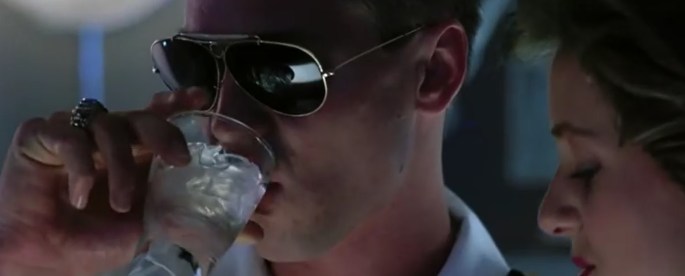
At this point in our culture, it’s nearly impossible to discuss Top Gun with any amount of clear-eyed objectivity. The film is a milestone for all of its key contributors, a pop culture touchstone for multiple generations of people, and an often imitated and parodied relic from a very specific time and place in cinematic history. For director Tony Scott, it was his early-career masterpiece, the film that announced an exciting new voice in commercial cinema while showcasing his slippery-slick yet still gritty visual aesthetic, which would come to dominate the action genre for decades. It’s also the film that got him out of director’s jail after the critical and box office failure of his artsy debut, The Hunger, which is now of course a premiere cult classic. For producers Don Simpson and Jerry Bruckheimer, it was the movie that truly solidified them as the uber-showmen of the 1980’s, with Flashdance and Beverly Hills Cop arriving before and Beverly Hills Cop 2 and Days of Thunder immediately following.

10

As legend has it, Simpson and Bruckheimer were in their office, and an issue of California magazine was sitting on their desk, featuring a clean cut fighter pilot standing next to a jet. And with that evocative and elaborate “Nothing On Earth Comes Close” Saab commercial that Scott had made in the early 80’s continually turning heads (the one that showed a Saab 37 Viggen fighter jet going neck and neck with the Saab 900), it was clear that it would be a match made in heaven between the producers and their ace in the hole. And for star Tom Cruise, it was his first runaway blockbuster sensation, his first taste of global superstardom, and the film that made him a house-hold name. Top Gun is a product of its time in a way that so few films can claim to be, and over the years, has come to mean so many different things to so many different people, which is why it remains imminently watchable 30 years later.

2

Released in the summer of 1986, Top Gun played on the still lingering fears of war with the Soviets, and carried a rah-rah, jingoistic spirit that seems laughable to some nowadays, but probably felt very honest at the time of release. It feels pointless to rehash the plot of Top Gun – anybody with a pulse has seen it and knows all about Maverick (Cruise, in all his perfect-grinning excellence) and Goose (Anthony Edwards, everyone’s best buddy) and Iceman and Jester and Charlie and the rest of the crew. The scenes on the ground carry an earnestness to them, playing off of melodrama (the mysterious death of Maverick’s father, himself a legendary pilot; workplace romance; the death of a best friend), but the film truly comes alive when it’s up in the sky, as Jeffrey Kimball’s gorgeous, smoky, 2.40:1 anamorphic widescreen cinematography is still a lesson in mid-80’s perfection. Every single shot in this film is spectacular, whether the moment is big or small, with cool blues and sunset reds dominating the horizon. It can’t be understated how influential the look and feel of Top Gun would become for so many films and filmmakers to follow in the years, and whether or not this style is your favorite or not, it’s undeniably exciting on a visceral and stylistic level, with an emphasis on the balance of light, visual minutiae, and overall atmospheric texture. It’s commercial cinema without a shred of pretension, smartly focusing on the drama and action inherent to the story’s scope, and all balanced out by Harold Faltermeyer’s propulsive, oh-so-80’s musical score and the lightning quick editing patterns of Billy Weber and Chris Lebenzon. And when you add in the ridiculously quotable one-liners conjured up by co-screenwriters Jim Cash and Jack Epps, Jr. (who knew that rubber dog shit originates from Hong Kong?) and the high-flying airborne camerawork which is still unmatched to this day, then it’s no wonder that the film plays every Sunday on TNT and has become one of the most influential and iconic movies ever made, with so many other movies attempting, and failing, to ape its success.

3

On a thematic level, the film is all about machismo (a major theme in all of Scott’s work), and how men deal with expectations, loss, tragedy, acceptance, and success. Those classic scenes in the shower (or during a particular game of beach volleyball…) seem homoerotic in hindsight (and maybe they did upon first glance…), but what they’re really about is men trying to one up each other, trying to figure out how to best your opponent, and always remembering that there are no points for second place. To say that Top Gun is one of the most macho movies ever made would be understatement; you can practically smell the testosterone on the set. I’ve often wondered if PA’s were kept solely for the purpose of spraying down the actors with water in order to simulate excessive sweat, because everyone is glistening in this film. Top Gun also expertly understands male camaraderie and friendship, and how people are willing to go the extra step for those that they care about, both professionally and personally. Kelly McGillis and Meg Ryan were the objects of affection for Cruise and Edwards respectively, while the absurdly masculine supporting cast included Val Kilmer, Anthony Edwards, Tom Skerritt, Michael Ironside, John Stockwell, Clarence Gilyard, Jr., Whip Hubley, James Tolkan(!), Barry Tubb, Rick Rossovich, Duke Stroud, Tim Robbins, and Adrian Pasdar.

5

Shot for a now hard to believe $15 million, Top Gun opened on roughly 1100 screens nationwide, grossing $8,193,052 on its opening weekend. The film would eventually gross $176 million in the U.S. and another $177 million overseas, truly cementing the Simpson-Bruckheimer brand after the similar worldwide gross two years previous from Beverly Hills Cop. Top Gun would also break every single VHS sales record, as it was one of the first movies made available to the public at the $20 price point. Scott would continue his legendary streak with the two producers in the following years with the equally huge Beverly Hills Cop 2, and then in 1990 with the summer hit Days of Thunder, which while not becoming the blockbuster some might have thought, is still a splendid piece of action moviemaking that was all accomplished with zero CGI and some of the greatest racing footage ever put on film. But Top Gun would be the film that all of the creative parties would become remembered for, what with its sleek visual design, tough guy banter, love story for the ladies, and the dynamic aerial combat footage that still pops off the screen to this day, especially when viewed in the Blu-ray format. In 2015, the United States Library of Congress added the film to their preservation vaults, deeming it “culturally, historically, or aesthetically significant.” And if you’re not a fan of Top Gun, then just remember, the plaque for the alternates is in the ladies’ room.

11