Stephen Hopkin’s Under Suspicion 


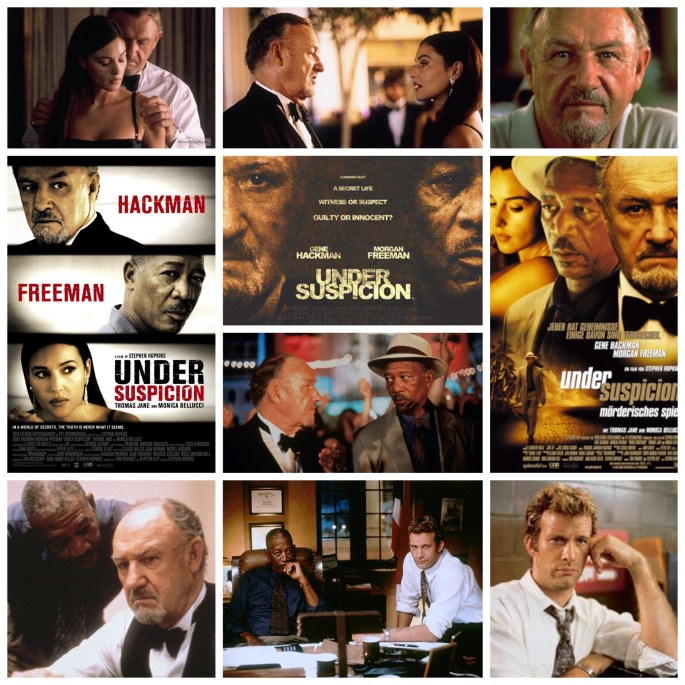
If Stephen Hopkin’s Under Suspicion were a meal I was served at a restaurant, I would throw it against the wall, flip the table, walk promptly back to the kitchen and knock the chef out cold. It’s a hollow, pointless piece, like digging into a pie that’s put before you only to find that under that layer of crust there’s no filling, only air. The premise is promising: wealthy businessman Gene Hackman who has political ties is grilled out of the blue by longtime friend and police detective Morgan Freeman and his partner Thomas Jane, regarding the murder of a thirteen year ago old girl in the slums of San Juan. Hackman is a successful, assured alpha socialite, and these type of men always have some type of close guarded secret which comes to light. Freeman is a dogged working man who probes him until it almost seems personal rather than routine. Sounds terrific, right? You would think. The acting is of course fine, as these guys couldn’t miss a beat if they tried, but the way the story is set up just rips the viewer off blind. These two thespians soar spectacularly, but their duel is structured around purposefully unreliable flashbacks, beating around the bush and oodles of red herrings that treat the audience like sixth graders watching a low rent magician at a birthday party. Hackman has a pretty trophy wife (Monica Belluci, underused) and a host of personal demons that he projects onto Freeman’s simple blue collar rhetoric like a defence mechanism. None of these narrative fireworks can save it though, especially when an ending rolls around that is the very definition of a letdown, through and through. In an attempt to explore the forces that drive a man to the edge of admitting guilt whether he is responsible or not, the filmmakers miss the boat on providing a focused treatise that takes itself seriously with these potentially fascinating themes, instead settling on an overcooked, ultimately vacant that could have been so much more.  

-Nate Hill

VICTOR HEERMAN’S ANIMAL CRACKERS — A REVIEW BY FILMMAKER & GUEST CRITIC DAMIAN K. LAHEY

2


‘Animal Crackers’ (1930) dir. Victor Heerman

I love the Marx Brothers. Huge fan going way back. When I was in middle school I was OBSESSED with these guys. I used to dress up like Harpo Marx with the over sized trench coat, wig – all of it. I’m not lying. I must have looked like an idiot and while that phase of my life came to an end by the 9th grade, I still adore them and believe they are absolute masters of the form.

I chose this film of theirs because for many years it was my personal favorite. Even had the poster hung up in my dorm room in college. Objectively I believe ‘A Night At The Opera’ is their best work but this is certainly a classic as well and one that really shows off their range and intelligence. For those that don’t know, the Marx Brothers have a phenomenal track record. They appear in FIVE universally recognized classics: ‘Animal Crackers’ (1930),  ‘Horse Feathers’ (1932) , Duck Soup (1933)  ‘A Night At The Opera’ (1935) and ‘ Day At The Races (1936). Nothing to snort at.

‘Animal Crackers’ is their second feature and follows the formula of their other early films in that the Marx Brothers themselves are more or less the protagonists. They are harmless grifters in some way, shape or form. Groucho plays one of his most legendary characters, the rakish and wise cracking Captain Spaulding and performs the classic ‘Hello, I Must Be Going’ number as well as other famous routines in this picture. The humor bounces frenetically from surreal visual gags to word play, Eugene O’ Neil references and musical bits. A Broadway hit for them before becoming a movie, the gags were well worn before filming began and they deliver them with an effortless confidence. One must give credit to the writers that backed them up on this – Morrie Ryskind, George S. Kaufman, Bert Kalmar and Harry Ruby. This film also contains some of the finest work between Groucho and his best sparring partner, Margaret Dumont. Her and Groucho are magic on the screen together while Harpo and Chico define themselves as the bumbling co-conspirators they would remain in subsequent films. Oh. And Zeppo is Zeppo.

In my opinion, ‘Animal Crackers’ is the best application of the early Marx Brothers format. One that lead to them breaking the boundaries of comedy, which is what they did successfully in films like this, ‘Horse Feathers’ and the imaginatively chaotic ‘Duck Soup’. However, as they are not fully developed characters but rather walking and talking gimmicks, this formula does not always lend itself to full bodied narratives and it can sometimes grow tiresome as in their films ‘The Cocoanuts’ (1929) and ‘Monkey Business’ (1931).

In 1935 under the mentorship of Iriving Thalberg at MGM the brothers became supporting characters in storylines involving young love sick couples in some sort of distress. This was a shrewd move as it provided central straight characters (made purposefully lame) for The Marx Brothers to bounce jokes off of and a linear narrative that could inspire even more jokes. This proved to be a very effective anchor for them. Gone was the anarchy but also the peril of Marx Brothers burn out. Aesthetic advantages aside – this was also a more commercial turn and it produced two bona fide classics with super box office smashes ‘A Night at The Opera’ and a ‘A Day At The Races’. After Thalberg’s passing and an unsuccessful attempt at adapting a stage play (1938’s ‘Room Service’) they returned to this formula for the very good ‘At The Circus’ in 1939 before getting bogged down by it in lesser efforts like ‘Go West’ (1940) and ‘The Big Store’ (1941). They would balance things out with their final film (I don’t count 1949’s ‘Love Happy’) the good but not great ‘A Night In Casablanca’ in 1946.

‘Animal Crackers’ is 87 years old and does not need to be watched as a historical reference piece. It is a truly hilarious kick ass comedy as it stands right now and is a testament to the legendary talents of the Marx Brothers. Watch it and laugh…

AnimalCrackersStill

DAVID FINCHER’S FIGHT CLUB — A REVIEW BY NICK CLEMENT

3

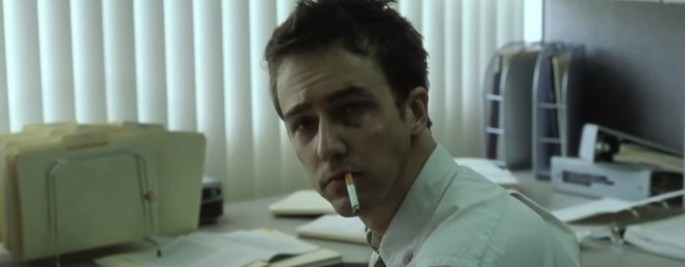
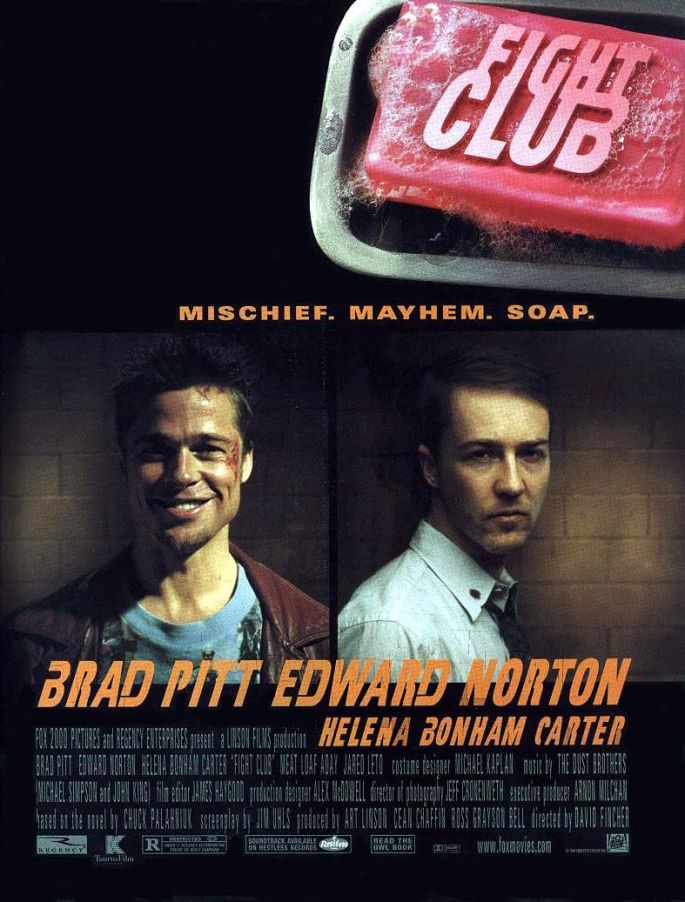
David Fincher’s apocalyptic, hysterical, and blood-soaked satire of male (wish)fulfillment Fight Club escaped into theaters in 1999, and yet its message still rings loud and clear: FUCK THE MAN. And make no mistake – this film literally escaped. How did they ACTUALLY get away with all of the stuff in this movie? I’m not going to delve into all of the various ideas and storytelling levels that the wild narrative operates on; that’s been done hundreds of times by very intellectual writers and I don’t feel I can really offer anything new. But what I can state is how this movie made me feel as a 19 year old film student and obsessive movie fan when I saw it opening night with my college buddies – it made us feel alive and explosive in a way that few films ever have. And now that I’m a 37 year old father and looking to the next chapter of my life, the film’s themes of societal placement, advancement, and the construct of family and its importance (or lack thereof) seem more relevant and thought provoking than ever. This film is an anarchist’s dream come true; look no further than the beyond ballsy final moments with the collapse of the American credit system.

1

I love how this movie doesn’t give a fuck about anything, it could care less if you like it, and at times, seems to be openly mocking the viewer for enjoying any portion of it. Fincher’s subversive streak was in full swing here, and because the material was so fertile with ideas, his lightning-quick visual style had tons to leap off of. Fincher, Brad Pitt, Edward Norton, Helena Bonham Carter, screenwriter Jim Uhls, original novelist Chuck Palahniuk, cinematographer Jordan Cronenweth, and editor James Haygood were all in perfect synch with regards to the aesthetic construction of this film and how it tied into the dense and mordantly funny narrative. Everything is up for analysis, critique, deconstruction, and destruction in this berserk and ferocious piece of work, and when it came out, I remember the critical community proudly taking sides over the merit (or lack thereof) of the film’s message, and asking if it was a dangerous piece of propaganda or a masterfully satirical comment about the male psyche and how it’s influenced by various forms of emotional and visceral stimuli, in an effort to smother, suppress, or fully control. This is a ballsy movie, a film with something to say, and the live-wire nerve to say it.

fight_club_ver4_xlg

The extra-slick visual tricks that Fincher and his creative team employed still feel fresh in that hopped-up manner that was desired, while the film’s hysterical sense of its own self has become more and more apparent and downright incendiary over the years and countless viewings. Thank you, Bill Mechanic. Thank you, David Fincher, Chuck Palahniuk, Jim Uhls, and all of the hugely talented people that made this form-busting piece of cinema come to life. There’s absolutely ZERO CHANCE this film gets made today, even with Fincher’s clout that he’s attained. I got some flack the other day for “demanding” that Fincher get back to challenging and risk-taking films such as this. And while I understand that the marketplace is VERY different now than it was in 1999 (hell, the entire industry changed yet again, for the worse, in 2008), the fact that Fincher is capable of films such as Seven and Fight Club and Zodiac, well, it just makes me yearn for something truly exceptional again. Something that literally bursts through the screen and chokes me at the neck saying LOOK HOW OUT OF BOUNDS BRILLIANT I AM. I’m greedy, and I love David Fincher’s unique view of the world. And for me, Fight Club is endless in its cinematic glories.

2

Matthew Bright’s Freeway


Matthew Bright’s Freeway is the most fucked up, disturbing take on the Little Red Riding Hood tale you’ll find, and the only time Reese Witherspoon totally cut loose, got down n’ dirty to truly give a performance straight from the gutter. You can’t spell gutter without gut, which is the primary place this film operates from, gag reflex and all, and the same goes for her wickedly funny firebrand of a performance. The filmmakers have taken every minuscule plot point from Riding Hood and deliberately thought up the most disgusting and deplorable ways to drag them through the mud, churning forth a film that is so sickeningly perverted that you can’t take your eyes or ears off it once, kind of like a fresh, glistening pile of roadkill on the interstate that induces retching, yet is compelling in a sense, even attractive in its ability to morbidly hold your attention by being something that’s outside the norm. Witherspoon is Vanessa Lutz, a trailer park baby who’s been dealt a rough hand in life on all fronts. Her kindly boyfriend (Bokeem Woodbine) is tied up in dat gang life, her mom (Amanda Plummer) is an unstable slut-bag and her stepdad (Michael T. Weiss) has a case of… wandering hands, shall we say. Vanessa picks up and leaves town to go visit her grandmother, but no sooner does she hit the road, she’s tossed from the frying pan right into the fire when she’s picked up by psychiatric counsellor Bob Wolverton (Kiefer Sutherland). Bob is your classic clean cut, mild mannered yuppie, save for the fact that he also happens to be a dangerous pedophiliac serial killer, and she’s now in his car. Vanessa is a force to be reckoned with though, as Bob soon finds out, and the two of them wage sleazy war all over the state, until one or both are either dead or incarcerated. It’s so much heinous mayhem and depravity that one reaches saturation point and just had to go with the grimy flow, either that or walk out of the theatre, but that’d make you a bitch. Witherspoon and Sutherland are having a howling good time, each sending up their hollywood image in the type of roles that John Waters or Wayne Kramer would think up some lonely night. Bob is the worst type of offender, and one has to laugh when he’s wheeled into court, facially deformed at the hands of Vanessa, and she proceeds to savagely berate him on his looks, dropping insults that you can hear whistling through the air, delivered like gunshots by Witherspoon, then only barely twenty years old, who has never been this good in any film since. Funnier still is Wolverton’s naive wife looking on in aghast horror as only Brooke Shields can do with that soap opera stare. Other talents include Dan Hedaya as a stoic Detective, Conchata Farrell, Tara Subkoff and Brittany Murphy as a creepy cell mate Vanessa meets while in holding. Anyone claiming to be a fan of Witherspoon who hasn’t seen this just needs to take the time and do so, she’s just the most foul mouthed, violent, adorably profane trashbag pixie you could ever imagine, especially when onscreen with Sutherland, who has never been more evil or intimidating. This is one fairy tale you wouldn’t show the kids, but it still stands as my favourite cinematic version of Riding Hood to this day. There’s a sequel out there somewhere too, but I can’t weigh in on it as I haven’t had the time so far to check it out. I doubt it reaches the heights of sordid delight achieved here though. 

-Nate Hill
“I’m gonna do something far worse than kill you”: Remembering Ricochet with Russell Mulcahy by Kent Hill

Among the flurry of big action movies that graced our screens from the late 80’s and into the 90’s, it was easy to see how some lost their way to an audience. But thanks to video, these movies that did not enjoy a successful theatrical release were quickly rediscovered on VHS, and some might say because of it, they have endured long after they could have so easily vanished.

They say all a movie cheerfully needs is a man with a vision, and the talented former music video genius turned Hollywood go-to guy for stunning visuals and artful storytelling was looking for exactly that – another story to tell. Russell Mulcahy had made a name for himself long before he directed a little movie called Highlander, but he had just come off of an unpleasant experience directing that film’s sequel when the script for an action/thriller, Ricochet, came across his desk.

The film was being produced by the legendary, machine gun-mouthed Joel Silver and was fixed by the man, Steven E. de Souza, who would eventually pen Die Hard. It would be headlined by the talented John Lithgow and future Academy Award winner Denzel Washington.

Washington plays Nick Styles, a cop on the L.A.P.D. At a carnival, criminal Earl Talbot (Lithgow) takes a hostage after a botched drug deal. Styles and Blake confront each other, during which Blake is wounded by Styles and is  imprisoned. Seven years later, Blake escapes and begins to carry out his revenge against Styles, which centers predominantly around destroying his life and career.

It’s a fast-paced, fun ride as Lithgow turns Washington’s world upside down. It is also a film of excellent performances from the whole cast. Lithgow is such a delicious villain and the ever solid Washington exudes the charisma which would see his career skyrocket over the following years.

Russell’s direction, as ever, is stunning, fluid, and he captures action like few other directors. It was really cool to sit down and have a chat with him while taking a break from working on his new film here, in the great down under; and, I’m happy to report, like most of the cool filmmakers I’ve had the pleasure of speaking to, you always get more than you hoped for. Russell told me about an upcoming re-release of his debut feature Razorback and it’s hard not to touch on the subject of his cult classic Highlander. You’ve probably heard all the stories by now – but it is a far different experience when they are recalled for you by the man himself.

I really love Ricochet and I always enjoy talking to Russell, so this one was a real pleasure to bring to you. If you’ve not seen Ricochet then go to it, you won’t be disappointed. It is out there on DVD, but if you can, check out the Blu-Ray for the film in all its true visual splendor.

Mulcahy on Ricochet. Press Play…

If they look ninjas, and they’re dressed like ninjas, and they fight like ninjas…they’re ninjas: An Interview with Doug Taylor by Kent Hill

Doug Taylor began wanting to be and architect and dreamed of being like the dad in The Brady Bunch, ’cause he worked from home. But he soon became disillusioned with this notion and eventually found his way into film.

Like most of us, after learning the fundamentals, it then becomes a question of what next? Fortunately for Doug, a friend and fellow film student had made contact with a couple of producers who were in Canada making low-budget horror films. Thus the screenwriting career of Doug Taylor began.

What would begin with a small horror film would spawn a career that would see the talented Mr. Taylor rub shoulders with both the famous and the infamous of the industry. He worked with visionaries like Vincenzo Natali and the so-labeled Ed Wood of the age Uwe Boll. He has written for both film and television and those early seeds in the horror genre have seen him work on modern classics within it such as Natali’s brilliant and terrifying  depiction of the dysfunctional family in Splice.

So sue me. I am a fan of the films of Uwe Boll; thus I was most eager to hear Doug’s account of the making of In the Name of the King, and I was not disappointed. Like the storyteller he is, Doug gave me all the behind the scenes goodies that a film nerd craves. So much so I now re-watch the film with new eyes.

Anyhow. You’re just going to have to kick back and have a listen. Doug Taylor is great screenwriter who has lived a rich and varied life and enjoyed all success one can at the Hollywood heights. Yet he still lives in the city he grew up in and ultimately he accomplished his dream of being just like Mr. Brady, and working from home.

I really great gentleman, full of fascinating tales both on screen and off. Ladies and Gentlemen I give you . . . Doug Taylor.

DAVID FINCHER’S ALIEN 3 — A REVIEW BY NICK CLEMENT

3

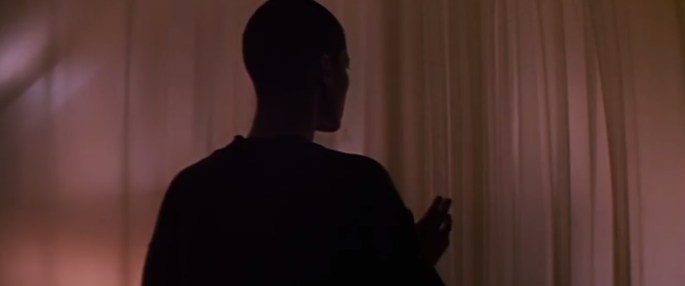
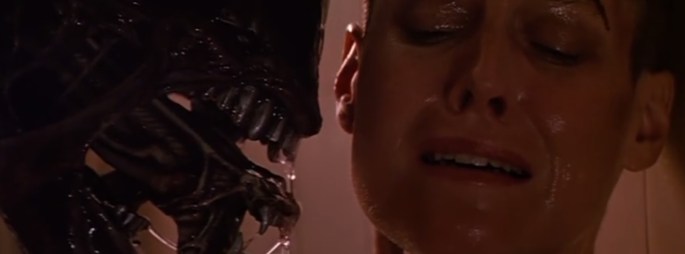
I was 12 years old when my father took me to see David Fincher’s Alien 3 on opening night, totally unaware of the behind the scenes fiasco that had occurred during production, and that’s probably why I’ve always enjoyed it more than most. I still think that, for all the documented issues that befell this film during the creative, shooting, and post stages, it’s pretty damn good. And really grim and bleak, which of course would become Fincher’s cinematic stock in trade – delivering subversive and sinister thrills (the corridor chases are fantastic), upending expectations (a bald Ripley!), and delivering a climactic deathblow (with chest-burster!) that should have ended the series. Sure, thanks to the amazing Alien Quadrilogy Blu/DVD set you’re now able to see various cuts of the film, including the much-loved but not Fincher-sanctioned “assembly edit” that everyone seems to point to as the best possible version. But I’ve always found the theatrical release cut to be a very effective piece of cinema, and after multiple viewings, I still sort of scratch my head as to what the big fuss was about with the final product. Sure, it’s not a masterpiece like Ridley Scott’s original and it’s not the full-on rousing action-adventure like the James Cameron sequel. But rather, this is a ruminative, somber, and cerebral entry in the franchise, which has employed new directors throughout the lifespan of the series, continuing with Jean-Pierre Jeunet’s derided-by-many-but-loved-by-me Alien: Resurrection (swimming Xenomorphs!) before Scott returned for his rather striking 2012 prequel Prometheus; the less said about this summer’s waste-of-time Alien: Covenant the better.

2

But Alien 3 has a distinct personality and tone all to itself, and I’ve always loved this rather poetic bit of dialogue that Ripley so thoughtfully states during a key moment in regards to her relationship to the Xenomorph: “You’ve been in my life so long, I can’t remember anything else.” There’s a severity to Alien 3; it’s not anything like the previous two pictures that had come before it, and I’m glad no attempt was ever made to replicate any of the beats from Alien or Aliens. Even after replacing director Vincent Ward and scrapping much of what was to be used from a narrative and visual standpoint, the idea that a FIRST TIME director was put in this PARTICULAR hot-seat and STILL delivered something of merit says a lot, and speaks to the start of Fincher’s quest through Hollywood. I know he doesn’t like the film; he doesn’t have to, and if I were him, I might feel the same way. But it’s good stuff. And those shocking final moments with Ripley taking her furnace bath are poignant and oh-so-Fincher-esque. I always loved that after all the violent insanity that went down during the story, that it was good old-fashioned WATER that serves as the ultimate defense. Alex Thomson’s gritty cinematography perfectly matched the dank, decrepit production design by Norman Reynolds and his team. Much maligned and certainly not perfect, Alien 3 is still better than its reputation, and will always carry a certain level of notoriety given that it’s Fincher’s directorial debut.

1

Mel Brook’s YOUNG FRANKENSTEIN

Young Frankenstein

1974. Directed by Mel Brooks.

youngfrankenstein_slice

Achieving perfection in a comedy is arguably one of the hardest goals in cinema.  Scripts tend to fall flat at certain points within the narrative and for the most part, the art is confined to the dialogue and physicality of the cast.  There a handful of films that break this trend, using extremely articulate production design and masterful camerawork to combine with the talents of the actors to produce a genuine classic.  Mel Brooks’ directorial masterpiece Young Frankenstein is a one of kind film and arguably one of the greatest comedies ever made.

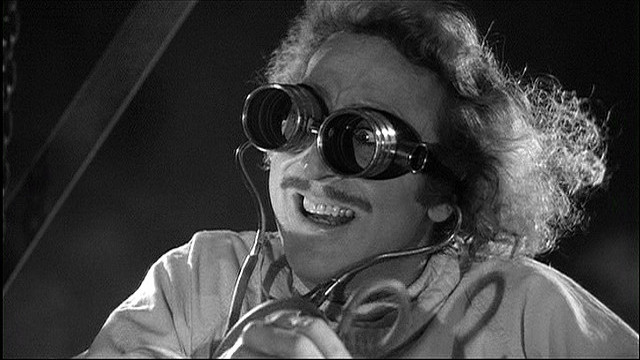
Screen legend Gene Wilder gives one of his best performances as Frederick Frankenstein, a New York physician desperate to separate himself from the notorious reputation of his grandfather.  Frederick inherits Victor Frankenstein’s castle after a relative passes away and elects to travel to Transylvania where he is soon caught up in rogue science procedures involving the creation of life with abnormally large endowments.  Brooks and Wilder collaborated on the script, seeking to both spoof the golden era of horror films while intimately praising their legacy.  Despite Brooks’ penchant for over the top, risqué material, Frankenstein stays carefully in bounds, a deliberate departure that only enhances the comedic impact.  No joke, no matter how lewd or crude ever feels forced, leaving the viewer with a sore stomach and a headful of quotable lines that remain hysterically potent to this day.

young-frankenstein-gene-wilder

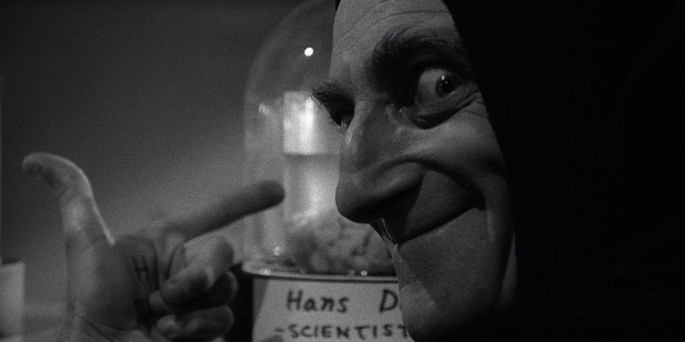
Wilder also stars as Frederick, capitalizing on the fantastical elements of his performance in Willy Wonka and the Chocolate Factory three years early and mixing it with a level of absurd obsession that almost steals the show.  He’s supported by the amazing Madeline Kahn as his uptight fiancé, Teri Garr as the tempting lab assistant, Cloris Leachman as the mysterious groundskeeper, and Marty Feldman as the fish-eyed henchman, Igor.  Peter Boyle’s turn as the Monster is outright hysterical, taking all of the legendary creature’s most important scenes from Frankenstein and The Bride of Frankenstein and making them not only his own, but crafting each of them so that they blend seamlessly into Brooks’ dark playground of sexual magic and hilarious pronunciations.  Gene Hackman has a cameo as a blind monk and while this was Hackman’s first foray into comedy, his scene with Boyle is one of the film’s many, many iconic sequences, outdone only by Wilder and Boyle’s madcap rendition of Putting on the Ritz.

Brooks’ stern dedication to authenticity is one of Young Frankenstein’s most important attributes.  The studio attempted to shoot in color multiple times, however Brooks remained firm in ensuring the film was shot in black and white.  Gerald Hirschfield’s cinematography is so good; the viewer often forgets they’re watching a film, as the images transport them directly into the insanity.  There are numerous visuals that pay tribute to the Universal monster films, however, Hirschfield’s unique command of depth and tight compositions keep the focus on the gags and on the small, but enriched world of Brooks’ design.  Brooks used actual set pieces, such as the lab, from James Whale’s Frankenstein films of the early 30’s and took other approaches with production that would go on to cement the film’s well-earned reputation as being not only outright hilarious, but a perfect example of art via comedy.

e-t0Dzpjx7wx

Available now on Netflix, Young Frankenstein is one of Brooks’ best made movies and an essential piece of viewing for anyone who enjoys comedy.  Gene Wilder tragically passed away almost one year ago today and it was in his honor that many theaters chose to show this unabashed classic posthumously.   Whether you’re a lifelong fan of Mel Brooks or discovering him for the first time, Young Frankenstein is the pinnacle of American comedy: A brilliantly composed satire, masterfully directed by one of the true rebels of comedic cinema.

Highly.  Highly Recommend.

t21781

Jonathan Glazer’s Sexy Beast


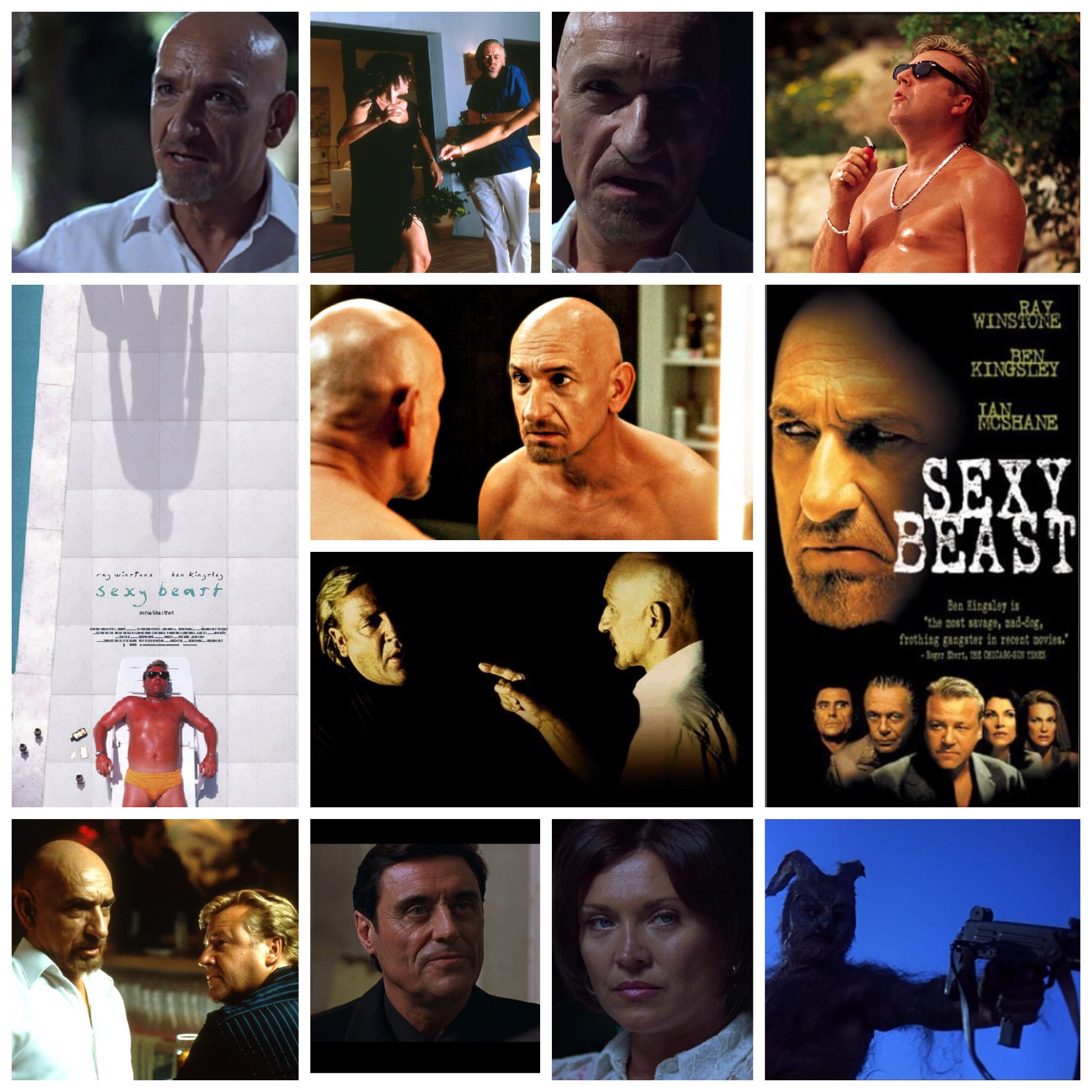
Whenever someone asks me to provide the showcase example of the actor’s process done as close to perfection as one can get, I direct them towards one earthquake of a performance: Ben Kingsley in Sexy Beast. It takes a considerable amount of work to fully realize a character, bring them to life, make them seem genuine, lifelike and idiosyncratic so as to win over the viewer and elicit the modernized ‘putting down the iPhone to engage with full attention’ reaction’, but Kingsley’s rabid London hoodlum Don Logan is just that creation, and then some. He’s not even the lead character either, yet royally steals the film, which earned him an oscar nomination. The film itself couldn’t be more brilliant either, cooked up via a stinging, gorgeously verbose script by Louis Mellos and David Scinto, glossy wit from director Jonathan Glazer and actors who go the extra mile to give a fairly arch story some tangible depth. Ray Winstone, reliably superb, is Gal Dove, a boisterous ex criminal who has retired to sunniest Spain with his sexy wife (Amanda Redman) and best friend (Cavan Kendall). Retirement is tricky for someone with Gal’s past though, and soon his past barges through the front door in the form of Kingsley’s Logan, a terrifying bald beast of a man that would give any sensible person cause to immediately run and hide in the nearest cupboard. From the moment he shows up, heralded by bad dreams that plague Gal and a literal boulder that cascades down the hill into his villa pool uninvited (hello metaphor), things go from worse to hellish. Logan isn’t the type of man to take no for an answer, and is a complete and total nightmare to deal with even before Gal tries to shut him down. Logan wants him for a job in London, organized by shark of a mob boss Teddy Bass (Ian McShane, creepy as all hell), but Gal has no interest leaving the sunny shores and just wants the nutter out of his house. Any time Kingsley is on screen you can feel the tension crackle in the air. He’s the unvarnished hyena to Winstone’s aloof, relaxed teddy bear, a force to be reckoned with and feared. His use of profanity lands like a backhander from Dwayne Johnson, his body language is erratic enough to induce seizures and that cobra gaze could melt adamantium. He’s the penultimate antagonist and raises the stakes to the stratosphere, berating every person in sight and maintaining a cold, detached veneer that’s more than slightly disconcerting. Not to mention the fucker talks to himself in the mirror, which alone is cause for worry. While the story takes place in our world, there’s an off kilter, demonically surreal undertone that derails genre conventions. The artfully dirty, near poetic screenplay, stark visions of some sort of evil Chernobyl rabbit thing, lurid editing transitions, whatever it is it’s hard to pin down or describe, but you feel miles from your comfort zone and ever so slightly removed from our solar system while watching this odd, scary, compelling and uniquely peculiar piece of work. 

-Nate Hill
DAVID FINCHER’S THE GIRL WITH THE DRAGON TATTOO — A REVIEW BY NICK CLEMENT

3

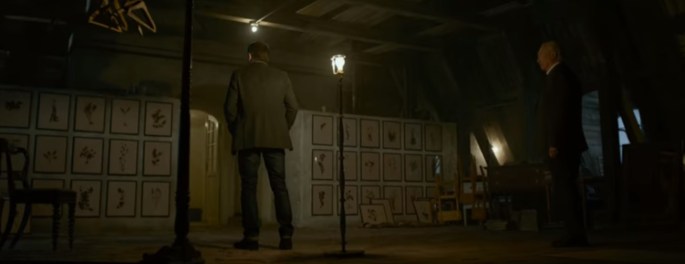
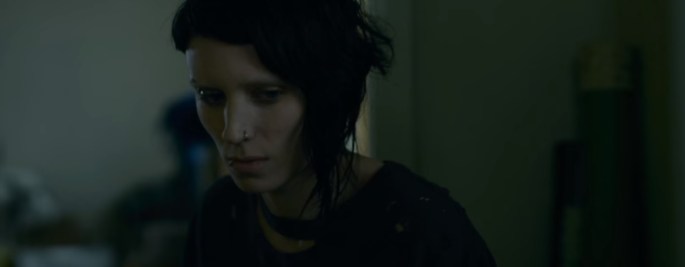
I expect more from David Fincher than remakes of airport novels, but even when he’s “slumming,” the end-result can be fascinating and visually striking. The Girl with the Dragon Tattoo had of course become a smash-hit in both book and film form in its home country of Sweden, but that meant nothing to the Hollywood bean-counters, who felt the need to adapt this exceptionally dark and nasty piece of work for the big screen. Fincher and big-money screenwriter Steven Zaillian (Schindler’s List, Moneyball, Searching for Bobby Fischer) were drafted, and a needless yet entertaining remake was born, one that softened some of the grimier elements of the original in favor of more digestible thematic ingredients and yet still explored the depths of human depravity. Which is, often times, what Fincher has enjoyed doing as a dark-arts craftsman. He is, of course, the filmmaker who has been famously quoted as saying that “movies should leave scars” and that he and the audience are nothing more than “perverts,” so I guess it doesn’t surprise me that he would be attracted to this inherently sadistic material. But this is a film where it felt like Fincher could have directed it from a remote location, with one hand tied behind his back.

2

The Girl with the Dragon Tattoo remains watchable, for me as a viewer, because of the exceedingly sophisticated aesthetic package and the juicy, full-bodied performances. The film looks and sounds like a feverish nightmare, with frosty cinematography and an unnerving musical score that could cut glass. Rooney Mara was fabulous in the leading role, physically disappearing into a character that has some seriously prickly emotional currents, and Daniel Craig wasn’t afraid of taking on a morally questionable character that rarely emerges as the victorious alpha male we’ve seen in narratives such as this and previous films he’s appeared in. The supporting cast is peppered with familiar faces and some rather creepy unknowns, and even if the material ultimately took Fincher nowhere new as a storyteller, there’s a bracing dynamism to his imagery that cannot be denied and often times has you coming back for seconds. The opening credits sequence is also completely stunning, a small tour de force in and of itself. But I need more from Fincher as an artist, and a sequel to WWZ is not what I’m interested in seeing. Give us another Fight Club. Break the mold again, and take us somewhere we’ve never been. That’s what I demand as a viewer.

1