John Irvin’s CHAMPIONS


Champions19848639_f.jpg
Credit: Bizzaro World

John Irvin’s Champions (1984)


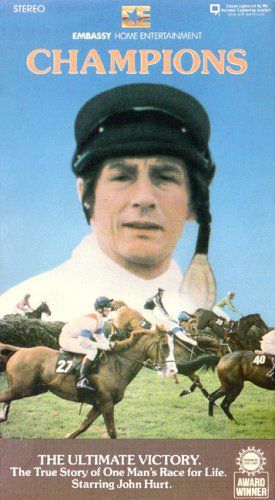
Champions isn’t your typical success story. It’s a rollercoaster ride of emotions, which the film delivers well.

It’s based on the true story of British jockey Bob Champion. The movie begins in the middle of Champion’s career, having already established himself as a successful jockey in the height of his career. While in the US on vacation, he starts to feel severe pains, and a trip to the doctor reveals that he has cancer. Champion endures agonizing treatment without a guarantee of success. He only has his ironclad will to help him survive and get back to doing what he loves the most – riding and racing.

Meanwhile, things aren’t looking great for his horse, Aldaniti either, after he sustained chronic leg injuries and was vetted not to race again. Aldaniti exhibits the same strong will as Champion, and with the help of his owners, trainer Josh Gifford, he recovers and gets back into racing shape.

The two, now sharing a common bond and the same level of courage, successfully enter and win The 1981 Grand National.

Champion was played by the magnificent Sir John Hurt (may he rest in peace), and his stellar performance earned him an Evening Standard British Film Award in 1985. To prepare for the role, he spent a lot of time with the real Bob Champion – The Guardian shared a photo of the two together in 1984.

Many of the supporting cast including Edward Woodward, Jan Francis, and Ben Johnson were all exceptional in the movie as well. The movie “grips the viewer from the start,” as described in a review by The Horse Studio.

The Grand National

The Grand National is an insanely tough race which makes their achievements that bit more memorable. The jump race totals roughly 7 kilometers and the fences are bigger than other steeplechase races, not to mention the open ditches. Due to its difficulty, there have been a number of horse fatalities either at the race or sometime later as a result of injuries sustained on the Aintree track. There have also been jockeys who have suffered serious injuries, too.

On the flipside though, that handicap is also what gives the race its grandeur. It takes serious skill to cross the finish line, and that in itself is already an achievement. This led to the increasing popularity of The Grand National, and the festival grew so much over the years, it has become one of the most high-profile horse racing events in the world. Approximately 600 million viewers tune in to watch the race annually.

Betting is also a major component of the occasion, with even casual spectators joining in. A post from The Conversation mentioned that 2 out of every 3 adults in the UK bet on the race, many of whom only do so when The Grand National takes place and not for any other race in the year.

The same happens in other countries too, which is why analysts have begun to offer their projections through up-to-the-minute race previews. World renowned trainer Paul Nicholls is a regular columnist for Grand National Daily Tipping on Betfair and his previews of the race have won many awards over the years for their meticulous nature, not to mention accurate forecasts. Nicholls’ columns are just an example of how digital content supports The Grand National and its lead-up to the big race. They also help garner the race a huge audience across the globe, and this is why it’s been in a league of its own since the 80s.

With all that established, it’s easy to understand how big the stakes were for our two warriors. In the year when Bob Champion and Aldaniti emerged as the victors, only 12 out of the 40 contenders finished the race. And to think that both of them had just overcome major health problems to win The Grand National was impressive, to say the least. Stories like that rarely play out in a positive manner. Champions is a wonderful film that can truly inspire you to persevere and achieve your dreams, no matter how big.

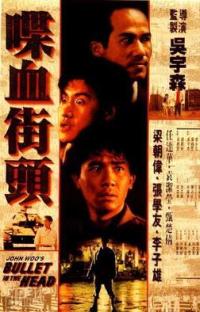
John Woo’s BULLET IN THE HEAD

Author’s Note:  This is a guest post by Damian K. Lahey, an award-winning filmmaker, and screenwriter who we had as a guest on our podcast last year.

BulletInTheHeadPosterThis is a hysterically violent and poetic film about loyalty and the bonds of friendship. John Woo went for the brass ring with this one. Many believe he came up short but I believe this is his greatest achievement.
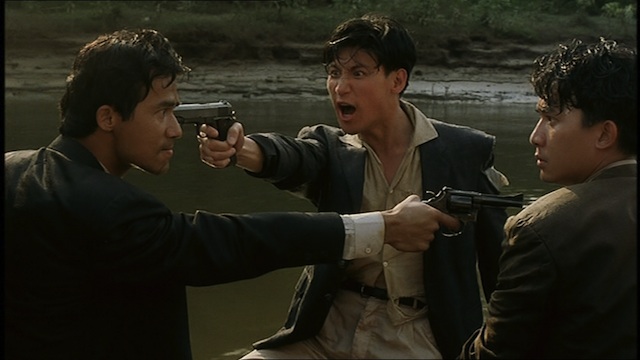
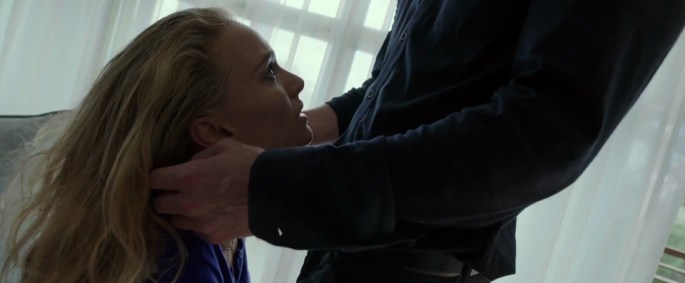
The chaos of war, the insanity, the opportunism and the complete betrayal of one’s moral instincts is splashed up on the screen in a bare naked emotionalism that is at times refreshing and startling. The stakes are high enough and the circumstances desperate enough that the fever pitch the actors maintain is tolerable if not entirely believable. Those familiar with his work know Woo is not afraid to get hammy with his melodrama. Here I found the dramatics at their most earned and poignant.

It could be argued that at times the maniacal violence underscores the level of artistic achievement Woo is going for here.

This film also makes the strong case that looking for a quick buck in war-torn countries is a bad idea.

Aside from being the director closest to mimicking Sam Peckinpah’s signature style (though he doesn’t collapse time the way Peckinpah did in his actions sequences) Woo can also be credited with giving Chinese action pictures an emotional gravitas they had not had before with his 1986 film, ‘A Better Tomorrow’ which was very influential both in Asian cinema and abroad. He would go on to whip out other action classics like ‘Hard Boiled’, ‘The Killer’ and ‘Face Off’. At the time, Woo felt ‘Bullet In The Head’ was the natural progression of his work. He spent a lot of his own money on this, too. Not until 2008 with ‘Red Cliff’ would he attempt something as epic if not as bold.

Originally some of the material for this film was going to be the basis for ‘A Better Tomorrow III’. But Woo and his partner Tsui Hark had a major falling out and Woo took his material and sculpted it into ‘Bullet In The Head’ while Hark rushed ahead with ‘A Better Tomorrow III’ to beat it at the Hong Kong box office.

Woo’s western influences for ‘Bullet In The Head’ were obviously Coppola’s ‘Apocalypse Now’ and Cimino’s ‘Deer Hunter’. I wouldn’t rank it as highly as those two films but Woo’s ambitions for this film are truly maddening. He puts his heart on the line like few do and the result is epic, daring and soaked in blood.

BulletInTheHead

Terrence Malick’s SONG TO SONG

It is getting more and more difficult to quantify Terrence Malick as a filmmaker, particularly with his abstract and introverted narratives with his last three features.  TO THE WONDER, KNIGHT OF CUPS, and now SONG TO SONG are a trilogy of films that are visual interpretations of fragmented memories that Malick holds within his psyche.  The picture (filmed back to back with his previous film KNIGHT OF CUPS) centers on three major characters woven within the music scene in Austin, Texas.  Rooney Mara is the wannabe musician, working her way up through the ranks of Michael Fassbender’s production company, and Ryan Gosling is a musician who falls deeply in love with Mara.  A tragic and tangled love story ensues, and we watch as these three people zigzag throughout each other’s lives.

Michael Fassbender Song to Song

The film is very much a natural progression of Malick’s previous two films.  It is as if you’re trekking through a reflection of someone’s memories.  We see prominent moments, with a slurry of small, yet important details that bridge together a kaleidoscope of a narrative.  Where KNIGHT OF CUPS was playfully sensual and very erotic, SONG TO SONG is brutally perverse at times, seeing and experiencing a very dark portrayal of sexuality.

The actors assembled are remarkable.  There are a few carryovers from KNIGHT OF CUPS, Cate Blanchett and Natalie Portman in particular, but the bulk of the cast is a new Malick ensemble.  Michael Fassbender is nasty as ever as the record producer who is without emotion.  He constantly pushes himself in transgressive ways.  He forces threesomes upon his acquired lovers, he experiments with drugs, and he undercuts anyone whose support he has gained.

Natalie Portman Song to Song

Ryan Gosling is very different than we’ve seen him in a film before.  He’s very sweet, he’s very romantic.  While he maintains his stoic cinematic image, he sheds the mystery and hamminess that we’ve become too used to.  His interactions with Rooney Mara are wonderfully beautiful.  He gives a very touching and soft performance, a clear contrast to the menace and dirtiness of Michael Fassbender.  Natalie Portman gives yet another completely vulnerable turn as a young woman distracted by Fassbender’s charm and monetary value, ultimately suffering from it.  Val Kilmer and Holly Hunter briefly show up.  Kilmer is a singer, who greatly plays off his Jim Morrison persona, and Holly Hunter is the mother of Natalie Portman’s tragic darling.

What separates this from the previous two people twirling features, is that for the first time Malick has used popular music, while still using classical numbers.  Del Shannon’s RUNAWAY was prominently featured in the trailer and in an important scene in the film.  Along with his use of popular music, the film also features cameos from the Red Hot Chili Peppers, Johnny Rotten,  a significant scene between Michael Fassbender and Iggy Pop, and a narrative affecting performance from Patti Smith who acts as a mentor to Rooney Mara.

Ryan Gosling Song to Song

The collaboration between Malick and cinematographer Emmanuel Lubezki is a pairing that is cinematic nirvana.  It’s a match that tends to not be talked about nearly as much as it should be.  The picture looks and feels organic, it doesn’t look like a movie, nor does it feel emulated; it is real life.

If you haven’t been with Malick on his last two pictures, it would be difficult to recommend this film to you.  Yet the film is powerfully filled with beautiful and transgressive emotions.  The film is an experience, it’s as unorthodox as one might think.  The film is challenging, it is an experience that is worthy of anyone’s attention.  If that album cover of Pink Floyd’s WISH YOU WERE HERE were a film, it would be SONG TO SONG.


Kurt Russell Week: Top Ten Performances

Leading up to one of the year’s most anticipated films Marvel’s Guardian’s of the Galaxy Vol. 2, which by and large promises another great performance from Kurt Russell, let’s take a look back at the ten best performances from one of cinema’s last standing movie stars.
Author’s note: There are so many performances of his to choose from and after spending more time than I probably should have narrowed down the list, here’s what I came up with.

10. Breakdown

In Jonathan Mostow’s 1997 thriller, Russell finds himself in a familiar Hitchcockian trope, the everyman put in an extraordinary situation. He’s not a cowboy or a guy trained in special forces, he is simply a regular man who’s wife gets snatched by a truck driver and is completely on his own finding her.

9. Bone Tomahawk

The gruesome horror western hybrid was anchored by Russell in a seminal turn as a lawman of the old west. Sporting a tamer version of his glorious facial hair that was the hallmark to his character in The Hateful Eight, here Russell plays the very stoic and calculated Sheriff Franklin Hunt who embarks with a small posse on a suicide mission into the heart of darkness. Sure, we’ve seen a character like this on screen before but what makes this performance so unique is that the familiar genre character is pushed beyond his limits with facing the primal humanoid tribe that has kidnapped a townsman’s wife.

8. The Deadly Tower

In Russell’s first major post-Disney role he took on the true story of Charles Whitman, who after killing his wife and mother buys a bounty of rifles and goes to the top of the tower at the University of Texas in Austin and begins to shoot random people. The film, but more importantly Russell’s performance, tackles the issue of mental illness decades before there was any emphasis put on treating it by our society.

7. The Hateful Eight

In Russell’s second collaboration with Quentin Tarantino, he is featured as a dopey, under-educated hangman with outlandish facial hair and a larger than life personality. In the film, Russell purposefully does the best John Wayne impression that we have ever seen on screen, and gives us a character who we’re not quite sure if he is supposed to be likable or not. Regardless of the nobility of John ‘The Hangman’ Ruth, Russell is an absolute joy to watch as he hams his way through Tarantino’s colorful dialogue and twisty narrative.

6. Escape from New York

The collaboration between filmmaker John Carpenter and Kurt Russell is one of the best actor/director pairings in cinema history. It ranks up there with John Ford and John Wayne, Martin Scorsese and Robert De Niro/Harvey Keitel, and any other pairing that you can think of. In 1981 the two of them made the greatest b movie ever with Escape from New York, a film that birthed one of our favorite antiheroes of all time, Snake Plissken. Kurt Russell smoothly navigates a post-apocalyptic New York City with his dry humor, gravely voice, and arctic camo pants. Truly a performance and character for the ages.

5. Tombstone

In the early 90s, there were two Wyatt Earp films in production. The smart money was on Lawrence Kasdan’s Wyatt Earp starring Kevin Costner, Gene Hackman, and Dennis Quaid in a life spanning epic that underperformed at the box office. Parallel to that film, Tombstone quietly finished production with Kurt Russell in an uncredited role taking directorial duties over for original director George P. Cosmatos. In this film, Russell gives one of his staple performances as the retired lawman forced to pick up his six-shooter and gold star to stop Powers Boothe and his evil gang of red-sashed cowboys.

4. Big Trouble in Little China

In 1986 Carpenter and Russell reunited for a film that was a critical and commercial bomb, but over time the picture has reached an unbelievable cult following that is constantly championed by its fans. Present day, the film is universally loved with an abundant amount of quotable dialogue. Here, Russell gives a charming yet intentionally clumsy performance as the “everyman” put in an unheard of situation. Donning an amazing mullet and driving his big rig, the Porkchop Express, Russell gives one of his most iconic performances in an already crowded filmography.

3. Dark Blue

In 2002 director Ron Shelton, writer James Elroy and screenwriter David Ayer brought to the screen Kurt Russell’s most undervalued performance as a corrupt and racist cop navigating through his professional and personal life as it self-destructs while the entire country is waiting for a verdict on the Rodney King beating. Russell’s turn as Detective Eldon Perry is hands-down one of his best performances as he embodies a character who is cool on the outside but is being torn apart on the inside over his morality and emotional pain. Russell has never been one to make a political statement in the press or through his films, but Dark Blue tackles an important aspect of our society well before it was brought to national attention.

2. The Thing

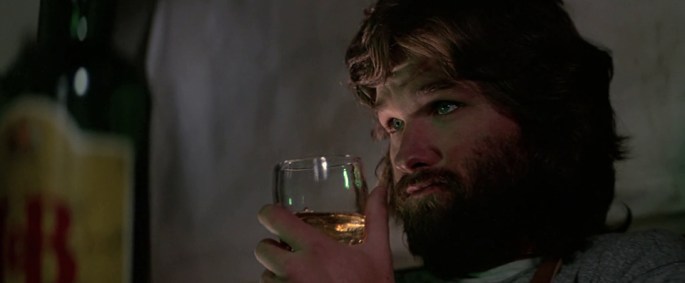
John Carpenter’s The Thing is one of the best science fiction films ever made. It’s isolation, iciness, and the impending doom of a score by Ennio Morricone lays an incredible foundation of terror. Russell is forced to deal with an extreme threat, a space monster that can shape-shift and remain unnoticed as it slowly picks off each member of the small research outpost in Antarctica. Russell adds a ton of dimension to the apathetic helicopter pilot who lives by himself up in his outpost drinking J&B and playing chess on his computer.

1. Death Proof

While Death Proof remains Quentin Tarantino’s “worst film” (and if this is your worst film, you’re doing pretty terrific as a filmmaker), there is still a lot to love and admire about it. Particularly Russell’s villainous turn as Stuntman Mike. In this film, Russell is as evil as it gets yet he plays on his career’s worth of cinematic charm and affability so we not only accept Stuntman Mike, but we can’t wait to see what he does next. This film marks Russell’s first pairing with Quentin Tarantino along with a career resurgence that reminded us that after all this time that Kurt Russell is a cinematic treasure.

EPISODE 40: DEATH PROOF and KILL BILL Vol. 2

episode 40

Join Tim and Frank as they discuss their respective favorite Quentin Tarantino films!  It’ll be a, spirited, discussion to say the least!

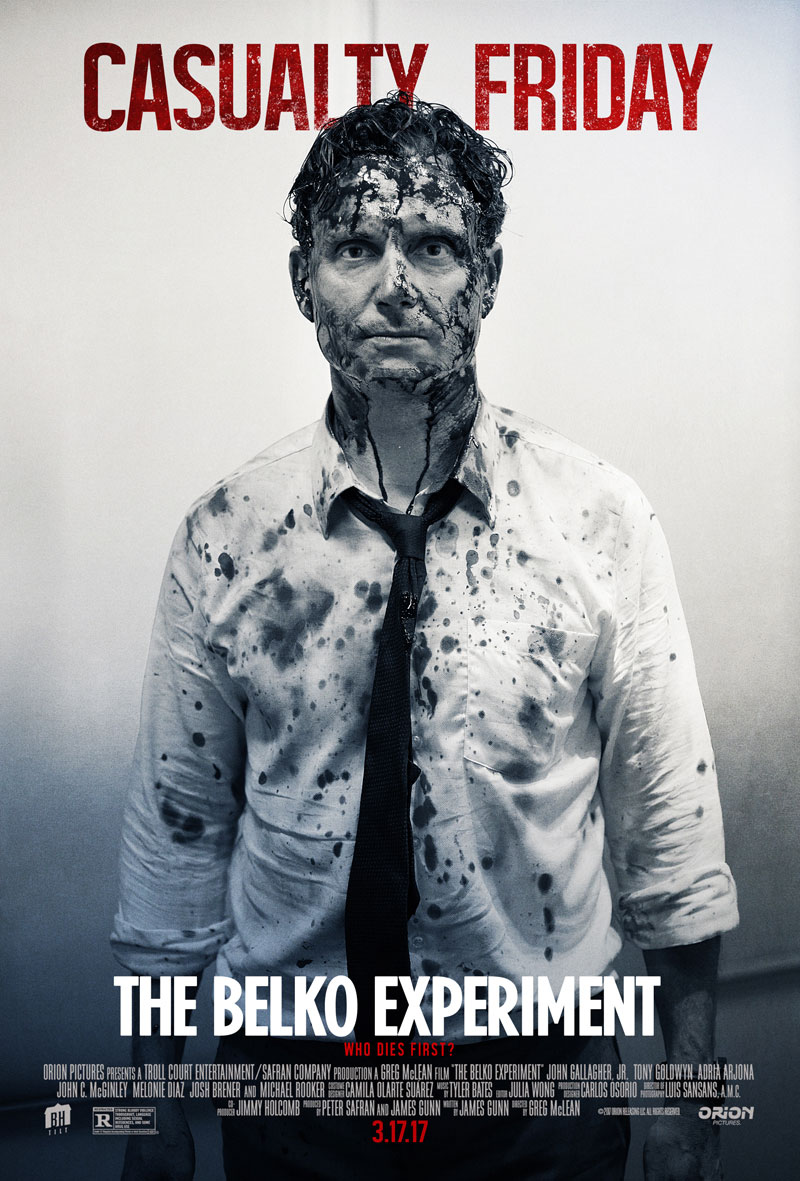
THE BELKO EXPERIMENT


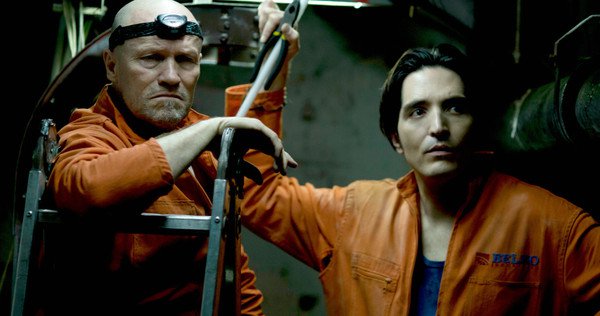
​I imagine THE BELKO EXPERIMENT was the first screenplay James Gunn pulled out of his drawer and dusted off to make, spending his cache from GUARDIANS on, that Disney absolutely forbid him to direct.  The end result is a fun, hard genre picture that is exactly what you’d expect it to be.  It’s a return to pre Marvelized Gunn.

The film is brutally violent, more so on the realistic side than the over-the-top Tarantino induced cinematic folly.  The casting is what makes this film work to the degree that it does.  It’s a mixture of Gunn’s troops, typecast players, and a very fun cameo at the end that anyone who’s familiar with Gunn or De Palma’s work will instantly rejoice in seeing.
The entire ensemble plays hard to their typecast, with the exception of Michael Rooker who has been recently re-branded by Gunn as the likeable salt of the earth guy.  Tony Goldwyn is the no bullshit asshole who plays on his good looks and affability, and it is fantastic seeing him back on the big screen.  He’s great in this.  John C. McGuinley plays his smarmy self in a throwback to his turn in PLATOON.  Sean Gunn is the dope.  John Gallagher, Jr is the everyman who grows a pair and rises to the extraordinary situation, and Brent Sexton is the guy who’s there to help until he isn’t.

The picture is a perplexing ride.  While it’s a hard genre staple, you’ll find yourself thinking a little too much about it, casting shades of grey where there really isn’t any intent of.  HIGH-RISE was a comparison that I found myself trying to make, but the film isn’t nearly as sophisticated, and that’s okay because it’s not trying to be.
The film’s excessive violence will certainly be cause for backlash, but while watching I kept thinking about the need for violence in entertainment.  Whether it’s gladiators, boxing, MMA or fist fights in hockey; it’s an aspect of our culture that refuses to go anywhere because it is a primal urge that is so badly desired.  Somebody somewhere has had to have made an “ultra-violence” quip somewhere talking about this film.
Bottom line is that THE BELKO EXPERIMENT is a film that uses violence in its most primitive form, but in a respectfully cinematic way that genuinely gets lost amongst the shoddy horror films that continuously show up on streaming platforms.  This film is exactly what it sets out to be, and doesn’t try to be anything that it isn’t.  It could have easily tried to be some LORD OF THE FLIES rehash, but it wasn’t and that is refreshing.  The film opens with the ultra nostalgic Orion Pictures logo, and if that excites you, this movie was made for you.

Episode 38: JACKMAN UNLEASHED

39

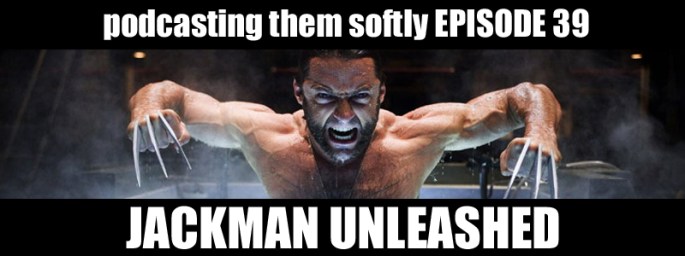
This is a big episode for a few reasons.  No, we didn’t get to talk to Hugh Jackman, but joining Frank is an array of PTS contributors: Joel Copling, Kyle Jonathan, and Ben Cahlamer.  We spend an hour discussing James Mangold’s LOGAN, Hugh Jackman’s seventeen year; seven-year span playing Wolverine, and an overall assessment of Hugh Jackman’s filmography!  We hope you enjoy!

Jackman Unleashed Week: Gavin Hood’s X-MEN ORIGINS: WOLVERINE

The idea behind this film was to franchise origin stories, including a Magneto film that turned into a soft reboot of the X-Men films with FIRST CLASS.  We were also supposed to get a solo Gambit film that is still currently in development limbo, and a Deadpool film with Ryan Reynolds that eventually took seven years to get off the ground.  What ended up happening was an unintentional Wolverine trilogy.

Related image

This film has some major flaws and is an imperfect picture.  The two sequels, THE WOLVERINE and LOGAN, remain superior films to this, yet Origins still remains my favorite Wolverine film warts and all.  The X-Men franchise has never taken continuity into consideration.  Actors were recast in important roles, most notably in this film Danny Huston as William Stryker and Liev Schreiber as Victor Creed/Sabertooth.  Timelines get blurred, especially after the hard franchise reboot of DAYS OF FUTURE PAST, and what ends up happening is reinvented origins for Wolverine.  Basically, the takeaway here is that the timeline continuity of the X-MEN films is almost as confusing as the TERMINATOR saga.

What saves this film for absolute failure are two important factors and why this remains my favorite Wolverine centered film.  Firstly, the opening credits sequence is phenomenal.   Spanning the course of every major American war from The Civil War to Vietnam we watch Jackman and Scheiber, brothers in arms, relentlessly fighting and almost single-handedly winning each war for America.  As the wars rage on, Logan observes and acknowledges Creed’s bloodlust and morality eroding.

Image result for liev schreiber victor creed

Secondly, which is encompassed in the opening credit sequence, the relationship between Logan and Creed.  They’re brothers, they share the same mutant powers.  Freakish regeneration and organic weapons from their hands.  What sets them apart is important.  Creed isn’t as strong as Logan when it comes to regeneration, he would not be able to survive the Adamantium process as Stryker tells him.  Most importantly, Creed lacks the morality that Logan attains.  Logan has empathy, Creed does not.

Violence is what both of them were born into, what their sole purpose became as they aged into warfare.  Creed’s bloodlust overtook him and what little compass of morality he had was disbanded, while Logan was more sensible – more in touch with humanity.  This comes full circle in the botched third act of the film that turns Wade Wilson into this super mutant Weapon X.  It is a silly ending that promises the future reconnection of Logan and Creed.  Regrettably, that never happened; which is a total and complete shame considering this year’s LOGAN was the perfect opportunity to do so.

Casting the dated CGI and third act aside, this film is still steeped with fertile X-Men lore.  We get a cool glimpse at Taylor Kitsh as Gambit, which leaves us wondering what could have been had he reprised his role in future films.  Taskforce X led by Stryker (who does Brian Cox’s original turn absolute justice) is a very fun aspect of the film yet is underutilized.  Aside from Logan and Creed, the team is made up with Reynolds as Wade Wilson (pre Deadpool), Daniel Henney as Agent Zero, Kevin Durand as Fred Dukes/Blob, Will.i.am as Wraith, and Dominic Monaghan as Bolt.

Image result for liev schreiber victor creed

This film could have been monumentally better, but if you take it for what it is, it remains an incredibly enjoyable picture.  Had the film focused more on Logan and Creed fighting their way through major wars, or made Taskforce X the focal point, this film would have been fantastic.  What we’re left with is an at times clunky vehicle with an easter egg packed third act that left most Wolverine diehards disappointed.  Regardless of keyboard warriors trolling of this film, it’s a lot of fun with colorful dialogue, heavy adult themes, and a once in a lifetime performance from Liev Scheiber as Victor Creed.  ORIGINS: WOLVERING rightfully earns its keep as the starter for one of the most beloved superhero trilogies in recent memory.