Bob Fosse’s ALL THAT JAZZ – A Review by Frank Mengarelli

ATJ2

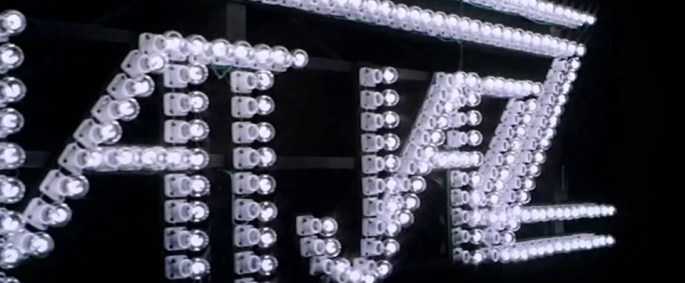
Every once in a great while a film gets made that you hold so sacred to yourself, that you feel it was made specifically for your eyes only. Bob Fosse’s ALL THAT JAZZ is a full out tour de force MASTERPIECE. For me, it’s the finest film ever made, I completely and utterly adore this film. Like any great piece of art, it can affect its audience in a multitude of ways, and mean different things to different people. Over my decade long obsession with the film, I’ve come to see and apply many lessons the film teaches. The most important lesson this film preaches is simply, the heavy price one pays for narcissism.

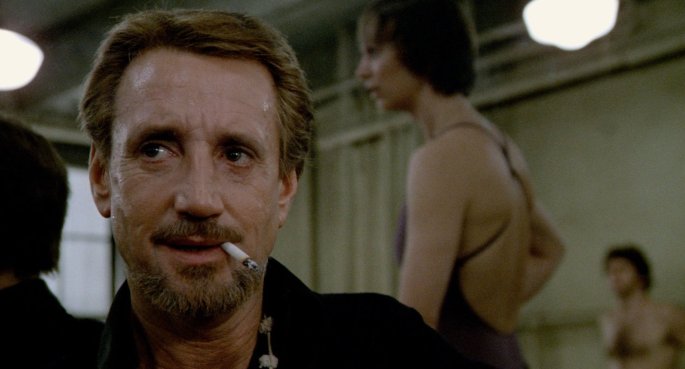
I cannot think of a film that displays more audacity and self-indulgence in such a showy and brilliant way. The casting of Roy Scheider is the most brilliant casting move in the history of cinema. Roy Scheider as Joe Gideon is Bob Fosse. From the facial hair, to the chain smoking, right down to the address on the bottle of his prescription pills in his bathroom. It’s all Fosse. The film follows Gideon navigating his professional life; editing his latest film THE COMEDIAN (LENNY) and reinventing a Broadway play (CHICAGO) under a tight deadline. All the while Gideon is co-raising his daughter (Erzsebet Foldi) with his muse and ex-wife (the remarkable Leland Palmer), and constantly cheating on his current muse and girlfriend (Ann Reinking, who was Fosse’s real life mistress and fierce champion of his legacy). Folded into all this, Gideon’s personal and professional life, he is having a sit down conversation that stretches the duration of the film with the painfully beautiful Angel of Death played by Jessica Lange.
ATJ

Gideon is the contemporary version of Sisyphus, constantly pushing that boulder up a hill, only for it to roll back down to the bottom again. He cannot, and will not compromise with anyone, even himself. He constantly pushes himself physically, mentally, and creatively. An entire dissertation could be written about this film, it is impossible to sum up the importance and greatness of this film in a few paragraphs. Everything in this film is phenomenally executed. All the performances in the film are landmark career highs, the production and costume design is perfect, and the editing in this film by Alan Heim showcases the best cut film ever made.

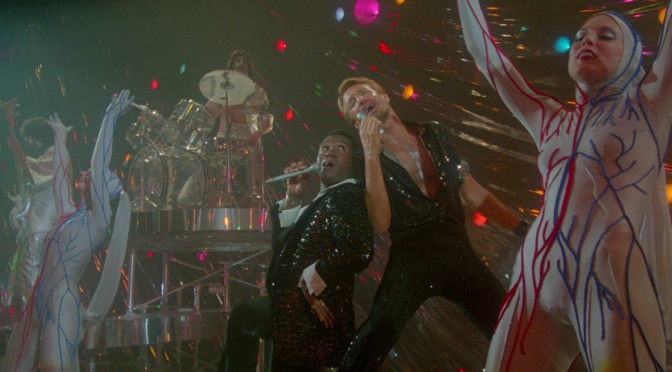
The entire film is perfect, but where my undying excitement and admiration for this film comes to a head is the final act, in particular the final scene. Gideon’s fever-dream send off to a musical performance of The Everly Brother’s BYE BYE LOVE sung by Ben Vereen and Roy Scheider in front of anyone of importance from Gideon’s life. This is cinema at its absolute finest.

There will never, ever be another Bob Fosse. There will certainly never be a film made that is so ingrained with its author like ALL THAT JAZZ. The film remains a cornerstone in not only the history of film, but in the history of art itself.
ALT3

PTS Presents WHEN PODCASTS COLLIDE with NEVER HEARD OF IT PODCASTERS

WHEN PODCASTS COLLIDE

NEVER HEARD OF ITNick and Frank were extremely lucky to be joined by Craig Moorhead (editor of Damian Lahey’s The Heroes of Arvine Place) and writer Shawn Harwell (Red Oaks, The Campaign, East Bound and Down), the co-hosts of the excellent podcast Never Heard Of It (www.neverheardpodcast.com), to discuss the weird, wild, and totally transgressive 2015 indie black comedy Buzzard, as well as a few other surprises. This is a film that can be rented through the disc-at-home service via Netflix and found on various streaming platforms like Amazon and YouTube and is well worth seeking out, as it combines black comedy, social critique, and unexpected graphic violence to create something tragically original. And if you’re a fan of the obscure movie, be sure and check out Craig and Shawn’s site, as Never Heard Of It routinely shines a spotlight on forgotten cinematic gems that deserve more recognition. We hope you enjoy this extremely entertaining discussion about Buzzard and movies in general!
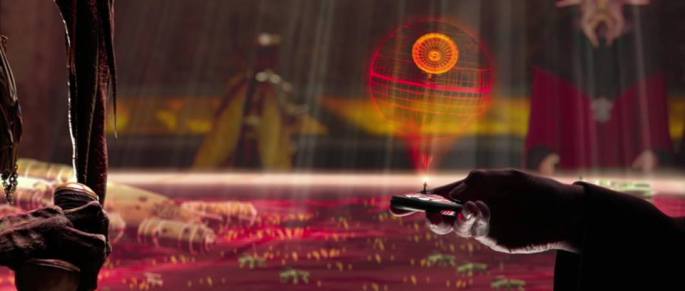
STAR WARS EPISODE II: ATTACK OF THE CLONES – A Review by Frank Mengarelli

AoTC 2

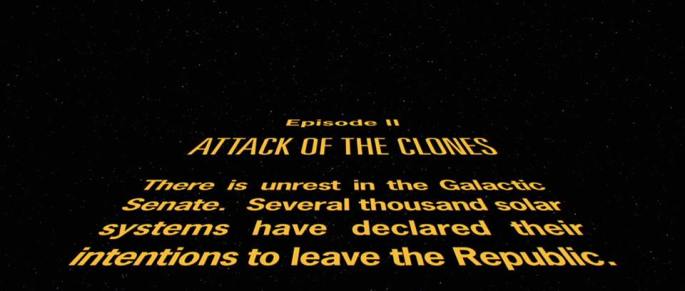
The galaxy has begun to divide amongst the Republic and the newly formed Separatist Movement, led by former Jedi Master who was trained by Yoda and mentored Qui Gon Jinn, Count Dooku (perfectly played by Christopher Lee). ATTACK OF THE CLONES follows in line with THE EMPIRE STRIKES BACK as the transgressive center of the trilogy.

Like the rest of the prequels, the film has its recurring base of people who champion to dismiss the film at all costs. Yes, some of their points are valid, but some of them are ridiculous just to be ridiculous. We know people hate the prequels, but that will never stop the ones who love the films from continuing to do so.

The darkness of Episode II is very subtle, and upon first glance, it’s hard to pick up on due to the films cinematic glossiness. The first being the forbidden love between Padme and Anakin Skywalker. We know how this is going to end, and watching the beginnings of their courtship is the equivalent to looking for a gas leak with a match.

AoTC 1

For me, the most fascinating aspect in which Lucas included in the film is Anakin’s motivation for accepting the dark tendencies he feels. Anakin’s mother gets kidnapped by Tusken Raiders, and he returns back to Tatooine to save her. He approaches the camp, and finds his Mother, who has been gone for months, beaten, bloodied, and chained up face first on a rack.

Anakin’s mother dies in his arms, and then he proceeds to kills every single Tusken Raider in the village. Including the women and children in a fury of anger. Yoda and Qui Gon call out to him, but that can’t stop him form seeking vengeance.

Anakin’s mother was being raped. Repeadly. There is not another sound explanation as to why she was still alive, or why she would be chained up face first against a rack. This was the spark that lit the dark fire inside of Anakin.

While, at times, the second act featuring the overly romantic love story between Padme and Anakin can drag it’s feet, it is all worth it for the final act that a lot of us have waited our entire lives to see: an all out Jedi battle.

AoTC 3

At least thirty Jedi, led by Yoda and Mace Windu, backed by the Republic’s new Clone Army descend upon the Separatist hub planet of Geonosis and wage war against the Geonosians and the Separatist’s droid army.

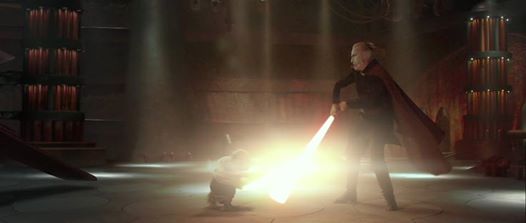
The film includes my favorite (yet widely unpopular) light saber duel featuring Yoda facing off against his former Padawan turned Sith Lord, Count Dooku. This is the moment when we are shown exactly why he is the head of the Jedi Council, General of the Republic’s Army, and how powerful he is with the Force.

ATTACK OF THE CLONES remains an imperfect film, aside from some clunky dialogue and misguided casting, I’ve come to wholeheartedly accept the film, and still marvel at George Lucas’ unbelievable command and vision behind the camera.

PTS Presents CINEMATOGRAPHER’S CORNER with LAWRENCE SHER

SHER POWERCAST

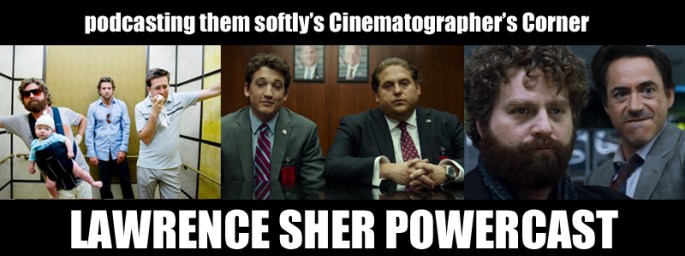
unnamed (1)Podcasting Them Softly is thrilled to present our latest addition to Cinematographer’s Corner — a chat with veteran director of photography Lawrence Sher! Lawrence is one of the premiere shooters of studio comedies, having collaborated with director Todd Phillips on The Hangover trilogy, the edgy road-trip comedy Due Date, and this summer’s awesome looking political action comedy War Dogs, which stars Jonah Hill and Miles Teller. Other cinematography credits include Dan in Real Life, I Love You, Man, The Dictator, Paul, indie favorite Kissing Jessica Stein, and Garden State and Wish I Was Here for filmmaker Zach Braff. And later this year in November, he’ll be making his directorial debut with the all-star comedy Bastards, which features Owen Wilson, JK Simmons, Glenn Close, Katie Aselton, Ving Rhames, Bill Irwin, Harry Shearer, and Ed Helms. Lawrence‘s work behind the camera is always stylish and smart, with a frequent use of the 2.35:1 aspect ratio in a genre that typically favors the more standard and less dynamic 1.85:1, while consistently demonstrating a fundamental understanding of how to properly maximize comedy in every shot while still paying attention to bold visual texture. This is an extremely fun discussion, and we hope you enjoy!
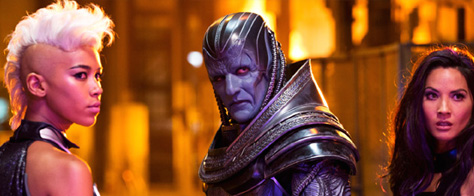
X-MEN: APOCALYPSE – A Review by Frank Mengarelli

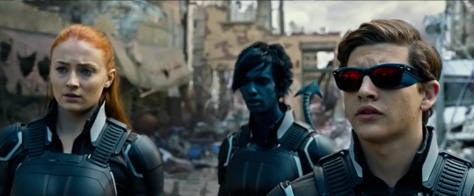
X-MEN APOCALYPSE completely forgoes and abandons the immense promise we were given with DAYS OF FUTURE PAST. The entire film is a bloated and dull calamity. It is misguided at every turn. The direction, poor writing, and uninspired performances lead us to yet another third X-Men film that unintentionally tries it’s hardest at undoing the smart entertainment from its former two films.

XA2.jpg

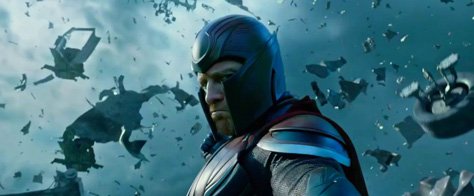
The setup, is yet another rehash of the idealist Professor X uniting with his former best friend and now arch nemesis, Magneto, to save humanity from yet another unstoppable force.  There is little to like about this film. Evan Peters as Quicksilver is the best part, but even his slow-motion scenes become a mundane walk-through. Hugh Jackman shows up in a forced and out of place cameo that leaves you wishing he wasn’t even in the film.

XA3.jpg

Unlike the previous two X-Men prequel films where each story capitalized on it’s time period, APOCALYPSE does absolutely nothing to remind us that this film takes place in the 80’s aside from Jean Grey having shoulder pads and a trio of them seeing RETURN OF THE JEDI.  There is not any character progression for an of the existing characters, or any of the new ones.  They just exist.XA

FIRST CLASS wasn’t a great film, but it built a solid foundation for the epic and remarkable DAYS OF FUTURE PAST that brilliantly and organically rebooted the entire X-Men franchise. This new film completely squanders the fresh start we were promised. I loved DAYS OF FUTURE PAST, but pertaining to X-MEN APOCALYPSE, there ain’t nothing good about this shit at all.

PTS Presents Editor’s Suite with DAVID KITTREDGE

Kittredge POWERCAST

unnamedPodcasting Them Softly is extremely excited to present a discussion with special guest David Kittredge, the editor of 54: The Director’s Cut, which can be streamed via Amazon and iTunes and is now available to own on Blu-ray. Back in 1997, Mark Christopher’s disco club odyssey was released in theaters in a compromised state, featuring edits and reshoots not ever planned by the filmmakers, and which changed the general shape and scope of the picture. Now, nearly 20 years later, the creative team was able to go back to the original footage which test screening audiences balked at, and have reformed the movie as the ultimate director’s cut. There are so few films that experience a life like this one, as it’s a movie that got hit hard by critics and ignored by theatrical audiences at the time of its release. But because of our constantly shifting social attitudes and the advent of the DVD cult classic, it’s now time for this vibrant, sexy, and totally entertaining film to see the light of day as fully intended. A graduate of NYU’s Tisch School of the Arts and creative director of LA-based Triple Fire Productions, David is also the writer/director of film festival favorite Pornography: A Thriller, and has worked on various short films in multiple capacities. We also riff for a bit on one of our mutually favorite filmmakers, the late, great Tony Scott, which is always an exciting way to spend an evening. We hope you enjoy this fascinating, truly inside-Hollywood discussion about a film that deserves to find a new following!

Quentin Tarantino’s THE HATEFUL EIGHT – A Review by Frank Mengarelli

Quentin Tarantino’s eighth film, THE HATEFUL EIGHT, came out at a hostile time in contemporary America. Tarantino joined marching protests against police violence; then the overly sensitive millennial online “journalists” chastised the film, and Tarantino, for painting shades of misogyny and racism. Tarantino was unfairly attacked by the extreme wings of each political party. Had no one paid attention to Tarantino films prior? Of course racism and misogyny plays a vital part in this film, because not only did those elements exist in the post-Civil War 1800’s, but also exist in reality.

Hateful Madsen

This film is a cataclysm of Tarantino’s self-indulgence. He constantly references his prior works (mainly RESERVOIR DOGS) while homaging Sergio Leone, Billy Wilder, and John Carpenter. His limited casting is formed of new Tarantino players: Kurt Russell, Walton Goggins, and Bruce Dern who Tarantino has worked with twice prior; as well as his seminal ensemble made up of Samuel L. Jackson, Zoe Bell, James Parks, Tim Roth, and Michael Madsen. Joining the Tarantino crew for the first time is Jennifer Jason Leigh, Demian Bichir, and Channing Tatum.

For as visionary as Robert Richardson’s cinematography is and Ennio Morricone’s Academy Award winning hypnotic score, the greatness of this film lies within one of Tarantino’s best screenplays and one of the best acting ensembles since GLENGARRY GLEN ROSS. Tarantino is one of the most talented actor’s directors who has ever sat behind the camera. He carefully crafts each character with an actor in mind, playing on their strengths and bringing out untapped potential from even the most veteran actor he’s working with. The cast is absolutely brilliant.

Hateful.jpg

Kurt Russell does the best John Wayne impression ever as the hard barked simpleton whose stupidity is even more outrageous than his facial hair. Russell is always a joy to watch, and Tarantino’s use of him are highlights in an already legendary career. Samuel L. Jackson is one of the best linguists to ever grace the screen. Tarantino’s dialogue has never sounded better than coming out of Jackson’s mouth (aside from Harvey Keitel). Tim Roth gives one of his best performances delivering an English shtick of Mr. Orange from RESERVOIR DOGS. Perhaps the most surprisingly great performance in this film is that of Michael Madsen playing a caricature of himself. I can’t say anything more about Jennifer Jason Leigh that hasn’t already been said. She should have won the Oscar.

Tarantino outdoes himself with THE HATEFUL EIGHT; the script is outrageously funny, giving these talented actors so much to play with. Only Quentin Tarantino would be able to craft an epic western built upon heightened paranoia that is three hours long, set inside a tiny cabin that is filled with eight larger than life characters, filmed with a wide angle lens that is constantly on the move. Tarantino has reached Terrence Malick status by making films for himself, not for an audience, or a demographic, and that’s what he has excelled since GRINDHOUSE. No one loves movies more than Quentin Tarantino. Oh, and about that overt racism in this film, did those people not stay until the end?

Hateful ending.jpg

Nicolas Winding Refn’s DRIVE – A Review by Frank Mengarelli

13230936_10101542850572367_538049122_o

DRIVE is a film that could have easily been made by Michael Mann in the height of his 80’s neo noir phase. It would have starred William Petersen, Robert Prosky, Tom Noonan, Dennis Farina – the seminal Mann players. Tangerine Dream would have composed a remarkable score. But it wasn’t, and that’s what makes this film an undeniable masterpiece. It was made by Nicolas Winding Refn, with Ryan Gosling transforming himself into a top tier actor, and Cliff Martinez providing a hypnotic score in the year 2011.

There are many aspects of the film to marvel over. The vibrant neon color scheme, the stoicism and deep introspective turn from Gosling, Refn’s tranquil direction. Career pivoting performances from Albert Brooks and Bryan Cranston. There is such a fertile quality to this film that sets the tone for this decade’s cinematic landscape.

DRIVE kiss

Gosling, who has been remarkable since DRIVE, is perfect in this film. His dialogue is minimal, as are his physical actions. His performance is commanded through his eyes. He’s always watching, always internal, he is slowly calculating everything.

The forbidden love between Gosling and Carey Mulligan is handled with such sensibility and grace by Refn. It is never overplayed, and at no point in the film does it become generic. The purity of their relationship splashes off the screen and leaves impending doom on the viewer.

Drive 3

Bryan Cranston and Albert Brooks are phenomenal in the film. Cranston completely shakes his comedic shtick as well as the trajectory of Walter White. He’s likable, due to his casting, but overall he’s smarmy and pathetic. Neck tattoos, chain smoking, hobbling around the frame looking for his next get rich quick deal.

Brooks, who was completely robbed of an Academy Award nomination, is a fascinating antagonist. Yes, he’s the monster, but he’s also genuine. He doesn’t want to do what he does, but his back is against the wall due to the unraveling of the plot. As the viewer, we like him, even when he’s pulling an eyeball from a guy’s head with a fork. Because the guy he’s doing it to had it coming.

Drive 2

Refn struck gold with this film, and by making a mainstream-ish film, he was able to gather the clout to make whatever he wanted in the future, no questions asked. ONLY GOD FORGIVES and the much anticipated NEON DEMON are complete validations. Refn has a progression that is akin to post TREE OF LIFE Malick; with each new film, he’s not only challenging the audience, but himself as an artist. DRIVE is one of the finest films of this decade, and it only grows more poignant and incredible as time passes.

James Foley’s AFTER DARK MY SWEET – A Review by Frank Mengarelli

Original Cinema Quad Poster - Movie Film Posters

James Foley is master of deception, blurred lines, and skeevy noir. AFTER DARK, MY SWEET is a taut and mischievous opus. Jason Patrick gives his finest performance as a mysterious and unstable drifter who crosses paths with Rachel Ward as the sexy femme fatale, and the always superb Bruce Dern who is as sleazy as ever with his mustache, floppy hair, and aviators/Hawaiian shirt/Members Only jacket combination that shows us all we need to know about his character without him having to say anything.

ADMS Patrick

The double, triple, and quadruple crosses that build in this film keep us unsure of how exactly this story of lies and desire will unfold; yet however the plot unravels, it is not going to end well for anyone. Jason Patrick is electrifying as a mentally and physically unstable former boxer who drifts into the wrong place at the wrong time, slowly being groomed by Ward who has a penchant for alcohol, cigarettes, and sexual control.

ADMS Dern

Bruce Dern is the smooth talking man with the devious plan, giving one of his finest performances. Dern has recently been reawakened with NEBRASKA and Quentin Tarantino’s use of him in THE HATEFUL EIGHT and DJANGO UNCHAINED. He remains one of the most underrated and undervalued actors of all time. He is able to blend together sleaziness, affability, and menace all at once in such a way that it is amazing to watch.

ADMS Ward

Foley’s strategically slow camera pans, David Brisbin’s production design, costumes by Hope Hanafin – all these elements are masterclass and create a world of dilapidation and deception. The environment of this film is carefully crafted, and the details of the visuals are so grabbing that you can smell the cigarette smoke and taste the cheap wine. AFTER DARK, MY SWEET is one of those films that anchors itself as not only a staple transition from the 1980’s into the 90’s, but also a one of the best erotic noirs that has ever been made.

DENIS VILLENEUVE’S SICARIO – A Review by Frank Mengarelli

“You should move to a small town, somewhere the rule of law still exists. You will not survive here. You are not a wolf, and this is a land of wolves now.”

SICARIO 1

SICARIO is a blunt unveiling of the dark side of America’s foreign policy.  Set on the Mexican border, the film follows a shadow team made up of different agencies shaking down drug cartels, all the while the team plays kingmaker by rearranging power.  The plot and political commentary is dense.  Not once does the film come across as heavy handed, nor does it preach bias.  In turn, it makes the film that much more powerful and brutally honest.

The brilliant cinematic team of filmmaker Denis Villeneuve and cinematographer Roger Deakins (who are reteaming for the untitled BLADE RUNNER sequel) are a force to be reckoned with.  Villeneuve keeps a taut and thrilling pace, while Deakins composes remarkable visuals frame by frame.  Taylor Sheridan’s icy script, Johann Johannsson’s score, and Joe Walker’s editing complement the film in a perfect way, keeping the tight narrative intact while balancing such heavy subject matter.

Sicario 2

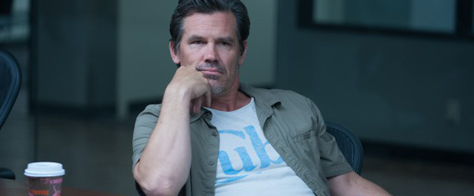
The cast is led by the idealistic Emily Blunt, supported by the realist CIA man Josh Brolin, and the lethal assassin Benicio Del Toro who all give career high performances and play off of one another in a way that meshes the film together wonderfully.  Blunt is amazing.  She’s more than a badass woman with a gun; she’s the heart of the film.  She’s out for blood after members of her team get killed on a cartel raid in the opening scene, and she’s lured in by the affable Brolin, promising to cure her bloodlust if she comes along on his secret mission.  Most importantly, the reality of what the team is doing slowly starts to grind at her, and she quickly begins to realize that what they are doing is not the “right” thing to do.

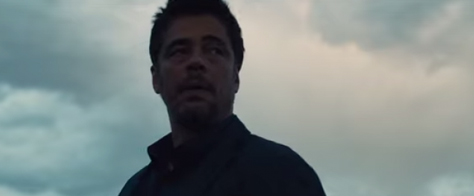
Benicio Del Toro is the standout in an already masterful film.  His stoicism is this mysterious fuse that is slowly burning.  The entire film, we know nothing about him, until the third act where we learn everything in one short and impactful scene.  The scene is so jaw dropping, that even upon rewatching the film; you can’t believe it is actually happening.

Sicario 3

There are few Hollywood films that are as bold as SICARIO.  The thematic elements are heavy, as is the brutal violence, but what the film is saying is what makes it so powerful.  Sometimes America needs to bring down the iron fist to be the overall good guy.  Regardless of morality or holding ourselves to a higher standard, the world needs a shadow team like the one in SICARIO to help restore and counter the evil powers that be in this world.