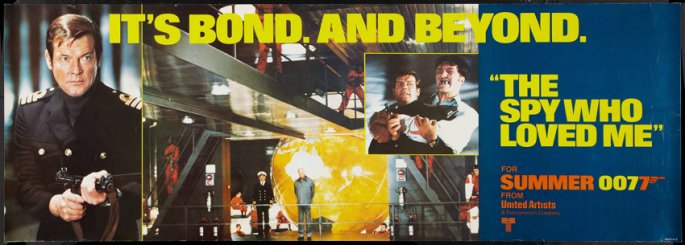
Tom and Frank out back with PTS’ first podcast of 2019. We discuss Lewis Gilbert’s second to last entry into the Bond franchise, THE SPY WHO LOVED ME. We speak about Roger Moore’s continuation of Bond, the wonderful Barbara Bach, and Stanley Kubrick’s involvement.
Author: Frank Mengarelli
Best of 2018: Peter Farrelly’s GREEN BOOK

Had 2018’s GREEN BOOK been made in the late 80s or early 90s by Martin Scorsese or Sydney Pollack with Robert De Niro and Denzel Washington in the lead roles, it would have been hailed a seminal classic of that era it would be one of those films that revolved around in conversation when discussing DRIVING MISS DAISY, PHILADELPHIA, or CITY SLICKERS; films that have a dramatic narrative that encompasses topical and social issues, but also have an undercurrent of humor, electrifying chemistry between the leads, and made with a mature and classical aesthetic that does not come across as heavy-handed, agenda driven or overly preachy. Yet, in 2018 the film and its filmmakers find themselves embroiled in controversy as the film leaps to the top of the pack as the awards season intensifies.
The picture is a charming and good-hearted road film between Viggo Mortensen as Tony Lip, a rough-edged Italian from an inner-city gulch and Mahershala Ali as Dr. Shirley, an over-educated worldly maestro who embark on a musical tour that takes them well below the Mason Dixon Line in 1962. The film has many laugh out loud moments between the micro worldview of Mortensen and the macro view of Ali. GREEN BOOK has an inverted narrative of most current films about racism and sexuality as the primary focus of the plot is the friendship and connection that builds between the two leads, as race and sexuality are dealt with in a reserved and respectful manner.

Mortensen is wonderful as he channels the archetypal blue-collar guy with a high school education at best. He gained weight for the role, chain smokes cigarettes, speaks in double negatives, and folds an entire pizza in half and eats it. Ali is just as good with his stoic and physical presence, giving a calculated reserved performance that is the definition of the economy of movement with his absolute disdain that turns into love for Mortensen.
Based upon a true story of happenstance meeting turned into a lifelong friendship, the film does not aim to cure racism nor does it intend that white people can solve the problem with a snap of their fingers, the film is about personal growth and enlightenment. Had this film been made in the late 60s or 70s by Hal Ashby, Sydney Lumet or Mike Nichols starring James Caan and Sydney Poitier GREEN BOOK would be a film that revolves in the same conversations as NETWORK, THE LANDLORD, or THE GRADUATE.

Sergio Corbucci’s DJANGO
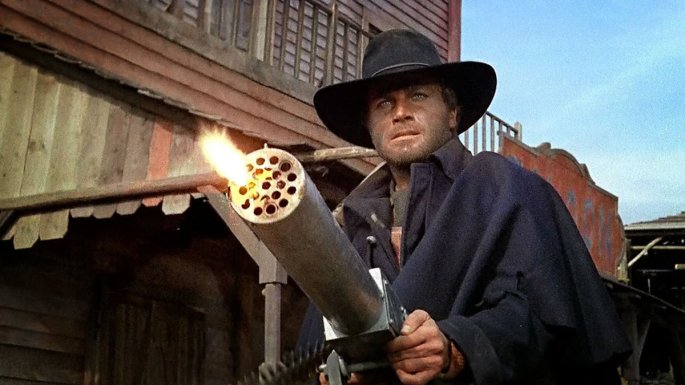
There is an inherent perversion that comes with Sergio Corbucci’s 1966 masterpiece, DJANGO, that is incredibly alluring. The coffin dragging masochistic antihero saves a women in distress, only to bring her to a town in deep dilapidation that is the battleground between Mexican federales and a group of red hooded Christian zealots. The film has an innate ability to transcend the norms of cinematic violence, sexual liberation, and religious faux pas to create a truly unique film that not only acts as a genre setter, but a template for the “hero” to come up victorious yet still accrue the vengeance of his previous transgressions.
Franco Nero’s performance as the mysterious stranger is a revelation. He’s part Paul Newman with his steely blue eyes and movie star looks and part Clint Eastwood with his ominous presence that is a visual embodiment of the shadow of an axe that looms. He gives a command performance that is filled with a confidence that can dwarf mostly any performance it is stacked up against. Nero’s economy of movement is mesmerizing as he fills the frame with his stoically soft and strategic physicality.
The film intentionally leaves little to the imagination. The violence is projected right on screen, forcing the audience to be culprits in the tale of bloody revenge and sacrifice. The shock value of the film, while tame by current standards remain a stark reality of what pushing cinematic boundaries used to be. The film is not self righteous or heavy handed in its messaging. It is solely an entertaining film that operates in extreme shades of grey that tiers off its villains, uniting its world to overcome the overarching villain of oppression coddled by greed.
Luis Bacalov’s score and title theme, which has populated many Tarantino films and used as the title theme for DJANGO UNCHAINED, is as big a star of the picture as Nero and Corbucci’s visceral brutality towards its characters. The main theme is triumphant and empowering, yet the trials Django has to endure are a combination of wrong place at the wrong time and acting as swift and appropriate justice to those who are on the opposite side of his post Civil War machine gun.
The narrative capsizes in the final act by stripping Django of his ability and forces not only the hero, but the audience as well, into a tense and ultimately rewarding showdown in a graveyard. The film’s ultraviolence and commentary is not for everyone, but one of the purposes of its existence is to invert and pervert the heroes journey. While the viewer is unaware of Django’s previous encounters and misgivings; what is certain is that he’s a force to be reckon with and one of the most dangerous and satisfying lone wolves to be on screen.
John Huston’s THE MAN WHO WOULD BE KING

John Huston’s THE MAN WHO WOULD BE KING is a cinematic feat. It’s a remarkable fable, tracking two adventures who trek deep into a dangerous land with the design of ruling a region where white men have not set foot since Alexander the Great. The film encompasses engrossing performances, a tremendous score, a taut script, and awe inspiring photography all engineered and guided by Huston, one of cinemas filmmaking titans.
Sean Connery and Michael Caine headline the film as a pair of former British soldiers whose exploratory ambitions are offset by their primal brutality yet softened by their chemistry and wry offbeat humor. Christopher Plummer is the narrative anchor of the film, he acts as the narrator as well as the audience to Caine retelling his adventure with Connery. The two of them are a remarkable pair in the film, they bring their pre-existing screen personas and mesh them together and fuse a relationship that grows and blossoms throughout the film, until they reach their breaking point and bid one another an emotional farewell.

The picture is more than just an exhilarating adventure, it morphs into a cautionary tale of demigods and false prophets; the dark desire of man to transcend into a God. Caine and Connery propel the film forward, their performances are as raw as they are touching. Yet what truly makes this film remarkable is that it exists in a period of film where epics were truly epic. It’s shot on tangible locations, it is populated with indigenous people playing indigenous people; an air of authenticity is created and immediately accepted by the audience.
The craftsmanship of the film cannot be understated. The practicality is wonderful, from the sets to the costumes and beyond. The locations are as exotic as they are ominous; spanning sandy dunes and tribal villages to the vast snowy mountains, to their endgame – a civilization untouched by the outside world for centuries, a beautifully dilapidated holy site filled with treasure and dangerous mystique.

While the story is fun and entertaining, it cascades into a heartbreaking and bittersweet ending as the rise and fall of the pair’s conquest quickly erodes into a breathtaking climax where ramifications of greed and lust for power comes full circle and the characters are dealt with not just appropriately but poetically as well. THE MAN WHO WOULD BE KING is that underappreciated Hollywood epic that somehow found a way during the counterculture and rage against the machine films of the 70s.
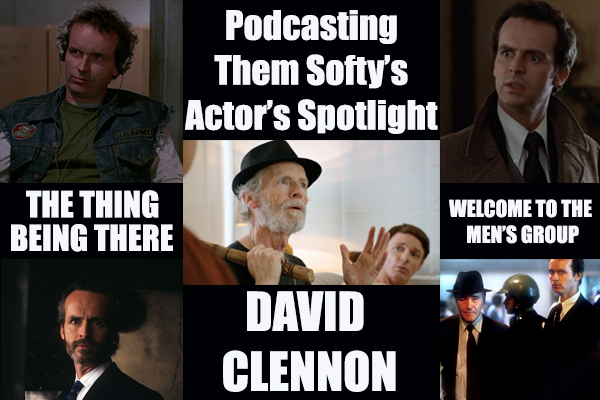
Actor’s Spotlight with DAVID CLENNON

We have a very special guest, someone who needs no introduction. Our latest addition to the Actor’s Spotlight series is Emmy Award-winning actor, David Clennon. Mr. Clennon has a career spanning decades, working with such auteurs as Bob Fosse, Bob Rafelson, Phillip Kaufman, Stephen Gaghan, David Fincher, Paul Schrader, and John Sayles. He’s collaborated twice with Clint Eastwood, three times with Hal Ashby, and four times with Costa-Gavras. David memorably starred as Palmer in John Carpenter’s horror classic THE THING. He is also no stranger to television, with many featured roles in HOUSE OF CARDS, E.R., THE WEST WING, THIRTYSOMETHING, HBO’s seminal AIDS drama …AND THE BAND PLAYED ON, and an Emmy winning turn on HBO’s DREAM ON. Mr. Clennon’s most recent projects are the CBS drama series CODE BLACK, joining the new season as Colonel Martin Willis, as well as Joseph Culp’s new film, WELCOME TO THE MEN’S GROUP where he stars along with Stephen Tobolowski and Timothy Bottoms. The film is now On Demand.
Catch WELCOME TO THE MEN’S GROUP from your favorite streaming provider below:
Halloween Double Bill: 1978 and 2018

Frank and Paul are back, this time to discuss John Carpenter’s 1978 masterpiece, Halloween and how it stacks up to David Gordon Green’s direct sequel. They also discuss the Rob Zombie remake as well as the legacy of the franchise and how it has endured over time.
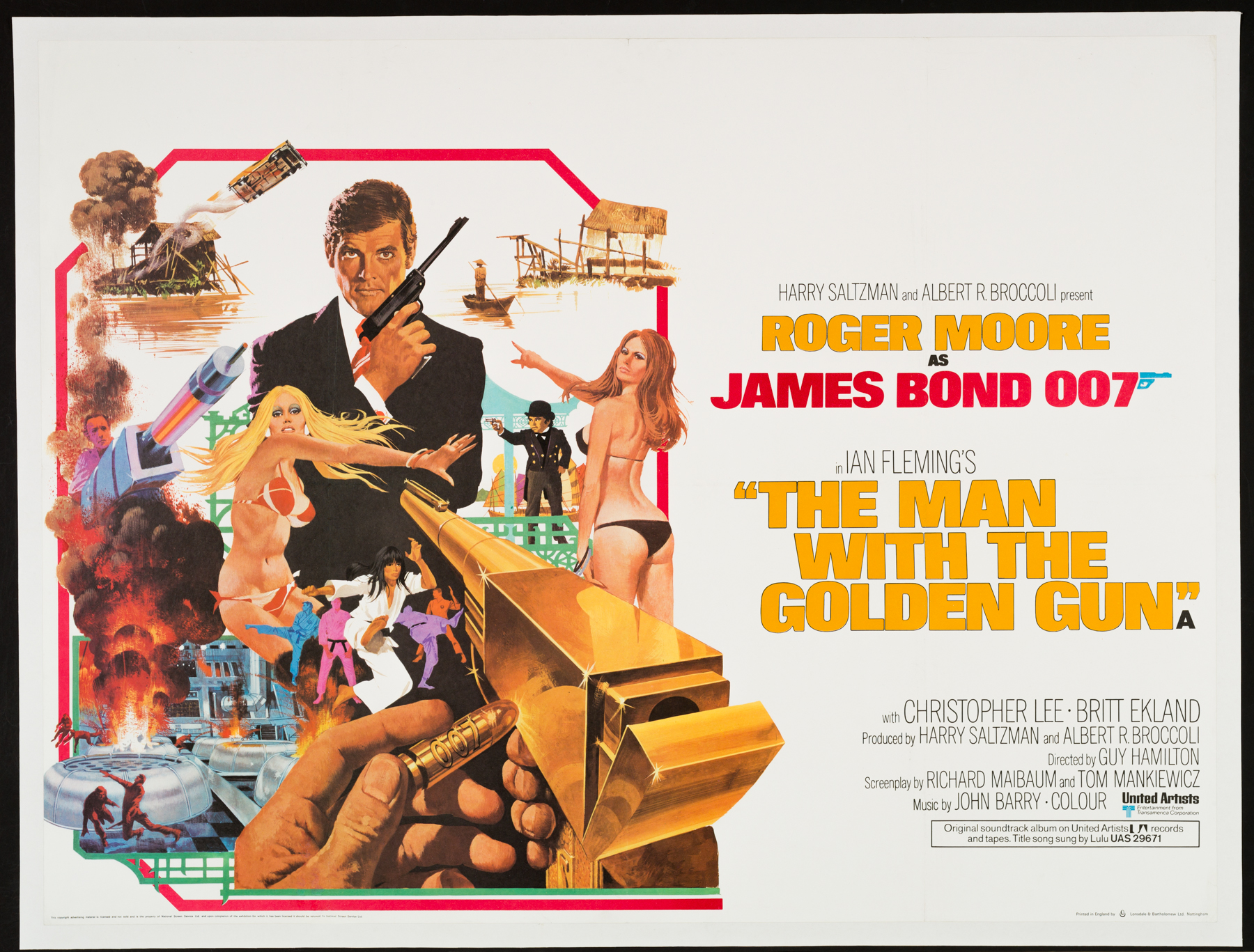
For Your Ears Only: Guy Hamilton’s THE MAN WITH THE GOLDEN GUN

Tom and Frank are honored to be joined with filmmaker Wayne Kramer (THE COOLER, RUNNING SCARED, PAWNSHOP CHRONICLES) to discuss Guy Hamilton’s final directorial effort, The Man with the Golden Gun.
Bradley Cooper’s A STAR IS BORN
For a film in its fourth incarnation, Bradley Cooper’s A Star is Born is an endearing and remarkable film that contains every familiar trope, cliché, and prepackaged plot narrative possible. It embraces exactly what it is, it is self-aware with both subtle and tongue and cheek nods to previous versions as well as to the rich ensemble of actors who bring their own homages to their own roles. The film is a triumphant spectacle; it is visually stunning by being shot and crafted with command authority and passion. The musical scenes, which were filmed with live singing, only add to the powerhouse of the film that ushers in urgency to its melodramatic plot. Bradley Cooper’s directorial debut is a beautiful showboat of cinematic achievement.

The film is stocked with a wonderful ensemble who richly detail their respective characters. Bradley Cooper is the best he has ever been as the washed-up country auteur (not stadium popstar) who is hell-bent on destroying his life with pills and alcohol, as he is rapidly approaching the twilight of his career. He is in limbo between burning out and fading away. Lady Gaga is a marvel in her most mature screen performance to date. While watching her performance, it is insane to think that there hasn’t been a filmmaker prior to Cooper that has tapped into her raw talent and beauty on screen. Sure, her metamorphosis as a live performer is one thing, but her screen presence is something completely different; it is a sight to behold.
Aside from the two showstopping lead performances, Sam Elliot and Andrew Dice Clay are respective counterparts to Cooper and Gaga. Elliot is the older brother who is Cooper’s handler, and the Diceman is Gaga’s father. Both bring their own on-screen gravitas to the picture, Elliot commands the screen in sobering moments as Cooper’s firm-handed father figure while Andrew Dice Clay is the affable and warmly supportive father of Gaga, offering quite a few appropriately humorous moments to the film. Elliot gives one of the finest and most vulnerable performances of his career, while Clay is consistently becoming a formidable supporting player since his scene-stealing performance in Woody Allen’s Blue Jasmine.

For all the conventionality to the film, it is rather perplexing with its unorthodox self-awareness of the casting of Andrew Dice Clay and Dave Chappelle (who gives a very sweet and touching performance). The musical performances feel genuine. They are photographed with a sense of urgency and emotion by cinematographer Matthew Libatigue (who also shot Sony’s Venom which bested A Star is Born opening weekend at the box office).
Bradley Cooper’s directorial debut is so grandiose, that he has poised himself to be the next Warren Beatty, Clint Eastwood, Mel Gibson or Robert Redford, having the ability to direct himself while creating a magnificent film that will remain relevant for decades to come. When the awards season dust settles, there more than likely will not be a more nominated film, and could very well sweep all the major awards. Regardless of Oscar buzz and cultural momentum, A Star is Born will stand the test of cinematic time and be remembered as a film that is filled with boundless love and passion.

Brian De Palma’s CARLITO’S WAY

Join Frank and special guest host, Paul Sparrow-Clarke, as they talk in depth about one of Brian De Palma’s most underappreciated films, Carlito’s Way. Paul returned to PTS to discuss Carlito’s Way after joining Frank and Tom during their From Russia with Love podcast in their For Your Ears Only James Bond podcast series. We hope you enjoy the show!
Jan Egleson’s A Shock to the System
Michael Caine is one of cinema’s most renown and prolific actors, and in the 1990 undercard picture, A Shock to the System, Caine gives one of his finest performances in a film that is a dark satire of 80s capitalism and climbing the corporate ladder, but also acts as a companion piece to Joe Dante’s The Burbs as well as a precursor to American Psycho.

Caine plays Graham Marshall, a man whose oversaturation of the American Dream hits its breaking point when he gets passed over for a promotion that he was being groomed for. Caine then slowly begins to unravel and begins to commit a series of outlandish murders, seeking out an exact measure of revenge while at the same time finding his center with a self-indulgent escapade of faux mysticism.
The film is an excellent satire that strikes the balance of the political environment in today’s business world, while also acting as a time capsule piece of America’s cultural transition from the 80s into the 90s. The film’s dialogue is airtight, yielding wonderful witty exchanges between hard stereotypical characters where they operate on a level of honesty that would be fundamentally unacceptable in everyday conversation.

Cinematographer Paul Goldsmith constructs a slick looking film that is richly detailed with sweeping cinematic camera movements that blends with handheld shots, that perfectly flows with Caine’s voice-over narration. There are quite a few moments in the film that are stunning to watch and had the film found its rightful audience, would have become iconic shots from an already overwhelming Caine filmography.
Director Jan Egleson composes an excellent film with rich production design, costumes, and a rather excellent practical explosion. He also assembles a marvelous cast around Caine including Swoosie Kurtz as Caine’s relentless wife, Peter Riegert as Caine’s ill-fated new boss, Elizabeth McGovern as his secretary turned love interest, and Will Patton as a Colombo esque detective suspicious of Caine. Not enough can be said about Caine’s performance. He is charming, wickedly funny, and menacing all at once. Think of his character as an amalgam of his characters from Mona Lisa and Dirty Rotten Scoundrels. Yes, Caine is that good in the film.

While Patrick Bateman in American Psycho found a kinship with bloodlust, rage, and materialistic vanity; so does Caine in this film, and while his character isn’t propelled by 80s pop culture, yet another colorfully detailed layer of the film is Caine’s affinity for the wizard Merlin and making his problems disappear. A Shock to the System is now available from the Shout Factory, from their boutique label, Shout Select.