Scott Cooper’s Out Of The Furnace 


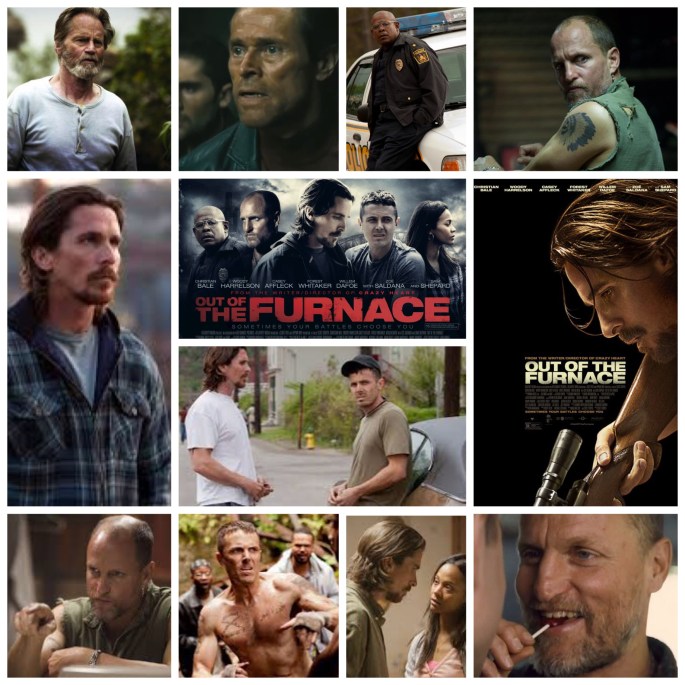
While not quite in the pantheon of powerhouse that the filmmakers intended it to be, Scott Cooper’s Out Of The Furnace is still a bleak, devastating picture. This is a film about endings, and not resolute, satisfactory ones either. Set in a borderline derelict mining town somewhere in the rust belt, industry has come to a grinding halt, giving way to the inevitable rise of rural crime, spreading like a cancer across land that once flourished and prospered. Every character in the film meets their bitter end somehow, and what’s fascinating is that earlier in life they all could have been more whole, and come from some other, brighter genre film, but the lives they’ve led set them on the same course as their county, and one by one we see them reach the last bend in the road, and the light in their life unceremoniously flicker out, leaving a cold shell. If I’m making this sound depressing, I’m doing my job well. This is a soul crushing film, with no light at either end of the tunnel and all glimmers of hope already extinguished before the opening titles even show up, so just make sure you have Finding Nemo or Wallace & Gromit queued up next in line if you give it a go. Opening with a prologue that leaves a bad taste in your mouth, you know right off the bat what you’re in for, as we’re introduced to Woody Harrelson’s Harlan Groat, an absolute monster who runs everything from underground fight clubs to an intricate web of meth trade in the region. Groat is at odds with steelworker Russell Baze (An implosive Christian Bale), a hard man with anger issues just looking for an excuse to get fired up. Russell’s brother Rodney (Casey Affleck in the film’s best work) is a broken Iraqi war vet who got on the wrong side of Groat’s gang, and has since disappeared. Since the law won’t venture into the near mythic backwood hills where Groat skulks, Baze goes vigilante, waging personal war and raging against a light that has long since gone dead. This is a big cast we’re looking at here, and some of the subplots either distract from the main show or just seem like overkill, like Zoe Zaldana as Russell’s ex who has since shacked up with the local Sheriff (Forest Whitaker), or an underused Sam Shepherd as his uncle Red. Willem Dafoe has a nice bit as a seedy but sympathetic local gangster though, it’s always nice to see him, as well as Tom Bower as the salt of the earth bartender. It’s all about Woody and the danger he brings, he’s terrifying in the most mundane of exchanges, and lethal when he gets worked up. The feeling of economic decay follows him like a noxious cloud, his brittle ruthlessness a mascot for the hard times that many a town in the US has fallen on in recent years. One need only look at the poster to see the obvious and intentional shades of Michael Cimino’s The Deer Hunter, and though the film wears its influences on its heavy flannel sleeve, it finds its own dark, despairing poetry, and leaves you gutted in the final, anticlimactic frame. 

-Nate Hill

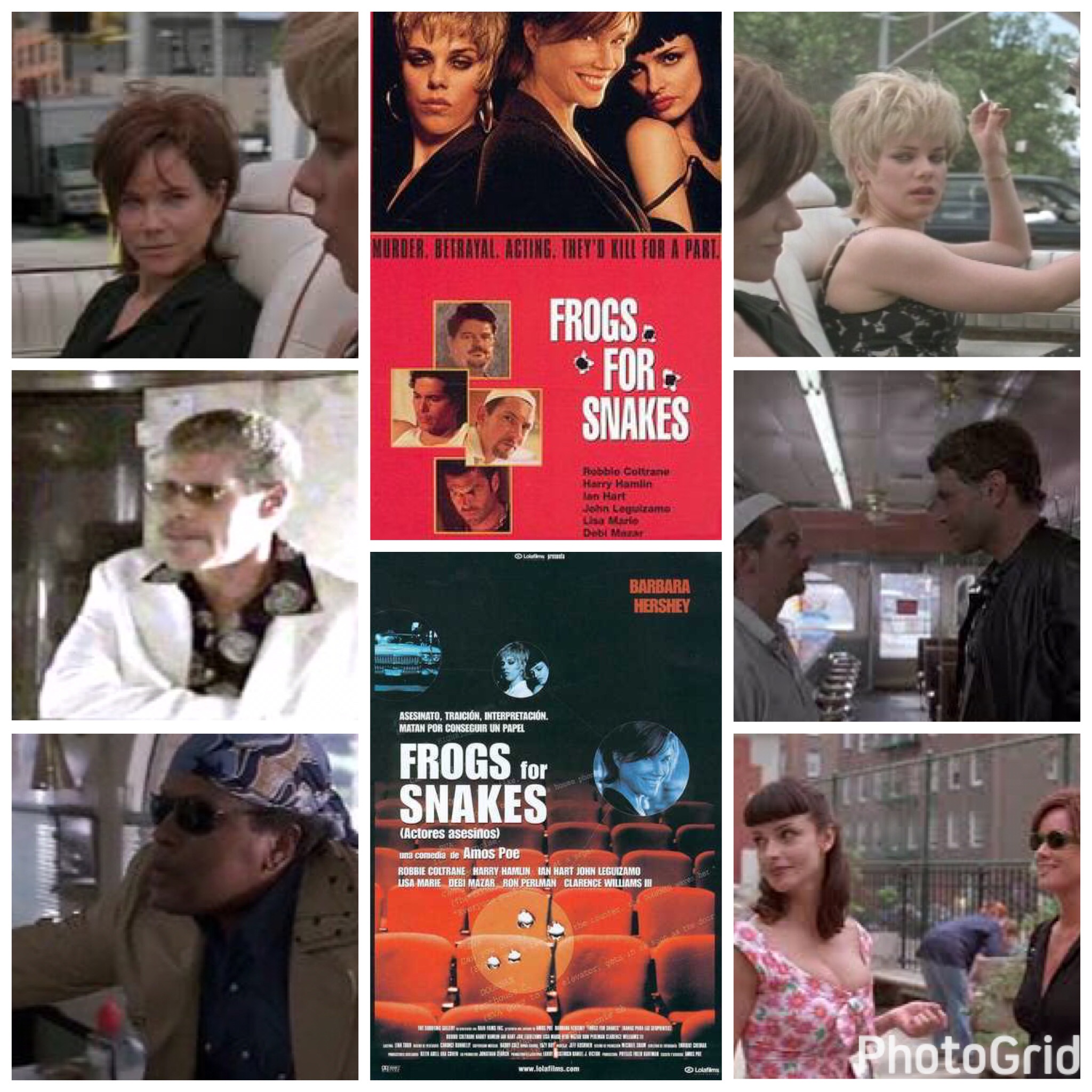
B Movie Glory: Frogs For Snakes


They say actors will literally ‘kill for a role’, and in the long forgotten, bizarre NYC set indie flick Frogs For Snakes, that’s the very concept. A handful of Bronx lowlifes all directly involved with criminal kingpin Al Santana (Robbie Coltrane, before he went all Hagrid on us), discover he is putting on a play, and promptly begin to literally murder each other for parts. Now, such a premise should provide a downright brilliant film, but sadly that’s not the case with this dreary gutterball. The possibilities are just endless, and all these miscreants do is just languish in alleyways, decrepit apartments and dive bars, monologuing about.. nothing much at all. It hurts when you have a cast this good in such fuckery as well. Al’s ex wife (Barbara Hershey) works as a debt collector for him, while she pines for her thespian boyfriend (John Leguizamo) who spends the majority of his scenes reciting overblown monologues that have nothing to do with the story, or lack thereof. There’s all manner of creeps and hoodlums running about like New York sewer rats, played by an impressive lineup including Harry Hamlin, Lisa Marie, Ian Hart, Clarence Williams III, Nick Chinlund and briefly Ron Perlman, but none of them have much to do and seem to aimlessly shamble through their scenes as if they were never given much of a script. Being the weirdo that I am though, I did get a sick thrill out of hearing potty mouthed Debi Mazar explicitly describe giving a blowjob to Coltrane’s character, a mental image I won’t soon erase from my head. It’s a whole lot of nothing for the most part though, and kinda makes you wonder how the thing ever got green-lit, let alone attracted such talent. If the film itself were a play, it would be run out of town on opening night. 

-Nate Hill

Zach Snyder’s Sucker Punch

I’m already giggling picturing the cries of protest that will rise up when I post this review, but the hell with it, I really like Zach Snyder’s Sucker Punch. I never deliberately play the contrarian, I just seem to often gravitate towards films that have been maligned by the masses, and I can’t really help it. Now, in this film’s case, a few of the many and varied negative criticisms are somewhat warranted, yet blown out of proportion when you really take a good look at the story. The film is pure style, and although Zachary might have let his imagination run a little wild and clutter the whole affair with fanboy fantasies and video game visuals, there is a clear and discernible story beneath if one cares to look. Now, the only way that story is entirely comprehended is by watching the extended director’s cut, which includes an absolutely crucial, pivotal scene that’s should have never, ever ended up on the editing room floor for the theatrical version. Seriously, they we’re straight up asking for hostility and confusion by not keeping it in every cut of the film, it’s just common sense. Speaking of story, here we go: the film opens in breathless style and classic patented Snyder slo mo, with young Baby Doll (Emily Browning) trying to save her little sister from their tyrannically abusive stepfather. Outsmarted and shipped off to an austere mental institution, her journey is a sad, surreal and somewhat befuddling one, but there’s a method to the madness that might not be clear with only one viewing of the film. The asylum she is sent to is plagued by a sinister orderly (Oscar Isaac) who is abusing the girls in his care, and as a result, Baby Doll channels such horrors into a grandiose set of fantasy worlds, the base of which rests on a burlesque style brothel where she and others work for volatile pimp Blue (also Isaac). Joined by Amber (Jamie Chung), Sweet Pea (Abbie Cornish), Rocket (Jena Malone) and Blondie (Vanessa Hudgens), she blocks out the reality of what is happening and replaces the details of an elaborate, systematic escape attempt with impossibly epic, highly stylized adventures, each of a different theme or set in a vaguely familiar period of history. Battling medieval dragons, giant samurai golems with mini-guns, WWI zombie hordes in a gaunt, bombed out European landscape, it’s all a detailed rush of sound and fury that hits you like a ton of bricks, and although is far too much for the film to handle and still get its point across, it’s completely dazzling stuff, especially on Blu ray. Guided by a mysterious Wise Man (a kickass, rootin tootin Scott Glenn) who shows up in a different get up each time and mentored by brothel Madam of sorts Vera Gorski (Carla Gugino), each setting holds the key to move along a certain cog in their plan, correlating back down the line of delusions straight to the asylum, if a little tenuously. Now it all hinges on the arrival of the High Roller (Jon Hamm), a rich playboy who has come to the brothel to see Baby Doll dance, and probably more. Here’s where they fucked up royally: The scene I mentioned earlier is a monologue from him that is pretty much one of the most important parts of the film, capping off both realities beautifully, and without it, not only is Hamm relegated to basically a walk on extra, the entire final punch of the climax is rendered lost and neutered, not too mention quite uncomfortable in a sense. Whoever was in charge of that particular piece of the editing should be tarred, feathered and run off the studio lot by teamsters. With the scene left in on the extended version, however, the story is given both point and purpose, feeling like a complete vision with a little weight to go along with it’s Hindenburg sized bag of visual tricks. Not Snyder’s best for sure, but it’s in no way close to the turkey some people will have you believe it is. Whiners. Style over substance? Yes, I’ll definitely concede there’s an imbalance, but don’t try and tell me the whole thing is bereft of substance at all, because that is a lazily researched argument. The soundtrack is a treasure chest, I might add, with beautiful covers of Sweet Dreams and Sing Me To Sleep sung by Browning herself. 

-Nate Hill

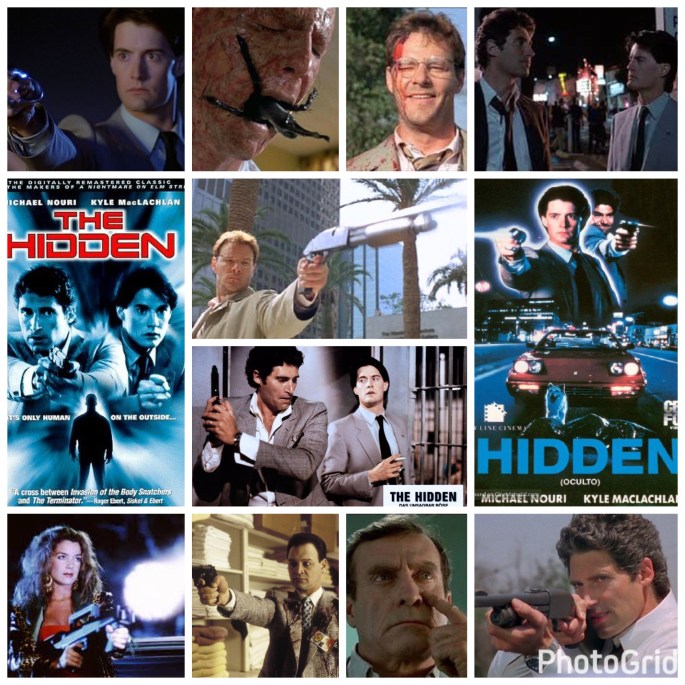
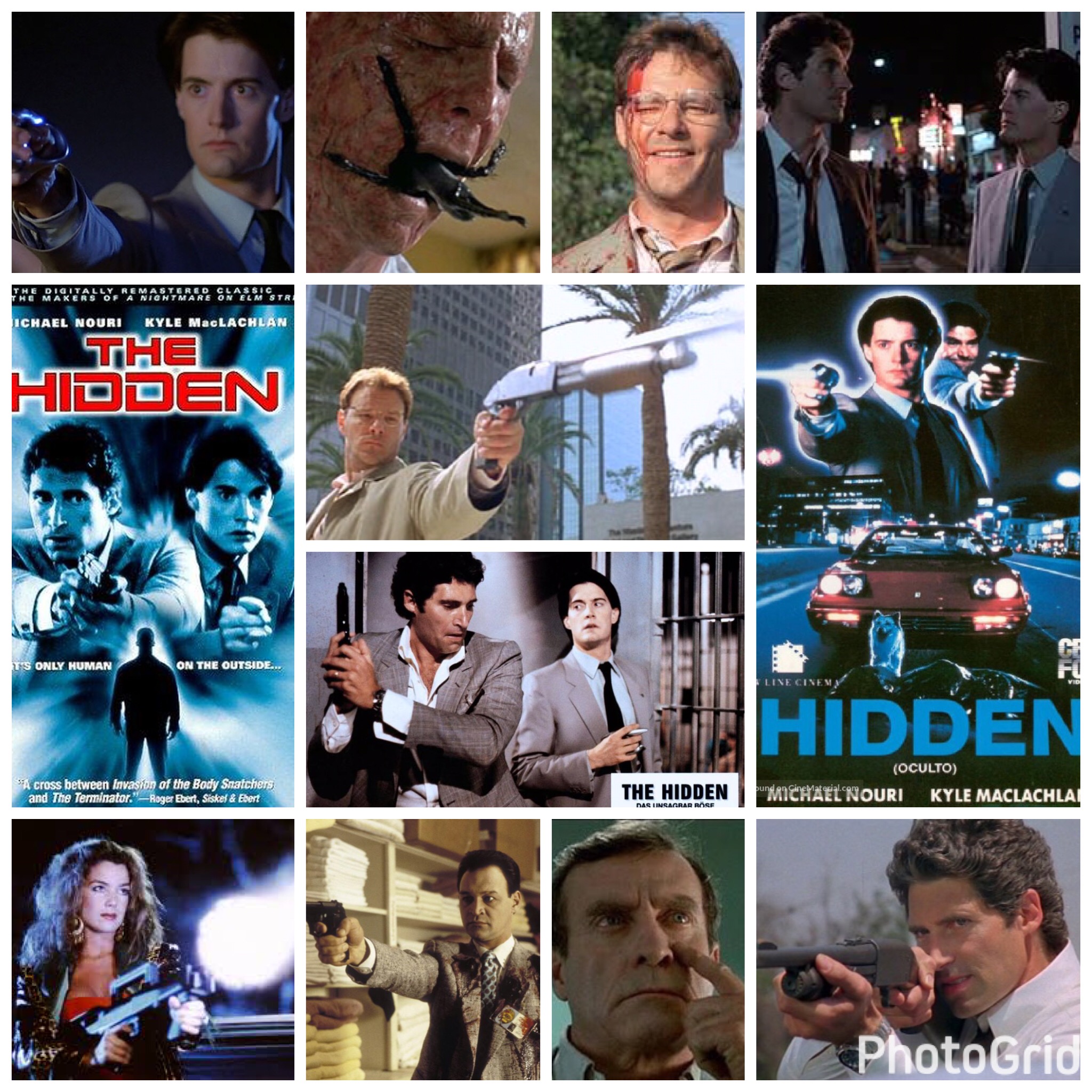
The Hidden


The Hidden is the kind of flick that makes you sit back, sink a little deeper into the couch, take a long swig of lager and nostalgically murmur “they don’t make ’em like they used to.” Maybe I was just born in the wrong era, but the 80’s and 90’s just seemed to hurl forth so many winners, unbridled genre bliss that only got better with age, worth the revisit every time. The effects were practical, the stories were told with love, care and inspiration and the action was real, hard hitting and built to last. This film one opens with what can literally only be described as a cinematic version of Rockstar’s Grand Theft Auto; we see a well dressed, determined man (Twin Peak’s Chris Mulkey in batshit mode) rob a bank, obliterate several police officers with a big honkin’ shotgun, steal a Ferrari, drive said Ferrari through a busy park, smoke a dude in a wheelchair at over a hundred clicks, lead the entire police force on an apocalyptic highway chase and cheerfully get ventilated in a hailstorm of bullets upon careening through their barricade. Case closed, right? Not for a mysterious FBI Agent (Kyle MacLachlan) who arrives out of nowhere and commandeers the case from the leading detectives (Ed O Ross and a wicked sharp Michael Nouri). MacLachlan knows something the force doesn’t, let alone would ever believe: there’s an alien running around inhabiting human bodies a là Body Snatchers, and going on hedonistic tirades of the worst possible behaviour, hence the shotgun tantrum in the opener. How does he know this, you ask? Because he himself is an alien in a Kyle suit, intrepidly pursuing the other one from a distant galaxy to halt it’s destructive shenanigans forever. It’s a premise that could have opened the door to all sorts of ooey gooey creature effects, but the film minimizes on those, choosing a few key moments to show the slime, and focuses mainly on glass shattering, guns blazing action, a neat recipe of three parts action with a tablespoon of yuck, if you will. MacLachlan, still very young at the time, anchors his performance with emotional heft, amusing aloofness and the necessary grit that can be found in his iconic portrayal of Agent Dale Cooper on Twin Peaks, and I was reminded more than a few times of that character while watching him in this. As the extraterrestrial nutjob moves from host to host, blowing everything up and leaving a trail of massacred people in it’s wake, the two of them race at every turn to catch up, and it’s Nouri who finds the seething anger one must get watching an outsider roll up and stamp all over someone else’s territory. The alien isn’t interested in world domination, resources or assimilation, it just wants to fuck shit up and have a good time, man. Blasting rock n’ roll music, gorging itself on steak dinners, stealing every Ferrari it can get it’s hands on and raiding the police evidence room for all kinds of heavy artillery, this thing doesn’t slow down for a second. This is the only film I know that paints off-earth visitors quite like this, just a gleeful, anarchic adrenaline junkie asshole, and I admire the brutal honesty, because I know of quite a few morons who would probably engage in the exact same behaviour, should they ever find themselves incognito and without consequences on an unassuming, far away planet. This one is pure screaming fun the whole way through, and should be every bit as iconic as other sci fi tales that are remembered more prolifically. Watch for the tiniest Danny Trejo cameo, playing (guess what) a prison inmate.  

-Nate Hill

Mean Dreams 


Mean Dreams is every adolescent’s worst nightmare. Or maybe it’s horrible scenarios like this that prepare youngsters for the real world, and build character. Or perhaps they just turn them into the same bitter, violent adults they’re trying to escape from, only to perpetuate the circle. In any case, it’s an ugly, somber story, scarred by the harsh realities some teens face on the road to adulthood. It’s ironic in a way that this is Bill Paxton’s last role in cinema, and I wish it weren’t, because he plays an absolute monster. For anyone who’s met him or seen interviews, he was the sweetest dude you could ever hope to meet, and wouldn’t hurt a fly, but he always chose tough scripts that made memorable, challenging films and this is just one more. Paxton plays a lawman and single father who moves his daughter (Sophie Nelisse) out to a desolate county, brought to life by stunning, haunted rural Ontario. Once there, she finds her only friend in a local rancher’s son (Josh Wiggins), and it’s not long before romance begins to flourish. Not on Paxton’s watch though, that angry drunk prick. Abusive, dangerous and up to his neck in illegal activities, it’s only a matter of time before he gets one of them, himself, or everyone killed, and Wiggins hatches a plan to get the both of them out of their and on the run to better lives. Trouble is, where do you turn for help in a town whose only police officers are not there to help you? Paxton has a bitter ally in the Police Chief, venomously played by Colm Feore, and the dragnet they lay over the county threatens to ensnare the two teens at every turn. Wiggins and “” are excellent, especially for their age, playing the character development with all the right notes, even when things get tense between the two of them, a facet of their relationship that’s nice to see and brings out shades of maturity in the writing that this type of film begs for. Paxton is scary, tragic, broken and brutal, a soured man who shows occasional flickers of the father he once must have been, and despite the ugliness, it’s some of his best work in a while, particularly during a positively poetic final confrontation. The cinematography from Steve Cosens lingers in the long grass until you can hear the mournful echoes of a region beset by economic despair, a place where danger breeds easily and is always just on the horizon, an uneasy mood also perpetuated by Son Lux’s unconventional score, which finds the spark of first love amidst the strife. Downbeat, but hopeful stuff. 
-Nate Hill

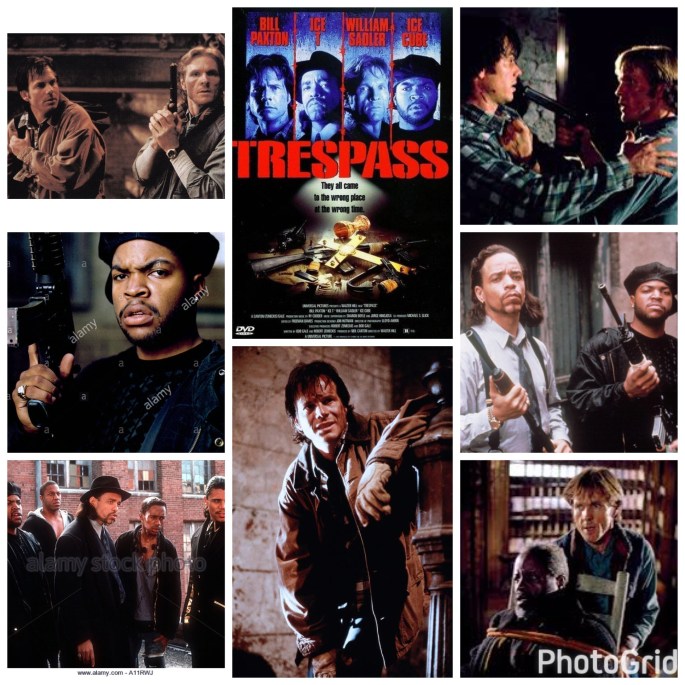
Walter Hill’s Trespass


Walter Hill’s Trespass could raise a pulse in a quiet graveyard, it’s so relentless. It’s one of those single location, breathless siege thrillers where two unlucky dudes, this time Bill Paxton and William Sadler, are barricaded in some unfortunate building while hordes of inner city criminals try to smoke them out. Billy and Willy are two firemen in the wrongest of places at the wrongest of times, led to a dilapidated St. Louis warehouse in search of a hidden cache of stolen gold. When one of them stumbles into a gangland assassination, the two are immediately branded as witnesses and hinted like dogs by boss King James (a snarling Ice-T), his lieutenant Savon (Ice Cube) and armies of their men. That’s pretty much the premise, and simple as it is, action maestro Hill turns it into a ballistic bloodbath that barely slows down for a second once it gets going. Paxton and Sadler are soon at each other’s throats in a feverish haze of adrenaline, whilst the two Ices argue amongst themselves about tactical logistics. Yelling, shooting, running, borderline parkour, cat and mouse games, beloved 90’s action tropes and fight scenes that almost wind the audience as much as the characters. This is a lean cut of a film, concerned only with thrilling the pants off the viewer, hurtling by at a locomotive’s pace without rest until that final shell casing hits the pavement. 
-Nate Hill

Walter Hill’s Tomboy: A Revenger’s Tale


Walter Hill’s Tomboy: A Revenger’s tale went through a few different titles, first Tomboy, then (Re)assignment, and has been quietly released this week under the simple and bland ‘The Assignment’, which tells you nothing of how batshit crazy it is. It’s a film I’ve waited to see a long time, partly due to its controversial, bizarre premise (it’s been boycotted already), and partly because it marks the return of action guru of yesteryear, the great Walter Hill. I’m sad to say the final product is somewhat underwhelming, aside from a few key elements that shine through the dour mood, the best being star Michelle Rodriguez, in her first leading role since 2000’s Girlfight. Here she plays Frank Kitchen, a scumbag of an assassin who takes his orders from wiseguy mobster ‘Honest John’ (Anthony Lapaglia, quite fun in the film’s only other decent performance). Frank is a creature of brutal instinct, a street rat and cold blooded killer with a taste for bullets, booze and blonde bimbos, basically the finer things in life. So, Michelle Rodriguez as a man. This could have gone either way, and she herself, always having a somewhat masculine presence anyway, does fairly well. She can only do so much with the makeup and prosthetics she’s given though, and let me tell you, they are horrendous. Sporting a ponytail, goat’s pube beard and plastic looking Ken doll torso, she’s a shining beacon of amateur hour from the effects team, for the first third of the film, impossible to believe as a dude. Anywho, ‘Honest’ John proves to be anything but trustworthy, double-crossing our Frank and delivering him into the hands of a rogue plastic surgeon played laughably by Sigourney Weaver, who has quite the bone to pick with him. Here is where it gets nuts: Weaver forcibly performs a gender reassignment surgery on Frank, turning him into a woman to release him from his ‘macho prison’. Frank wakes up with brand new lady parts, the prosthetics all gone and Michelle in her final form, ready to dole out vengeance on both John and the surgeon. This is all told in retrospect of course, as Weaver sits in a padded cell and blathers on and on to a wormy psychiatrist (Tony Shaloub), about the philosophical nature, the lofty how’s and why’s that fuelled her actions, while the audience is sitting there going, “Nah bitch you just crazy.” It’s all the sleaziest fare, and doesn’t work as well as a premise like this should, but there’s something about the gritty sight of a post surgery Michelle wandering around in a hospital gown, tits loose and waving a gun around that has potential and may have done well in a better film. As far as the concept itself goes, anyone who arches their back or (lol) boycotts this film is expending unnecessary energy; it’s a down n’ dirty B movie throughout, never meant to be taken seriously one bit. It’s just a shame it wasn’t more fun. 
-Nate Hill

James Cameron’s Aliens 


Each of the four Alien films has their own distinct and noticeable personalities. Ridley Scott’s original creeping horror show is a tense, streamlined, gracefully vicious film that slinks along at its own pace, not unlike the resident feline Jonesy who wondered about on the spaceship Nostromo back then. If Alien has the qualities of a cat, James Cameron’s Aliens has those of a rambunctious puppy dog, a rip snortin, go get em action backyard barbecue knockout that runs up and gives the audience a big wet slimy kiss. All animal metaphors aside (I’m running out of oh-so-clever ways to open my reviews, ok? Been at this shit for two years now), Cameron’s film is an undisputed classic, still jaw dropping to this day, even after what feels like hundreds of viewings, nostalgic yet fresh in different ways every time, and simply one of the best films ever made. It’s the gold standard for creature feature sci fi too, and while many argue whether or not it in fact outdid Scott’s original white knuckler, I can’t bring myself to be petty and pick favourites out of the quadrilogy, I love them all for a whole bunch of reasons. Aliens picks up quite a while after the catastrophic events of the first, with Ripley floating around in that cryo-pod for way too long, until she happens to cruise past earth, crossing the vision of the Weyland/Yutani corporation once again. Because they always make astute, well thought out choices, they decide to send a research team, accompanied by a very reluctant Ripley and a group of hoo-rah, bull in a China shop colonial marines to far off industrial exomoon LV-426, where they have lost communication with the settlers. After a brief, clammy build up, all hell breaks loose, and we get to see the full impressive extent of Cameron’s skill as a visual storyteller, as well as the oh-so-gooey, inspire practical effects work that brings those gorgeous Xenomorph beauties to snarling life. The cast is the epitome of badass, as we are constantly reminded of by Bill Paxton’s Hudson, the film’s resident squirrel who gets hilariously skittish when things get dicey (“game over, man!” Will never not out a big, Paxton sized grin on my face), but who heroically holds his own once he gets his sillies out. The other side of that coin is Corporal Dwayne Hicks (Michael Biehn, never slicker), cool as ice, shaken by nothing, including an atmosphere entry landing that would make Alfonso Cuaron pee himself, but doesn’t come close to disturbing Hick’s afternoon nap. Every Alien team must have an artificial human, some of which are trustworthy, and some not. Lance Henriksen’s Bishop is as solid as they come, never losing his head (despite being reduced to a puddle of spilt dairy product) and sticking by Ripley’s side until the bitter, hectic end. Ripley herself is a little older, a little wiser and a lot tougher, her intensity calcified into grit after losing her daughter, and given somewhat of a surrogate in the form of Newt (Carrie Henn) an orphaned child who has survived months living like a rodent in the air ducts. “They mostly come at night… mostly” she eerily warns Ripley. Oh boy, do they ever. LV-426 is positively teeming with them, and they show up to provide speaker shattering, pixel scattering action like only Cameron can do. The facehugger in the room sequence is still one of the most terrifying sequences in any film, and serves to make you hate Weyland weasel Burke (Paul Reiser) with that deep loathing reserved for the scummiest traitors in film. The final thirty minutes of the film are a showcase of action cinema, and it’s amazing to think they pulled off the Queen fight without any cgi back then, a slam-bang marvel of a climax that fires on a thousand cylinders, and to this day has never been topped. That goes for the film too. It’s *the* action sci-fi film, and as close to perfection as you can get.  
-Nate Hill

Man Down 


I’ll say this right off the bat: do not watch Man Down if you’re already in a mood, because it will emotionally lay you the fuck out. I learned that the hard way the other night. Billed as a war film, marketed as such and discreetly snuck onto iTunes without so much as a hint of theatrical release, its easy to see why they’ve tried to bury this one, it’s the bleakest film I’ve seen so far this year, and possibly the previous one. If there’s any doubt still surrounding Shia Labeouf’s acting talent (there shouldn’t be at this point), his work here should solidify greatness. All publicity antics and oddball muckery aside, he’s proven time and again that he’s one hell of a performer, and this is the best work he’s ever done, by a long shot. As Afghan war vet Gabriel Drummer, he’s put through an emotional wringer, sent back to an America ravaged by some vague pandemic, on a hopeless mission to locate his wife (Kate Mara) and young son (Charlie Shotwell). Joined by his best friend and fellow soldier Devin (Jai Courtney), Gabriel’s mission seems hazy and desperate, his family always just out of reach, tormented by the psychological wounds of combat but determined not to give up. This is interspersed with an extended dialogue scene between him and General Peyton (Gary Oldman, restrained, patient and careful), in which he heartbreakingly opens up about the horrors he has seen. This is where Labeouf shines, his tears uncannily genuine, his work visibly shaking up Oldman and tearing at the edges of the screen in it’s implosive intensity. Trust me, this is not the film you are expecting, not even close. By the time the third act rolls around and you see what’s really going on, you’re emotionally sucker punched when least expecting it, and the film’s quiet, devastating anti-war message is hit home with the force of a sledgehammer. I can’t say too much more without ruining it, but it’s one of the most thoughtful, understanding war films I’ve seen, one that gets the reality of what it’s like to have seen such atrocities, and come out of it a different person. Strong, stinging stuff that takes a while to shake off. 

-Nate Hill

Sam Peckinpah’s The Osterman Weekend 


-Nate Hill-
Sam Peckinpah’s The Osterman Weekend is so strangely plotted, so illogical and hard to understand, that not even John Hurt providing a play by play from an ever present tv monitor can seem to make sense of it. It’s not that it’s a bad film, parts are very well done and there’s that nostalgic Cold War vibe that 80’s espionage thrillers always have, it’s just that somewhere along the way, whether in the editing room, the shot list or scheduling, someone quite literally lost the plot. It’s enjoyable, well acted and supplies some of that classic Peckinpah grit he’s known for, but it’s just one massive loose thread that no one bothered to pull taut, which is a shame when you look at the talent involved. The film opens with the murder of a beautiful woman, the wife of a CIA spook (Hurt). Now, this inciting incident is what spurs on the rest of the plot, but the how and the why seem to be missing, and the matter of his wife doesn’t come into play again until all is almost said and done, and seems to have not a lot to do with the entire rest of the film. The bulk of it focuses on controversial talk show host John Tanner (Rutger Hauer), a man who lives to rub people the wrong way and put men of power on the spot with provocative, candid questions, all from the safety of his brightly lit studio. He’s forced to get his hands dirty though when Hurt contacts him, informing him that his three friends he’s planned to spend the weekend with (Craig T. Nelson, Dennis Hopper and a sleazy Chris Sarandon) are in fact soviet spies in hiding. Forced to bug his weekend home and play host to Hurt as he watches them all via hidden cameras, tensions arise as they try to smoke the three out and figure out… something. But what? It’s anyone’s guess what three potential traitors have to do with a murdered agent’s wife, and I’m sure the novel by Robert Ludlum on which this is based covers that a little more pointedly, but this film is just all over the place. It drags where it should glide, and skips hurriedly over scenes with potential to be great. Nevertheless, they achieved some level of class at least, with a crackling on-air conclusion that cathartically weeds out some corruption and provides almost a glimmer of an answer to what’s going on. There’s a fight scene between Nelson and Hauer that’s excellently choreographed, the performances are committed and engaging, and I’m always a sucker for cloak and dagger theatrics. But the thing just can’t seem to cohesively pull itself together and present a story that makes sense. It’s not even that it doesn’t make sense in a Tinker, Tailor, Soldier Spy sense, because I’m sure that if I sat down and watched that film like five times in a row, id get it, it has a plot buried under all of it. This one though, it’s like there’s pieces missing, and the ones that are left are either out of order, or from a different puzzle entirely. Close, but no cigar.