James Gunn’s Super: A Review by Nate Hill 

Before James Gunn got all famous and whatnot in the Marvel universe, he made a few dark, perverse little gems that aren’t for everybody, but have to be seen by those with the right sense of humour. Slither was his low budget, brilliant schlocker, and here with Super he takes a stab (literally) at the superhero genre, albeit in his own off kilter and unsettling way. Rainn Wilson, who is off kilter and unsettling himself, is our sad sack protagonist, a dreary nebbish named Frank Darbo, married to a troubled hottie (Liv Tyler) who is way out of his league and adorned with baggage. We soon learn that Frank is very disturbed, when his favourite TV superhero (Nathan Fillion in a brief cameo) informs him he must adorn cape and costume himself in order to fight the injustice in the world. His name? The Crimson Bolt. His weapon of choice? A great big crescent wrench, which he uses very generously to dole out his own extreme brand of justice. His motto? “Shut up, crime!!” (I laughed every time). He’s an unconventional ‘hero’ to say the least, most of his good deeds consisting of brutally attacking citizens with said wrench for minor infractions like butting in line at the cinema, an uproarious scene if your sensibility is twisted enough, but then that’s the jist of the whole thing. His longterm goal is to get Tyler back from the clutches of evil drug kingpin Jacques (a hilariously chatty Kevin Bacon), and prevent as many crimes as he can along the way. He ends up causing far more damage than he means to fix though, an awkwardly psychotic tornado of unwarranted violence and delusions of grandeur. Things get more out of hand when he aquires a spitfire of a sidekick named Bolty, played by Ellen Page in a performance that’s right out to lunch and then some. Page plays her to the deranged hilt, cackling like a maniac at her own violent antics and getting super uncomfortable with Wilson in the bedroom (seriously… one messed up scene). Gunn can always be counted on to hire interesting actors, so be on the lookout for Linda Cardellini, Andre Royo, Gregg Henry and Michael Rooker as Bacon’s lead thug. A lot of what happens here is awkward, cringey stuff, the chronicle of a misplaced and sad little man under the impression that his life has some preordained meaning, as delineated by the red suit. It’s a thin shroud to hide the worthless and pathetic existence he has lead so far, and as such it’s kind of a depressing thing to bear witness to. But rejoice in how darkly hilarious it is as well, because there’s plenty of pitch black humour and perfectly timed comedic moments that spice it up. Gunn understands people and the way they talk (a trait so often lacking in writers), and even with concepts so out in the stratosphere beyond normality, his characters still have their feet on the ground and seem realistic. A treat, if a sourly bittersweet one. 

Red 2: A Review by Nate Hill 

More of the same, baby. That’s a good thing in this case as we rejoin ex assassin Frank Moses (Bruce Willis) and his merry band of morons for another set of high caliber swashbuckling, this one even sillier than their first picnic. The key is in the deadpan humour, which is served up with all the relish needed to make something so fluffy work. Most of the eclectic cast is back for second helpings, and the ones who caught bullets are replaced by even more bankable names and familiar faces here. Moses, his girlfriend (Mary Louise Parker, finally aquiring her sea legs when it comes to warming up to the carnage) and loony old friend Marvin (John Malkovich) find themselves thrown headlong into an arms race to find a deadly super weapon before it’s either detonated or aquired by very dangerous people. Leading them along is a frazzled ex MI6 spook and mathematical genius (Anthony Hopkins in silly mode) who has seriously lost his marbles. On their tail is scary CIA psychopath Jack Horton (Neal McDonough nails yet another heinous villain role) who brandishes his silenced pistol with the same verve he uses to flash that icy grin, the last thing you see before the shooting starts. Helen Mirren returns, as does her beau, played again by Brian Cox and his teddy bear worthy russian accent. Other newcomers include Korean superstar Byung-Hun Lee as an agile and pissed off assassin out to get Moses, Catherine Zeta Jones as a foxy russian femme fatale and Professor Lupin himself David Thewlis as a snooty arms dealer called The Frog, but not for te reasons you might think. When actors of such skill and notoriety show up in these, it really makes everything else worth it, even if the plot is somewhat up in the clouds, and the mad das, rat race tone can get a bit too loopy. These pros always keep it grounded when they need to, both with shooting and acting prowess. This one can’t quite keep up with how much fun it’s predecessor was, but it’s certainly more than adequate, especially to see Hopkins, a man of trademark gravitas, give an out of left field (and his mind, really) turn worthy of Jim Carrey and not without a few disarming third act surprises.

Romance & Cigarettes: A Review by Nate Hill 

Romance And Cigarettes is the strangest musical you’ve never heard of. Strange as in awkward, because most of the songs are just too overdone and absurd to work, but I’ll concede that that very quality makes them unforgettable, if for not quite the same reasons the filmmakers intended. Going for a sort of pseudo Jersey Boys look, they set their cluster of stories in working class New York City, focusing on a number of hot blooded Italian American scamps and the mischief they get up to, all set to a raucous medley of musical numbers, some pleasant and others pretty darn tone deaf. James Gandolfini plays Nick Murder, a rowdy blue collar construction worker who finds himself between a rock and a hard place when his long suffering wife Kitty (an even rowdier Susan Sarandon) finds out about his secret mistress Tula (kinky Kate Winslet). This seems to be the last straw for Kitty as far as their marriage goes, and it all erupts into a series of volcanic confrontations and spats as only New Yorkers can spectacularly stage. In Kitty’s corner are her three handful daughter’s (Aida Turturro, Mary Louise Parker and adorable Mandy Moore) and her helpful Cousin Bo (Christopher Walken). Nick turns to a co worker Angelo (Steve Buscemi), is scolded by his stern mother (Elaine Stritch) and receives advice from an ex military tough guy (Bobby Cannavle). The film sides with both parties for one long and often chaotic look at marriage, infedelity and extremely short tempers, peppered with songs that, like I said before, are hit and miss. Walken has the best bit (doesn’t he always?) when he gets to a rip roaring riff on Tom Jones’s ‘Delilah’ that jazzes up the film quite a bit. Not destined to go down in history as one of the best musicals ever made, but worth it for the spoofy fun had by the impressive cast. 

Rob Zombie’s 31: A Review by Nate Hill 

I couldn’t help but feel fairly underwhelmed and a bit let down by Rob Zombie’s 31, which is a reaction I never thought I’d have to a film from one of the most dedicated and talented artists working in the horror genre these days. 

Now I’m not saying saying I hated it or even really disliked the film, there’s actually a lot of incredibly creative visual material and good old fashioned practical effects to feast your fangoria loving eyes on, but the fact remains that Zombie has regressed to the primal state he opened up his first few films with. 

  There’s two phases of his work so far: a rip snortin’ hoo rah gross out redneck scumbucket pile of profanity and bottom feeding trailer trash human garbage, which is what we saw in The Devil’s Rejects, House Of 1000 Corpses and somewhat in Halloween. Then there’s quieter, more thoughtful and meditative Zombie, using an art house, Argento psychedelic slow burn template that he brought hints of to the table in the excellent Halloween II and then full force with The Lords Of Salem, which to me is his best film so far. Now I love the trailer trash aesthetic to bits. It’s mile zero, the genesis of his fascinating career so far, and his writing is detailed, character driven, lifelike and oh so hilarious. But there’s a natural progression to any filmmaker’s career, moods and states which ebb and flow into new regions of stylistic exploration, and 31 just feels like a detour down the wrong road. I expected the atmosphere we got with Salem to churn forward and be a leg on the table of whichever phase came next. But alas, he has done a willful throwback to his earlier work, and although solid (I believe he’s incapable of making a truly bad film, there’s just too much creative juice with him), it’s sadly the least memorable among even phase 1 of his work. 

 31 is essentially a variation on The Most Dangerous Game, with a dirty dustbowl setting thrown in. A group of potty mouthed carnies, including Meg Foster, Jeff Daniel Philips and the ever present Sheri Moon Zombie, trundle through the desert, reveling in promiscuity and lewd behaviour, another trope that is getting old and icky, even on Rob’s barometer. Attacked and kidnapped one night by a band of scarecrows, they find themselves unwitting contestants in a vicious game called 31 (why is it called that? I still don’t know), on Halloween eve. The masterminds are a group of creepy aristocrats led by a plummy Judy Geeson and Malcolm McDowell, sporting a powdered wig, attire of french royalty and going by the name Father Murder. They release Moon and her peeps into a dismal maze and set a group of demented cackling psychopaths called the “heads” after them, dressed like clowns and seriously adjusted I’ll adjusted, these folks. Now you’d think that premise would be just a bucket of horror fun, and it’s nominally entertaining but just never really takes off into the desperate, visceral fight for survival I wanted to see. The clowns are varying degrees of scary and amusing. EG Daily fares well as whiny creepshow Sex Head, and there’s Sick Head, a chatty midget dressed up like Hitler who yowls at his prey in garbled Hispanic incantations. The film’s real energy shows up in the form of Richard Brake as Doom Head, a repellant maniac who is the only actual scary one of the bunch. Brake is a criminally underrated actor who I had the honour of interviewing some months ago, and when asked what the favorite role of his career is so far, he promptly said this. One can see why, it’s the most he’s ever been given to do in a film and he milks it with virile ferocity and animalistic sleaze that will leave you crying in the shower. McDowell and his cronies are here and there, but feel oddly disconnected from the events at hand, and while visually ravishing, ultimately aren’t given much to work with. I will say though that Zombie has a flair for the musical finale, and the end sequence set to ‘Dream On’ here is a blast that does indeed touch the epic heights of his older films. 

 And there you have it, kids. I wanted to rave about this one, I really did. But it use felt loose,

cobbled together and nowhere near as cohesive and brutally mesmerizing as his earlier work, all of which still hold up. There are elements here that work, but unfortunately just not enough, and framed by a whole lot of choices that feel copied and pasted. Now Zombie at his worst is still better than most in this sagging genre these days, but for those of you who know his work well and have expectations for the guy, you may just feel a little let down, like I did.

Brett Ratner’s Red Dragon: A Review by Nate Hill


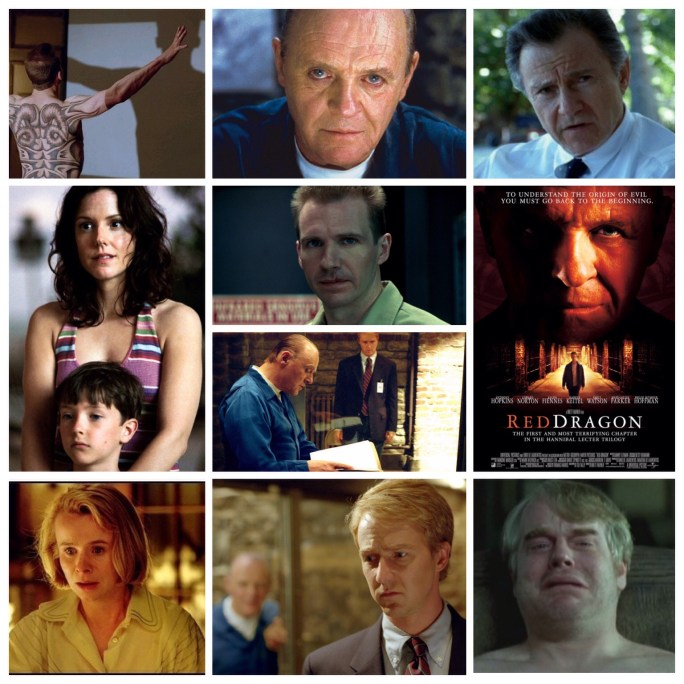
Brett Ratner’s Red Dragon, although pretty darn stylish, is just cursed with being the least engaging and unique Hannibal Lecter film out there. It’s not that it’s a bad flick, but when you have Silence Of The Lambs, Hannibal and the far superior Manhunter to compete with, you’re trucking down a rocky road. The strongest element this film has going for it is Ralph Fiennes, who plays the hell out of the role of Francis Dolarhyde, the disturbed serial killer also known as the Tooth Fairy. Previously played by an introverted and terrifying Tom Noonan, Fiennes gives him a more rabid, haunted vibe and steals the show, but then he always does. Edward Norton is a bit underwhelming as FBI behavioural specialist Will Graham, sandwiched between William L. Peterson and Hugh Dancy’s modern day, definitive take on the character. Graham has the tact and luck to ensnare notorious cannibalistic murderer Dr. Hannibal Lecter (Anthony Hopkins purrs his way through a hat trick in the role), whose help he subsequently needs in pursuing Dolarhyde. Harvey Keitel clocks in as rock jawed Jack Crawford, Graham’s boss and mentor, solidly filling in for far mor memorable turns from Laurence Fishburne, Dennis Farina and Scott Glenn. All the scenes with Dolarhyde fare best, given some truly impressive rural cinematography that sets the mood for the killer’s twisted mindset nicely. The cerebral jousting between Graham and Lecter only half works here, dulled in comparison to the crackling exchanges that Jodie Foster masterfully handled with Hopkins, who was far, far scarier back then. Emily Watson lends her doe eyed presence to the blind girl that brings out the only traces of humanity still left in Dolarhyde, Philip Seymour Hoffman shows up as bottom feeding tabloid reporter Freddy Lounds, and Mary Louise Parker, grounded as always, plays Graham’s wife. You could do worse in terms of films like this, but in the Lecter franchise it falls pretty far short of any of the other entries, save for the few inspired moments involving Fiennes. 

RIPD: A Review by Nate Hill 

I wanted to give RIPD chance, I really did. But it’s such a shameless ripoff of Men In Black that most of it just constituted one big eye roll from me. It’s not an outright knockoff, but it just uses the unmistakable blueprint of MIB and runs with it as if it were it’s own organic idea. The veteran wiseass, the young hotshot, the clandestine otherworldly law enforcement syndicate, googly, goopy special effects, it’s all there and just feels stale these days, but for a few saving graces. Jeff Bridges is an undeniable charmer as Roy, an undead wild west super cop who is tasked with retrieving runaway souls hiding out down on earth, and capturing them for return to the great beyond, here pictured as the penultimate vision of nightmarish beaurocracy that seems oddly derived from Beetlejuice (huh). When Boston cop Ryan Reynolds is betrayed and murdered by his corrupt scumbag of a partner (a skeezy Kevin Bacon) he’s recruited by Proctor (Mary Louise Parker, all business and loving it) to join Roy in bringing “deados” back upstairs. The two don’t get along, as newly paired cops in movies always behave, and the banter only really works from Bridges’s side. He’s a hoot as crotchety old Roy, while Reynolds plays it a bit too serious, especially in scenes with the wife he left behind (Stephanie Szostak). The film earns it’s one inspired subplot when we see the human avatars the pair use to move about the earthly plane: Bridges is a knockout blonde chick (Marissa Miller), and Reynolds an elderly Chinese man played by the seemingly immortal James Hong. If they spent more time on terrifically funny ideas with potential like that and less on special effects that look like something out of the Garbage Pail Kids, they might have been on to something worthwhile. But alas, most of the film is spent on a whirlwind of silly slapstick and big gross weird things that are in no way engaging. There’s a few slap dash deado hunts, including a brief turn from Robert Knepper as one that is lured out of hiding with Chinese food (what in the..), and a big sky vortex yawner of a finale where evil Bacon tries to wreak havoc on earth. Most of the time it’s just a snooze though, save for the few times the clouds part and we get something fresh, usually from either Bridges or those to damned hilarious avatars. Shame.

Indie Gems with Nate: Wildlike

It’s random netflix time again, where I decided to take a look at Wildlike, a film I’ve never heard of before, and one that I will not be getting out of my head anytime soon. I have a certain affinity for films set in the wilds of the pacific northwest, films that use nature and scenery to accent themes relating to humans (eg. The Grey, Into The Wild). I also saw Bruce Greenwood on the poster, and that guy just seems to have a head on his shoulders when it comes to choosing scripts, so off on this journey I went. Newcomer Ella Purnell is astounding as 14 year old Mackenzie, sent off to live with her uncle (Brian Geraghty) after her mother has a breakdown following a family tragedy. The poor girl goes from the frying pan into the fire though, when it’s revealed that her is sexually abusing her, and may have in the past. The abuse shown in this film is not loud or violent, nor is it melodramatic or designed for shock value. It’s quiet, frank and subtle, the damage of it measured in a glance, a tear streaming down a cheek or a barely percievable shift of weight from Mackenzie when he looks at her. Geraghty is a handsome dude, nowhere near the bespectacled, paunchy clichéof abuser so often seen. He plays it straight, a pleasant and agreeable fellow who can’t even comprehend the kind of damage he’s doing. The scenes of abuse themselves are quick and fleeting, made all the more uncomfortable by how intimate they seem. This is the closest to what I’d imagine realism with this sort of thing looks like, and i had trouble not turning away. When she can’t bear it any longer, Kenzie makes a run for it into the nearby town, hiding out and eventually befriending lone hiker Greenwood, who is healing from wounds of his own. Kenzie is confused and broken from what has happened, and the filmmakers know that when this befalls someone whose brain and soul are not developed enough to understand it, they act in strange ways. Purnell is heartbreaking and should have been in contending for some sort of award. Going from almost no film work to lighting up the film with this brave, staggering turn was something I was honored to see unfold on my humble iPad screen. Much of the story unfolds in the breathtaking Alaskan wilderness, the camera capturing misty mountains, verdant landscapes and little coves that ferries weave in and out of. You just have to contrast this type of subject matter with beauty of some kind, and Kenzie’s journey takes her from darkness into the possibility of light, surrounded by the natural world and the companionship of her new friend and protector. Most of the time it’s just the two of them out in the desolation, aside from when they meet a kindly group of campers, including Ann Dowd, an incredible actress who seems to be riding some sort of comeback these days. Films about this sort of thing range all across the board, from hamfisted pulp revenge, to tender and inquisitive documentation. This one respectfully shows you the kind of irresponsible, selfish and sick behaviour humans are capable of, particularly towards the ones they are supposed to love and protect. It also looks at kindness and compassion that can come from a complete stranger and shelter those who have been broken. There’s both light and dark in this world of ours, and Kenzie meets them both face to face. Purnell owns the film, and I think we will see great things from her. Couldn’t recommend this film, and her performance, enough. 

Fried Green Tomatoes: A Review by Nate Hill 

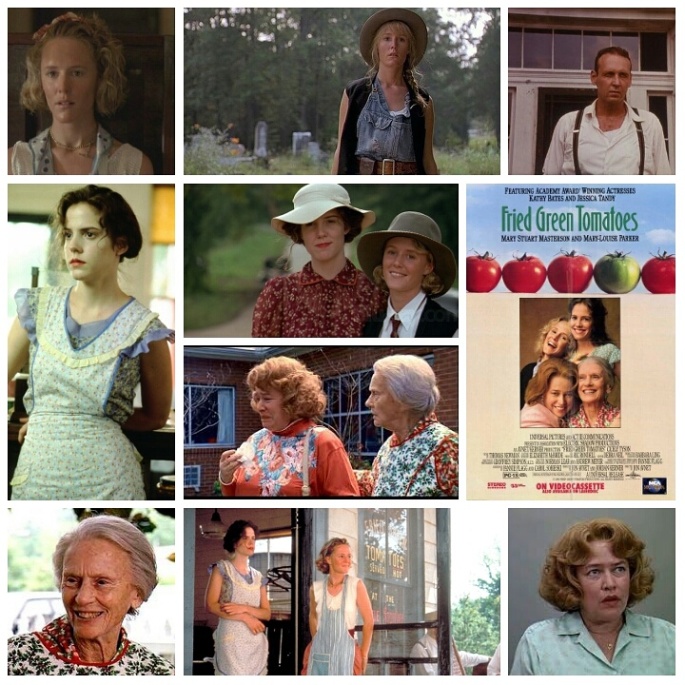
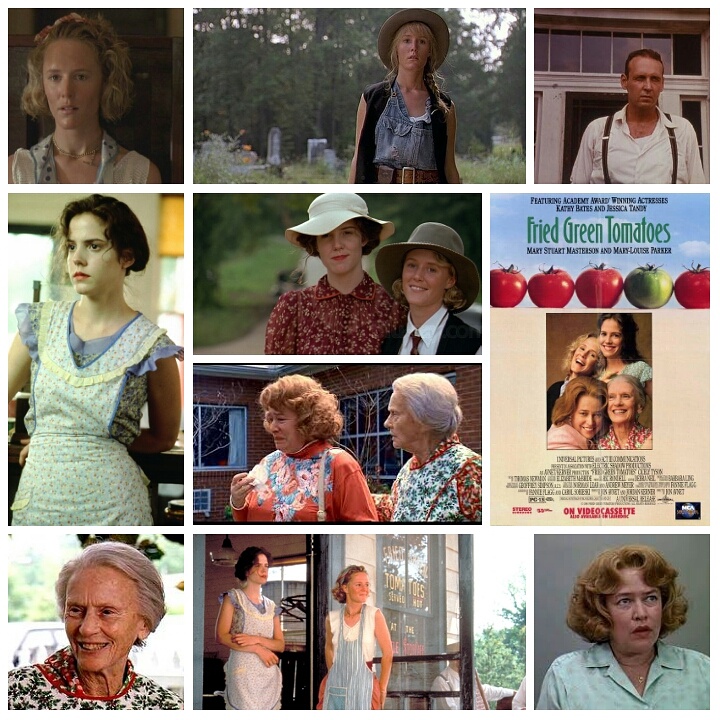
Fried Green Tomatoes is one of those films that presents two narratives, simultaneously woven together and unbound by the laws of past and present. A character from the present tells tales of the past, and the film jumps ever back and forth between the two, until a connection emerges. You’ve seen it in stuff like The Notebook, where it works beautifully, and both stories support each other. That’s the issue with this film: One of the narratives is lovely and works quite well. The other? Mmm…not so much. Kathy Bates plays a hospice worker in a retirement home who is charmed by stories of life, freedom, injustice and romance from long ago, all told with wit and passion by an excellent Jessica Tandy. She tells of life growing up during the early 1900’s in the American southwest, of free spirited tomboy Idgie (a fierce and emotional Mary Stuart Masterson), the girl she loves (Mary Louise Parker, radiant) and the whirlwind of trouble and conflict going on around them. Idgie lost her brother and best friend (a short lived and very young looking Chris O ‘Donnell) to a horrible accident, and sort of has a lost pup complex, holding on to Parker for dear life and trying her best to extricate her from an abusive relationship with her monster of a husband  (Nick Searcy is evil incarnate). It’s whimsical, touching and flavored with just the right touches of sadness and danger. Now, the story with Bates in the present just feels aloof and silly. The scenes with her and Tandy fare better than glimpses of her home life and attempts to empower and change her for the better. Don’t get me wrong, I love that idea, the notion of inspiration  transcending time and the ability to help others simply with the spoken word and the wisdom of the past, but it just didn’t work in this case. As for the scenes in the past, I fell hard for them. Masterson is a terrific actress who usually gets saddled with light, fluffy roles, but here gets a chance to let some raw emotion out. Parker is more reigned in but every bit as soulful, as the girl in a situation no one should have to endure, her soul practically screaming out through those beautiful brown eyes. I suppose you could say that it’s half of a great film, that couldn’t quite pull off it’s own narrative flow. 

Red: A Review by Nate Hill 

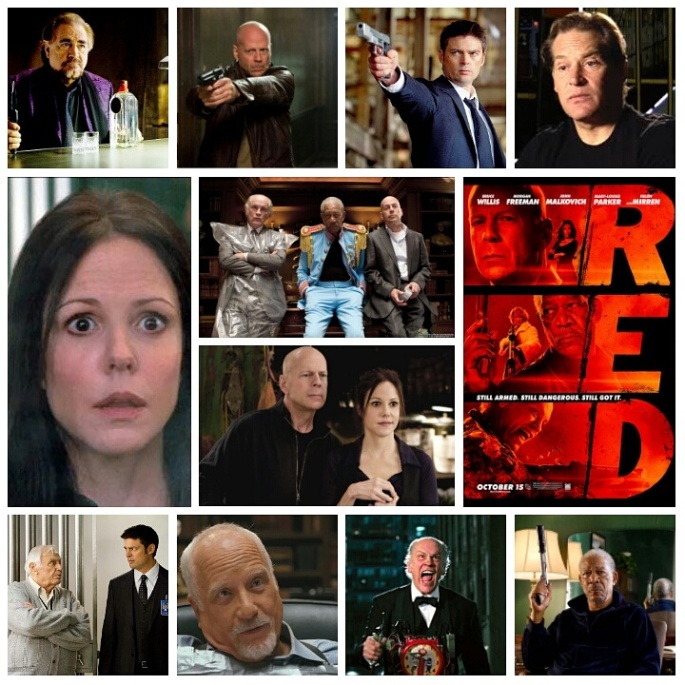
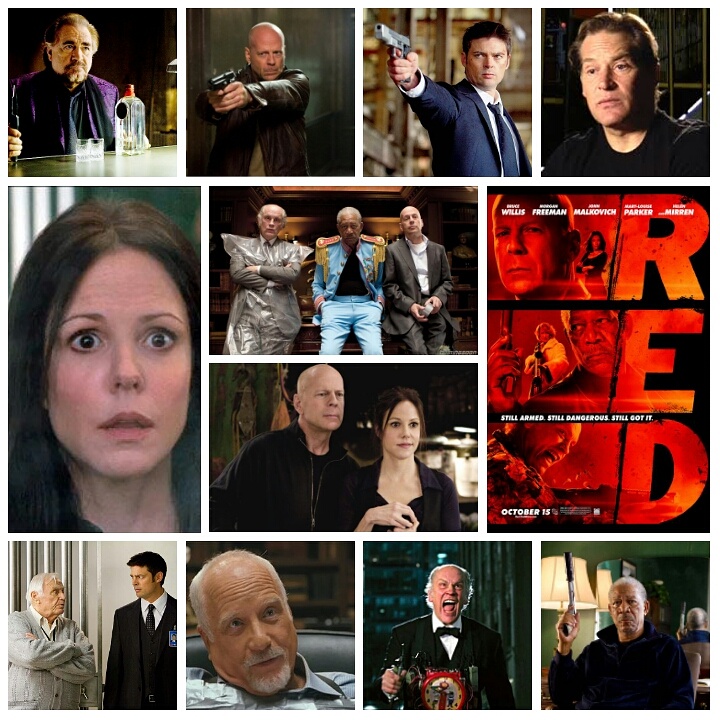
Despite being somewhat neutered by the ever present annoyance of the PG-13 rating, Red is some of the most fun you can have with in the glib assassin subgenre of action comedy. Bold, hilarious and just a little bit demented, it jumps right off the pages of the graphic novel it was based on for just under two hours of wiseass popcorn movie nirvana, hosted by a cast that’s almost too good to be true. ‘RED’ stands for ‘Retired Extremely Dangerous’, a moniker given to aging ex contract killers who have laid down the guns, but are still closely watched by the CIA. Frank Moses (Bruce Willis) is one such person, languishing in the doldrums of forced retirement, bored out of his mind and chatting endlessly with a cutey call center girl (Mary Louise Parker). Things get freaky when deranged former associate Marvin Boggs (John Malkovich) pays him a visit, belting out wild theories about the CIA sending operatives to terminate him. Before he knows it, Frank is swept up in espionage and intrigue once again, pursued by a slick, ruthless agency man (a deadly Karl Urban doing the anti-007 shtick nicely), with Parker in tow, whose terrified reactions to the escalating violence and deadpan sociopaths around her get funnier and funnier as the film progresses. Helen Mirren is regal gold as a well spoken ex MI6 spook who dissolves corpses in bathtubs full of acid, right before afternoon tea, I presume. Watching this dainty waif rock a Barrett 50 caliber and make red mist out of her enemies is one of the many mental pleasures one can get from this flick. Morgan Freeman takes it easy as another former buddy of theirs from the older, and I imagine, more agile days. As for the supporting cast, hell, take your pick. Richard Dreyfuss is a slimy Trump-esque politician lowlife, an underused James Remar shows up for a very brief cameo, as does that old toad Ernest Borgnine, Julian McMahon once again shows that no one wears a suit like Julian McMahan, and that lovable imp Brian Cox almost walks away with the film as a sly devil of a Russian agent who woos Mirren with the silver tongued virility of a fox. What works so well the dynamic between the three leads; Malkovich is mad as as hatter, Willis plays exasperated babysitter and Parker looks on in horror that starts to turn into amusement with every outlandish scenario. Action comedies are tricky recipes, and it’s easy to let too much of one ingredient slip into the pot. This one keeps a steady trigger finger that’s locked onto the funny bone and positively sails. 

Terry Gilliam’s The Fisher King: A Review by Nate Hill 

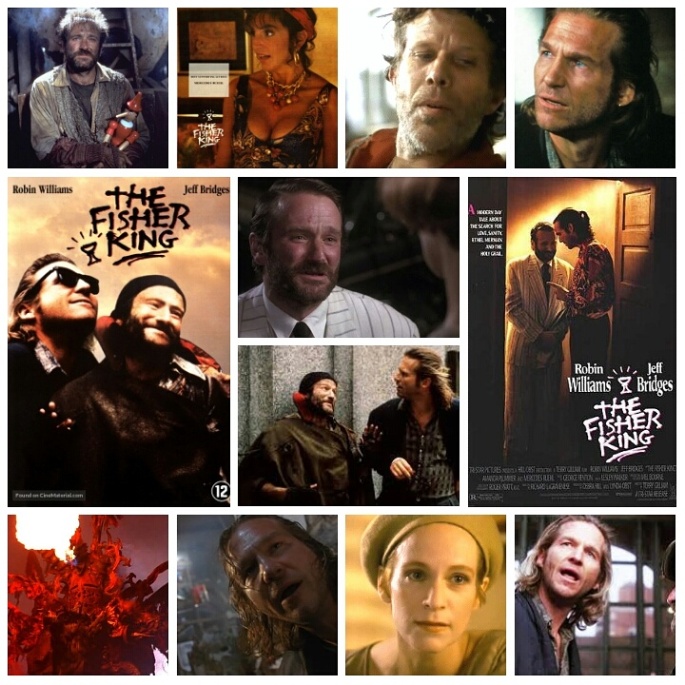
Tragic. Uplifting. Comical. Bittersweet. One of a kind. Terry Gilliam’s The Fisher King takes on mental illness by way of a fantastical approach, an odd mix on the surface, but totally fitting and really the only way to put the audience inside a psyche belonging to one of these beautiful, broken creatures. Sometimes an unlikely friendship springs from a tragedy, in this case between a scrappy ex radio DJ (Jeff Bridges) and a now homeless, mentally unstable ex professor of medieval history (Robin Williams). Bridges was partly responsible for an unfortunate incident that contributed to William’s condition, and feels kind of responsible, accompanying him on many a nocturnal odyssey and surreal journey through New York City, an unlikely duo brought together by the whimsical cogs of fate that seem to turn in every Gilliam film. Williams is a severely damaged man who sees a symbolic ‘Red Knight’ at every turn, and seeks a holy grail that seems to elude him at every turn. Bridges is down to earth, if a little aimless and untethered, brought back down from the clouds by his stern, peppy wife (Mercedes Ruehl in an Oscar nominated performance). They both strive to help one another in different ways, Williams to help Bridges find some redemption for the single careless act that led to violence, and Bridges assisting him on a dazed quest through the streets to find an object he believes to be the holy grail, and win over the eccentric woman of his dreams (Amanda Plummer). In any other director’s hands but Gilliam’s, this story just wouldn’t have the same fable-esque quality. Straight up drama. Sentimental buddy comedy. Interpersonal character study. There’s elements of all, but the one magic ingredient is Gilliam, who is just amazing at finding the way to truth and essential notes by way of the absurd and the abstract. Watch for fantastic work from Michael Jeter, David Hyde Pierce, Kathy Najimy, Harry Shearer, Dan Futterman and a quick, uncredited Tom Waits as well. The hectic back alleys and silhouetted trellises of NYC provide a sooty canvas for Gilliam and his troupe to paint a theatrical, psychological and very touching tale of minds lost, friendship found and the past reconciled.