Richard Donner’s 16 Blocks

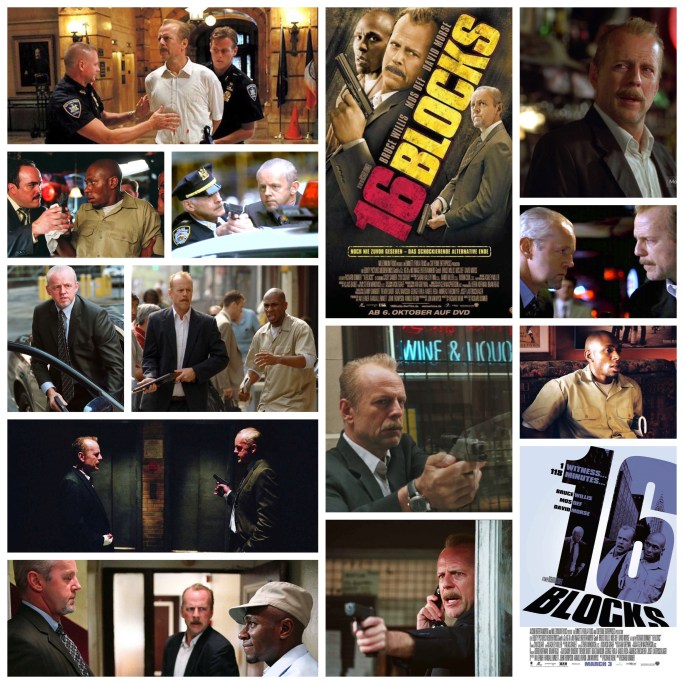
Bruce Willis is the type of action hero who is never idealistic, chipper, optimistic or overtly upbeat. There’s always a sarcastic reluctance whenever he gets pulled into a gunfight, hostage situation or standoff and I think that’s the quality that has made him such an endearing star presence. In Richard Donner’s 16 Blocks he plays an NYC Detective named Jack Mosley, who is a burnt out, sardonic alcoholic who couldn’t give a shit about his job anymore, let alone the motor mouthed convict (Mos Def) he’s assigned to escort the titular distance to testify against some mob bigwig. Jack can almost be seen as the same Willis character we’ve been watching our whole lives but after all the others, a progression that has lead to this one portrayal where the archetype has just reached the end of his rope. It’s a wonderful performance from him and a strong, solid suspense thriller. Def’s character is an annoying, fast talking hustler who we just want to deck right in the face, but I suppose that’s kind of the point of him here so we can see Jack’s tolerance boil over and eventually warm up to the guy. There are forces aligning against them though, factions on both sides of the law that have stock in Def not making it those 16 blocks with his pulse still going, and Jack must dust off his old reflexes to take on what appears to be the entire New York City police force, along with a fellow detective and old friend who has gone rogue, played with affable menace by the always awesome David Morse. This is a terrific thriller with well drawn, relatable characters stuck in one shit show of a situation, it’s minimalist without being too low key and fired up without being overblown or silly. The photography by Glen McPherson makes great use of looming NYC architecture, narrow streets and artifices that could get shattered by a rain of bullets any second, and the exciting score by Klaus Badelt sets a nervous mood of urban menace while introducing Willis with a melancholy twang. This was Donner’s last film before going on apparently permanent hiatus and I’m not sure why, I’ve always loved his work and would love to see a comeback. Willis gets a lot of hype for guys like John McClane and Butch Coolidge who are definitely legends, but Jack Mosley is one of his best creations, a hard bitten boozer with a compassionate lining under the scruff and a brutal resilience in the face of overwhelming odds, it’s his version of Eastwood’s Ben Shockley in The Gauntlet and an underrated character in his canon. Great film.

-Nate Hill

Snow Falling On Cedars

Snow Falling On Cedars is an interesting one, but I can’t say I mean that in much of a good way. I’ve rarely seen a film that focuses so intently on atmosphere, incident and specific isolated scenes and kind of leaves it’s own overarching story in the dust, or rather snow. That’s okay if you’re making a mood piece or deliberately impressionist film that doesn’t need the lucidity of a clear narrative, but that this is not. Its one gorgeous looking film though, shot by Robert Richardson who really earns the Oscar nom, full of looming boreal scapes, whirling blizzards and rustic homesteads. Set in the Pacific Northwest during a particularly tumultuous pair of timelines in the 40’s and 50’s, it sees the plight of a small coastal fishing village when a mariner is found dead, entangled in nets near his own boat. The local Sheriff (Richard Jenkins) discovers this, prompting a trial in which an accused fellow fisherman (Rick Yune) is prosecuted by an annoying shark (James Rebhorn) and defended by a German American (Max Von Sydow). Now, the accused is also part of the Japanese community residing nearby, and it being sometime after WWII, it’s not a very great period of history to be Japanese in the States, casting a dark glow over the trial before it’s even begun. Ethan Hawke plays the reporter with whom the accused’s wife (Yûki Kudô) has a lasting and deep romantic involvement with. Sound complicated? It is, but really shouldn’t be. The film chooses to tell the story in a meandering, out of time nature and as such it’s almost impossible to tell what’s going on at any given time. What’s more, the relation between Hawke and Kudô, although deeply touching and wonderfully acted by both, has little to do with the trial and murder mystery and as a result much of the story feels like a slog through snowbanks with no reward on the other side. Other actors make appearances, like Sam Shepherd as Hawke’s publisher father, James Cromwell as the trial’s overseeing judge, Celia Weston and her deplorable Scandinavian accent, Daniel Von Bargen, Anne Suzuki, Akira Takayama and others but they’re sort of swallowed up by the scattered hollowness of a story that should mean more, and should cut deeper based on the effort put into this production. And what a good looking film, I’ll give it that. Robert Richardson’s cinematography is breathtaking, somehow vast yet contained at the same time as we see life in the northwest unfold, attention to period detail immaculately kept up. The score by James Newton Howard is a swell of orchestral emotion and a strong point too. This film would have been so much more affecting if it spent more quality time on the central relationship between Hawke and Kudô, the latter of which gives the best performance. The matter of Japanese people being carted off to internment camps is handled realistically and gives us some of the film’s strongest scenes, these actors also steal the show with their obvious heartbreak and theft of dignity. But who really cares about the murder trial when there’s so much else going on in the big picture that’s more fascinating? So much time is spent in that dark courtroom discussing details of an event I had no stock in with the film as a whole, and if your narrative has that effect on even just one person, well.. that’s a problem. Perhaps the novel is different but I’m not really sure what they were going for here in the film, from both an editing and story focus standpoint. I left with an admiration for the technique used, the photography and atmosphere achieved is something to be proud of, as is the romantic angle. Everything else left me as cold as that falling snow.

-Nate Hill

Flashpoint

What do corrupt Texas border guards, missing cash, a Kennedy assassination conspiracy, buried bones and a long derelict crashed Jeep in the desert have in common? Check out Flashpoint to find out, a dusty, forgotten old 80’s thriller with a dope cast, diabolical story and one kicker of a score by Tangerine Dream that only makes the vast desert of the Southwest seem more eerie, and the dirty deeds done under its sun seem dirtier. Treat Williams is the cocky young hotshot patrolman, Kris Kristofferson his salty superior, and after the discovery of the Jeep and it’s dangerous cargo, they’re embroiled in a scary attempted coverup that includes murder, lies and a careful political smokescreen. It doesn’t help that a greedy fellow colleague (Miguel Ferrer) sets his sights on the cash too, heralding the arrival of Kurtwood Smith’s Carson, a pragmatically evil Fed with big plans for anyone who knows about the discovery. Throw Kevin Conway, Jean Smart, Guy Boyd, Tess Harper, plus Rip Torn as a local sheriff and you’ve got a diamond of a cast. Kristofferson is great as the wily veteran who knows a cautionary tale in the making when he sees it, but Smith steals the show and is downright scary as the worst type of guy to be in that position of power, who isn’t even above arguing the twisted morality of his job. This film is as lost to the sands of time as that Jeep sitting out there in the middle of nowhere, but like the Jeep its waiting to be rediscovered. A powerful morality play, a taut thriller with a killer good script and one certified forgotten gem.

-Nate Hill

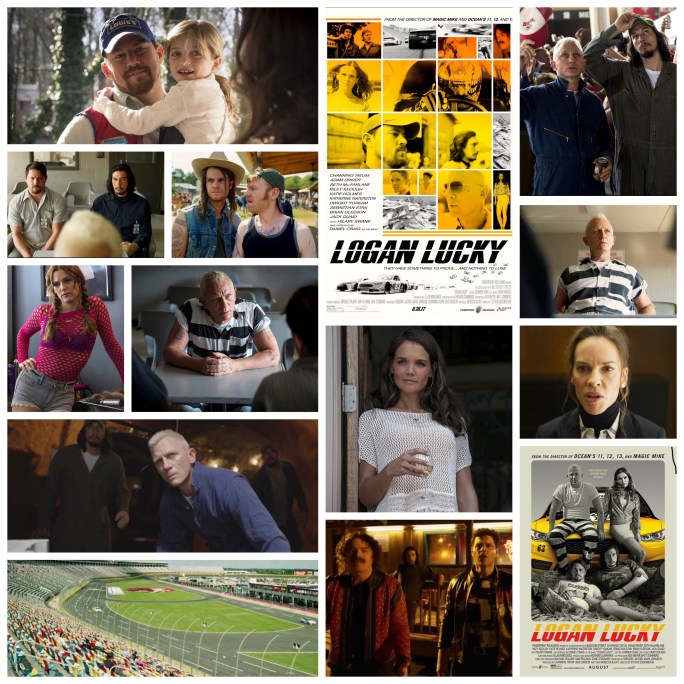
Steven Soderbergh’s Logan Lucky

After a sort of slow opening act, Steven Soderbergh’s Logan Lucky becomes a sweet, funny, raucous, touching and unexpected film, the most enjoyable thing he’s made after a series of dead serious dramas. Kind of like Ocean’s Eleven for the Monster Truck crowd, this is popcorn fare with brains, but it’s not afraid to get loopy and mess around in the sandbox either in terms of comedy and characterization, especially that of Daniel Craig’s Joe Bang, the world’s most aloof safecracker. Joe’s help is needed when brothers Jimmy (Channing Tatum) and Clyde (Adam Driver) Logan take it upon themselves to stage a heist during NASCAR mania when times of financial woe befall them. Jimmy is laid back and affable, Clyde is old school idiosyncratic to the point of hysterics and their dynamic is something hilarious. Throw in Joe with a Bang and the thing takes off, once the gears of the plot start grinding, mind you. Like I said, the opening dilly dallys a tad. Despite being a screwball comedy of sorts, this never goes too far off the rails into, say, Cannonball Run territory and never feels *too* light or inconsequential. Soderbergh is an alchemist in complete control of every element and this thing unfolds deliberately, intricately and always playfully. Surrounding them is a delightfully eclectic supporting cast including Seth McFarlane, Riley Keogh, Katie Holmes, Jack Quaid, Brian Gleeson, Katherine Waterson, Macon Blair, Sebastian Stan and Dwight Yoakam as a breezy Prison Warden. The heist is a blast, full of screw ups, diversions and delirious suspense as these ill prepared, lovably hapless goofs try to do right by their families and each other. Craig must be broken out of jail where he’s “in-car-cer-ated” for the duration of the job and then stealthily returned once the mission is accomplished, and Jimmy has to be done with it all in time for a beauty pageant that his daughter (Farrah Mackenzie, wonderful) is appearing in. It’s fairly random but it just somehow works, from left field character choices to specifically nutty set pieces to third act twists that come out of nowhere. Just when you think you can relax, a federal agent (Hilary Swank in full shark mode) shows up to stir the pot again. The film ends on a narrative cliffhanger and with perhaps one of the best and most enticing zoom-out shots I’ve ever seen that had me both wishing for a sequel and wanting the magic to remain bottled just there at that perfect penultimate moment. Great film.

-Nate Hill
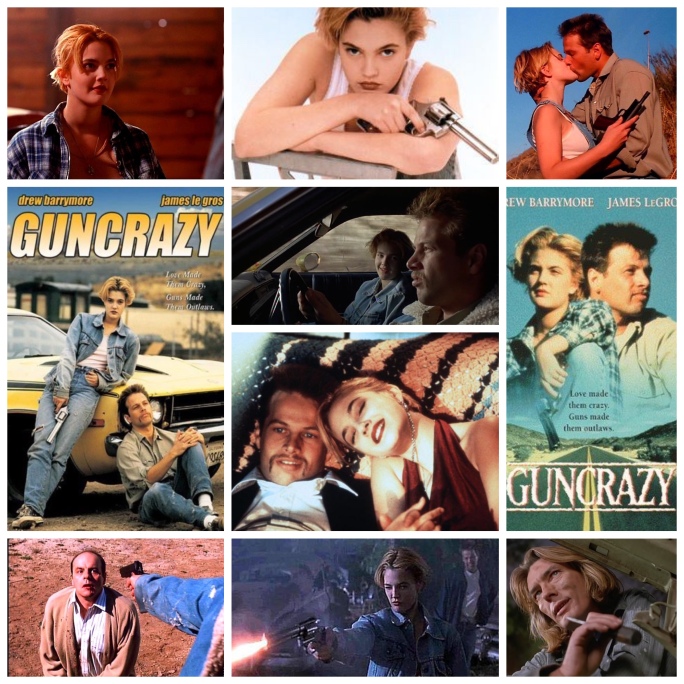
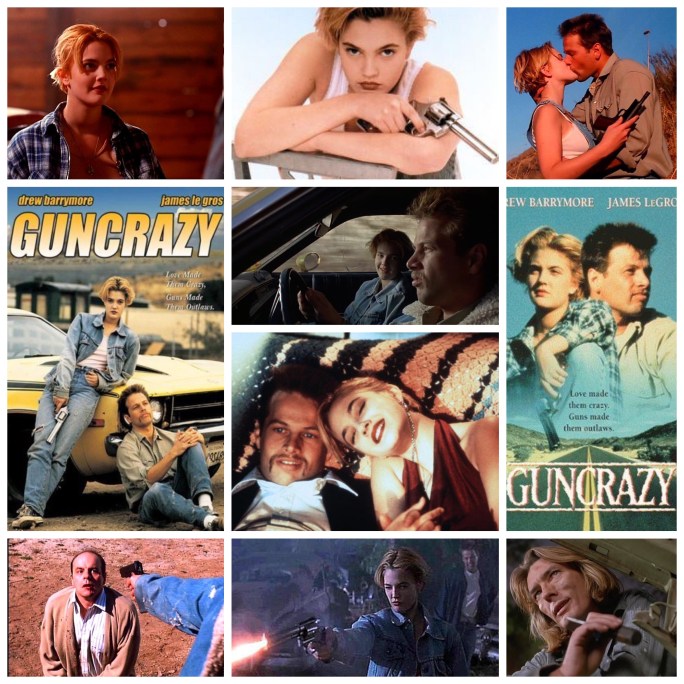
B Movie Glory: Tamra Davis’s Guncrazy

Drew Barrymore has a few interesting, edgy credits early on in her career, one of which is Tamra Davis’s Guncrazy, a lurid little slice of run down, rural life on the outskirts of the big city, as well as civilization it seems. A ‘lovers on the run’ riff in the tradition of Bonnie & Clyde, True Romance and Natural Born Killer, it’s admittedly like the Miller Lite version of large scale films like them but still manages to pack somewhat of an offbeat punch. Barrymore is Anita, a restless adolescent whose humdrum existence in a dead end California town has led to promiscuous behaviour and self destructive tendencies, especially when her convict pen pal boyfriend (James LeGros) is released and joins her for some hell raising. She has a stepfather who’s abusive to her in a way that seems unnervingly normalized to the both of them, high school classmates who are nothing but trouble and a life that most would consider squarely placed on the wrong side of the tracks. The story sees the two of them pretty much fed up with everything, engaging in a murder spree that just won’t end well. It’s not too hot blooded or hyper violent though and there is nothing sadistic in what they do, in fact there’s an innate innocence to the way they view life, their crimes and morality in general, or lack thereof. Barrymore has always had star-power since day one, but she shows a maturity here as she gets older and a complex control over a role that could have been cartoonish. LeGros is an indie poster child and is so prolific he’s probably been in ten or twenty things you’ve seen but just didn’t spit him, he’s a straight up chameleon and does a good job here too. Michael Ironside shows up as his jaded parole officer and the great Billy Drago is cast rarely against type as the town’s local preacher who doubles as both a mechanic and a snake charmer, it’s a bear bit of character work from him and I always enjoy his performances. This film got really good reviews when it came out and caused a minor stir in indie land, which is interesting because I don’t find it all that noteworthy. Usually I’m that guy to champion garbage films based on a few aspects because I love obscure stuff, but this one is kind of your run of the mill cheapie made decent by Barrymore’s charisma. Good score too.

-Nate Hill

Renny Harlin’s Prison

Before Lord Of The Rings shot him into the stardom we know today, Viggo Mortensen had one oddball of a career leading up to it. Between playing the Devil, appearing in one of the more bizarre Texas Chainsaw sequels and training Demi Moore to be the first female Navy Seal he did Renny Harlin’s Prison, a little known, low budget horror flick that’s actually quite a lot of fun. A slick, schlocky hybrid between classic grassroots prison films and effects heavy gore of the 80’s, it sees an ancient precinct becoming haunted by the ghost of a long dead inmate who got the chair, perhaps wrongfully. The Warden (Lane Smith) is an angry old prick whose demons are coming back full force and he’s taking it out on the convicts big time. Mortensen is Burke, a mysterious con with integrity and grit who helps out when he can doesn’t stand for the warden’s bullshit. Chelsea Field is a prison board member who gets swept up in the whole thing and watch for Tom Everett, Kane Hodder, Lincoln Kilpatrick and Tiny Lister too. Smith plays the Warden not as so many have done like an outright sadistic villain, more a severely stressed out career man who has turned ugly overtime and started to project his frustrations in the most damaging ways, given his position of power. This is very low budget stuff and it shows, but there are still some striking set pieces including a solitary cell that heats up like a red hot furnace and fries those inside gruesomely and a string of barbed wire that comes to live and wreaks all kinds of havoc. Harlin made his debut here and it’s a strong one, he makes exciting decisions with the actors and handles the horror excellently. I could have used a tad more backstory on Mortensen’s character as some more exposition regarding the ghost convict, but other than that this is a blast.

-Nate Hill

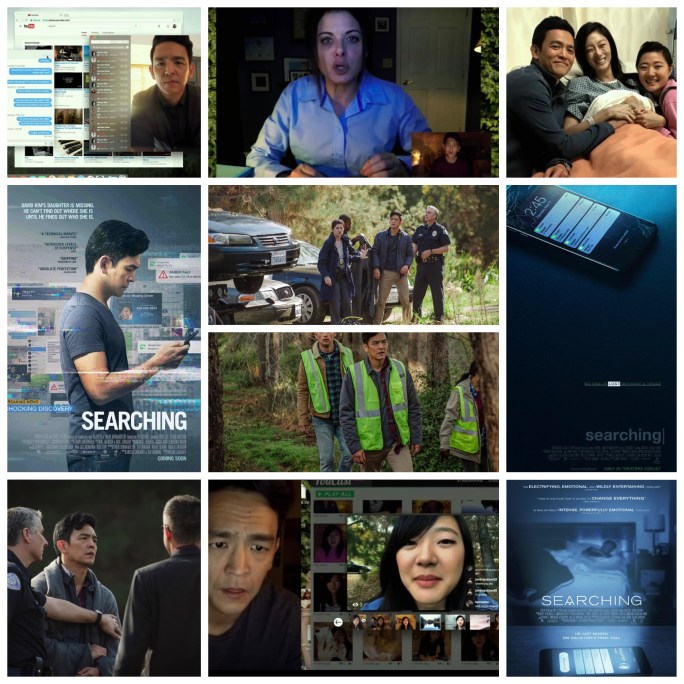
Aneesh Chaganty’s Searching

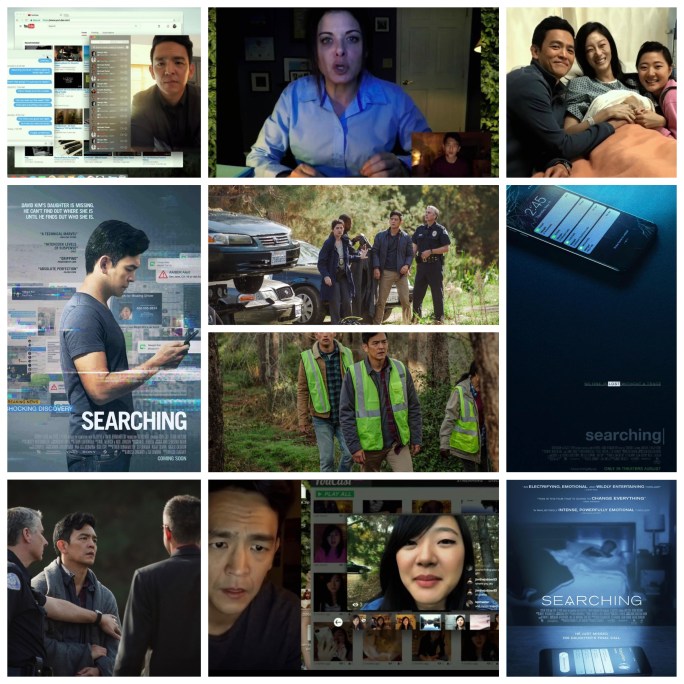
For a film that’s confined to the visual format of social media screens, Aneesh Chaganty’s Searching is one dynamic thriller with suspense, momentum and twists that blindside you. The premise is simple: David Kim’s (John Cho) daughter is missing. She hasn’t answered his calls, texts or FaceTime and communication from her end has gone dead. He now has to break into her laptop, scour through apps, feeds and chat rooms to gain clues about her whereabouts, with the help of an intrepid Detective (Debra Messing). Every frame of this film is some sort of technological facet, from chat alerts to messages to candid footage to news updates to webcasts and more, and against all odds it really, really works. When you’re restricted by format to that level you have to make every inch of your story count, and Chaganty has produced a winner. Right off the bat we are introduced to a family history via stored footage that has us caring for both David and his daughter immensely, before she even goes missing. Cho’s performance is panicked, desperate everything a father in that situation should reflect. The suspense is brilliantly placed and as the story rounds each new curve and doles out a few well earned wow moments, it remains unpredictable and aside from a few minor quibbles and one eye-roll of a red herring, believable as well. I’d love to see this continue into an anthology of sorts, with more mysteries and thrillers told from the perspective of technology/social media. It rules many aspects of our lives and is present wherever we go, whatever we do and I’m fascinated by how they have integrated it into the medium of cinema here. Great film.

-Nate Hill

George P. Cosmatos’s Leviathan

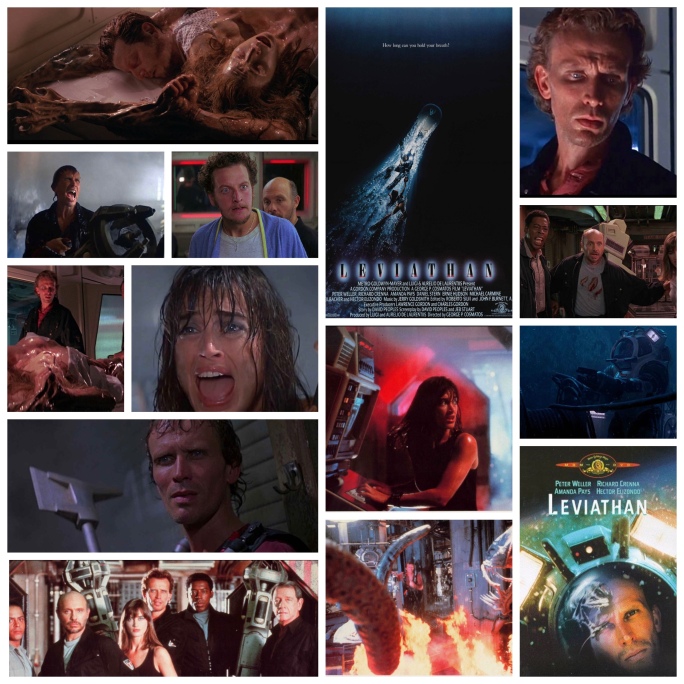
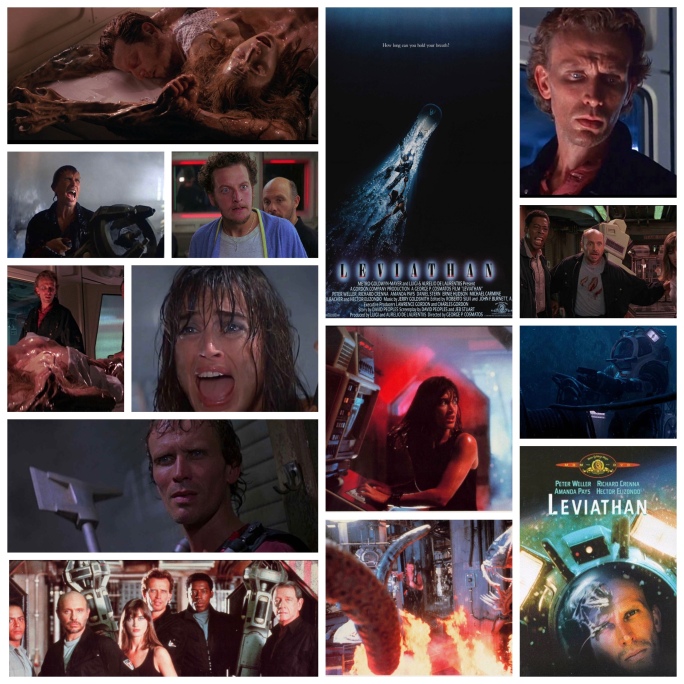
Imagine John Carpenter’s The Thing… but underwater. That’s pretty much what you get with Leviathan, a gooey aquatic creature feature that borrows heavily from both the Thing and Alien’s book, but when you consider how equally desolate and open to monstrous imaginations the arctic, oceans and deep space are it’s not hard to see how minds think alike, whether great or not. Is Leviathan great? Well.. no, but it’s not terrible and puts on a good, enjoyably gory show populated with a cast that can *definitely* be counted as great. On the ocean floor somewhere in the Caribbean, a team of deep sea miners discovers a derelict Russian vessel that was sunk on purpose, and it soon becomes clear why. Their salvage run ends up snagging an unseen stowaway, some horrifically slimy aberration that slowly but surely dispatches members of the crew before showing up in prosthetic form that reminds us so much of The Thing its a wonder there was no lawsuit. Peter ‘Robocop’ Weller puts on a great show as their captain, a jaded intellectual among lowly grunts who just wants to evacuate the team and be rid of the whole endeavour. Others are played by the likes of Ernie Hudson, Hector Elizondo, the eternally hammy Richard Crenna, Lisa Eilbacher, Michael Carmine and Daniel Stern in a role… well what can you sway about his role here. As obnoxious, chauvinistic scumbag Sixpack, he pretty much cements his duty as first to go when the monster shows up and stands as patient zero for most hate-able character out there. We also get Meg Foster as the obligatory shady corporate bitch whose interests lie in dollar value rather than the safety of her employees, an ill advised standpoint that causes Weller to spectacularly one-punch her right at the end, which is a stand up and clap moment. Directed by 80’s genre maestro George P. Cosmatos (Tombstone, Cobra, Rambo), this is a solidly entertaining horror yarn with a schlock feel and although it shamelessly borrows from other, better films, one can’t help but brush that off when you consider the effort made and how fun it is. It’s funny, the late 80’s was a heyday for underwater horror/sci-fi and between other fun titles like James Cameron’s The Abyss, JP Simon’s The Rift and Sean S. Cunningham’s Deepstar 6, this one holds its own. Listen for a great Jerry Goldsmith score too, a loopy composition that samples the howling bleeps of a sonar device to hilarious effect. Good times.

-Nate Hill

HBO’s True Detective: Season 3

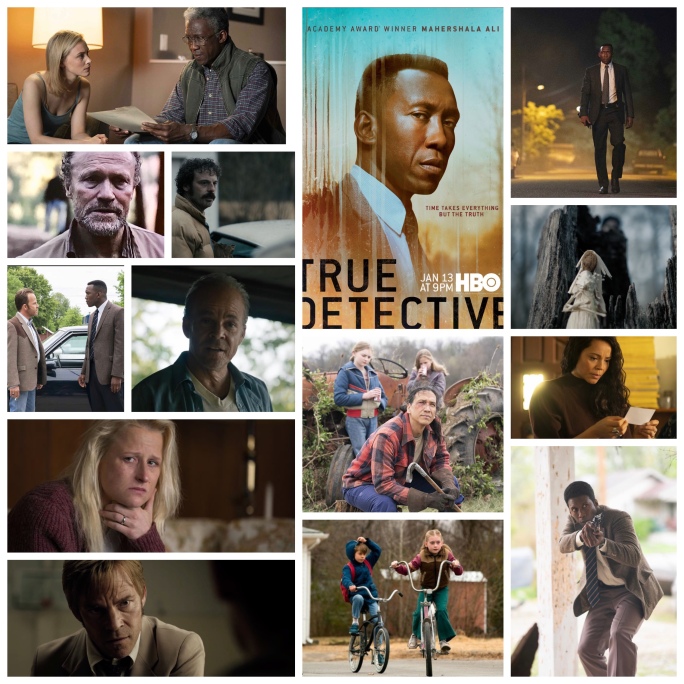
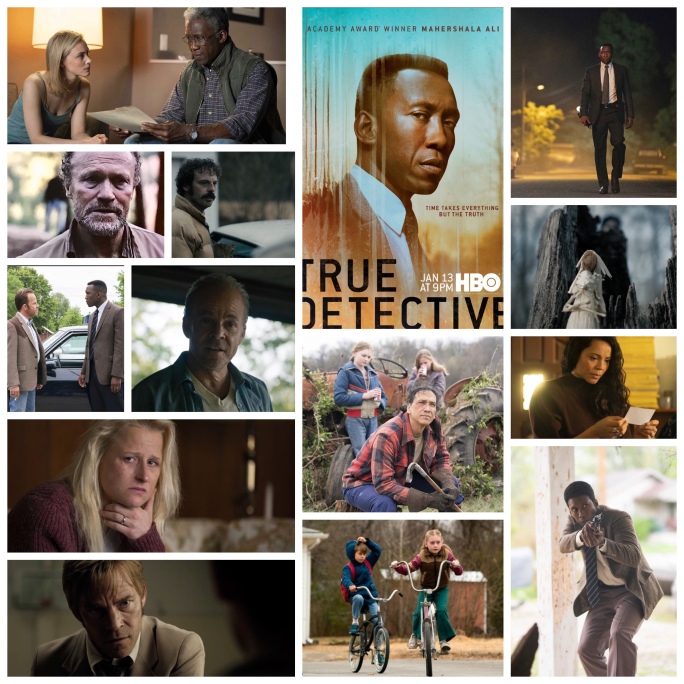
In season 1 of HBO’s True Detective, Matthew McConaughey’s Rust Cohle observed that in a battle between light and dark, it looked to him as if the light appeared to be winning. The spectacular third season has has come to a close and without any spoilers it felt to me like that sentiment has never been more apparent in the series. The first story was a brilliantly existential gothic folk horror show gilded by unsettling conspiracies that went who knows how high up and permeated by the eerie, lived-in grottos of rural Louisiana. The second story was a brilliantly deep, dark, Byzantine labyrinth of California corruption, noir laced nihilism and fatalistic angst. The third story, no less phenomenal, sees a more intimate, emotional tale unfold against the mysterious backdrop of the Arkansas Ozarks, revolving around a crime the mechanizations of which gradually, steadily unfold in ways we both expect and also don’t. There’s a directness and fortitude to the story here where in the past seasons things could be a little more ambiguous and opaque, something I was fascinated by. Every season relies heavily on setting to make the case something you both remember and care about, from the sweaty bayous along the coast to the seedy industrial hum of Vinci. The Ozarks are considerably more picturesque with craggy mountains and thickets of boreal forest, but the atmosphere is no less portentous, the musical cues no less unnerving and the the clues embedded with no less regularity or tact.

One Arkansas evening, young Will and Julie Purcell (Lena McCarthy and Phoenix Elkin) disappear from their neighbourhood while riding bikes, prompting a statewide, decades long search that will go on to greatly affect the lives of everyone involved, especially those of the two lead detectives. Mahershala Ali is a pure sensation as Detective Wayne ‘Purple’ Hays, a haunted yet stalwart Viet Nam vet who can’t let the case go, Ali is a wonder whose eyes, physical mannerisms and tone of voice gravely and soulfully reflect a mystery that has entwined itself into his very essence. Stephen Dorff has been taking it easy for some years now, but casting him as gruff, take-no-shit Detective Roland West has proved a stroke of genius. Dorff has dimension and depth in the role, obstinately turning a somewhat second fiddle character into a complete scene stealer and fleshed out human being who is utterly compelling to watch and listen to. They are surrounded by a pitch perfect supporting cast that all turn in fantastic work. Scoot McNairy and Mamie Gummer are both knockouts as the parents of the missing children, underrated Carmen Ejogo gives a career best as Wayne’s wife and true crime author Amelia Hays, while captivating turns are observed from Brett Cullen, Michael Greyeyes, John Tenney, Ray Fisher, Steven Williams, Lauren Sweetser, Sarah Gadon and a welcome appearance from the legendary Michael Rooker.

‘Time takes everything but the truth’, we see emblazoned on the posters, something that goes from promotional slogan to sediment truth once we see how the show plays out in the unique fashion of three separate timelines unfolding simultaneously in a rhythmic dance that takes time getting used to but is such a fascinating way to tell this tale. We join our detectives in 1980 as the initial disappearance happens, in 1990 as the seemingly wrapped up case is reopened and again in 2015 when new facts come to light and the mystery approaches a conclusion that’s always just around the corner. Hays suffers from dementia in the third timeline and we see how this has affected his memory of the case, relationship to his family and his own familiarity with a psyche that is slowly fragmenting. Such a scattered trio of narratives could have proved too tough to fluidly impart, but there’s a remarkably steady hand in editing, direction and performance that makes the story as a whole, and each circling chapter really shine and come across clearly. Both time and memory are essential in not just understanding this story, but feeling your way through intuitively, because as Wayne’s mind starts to go, that in a sense is all he can do anymore in some instances. This is in many ways a departure from the two other seasons even though on the surface it appears to be very similar to the first. This i believe is a smokescreen of sorts and by every episode we see a unique story unfold that’s filled with secrets and explores obsession, heartbreak, violence, mental illness, the sad plight of Viet Nam vets, corruption, love, family, friendship and the darkness that ever dwells on the fringes of human society, always just a step outside our brightly lit towns, be it in a ghostly fog filled cave or mysterious grove of trees. A story worth telling, and a story worth hearing. Bring on season four please, I don’t see this hot streak stopping anytime soon.

-Nate Hill

Tony Scott’s Man On Fire

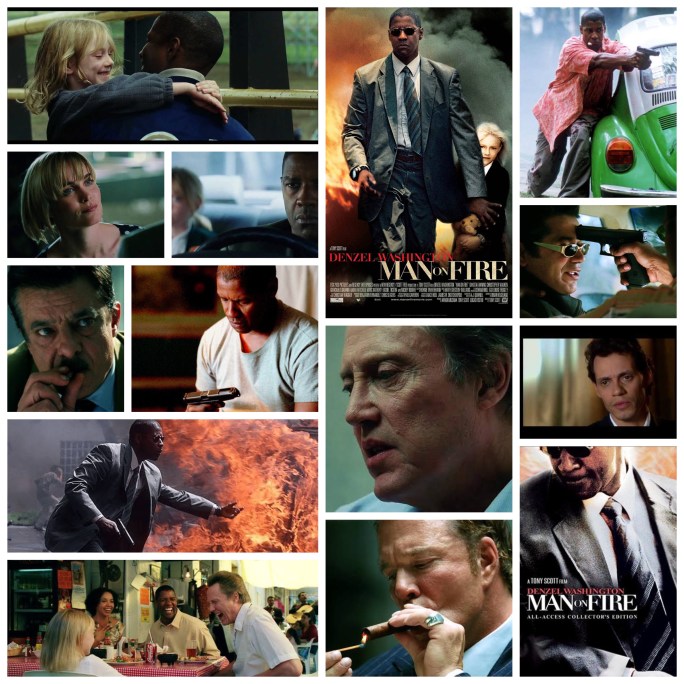
Tony Scott’s Man On Fire is one of those films I can watch time and time again and never get tired of, a magnificently melancholy tale of south of the border justice, criminal intrigue and a tequila shot of pulpy, blood soaked style that gets me every time. It’s loosely based on a 1987 film of the same name starring Scott Glenn, Jonathan Pryce, Danny Aiello and Joe Pesci (there’s a random lineup) but Scott intrepidly branches off into new territory, and thank the gods for his vision. This was the first film where he really explored that sketchy smokehouse of an aesthetic that he would later take to angelic heights with Domino. Colors blur and saturate, editing rockets by with the force of a bullet in a storm, subtitles appear arbitrarily and seemingly of their own volition. It’s a jarring tool set that he employs, and many abhor it. I’m as in love with it as he was though, and whether to throw us right into the protagonist’s psyche or simply because he felt the need to paint his pictures this way, the rest of the films in his remaining career carried the DNA, in varying doses. Fire is the key word for this film, in many of it’s forms. There’s a smoldering ember in Denzel Washington’s John Creasy that is fed by the winds of corruption as the film progresses, erupting into a blazing inferno of violence and fury. Creasy is a broken man, haunted by the questionable, never fully revealed actions of his military past. “Do you think God will ever forgive us for what we’ve done” he grimly asks his old war buddy Rayburn (a scene stealing Christopher Walken). “No” Rayburn ushers back curtly. It’s at this heavy nadir we join Creasy, lost in a sea of alcohol and guilt, an unmooored ship with a shattered hull looking for both anchorage and repair. Rayburn hooks him up with a bodyguard gig in Mexico City, keeping the young daughter of a rich businessman (Marc Anthony, terrific) safe from the very real threat of kidnapping. Dakota Fanning is compassionate, precocious and endearing as young Pita, who spies the wounded animal in Creasy right off the bat and tries to make friends. Creasy draws back in reluctance, but eventually warms up. I love the pace of this film to bits. It spends nearly half of its hefty running time simply getting to know these two characters, forging a bond between them before the inciting incident even looms on the horizon. And when the kidnapping occurs, as it must, the stakes are high as can be and our investment level in the situation is paramount. Setting up character is so key, and Scott nails it with scene after scene of quiet and careful interaction. Then he yanks the lid off the pot, as Pita is snatched in broad daylight, Creasy is shot and the kidnappers vanish into thin air. Pita’s mother (a soulful Radha Mitchell) works with the dodgy Mexican authorities and her husband’s lawyer Jordan (a sleazy Mickey Rourke). Creasy has other plans. Once healed, he embarks on a mission of fury and vengeance, knocking down doors, removing limbs, inflicting gratuitous bodily harm and using every technique in his training (believe me, there are some interesting ones) to track down those responsible and get Pita back. Washington does all this with a calm and cool exterior, letting the heat emanate from every calculated syllable and intense glare. The descent into Mexico City’s criminal underworld is a grisly affair, and all sorts of ugliness is exposed, shredded through the caffeinated prism of Scott’s lens. Two cops do what they can to help Creasy, idealistic Guerrero (Rachel Ticotin) and battle hardened Manzano (the always awesome Giancarlo Gianninni). It’s Creasy’s show though, and he blasts through it like a righteous hurricane of blood and bullets. Scott’s films have a knack for ending in over the top, Mexican standoff style shootouts, but the man subverts that here, going for something far more sorrowful and atmospheric, ending an intense tale on notes of sadness and resolute calm, gilded by the aching tones of songstress Lisa Gerrard and composer Harry Gregson Williams. Walken provides both comfort and catharsis, the only beacon of hope for Creasy other than Pita. Unlike John, Rayburn has moved on from the horrors of their past, but one still sees the trauma in his soul when he looks John in the eye and gets hit with what is reflected back. Tough stuff to get right, but hey, it’s Walken we’re looking at here, and he’s brilliant. Rourke has little more than an extended cameo, but his flavor is always appreciated, and he’s great too. I had no idea Anthony had the chops he exhibits here, but I loved his arc as well and he holds his own in a blistering confrontation with Creasy. Washington is an elemental beast, shadowing what’s left of his humanity under a cloak of booze and brooding contemplation, until he’s coaxed out by the life saver Pita is. Then he’s a lion, riding guns out into a ferocious swan song of a sunset that may just hold rays of redemption for him. This is Scott at his best, his unique brand of storytelling at its height, his creative juices a canister of lighter fluid set aflame with genius and innovation. A masterpiece.

-Nate Hill