HAL ASHBY’S BEING THERE — A REVIEW BY NICK CLEMENT

1

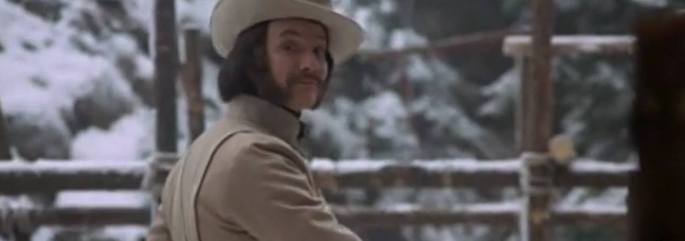
Masterpiece. I loved every single moment of this brilliant piece of work. I viewed this film once, roughly 25 years ago, and it went way over my head. Not this time. Yet another reminder of how skilled Hal Ashby was as a director. This is an endlessly funny, heartfelt, and genuine piece of work, a film that dips into the spiritual towards the end without ever being preachy or overly sentimental. The final shot and final spoken line of dialogue were note-perfect. Peter Sellers was extraordinary as Chance the Gardner, and everyone around him provided wonderful supporting work, especially Shirley MacLaine and Melvyn Douglas. Caleb Deschanel’s fantastic and darkly lit cinematography stressed wide master shots as opposed to an overabundance of close-ups, and as a result, one is left with a sense of the grand (especially when inside of that obscenely large mansion) while the screenplay stressed the intimate. As usual for an Ashby film, the tone was a perfectly calibrated mixture of quirky, dark comedy and straight forward drama, while Jerzy Kosinski’s wise and graceful screenplay, which he adapted from his own novel with uncredited assistance from Robert C. Jones, provided all of the characters with exceptional individual scenes and more than once chance to provide some big moments. This film is so sensitively observed at almost every turn, and it’s easy to see why it has inspired so many other films that have come after it; the Forrest Gump connection was something that sprung to mind very early, as the naiveté on the part of Sellers’ character seemed to be some sort of direct inspiration. There are so many fantastic bits in this film: Sellers leaving his house for the first time to the jazzy tune of Eumir Deodato’s remix of Also sprach Zarathustra and having any number of interesting encounters; the dryly hilarious meeting Sellers has with Jack Warden (portraying a flummoxed President of the United States); the entire subplot of various government agencies and media members trying to find background info on Sellers; MacLaine having a go with herself on that bearskin rug with Sellers passively watching TV in the background. I could go on and on with this film, as every scene felt true and correct, even with the overall plot straining credibility at times. But I didn’t care about that; the heart and soul of this movie is what makes it special. And in only two scenes, a crazy amount of Ruth Attaway POWER – her speech in the lobby of that long-stay hotel stung with piercing wit. Viewed via Blu-ray, and the transfer was spotless.

2

RICHARD LESTER’S ROYAL FLASH — A REVIEW BY NICK CLEMENT


1I’ve long been a fan of the work of Richard Lester. Petulia, Juggernaut, Robin and Marian, Superman II, The Three Musketeers, and The Four Musketeers are films I adore, and I’ll admit to having a soft spot (mostly due to childhood nostalgia) for Superman III. He was a filmmaker who was always interested in mixing tones (especially comedy with action), and I love the chaotic, almost frenetic sense of mise-en-scene that his movies frequently exhibited. I’m eager to check out the films of his that I’ve missed; he was always a filmmaker you couldn’t truly pin down, and it’s no surprise that a subversive talent like Steven Soderbergh would hold Lester in such high regard. One of his most asinine pictures, the 1975 slapstick swashbuckler Royal Flash, is easily one of the most ridiculous movies I’ve ever seen. It’s wonderfully cheeky fun, super clownish at all times, very light and spastic, with a pricelessly funny lead performance from Malcom McDowell as Captain Harry Flashman, a sniveling and humorous Oliver Reed, and as usual, Lester totally filled the frame with so much detail and action and energy that it’s literally impossible not to enjoy yourself on some level with this bit of lunacy. It’s undoubtedly minor, but so entertaining and a further reminder that Lester was a filmmaker capable of balancing various qualities and ideas in his work. One minute, the film feels mildly amateurish, with weird sound work and sped up film processing and strange acting on the part of background extras, and then the next scene is one that’s gorgeously appointed, with terrific vistas and epic sweep and great use of light and composition (the great Geoffrey Unsworth was the cinematographer). McDowell plays a good-hearted rapscallion serving in the British army who blunders his way from one situation to the next, always appearing to be the victor, despite his oafish manner and continual stroke of good luck. Alan Bates shows up for some hearty laughs, and the film is just one gag after another involving duplicity, impersonation, revenge, sexual mischief, and tons of terrifically staged sword fighting and general fisticuffs. There’s also a gag atop a bridge that sort of defies technical logic, especially given the era that this film was produced during. The Twilight Time Blu-ray is crisp and clean and offers a solid assortment of extras. A true pisser of the likes we never get anymore, Royal Flash is tons of fun.

2

JOE DANTE’S MATINEE — A REVIEW BY NICK CLEMENT

1

I don’t understand how Joe Dante cajoled the Universal brass into completing his love letter to cinema, the 1993 film Matinee, after the film’s original producers went bankrupt, but I am glad he did, because it’s such a wonderful, unique, and all together joyous little gem that it stands to reason that in today’s movie climate, this film just doesn’t get made, let alone contemplated, by the major film companies. Dante’s film is a period piece set in Key West, Florida, centering on a William Castle-esque indie filmmaker played with jovial enthusiasm by a perfectly cast John Goodman, and set against the back drop of the Cuban Missile Crisis. Co-starring Cathy Moriarty, filmmaker and Dante collaborator John Sayles, Simon Fenton, then popular Kellie Martin from TV’s Life Goes On, Dick Miller (a longtime Dante buddy and good luck charm), Omri Katz, child star Lisa Jakub, and Robert Picardo (Dante’s other good luck charm!), Matinee is so many things: A wistful coming of age story, an ode to the inherent power of movie magic, and a spirited shout-out to old-school showmanship. Written by Jerico Stone and Charles Haas, the film contains a film-within-the-film called Mant, which is essentially a throwback to the pulpy sci-fi movies of yesteryear featuring a half-man/half-ant with outlandish practical make-up and special effects; it’s oh-so-clear that Dante must’ve been in cinematic heaven with these scenes, as all of the footage from Mant was shot to aesthetically approximate how those movies used to get put together. The acting on the part of the teen leads was decent (if a bit stiff at times), but that doesn’t matter, because this film’s heart is so massive, and it’s wildly evident that it needed to be made by these particular creative entities. Dante is one of those filmmakers who never got his true due as a premiere director of smart and funny and always inventive mid-budgeted studio pictures, a friend of Spielberg’s who also subscribed to the Amblin philosophy of subversive family entertainment; his terrific and continually underrated credits include Explorers, Small Soldiers, Gremlins, Gremlins 2, The ‘Burbs, Innerspace, and The Howling. The film also features a fantastic score from Jerry Goldsmith, splendid cinematography by John Hora, and perfectly timed comedic editing by Marshall Harvey. Seek this one out as my guess is that it’s escaped many, many people who would absolutely love it.

2

MARTIN SCORSESE’S RAGING BULL — A REVIEW BY NICK CLEMENT

2

Raging Bull features one of the greatest performances that the screen has ever contained. It also happens to be a definitive American masterpiece, the sort of film that is unimpeachable in terms of overall quality and its standing in the pantheon of great cinema. This is a pulverizing film – emotionally, aesthetically, and narratively – and it leaves bruises, intentionally, while frequently stirring the soul. Martin Scorsese’s showy, studied, and totally commanding direction is a text book example of cinematic showmanship.  Paul Schrader and Mardik Martin’s intimate screenplay allowed for any number of moments – both big and small – to become immediate cinematic touchstones. Robert De Niro’s work as Jake La Motta will be rightfully revered until the final days of this planet; it’s a force of nature piece of acting in a film that makes the ground under your feet feel as if it’s moving. The stellar ensemble cast all gracefully dance around the edges of this tremendous motion picture, with Joe Pesci and Cathy Moriarty providing blistering support, with a stacked roster of faces and character actors coming and going, providing the film with a terrific sense of place and atmosphere. The combination of Michael Chapman’s electrifying black and white cinematography, which was stylistically heightened to suggest the intense speed and ferocity of the bouts in the ring, and Thelma Schoonmaker’s dynamic and propulsive editing, went a long way in providing the movie with such an urgent sense of violence, both during the numerous bloody bouts and the verbally explosive fights between La Motta and all of the people within his personal orbit. What more, at this point, can be said about Raging Bull that hasn’t been said? It’s one of those timeless classics that ages like a fine wine, and a true reminder of the galvanic force that De Niro possessed during his remarkable run in the vintage years.

4

OLIVIER ASSAYAS’ BOARDING GATE — A REVIEW BY NICK CLEMENT

2

I’m always wholly fascinated by this film, and it’s something I feel that’s worth revisiting every year because of how it uses aesthetics to drive the plot. Boarding Gate is genre-hopper Olivier Assayas (Carlos, Summer Hours, Irma Vep) doing a sort-of-Michael Mann-esque anti-thriller that’s more cerebral than crammed with action. It’s the kind of low-key head-scratcher that doesn’t make any ripples in the theaters, but that people end up discovering at home. It’s a naughty little film, with some kinky sex and bloody gun-play, all steeped in the traditions of the femme fatale and international crime noir. Not as interested in coherent plot developments or definitive answers, Boarding Gate operates in an almost dream-like state which heightens the actions of its sleazy characters. But what makes the film worth watching has more to do with what it doesn’t do, then what it does do.

3

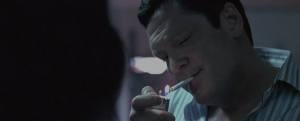
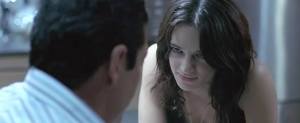
Asia Argento is Sandra, an ex-call girl with a history of drug problems and a taste for S&M. She’s working a legit job in Paris for some sort of international importer/exporter, while also conducting shady drug deals on the side. Her old lover, Miles (Michael Madsen), also happens to be her ex-pimp; the two have a very, very sordid past. She meets up with Miles again and it’s clear that there is still some heat between the two of them. What Miles doesn’t know is that Sandra is also carrying on an affair with her boss, the quietly mysterious Lester (Carl Ng), who runs his company with his wife Sue (Kelly Lin), who may be up to more than she lets on. Someone gets murdered and Sandra flees to Beijing, where she settles on the idea of opening some sort of nightclub. I may be missing something but that might be due to the way certain events in this film are explained. As the film nears its conclusion, Boarding Gate builds to an almost certainly grim finale; what finally transpires will be a surprise for most viewers.

4

Assayas is most interested in style, tone, ambiguous characters, and the chance to photograph his sexy leading lady in black lace panties while she brandishes a pistol. The fun that Assayas has with the ingredients of crime noir is presented right from the beginning. Argento, not the world’s most amazing actress, has a clear-cut physical confidence in front of a camera that is cold, hard, and real. In this respect, it’s not far off from the work done by Rebecca Romijn in Brian De Palma’s masterpiece Femme Fatale. Argento’s dialogue, much of which is delivered in a gravelly whisper, is heavy with symbolism and often feels a bit portentous. She pouts her lips, tilts her head, and genuinely looks like she’d be up for just about anything. She’s a true femme fatale that De Palma or Hitchcock would love. Madsen, who never met a slime-ball character he couldn’t ace in his sleep, is perfectly cast as Miles, a guy who’ll never be able to keep his shit straight. One scene between the two of them, involving oral sex and a leather belt, is perverted and hysterical in equal measure, while also being rather titillating. Cinematographer Yorick Le Saux bathes the film in hot, bright light that illuminates interiors with a slick, almost ghostly glow. And because the film operates in such a tentative mind-set with the characters making frantic decisions, there is a purposefully messy quality to the narrative that is both liberating and potentially frustrating to the viewer.

1

There were times when I wished I better understood what was going on during Boarding Gate, yet, I can’t honestly say I was ever truly confused or annoyed by Assayas’ deliberately opaque style. The film is more about what happens in between the big moments dictated by the necessity of plot, and less about the more obvious instances of action or spectacle. But the film’s final moments, which I totally loved, really sealed the deal for me. The ending of Boarding Gate might anger some viewers who are looking for a more overtly satisfying emotional conclusion to the story. It was here when I got the feeling that Assayas was attempting to channel the tone and mood of a Michael Mann film. This is a fun, dangerous, sexy thriller that’s well worth checking out. Available in America on DVD and streaming platforms; a Region B Blu ray is available from Amazon UK.

RANDOM REVIEWS — BY NICK CLEMENT

buried_ver3_xlg

Buried is a nightmarish thriller.  I mean – what could be worse than being buried alive in a creaky coffin in the Iraqi desert with only a Zippo lighter and a cell phone at your disposal?  I know what could be worse – if you were put there by terrorists who are demanding $5 million for your safe return.  And nobody on the other line is taking you seriously.  And then — shit! — there’s a snake slithering down your leg!  That’s the gripping scenario posed by Buried, the fantastic and diabolical directing debut of Rodrigo Cortes; how hasn’t he become more prolific? Ryan Reynolds is in practically every single shot of the film, and I think it’s his best work as an actor; he’s never not fully committed to this one-man show and it’s something of a tour de force for him as a performer. Never once does the camera leave the inside of the coffin; no flashbacks, no hallucinations, no easy ways out for the filmmakers to cut themselves some slack.  Chris Sparling’s ingenious (and by the end totally insidious) screenplay is clever when it needs to be, tight and spare at all times, and never feels impossibly contrived given the schematics of the plot.  How will this guy ever be able to make it out of the coffin alive?  Will anyone he speaks with via his cell phone actually be able to help?  Buried is gripping from its very first frame, due largely in part to the phenomenal, award-worthy cinematography by Eduard Grau (A Single Man).  Shooting in full 2.35:1 widescreen with Reynolds dominating every frame and with what appeared to be only natural light sources, Buried is always visually interesting and frequently astonishing to look at, which is no small feat considering the solo location and cramped shooting space.  Cortes and Grau’s ability to keep their audience guessing through strategic uses of pitch blackness from inside of the coffin is one of the reasons that the film is as riveting as it is.  The dynamic use of sound also helps create a harrowing atmosphere.  This isn’t a film for the faint of heart and it’s not what I’d exactly call a happy-go-lucky picture.  But for people who liked to be scared just a bit and for those looking to be totally engrossed by a top-notch thriller, look no further than Buried.

mapoftheso

I really enjoyed Map of the Sounds of Tokyo. It’s nothing brilliant but it’s very well done, extremely strong on atmospherics, textures, and surfaces, providing the viewer with a tremendous visual experience.  Lots of rain, lots of steam, lots of neon colors. Very dream-like.  Stony in many respects.  You never quite know how things will play out and while the film is way more interested in style than it is story, it’s always involving thanks to the two central performances by two very different actors (Rinko Kikuchi and Sergi Lopez). The stunning, Wong Kar Wai-esque cinematography by Jean-Claude Larrieu is easily the best aspect of the movie and the explicit sex scenes (writer/director Isabel Coixet clearly has a thing for oral gratification) always keeps the vibe hot and loose.  Like Enter the Void, there’s lots of cool-to-a-foreigner Tokyo-set imagery which always keeps things interesting. The tale that Coixet has cooked up, that of a hit-woman falling in love with her mark, is fairly predictable, but that didn’t bother me because I was always visually interested in what I was looking at.  It’s a mood piece, and as such, it’s a rich success.

dogtooth_xlg

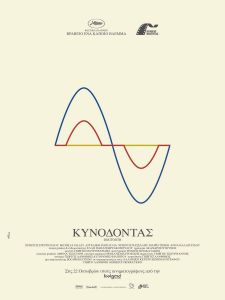
Dogtooth is one of the strangest films I’ve seen over the last few years. I’m convinced that the Academy DIDN’T ACTUALLY WATCH this film before nominating it for Best Foreign Language Film of the year. Not that it’s terrible; far from it. It’s just ultra deranged, totally whacked-out, and playing by its own set of twisted rules. And it strikes me as wildly unfriendly to the mostly blue-hair members of the voting branches.  One thing is certain: this film is not for the easily offended. This is an uncompromising movie that feels completely like the product of a filmmaker who knows exactly what he wants, while also being a film that defies normal description.  Certainly living in the world of satire with detours into black comedy and mixing graphic violence with explicit (and in some cases illicit) sex, Dogtooth is a film of many tones and much ambition.  First time filmmaker Yorgos Lanthimos won lots of awards for this debut effort and it’s easy to see why; there’s nothing else quite like Dogtooth and the originality of its vision, is ever present throughout the entire run time.  When people, especially film critics, are presented with something like Dogtooth, something that is challenging and taboo-breaking and envelope pushing, there’s a tendency for extreme reactions — love it or hate it.  Dogtooth sort of plays out like an extreme version of The Village; a father raises his children (two girls and one boy who are well into their early 20’s), along with the help of his wife, to believe that they should never leave their house/yard/property because of killer cats that live outside the gates. They are self-taught and home-schooled, totally oblivious to the outside world, comepletely uneducated in areas of sex, drugs, and rock and roll.  Everything changes when the father starts bringing a woman home for his son to sexually experiment with and it’s then that all of the dynamics in the house change due to a series of unforseen circumstances.  Yes, the title of the movie is explained.  No, the film doesn’t end all tidy and wrapped up with a little bow on top.  Lanthimos is clearly interested in giving lots to his viewers to chew on and think about and discuss, and via the interview with him that was provided on the DVD, he stated that it was his intention to provoke debate with Dogtooth — it’s something that he feels should bother people and make them question what they’ve just witnessed.  Honestly — if you want a blow by blow of what happens in this film — then go to Wikipedia and type in Dogtooth.  It’s all right there.  What I will say is that this is a film that will appeal predominantly to movie buffs, fans of outlaw cinema, and people who are looking for something different and offbeat.  It’s a film that features pitch-perfect performances from an exceptional ensemble cast, it’s got terrific widescreen cinematography that subverts the very ideas that it is thematically posing, and the lack of a musical score in tandem with incredible Foley/sound work creates an unending sense of tension and unpredictability.

PTS PRESENTS: 15 QUESTIONS WITH COSTUME DESIGNER ELLEN MIROJNICK

ELLEN

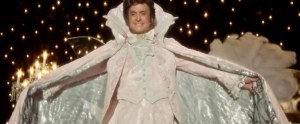
Award winning costume designer Ellen Mirojnick has been a part of some of the biggest, most exciting films and TV programs over the last 30 years. With work stretching various genres and styles, she’s collaborated with some of the industry’s true heavyweights, including Steven Soderbergh, Ridley Scott, Adrian Lyne, Paul Verhoeven, John Woo, Richard Attenborough, Renny Harlin, Mark Rydell, Angelina Jolie, and the late Tony Scott, to name only a bunch. An Emmy and Costume Designer Guild Award winner for her spectacular work on the HBO film Behind the Candelabra, Ellen continually applies her love and passion for the arts to each project she takes on, with results that are always eye-catching and wholly appropriate to the material. Podcasting Them Softly is proud to present an interview with Ellen, as she discusses her inspirations, some of the key films on her resume, her dynamic work on The Knick, and what she has in store for the future. We hope you enjoy!

knick mixer

  1. How did you get your start with costume design and what are some memories from your first job?
FQ

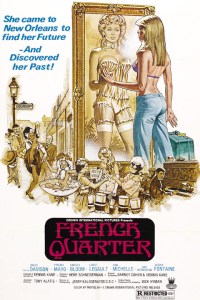
I was designing junior sportswear in NY. My husband was working on a film in New Orleans called French Quarter. The film didn’t have a costume designer. I was visiting, they offered me the job, and I was hooked! I did everything from designing the costumes through full wardrobe on set, including sewing. And I can’t sew! So I had holes in my fingers and had to continually wipe blood off the clothes!

  1. Who were some of your inspirations when you were starting out, and growing up, what were some of your favorite films, or the films that spoke to you the most?

Auntie_Mame_Poster

Well of course Edith Head. But my favorite film was Auntie Mame, so I couldn’t get enough of Orry-Kelly’s work. I’ve always loved movies! As a kid and while growing up, I went all the time to the cinema. The only films I didn’t see were scary ones. I loved all of Audrey Hepburn’s films, Auntie Mame as I said, and Some Like It Hot was a favorite. I really responded to film noir, the French New Wave, and I just really loved sitting in the movie theater dreaming in the dark.

  1. What was your first “big break” in the industry?

fatal_attraction_xlg

I had a few big breaks. I was given a film to design and was immediately a Costume Designer. I would say my career as we know it began with Fatal Attraction.

  1. You have worked with some absolutely legendary filmmakers – Ridley Scott, Adrian Lyne (multiple times), Oliver Stone (multiple times), John Woo, Kathryn Bigelow, Steven Soderbergh (multiple times), Paul Verhoeven, and Tony Scott, just to name a few. Has there been one filmmaker, on this list or not, who you feel you’ve been especially “in tune” with?

NEW YORK, NY - DECEMBER 05: American film director Steven Soderbergh attends

I was in tune with all of the above when we worked together, all were momentous experiences! But the legendary filmmaker who I love working with and would say I’ve been “in tune with” the most is Steven Soderbergh. I call him The Grand Master.

  1. Which currently working filmmakers would you love to collaborate with?
nolan

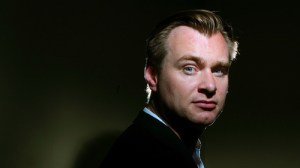
I would love to collaborate with Steve McQueen, or somebody brand new, who is passionate about telling stories. Christopher Nolan, I love how he is fascinated by alternate or parallel universes. Marty Scorsese would be the ultimate New York State of Mind, and I’d still love to work again with everyone I’ve previously collaborated with.

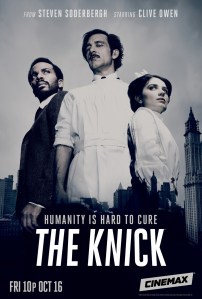
  1. After working with Soderbergh on the fantastic Behind the Candelabra which won you an Emmy, he brought you on to his revolutionary new TV show The Knick. What’s it been like working on that show?
knick_ver20_xlg

There aren’t enough words to describe working with Steven. I feel blessed to be a member of this amazing team. We were all tremendously excited to do something as adventurous as The Knick. 10 hours of storytelling, the complexity of the characters, a true time in history with the early 1900’s, and yet strangely, it still feels very much like today. It was absolutely ELECTRIC putting the pieces together. We built a hospital and a city through a lens we hadn’t seen before. It doesn’t get much better, needless to say, when watching great actors exploring the unknown! Steven has an idea and we get to explore it. He is very trusting with his crew, and he allows us great freedom interpreting the material. He doesn’t micro manage! The goal, as it’s been said by others, is that the actors come onto the set and you know everything works when he picks up the camera and begins to shoot, it’s time for action! The show has been a magnificent challenge, and my joy comes from meeting the various challenges every day, and working with my team, especially with Production Designer extraordinaire Howard Cummings.

  1. The Knick feels like cinema turned into TV. How has this show differed from other TV programs you’ve worked on?2The Knick doesn’t compare with anything. When you are involved with a project that breaks the rules, the rebel in me, as with all the members of the team, rises far and beyond anyone’s wildest dreams! I have only done the occasional TV pilot, all of which have sold and went on to become successful series. And one other TV film, Cinderella, which was lots of fun. But the Knick is great storytelling, chapter by chapter, with great actors loving their characters and their challenges. We shoot it like you shoot a film and I don’t know anyone else that can shoot 560 pages in 73 days! Steven can and does!
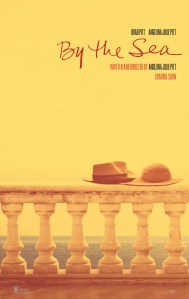
  1. This fall sees the release of Angelina Jolie’s By the Sea, which looks emotionally draining and very much a throwback to 70’s filmmaking. What was it like working with her and Brad Pitt on this seemingly quite personal looking film?
by_the_sea_xlg

Working with Angelina and Brad was great! I didn’t know what to expect but they were great collaborators. It’s a difficult film that was very demanding and an intense assignment, but rewarding none the less.

  1. John Woo’s Face/Off is one of the greatest American action pictures ever made, and the stylish costumes, especially the suits, were a big component of that film’s overall sense of visual flair. What can you remember about working on that bullet fest?
CAGE

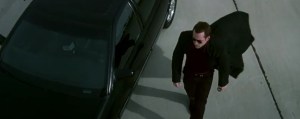
I was thrilled to work with John Woo. I was a great fan of all his Hong Kong films. I loved that I always liked his bad guy! Face/Off was originally going to take place in the near future. I came along and suggested that at the core of the film lived the same man, both sides of him, good and bad, just like the work John does best. They changed the film’s time frame to present day and the characters just spoke to me. John had an idea that when Nic Cage   walked across the tarmac, his coat would fly open as in Lawrence of Arabia. We were able to achieve it with the aid of wind machines! Everyone thought it was a spectacular leather coat and it went on to inspire many future iconic film characters. It wasn’t leather, but rather, it was a polyester priest robe!

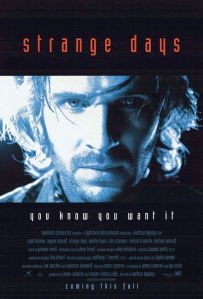
  1. Strange Days is one of the most ambitious science fiction films ever made, and everything about the look and feel of that film is tremendous, especially the distinct wardrobe worn by every scuzzy character. What can you remember about working with Kathryn Bigelow on this masterpiece of cinema?
strange_days_ver2

Working with Kathryn was quite fulfilling. The film took place at the turn of the decade, the year 2000. It was 1994 if I remember correctly when we were shooting, and 2000 wasn’t that far into the future. I helped to create a world that was a hyper mix, with various ethnicities, different time periods, rock ‘n roll, etc. It was divine ecology with nothing being wasted; the rich were rich, the poor were desperate. I remember wanting it to be decadent and sexy. I think it was ahead of its time for sure…

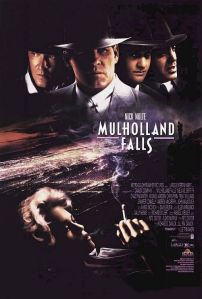
  1. One of the most underrated films on your resume is Lee Tamahori’s Mulholland Falls, aka, “The Hat Movie.” That film has an extraordinary sense of style, and the costume work was nothing short of brilliant. What was it like doing a full blown period noir and getting a chance to work with that incredible male ensemble, all of whom looked beyond snazzy in their outfits?
mulholland_falls

I’m so happy you feel that way about this film as I loved working on it! I love designing for men, it’s pretty clear. I had trouble being thought of as one to design period films, so when I was asked to do this film I felt like I had finally gotten a chance. It was my first period film since Chaplin, and I went into it full on. Nick Nolte, Chazz Palminteri, Michael Madsen, the late Chris Penn, John Malkovich, Melanie Griffith, Jennifer Connelly, and all the supporting players, including Rob Lowe – what a fabulous cast to work with! I loved working on the colors of the suits, and we found original fabrics for all the guys, and all the hats were handmade for the picture. I had a great time, but the story no one knows is that the real life detectives all wore white suits and cruised the strip in a white convertible! The producers thought the studio would be expecting “Men in White”, but after meeting with Frank Mancuso, the head of the studio at that time, he told us we had made the right choice.

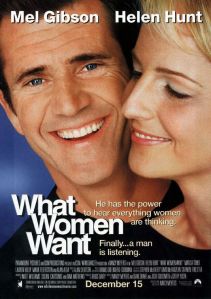
  1. Nancy Meyers is a filmmaker who has a very specific style of storytelling and set decoration. What was it like working with her on What Women Want, which is one of the more thoughtful entries on her resume of entertaining comedies?
what_women_want

Nancy and I have very similar tastes in most areas, which made for a really good collaboration. It’s always a pleasurable working experience when your taste aligns with that of the filmmaker.

  1. Is there a genre you’d like to work in that you previously haven’t?
DOUGLAS

I’d love to do a musical or a fantasy, maybe a nitty-gritty thriller or something definitely not pretty. Actually, anything with a great story and an inspired storyteller – that’s what I’m looking for in new projects.

  1. Who are some of the other current costume designers who inspire you to continuously do great work?

knick_ver11

There are so many great designers working today and I don’t want to leave anyone out!

  1. If you’re able to divulge any information, what projects do you have coming out in the near future, and what are you currently working on?

father

I’m currently in Cambodia, about to shoot Angelina Jolie’s next directorial project. It’s adapted from the book by Loung Ung called “First They Killed My Father: A Daughter Remembers.”

Mirojnick Banner

(This interview was conducted via email in November 2015, and was edited by Nick Clement.)

STEVEN SODERBERGH’S SIDE EFFECTS — A REVIEW BY NICK CLEMENT

2

Side Effects is a slick, smart, and deceptively layered thriller from Steven Soderbergh and writer Scott Z. Burns, who before this under the radar gem crafted the irreverent comedic masterwork The Informant! Side Effects is an extremely stylish head game that loves toying with the audience at all times, and it also happens to be very sexy, which is something that Soderbergh isn’t routinely known for; this is one of the more juicy and nervy offerings from this most eclectic filmmaker. Rooney Mara was absolutely terrific (not to mention disturbingly hot) and Jude Law was the perfect chump to get pulled into her web of potential deceit with possibly dangerous ramifications. The entire cast shines due to an unpredictable narrative that makes your head spin during the final reel, and as usual for Soderbergh, the film is just as interesting for what it doesn’t do than for what it does do. Upending conventions is Soderbergh’s typical stock in trade, and while this film was marketed as one thing, it really was something totally different than what had been suggested or what might be expected. This is one to watch again and again in order to fully appreciate all of the cinematic sleight of hand on display; it’s Soderbergh’s ode to Hitchcock. Also, Vinessa Shaw, as usual, was fantastic – she needs more work!

5

PETER ILIFF’S RITES OF PASSAGE — A REVIEW BY NICK CLEMENT

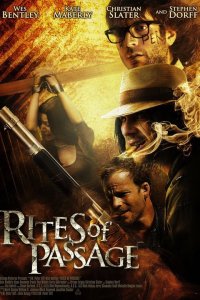
Rites of Passage (2012) Directed by W. Peter Iliff Shown: Poster Art

If you’re looking for an unpretentious, totally nasty horror thriller with just the right amount of sex and violence,  look no further than Rites of Passage, which was written and directed by W. Peter Iliff, the creator of Point Break. The film centers on a group of Anthropology students who decide to take the wrong field trip, to that of an ancient Indian burial ground, with their sleazy professor in tow, played by a game Stephen Dorff. One of the student’s parents happens to have a ranch which is sitting on the site of the burial ground, and it’s decided, in classic horror movie fashion, that it would be a good idea to hold a sweat-lodge-style ceremony in an effort to contact the spirits. Tea that’s been dosed with mind-expanding drugs doesn’t hurt, either! But all hell breaks loose once the drug addicted older brother of one of the students makes an appearance, here in the form of a severely whacked-out Wes Bentley. It seems that Bentley has a meth-cooking operation happening at the ranch, and he’s mixed up with a mental-case baddie with some intense personal demons played by Christian Slater, who isn’t too impressed to have all these new visitors. Before you know it, the innocent partying is cut short, while the body count mounts, with the attractive cast getting to do their best run-scream-and-fighting. Iliff wastes no time with the fast moving narrative, and takes the film into surreal, wildly tripped out places before its conclusion; the sight of Slater hallucinating a stuffed monkey, which tries to talk some sense into the increasingly unhinged killer, is just as lunatic and hysterical as it sounds. This is one of those low-budget items that loves to be playing in the milieu that it is, filled with some gory kills, some nasty black humor, and a tone that juggles thrills with stoner humor and all sorts of wild and crazy ideas. It’s never boring, it’s frequently ridiculous in an over-the-top-entertaining way, and if you need a down and dirty genre item to fill an evening, this one should do the trick.

1

STEVEN KNIGHT’S LOCKE — A REVIEW BY NICK CLEMENT

2

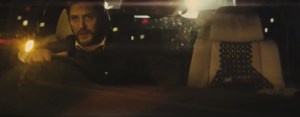
Locke is a mesmerizing film to study. Dominated by a spellbinding, tour de force performance from Actor of the Moment Tom Hardy, Steven Knight’s fascinating existential drama Locke is nerve-rackingly intense, fully absorbing and completely unpredictable, due in no small part to the narrative conceit of the entire film taking place from the interior of a car. Confined to the driver’s seat of his BMW SUV, Hardy gives an all-stops-out performance – this guy is the real deal, seemingly capable of any role that’s asked of him, always able to elicit sympathy no matter how ragged the character, going from subtle to big at the drop of a hat. The dreamy, artsy cinematography by Haris Zambarloukos leaps off the screen; it’s London-street-lamp-at-night-gorgeous, cousins with Collateral in some respects, with reflections and window patterns dotting the expressionistic 2.35:1 widescreen space. Because the story is exclusively delivered via a series of desperate phone calls that Hardy is having with a variety of people, there’s always the question of how realistic can this scenario play out. But because Knight is so strong with his words and so precise with his visuals, the film becomes more than just a trick-stunt – it’s a gripping, all-together brilliant ride that will leave you with sweaty palms by the finish.

1