B Movie Glory: Seven Mummies

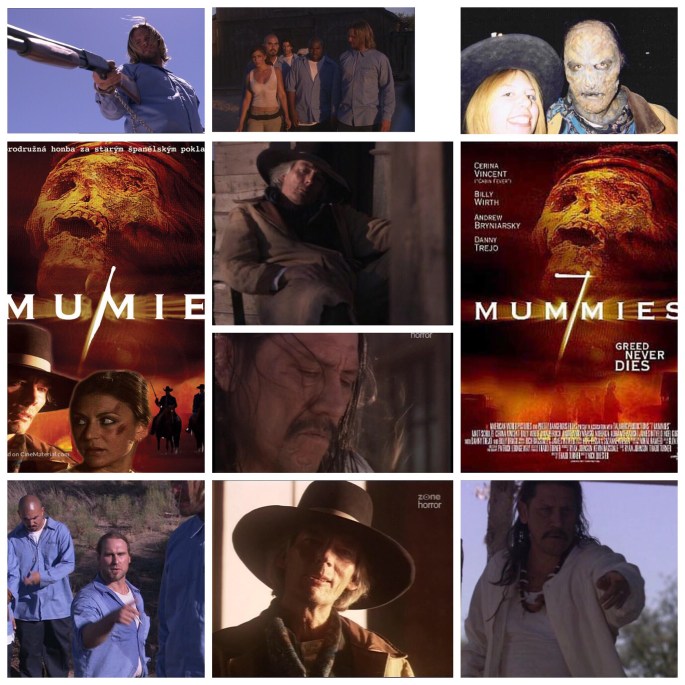
Seven Mummies is so bad it plays like something that From Dusk Till Dawn shat out along the highway. There’s not even one mummy in the thing, let alone seven, instead it’s a dull, shoddily acted piece of bargain bin garbage and the plastic used to make DVD copies would have been put to better use elsewhere. It concerns a bus full of convicts who escape somewhere in the remote southwest, and head for the Mexican border. On the way they stumble across Aztec treasure that has some vague curse, and soon an even vaguer evil is after them all, but none of it makes much sense. Danny Trejo is in it as a mysterious old weirdo called Apache (never mind that he’s so obviously, visibly Mexican), who sits on a dilapidated desert porch and ominously laughs to himself while staring out at the horizon for at least a whole scene. Seriously. No actual lines at all, just laughing and staring, it’s so odd. The one saving grace is veteran villain actor Billy Drago as the evil ghost of an old west outlaw who shows up to cackle and terrorize everyone in a classically hammy bit of theatricality, it’s always great to see him. Other than that there’s really no signs of life to this one, from crappy low rent CGI monsters to lazy filmmaking all round. You’re better off pulling up a chair next to Trejo on that dusty porch and joining him as he chuckles at the tumbleweed dumpster fire of a film he agreed to d just for a few bucks. Amazingly though, it’s still better than that Tom Cruise Mummy flick from last year. Ugh.

-Nate Hill

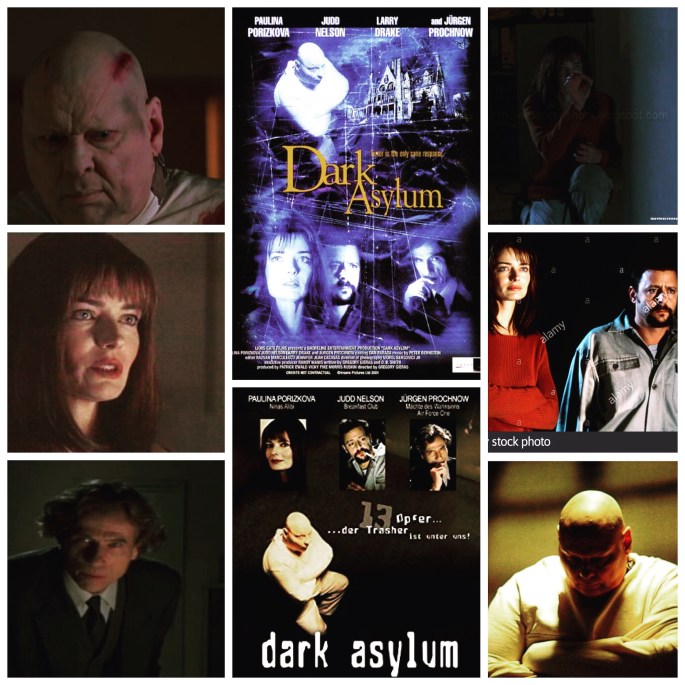
B Movie Glory: Dark Asylum

Dark Asylum is one of those dimly lit, cheesy horror efforts that plays on cable somewhere in the wee hours, a trash exercise in low budget exploitation that leaves little impression other than spotting which character actors are in the roll call to collect a paycheque. In a conveniently remote location, a young psychologist (Paulina Porizkova) arrives at a sanitarium to examine a freaky serial killer called The Trasher (Hollywood’s resident extraterrestrial, the late Larry Drake). The head doctor of the asylum (Jurgen Prochnow), seems to have a relaxed attitude towards security and before you can say Hannibal Lecter, The Trasher escapes captivity and runs about the place killing and terrorizing anything that moves, including a hapless custodian played by Judd Nelson. The whole premise is one of those ridiculously staged things where the killer seems superhuman, can survive everything from sixty pound fire extinguisher hits to the head to being run over by a vehicle, despite being human (I’m reminded of Hollow Man). It’s ok when Michael Myers survives all that shit because he’s.. you know, Michael Myers, he’s earned the esoteric badge, but any old killer in any old B flick surviving everything thrown at him grows old and lowers the stakes pretty quick. Anyways it’s not a terrible movie, just pretty middle of the road, non-special horror filler with enough atmosphere to warrant a watch.

-Nate Hill

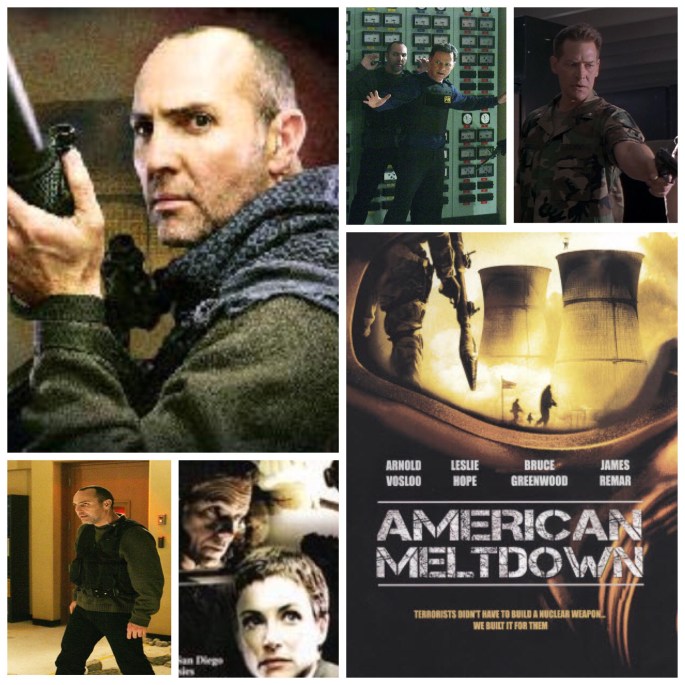
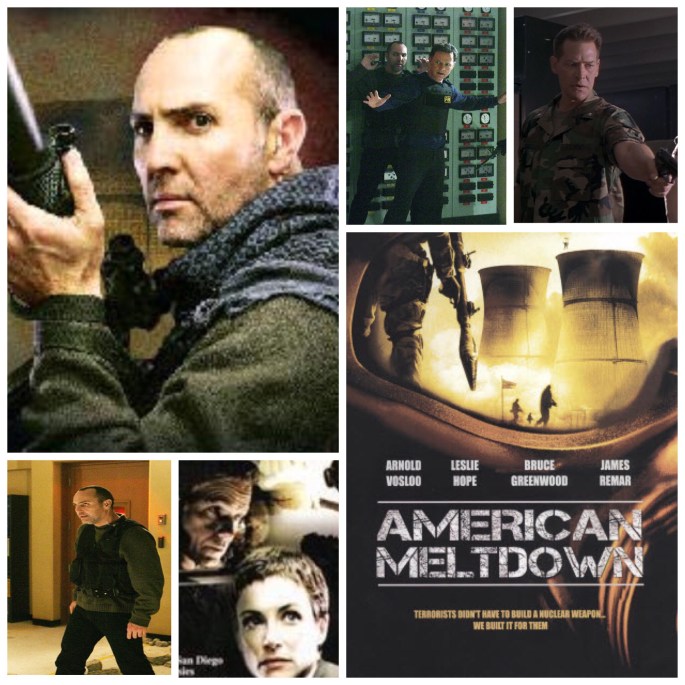
B Movie Glory: American Meltdown

If American Meltdown had a bigger budget, better director and wasn’t cursed with the stigma of being a telefilm, it could have been something cool, because as far as script and cast go, it’s got something. In terms of terrorist flicks it also does something that hasn’t really been explored and throws a curveball twist that might make some Americans squirm uncomfortably in their seats (denial is an ugly bitch). Too bad it got the cheap treatment though, aesthetically speaking it looks like a discarded 24 season test pilot and doesn’t have the dazzle dazzle to support its big ideas. When a ruthless foreign extremist (The Mummy’s Arnold Vosloo) holds a nuclear power plant hostage and threatens to cause chaos, FBI Agents Bruce Greenwood and Leslie Hope race against the clock to prevent the kind of impending doom only TV movies can supply, while a military tactical unit led by character actor James Remar menacingly waits on standby. The whole hijack is more complicated that it seems though and Vosloo’s antagonist proves to have more up his sleeve than a simplistic radical agenda, so the film does attempt to stand out from the crowd. But overall it’s lazily edited, haphazard trash, the kind of thing that will always be dumped onto cable. Cool cast though.

-Nate Hill

“Why did you try to kill me?” A review of Hereditary – by Josh Hains

I do not hate, or dislike, Hereditary. I do not like it either, though I do avidly admire it. To clarify, it is difficult for me to say I like a movie that is so atmospherically dour, so tonally bleak, and so disturbingly grotesque, that makes me feel like I need to bathe in molten lava to burn away the residue of it. However, it’s easy for me to say I admire nearly everything about it.

The same can be said for similarly dark and bleak cinematic ventures like Sicario, You Were Never Really Here (my current vote for the best film of 2018), and Annihilation, to name a trio. Hereditary is as joyless an experience as they come, which makes it inherently difficult to for me recommend to friends of mine whose humongous appetites for horror are in desperate need of some quenching. This isn’t your archetypal, audience friendly and accessible popcorn horror flick one could take a date to and enjoy being scared from, complete with ample cheap or earned jump scares (such as The Conjuring), or heaps of deliciously over the top gory carnage (like in The Cabin in the Woods). I don’t find Hereditary scary per se, just unsettling and disturbing, much like iconic but hollow The Shining.

It is however, the kind of intricate, meticulously crafted psychological horror movie that uptight horror cinema snobs are constantly reminding the rest of us that Hollywood so rarely constructs and releases these days. Nearly every facet of the movie, from the performances (Toni Collette is truly Oscar worthy with her passionately raw performance of a fractured soul) to the cinematography to the editing to the eerie sound design, is handled with top notch laser guided precision worthy of the heaps of praise it’s received for months now since its premiere at the Sundance Film Festival on January 21st. It might not be the best horror movie of the year (which is easily A Quiet Place by miles), or the best movie of the year for that matter (that’d be a huge stretch, considering that honour should most definitely be bestowed upon You Were Never Really Here), but it’s certainly a great little horror picture in its own right.

As great as those and other elements are, the movie becomes dreadfully problematic in the script department after the initial 45 minutes or so. Initially, the movie has absolutely no problem both setting and maintaining a particular psychological horror aura, which is rather sadly, gradually pushed to the side after a major event in the first half hour of the movie, in favour of typical paranormal horror elements. This leads to an ending (that will go unspoiled here), that despite being set-up right from scene one onward, and makes sense to the overarching narrative that’s been told leading up to that point, feels ported over from The Witch (another horror release by the same studio that produced Hereditary, A24), and that doesn’t match the tone of everything that’s come beforehand, and requires one too many suspensions of disbelief in the laughably ludicrous twists. Aside from the tonality issues derived from an unnatural shift in the tone at the midway point in the movie, and a nearly unforgivably ridiculous tacked on ending that doesn’t gel with the rest of the movie, Hereditary is a masterful psychological horror movie bound for the glory of classic horror movie status, though those tonality and ending issues will likely haunt it for decades to come.

As I observed in an article I can’t recall the source of a couple of days ago regarding Hereditary, it’s the “other kind” of horror film, the meticulously crafted, bleak, and unrewarding kind, a rare find these days. The film studio A24 (whom released Hereditary, The Witch, and It Comes At Night), along with Paramount (who’ve also had divided reaction with mother, Annihilation, and the Cloverfield series) and others, seem passionately keen on continuing to churn out these more obscure and psychologically perplexing and taxing horror movies.

I don’t blame them for wanting to.
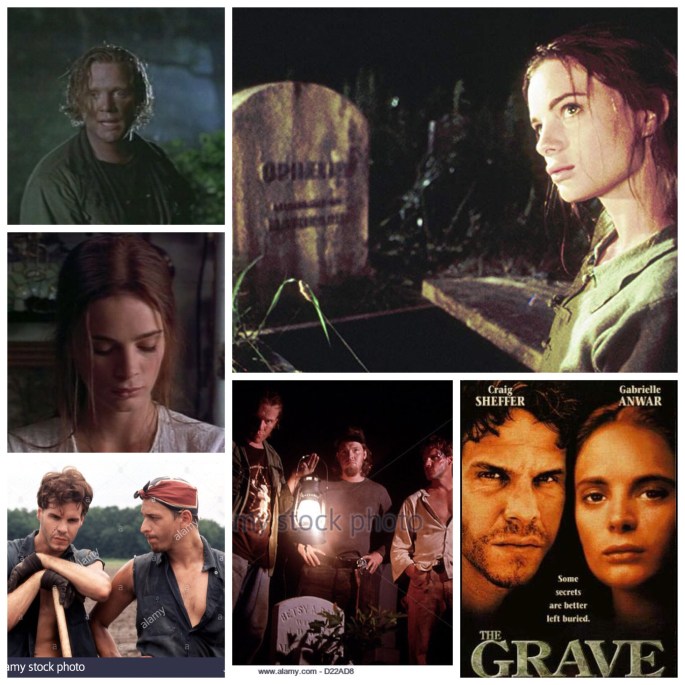
B Movie Glory: The Grave

Dust off the cobwebs in a corner the forgotten ruins of VHS land and you’ll find charmers like The Grave, a enjoyable, forgettable little haunt that stars 90’s indie beauty queen Gabrielle Anwar, her kooky real life husband Craig Sheffer, Breakfast Club alumni Anthony Michael Hall and B movie sultan Eric Roberts, if you’re quick enough to spot his cameo. It’s one among an infinity of B movies from back in the day that starred earnest character actors involved in lurid criminal escapades and sensual deception, each plot only slightly altered from the last. This one see a troupe of escaped convicts (Sheffer, Hall, Donal Logue and others) running around out west in search of a treasure chest full of loot that’s supposedly buried next to it’s millionaire owner. This setup leads way to betrayals, double crosses, Coen-esque hayseed black comedy and all sorts of shenanigans. Anwar plays the scheming ex girlfriend of one of them who gets in the way of all involved like any self respecting femme fatale should. Curiously, Eric Roberts has absolutely nothing to do with the main plot and only shows up for like a minute long cameo as a country bumpkin who gives hitchhiking Anwar a ride when her rig breaks down, talks her ear off for a spill and then heads off never to be seen again. Huh. Must have owed the director a favour from the last B flick he headlined. Anyways it’s a fun one on low key, inconsequential terms.

-Nate Hill

B Movie Glory: Bottom Feeder

It’s ironic that Tom Sizemore starred in a B flick called Bottom Feeder, because he’s been called worse by many in Hollywood. Jokes aside I love the guy, he’s up there with my favourite actors and I’ve had to reconcile his behaviour next to my admiration for years. It’s also no secret that he’s made some piss poor cash grab films, like this one, which lives up to it’s name. Sizemore is clearly emerging from the hazy doldrums of rehab here (the timelines check out), and as such is more subdued than his trademark zany, jumping bean persona. That and he probably had zero interest in putting an effort into material this low brow and schlocky. He plays the head of a maintenance crew here who are dispatched into the catacombs of a city sewer system. Coincidentally, it’s also the home of a maniac scientist who shoots himself up with a weird genetic serum, feeds on a live rat and turns into a giant gooey rat/hooman hybrid that immediately starts hunting people down there. Sizemore’s team has all kinds of theories that reach conspiracy level but at it’s core this is just a standard made for SyFy channel mess, and if it weren’t for his name above the billing, it wouldn’t have even blipped on anyone’s radar, especially mine. The monster looks like a weird ramshackle cross between the thing in Stephen King’s Graveyard Shift and the gross giant rat that Tom Savini becomes in From Dusk Till Dawn, except way less cool than both of those beasties. This is a bottom feeder flick, derivative of basically everything in other better horror flicks and bereft of any of its own originality. Hard pass.

-Nate Hill

Gore Verbinski’s The Mexican

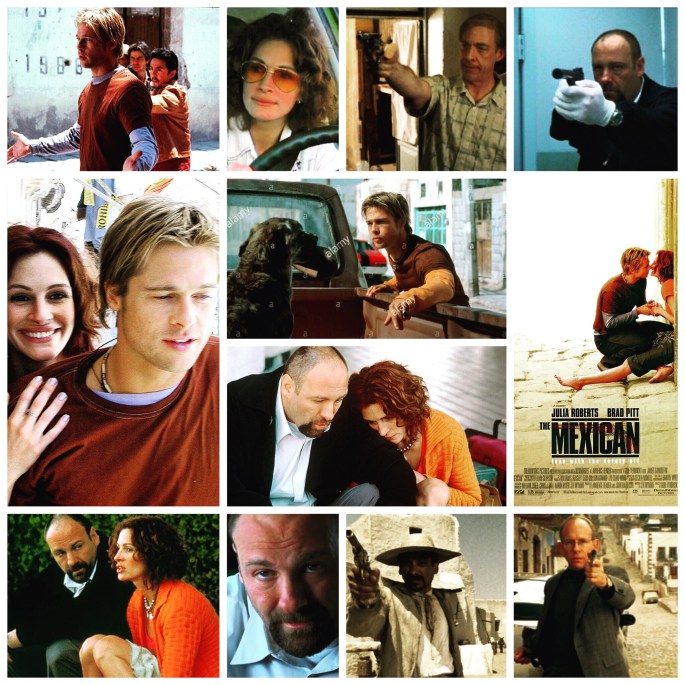
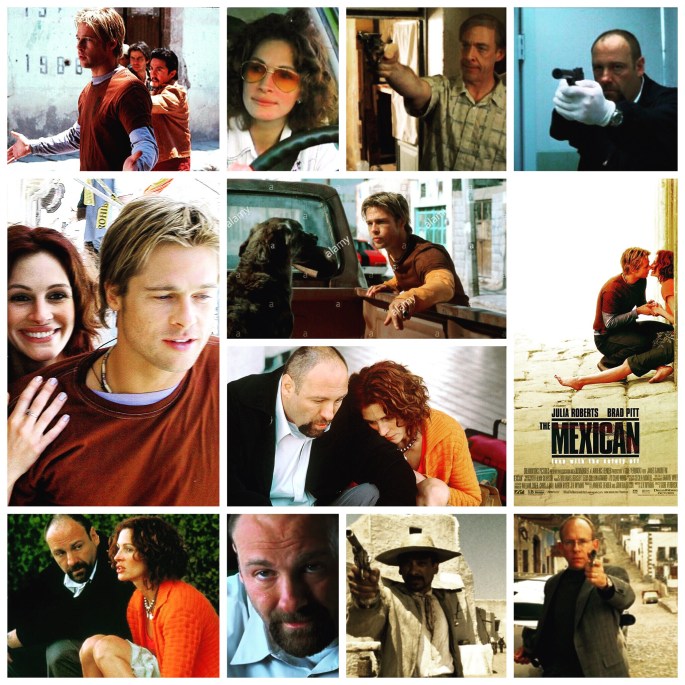
Gore Verbinki’s The Mexican has always been a huge favourite of mine. It’s sort of a diamond in the rough in the sense that it didn’t meet very explosive box office or critical acclaim, but upon closer inspection is actually a uniquely structured, sexy, dangerous, eccentrically funny romantic black comedy. It’s one of those laconic yet feisty crime flicks, the kind that Elmore Leonard writes and Soderbergh directs, but this one is given the trademark oddball humour and distinct flourish that Verbinski brings to all of his films, the guy is so undervalued in Hollywood. Brad Pitt, in one of his scrappiest turns, plays perpetual fuck-up Jerry, a low level mob package boy who couldn’t deliver a pizza without dicking it up. He’s tasked by his freaky boss (a scary Bob Balaban) to deliver an ancient antique pistol across the Mexican border. Of course everything that can go wrong does, like the Murphy’s law of caper flicks. His high maintenance, wired girlfriend Samantha (Julia Roberts) tracks his course and ends up in quite a bit of danger. It’s all a breezy affair that goes from one episodic, densely written and excellently acted scene to the next, with redundant complexities of plot less important than character development and singular instances of violence and dark comedy. I won’t ruin the surprise cameo near the end but it’s someone who you’d always expect to find in smart ass films like this and shows up like he meant to be there the whole time but got caught in border traffic. J.K. Simmons is hilarious as a slightly odd colleague off Jerry’s, but the best performance of the film by far comes from the late James Gandolfini as Winston Baldry, a gay contract killer with both a soft and a dangerous side who kidnaps Samantha and holds her ransom until he finds Jerry. The brilliant script by J.H. Wyman focuses on and develops their relationship beautifully until we believe both as human beings in full colour and personality, as opposed to just characters on the page. Gandolfini could play a barstool on camera and still have enough depth and human spirit to win over an audience, the guy was just that good and this remains my favourite character he has ever created. There’s always a qualm people have with this film, and it’s that despite billed as a romance, Pitt and Roberts barely share any screen time together, instead running around the southwest and Mexico trying to find each other. Well, perhaps the poster shouldn’t have shown that image of them sharing a moment like that, but to me this story was never about them together, but the journey they take finding each other, all the crazy people they meet along the way and the strange parable of the pistol Jerry must deliver, which gets it’s own black and white aside flashback sequence that has a Robert Rodriguez feel. This one is a charmer, has enough action, wit and warmth to fill it’s leisurely two hour runtime, and languishes in each minute of it like any good, well thought out story does.

-Nate Hill

William Friedkin’s The Hunted

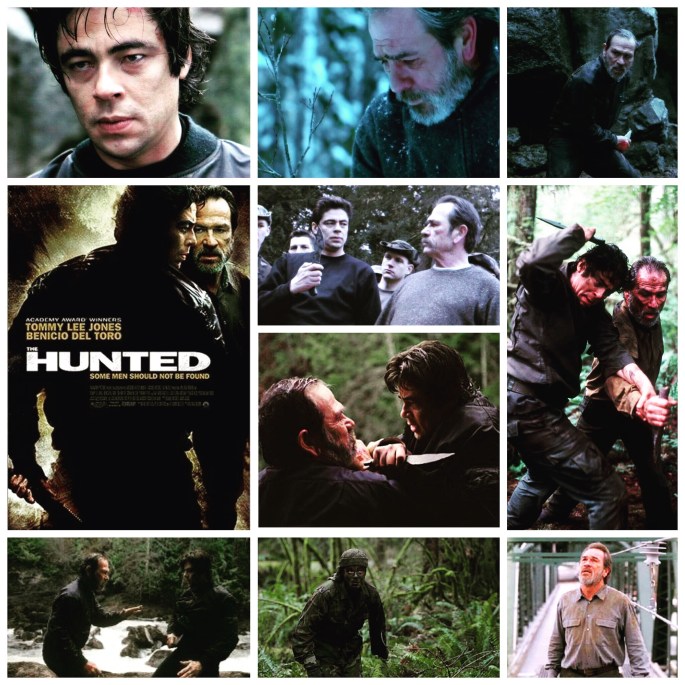
William Friedkin’s The Hunted is the kind of blunt, ruggedly visceral, artery slicing action picture we should be seeing more of in modern times. Where in other films there’s car chases, shootouts and the man to man violence is impossibly elaborate, Friedkin goes primal here, with knife fights that cut to the basics of the human body and its movements, fight scenes that make us wince because we can feel each jab and tear, as the camera dives in close to give us a dose of intimate adrenaline. While the story is simple enough, there’s a haunted complexity to Benicio Del Toro as a highly trained ex marine who has lost his mind. Someone with that skill set is a dangerous person when they go off the rails, and soon this traumatized warrior is hunting people for sport in the Washington rainforest. The only one who can track and possibly stop him is his former Lieutenant and trainer, played with earnest frankness by Tommy Lee Jones. The flashback scenes of Del Toro’s training are very matter of fact, as Jones shows him, without emotion or bias, how to wound or kill another human being in the most efficient way possible. This has made him into a deadly weapon, but they never took his psyche into account, which has run amok. I love action films set in the gorgeous Pacific Northwest region (see Shoot To Kill with Tom Berenger, another great one) where I live, the scenery takes on a lush, mossy personality of it’s own here. The latter half of the film is purely just Jones hunting Del Toro through the Northern wilderness, each using their skills, setting booby traps, reading the terrain until the eventual bloody confrontation. When I say bloody, I mean just that ; Their knife fight is some of the best close quarters action I’ve ever seen, and will have you shielding your major organs as you watch them slice and slash. Friedkin here acts the same way Michael Mann operates with his gunfight sequences: they both understand that less is more with these types of set pieces, to not go overboard and throw all the cards in (John Woo does this, but with grace and style), but to let the action be realistic, impactful in it’s pacing and land with the real threat and consequences of violence instead of screaming overkill. If this film has come out in the 70’s or 80’s like the vibe it exudes, it would have had one of those beautifully hand drawn vintage posters. There should be a criterion edition or some sort of boutique release that revamps the artwork and provides the ultimate DVD package for this film, because it’s one of the finest action movies ever made.

-Nate Hill

Tim Burton’s Batman

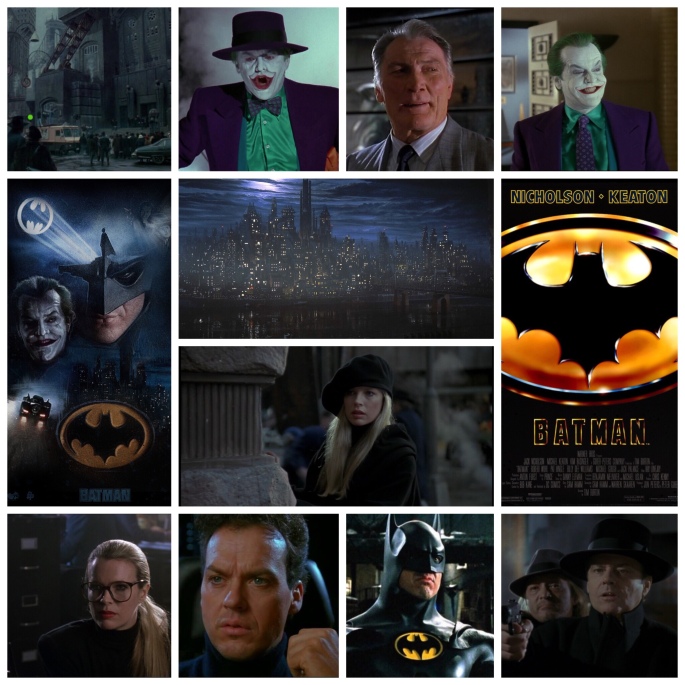
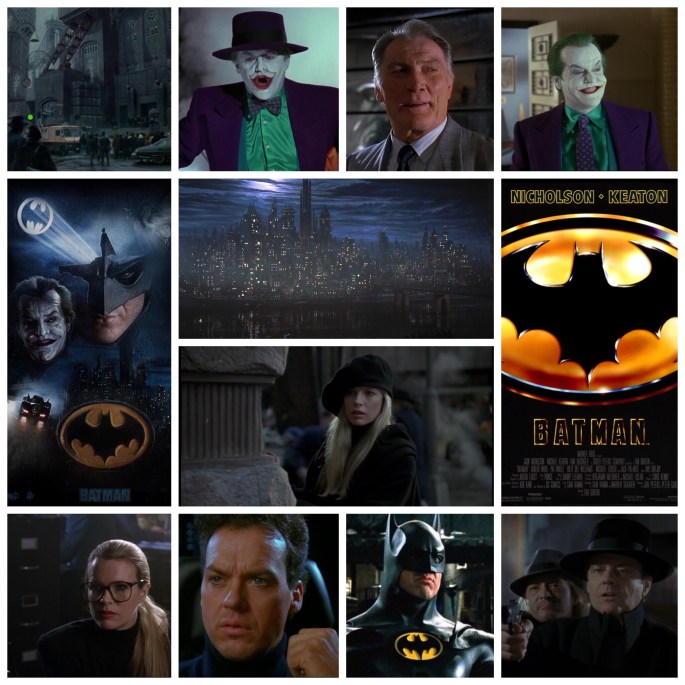
Tim Burton’s Batman has to be of one of the most unique caped crusader films ever made. One villain, where in every other outing there’s a handful. A Prince soundtrack. The craziest gothic production design this side of Fritz Lang’s Metropolis. It’s one of my least favourite in the string of cinematic Batman films, probably falling somewhere under Nolan’s efforts and Burton’s superior sequel Returns, but that doesn’t mean much because on it’s own terms, it’s really something special. The aesthetic employed here is important not just in comic book films but in the realm of special effects in general. Burton carefully composes a world that reminisces on the grainy Hammer horror movies of the 50’s and infuses that with the stark trench coat noir from 30’s gangster flicks. He’s a director who has always understood that atmosphere is key above most other things in a production and it’s thick as a fog bank here. Then there’s the casting of Michael Keaton, a physically unassuming choice for Batman who seized the moody aspects of the character and took them to new introspective heights, barely uttering three words as both Bruce and Bats. The hook of this film was obviously meant to be Jack Nicholson’s rowdy, boisterous Joker, so much so that he got billing above Keaton. In a subdued, musty Gotham city, he’s the one splash of psychotic colour that stands out, a relentlessly cartoonish yet very scary ignoramus who cements the aforementioned old school gangster vibe, especially in an origin prologue where he’s just Jack Nicholson sans makeup and fanfare, which is when we see some of his best work of the film no less. Kim Basinger feeds off of Bruce’s sullenness as Vicki Vale, a news reporter and obligatory love interest, but Basinger dodges the cliche a bit and simmers underneath the sex appeal, especially when she falls into the Joker’s clutches and we see past trauma burning in her eyes, whether it’s Vicki’s or Kim’s, we’ll probably never know. Robert Wuhl, Billy Dee Williams as a pre Two Face Harvey Dent, Pat Hingle, and Michael Gough all make vivid appearances, but I especially enjoyed Jack Palance as a nastily corrupt kingpin/politician who’s partly responsible for Nicholson’s epic caterpillar into sociopathic butterfly metamorphosis. The real star of the show here though is Gotham City itself, seemingly conjured up from the darkest shared dreams of Count Dracula and James Cagney. It’s a monumental achievement in set design that has influenced countless other projects since and serves as one of the textbook urban hellholes in cinema. This may not be my favourite Batman flick as it is for some, there’s a few things that stand out. The celebratory score by Danny Elfman, although brilliant in it’s own right, seems to clash a bit with the dingy, cobwebbed vibe of Gotham and I’m always curious how the atmosphere would have been if they went with something a bit darker. A minor quibble in an overall picture that’s a stroke of genius though. From that baroque Batmobile catching air through a giant waterfall to the inky black and deep purple silhouettes of Bats and Joker atop a cathedral loft, this film has since been engraved into legend and stands as one of the most iconic comic book flicks.

-Nate Hill