Jaco Van Dormael’s Mr. Nobody 


Ever see a film that you actually can’t really, properly describe to someone? You often hear “it’s hard to describe”, but you know those ones where you really do find yourself short of a five second cocktail party summary, left with nothing to compare it to and no way to impart the contents in quick, succinct jargon? Jaco Van Dormael’s Mr. Nobody is exactly that type of film, an experience so dense, disorienting and thought provoking that one needs at least a few months after the initial viewing alone to ruminate, mull it over and meditate on what was seen before even a word of analysis is offered. On surface level it’s about a man named Nemo Nobody, played by Jared Leto in a jaw dropping, multifaceted encore of a performance. Nemo is over a hundred years old, the last mortal on an earth of now immortal humans, and he recounts his life, or many lives, rather, to a journalist. That’s the diving board that vaults into an intricate narrative full of love, grief, joy, tragedy and the peculiarities of being human. We see Nemo at hundreds of junctures of his life, penultimate crossroads where he could make either choice, but if he makes neither of them, can then see both outcomes, how they carry forward his trajectory into the future towards more crossroads, more lives, more decisions, like the infinitely branching tributaries of an ever flowing river. How would one make a film like this work onscreen, you ask? Well, not easily. The thing runs almost three hours and often gets a little caught up in itself, especially in the midsection, but it’s sheer ambition and uniquely structured storytelling carry it on wings of light, spanning through a hundred years and countless events that Nemo sees passing. He has three loves, or at least three the film focuses on: luminous Ana, played by an excellent Juno Temple and then Diane Kruger as she gets older, mentally unstable Elise (Sarah Polley) and Jean (Linh Dan Pham), all of whom help shape him or have key parts to play along the branches of his tree of life. There’s a lynchpin event from his youth upon which it all hinges though; faced with the decision to move away with his mother (Natasha Little) as her train leaves, or stay behind with his father (Rhys Ifans), the boy begins to run, but also looks back. This nano-moment is the key to eternity here, the introspective Big Bang that gives way to our story. At times the film lags, and the slack could have been pulled tighter during the development of the three relationships, but the first and third acts that bookend the whole thing move along like the forces unseen around us, using cinematic tools to compose a symphony of motion, music, scientific pondering and emotional resonance. No other film is like this one, and my attempts to describe it above still just don’t even scratch the surface of the dreams found within its runtime. There’s only a few other ones out there that have aspirations as cosmic as this one, and most, including this, have made it into my personal canon of favourites. Darren Aronofsky’s The Fountain, The Wachowski’s Cloud Atlas and Terence Malick’s Tree Of Life are such films, and Mr. Nobody now sits at their table. 

-Nate Hill
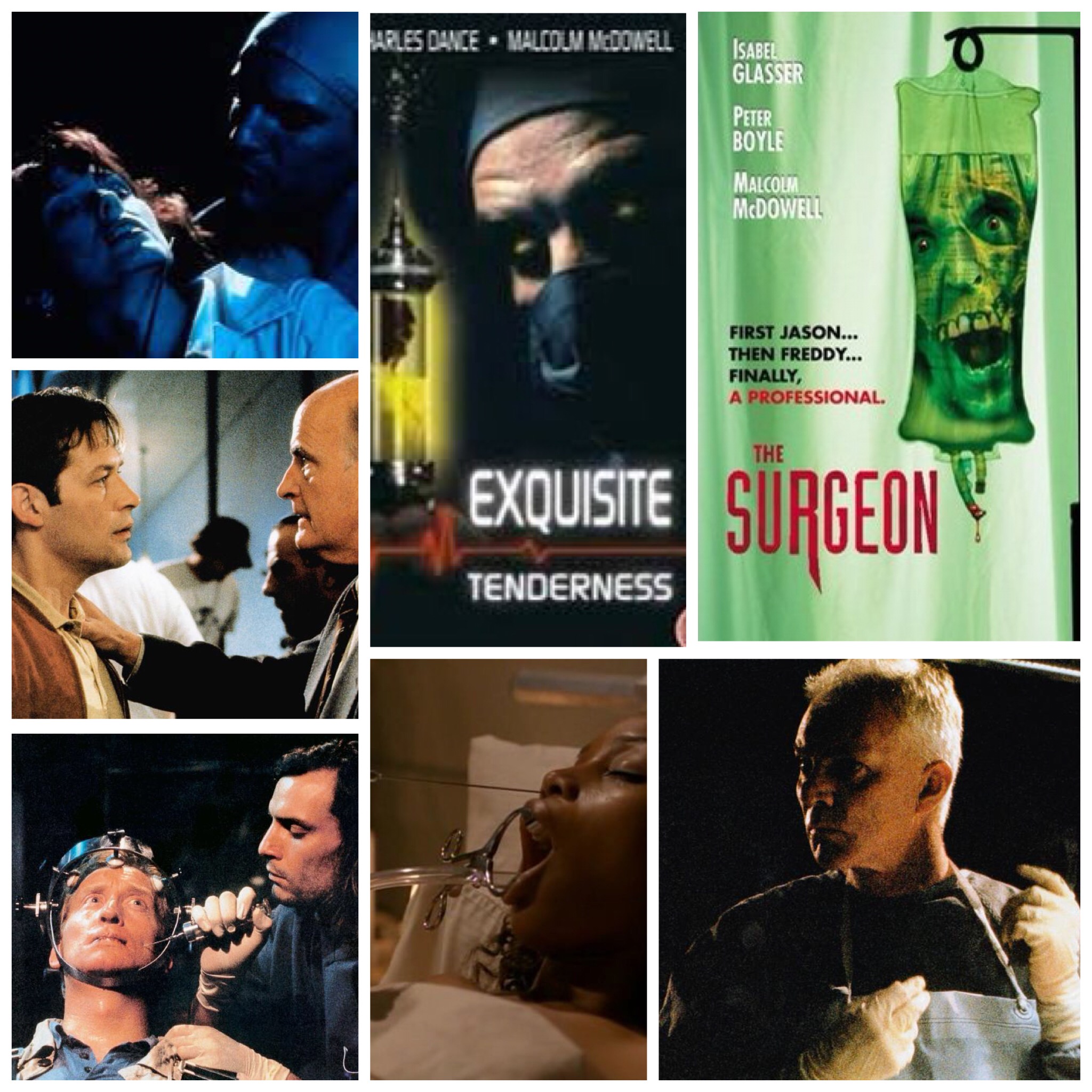
B Movie Glory: The Surgeon aka Exquisite Tenderness


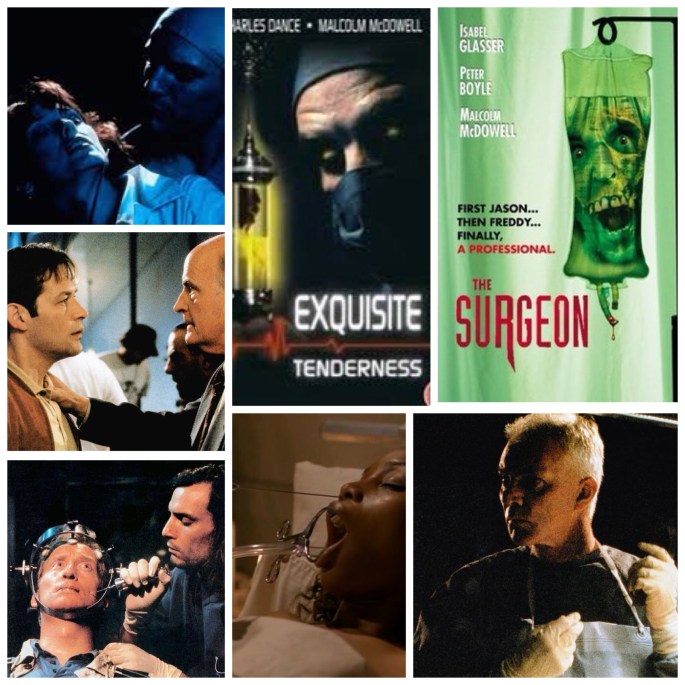
The Surgeon is an overlooked little hospital horror chiller that’s worth the price of admission just for the opening scene alone, a spooky black and white prologue in which a young boy witnesses a surgery gone horribly wrong, all set to that cheery ‘Lollipop Lollipop’ song, quite a memorable way to kick your film off. After that it’s fairly standard, as he grows up to be a scalpel wielding slasher who roams the wards of a huge hospital, killing patients, doctors and undergrads at leisure. Two intrepid doctors in training played by Isabel Glasser and James Remar are onto this beast and gradually begin to realize there’s foul play afoot, and the demented surgeon, played by Sean Haberle, continues his stealthy rampage throughout the halls. Malcolm McDowell is also there for a bit, sorely underused as an arrogant, short lived doctor who likes to trial weird drugs on chimpanzees in the basement. Peter Boyle chews scenery as a bumbling detective, Charles Dance has a fun bit and it all hurtles along like the B movie it is. That opening though, quite a well accented bit with the song, and an eerie setup for the schlock to follow. The film’s actual title on IMDB is Exquisite Tenderness, which was rebranded for DVD release as The Surgeon, which is slightly less.. European of them than the original one, but it does suit the low grade silliness. Decent stuff, for what it is. 

-Nate Hill

Alan Parker’s Angel Heart 


No other film has the seething elemental power of Alan Parker’s Angel Heart, a detective story propelled by a murder mystery, all the while cradled in the sweaty, unnerving blanket of a satanic horror story. Get the extended unrated cut if you can, as it cheerfully amps up both the queasy gore and kinky sex in spades. The time is postwar 1940’s, the setting New York, or at first anyways. Shabby private detective Harry Angel (Mickey Rourke) is hired by sinister clandestine gentleman Louis Cyphre (Robert De Niro) to find a missing lounge crooner named Johnny Favourite, for nasty reasons shrouded in thinly veiled threats. Harry is stalled at every turn, kept just out of the loop on every plot twist and soon seems to be a magnet for violence, troubling hallucinations and all the eerie hallmarks of a case he should have stayed far away from. The grisly clues lead him from Brooklyn to the smoky ghettos of Harlem, then south to voodoo soaked swamps of Louisiana and beyond, chasing illusory information and feeling more like the hunted than the hunter with each step. The film feels at times like a shrinking steel cage of unease and dread, a trap that closes in on both Harry and the viewer until the soul crushing revelations of the final act have been laid bare. This is hands down the best work Rourke has ever done, and it’s priceless listening to him try and to downplay it on the DVD commentary, classic ice cool Mickey. De Niro is the kind of quietly dangerous that leaves a deadly vacuum in the air of each scene, underplaying evil expertly and laying down more mystic mood by simply peeling a boiled egg than most actors could with a twenty page monologue. Ex Cosby Show darling Lisa Bonet sauces up her image here as a Bayou voodoo princess with ties to the mystery, and the steamy, no holds barred sex romp she has with Rourke has since become the stuff of legend, a feverish cascade of blood and other bodily fluid that almost gave the MPAA a coronary. The one area this film excels at most is atmosphere; there’s something intangibly wild about everything we see, hear and feel on Harry’s journey, from the supernatural tinged, noirish hues of Michael Seresin’s cinematography to the haunted, hollow tones of Trevor Jones’s baroque, restless original score, everything contributes to forging a world in which we feel enveloped in and can’t quite shake after, like a bad dream that creeps out into waking life for a while after the night. Angel Heart is a horror classic, a blood red gem amongst genre fare and one in an elite group of films that are pretty much as close to perfect as can be. 

-Nate Hill

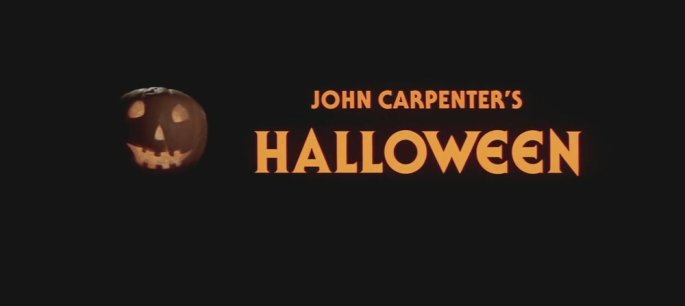
John Carpenter’s Halloween

Halloween

1978.  Directed by John Carpenter.

download.jpg

Plausible nightmares are one of the most engrossing forms of horror.  John Carpenter’s legendary film Halloween, uses a simple premise, devoid of supernatural influence, to construct a muted Giallo homage that uses outstanding compositions and wonderfully understated performances to present a homespun tale of suburban terror.

On Halloween night in 1963, six year old Michael Myers repeatedly stabs his sister to death with a kitchen knife.  Michael is then placed in a mental hospital and his therapist, Dr. Loomis spends the next 15 years trying to heal the child’s fractured sanity.  On Halloween night in 1978, Michael escapes from the sanitarium and returns home to resume his unfinished killing spree.  He sets his sights on Laurie, a teenager who is having a party with several of her friends.  Loomis pursues Michael, planning to set a trap, however Michael has other plans in store for this very special All Hallows’ Eve.

download.png

Carpenter’s direction uses artistic discretion and eerie lighting effects to masterful ends, presenting the events of the film as a possible reality in which the blurred and obscured backgrounds are filled with true evil, and it is their contrast with the red blooded American victims that is so unforgettable.  Jaime Lee Curtis does an admirable job as one of the first incarnations of the American “scream queen”, but even her role is subdued.  Carpenter outright refuses to allow anything to rise to the level of parody, imprisoning the teenage cast  in a pubescent purgatory.  Starting a long held horror film tradition of the victims being the ones to engage in substance abuse and sex, Halloween’s brilliant narrative conceit is that its killer is not overly intelligent, but simply opportunistic and inhumanely relentless.

Long time collaborator Dean Cundey’s cinematography captures the precise blocking of the cast with vivid close ups that use blurred backgrounds to present Myers as a spectral force.  Shadows and light are manipulated in such a fashion that even the most innocent looking hallway is presented as a diabolic jack in the box waiting to unleash it’s malicious payload anytime a character deigns to walk down one alone.  One of the best scenes involves a looming shot of a crowd of mental patients in a field at night, their white gowns wandering aimlessly through a rainstorm, partially illuminated by a car’s fluttering headlights, giving the viewer a taste off the atrocities that Michael endured to make him the monster that he has become.

download (1).jpg

Made on a shoestring budget, Carpenter’s quiet mastery of every element of this film is what makes it so cherished.  From Carpenter’s iconic, character-like score to the dime store William Shatner mask that Michael dons prior to his rampage, Halloween is a film in which small, intimate details meld together into a murderous magnum opus.  Light on the blood and heavy on the suspense, Carpenter’s control is meticulous.  Considering that many of Halloween’s influences and contemporaries were exploring the boundaries of the medium and creating visual mind benders and extreme splatter features, Carpenter’s minimalist approach was the perfect counterbalance, appealing to mainstream audiences with an organic and morbidly possible story line.

Available now for digital rental, this is a film that requires no selling.  An all time trick or treat classic, Halloween is the best film ever made for the October holiday season.  A stripped down horror epic whose paramount craft is the result of its astute director, the incomparable John Carpenter.

Highly.  Highly Recommend.

download (2).jpg

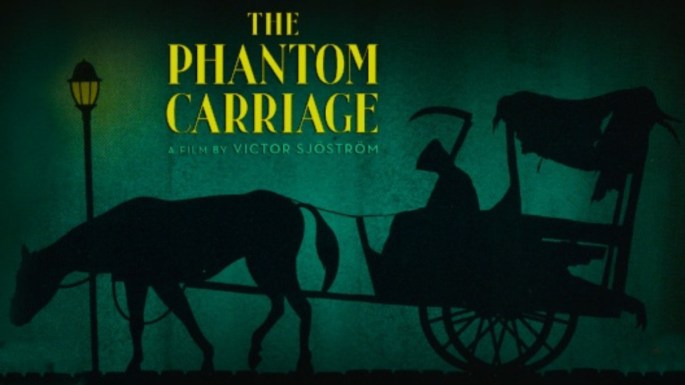
Victor Sjostrom’s THE PHANTOM CARRIAGE

‘The Phantom Carriage’ (1921) dir. Victor Sjostrom

‘Lord, please let my soul come to maturity before it is reaped’

ThePhantomCarriagePoster

There’s a certain feeling that Halloween used to invoke when I was younger. It was a fun combination of dread and danger, ghost stories, candy and staying up late. It was crawling under a blanket on the couch and watching PG-Rated haunters with my parents or friends who would come over for a sleepover.

As I grew older this ambiance was replaced with R-Rated films and even more R-Rated shenanigans. It became profanity-laced MST3K style drinking bashes with my friends while watching zombies tear flesh and women get naked. Over the years that ‘old Halloween feeling’  if you want to call it that had all but been forgotten. But then the other day I crawled under the covers and watched Victor Sjostrom’s ‘The Phantom Carriage’ and that Halloween Spirit I hadn’t felt in so long – came roaring back and it felt fucking great!

ThePhantomCarriageStill

This film had been on my list for a while. I’m ashamed it took me so long to get around to it. ‘The Phantom Carriage’ is a timeless tale of the macabre. The kind of horror that seeps into your bones. It does a tremendous job of combining the visceral elements of your old-timey chiller with a deeper, more philosophical message. Age has only benefitted this film. Its eerie tone enhanced by the years. The seamless F/X work gives one the impression they are experiencing something truly supernatural and the minimalist score by Mattie Bye for the 1998 restoration really underscores the film’s foreboding tone. Each frame simmers with a sorrowful terror that is captured magically by cinematographer Max Wilen. This is a special cinematic experience and one can see why it was a personal favorite of Bergman’s and Kubrick lifted an entire sequence of it for ‘The Shining’.

‘The Phantom Carriage’ opens with a couple ne’er-do-wells drinking in a graveyard on New Year’s Eve and one of them tells an old tale – that the last person to die each year has to drive the Carriage of Death that goes from door to door collecting the souls of the departed for the following year. When one of the men is killed in a brawl he joins an old friend on the doomed carriage and must revisit the shitty life decisions he made and their consequences before being able to reconcile the ghosts of the past which haunt him in the present. The film unfolds with flashbacks within flashbacks but is shrewdly broken up into 5 parts as to not become convoluted or tiresome.

This Halloween if you’re looking for a truly atmospheric and unsettling film that will get under your skin, turn the lights off and watch ‘The Phantom Carriage’. Trust me.

Review by Damian K. Lahey

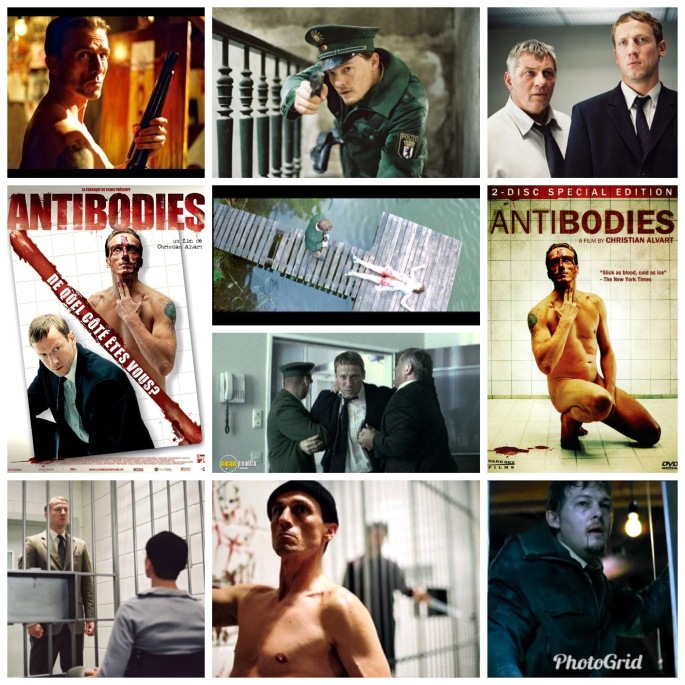
Christian Alvert’s Antibodies

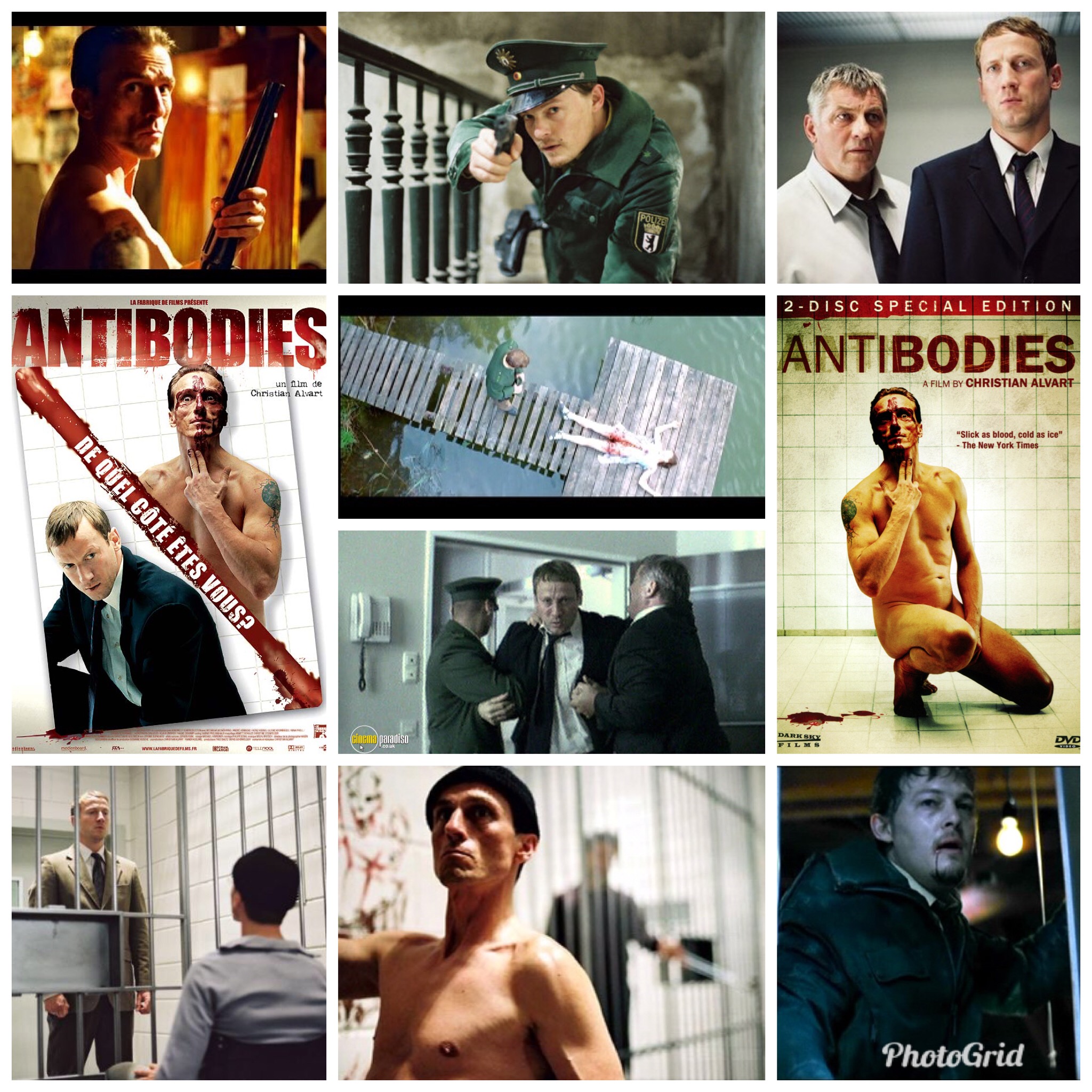
Christian Alvert is a wicked sharp German director who has quietly been making terrific films for years that have somehow slipped past the nets of notoriety (his SciFi horror Pandorum is one of the most underrated films of the decade). If you haven’t seen his highly disturbing, Silence of the Lambs esque psycho shocker Antibodies, you’re in for a treat. Perverted, intelligent, psychological, skin crawlingly freaky, the story unwinds in uncomfortable revelations following a gruesome discovery in an apartment by a Berlin police officer, who curiously enough, is played by a silent Norman Reedus. This turns into a raid in which prolific serial killer Gabriel Engel (a bone chilling portrayal by André Hennicke) is finally captured. After sometime, top cop Michael Martens (Wotan Wilke Möhring) runs into a series of murders that bear similarity to Engel’s Crimes, and brings the killer into the fold in consultation capacity. From there it’s a devilish madhouse of deception, sickening mind games and one cracker of a suspenseful ending. I’ll warn you: this shit ain’t pretty. There’s a lot of seriously dark stuff, thematic matter that blasts through the western taboos we find in films over here, and buckets of clinical, shudder inducing gore. If you enjoy smart horror that piles on thought provoking notions in with the carnage and asks questions along the way, you’ll dig this. 

-Nate Hill

Friday The 13th Part VIII: Jason Takes Manhattan 


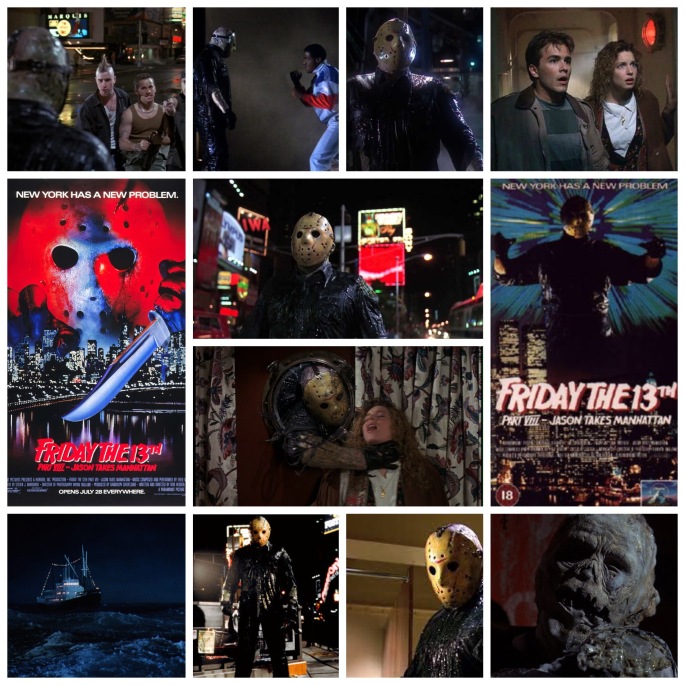
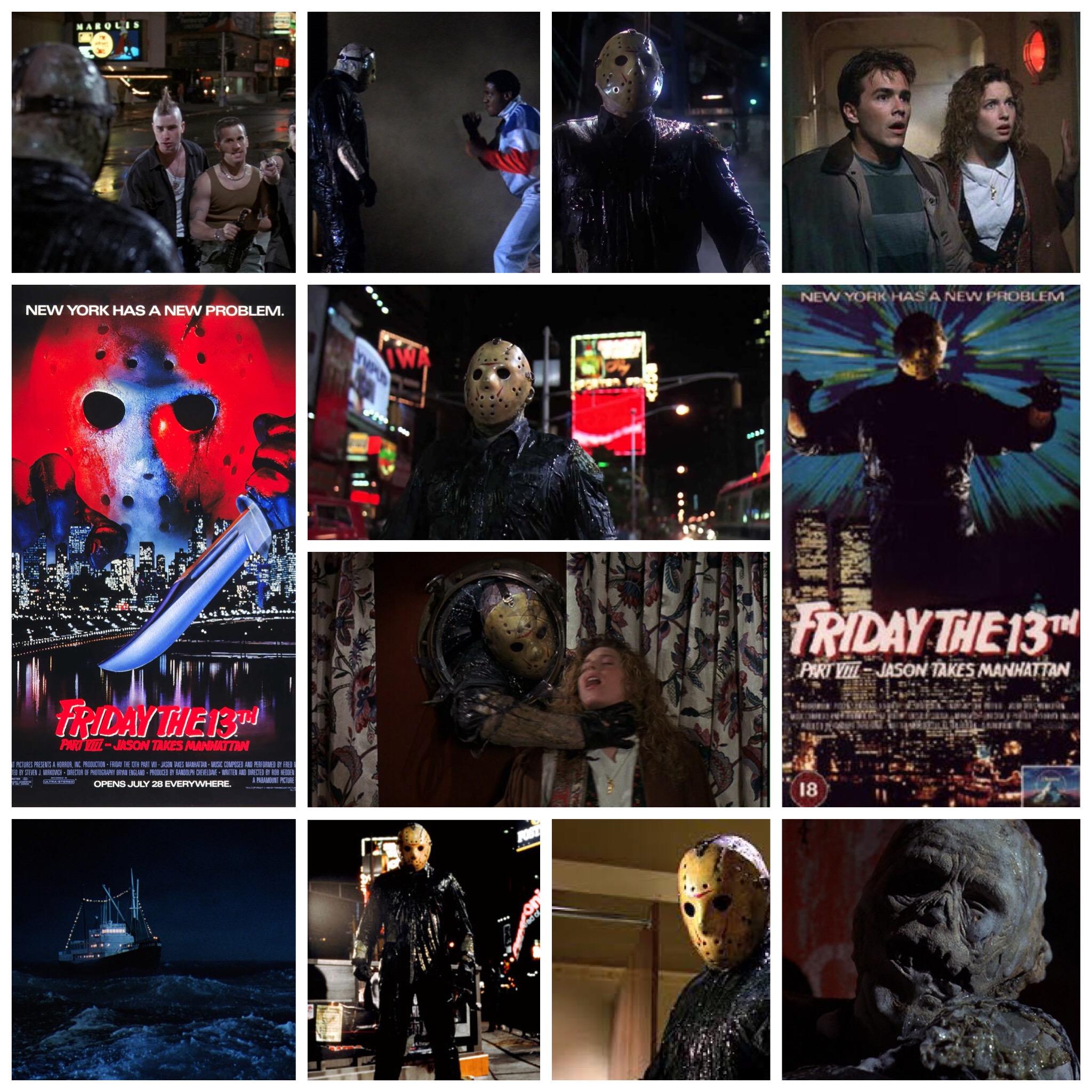
Friday The 13th Part VIII: Jason Takes Manhattan is kinda guilty of shitty false advertising, as well as just being an overall laughable effort in the franchise, which by that time had already run thin on new ideas. It was after Jason had run amok in the Camp Crystal Lake Woods, but before he got to go to hell, space or slap fisticuffs with Freddy Krueger, and kind of suffers in limbo at a juncture of the franchise that’s stuck in a quagmire of dumb ideas. Of all the evocative, atmospheric locales they could have switched his bloody tirades to, the big Apple just doesn’t seem like the ticket. That isn’t even the real problem anyways, as a good two and a half thirds of the film isn’t even set in NYC, but rather on a luxury cruise liner out on the coastline straights, bound for Manhattan and stuffed with more idiotic graduating high schoolers than you can shake a machete at. Lazy writing, nonexistent plotting and goofball acting are hallmarks in this terrain, but even more so with this flick, literally every non Jason character just being an insufferable ignoramus. The kills are passable but don’t even come halfway to topping the franchise charts, Kane Hodder shows up for his shift as the big lug in full gear, hockey mask and slimy mongoloid prosthetics included at no extra charge. When the boat does finally land on New York shores, it’s jarring to see Jason waltzing down fifth avenue looking like a homeless nut whose stairs don’t quite reach the attic, machete in hand in broad daylight as he pursues the few remaining partygoers through the crowded streets. Really, guys? Keep the big guy in his shrouded summer camp forests where he’s at home, and the feng-shui of his murders rings true. Or at least let him go to space where there’s still dark hallways and hidden alcoves. Probably the biggest misfire in the series.  

B Movie Glory- Brian Yuzna’s Faust: Love Of The Damned 


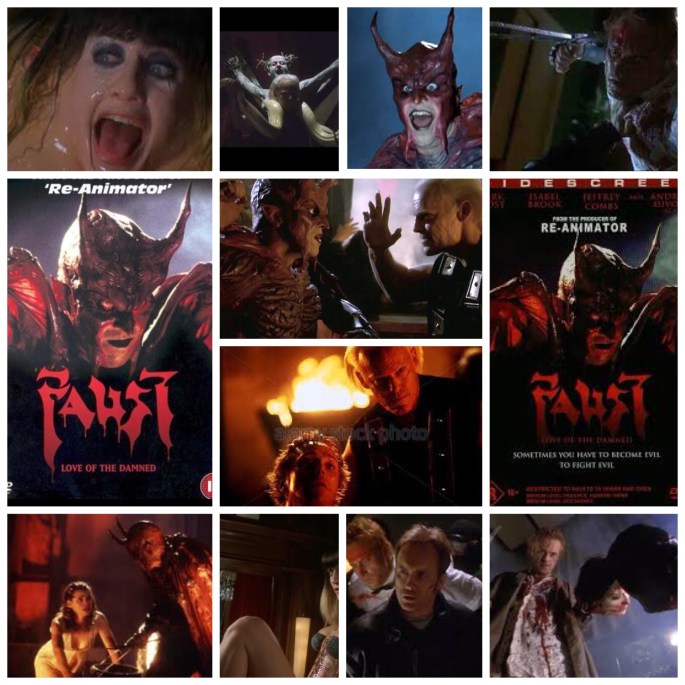
I think Goethe might do a few barrel roles in his grave if he ever saw Brian Yuzna’s Faust: Love Of The Damned, an unhinged, risible and obnoxious rendition of his literary works, filled with Spawn inspired effects, heavy metal music, extreme nudity and a general sense of debauched commotion running through it. When regular guy John Jaspers (Mark Frost) sells his soul to the mysterious M (Andrew Divoff) in order to exact revenge on those who killed his girlfriend, things don’t… quite go as planned. Before he knows it he’s transformed into some ridiculous walking demon vigilante thing, given snazzy superpowers and set loose on the city. M, being the devil, is naturally not a man of his word and is planning some horrific apocalyptic mayhem using Faust’s unwitting help, and it all goes so monumentally haywire it’s hard to tell what is even going on, for fuck’s sake. Much of the film consists of him just running about with blaring music in the background, killing people in over the top, spectacularly gory ways. Story has little place here amongst the ruckus din of VFX and soft core porn sensibilities. Divoff is in Djinn mode as M, sporting a startling blonde dye job and Mayan inspired costume design, and having as much fun as every Hollywood character actor has playing Old Scratch himself. There’s a scene where he reprimands his hot sidekick by causing her to melt into a moaning pile of her own bodily fluids that will have everyone nervously shifting on the couch and wondering just exactly what the fuck they’re watching. The Reanimator himself Jeffrey Combs has an eccentric police detective role that somehow just gets swallowed up by the orgy of visual and auditory assault that the film consists of. Nothing remotely similar to the original tale of Faust, you’ll either get a sick thrill, laugh the whole way through or get up and walk out. I loved it. 

-Nate Hill

Hellraiser: Inferno 


Hellraiser: Inferno marks the first juncture in the franchise where ideas deviated beyond the formula set in place by the first borderline surreal, masochist piece.

Gone is the dreamy, sordid aesthetic used back then, the Cenobites who were front and centre are reduced to limited appearances and the story is less otherworldly and something decidedly more noirish and down to earth. Whether that’s accepted by franchise die-hards and horror hounds alike is subjective, but I didn’t mind it’s slow burn approach or sidewinding tone. Craig Sheffer, the closest thing you’ll get to Josh Brolin without breaking the bank, plays a crooked Detective who finds himself dragged down a rabbit hole of creepy, murderous goings-on when he’s assigned to hunt a serial killer known as ‘The Engineer’. Of course the murders always seem one step ahead of his grasp, and naturally dark secrets from his sketchy past are brought to light as he gradually begins to lose his mind. Doug Bradley does eventually return as the iconic Pinhead, with a few members of the Cenobite posse, but their presence is kept mostly on the back burner for quite a while. Taking antagonist duties for a while instead is Sheffer’s eerie psychiatrist, played with sinister charm and knowing charisma by James Remar, a dubious fellow with a few tricks up his own sleeve. This is the one entry that sticks out from the franchise in it’s diversion from the usual path of distinct, abstract psychosexual horror and mutes the whole icy nightmare down to rebuild a story in it’s own image. You’ll either appreciate the initiative, or you’ll miss the good ol’ freakshow of the original film. Up to you. 

-Nate Hill

Freddy’s Dead: The ‘Final’ Nightmare 


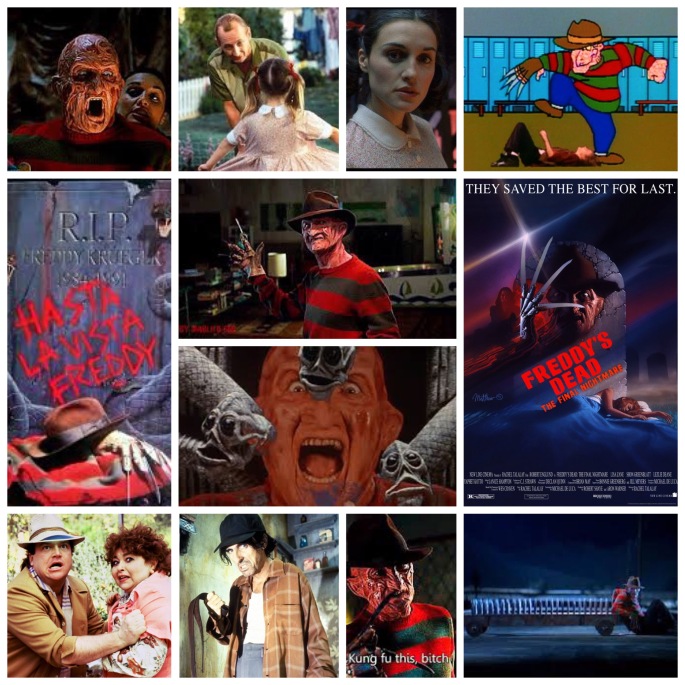
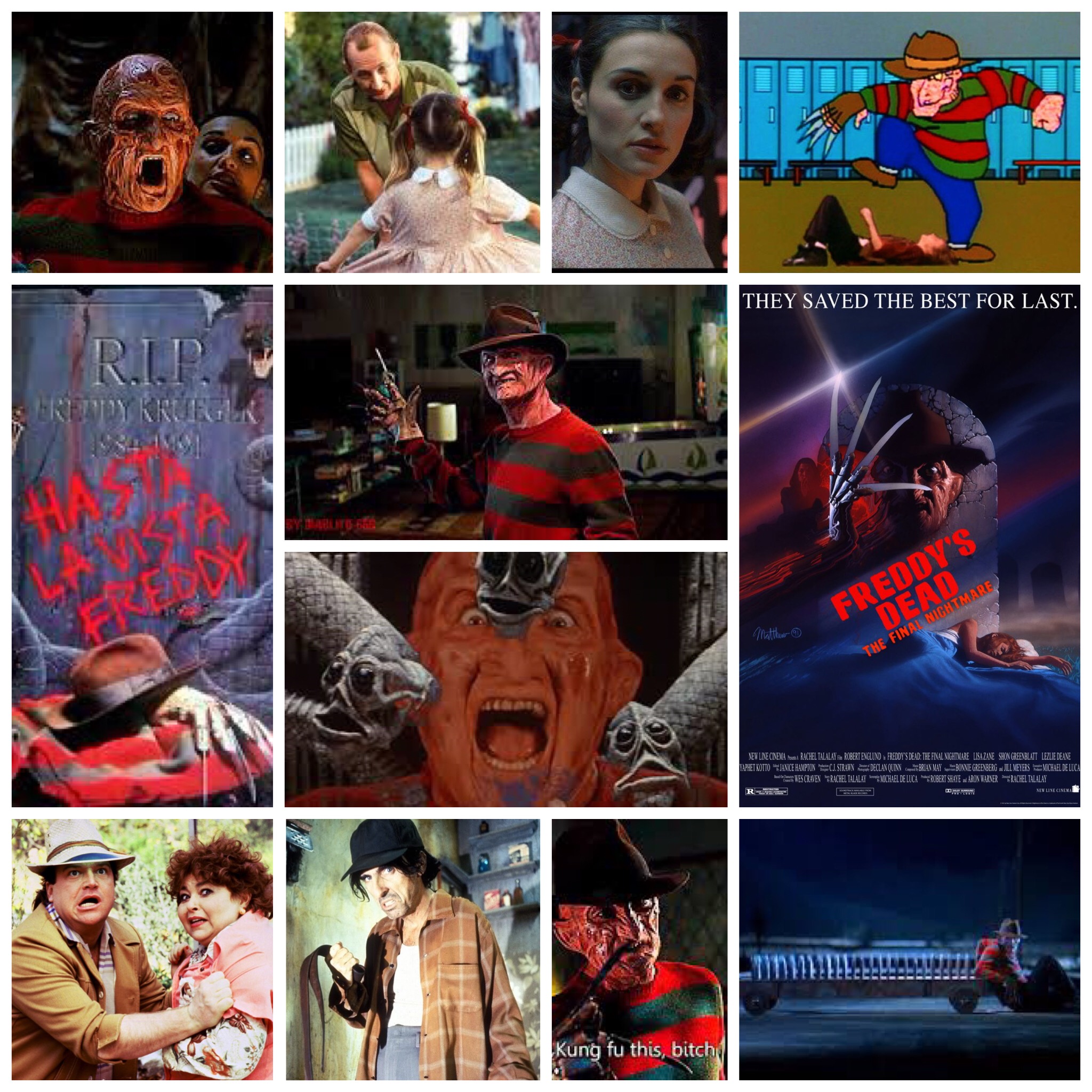
I’m not sure what they were going for with Freddy’s Dead: The Final Nightmare, but the summation of what they produced is simply… bizarre. Of course it’s not the final round, they never can resist churning out meta reworking, crossovers and remakes, rendering the ‘final’ titles hilariously redundant (the ‘final’ Friday The 13th chapter is only the fourth entry in a franchise that soared into double digits). It’s silly more than anything else, like the New Line Cinema boardroom passed around the laughing gas and spit-balled out this cartoonish, random, cameo stuffed looney bin of a flick. Actually, writing credit goes to director Rachel Talalay, who also helped the equally silly rumpus cult classic Tank Girl, which is lovable in it’s own right. Speaking of silly, Robert Englund’s Freddy Krueger has never been more buffoonish than here, the culmination of every one line and quip throughout the franchise. He’s back, hunting down the last remaining Springwood teenager, as well as a woman (Lisa Zane) whose connection to his past could be dicy for him. There’s also a weird backstory angle involving dream demons that look like sentient tadpoles who apparently are responsible for Freddy’s initial resurrection and powers. Hmm. The cameos seem like they just made a celebrity collage on a dartboard, blindfolded each other and flung them all over. Alice Cooper shows up in flashbacks as Freddy’s sadistic stepfather, Roseanne Barr and Tom Arnold are around, plus Breckin Meyer and Yaphet Kotto. The rule of randoms is excepting Johnny Depp of course, an Elm Street veteran who has a quick bit as a TV advertisement dude. The dream sequences are wild and wacky, but never really frightening or as atmospheric as they used to be, the one springing to mind being a video game themed thing where pixelated Freddy chases a victim Super Mario style, not exactly the most bone chilling setting, but oh well. This does mark the last of the initial franchise before they moved on to deluxe entries like the super meta New Nightmare and the gong show that was Freddy Vs. Jason. If you’re looking for the weirdest Elm Street flick, you’ve found it, and if you’re looking for a scary, coherent one then you’ll have to backtrack earlier in the franchise, or skip ahead to Wes Craven’s excellent next one. 

-Nate Hill